Friday, December 26, 2025
Home Blog Page 3819

‘Saudi Arabia, Allies Seeking to Form Arab NATO to Counter Iran’

‘Saudi Arabia, Allies Seeking to Form Arab NATO to Counter Iran’

Iranian MP Seyyed Mohammad-Javad Abtahi says the goal of this meeting was to form an Arab NATO, but it should be noted that the objectives of such coalitions have never been accomplished.

He further referred to the coalition’s statement that accused Iran of supporting the Houthis in Yemen and sending arms to the country stressing that the Arab Coalition Summit was held to pursue the goals of the US in the region.

The representative of Khomeyni-Shahr of the central Isfahan Province in the Iranian parliament went on to say that the President of the United States pursued the formation of the Arab NATO during his visit to Saudi Arabia.

“So there’s no doubt that a coalition is going to be formed to wage a new proxy war in the region,” said Abtahi.

He also mentioned that Riyadh has always pursued formation of such coalitions for many years, but fortunately such objectives have never been achieved.

The neighbouring Muslim countries like Oman, Pakistan, etc., are aware of the position of the Islamic Republic in the region and the world, and have explicitly declared in their positions that they do not want to be part of the US policies.
“Saudi Arabia, for no reason, has committed war crimes in Yemen and therefore cannot accuse our country of sending weapons to Yemen.”

Abtahi also pointed out that Saudi Arabia and some other countries are afraid of the resistance of the nations, or in other words, are afraid of the Islamic awakening, so with such summits and coalitions, they seek to prevent its achievement.

‘China, Russia Backing Iran at Expense of Tehran’s Trade Growth’

Journalist Sina Iranpour Anaraki has, in an article published by the Persian-language Ta’adol daily, weighed in on the trade relations between Russia, China and the United States, and how Beijing and Moscow see Tehran in the domain of commerce and economy. The full text of the article follows.

US President Donald Trump’s speech on October 13, 2017, against the Iran nuclear deal (known as the Joint Comprehensive Plan of Action or the JCPOA) disturbed many countries in the world, so much so that they called him a lunatic. Trump not only questioned the JCPOA and called it an agreement detrimental to Washington, but provoked Iranian people by using the misnomer “The Ara*bian Gulf” instead of “The Persian Gulf.” Trump has straightforwardly told others that they can call him a lunatic. This means the most powerful man in the US, who is a renowned businessman, even benefits from being a lunatic in the court of public opinion. Statistics on the United States’ international contracts show well that this lunatic is a businessman-like politician. However, Trump’s noise and fuss should not distract us from the trade being conducted by the presidents of Russia and China in this troubled water.


US Trade and Campaign to Trigger World War

In 2017, Washington’s debts are approaching the $20 trillion mark, accounting for almost 10% of the total debts in the world. China, which is competing to become the number-one economic heavyweight in the world, is $2 trillion in debt. Russia’s foreign debts also run into $537.5 billion. Many experts regard differences between “Russia and China” and the US as well as the existing tensions among countries in the Middle East as a trigger for a world war. Nevertheless, the huge volume of Washington’s debts shows there is not enough financial power to start a war in the United States.

A report by the Stockholm International Peace Research Institute (SIPRI) suggests the volume of arms trade between 2010 and 2016 was greater than any other five-year period after 1990. The report says arms imports into Middle East countries have roughly doubled in the past five years.

The incumbent US president has entered the political arena with experience in the field of trade, and he had numerous slogans during his election campaign concerning the amelioration of the United States’ economic situation. Trump knows well that the US must sell things as much as it can. Given the support lent to Trump by American arms traders and Zionists, selling military hardware is indubitably the most convenient option for business. Trump is a good actor and showman to play the role of a lunatic in order to create tension in the Middle East and in both Koreas, so that he will increase Washington’s arms deals without getting involved in a new war. The 110-billion-dollar arms contract between the US and Saudi Arabia, $5 billion in US sales to South Korea between 2010 to 2016 together with Trump’s contract with Seoul in 2017 worth billions of dollars, Japan’s $800 million in payment in 2016 to meet the costs of US bases in the country plus paying $3.25 billion for the settlement of US troops, namely the relocation of a US base from Okinawa Prefecture to Guam Island, as reported by Japan Times, all bear witness to the formation of an arms trade for the US. Trump is crazy, but this crazy man is wearing a businessman’s outfit and has definitely milked Arabs for using the fabricated phrase “The Arabian Gulf.”

Russia Capitalizing on Differences between East and West

Russia has, for years, been taking advantage of divisions between Iran and the US and Western countries, i.e. economic advantage. Russia is among the top world countries in the fields of nuclear energy, aerospace and military hardware. Russia is second only to the US in terms of arms exports in the world. Although Kremlin has had good relations with Tehran during Putin’s presidency and has, to some extent, opened up Russia’s door to Iranian exports, Iran has not been able to be successful in Russia’s market due to wrong trade policies.

In 2016, Russia entered into talks with Iran to sign a contract on the sales of weapons worth $10 billion. No precise details of the deal are available. The contract on the construction of Iran’s Bushehr atomic power plant is also one of the controversial deals between Russia and Iran. Due to its differences with the West, Iran has had to seek help from Russia in the aerospace sector over the past decade. Russia’s new contract with Saudi Arabia worth $3 billion was signed a few days ago, which indicates Moscow’s double-standards on Iran. On the one hand, Russian politicians support Iran in word, but they know no restrictions when it comes to trade and warmly welcome the Saudi king and his entourage in Kremlin, and easily cash in on the rifts between Tehran and Riyadh to sell weapons to Russia.

China: Trader of All Seasons

Over the past two decades, the Chinese have been planning to secure international markets and to turn into the biggest producer and exporter in the world. China is a country which has changed its huge population from threat to opportunity, boosted its production, increased its influence in the market, decreased the end prices of goods and gradually improved the quality of its commodities, and as a result, promoted its status.

China is not a heavyweight only in the three industries mentioned above like Russia; rather, production in China is so economically viable that any kind of goods can be found in this country. China and the US have been involved in such a tight race over the past five years to become the number-one economic power in the world. Given its membership in the UN Security Council, China takes advantage of its political leverage as well.

‌According to SIPRI, which reviews countries’ military exports, China’s weapons exports registered a 74-percent rise between 2012 and 2016. This comes as weapons exports in the world have risen only between 3.8 and 6.2 percent on average. The United States, Russia and China are the top three arms exporters in the world respectively. Despite political and cultural differences, China does trade with all countries, and has secured a large part of the US and Europe’s markets.

Iran-China trade grew considerably after the imposition of UN resolutions against Iran, so much so that China turned into Iran’s biggest trade partner. China bought energy from Iran at low prices and gave Iran goods, rather than dollars, in return: a very lucrative business for Beijing. Based on the figures released by the Iranian Customs, China was the biggest exporter of goods to Iran in the 12 months to March 2017, the time when Iran’s trade balance was positive for the first time. China exported 10 billion 753 million dollars’ worth of goods to Iran in that period when Iran’s energy exports to China stood at 8 billion 377 million dollars. China was also the biggest exporter of commodities to Iran in the four months to July 2017 with nearly $ 3.5 billion dollars’ worth of sales.

China, the US, and Russia all have political and trade relations with one another. Their divisions have never led to the severance of relations between them. Whenever they had relations with a country in the Middle East, it was finally the Mideast nation which was gripped by the flames of war. At the end of the day, the three countries pocketed huge benefits by cashing in on the tensions in the Middle East.

Incontrovertibly, China is in a better position compared to the US and Russia when it comes to global trade. China keeps expanding its economy with the least possible controversy. The US and Russia, too, have put economy before politics despite the current situation in their countries.

A world war is unlikely to break out because now it is the trade war between countries which determines which one is a superpower. Countries’ strategies are also drawn up based on more and more sales of goods and arms, with a focus on the Middle East and certain countries rich in natural resources.This comes as politics has taken precedence over economy in Iran over the past decades, and the country continues to pursue the same approach despite being aware of trade figures and superpowers’ export destinations.  How longer should Russia and China support Iran at the expense of Iran’s trade and industry while boosting their own industries? Despite all the differences they have with one another, Russia, china and the US have never severed their trade relations, and this is a key point in international relations which we have neglected.

How Iran Benefits from Washington’s More Hostile Strategy

White House’s anti-Iran policies in the administration of Donald Trump have been continued with the approval of new sanctions bill against Iran’s missile program.

With 423 yeah votes against just 2 nay ones in the House of Representatives, the bill was approved and it shows the consensus of both US political parties on opposing the Islamic Republic’s defensive capability.

Earlier, the House had backed new sanctions against Lebanon’s Hezbollah, and also those individuals and governments that financially or militarily support the movement.

Another measure by the House was a resolution urging the European Union to designate Hezbollah as a terrorist organization or introduce it as a terrorist group.

In this way, it has been proved that Trump and his team are not the only ones who oppose the components of national power; it showed that all the ones at the US House of “cruelties” have such a hostile stance against our country.In the current situation, Trump as President of the United States announces these positions with his slanderous, bawdy, and gangster-like literature.

Meanwhile, they have been trying to keep silent on the nuclear deal while imposing new sanctions under such pretexts as missile defence programme and the regional influence of Iran. Their goal is to maintain a dead body of the JCPOA, and at the same time impose sanctions and put more pressure on the Islamic Republic by eroding the components of power and pushing for negotiations.

While ISIS and other Takfiri terrorists are gasping for their last breaths, recent US positions and measures shows that the concern of Washington and its regional and European allies is the change in the regional and power equations which is in favor of the Islamic Republic of Iran and the axis of resistance.

Therefore, after the US president did not approve Iran’s compliance with the JCPOA, the House of Representatives was tasked with reviewing and making new decisions. Being aware the costs of nullifying the deal, the House this time focused on the missile program and Iran’s productive capacities that could help the country deeply penetrate into the region.Thus, they approved sanctions against the Islamic Republic which is likely to be approved by the Senate and become a law.

However, the green light of the House of Representatives to Donald Tramp’s policies and their support for more sanctions and pressure on our country would offer the following minimum benefits for us:

  • It proved the hostility of the whole American political system towards Iran and the uselessness of some apparent differences between Republicans and Democrats and figures like Trump and Obama.
  • The unreliability of the cruel US ruling system.Despite the IAEA’s repeated confirmations of Iran’s compliance with its obligations, Washington has ignored them and sought to impose new sanctions despite their own violations of the deal.
  • It also proves that any compromise and negotiation with the United States is useless. The continuation of imposing sanctions against our people and country even after reaching an agreement has revealed their bullying nature. Therefore, in a situation that there is an analytical consensus at the national level on the arrogant nature of the United States, it is expected that the Iranian officials consider the following and adhere to them in order to help the country pass through the current situation:
  • Violations of the deal by the United States and its allies who have not complied with their obligations must be clearly stated stressing that Iran has carried out all its commitments.
  • Particular efforts must be made to counteract.In particular, the missile power of the country has to be boosted and developed, and the resistance movement must be supported to protectthe Establishment’s strategic depth in the region.
  • The European Troika should be convinced of the need for practical support for the implementation of the JCPOA. They must also be convinced not to accompany Trump in imposingcruel nuclear and non-nuclear sanctions against the Islamic Republic.
  • We ought to provide legal proof to the international associations and societies of US support for Takfiri terrorism and the transfer of ISIS terrorists and equipment to Afghanistan, Iraq and Syria.
  • The United States’ human rights abuses must be legally proved in connection with Washington’s supports for the child-killing aggressive regimes, such as Israel and the Al Saud. Iran has to in cite the Muslim world to pursue the case at the international arena.
  • Iran’s national economy has to be boosted by resolving the weak points that encourage the enemy to take advantage of dirty and cruel sanctions to put more pressure on the country.

And lastly, this strategic mistake of the White House leaders should be turned into an opportunity to boost the culture of resistance and safeguard our national dignity. The United States must be introduced as a global arrogance and its nature has to be revealed as a wolf in sheep’s clothing. The first post-revolution generation’s understanding of the United States now has the potential to be spread. November 4 (the anniversary of storming US embassy) is the best opportunity to spread this understanding and send a message to the arrogant White House leaders.


Trump’s Gift to Iran’s Conservatives: Rouhani Moving Away from Reformism

If one wants to assess the consequences of the US government’s post-JCPOA actions in Iran’s political arena and also see the reflection of Trump’s moves which have made the future of the nuclear deal unclear, it is just enough to read a Tuesday article published by Sobh-e Now newspaper, which is affiliated with Mohammad Baqer Qalibaf, the former conservative mayor of Tehran and President Hassan Rouhani’s contender in 2017 Presidential Election.

Here is the headline of this short piece: “Revolutionary Welcome to the President”. It could easily be published with this headline as well: “Trump’s Gift to Iranian Revolutionaries; Rouhani’s Shift from Reformist Front”.

Sobh-e Now writes in a Farsi report that all reformist papers censored the president’s important Sunday statements on calling negotiations with the US a “ridiculous and crazy act”.

“The reformist front apparently did not expect their political ally to change his approach so soon. Contrary to their past practice and expectations, the reformist front did not expect Rouhani to admit mistakes and criticize the most important political issue of Iran’s Establishment, i.e. negotiations and relations with the United States,” reads the article.

The author goes on to say that Rouhani, who in the run-up to the 2013 presidential election believed negotiating with the US, as the world’s chief, is much easier than holding talks with Europe, during the 2017 presidential election promised to lift other sanctions, just as he had removed nuclear sanctions against the nation over the past four years. With this approach, Rouhani repeatedly talked about the second and third deal.

“Now, however, those optimisms, with a 180-degree turn, have turned into expressing that negotiating with the US is “the most ridiculous thing in the history”. This stance of Rouhani, although not pleasing to the reformists, is the most logical and principled comment which can be made about the age-old enemy of Iran. The Iranian people and the Islamic Establishment will definitely welcome this stance.”

The article adds that in the face of the cold reaction of the reformists, this is the duty of the revolutionary movement to come to the fore and help President Rouhani to reform his past stances.

“Of course, two things have to be taken into consideration; first, the president and his moderate companions must not look differently at Trump and Obama’s America. Undoubtedly, both of them pursue the same policy, one with a cast-iron hand and the other with a velvet glove on the cast-iron hand. Second, now that Rouhani has rightly abandoned his hope in the United States, he should not trust Washington’s European allies either.Because as he (Rouhani) mentioned, they are the same permission-needed parties when it comes to the United States.”

Sobh-e Now newspaper; however, advises Rouhani that this does not mean the diplomatic engagement must be abandoned.

“The best policy for the 12th administration is to do its best to boost domestic economy based on internal capacities and tread this path practically and seriously,” concludes the piece.

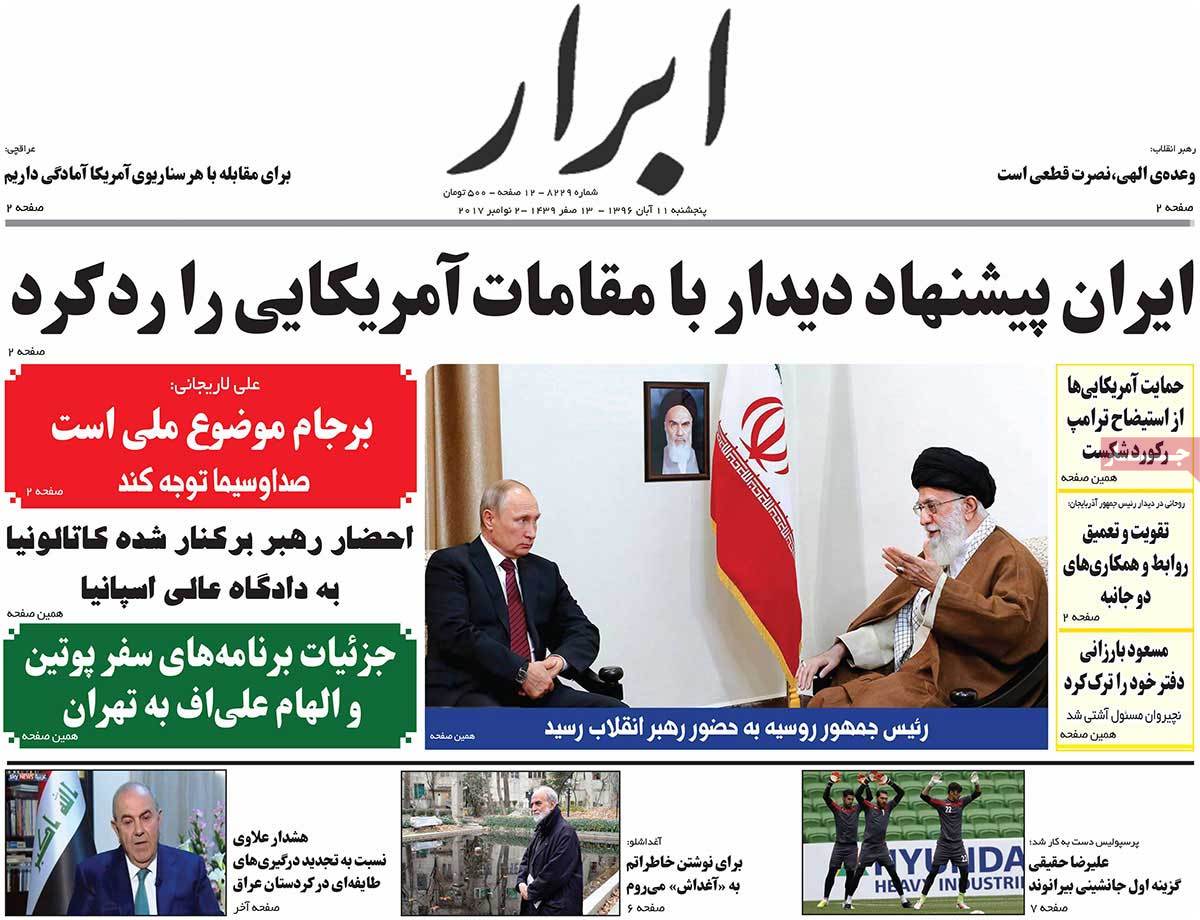
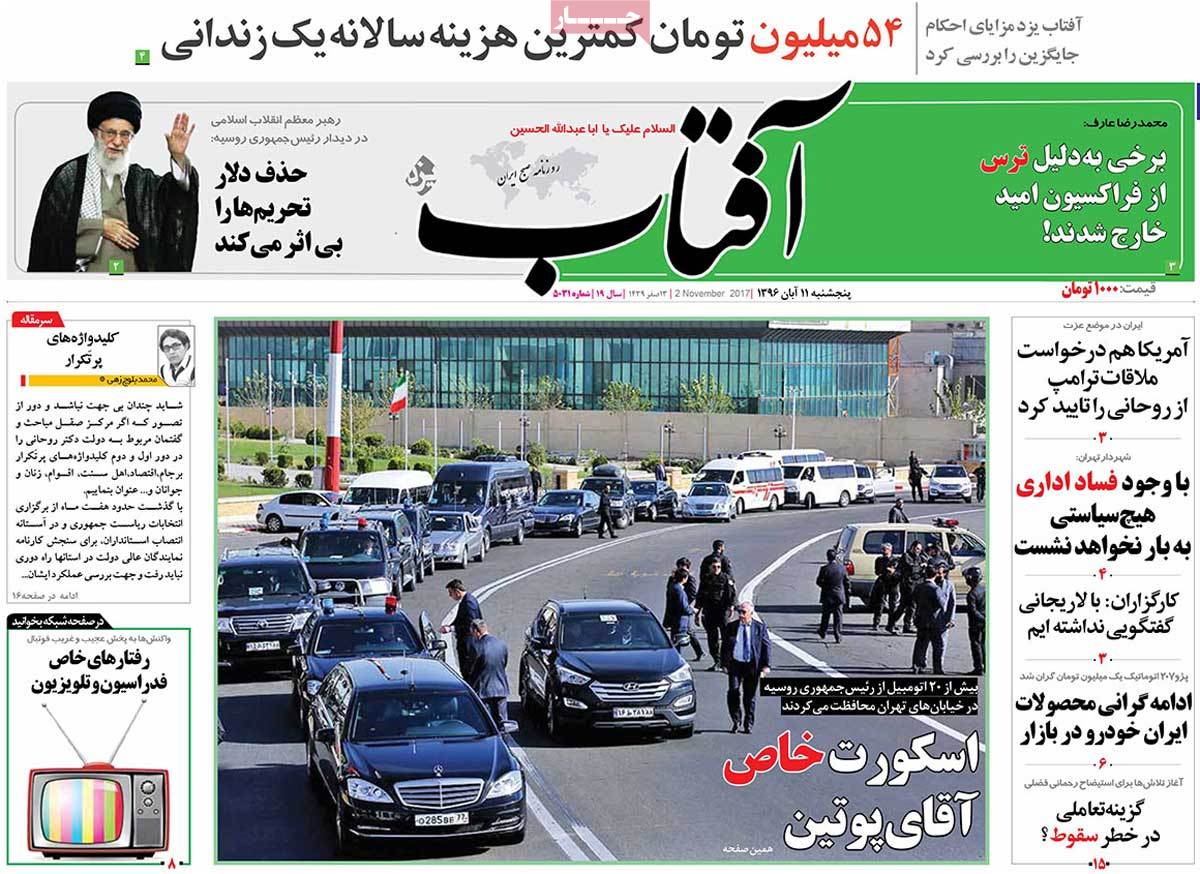
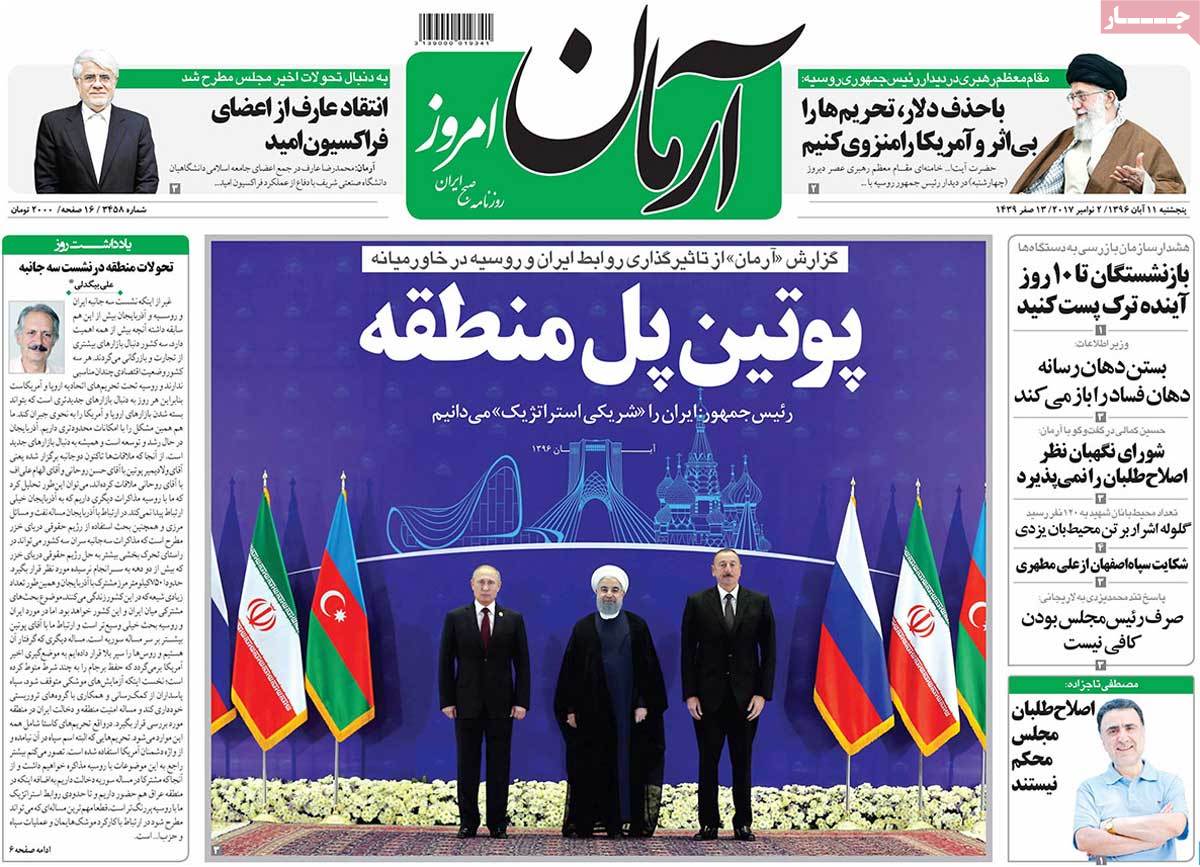
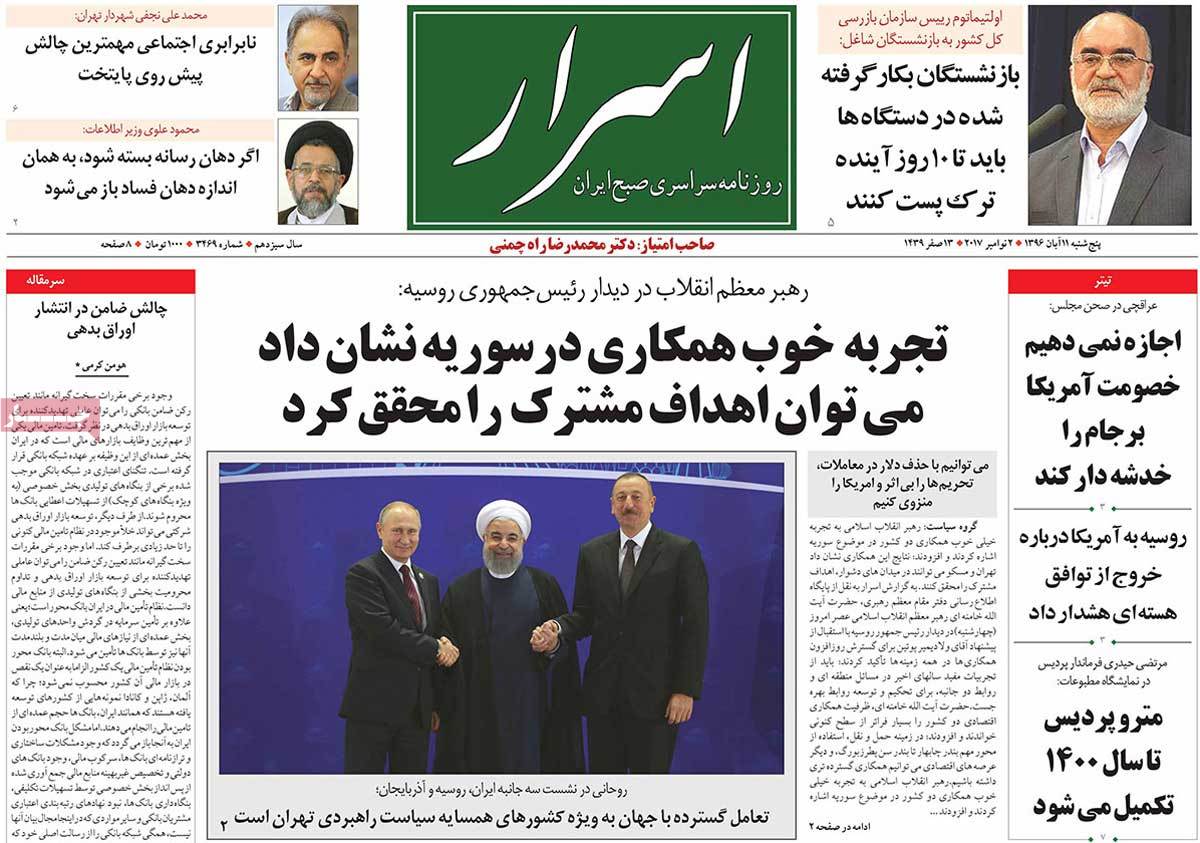
A Look at Iranian Newspaper Front Pages on November 2

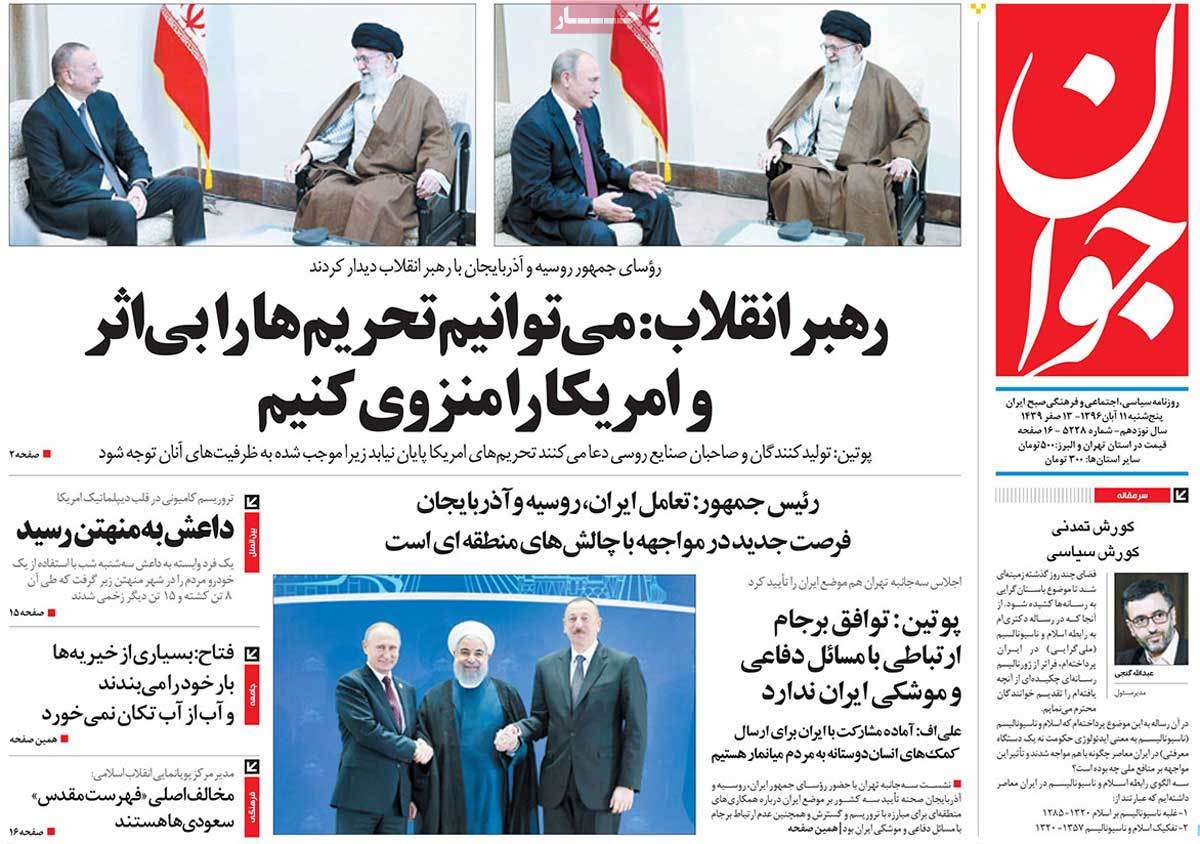
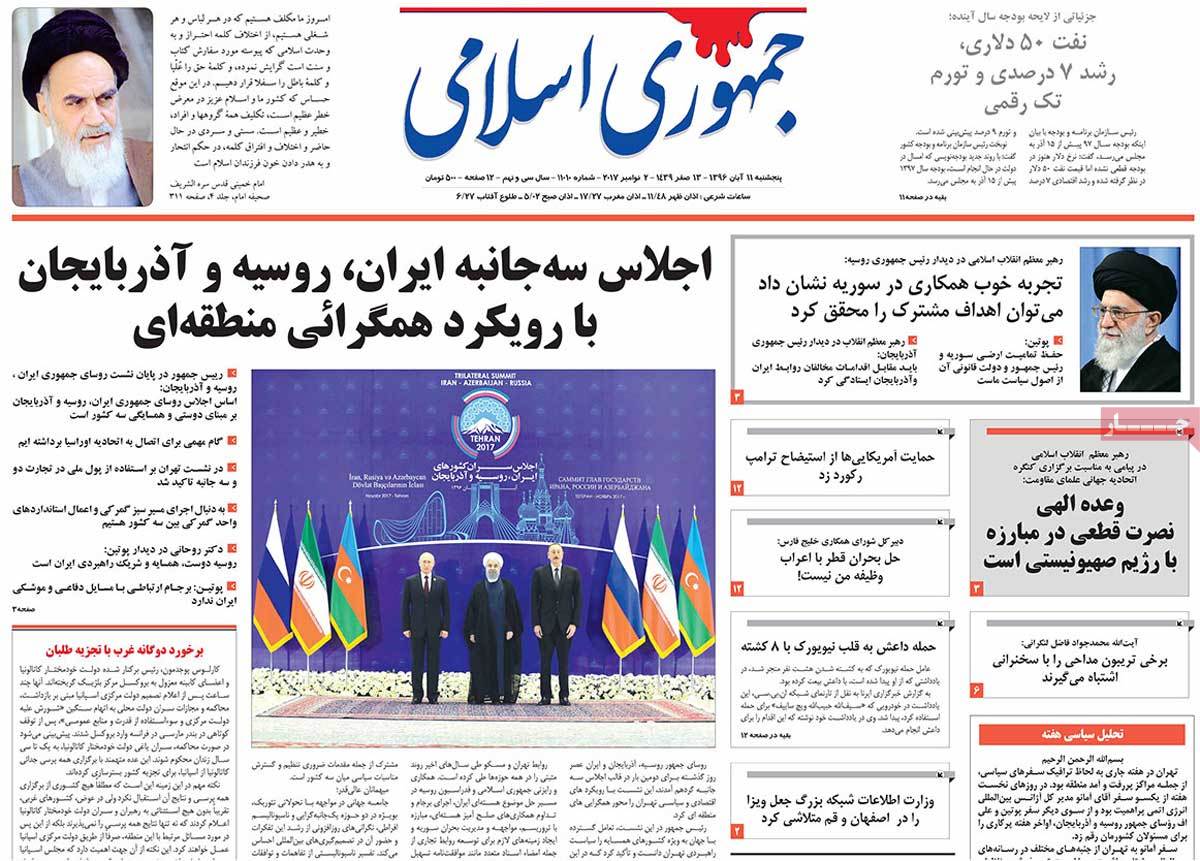
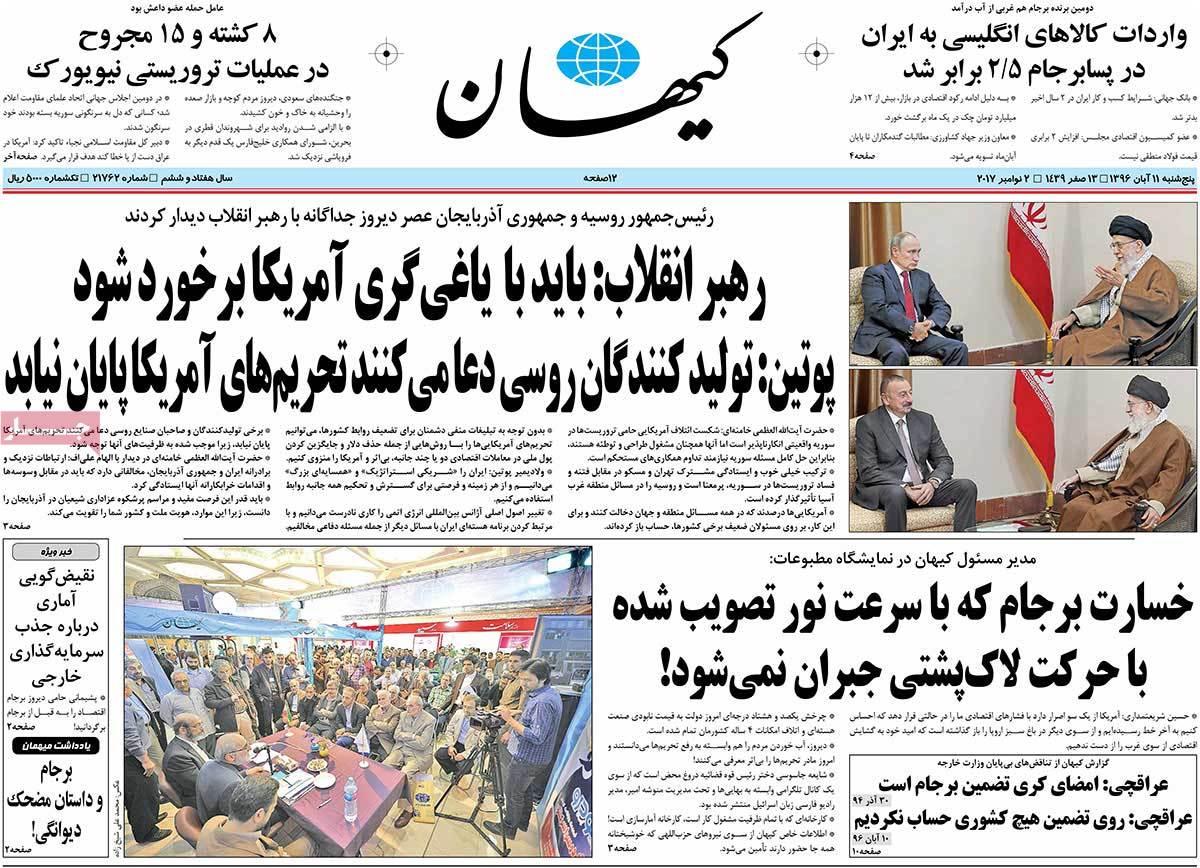
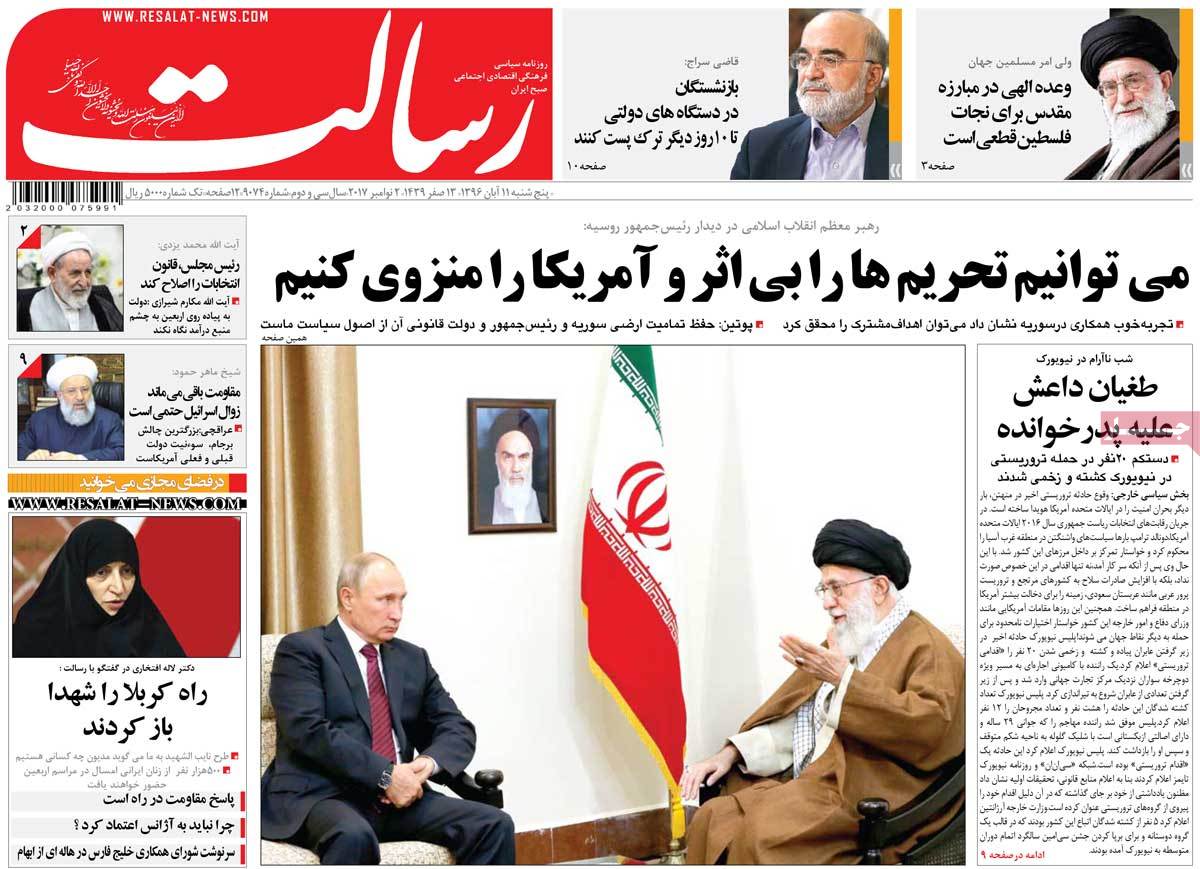
All newspapers today covered the separate meetings of Russian and Azeri presidents with the Leader of Iran’s Islamic Revolution Ayatollah Seyyed Ali Khamenei in Tehran.

They also widely covered the implications of the two presidents’ visit to Tehran and the agreements they signed with Iran in a trilateral meeting with President Hassan Rouhani.

The remarks my Deputy Foreign Minister Seyyed Abbas Araqchi about the Iran nuclear deal in an address to the Parliament also received great coverage.

The above issues, as well as many more, are highlighted in the following headlines and top stories:

Abrar:

1-Deputy FM: Iran Prepared to Counter Any US Scenario

2- Larijani Urges State TV to Know Iran Nuclear Deal a National Issue

A Look at Iranian Newspaper Front Pages on November 2


Aftab-e Yazd:

1- Putin’s Special Escort: Over 20 Cars Protect Russia President in Tehran Streets

2- Iran Dignified: US Confirms Rouhani Has Rejected Trump’s Request for Meeting

3- Iran Leader to Russia President: No More Use of US Dollar to Neutralize Sanctions

A Look at Iranian Newspaper Front Pages on November 2


Arman-e Emrooz:

1- Putin, the Bridge of Middle East

2- Rouhani: Russia Is Iran’s Strategic Partner

3- Intelligence Minister: Shutting Mouth of Media to Open Mouth of Corruption

A Look at Iranian Newspaper Front Pages on November 2


Asrar:

1- Iran Leader: Good Experience of Syria Shows Iran, Russia Can Realize Common Goals

2- Deputy FM: Iran Not to Let US Hostility Damage Nuclear Deal

A Look at Iranian Newspaper Front Pages on November 2


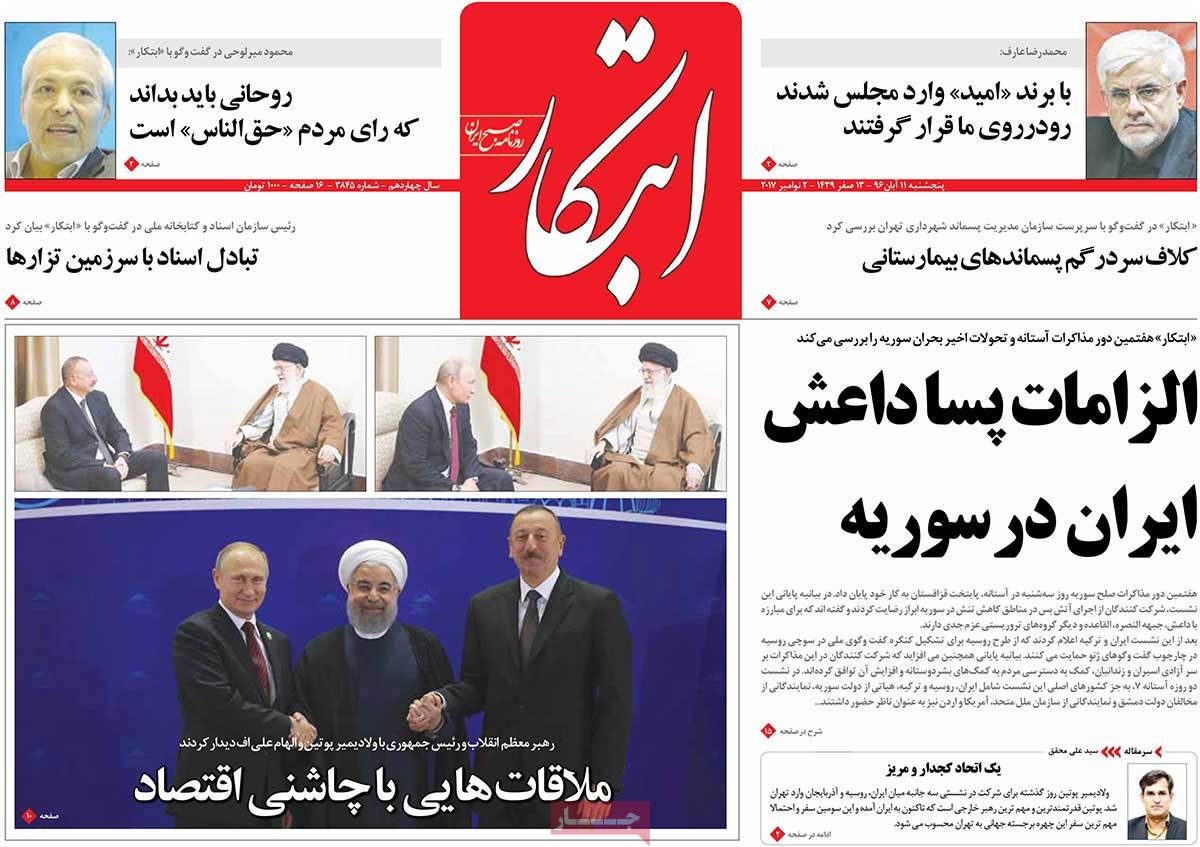
Ebtekar:

1- Meetings with Economic Flavour: Iran Leader Meets Putin, Aliyev

2- Post-ISIS Requirements in Syria: A Report on 7th Round of Astana Talks

A Look at Iranian Newspaper Front Pages on November 2


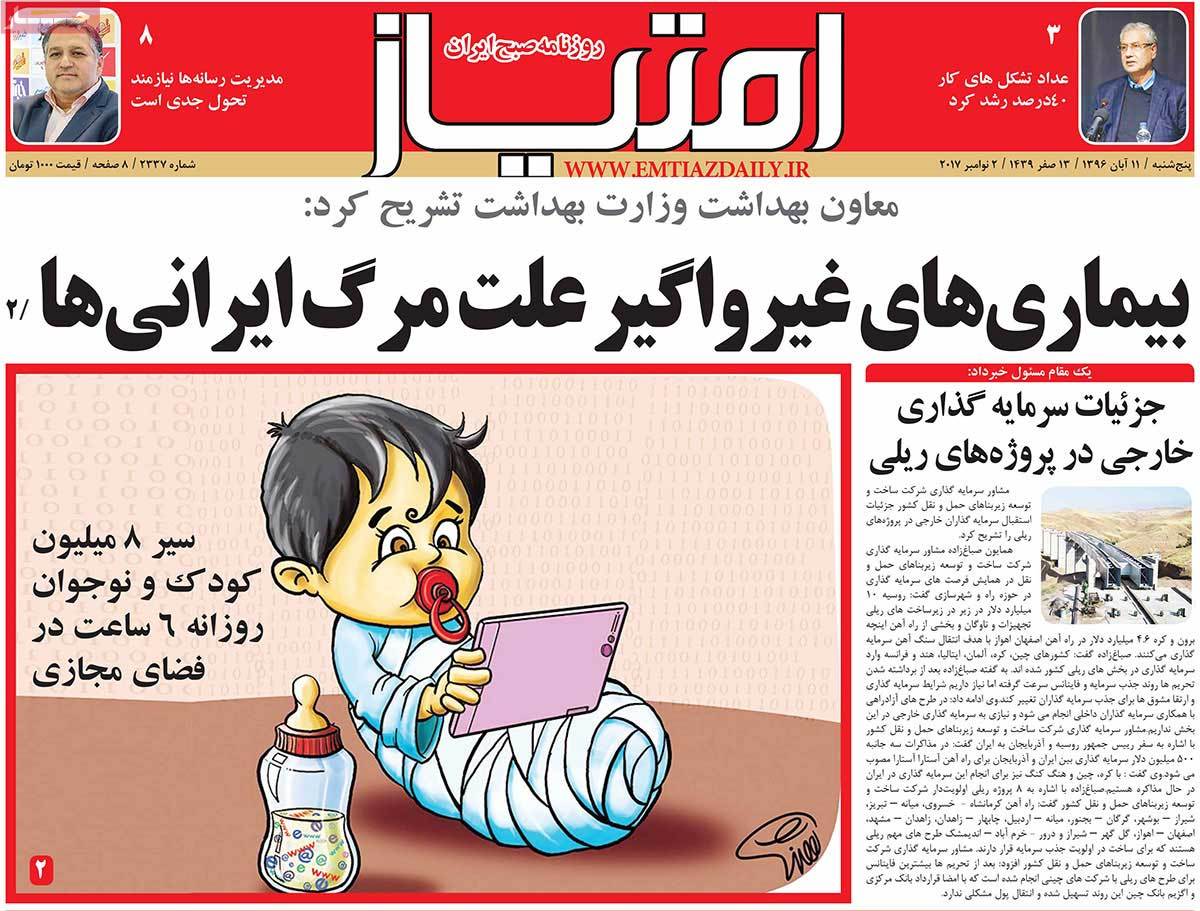
Emtiaz:

1- 8 Million Children, Young Adults Spend 6 Hours a Day in Cyberspace

A Look at Iranian Newspaper Front Pages on November 2


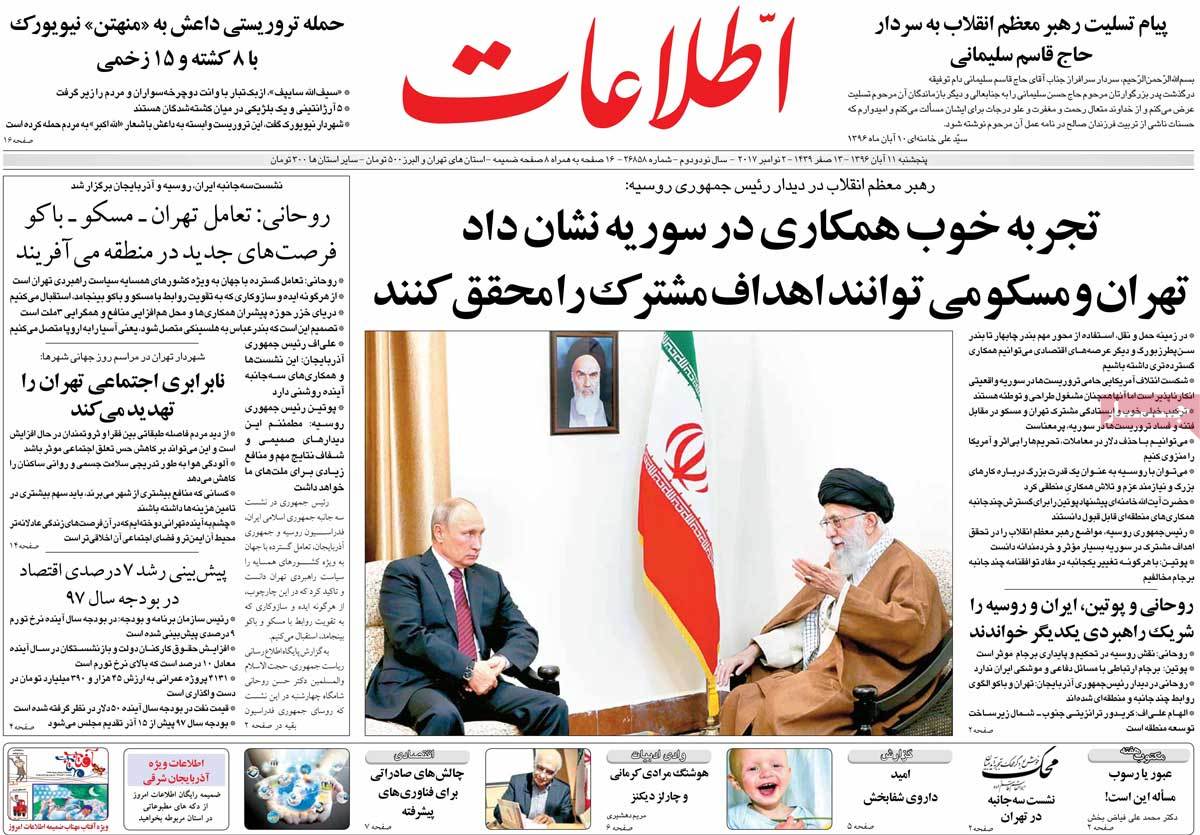
Ettela’at:

1-Rouhani, Putin Described Iran, Russia as Strategic Partners for Each Other

2- Rouhani: Tehran-Moscow-Baku Interaction to Create New Opportunities in Region

3- Tehran Mayor: Iranian Capital Threatened by Social Inequality

A Look at Iranian Newspaper Front Pages on November 2


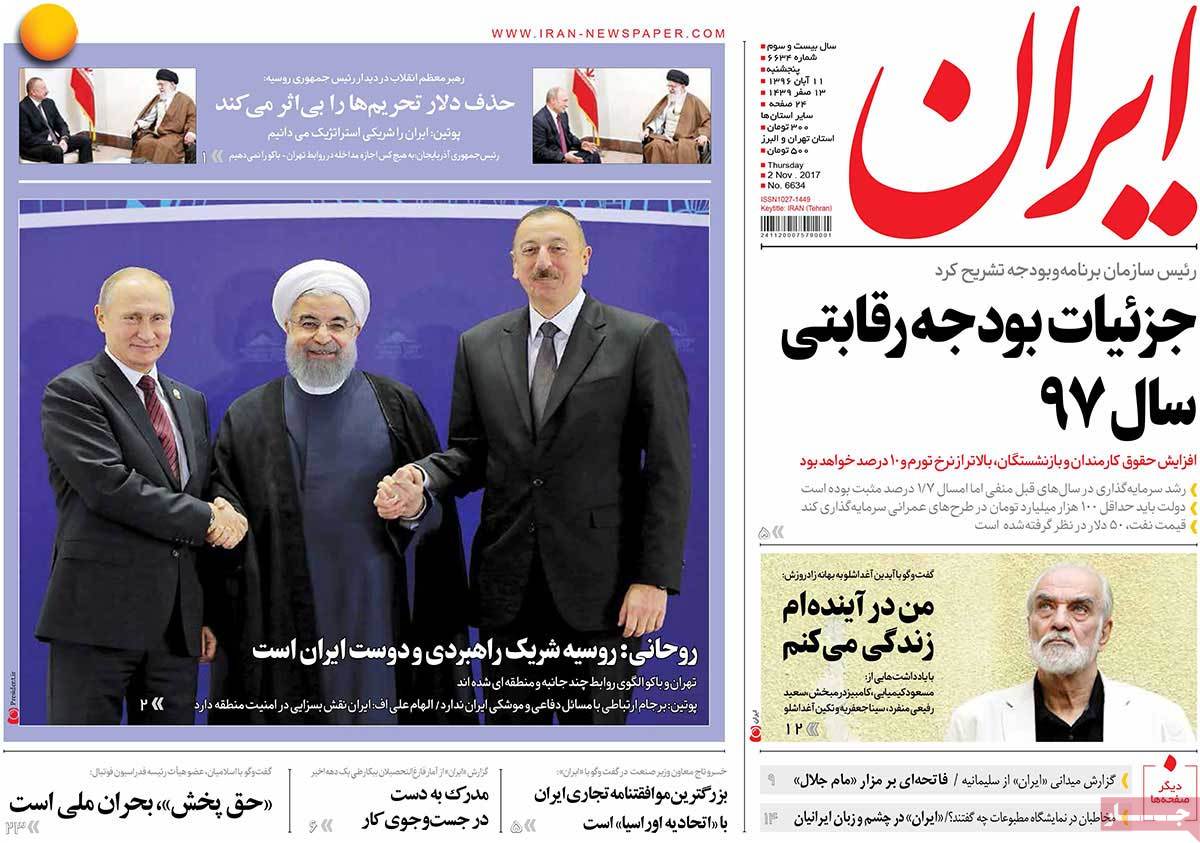
Iran:

1- Rouhani: Russia Is Iran’s Strategic Partner, Friend

2- Putin: Iran Nuclear Deal Has Nothing to Do with Its Defensive, Missile Issues

3- Azeri President: Iran Playing Key Role in Regional Security

A Look at Iranian Newspaper Front Pages on November 2


Javan:

1- Russian, Azeri Presidents Meet with Iran Leader

2- Ayatollah Khamenei: We Can Neutralize US Sanctions, Isolate Washington

A Look at Iranian Newspaper Front Pages on November 2


JomhouriEslami:

1- Trilateral Meeting of Iran, Russia, Azerbaijan Held in Tehran

  • Regional Convergence, Main Theme of Trilateral Summit

2- Iran Leader: God Has Promised Decisive Victory in Fight against Zionist Regime

3- Secretary-General of (P)GCC: Resolving Qatar Crisis Not My Responsibility!

A Look at Iranian Newspaper Front Pages on November 2


Kayhan:

1- Iran Leader: US Bullying Should Be Countered

2- Russian Manufacturers Pray US Sanctions Would Continue Forever: Putin

3- Kayhan Chief: Damages Caused by Iran Nuclear Deal Not to Be Compensated Soon

A Look at Iranian Newspaper Front Pages on November 2


Resalat:

1- Resistance Front to Survive, Israel to Decline for Sure: Palestinian Sheikh

2- Deputy FM: Biggest JCPOA Challenge Is Ill Intention of Previous, Incumbent US Administrations

A Look at Iranian Newspaper Front Pages on November 2


Terrorists Use Sheep for Suicide Attacks in Syria (+Video)

Security forces stopped a vehicle that was transferring sheep having explosives inside their body.

According to a video broadcast on the Syrian News Channel, while inspecting a car,the Syrian security forces founda large amount of explosives embedded inside the body of a sheep.

Earlier, the terrorists had placed weapons and explosives in the body of a cow and wanted to transfer this suicidal cow to capital Damascus.

Here’s the video broadcast by the Syrian News Channel:

World’s Longest Dining Table Set for Arba’een Pilgrims

Each year on the anniversary of the fortieth day after the martyrdom of Imam Hussein (AS) and his companions on the Day of Ashura, millions of people head to the holy Iraqi city of Karbala on foot to visit the holy Shrine of Imam.

According to a Farsi report by ISNA, the world’s longest sufra, 75 kilometres long, has been spread in DhiQarto host pilgrims of Imam Hussein (AS).

During the days left until Arba’een, many people in various Iraqi cities give their homes to the visitors to welcome Imam Hussein pilgrims.

The hospitality of the Iraqi people has eased the worries of the pilgrims about the place of accommodation and food.

Iraqis believe hosting pilgrims of Imam Hussein (AS) at their homes once a year is a blessing for them.

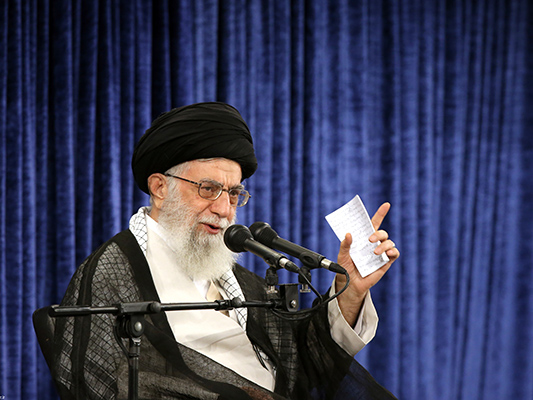
Trump Reveals US Hostility towards Iranian Nation: Leader

“They (the Americans) are not just hostile towards me or the Islamic Republic’s government; they are rather the enemy of the Iranian nation as it is standing [against them],” the Leader noted on Thursday.

He made the remarks in a meeting with a large group of young Iranians ahead of the November 4 ceremonies marking National Day of Fight against Global Arrogance.

“You heard the US president recently said the Iranian nation is a terrorist one. Look how foolish such view is. He didn’t say the Iranian leader or government is a terrorist; he said the Iranian nation i terrorist. Isn’t this hostility?”
Ayatollah Khamenei also noted that another US president, a few years earlier, had declared that the Iranian nation must be eradicated.
“That’s foolish! Can anyone root out such a nation with such historical background and huge cultural tree?” the Leader asked.
He said the US wants a yes-man to be in power in Iran. “Someone like the former Shah of Iran, Mohammad Reza Pahlavi,” the Leader added.
“The US did not even show mercy towards those who pinned their hopes on it and asked for its help; people like [ex-PM] Mohammad Mosaddeq who asked for America’s help and trusted them in order to stand against Britain, but then was overthrown by the Americans in the 1953 coup.”

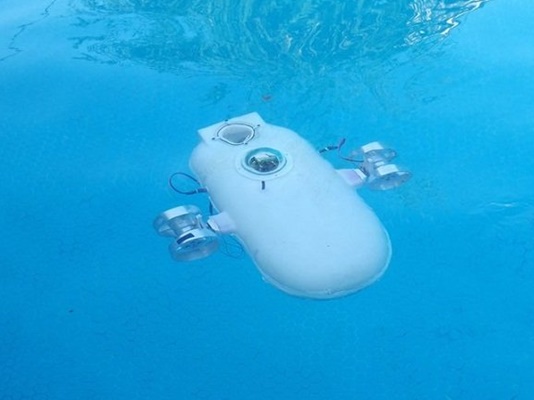
Iran Develops Smart Robot for Underwater Research

Iran Develops Smart Robot for Underwater Research

Head of the “Underwater Smart Robot with Rotary Actuator” project, Mehdi Alyar Shooreh-Deli, says the robot has managed to gain a bronze medal in the third technological festival of “Sea as the Progress Road”, a Farsi report by ISNA said on Wednesday.

He elaborated on the robot’s capabilities and added the underwater smart robot also known as AUV has a five-step gear for moving around.  “It is also capable of deciding how to pass through obstacles with two fixed and rotating cameras.”

The Iranian scientist also noted that the robot is equipped with a system for sending, receiving and storing photos and other information.

“Meanwhile, the robot can conduct research underwater nonstop for at least two hours,” he added.

He went on saying the robot has a weight of 21 kilogram and a 22-littre volume.

“The robot is capable of hovering and finding its bearings while suspended which make it similar to well-known robots designed and developed across the world,” he said, adding the Iranian scientists have managed to resolve some of the main problems which large-size robots usually suffer from.

He also expressed hope that the robot will have a promising future and added at present negotiations have begun with the Iranian naval forces to make the robot industrialized.

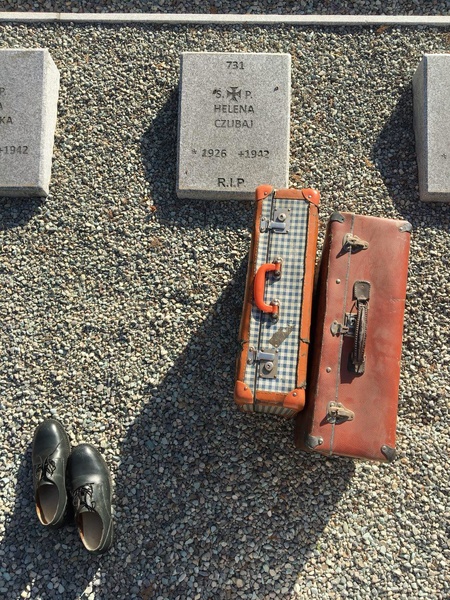
Iranian Play to Portray Lives of Polish WWII Refugees

Isfahan, the City of Polish Children

The play will be first staged at the Honar (Art) Hall in Isfahan on November 23. The group will then leave the city for Tehran to stage the play at the City Theatre Complex.

A number of Iranian teenagers have been working on the Iranian version of the play in 24 rehearsal sessions, according to a Farsi report by Khabar Online.

To be staged by Iranian actors, the play revolves around the migration of a group of Polish people to Iran during the World War II.  At the turn of 1942, a group of Polish refugees arrived in Iran on a ship via the Caspian Sea.

The central city of Isfahan shelters over 2500 Polish children who had lost at least one of their parents. Along with other Iranian cities like Mashhad and Ahvaz, the central city of Isfahan provided the children with training facilities so that they could also learn their own national language and culture.

The play was performed previously by a cast of Polish and Iranian actors at the Grotowski Institute in the Polish city of Wroclaw during August 2015.

In 2017, Ladder Team Youth Club was called by the Poland’s embassy in Tehran to stage the project which had been staged earlier in Poland. Now the theatre is set to be staged in Iran as part of a larger project to honour the 75th anniversary of the immigration of Polish people to Iran from the Soviet Union.

The performances have been co-organized by the Adam Mickiewicz Institute, an affiliate of Poland’s Ministry of Culture and National Heritage, PGNiG, a Polish state-controlled oil and gas company, and the Embassy of Poland in Tehran as well as several Iranian art and culture organizations.

Earlier in October, the organizers also held two photo exhibitions under the title “Born in the Independent Poland; Polish People, the Children of Isfahan”, both in Isfahan and Tehran.