Saturday, December 27, 2025
Home Blog Page 3802

Iran, Italy to Enhance Cooperation in Culture, Art

Iran, Italy to Enhance Cooperation in Culture, Art

Iran’s Minister of Culture and Islamic Guidance Abbas Salehi says Tehran and Rome have great potential to enhance mutual relations in the fields of art and culture, reports the Persian-language Shabestan News Agency.

“Iran and Italy have many commonalities in the domains of civilization and culture, and I hope relations between the two countries will further expand, said the Iranian minister in a meeting with Italian Ambassador to Tehran Mauro Conciatori.

Salehi said the two countries have taken good joint measures, which will create good opportunities for the two sides to forge closer cooperation in the fields of culture and art.

He touched upon Italy’s presence at Tehran’s international book fair, saying Iran and Italy’s participating in book fairs held in the two countries will set the stage for writers and publishers of both sides to further expand their cooperation.

He also said written works should be translated into Persian and Italian.

The top Italian diplomat, in turn, said Tehran and Rome have a long history of cooperation in the fields of cultural and artistic activities.

He then touched upon Italy’s Cultural Week to be held in Tehran, adding Rome plans to conduct numerous cultural and artistic activities during the event.

Who Is Real Winner of Recent Mideast Developments?

Senior political analyst Yadollah Javani has, in an article published by Basirat news website, weighed in on the most recent developments in West Asia. The full text of the analytical piece follows:

At this juncture, West Asia could be regarded as the world’s most strategic region due to different reasons. Indubitably, the power controlling this region will be a major player in international equations in the third millennium. Bloody battles in the region over the past 15 years began with the deployment of US military troops and the occupation of Afghanistan and Iraq. The US tried to gain a foothold in the region as a precursor to securing domination over the world. The Islamic Revolution of Iran not only freed Iran, as the most strategic country in the region, from the clutches of the US and the West, but challenged the West’s centuries-old domination over the Middle East. Over the past 15 years, the West led by the US has tried its utmost to maintain its domination over the region. Among the measures adopted by the West to achieve this objective were the invasion of Afghanistan and Iraq, the Israeli attacks on Lebanon and Gaza and the outbreak of the 33-day, 22-day, 8-day and 51-day wars, waging wars inside the Muslim world and triggering religious tensions by creating and equipping Takfiri terrorist groups such as ISIS, and the Saudi aggression against Yemen.

In these bloody conflicts as well as war of words and strategic standoffs, two forces are facing off and each one wants to overcome the other. On the one side of this front stand the elements of a triangle comprising the US, Israel and the Al-Saud dynasty receiving strategic advice from the old colonialist power, the UK. However, on the other side of the front stand the regional nations which, inspired by Iran and modeling their struggles after the Islamic Revolution of Iran, are engaged in a serious campaign to regain their identities and self-esteem and to extricate themselves from the clutches of the West, diabolical powers and corrupt, autocratic and puppet governments. In fact, the major confrontation in the region is unfolding between tyrants and the oppressed. Of course, in this war of words and strategic standoff, the Russians have come to the conclusion that standing by the regional nations will serve their interests. Popular forces in the region are organized around the axis of resistance in which Iran plays the main role. Now the question regarding this conflict and strategic standoff is that “Who will be the ultimate winner?”

Will the US, Israel and Al Saud be the final winners of this battle? Or will the regional nations be the winners? Reviewing the trend of the developments in West Asia over the past four decades and figuring out the key and determining processes will give us a definitive answer. In these trends, the following points could determine the future for both fronts.

Tyrants’ Front

  1. Over the past four decades and especially in the recent 15 years, the Americans have suffered strategic defeats in the region. As their power has declined, they have lost their ability as a player to achieve their objectives. Over the past years, they have sustained heavy costs and have inflicted damage, but have failed to gain what they wanted. The Americans have been seeking to form a new Middle East with features they desired. The full extent of the Americans’ failure to achieve this objective can be figured out by reviewing Trump’s words at different junctures throughout his election campaign where he said that Washington had spent $6 billion on Middle East wars without gaining any achievements. The United States is the real loser of the developments in Iraq, Syria, Lebanon, the occupied territories and other developments.
  2. Although the Zionist regime of Israel had enjoyed security in recent years thanks to the tensions triggered by terrorist groups in the region, Tel Aviv is now extremely worried about its future following the defeat of the ISIS and other terrorist groups in the region as well as an increase in the power of the resistance front due to its strategic triumphs. During Israel’s wars against Lebanon and Gaza, uncertainty grew over the Tel Aviv regime’s power.

Now, the bellicose Israeli regime does not dare launch military attacks on other countries as it used to. The victory of the resistance front over ISIS, the decline of the US power in the region and the Islamic Awakening current gaining strength have all put the Israeli regime in a strategic bind.

  1. The defeats of the United States and Israeli regime in the Middle East region can be regarded as the failures of the Al Saud regime. The Saudi regime has lost its influence in Iraq and Syria altogether and is seriously concerned about its influence in Lebanon. The Saudis are trying to create a crisis in Lebanon by making Saad Hariri resign as Lebanese president, hoping to put an end to Iran and Hezbollah’s influence in Lebanon. Riyadh’s resorting to the Israeli regime to attack Hezbollah indicates Saudi rulers’ growing concern over losing their leverage in Lebanon. The Al Saud rulers have been overcome by the oppressed and poor Yemeni people, and are now on the defensive in a war that it started itself. Yemen’s possession of the technology to develop missiles capable of striking Riyadh has extremely horrified Saudi Arabia. A turf war among Saudi princes as well as the extensive and unusual arrests shows what the situation of the Al Saud dynasty is like. Currently, many Western analysts believe Saudi rulers’ behaviour are similar to the behaviour of the Shah [former Iranian dictator] before the downfall of the Pahlavi regime (the former Iranian regime led by the Shah).

Therefore, the tyrants’ front in the region is heading toward annihilation and will never be able to escape this fate.

Front of the Oppressed

The front of the oppressed also known as the front of nations led by the Islamic Republic of Iran has turned into a very strong front in the region. Now, Iran’s strategic influence in the region coupled with its scientific and military strength has tipped the balance of power in the region in favour of nations. Iran’s strategic influence in the region is the major concern for the West, especially the US. Western nations are worried because this influence is based on the support of people, people who have been organized in the regional countries and are developing their power in a targeted manner. The Lebanese Hezbollah, Yemen’s Ansarullah, Iraq’ Popular Mobilization Unites and popular forces in Syria are prime examples of organized people. Incontrovertibly, this people-based front will form the future of the region. After several years, order will return to the Middle East on the back of efforts by the regional nations. So, there is no doubt that the main winner of the developments in West Asia is the regional nations led by Iran.


Iran Earthquake ‘Divine Trial’ for Statesmen: Leader

Iran Earthquake ‘Divine Trial’ for Statesmen: Leader

Speaking in a Tuesday meeting with heads of the trio branches of power and other officials in Tehran, Ayatollah Khamenei expressing his deepest condolences over the heartrending earthquake, and offered his sympathy to the people of Kermanshah province.

“It is extremely difficult to lose one’s beloved people. But, I hope that God brings His peace and patience to the hearts of the grieving families and brightens their eyes by His favor and mercy.”

The Leader also appreciated the presence of Iranian officials at locations struck by the earthquake, and said the efforts must strongly continue to help the people, so it can ease their problems.

Ayatollah Khamenei considered the recent disaster as a divine trial and a situation for officials to perform their duties, adding, “During these past two days, officials, including the president, visited and expressed their sympathy for the survivors. I hope that these sympathetic attitudes continue, in practice, effectively helping the people.”

The Leader also expressed the hope that they can reduce the pain and sufferings of the people, as “the cold weather is upon us.”

Ayatollah Khamenei stressed that increased sympathy and cooperation are the effects of such events, adding, “These events lead everyone into the realm of cooperation; and, we hope that this kindness and fraternity attracts divine blessings for the brave people of Kermanshah and all the Iranian people.”

In the meeting, Iranian President Hassan Rouhani referred to the efforts of all units, in aid and rescue operations, for treating the injured and survivors.

“This event is a trial for us. I thank all the units who have been working hard and continue to help, especially the Armed Forces, who acted very well.”

Book on Iran’s Lut Desert Hits Shelves

Book on Iran’s Lut Desert Hits Shelves

A book on the vast Lut Desert in east-central Iran has been published in both Farsi and English, according to a Farsi report by IRNA.

The book titled “The Lut Desert: Iran’s First Natural Feature Registered on UNESCO’s World Heritage List” was published by Iranian cultural heritage institutions, including the Directorate General for Cultural Heritage in the northeastern Iranian province of South Khorasan.

The Lut Desert is an amazing Iranian phenomenon; so, before it was registered, extensive research was conducted on the location and geographical features, the traditional-historical scenery, and the flora and fauna of the desert as well as the international standards [based on which it has been evaluated],” said Ali Shariati, the deputy director of the directorate general.

“Now, given that the Lut Desert has been registered internationally and considering the efforts made by researchers and the growing number of domestic and foreign visitors, we tried to publish the book in Persian and English and make it available to domestic and foreign visitors,” he added.

The book expounds on the cultural and historical attractions of the desert as well as the activities of local communities. The book also highlights the necessity of preserving the region.

The Lut Desert is a large salt desert measuring around 23,000 sq km. It was registered on UNESCO’s World Heritage List on July 17, 2016.

Iran to Shine in 2018 FIFA World Cup Russia: Italian Website

Iran to Shine in 2018 FIFA World Cup Russia: Italian Website

It seems the national teams of Iran and Mexico could grab the world’s attentions during the tournament because as experts say, the two teams have good players with high technical abilities, a report by Drive Sportive Radio said.

Iranian national football team managed to open its way to the world tournament as the second team after Brazil. While Iran does not have a good record in world cup tournaments, it is the winner of three Asian cups.

Under Carlos Queiroz, the Iranian national team have had a good performance over the past years. One of the main young players of the team is Sardar Azmoun who plays as a forward for the Russian club Rubin Kazan. He has already scored 20 goals for the Iranian national team. If Iran has a good chance to fall in a relatively average group, the country’s national team can gain the title of the “Wild Card” of FIFA World Cup 2018.

With the FIFA World Cup 2018 expected to be held in Russia in 2018 in the coming summer, many football fans have already begun to predict the results of the plays and the performances of the teams participating in the world tournament.

Russia had once hosted the FIFA World Cup in 1980. The tournament is set to open on June 14 in Moscow. 32 national football teams are taking part in this tournament, and the final game is set to be held on July 15.

Iran, Russia Discuss Syria Crisis in Moscow

Iran, Russia Discuss Syria Crisis in Moscow

Jaberi Ansari on Tuesday conferred with Russian Deputy Defence Minister Alexander Fomin and Russian President Vladimir Putin’s special envoy for Syrian Affairs, Alexander Lavrentiev, on the Syria crisis and ways to end the conflict in the Arab country.

During the meeting, which was held at the Russian Defence Ministry, they also talked about the latest efforts and initiatives of the three guarantor states of Astana Process – Iran, Russia, and Turkey – to de-escalate the ongoing tension and resolve the Syria crisis.

Earlier in the day, Jaberi Ansari also met his Russian counterpart Mikhail Bogdanov.

Iran, Russia Discuss Syria Crisis in MoscowDuring the meeting, the head of Iran’s delegation to Astana Talks and the Russian official, who is Putin’s special representative for the Middle East, discussed the latest developments in the region and the cooperation between the two countries to resolve the Syrian crisis.

Syria has been gripped by foreign-backed militancy since March 2011.

Diplomatic efforts to end fighting in Syria gained momentum in 2017 with the announcement of a ceasefire in the Arab country in early January.

Iran, Russia, and Turkey have initiated a series of peace talks, known as Astana Process, to end more than six years of war in Syria. The 7th round of the peace talks began in the Kazakh capital of Astana on October 30.

The fourth round of the talks in May produced a memorandum of understanding on de-escalation zones in Syria, sharply reducing fighting in the country.

During the sixth round of Astana talks in September, Iran, Russia and Turkey agreed on a deal to establish and patrol a de-escalation zone in Syria’s northern Idlib province. In early October, Turkey deployed tanks and military vehicles on its Syrian border, building up military presence in Idlib.

According to a report by the Syrian Centre for Policy Research, the conflict has claimed the lives of over 470,000 people, injured 1.9 million others, and displaced nearly half of the country’s pre-war population of about 23 million within or beyond its borders.
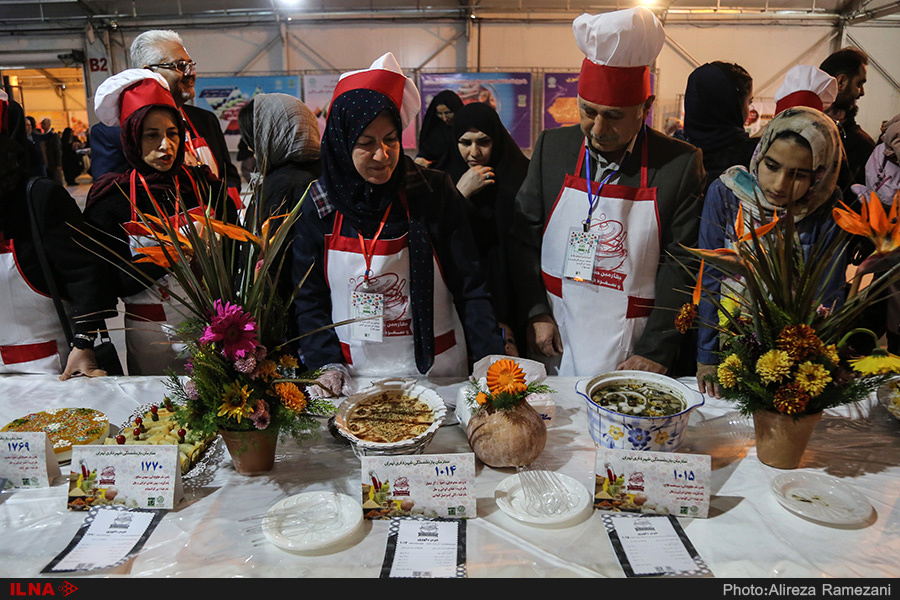
Iran’s Beauties in Photos: Aynaloo Protected Zone

The protected zone has been registered as a biosphere reserve in the United Nations Educational, Scientific, and Cultural Organization (UNESCO).

It has special and valuable herbs and animals, and natural, recreational and training tourist attractions.

Aynaloo area is a very small district of Arasbaran Protected Zone, which has an areas of 80 thousand hectares.

The nature of this area is very beautiful and glamorous and motivates every visitor. Its most outstanding feature is the intactness of its nature.

It dates back to the ice age and is one of the rich ecosystems on earth. This area is covered by forest, steppe and other vegetation.

Aynaloo is a mountainous and lush forest area with marvellous nature and in its surroundings, there are tens of hectares of forest which have been fenced by the Department of Environment.

Here are ISNA’s photos of the protected zone:

“Schools Destroyed in Iran Earthquake to Be Reconstructed Soon”

“Schools Destroyed in Iran Earthquake to Be Reconstructed Soon”

Education Minister Mohammad Bat’haee has expressed deep sorrow over the Sunday night’s deadly earthquake in western Iran, saying the temblor has inflicted heavy damage on schools, especially in Kermanshah province.

He went on to say a total of 22 schools have been destroyed, a Farsi report by ICANA said.

The minister added several aging schools with “low resistance’ in Ilam and Kurdistan provinces also run the risk of collapsing and, hence, cannot be used by students.

He vowed immediate efforts to reconstruct the destroyed schools and provide educational facilities for the affected areas.

“After surveying the damage, we will set aside a special budget for the immediate reconstruction of schools, so that the education of students, especially those in Kermanshah, will not be disrupted,” the minister added.

He said connexes will be used as makeshift classrooms for students before schools are rebuilt.

Hariri’s Interview Just Like Confession under Torture: Analyst

Hariri’s Interview Just Like Confession under Torture: Analyst

Sabah Zanganeh, an expert on Arab world issues and the former Iranian envoy to the Organization of Islamic Cooperation (OIC), has, in an article, weighed in on the developments surrounding Lebanese Prime Minister Hariri’s suspicious resignation and his recent interview with Future TV.

The highlights of the analytical piece follow.

Saad Hariri’s interview was a confession under torture. In most parts of his comments, Hariri supported the Saudi king and crown prince. The rest of his remarks was allocated to accusing Iran and Hezbollah. Hariri drank three glasses of water in the minutes-long interview, which indicated he was under stress. The Lebanese premier looked as if he had suffered from sleep deprivation for hours and probably days. Given how Hariri looked during the interview, Saudi Arabia cannot clearly deny having put him under pressure.

During his interview, Hariri was somehow calmer than when he was announcing his resignation. It should be noted that Hariri had been weak at using the Arab literature since long ago, which was completely clear in his interview with al-Mustaqbal (Future TV). Some of the words as well as the colloquial Arabic language he used were imperfect, but the text of his resignation included a stronger and better language. This shows the text of Hariri’s resignation statement had not been written by him. Anyway, in order to put into effect the scenario they have prepared for Lebanon, the Saudis needed that interview. To all appearances, Hariri must have been under pressure and detention till now.

[As for Riyadh’s call for an emergency meeting by the Arab League, the analyst said] The Arab League holding a meeting at Saudi Arabia’s request will reveal Lebanon’s expulsion from the league. In other words, by convening the extraordinary meeting, Saudi Arabia intends to build a regional consensus and an Arab coalition to invoke new sanctions on Lebanon. However, disarray within the Arab league shows such a meeting is unlikely to be held. The secretary general of the Arab League has talked with Egyptian officials about that, and Cairo has expressed its opposition to it. From this perspective, countries such as Algeria, Egypt and probably Kuwait will oppose the expulsion of Lebanon from the Arab League.

As for Hariri’s return to Lebanon, I should say it seems unlikely that Saudi Arabia will easily allow him to go back to his country. Riyadh’s saying that Hariri’s brother would be a good replacement for him shows the full extent of Saudi Arabia’s interference and of disagreement between Hariri and Riyadh. On the other hand, Hariri says his life is in danger, and on the other, announces he will return to Lebanon. The contradiction in his words together with his unstable behaviour proves that Riyadh has full control over him. All in all, the elimination of Hezbollah from Lebanon’s political arena could be regarded as the main scenario.

How Much Iraqis Spend to Host Arba’een Pilgrims

How Much Iraqis Spend to Host Arba’een Pilgrims

There may be only one single road in the world whose regular pedestrians walk along it with “love”: The road from Najaf to Karbala, Iraq’s two holy cities, is filled with kindness and human sympathy.

Most of the Iraqis living in the roadside houses share their homes with the pilgrims to make up for the shortages that their country is suffering from when it comes to hosting foreign pilgrims. During Arba’een ceremony, the house owners personally meet the pilgrims walking along the Najaf-Karbala road and invite them to their homes for a rest.

How Much Iraqis Spend to Host Arba’een PilgrimsAccording to a Farsi report by ISNA, most Iraqis living in the two cities of Najaf and Karbala save the salaries of only three months of each year for their own. They save the salaries of the remaining months for hosting Arba’een pilgrims.

The average cost of hosting these pilgrims for each Iraqi citizen is from 2 to 25 million Iraqi dinar (about $1,700 to $21,500) depending on their salary. They believe that with hosting the pilgrims, their income becomes blessed.

Mohammad Majid Shamekh is 46 years old. His house is located in Karbala. He works in a greenhouse. When Arba’een pilgrims start their trek to the holy shrine of the third Shiite Imam, he shares his two-storey house with them and each member of his family begins to offer services to the pilgrims. His daughters bake breads for the pilgrims and his wife does the cooking. He annually spends over $25,000 to host Arba’een pilgrims.

How Much Iraqis Spend to Host Arba’een PilgrimsHamed Nessari is 35 years old and lives in Karbala. He has several trucks and uses them during Arba’een ceremony to host the pilgrims along Najaf-Karbala road. He spends from $6,000 to $7,000 annually to host Arba’een pilgrims.

Majid Shamekh and Hamed Nessari are not alone in hosting Arba’een pilgrims. There are lots of Iraqis who spend their time and money to host the pilgrims. They don’t care about the identity or origin of the pilgrims. The door of their houses are open to all pilgrims regardless of their nationality or identity. The only thing that matters for them is that the pilgrims are taking step in one single road and destination:  Love.

Here is a video of the way some Iraqi people host their guests during Arba’een: