Tuesday, December 23, 2025
Home Blog Page 3694

Iran’s Khuzestan Ready to Attract German Investments: MP

Abdullah Sameri, a member of the Iranian Parliament’s Energy Commission, says German companies can make good investments in Khuzestan given the province’s great potential in energy, agricultural, and industrial fields.

Speaking in a Wednesday meeting with German ambassador to Tehran, Sameri thanked the European country for its positive approach towards the Iran nuclear deal and called for further expansion of bilateral ties between Tehran and Berlin in various fields.

He went on to say the Iranian parliament supports any efforts to strengthen bilateral ties with Germany, a Farsi report by ICANA said.


Germany Remains Committed to JCPOA

For his part, German ambassador Michael Klor-Berchtold highlighted the growing activities of German companies in Iran, saying some of these companies didn’t leave Iran even under the international sanctions over its nuclear program.

He then announced his country’s commitment to the Iran nuclear deal, saying Germany has not only made whatever in its power to turn the JCPOA into a success but also put hard efforts into preserving it.

Klor-Berchtold also described the JCPOA as a complicated issue and said, “Germany along with its European partners have stood firm by the JCPOA despite efforts of one of the signatories of the deal to create an instable atmosphere and discourage foreign companies from making investments in Iran.”

He also called for further enhancing of bilateral relations between Iran and Germany in economic and political fields.

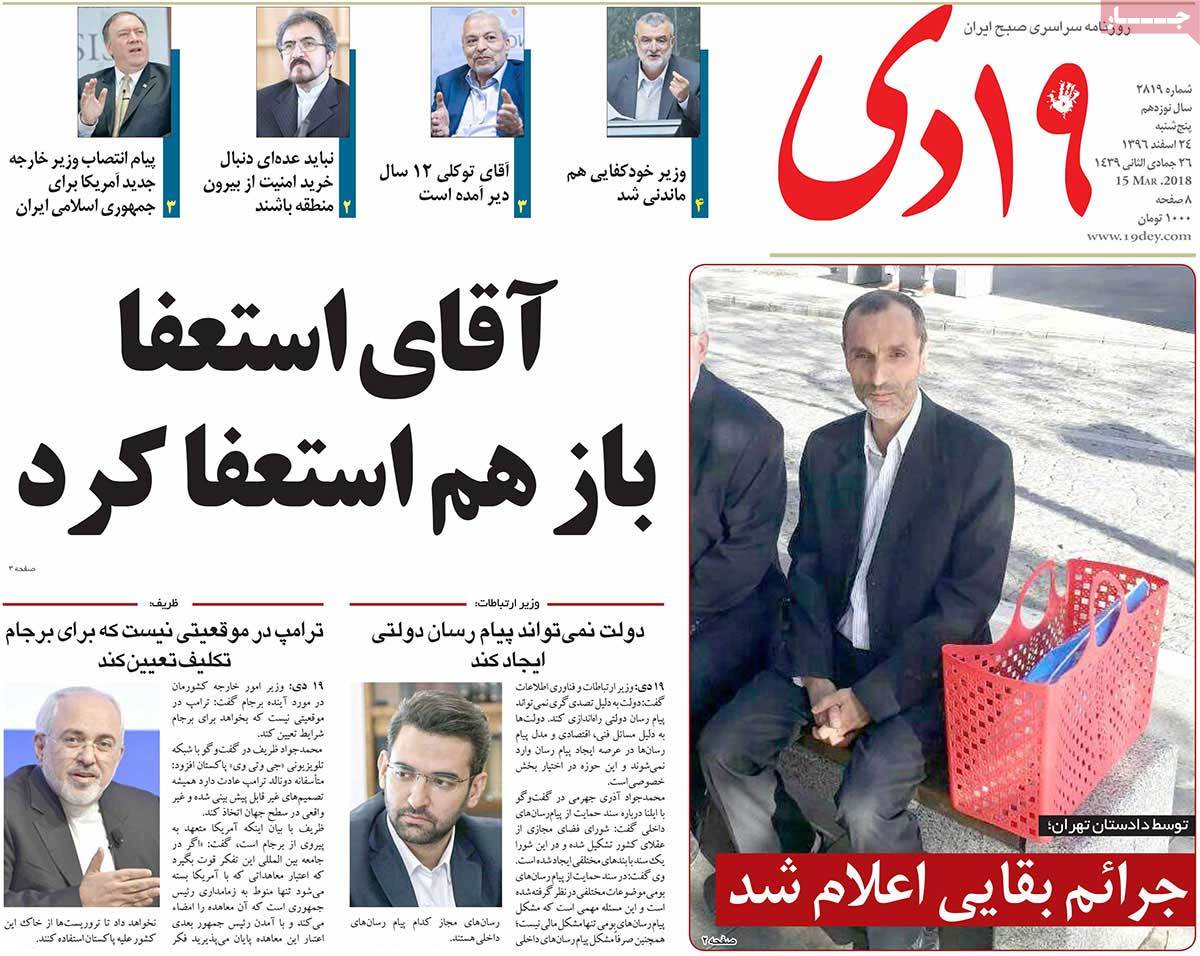
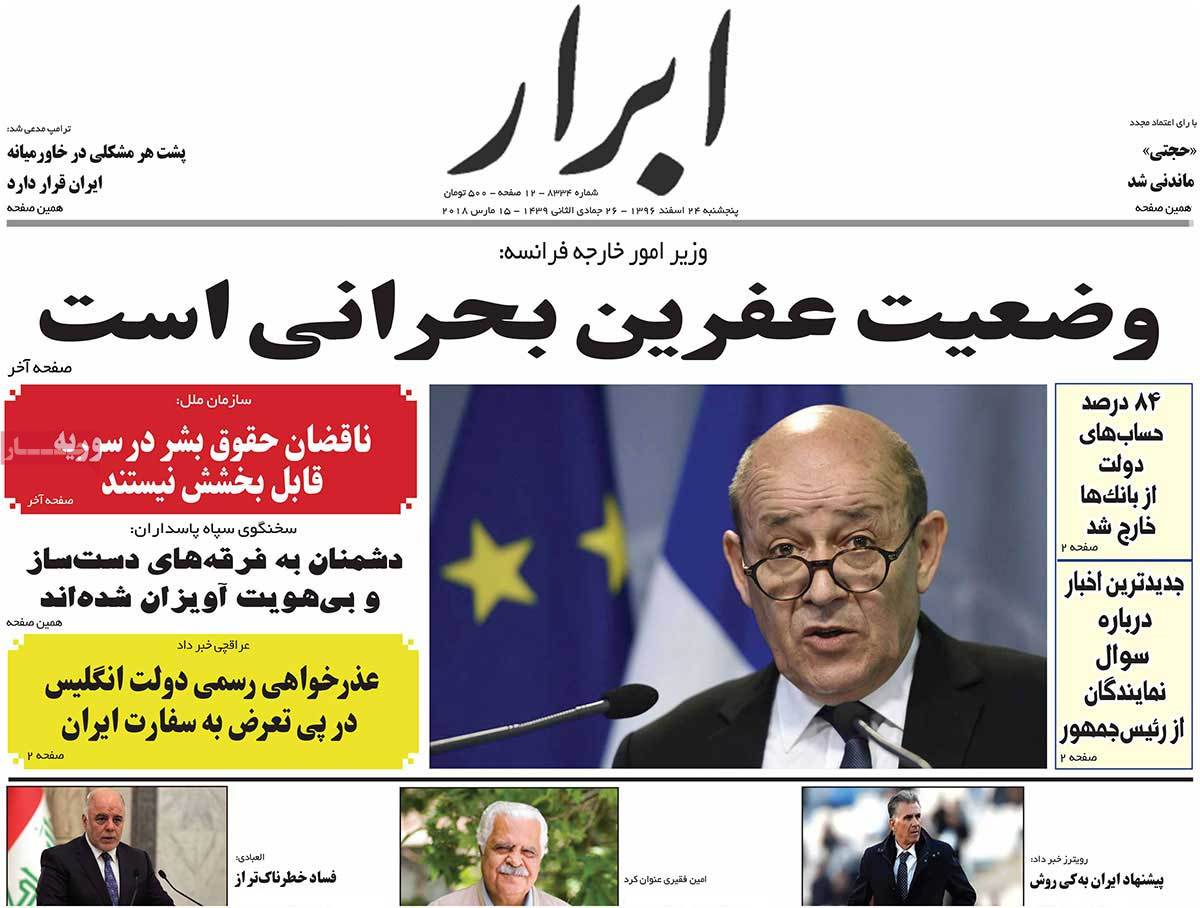
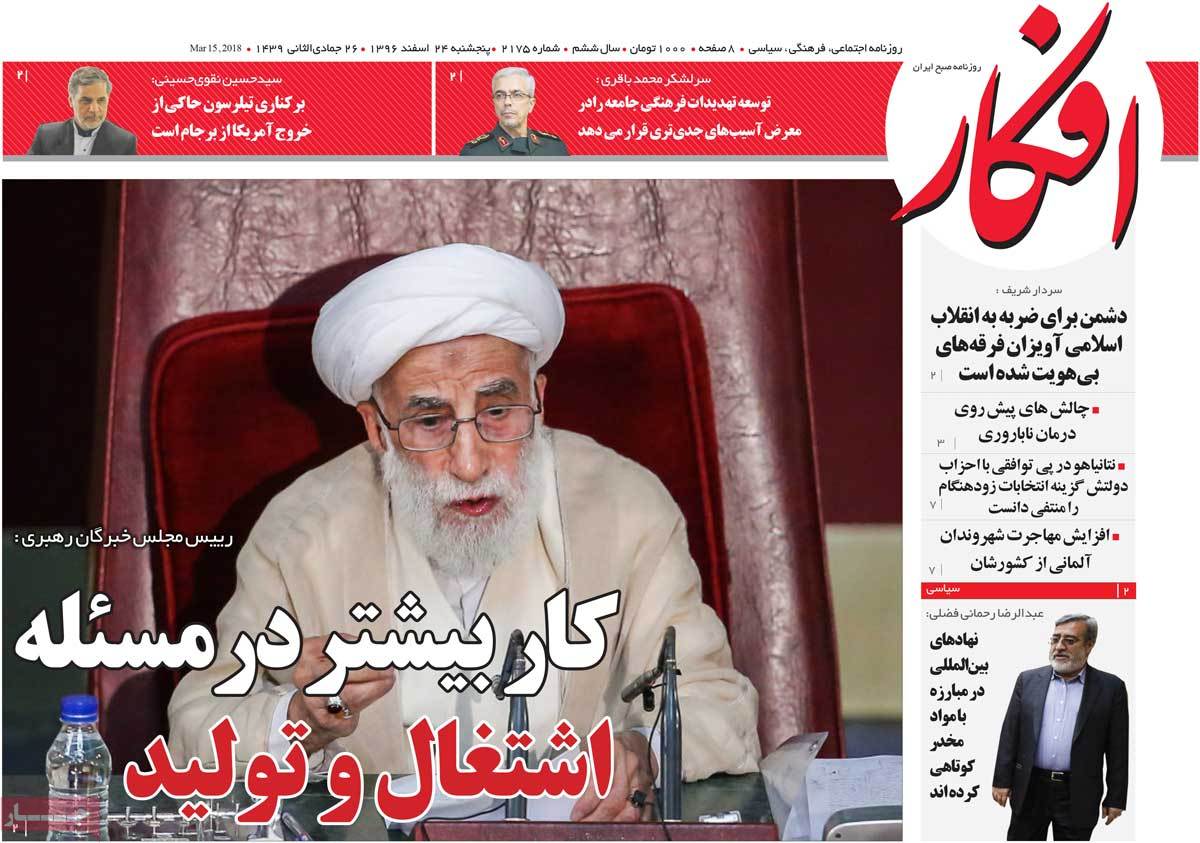
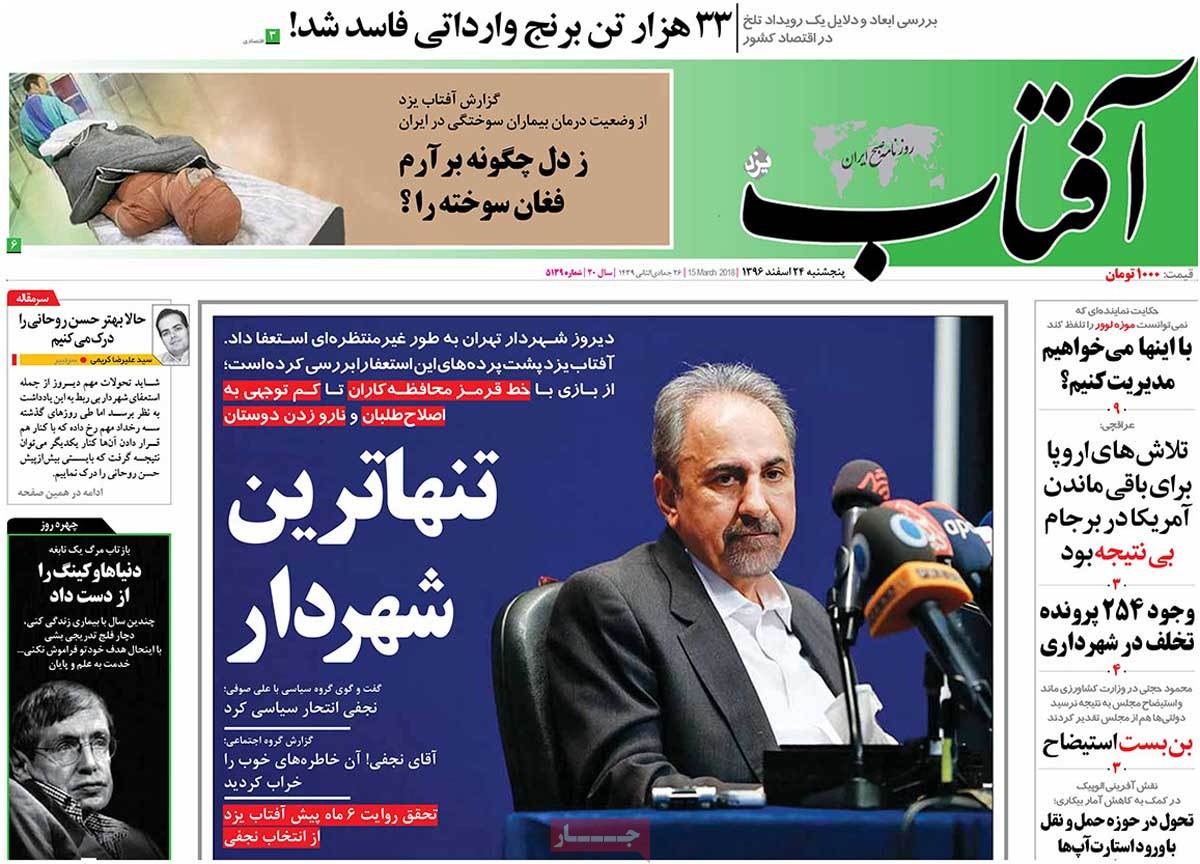
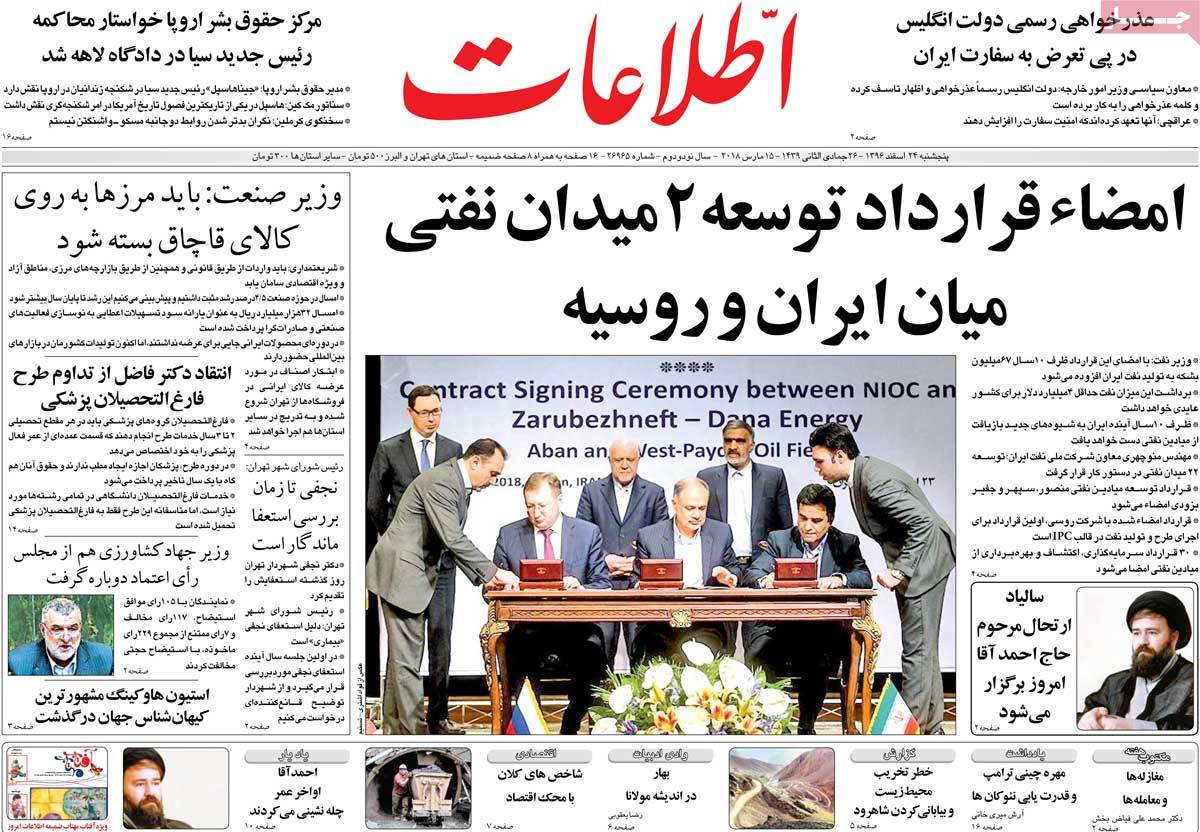
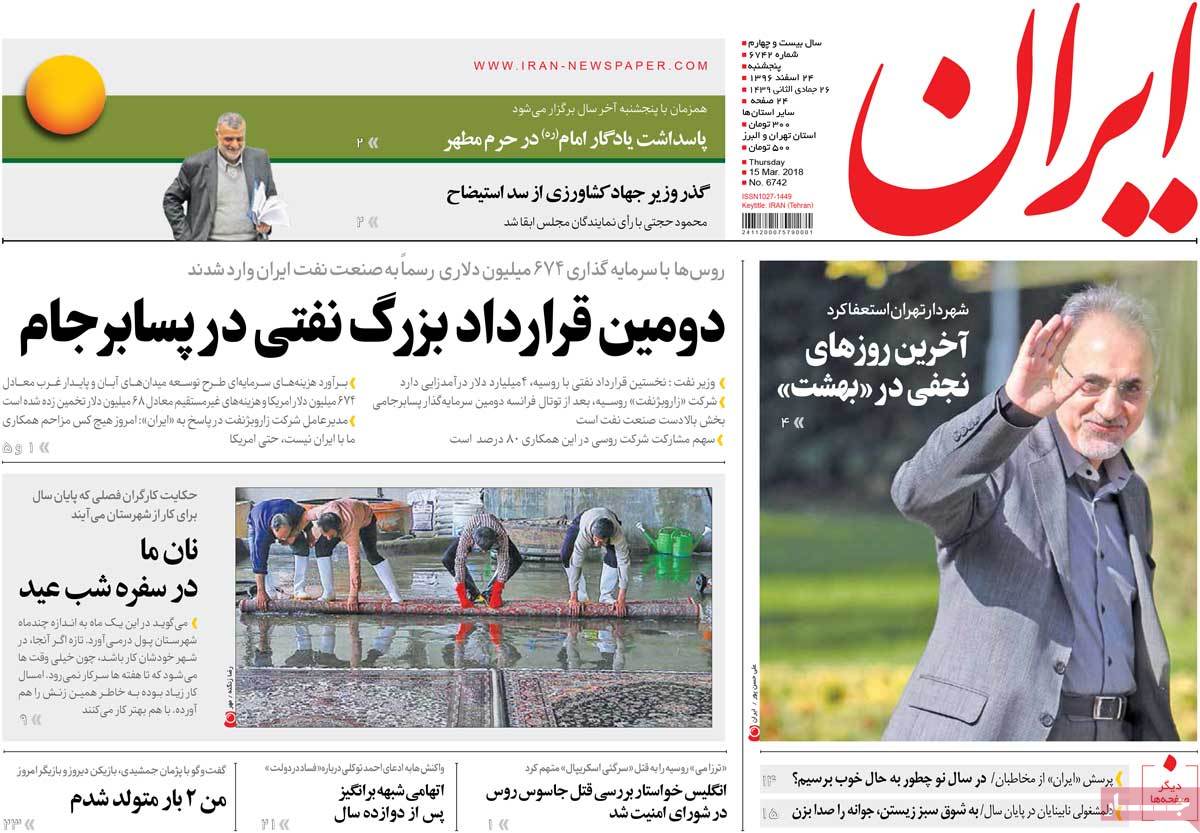
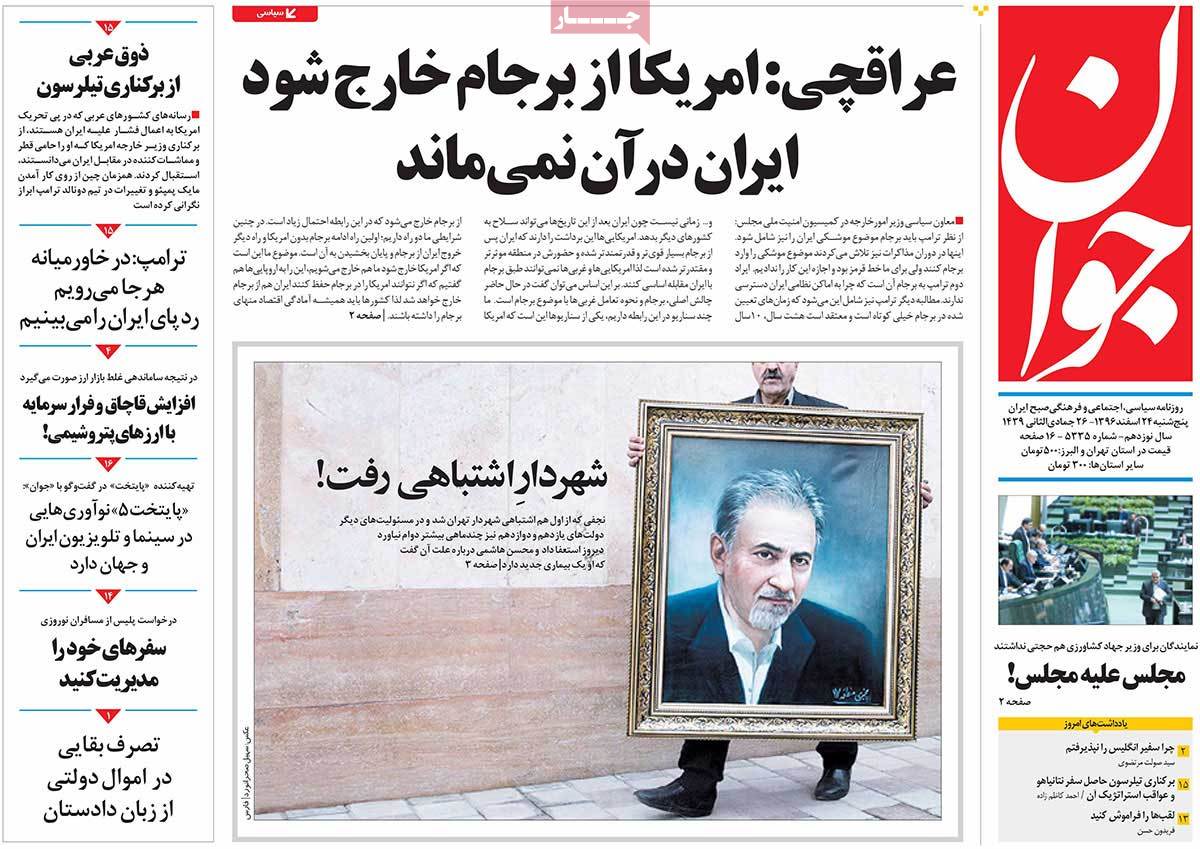
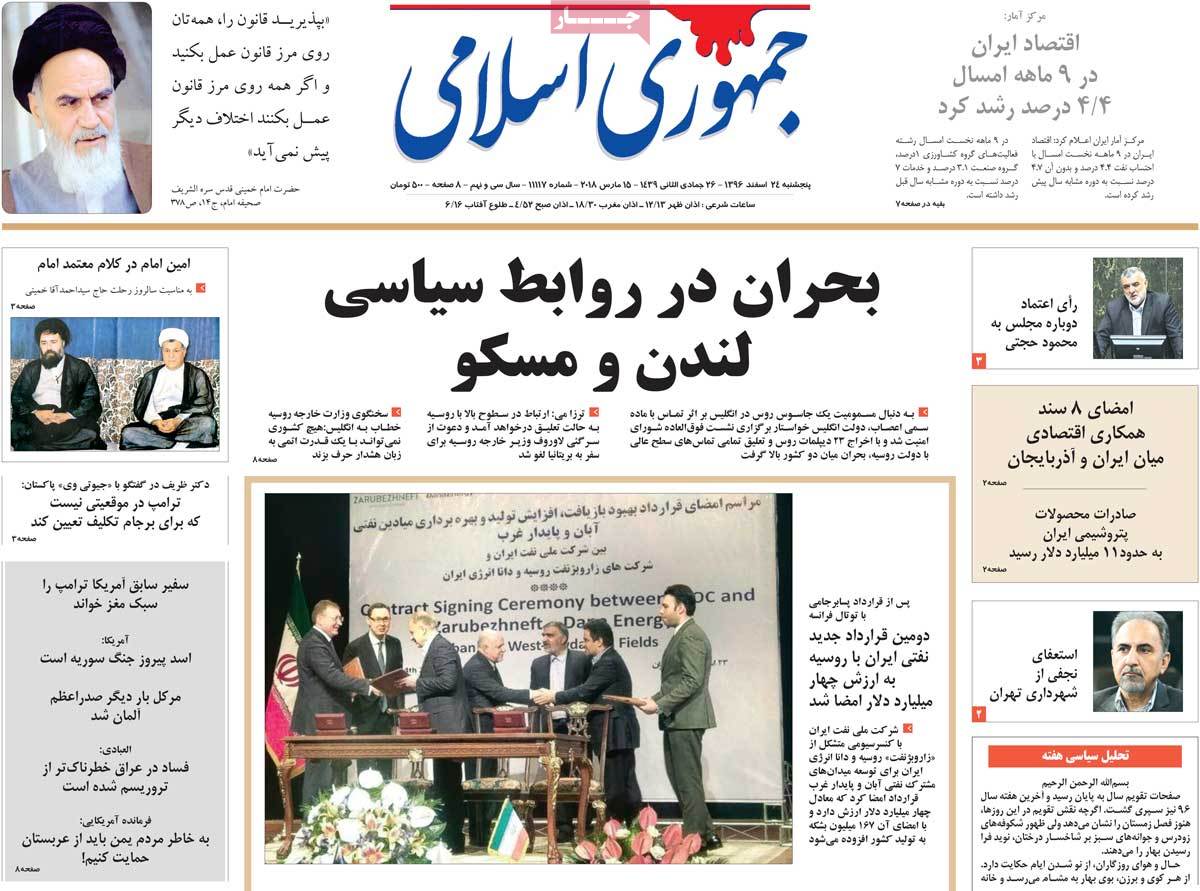
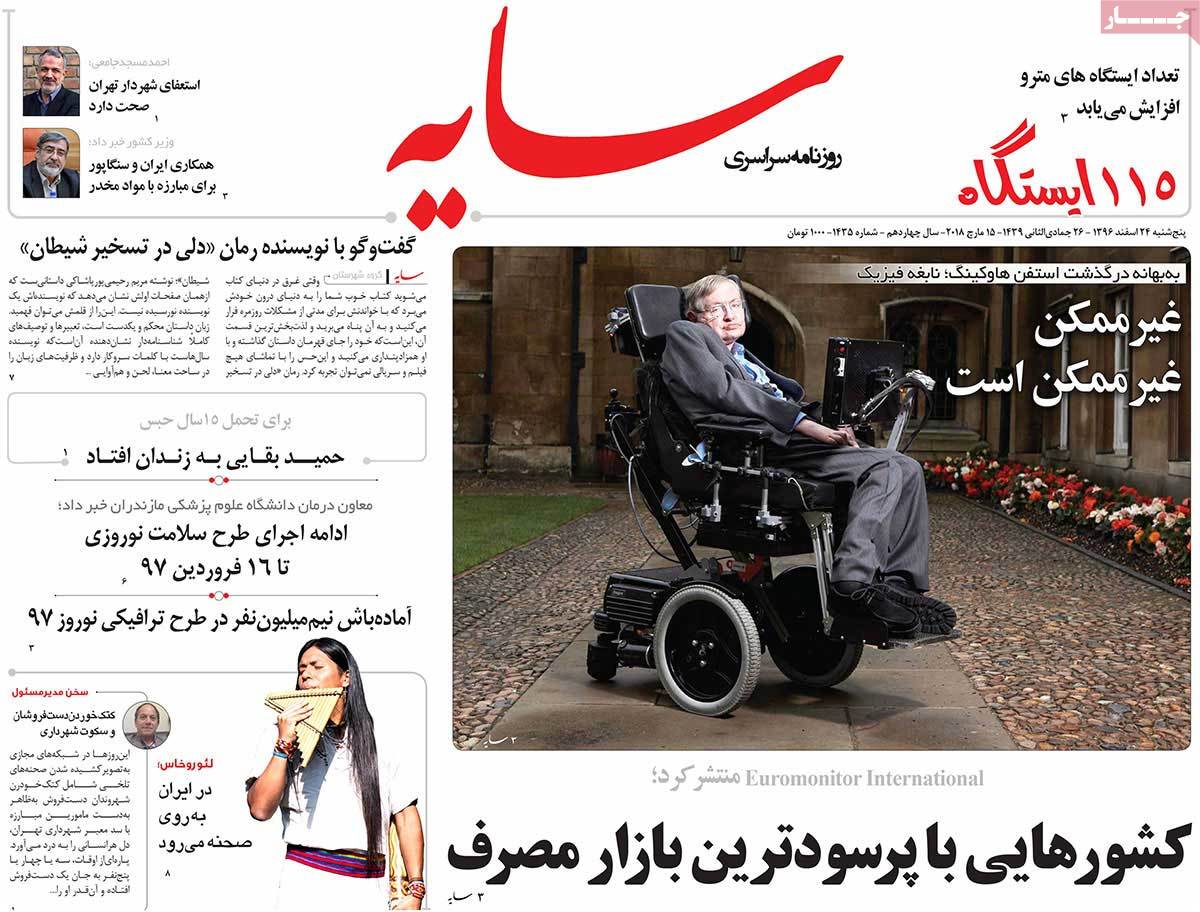
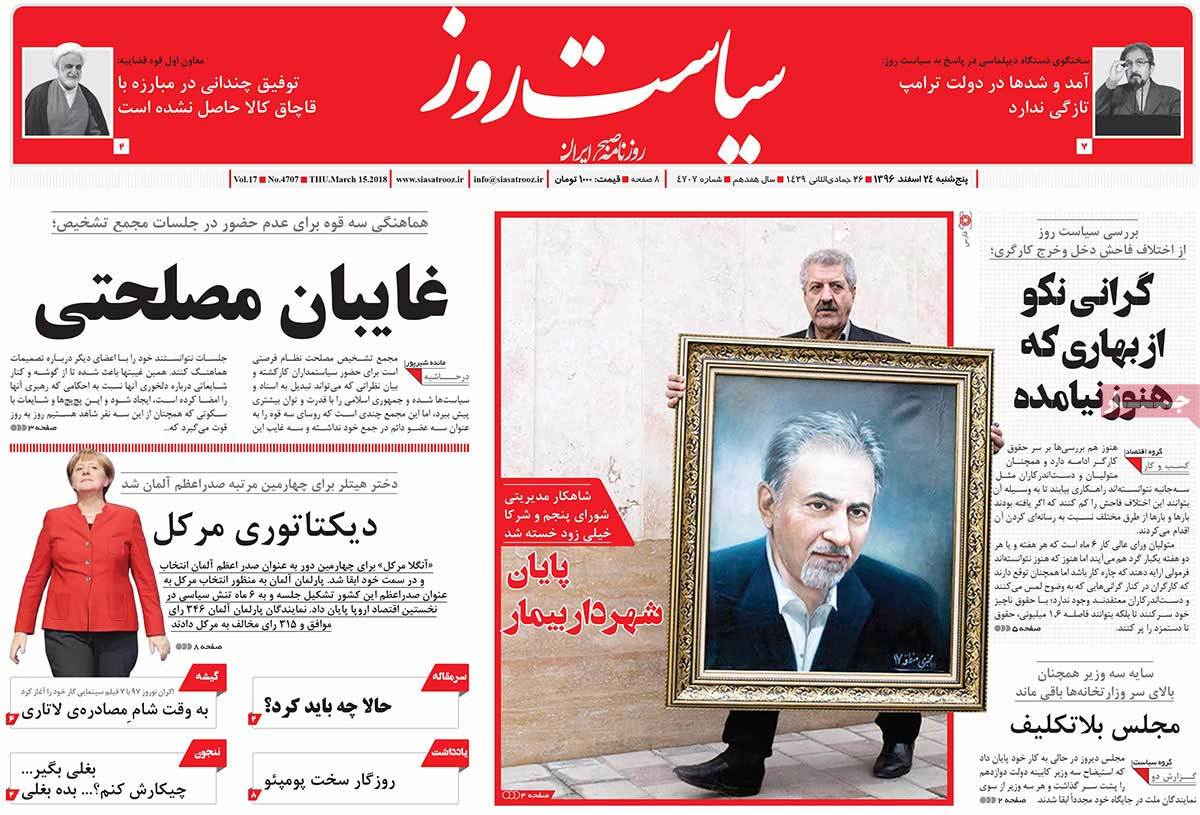
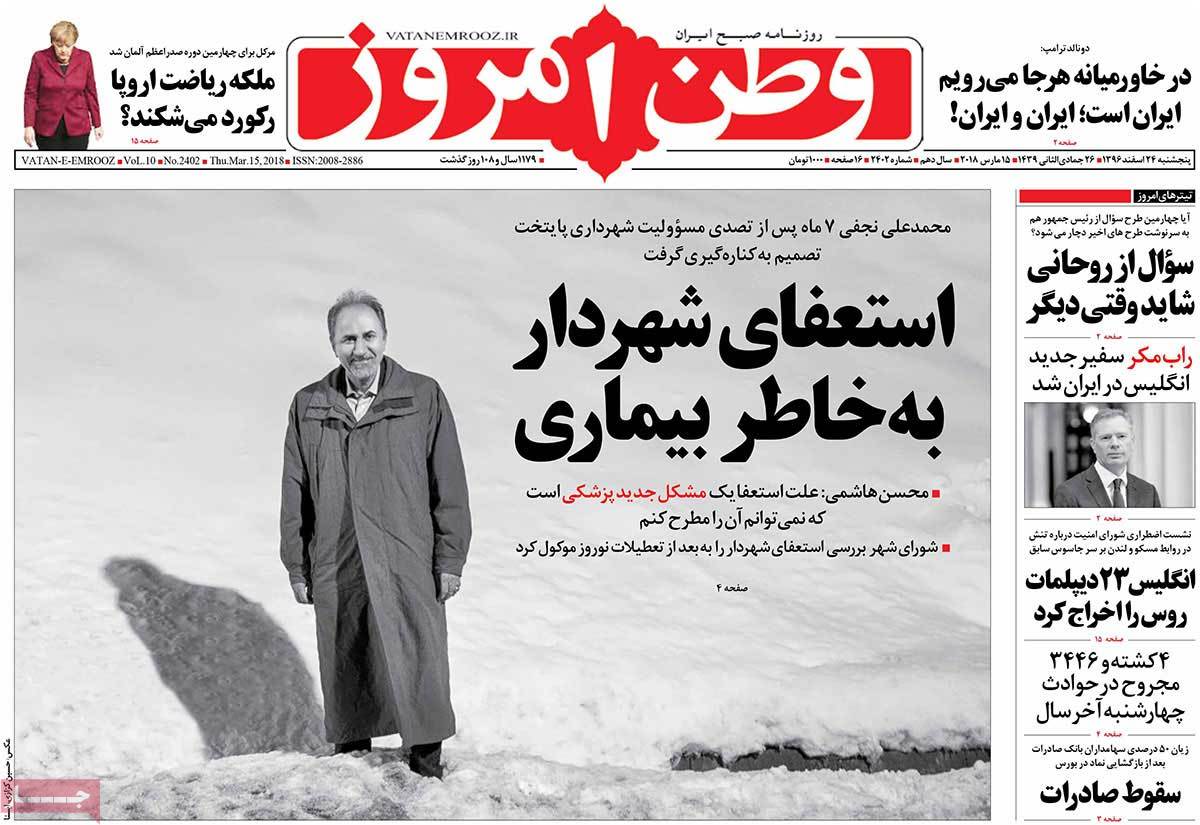
A Look at Iranian Newspaper Front Pages on February 22

A Look at Iranian Newspaper Front Pages on November 18

Almost all newspapers today covered the repercussions of the recent clashes between a group of rioters, who were apparently supporting the dervishes of Gonabad, and the police forces in Tehran’s Pasdaran Street, which led to the deaths of three soldiers and two Basij [voluntary] forces.

Also a top story today was the letter of former president Mahmoud Ahmadinejad to the Leader of Iran’s Islamic Revolution Ayatollah Seyyed Ali Khamenei, in which the latter was asked to dismiss Judiciary Chief Ayatollah Sadeq Amoli Larijani and hold early parliamentary and presidential elections without what Ahmadinejad called the Guardian Council’s effort to “rig” the votes.

Several papers also highlighted the trips of Spanish Foreign Minister Alfonso Dastis and Dutch Foreign Minister Sigrid Kaag to Tehran, during which the two top diplomats held talks with Iranian President Hassan Rouhani, Foreign Minister Mohammad Javad Zarif, top security official Ali Shamkhani, and the Leader’s advisor Ali Akbar Velayati.

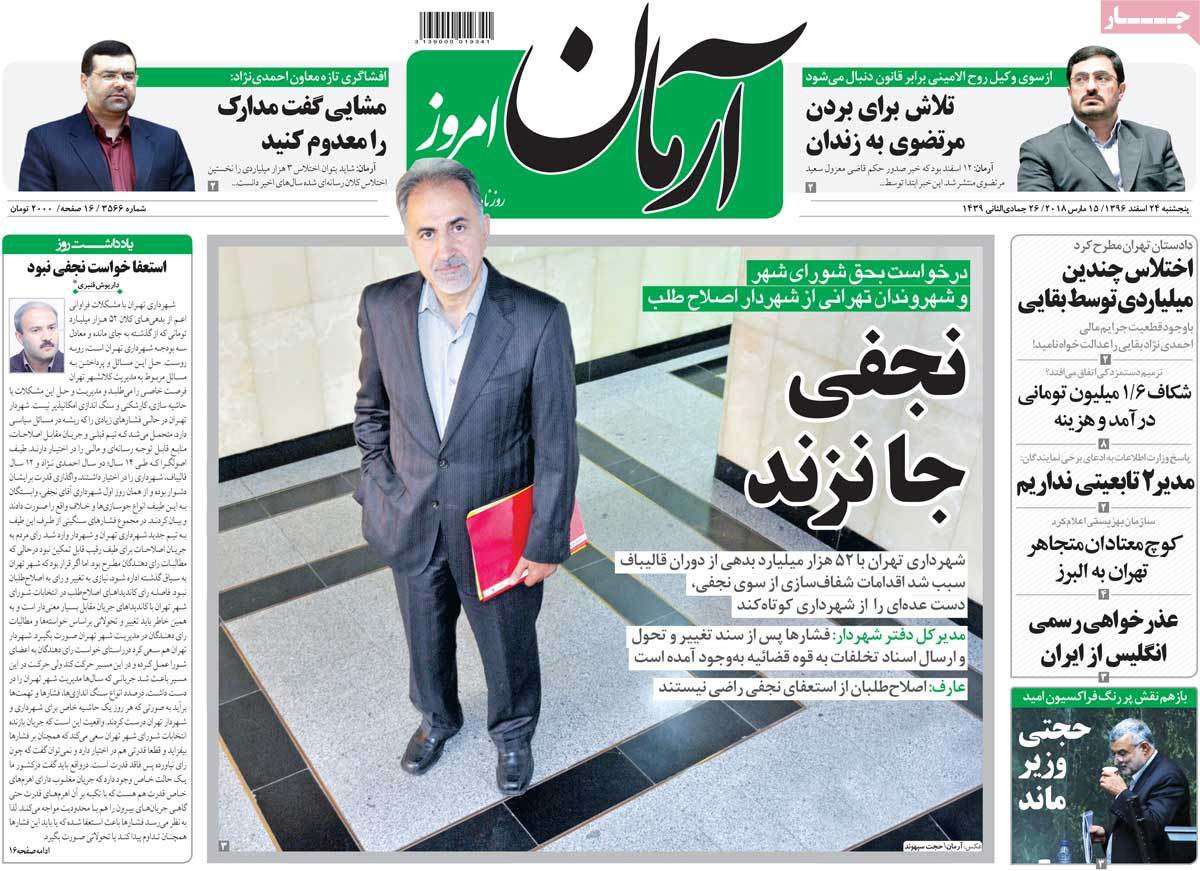
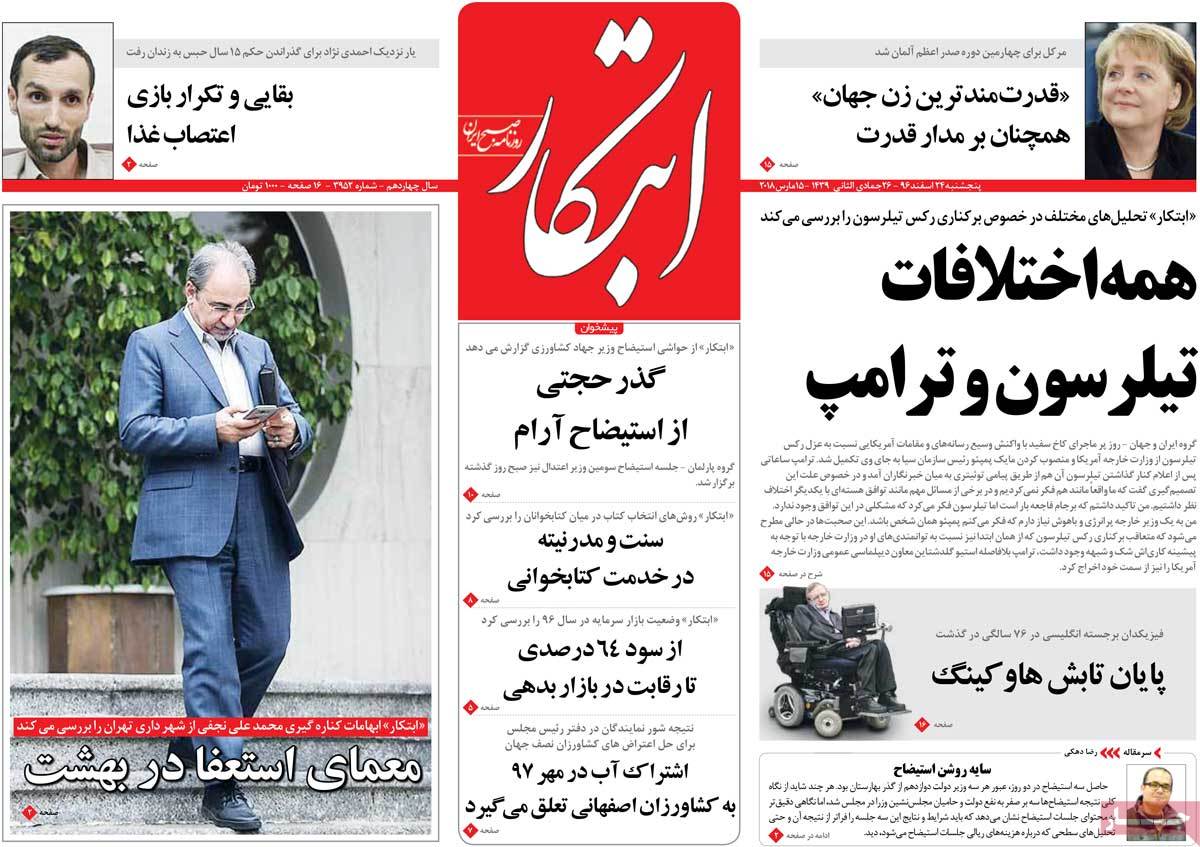
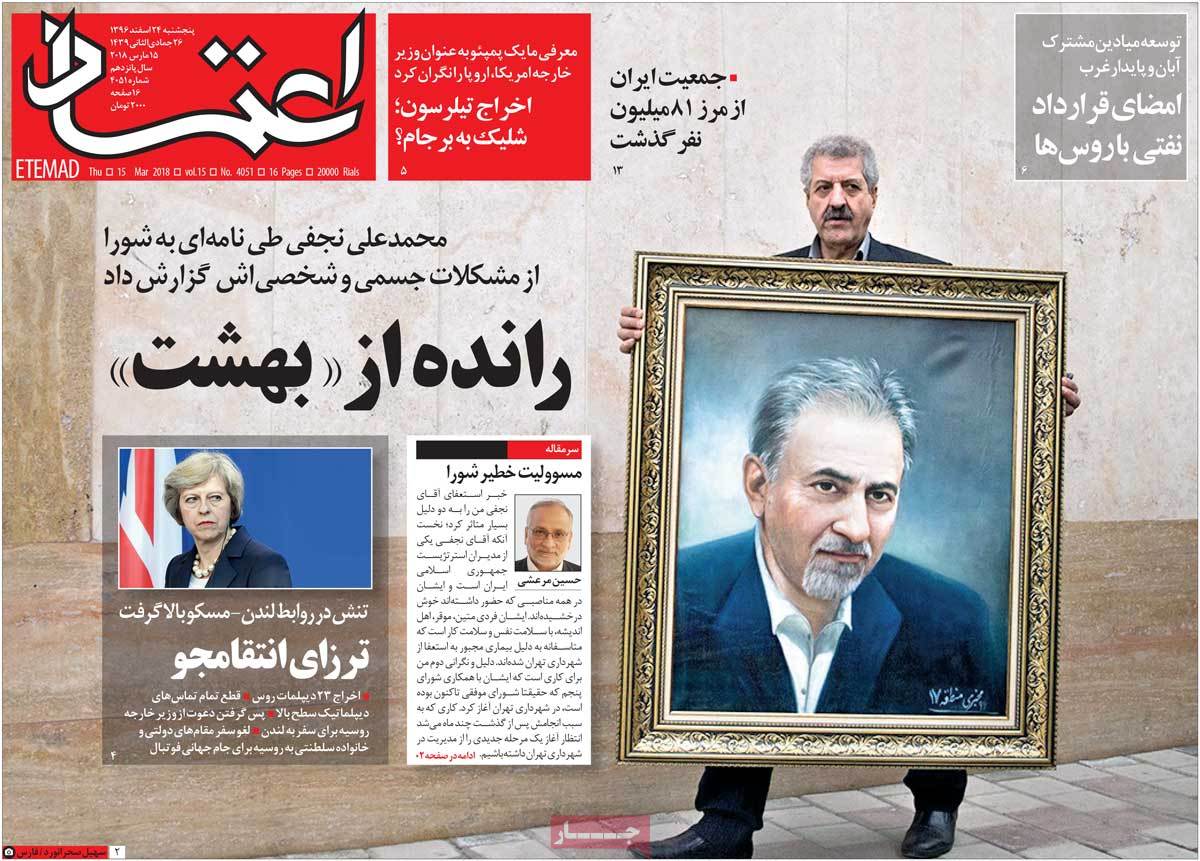
The above issues, as well as many more, are highlighted in the following headlines and top stories:


Aftab-e Yazd:

1- Salaries of Iranian Officials Not to Be Raised in Next Year’s Fiscal Year

2- Renowned Actress Mitra Hajjar Joins Car-Free-Tuesdays Campaign


A Look at Iranian Newspaper Front Pages on February 22


Arman-e Emrooz:

1- Rouhani’s Reaction to Recent Violence in Tehran: Acts of Violence Condemned

2- US Supreme Court Forbids Seizure of Achaemenid Artefacts

3- Yesterday’s Populist, Today’s Libertarian!

  • Ahmadinejad Continues Penning Open Letters by Writing to Leader


A Look at Iranian Newspaper Front Pages on February 22


Donya-ye Eqtesad:

1- Venezuela Starts Selling Digital Oil

  • Pre-Sale of Venezuela’s Cryptocurrency, aka Digital Oil, Begins
  • It’s Not Possible to Buy the Digital Currency Using Venezuela’s National Currency


A Look at Iranian Newspaper Front Pages on February 22


Ebtekar:

1- Pasdaran Street’s Incidents to Be Discussed in Parliament

2- Iran FM: We’ll Never Stab Saudis in the Back

3- Judiciary Spokesman: Pasdaran Street’s Criminals Must Be Punished as Soon as Possible

4- Busy Days of Diplomacy in Tehran

  • Spanish, Dutch FMs Hold Talks with Rouhani, Zarif, Shamkhani, Velayati


A Look at Iranian Newspaper Front Pages on February 22


Etemad:

1- We Won’t Tolerate Violence: Rouhani Says, Referring to Pasdaran Street Incidents

2- Serious Disagreement in Parliament over Salaries, Cash Subsidies

  • Civil Servants’ Wages to Be Raised by 20%


A Look at Iranian Newspaper Front Pages on February 22


Ettela’at:

1- Gov’t Supports Those Who Protect Iran’s Security: Rouhani

2- Zarif to PBS: Iran Most Influential Power in Mideast

3- Iranian Archers Claim World Title

4- Global Consensus in UN Security Council Meeting against Israel’s Occupation


A Look at Iranian Newspaper Front Pages on February 22


Ghanoon:

1- Transformation!

  • Ahmadinejad’s Letter to Iran Leader Not Consistent with His Background

2- Day of Workers’ Frustration with Gov’t, Parliament

  • Group of Retired Workers Hold Protest Rally


A Look at Iranian Newspaper Front Pages on February 22


Hamshahri:

1- Tehran on Track of Diplomacy

2- Women’s Unemployment Rate in Fall Reaches 19.1 Percent


A Look at Iranian Newspaper Front Pages on February 22


Iran:

1- Rouhani: Iran Ready to Hold Talks with Europe over Boosting Regional Security

2- Bodies of Plane Crash Victims Being Transferred in Minus-30 Temperature

  • Scenario behind Airliner’s Crash into Dena Mountain


A Look at Iranian Newspaper Front Pages on February 22


Jahan-e San’at:

1- Interior Minister: Recent Incidents Shouldn’t Be Attributed to Great Movement of Dervishes

2- US President to Breach Washington’s 50-Year-Old Nuclear Policy

  • US to Build Nuclear Reactors in Saudi Arabia

3- One Billion Euro, Value of Tehran-Amsterdam Trade Exchanges


A Look at Iranian Newspaper Front Pages on February 22


Javan:

1- Washington’s Defence Guard against Iraq’s Popular Forces

  • US Forces Tighten Security Measures in Iraq Bases after Being Threatened

2- People Seek Revenge on Supporters of Sectarian Bloodshed

3- Tehran Says No to Trump Administration’s Secret Letter for Talks


A Look at Iranian Newspaper Front Pages on February 22


Jomhouri Eslami:

1- Health Minister: No Increase in Price of Pharmaceuticals

2- Aseman Airlines CEO Refutes Rumours about Crash of Tehran-Yasuj Flight

3- Iran, Spain Sign Two Memorandums of Understanding

4- Al-Jubeir: Germany Shouldn’t Treat Saudi Arabia Like a Football


A Look at Iranian Newspaper Front Pages on February 22


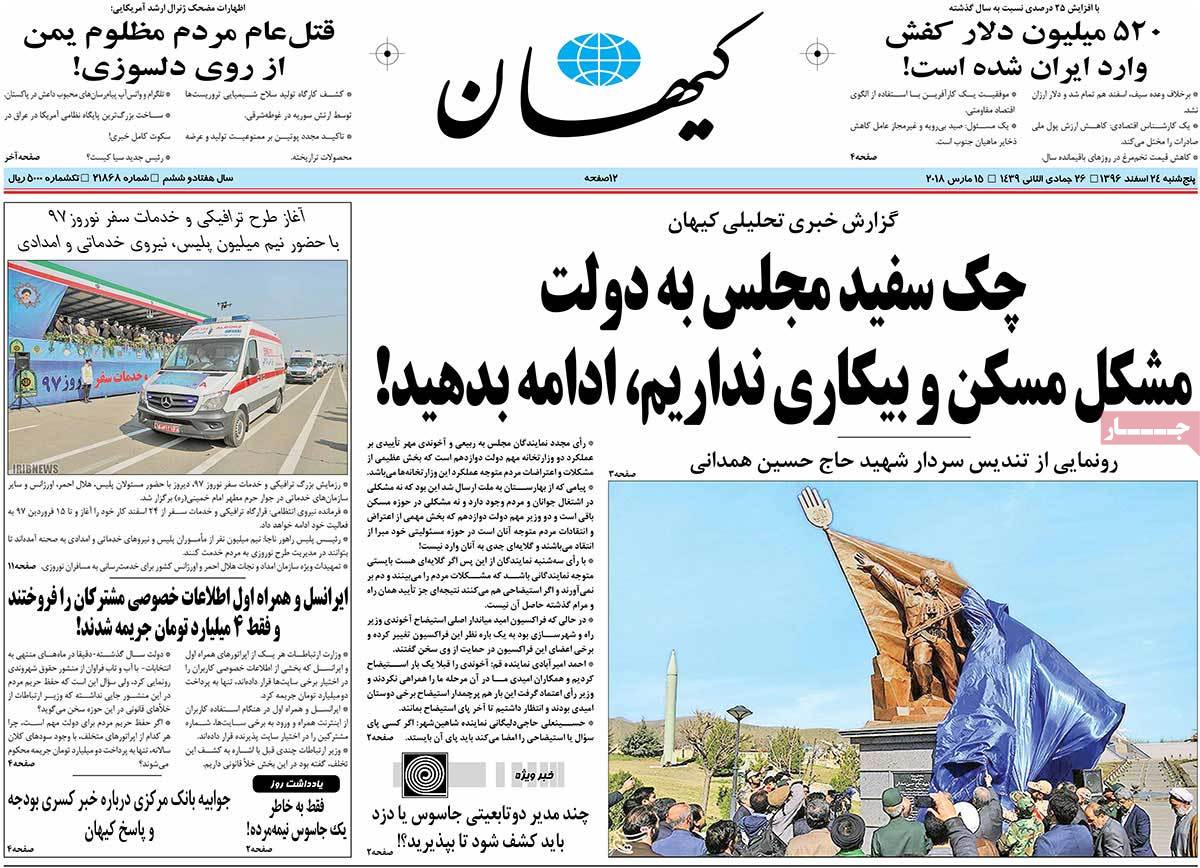
Kayhan:

1- Teachers to Attend Classes Carrying Guns

2- What Issues Did ISIS-Style Suicide Attack of Dervishes Aim to Cover up?

3- American Think Tank: Keep Iran in Suspension Using FATF; This Is Best for US

4- CBI Governor after Unfulfilled Promises to Decrease Forex Rates: I Don’t Talk about It Now!


A Look at Iranian Newspaper Front Pages on February 22


Kelid:

1- US Looking for New Pretexts to Cancel Boeing’s Deal with Iran Using WSJ Claim

2- Increased Interest Rate to Exacerbate Economic Downturn

  • Iranian Economy’s Hibernation Begins


A Look at Iranian Newspaper Front Pages on February 22


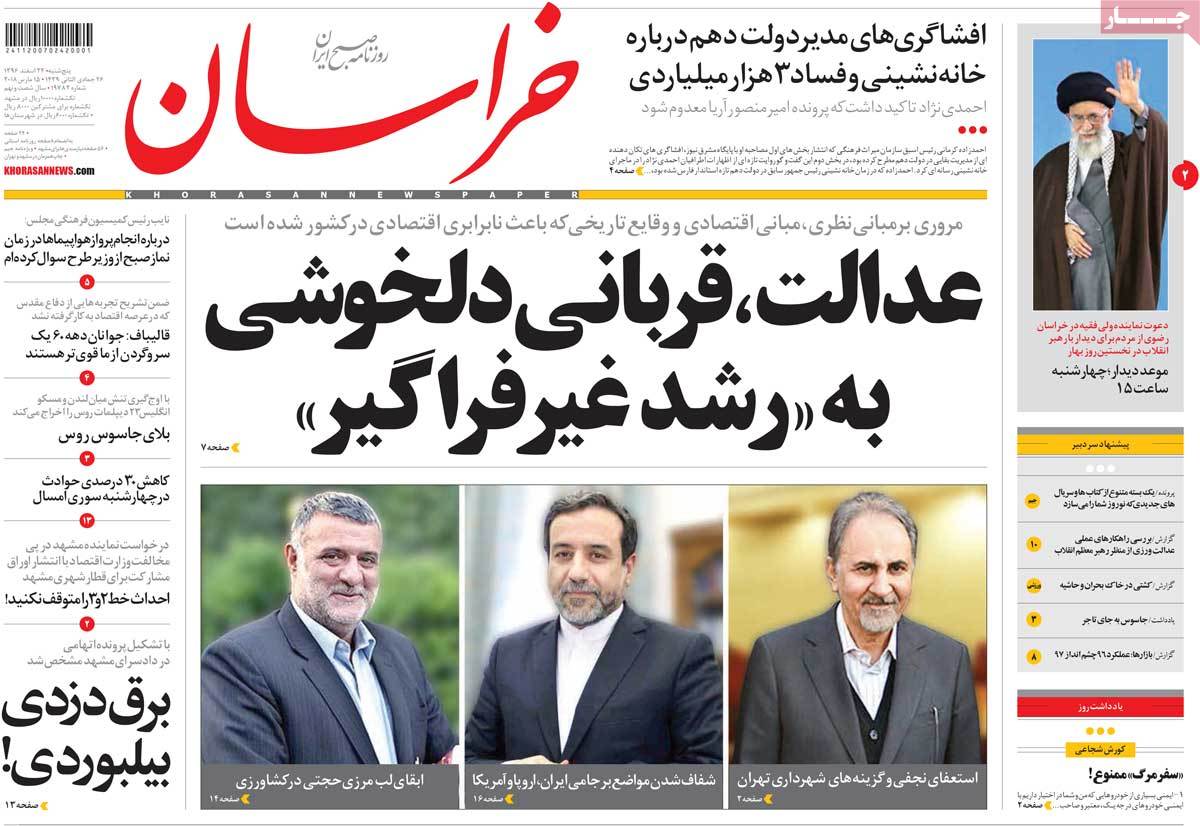
Khorasan:

1- 91 MPs Sign Motion to Oblige Officials to Return Their Illegitimate Assets

2- Afrin Battle in New Phase

  • Popular Forces Affiliated with Syrian Army Welcomed by Kurds in Afrin

3- Rouhani: Strengthening of Iran Nuclear Deal to Facilitate Expansion of Tehran-EU Ties


A Look at Iranian Newspaper Front Pages on February 22


Shahrvand:

1- Gov’t, Parliament Probing into Story of Pasdaran Street


A Look at Iranian Newspaper Front Pages on February 22


Tejarat:

1- Zarif: Terrorists Coming from Saudi Arabia

2- Lagarde’s Economic Prescription for Middle East

  • Arab Countries Need Extensive Economic Reforms

3- Foreigners Queue Up to Help Iran Renovate Its Cars


A Look at Iranian Newspaper Front Pages on February 22


Vatan-e Emrooz:

1- Martyrs of Tolerance towards Miscreants

2- Why Iran Aseman Airlines Didn’t Cancel the Doomed Flight?

  • MP: Airline Earlier Informed about Bad Weather of the Route

3- Lawmaker: Seyyed-Emami Had Sold Data of Our Missile Bases to Aliens

4- MP: Recent Rioters Had No Geographical, Ritual Affiliation with People of Gonabad


A Look at Iranian Newspaper Front Pages on February 22

Rain in Iran’s Taq-e Bostan Creates Beautiful Scenes

Taq-e Bostan, which means “Arch of the Garden” or “Arch made by stone”, is a series of large carving in rocks pertaining to the Sassanid era. It is located five kilometres from the city of Kermanshah, west of Iran.

It is located in the heart of the Zagros Mountains, where it has endured almost 1,700 years of wind and rain.

The site has been turned into an archaeological park and a series of late Sassanid and Islamic column capitals have been brought together.

This complex consists of a series of properties from prehistoric to historical periods such as Morad-Hassel Tepe, an ancient village, a Parthian graveyard and a Sassanid hunting ground.

The most significant property of the complex belongs to the Sassanid era which comprises of two porticos as well as outstanding bas-reliefs from the same period.

The carvings, some of the finest and best-preserved examples of Persian Sassanid era sculptures, include images of the investiture ceremonies of Ardeshir II and Shapur III.

Following you can find the photos of Taq-e Bostan in the rain retrieved from Tasnim News Agency:

“Tehran, Madrid Have Strong Will to Fight Terror”

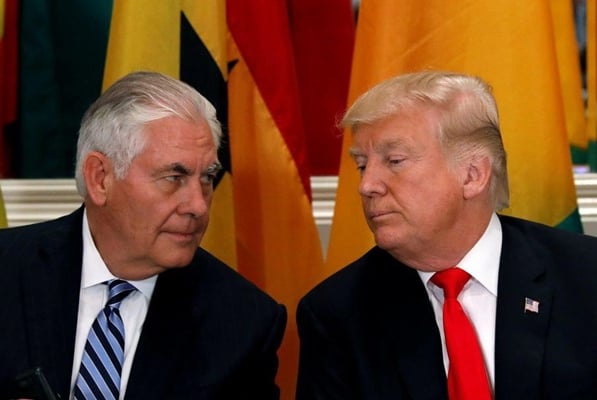
In a Wednesday meeting with visiting Spanish Foreign Minister Alfonso Dastis, Ali Shamkhani underlined that the two countries are serious in their fight against the elements behind the terror groups as well as the grounds that pave the way for the emergence of terrorism in the world.

“Iran and Spain also enjoy huge opportunities and capacities to increase cooperation in various economic, political and defence fields,” Shamkhani added.
The Iranian official also said Iran’s defence capability is non-negotiable, adding, “Our defence program has been built on the painful experiences gained after the reckless invasions of the defenceless countries of the region by the western powers.”

Shamkhani then referred to the heavy defeats inflicted on the ISIS in the West Asia through the joint operations of Iran, Russia, Iraq and Syria and noted the terrorist groups are reorganizing themselves in North Africa under the patronage of some western and Arab countries.

He noted these groups will impose serious threats against the region as well as Europe.

“Despite repeated warnings by Iran and other independent states, the US and Saudi Arabia have been arming terrorist groups. It goes without saying that the arming will deepen the current insecurity in the region. It will consequently threaten the EU member states with new waves of migration and terrorist attacks.”

The Iranian official also expressed deep concerns over the massacre of innocent Yemenis by Saudi Arabia and blamed the European states for their passive stance toward the crimes being committed in the impoverished country.

“The EU member states should stop selling arms to Saudi Arabia and the United Arab Emirates because their arms are used against the innocent Yemenis. Meanwhile, their decision to sell the arms should be mentioned in a United Nations Security Council resolution on Yemen.”

Elsewhere in his remarks, the senior Iranian official said, “The warmongers as well as criminal aggressors cannot change the realties on the ground in Yemen through their propaganda campaign and evade responsibility for the deaths of 23,000 children in Yemen since 2015.”

Shamkhani also praised the European states’ opposition to the US move to recognize Jerusalem al-Quds as the capital of Israel, and added, “The Zionist regime is after creating tensions in the region by invading Syria and Lebanon. It is up to the European states to put pressure on the regime to end its provocative moves.”

He then called the Iran nuclear deal an important test for the Europe, adding the failure of the deal because of the US negative policies means the failure of the logic of negotiation to resolve problems in the world.

He blamed the European states for not adopting a firm stance toward preserving the JCPOA.

“Iran considers the US plan to make changes to the deal as a policy to restrict our achievements. We clearly announce that Iran will not remain committed to the deal if it does not see its expected interests are met,” he said.

For his part, the Spanish foreign minister praised the positive role of the Islamic Republic in fight against terrorist groups in the region and added all states should contribute their share of restoring peace, security and stability to the region. Dastis also warned against any arms race in the region.

He then underlined that the European states have been seeking to deepen their ties with Iran following the nuclear deal’s implementation in 2016.

During the talks, the two sides also discussed ways to expand cooperation in various infrastructural fields with the aim of establishing long-term economic relations.

Four Iranian Firms Attend Tokyo Nanotech Exhibition

The Nano Tech 2018 was held on February 14-16 in Japan’s capital of Tokyo, with over 600 firms and agencies from 21 countries in attendance.

According to a Farsi report by the website of Iran Nanotechnology Initiative Council, more than 50,000 visitors visited the trade fair this year.

The INIC is an affiliate of Iran’s Vice-Presidency for Science and Technology, tasked with promoting knowledge-based economy.

The knowledge-based economy is a system of consumption and production based on intellectual capital, in which a significant part of a company’s value may consist of intangible assets, mainly the value of its workers’ knowledge.

The incumbent administration has adopted plans to commercialize knowledge-based firm, as knowledge-based activities can make a significant contribution to Iran’s economic development by increasing added value among other things.

The main priorities are to promote the establishment of more knowledge-based firms and to encourage universities to focus largely on knowledge-based economy.

There are over 3,000 such companies in the country, which can benefit from governmental loans to finance their projects

Experts believe nanotechnology could worth a lot to the Iranian economy, as Iran currently ranks seventh globally in this field, according to the data released by Iran’s Vice-Presidency for Science and Technology.

The government plans to boost export of nanotechnology-related products and equipment to $1 billion by 2019.

For a brief review of Iran’s achievements in various fields of science and technology, check the book “Science and Technology in Iran: A Brief Review

Promoting knowledge-based companies is a main principle of Resistance Economy, a concept aimed at weaning the Iranian government from heavy dependence on oil revenues and boosting productivity and export

It was first proposed by the Leader of Islamic Revolution in 2011, amid the tightening of international sanctions on Iran, which were imposed over unproven allegations that its nuclear program has military purposes.

The sanctions were lifted under the 2015 nuclear deal, which removed international sanctions in return for confidence-building curbs on Iran’s nuclear work.

Iranian, Dutch FMs Discuss Bilateral, Int’l Issues in Tehran

During the Wednesday meeting, the two foreign ministers exchanged views on ways of boosting bilateral relations as well as regional and international issues.

Among the topics on the agenda of the talks was the expansion of mutual economic ties, especially in the field of oil and gas, as well as parliamentary and banking relations.

For her part, Kaag expressed her country’s willingness to forge closer cooperation with entrepreneurial Iranian companies.

She also stressed the Netherlands’ support for the full implementation of the JCPOA, saying Amsterdam remains committed to the enforcement of the deal.

The two sides also discussed the ongoing situation in the region, especially the developments in Yemen and Syria.

Kaag, who arrived in the Iranian capital on Tuesday night, had earlier met with Iranian President Hassan Rouhani.

Iran, Azerbaijan to Jointly Produce Military Equipment

Officials Say Iran-Azerbaijan Border Should Remain Open amid Coronavirus Fight

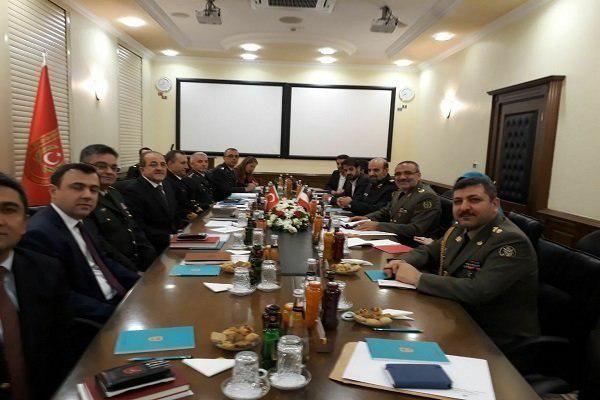
The agreement was reached in a meeting between Iranian Defence Minister Brigadier General Amir Hatami and Azeri Defence Industry Minister Yavar Jamalov.

During the Wednesday talks in Baku, the two sides exchanged views on mutual cooperation on the joint manufacture of military equipment, technical-military issues and using cutting-edge technologies, according to the Persian-language Fars News Agency.

The meeting was part of the itinerary of the Iranian defence chief, who has travelled to Baku heading a military delegation. He has already sat down with Azeri President Ilham Aliyev and his opposite number Zakir Hasanov.

After his meeting with Hasanov, Hatami described his meeting with Azeri officials in particular President Aliyev as ‘very good’, saying that both countries’ leaders attach special importance to high-level relations between Tehran and Baku.

The top Iranian general is scheduled to visit Azeri military and defence centres on Thursday.

Charity Market Held in Japan to Help Iran’s Quake-Hit People

The fundraising market was held on Sunday February 19 with participation of some Iranians residing in Tokyo including the embassy staff, Al-Mustafa International University, Iranian Cultural attaché’s office, Persian Carpet Association, and a number of Iranian and Japanese businesspersons.

According to a Farsi report by IRIB, Iranian dishes, handicrafts, rugs and food products were put on the show and the Japanese welcomed the event.

The financial benefits of the market would be allocated to those stricken by the strong quake in western Iran.

In November 2017, a magnitude 7.3 earthquake struck western Iran, killing more than 600 and injuring thousands. Sarpol-e Zahab suffered half of the temblor’s casualties.

Iran, which sits on several geological fault lines, is prone to earthquakes and suffers a quake per day on average.

The following are IRIB news agency’s photos of the event:

Iran President Calls for Promotion of Ties with Spain

Iranian President Hassan Rouhani receiving Spanish Foreign Minister Alfonso Dastis in Tehran on February 21, 2018 / Photo retrieved from the president's official website

In a Wednesday meeting with visiting Spanish Foreign Minister Alfonso Dastis, Rouhani said strengthening of relations between Iran and Spain in the banking field provides the two sides with a firm basis on which they can further increase their economic relations.

The Iranian president noted that there has been an appropriate ground for enhancing cooperation between Iran and the European Union after the Iranian nuclear deal signed in 2015, a Farsi report by the president’s official website said.

He underlined that full implementation of the JCPOA is in the interest of the region and the whole world and facilitates enhancing relations between Iran and the EU.

“The deal came into fruition following hard efforts and marathon talks between Iran and the EU. So, all sides have to remain committed to the deal,” he added.
He categorically rejected any proposal to hold new round of talks on the JCPOA and noted the Islamic Republic of Iran will remain committed to the deal as far as the other sides are committed.
President Rouhani then cited restoring regional security, putting an end to Yemen’s war and waging war on terror as the main fields in which Iran and the EU can establish positive cooperation.

He also underlined that following their heavy defeats in Iraq and Syria, the terrorist groups have spread across the region.

Iranian president also warned against the arms race in the region, saying “all states should play their role in preventing the region from turning into an arsenal.”

For his part, the Spanish foreign minister praised Iran’s regional role and expressed hope that the strengthening of ties between Iran and Spain could lead to further stability and public prosperity for the region.

Dastis arrived in Tehran on Tuesday for a two-day visit to hold talks on bilateral and regional issues.

Bitcoin, Other Cryptocurrencies Not Recognized in Iran: Central Bank

Impact of Biometric Technology on Cryptocurrency

In a recent statement, the central bank rejected as baseless the reports on its role in the sales of and transactions in cryptocurrencies.

“The wild fluctuations of the digital currencies along with competitive business activities underway via network marketing and pyramid scheme have made the market of these currencies highly unreliable and risky,” the central bank was quoted as saying in a Farsi report by the Iran newspaper’s website.

The central bank also warned the Iranian citizens about the high risks of making investment in the volatile market of the digital currencies saying they “may lose their financial assets.”

The Central Bank of Iran says it is cooperating with other institutions to develop a new mechanism to control and prevent digital currencies in Iran.

Iran’s ICT Minister Mohammad-Javad Azari Jahromi also declared on Wednesday that Iran’s Post Bank is working on a locally-developed cryptocurrency, which needs to be tested by the ICT ministry.

For a brief review of Iran’s achievements in various fields of science and technology, check the book “Science and Technology in Iran: A Brief Review

Bitcoin is a cryptocurrency and worldwide payment system. It is the first decentralized digital currency. Its conception is peer-to-peer and transactions take place between users directly, without an intermediary.

These transactions are verified by network nodes through the use of cryptography and recorded in a public distributed ledger called a block-chain. Check bitcoin loophole website here.

Bitcoin and other cryptocurrencies are used because they offer low-cost money transfers, are a censorship-resistant alternative store of wealth, allow for investment in innovative early-stage startups, let the users make private transactions (for example to purchase cannabis or drugs online) and send non-cash remittances, among others.