Tuesday, December 23, 2025
Home Blog Page 3693

“Iran to Withdraw from Nuclear Deal If Economic Benefits Not Gained”

Delivering a speech at the Chatham House think tank in London, Iran’s senior nuclear negotiator noted that the nuclear deal between his country and the P5+1 is the “worst ever” for Iran.

Speaking on Thursday in the British capital, Araqchi stressed that US President Donald Trump’s persistent public vows to “destroy it, fix it, change it,” represented a violation of the terms of the accord that were damaging his country’s ability to secure much-needed international investment.

Araqchi held that the US has already failed to abide by the agreement, which may fall apart anyway because of an “atmosphere of poison” created by Trump.

“The deal would not survive this way even if the ultimatum is passed and waivers are extended. If the same policy of confusion and uncertainties about the Joint Comprehensive Plan of Action continues, with companies and banks not working with Iran, we cannot remain in a deal that has no benefit for us, and that’s a fact.”

“In Iran, people’s expectations from the JCPOA are not met. Most of it is because of this atmosphere of uncertainty which President Trump has created,” stated Iran’s deputy FM.

“If we lose the JCPOA, we will face another nuclear crisis. For the Europeans or the world community, when we talk about maintaining the JCPOA and saving it, it’s not a choice between Iranian or the US market, it’s not a choice for economic cooperation; it’s a choice between having security and insecurity.”

The Iranian diplomat further highlighted that “Iran’s commitment to not seek nuclear weapons is permanent and there is no so-called sunset clause in the deal. To make these restrictions permanent means killing the deal. We accepted 10 to 15 years of restrictions for the sake of confidence building.”

“It doesn’t mean we have to build confidence forever. It would be a big, big mistake now if people were to link the JCPOA to any other issues. This was what was agreed when it was signed. The nuclear deal is about security, other issues should be dealt with separately,” he added.

Iran President’s Trip to India May Balance Delhi-Tel Aviv Ties

India and Israel have had friendly ties for many years, but the rapid expansion of these ties, especially in military and intelligence areas, has become a source of concern for Muslim countries.

Given India’s history of defending Palestinians’ rights within the framework of the Non-Aligned Movement, there is the hope that the negotiations of Iranian officials could balance India’s ties with the Zionist regime.

Hassan Rouhani’s three-day trip to India was the first visit by an Iranian president to the country since Ahmadinejad’s three-hour stay there in 2008. During Rouhani’s trip, a number of important agreements were signed. This comes as the Indians did not have a satisfactory performance in their economic relations with the Islamic Republic.

Rouhani began his journey from Hyderabad, an important city with more than 30 percent of Muslim population with a history of political and cultural influence by Iran. Over there, the Iranian president held a meeting with Muslim scholars at the Friday prayers of the Sunni-majority city and delivered a sermon among the worshippers.

Rouhani in India wished that the relations between Tehran and Delhi would once again be warm and close as in the time of the two countries’ ancestors. He, of course, took the first step towards fulfiling this wish with his presence in Hyderabad and visiting historical works inspired by Iranian culture and consulting with Indian Muslims. In this city, he emphasized the Islamic Republic’s desire to expand cultural ties with India.

A consultative meeting with Muslim scholars and the emphasis of the Iranian president on the history of the cultural and Islamic ties between the two countries had another strategic message for India. In fact, Iran, as one of the most important Muslim countries with a long history of presence in India, can help resolve the long-standing conflicts between Pakistan and India and reduce the negative security implications of the conflicts in the region.

In terms of economic relations, specialists believe India’s delay in implementing the Chabahar port development project had a negative message for the Iranians, confirming the analyses that Delhi believes its future ties with Tehran would be shaped by the decisions of the US.

The Chabahar project is currently in progress, and during Rouhani’s visit to India, 15 cooperation agreements were also signed by the two countries’ high-ranking officials.

However, taking into consideration the capacities of the two countries for cooperation, one can say the economic relations between Iran and India are not close enough.


* Article by Iranian journalist Seyyed Mojtaba Mousavi


Thrilling Weekend at Qom Paragliding Site

Abbas Babaei site, near Qom Salt Rock, is located 15 kilometres from the city of Qom in the southwest of Tehran.

Paragliding is the recreational and competitive adventure sport of flying paragliders: lightweight, free-flying, foot-launched glider aircraft with no rigid primary structure. The pilot sits in a harness suspended below a fabric wing. Wing shape is maintained by the suspension lines, the pressure of air entering vents in the front of the wing, and the aerodynamic forces of the air flowing over the outside.

Despite not using an engine, paraglider flights can last many hours and cover many hundreds of kilometres, though flights of one to two hours and covering some tens of kilometres are more the norm. By skillful exploitation of sources of lift, the pilot may gain height, often climbing to altitudes of a few thousand metres.

Here are photos of the site retrieved from IRNA:

Badkoubeh Kookoo; Easily-Made Iranian Dish

You can make this delicious meal very quickly and easily in a very little time at home.


Ingredients:

Chicken’s breast: 500gr

Eggs: 9 ones

Sweet yogurt: 80gr

Cooking oil: 70gr

Salt, pepper, turmeric: as much as needed

Brewed saffron: as much as needed

Fresh garlic: ¼ of a head

Ginger: As much as needed

Baking powder: ½ tbs

 Badkoubeh Kookoo; Easily-Made Iranian Dish

Recipe:

First cook the chicken breast and shred its meat. Then add the yogurt to the chicken breast and mix well. Add saffron, salt, pepper and turmeric. Then add the chopped garlic and 2 tablespoons of oil to the mixture. Put the eggs in a bowl and stir until it gets firm.

At the end, add grated ginger and baking powder to the eggs and add it into the stuff. Leave the mixture aside for five minutes to have a delicate Kookoo.

Heat the rest of the oil in a pan. Pour Kookoo stuff. Flatten it and let it fry. Without putting the cap fry the other side as well. Cut the Kookoo and serve it.

Iranian Student Develops Device to Treat Diabetic Wounds

Shahrokh Khojastehfar, who studies at the Nursing College of the Iran University of Medical Sciences, has received a patent registration certificate for developing the Keratosis-removing device to cure wounds caused by diabetes as well as calluses on feet.

The patients can accelerate the healing of their ulcers using the device, according to Khojastehfar,

Iranian Student Develops Device to Treat Diabetic WoundsIn addition to the apparatus, he says, other footwear has been developed, including a device to fix wound dressings without using bandages or tape, or special shoes and socks used to dress wounds. He said the device is very hygienic as it prevents foot inflammation and reduces pressure on blood vessels.

According to a Farsi report by ISNA, the student said plans are also underway to develop other devices, including a “vacuum” plan, which is used to regulate the pH of the wound.

Another plan which will soon receive a patent registration certificate, he added, is an apparatus to wash the wound. He said production of the device in the country will be economical compared to importing the product.

For a brief review of Iran’s achievements in various fields of science and technology, check the book “Science and Technology in Iran: A Brief Review

He expressed hope the registration of the above-named patents will contribute to the treatment of diabetes in the country.

“Those behind Recent Riots in Tehran Backed by Foreigners”

The illegal gathering of a group of people affiliated with the Dervish community in northern Tehran turned violent on Monday night / Photo retrieved from Tabnak

Iran’s Prosecutor General Mohammad-Jafar Montazeri said “a bunch of thugs” have caused the “unfortunate incident”, referring to the recent clash between police forces and a number of rioters claiming to be affiliated with Gonabadi Dervishes, a Sufi community in Iran.

Three police forces and two Basijis were killed during the clash in Tehran’s Pasdaran neighbourhood. A huge funeral was held for them on Thursday, which was attended by thousands of people.

“A number of elements – who were portraying themselves as Dervish affiliates but in fact were using the title as a cover – were behind the attacks,” ISNA quoted Montazeri as saying.

He vowed the judiciary will deal with the perpetrators decisively, as protecting the people’s security is of utmost importance to the system.

Meanwhile, Interior Minister Abdolreza Rahmani Fazli has defended the Dervish community, describing them as “logical people” who were not supportive of acts of violence.

“Definitely, violations by a few people from this community should not be attributed to all Dervishes”, Rahmani Fazli told reporters after a Cabinet meeting Wednesday, in remarks that seemingly contradicted Montazeri’s narrative of the incident.

The clash came after an illegal gathering in front of a police station in northern Tehran turned violent. The protesters were demanding the release of some of their friends who had been arrested on unclear charges.

Police said more than 300 people were arrested in the violence, during which the attackers also damaged public property and smashed the windows of nearby houses.

One of the Basiji forces was killed in a car ramming and another lost his life in a knife attack, after three police forces were killed in a bus attack by the agitators. The violence also left 30 policemen and a number of attackers injured.

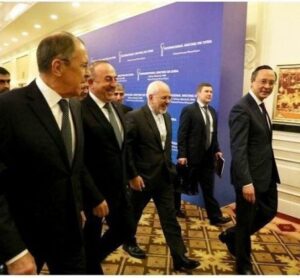
Iran Says Working to Reduce Tension in Syria’s Ghouta

araqchi

Speaking to BBC in London, Araqchi said the situation in Syria is “very complicated” amid growing concern that a wider regional war could erupt.

“Fear of war is everywhere in our region,” Araqchi told the BBC’s chief international correspondent Lyse Doucet.

Araqchi said that Iran’s presence in Syria was not aimed at creating a new front against the Israeli regime, but to fight terrorism.

“Just imagine if we were not there. Now you would have Daesh [the ISIS group] in Damascus, and maybe in Beirut and other places,” the deputy minister said.

BBC says Araqchi has deplored the suffering in the Damascus suburb of Ghouta where scores of lives have been claimed by the Syrian army’s attacks on terrorists’ positions.

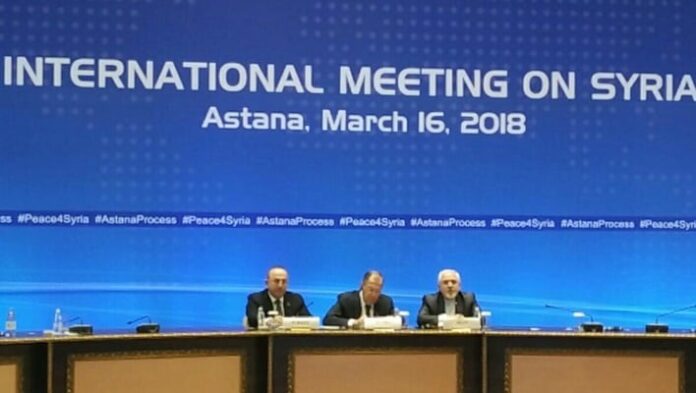
Eastern Ghouta is included in a deal between Turkey, Russia and Iran to establish de-escalation zones in Syria with the aim of reducing violence in the war-torn Arab country.

The so-called Syrian Observatory for Human Rights, a pro-opposition monitoring group, claimed that at least 250 civilians had been killed in the attacks.

Earlier in the week, Russian Foreign Minister Sergei Lavrov blamed “armed provocations” by Takfiri al-Nusra Front militants for the situation in Eastern Ghouta, which according to Moscow is a “critical humanitarian and socio-economic” one.

Elsewhere in his interview with BBC, Araqchi added that Iran-backed forces such as Lebanon’s Hezbollah resistance movement existed to confront Israel.

He also refused to confirm that Iran had sent a drone into Israeli airspace from Syria earlier this month. He said the drone, which Tel Aviv claims was of Iranian origin, belonged to the Syrian army.

This week Israeli Prime Minister Benjamin Netanyahu brandished what he said was part of the drone at a security conference in Munich and said Iran was the “greatest threat to our world”.

But Araqchi said Israel was flying drones over Syria and other neighbouring countries.

“They shouldn’t be angry when they are faced with something that they are doing against others on a daily basis,” he said.


Talks on Other Issues Depends on JCPOA’s Success

Araqchi also said that the 2015 Iran nuclear deal was at a “critical moment” following US threats that sanctions on Iran could be re-imposed.

Iran’s deputy foreign minister said he did not believe the deal could survive without the US.

The landmark accord between six global powers and Iran obliges Iran to agree to reduce uranium enrichment activity, dispose of enriched uranium stocks and modify a heavy water facility in return for sanctions to be lifted.

However the White House wants EU signatories to agree permanent restrictions on Iran’s uranium enrichment. Under the current deal they are set to expire in 2025. Trump also wants Iran’s ballistic missile programme to be addressed.

But Araqchi said the US had to fulfil its side of the deal, formally known as the Joint Comprehensive Plan of Action (JCPOA) before other issues could be discussed.

“Another deal on any other issue depends on how successful is the deal that we have already made, and we have remained fully compliant to that, and the other side has not fully complied,” he said.

“If the JCPOA becomes a successful experience for Iran, then they are allowed to ask us for any other issues to negotiate this,” he added.

He said Trump’s derogatory remarks about the deal were undermining it and this was preventing Iran’s economy from improving.

This in turn had contributed to anti-government protests in Iran last month, Araqchi said.

“Peoples’ expectations from the JCPOA are not met, it’s a fact,” he said.

“Most of it is because of this atmosphere of uncertainty which President Trump has created out, around JCPOA, which prevents all big companies and banks to work with Iran, it’s a fact, and it’s a violation by the United States.”

The full transcript of Araqchi’s interview with BBC can be accessed via this link.

Top US Court Forbids Seizure of Achaemenid Artefacts

The country’s highest court on Wednesday unanimously upheld a federal appeals court’s decision in favor of Iran that had prevented the plaintiffs from obtaining Persian antiquities held at the University of Chicago and Chicago’s Field Museum.

The case required the Supreme Court to determine what assets qualify for seizure under the Foreign Sovereign Immunities Act, a federal law that governs when foreign entities can be sued in US courts.

In 2006, a group of victims of a 1997 explosion at a pedestrian mall in Jerusalem al-Quds were awarded $71 million by a federal judge in Chicago.

The attack, which killed five people and injured 200, was claimed by the Palestinian Islamic resistance movement Hamas.

But the judge ruled that the money should be collected from Iran for being a “state sponsor of terrorism” and allowed the plaintiffs to search for any and all Iranian assets in the United States to pay for the judgment.

The plaintiffs, who are mainly Jewish Americans, argue that Iran must pay reparations as it supports Hamas.

However, the Chicago-based 7th US Circuit Court of Appeals later reversed the 2006 judgment, ruling in favor of Iran and the University of Chicago in 2011 and again in 2014.

Iran has been a victim of baseless claims of support for terrorism, backed mostly by Zionists in the US and Israel.

Top US Court Forbids Seizure of Achaemenid Artefacts

The Supreme Court ruling put an end to the long-running legal battle.

University of Chicago spokeswoman Marielle Sainvilus said the ruling “reaffirms the university’s continuing efforts to preserve and protect this cultural heritage.”

The artefact, including at least 30,000 clay tablets and fragments with some of the oldest writings in the world, are kept at Chicago’s Field Museum of Natural History and the University of Chicago’s Oriental Institute.

The artefact were loaned by Iran to the University of Chicago in 1937.

Iranian Women Claim First-Ever Title in Asian Handball Championship

Iran defeated Syria 23-8 at the Princess Sumaya Hall in Amman, Jordan and won its first ever medal.

The Iranian team defeated Iraq (43-8), Lebanon (29-19), Qatar (38-16) and Jordan (28-15)  in the tournament.

The competition was held in Jordan’s Amman.

The tournament brought six teams together, namely Jordan, Iran, Qatar, Iraq, Syria and Lebanon.

‘Shahid Chamran of Larestan’ club represented Iran in the six-day tournament.

Joy of Checking into Iran’s First Mud-Hut Hotel

Mud-Hut Hotel-5037582

Ghalehganj hotel in Kerman province can host up to 60 guests in its 31 huts. All goods, equipment and handicrafts used in the huts are produced by local inhabitants and craftspeople.

The project was undertaken by the charity foundation Iran Mostazafan and Janbazan (foundation for the oppressed and disabled).

Visitors now have the chance to experience traditional Iranian desert dwellings, but without missing out on the luxuries of a modern hotel.

Ghalehganj hotel provides the visitors with entertainments and facilities such as off-roading in desert sand dunes, camel riding, desert dinners, local music and dance, local game of Ramaza; as well as enjoying the unique view of the region’s forest, desert and sandy hills from Takht-e-Varzal heights.

Besides, the hotel is located near tourist attractions including the famous Jazmourian Wetland, Rigabad hills with facilities like camel riding and sand therapy, Kashmit village and the local residents of “Kapar” huts’ lifestyle.