Saturday, May 2, 2026
Home Blog Page 369

‘It’s our land’: Zelensky responds to Putin’s phone call with Trump

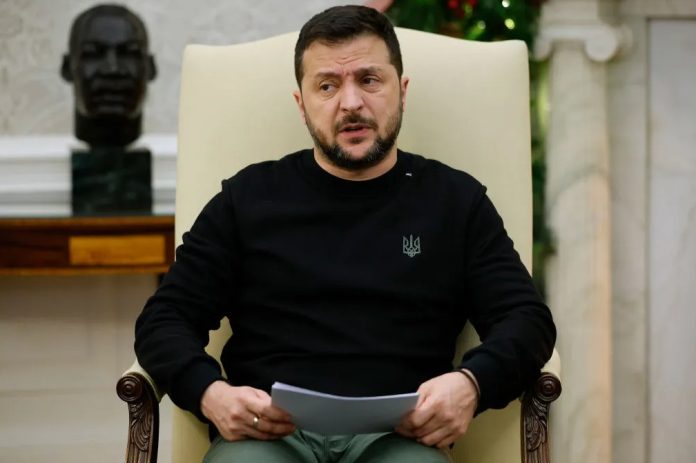
Zelensky

“It’s our land, we won’t withdraw our troops from our territory… it means that they don’t want peace… if they demand what they know we won’t agree to,” Zelensky said at a press briefing attended by the Kyiv Independent.

The comments come after Putin held a phone call with Trump, during which he continued to refuse to agree to a full ceasefire, stating he is prepared to negotiate a “memorandum regarding a potential future peace treaty.”

Russia’s maximalist position in the negotiations remains unchanged and requires “eliminating the root causes” of the war, Putin added.

After the conversation, Trump said on Truth Social that Russia and Ukraine will “immediately start” negotiations toward a ceasefire and an end to the war.

Trump took office 118 days ago promising to end the war in Ukraine within 100 days.

“The conditions for that will be negotiated between the two parties, as it can only be, because they know details of a negotiation that nobody else would be aware of,” Trump added.

Putin’s foreign policy aide, Yuri Ushakov, told Russian journalists that the presidents spoke for two hours and five minutes, and a ceasefire deadline was not mentioned.

“For Trump, the most important thing is direct talks between Ukraine and Russia,” Zelensky said, adding that Defense Minister Rustem Umerov and Russian President Vladimir Putin’s adviser, Vladimir Medinsky, held a call on May 19 and discussed a 1,000-for-1,000 prisoner exchange.

The exchange will happen “in the next days or weeks,” and civilians will not be included in the list, according to Zelensky.

A source in the President’s Office told the Kyiv Independent that Trump and Zelensky spoke twice on May 19 — once before the scheduled call with Putin and again after it.

According to Zelensky, during his phone call with the U.S. president, he advocated for a ceasefire, the opportunity to express views on the memorandum, and for decisions regarding Ukraine not to be made without Ukraine’s involvement.

Zelensky also said there would be a “strong EU sanctions package,” though he didn’t say when it would be imposed. He added Ukraine was expecting “when they see fit, the U.S. to impose sanctions on Russian banks and energy sector.”

“This would be an important, strong mechanism,” he added.

The calls follow days of largely inconclusive negotiations in Istanbul, where Russia sent a delegation of low-level officials and reiterated sweeping territorial demands, including that Ukraine accept the loss of Crimea and four eastern regions.

The second conversation between Zelensky and Trump lasted for over an hour and included Italian Prime Minister Giorgia Meloni, French President Emmanuel Macron, Finnish President Alexander Stubb, German Chancellor Friedrich Merz, European Commission President Ursula von der Leyen, and European Council President Antonio Costa.

Zelensky also said that Kyiv is exploring the possibility of a meeting with delegations from Ukraine, Russia, the US, and the EU in Turkey, the Vatican, or Switzerland.

Trump on also claimed on May 19 that Russia is interested in engaging in large-scale trade with the United States once the war ends.

“There is a tremendous opportunity for Russia to create massive amounts of jobs and wealth. Its potential is unlimited. Likewise, Ukraine can be a great beneficiary on trade, in the process of rebuilding its country,” he said.

Kremlin spokesperson Dmitry Peskov described the phone call between the two presidents as “productive” and highlighted Trump’s “neutral” stance on the war.

Speaking to reporters, Peskov said, “Trump’s position is neutral and he does deal with settlement issues, while the position of European politicians is openly pro-Ukrainian.”

The U.S. president’s approach to negotiations frustrates European allies, many of whom sought his support for a joint U.S.–EU ultimatum demanding an unconditional ceasefire starting May 12 and tougher sanctions on Moscow.

Despite Russia’s refusal, no new U.S. sanctions have been imposed so far.
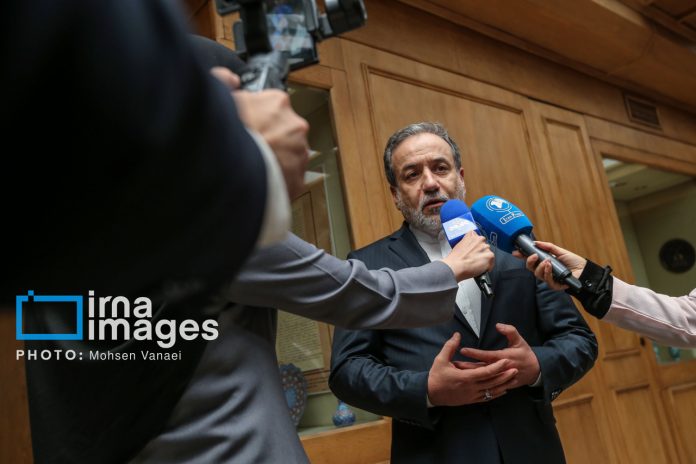
FM says perspective of regional states on Iran has changed

Abbas Araghchi

Seyed Abbas Araqchi, speaking to reporters on Monday on the sidelines of the second day of the Tehran Dialogue Forum, stressed that Tehran could serve as a hub for exchanging views on regional and international issues.

He highlighted the important role of the Tehran Dialogue Forum in assessing regional developments.

Referring to the indirect nuclear talks between Iran and the US, Iran’s top diplomat noted that the region’s support for these negotiations—even its efforts to facilitate dialogue, clear up misunderstandings, and bridge differences—demonstrates that regional stability, peace, and security remain top priorities for all countries in the area.

Araqchi added that Iran-US talks could play a decisive role in promoting peace, stability, and calm in the region, with regional nations also contributing to this process.

He reaffirmed that “diplomacy is the Islamic Republic’s chosen path.”

Ayatollah Khamenei: US has no right to deny Iran uranium enrichment

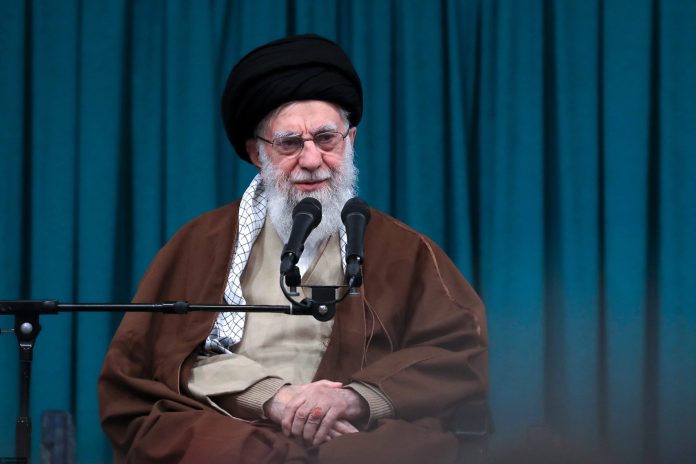
Ayatollah Seyyed Ali Khamenei

Speaking at a ceremony honoring late President Ebrahim Raisi and other victims of the helicopter crash on Tuesday, Ayatollah Khamenei criticized recent US rhetoric during indirect nuclear negotiations.

“American officials involved in these indirect talks should refrain from making baseless remarks,” he said, further noting, “Saying that Iran is not allowed to enrich uranium is sheer arrogance. No one is waiting for their permission.”

He emphasized that Iran follows its own independent policies and will continue to do so. “The Islamic Republic has a clear strategy and acts on it.”

Ayatollah Khamenei pointed out that the late President Raisi firmly rejected direct negotiations with the US during his presidency, underscoring that while indirect talks took place, they were ultimately unproductive.

“He did not allow the enemy to claim that it had brought Iran to the negotiating table through threats, bribes, or deception,” Ayatollah Khamenei emphasized.

He noted that indirect negotiations did occur during President Raisi’s administration, similar to current ongoing efforts, but added that they yielded no tangible results.

“Even now, we do not expect these negotiations to reach a conclusion. We do not know what will happen,” he said.

The remarks come as Tehran and Washington are preparing to sit down for the fifth round of nuclear talks, as Iran has complained over the US’s ‘contradictory’ statements on the previous rounds of negotiations.

Iran says reviewing US proposal for next round of indirect nuclear talks

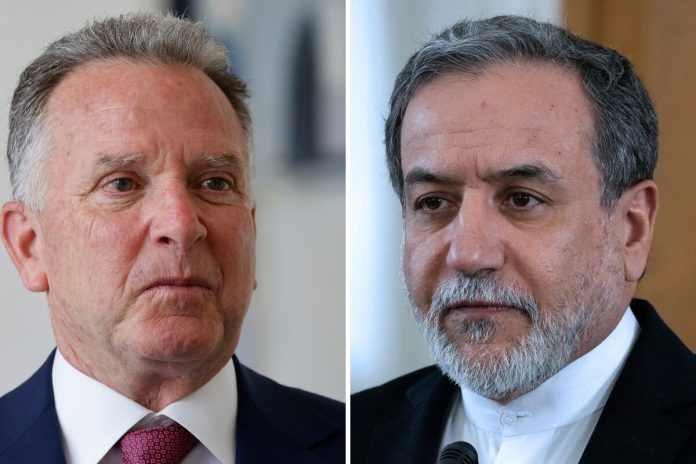
Araghchi Witkoff

Kazem Gharibabadi, Deputy Foreign Minister for Legal and International Affairs, made the statement in comments reported by IRIB state media’s news agency.

No further details about the proposal have been disclosed so far.

The development follows reporting by Wall Street Journal correspondent Laurence Norman, who indicated that the next round of Iran-US nuclear talks is expected to take place in Rome this coming weekend.

On Monday, Iran’s Deputy Foreign Minister for Political Affairs, Majid Takht-Ravanchi, criticized the US’s “zigzag and contradictory positions,” stating they have created uncertainty around the diplomatic process.

“Nobody can be sure such conduct will have no impact on the negotiations,” he said in an interview with IRNA.

Takht-Ravanchi emphasized the importance of avoiding parallel talks outside formal negotiation rooms, suggesting the US has at times preferred to engage through indirect public messaging.

He reiterated Iran’s firm stance on its nuclear rights under the Non-Proliferation Treaty (NPT), particularly regarding uranium enrichment.

Negotiations between Russia and Ukraine will start ‘immediately’: Trump

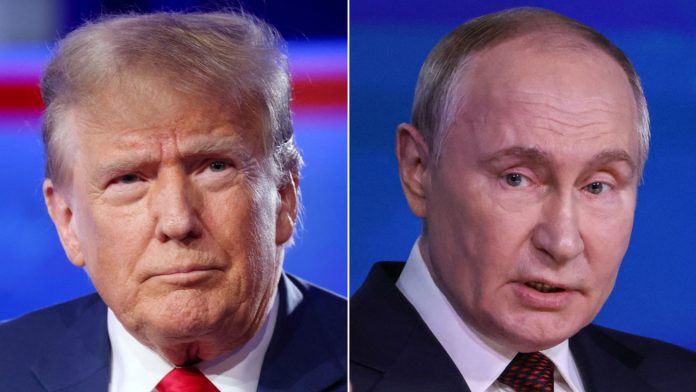
Putin and Trump

The two leaders spoke for over two hours on Monday, primarily about the Ukraine conflict.

In a post on Truth Social shortly after Monday’s talks, Trump wrote that the tone and spirit of the conversation were “excellent,” adding, “If it wasn’t, I would say so now, rather than later.”

“Russia and Ukraine will immediately start negotiations toward a Ceasefire and, more importantly, an END to the War. The conditions for that will be negotiated between the two parties, as it can only be, because they know details of a negotiation that nobody else would be aware of,” the US president stated.

Russia “wants to do large-scale TRADE” with the US, Trump has claimed, adding that the potential settlement of the conflict would help Ukraine to become “a great beneficiary” of trade as well.

“There is a tremendous opportunity for Russia to create massive amounts of jobs and wealth. Its potential is UNLIMITED,” Trump wrote.

The US president also added that “immediately after the call” with Putin, he spoke with Ukraine’s President Volodymyr Zelensky, European Commission President Ursula von der Leyen, French President Emmanuel Macron, Italian Prime Minister Giorgia Meloni, German Chancellor Friedrich Merz, and Finnish President Alexander Stubb, informing them about his conversation with his Russian counterpart.

“Let the process begin!” Trump wrote.

Monday’s phone call, initially announced by Trump on Saturday, was described by Putin as “frank” and “quite useful.”

According to a statement issued by the Kremlin following the call, the Russian president said that he thanked Trump for “US support in resuming direct negotiations between Russia and Ukraine.”

Putin added Moscow is ready to work with Kiev on a memorandum that envisions a future peace agreement between the two countries.

“In general, Russia’s position is clear. The main thing for us is to eliminate the root causes of this crisis,” Putin stated.

Trump, in separate statements, told reporters that he trusts Putin, will not sanction Russia, but will abandon Ukraine peace efforts if progress is not made.

When asked by journalists if he believes Putin wants peace in Ukraine, Trump replied, “I do.”

When asked by reporters if he trusts Putin, Trump again said, “I do.”

“I think some progress has been made, it’s a terrible situation going on over there. 5,000 young people every single week are being killed,” Trump stated outside the White House.

Trump noted that the US remains in contact with Europe as efforts to end Russia’s war against Ukraine are underway.

“We also spoke to the heads of most of the European nations and were trying to get that whole thing wrapped up,” he added.

The US will not impose further sanctions against Russia “because there’s a chance” of progress towards a ceasefire, he told reporters in the Oval Office.

“Because I think there’s a chance of getting something done, and if you do that, you could also make it much worse,” Trump said.

“But there could be a time where that’s going to happen,” he added.

Trump reiterated he would abandon efforts to end Russia’s war against Ukraine if progress is not made.

“I tell you, big egos involved, but I think something’s going to happen. And if it doesn’t, I just back away, and they’re going to have to keep going,” Trump stressed.

Nine aid trucks cleared for Gaza ‘a drop in the ocean’: UN

US Gaza aid pier

UN Under-Secretary-General for Humanitarian Affairs and Emergency Relief Coordinator Tom Fletcher stated the Israeli authorities had allowed the limited resumption of aid delivery after intensifying its military offensive.

“This is a welcome development that should remain in place,” Fletcher said in a statement.

“But it is a drop in the ocean of what is urgently needed, and significantly more aid must be allowed into Gaza, starting tomorrow morning,” he added.

According to the UN, Gaza needs at least 500 aid trucks per day to meet the population’s basic needs.

Israel’s Coordinator of Government Activities in the Territories (COGAT) announced five trucks, including food for babies, entered Gaza via Kerem Shalom — the first such delivery since March 2.

UN spokesperson Stephane Dujarric said that nine trucks were “cleared to enter” via Kerem Shalom and are in the process of crossing. He said the trucks were carrying mostly nutrition supplies.

“They’ve crossed from Israel proper into the area from which the UN can pick the supplies up in Gaza. That part has not yet happened — given it’s late in the day, it’s very likely already dark, or soon to be dark there. Because of security concerns, we cannot operate under those conditions and pick them up,” he told reporters during a press briefing.

“Of course, nine trucks is better than no trucks, but we need a massive uptick in humanitarian aid,” Dujarric continued, adding, “We need a massive arrival of food, cooking oil, and fuel to meet these needs.”

Israel has kept all crossings into Gaza closed since March 2, deepening the enclave’s humanitarian crisis. Prime Minister Benjamin Netanyahu’s office said Sunday that a “basic quantity of food” would be allowed in to prevent a hunger crisis.

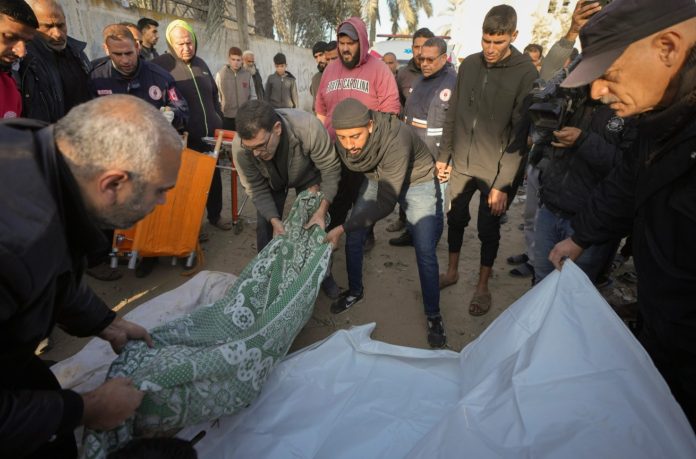
Israel’s brutal offensive on Gaza since October 2023 has killed more than 53,000 Palestinians, most of them women and children.​​​​​​​

Israel has not allowed any humanitarian aid into Gaza for nearly 80 days, the Gaza Media Office said Monday, warning that a crippling blockade and systematic starvation threaten the lives of 2.4 million Palestinians.

“No genuine aid has entered the Gaza Strip for more than 80 days under a complete siege and worsening famine,” the office announced in a statement.

It added that Israeli forces have fully closed all border crossings and “have not permitted a single grain of wheat to enter for nearly three months.”

The statement described the situation as “a deliberate policy of starvation targeting 2.4 million unarmed civilians.”

It stressed Israel has claimed to allow only nine trucks loaded with nutritional supplements for children to enter Gaza — representing just 0.02% of the approximately 44,000 aid trucks that should have reached the Gaza Strip since the blockade intensified on March 2.

Gaza requires around 500 aid trucks and 50 fuel trucks daily to meet the minimum humanitarian needs of its population, the statement read.

The office held Israel and the international community “fully responsible for this ongoing humanitarian crime,” calling for immediate international intervention to open all border crossings unconditionally and allow the entry of essential aid “before it’s too late.”

Iran ambassador warns UK of potential false flag operation amid detentions of Iranian nationals

Iran Embassy UK

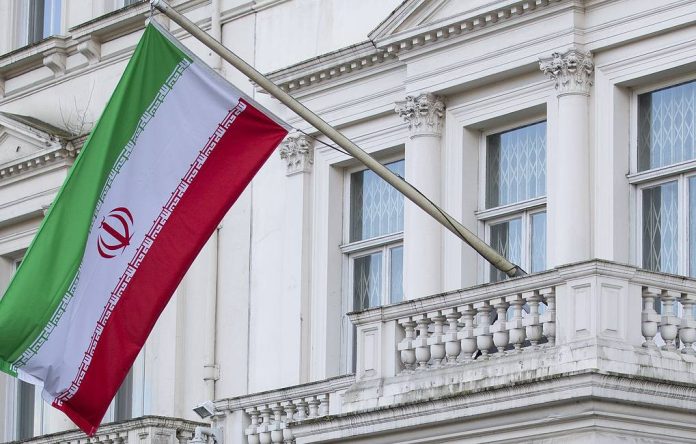
According to a statement posted Monday evening on X social media by the Iranian Embassy in London, Ambassador Seyed Ali Mousavi met with Dan Jarvis, the UK Home Office’s Deputy Minister for Security. The two officials discussed a range of issues, including recent detention of Iranian nationals in the UK.

During the meeting, Mousavi referred to the release of several Iranian citizens who had been arrested two weeks ago on suspicion of terrorism-related activities but were freed without charge.

He urged British officials to raise the issue in parliament and expressed concern over potential “third-party involvement designed to damage Iran-UK ties.”

The statement added that both sides emphasized the importance of good-faith dialogue and agreed to continue meetings to address misunderstandings and disputes.

The meeting followed recent police operations in which several Iranians were detained on suspicions of preparing terrorist acts and cooperating with a foreign intelligence service. While four were released without charge, three face preliminary accusations such as surveillance activities.

In response to the arrests, Iran summoned the UK chargé d’affaires on May 18, while the UK summoned Iran’s ambassador the following day.

Britian, France and Canada threaten ‘concrete actions’ if Israel does not stop Gaza onslaught

Gaza War

The statement by Keir Starmer, Emmanuel Macron and Mark Carney condemns Israel’s expansion of military operations in Gaza as “wholly disproportionate”, adding that the “level of human suffering in Gaza is intolerable”.

“We will not stand by while the Netanyahu Government pursues these egregious actions. If Israel does not cease the renewed military offensive and lift its restrictions on humanitarian aid, we will take further concrete actions in response.”

It describes the Israeli government’s “denial of essential humanitarian assistance” as “unacceptable” and said it risks breaching international humanitarian law. In addition, it condemns the “abhorrent” language used by Israeli politicians threatening civilians to relocate from Gaza.

The leaders called on the Israeli government to stop its military operations in the besieged enclave and immediately allow humanitarian aid to enter the Palestinian territory.

The Israeli army has pursued a brutal offensive against Gaza since October 2023, killing nearly 53,500 Palestinians, most of them women and children.

The International Criminal Court issued arrest warrants last November for Israeli Prime Minister Benjamin Netanyahu and his former Defense Minister Yoav Gallant for war crimes and crimes against humanity in Gaza.

Israel also faces a genocide case at the International Court of Justice for its war on the enclave.

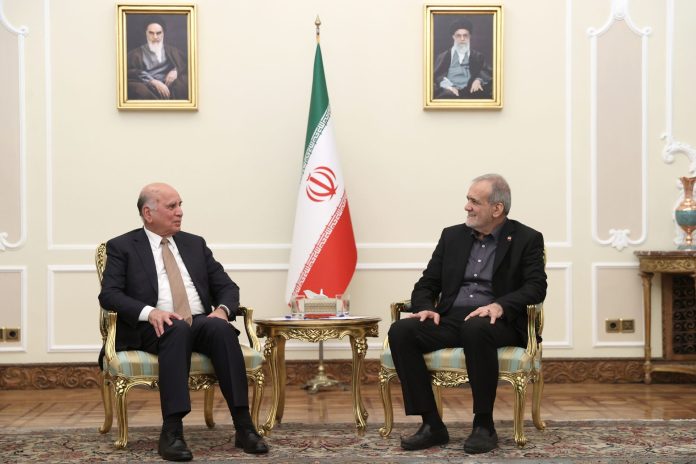
President Pezeshkian: Iran does not seek nuclear weapons

Referring to the ongoing indirect talks between Iran and the US, Pezeshkian said, “If the U.S. is truly concerned about nuclear weapons, we will assure them of our peaceful intentions, but Iran will never submit to coercion.”

He said, “We do not seek permission from anyone to pursue the progress of our nation.”

Pezeshkian also praised the deep historical, cultural, and linguistic bonds between Iran and Iraq, noting that bilateral relations are rooted in centuries-old ties.

He stressed the importance of expanding cooperation in trade, healthcare, science, technology, and rail connectivity.

The Iranian president welcomed growing provincial-level collaboration along the Iran-Iraq border and described it as “vital” for cross-border trade.

Iraqi Foreign Minister Fuad Hussein for his part conveyed warm greetings from Iraqi leaders to Pezeshkian and expressed satisfaction with the trend of strengthening bilateral relations with Tehran.

Hussein underlined Iraq’s commitment to completing joint projects, especially in transportation.

He also pointed to the cultural and religious ties that unite Iran and Iraq, saying, “There are no borders between us…millions of pilgrims travel freely between our countries every year”.

92% of Gaza homes destroyed in Israeli war: UN

Gaza War

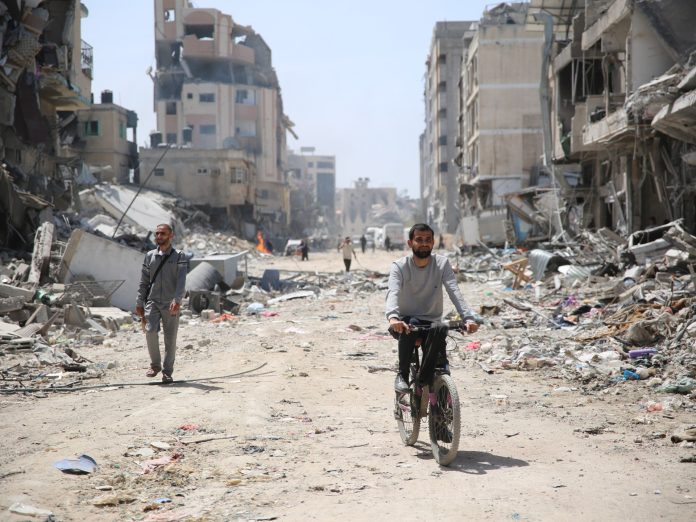
“Families in Gaza face unimaginable devastation. According to the Protection Cluster, 92% of homes have been damaged or destroyed,” UNRWA said in a statement.

“Countless people have been displaced multiple times, and shelter is scarce,” it said, renewing its call for lifting the Israeli siege on the Palestinian enclave.

Since March 2, Israel has kept Gaza crossings closed to food, medical, and humanitarian aid, deepening an already severe humanitarian crisis in the enclave, according to government, human rights, and international reports.

On Sunday, the Israeli army began a broad ground offensive in the war-torn territory.

The Israeli army has pursued a brutal offensive against Gaza since October 2023, killing more than 53,300 Palestinians, most of them women and children.

The International Criminal Court issued arrest warrants last November for Israeli Prime Minister Benjamin Netanyahu and his former Defense Minister Yoav Gallant for war crimes and crimes against humanity in Gaza.

Israel also faces a genocide case at the International Court of Justice for its war on the enclave.