Saturday, May 2, 2026
Home Blog Page 366

Top Iranian general: Eastern border sealing progressing rapidly

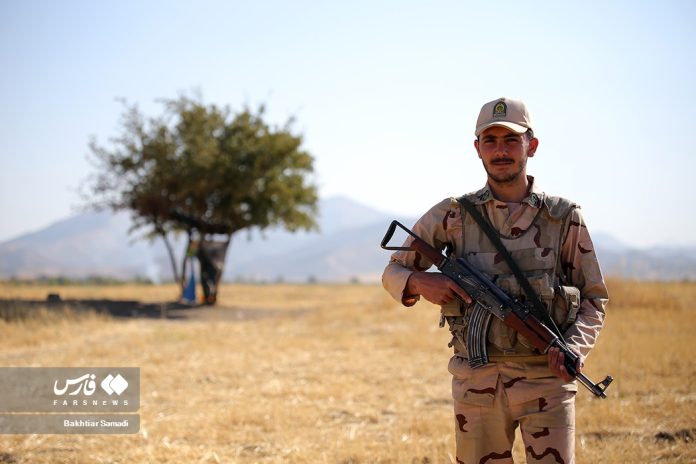
Iranian Border Guards

Bagheri made the announcement while inspecting the latest measures for securing and sealing the eastern borders. “The project is being implemented using scientific principles and successful past experiences, and remains one of the top priorities of the Armed Forces,” Bagheri said.

He also praised the Islamic Revolutiona Guard Corps (IRGC) Ground Forces for using indigenous engineering capabilities to play a key role in completing the southeastern border sealing initiative.

According to the chief of staff of the Iranian armed forces, the project is aimed at enhancing border security, countering terrorist group activities, preventing illegal immigration, and combating drug trafficking. Iran has been grappling with such challenges over the past decades.

The country is now facing an influx of illegal immigrants from neighboring Afghanistan, which has put a huge strain on Iran’s economy.

Pope appeals for Israel to allow humanitarian aid in Gaza

Pope

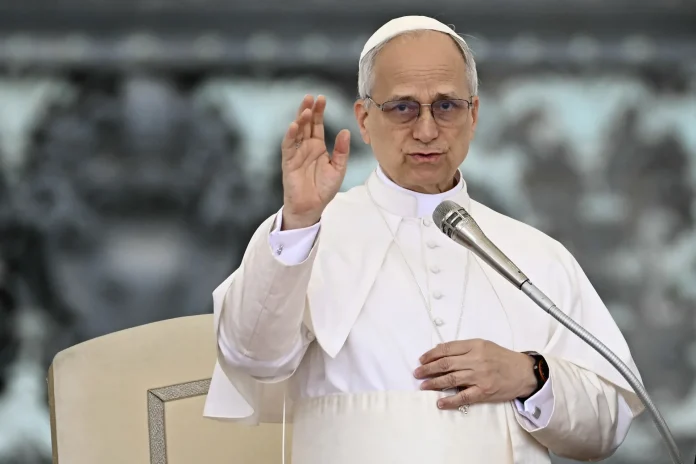
“I renew my fervent appeal to allow for the entry of fair humanitarian help and to bring to an end the hostilities, the devastating price of which is paid by children, the elderly and the sick,” the new pope said during his first weekly general audience in St. Peter’s Square.

Leo, the former Cardinal Robert Prevost, was elected the leader of the Catholic Church on May 8 to succeed the late Pope Francis. He has mentioned the situation in Gaza several times in the first weeks of his papacy.

The appeal came at the end of the pope’s audience, when he added a few words to his prepared text.

In his first Sunday message on May 11, the new pope called for an immediate ceasefire in Gaza and for the release of all Israeli hostages held by Hamas.

Francis, who died on April 21, had been ramping up criticism of Israel’s military campaign in Gaza in the months before his death.

He called the situation in the enclave “very serious and shameful” in January, two months after suggesting the international community should study whether there had been a genocide of the Palestinian people.

Reflecting a chill in Vatican-Israel relations after Francis’ criticisms, Israel did not send a high-level official to attend the late pope’s funeral, but only its Vatican ambassador.

In a sign of possible hopes for a reset of relations with the new pope, Israeli President Isaac Herzog attended Leo’s inaugural Mass in St. Peter’s Square on Sunday.

A delegation of 13 Jewish officials also took part in the Mass, including Rome’s chief rabbi and the vice president of the Italian Union of Jewish Communities.

The pope, born in Chicago and the first U.S. pontiff, spoke in fluent Italian for most of the audience but also addressed pilgrims in English and Spanish.

It was the first weekly papal audience in more than three months. Francis held his last weekly audience on February 12, two days before beginning a five-week hospital stay.

Putin visits Kursk Region, first time since full liberation from Ukrainian troops

Vladimir Putin

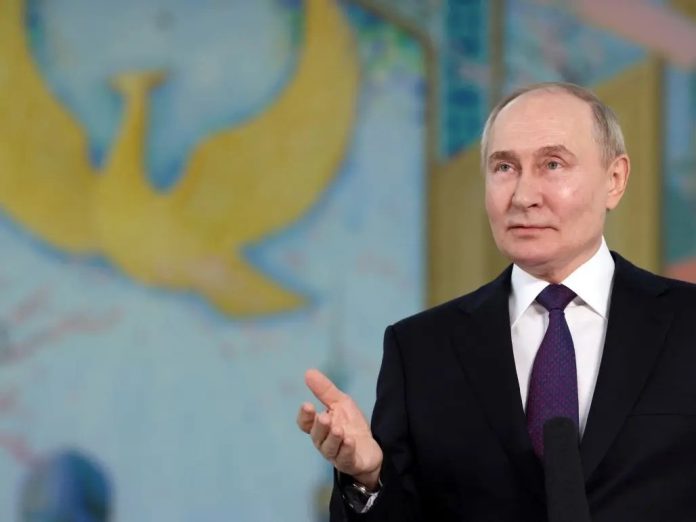
In late April, Putin announced the full liberation of the border areas of Kursk Region, which had been seized by Kiev’s troops after they launched an incursion last August.

During his tour of the region on Tuesday, the Russian leader visited the construction site of the new Kursk 2 nuclear power plant in the city of Kurchatov. He also held a meeting with Governor Aleksandr Khinshtein, as well as the heads of local municipalities and volunteers who have been helping those affected by the incursion, the Kremlin said on Wednesday.

Putin thanked the volunteers for “the noble, important and… unfortunately, dangerous” work that they had been doing.

“You and I are a team, and the whole country today is one united team. And this is the unquestionable success of all our endeavors. This is a necessary condition for achieving all our goals,” he stressed.

The president said that the situation in Kursk Region remains “difficult” even after its full liberation, as Ukrainian forces continue their attempts to move towards the Russian border.

Putin has also ordered an increase in the number of mine clearance specialists working in Kursk Region so that people can return home as soon as possible.

Payments to residents who lost their property during the incursion will continue, while state funds will also be allocated to repair damaged residential buildings in the region, he said.

According to Putin, a museum will be set up in Kursk Region dedicated to the efforts to repel the incursion.

Gaza reports 326 malnutrition deaths, over 300 miscarriages due to lack of essentials

Gaza War

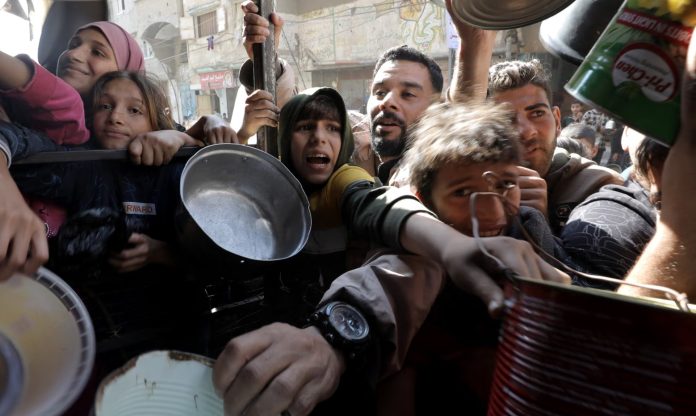
“The Israeli occupation’s starvation policy in Gaza has caused 326 deaths due to malnutrition and lack of food and medicine, along with more than 300 cases of miscarriage during these 80 days,” it said in a statement.

The statement expressed concern and condemnation for the worsening humanitarian crisis in the Gaza Strip, blaming Israel for continuing a systematic starvation policy.

It labeled the situation a “complete crime amounting to genocide,” warning of a severe humanitarian catastrophe that threatens the lives of more than 2.4 million Palestinians trapped in the besieged territory.

The Office confirmed that since March 2, Israel has completely blocked the entry of humanitarian aid, medical supplies and fuel into Gaza.

Gaza requires at least 44,000 trucks of aid on a daily basis to meet the minimum needs of its population, added the statement.

Breaking down fatalities during the 80-day siege, the Office reported 58 deaths caused by malnutrition, and 242 more from shortages of food and medicine, mostly among the elderly. Additionally, 26 kidney patients died from a lack of proper nutrition and health care.

More than 300 miscarriages were recorded, attributed to a severe deficiency of essential nutrients necessary to sustain pregnancies.

Regarding malnutrition, the Office highlighted that the weakened health of residents has caused blood donation campaigns to fail, while hospitals face acute shortages of blood units amid rising numbers of wounded patients needing urgent surgery.

The Office urged the international community and the UN to act to reopen crossings and allow the entry of food, medicine and fuel to save hundreds of thousands of civilians before it is too late.

Gaza requires 500 trucks of aid daily and 50 trucks of fuel for vital and medical facilities, it said.

Israel continues its systematic starvation of 2.4 million Palestinians in Gaza by sealing off crossings and blocking aid stockpiled at the borders since March 2, pushing the territory into famine and causing numerous deaths.

The military, meanwhile, has intensified its genocide in Gaza, with the announcement of a ground operation in the northern and southern parts of the enclave.

The army has pursued a brutal offensive against Gaza since October 2023, killing nearly 53,600 Palestinians, most of them women and children.

The International Criminal Court issued arrest warrants last November for Israeli Prime Minister Benjamin Netanyahu and his former Defense Minister Yoav Gallant for war crimes and crimes against humanity in Gaza.

Israel also faces a genocide case at the International Court of Justice for its war on the enclave.

Former Iranian diplomat urges direct talks with US ahead of upcoming nuclear negotiations

Iran US Flags

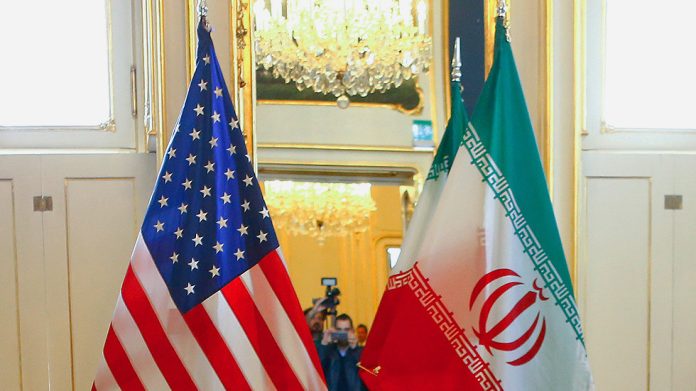
Mousavian said it’s important for both sides to hold direct talks, noting that the next round of nuclear negotiations is expected to take place in Europe later this week and it would be more constructive if Iranian and American negotiators are engaged in direct dialogue to better understand each other’s positions.

Mousavian underlined that had negotiations with the US been conducted directly from the beginning, the current diplomatic deadlock might have been avoided.

“It’s clear that this indirect format is no longer effective… negotiators are now speaking through the media rather than across the table”, he added.

Iran and the US have engaged in four rounds of indirect negotiations mediated by Oman over the past few weeks. Both sides have cited good progress in the negotiations but warn that major differences remain.

Tehran says the talks are aimed at getting the US to lift anti-Iran sanctions.

Syrian leadership approves return of dead spy archive to Israel: Reuters

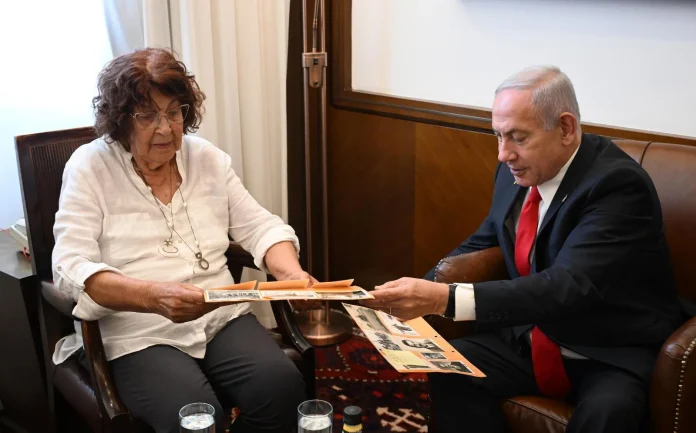
Israel announced its recovery of the trove of documents, photographs and personal possessions relating to Cohen on Sunday, saying its spy agency Mossad had worked with an unnamed foreign intelligence agency to secure the material.

However, a Syrian security source, an adviser to Syrian President Ahmed al-Sharaa and a person familiar with backchannel talks between the two sides stated the archive of material was in fact offered to Israel as an indirect gesture by Sharaa as he seeks to cool tensions and build Trump’s confidence.

Cohen, who was hanged in 1965 in a downtown Damascus square after infiltrating Syria’s political elite, is still regarded as a hero in Israel and Mossad’s most celebrated spy for uncovering military secrets that aided its lightning victory in the 1967 Middle East war.

Prime Minister Benjamin Netanyahu described Cohen on Sunday as a legend and “the greatest intelligence agent in the annals of the state”.

While Israel has long sought to recover his body for reburial at home, the return of his archive held for 60 years by Syrian intelligence was hailed by Mossad as “an achievement of the highest moral order”.

Israel has not publicly revealed how the archive came into its possession, saying only that it was the result of “a covert and complex Mossad operation, in cooperation with an allied foreign intelligence service”.

After rebels led by Sharaa suddenly ousted President Bashar al-Assad in December, ending his family’s 54-year-long rule, they found the Cohen dossier in a state security building, according to the Syrian security source.

Sharaa and his foreign advisers quickly decided to use the material as leverage, the source added.

The Syrian security source said Sharaa had realised that the Cohen archive was important to the Israelis and that its return could amount to a significant diplomatic gesture.

Ending Israeli attacks on Syria and improving relations with the United States and other Western countries are vital for Sharaa as he seeks to revive his shattered country after 14 years of war.

Israel regards Sharaa and his ex-insurgents, who once formed the al Qaeda faction in Syria, as unreconstructed jihadists. Israeli forces staged an incursion into border areas last year and have repeatedly bombed targets in support of Syria’s minority Druze sect.

This month, Reuters reported that the United Arab Emirates had set up a backchannel for talks between Israel and Syria that included efforts to build confidence between the sides.

There have also been other indirect channels for talks, according to two people familiar with the matter.

In the talks, Syria agreed to measures including returning the remains of Cohen as well as three Israeli soldiers killed while fighting Syrian forces in Lebanon in the early 1980s, a person familiar with those talks stated. The body of one of those soldiers, Zvi Feldman, has been returned, Israel said last week.

The return of the Cohen archive came in the context of those confidence-building measures and was done with Sharaa’s direct approval, the person added.

Last week, Trump held a surprise meeting with Sharaa in Saudi Arabia where he urged him to normalise ties with Israel and announced that he would lift sanctions on Syria.

Syrian officials have stated they want peace with all states in the region, and Sharaa confirmed this month that Damascus had carried out indirect talks with Israel via states it has ties with in order to calm the situation.

EU announces review of trade privileges to Israel amid Gaza war

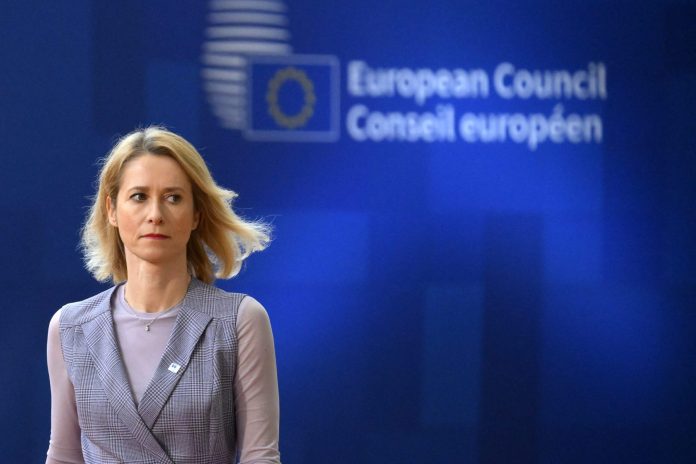
“It is clear from today’s discussion that there is a strong majority in favor of review of Article Two of our Association Agreement with Israel. So we will launch this exercise,” Kaja Kallas told a press conference after an EU Foreign Affairs Council meeting in Brussels.

“In the meantime, it is up to Israel to unblock the humanitarian aid. Saving lives must be our top priority,” she added.

Kallas described the humanitarian situation in Gaza as “catastrophic” and said EU-funded aid was being blocked at the borders.

“The aid that Israel has allowed in is, of course, welcome, but it’s a drop in the ocean. Aid must flow immediately, without obstruction and at scale, because this is what is needed.”

She stressed that “there are thousands of trucks” stuck at the borders and that “the 100 trucks that came in, it’s a welcome step, but it’s not enough, because the needs are much, much bigger.”

Kallas said that the decision to review the agreement signals strong political intent from EU member states.

“I will not say (exact) numbers, and I will not say member states, but I can say it was a huge majority for this.”

Separately, on Syria, Kallas confirmed the EU decision to lift all economic sanctions unrelated to the ousted Bashar Assad government or human rights violations.

“Is everything going very well (under the new Syrian administration)? No, it’s not. But I think the question that we have two choices, either we give, you know, Syrian people a chance … or we don’t give that opportunity,” she added.

Touching on Ukraine, Kallas said the EU had adopted a new sanctions package targeting Russia, including its shadow fleet skirting sanctions, and stressed the bloc is already working on another package.

“The only option is to put more pressure on Russia to negotiate seriously,” she said.

On energy-related sanctions, she added, “The oil price cap is clearly something that has a clear effect on Russia’s economy,” adding that “Russia’s national fund … is almost completely depleted.”

US intelligence suggests Israel preparing attack on Iranian nuclear sites: CNN

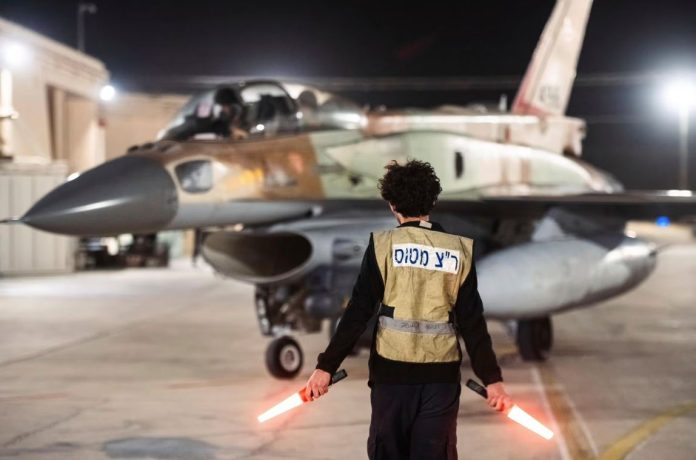
Israel Air Force

Such a move would mark a “brazen break” from President Donald Trump’s diplomatic push, US officials told CNN.

While no final decision has been made by Israeli leaders, “intercepted Israeli communications and observations of Israeli military movements” suggest an imminent strike, CNN reported, citing multiple sources familiar with the intelligence.

One person familiar with the intelligence said “the chance of an Israeli strike on an Iranian nuclear facility has gone up significantly in recent months.”

“And the prospect of a Trump-negotiated US-Iran deal that doesn’t remove all of Iran’s uranium makes the chance of a strike more likely,” the source told CNN.

The US has observed military activity in Israel, including the movement of air munitions and the completion of an air exercise, CNN reported, citing two of the sources.

However, a source familiar with the Trump administration’s thinking stated that Washington is unlikely to support an Israeli operation against Iranian nuclear sites unless provoked by Tehran.

Trump had previously warned that Iran would face “something bad” if it did not quickly accept a US proposal regarding its nuclear program.

Iranian officials have denied receiving any such written proposal, either directly or indirectly.

Iran’s Supreme Leader Ayatollah Seyyed Ali Khamenei said Tuesday that he does not believe the ongoing indirect nuclear negotiations between Tehran and Washington will lead to “any meaningful outcome.”

Iran weighs participation in next round of nuclear talks, says enrichment will continue with or without deal

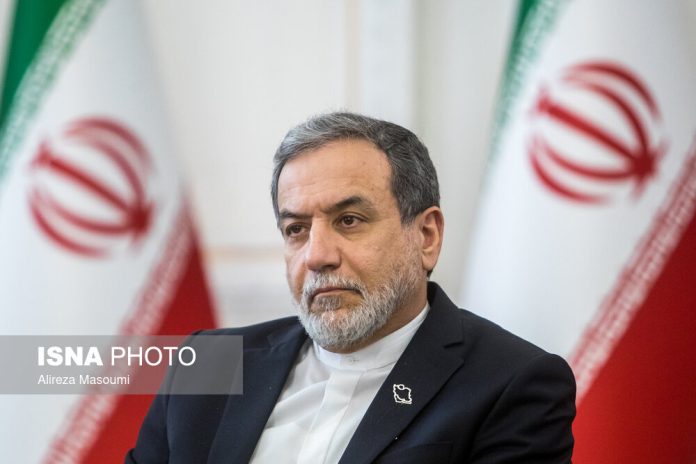
Abbas Araghchi

Speaking to reporters on Wednesday, Araghchi stressed Iran’s commitment to diplomacy while firmly rejecting “unreasonable demands from Western negotiators.”

“We have already responded to irrational requests. Such statements do not help the talks,” he said, emphasizing that Iran’s position remains clear, asserting enrichment is a sovereign right that will not be abandoned, whether a deal is reached or not.

He added that Iran remains open to transparency measures regarding its peaceful nuclear program but expects reciprocal action on lifting “unjust sanctions” imposed over unproven allegations.

Earlier in the day, Iran’s Deputy Foreign Minister for Political Affairs, Majid Takht-Ravanchi, criticized US conduct in nuclear talks, stating that negotiations should not be conducted through media channels.

He noted that while American officials often express rigid positions publicly, such as opposing any level of uranium enrichment, they frequently adopt different tones behind closed doors.

Responding to recent remarks by US envoy Steve Witkoff, who rejected all enrichment for Iran, Takht-Ravanchi emphasized that such positions are legally unfounded.

He asserted Iran’s enrichment rights under the Non-Proliferation Treaty (NPT) and stated that no member state has the authority to define another’s treaty benefits.

Analyst blames Israeli pressure for disruptions in Iran-US nuclear talks

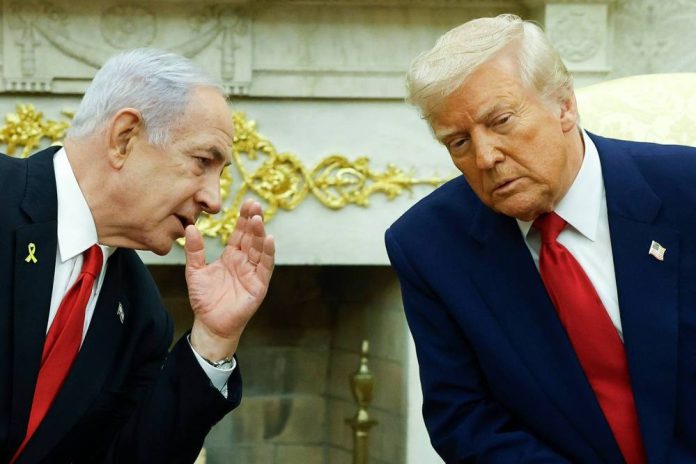
Trump Netanyahu

Speaking to Ham-Mihan, Sadatian argued that Israeli lobbying is influencing US officials to adopt increasingly rigid positions, particularly on Iran’s right to enrich uranium.

He maintained that Iran is acting in good faith and remains open to international cooperation and nuclear transparency.

While Tehran may be willing to limit its nuclear activities, reduce advanced centrifuge operations, and return to the JCPOA framework in exchange for sanctions relief, Sadatian emphasized that Iran will not forgo its fundamental right to enrichment.

He believes that war is unlikely, noting both Iran’s defensive capabilities and Washington’s broader strategic interests.

According to Sadatian, US President Donald Trump ultimately prefers negotiation to conflict and is unlikely to escalate tensions militarily.

He added that Trump’s regional strategy, centered on securing Israeli interests and expanding trade with Persian Gulf states, would suffer under the weight of renewed hostilities.

Sadatian concluded that diplomacy remains viable, and a compromise allowing Iran to continue enrichment under increased international oversight could still emerge, provided external pressures, particularly from Israel, are managed.