Saturday, May 2, 2026
Home Blog Page 367

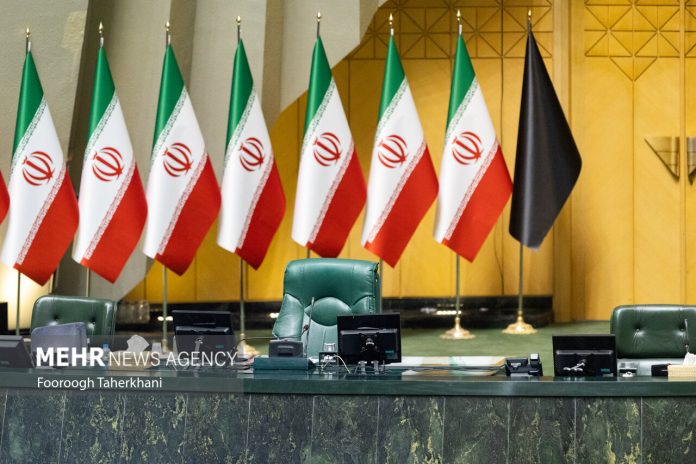
Iran parliament emphasizes peaceful nuclear rights, including uranium enrichment

Iran nuclear program

The statement by Iranian lawmakers was read on Wednesday by Mohammad Rashidi, a member of the parliament’s presiding board, one day after the remarks of the Supreme Leader of the Islamic Revolution, Ayatollah Khamenei who had emphasized that Iran would not seek permission from the US for uranium enrichment.

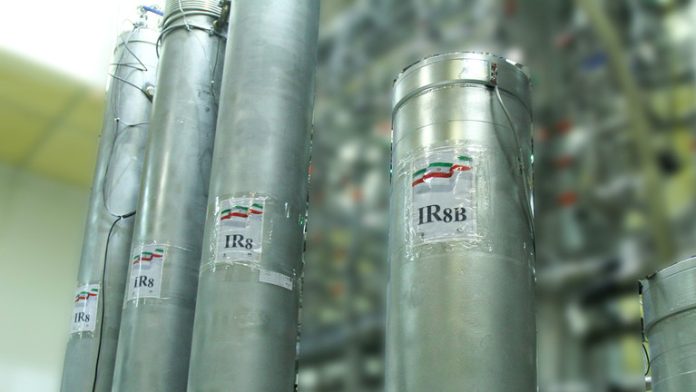
The statement referred to US officials’ comments on Iran’s uranium enrichment and stressed that the American regime, which is itself grappling with deep domestic crises and successive foreign policy failures, is in no position to dictate terms to any country, especially the great and independent nation of Iran.

The Iranian parliament members also pointed to Iran’s membership in the Non-Proliferation Treaty (NPT) and its adherence to the treaty’s provisions, adding that the nuclear and enrichment activities of the Islamic Republic of Iran are entirely legal, legitimate, and in line with the NPT and the statutes of the International Atomic Energy Agency (IAEA).

The statement further emphasized the rights of the Islamic Republic as an NPT member in the research, development, production, and use of peaceful nuclear energy, stating that the peaceful nature of Iran’s nuclear activities is guaranteed through the IAEA’s safeguards and monitoring.

The statement also highlighted the applications of nuclear technology in various fields and added that the level of peaceful enrichment is not limited to low percentages under 20%, but will be determined based on the needs of the Iranian people for peaceful purposes. Renouncing this right would constitute a grave betrayal of national interests and the country’s future.

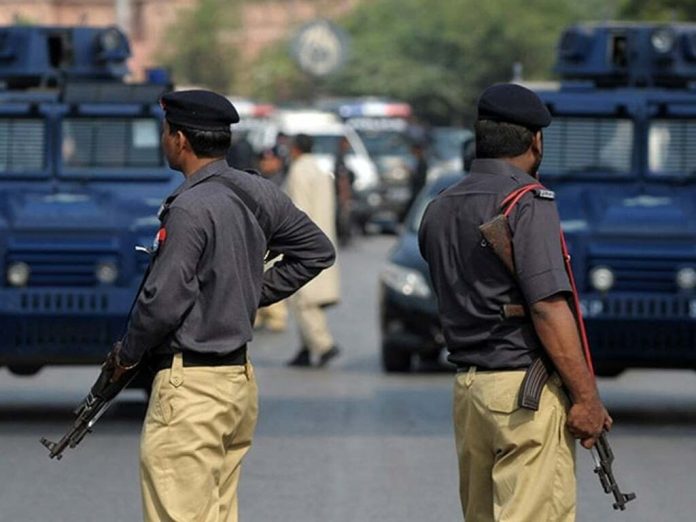
Five, including three children killed, in Pakistan school bus blast

Pakistani Police

In a statement, the army said that the attack was “planned and orchestrated by India and executed by its proxies” in Balochistan, and targeted innocent school-going children in Khuzdar.

“These Indian terror proxies are being employed as a state tool… to foment terrorism in Pakistan against soft targets such as innocent children and civilians,” it added.

There was no immediate comment from New Delhi by the time of publication of this story.

No militant group has yet claimed responsibility for the attack, however, the outlawed Balochistan Liberation Army (BLA) has carried out similar attacks in the past, targeting civilians and security forces.

According to local police, the explosion came when the bus was carrying children to the school.

The Pakistani statement pointing to New Delhi was the first since the recent military escalation between the two South Asian nations that ended with a US-mediated ceasefire on May 10.

The military escalation began between the two nuclear neighbors on May 6, when India fired missiles inside Pakistan and Pakistan-administered Kashmir, hitting what New Delhi said were “nine terror locations,” triggering retaliation on May 10 by Islamabad, which said it hit 26 Indian military targets inside its eastern neighbor as well as in Indian-administered Kashmir.

Balochistan, Pakistan’s largest but least populated province, has experienced frequent insurgent violence and armed attacks, often targeting security forces.

Iranian parliament reapproves reduced working hours, Thursday closures to address Guardian Council concerns

Iran's parliament

During Wednesday’s open session, lawmakers revised the bill to amend Article 87 of the Civil Service Management Law.

The previously proposed 40-hour workweek has been adjusted to 42 hours and 30 minutes. The bill allows the government to organize working schedules for all executive bodies, both national and provincial, across five days from Saturday to Wednesday, excluding military, security, and essential service units such as banks, customs offices, hospitals, healthcare centers, and sports venues.

The Administrative and Employment Affairs Organization has three months from the law’s implementation date to compile a list of exempt operational service units, which will require Cabinet approval.

In line with the changes, any laws previously based on a 44-hour workweek or 176 hours every four weeks, including the Labor Law, will now reflect the revised 42.5-hour and 170-hour benchmarks.

Some lawmakers warned that the bill may still face resistance. MP Mohsen Zanganeh highlighted that the Expediency Council had earlier objected due to concerns from the private sector, which viewed the reform as economically burdensome and misaligned with production policies.

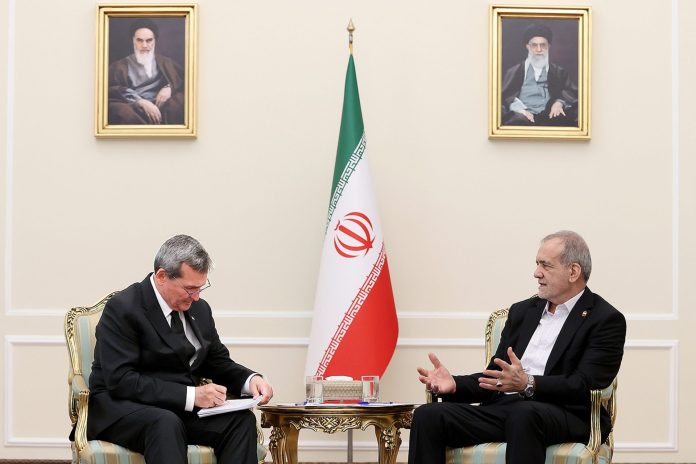
Further expansion of Tehran-Ashgabat ties to benefit both nations: Iran’s President

The Iranian president said strengthening cooperation between Tehran and Ashgabat will guarantee prosperity and security of both nations.

Pezeshkian made the remarks in a meeting with Turkmenistan’s Foreign Minister Rashid Meredov in Tehran on Tuesday, where they discussed ways to expand bilateral relations.

“Deepening and strengthening cooperation, especially joint and mutual investments between Iran and Turkmenistan, can guarantee the future prosperity, comfort, friendship and security of the two nations,” he said.

He said Iran is keen to import natural gas from Turkmenistan, while it also has the efficient capacity to export and swap gas with neighboring countries.

Pezeshkian underscored the need for building a gas pipeline between the two countries that can support multiple purposes, including domestic use, export, and gas swaps.

“In addition to energy cooperation, Iran aims to expand cooperation with Turkmenistan in areas such as transport, trade, investment, and cultural exchanges,” he said.

Meredov, for his part, said Turkmenistan sees long-term opportunities for economic cooperation with Iran and is committed to enhancing trade routes and border markets.

Meredov, who is in Tehran for the 18th Joint Economic Cooperation Commission, said Turkmenistan seeks to increase the volume of natural gas it transits to other countries via Iran amid efforts by the Central Asian state to use growing relations with the Islamic Republic as an opportunity to expand its energy exports.

Iran has signed several gas swap agreements with Turkmenistan in recent years to supply the equivalent of natural gas it imports from the country to Azerbaijan and Iraq.

The swap deals boost Iran’s ability to increase its supply of natural gas to its national grid customers in the northeast of the country, where key population and industry centers are located.

Iran also imports nearly two billion kilowatt hours of electricity from Turkmenistan each year to respond to rising demand for power in its northeast.

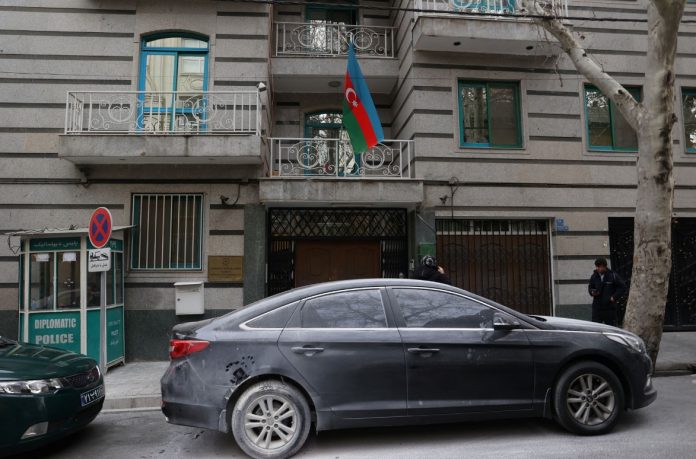
Iran executes attacker convicted in deadly assault on Azerbaijani Embassy in Tehran

Azerbaijan Embassy Tehran

According to the Iranian judiciary, the incident occurred on January 27, 2023, when the assailant stormed the embassy armed with a Kalashnikov rifle. One Azerbaijani national was killed and two others were injured in the assault.

The Tehran Prosecutor’s Office immediately launched an investigation, revealing that the attacker acted on personal motives.

The man claimed his wife had entered the embassy in April 2022 and never returned home. Believing she remained inside the embassy and refused to see him, he decided to carry out the attack.

The charges against the suspect included premeditated murder, illegal possession and use of firearms – a Kalashnikov and a handgun – and disturbing public order.

After completing the investigation, the Tehran Criminal Court held several hearings with the presence of the defendant and his legal team.

The court ultimately sentenced the man to death and the verdict was upheld by Iran’s Supreme Court.

The case strained diplomatic relations between Iran and the Republic of Azerbaijan at the time of the incident.

US not ruling out reopening embassy in Damascus

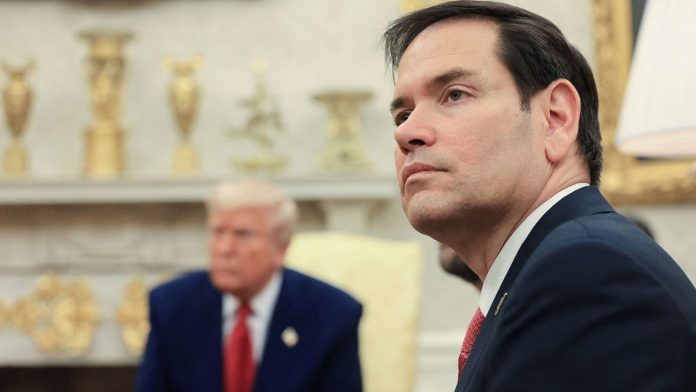
Marco Rubio and Trump

“We don’t have an embassy in Syria. It’s operating out of Turkey, but we need to help them,” US Secretary of State Marco Rubio told the Senate Foreign Relations Committee on Tuesday.

He stated US embassy staff in Turkey would assist the new Syrian officials in determining what type of assistance they will need to move forward in rebuilding the country.

In a surprise move, President Donald Trump announced the lifting of all sanctions on Syria during a trip to Riyadh, Saudi Arabia, last week. Syria had been consistently under some measure of US sanctions for more than 40 years.

Trump also met with Sharaa in Riyadh and stated he was impressed by the leader, a former al-Qaeda fighter who fought against US forces in Iraq.

“It’s entirely driven by security concerns,” Rubio said of the continued suspension of embassy operations.

He added, “It’s not the transitional authorities. We don’t think they would harm us, but there are other elements on the ground in Syria.”

Those elements could be referencing Alawis whose loyalty in some cases remains to former President Bashar al-Assad, who fled Syria in December 2024 as rebels advanced on Damascus, as well as holdouts from anti-Assad and Islamic State-aligned militant groups who have refused to join the ranks of the new unified Syrian army.

“We have all kinds of requirements that are there for a reason. If someone is hurt, do you have a medical evacuation plan? Can you secure a facility from an attack from an armed group, many of whom are still running loose in the country? Unfortunately, it’s one of the fundamental challenges the transitional authority is facing,” Rubio told lawmakers.

While Sharaa’s government is not currently assessed as a threat to US interests, “the transitional authority figures, they didn’t pass their background check with the FBI”, Rubio added.

“They’ve got a tough history… But on the flip side of it, if we engage them, it may work out [or] it may not work out. If we did not engage them, it is guaranteed to not work out.”

Rubio met with Syria’s Foreign Minister Asaad al-Shaibani in talks hosted by Turkey last week. Three weeks ago, Shaibani was also given a visa to come to the United Nations headquarters in New York and raise the new Syrian flag there.

Rubio said if the Trump administration had not engaged with Sharaa’s government and pushed for sanctions relief, Syria would have been “maybe weeks, not many months, away from potential collapse and a full-scale civil war of epic proportions. Basically, the country splitting up”.

“The good news is that there is a Syrian national identity,” he continued, adding, “It is one of the places in the Middle East where Alawites and Druze and Christians and Sunni and Shia and Kurds have lived alongside each other, underneath the banner of a Syrian identity, until it was broken by a butcher, Assad.”

The lifting of the sanctions, Rubio said, is primarily designed to allow neighbouring countries to assist Sharaa’s team, and “to build governance mechanisms that allow them to actually establish a government [and] unify the armed forces”.

That, however, will not be enough, he stated.

To attract much-needed foreign investment in Syria, the US will begin by issuing waivers under the Caesar Syria Civilian Protection Act, which was signed into law during Trump’s first term in 2019.

However, waivers have expiry dates, and until further progress is made by the interim government, that seems to be the extent to which the US will issue relief.

“I don’t think the issue with them right now is a matter of willingness or lack of willingness. It’s a lack of capability,” Rubio said of Sharaa’s efforts to rein in armed factions.

For Washington, there’s also the crucial matter of its primary partner in the region, Israel.

“We’ve had conversations with them about this, what we view as an opportunity for Israel, if, in fact, Syria is stable and has in it a government that has no interest… in fighting a war,” Rubio told lawmakers.

He added there have been some assurances from Damascus.

“Obviously, you have to prove it, but they have said this is a nationalist project. They are seeking to build a nation. They’re not viewing themselves as a launch pad for revolution. They’re not viewing themselves as a launch pad for attacks against Israel.”

Israel occupied Syria’s Golan Heights, where Sharaa’s family comes from, in 1967, and today, Trump recognises it as Israeli territory despite the UN asserting its illegality.

When Assad’s reign collapsed, Israeli Prime Minister Benjamin Netanyahu ordered troops into the Golan Heights buffer zone “to ensure that no hostile force embeds itself right next to the border of Israel”.

He also ordered the bombing of dozens of sites across Syria that he maintained were weapons caches for Hezbollah, an ally of Assad.

Britain summons Israeli envoy,  suspends free trade agreement talks with Tel Aviv

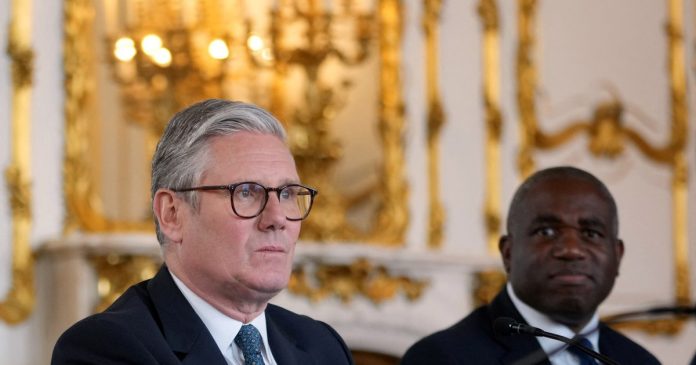
Starmer Lammy

Speaking in parliament on Tuesday afternoon, Foreign Secretary David Lammy condemned “this Israeli government’s egregious actions and rhetoric”, adding that the government is “isolating Israel from its friends and partners around the world”.

He criticised Israel for expanding its military operations in the Gaza Strip and restricting the entry of humanitarian aid.

Lammy said: “I find this deeply painful as a lifelong friend of Israel and a believer in the values expressed in its declaration of independence.”

He argued that Israel’s approach is “incompatible with the principles that underpin our bilateral relationship, rejected by members across this house, and frankly it’s an affront to the values of the British people”.

The foreign secretary added: “Therefore today I am announcing we have suspended negotiations with this Israeli government on a new free trade agreement.

“We will be reviewing cooperation with them under the 2030 bilateral roadmap. The Netanyahu government’s actions have made this necessary,” he continued, noting, “Today my honourable friend the foreign minister for the Middle East is summoning the Israeli ambassador to the Foreign Office to convey this message.”

Lammy also added that Palestinians must have their own state and live “free of occupation”.

Negotiations on a UK-Israel free trade agreement began in July 2022 under the previous Conservative government.

In the initial agreement, the UK government agreed to oppose the use of “apartheid” to describe Israel’s treatment of Palestinians and pledged to confront “anti-Israel bias” in international institutions, including at the United Nations’ Human Rights Council.

“The world is judging,” Lammy said.

“History will judge them [the Israeli government]. Blocking aid, expanding the war, dismissing the concerns of your friends and partners. This is indefensible and it must stop.”

A number of MPs have questioned the effectiveness of the policy shift by the Labour government and have asked for more strident action against Israel.

They include Conservative politician Kit Malthouse who said Lammy knows that Israel does not “give a damn” about the sanctions announced on Tuesday and continued to kill Palestinians since the foreign secretary’s statement was issued.

Speaking in parliament, Malthouse added: “Many of us in this chamber have tried to spur the government into taking action over the last few months. We’ve tried anger and outrage, and got nowhere. We’ve tried shaming ministers into action and got nowhere. So maybe we need to beg.”

“I’m urging, begging the foreign secretary to pluck up all his moral authority and courage, stand up in government against the blockage in Downing Street, and please try to save these children’s lives as soon as possible.”

The Scottish National Party leader in Westminster, Stephen Flynn, called for a vote in parliament on recognising a Palestinian state.

The UK further announced sanctions on three individuals in the occupied West Bank, including prominent settler leader Daniella Weiss, who appeared in a recent BBC documentary presented by Louis Theroux, as well as two illegal outposts and settler organisations.

In response to the announcement by the British government, the Israeli Foreign Ministry announced the suspension of trade negotiations would harm the UK’s economy and was motivated by anti-Israel sentiment.

“If, due to anti-Israeli obsession and internal political considerations, the British government is willing to harm the British economy, that’s their decision,” the ministry said.

“The British Mandate ended exactly 77 years ago. External pressures will not divert Israel from its path,” it added.

14k Gaza babies could die within days without aid: UN

Gaza

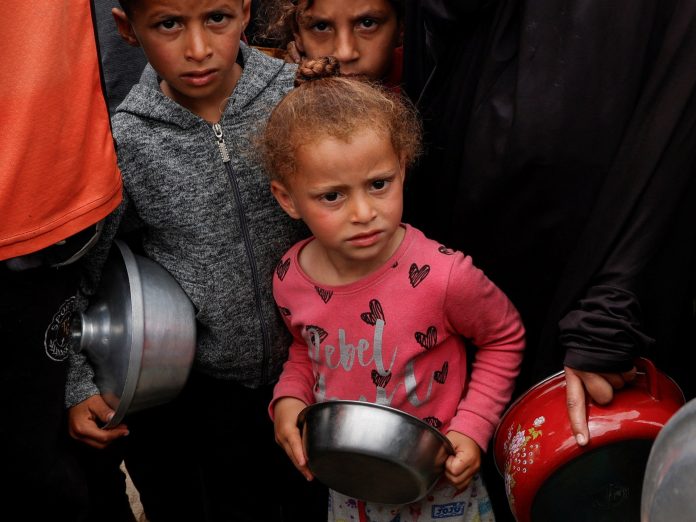
Speaking to BBC Radio 4’s Today programme, the UN’s humanitarian chief Tom Fletcher emphasised the urgency of the situation, saying that thousands of trucks loaded with baby food and nutritional supplies are ready to enter Gaza but remain stalled at the border.

“This is not food that Hamas is going to steal,” Fletcher stated.

“We run the risk of looting. We run the risks of being hit as part of the Israeli military offensive. We run all sorts of risk trying to get that baby food through to those mothers who cannot feed their children right now because they’re malnourished,” he added.

On Monday evening, Israel allowed five aid trucks carrying baby food and other essential supplies to enter Gaza through the Karem Abu Salem (Kerem Shalom) crossing, situated at the southern tip of the Gaza Strip, marking the first such delivery in nearly three months.

Fletcher however described the delivery as a “drop in the ocean” and added that the aid had not yet reached the communities in need.

The humanitarian crisis in Gaza has escalated dramatically over the past 11 weeks due to a total blockade imposed by Israel, which has severely restricted the entry of food, medicine, and fuel into the territory. According to the UN-backed Integrated Food Security Phase Classification, one in five Gazans faces starvation, and nearly 71,000 children under five are at risk of acute malnutrition.

International pressure on Israel to ease the blockade has recently intensified. On Monday, the UK, France, and Canada said they would take “concrete actions” against Israel if it did not lift restrictions on aid and halt its renewed offensive in Gaza.

An additional joint statement, signed by 22 countries, also urged Israel to fully resume impartial humanitarian operations.

Israeli Prime Minister Benjamin Netanyahu was forced to ease the devastating 11-week aid blockade on Sunday night, saying it was necessary for Israel to prevent a “starvation crisis” in Gaza for “diplomatic reasons”.

Meanwhile, Israeli air strikes have intensified across Gaza with at least 60 people, more than half being women and children, killed overnight on Monday.

More than 300 Palestinians were killed over only the last three days, according to the health ministry.

The UN also announced that people are dying from preventable diseases as medicines wait at the border, while attacks on hospitals deny people care and deter them from seeking it.

Over the past week, Israeli raids rendered Gaza European Hospital in Khan Younis, southern Gaza, and the Indonesian Hospital in northern Gaza non-operational, forcing the evacuation of thousands and cutting off access to critical medical services for already vulnerable communities.

Convicted killer of Kurdish woman executed in Iran

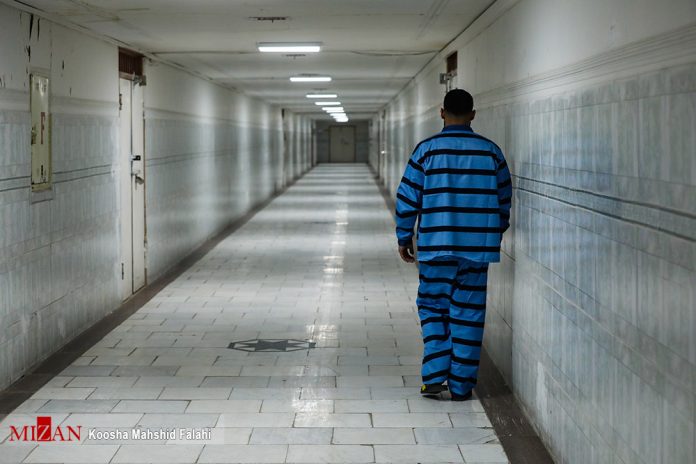
Iran Prison

The execution was conducted following the final ruling issued by Iran’s Supreme Court.

According to the investigation, on September 5, 2022, the convict — described by authorities as a known thug in Marivan — attempted to abduct and assault a 36-year-old woman from the village of Cheshmider, in the county of Sarvabad. During the incident, Shalir Rasouli fell from the second floor of a building while trying to escape and succumbed to her injuries three days later at a hospital in Sanandaj.

Following his arrest, the accused was charged with multiple counts including premeditated murder, three counts of kidnapping, assault with a knife, and public intimidation.

The First Criminal Court of Kurdistan Province convicted him of intentional homicide under the Islamic Penal Code, sentencing him to qisas (retribution-in-kind for murder), with additional sentences for the other charges.

After confirmation by the Supreme Court, the death sentence was officially enforced on Tuesday morning.

Tasnim: Report on cancellation of Iran nuclear talks attributed to Foreign Ministry ‘fabricated’

Araghchi Witkoff

According to Tasnim on Tuesday, a quote attributed to Foreign Ministry Spokesperson Esmail Baqaei regarding the alleged cancellation of diplomatic talks is “not authentic.”

The news agency confirmed, following an internal review, that Baqaei has made no public comments on the status of negotiations.

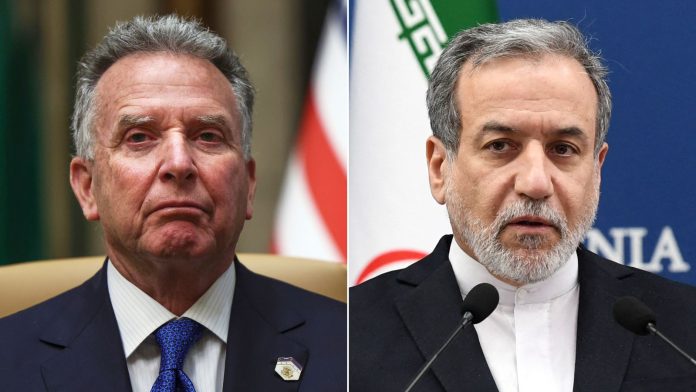
The clarification comes after Iranian Deputy Foreign Minister for Legal and International Affairs, Kazem Gharibabadi, confirmed earlier on Tuesday that Tehran has received a proposal regarding the next round of indirect negotiations with the US and is currently reviewing it.