Friday, December 26, 2025
Home Blog Page 3646

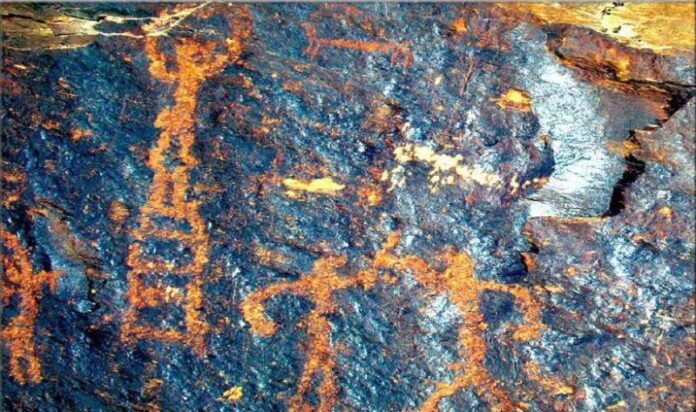
Newly-Discovered Rock Carvings Prove Ancient History of Boxing in Iran

According to experts, images of human beings that are moving in and out of the boxing competition can be seen in these carvings. There is also an image of a referee over a wooden staircase in these engravings.

Mohammad Nasseri-Fard, who works on Iran’s engravings, has said in a Farsi interview with IRNA that the discovery of these images shows ancient Iranians in the third and fourth millennium BCE held sports competitions, especially boxing.

He also added that boxing originates in Greece (677 BC) and the researchers believe the sport has been played for recreation and combat readiness.

“Discovering multiple examples of boxing, polo and shooting shows that despite being forgotten, the rock painting and the art of engraving prove the existence of human life on the Iranian plateau, particularly in Central Iran [in ancient times].”

Nasseri-Fard went on to say that inclusion of images of rock paintings in the schoolbooks and college textbooks is one of the topics that should be given special attention because they introduce original cultural assets.

“24 provinces of the Iran are home to engravings, and the total number of these works is more than 50 thousand samples. However, no economic application has been created for the most ancient monument of Iran which belongs to 4,800 years ago.”

Therefore, he added, it is necessary to use these valuable assets to properly generate revenue and introduce a pure Iranian identity.

There are more than 21,000 engravings in an area of about 150 square kilometers in Khomeyn, some of which date to more than 40 thousand years ago.

The earliest known depiction of boxing came from a Sumerian relief in Iraq from the 3rd millennium BCE. Later depictions from the 2nd millennium BC were allegedly found in reliefs from the Mesopotamian nations of Assyria and Babylonia, and in Hittite art from Asia Minor.

12 Arrested in Tehran over Illegal Currency Exchange

Speaking two days after the government announced a plan to unify official and open market exchange rates, General Hossein Rahimi said on Wednesday police has summoned members of a group active on the cyberspace who have taken illegal measures disrupting economic order.

Moreover, the police chief said 16 currency exchange centres taking illegal measures have been shut down so far.

Rahimi the police forces will continue measures to eliminate threats to security of the Iranian economy.

“With the coordination of the judicial system, we will move rapidly and firmly to arrest those who disobey the law and rules set by the government,” IRNA quoted him as saying in a Farsi report.

The government will sell the US dollar at a rate of IRR 42,000 to all individuals and businesses, Iran’s First Vice President Eshaq Jahangiri said in a statement on Monday.

Anyone found selling the dollar at rates higher than 42,000 “will be dealt with severely” by judicial authorities and the police, Jahangiri warned.

“As of tomorrow [Tuesday], any other price offered in the market will be considered contraband, in the same way that illegal drugs are contraband,” Bloomberg quoted him as saying.

Jahangiri also said the sudden decline in the value of rial was “unnatural and unprecedented”, suggesting enemies Iran were behind the instability.

On Monday, the rial slid to a record low of 60,000 rials against the dollar on the unregulated market, according to Tasnim News agency.

Iran Rejects Fabricated Claims about Syria’s Use of Chemical Weapons

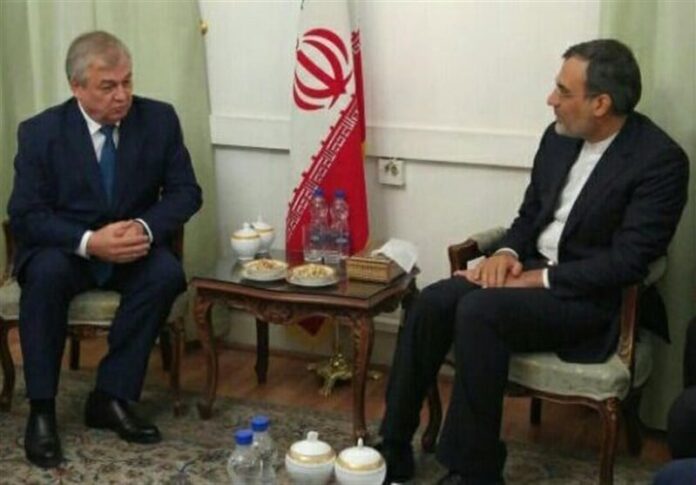
Speaking to reporters after an unannounced meeting with Russia’s special envoy on Syria Alexander Lavrentiev in Tehran on Tuesday afternoon, Jaberi Ansari said, “We will not accept the instrumental use of the issue of chemical weapons.”

“If there is a claim about the use of chemical weapons, we call for legal action on the issue,” he stressed.

The official said that Syria is undergoing new developments and the US and some other countries are threating to take action against the Syrian government under the pretext of chemical weapons use.

Jaberi Ansari further emphasized that the clear and transparent stance of the Islamic Republic of Iran, as the main victim of chemical weapons, is that using such weapons by any country or party is totally unacceptable.

On Sunday, Iranian Foreign Ministry Spokesman Bahram Qassemi also said claims that the Syrian government used chemical weapons in Douma in Eastern Ghouta are “conspiratorial” and “illogical”.

“The Islamic Republic of Iran, as one of the victims of chemical weapons, strongly condemns the use of such weapons by any party and anywhere in the world based on its principled policies and religious and moral teachings,” Qassemi said in a statement.

Referring to the alleged use of chemical weapons by the Syrian army in Douma, Qassemi stated that such claims do not fit the facts on the ground.

The Syrian government has had a good cooperation with the United Nations on chemical matters, Qassemi said, adding that the international community, after Syria’s accession to the Chemical Weapons Convention, destroyed all the chemical weapons production and manufacturing facilities of the Arab country.

“The Syrian army’s use of chemicals does not seem logical since it has the upper-hand in its war against armed terrorists,” stressed Qassemi.

“Such allegations by the US and some other Western countries reveal a new conspiracy against the Syrian government and people. This is an excuse for military action against Syrians and will definitely add to the complexity of the situation in this country and region.”

“Such claims would also make the terrorist more resolute in committing crimes, which will not contribute to peace, stability and security in the region and in the world,” he added.

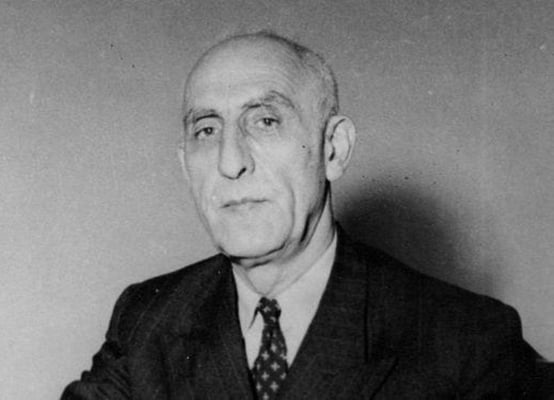
Street in Tehran Finally Named after Eminent PM Mosaddeq

The renaming was approved by the reformist City Council of Tehran on March 13, on the eve of the anniversary of the nationalization of Iran’s oil industry.

The move was aimed at commemorating Mosaddeq, who is credited for nationalizing Iran’s British-run oil industry in 1951.

The move ended the UK’s four-decade monopoly on Iran’s oil resources through the Anglo-Persian Oil Company (currently called British Petroleum).

The renamed street (Naft) is a relatively small one located in Mirdamad neighbourhood in northern Tehran, the Persian-language Khabar Online reported earlier this week.

A few months ago, a proposal was put forward at the council to name Northern Kargar, a major street in downtown Tehran, after the former prime minister over 50 years after his demise.

But the move generated considerable controversies, causing the proposal to be rejected.

Street in Tehran Finally Named after Eminent PM MosaddeqMosaddeq has been a divisive figure in Iranian political circles since the Islamic Revolution of 1979.
Shortly after the revolution, the longest street in Tehran called Pahlavi at the time was renamed to Mosaddeq. However, oppositions prompted city officials to rename the street to Valiasr.

In what was reminiscent of the 1979 experience, last March’s decision by Tehran City Council drew criticism from some figures and outlets affiliated with the principlist camp, who said the former prime minister does not deserve such a favour.

Among them was Mahmoud Kashani, the son of Ayatollah Abolqassem Kashani, who said some acts of Mosaddeq could amount to “betrayal”.

Ayatollah Kashani, seen as one of nationalism heroes, was Mosaddeq’s main clerical supporter who headed the religious wing of the nationalization movement.

However, the two were split shortly after the victory of the nationalization of Iran’s oil industry.

Only two years later, Mosaddeq’s democratically-elected government was overthrown through a coup orchestrated by the US and UK secret services.

Some historians believe the Iranian premier made a big mistake by turning to the US in the hope they will help him counter the imperialist British government.

The US and UK for years kept mum on their role behind the coup, which saved the throne of despotic former Shah Mohammad Reza Pahlavi.

However, in 2000, as part of an effort to mend relations with Iran, then-US Secretary of State Madeleine Albright admitted that the US had ‘played a significant role’ in overthrowing Mosaddeq.

“The coup was clearly a setback for Iran’s political development, and it is easy to see now why many Iranians continue to resent this intervention by America in their internal affairs,” she said.

Dozens Dead after Military Plane Crash in Algeria

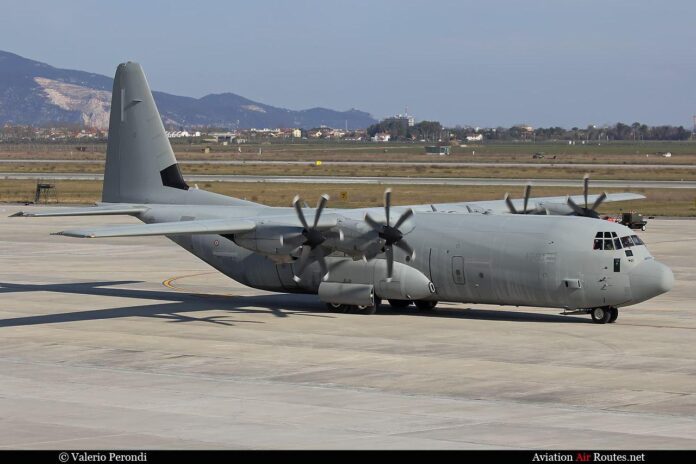
The plane, an Ilyushin Il-76, was carrying dozens of military troops, according to the reports on Wednesday.

Some reports have put the number of victims at 100, but the figure has not been confirmed yet.

Algerie24, a local news website, said the plane was heading to the western Algerian city of Bechar.

Images posted on an Algerian website showed thick smoke billowing from the site of the crash, as several rescuers rushed to help.

Iran Says Nuclear Weapons to Remain Its Red Line Forever

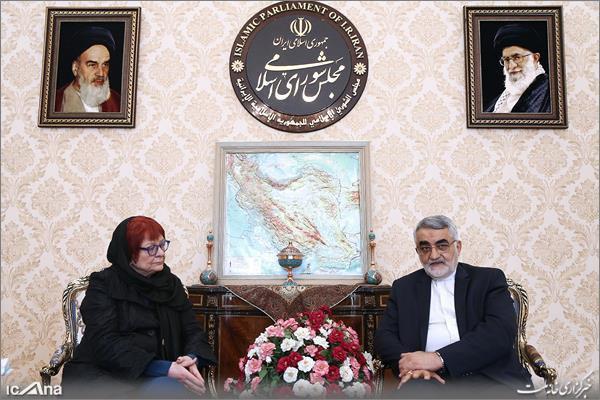
Alaeddin Boroujerdi, the chairman of the Iranian Parliament’s National Security and Foreign Policy Commission, says Iran avoids producing nuclear weapons not only because of its commitment to the Non-Proliferation Treaty but also due to a Fatwa (religious decree) by Leader of the Islamic Revolution.

“Our opposition to nuclear weapons production is among the permanent principles of the Islamic Republic of Iran. It is our red line,” he was quoted as saying in a Farsi report by ICANA.

The Iranian lawmaker said the “train” of Iran’s nuclear program is moving ahead within the principles of the signed international agreements and added the ground is prepared for Iran to press ahead with its peaceful nuclear program in which nuclear bomb has no room.

He made the remarks in a Wednesday meeting with the Executive Director of European Security and Nuclear Disarmament Network, Tarja Cronberg, in Tehran.

Boroujerdi referred to the recent decision by the US to violate its commitments under the Iran nuclear deal and said Tehran has no motivation to remain further in the JCPOA if the US pulls out of the nuclear deal.

“If the US Congress decides to pull out of the JCPOA, the Islamic Republic of Iran will have no motivation to remain in the nuclear deal and the world would come to this sense that the capabilities of Iran to press ahead with its nuclear program are much higher compared with the pre-JCPOA era,” he said.

He then pointed to the latest regional developments and said Iran vehemently defends the territorial integrity of all regional states including Iraq and Syria.

“The decisions by the US president contribute to some regional states but the Islamic Republic of Iran has never supported any war or bloodshed in the region and always defends peace in the world and the region,” he added.

Broujerdi also referred to Europe’s stance towards the Iran nuclear deal and said Tehran expects the European countries to stand strongly against the other side’s violation of the international deal.

For her part, the European official expressed hope that the remaining disputes over the JCPOA implementation be removed soon and added, “Doubtlessly the Islamic Republic of Iran and Europe have common interests particularly in economic fields.”

“Iran has not yet benefited completely from the economic fruits of the JCPOA,” she added.

She went on to say the European states are after a mechanism to preserve the Iran nuclear deal and added their efforts will continue in the future.

She finally voiced hope that the economic ties between Iran and the US flourish and added the preservation of the JCPOA is in the interests of all involved sides.

During the meeting the two sides also exchanged views on bilateral, regional and international issues.

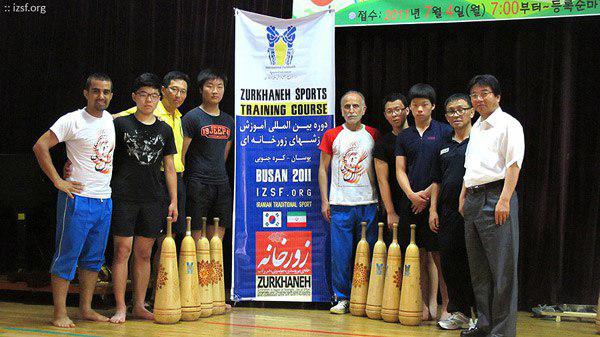
Iranian Zurkhaneh Sports Growing Popular in South Korea

This sport began to be practiced in South Korea when the Asian Confederation of Zurkhaneh Sports established its office in Busan, the second most populous city of the country in spring 2016.

At present, next to Iran, 24 other countries, including Lebanon, Thailand, India, Indonesia, Nepal, South Korea, Sri Lanka, China Taipei, Pakistan, Bangladesh, Syria, Tajikistan, Japan, Mongolia, Afghanistan, Iraq, Uzbekistan, China, Turkmenistan, Hong Kong, Kyrgyzstan, Malaysia, the Philippines and Singapore are members of the Asian Confederation of Zurkhaneh Sports, which shows the sport has the capacity to be included in the Asian Games.

As a turning point, Zurkhaneh sports were included in the fourth round of Islamic Solidarity Games in Baku in May 2017, a Farsi report by IRNA said.

San Sun Pyo Ali, Hong, Secretary-General of the Asian Confederation of Zurkhaneh Sports, said during his last year’s visit to Tehran that “South Korea is very pleased to work with the International Federation to develop this sport.”

Describing the sport as a very exciting and attractive one, he added that “if the trainings begin at a young age, it will have positive results. Therefore, Zurkhaneh Sports are practiced at schools and student teams have been formed across the country.”

“We are going to continue this program in other Asian countries and nations as well.”

After the establishment of the Zurkhaneh and Pahlavani Wrestling Confederation in South Korea, the country’s National Confederation also began its work in recent days.

One of the main objectives of the South Korean Confederation is to become the hub of training for the Zurkhaneh Sports and Pahlavani Wrestling in Asia.Iranian Zurkhaneh Sports Growing Popular in South Korea

DM Warns Adversaries against Testing Iran’s Power

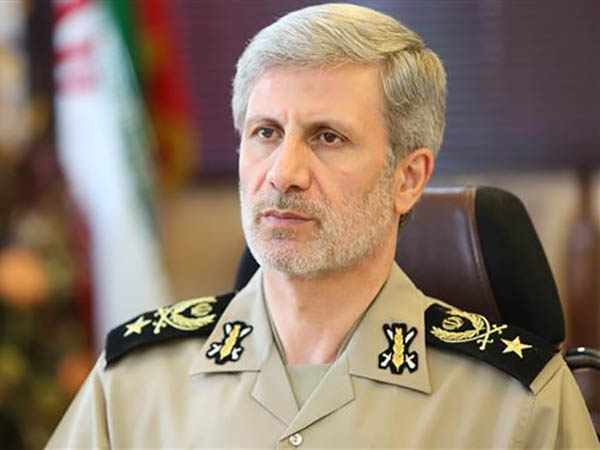
Iran’s DM Vows Firm Response to Enemy’s Moves

Describing Tehran as the “strong power of the region” in terms of defensive might, the defence chief said Iran is well capable of dealing with plots hatched by foreign powers.

Hatami said the adversaries are trying various ways to damage the Islamic Republic, according to a Persian-language report by Fars News Agency on Tuesday.

For example, the defence chief said, over 500 US experts are currently working to create plans to make obstacles to economic development of Iran.

Hatami’s comments came after Leader of the Islamic Revolution Ayatollah Seyyed Ali Khamenei said on Sunday that enemies of the Islamic establishment are in fear of the rising power of Iran, but are not able to do anything to curb it.

In a meeting with a group of senior commanders of the Iranian Armed Forces, the Leader mentioned power, security, dignity and having adequate capability in time of need as the main goals of the Iranian Armed Forces. Ayatollah Khamenei noted that all the activities conducted by those forces must be aimed at achieving their predetermined goals.

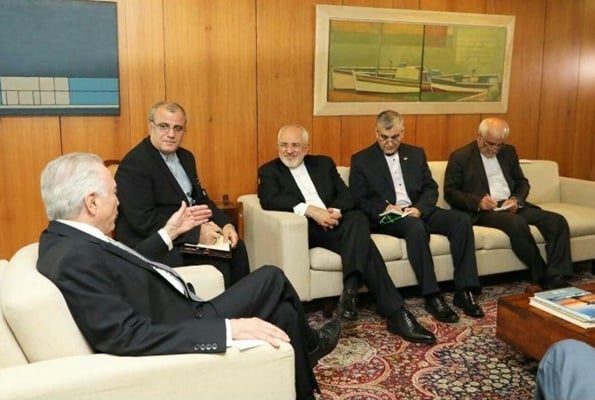
Iran FM Meets Brazilian President before Departing for Uruguay

Speaking in the Tuesday meeting, Zarif pointed to the current level of bilateral trade between the two states and called for efforts to deepen economic relations and achieve balance in bilateral trade.

The foreign minister said the two countries could engage in cooperation in energy, transit, agriculture and high-tech fields, adding that considering the progress of the two countries, they could be complementary to each other.

Zarif called for the removal of obstacles to closer banking relations, saying the two sides’ banks needed to establish corresponding relations.

Among other issues raised by Zarif in the meeting were using national currencies in bilateral trade, accelerating the establishment of a Brazilian credit line for Iran, engaging in oil and gas cooperation, and implementing joint projects in new fields such as nanotechnology, biotechnology and aerospace.

The foreign minister said broadening economic cooperation will be necessary to deepen relations between the two countries, adding Tehran welcomes Brasilia’s investment in Iran’s oil, gas and transit sectors.

Zarif thanked the Brazilian government for extending support to Tehran’s right to peaceful nuclear energy, calling for continued political dialogue and exchange of views between the two countries.

Temer, for his part, said Brazil is eager to expand ties with Iran and develop cooperation with the country in high-tech fields, calling for the exchange of delegations and closer contacts between the two countries.

The president said Brazil has no problem with the expansion of Iran’s peaceful nuclear activities and it supports them.

The Brazilian president said there is possibility for closer cooperation in oil and gas fields, adding that exchanging political and economic delegations between the two countries will help deepen relations between them.

After the meeting, Zarif left the Brazilian capital for Uruguay, the third leg of his four-nation tour, which earlier took him to Senegal, and will later end in Namibia.

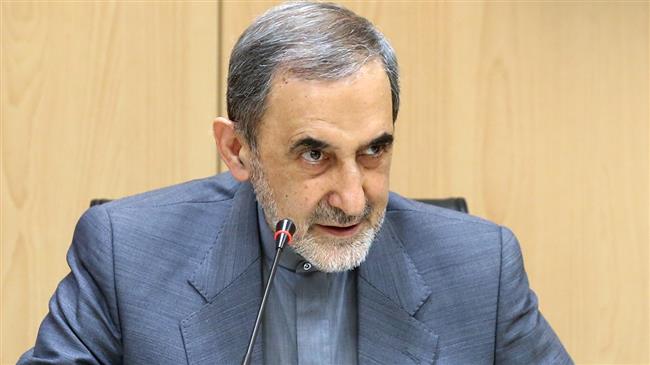
Israeli Attack on Syria Not to Remain Unanswered: Iran Leader’s Aide

“Definitely, this crime will not remain without a response,” Ali Akbar Velayati, a senior adviser to Ayatollah Seyyed Ali Khamenei on international affairs, told IRNA and IRIB upon his arrival in the Syrian capital of Damascus on Tuesday.

He added that Iran would strongly defend Syria’s territorial integrity and national sovereignty.

Two Israeli F-15 warplanes carried out strikes from Lebanese air space on T-4 air base in Homs on Sunday that killed and wounded several people. Syrian air defense systems shot down five out of eight missiles fired.

Syria on Monday warned about the “dangerous repercussions” of Israeli assaults on its territories, stressing that the recent attack on Homs would not have been possible without massive US support.

In a letter to the United Nations secretary general and the UNSC president, Syrian Foreign Ministry said in the framework of its policies based on practicing state terror and providing constant support for armed terrorist groups as well as violating UNSC resolutions, the authorities of the Israeli regime renewed acts of aggression against Syrian territories, with Israeli F15 jets launching missiles from the Lebanese airspace on T-4 airport in Homs province.

Iran also on Monday strongly condemned the Israeli regime’s air strike, saying it was a blatant violation of international law which would strengthen terrorists.

“The Israeli regime’s aggression against Syria is a breach of this country’s national sovereignty and territorial integrity and runs counter to all international regulations and principles,” Iranian Foreign Ministry Spokesman Bahram Qassemi said.

Velayati, who is in Damascus to attend a conference on Palestine, said Iran would continue its support for the people and the government of Syria in the fight against their enemies, particularly the Israeli regime and its puppets in the Arab country.

He added that the “very important” achievements made by the Syrian army and its allies in the campaign against militants in the Eastern Ghouta have irked Syria’s enemies.

Such victories made the US and the Israeli regime hatch an “evil plot” and falsely accuse the Syrian government of conducting a chemical attack near the Syrian capital, Velayati said.

He added that like the past seven years following the outbreak of a foreign-backed crisis in Syria, enemies would not be able to obtain their vicious goals in the Arab country and across the Middle East in the future either.

Eastern Ghouta, which is home to nearly 400,000 people, fell to multiple militant groups in 2012, months after Syria plunged into crisis and has since served as a launch pad for fatal attacks against residents and infrastructure in Damascus.

Damascus, in a statement released late on Saturday, strongly rejected the allegation of using chemical munitions and said that the so-called Jaish al-Islam Takfiri terrorist group, which has dominant presence in Douma, was repeating the accusations “in order to accuse the Syrian Arab army, in a blatant attempt to hinder the Army’s advance.”

“The chemical fabrications, which did not serve the terrorists and their sponsors in Aleppo and Eastern Ghouta, will not serve them today either, as the Syrian state is determined to end terrorism in every square inch of Syrian territory,” read the statement.

An initial assessment by the United States has not determined whether a reported chemical attack in Douma was carried out by Syrian government forces, Reuters reports.

The assessment also suggested that a nerve agent was used in the suspected poison attack, but further evidence was needed to determine the type of agent, US government sources told the news agency.