Tuesday, December 23, 2025
Home Blog Page 3610

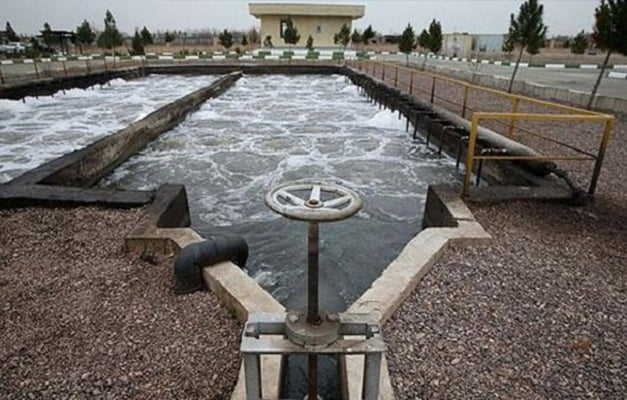
Iran Calls for Scientific Collaboration to Settle Caspian Sea Environmental Issues

“We are willing to engage in big projects with Russia [and other countries] to halt deterioration of the environment in the Caspian Sea,” Gholami said on Saturday.

Speaking in a meeting with the Russian President Vladimir Putin’s special representative for cooperation with Caspian Sea countries, Gholami said he believes the ground is prepared for developing scientific cooperation between Iran and the Caspian Sea states, particularly Russia.

“Fortunately, historical bonds of friendship among Iran and Russia have paved the way for boosting scientific cooperation between the two countries,” he said, according to a report by the Persian-language ISNA.

For a brief review of Iran’s achievements in various fields of science and technology, check the book “Science and Technology in Iran: A Brief Review

Gholami said the Iranian students are well capable of conducting such projects in cooperation with their counterparts from other countries.

The minister said Iran is also keen for the exchange of university professors with Caspian Sea states.

Landlocked between Russia, Kazakhstan, Turkmenistan, Azerbaijan, and Iran, the Caspian Sea is the largest inland body of water on earth.

The Caspian Sea region is home to more than 700 species of vertebrates, including swans, seals, and sturgeon that produce the vast majority of the world’s caviar.

Observers warn that years of neglect have left the Caspian in a precarious state.

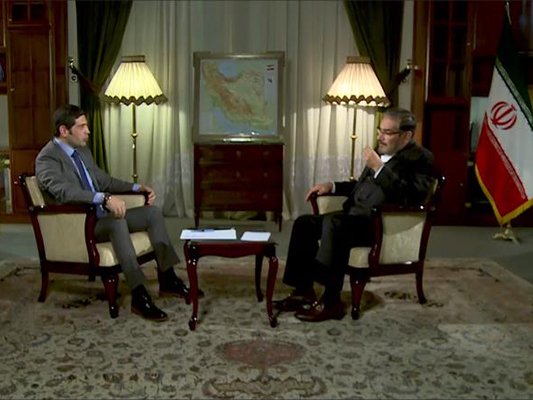
“No JCPOA Left; Which Deal Are You Talking About?”

Chief of the conservative Iranian daily Kayhan has, in an interview the Persian-language Fars News Agency, weighed in on the possibility of US President Donald Trump withdrawing from the Iran nuclear deal on May 12, 2018 and how the issue should be dealt with.

“Which JCPOA are our friends talking about? Is there any JCPOA left, after all, to discuss whether or not to withdraw from it?” he asked ironically.

Shariatmadari then referred to an old Persian anecdote about the worst-case scenario that might happen.

“Once, a person was told that his father had died. The man said, ‘Tell me the truth! Something bad must have happened and you are not telling me!’ In response, they said, ‘Come on, man! What could have been worse than your father’s death?!” said Shariatmadari.

“The United States scuttled the JCPOA long ago by breaching its commitments, and our country’s nuclear officials are still dithering on whether or not to withdraw from the Iran nuclear deal! And they won’t explain whether there is any JCPOA left, after all, that they are dubious about leaving or staying in it,” he noted.

He said the key objective of Iran’s nuclear talks has not been fulfilled.

“The talks, the result and outcome of which is the JCPOA, were basically held to get the sanctions lifted. Not only have the sanctions not been lifted, but dozens of other sanctions have been added to them as well. So, it is not clear what else the gentlemen (the Iranian officials awaiting Trump’s decision) expect to happen to be convinced that the JCPOA is no longer there,” he said.

“By his own admission, Obama dismantled our nuclear program … without shooting even a bullet; and now, Trump using the JCPOA is threatening our gullible authorities to stop their nuclear program!” he noted.

“In addition to the JCPOA, Trump seeks to restrict our country’s missile program and make Iran stop its presence in the region,” Shariatmadari said.

“Trump is not seeking to put the JCPOA aside because the agreement has been as profitable and golden an achievement for the US as it has been disastrous for us, and the US will never forgo this great concession, which it has attained easily and without any cost!” said the conservative journalist.

He said what Trump wants is to get Iran to “commit suicide” because the Islamic Republic’s missile power is a “bulwark” against the enemies, which have used all resources available to them to destroy Iran.

He said Iran’s presence in the Middle East region and its support for the resistance front have made the US and Europe lose their domination over West Asia, and “now, not only their troops in the region, but the rulers which are their puppets in the West have turned into hostages in our hands.”

“I wish some of our officials were aware of the strong position of Islamic Iran in the region and would not fall for the bluffs of the US and its allies,” he noted.

Iranian, French Universities Sign Scientific Cooperation Deal

Mohammad Haji Aqajani, the chancellor of the Iranian university, says the agreement is part of the university’s plan to enhance its scientific cooperation with foreign universities.

He said the agreement with Paris Descartes University is one of several deals with foreign universities on the promotion of mutual scientific cooperation, reported the Persian-language Iranian Students News Agency (ISNA).

“Under the MoU, given that France is in the lead when it comes to emergency medicine, we dispatched a group of emergency medicine experts to France who attended a [training] course there,” he said.

“We also signed an agreement with that university under which emergency medicine experts admitted to the university will be able to continue their education in Tehran and Paris in two [educational] programs, and will also be able to learn about the technological advances and methods of education in France,” the top academician underlined.

“At the end, Shahid Beheshti University of Medical Sciences and Paris Descartes University will issue the graduates with joint specialized certificates on emergency medicine,” he added.

“We have also signed agreements with several universities in other European countries, and we hope to see the agreements go into effect and witness the exchange of university instructors and students, and also see joint courses held with those universities,” he added.

Iranian Customs in Photos: Football Match in Rice Farms

The traditional match is called “Footchal” and is aimed at attracting the youths to work in the farms. Following you can find photos of the match in the village of Kinchah in the Central District of Astaneh-ye Ashrafiyeh County, Gilan province.

Photos have been retrieved from IRNA:

Fire-Resistant Fabric Developed in Iran Using Nanotechnology

The company which has secured the achievement produces raw materials for textile, tanning, leather and detergent industries.

“In 2014, the company began work in the field of nanotechnology given its interest in new technologies and modern industries, and defined some projects in this field by recruiting experts in relevant disciplines,” Mojtaba Alizadeh, a member of the research team, told the Persian-language Iranian Students’ News Agency (ISNA).

He said the products developed have received licences from the national Nanotechnology Development Commission.

“Among these products is the colloidal nano-silver applied to polyester fabric” to make it resistant to bacteria.

For a brief review of Iran’s achievements in various fields of science and technology, check the book “Science and Technology in Iran: A Brief Review

He said the company has also produced antibacterial paint.

“These are water-based paints used in hospitals and laboratories,” the researcher noted.

He further referred to water-proof textiles as another product developed by the company.

“Applying nano-particles to the surfaces of fabric and carpets make them resistant to water, so much so that if tea as hot as 60 or 70 degrees centigrade spills on the carpet, it will remain on the surface in the form of drops,” he said.

Iran Learns Its Opponents at AFC Asian Cup 2019

After more than three years of qualifying suspense, Asia’s best 24 teams finally discovered their challengers on Friday.

In a grand spectacle at the United Arab Emirates Burj Khalifa, host UAE, who was positioned in first place in Group A, will kick-off Asia’s most prestigious tournament against Bahrain at the Zayed Sports City Stadium in Abu Dhabi on January 5, 2019.

The host nation will be looking to improve on its second place finish the last time the competition was held in the UAE in 1996, but will face formidable opponents in India and Thailand who complete the cast in Group A.

Meanwhile defending champion Australia was drawn in Group B with 2004 and 2011 quarter-finalist Jordan, Palestine, and Syria, who return to the competition following their absence in Australia 2015.

Continent powerhouse and 2015 finalist Korea Republic, who is on the hunt for its first title since 1960, was drawn in Group C with two-time runner-up China PR as well as two debutants in the UAE 2019 – Kyrgyz Republic and Philippines.

Asia’s best ranked side, Islamic of Republic of Iran who is looking to secure its fourth title and its first since 1976, has been drawn in Group D alongside 2007 winner Iraq, Vietnam and Yemen, who will be appearing in its first tournament since its unification.

In Group E, two-time champion Saudi Arabia was drawn with 2011 host Qatar, Lebanon, who will be returning to the competition for only the second time after a 19 year absence as well as DPR Korea.

The tournament’s most successful side with four titles, Japan is in Group F and will face Uzbekistan, who has progressed past the group stage for the last four editions of the competition as well as Oman and Turkmenistan.

The Zayed Sports City Stadium will also host the final on February 1, 2019 after 28 days of enthralling action with the Mohammed Bin Zayed Stadium and Al Nahyan Stadium hosting the remaining matches in Abu Dhabi.

Hazza bin Zayed Stadium and the Khalifa bin Zayed Stadium will host the matches in Al Ain and Sharjah Stadium in the Emirate of Sharjah. Al Maktoum Stadium and Al Rashid Stadium are the two venues in Dubai.

Renowned Iranian Musician Cheshmazar Dies at 67

Chashamzar, known for composing music for so many well-known films and songs, died of cardiac arrest at the age of 67.

A funeral procession will be held for the late artist in Tehran at 9:30 am local time on Sunday May 6, 2018.

The illustrious musician, composer, and instrumentalist was born in in the Iranian city of Ardabil in 1950. Trained by his father Esmail Cheshmazar, he learned the fundamentals of music. He began with the accordion.

He joined the Azarbaijan Orchestra of Radio Iran at the age of 12, and received a special award of music at high school for playing the accordion when he was 13. He began his official career at the age of 18. He was one of the pioneers of electronic musical instruments.

“US Seeking to Promote Liberal-Democratic System of Ruling”

Ali-Akbar Salehi say the Islamic Republic of Iran has established a new method of ruling which is unacceptable and not understandable by the Americans.

“[This method of ruling] has jeopardised their colonial existence, and that is why they have got into a challenge with us,” the top official said, as quoted by the Persian-language Fars News Agency.

He then touched upon the dynamic nature of the Islamic Revolution of Iran which emerged victorious in 1979.

“The revolution is not that old. ‘Forty years’ is not a long period of time as part of the history of a nation. However, this revolution has found its path and is moving on. A lot of infrastructure has been established during this period, and there are also a lot of problems that no one can deny. There is a long way to go to attain one’s ideals,” said Salehi.
The nuclear chief then stressed that the era of trial and error to run the country’s affairs is long gone.

“Today, conceptual studies are used to run the country, which has a bright future,” he noted.

“Our country does not want to be placed in the political orbit of others and wants to make decisions itself,” he said.

“We draw on our own experiences and tell good from evil. We do not want others to decide for us,” he underlined.

He said Islamic nations pride themselves on the accomplishments of the Islamic Republic of Iran.

“Today, the people of Muslim countries proudly become happy with Iran’s achievements and talk about them (those achievements). This is a great accomplishment. They have also realized that we have found the way, which has worried colonial powers,” Salehi said.

Iran President Says Telegram Not Blocked by His Administration

rouhani

Hassan Rouhani wrote on his Instagram page that the policy of the eleventh administration has been to create a “safe” virtual space, not a “securitized” one.

“So far, no social network or messenger has been blocked by this administration, and will not. The recent filtering and blocking of Telegram was neither done, nor is approved by the administration,” wrote Rouhani.

“On April 30, 2018, a judicial decree was issued to block the abovesaid messenger (Telegram), and was communicated to all cell phone operators and internet service providers to disrupt connections on their own (A similar move was also done last year during the presidential election to affect Telegram’s voice call service.)” Rouhani’s Telegram statement also read.

Any move pertaining to executive affairs which is done without going through legal procedures by using force and judicial channels runs counter to the motto “Independence, Freedom, Islamic Republic” and is the direct opposite to democracy, the president further wrote.

“If a decision is made at the highest level of the Establishment to restrict or block people’s communications, the real owners of this country, i.e., the people, should be informed of the trend of affairs,” he added.

Shooshtari Pillaf; A Meal for Parties

Ingredients:

Rice: 1kg

Chicken fillets: 500gr

Cooked Cowpeas: 2 cupfuls

Fresh Dill: 2 cupfuls

Fried Onions: 1 onion

Saffron: a teaspoonful

Melted Butter, Salt, Pepper: As Needed

Shooshtari Pillaf; A Meal for Parties

Recipe

First, boil the cowpeas in a casserole on intense heat until cooked. Then put water and salt in another casserole and turn up the heat till the water begins to boil.

In the meantime, put the chicken fillets on the cutting board and chop them into rather big pieces. Then peel the onions and cut them into small pieces.

Pour some oil in a frying pan and put it on low heat until the oil gets hot. Then sauté the onions in the oil until they are fried well and become golden in colour. After that, add the chopped chicken fillets to the fried onions and sauté them before adding saffron. Now sprinkle salt, pepper and other spices on the fillets.

Now the water in the casserole is boiling. Put the rice in the boiling water and wait until the rice is cooked. Taste some of the rice to see how well the rice is cooked. If the upper layer of the rice is soft and inside the grain is a little hard, it’s time to drain the rice. So, drain the rice and put it aside. Then go check on the frying pan. If the fillets are completely dry with no water left on them, add the dill and cooked cowpeas.

Put some oil in a casserole, put some rice on the bottom of it, and put the fillets along with other materials on the rice. Again, put another layer of rice and one layer of fillets and materials. Keep doing this for several times. Put the lid on and put it on low heat. The Shooshtari Pilaf will be ready in 45 to 60 minutes.

Shooshtari Pillaf; A Meal for Parties