Tuesday, December 23, 2025
Home Blog Page 36

Russia confirms receipt of US draft peace plan on Ukraine

Kremlin

Earlier this month, the US put forward a peace proposal to end the Ukraine conflict.

According to leaked versions, the plan requires Kiev to abandon its NATO ambitions, drop its territorial claims, and cap its army at 600,000. Feeling sidelined, Kiev and its EU and UK backers demanded a redraft, which they reportedly worked on during a meeting with the US negotiating team in Geneva last weekend. The revised version reportedly removed or amended these key issues, though no details have been officially confirmed.

Peskov said on Friday that Moscow has received the new version of the plan but will not comment publicly on the details.

“The main parameters have been communicated. A discussion will take place in Moscow next week,” he stated, adding, The Kremlin confirmed earlier that US special envoy Steve Witkoff will visit the Russian capital in the coming days to discuss the plan.

Asked whether certain countries or the UN will be called on to recognize decisions on a settlement, Peskov said this will be determined in further talks.

“We don’t want to get ahead of ourselves and hold discussions in such a public, megaphone format – we believe this is inappropriate,” he added, echoing other Russian officials who have described the European approach to the peace process as “megaphone diplomacy.”

While Moscow welcomed the initial US plan, saying its framework could form the basis for a final settlement, it has accused Kiev’s European backers of undermining peace efforts and distorting the proposal “for their own agenda.”

Russian President Vladimir Putin stated on Thursday that the main obstacle to progress is a clash of conflicting views within the West over how to end the fighting. He added that signing a deal with Ukraine is “legally impossible” for now due to the status of Vol Zelensky, whose presidential term expired last year but who refused to hold elections due to martial law.

Peskov explained that Putin was referring to the “de facto situation” in Ukraine, and that while “Zelensky’s legitimacy is problematic, everyone has the desire and preference to bring things to a peaceful conclusion.”


Palestinians forced into lockdown as Israel’s West Bank invasion continues

Save the Children reported on Friday that families in the northern West Bank have been forced to shelter inside their homes due to the fear of violence from the Israeli military, which launched an intensified operation earlier this week.

The lockdowns are “keeping children out of school, jeopardising family incomes and increasing risk of physical violence and child detention from the Israeli military”, the child rights group added.

Israeli troops laid siege to large swaths of the northeastern Tubas governorate, starting on Wednesday, and carried out a series of major raids in other cities and towns across the occupied West Bank, including Jenin.

Israeli forces have injured dozens of people in the Tubas area since the raids began, the Palestinian news agency Wafa reported on Friday, while more than 160 others have been detained.

Israel has said the operation aims to root out Palestinian armed groups, but residents say the military has carried out indiscriminate attacks against civilians, blocked journalists and ambulances, and damaged infrastructure.

An incident that was caught on camera in Jenin on Thursday, showing Israeli forces killing two unarmed Palestinian men as they attempted to surrender, has also drawn widespread condemnation.

Palestinians across the occupied West Bank have faced a surge of Israeli military and settler violence in the shadow of Israel’s genocidal war against Palestinians in the nearby Gaza Strip, which has killed nearly 70,000 people since October 2023.

Israeli army and settler attacks have killed more than 1,000 Palestinians in the West Bank since Israel’s war on Gaza began, according to the United Nations.

The northern West Bank has been particularly hard-hit, with about 32,000 residents of several refugee camps forced out of their homes since January, and prevented by Israel from returning.

The Israeli military has also carried out wide-scale home demolitions, in what rights groups and UN officials have said is a campaign to forcibly displace Palestinians.

Ameer, who works with a Save the Children partner organisation in the West Bank, stated this week’s raids in the Tubas governorate constitute “a systematic assault by Israeli forces and a continuation of the Israeli government’s collective punishment policy”.

“The operation is cutting off children from the key services and supplies they rely on and need, including education and health services. Every child in these areas is being denied the right to an education,” Ameer announced in a statement.


Air pollution remains severe across Iran as Tehran records seventh consecutive ‘red’ day

The city’s 24-hour average concentration of PM2.5 particles reached 160, and the index stood at 153 on Saturday morning, both classified as unhealthy for all groups.

In Alborz Province, monitoring stations reported unhealthy conditions in Savojbolagh for all residents, while Karaj and Nazarabad recorded levels considered hazardous for vulnerable groups including children, the elderly and individuals with heart or respiratory diseases.

Authorities reported PM2.5 readings of 161 in Savojbolagh, 148 in Nazarabad and 123 in Karaj.

Tehran police announced that, due to emergency measures approved by provincial authorities, the odd-even traffic scheme would be enforced citywide.

In Mashhad, air quality remained unhealthy for the 22nd consecutive day, with an average index of 108 over the past 24 hours and peaks of 136, affecting sensitive groups across most monitoring zones.

The National Meteorological Organization forecast a gradual improvement beginning Monday evening with the arrival of a rain-bearing clouds.

In Khuzestan Province, 18 cities reported polluted air, with Hoveyzeh registering a PM2.5 index of 239, classified as “very unhealthy.” Several other cities, including Ahvaz, Shushtar and Susa, were in the red, while Dezpart reported clean conditions.

Iran Army Chief: Active defense, smart deterrence form core of military strategy

Iran Armed Forces

Major General Amir Hatami, speaking at a ceremony marking Navy Day and the unveiling of the Kurdistan floating base along with the reintegration of the Sahand destroyer into the Navy, said that the Naval Forces continue to advance scientific efforts, technological self-reliance, and equipment indigenization by leveraging specialized and technical capacities.

He added that, with the support of the Defense Ministry’s marine industries and Iranian knowledge-based companies, significant strides have been made toward self-sufficiency.

Hatami noted that Iran’s maritime industry has achieved substantial progress in the development of both surface and subsurface vessels, as well as their associated systems, including naval weaponry.

This progress, he emphasized, will continue with strength and determination under the guidance of the Supreme Leader of the Islamic Revolution.

Referring to Iran’s role in regional security, Hatami said that regional security and the security of individual states can no longer be viewed separately.

He added that since the victory of the Islamic Revolution, the Islamic Republic has consistently played a constructive and irreplaceable role in ensuring regional security — a reality made even clearer by developments in the region over the past two years, which demonstrated who the true disruptors of regional stability are.

Hatami stressed that Iran’s long southern coastlines, access to open waters, well-equipped ports, skilled manpower, historical experience, indigenous knowledge and technology, and strategic geographic position all represent major capacities that can transform maritime opportunities into economic and security achievements.

The Army Chief underscored that building advanced vessels, upgrading maritime infrastructure, and enhancing Iran’s ability to operate in international waters are central pillars of the Army’s naval strategy.

Reaffirming Iran’s firm resolve to defend its ideals, national interests, and the lasting security of its people, Hatami concluded: “We will continue our path of self-sufficiency and defense advancement with full strength.”

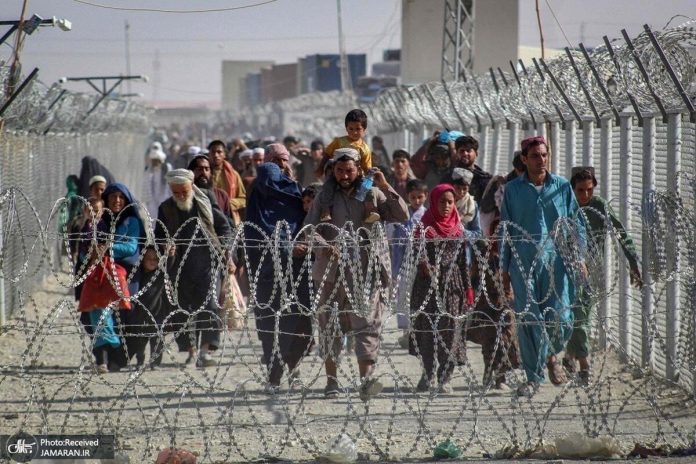
US pauses visas for Afghan travelers after National Guard shooting

The US State Department

“The Department of State has IMMEDIATELY paused visa issuance for individuals traveling on Afghan passports. The Department is taking all necessary steps to protect U.S. national security and public safety,” the State Department said in a post on the social platform X Friday evening.

The suspect — an Afghan national — allegedly behind the shooting Wednesday in Washington, D.C., is facing a first-degree murder charge after U.S. Army Spc. Sarah Beckstrom died from her wounds.

Rahmanullah Lakanwal, who is accused of shooting Beckstrom and U.S. Air Force Staff Sgt. Andrew Wolfe, was charged with three counts of possession of a firearm during a crime of violence, two counts of assault with intent to kill while armed and one count of first-degree murder.

Lakanwal entered the U.S. in September 2021 through a program for Afghans who assisted the U.S. during its two-decade war in Afghanistan.

U.S. Citizenship and Immigration Services also announced on Friday that all asylum decisions would be halted “until we can ensure that every alien is vetted and screened to the maximum degree possible.” Lakanwal was reportedly granted asylum earlier this year.

President Donald Trump had already said on Thursday that he would stop immigration from “all Third World Countries” in the wake of the shooting.

“I will permanently pause migration from all Third World Countries to allow the U.S. system to fully recover,” the president wrote on his Truth Social platform.

The Trump administration also announced Thursday it would take another look at green cards connected with 19 countries.

Washington, D.C., police said Friday they were working in “close coordination” with the National Guard to ensure safety after the shooting.

“Law enforcement agencies across Washington, DC, including the Metropolitan Police Department, are working in close coordination with the National Guard to ensure the safety of our community,” a Metropolitan Police Department spokesperson said in an emailed statement to The Hill.


Turkey confirms  two sanctioned tankers hit by ‘explosions’

The Kairos, a Gambian-flagged vessel bound for the Russian port of Novorossiysk, caught fire 28 nautical miles (51 km) off Türkiye’s coast due to unspecified “external factors,” the Turkish Directorate General for Maritime Affairs said later Friday evening.

All 25 crew members, most of them Chinese nationals, have been rescued by the Turkish Coast Guard.

Footage published by officials shows the ship engulfed in flames.

Turkish Transport Minister Abdulkadir Uraloglu stated that the information received from the ship “indicated a possible mine strike.” He confirmed that the initial assessment suggested “external impact.”

The second vessel, the Gambian-flagged tanker Virat, reported a “strike” 35 nautical miles (65 km) off the Turkish coast. The ship had communicated that it was attacked by drones, according to local media. Uraloglu said rescue vessels were deployed to evacuate the Virat’s crew of 20.

Photos released by officials show a hole in the ship’s hull.

Both tankers had been sanctioned by Western states for transporting oil in violation of restrictions imposed on Russia over the Ukraine conflict. Moscow has denied operating a “shadow fleet.”

The Black Sea has remained the scene of tensions since February, as Russia and Ukraine have attacked each other’s naval assets. Floating mines have drifted far from the Ukrainian coast throughout the conflict, even reaching the Bosphorus.


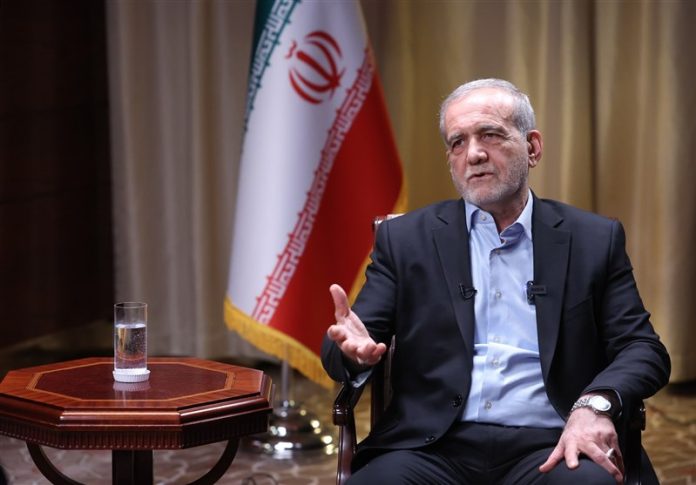
Iran says parliament prepared proposals for possible NPT withdrawal

Iran Nuclear Program

Azizi condemned the recent resolution passed by the International Atomic Energy Agency (IAEA) Board of Governors, calling it politically motivated and the result of pressure from Western governments.

The resolution urges Iran to clarify the status of enriched uranium stockpiles and nuclear sites that were struck earlier this year by the US and Israel.

He criticized the IAEA’s silence regarding attacks on Iranian nuclear facilities, the assassination of scientists and commanders, and civilian casualties, stating that Iran has consistently cooperated with the agency through inspections and surveillance measures.

Despite this cooperation, he said, Iran has faced military aggression and renewed activation of the “trigger mechanism” by European parties under US pressure.

Azizi stressed that Iran’s nuclear activities are peaceful and essential to strategic national interests, adding that Tehran will not retreat from its “legal and legitimate rights.”

He also dismissed recent comments by US President Donald Trump about possible talks with Iran, calling them false and delusional.

Syria condemns Israeli aggression on Damascus countryside as ‘criminal onslaught’

A Foreign Ministry statement said an Israeli military patrol crossed into Syrian territory in Beit Jinn, where it confronted residents and “attacked civilians and their property,” triggering direct clashes that forced the patrol to withdraw.

Israeli forces then launched “deliberate and brutal” strikes on the town after the failed incursion, describing the attack as a “full-fledged war crime,” the statement added.

Syria announced it holds Israel “fully responsible” for the raid and its consequences, including casualties and destruction, warning that continued “criminal aggression” threatens regional stability and reflects a systematic effort to destabilize the area and impose “an aggressive reality by force.”

Syria’s information minister said Friday that Israeli military incursions into the country’s territory are “provocative,” stressing that Damascus will not be drawn into the escalation Israel seeks.

“Israel is trying, through its incursions, to provoke the Syrian state,” Hamza al-Mustafa, Syria’s information minister, told state-run Alikhbaria TV, adding that Syria is “in a position that does not allow us to move in the direction Israel wants through these provocations.”

Meanwhile, Syria’s Permanent Representative to the UN, Ibrahim Olabi, said there can be no security agreement with Israel before its attacks stop, emphasizing that Damascus is committed to exercising restraint in the face of Israeli actions, according to the private Syria TV.

Olabi noted that Damascus will submit a briefing to the Security Council on the latest Israeli assaults.

Responding to Israel’s continued escalation, Olabi stressed that “reacting to Israeli provocations would cost Syria important political gains,” and the government will not be lured into confrontation.

He rejected Israel’s “flimsy excuses” for its operations, saying Damascus “is not dealing with the baseless excuses Israel puts forward.”

He added that a Security Council delegation is expected to visit Syria soon and meet President Ahmad al-Sharaa, as part of a diplomatic engagement on the situation.

At least 13 people were killed, including women and children, and as many were wounded early Friday in the Israeli attack on the town of Beit Jinn and the road leading to Mazraat Beit Jinn in the Damascus countryside, according to official Syrian media.

The Israeli army announced in a statement that six Israeli soldiers were injured, including three in critical condition, during the operation.

It claimed that it detained members of “the Jamaa Islamiya,” alleging that they “operated in the area of Beit Jinn in southern Syria and advanced attacks against Israeli civilians.”

The Israeli army has staged 48 raids in southern Syria in November.

Government data showed that Israel has carried out over 1,000 airstrikes on Syria and more than 400 cross-border raids into the southern provinces since December 2024.

After the fall of the Bashar al-Assad government in late 2024, Israel expanded its occupation of the Syrian Golan Heights by seizing the demilitarized buffer zone, a move that violated the 1974 Disengagement Agreement with Syria.


NATO member states considering ‘cyber offensive’ against Russia: Politico

Western governments are assessing cyber and other options in response to alleged “hybrid attacks” by Moscow, according to the publication.

Latvian Foreign Minister Baiba Braze told Politico that NATO must “be more proactive on the cyber offensive” and better coordinate their intelligence services.

“And it’s not talking that sends a signal – it’s doing,” she added.

In late 2024, NATO unveiled plans to establish a new integrated cyber defense center at its headquarters in Belgium, which is expected to go online by 2028. Stefano Piermarocchi, the head of cyber risk management within NATO’s chief information office, told Breaking Defense that the new hub would enhance situational awareness and help coordinate responses to threats.

NATO members previously accused Russia of hacking government servers, jamming GPS signals of airplanes, and flying drones in their airspace. Moscow has dismissed the allegations as warmongering, and described the West’s sanctions and aid to Ukraine as “hybrid aggression.”

Cyberattacks against Russia jumped 46% this year, according to RED Security. High-profile incidents included the hacking of the database of Russia’s largest airline, Aeroflot, in July, for which two pro-Ukraine groups claimed responsibility.


Hezbollah says reserves right to respond to Israel’s killing of senior commander

The comments marked Qassem’s first public reaction after Israel announced Sunday that it had killed Tabtabai, Hezbollah’s chief of staff, in an airstrike that targeted Beirut’s southern suburb.

Speaking at a memorial event for the slain commander, Qassem reiterated that “what happened is a blatant attack and a deliberate crime, and we have the right to respond –we will determine the timing ourselves.”

Sunday’s strike on the southern suburb left five people dead and 25 wounded. Hezbollah confirmed Tabtabai’s death in the attack.

He added that the ceasefire agreement reached Nov. 27, 2024, “represents a new phase in which the state has decided to assume responsibility for expelling the occupation and deploying the Lebanese army.”

Qassem attacked those he described as “servants of Israel” in Lebanon, saying that although they are few, they create problems by attempting to destabilize the country and following American orders.

He noted that the party is ready “to discuss the defensive strategy, but not under pressure, not in pursuit of a new agreement, not to give up our strength as part of any other arrangement, and not to evade the current agreement.”

He accused Israel of wanting Lebanon to be its backyard.

“We will not accept that the enemy decides how we live. We, our people, our allies, and our army will not accept being subservient to Israel,” he stated.

Qassem also commented on Israel’s Friday attack on Syria, stressing that the Beit Jinn attack “proves that the Syrian people will not accept surrendering to Israel.”

A ceasefire was reached between Tel Aviv and Beirut on Nov. 27, 2024, after more than a year of attacks against the backdrop of the war in the Gaza Strip. More than 4,000 people were killed and 17,000 injured.

The Israeli army was supposed to withdraw from southern Lebanon this January, under the ceasefire, but instead only partially pulled out and continues to maintain a military presence at five border outposts.