Saturday, December 27, 2025
Home Blog Page 3591

A Look at Iranian Newspaper Front Pages on May 23

A Look at Iranian Newspaper Front Pages on November 19

Newspapers today continued to cover the Iranian officials’ reactions to US Secretary of State Mike Pompeo’s anti-Tehran comments.

Also a top story today was the ongoing tension between North Korea and the US, particularly the recent threatening rhetoric by US Vice-President Mike Pence against Pyongyang.

The above issues, as well as many more, are highlighted in the following headlines and top stories:


19 Dey:

1- Ayatollah Makarem Shirazi Urges Political Factions to Be Reconciled

A Look at Iranian Newspaper Front Pages on May 23


Abrar:

1- Palestine Officially Reports Israeli Atrocities to The Hague

2- UK Foreign Secretary: Pompeo Has Failed in Starting All-Out Talks with Iran

A Look at Iranian Newspaper Front Pages on May 23


Afkar:

1- Iran Nuclear Chief: We’re Fully Prepared to Increase Level of Our Uranium Enrichment

2- Senior MP: Talks with Europe Aimed at Giving Them Final Ultimatum

A Look at Iranian Newspaper Front Pages on May 23


Aftab-e Yazd:

1- Europe’s Trick against Sanctions: EU to Pay Iran’s Oil Money through European Central Banks

A Look at Iranian Newspaper Front Pages on May 23


Asrar:

1- Araqchi Warns: It’s Not Possible to Link JCPOA to Other Issues

A Look at Iranian Newspaper Front Pages on May 23


Ebtekar:

1- Top Security Official: Iran’s Presence in Iraq, Syria at Their Request

A Look at Iranian Newspaper Front Pages on May 23


Etemad:

1- Mike Pence Threatens North Korea: Either Deal or Turning into Libya

A Look at Iranian Newspaper Front Pages on May 23


Ettela’at:

1- Iran’s Shamkhani: Closed Case of Nuclear Talks Will Never Be Opened Again

2- Labour Minister: 63% of Iranian People Interested Domestic Products in Case of High Quality

A Look at Iranian Newspaper Front Pages on May 23


Iran:

1- Rouhani in Friendly Meeting with Athletes: We Should Promote Women’s Sports

A Look at Iranian Newspaper Front Pages on May 23


Javan:

1- US Allies Say No to Threat of “Either Everything or Nothing”

  • US Accusations against Iran Not Heard Even by Europeans

2- Colonialist Bill Not Approved in Parliament Thanks to Lawmakers’ Pressure on Speaker

A Look at Iranian Newspaper Front Pages on May 23


Jomhouri Eslami:

1- Global Reactions to US Secretary of State’s Anti-Iran Comments

2- Civil Servants in France Go on Strike

3- Seven Italian Energy Firms to Arrive in Iran in July

A Look at Iranian Newspaper Front Pages on May 23


Kayhan:

1- CNN: Pompeo’s Comments Proved Iran Leader’s Stances towards US

2- Baghdad University Professor: Muqtada al-Sadr Has Deep Ties with Iran, Leader

3- 138 MPs Vote for Postponement of Bill that Was against National Security

A Look at Iranian Newspaper Front Pages on May 23


Khorasan:

1- Turkey Stealing Iranian Celebrities: Turks Claim Avicenna Was Turkish Scientist

A Look at Iranian Newspaper Front Pages on May 23


Rah-e Mardom:

1- Mogherini: No Alternative to Iran Nuclear Deal

A Look at Iranian Newspaper Front Pages on May 23


Resalat:

1- Mohammad Javad Larijani: JCPOA Dead, EU Eating the Corpse

A Look at Iranian Newspaper Front Pages on May 23


Rooyesh-e Mellat:

1- Iran Parliament Speaker: Pompeo Didn’t Deserve a Response

A Look at Iranian Newspaper Front Pages on May 23


Shahrvand:

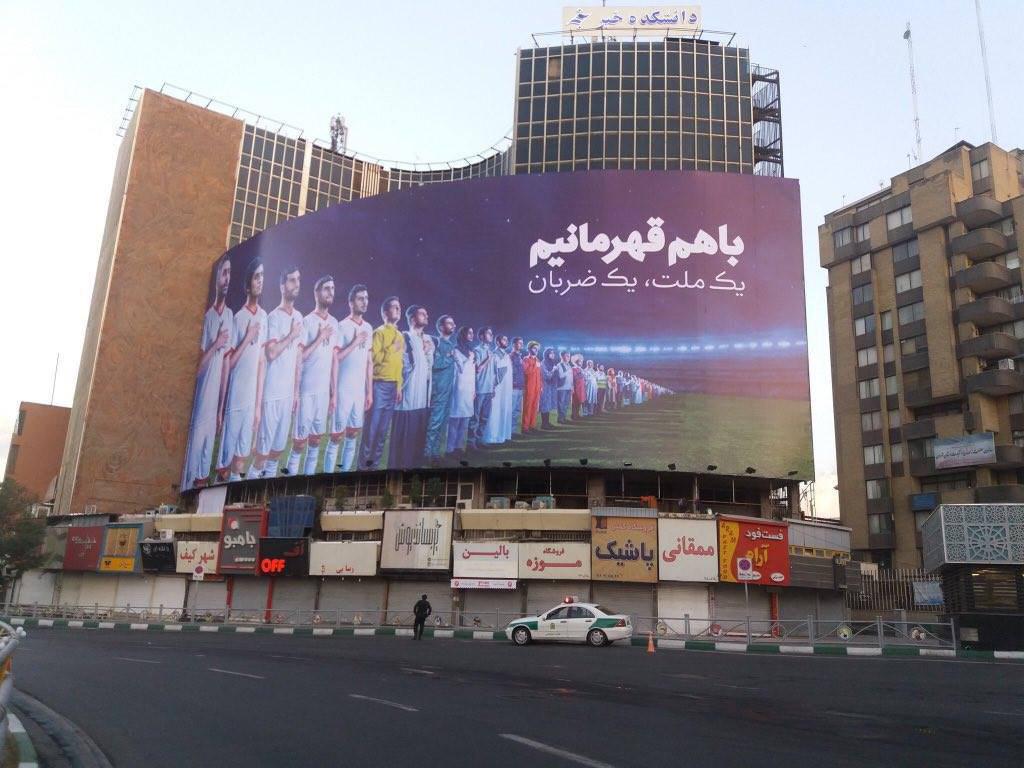
1- Plan to Dispatch Certain MPs, Executives to FIFA World Cup Sparks Controversy

A Look at Iranian Newspaper Front Pages on May 23


Shargh:

1- Zarif: US Diplomacy Sham Merely Regression to Old Habits

 A Look at Iranian Newspaper Front Pages on May 23


Sobh-e Now:

1- Parliament to Probe into Government’s Secret Talks with Telegram

A Look at Iranian Newspaper Front Pages on May 23


Vatan-e Emrooz:

1- Europe’s Diplomatic Trap

  • Will Europeans Give Iran Guarantees against US Sanctions?

2- Rouhani to US Top Diplomat: Who Are YOU to Make Decision for Iran, World?

A Look at Iranian Newspaper Front Pages on May 23

Iranian Wunderkind Aspiring to Become World’s Best Footballer One Day

Arat Hosseini, the son of Seyyed Mohammad Hosseini, was born in the northern Iranian city of Babol on October 10, 2013. Coached by his father, the child prodigy has been practicing gymnastics and acrobatics since he was only 6 months old.

Arat’s talent was spotted when he was 7 months old, and now, only 4 years of age, he can do difficult and complicated acrobatics such as somersaults, jumping from great heights, and maintaining his equilibrium in hard situations.

Arat put on display one of his performances in a sports event in China a few weeks ago. His father hopes Arat will one day come out on top in a sport which he is talented in, and bring honour upon his family and the country.

Iranian Wunderkind Aspiring to Become World’s Best Footballer One DayArat along with his father had an interview with Varzesh3 website at its office where they talked about their dreams.

Dear Arat, what do you like to be in the future?

An Olympic champ, he said.

Arat’s father went on to say, “He tells me he wants to be the best footballer in the world. We’ve just started, and Arat has shown that he has what it takes to reach his goals.”

Arat’s father also talked about how he discovered his son’s talent.

“Arat has a series of capabilities which we nurtured. He got started when he was three or four months old. He began doing somersaults when he was six months old, which was interesting for everyone around the world.

 Dear Arat, what football team or footballer do you like?

Messi, Ronaldo, he said.

Arat’s father also told us about the title his son was given in international contests.

“In each four matches that Arat attended, he was regarded as one of the top ten wunderkinds in the contests. The Chinese called him a prodigy,” said his father.

Iranian Wunderkind Aspiring to Become World’s Best Footballer One DayDear Arat, what animation character do you like?

Messi and Hercules, he noted.

Arat did not know much about the names of cartoon programs!

His father told us about it.

“The time he spends on watching TV is near zero. He only has one or two hours a week to watch television,” says his father, adding, “I think he’d better play other games.”

Arat’s father also said interesting things about when his son started his pre-school classes.

“Basically, he must attend pre-school classes for two more years. (In the meantime, Arat said he did not want to attend classes for another two years.) But we have decided that he should either not go to school or study with private tutors,” said Arat’s father.

His father also told us about the prospects of his son’s future career.

“Arat’s sports path has completely changed. If football is included in the Olympics, Arat, as he himself has said, should be able to become an Olympic champion.”

Arat’s father said he will consult football clubs for that, “but at the moment, I’m taking care of it myself.”

“He should be at least 7 or 8 years old in order to join a club, and I think if we continue this way, he will be able to join one of the world’s best [football] clubs at that age,” Arat’s father noted.

“Iran Must Prepare Itself for All-Out Economic War”

Larijani, who currently serves as the secretary of the Iranian Judiciary’s High Council for Human rights, says the incumbent US administration believes Iran caved in to pressures to limit its nuclear program due to harsh international economic sanctions imposed on the country.

Therefore, the US thinks it can force Iran to yield to more of its demands if it manages to place enough economic pressure on the country, he noted in an interview with the state TV Monday night.

Larijani said he believes President Hassan Rouhani sees failure of the deal as the failure of his own government, so he is making every effort to keep the deal in place.

“Rouhani made a big political investment on JCPOA and now he feels JCPOA is Rouhani and this is a big mistake,” he said, according to a report by Mizan News Agency.

Larijani said the Iranian government should not pin its hopes on getting Europeans to keep the deal in place, as they have so far been unwilling to stand up to the US.

Instead, the Iranian government should get prepared for a full-scale economic war waged by the US and prove it can use vast domestic capacities to endure economic pressures, Larijani said.


Different Course of Action

The politician said he agrees Iran should engage in talks with Europeans, but he believes the government should not count on them as they are unlikely to produce the desired outcome.

“It’s not problematic to talk with Europe. But we should keep in mind that it will produce no results [in the short term],” he said.

Larijani said Iran’s continued commitment to the deal has led Europeans to believe they don’t need to make many efforts to keep Iran satisfied and prevent a collapse of the nuclear accord.

Iran should not wait for Europeans to compensate for the US withdrawal, but Iran should announce it will stop fulfilling its obligations for a short period and then ask Europeans what they could offer to Iran in exchange for its continued commitments to the deal.

Iran may need not to take any specific measures in this period, but just the mere fact that it is ready to abandon the deal will prompt do more to compensate for the US withdrawal, he said.

“We don’t need to say that we walk out of JCPOA, but we would do well to stop fulfilling our JCPOA commitments and suspend [curbs on Iran’s nuclear program], as the deal has faced big problems,” he said.

The US pulled out of the 2015 nuclear deal on May 8, with President Donald Trump announcing Washington will snap back its anti-Iran sanctions suspended under the pact and will impose “the highest level” of economic bans on the Islamic Republic.

In a follow-up to the US exit, US Secretary of State Mike Pompeo on Monday threatened to impose the “strongest sanctions in history” against Iran that would ultimately destroy Iran’s economy, unless it capitulated to a series of 12 “basic requirements”.

The list not only urged Tehran to permanently shut down any nuclear-related programs, but also to give up its regional policy.

Pompeo called on Iran to halt missile development, withdraw from Syria, and cease support for groups which the US considers to be “terrorist,” namely Hezbollah.

Iran has announced the deal could remain in place only if European parties to the pact give Tehran firm assurances that its interests will be served if they remain in the deal.

European leaders have strongly condemned the US move, seeing it as undermining regional security and a direct attack on their economic interests.

Russia and China, two other parties to the agreement, have also criticized the US move and vowed to maintain trade with Iran.

Last week, the EU foreign policy chief Federica Mogherini voiced the bloc’s regret over the US’ move and reiterated the EU’s determination to keep the nuclear deal in place.

Iran’s Top General Likens Trump to Iraqi Dictator Saddam Hussein

Speaking in an open parliament session on Wednesday, Major General Mohammad Baqeri drew a parallel between the incumbent US administration and the former Iraqi regime.

“It would be good to compare Saddam who tore apart the 1975 Algiers Agreement with today’s oath-breakers (the US) and say the fate of such people will be similar to Saddam,” Fars News Agency quoted him as saying.

In 1980, Saddam tore apart the agreement defining the Iran-Iraq border that was signed in the Algerian capital in 1975 and triggered the eight-year Iran-Iraq war, one of the deadliest conflicts in the Middle East history that left near a million casualties.

Saddam’s regime was eventually toppled by the 2003 US invasion of Iraq, and the dictator was executed by the new Iraqi government in 2006.

General Baqeri said the Iranian nation faces a big test, as the criminal US is bullying Iran and issuing threats.

“Although this enemy does not dare to wage a war, it is trying to place economic and psychological pressure on the Iranian nation,” he said.

The commander expressed hope Iran will be able to overcome challenges created by the US the way it could stand up to Saddam.

The US pulled out of the 2015 nuclear deal on May 8, with President Trump announcing Washington will impose “the highest level” of economic bans on the Islamic Republic

In a follow-up to the US exit, US Secretary of State Mike Pompeo on Monday threatened to impose the “strongest sanctions in history” against Iran that would ultimately destroy Iran’s economy, unless it capitulated to 12 demands.

Iran Hosts International Fishing Festival

The foreign teams were from Australia, New Zealand, the Netherlands, Iraq, Colombia, Argentina, Austria, Germany and France.

What follows are ILNA and ISNA’s photos of the recent festival held in the beautiful Lake Zrebar:

“Destroying Angel” Kills 18, Injures 1,017 in Iran

The mushrooms, named Amanita virosa, are known to sprout up quickly in wet weather.

Experts say eating a whole Amanita virosa can kill an adult and as little as a bite can kill a child, a report by Khabar Online said.

Spokesman for Iran’s Emergency Medical Services Mojtaba Khaledi said on Monday 18 people have so far died after eating the poisonous fungi, out of 116 people who have been hospitalized in western and north-western regions of the country.

The number of people who have gone to a hospital after eating these fungi has reached 1017 so far, according to official figures.

Hospitals in Kermanshah, Kurdistan, West Azarbaijan, Zanjan and Lorestan provinces have received the highest number of patients.

Khaledi had earlier urged medical universities, particularly those in the west of the country, to raise public awareness about the mushrooms.

Poisonous mushrooms cause casualties in Iran every spring. Ebrahim Shakiba, Head of a medical centre in Kermanshah province, says the recent wet weather and a warm climate have produced a particularly large number of the toxic mushrooms.

He urged people not to pick them or buy them from vendors on the street.

“US Targeting Iran’s Achilles’ Heel to Curtail Its Regional Influence”

Saber Golanbari has, in interview with Khabar Online news website, weighed in on the purposes behind Trump’s decision to withdraw the US from the Iran nuclear deal, and its impacts on Iran.

Golanbari believes economy is the Achilles’ heel of Iran, and the US is targeting it to force Iran to sit for talks over its regional policies and missile capabilities.

He has also discussed prospects for crises in the Middle East, and the reaction of Europe, a major ally of the US, following the withdrawal.

The highlights of the interview follow.


Which path do you predict Europe will choose in reaction to Trump’s decision?

Today, Europe is in a dilemma. On the one hand, it wants to preserve the JCPOA due to different reasons because, by Europe’s own admission, there is no good alternative for the Iran nuclear deal. Moreover, the death of the JCPOA would mean the death of diplomacy and political solutions for regional and global problems as well as a major disaster for international law. Furthermore, this would mean complete submission to the United States’ unilateralism, and if Europe agrees to stay in the agreement, it will no longer be able to regard itself as a regional and global power. The US under Trump seeks to unilaterally impose its solutions. It unilaterally pulls out of international agreements, be it the TTP, or the Paris climate agreement or the JCPOA. We see the same thing in the Palestine conflict where Washington unilaterally gives al-Quds to Israel and imposes its solution.

However, on the other hand, Europe’s economic and political interests are inextricably intertwined with those of the United States. At the end of the day, it would be difficult for Europe to overlook these interests in order to preserve the JCPOA. What the European Troika is seeking today is to find a solution by which it will be able to preserve both the JCPOA and the interests it has with the US. It would be very hard.

I personally believe that Europe will not be able to put its word into practice and remain in the JCPOA in maximum three to six months’ time after anti-Iran sanctions go into effect, and will finally give in to Washington’s pressure. As many European banks and companies succumbed to Washington’s psychological pressure even before the US withdrawal from the JCPOA, Europe is unlikely to resist following the US pullout from the deal and the re-imposition of sanctions and Washington’s ratcheting up its pressure, and will probably not compromise its trade interests with the US, which amount to more that trillions of Euros, for the sake of its trade with Iran, which hovers around € 15 million only.

So, Europe is likely to leave the JCPOA, but will not explicitly and officially announce its withdrawal; rather, it will keep asking Iran to live up to its commitments under the nuclear agreement. This is where the JCPOA will turn into a completely unilateral agreement imposed on Iran.

What is your assessment of the European Union’s recent moves regarding the JCPOA?

Europe has announced it wants to activate the Blocking Statute and keep European companies from complying with US sanctions. Unfortunately, it is too late to do this. There was no reason for Europe to delay the move. Europe should have put forward the idea, at least as a threat, before Trump’s withdrawal from the JCPOA, but it did not. Before Europe puts the law into effect, major companies such as Total will have left Iran, and at the same time, companies will not take risks and not make investment in Iran.

Legally and politically speaking, Europe has a free hand and can adopt numerous measures to counter the United States in order to preserve the JCPOA, but, at the same time, Europe’s hands are tied by the economic benefits it has in doing trade with the US. For the time being, Europe wants to keep the JCPOA with the minimum possible measures.

As this scenario unfolds in the future, the US will directly and Europe will indirectly attempt to use the “all options on the table” card to force Iran into staying in the JCPOA. It is a serious possibility that they will, in the medium term, replace the “lifting of sanctions” with the “threat of military option” in order to force Iran to maintain the nuclear agreement unilaterally. Of course, Iran will not agree to such a deal.

Also, other partners of Iran, namely Russia and China, despite their tensions with Washington, will not be able to, or will not be inclined to stand up to the US and Europe.

Finally, Iran will have no choice but to announce the termination of the JCPOA. Nevertheless, Tehran had better take and manage its post-JCPOA steps in a very calculated manner and use its options one at a time, not all at once.

How will Washington’s withdrawal from the JCPOA affect the region?

The US wants to counter Iran’s influence in the region by dismantling the JCPOA. Firstly, Washington wants to kill off the limited chance of diplomacy created by the implementation of the nuclear deal and increase its cost for other countries. Secondly, the US wants to launch a full-scale economic war against Iran by reinstating the sanctions that were in place before the conclusion of the JCPOA, and disrupt domestic security and stability in Iran by paralyzing the country’s economy.

While waging the economic war, Washington will also fuel tensions with Iran in the Middle East region, whether in Syria, Iraq or other regions.

At the moment, the US aims to force Iran into accepting a comprehensive, yet imposed agreement that would encompass three key issues: the nuclear program, regional leverage and the nuclear program. The most important of all is Tehran’s influence in the region and, for that matter, Washington’s efforts to effect radical changes in Iran’s foreign policy. The other two, namely nuclear and missile issues, are basically functions of the first issue.

Hezbollah Secretary General Sayyid Hassan Nasrallah officially announced that they had fired 58 missiles at Israeli positions in occupied Golan Heights. Some commentators believe the way to salvage the JCPOA is through Syria. Do you have the same idea? Is the US withdrawal from the JCPOA because of Iran’s presence in Syria? Will Iran leave Syria because of the JCPOA?

No, this is not the case. The missile attack launched from Syria was a natural reaction to Israeli strikes and was a sign of serious opposition to the objective that the US is pursuing in the JCPOA era, i.e. making Iran leave Syria. As I said earlier, the most important reason behind the United States’ pullout from the JCPOA was Iran’s presence and influence in the region. Israel regards Iran’s presence in Syria and Iranian troops reaching the Mediterranean waters and borders of occupied Palestine as a serious threat.

Iran’s withdrawal from Syria is the objective pursued by Israel, the US and Saudi Arabia. Tel Aviv’s red line used to be “getting close to the borders” of occupied Palestine, but now they have generalized it to whole Syria. Israel’s attacks are in line with the same strategy. These airstrikes are a challenge, but cannot change the equations on the ground. This has infuriated Israel.

Finally, we can say that the US is seeking an agreement which will secure the maximum degree of “win” for them and the most intense “lose” for Tehran.

It is a wrong speculation to say that Iran will be able to reach a deal with the US and ward off possible dangers by giving some concessions over its presence in the region, be it Syria, Yemen or elsewhere, or over its missile program or the JCPOA. Washington may set a minimum limit for its demands from Iran, but will not settle for that. Washington wants fundamental changes in Iran’s foreign policy, and the issue of Israel is a key variable here. If Iran begins giving concessions, they will finally push Iran to the dilemma of recognizing Israel or continuing to suffer economic war as well as political and regional pressure.

Heated Debate in Iran Parliament over Joining Terrorist Financing Convention

As debates about a bill allowing for Iran’s accession to the International Convention for the Suppression of the Financing of Terrorism became heated at the parliament, a number of opposing lawmakers shouted slogans against what they called a “colonial bill” approving which would be an unforgivable mistake.

When opponents of the bill tried to stop other lawmakers from taking the podium and demanded that the bill be put on hold or discussed at a closed-door session, Parliament Speaker Ali Larijani rejected the call, saying all lawmakers have the right to express their comments.

The opposing lawmakers insist that the Parliament’s National Security and Foreign Policy Commission should carefully scrutinize the bill beforehand and give a detailed report to the lawmakers.

The Terrorist Financing Convention is a 1999 United Nations treaty designed to criminalize acts of financing acts of terrorism.

Those opposing accession to the convention see no problem in striving to prevent financial support for terrorists. Their concern, rather, is that certain countries could exploit the convention to target resistance groups in the name of confronting terrorism.

US Empty Threats Not to Intimidate Iranian People: Rouhani

Addressing a gathering of Iranian athletes on Tuesday, Rouhani pointed to the recent remarks made by the US officials, including, Secretary of State Mike Pompeo, against the Islamic Republic and said, “The Iranian nation is not afraid of empty threats and is so much greater than Trump, Pompeo, (John) Bolton and all these people who have gathered in Washington as extremists.”

“The Iranian nation have been victorious in all periods of history and I want to say it here, Mr Trump! This nation will be victorious against you.”

President Rouhani then lauded the Iranian athletes, and said, “Our country’s athletes have always generated hope for the Iranian nation and the young.”

“If the society has hope and vitality, all problems can be resolved,” said Rouhani, adding, “Above athletes and their coaches’ hard work, what is important is believing in victory and championship.”

“If we believe that it is our right to stand on the podium at world championships, we will succeed in that goal because training, practice and hard work are followed by victory.”

According to the official website of the President, Rouhani then pointed to the Iranian national football team’s participation in the 2018 world Cup, and stated, “It is not important what team we are going to play against in World Cup, but rather we must believe that we are able to win.”

The President also went on to express happiness that women are active in sports, saying, “All honors that we have achieved are indebted to tireless efforts of mothers who have trained us and helped us to choose the best path in the course of our lives.”

“If we want to introduce Islam to the world, is it better to say that our girls do not have the permission to take part in sport events, or is it better to say that our girls and women participate in various sport events and gain success while observing all religious principles?,” he continued.

Tehran Museums; Treasure Trove of Priceless Antiquities

Important Museums of Tehran

Tehran Museums are among interesting destinations for the visitors of Iran’s capital. Touring museums is, indeed, an attractive activity all across the world. Their attraction draws large numbers of people from all walks of life; and draw and contribute heavily to the promotion of the tourism industry.

As a result, museums such as the British Museum, the Louvre Museum, the Metropolitan Museum of Art of New York, the Kremlin Palace, etc, are among the most important tourist attractions of their countries.

For Iranians, too, touring museums across the nation can be attractive. Accordingly, and on the occasion of Museums and Cultural Heritage Week, the most attractive museums of the capital, Tehran, have been introduced in a report by Honar Online:


Louvre in Tehran

“The Little Louvre,” which opened on March 5, 2018, showcases a treasure trove of antiquities of the internationally recognized Louvre Museum of Paris. Among the items on display at the Louvre of Tehran are paintings by Rembrandt and a Sphinx statue made of basalt dating back to the era of pharaohs, which is part of the antique items belonging to Ancient Egypt.

Two Iranian antiquities are also put on show at the museum; namely an ancient axe unearthed in the Choghazanbil archaeological site, and a bronze object, almost three thousand years old, belonging to the stock exchange dating back to the Iron Age. The museum runs until June 8, 2018.


Ancient Iran Museum

The Ancient Iran Museum also known as the Mother Museum is among the most famous museums of the capital. The museum was first established by French architect and archaeologist André Godard between 1934 and 1937.

The architecture of Sassanid era has been the inspiration behind the building’s shape. The museum gives you an overview of the 7th millennium BC to the Islamic era with numerous antiquities.

Ancient Iran Museum, Tehran


Golestan Palace-Museum

The Golestan Palace-Museum is the remnant of the historical Fortress of Tehran. The museum is more than 200 years old. The Fortress of Tehran initially dates back to the Safavid era. The Golestan Palace, however, is the only thing left of the ancient structure. The palace-museum has different sections, including different halls and mansions. The paintings of Iranian artists of the Qajar era are showcased in one of the halls of the museum.

Golestan Palace-Museum, Tehran


Saadabad Palace

The Saadabad Palace-Museum is, in fact, the last royal palace of Iran. Initially, the Qajar dynasty used to reside in the palace. Later on, the palace was expanded before it turned into the residence of Reza Shah in 1921. His son, Mohammad-Reza, also moved there in 1971. After the victory of the Islamic Revolution of Iran in 1979, the palace turned into a museum. There is a building next to the palace which belongs to the Islamic Republic of Iran’s Presidential Office; and is used to receive foreign dignitaries.


Niavaran Palace

Work began to construct the Niavaran Palace in 1958. After being stopped for some time, the construction was resumed, and finally the structure was completed in 1976. Indeed, a smaller palace used to lie on the site of the Niavaran Palace during the ruled of King Fat’hali inQajar era. It was demolished during the former king of Iran, Mohammad-Reza Pahlavi, before the Niavaran Palace was erected on its site. A palace belonging to Ahmad Shah (King Ahmad) still stands there.

A whole variety of items are on display at the Niavaran Palace’s museum; namely a collection of invaluable paintings by Iranian and foreign painters, porcelain objects, decorative items, precious clothes, and exquisite Persian carpets, among other things.

Among the most invaluable museum’s carpets on show is one called the Carpet of Celebrities. It depicts dozens of Iranian kings beside renowned international figures plus ancient Persian manuscripts.


Museum of National Jewellery

The Iranian law urged the authorities to move most of the jewellery in royal palaces to the Central Bank of Iran in 1937. The collection was later put on public display as of 1943. After that, the jewellery was moved to another location in the capital on Ferdowsi Street in downtown Tehran in 1960, which is turned into a museum.

Museum of National Jewellery, Tehran


Geology Museum

This museum is one of four divisions of the Iranian Geology Organization. The museum opened in 1966 thanks to efforts by several geology researchers. It includes four sections: ancient tools and mining equipment, rocks, minerals and fossils. The museum is located at Tehran Mehrabad International Airport.

Geology Museum, Tehran


Reza Abbasi Museum

It opened in 1986 and was named after renowned painter of the Safavid era, Reza Abbasi. The museum has four permanent exhibition halls showcasing different items, including items belonging the pre-Islamic era, paintings and calligraphy works. Other than a library on the third floor, there is a temporary exhibit on the ground floor. The works of art belonging to the contemporary era are put on show in the latter.

Reza Abbasi Museum, Tehran