Thursday, December 25, 2025
Home Blog Page 3581

Iran Condemns Israeli Warplanes’ Violation of Syria’s Sovereignty

In a Monday statement, Qassemi referred to the airstrikes as ‘Israel’s violation of Syria’s sovereignty and territorial integrity’.

“The airstrikes on T-4 airbase near Syria’s Homs stand in stark violation of all international law and regulations,” he said, adding that the attacks were aimed at supporting the terrorists.

The spokesman went on to say that the airstrikes would only complicate further the ongoing crisis in Syria as well as the regional developments.

“In a situation where all field developments are unfolding in the interests of the legitimate government of Syria, such airstrikes by the Zionist regime are undoubtedly aimed at supporting the terrorist groups and diverting the world’s public opinion from the ongoing disaster in Gaza which has left tens of Palestinians dead and thousands of others injured so far,” he noted.

The spokesman once again expressed Iran’s full support for Syria’s sovereignty and territorial integrity, and called on all freedom-seeking countries and international bodies not to remain indifferent towards the “blatant aggression” of the Zionist regime against a member of the United Nations.

Such aggressions are definitely endangering the international peace and security, he added.

Russian Defence Ministry said earlier two Israeli F-15 fighters targeted Syria’s T-4 airbase on Monday. According to the ministry, the jets fired eight guided missiles but five of them were shot down by the Syrian Air Defence before they hit the airfield.

Meanwhile, Lebanese armed forces confirmed that Israeli fighter jets and a reconnaissance plane violated the country’s borders and remained in Lebanon’s airspace for about ten minutes.

The airstrikes left several people dead and wounded.

Israel, which has repeatedly struck Syrian army locations over the past seven years, has confirmed mounting the raid. The strike took place after a deadly chemical weapons attack on Douma, near Damasus.

“Iran, Senegal Bridge between West Asia, West Africa”

During the visit of Zarif and his entourage to Dakar, a joint economic forum was held with the participation of senior officials from the two countries.

Dozens of representatives from Iran’s Vice-Presidency for Science and Technology and Iranian knowledge-based companies were among members of the delegation accompanying Zarif, who held B2B talks with their Senegalese counterparts on ways to develop mutual scientific cooperation between the two sides.

Addressing the Iran-Senegal Joint Economic Forum on Monday, Zarif said the two Muslim states can play an important role in the economic development and prosperity of the two regions.

What follows is the full text of FM Zarif’s address to the conference:
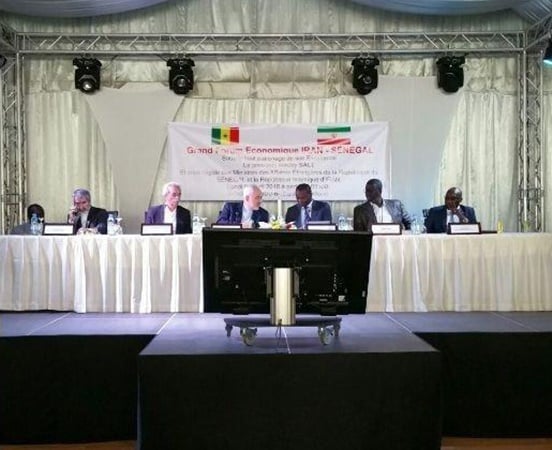
“Iran, Senegal Bridge between West Asia, West Africa”First of all, I would like to thank the warm hospitality of the government and the honourable nation of Republic of Senegal during my visit to the country.

I am very pleased to be accompanied by a delegation of public and private sector economic actors from the Islamic Republic of Iran who work in the fields of banking, investment, automotive industry, pharmaceuticals and healthcare, electrical and water industries, agriculture and food industries, higher education, transportation, urban engineering, oil and petrochemicals, as well as major knowledge-based companies who have attended this economic assembly along with the traders, and economic industrial actors of the Republic of Senegal.

Indeed, holding this conference reflects the existence of a common political will to promote the presence, participation and greater role of the two countries’ private sectors in the economic and commercial relations of both sides.

The Islamic Republic of Iran and the Republic of Senegal, as two major countries in West Asia and West Africa and the Muslim world, can serve as a bridge between these two important regions, and can play an important role in the economic development and prosperity of the two regions. Iran and Senegal can also contribute to expansion of regional and international peace and stability as well as the achievement of unity and solidarity in the Muslim world.

Attempts to increase trade between the two countries with a win-win approach not only guarantee the export of goods, engineering services, and the transfer of technology from Iranian companies to Senegal, but also meet the needs of the Islamic Republic of Iran, especially in the agriculture and mining sectors through Senegalese economic actors.

Both sides emphasize the development of trade and economic cooperation. Increasing economic ties is possible through banking cooperation, and this needs more activities by the private sector as well as the support of the two governments.

The private sectors of the two countries expect government officials to draw up a clear agenda for the development of economic and commercial relations along with the development of political relations and international cooperation. Because the increase in the private sector’s activities needs the attention of the two countries’ political officials.

Therefore, outlining a vision for cooperation, and increasing the trade volume of the two countries to an acceptable level in the near future in line with existing capacities should be put on the agenda.

The Islamic Republic of Iran, in cooperation with the government and the private sector of the Republic of Senegal, is ready to turn this country into an auto-production hub in the West African region while the first steps in this regard have been taken about 10 years ago with the construction and launch of “Seniran Auto” factory. Today, with the help of God and support of the honourable government of Senegal in removing some technical problems and infrastructural barriers, the company’s activities will be further promoted.

At a meeting with the Senegalese officials, I will discuss the ways to facilitate the presence and communication of traders from Iran and the African country, and I will call for more attention to mutual economic cooperation, especially in the fields of trade, technical and engineering services, automotive industry, oil and petrochemicals, electricity and food industries and new technologies in which the two countries have a comparative advantage.

I hope the businesspersons from the two countries will make the most out of the opportunities provided at this conference and reach good agreements to increase cooperation.

In the end, I once again thank the warm hospitality of the government and the noble nation of the Republic of Senegal, especially my brother Alioune Saar, the Minister of Commerce of Senegal, the chairmen of the two countries’ Chambers of Commerce, and the economic actors who helped in holding this business conference.

Dear businesspeople and guests,

I wish you good luck and I guarantee that all the capabilities of the Islamic Republic of Iran will be used to develop ties between the private and public sectors of the two countries.

Thank you

Iran Says Reports of Israeli Planes’ Incursion “Rubbish Talk”

Earlier in the month, a Kuwaiti newspaper alleged that Israeli F-35 aircraft had flown over Iran without being detected by either the Islamic Republic or a Russian radar apparatus based in Syria.

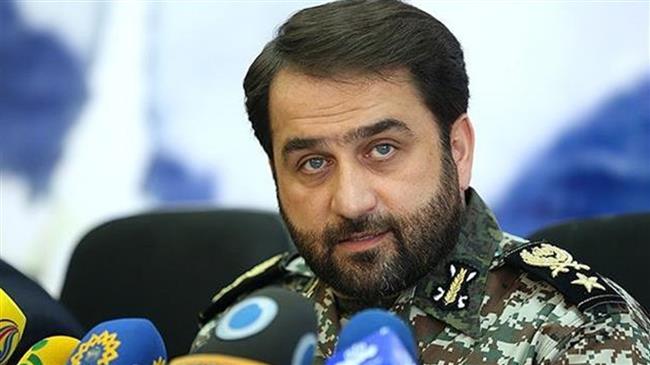
“In recent days, rubbish talk was heard from some media outlets of the enemies regarding the flight of certain aircraft in the country, which was not worth a response,” General Farzad Esmaili said on Monday.

“But I am saying this right here that if a country makes an idiotic move and its aircraft approaches Iran, the country’s air defense which is the first frontline will deliver a crushing response,” said Esmaili who is the commander of the Khatam al-Anbiya Air Defense Base.

“And this rubbish talk has no place other than in those devilish and delusional media outlets,” he added.

Riyadh Rejects Iran’s Offer to Help Settle Yemen Crisis: Zarif

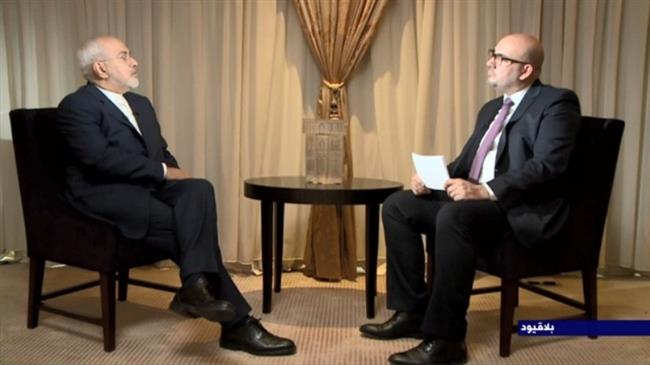
“At the beginning of the crisis in Yemen in 2013, I wrote a letter to former Saudi Foreign Minister Saud Al Faysal with the aim of ending the crisis with the aid of Iran and Saudi Arabia. But they denied, saying that the Arab world’s affairs do not concern Tehran,” said Zarif on Sunday during an interview with the BBC’s Arabic language service.

Zarif noted that the Saudis’ rejection was based on the false assumption that the war in Yemen would be ended soon.

Iran’s foreign minister added that the finding a solution to the crisis was could only be achieved via dialogue and negotiations among Yemenis, and that Iran was always prepared to help solve the ongoing crisis in the impoverished country.

Meanwhile, at least 12 people, including women and children, have been killed in a Saudi airstrike in southern Yemen.

The civilians were killed as Saudi fighter jets targeted an area in the province of Ta’izz.

The deadly attack came after a series of airstrikes which left four people dead in the northwestern province of Sa’ada and in Hudaydah province, in the country’s west.

Saudi Arabia has been incessantly pounding Yemen since March 2015 in an attempt to crush the popular Houthi Ansarullah movement and reinstate former president, Abd Rabbuh Mansur Hadi, who is a staunch ally of the Riyadh regime.

The Yemeni Ministry of Human Rights announced in a statement on March 25 that the Saudi-led war had left 600,000 civilians dead and injured since March 2015.

The United Nations says a record 22.2 million Yemenis are in need of food aid, including 8.4 million threatened by severe hunger.

Leader: Violating People’s Privacy in Iranian Messaging Apps ‘Haram’

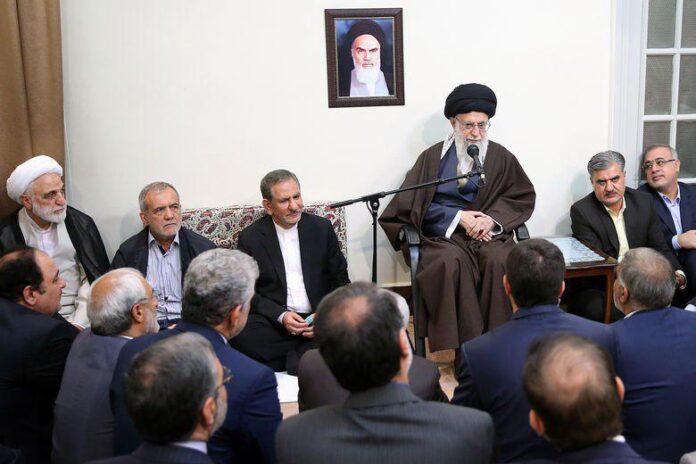
In a Monday meeting with a group of high-ranking officials in Tehran, Ayatollah Khamenei noted that violating the security and privacy of the people is “Haram” and warned officials against doing so.

The Leader also expressed his satisfaction with the campaign for creating domestic social media and messengers, which has turned into a national request.

Those in charge in the government and the Judiciary organisations must do their best to protect people’s privacy and their secrets, he added.

Telegram, the most popular messaging app in Iran, has grabbed the headlines in the Islamic Republic and the government of Hassan Rouhani is under pressure to block the “threatening” messenger.

In late March, the conservative lawmaker Alaeddin Boroujerdi said in an interview that “the decision has been made and I believe by the end of this [Iranian] month [April 20], Telegram will be replaced by a domestic messenger.”

Boroujerdi’s statements raised eyebrows among 40 million Iranian users of the popular app.

He cited “national security” concerns as the reason why the messaging service will no longer be accessible, saying it was a response to what he called Telegram’s “destructive” role in the violent protests in late December.

The lawmaker was referring to price protest that began in the eastern city of Mashhad and spread to several cities across the country. The demonstrations later turned political and even violent in some cities, leaving several dead and injured.

The heated debate about the fate of Telegram prompted President Rouhani, whose government is under great pressure to block the messaging app, to make an intervention.

The president, who heads the Supreme Council of Cyberspace, said it would be an honour for all Iranians to use “capable, secure and cheap” domestic messengers that satisfy their needs.

However, Rouhani said he does not favour restricting public access to foreign services and that the efforts should be aimed at breaking up the foreign monopoly over Iran’s instant messaging market.

Remarks by the moderate president showed Iranian officials hold conflicting views about the filtering of Telegram. But it seems safe to conclude that a consensus has emerged among government officials on diminishing the influence of foreigners on the country’s cyberspace.

At the moment several domestic apps like Soroush, Wispi, and iGap are named as the replacements of Telegram.

Iran to Boost Cooperation with Russia on National Projects: Larijani

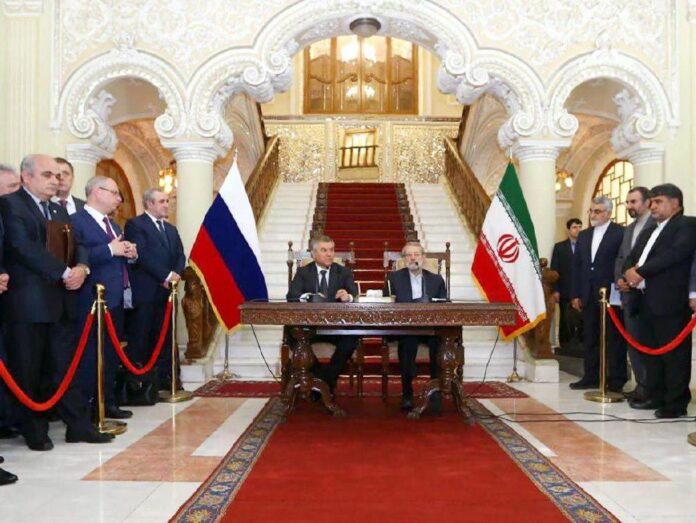
In a Monday joint press conference with Chairman of the Russian State Duma Vyacheslav Volodin in Tehran, Larijani said the two sides have agreed on a framework for cooperation between the parliaments of Iran and Russia.

According to Larijani, the framework aims to boost mutual collaborations in the fields of business, politics and sustainable security in the region.

“Today, I met with the chairman of the Russian State Duma and his accompanying delegation to Iran. In the past, we had met with Mr Volodin in Russia and several other countries, and we had developed a framework to promote cooperation between the two countries.”

“Earlier, a counter-narcotics conference was held in Russia, and the joint committee of the Iranian Parliament and Russia is following up the objectives. We also reviewed the joint economic projects,” added Larijani, according to a Farsi report by ICANA.

The Iranian parliament speaker further noted that there were talks on the promotion of relations between the private sector of Iran and Russia, in which the Chamber of Commerce plays an important role in following up the agreements.

For his part, Volodin stated the agreement on parliamentary cooperation that was signed by the speaker of Iran’s parliament will create conditions for better performance of the joint parliamentary committee of Iran and Russia.

“We are responsible for implementing joint projects that have already been agreed. Iran-Russia relations are developing and dynamic, which is the result of good relations between the two presidents. This is the task of the two parliaments to provide the legal framework for the implementation of the decisions that have already been made,” underlined the Russian official.

“In the fight against terrorism and narcotics, Tehran and Moscow can help each other, but the main goal is to develop economic relations as well as developing relations at the provincial levels. In this regard, some inter-provincial collaborations have been discussed in the Volgograd Region.”

A memorandum of understanding on parliamentary cooperation was also signed between the two sides before the press conference.

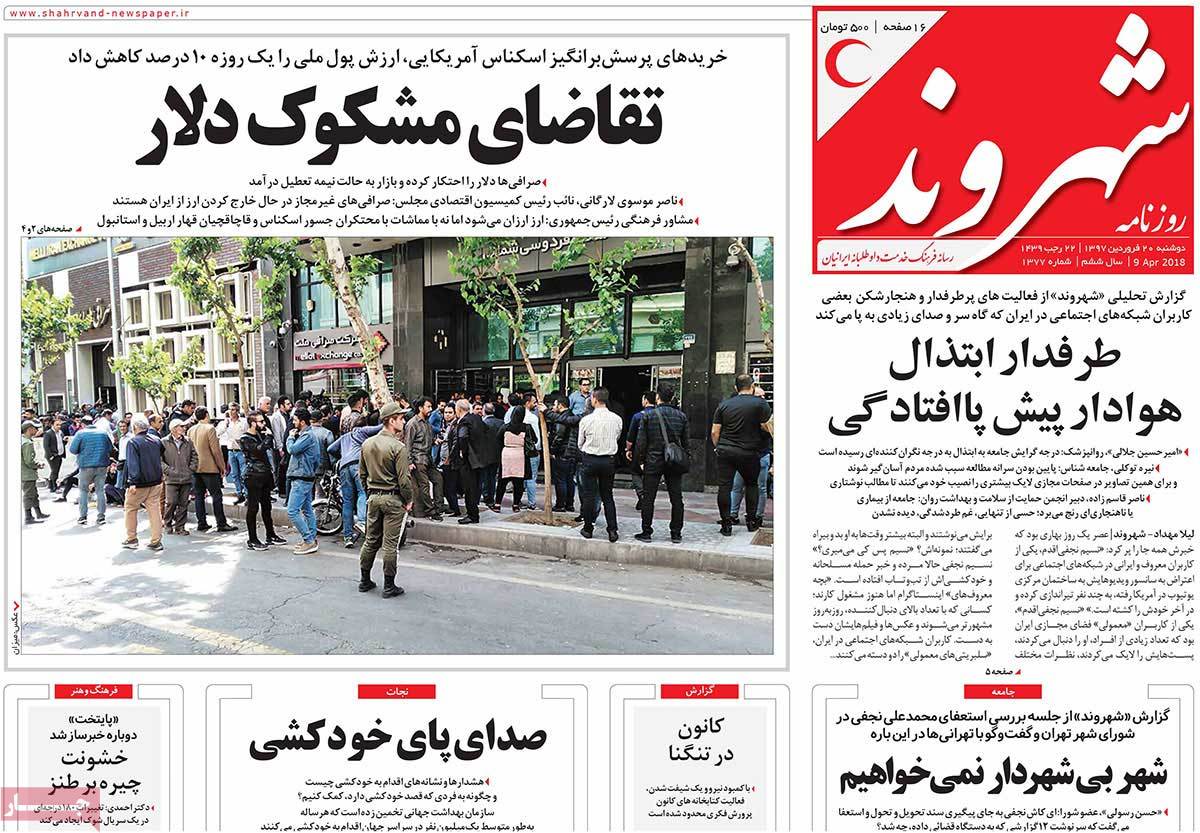
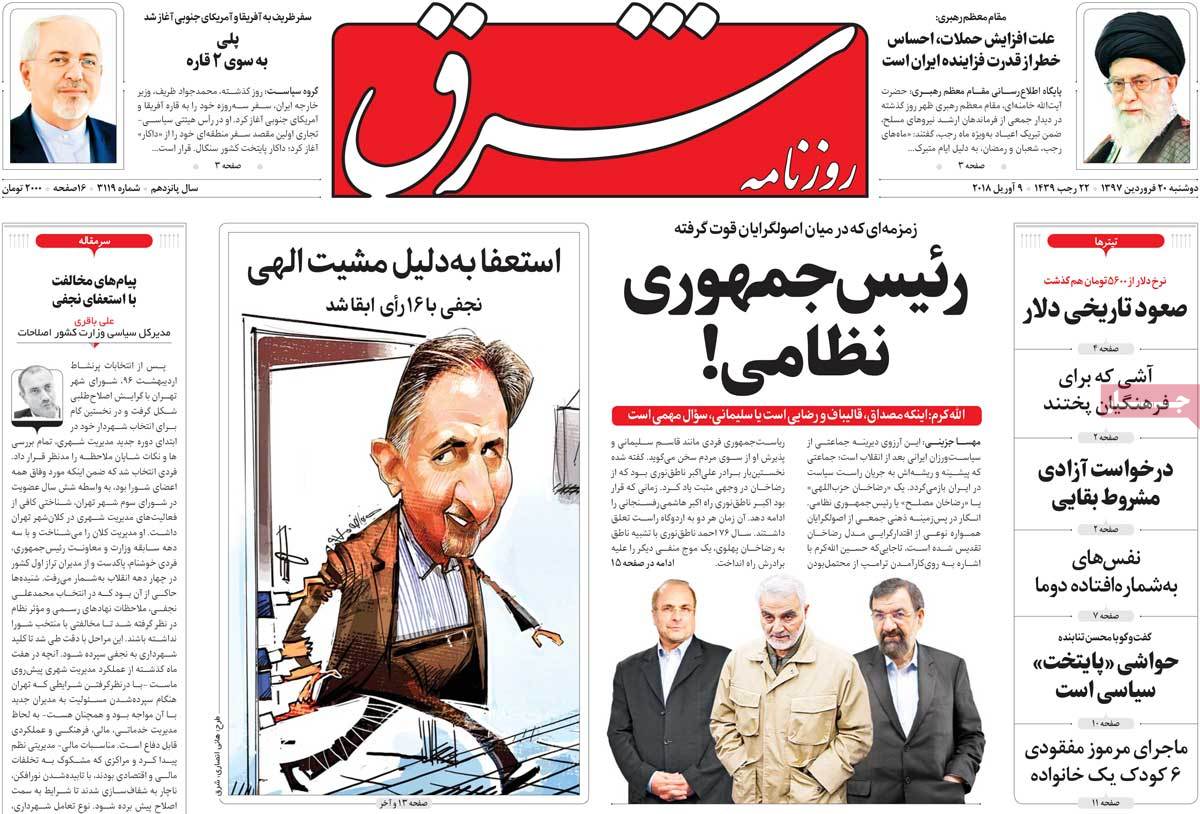
A Look at Iranian Newspaper Front Pages on April 9

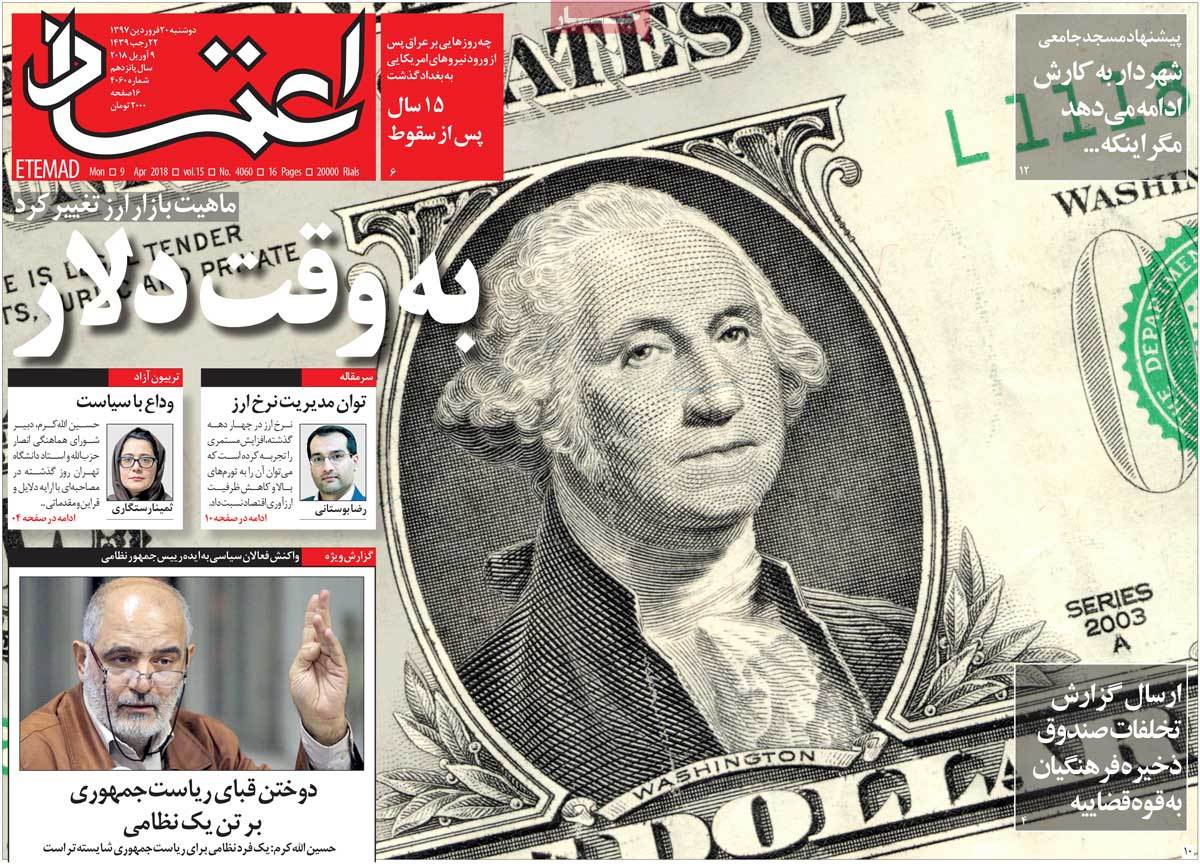
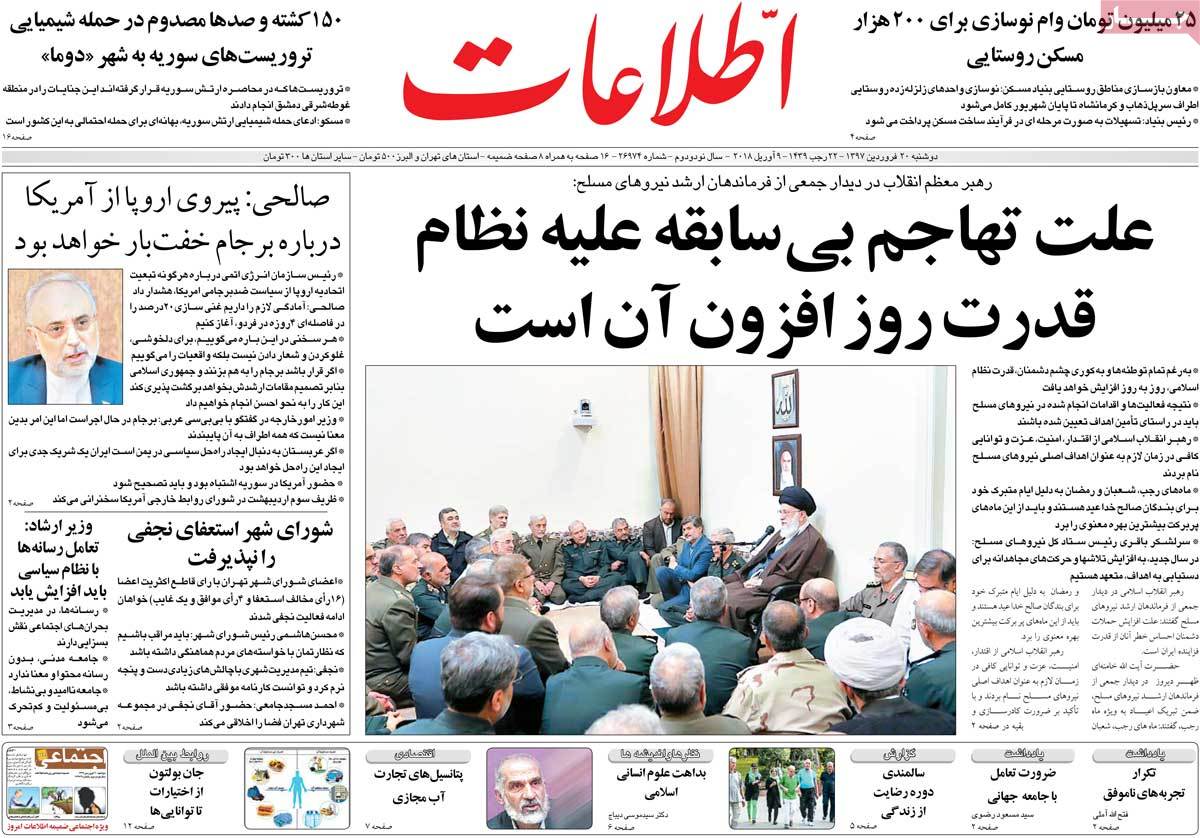
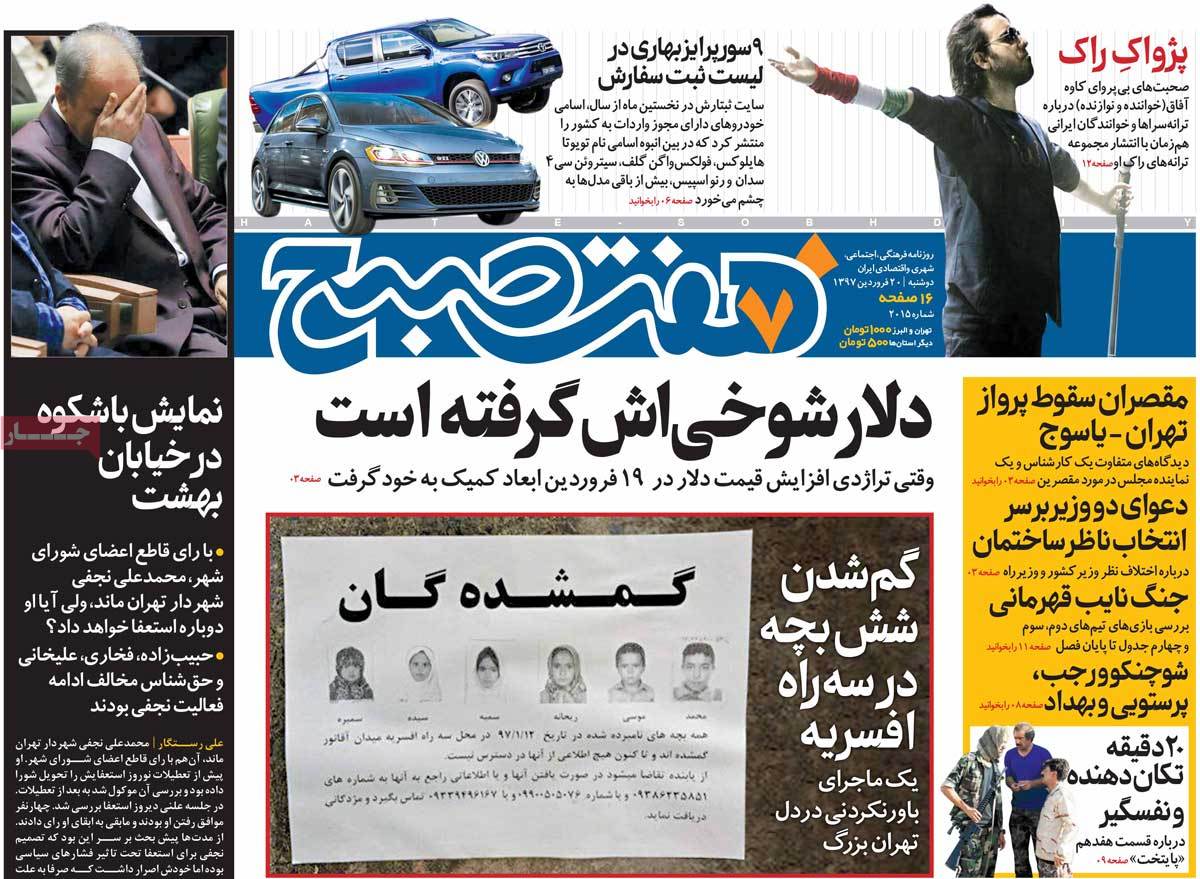
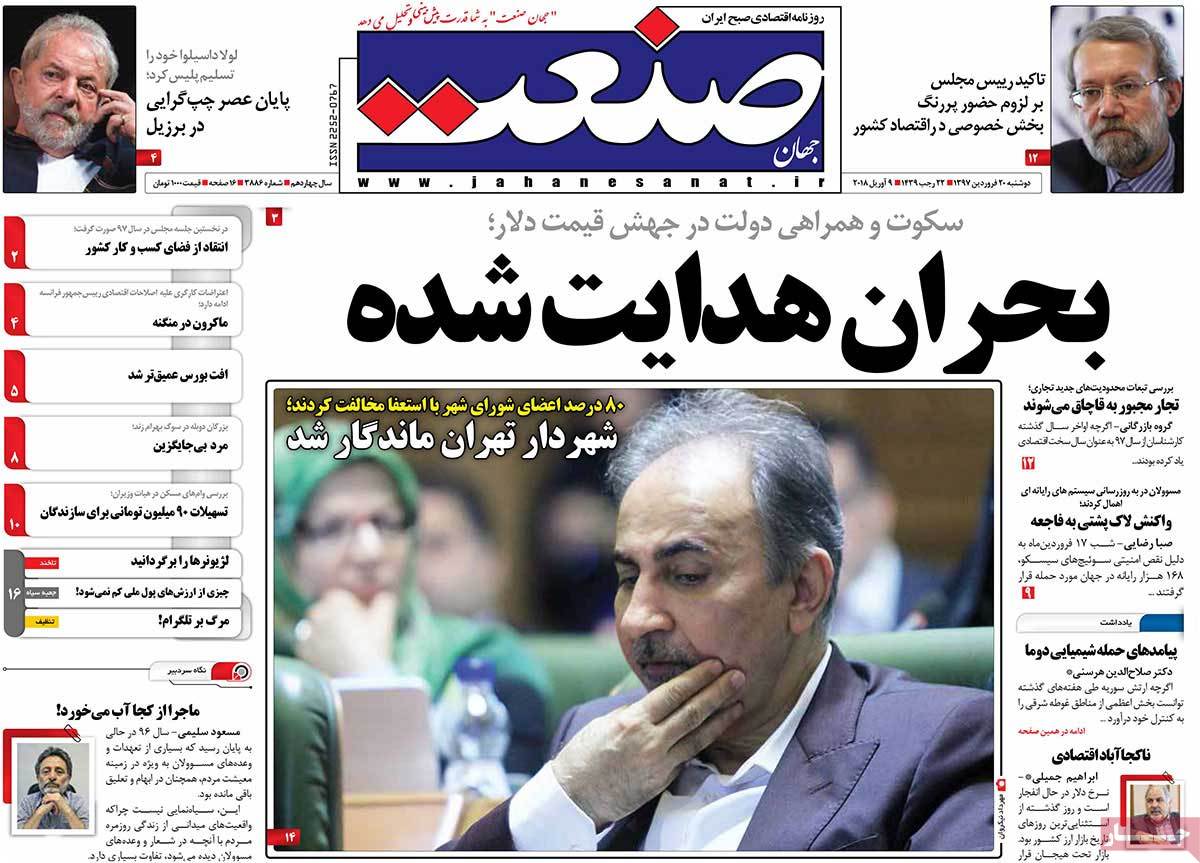
A Look at Iranian Newspaper Front Pages on November 5

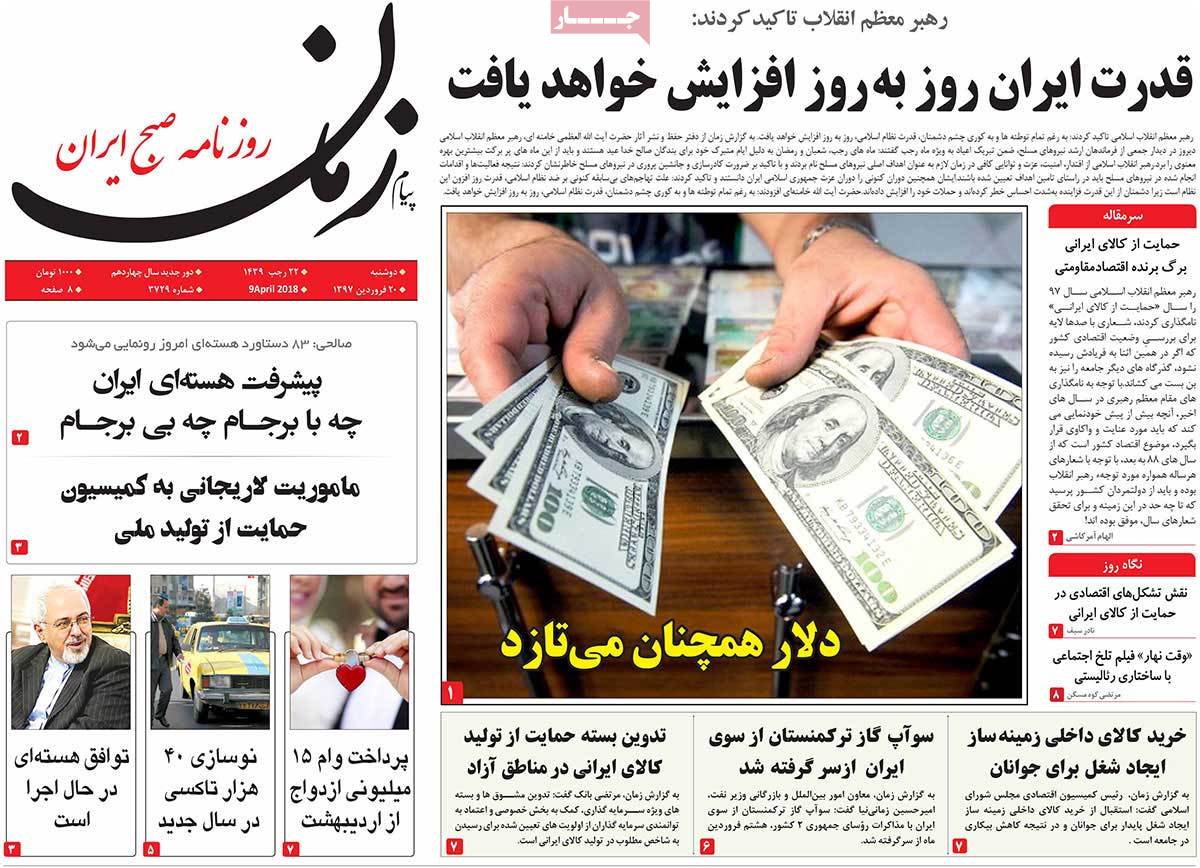
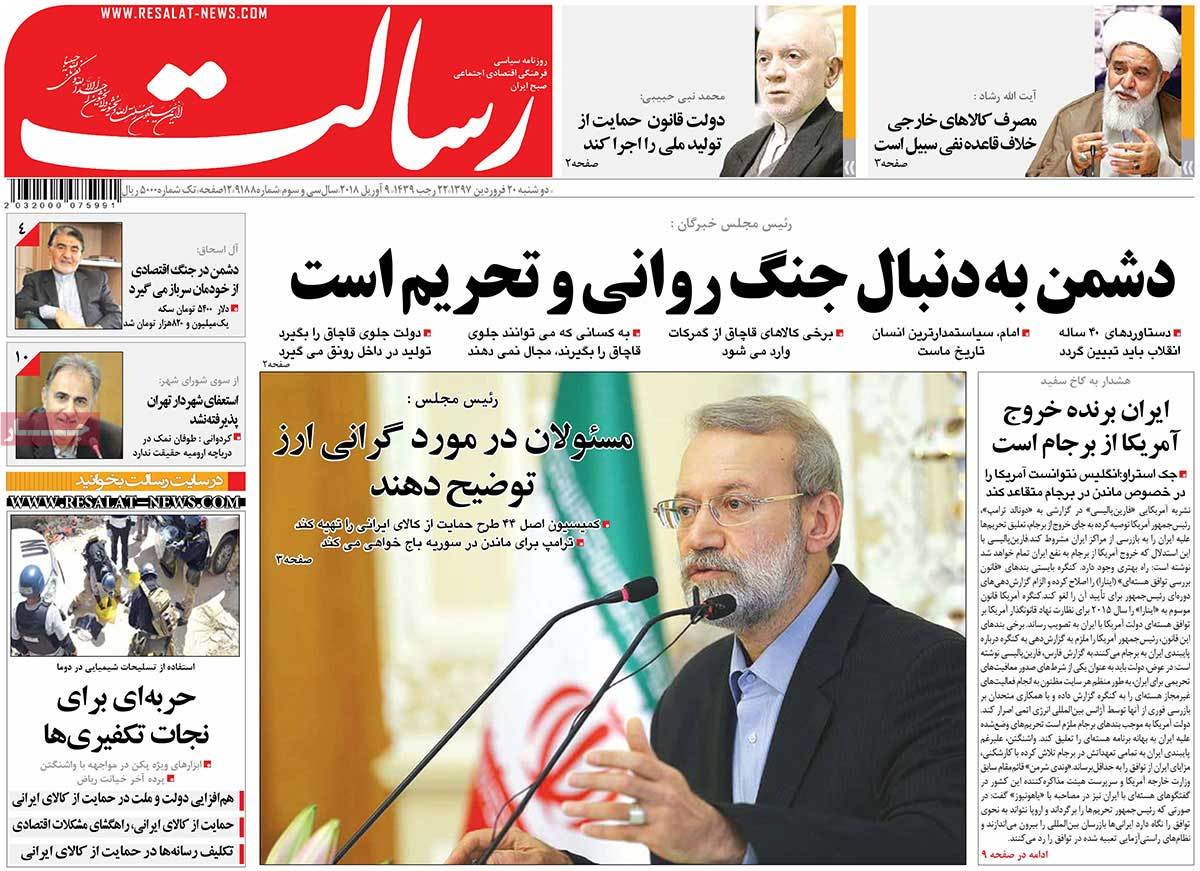
Several papers today covered the remarks made by the Leader of Iran’s Islamic Revolution Ayatollah Seyyed Ali Khamenei about the country’s rising power and the enemies’ fear of such might.

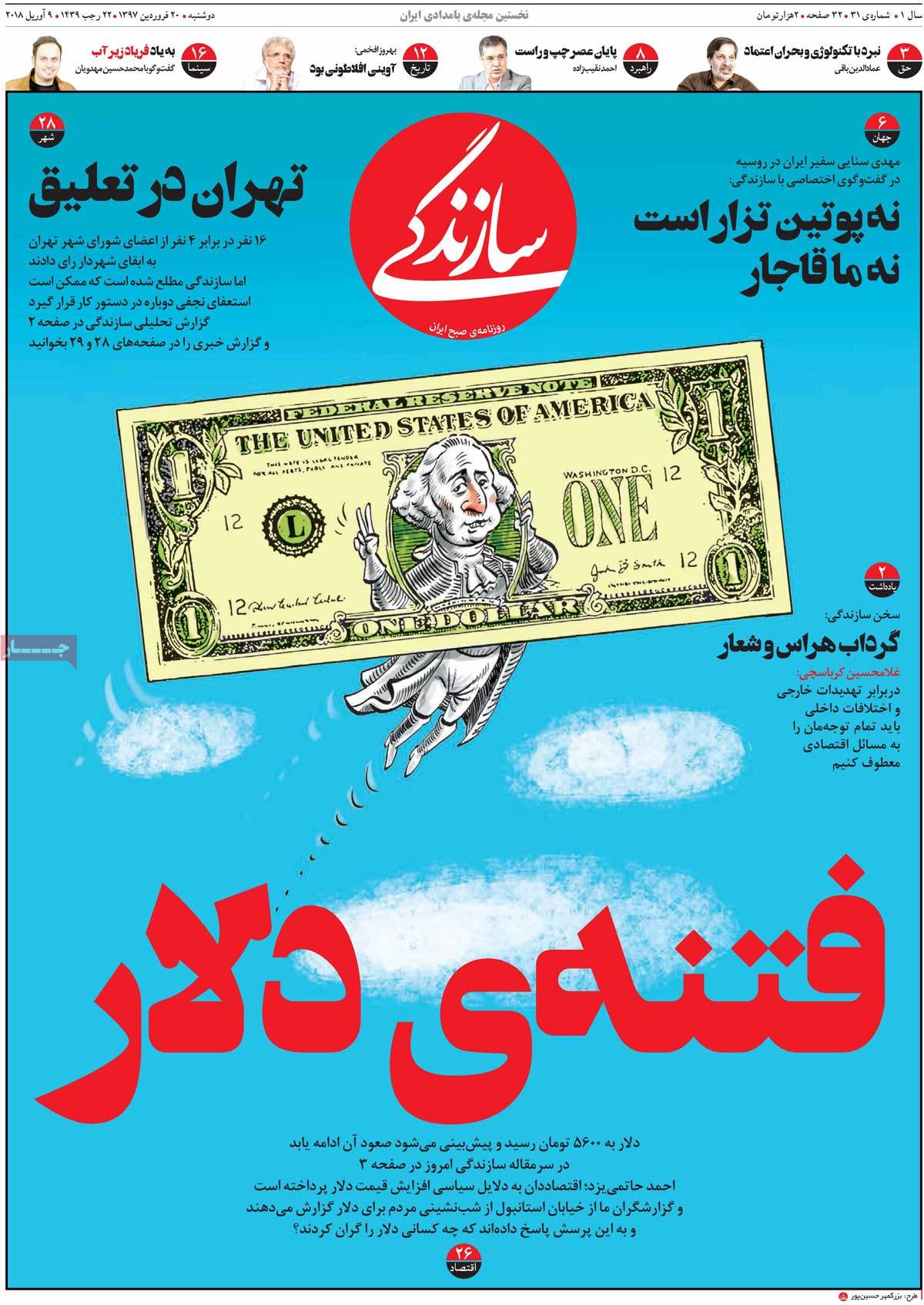
The top story, however, was the growing dollar rates in Iran’s forex market and the unprecedented decrease in the value of the Iranian rial, which has turned the issue into a national crisis.

The National Nuclear Technology Day and the country’s achievements in this field were among other top stories today.

A number of papers also highlighted Iranian Foreign Minister Mohammad Javad Zarif’s tour of Africa and South America, which started with his visit to Senegal. The tour will later take him to Brazil, Uruguay, and Namibia.

The above issues, as well as many more, are highlighted in the following headlines and top stories:


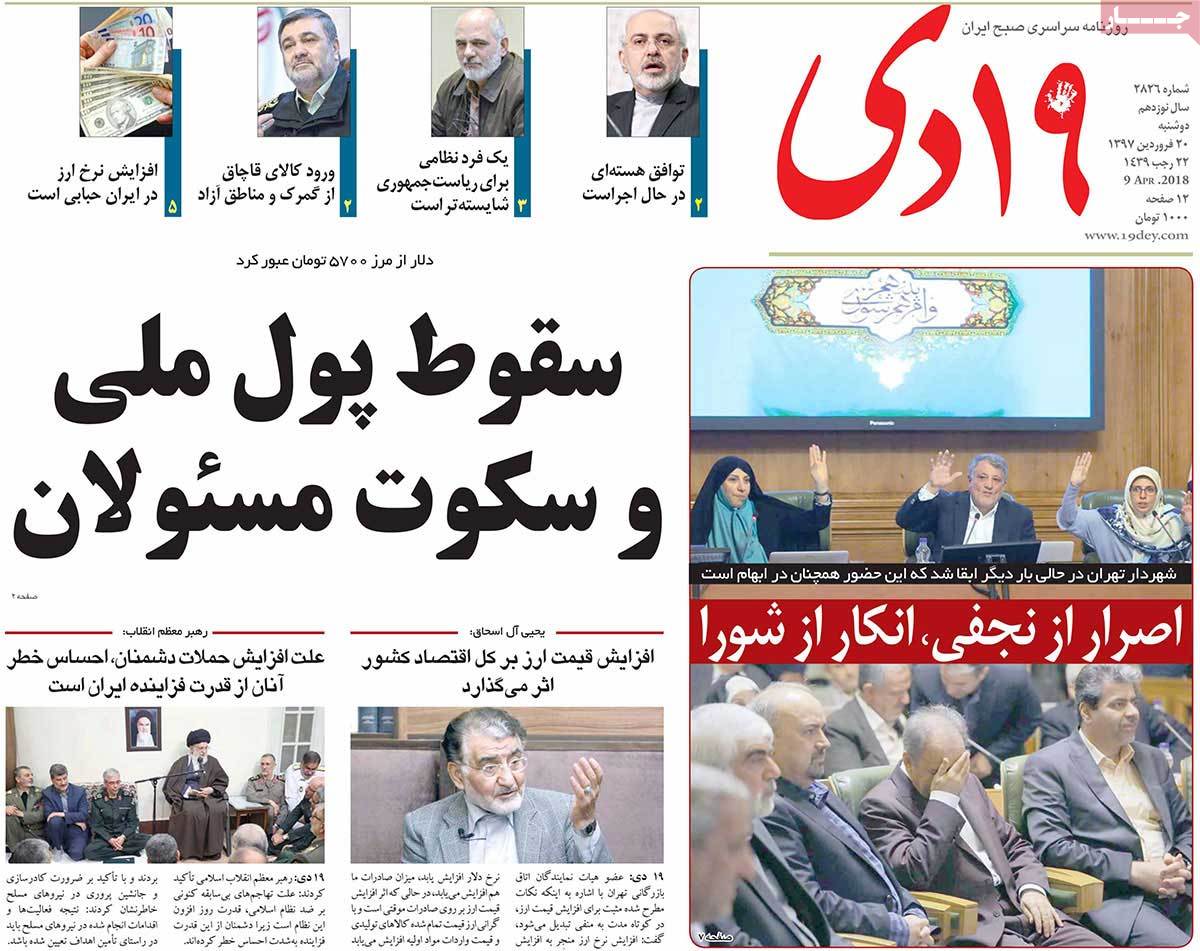
19 Dey:

  • Fall of National Currency amid Officials’ Silence

A Look at Iranian Newspaper Front Pages on April 9


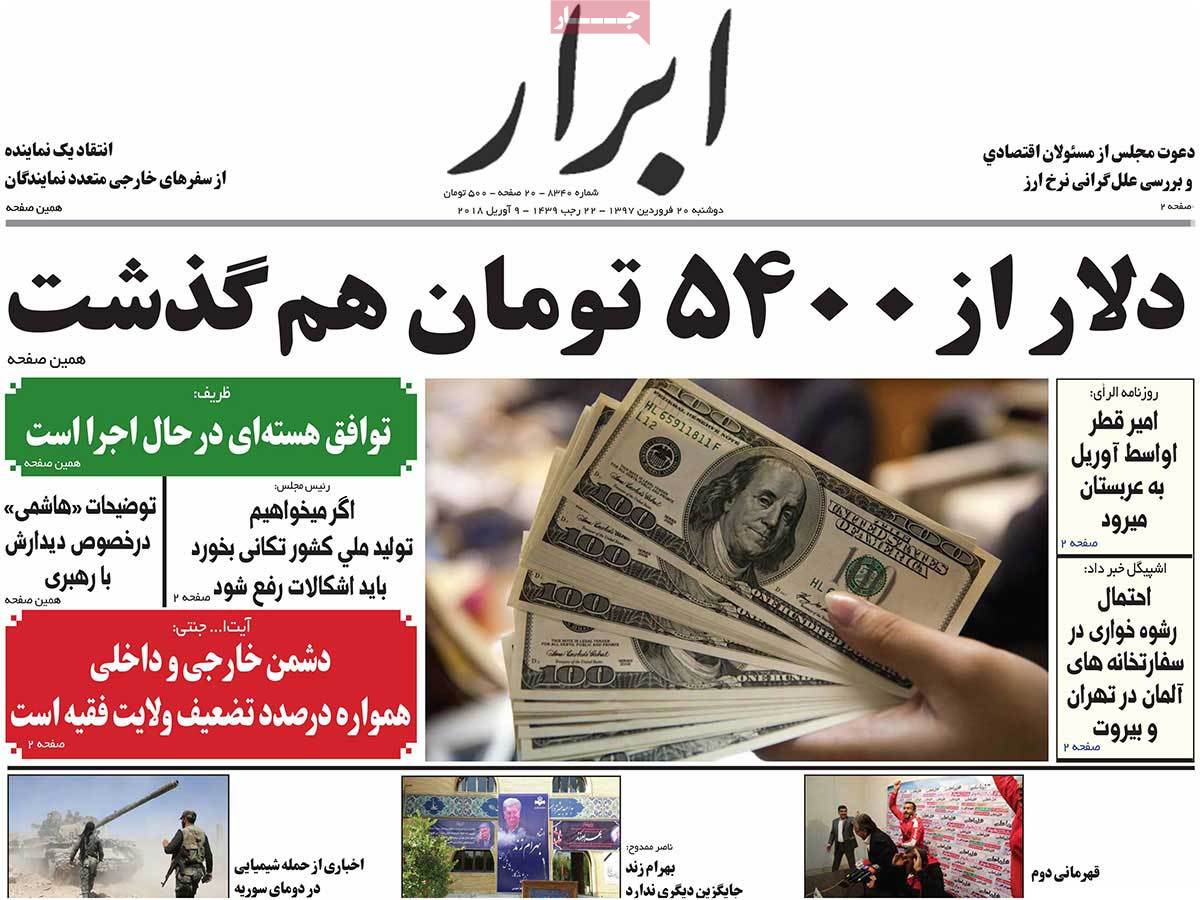
Abrar:

  • Iran FM: Nuclear Deal Being Implemented
  • Parliament Calls on Economic Officials to Discuss Hike in Forex Rates

A Look at Iranian Newspaper Front Pages on April 9


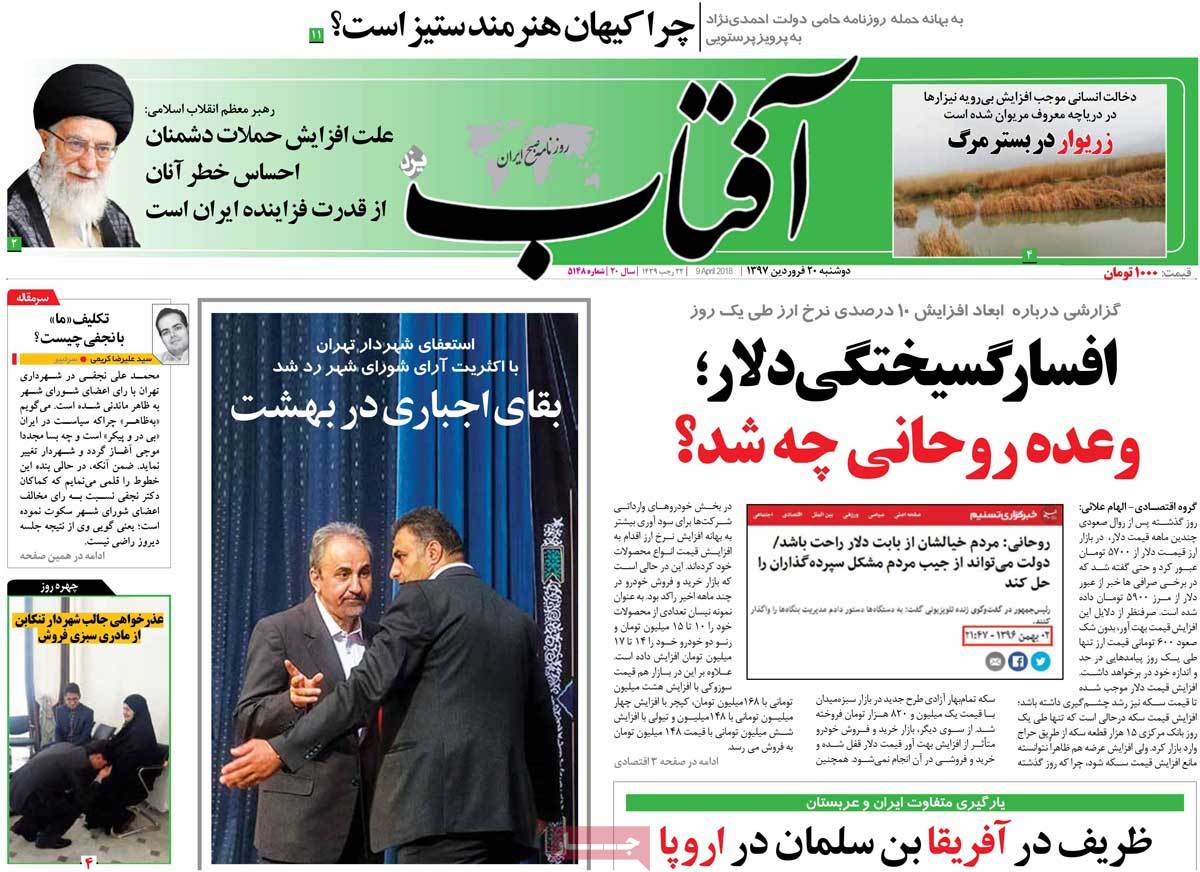
Aftab-e Yazd:

  • Iran Leader: Enemies’ Fear of Iran’s Rising Power Main Reason for Increased Attacks
  • Unbridled US Dollar Rate: What Happened to Rouhani’s Promise?
  • Zarif in Africa, Bin Salman in Europe

A Look at Iranian Newspaper Front Pages on April 9


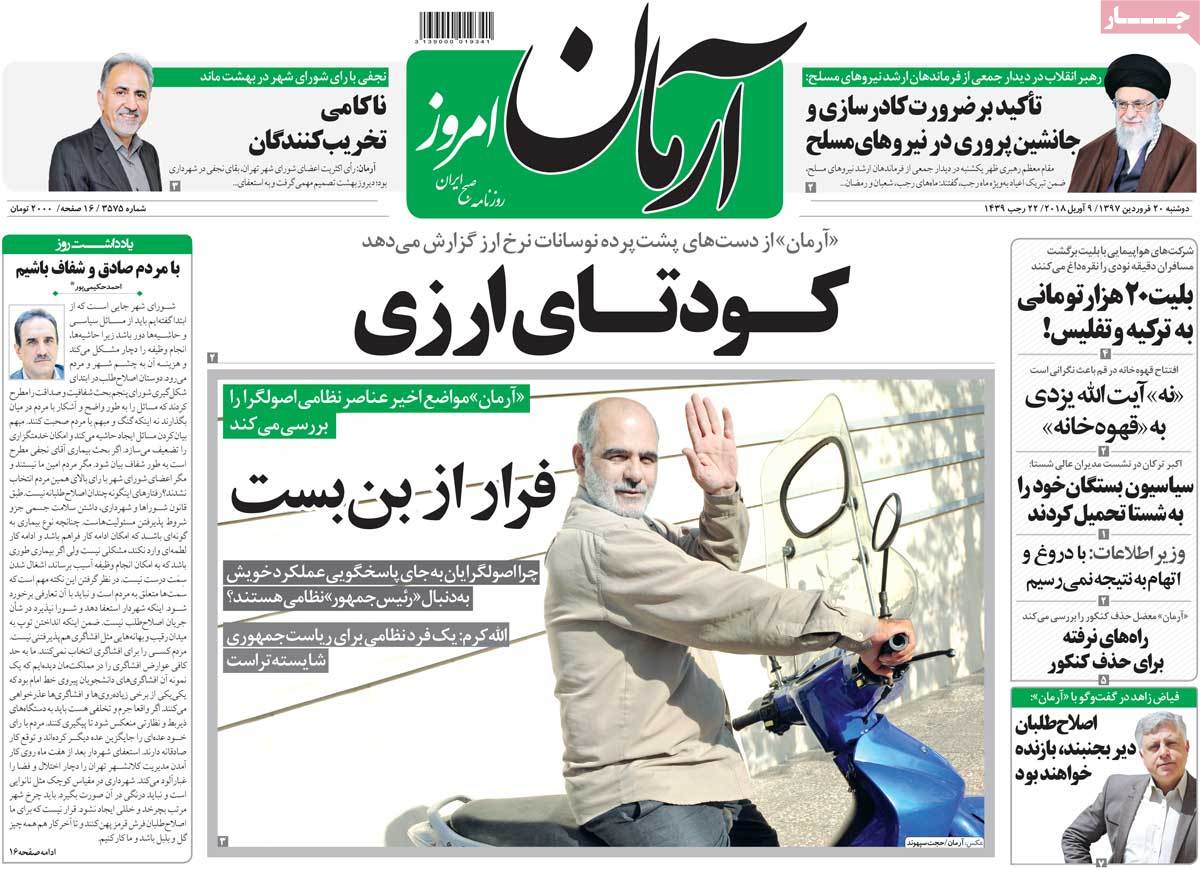
Arman-e Emrooz:

  • Forex Coup: A Report on Those behind Recent Forex Market Fluctuations

A Look at Iranian Newspaper Front Pages on April 9


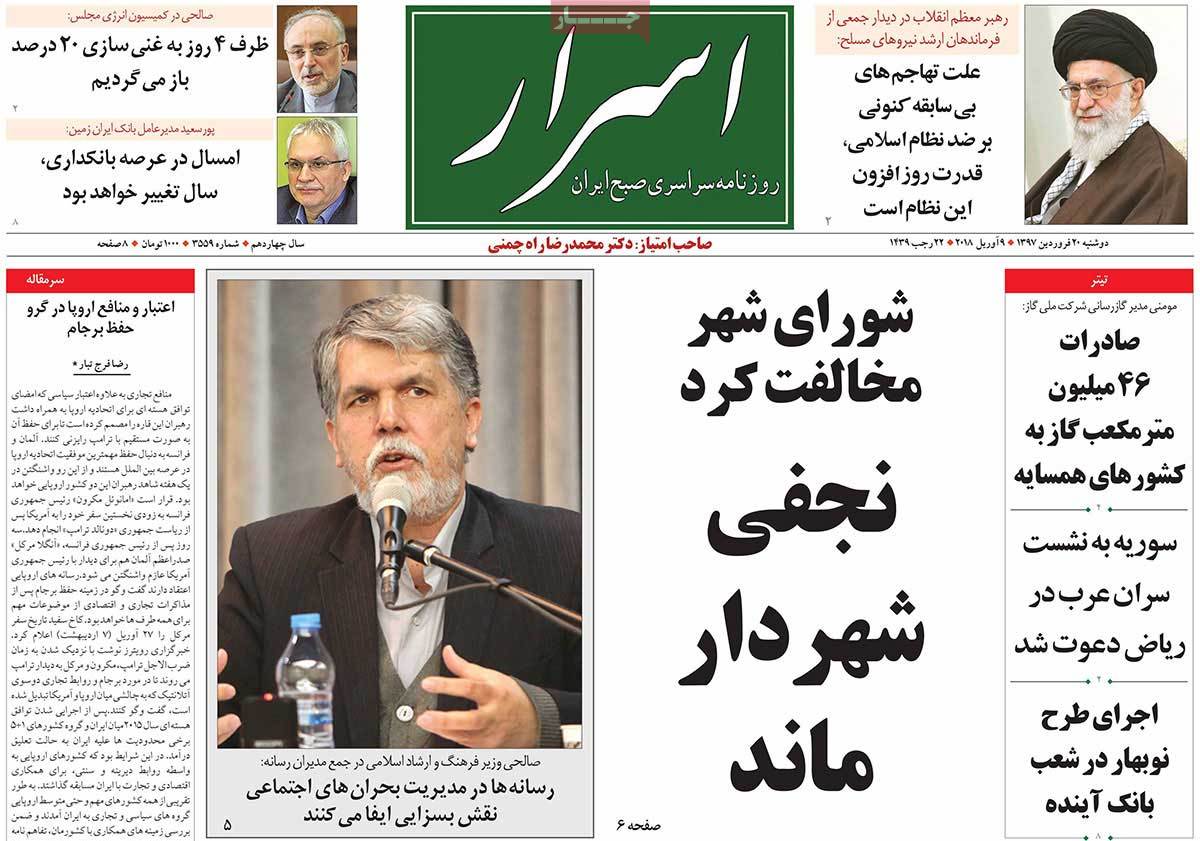
Asrar:

  • Iran Nuclear Chief: We’ll Return to 20% Enrichment in 4 Days
  • Syria Invited to Summit of Arab Leaders in Riyadh

A Look at Iranian Newspaper Front Pages on April 9


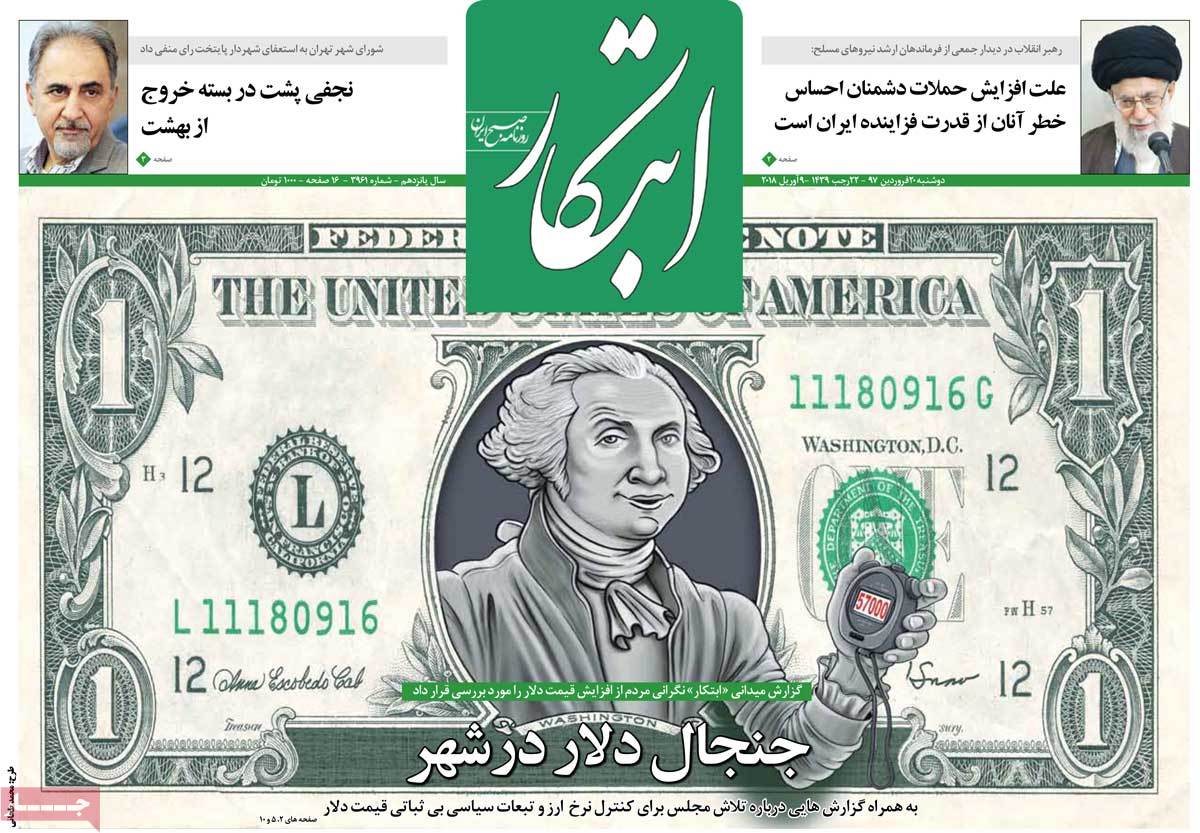
Ebtekar

  • Controversy of US Dollar in City
  • A Report on People’s Concerns about Increase in US Dollar Rate
  • Parliament Trying to Control Forex Rates: Consequences of Dollar Instability

A Look at Iranian Newspaper Front Pages on April 9


Etemad:

  • 15 Years after Fall of Baghdad: What Happened to Iraq after US Invasion
  • Nature of Iran’s Forex Market Changed
  • Capability of Managing Forex Rates [Editorial]

A Look at Iranian Newspaper Front Pages on April 9


Ettela’at:

  • Iran Nuclear Chief: Europe to Be Humiliated If It Follows US Footsteps

A Look at Iranian Newspaper Front Pages on April 9


Haft-e Sobh:

  • US Dollar Is Kidding Us!
  • Tragedy of Growing Dollar Rates Turning into Comedy

A Look at Iranian Newspaper Front Pages on April 9


Jahan-e San’at:

  • Government’s Silence towards Surging Dollar Rates: Guided Crisis

A Look at Iranian Newspaper Front Pages on April 9


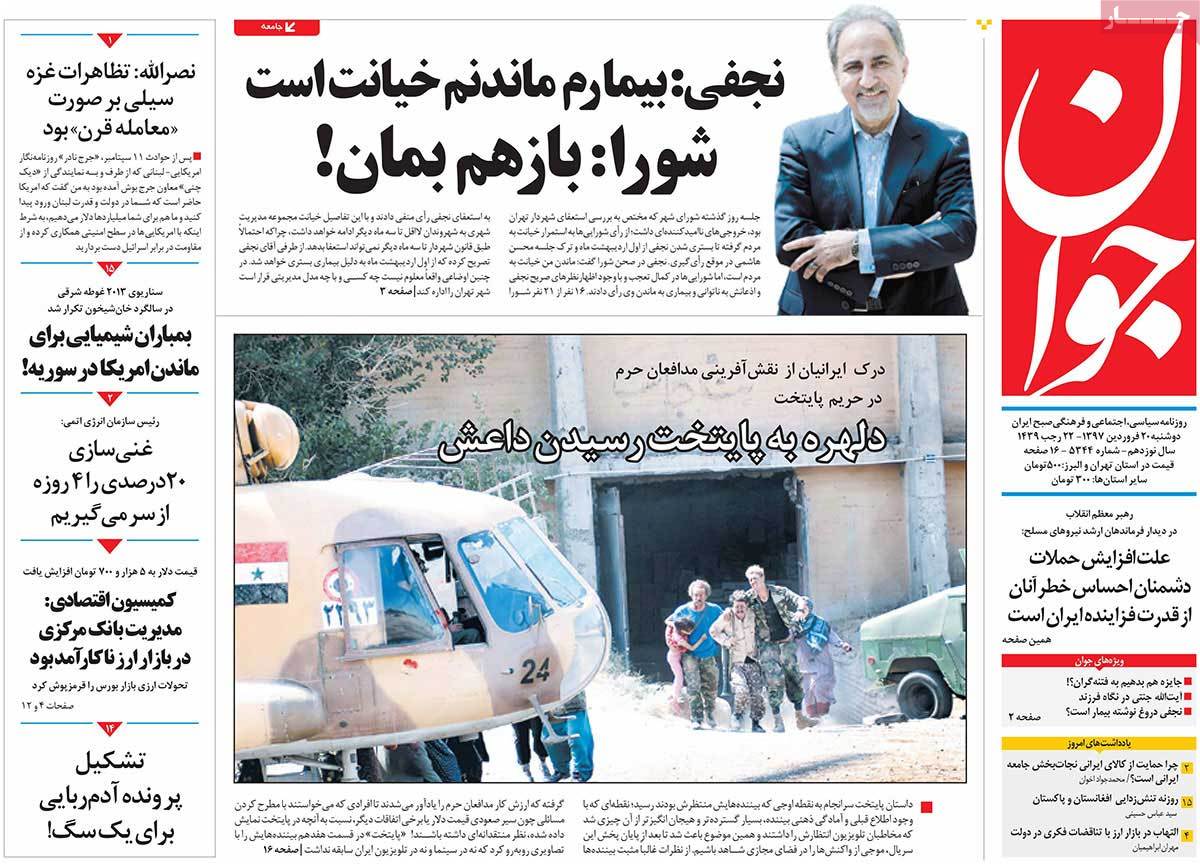
Javan:

  • Chemical Attack to Keep US in Syria!
  • On Anniversary of Khan Shaykhun, 2013 Scenario Repeated in Eastern Ghouta
  • Nasrallah: Gaza Protests Slap on Face of “Deal of Century”

A Look at Iranian Newspaper Front Pages on April 9


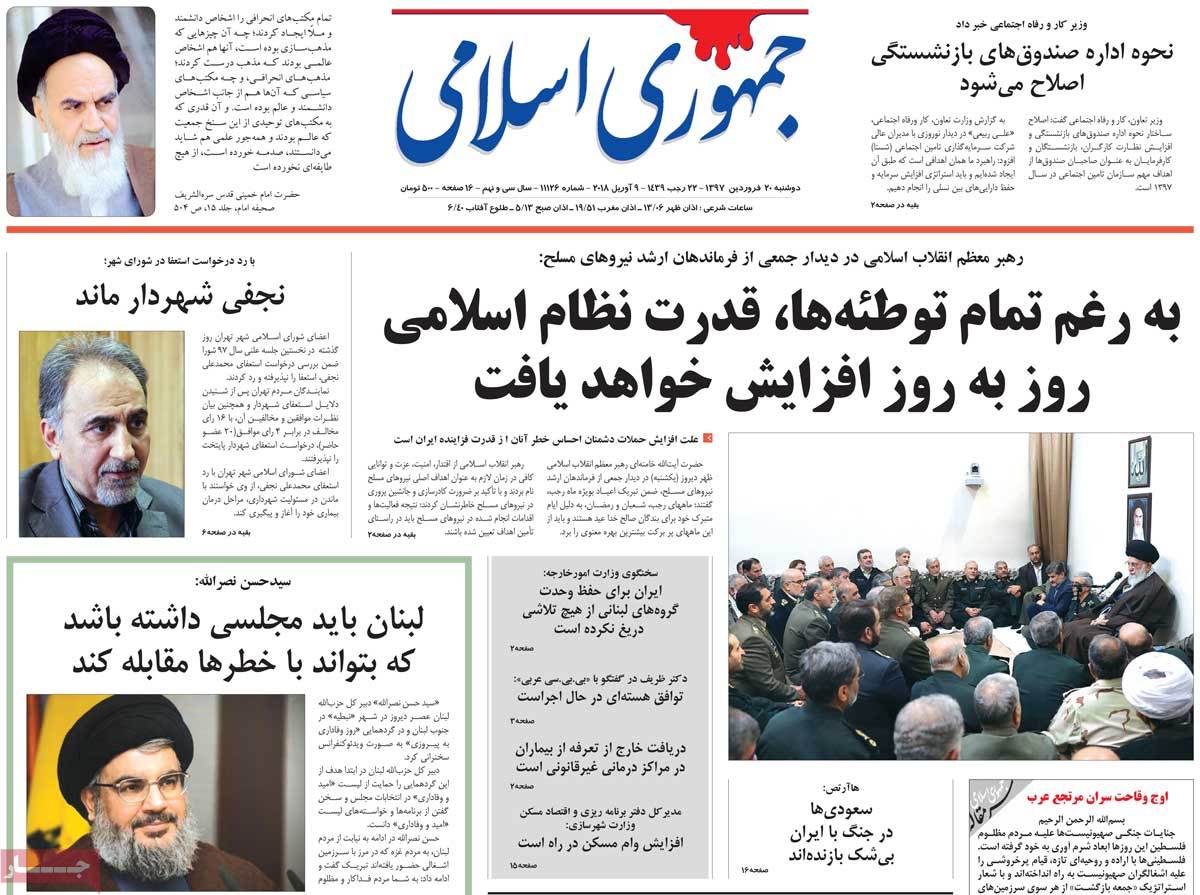
Jomhouri Eslami:

  • Nasrallah: Lebanon Needs A Parliament that Can Counter Threats

A Look at Iranian Newspaper Front Pages on April 9


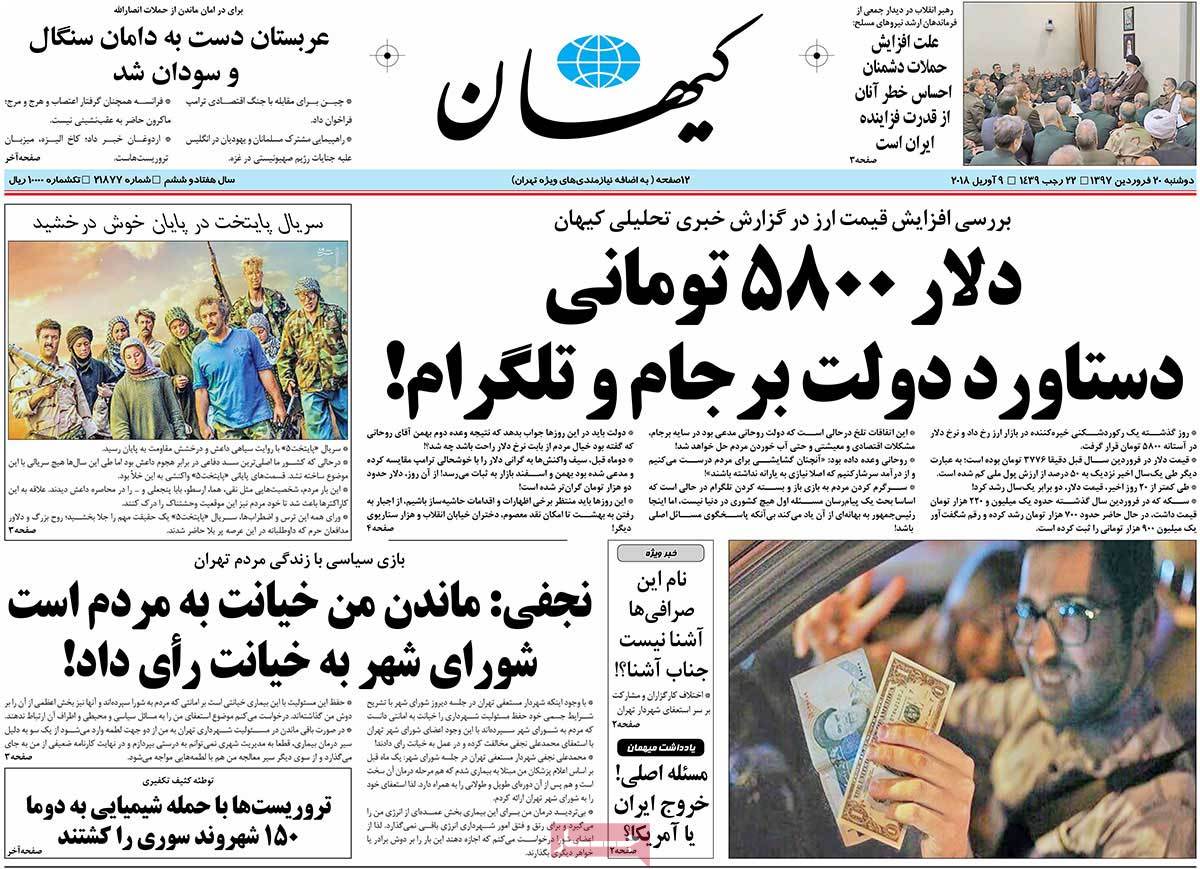
Kayhan:

  • Achievement of Government of JCPOA, Telegram: IRR 58,000 for $1
  • Saudi Arabia Asks for Senegal, Sudan’s Help to Survive Ansarullah Attacks

A Look at Iranian Newspaper Front Pages on April 9


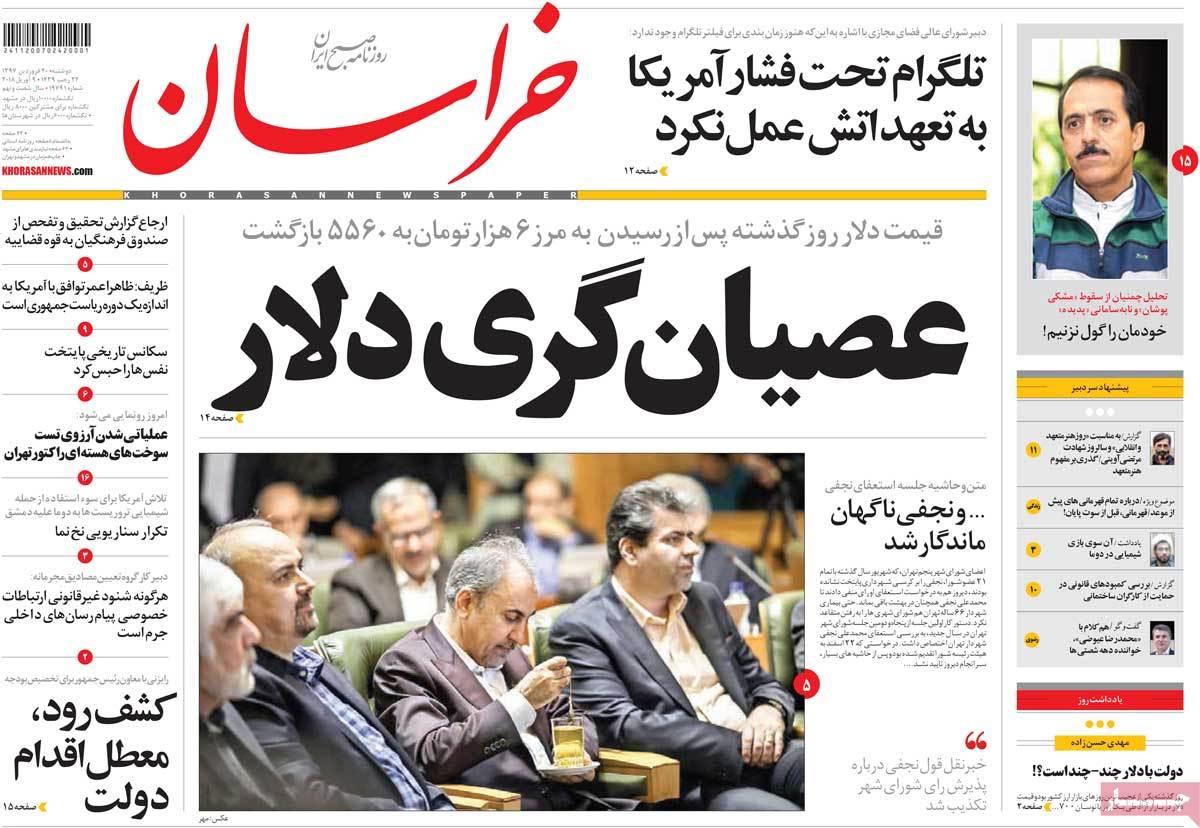
Khorasan:

  • Dream of Testing Tehran Reactor’s Nuclear Fuel to Be Operationalized
  • Zarif: Any Deal with US Survives Only Until End of One US Presidential Term

A Look at Iranian Newspaper Front Pages on April 9


Payam-e Zaman:

  • Iran Nuclear Chief: 83 Nuclear Achievements to Be Unveiled Today
  • Iran’s Nuclear Power, with or without JCPOA

A Look at Iranian Newspaper Front Pages on April 9


Resalat:

  • Enemy Looking for Psychological War, Sanction against Iran: Top Cleric

A Look at Iranian Newspaper Front Pages on April 9


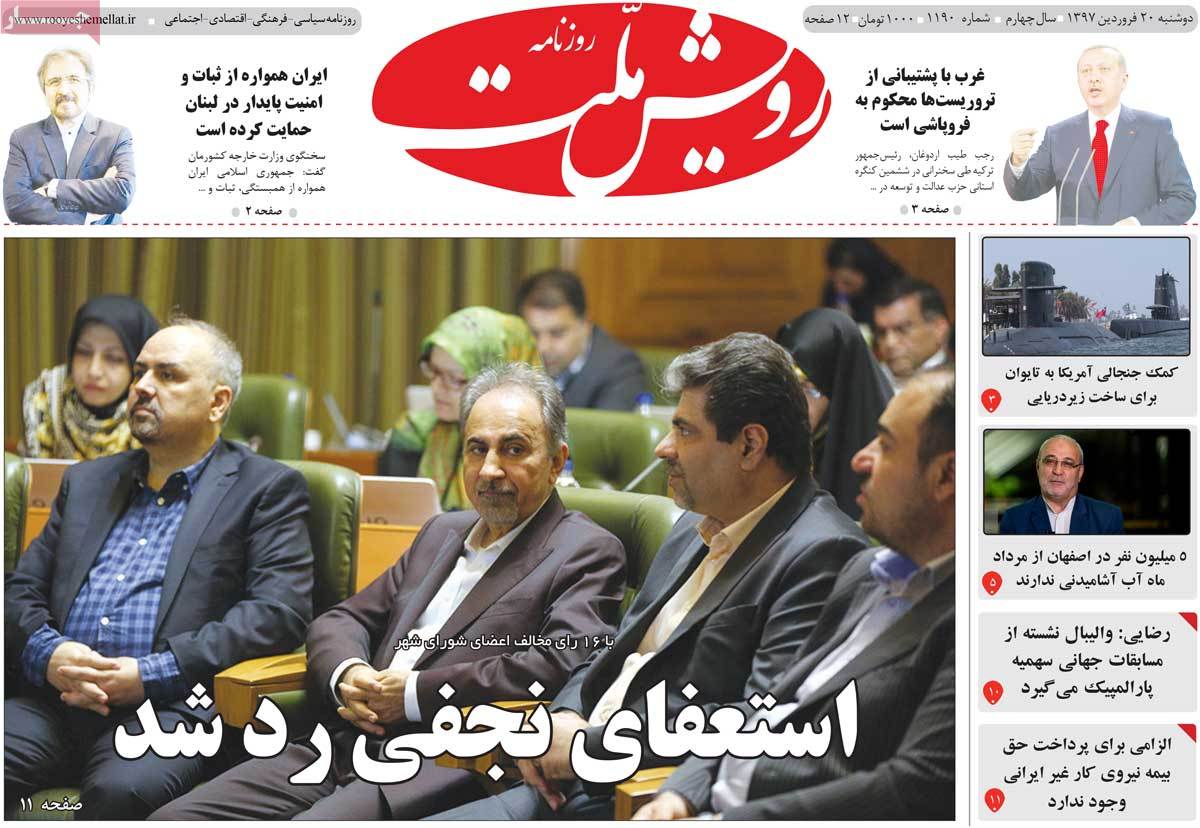
Rooyesh-e Mellat:

  • Iran Has Always Supported Stability, Security in Lebanon: Foreign Ministry

A Look at Iranian Newspaper Front Pages on April 9


Sazandegi:

  • Sedition of Dollar
  • US Dollar Rate Surges in Iran Market, Expected to Rise Even More

A Look at Iranian Newspaper Front Pages on April 9


Shahrvand:

  • Suspicious Demands for US Dollar
  • Questionable Purchase of US Banknotes Drops Iranian Rial’s Value by 10% in One Day

A Look at Iranian Newspaper Front Pages on April 9


Shargh:

  • Rumours Spreading among Conservatives: A Military President!
  • Allahkaram: A Man of Military Better Choice for Iran’s Presidency
  • A Bridge to Two Continents: Zarif Starts Visits to Africa, South America

A Look at Iranian Newspaper Front Pages on April 9

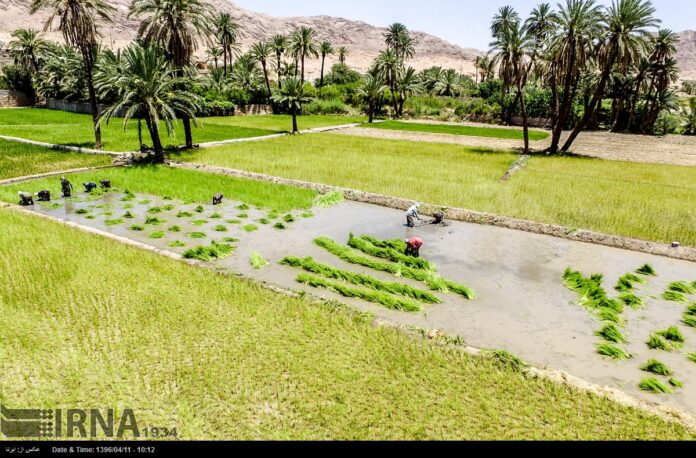
Iran Bans Rice Cultivation in Dry Provinces

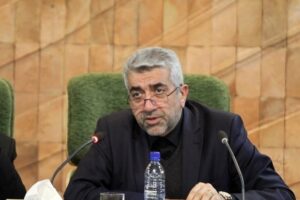
Speaking to reporters on the sidelines of a meeting with a group of lawmakers, Ardakanian said cultivation of rice is not logical in dry and semi-dry areas.

Therefore, he added, the government has made its decision on the prohibition of growing rice in any province other than the northern ones.

Iran Bans Rice Cultivation in Dry Provinces“This is a policy adopted by one of the Iranian ministries,” he noted, perhaps referring to the Ministry of Agriculture which has long been opposed to cultivation of high-water-consuming plants in dry and semi-dry areas.

While the decision might outrage rice farmers across the country, experts believe such a ban seems necessary given the serious crisis in the country’s water resources.


No Need for Import of Drinking Water despite Serious Drought

Meanwhile, an Iranian lawmaker quoted Ardakanian as saying that the country doesn’t yet need to import drinking water in the current Iranian calendar year.

Seyyed Hossein Naqavi Hosseini quoted Ardakanian as saying, “Though Iran is facing the problem of water shortage, the plight of drought in the country is temporary.”

“The minister also noted that over the last 50 years, we have witnessed a one-millimetre decrease in the precipitation level each year and a two-grade increase in the weather temperature of Iran each ten years.”

This shows that we face the problem of water shortage but not necessarily a dire drought and the current drought is temporary,” Naqavi Hosseini quoted him as saying, according a Farsi report by ISNA.

He added that the government has already established a working group including representatives from all relevant organizations to cope with the ongoing water shortage.

The Iranian lawmaker said exploring the issue of water shortage in Isfahan and Khuzestan provinces is at the top of the working group’s agenda.

He underlined that Iran doesn’t need to import drinking water from neighbouring states. “We are serious and resolute when it comes to the issue of water shortage.”

Naqavi Hosseini also said the issue of water shortage can be resolved only through managing both sides of the supply and demand chain.

During the meeting, three deputies from the energy ministry read out separate reports on the water resources across Iran including the dams’ water. They unanimously warned about the low level of water behind the dams.

They also warned that there would be a 5,000 megawatt of power shortage in the current Iranian calendar year because of the upcoming water shortage. The officials also called on the lawmakers to play a role in handling the problem.

During the meeting, the participants also discussed the urgency of managing the water distribution systems as well as the required reforms to make to the water consumption in Iran.

“Nazanin Zaghari’s Incarceration Not Related to UK Debts to Iran”

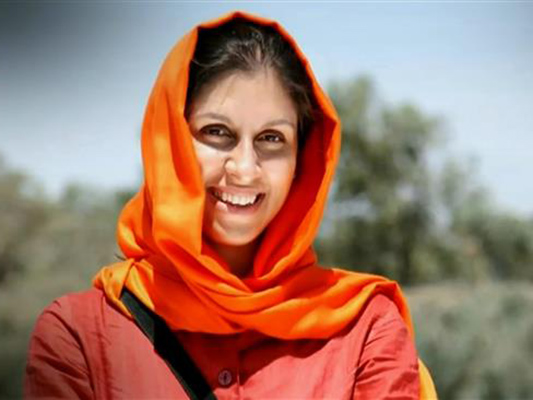
Speaking to the Fars News Agency on Monday, Qassemi rejected a claim by Richard Ratcliffe, the husband of Iranian-British national Nazanin Zaghari, that the main reason behind his wife’s imprisonment was Britain’s debts to Iran.

“As an Iranian citizen, Mrs. Zaghari was found guilty on different counts by the Islamic Republic of Iran’s judicial and security apparatuses. She was tried based on the laws of the Islamic Republic of Iran and is serving her prison term,” said Qassemi.

“Whatever is being said regarding Mrs. Zaghari’s accusations and linking them to some issues related to Iran-Britain relations is just unfounded speculation and is not true,” the spokesman noted.

“There is no relation between her conviction and Tehran-London bilateral ties, neither is the issue related to financial matters and differences between Iran and the UK in certain areas,” he said.

Iran’s Nuclear Program Progressing More Strongly, Accurately: Rouhani

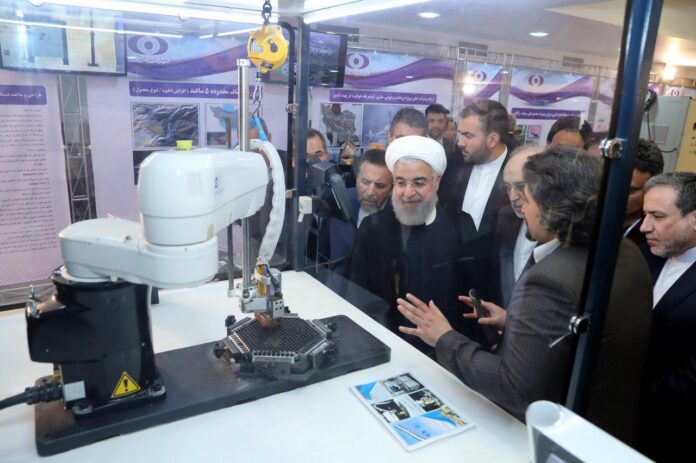
“Some think that Iran’s nuclear movement has dried up in the 11th and 12th administrations, and our centrifuges are either not spinning or spinning slowly,” Rouhani said in an address to a ceremony to unveil 83 nuclear achievements on the National Nuclear Technology Day.

“I would like to tell the Iranian nation that our nuclear industry is currently moving forward more strongly and accurately than before,” he noted, adding that the clear message of the nuclear achievements unveiled on Monday is the faster spinning of Iran’s centrifuges.

“In scientific technology, we have treaded our own path, and will continue to do so,” the Iranian president noted.

Rouhani noted that the Joint Comprehensive Plan of Action (JCPOA), the nuclear deal between Tehran and world powers, has not slowed down Iran’s nuclear program.

“We have established new centres in Fordow for research. We started nuclear trade following the JCPOA,” he noted, vowing that the country’s nuclear research will be carried out faster than ever.

He further pointed to the provocative moves by the US and its Western allies to make Iran violate the nuclear deal.

“If we sign a deal, we will not be the first to violate it. They tried very hard to provoke Iran into breaching the JCPOA. It has been 15 months that a newcomer in the US is making numerous claims, trying to tear up the nuclear deal, but its structure has been so strong that it has survived up to now.”

“They spent a lot of money to shake the structure of the JCPOA, but to no avail. Even if one day they manage to damage this structure, they would be damaging their own reputation,” he stressed, adding that Tehran is prepared for any situation.

The Iranian president referred to the Islamic Republic’s defensive program and said, “We don’t think of threatening anyone. Our military power is not for aggression. Those who make false claims will understand they are wrong.”

“Our weapons and missiles are for defence. We need them to ensure our security in this insecure world. Our weapons are not to be used against our neighbours.”