Sunday, December 28, 2025
Home Blog Page 3532

10 Iranian Border Guards Killed in Clashes with PJAK Terrorists

Iranian Soldier Killed in Shootout with Terrorists in Southeast Border

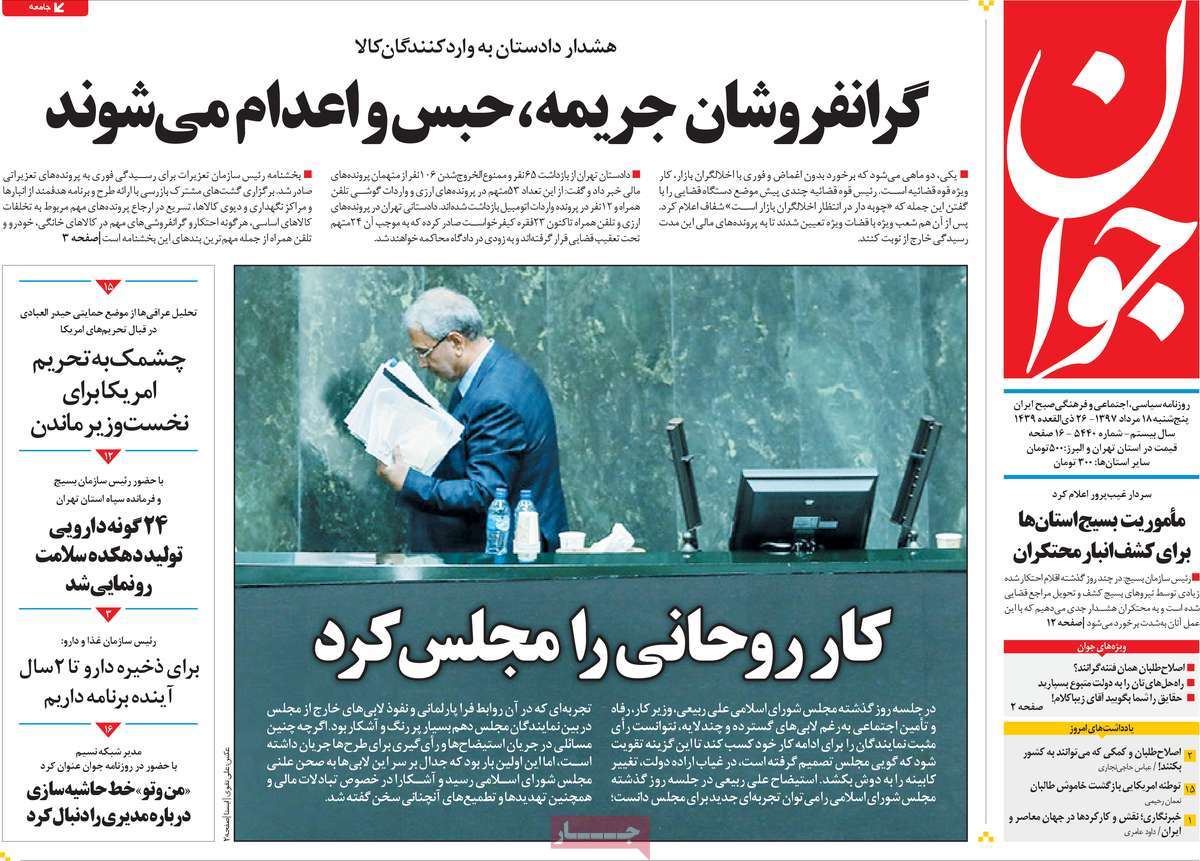
“In the last night’s attack by culprits and anti-revolutionary terrorists affiliated to the global arrogance (the US) on the border post of the IRGC Ground Force’s Hamzeh Seyed al-Shohada Base in the village of Dari in Marivan District in Kurdistan Province and subsequently, the explosion of an ammunition depot, 10 fighters of Islam were martyred,” the IRGC Public Relations Department said in the statement.

In the clash with the terrorists, a number of terrorists were killed and a number of others suffered injured and escaped the scene, the statement added.

The IRGC further emphasized that “a deadly and crushing revenge” awaits the terrorist and anti-revolutionary groups and their supporters for committing this crime.

The IRGC is tasked with protecting the country’s northwestern and southeastern borders.

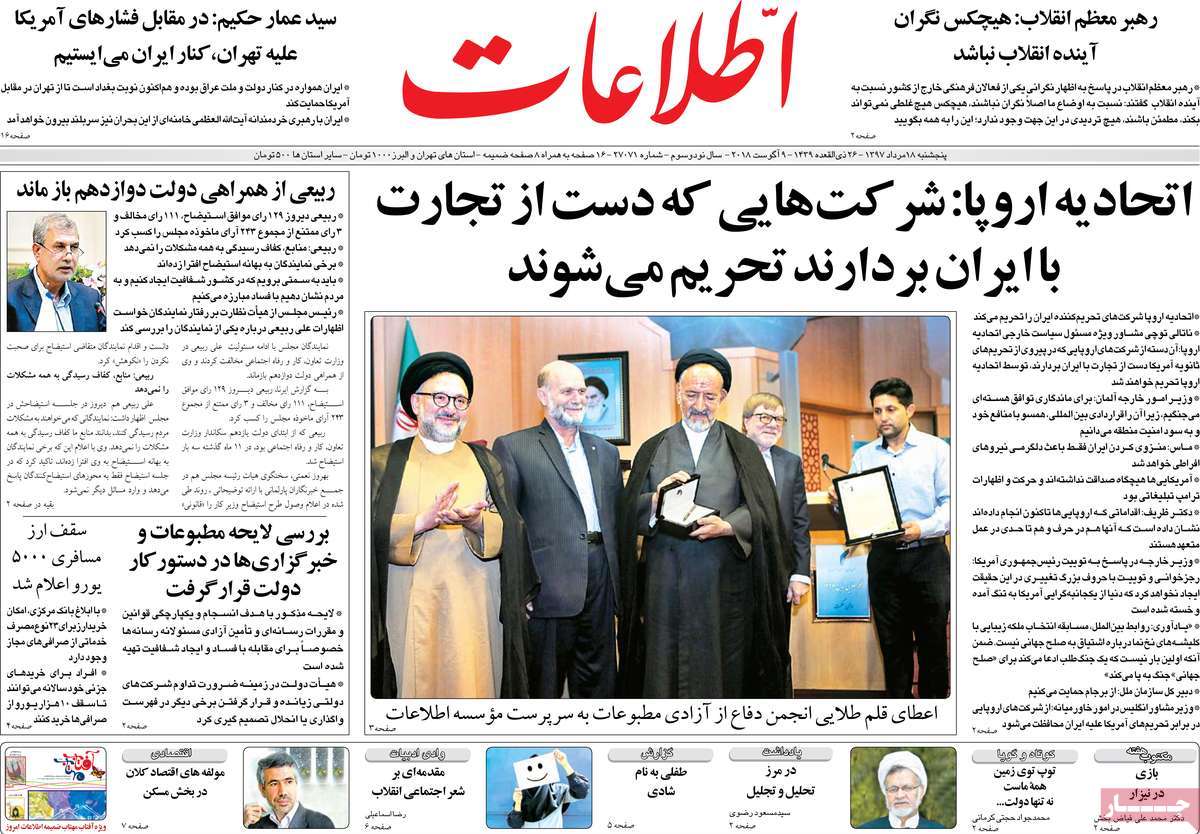
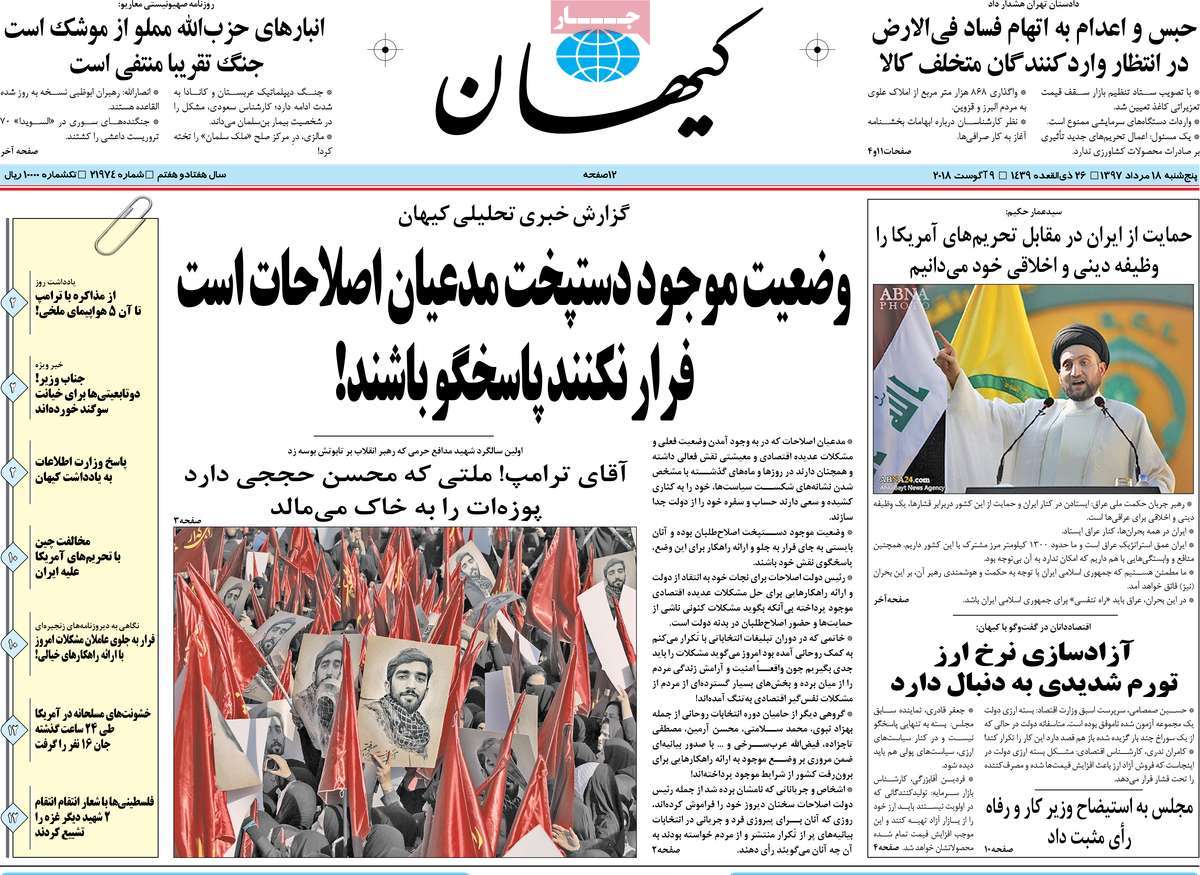
Negotiating with US Not to Solve Iran’s Problems: Leader

It is a clear mistake to think that negotiating or having ties with the US would settle the Islamic Republic’s problems, the Leader said in a Saturday meeting with Iranian foreign minister and a group of Iranian ambassadors and diplomats in Tehran.

“The US has basic and fundamental problem with the Islamic Establishment of Iran. Moreover, there are many countries in Africa, Asia, and Latin America which have ties with the US but are still gripped with many problems,” Ayatollah Khamenei added.
The Leader pointed to the deep animosity of the US towards the Islamic Republic, and said, “Americans seek to restore the position they had in Iran before the 1979 Revolution, and would not be satisfied with anything less than that.”

The Leader said Washington’s opposition to Iran’s nuclear power, high enrichment capabilities, and its regional presence has its roots in the US’ deep hostility towards the components of the Islamic Republic’s strength.

Ayatollah Khamenei referred to the country’s regional presence as one of the components of Iran’s power and security, and said this is why the enemies are opposed to such presence.

Iranian officials have repeatedly announced that the US cannot be trusted, he noted, adding that he himself has long been repeating the fact that the Americans’ words and even signatures cannot be trusted. “So holding talks with the US is futile.”

The Leader further highlighted the significance of taking advantage of the country’s untapped or less-tapped opportunities.

“Negotiations with Europeans shouldn’t be stopped, but we shouldn’t stall the country while waiting for Europeans’ package [to save the Iran nuclear deal]; rather many required measures must be taken inside the country,” he added.


Rouhani’s Remarks on Oil Exports Very Significant

Iranian President Hassan Rouhani during his recent trips to Europe threatened that if Iran’s oil is not allowed to be exported through the Persian Gulf due to the US sanctions, then the oil of no other country in the region can be exported.

The Leader on Saturday described Rouhani’s comments as very important, saying that they showed the policy and approach of the Islamic Establishment of Iran.
“The foreign ministry is duty-bound to seriously pursue such stances held by the president,” he added.

“The main and real goal of diplomacy is to protect national interests. Having interaction or clash [with other countries] are just ways to secure the national interests,” Ayatollah Khamenei said, stressing that Iran’s national interests are derived from the major policies and values of the Islamic Republic, which must be protected by the foreign ministry.


Ideology Not Separate from Diplomacy

“Some wrongly talk of the need for making a distinction between diplomacy and ideology; however, there is no problem with ideological diplomacy, and it is not right and logical to imply there is a clash between ideology and national interests,” the Leader noted.

“Ideology seeks to secure and maintain the country’s national interests, and is considered as a nation’s identity,” he went on to say.

The Leader referred to the ideology-based behaviours and policies of Western governments, saying, “Americans frequently use the expression ‘American Values’ in their remarks. This is their ideology derived from the US Declaration of Independence.”

“Even in European countries, ideological thoughts dominate their political behaviours and activities,” he noted.

Ayatollah Khamenei also noted that the country’s policy of establishing wise, smart, targeted, and logical ties with the world is inspired by the Islamic view of the Establishment and totally based on ideological diplomacy.


Human Rights Accusations Part of Iranophobia Project

The Leader also referred to the enemy’s psychological war against the Islamic Republic, and said the accusations of breaching democracy, lack of freedom, and violation of human rights in Iran are all part of the psychological war and Iranophobia project pursued by the adversaries.

Ayatollah Khamenei also blasted the crimes committed by Europeans and Westerners in the time of colonialism, the limitations of democracy in the West, the partisan dictatorship in the US and some European countries, and the West’s current crimes including their role in the Saudis’ slaughter of Yemenis.

“Westerners are symbols of violating human rights, but blatantly raise accusations against Iran, in a way that one is sometimes surprised to see how shameless they are,” he added.

Tehran, IAEA Signed No Secret Deal on University Inspection: Envoy

Iran Calls for IAEA’s Impartial Verification of Saudi Nuclear Activities

Kazem Gharib-Abadi, Iran’s representative at the International Atomic Energy Agency, said there is no “secret agreement” that allows the IAEA to inspect Iranian universities.

“There are no secret agreements for inspection of universities and other places and everything has been in accordance with the country’s obligations,” he said.

On Monday, Fars News Agency reported that the IAEA’s inspectors had made a secret visit to Iran University of Science and Technology in Tehran, quoting an IUST faculty member as saying that another inspection had been made at Sharif University of Technology.

The report was confirmed this week by Science Minister Mansour Gholami, who said the inspection was authorized by the Supreme National Security Council.

Gholami said the IAEA inspectors had just visited the universities’ laboratories.


Basis for Cooperation

Gharib-Abadi said countries that have adopted the IAEA’s Additional Protocol are obliged to declare their nuclear research activities to the IAEA and allow it to verify their peaceful nature.

Tehran, IAEA Signed No Secret Deal on University Inspection: EnvoyThe IAEA also monitors research activities of countries and papers their academics publications in scientific journals, and it may seek special access to inspect their nature, the envoy said, appearing to suggest that’s why the IAEA inspectors have visited Iranian universities.

“The basis for cooperation between Iran and IAEA is Iran’s obligations and the UN watchdog has no access beyond these obligations,” he said, Fars reported.

The Additional Protocol is a set of requirements for information and access to assist the IAEA in its task of confirming that states are using nuclear material for solely peaceful purposes.

The Additional Protocol is a voluntary agreement and each agreement is independently constructed between a state and the IAEA.

Gharib-Abadi said the IAEA has not conducted any interviews with Iranian nuclear scientists, in accordance with an order by the Leader of Islamic Revolution Ayatollah Seyyed Ali Khamenei barring such interviews.

The Atomic Energy Organization of Iran has refused to comment on the inspections.

Even Underground Tunnels Used to Get Married in Iran!

Qanat gonabad

For a very long time Iranians provided the water they needed through subterranean channels called qanat.

Qanats are old man-made structures that provide all or part of the required water in parts of Iran which face water shortage; hence, they are highly valuable and have a special status.

Qanats are also culturally significant as they were associated with symbolic ceremonies and customs in Iran in the past. Now, the revival of those rituals can keep them from slipping into oblivion, and at the same time can serve as an effective way to attract local and foreign tourists in order to further promote the country’s tourism industry.

The qanat technology was developed in ancient Iran by the Persian people sometime in the early 1st millennium BC, and spread from there slowly westward and eastward.

In old times, people in some parts of Iran believed it was possible to solve the problem of inadequate water production by finding a wide for qanats based on an old tradition!

Ali-Asghar Semsar-Yazdi, a senior advisor at the Iranian International Centre for Qanats and Historical Structures, has weighed in on the ancient “Qanat Wedding” rituals and customs.

“The rituals, which were practiced in some parts of the country in the not-too-distant past, have now been forgotten,” he told the Iranian Students News Agency (ISNA).

“In ancient communities, some people believed that if a qanat stopped producing adequate water due to drought or any other reason, the problem would be solved by holding a wedding ceremony for that qanat,” he said.

“In order to hold wedding rituals for a qanat, a widow native to that village would be [symbolically] wed to the qanat in a ceremony similar to the wedding celebrations held nowadays, and the woman was regarded as the qanat’s spouse till the end of her life,” he said.

Even Underground Tunnels Used to Get Married in Iran!Semsar-Yazdi also referred to a ritual in which the woman would take a dip in the qanat’s water after the wedding ceremony.

“The qanat needed to cover the expenses of its wife. So, the owners of the qanat would meet her expenditure by paying her an allowance on behalf of the qanat; in other words, this expense was added to other expenses of the qanat such as dredging, digging and renovation [expenses],” he said.

He noted the last “qanat’s wife” died around 40 years ago and there is no qanat’s wife left. He also said the city of Yazd is stranger to qanat wedding ceremonies.

“As far as it has been observed, no qanat wedding rituals were held in Yazd, and no Yazdi woman was wed to a qanat as its wife; however, cities such as Isfahan and Shahrood hosted such ceremonies,” he said.

In 2016, UNESCO inscribed the Persian Qanat as a World Heritage Site, listing the following eleven qanats: Qasebeh Qanat, Qanat of Baladeh, Qanat of Zarch, Hasan Abad-e Moshir Qanat, Ebrāhim Ābād Qanat in Markazi Province, Qanat of Vazvān in Esfahan Province, Mozd Ābād Qanat in Esfahan Province, Qanat of the Moon in Esfahan Province, Qanat of Gowhar-riz in Kerman Province, Jupār – Ghāsem Ābād Qanat in Kerman Province, and Akbar Ābād Qanat in Kerman Province.

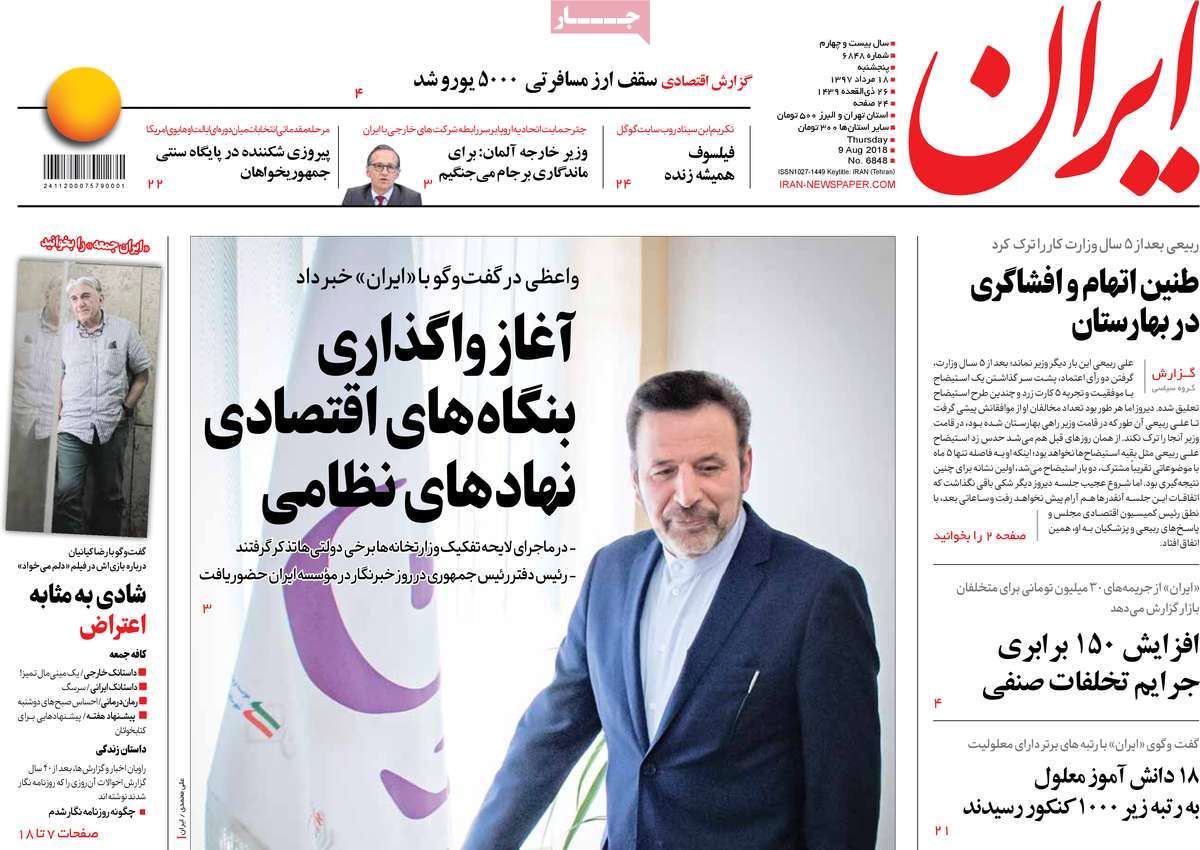
Pilot’s Error Main Cause of Iranian ATR Plane Crash: Official

In a recent meeting with the managers of Iranian airlines in Tehran, the Civil Aviation Organization official, Hassan Rezaeefar, put the blame for the fatal crash on poor handling of the situation in the cockpit.

He said the pilot had brought down the plane below the minimum allowable altitude, managed the situation inappropriately, failed to run through the flight checklists, used the autopilot system in a wrong time when the plane was approaching the airport, and ignored a request from the co-pilot.

The official also blamed the co-pilot for an error in the checklist request process.

The ATR plane, operated by Aseman Airline, was flying from capital Tehran to the city of Yasouj on February 18 when it crashed into near the top of Mount Pazanpir with a height of 4,300 meters.

In March, the Civil Aviation Organization of Iran released a preliminary report that mentioned the medical history of the pilot.

The report said the renewed license of the 62-year-old pilot of the plane had imposed limitations on his flight conditions, considering the pilot’s open-heart surgery and his age.

It said the airline had failed to take into account the medical limitations.

Prior to November 2006, the age limit for pilots was 60, but it was increased to 65 years under the International Civil Aviation Organization (ICAO) rules.

Following the fatal crash, all ATR planes at the disposal of Iran’s Aseman Airlines were temporarily banned from flying.

Turkey Working to Avoid Negative Impacts of US’ Sanctions on Iran

The ministry made the announcement in a statement on Friday after a US delegation of Treasury and State Department officials held talks with Turkish authorities in Ankara on upcoming Washington’s sanctions against Tehran.

US President Donald Trump announced on May 8 that Washington was walking away from a nuclear agreement, officially known as the Joint Comprehensive Plan of Action (JCPOA) signed between Iran and the P5+1 group of countries in 2015.

The US president also said that he planned to reinstate US nuclear sanctions on Iran and impose “the highest level” of economic bans on the Islamic Republic.

Under the JCPOA, Iran undertook to put limits on its nuclear program in exchange for the removal of nuclear-related sanctions imposed against Tehran.
The Turkish foreign ministry’s statement further emphasized that Iran was an important neighbor for Turkey and that Ankara would continue to monitor the US sanctions within this framework.

Washington has said it would be returning the sanctions in August and threatened the countries that maintain business with Iran despite the bans with “secondary sanctions.”

It has also warned countries against keeping up their crude purchases from Iran from November 4 onward.

Iranian Foreign Minister Mohammad Javad Zarif said on Monday that the Islamic Republic has lodged a complaint with the International Court of Justice (ICJ) over the United States’ “unlawful” move to re-impose “unilateral” sanctions against Tehran.
“Today Iran filed a complaint [with] @CIJ_ICJ to hold US accountable for its unlawful re-imposition of unilateral sanctions,” Zarif said in a post on his official Twitter account on Monday.
Late last month, however, Ankara said it remained determined to maintain trade ties with Iran.

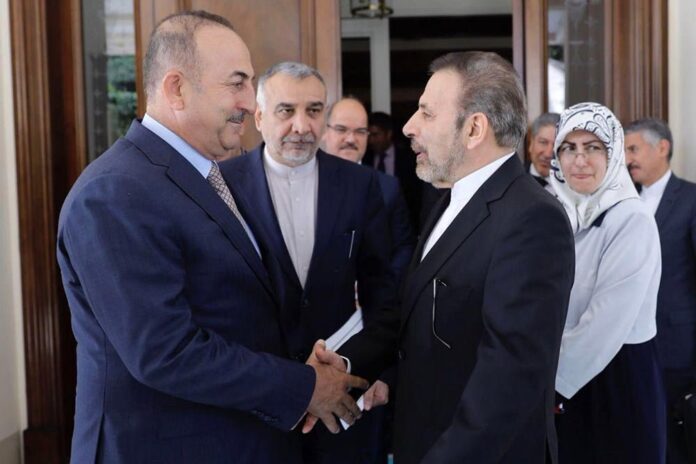
Turkey’s Foreign Minister Mevlut Cavusoglu said on June 29 that his country remains determined to maintain trade ties with Iran.

“If the United States’ decisions are aimed at peace and stability, then we’ll support them, but we don’t have to follow every decision. Being allies doesn’t mean following every decision word for word,” Cavusoglu told the Turkish broadcaster NTV in an interview.

Iran has been Turkey’s leading supplier of crude oil for most of the past two decades, ceding first place to Iraq only for three years during the recent period of US sanctions.

Imports last year came to 11.493 million tonnes, or 44.6% of the total supply, at an average of 230,800 barrels per day (bpd), up 66% from the 6.939 million tonnes supplied in 2016, according to reports.

Iranian First Vice President Es’haq Jahangiri said on July 10 that the upcoming US move to re-impose sanctions on Iran will create “difficult conditions” for the country but the Islamic Republic will forcefully resist against the United States’ economic war.

“Given the enemy’s economic war, we will face new and difficult conditions and must stand against this war with full power,” Jahangiri said.

His remarks came a day after Russia’s Foreign Minister Sergei Lavrov said the three major European signatories to the landmark nuclear deal with Iran had agreed to establish trade ties with Iran independent of the US dollar.

Lavrov said the decision by France, Germany and Britain would mainly concern small and medium-sized companies.

Iranian Lake Changes Colour throughout the Day!

The naturally occurring phenomenon happens in Arous (Bride) Lake, located in Halimeh Jan village of Roudbar country.

The lake changes colours because of a type of green microalgae.

Before noon, the lake is green, like the jungle surrounding it, because the microalgae cover the surface of the water.

In the afternoon, as the wind starts blowing, microalgae go down and the lake becomes blue.

What follows are photos of the magnificent lake:

Iran Condemns Israel’s “Jewish Nation-State” Law as Racist

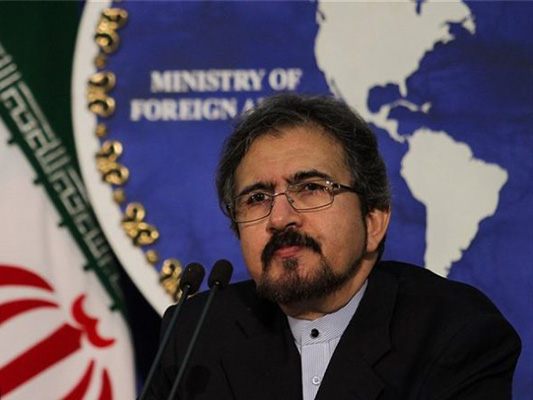
Bahram Qassemi

In a Friday statement, Qassemi said the legislation bears witness to the racist nature of the Tel Aviv regime.

“The illegitimate and racist Zionist regime [of Israel] was formed upon the occupation of Palestine and the massacre of its real owners, and the recent move by this regime’s parliament is yet another testimony to the racist nature and approach of this regime over the past 70 years,” said the spokesman.

He further lashed out at Washington for backing Israeli measures.

“The United States’ all-out support for the Zionist regime [of Israel] and the Trump administration’s move to relocate his country’s embassy to Jerusalem al-Quds as well as efforts by certain Arab countries to normalize their relations with the usurpers of Palestinian territories and failure to bring this regime to justice for violating international rules and regulations and killing oppressed Palestinian people on a daily basis have emboldened them to press ahead with their policy of Judaizing Palestine and ethnic cleansing, which will undoubtedly lead to further instability and insecurity in the region,” said the spokesman.

“Gone are the days of racism and Apartheid,” he noted, adding that “racism in occupied Palestine will be stamped out, too, thanks to the perseverance and resistance of Palestinian people as well as Muslim and freedom-seeking nations across the world.”

The Israeli legislation has been widely criticized. Palestinian Resistance Movement, Hamas, slammed the legislation, saying it legitimizes Israeli racism. The Palestinian Authority also condemned it as a declaration of war. Palestinian President Mahmoud Abbas said the law will not change the historical status of al-Quds as the eternal capital of Palestine. He added the legislation will not discourage Palestinians in their legitimate struggle to resist the Israeli occupation and establish their independent state. Abbas urged the international community to stop such laws which he described as racist. Turkey condemned the move as well, accusing Israeli officials of seeking an apartheid system. The European Union also voiced grave concern over the issue.

The Israeli legislation says only Jews have the right to self-determination. It does not recognize Arabic as an official language in the occupied territories, either.

“Trump Resolved to Destroy European Union”

A recent opinion piece published by Jomhouri Eslami newspaper says US President Donald Trump wants Europe to follow Washington’s policies and it seems the EU has to tolerate and accept this humiliating manner, even at the cost of losing their independence.

What follows is the full text of the editorial:
The negative feedbacks of Donald Trump’s visit to Brussels, his participation in the NATO Summit and his trip to Britain, indeed destroyed the credibility of Trump’s America.

During Trump’s recent trips, almost no announcement of cooperation and agreement was made by either European or American leaders. But in practice, he faced serious, organized and widespread opposition that had never been experienced in the history of US-European relations, especially with the NATO.

Trump postponed his trip to Europe and in particular his visit to Britain several times, and eventually headed to Europe in a situation that no one was willing to warmly welcome the President of the United States.

The British people urged him to return home by launching massive demonstrations. They insisted that he must change his policies and stop creating tensions, racism, and humiliating manners in dealing with the other countries.

However, the extent of the protests against Trump had already been anticipated, and that was why he delayed his trip to Europe and in particular to Britain several times.

He did his utmost to find a better chance to be welcomed warmly, but at the end of the day, it was beyond reach.

The British government informed Trump that they were unable to welcome him in London and had to receive him in another place to be able to provide security for him and his companions within highly secure and protected areas.

Trump tried to travel to England at any cost so that people would not say he was dissuaded from his British trip for such matters. But the mass demonstrations in London showed well that even London is not a good place for an adventurer like Trump. Although Britain, in particular since World War II, has been considered as America’s closest ally in Europe and the world, England is not able to welcome Trump in London.

Prior to his trip to Britain, Trump was also completely isolated at the NATO Summit. Although he tried to put pressure on other parties to pay the US’ military expenses on the territory of NATO, he was faced with serious opposition and protests that made the NATO summit tense.

It’s so hard for America’s global diplomacy that Trump and his associates are not only confronted with Russia and China, but also have to challenge with their allies in the NATO. The US at the same time has waged war on the European Union, Canada, Mexico and even Britain as a follower of Washington’s policies in Europe.

During his visit to Brussels where the NATO Summit was held and also in Britain, Donald Trump constantly tried to stabilise himself in a position with a bunch of non-diplomatic and humiliating statements. But in practice, the results were totally vice versa, and it gave rise to a clear and unequivocal isolation for Trump’s America.Perhaps if it was possible for him and his assistants to foresee, they would have cancelled or delayed the journey to Europe.

The fact is that protesting against Trump is not due to his personality. It is the extreme views of Trump and his assistants which elicited such unified and unexpected response.

Trump has problem with the survival of the European Union and explicitly calls for the collapse of the European Union. He personally and formally supported the “Brexit” and has even criticised British Prime Minister Theresa May for her flexibility on the issue of leaving the European Union. He even welcomed and supported France’s exit from the EU, and encouraged the French people to join the supporters of Frexit.

Trump still hopes to see the collapse of the European Union and, in particular, the collapse and destruction of the “Euro” as the single European currency, which will ultimately resolve the growing problems of America by eliminating and marginalizing the economic rivals.

While Britain is on the way to get out of the European Union, and is dealing with the increasing adverse consequences of this painful exodus, Trump is not happy with it yet. With his apparent interference, even the British are humiliated by the United States.

Trump’s sarcastic literature against Theresa May and her government was so blatant and undiplomatic that infuriated the British media, parties and people.

During this trip, Trump even determined the future prime minister of Britain! He hailed the British Foreign Secretary, Boris Johnson, and said that he is very smart and capable to become a great prime minister.

The US president now introduces immigrants as the main problem for Europeans and calls for taking action against immigrants, which is in fact a form of intervention in European affairs and policies.

The situation is so dire that French President Emmanuel Macron, who at the start of Trump’s job claimed he would not allow the United States to be isolated, is now in the front line of opposition against Trump. He says that France and the European Union have no choice but to confront and deal seriously with the US’ economic and environmental policies, as well as Trump’s positions towards the NATO.

Europe feels that following Trump’s policies will result in its humiliation and dependence. The continuation of such policies has created new trends in US relations with its allies. Washington wants them to follow the US policies and it seems they have to endure and accept this humiliating manners, even at the cost of losing independence. This is the policy that aims to destroy the European Union and has turned Trump into the flag bearer of the collapse of the European Union!

Sky Burial; Ancient Tradition of Iran’s Zoroastrians

Sky Burial; Ancient Tradition of Iran’s Zoroastrians

The burial traditions in historical periods are known through archaeological evidence and sacred texts like the Zoroastrians’ Avesta as well as Pahlavi texts.

With the recognition of the Zoroastrian religion in Iran, body burial was strictly prohibited and the only way to eliminate the corpses was to place the deceased in rows so their bodies would be feasted upon by birds of prey.

In a Zoroastrian religious text, which is a collection of religious rules and instructions, there are references to the ways to treat with the bodies of the dead. According to these texts, the dead should be put in structures known as dakhma to be feasted upon by birds of prey, because the burial or burning of the corpses would cause the sacred elements of water, soil, and fire to become dirty and it is forbidden to do so.

However, according to the researchers, even in Zoroastrian texts, there are indications that a significant number of people opposed the change in funeral practices, which resulted in penalties. Given that the time passed between the burial and the exhumation, only physical punishments were imposed on the perpetrators, which were practically subject to fines.

According to the findings, for a long time, it was generally thought that burial was more based on putting the corpse outdoor. But extensive scientific studies revealed that the Sassanids, in addition to the tradition of placing the body in the open air, used other burial practices. This can be interpreted in relation to religious communities within the Sassanid Empire and perhaps related to the class division of society in this era.

According to Samer Nazari, a graduate of archaeology at the Isfahan University of Art and his colleague, “the coexistence of religious communities including Christians, Jews, Manicheans, Buddhists and other religious sects in the Sassanid community is one of the main reasons for the diversity of burial practices in this era. At the end of the Shapur I era, the Zoroastrianism was the official religion of the country, but Manichean religion, along with other emerging sects should not be ignored. This comes as Buddhism was also spreading in the East, and Christianity and Judaism were expanding in the western regions.”

Sky Burial; Ancient Tradition of Iran’s ZoroastriansProhibiting Burial of Corpses to Keep Water, Soil Clean

Based on the available information, it is not possible to attribute the burial practices specifically to a particular group, but according to the teachings of the Zoroastrian School, we are aware of the prohibition of burying bodies for the purpose of keeping water and soil clean. Thus, the most dominant burial method during the Sassanid era was to put the deceased body in a dakhma, or towers of silence.

The dakhmas or towers of silence were common until Pahlavi era (20th century). At the time of Pahlavi, the dakhmas were shut down and turned into a burial chamber. But some of the dakhmas are registered as national heritage with domestic and foreign tourists visiting them. The most famous Zoroastrian dakhma is in Yazd province.

Zoroastrian dakhma is known as tower of silence. This dakhma is located 15 km south-east of Yazd near the Safaeiyeh area and on a low-altitude mountain called the mountain of the dakhma.

Although there are Zoroastrian dakhmas in Tehran, Kerman, Sirjan, Isfahan, Taft, Ashkezar, Ardakan, Fars province, etc., the dakhmas of Yazd have more visitors as they are located in the religious capital of Zoroastrianism close to the city and other monuments.


Zoroastrian Dakhma or Tower of Silence

In the past, the site had two dakhmas, which, according to historical documents and Zoroastrian words, both were used for a period of six months. One of these structures is the Maneckji Limji Hataria dakhma, or the Great Maneckji, which is located on the left.

Maneckji, known as Maneckji Sahib, travelled to Iran during the reign of Naser al-Din Shah Qajar, as the representative of “the Association for the Improvement of the Zoroastrian Conditions in Iran,” in order to reduce the pressure on Zoroastrians. Zoroastrians still owe their existence to his efforts.

The second building is Golestan dakhma. During the Qajar period, the difficulty of passing through the mountainous road of the Maneckji caused problems for the burial of the corpses. That is why the Golestan dakhma was built in smaller dimensions. This dakhma could be seen 150 metres west of the Maneckji. The diameter of this dakhma is 25 metres and the height of the wall is 6 metres from the surface of the hill.

The inner surface of the Zoroastrian dakhmas is flat and rounded, all covered with large boulders and consists of three parts: feminine, masculine and childish. Perhaps it’s not bad to know that the end of the circle space, which is attached to the wall around the dakhma, is for the corpses of men, the middle part is for women and the inner circle is for children.

The bodies were placed on these slates according to their gender, and the birds of prey, especially vultures started to eat their flesh. After eating the flesh and becoming completely dry under the sun, the bones were poured into a well in the centre of the circle, called the bone well, to turn into dirt.

All burial practices from leaving the body inside the dakhma until its disappearance lasted about six months to one year. When the dead were placed inside the dakhma, it was customary to mourn, wearing white clothes for three days in ruined buildings next to the dakhmas known as “Khileh”.

Interestingly, in a documentary entitled “The Lovers Wind” made by the famous French director Albert Lamorisse in 1970, part of it was dedicated to the Zoroastrian dakhmas of Yazd. At that time, the dakhma was still open.

Below are photos of this Zoroastrian dakhma retrieved from retrieved from various source: