Friday, May 1, 2026
Home Blog Page 353

UNICEF says over 50k Gaza children killed, injured during war

Gaza War

“The children of Gaza need protection. They need food, water, and medicine. They need a ceasefire. But more than anything, they need immediate, collective action to stop this once and for all,” UNICEF’s Middle East Director Edouard Beigbeder said in a statement.

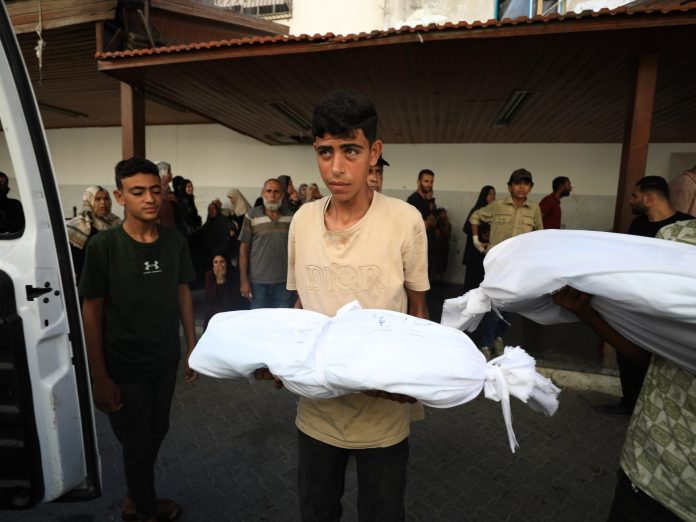
He Added at least 1,309 children have been killed and 3,738 others injured since Israel resumed its air assaults on Gaza on March 18.

“How many more dead girls and boys will it take? What level of horror must be livestreamed before the international community fully steps up, uses its influence, and takes bold, decisive action to force the end of this ruthless killing of children?”

On Friday, Palestinian doctor Alaa Najjar, a physician at Nasser Hospital in Khan Younis, lost nine of her 10 children, and her husband, also a doctor, is in critical condition as a result of an Israeli airstrike on their home.

And on Monday, at least 31 people, including 18 children, were burned to death in an Israeli strike on a school-turned-shelter in Gaza City.

“These children – lives that should never be reduced to numbers – are now part of a long, harrowing list of unimaginable horrors: the grave violations against children, the blockade of aid, the starvation, the constant forced displacement, and the destruction of hospitals, water systems, schools, and homes. In essence, the destruction of life itself in the Gaza Strip,” Beigbeder stated.

The Israeli army, rejecting international calls for a ceasefire, has pursued a brutal offensive against Gaza since October 2023, killing over 54,000 Palestinians, most of them women and children.

Last November, the International Criminal Court issued arrest warrants for Israeli Prime Minister Benjamin Netanyahu and his former Defense Minister Yoav Gallant for war crimes and crimes against humanity in Gaza.

Israel also faces a genocide case at the International Court of Justice for its war crimes against civilians in the enclave.
Iran may allow US inspectors access to nuclear sites if deal is reached, says atomic chief

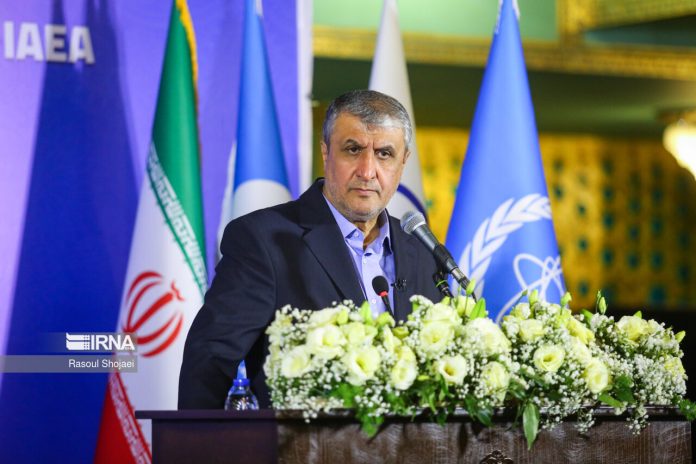
Mohammad Eslami

Speaking to reporters after a cabinet meeting, Eslami emphasized that uranium enrichment remains a red line for Iran, forming the core of the country’s nuclear industry.

“Enrichment is essential, just like a power plant is to the electricity grid,” he said, stressing that high-level enrichment does not automatically imply military use.

Eslami underscored that enriched uranium is crucial for medical isotopes and food safety applications, warning that without it, sectors like healthcare would suffer.

He added that the International Atomic Energy Agency (IAEA) continues to monitor Iran’s nuclear program transparently. He called on the agency to maintain professionalism and reduce external influence, particularly from Israeli-aligned actors.

Referring to discussions about moving enrichment activities to Persian Gulf states, Eslami dismissed such ideas, reaffirming Iran’s sovereign right to enrich uranium on its own soil. He also clarified that no formal proposal on forming a multinational enrichment consortium has been received.

President Pezeshkian: Foundations in place to expand Iran-Oman cooperation

Speaking on Wednesday with Omani business leaders, President Pezeshkian said the foundations are in place for enhanced cooperation in economic, social, cultural, political, and security sectors.

He called for immediate action to deepen ties through maritime and air connectivity, as well as industrial and commercial collaboration.

President Pezeshkian underscored Iran and Oman’s strategic position in linking regional markets and called for leveraging their geostrategic advantages to connect with Africa, Russia, Central Asia, and Europe.

He stressed the urgent need to strengthen financial infrastructure, noting that a robust banking framework is key to unlocking wider economic engagement.

The Iranian president said with the right mechanisms, bilateral trade could grow to $20-30 billion, driven by joint investments and private sector partnerships. He also advocated for expanded cooperation in science, medicine, and culture.

Reflecting on centuries of shared history, President Pezeshkian urged Islamic unity in the face of foreign interference and emphasized peace and constructive collaboration as pathways to regional stability.

US blocks G7 push to tighten Russian oil price cap: FT

Russia Oil

The price cap, introduced by the G7 and EU in December 2022, bans Western companies from shipping, insuring, or otherwise servicing Russian oil sold above $60 per barrel.

The mechanism was designed to limit the Kremlin’s ability to finance its war against Ukraine.

The Canadian G7 presidency had proposed including language in the meeting’s final communique that would call for tightening the existing price cap, according to the publication.

The move received backing from the European Union and G7 members France, Germany, Italy, and the U.K. However, the proposal was dropped after U.S. Treasury Secretary Scott Bessent reportedly declined to support it.

The European Commission had planned to propose reducing the threshold to $50 per barrel ahead of the meeting, according to Reuters.

The Financial Times reported that some EU countries — including Hungary and Greece — were still weighing their support for lowering the cap further, possibly to $45, as part of the EU’s upcoming 18th sanctions package.

Russia’s Finance Ministry has leaned on oil and gas taxes to finance growing military expenditures, including aggressive campaigns against Ukrainian cities and infrastructure.

U.S. President Donald Trump’s stance on U.S. sanctions against Russia has been unclear.

Trump told reporters in the Oval Office on May 19 that he would not impose further sanctions against Russia “because there’s a chance” of progress towards a ceasefire.

10,000-year-old fishing tools discovered on Iran’s coast

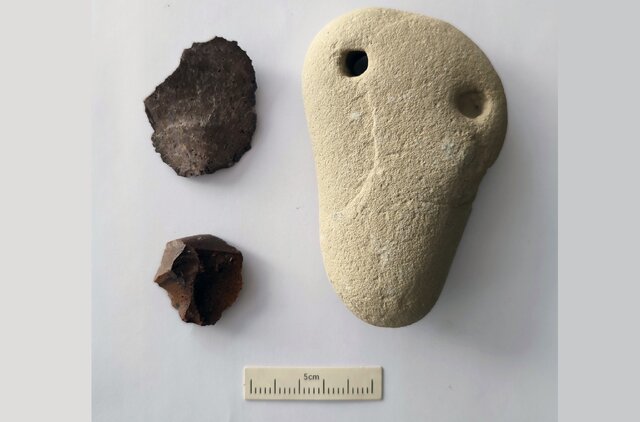
Morteza Hessari, head of the excavation team at the Koopal archaeological site, announced the discovery of a flat pebble with two deliberate holes, possibly used as a fishing net weight or a small anchor. Nearby, two stone tools characteristic of the Paleolithic era were also found.

Hessari highlighted the significance of these findings, suggesting a close connection between the perforated stone and Paleolithic stone artifacts typically crafted by hard hammer techniques.

This raises important questions about when coastal communities began exploiting marine resources and engaging in early seafaring.

While the stone tools show typical Paleolithic wear and desert varnish indicating great age, the holey pebble exhibits different erosion patterns, necessitating further studies for definitive conclusions.

The site also contains pottery from the 4th millennium BCE, indicating prolonged human activity. Hessari emphasized ongoing analyses, including micro-wear studies and dating, to better understand the relationship between these artifacts and their archaeological context.

These discoveries enrich our knowledge of prehistoric human use of marine resources along Iran’s Makran coast and may redefine the timeline of early maritime culture.

Iran FM responds to cleric row during Hajj, backs Muslim unity, Saudi ties

Abbas Araghchi

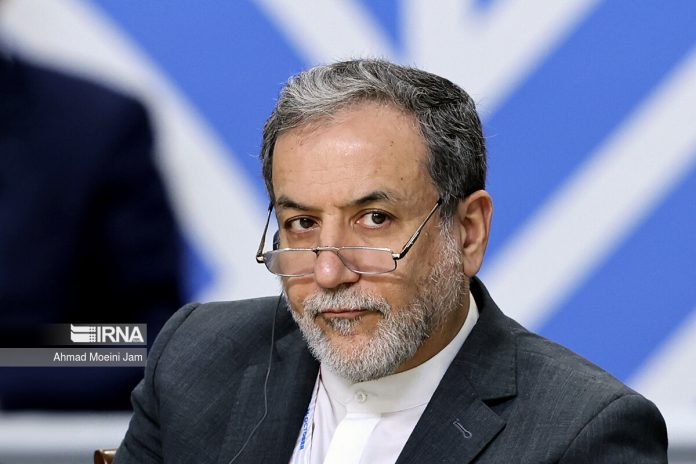
In a post shared on X social media platform, Araghchi stated, “Iran in no uncertain terms condemns any attempt to harm Muslim unity, particularly in the spiritual atmosphere of the Hajj. We are determined to not allow anyone to sabotage relations with our brotherly neighbors, including the progressive path of Iran and Saudi Arabia.”

“The highly competent management of this year’s Hajj is well appreciated by Iran. I extend warm greetings and prayers for continued success to the Government and people of Saudi Arabia as they welcome Muslims to the Holy Shrines,” he further pointed out.

Qasemian faced criticism after a video of his comments during the pilgrimage was shared online. In the clip, the cleric harshly criticized the country’s changing social landscape and likened the holy sites to popular tourist spots such as Antalya.

China dimisses Ukraine’s allegations of supplying arms, defense components to Russia

Putin Xi

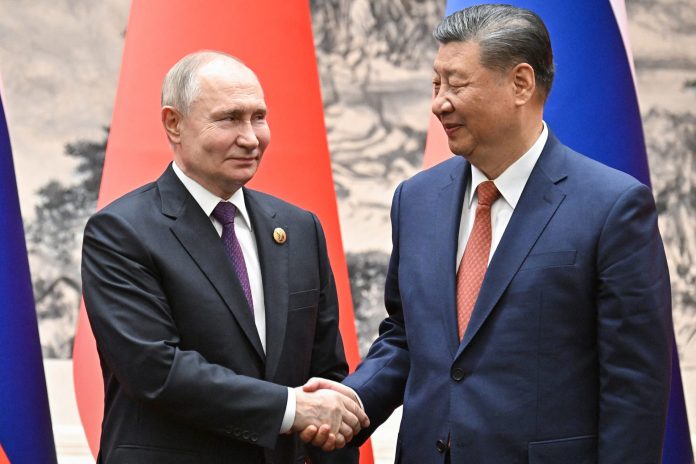
China’s reaction follows remarks by the head of Ukraine’s Foreign Intelligence Service, Oleh Ivashchenko, about Beijing allegedly providing the said components to 20 Russian military-industrial manufacturing facilities.

Ivashchenko also mentioned that as of early 2025, 80% of critical electronic components used in Russian drones were of Chinese origin.

Chinese Foreign Ministry spokesperson Mao Ning said China’s position regarding the war in Ukraine remains “consistent and clear.”

“We’ve been committed to bringing about a ceasefire and promoting talks for peace. China has never provided lethal weapons to any party to the conflict, and strictly controls dual-use items,” Mao stated during a press conference.

“Ukraine understands that well. China firmly opposes groundless accusations and political manipulation,” she added.

China has strengthened ties with Russia since the Kremlin launched its full-scale war against Ukraine, becoming Moscow’s leading supplier of dual-use goods that bolster Russia’s defense industry.

While China has positioned itself as a potential mediator in the war, it has simultaneously criticized the U.S. and its allies for “exacerbating” the war by supplying weapons to Ukraine. NATO has labeled China a “decisive enabler” of Russia’s aggression.

President Volodymyr Zelensky claimed on April 17 that China is supplying weapons to the Russian military, marking Kyiv’s first confirmation that Beijing supports Russia’s war effort by direct arms supplies.

During Chinese President Xi Jinping’s visit to Moscow for Victory Day celebrations earlier this month, the two countries agreed to “strengthen coordination in order to decisively counter Washington’s course of ‘dual containment’ of Russia and China.”

Kyiv on April 22 presented Beijing with evidence that Chinese citizens and companies have participated in Russia’s full-scale war against Ukraine, which China dismissed as “groundless accusations and political manipulations.”

Daily warns: Glorifying cleric Qasemian jeopardizes national interests, Iran-Saudi ties

Iran and Saudi Arabia Flags

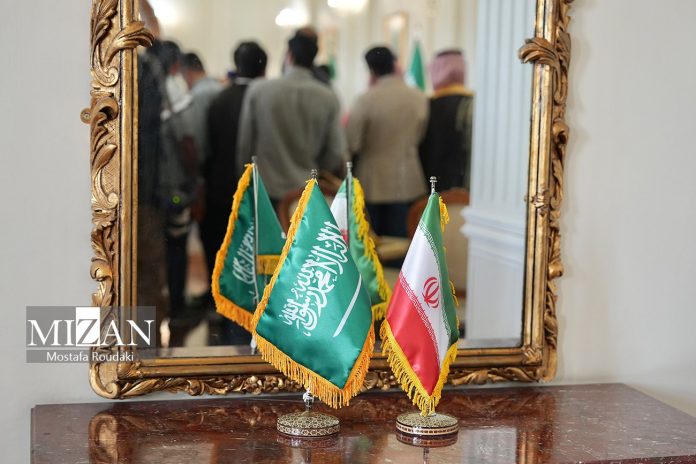
The cleric came under scrutiny after a video of his remarks during pilgrimage in Saudi Arabia surfaced online. In the footage, Qasemian criticized the kingdom’s evolving social structure and compared the holy sites to tourist destinations like Antalya. Within hours, he was detained by Saudi authorities.

Khorasan notes that Iranian officials had repeatedly instructed pilgrims to refrain from political or critical statements while in Saudi Arabia. The editorial stresses that what began as an individual incident has become a larger diplomatic issue due to some internal factions glorifying Qasemian’s actions.

The newspaper draws attention to Qasemian’s history of involvement in high-profile protests, including controversial gatherings outside the British and Saudi embassies.

It argues that his repeated appearances in politically charged moments reflect a troubling pattern that confuses bravery with recklessness.

The editorial concludes by emphasizing Iran’s need for diplomatic wisdom and moderation over “polarizing heroism” that, in its view, brings only cost and no benefit to the country.

Several Iranian officials denounced Qasemian’s comments.

Iran executes man convicted of spying for Israel

Iran Prison

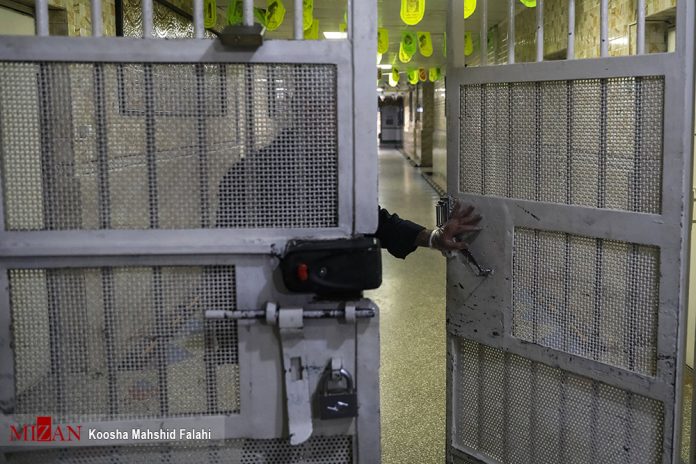
According to the Judiciary’s media center, Madani was hanged after his sentence was upheld by the Supreme Court following due legal process.

Madani was arrested in 2020 in Tehran on charges of spying for the Israeli regime and illicitly receiving foreign currency in euros and cryptocurrency.

Authorities stated that Madani had traveled frequently to Germany and had undergone Mossad training before attempting to recruit others and transmit classified information via secure communication systems.

Evidence revealed that Madani passed sensitive data regarding strategic infrastructure locations to his handler. He reportedly met with Mossad officers in multiple countries, including a documented meeting at the Israeli embassy in Brussels.

Investigations also uncovered messages exchanged between Madani and Mossad officers, including directives to categorize and transfer intelligence to specialized departments. He reportedly traveled to Israel during this period.

Following intelligence monitoring, Madani was arrested, tried, and found guilty of “waging war against God and corruption on earth.”

5th round of US-Iran negotiations ‘constructive’: Washington

Iran US Flags

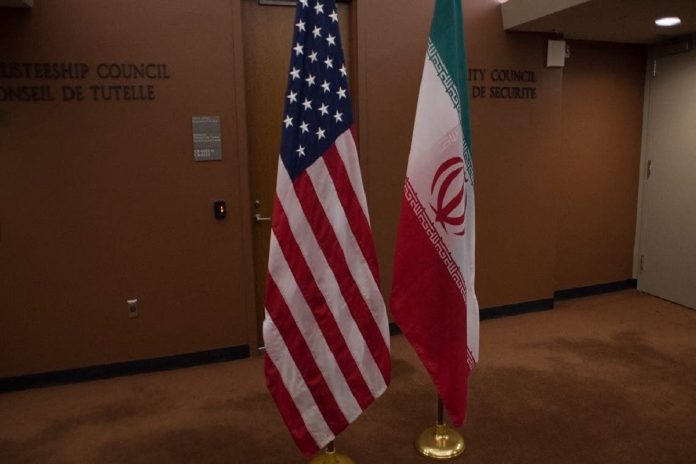
“The talks continue to be constructive, and that’s not something that we’ve been able to say that in these particular talks, which is beneficial,” Bruce told reporters.

Bruce described the talks on Friday as “direct and indirect”, lasting more than two hours with Iranian Foreign Minister Seyed Abbas Araghchi leading Tehran’s delegation and US regional envoy Steve Witkoff heading Washington’s team.

She said “further progress” was made in the talks and both sides agreed to meet again in the near future, with Oman continuing its mediating role in the diplomatic process.

“We are grateful to once again, our Omani partners for their continued facilitation of the process,” added Bruce.

Araghchi described the Rome negotiations Friday as “one of the most professional” rounds of talks between the two countries.

Iran and the US resumed nuclear diplomacy after years of stalled negotiations, with Oman serving as the primary mediator.