Thursday, December 25, 2025
Home Blog Page 3522

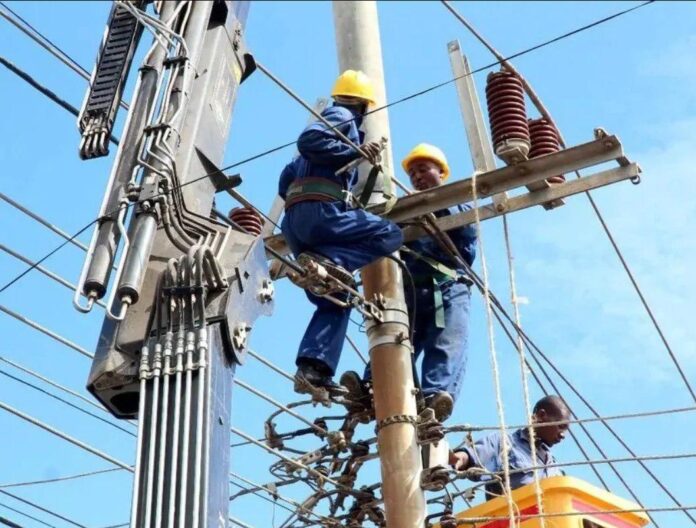
Kenya News: Gov’t Secures KSh 1.5bn to Connect More People to Power

The government has secured KSh 1.5 billion in funding for the Last Mile Connectivity program from the African Development Bank.The program is Uhuru’s main unsung achievement, having lit up over 3.6 million homes across the country in just four years. Uhuru now wants to realize the universal connection to reliable and affordable electricity by the year 2020.

President Uhuru Kenyatta’s pledge to have every Kenyan citizen connected to affordable electricity by 2020 is fast turning to reality after the African Development Bank (AfDB) doubled its funding for the initiative.

In what marks a clean bill of health for the Last Mile Connectivity program, the bank’s president, Akinwumi Adesina, lauded the initiative it has been funding, describing it as the most impactful project to the general public.

In reality, the program is arguably the Jubilee government’s main unsung achievement so far, having brought about widespread impact.
In just four years starting 2013, the Last Mile programme saw more Kenyans connected to the grid than were connected in the 50 years since independence.

To read more latest news in Kenya visit this site.

An additional 3.65 million households were connected to the grid, increasing the total number of Kenyans with access to electricity from 12.8 million in 2013 to 33 million in 2017.

Uhuru followed up on this success in 2017 with a fresh pledge to ensure every citizen is connected to reliable and affordable electricity by 2020.

The realisation of the pledge has now gained root early into his second term after Adesina toured the country and pledged to fund the second phase of the program to a tune of KSh 1.5 billion – the same amount it gave for phase one – taking the total funding to KSh 3 billion.

Speaking when he launched the second phase in Rongai, Nakuru County, Adesina underlined the transformative nature of the initiative.

“We are happy with the work done by the government in enhancing connectivity for Kenyan citizens from the funds we have advanced to the country. We will double our funds to implement the project to spur economic development across the country,” he said.

Adesina said the millions of households connected to power can now live quality lives and run businesses smoothly courtesy of the innovative model that has seen the government subsidise the cost of connection from KSh 35,000 to KSh 15,000.

He lauded the president for overseeing the connection of 72% of Kenyans – up from 25% in 2013 – to the national grid and underlined the need to achieve the projected 98% coverage come 2022.

“It is such a bad feeling when people see power lines passing over their homes yet they are not connected and President Uhuru Kenyatta through the Last Mile Connectivity wants to end that turmoil,” said the AFDB president, who was flanked by Energy Cabinet Secretary Charles Keter and his Finance counterpart Henry Rotich.

Adesina noted approximately 300,000 children die in Africa annually from kerosene smoke and a similar number of women died due to smoke-related complications due to lack of power, a problem the ongoing initiative should resolve.

Under Uhuru’s electrification programme since 2013, the government also managed to connect 15,137 public primary schools to electricity.

This was about double the number of schools connected since independence and catapulted to an impressive 97% the total coverage of connected public primary schools in Kenya.

EU’s Package to Save JCPOA “Sensible” at Macro Level: Iran

Speaking during his trip to the Qom Province on Thursday, Larijani said the offers are currently being codified by Europeans.

“During the negotiations, Europeans made offers on [facilitating Iran’s] oil sale, organize banking affairs and [settling] export issues. It was decided that they pass rules and regulations in the EU that facilitate trade with Iran,” ISNA quoted him as saying.

“At the macro level, Europeans’ offers were sensible and they need to be detailed and turned into executive instructions,” he said, adding that talks are underway between Iran’s Foreign Ministry and the European sides.

Larijani said Iran will make up its mind about JCPOA after the outcomes of the talks were determined.

Following the US’ withdrawal from the nuclear deal early May, Iran announced its continued commitment to the deal is conditional on EU’s binding guarantees assuring Tehran its interests will be served if it remains in the deal.

The package has been drafted by France, the UK and Germany, the three European parties to the 2015 nuclear accord.

According to the plan, the European Investment Bank is obliged to support European firms willing to enter Iranian markets.

Iranian President Hassan Rouhani discussed the package with European officials during his visit to Switzerland and Austria earlier this month.

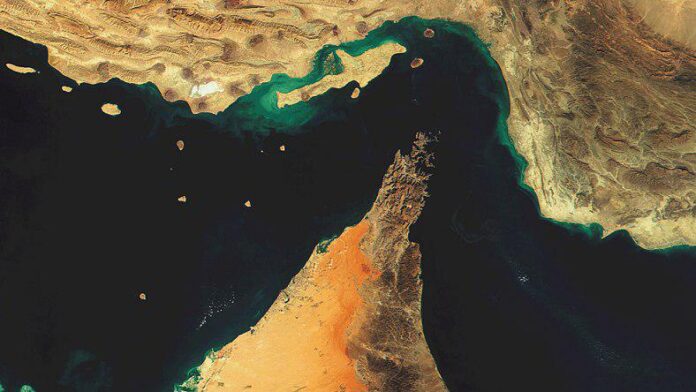
Reopening Strait of Hormuz May Take Several Weeks: US Admiral

In a recent piece published in Bloomberg, Stavridis has written that just as Iran has detailed plans to close the strait, the US has contingency plans to respond and reopen it.

However, he added, this would be a longer process than many people suspect, especially if Iran had the opportunity to put a significant number of mines into the water.

“Clearing mines is a laborious and time-consuming process, and could take weeks if not a month or two to accomplish,” he added.

“When Supreme Leader Ayatollah Ali Khamenei and President Hassan Rouhani talk about shutting down the strait, they mean it. They could accomplish it in just 48 to 72 hours, as commercial shipping, out of prudence and under pressure from insurers, would opt not to take the risk of passing through the waters,” the former US admiral said.

The full text of his article is as follows:

In the hot summer of 1987, I was a young Navy officer sailing into the Persian Gulf via the Strait of Hormuz on-board the Valley Forge, a brand new and heavily armed Aegis Cruiser. Our mission, code-named Ernest Will, was to escort merchant ships in and out of the Gulf, protecting them from the threat of Iranian cruise missiles and air attack.

It was the midst of the Iran-Iraq War — which lasted eight years and cost more than half a million lives — and our job was to keep the global shipping lanes open while Iran sought to control the vital strait through which flows some 35 percent of the world’s seaborne oil.

It was exciting and dangerous work. Over the next year, the US Navy would eventually attack the Iranian Navy, retaliating after one of our frigates was nearly sunk by an Iranian mine in Operation Praying Mantis. Eventually, Iraq and Iran settled their differences and an uneasy peace reigned between Arabs and Persians in the flat, hot, shallow waters of the Gulf, despite occasional flare-ups, for the next three decades.

Until now. The tension in the Gulf — and especially in the Strait of Hormuz — is rising again, and the echoes of those conflicts 30 years ago are getting louder. The presidents of Iran and the US this week exchanged harshly worded tweets (in 1987, a tweet was something a bird did on a spring morning) and oil markets are keeping a wary eye on developments. Israel released another cache of stolen Iranian documents claiming Iran is after developing nuclear weapons.

What would a conflict cantered on the Strait of Hormuz look like? How long would it last? And above all, what is the best strategy the US could take towards Iran?

The uber-conflict in the region remains the religious and geopolitical tension between Sunni Saudi Arabia and Shiite Iran, each of whom has long-standing historical enmity towards the other. Iran is pushing hard, diplomatically and militarily, into a several Arab nations around the region: Iraq, Syria, Qatar, Lebanon and Yemen.

Saudi Arabia, under the leadership of Crown Prince Mohamed bin Salman, is determined to stop further Persian encroachment into the Arab world. The two nations share long coastlines of the Gulf, where they have fought for centuries. And the key to the entire area is the narrow sea entrance: the 30-mile wide Strait of Hormuz.

We know that Iran has detailed plans to close the strait. It would use a variety of means including widespread mining; swarms of small, ultrafast patrol boats; shore-based cruise missiles; manned aircraft; and diesel submarines. Iran would employ a “layered offense,” stationing diesels in the Arabian Sea on the other side of the strait to harass incoming merchant ships; swarming US and allied warships in the narrow confines of the strait itself; and mining sections of the shipping lanes.

All of this, of course, is illegal under international law, but would have the intended consequence of challenging the US and the Gulf Arabs while driving up oil prices exponentially. (Iran is able to export some oil from its southern coast, bypassing the strait, so its economy might suffer less than the Arabs’.)

When Supreme Leader Ayatollah Ali Khamenei and President Hassan Rouhani talk about shutting down the strait, they mean it. They could accomplish it in just 48 to 72 hours, as commercial shipping, out of prudence and under pressure from insurers, would opt not to take the risk of passing through the waters.

In terms of a response, the US and its allies and coalition partners would certainly react strongly. Our Navy would attack Iranian ships attempting to lay mines; strike land-based air and cruise missile sites within range of the strait; sink Iranian diesel subs at their piers; and potentially launch punishing strikes against broader targets inside Iran (although initial responses would probably target only weapons and systems used in the strait closure in order to observe rules of war pertaining to proportionality).

In other words, just as Iran has detailed plans to close the strait, the US has contingency plans to respond and reopen it. This would be a longer process than many people suspect, especially if Iran had the opportunity to put a significant number of mines into the water. Clearing mines is a laborious and time-consuming process, and could take weeks if not a month or two to accomplish.

President Donald Trump, who has long-held antipathy for Iran and hated the Obama administration’s nuclear deal, reacted harshly when Ayatollah Khamenei made a thinly veiled reference to playing the Strait of Hormuz card if the US imposes additional sanctions. In doing so, Trump is taking a page from the US playbook for North Korea, betting that Ayatollah Khamenei and the hard-liners in Tehran will back down and choose a diplomatic path instead of war.

Unfortunately, the Iranians are far more ideological than Kim Jong Un. Kim is a gangster leader who will respond to monetary incentives; Iranians, however, are willing to die to defy the Great Satan.

A better strategy for the US than angry tweets would be to craft an aggressive but sensible overall strategy towards Iran. The key components would include enhanced surveillance and intelligence-gathering (especially in concert with Israel); stronger missile defences for key US bases in the region (Bahrain for naval forces and Al Udeid in Qatar for air forces); encouraging the Arab nations’ Gulf Cooperation Council and Israel to cooperate more intensely on intelligence-sharing and missile defence; and — above all — getting our European allies “on side” in the tougher sanctions regime.

The latter task will immeasurably harder following the debacles of the G-7 and NATO summits, where Trump went out of his way to offend allied leaders. The residual hard feelings in Europe are real, and will continue to cause significant division between the US administration and our best pool of partners in Europe.

We have been here before, and managed to keep the Strait of Hormuz open and the global economy chugging along. But doing so this time will require a deft mix of hard and soft power and a coherent strategy for dealing with the very real Iranian threat.

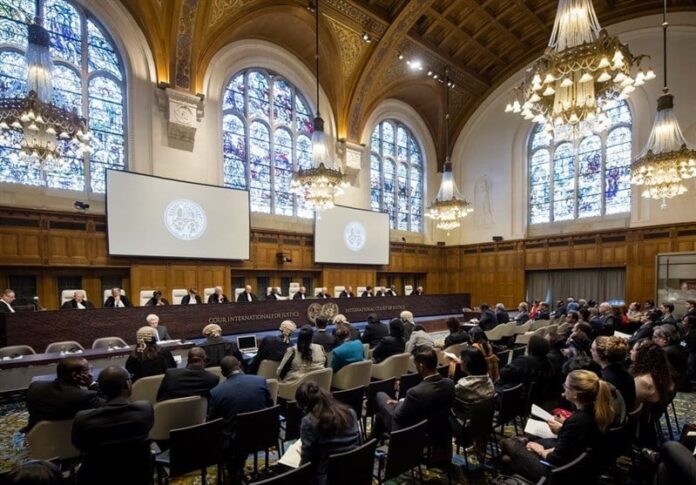
ICJ to Hold Hearing Session in August on Iran’s Lawsuit against US

“The International Court of Justice (ICJ), the principal judicial organ of the United Nations, will hold public hearings from Monday 27 to Thursday 30 August in the case” surrounding Iran’s complaint against the United States, the tribunal said Thursday.

“The hearings will be devoted to the request for the indication of provisional measures submitted by Iran,” AFP quoted the court as saying in a statement.

Iran recently filed the lawsuit against the United States stating that Washington’s decision in May to re-impose sanctions after pulling out of the 2015 nuclear deal violates the 1955 Treaty of Amity between the two countries.

The court, set up in 1946 in The Hague to rule in disputes between nations, revealed Wednesday that its president, judge Abdulqawi Ahmed Yusuf, has written a letter about the case directly to US Secretary of State Mike Pompeo.

In comments on Tuesday, head of the international legal affairs center of the Iranian president’s office, Mohsen Mohebi, said the ICJ president has warned Washington not to take any action in contradiction to the future decisions of the ICJ on Iran’s complaint.

The ICJ is the United Nations tribunal for resolving international disputes. Iran’s filing asks the ICJ to order the United States to provisionally lift its sanctions ahead of more detailed arguments.

Iran Not to Take US’ Military Threats Seriously: IRGC Chief

“Military threats raised by the enemies are not very serious and are hollow and we have the power to respond them,”Ja’fari told a group of students in Tehran on Friday.

The IRGC commander said the enemies were more focused on undermining Iran through their “soft war”.

“Threats and sanctions today by the enemies have reached their heights,” he said. “However, the only threat that they would not put into action is the military one because if they carry out a military aggression, it would entail huge costs for them.”

General Ja’fari’s remarks come in the wake of US President Donald Trump’s harsh rhetoric on Sunday, threatening Iran with hardship “the likes of which few throughout history have ever suffered before.”

Iran Not to Take US' Military Threats Seriously: IRGC Chief

Trump pulled the US out of a landmark nuclear agreement between Iran and world powers in May and pledged to impose the most crippling sanctions on the Islamic Republic.

The remarks also came after Australia’s Prime Minister Malcolm Turnbull rejected reports on Friday that his country would help US attack Iran’s nuclear facilities within a month, saying the entire story, published by the ABC, was pure “speculation”.

“The story on the ABC, which cites senior Australian government sources, has not benefited from any consultation with me, the foreign minister, the defense minister or the chief of the defense force,” Turnbull told ABC radio, adding, “So perhaps you should inquire of the authors of the article.”

Gen. Ja’fari said Iran’s enemies were trying to spread disappointment among the nation through a disinformation campaign, stressing that the efforts were futile because of the awareness of the people and the officials.

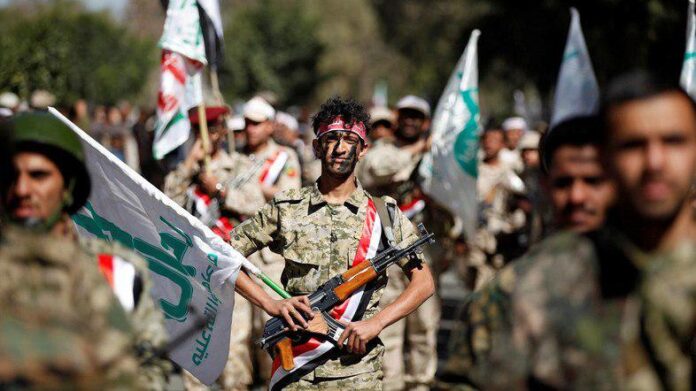
Ansarullah Threatens to Target Vital Centres in Saudi Arabia, UAE

In an exclusive interview with Iran’s state TV, which is to be aired on Saturday, Ibrahim al-Dailami, a member of Ansarullah’s Political Council, threatened Riyadh and Abu Dhabi with a fresh round of retaliatory attacks on the two Arab states, which have been launching relentless attacks on innocent civilians in Yemen since 2015.

Following you can find excerpts of the interview:

Q: Saudi Arabia is said to be currently extracting Yemen’s oil and transferring it to the Arabian Sea; is this true?

A: There is an old plan. Since the 1970s, they wanted to build oil pipelines through Yemen to the Arabian Sea. The invasion of Yemen is to implement this plan. The Yemeni coastline is 2,500 kilometres along the west and southwest of the country. The Saudis’ efforts to take control of the coast and gain dominance over the Strait of Bab el-Mandeb and Socotra Island are aimed at implementing this plan.

Let’s not forget that there is a lot of oil in Yemen, and the occupiers want to dominate the region, especially Al Jawf, Hadramaut and Al Mahrah Governorates, where oil and gas wells are abundant. In addition, there are also a lot of oil and gas projects in the Arabian Sea.

Yemeni political and military leaders have decided to target all oil wells and sensitive areas inside Saudi Arabia and the UAE. Our factories and facilities have been destroyed, our ports and airports have been destroyed, so our enemies must be sure that this situation will not be tolerated. From now on, no point in the two countries will be safe, and they will not be safe from our missiles and drones. Right from now on, we would target sensitive military, political and economic centres at Jeddah and Riyadh airports. We will target all areas where the enemies use them economically and militarily to attack us. Also oil rigs, and the foreign companies that are helping the enemy will not be safe because the war will enter a new phase. In the past, we targeted the Barakah nuclear power in the UAE. This shows that Yemenis are determined to target important and sensitive places in the UAE and Saudi Arabia.

Q: Is that a threat?

A: It’s not a threat; it’s our basic right to respond to the enemy. From now on, these attacks will be intensified. We do not just threaten, but we act. As in the past, we have been targeting Saudi Arabia’s oil and military centres with equipment that we have. The Yemeni problem will be resolved only by stopping the war and removing the siege. Therefore, in order to resolve the crisis, the attacks must first be stopped, after that, the Yemenis will start all-inclusive negotiations to resolve all issues related to the presidency, the parliament and the government. Then, the Yemenis will begin dialogue with the aggressor countries for reconstruction and compensation.

Q: What do you expect from the United Nations and the international community?

A: We have not pinned any hope on the United Nations to solve the Yemen crisis. But we are telling them that the continuation of the Yemeni war is not in the interest of the international community. The international community must know that with the continuation of the war, the interests of many countries in Europe, Asia and elsewhere will be jeopardised.

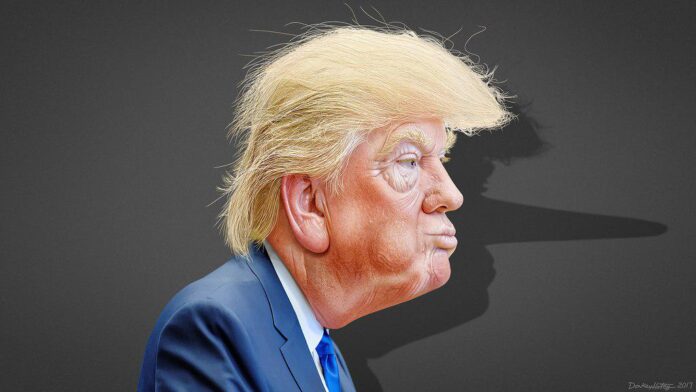
US’ Threats against Iran; Real or Empty?

An opinion piece published on Thursday by the conservative Iranian daily Javan maintains that the threats recently made by US President Donald Trump are not real ones.

It refers to a recent increase in the number of staffs working at the anti-Iran desk of the US Treasury Department, and says that it shows Washington is merely after tightening the economic noose on Iran.

Following you can find the full text of the article:

After the US President’s threats on Twitter against Iran, he suddenly changed his tone within a day and spoke of his preparedness to negotiate with Tehran. However, it’s been heard that the number of personnel working at the Iran sanctions desk of the US Treasury Department has been increased, and this shows Trump will simply not leave the economic war front.

“I withdrew the United States from the horrible one-sided Iran nuclear deal, and Iran is not the same country anymore,” Trump told the Veterans of Foreign Wars convention in Kansas City.

After Donald Trump’s threats, it was not only his secretary of state or his envoy at the UN who talked about preparedness to negotiate with Iran, but he himself, one day after his threatening tweet against Iran, said in his address to the Veterans of Foreign Wars that “We’re ready to make a real deal, not the deal that was done by the previous administration.” In his words, he once again described the Iran nuclear deal as a “disaster”.

In another part of his remarks, Trump claimed that Iran is no longer is the same country. A couple of days earlier on Twitter, the president of the United States addressed Hassan Rouhani saying that, “NEVER, EVER THREATEN THE UNITED STATES AGAIN OR YOU WILL SUFFER CONSEQUENCES THE LIKES OF WHICH FEW THROUGHOUT HISTORY HAVE EVER SUFFERED BEFORE. WE ARE NO LONGER A COUNTRY THAT WILL STAND FOR YOUR DEMENTED WORDS OF VIOLENCE & DEATH. BE CAUTIOUS!”

Rouhani had warned Trump a day before this tweet, referring to the US measures to boycott Iran’s oil export saying that “Do not play with the lion’s tail, you’ll regret it.”

Donald Trump’s tweet drew many reactions from US officials and other countries in the world, as well as the media. Meanwhile, many US media and journalists believe the US president’s tweet against Iran is more than anything else aimed at diverting the attentions from Russia’s alleged interference in the US’ presidential election in 2016.


Trick to Distract from Russia Case

The CNN reported that Trump has recently made quite contradictory statements about his views on the Russian case, which destroyed the credibility of his statements to a large extent. In the meantime, the White House press secretary Sarah Huckabee Sanders announced at the press conference that the White House is considering revoking security clearances for a number of top intelligence officials who have publicly criticised President Trump.  She said Trump is exploring “mechanisms” to revoke security clearances for former US officials (in the Obama administration) who have criticised him for his handling of the Russia investigation and his relationship with Russian President Vladimir Putin.

Meanwhile, Anderson Cooper, the host of CNN, said in response to Trump’s recent  tweet to his Iranian counterpart that these statements, along with his sharp criticism of former US intelligence and security officials in the United States, are aimed at distracting people from other problems that the White House faces.

“I mean, it’s so interesting- this idea, you know that he’s tweeting suddenly tough talk- trying to be a tough guy vis-a-vis to Iran in a tweet or, you know, talking about taking away security clearances of former intelligence officials and national security officials and FBI officials,” said Cooper. “It is a classic move by President Trump to try to distract. And we’ve seen it time and time again. When things aren’t going well, you lob a Molotov cocktail in one corner of the room and everyone runs over there and looks at it and ignores all the stuff that’s been going on that has not reflected well on the administration.”

National security expert Max Boot in CNN’s 360 suggested that Trump’s bluster may be a means to distract attentions from what Boot considers the President’s servile approach to Russian President Vladimir Putin.

He said Russia is the last thing they want to talk about because it is very frustrating. Donald Trump met with Putin a few days ago, and we still do not know exactly what they were talking about and what they said.


Economic Warfare with Iran

Reports published on US Treasury activities show that economic warfare with the Islamic Republic has now become one of the main priorities of the Department. In recent months, special budget and human resources have been allocated to increase economic pressures on Iran.

According to the Fars New Agency, fears of failure of sanctions in the light of past experiences, as well as the current isolation of the United States in the case of unilateral sanctions, have led the US Treasury to significantly increase the number of active forces in Iran’s case.

As US Treasury officials have officially announced, in recent months, dozens of delegations consisting of senior ministry experts have travelled to various countries, including Japan, South Korea, Turkey and the Europeans countries to convince them to cooperate with Washington in imposing these sanctions against Iran.

One of the developments that highlight the focus of the US treasury on the issue of Iran, and Washington’s concern about its possible failure to effectively implement the sanctions, is the recruitment of tens of personnel to focus on Iran’s case in the ministry.

In recent months, the number of Treasury experts working directly on the effective implementation of sanctions against Iran has been raised from 300 to 380. This comes as the US Treasury Department for Financing of Terrorism totally has about 700 staffs.

Back in June, Sigal P. Mandelker, Undersecretary of Treasury for Terrorism and Financial Intelligence in a speech at Foundation for Defence of Democracies (FDD) said that her colleagues are trying to persuade foreign governments and companies to abandon economic cooperation with Iran.

She said conducting business with the Islamic Republic of Iran continues to entail profound risk, especially following the reinstatement of all US sanctions suspended in accordance with the 2015 nuclear deal formally known as the Joint Comprehensive Plan of Action (JCPOA).

“To those in the private sector, I urge you to also take additional steps to ensure Iran and its proxies are not exploiting your companies to support their nefarious activities,” she stated.


Iran’s Response

In response, Iran’s Foreign Ministry Spokesman Bahram Qassemi advised US government officials and its President Donald Trump to abandon the idea of holding one-sided negotiations with Iran under the shadow of threats. Qassemi in statement called on the US government not to seek to repeat their failed experiences.

“The United States must know that the modern world and era is not an age of hegemony, bullying, consolidation, and unidirectional thinking anymore.”

A look at the world public opinion and their negative view of the performance of the US government is indicative of a profound transformation in the international arena, he added.

“The United States must keep its limits and recognize its position at this point of time. It must also make greater efforts to understand the place and role of Iran.”

He also emphasised that today, as before, there is no trust in the statements and actions of the US statesmen to hold talks, especially in an American way.

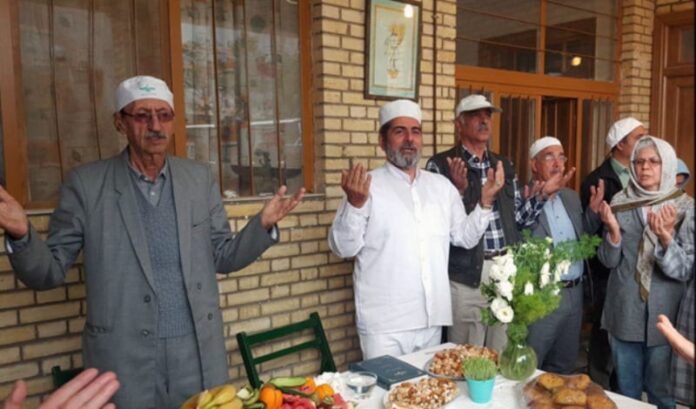
Zoroastrian Cleric Rejects Pompeo’s Claims about Minorities in Iran

Behzad Nikdin said in an interview with IRNA that “based on the Constitution of the Islamic Republic of Iran, followers of divine religions, including Jews, Christians and Zoroastrians, are free to practice their religions, and can freely exercise their religious rituals and social practices along with their Muslim compatriots.”

He added that Pompeo’s words about the disappearance of the freedom of religious minorities in Iran are sheer exaggerations, and I announce with a loud voice as a Zoroastrian cleric that during the 40 years since the Islamic Revolution, Zoroastrians have been fully free to hold their own religious rituals.

“Near the Zoroastrian fire temple in Isfahan, there are mosques and Zoroastrians hold their own religious rituals with complete freedom along with their Muslim compatriots, while such a scene in other countries of the world can rarely be found.”

This Zoroastrian cleric went on to say that Pompeo should know that the human rights charter was written by Iranians more than four thousand years ago, and that this newly-emerged US politician should not lie about a nation that has more than 7,000 years of civilization.

“Such remarks are due to a lack of information about the Iranian society; and he makes such statements to create division and undermine national unity. However, he should know that such unjustified statements do not cause the slightest flaw in Iran’s national unity.”

Nikdin noted that in addition to Zoroastrians, followers of other religions, including Christians and Jews, are freely practicing their religious rituals in the province and live peacefully along with other Iranians.

He said the recent return of the Zoroastrian member of Yazd City Council, Sepanta Niknam, to the council after a ruling by the Expediency Council was an example of respect for the rights of religious minorities in Iran, adding that in many countries, religious minorities or black people do not have the right to enter decision-making centres.

Referring to the fact that religious minorities in Iran have the same civil rights as their Muslim compatriots, Nikdin added racist approaches have been influential in the formulation of the laws of some countries, and therefore, in the civil law of these countries, religious and ethnic minorities do not enjoy the same rights.

On Sunday, Pompeo announced in a speech that the Trump administration had launched a “maximum pressure campaign” targeting Iran and its economy.

Addressing a group of Iranian-Americans in California, he said that religious minorities “are a historic part of the rich fabric of an ancient and vibrant Iranian civilization,” and claimed that they “are suppressed.”

Iranian Winger Jahanbakhsh Joins Brighton for Club-Record Fee

On Wednesday, the 24-year-old penned a a five-year contract until June 2023, and became Brighton’s eighth major signing of the summer transfer window.

Sky Sports News has learnt that Brighton, nicknamed the Seagulls, is paying £17 million for Jahanbakhsh.

“We are delighted to welcome Alireza to the club, and we are particularly pleased to get this deal over the line.

“Ali is a player that we have been aware of and monitored for a few years, and his versatility will increase our attacking options within the squad,” Brighton’s official website quoted manager Chris Hughton as saying.

He added, “He can play in a wide position or central midfield attacking role, and I am now very much looking forward to working with him.”

Jahanbakhsh said, “I came here to help the team and be important for the team. It’s always been important for me, wherever I go, to do my best for the club and the fans.”

“It’s exactly the same here. I’ve been counting the days until I came here for the signing day,” he added.

Jahanbakhsh played most of his youth in Payam Alborz Qazvin and Persian Qazvin, before joining the youth academy of Damash Gilan in 2008.

He moved to Iranian second division side Damash Tehran two years later.

Jahanbakhsh returned to Gilan in 2011, and became one of the club’s youngest ever players.

On May 26, 2013, Jahanbakhsh reached an agreement with Dutch Eredivisie outfit NEC for a three-year deal. He made 64 appearances and scored 19 goals there.

The Iranian midfielder signed a five-year contract with Dutch club AZ Alkmaar on August 3, 2015. He scored 21 goals in 33 appearances and was named the top scorer in last season’s Dutch Eredivisie.

He also has 41 caps for the Iran men’s national football team, and featured in all three Team Melli group stage matches at the 2018 FIFA World Cup in Russia.

Rare Crab Species Found in Qanats of Iran’s Kerman

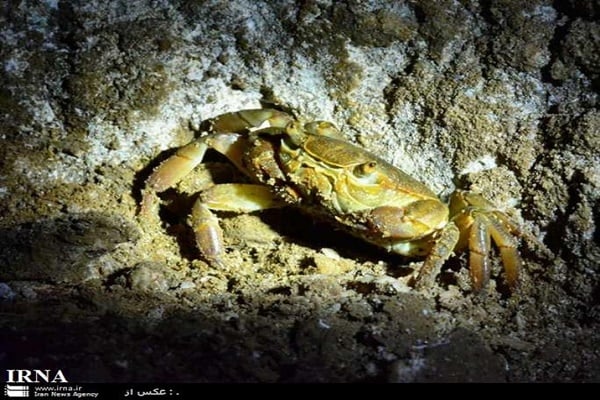
Head of the Cultural Heritage, Handcraft and Tourism Department of Mahan, Amin Mahani, said these two freshwater crabs were photographed while documenting the qanats in the city of Mahan.

According to Mahani, this type of crab is inside the qanat and lives at a depth of 60 metres in absolute darkness and has not yet been seen outside its habitat.

The crab had earlier been spotted only in the rivers and wetlands, and this is the first time that the creature is found to be living in the depths of a qanat, he noted, as reported by IRNA.

“There were also two species of fish, worms and spiders inside the water canal, showing a diverse animal life in the depths of the Mahan qanats,” he said, adding that experts and researchers must do more research in this area.

Crabs are the most advanced species of the arthropods, and freshwater crab (Potamidae) is one of them.

Potamidae are awesome creatures, and their main habitat is fresh water. They mostly live in the water and in their shelters.

The historical and recreational region of Mahan is 25 km south-east of Kerman in south-east of Iran.