Wednesday, December 24, 2025
Home Blog Page 3495

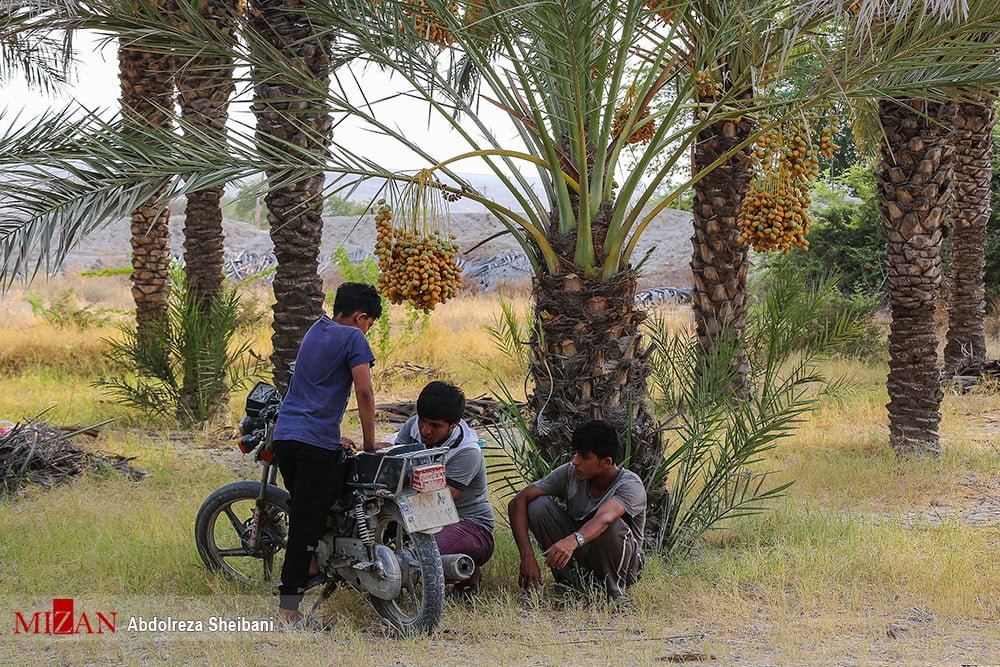
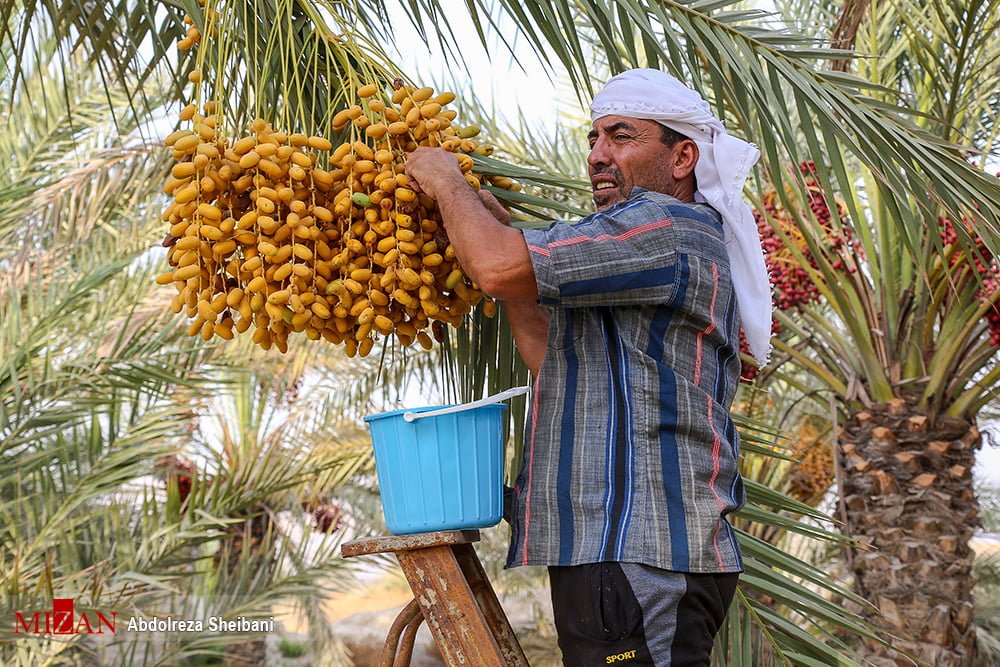
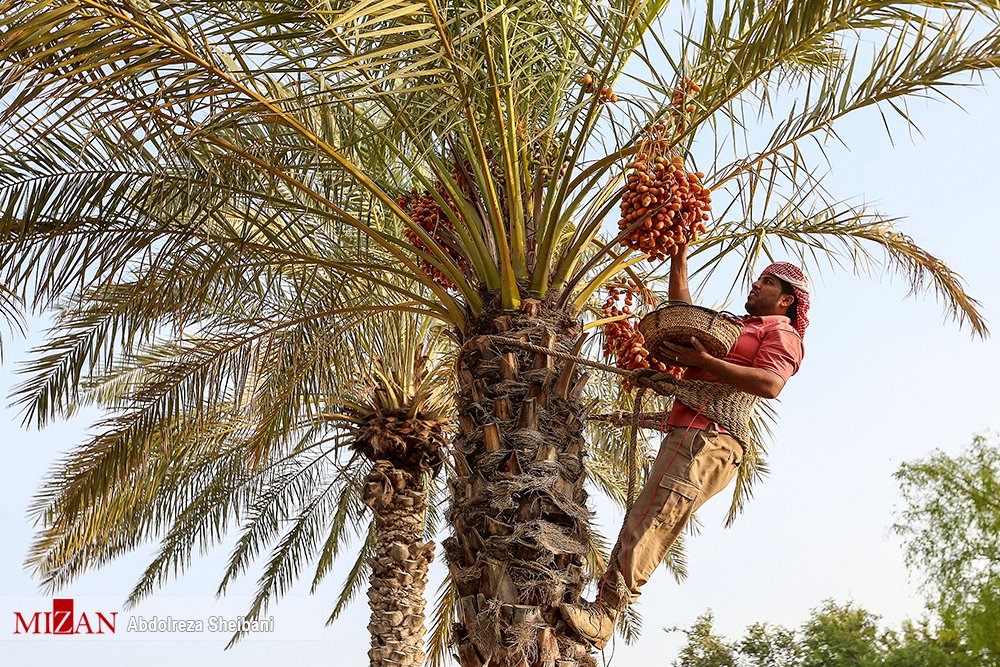
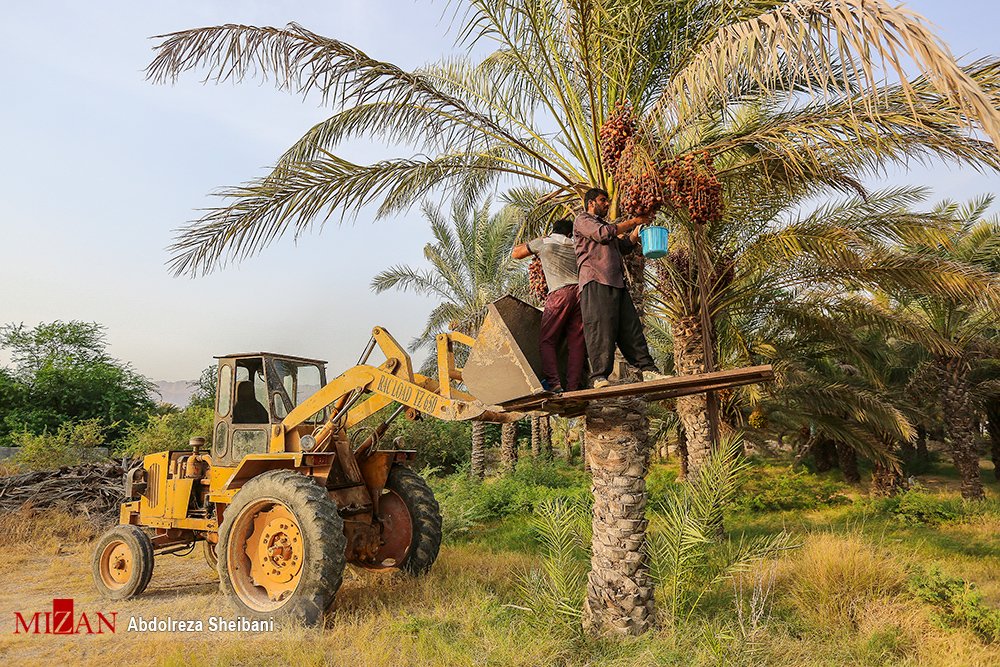
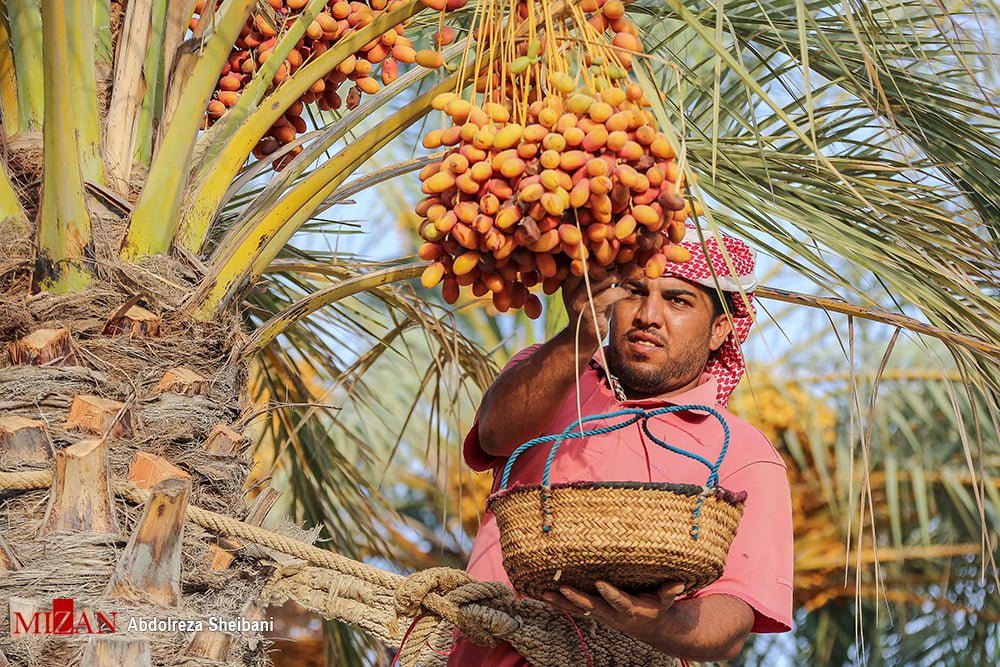
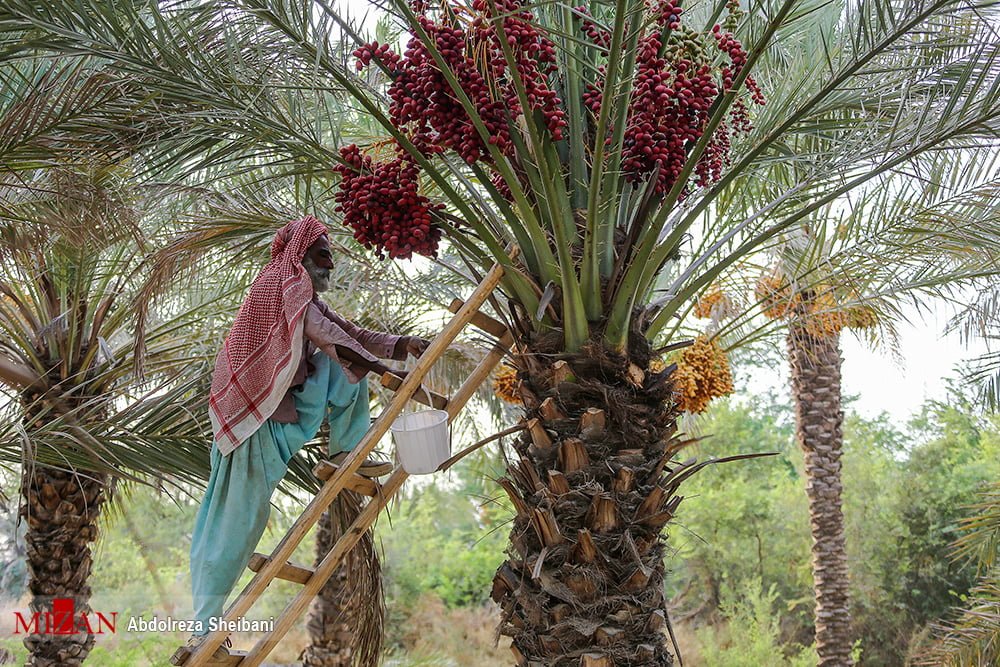
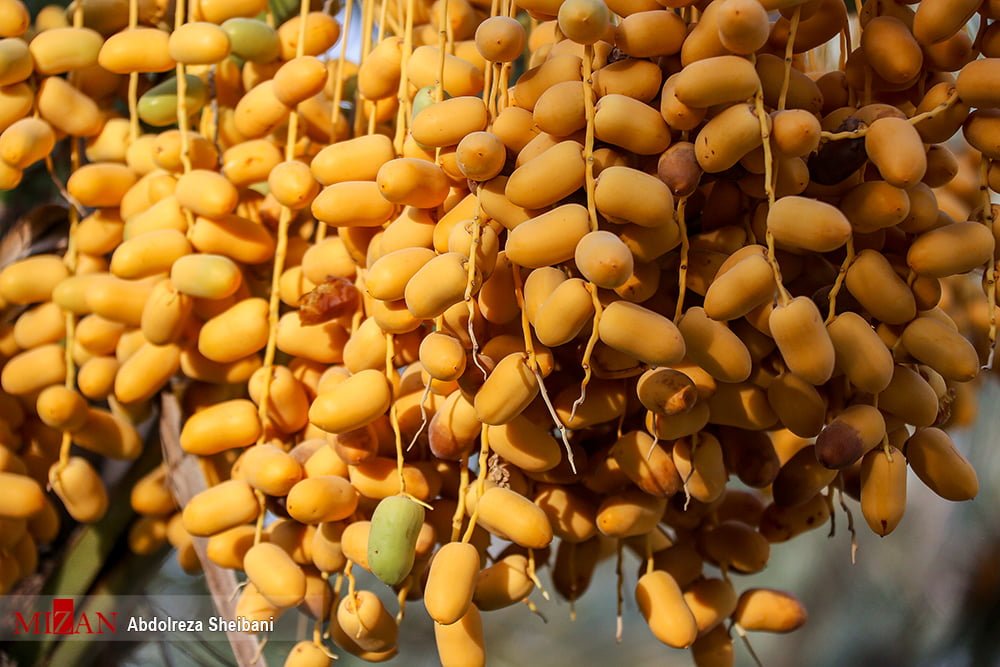
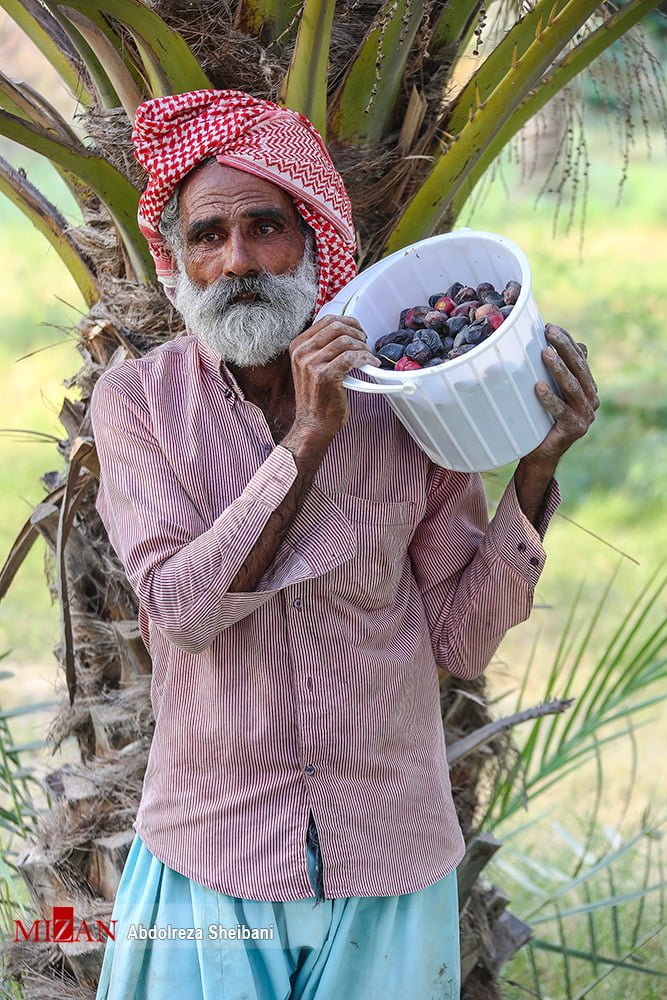
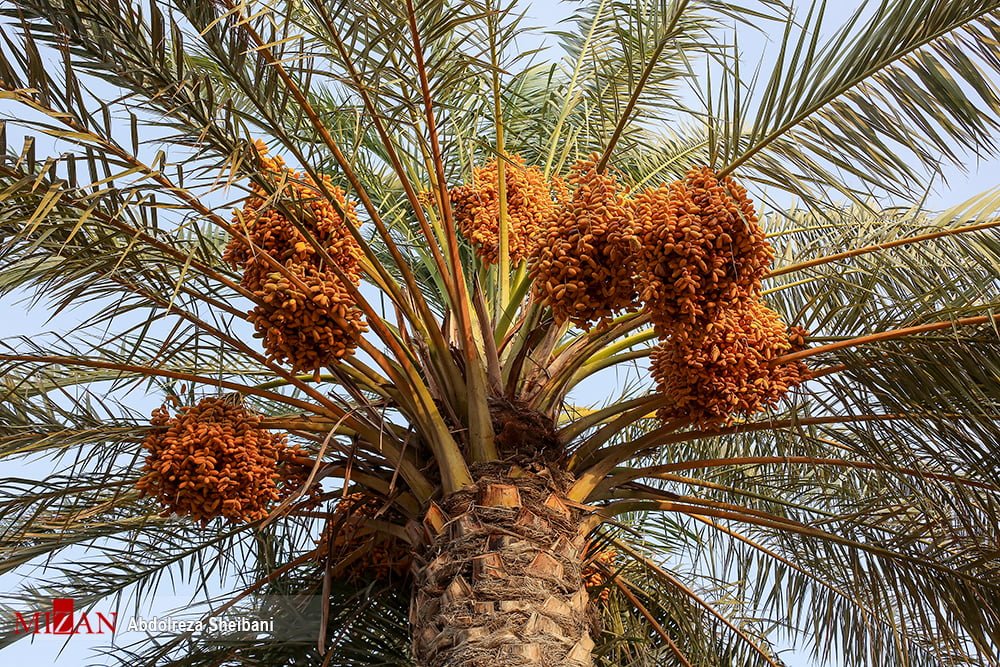
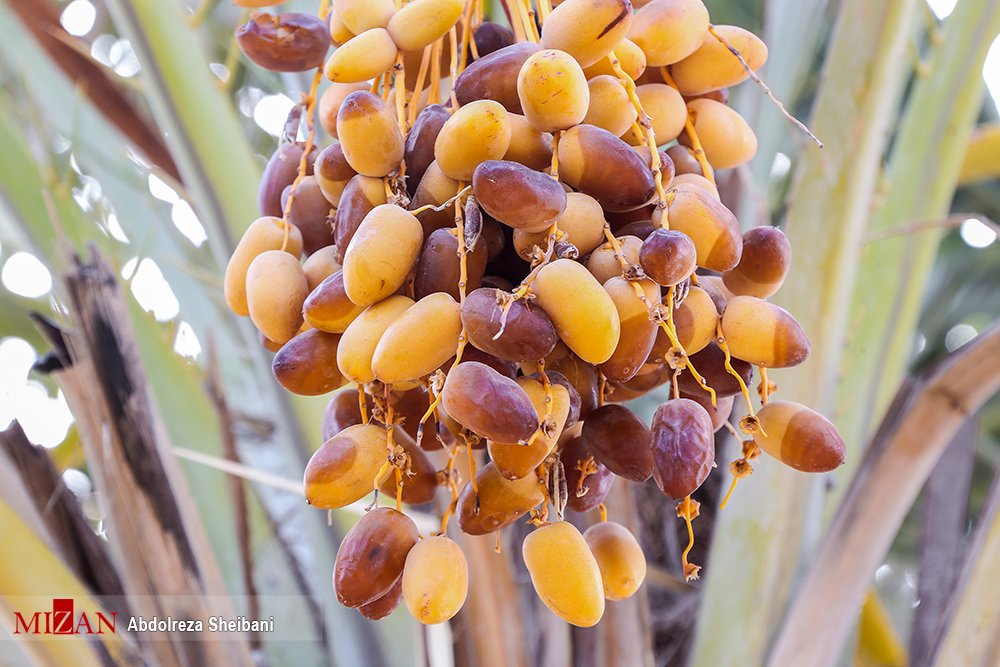
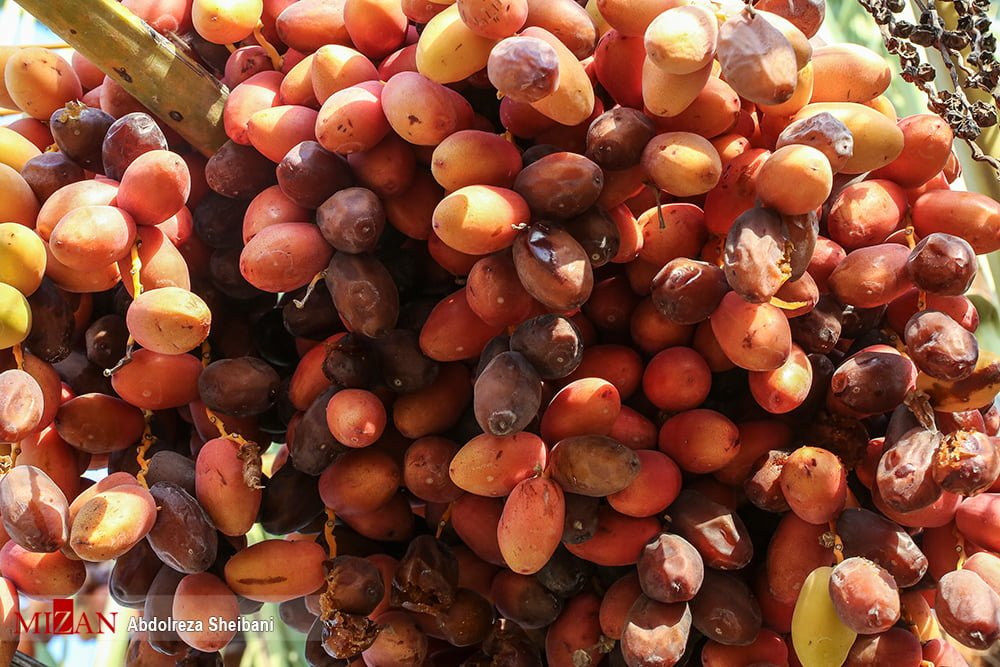
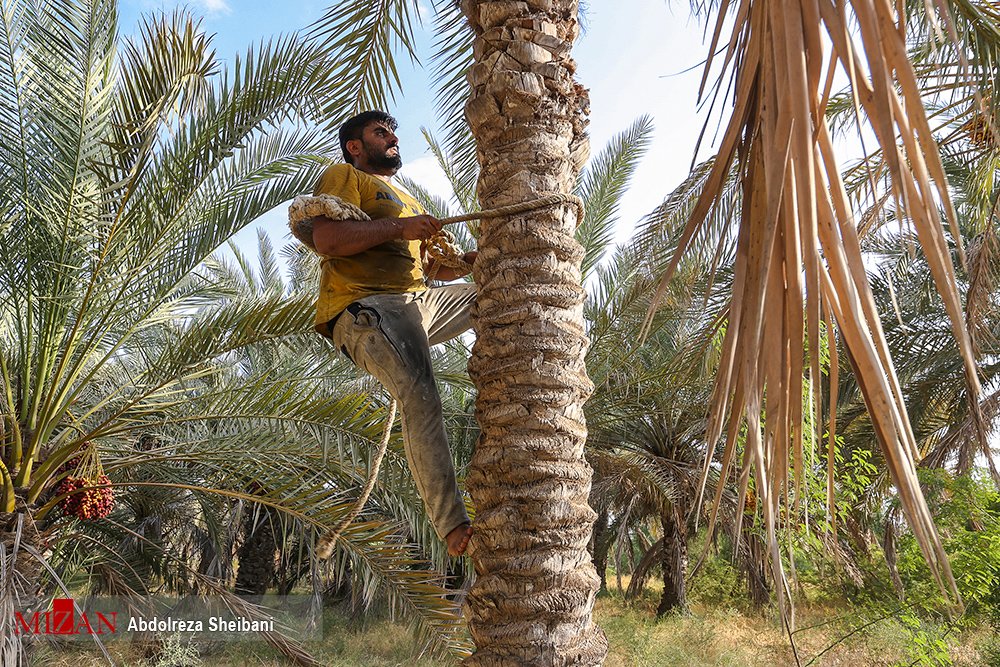
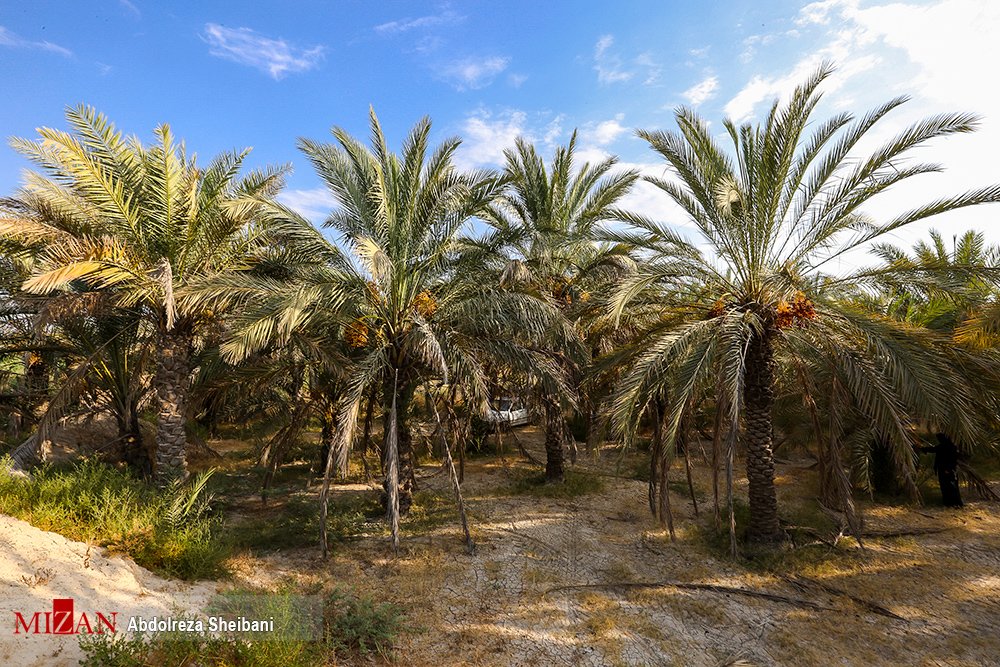
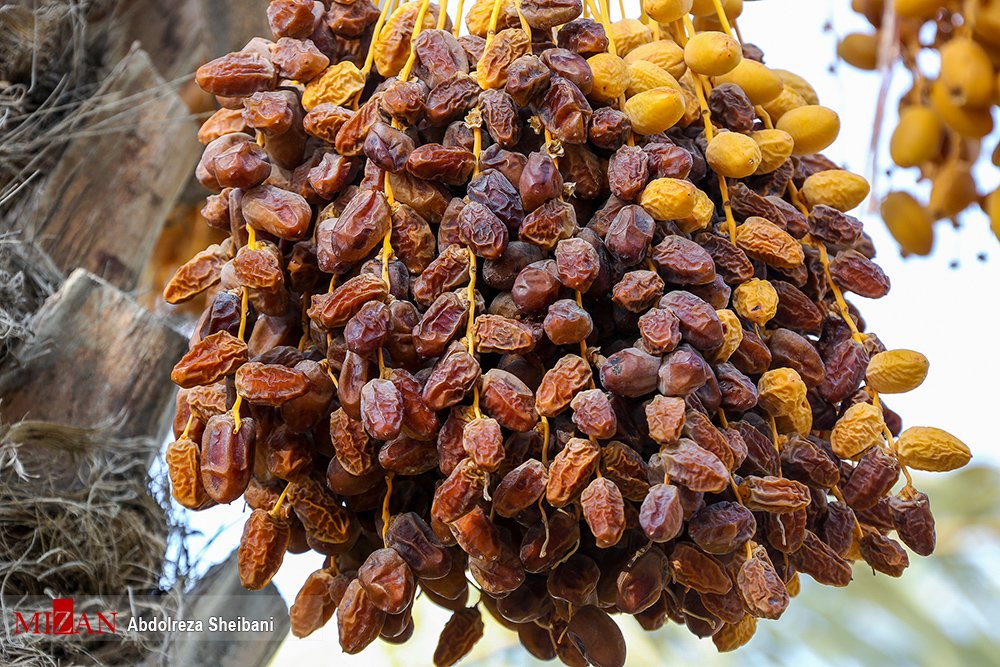
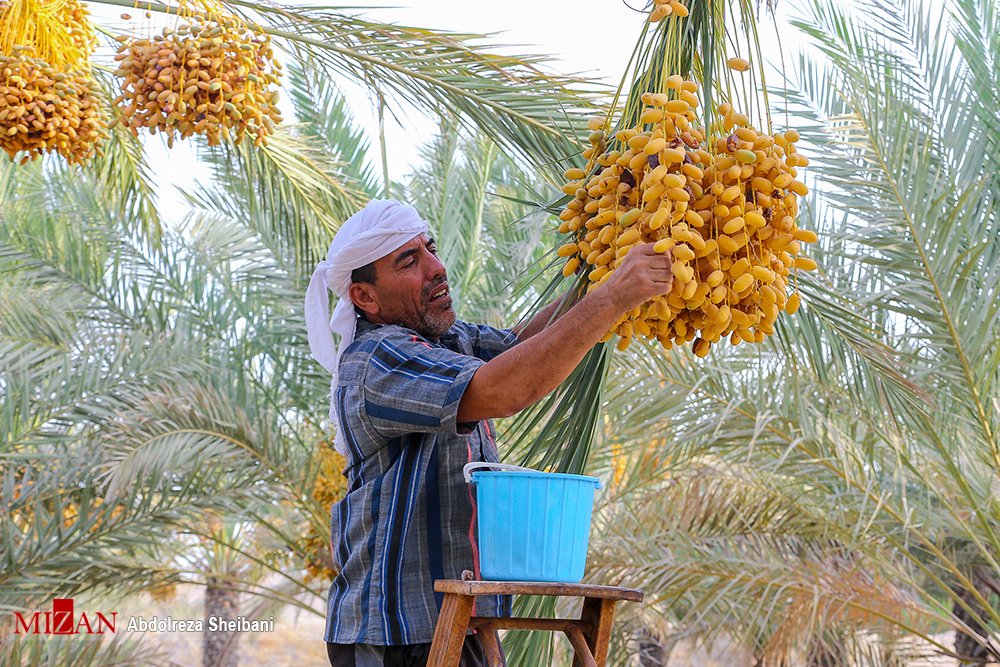
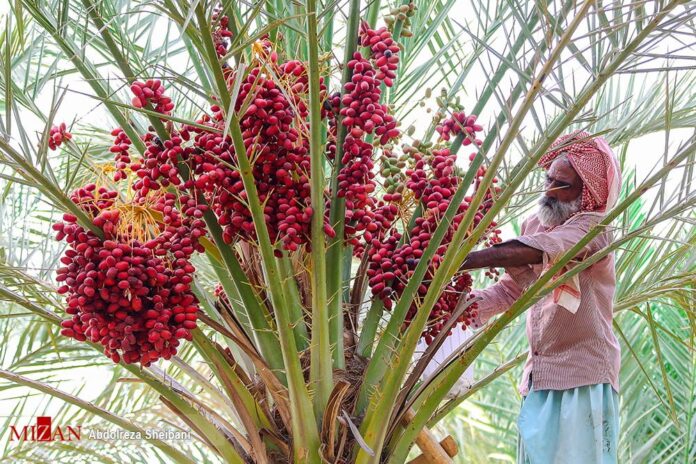
Date Harvest Season Begins in Southern Iran

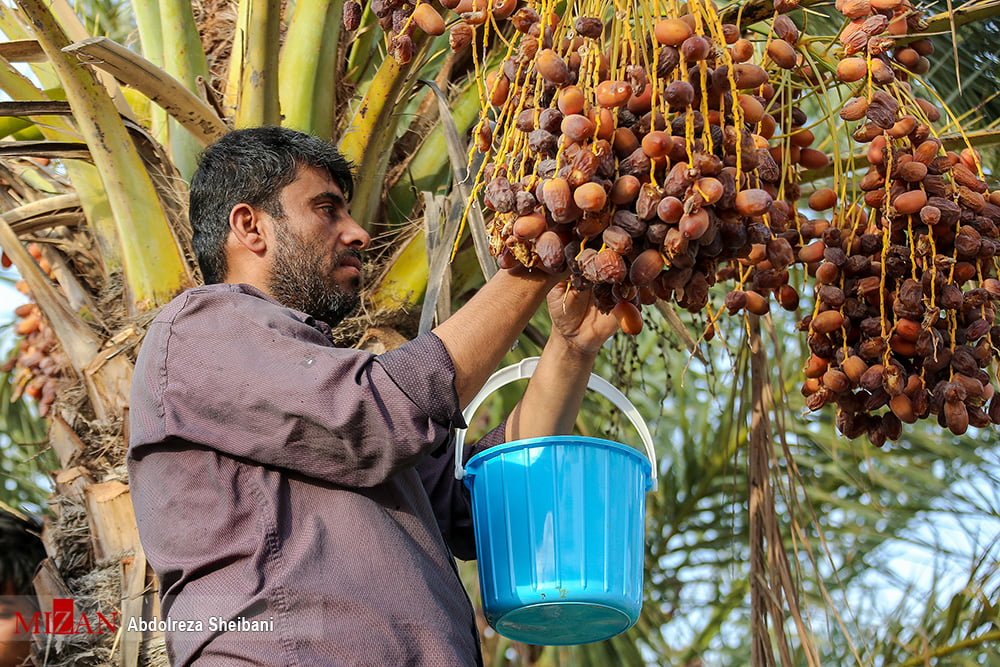
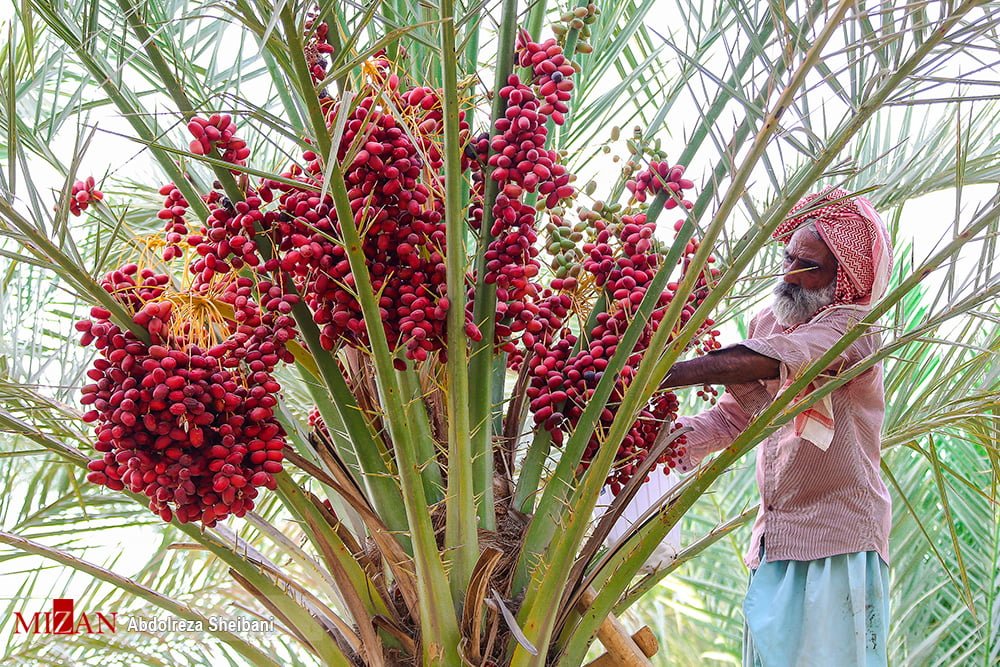
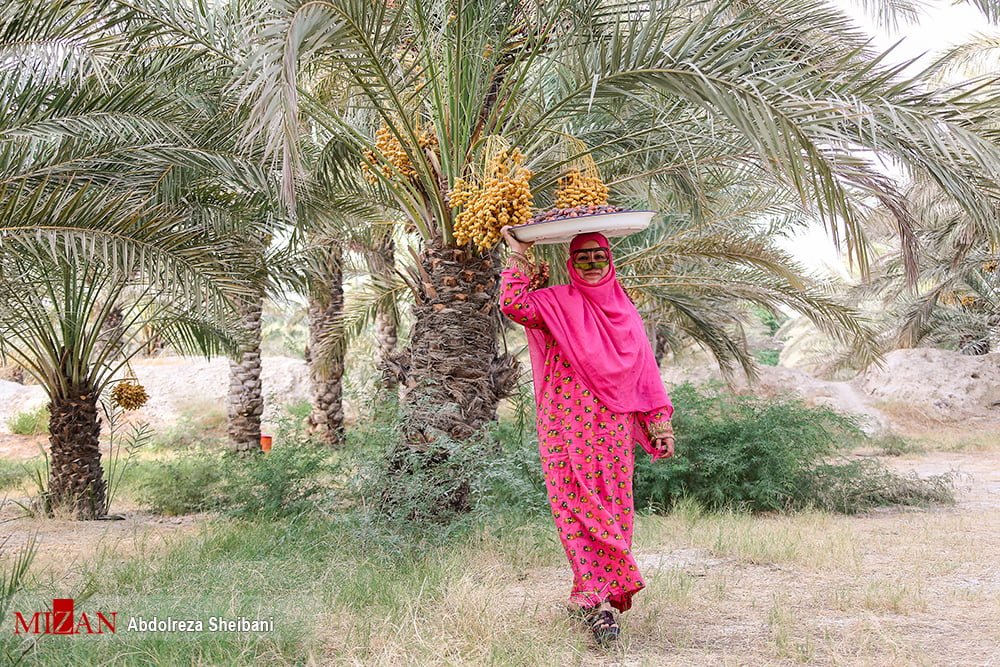
The city of Parsian in western Hormozgan has palm orchards, which are watered by rain and irrigation. The city has a variety of dates, the most important of which are Azad, Kabkab, Shekari, Halilah, among others.

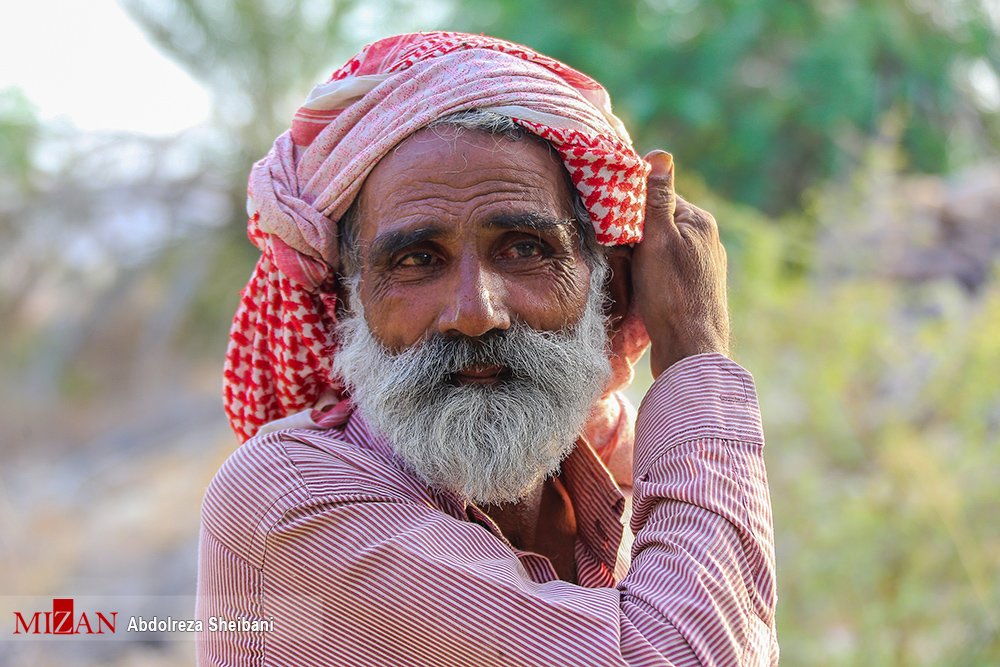
Following you can find photos of these orchards retrieved from Mizan News Agency:

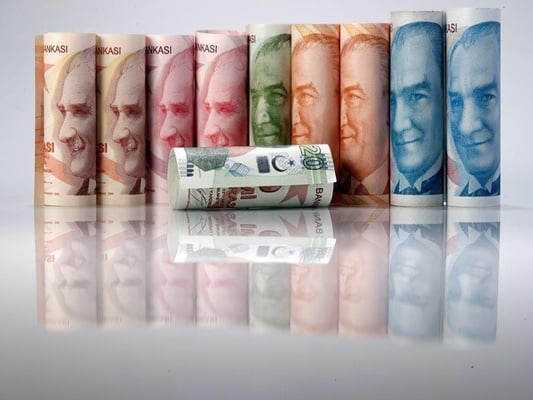
“FDD Plotting to Depreciate Value of Turkish Lira”

The Fars News Agency has, in an article, discussed a complicated plan to bring down the value of the Turkish lira similar to the plot hatched to devaluate the Iranian rial. The full text of the article follows.

In summer 2011, grim news was reaching Tehran. Reports were flying around in the Iranian capital that the UN Security Council had been issuing back-to-back resolutions against Tehran and that pressures on Iran were building up day by day.

Amid all this, Iran’s economic enterprises had seriously set their eyes on neighbouring countries, and Turkey was the most important entity that could mitigate the pressures exerted on Iran due to oil and monetary sanctions. Moreover, Turkey was a key importer of oil and natural gas from Iran.

All these events led to the creation of a covert channel to make payments, which eased Iran’s financial problems until 2013.

Now several years on, Turkey has come down with a monetary crisis which has seen the value of the Turkish lira drop by 40%. At first glance, maybe there seems to be no connection between two sagas unfolding in Turkey, i.e., the exchange of foreign currency led by Turkish-Iranian gold trader Reza Zarrab and the plunge in the value of the Turkish national currency. However, the reality is that these two developments are mysteriously intertwined with other stories such as the exchange of natural gas and gold between Iran and Turkey, the 2016 failed coup in Turkey, the United Arab Emirates and several other events. Breaking this complicated story into its discrete building blocks can help figure out what is really happening in Turkey.


Meeting the Satan

In 2011 when the first flames of Islamic awakening began to rise in Tunisia before spreading to Egypt and Libya, it was Abu Dhabi and Riyadh as capitals of two Arab kingdoms that were concerned about the rise of Muslim Brotherhood to the peak of ruling the Arab world. By then, not only had Iran’s sphere of influence and worries over the establishment of a Shia Crescent grown, but chaos had struck the heart of the Sunni world as well.

Amid those developments, Turkish President Recep Tayyip Erdoğan was the happiest of all as he was witnessing entities with viewpoints similar to his were gaining power. As a case in point, he mobilized all of Turkey’s intelligence and military potentialities with the covert cooperation of the US to support Muslim Brotherhood in Syria and topple Bashar Assad. Saudi Arabia, too, continued to support the Syrian opposition with full force to make the situation more difficult for Iran. Meanwhile, the United Arab Emirates (UAE) chose a more complicated path.

In 2012, UAE Foreign Minister Abdullah bin Zayed Al Nahyan had a secret meeting with Israeli Prime Minister Benjamin Netanyahu in New York. It took several years until Saudi Arab and the UAE’s the secret relationship with the Israeli regime came to light.  However, one of the key results of this connection was the establishment of a close relationship between the Foundation for Defense of Democracies (FDD) and the UAE.

The incident where the UAE ambassador’s emails were hacked and FDD Chief Executive Mark Dubowitz’s emails were published showed the two had very close cooperation. Common interests shared by the UAE and the Tel Aviv regime in countering Iran, the promotion of cooperation against Muslim Brotherhood and dealing with Hamas have led to the creation of joint work between the two.


How FDD & Gulenists Destroyed Halkbank

To explain what the FDD is, one can say that its major sponsor is Sheldon Adelson, a casino owner and supporter of US President Donald Trump. Based on a report sent to the US Treasury by the FDD, the UAE is also on the list of the major sponsors of this foundation.

When the UAE began to start cooperation with the FDD through Netanyahu, the foundation was pursuing a plan to use unilateral sanctions to counter Iran’s activities to develop its nuclear program. Interesting enough, Zarrab was, at the time, clearing Iran’s forex debts to its customers by importing gold from New Guinea and changing it to dirhams.

This issue was never brought up at Zarrab’s trial chaired by Judge Richard Berman, and it was only Hakan Atilla, the deputy governor of Halkbank, who received a 25-year jail term. The story of the FDD and Turkey was tied to Turkey’s financial sector only when Jonathan Schanzer and Mark Dubowitz in a memo published on Foreign Policy journal dated December 25, 2013 revealed a plan to transfer the revenues from Iran’s oil and natural gas exports to an account related to Iran in the form of gold.

The article claims that Turkey’s Halkbank transferred around $ 119 billion in earnings from Iran’s oil and natural gas exports. The report was part of a storm of reports published in that regard, a storm that Turkish officials blamed on a TV network affiliated with Turkish dissident Fethullah Gulen. Still, a more severe blow was dealt to the Turkish banking system when Hakan Atilla was arrested in the United States and Reza Zarrab turned himself in to American authorities.

Judicial proceedings on the case are still underway and some stories suggest Halkbank has received $27 billion in fines, which could deal a heavy blow to Turkey’s banking system. What is interesting is that in Reza Zarrab’s trial, Dubowitz was one of the witnesses who gave testimony on behalf of the US government against Zarrab.

Still, the foundation continues to commit acts of sabotage, which culminate in the 2016 coup. One thing is evident in the published emails belonging to the UAE ambassador to the US, and that is this country was clearly making every effort to influence the coup d’état in Turkey.


Useless Investment in Turkey’s Coup

When Turkish officials explicitly spoke of a three-billion-dollar fund allocated by an Arab country to the coup in Turkey, all eyes turned to the UAE.

Of course, the UAE had other reasons to be willing to topple the government of Erdogan, and that was the alliance of Turkey and Qatar in countering the blockade on Saudi Arabia and the UAE.

Even when Arab countries decided to capture Qatar, and Tillerson managed to dissuade them from doing so by threatening them, it was the UAE’s“ crown prince that was enraged at Washington’s interference.

When the coup d’état in Turkey was aborted after plans to target Erdogan’s plane failed and his supporters turned out in the streets in droves, Arab-language media such as Sky News, one of whose major shareholders was the UAE, claimed that the putschists had emerged victorious. Also, a meeting on the future of Turkey in the post-Erdogan era held with FDD-backed Gulen advocates in attendance and with the financial support of the UAE showed how deep that relationship was.

Anyway, the failure of the 2016 coup showed how tough Erdogan is. Nevertheless, the course of events still indicated that an intelligence war against the Turkish government was going on. The most important turning point was a second meeting between Israeli and Emirati officials in New York. Amid those developments, the victory of Donald Trump in the US presidential election increased the FDD’s role in determining the policies related to the foreign policy of the US, namely Trump’s withdrawal from the Iran nuclear deal.

What is interesting is that later on, a report on an investigation by Muller into alleged collusion in the US presidential election revealed that extensive consultations between the UAE, Saudi Arabia and the Israeli regime had been going on with the Trump team.

It seems that this was the reason why the tone of the FDD’s reports against Turkey got harsher, so much so that Dubowitz, in a meeting held in early 2018, straightforwardly referred to Iran’s experience in Turkey and using economic tools against Erdogan. This is a strategy that has come to bear down on Erdogan sooner that what he thought.


Anti-Semitists in Turkey

A glance at the activities of an FDD working group on Turkey issues shows that the foundation’s stance has become much harsher in recent years, especially after the 2016 coup. For example, the FDD, in a 2017 report, refers to the dire situation of Jews in Turkey and accuses it of indifference toward anti-Semitic attacks by Turkish nationalists.

The report compares growing anti-Semitic attacks on synagogues and Jewish sites to the 1955 attacks on dozens of synagogues, describing the raids as a prelude to a kind of ethnic cleansing.

The report draws the conclusion that the Turkish indifference and, in fact, contribution to the anti-Semitic moves and refusing to prosecute perpetrators can jeopardize peaceful coexistence among different historical religions in Turkey and turn into a major threat to peace in the country.

Even after the arrest of American pastor Andrew Craig Brunson in Turkey which led to the widening of a covert rift between Washington and Ankara, it was FDD authorities that called for the US government to seriously deal with the situation and slap tough sanctions on Turkey.

Jonathan Schanzer wrote in an article that All Americans should remember the name “Brunson” and know that the Erdogan government is an enemy of democracy.

Of course, the harsh stances adopted by the FDD so far has led to the boycott of two Turkish officials and has not harmed the Turkish government’s financial channels at all. But why has the Turkish lira got stuck in such an ordeal?


Emirati, Saudi Funds behind Plunge in Lira?

In order to have a better grasp of the UAE and FDD’s possible contribution to a drop in the value of the Turkish lira, we should take a look at the expansion of economic cooperation between the two countries, especially in the field of foreign investment.

It is an undeniable fact that the UAE and Saudi Arabia are both major foreign investors in Turkey and tourists from those countries contribute heavily to a rise in the forex income of Turkey as a Muslim country which boasts numerous tourist attractions.

But is the two countries’ contribution to foreign investment in Turkey so much that cooperation between them can disrupt Turkey’s monetary sector to such an extent? What role does Halkbank play in this disorder and how has the FDD entrapped the Turkish lira by mixing important parts of these elements at as sensitive juncture?

In our next report, we will take a look at how this saga has unfolded and how the same tool has been used in similar cases, namely Iran and other independent states as well as important global crises.

Iran Says US’ “Action Group” Will Fail to Repeat 1953 Regime Change Plot

“65 years ago today, the US overthrew the popularly elected democratic government of Dr Mosaddeq, restoring the dictatorship & subjugating Iranians for the next 25 years,” Zarif said in a Sunday tweet.

“Now an ‘Action Group’ dreams of doing the same through pressure, misinformation & demagoguery. Never again,” he added.

The ‘Action Group’ mentioned by Zarif is what the State Department has formed to coordinate and run an aggressive US policy toward the Islamic Republic.

The formation of the group was announced on Thursday by US Secretary of State Mike Pompeo, who said the initiative would be “directing, reviewing and coordinating all aspects of the State Department’s Iran-related activity.”

The group will be headed by senior policy adviser Brian Hook, who is currently the State Department’s director of policy planning. He will report directly to Pomepo.

“Our hope is that one day soon we can reach an agreement with Iran but we must see major changes in the regime both inside and outside of its borders,” Pompeo said in a brief address at the State Department.

“The Iranian people and the world are demanding that Iran finally act like a normal nation. The Iran Action Group will drive daily progress on these objectives, and I hope do much more,” he added.

The top US diplomat went on to say that the State Department is committed to a whole of government effort to change Tehran’s “behaviour.”

Pomepo’s announcement fell on the 65th anniversary of the CIA coup against PM Mosaddeq. The 1953 United States covert action overthrew Mosaddeq in favour of strengthening the monarchical rule of Mohammad Reza Pahlavi on 19 August 1953.

In August 1953, the British and American intelligence agencies initiated the coup by the Iranian military, setting off a series of events, including riots in the streets of the capital, Tehran, which led to the overthrow and arrest of Mosaddeq.

US State Department recently released a trove of confidential documents that disclosed more details of Britain’s role in the 1953 coup in Iran, an issue London strongly denied in the past.

On June 15, 2017, the US State Department released a long-awaited volume of declassified US government documents on the 1953 coup in Iran.

The publication of the documents put an end to decades of internal debates and public controversy after a previous official collection omitted all references to the role of American and British intelligence in the ouster of the legal government of Prime Minister Mohammad Mosaddeq.

Mosaddeq, who was convicted of treason by a court martial, served three years in solitary confinement and then died under house arrest in 1967.

His overthrow, which is still given as a reason for Iranians’ mistrust of the UK and the US, consolidated the Shah’s rule for the following 26 years until the victory of the Islamic Revolution in 1979, led by Imam Khomeini, which toppled the US-backed monarchy.

The Iranian premier had played a key role in the country’s 1951 movement that resulted in the nationalization of Iran’s oil industry, which had been mainly controlled by the British-owned Anglo-Iranian Oil Company (AIOC), now known as BP.

Experts say the 1953 coup, known as the coup, was aimed at making sure the Iranian monarchy would safeguard the West’s oil interests in the country.

Iran Prepared to Boost Bilateral Ties with Pakistan under Khan

Iran Hopes for Expansion of Ties with Brunei

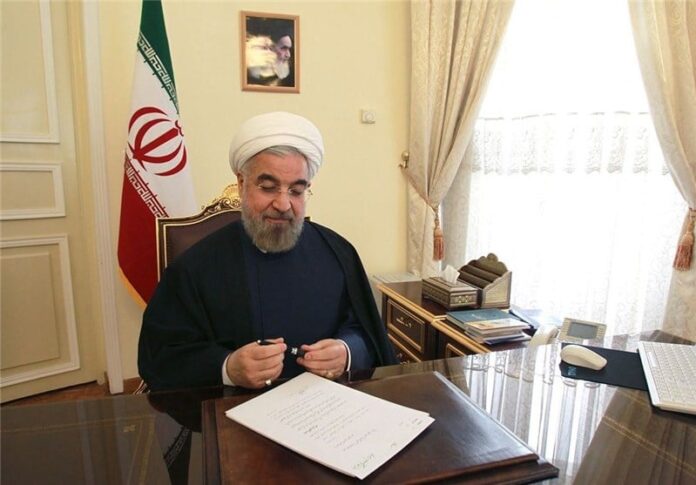
In his message to Imran Khan, who on Saturday was sworn in as Pakistan’s prime minister after his party’s victory in last month’s election, Rouhani expressed the hope that the new Pakistani leader’s tenure would mark “growing unity and convergence in the Islamic world and deepening of bonds between the two friendly neighbors.”

“As always and particularly in the new era, the Islamic Republic of Iran expresses preparedness to promote interaction and cooperation with the Islamic Republic of Pakistan,” Rouhani said in the message on Saturday.

Pakistan held general elections on July 25 to elect members of the 15th National Assembly and the four Provincial Assemblies.
The former Pakistani cricketer Imran Khan and his party won the parliamentary elections, promising a new Pakistan following a vote that was marred by allegations of fraud and militant violence.

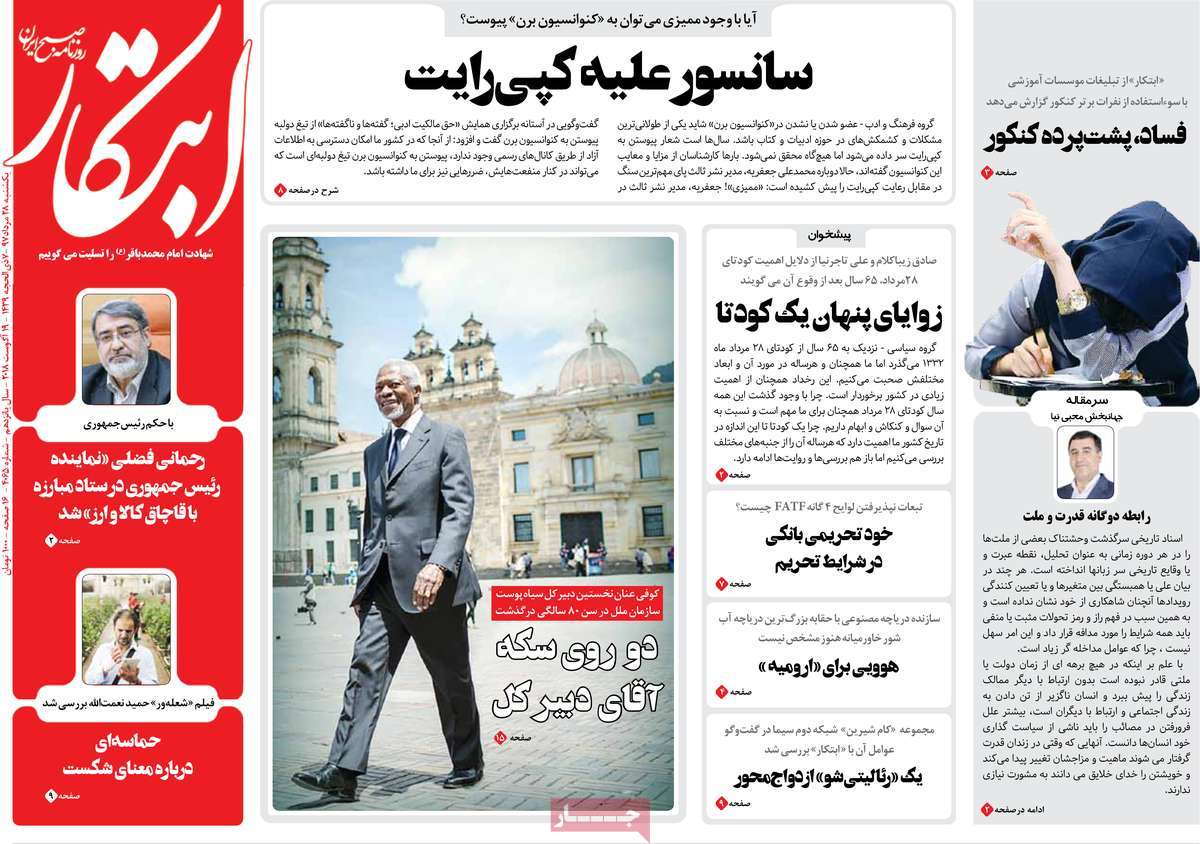
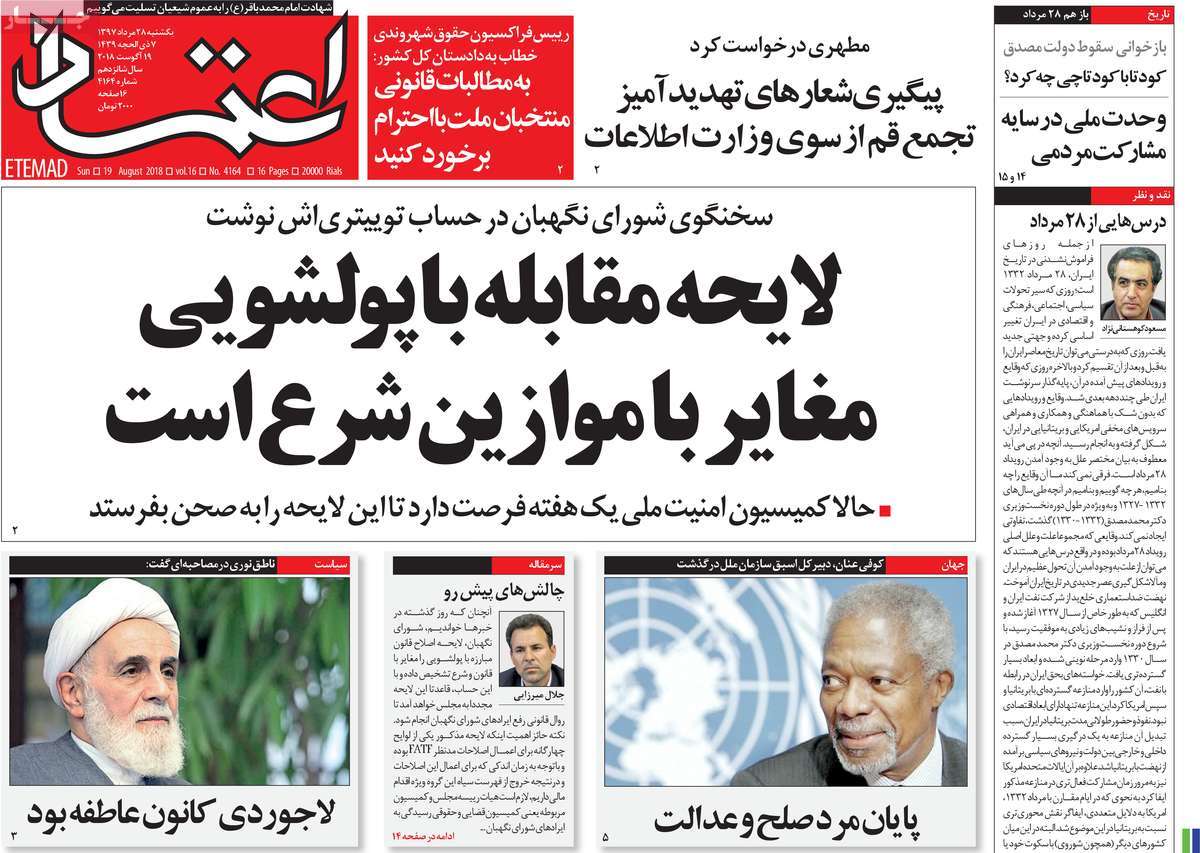
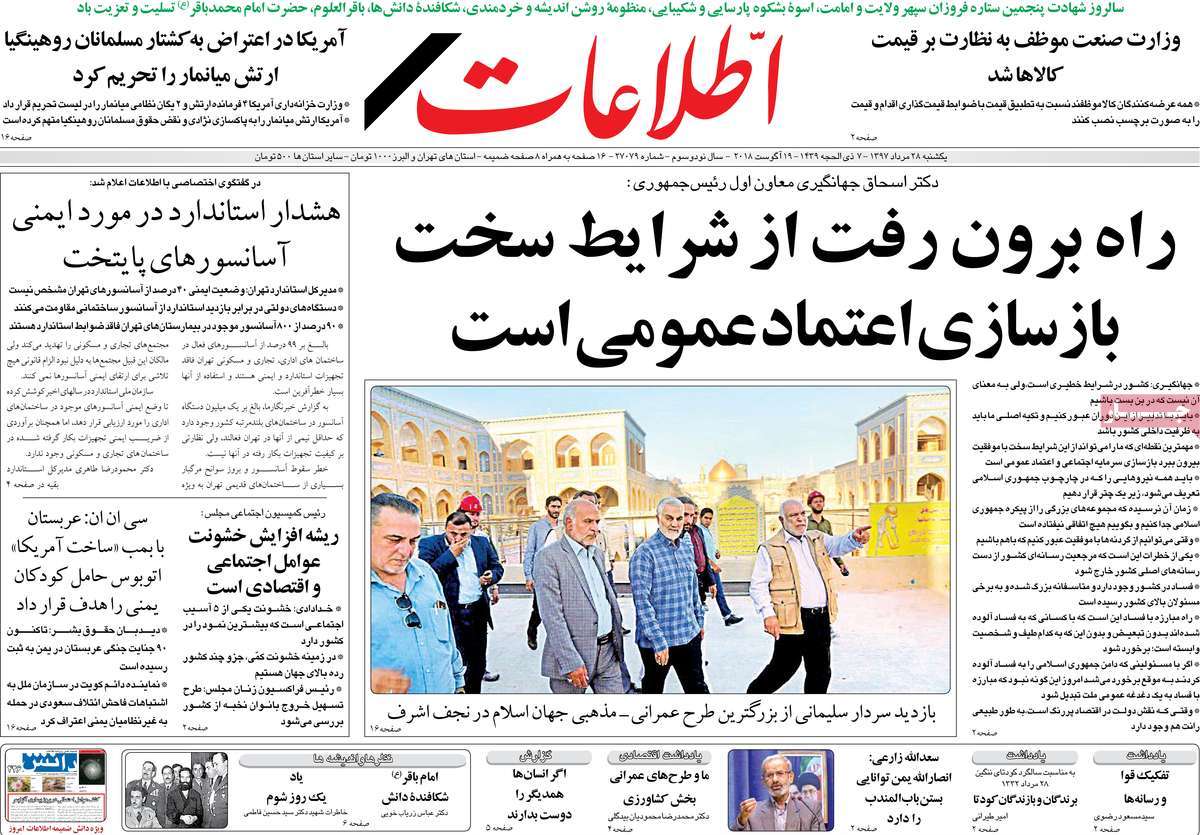
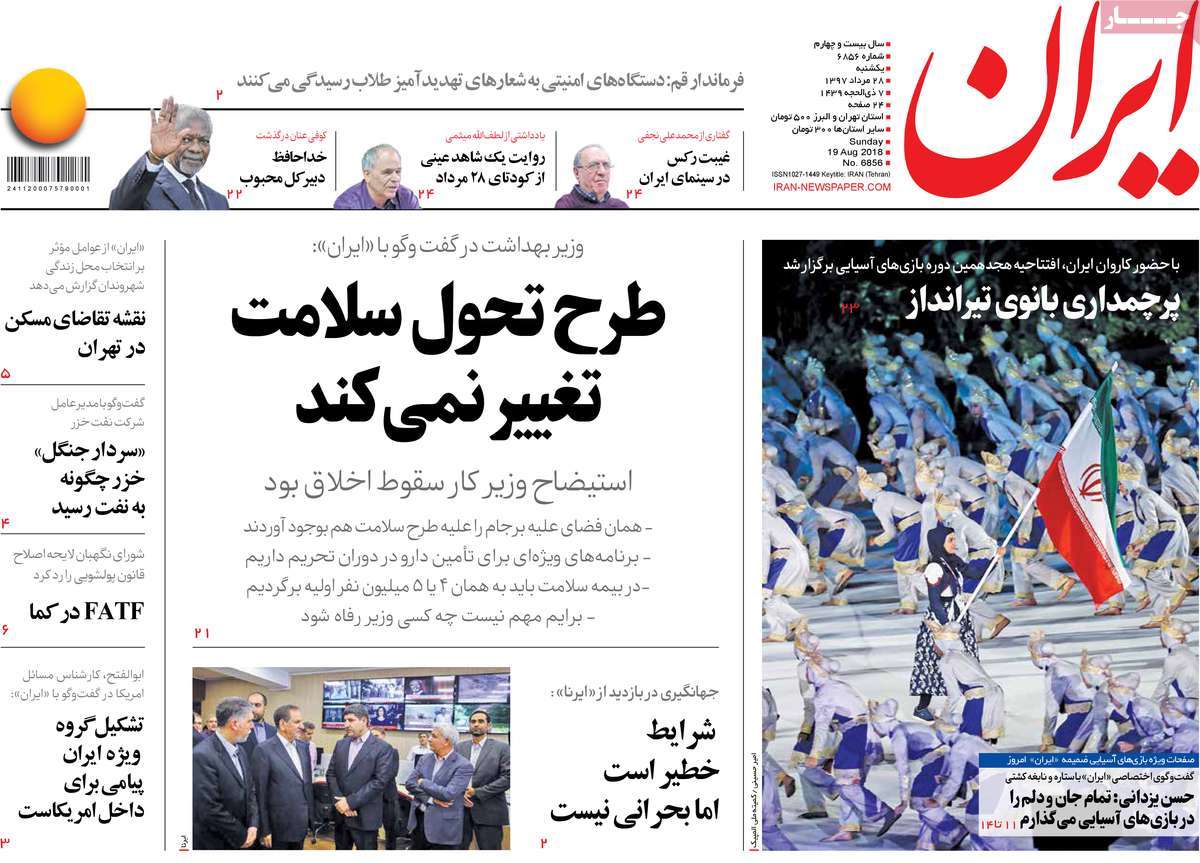
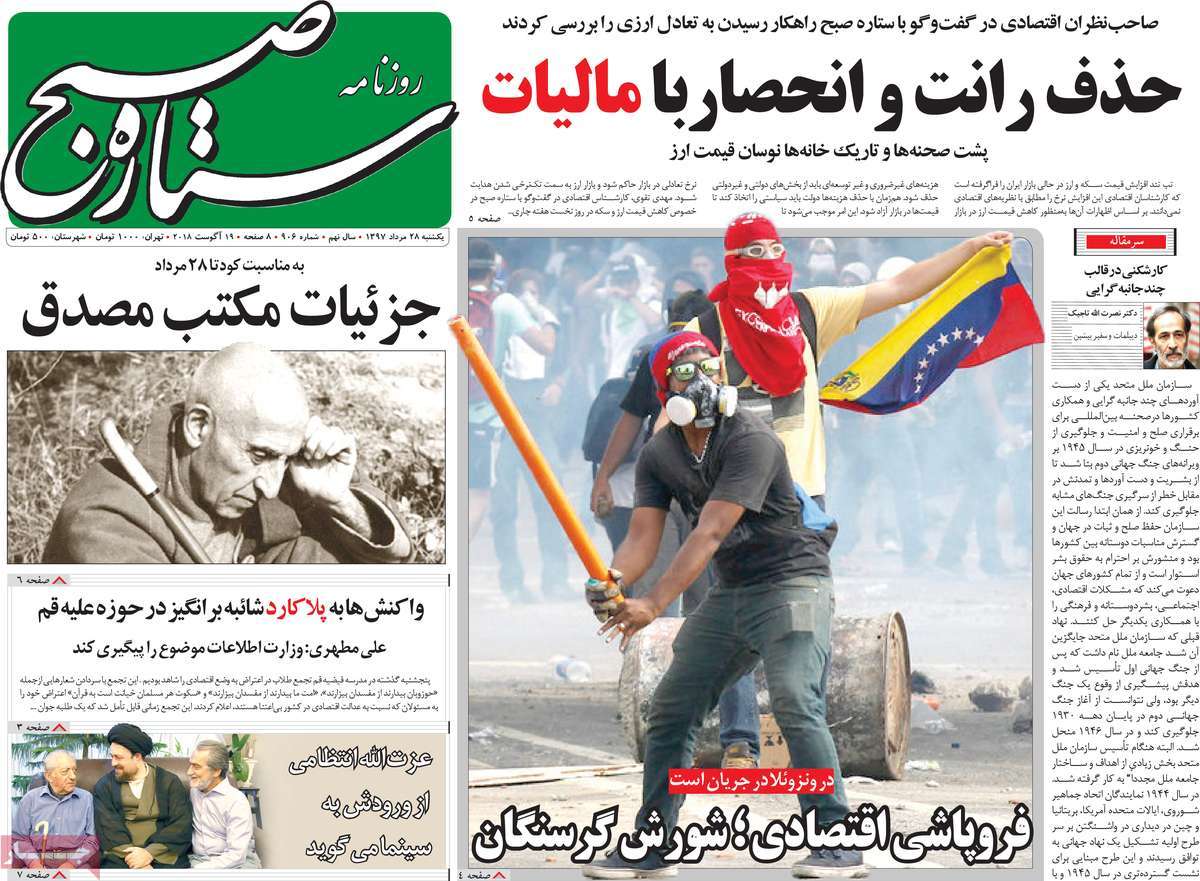
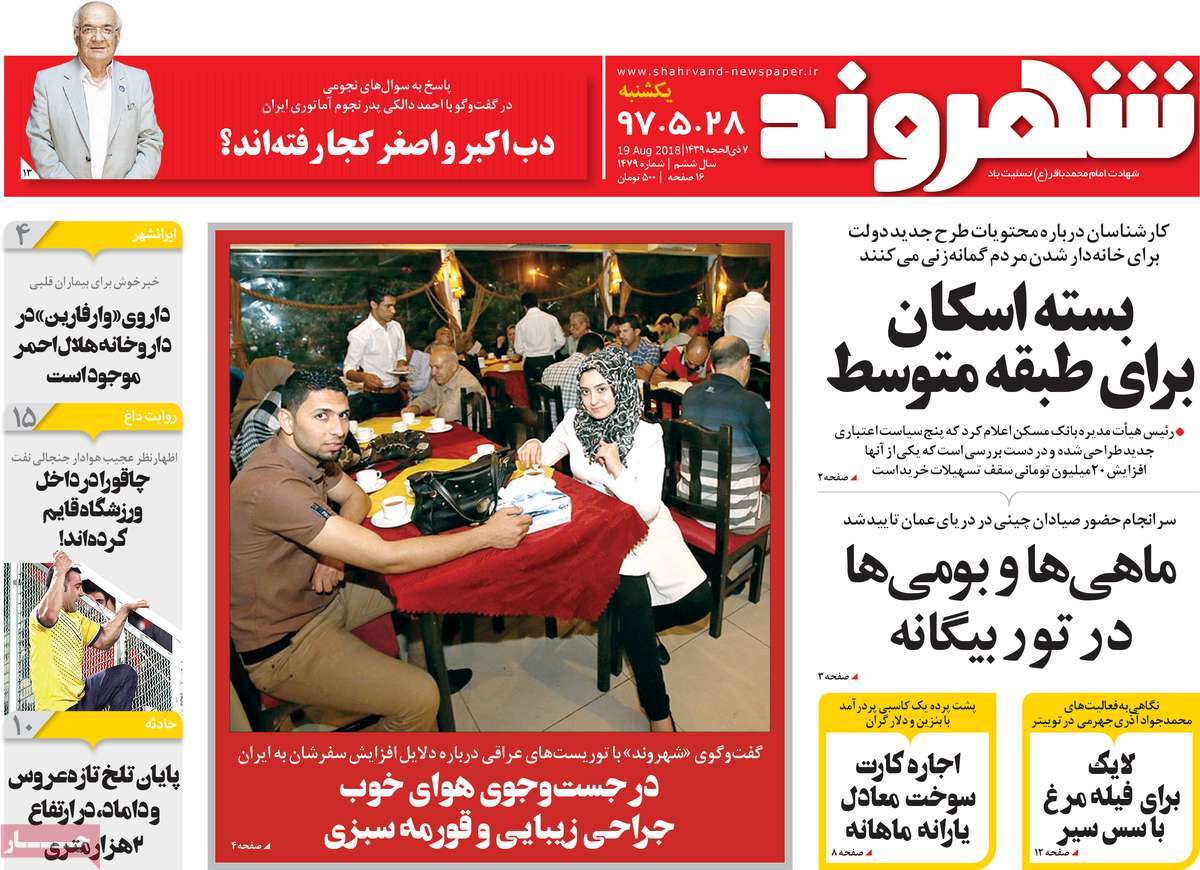
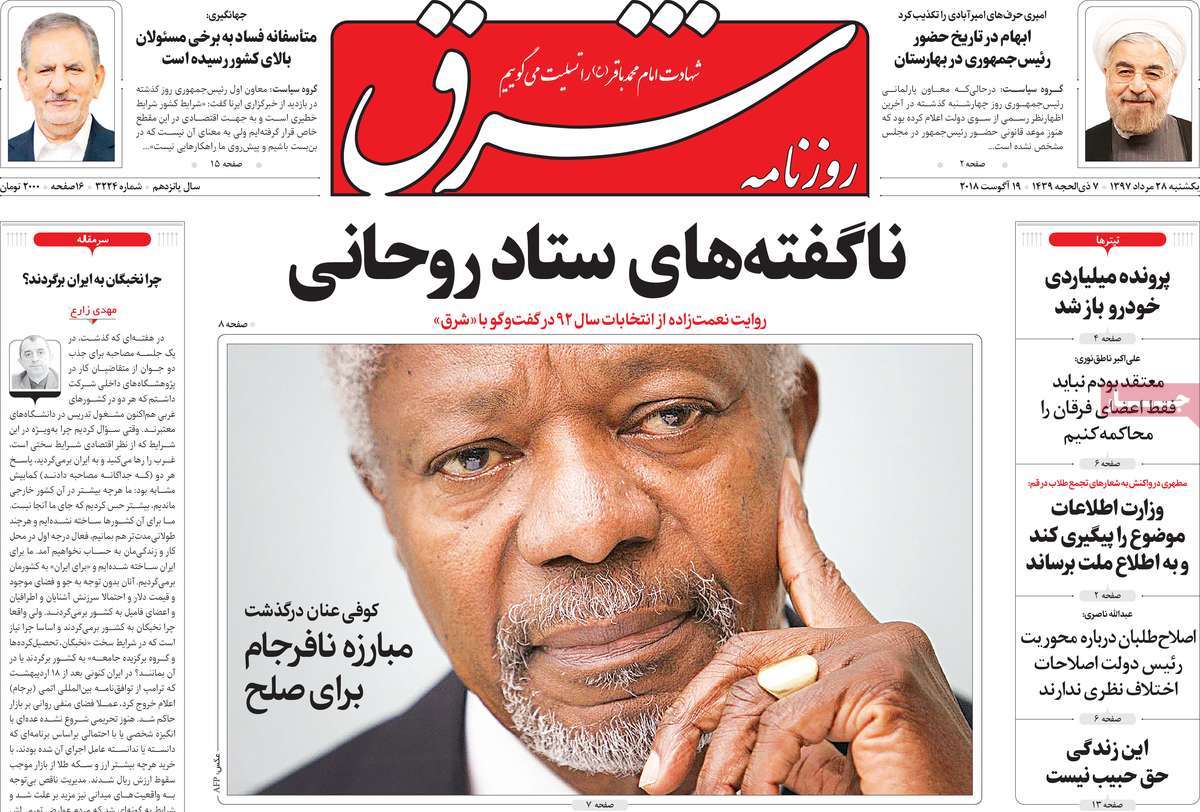
A Look at Iranian Newspaper Front Pages on August 19

A Look at Iranian Newspaper Front Pages on November 19

Several papers today marked the anniversary of the US-backed 1953 coup, which toppled the democratically-elected government of Mohammad Mosaddeq, and reinstalled the despotic Shah of Iran Mohammad-Reza Pahlavi.

Also a top story was the death of former UN secretary-general Kofi Annan, who died on Saturday at the age of 80.

The above issues, as well as many more, are highlighted in the following headlines and top stories:


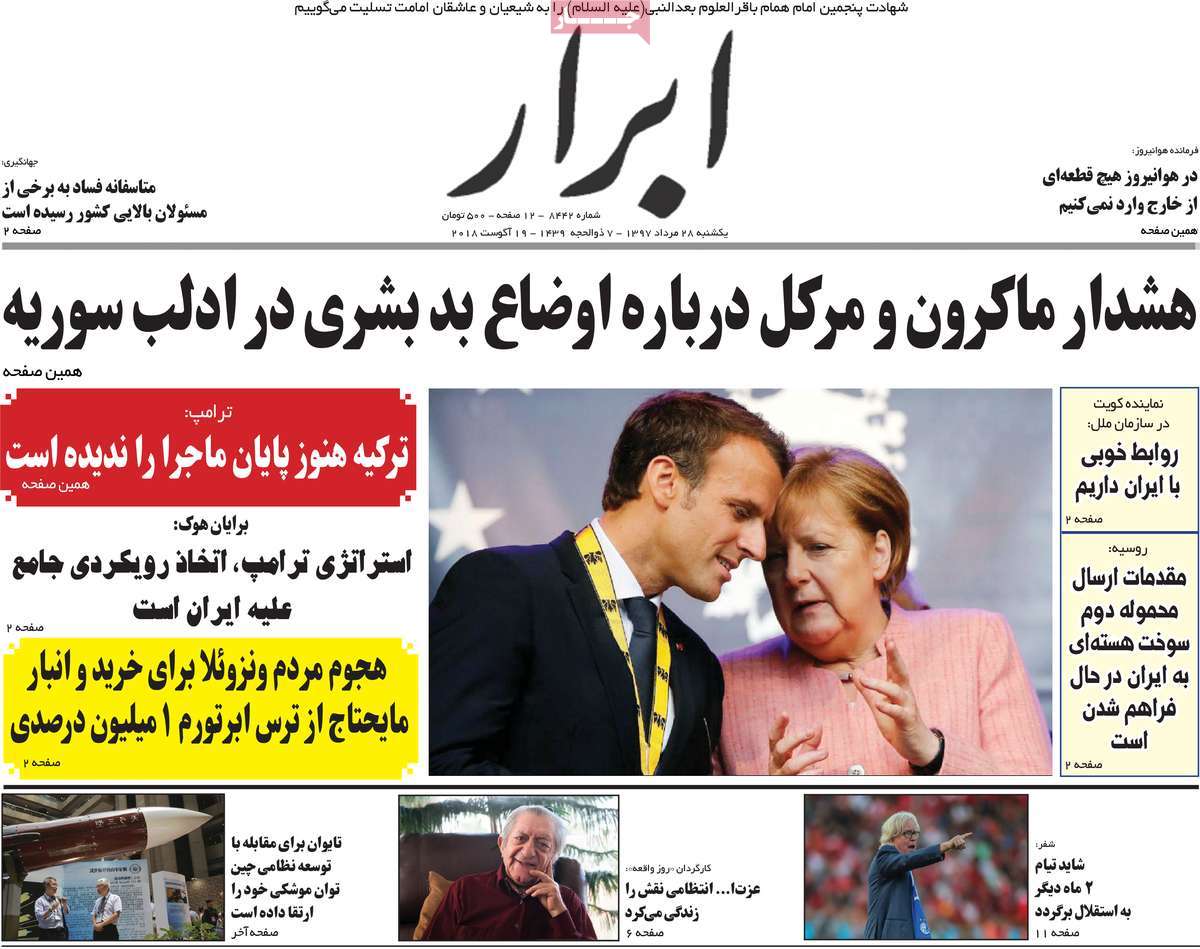
Abrar:

1- Macron, Merkel Warn about Dire Humanitarian Situation in Syria’s Idlib

2- Trump: Turkey Has Not Yet Seen End of the Story

A Look at Iranian Newspaper Front Pages on August 19


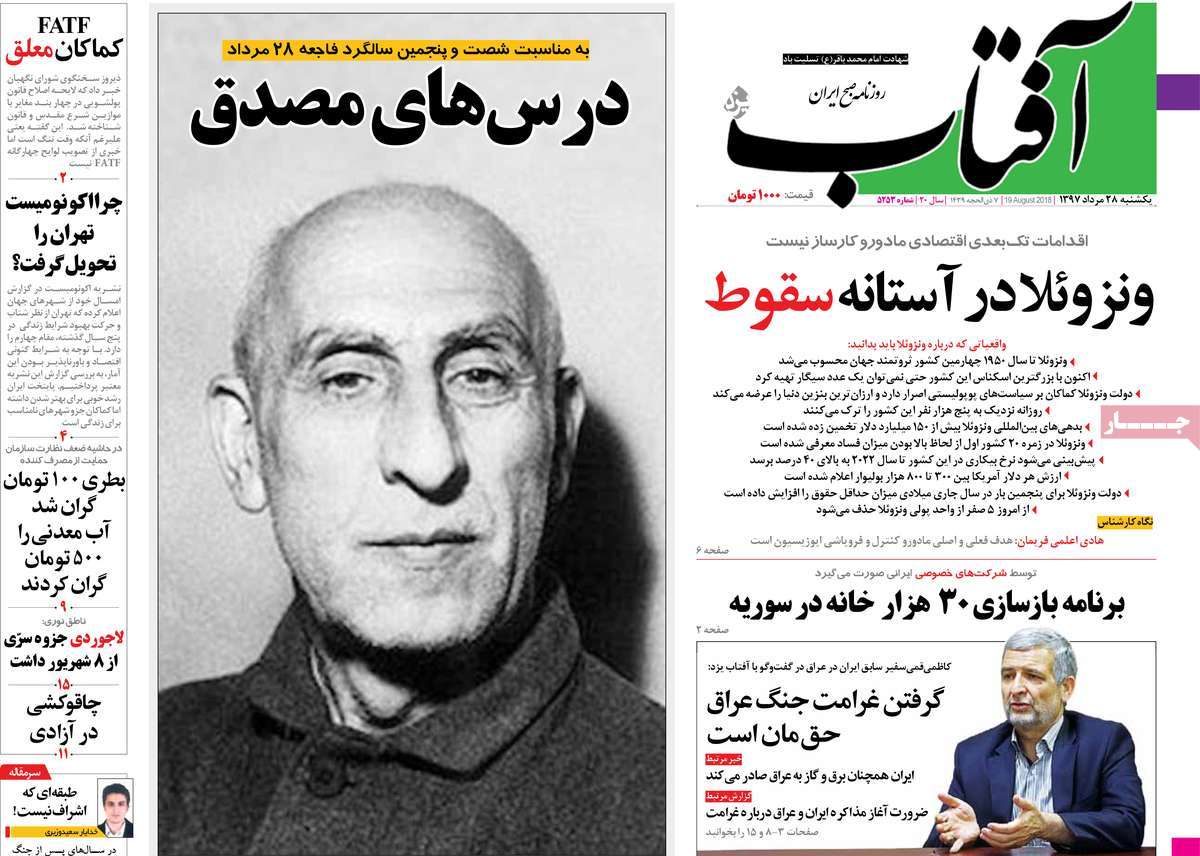
Aftab-e Yazd:

1- Venezuela on Verge of Collapse

2- Iranian Private Firms to Rebuild 30,000 Houses in Syria

3- Iran’s Former Envoy to Baghdad: It’s Our Right to Receive War Reparations from Iraq

A Look at Iranian Newspaper Front Pages on August 19


Ebtekar:

1- Two Sides of Kofi Annan’s Coin

2- Consequences of Failing to Approve, Implement FATF’s Standards for Iran

A Look at Iranian Newspaper Front Pages on August 19


Etemad:

1- Guardian Council Spokesman: Anti-Laundering Bill against Islamic Sharia

2- Demise of the Man of Peace, Justice: Kofi Annan Passes Away

A Look at Iranian Newspaper Front Pages on August 19


Ettela’at:

1- Iran First VP: Regaining People’s Trust Only Way to Overcome Hard Days

2- US Imposes Bans on Myanmar Army in Protest at Massacre of Rohingya Muslims

3- General Soleimani Visits Muslim World’s Biggest Religious Construction Project in Najaf

A Look at Iranian Newspaper Front Pages on August 19


Iran:

1- Iranian Female Shooter Flag-Bearer of Iran in Jakarta Asian Games

2- Iran First VP: We’re in Dangerous, but Not Critical, Situation

A Look at Iranian Newspaper Front Pages on August 19


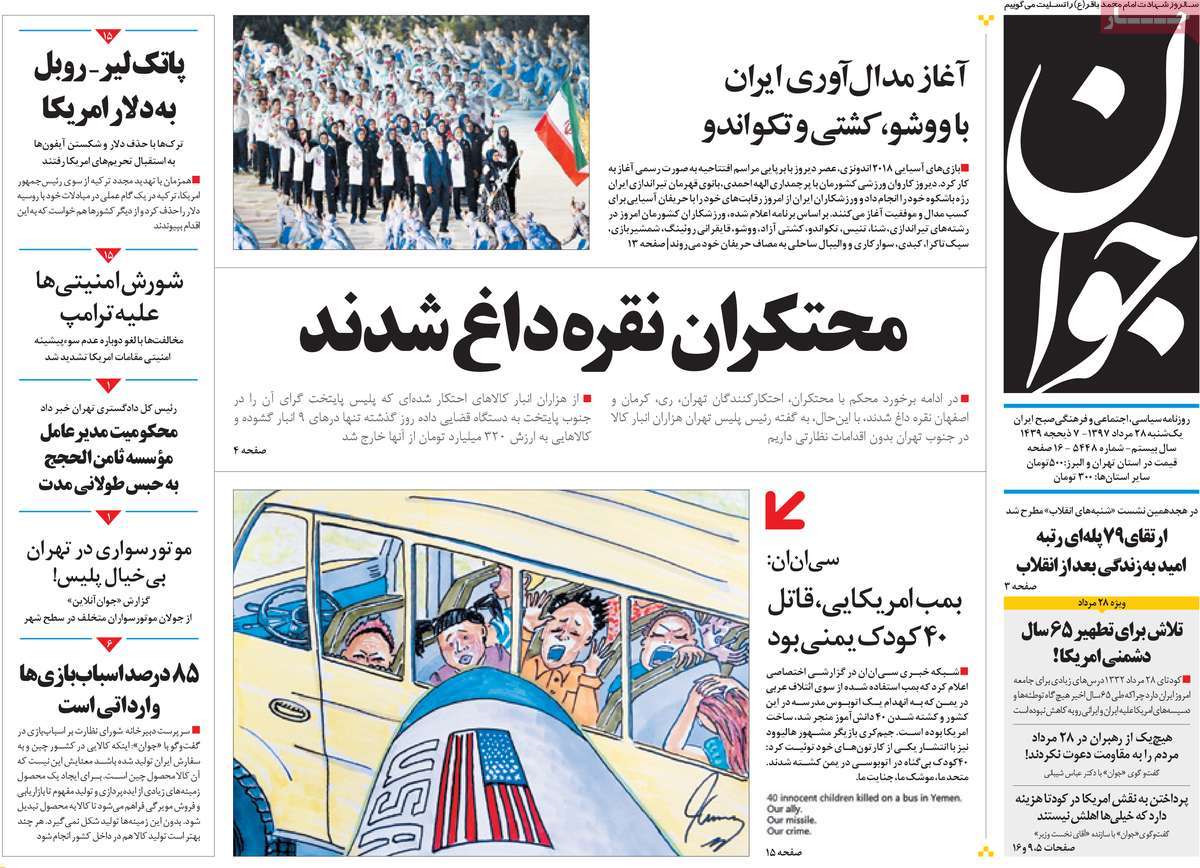
Javan:

1- Iran to Receive First Medals of Jakarta Asian Games in Wushu, Wrestling, Taekwondo

2- Lira-Ruble Counter-Attack on US Dollar

3- Rise of Security Forces against Trump

A Look at Iranian Newspaper Front Pages on August 19


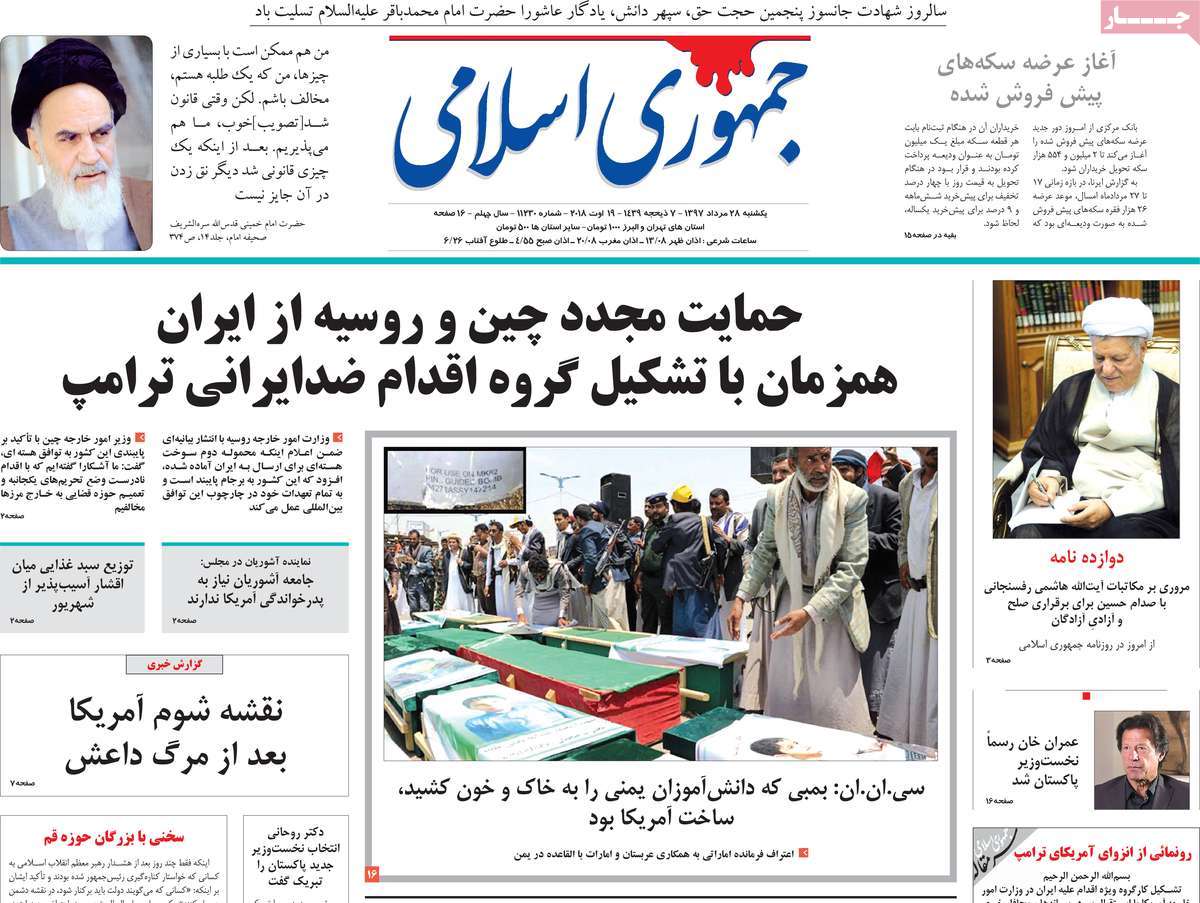
Jomhouri Eslami:

1- China, Russia Reaffirm Support for Iran as US Forms ‘Iran Action Group’

A Look at Iranian Newspaper Front Pages on August 19


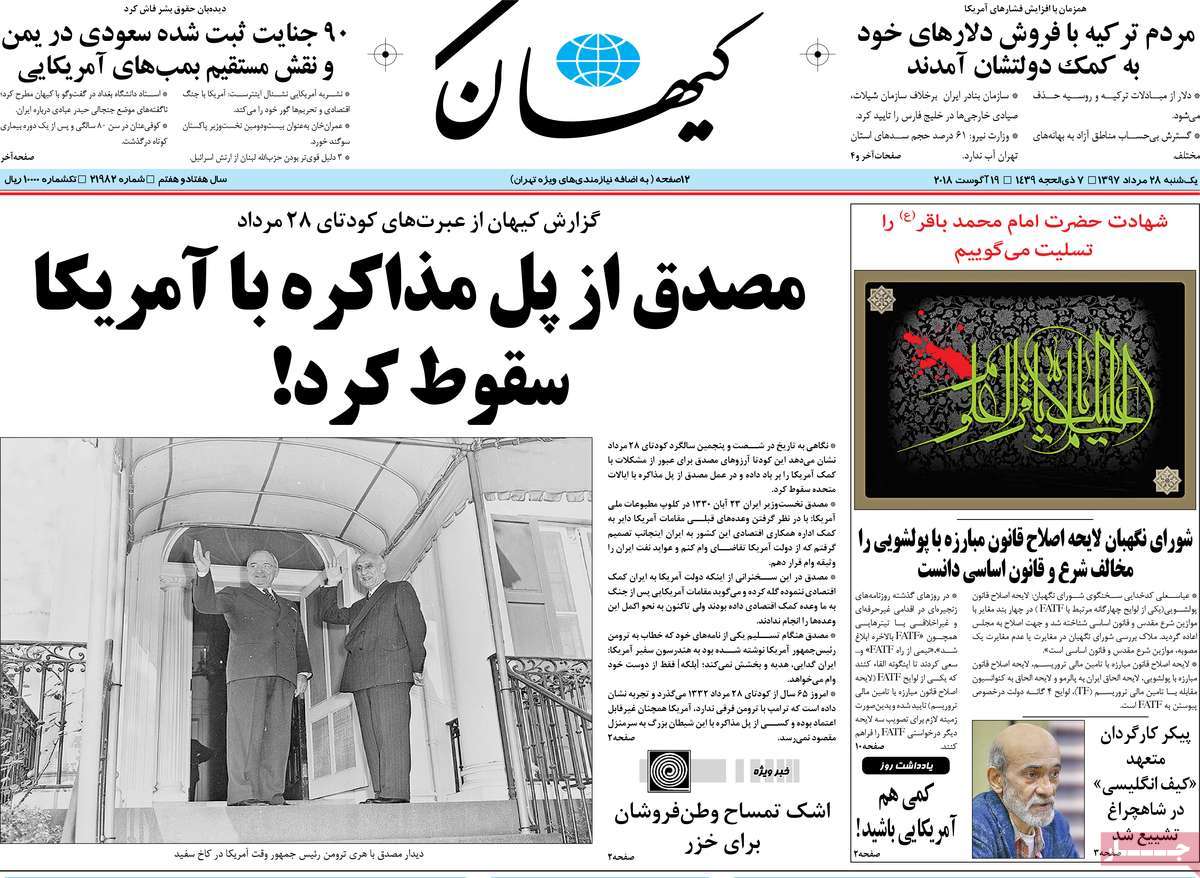
Kayhan:

1- Mosaddeq Fell Down Bridge of Negotiation with US

  • What Iran Can Learn from 1953 Coup

2- Turkish People Come to Rescue of Erdogan’s Gov’t by Selling Their Dollars aid US Pressure

A Look at Iranian Newspaper Front Pages on August 19


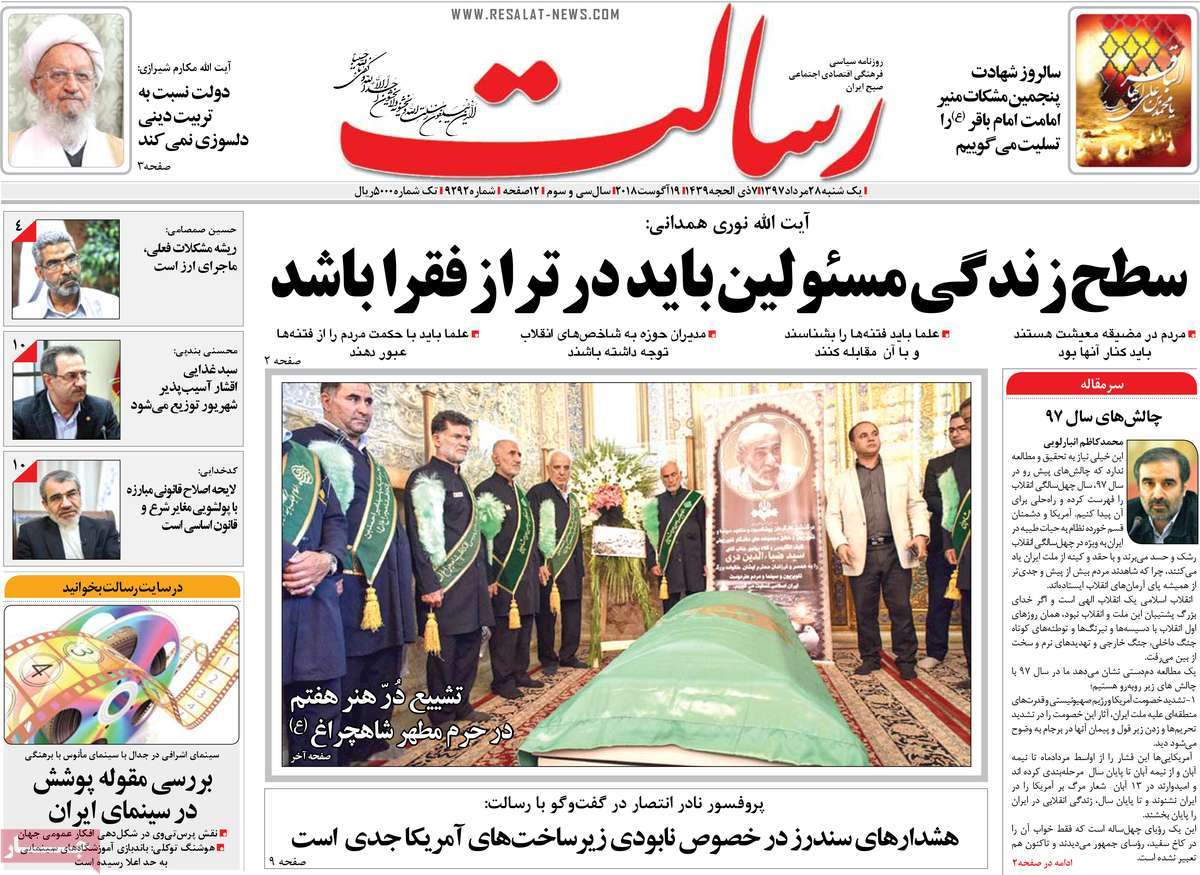
Resalat:

1- Sanders’ Warnings about Collapse of US’ Infrastructures Serious: Academic

A Look at Iranian Newspaper Front Pages on August 19


Setareh Sobh:

1- Economic Collapse: Riot of Hungry People in Venezuela

A Look at Iranian Newspaper Front Pages on August 19


Shahrvand:

1- In Pursuit of Pleasant Weather, Plastic Surgeries, Ghormeh Sabzi

  • Why Iraqi Tourists Are Visiting Iran More and More

A Look at Iranian Newspaper Front Pages on August 19


Shargh:

1- Unsuccessful Fight for Peace: Kofi Annan Passes Away

2- Why Should Iranian Elites Return to Their Country? [Editorial]

A Look at Iranian Newspaper Front Pages on August 19


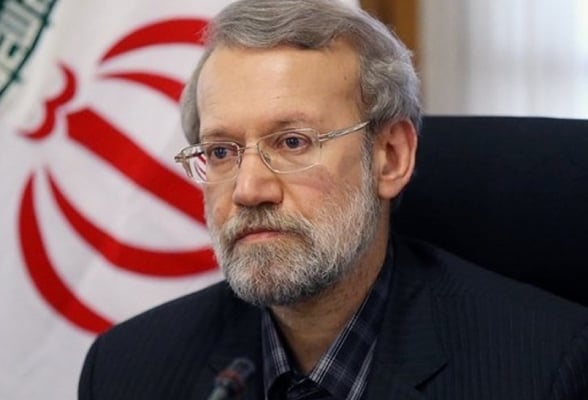
US Strategy on Iran Mirroring Policies that Led to 1953 Coup: Larijani

Ali Larijani

Ali Larijani made the statement in an open parliamentary session on Sunday, referring to a US-UK orchestrated putsch against the government of Prime Minister Mohammad Mosaddeq.

The coup restored to power the despotic former Shah Mohammad Reza Pahlavi, who was ousted 26 years later by the 1979 Islamic Revolution.

Larijani said the main motive of western governments for staging the coup was keeping huge oil profits flowing, but they pretended it was about preventing the soviet infiltration in Iran.

“The UK was controlling many oil-rich countries and it feared Iran’s model could spread to other countries, putting an end to their exploit. So they tried to stop the movement in Iran,” he said.

Larijani said the US and other western powers are following the same imperialist policies today, imposing sanctions to curb Iran’s defensive might and its regional power, while pretending they are working to promote freedom, human rights and global security.

“How dare you talk about the freedom of the Iranian nation with such a dark record in [orchestrating] the 1953 coup and creating a dependent dictatorship?” Fars News Agency quoted Larijani as saying.

Back in early May, US President Donald Trump withdrew Washington from the 2015 nuclear pact with Iran reached by his predecessor Barack Obama and other world powers, and ordered tough US sanctions on Tehran.

Earlier this month, the US re-imposed sanctions on Iran’s automotive and metal sectors, gold trade, aviation industry and other fields to exert “maximum economic pressure”.

The US is also working to push the world to cut trade with Iran and stop purchasing the country’s oil before November, when further sanctions on oil and transactions with the central bank of Iran will be restored.

This is while high-ranking US officials, including National Security Advisor John Bolton and State Secretary Mike Pompeo, have openly talked about the need for regime change in Iran, so that they can “set free” the Iranian nation.

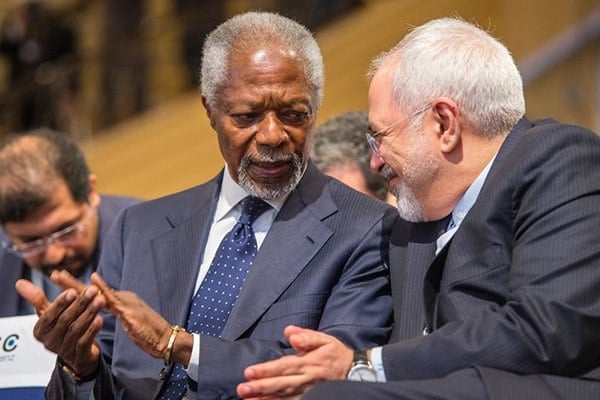
Annan’s Tenure at UN One of Most Brilliant Ones: Iran FM

In a Sunday message on the demise of Annan, Zarif said his tenure at the UN was replete with initiatives and measures which will make his name everlasting in people’s minds across the world.

The Iranian top diplomat then referred to the political and professional carrier of the late ex-secretary general and described his term in office as one of the most brilliant eras of the UN.

According to Zarif, during his term, Annan made great strides in establishing international peace and security, strengthening multilateralism and paying serious attention to the situation of the southern states.
Zarif said such efforts won late Annan the Nobel Peace Prize in 2001.
Also in a Saturday tweet, the Iranian top diplomat said he was “extremely saddened” by the passing of his old friend Kofi Annan, describing him as a “towering global leader and an unwavering champion for peace, justice and rule of law.”

Annan, the first black African to lead the United Nations, died at the age of 80 on Saturday. He served as Secretary General at a time when worries about the Cold War were replaced by threats of global terrorism.

Annan, who was born in Ghana in 1938, served as the seventh UN Secretary General, from 1997 to 2006, and was the first to rise from within the ranks of the United Nations staff.

He had also been a member, since 2007, of The Elders, a humanitarian group of a dozen leaders and activists of worldwide stature formed by Nelson Mandela. In 2013, Annan became its chairman.

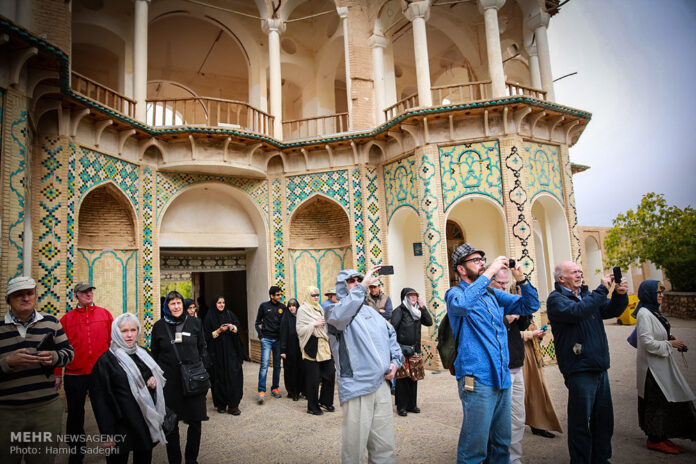
Iran Working on Plan to Stop Stamping Tourists’ Passports

Ali Asghar Moonesan, the ICHTO chief, said in a meeting on Saturday that the proposal has been approved by Iran’s Trade Ministry, Foreign Ministry and the Iranian Police and will go into effect upon the government’s ratification.

Moonesan said the aim of the proposal is to ease concerns of European visitors, who fear they might face problems in receiving the US visa if Iran’s stamp is on their passports.

He further suggested the decision will help boost the business of high-end Iranian hotels.

“Despite a 38-percent increase in the number of tourists visiting Iran [early this year] … the number of European visitors has decreased and this has negatively affected the performance of four-star and five-star hotels,” IRNA quoted him as saying.

People from countries that have the visa waiver program with the US will be disqualified from entering the US without a visa, in case they travel to Iran.

They need to go through the normal process that requires a hefty application fee and passing an interview.

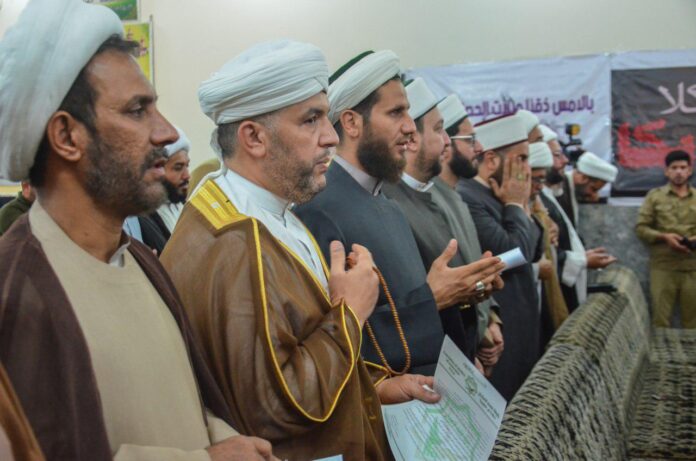
Iraqi Sunni, Shiite Clerics Call for Countering US Sanctions on Iran

In a meeting held in the Iraqi capital Baghdad, the clerics also expressed solidarity and rapport with the Muslim nation of Iran.

The clergymen participating in the event touched upon the bitter experience of sanctions that Iraq suffered for 13 years in the 1990s, calling on all freedom-seeking nations around the world to turn a blind eye to US threats and strive to counter Washington’s bans on Iran, reported the Islamic Republic News Agency (IRNA).

The participants underlined that the United States, with its unfair domination around the world and adopting a policy of imposing blockades and famine on nations, has overstepped all human and moral boundaries. They said the only way to tackle the unfair sanctions imposed on the Iranian nation is for the clergy of the Muslim world and all Muslim nations to close ranks, put free trade in place and promote relations among Islamic countries.

The top religious figures attending the event also said the United States’ history is studded with crimes against world nations, including the atomic bombardment of Japan, the war on Vietnam, the military invasion of Iraq and imposing an economic blockade on the country, and now seeking to re-impose economic sanctions on Iran.

They underscored that it will not be appropriate to remain silent in the face of Washington’s criminal policies and it falls upon all Muslim scholars and nations to stand up and foil these sanctions.

The participants underlined that Islam is opposed to genocide, stressing that economic blockade is one of the methods of genocide used by the US, a method already used against the Iraqi nation.

The participants also issued a statement at the meeting in condemnation of Washington’s unilateral sanctions on Iran.

Missile Power, Iran’s Top Priority in Defence Domain: DM

Brigadier General Amir Hatami said the Islamic republic of Iran is in a good situation in terms of missile power.

“We drew up a good plan and presented it to Parliament, the president and the commander-in-chief [of the Armed Forces], and in the six months to March 2018 we made minor changes to the priorities, and prepared the plan for the current Iranian year (ending March 2019) based on the four-year plan that was submitted to Parliament,” said the top general as quoted by Fars News Agency.

“Our focus was on priorities; our top priority is the missile issue, and we have a good situation in this domain and we needed to upgrade it,” he noted.

General Hatami said Iran has developed a range of missiles and has mostly focused on parameters such speed, being radar-evading, high precision and stability in different conditions.

The top general said good measures have been adopted in the domain of weaponry and munitions.

“For example, my colleagues did good work in the domain of ballistic and cruise missiles,” he noted.

The defence minister then underscored the importance of peace, saying that Iran has never sought to develop weapons of mass destruction, including nuclear weapons, and seeks peace.

However, he added, Iran will not allow any country to encroach upon interests.

He said an Iranian-made warplane will also make its maiden flight on National Defence Industry Day, which is annually marked on August 22.

An air defence missile system has also been developed and is passing its final test stage, the defence chief said, adding it will soon be delivered to the Armed Forces.