Thursday, January 1, 2026
Home Blog Page 348

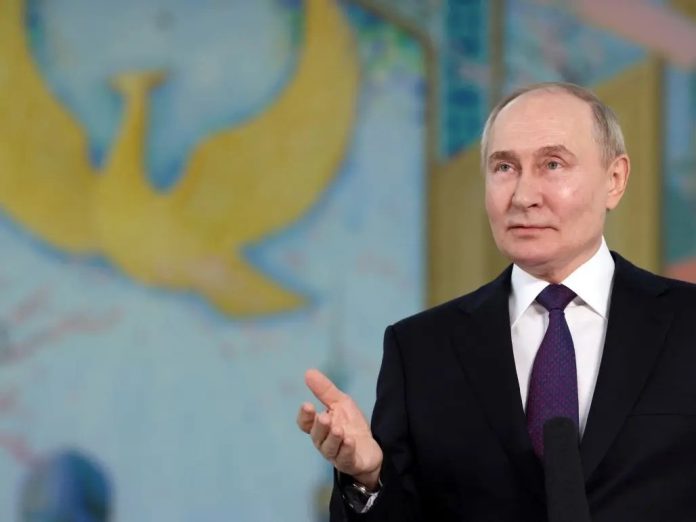
Putin visits Kursk Region, first time since full liberation from Ukrainian troops

Vladimir Putin

In late April, Putin announced the full liberation of the border areas of Kursk Region, which had been seized by Kiev’s troops after they launched an incursion last August.

During his tour of the region on Tuesday, the Russian leader visited the construction site of the new Kursk 2 nuclear power plant in the city of Kurchatov. He also held a meeting with Governor Aleksandr Khinshtein, as well as the heads of local municipalities and volunteers who have been helping those affected by the incursion, the Kremlin said on Wednesday.

Putin thanked the volunteers for “the noble, important and… unfortunately, dangerous” work that they had been doing.

“You and I are a team, and the whole country today is one united team. And this is the unquestionable success of all our endeavors. This is a necessary condition for achieving all our goals,” he stressed.

The president said that the situation in Kursk Region remains “difficult” even after its full liberation, as Ukrainian forces continue their attempts to move towards the Russian border.

Putin has also ordered an increase in the number of mine clearance specialists working in Kursk Region so that people can return home as soon as possible.

Payments to residents who lost their property during the incursion will continue, while state funds will also be allocated to repair damaged residential buildings in the region, he said.

According to Putin, a museum will be set up in Kursk Region dedicated to the efforts to repel the incursion.

Gaza reports 326 malnutrition deaths, over 300 miscarriages due to lack of essentials

Gaza War

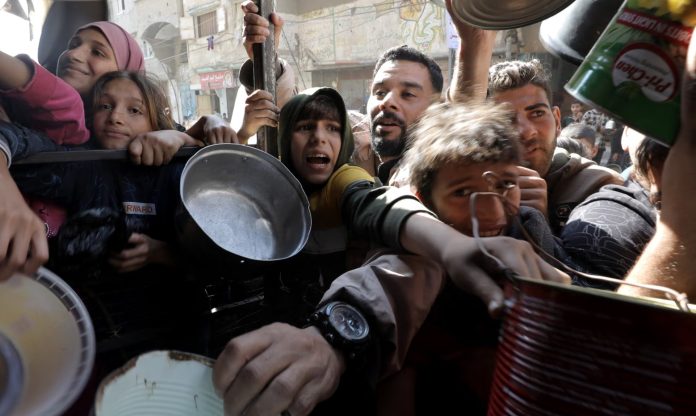
“The Israeli occupation’s starvation policy in Gaza has caused 326 deaths due to malnutrition and lack of food and medicine, along with more than 300 cases of miscarriage during these 80 days,” it said in a statement.

The statement expressed concern and condemnation for the worsening humanitarian crisis in the Gaza Strip, blaming Israel for continuing a systematic starvation policy.

It labeled the situation a “complete crime amounting to genocide,” warning of a severe humanitarian catastrophe that threatens the lives of more than 2.4 million Palestinians trapped in the besieged territory.

The Office confirmed that since March 2, Israel has completely blocked the entry of humanitarian aid, medical supplies and fuel into Gaza.

Gaza requires at least 44,000 trucks of aid on a daily basis to meet the minimum needs of its population, added the statement.

Breaking down fatalities during the 80-day siege, the Office reported 58 deaths caused by malnutrition, and 242 more from shortages of food and medicine, mostly among the elderly. Additionally, 26 kidney patients died from a lack of proper nutrition and health care.

More than 300 miscarriages were recorded, attributed to a severe deficiency of essential nutrients necessary to sustain pregnancies.

Regarding malnutrition, the Office highlighted that the weakened health of residents has caused blood donation campaigns to fail, while hospitals face acute shortages of blood units amid rising numbers of wounded patients needing urgent surgery.

The Office urged the international community and the UN to act to reopen crossings and allow the entry of food, medicine and fuel to save hundreds of thousands of civilians before it is too late.

Gaza requires 500 trucks of aid daily and 50 trucks of fuel for vital and medical facilities, it said.

Israel continues its systematic starvation of 2.4 million Palestinians in Gaza by sealing off crossings and blocking aid stockpiled at the borders since March 2, pushing the territory into famine and causing numerous deaths.

The military, meanwhile, has intensified its genocide in Gaza, with the announcement of a ground operation in the northern and southern parts of the enclave.

The army has pursued a brutal offensive against Gaza since October 2023, killing nearly 53,600 Palestinians, most of them women and children.

The International Criminal Court issued arrest warrants last November for Israeli Prime Minister Benjamin Netanyahu and his former Defense Minister Yoav Gallant for war crimes and crimes against humanity in Gaza.

Israel also faces a genocide case at the International Court of Justice for its war on the enclave.

Syrian leadership approves return of dead spy archive to Israel: Reuters

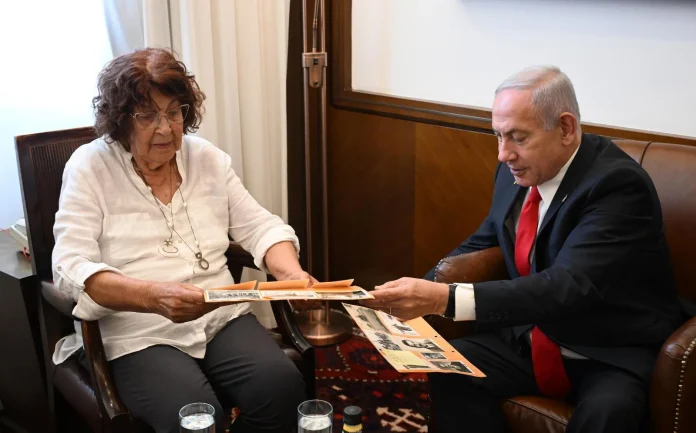
Israel announced its recovery of the trove of documents, photographs and personal possessions relating to Cohen on Sunday, saying its spy agency Mossad had worked with an unnamed foreign intelligence agency to secure the material.

However, a Syrian security source, an adviser to Syrian President Ahmed al-Sharaa and a person familiar with backchannel talks between the two sides stated the archive of material was in fact offered to Israel as an indirect gesture by Sharaa as he seeks to cool tensions and build Trump’s confidence.

Cohen, who was hanged in 1965 in a downtown Damascus square after infiltrating Syria’s political elite, is still regarded as a hero in Israel and Mossad’s most celebrated spy for uncovering military secrets that aided its lightning victory in the 1967 Middle East war.

Prime Minister Benjamin Netanyahu described Cohen on Sunday as a legend and “the greatest intelligence agent in the annals of the state”.

While Israel has long sought to recover his body for reburial at home, the return of his archive held for 60 years by Syrian intelligence was hailed by Mossad as “an achievement of the highest moral order”.

Israel has not publicly revealed how the archive came into its possession, saying only that it was the result of “a covert and complex Mossad operation, in cooperation with an allied foreign intelligence service”.

After rebels led by Sharaa suddenly ousted President Bashar al-Assad in December, ending his family’s 54-year-long rule, they found the Cohen dossier in a state security building, according to the Syrian security source.

Sharaa and his foreign advisers quickly decided to use the material as leverage, the source added.

The Syrian security source said Sharaa had realised that the Cohen archive was important to the Israelis and that its return could amount to a significant diplomatic gesture.

Ending Israeli attacks on Syria and improving relations with the United States and other Western countries are vital for Sharaa as he seeks to revive his shattered country after 14 years of war.

Israel regards Sharaa and his ex-insurgents, who once formed the al Qaeda faction in Syria, as unreconstructed jihadists. Israeli forces staged an incursion into border areas last year and have repeatedly bombed targets in support of Syria’s minority Druze sect.

This month, Reuters reported that the United Arab Emirates had set up a backchannel for talks between Israel and Syria that included efforts to build confidence between the sides.

There have also been other indirect channels for talks, according to two people familiar with the matter.

In the talks, Syria agreed to measures including returning the remains of Cohen as well as three Israeli soldiers killed while fighting Syrian forces in Lebanon in the early 1980s, a person familiar with those talks stated. The body of one of those soldiers, Zvi Feldman, has been returned, Israel said last week.

The return of the Cohen archive came in the context of those confidence-building measures and was done with Sharaa’s direct approval, the person added.

Last week, Trump held a surprise meeting with Sharaa in Saudi Arabia where he urged him to normalise ties with Israel and announced that he would lift sanctions on Syria.

Syrian officials have stated they want peace with all states in the region, and Sharaa confirmed this month that Damascus had carried out indirect talks with Israel via states it has ties with in order to calm the situation.

EU announces review of trade privileges to Israel amid Gaza war

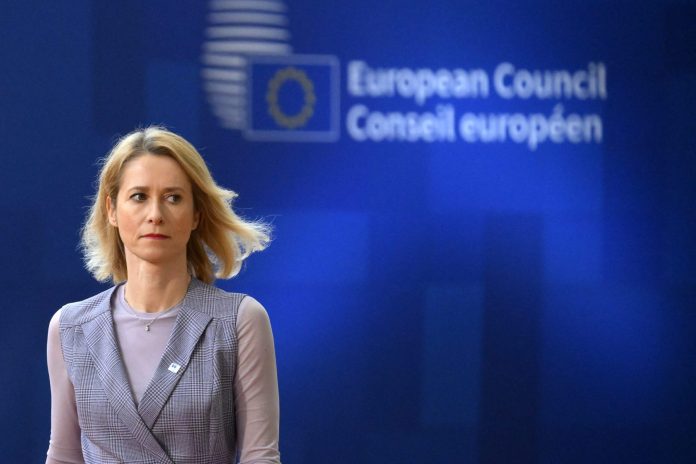
“It is clear from today’s discussion that there is a strong majority in favor of review of Article Two of our Association Agreement with Israel. So we will launch this exercise,” Kaja Kallas told a press conference after an EU Foreign Affairs Council meeting in Brussels.

“In the meantime, it is up to Israel to unblock the humanitarian aid. Saving lives must be our top priority,” she added.

Kallas described the humanitarian situation in Gaza as “catastrophic” and said EU-funded aid was being blocked at the borders.

“The aid that Israel has allowed in is, of course, welcome, but it’s a drop in the ocean. Aid must flow immediately, without obstruction and at scale, because this is what is needed.”

She stressed that “there are thousands of trucks” stuck at the borders and that “the 100 trucks that came in, it’s a welcome step, but it’s not enough, because the needs are much, much bigger.”

Kallas said that the decision to review the agreement signals strong political intent from EU member states.

“I will not say (exact) numbers, and I will not say member states, but I can say it was a huge majority for this.”

Separately, on Syria, Kallas confirmed the EU decision to lift all economic sanctions unrelated to the ousted Bashar Assad government or human rights violations.

“Is everything going very well (under the new Syrian administration)? No, it’s not. But I think the question that we have two choices, either we give, you know, Syrian people a chance … or we don’t give that opportunity,” she added.

Touching on Ukraine, Kallas said the EU had adopted a new sanctions package targeting Russia, including its shadow fleet skirting sanctions, and stressed the bloc is already working on another package.

“The only option is to put more pressure on Russia to negotiate seriously,” she said.

On energy-related sanctions, she added, “The oil price cap is clearly something that has a clear effect on Russia’s economy,” adding that “Russia’s national fund … is almost completely depleted.”

US intelligence suggests Israel preparing attack on Iranian nuclear sites: CNN

Israel Air Force

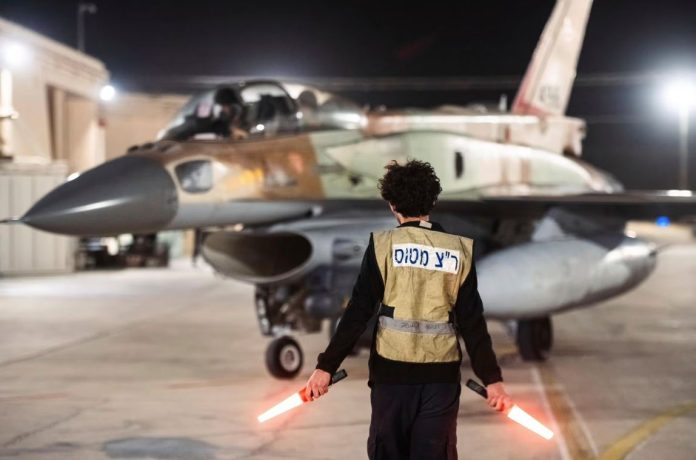
Such a move would mark a “brazen break” from President Donald Trump’s diplomatic push, US officials told CNN.

While no final decision has been made by Israeli leaders, “intercepted Israeli communications and observations of Israeli military movements” suggest an imminent strike, CNN reported, citing multiple sources familiar with the intelligence.

One person familiar with the intelligence said “the chance of an Israeli strike on an Iranian nuclear facility has gone up significantly in recent months.”

“And the prospect of a Trump-negotiated US-Iran deal that doesn’t remove all of Iran’s uranium makes the chance of a strike more likely,” the source told CNN.

The US has observed military activity in Israel, including the movement of air munitions and the completion of an air exercise, CNN reported, citing two of the sources.

However, a source familiar with the Trump administration’s thinking stated that Washington is unlikely to support an Israeli operation against Iranian nuclear sites unless provoked by Tehran.

Trump had previously warned that Iran would face “something bad” if it did not quickly accept a US proposal regarding its nuclear program.

Iranian officials have denied receiving any such written proposal, either directly or indirectly.

Iran’s Supreme Leader Ayatollah Seyyed Ali Khamenei said Tuesday that he does not believe the ongoing indirect nuclear negotiations between Tehran and Washington will lead to “any meaningful outcome.”

Iran weighs participation in next round of nuclear talks, says enrichment will continue with or without deal

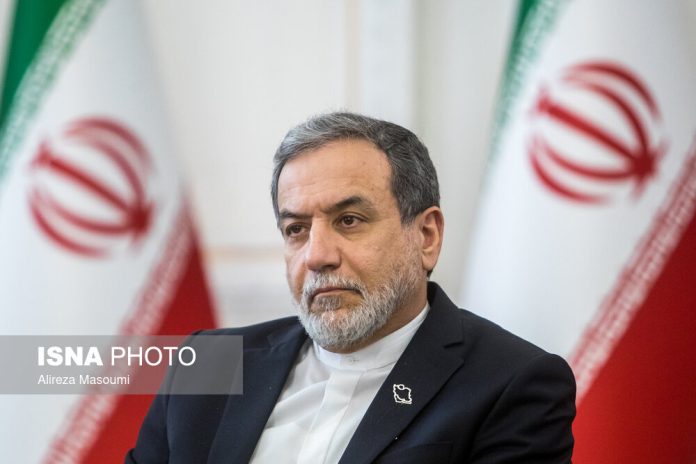
Abbas Araghchi

Speaking to reporters on Wednesday, Araghchi stressed Iran’s commitment to diplomacy while firmly rejecting “unreasonable demands from Western negotiators.”

“We have already responded to irrational requests. Such statements do not help the talks,” he said, emphasizing that Iran’s position remains clear, asserting enrichment is a sovereign right that will not be abandoned, whether a deal is reached or not.

He added that Iran remains open to transparency measures regarding its peaceful nuclear program but expects reciprocal action on lifting “unjust sanctions” imposed over unproven allegations.

Earlier in the day, Iran’s Deputy Foreign Minister for Political Affairs, Majid Takht-Ravanchi, criticized US conduct in nuclear talks, stating that negotiations should not be conducted through media channels.

He noted that while American officials often express rigid positions publicly, such as opposing any level of uranium enrichment, they frequently adopt different tones behind closed doors.

Responding to recent remarks by US envoy Steve Witkoff, who rejected all enrichment for Iran, Takht-Ravanchi emphasized that such positions are legally unfounded.

He asserted Iran’s enrichment rights under the Non-Proliferation Treaty (NPT) and stated that no member state has the authority to define another’s treaty benefits.

Iran parliament emphasizes peaceful nuclear rights, including uranium enrichment

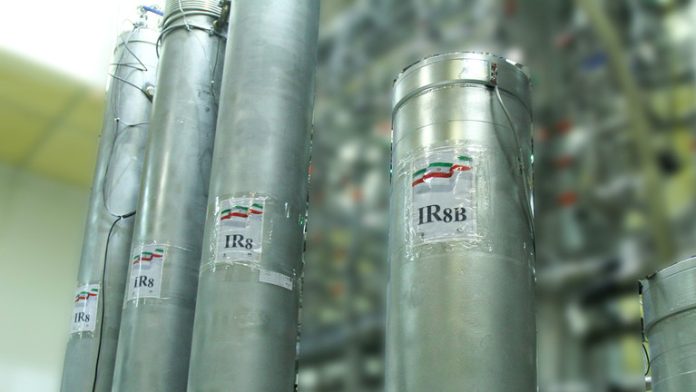
Iran nuclear program

The statement by Iranian lawmakers was read on Wednesday by Mohammad Rashidi, a member of the parliament’s presiding board, one day after the remarks of the Supreme Leader of the Islamic Revolution, Ayatollah Khamenei who had emphasized that Iran would not seek permission from the US for uranium enrichment.

The statement referred to US officials’ comments on Iran’s uranium enrichment and stressed that the American regime, which is itself grappling with deep domestic crises and successive foreign policy failures, is in no position to dictate terms to any country, especially the great and independent nation of Iran.

The Iranian parliament members also pointed to Iran’s membership in the Non-Proliferation Treaty (NPT) and its adherence to the treaty’s provisions, adding that the nuclear and enrichment activities of the Islamic Republic of Iran are entirely legal, legitimate, and in line with the NPT and the statutes of the International Atomic Energy Agency (IAEA).

The statement further emphasized the rights of the Islamic Republic as an NPT member in the research, development, production, and use of peaceful nuclear energy, stating that the peaceful nature of Iran’s nuclear activities is guaranteed through the IAEA’s safeguards and monitoring.

The statement also highlighted the applications of nuclear technology in various fields and added that the level of peaceful enrichment is not limited to low percentages under 20%, but will be determined based on the needs of the Iranian people for peaceful purposes. Renouncing this right would constitute a grave betrayal of national interests and the country’s future.

Five, including three children killed, in Pakistan school bus blast

Pakistani Police

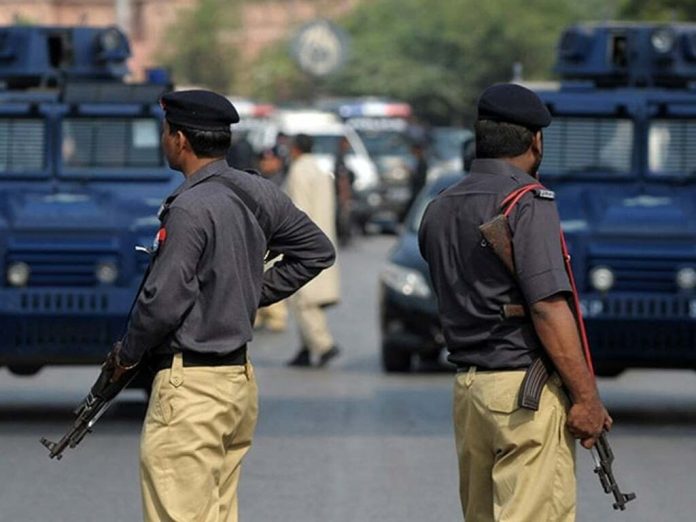
In a statement, the army said that the attack was “planned and orchestrated by India and executed by its proxies” in Balochistan, and targeted innocent school-going children in Khuzdar.

“These Indian terror proxies are being employed as a state tool… to foment terrorism in Pakistan against soft targets such as innocent children and civilians,” it added.

There was no immediate comment from New Delhi by the time of publication of this story.

No militant group has yet claimed responsibility for the attack, however, the outlawed Balochistan Liberation Army (BLA) has carried out similar attacks in the past, targeting civilians and security forces.

According to local police, the explosion came when the bus was carrying children to the school.

The Pakistani statement pointing to New Delhi was the first since the recent military escalation between the two South Asian nations that ended with a US-mediated ceasefire on May 10.

The military escalation began between the two nuclear neighbors on May 6, when India fired missiles inside Pakistan and Pakistan-administered Kashmir, hitting what New Delhi said were “nine terror locations,” triggering retaliation on May 10 by Islamabad, which said it hit 26 Indian military targets inside its eastern neighbor as well as in Indian-administered Kashmir.

Balochistan, Pakistan’s largest but least populated province, has experienced frequent insurgent violence and armed attacks, often targeting security forces.

Iranian parliament reapproves reduced working hours, Thursday closures to address Guardian Council concerns

Iran's parliament

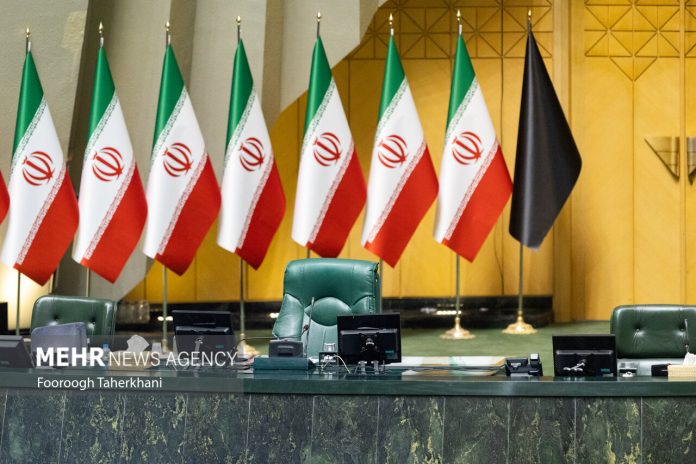
During Wednesday’s open session, lawmakers revised the bill to amend Article 87 of the Civil Service Management Law.

The previously proposed 40-hour workweek has been adjusted to 42 hours and 30 minutes. The bill allows the government to organize working schedules for all executive bodies, both national and provincial, across five days from Saturday to Wednesday, excluding military, security, and essential service units such as banks, customs offices, hospitals, healthcare centers, and sports venues.

The Administrative and Employment Affairs Organization has three months from the law’s implementation date to compile a list of exempt operational service units, which will require Cabinet approval.

In line with the changes, any laws previously based on a 44-hour workweek or 176 hours every four weeks, including the Labor Law, will now reflect the revised 42.5-hour and 170-hour benchmarks.

Some lawmakers warned that the bill may still face resistance. MP Mohsen Zanganeh highlighted that the Expediency Council had earlier objected due to concerns from the private sector, which viewed the reform as economically burdensome and misaligned with production policies.

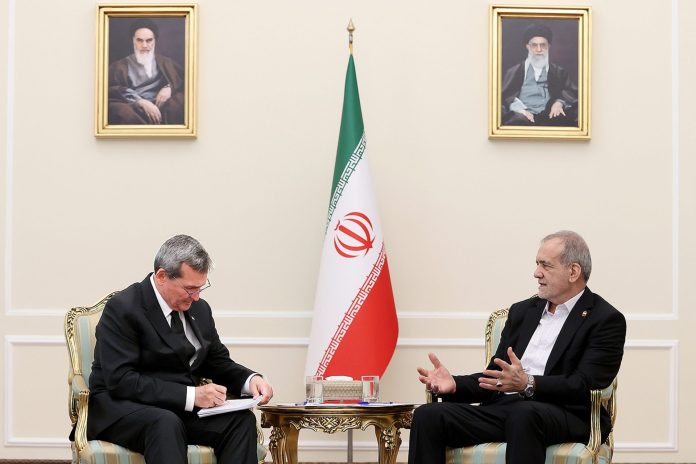
Further expansion of Tehran-Ashgabat ties to benefit both nations: Iran’s President

The Iranian president said strengthening cooperation between Tehran and Ashgabat will guarantee prosperity and security of both nations.

Pezeshkian made the remarks in a meeting with Turkmenistan’s Foreign Minister Rashid Meredov in Tehran on Tuesday, where they discussed ways to expand bilateral relations.

“Deepening and strengthening cooperation, especially joint and mutual investments between Iran and Turkmenistan, can guarantee the future prosperity, comfort, friendship and security of the two nations,” he said.

He said Iran is keen to import natural gas from Turkmenistan, while it also has the efficient capacity to export and swap gas with neighboring countries.

Pezeshkian underscored the need for building a gas pipeline between the two countries that can support multiple purposes, including domestic use, export, and gas swaps.

“In addition to energy cooperation, Iran aims to expand cooperation with Turkmenistan in areas such as transport, trade, investment, and cultural exchanges,” he said.

Meredov, for his part, said Turkmenistan sees long-term opportunities for economic cooperation with Iran and is committed to enhancing trade routes and border markets.

Meredov, who is in Tehran for the 18th Joint Economic Cooperation Commission, said Turkmenistan seeks to increase the volume of natural gas it transits to other countries via Iran amid efforts by the Central Asian state to use growing relations with the Islamic Republic as an opportunity to expand its energy exports.

Iran has signed several gas swap agreements with Turkmenistan in recent years to supply the equivalent of natural gas it imports from the country to Azerbaijan and Iraq.

The swap deals boost Iran’s ability to increase its supply of natural gas to its national grid customers in the northeast of the country, where key population and industry centers are located.

Iran also imports nearly two billion kilowatt hours of electricity from Turkmenistan each year to respond to rising demand for power in its northeast.