Sunday, April 12, 2026
Home Blog Page 3451

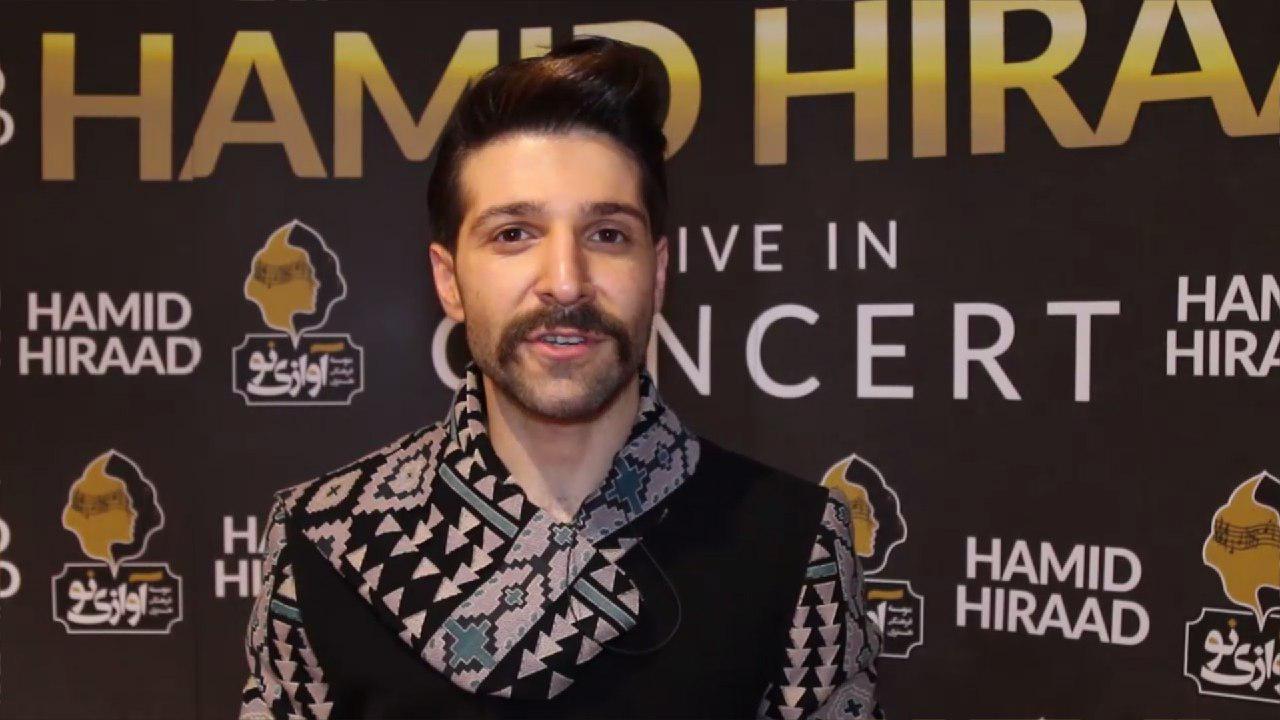
Iranian Pop Singer Sentenced to Hold Free Concert

Iranian pop singer Hamid Hirad in a concert in Tehran which he held to prove to journalists he gives totally live performance and doesn't use playback. / Photo by Musicema website

The Supervision and Assessment Department of Iran’s Culture and Islamic Guidance Ministry announced that Hamid Hirad must hold a free concert in the southern city of Shiraz because he had used a playback during some parts of his earlier concert in the same city.

Back in late July, a short clip of Hirad’s concert in Shiraz sparked public outrage on the social media as it showed the singer was not actually signing the song live, and was using a playback.

Playback refers to a performance in which the singer only does lip sync with a pre-recorded song. This type of performance is usually used in TV shows or halls which are not appropriate for live concerts.

Iranian Pop Singer Sentenced to Hold Free ConcertIn reply to the heavy criticisms levelled against him, Hirad invited reporters to attend his next concert to make sure he sings and performs live. He did his best to prove to his audiences during the concert that there is no playback at work in his concerts. Despite his efforts, criticisms against his Shiraz concert scandal never faded away.

The concert scandal was not the first controversy surrounding Hirad. He had earlier grabbed the headlines after being accused by a large number of songwriters of plagiarism. They maintained that unlike what Hirad claims, he was not the writer of his songs. They said the singer has used their poems after changing their words and lines.

The accusations made the concert scandal even more controversial. However, some pop singers put their weight behind Hirad saying that the opponents are seeking to tarnish his image as a thriving pop singer.

Now a probe by the Culture Ministry reveals that Hirad used playback in some parts of his Shiraz concert.

“Till now, we had no report on use of playback during concerts and it seems the Culture and Islamic Guidance Ministry should introduce some regulations in this regard,” said Majid Foroughi, the Head of the Public Relations Department of the ministry.

Meanwhile, Mehdi Ranjbar, a Deputy Head for Art Affairs at the Culture and Islamic Guidance Department of Shiraz, said Hirad is set to hold a free concert in the city. He said except for the free concert, Hirad has been banned from holding any concert in Shiraz until the end of the current Persian year (due to end in March 2019).

The sentence comes as many other Iranian singers with more popularity compared to him had used playback during their concerts. After Hirad’s concert scandal, some of them confessed to using it and some others preferred to remain silent not to have their image tarnished.

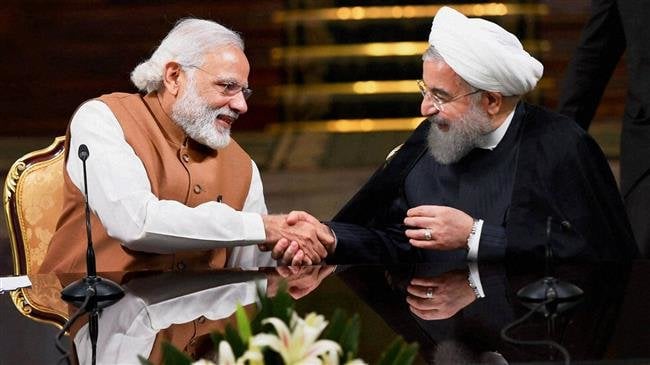
US Gives India Waiver on Oil Imports from Iran

The waiver would allow Indian companies to continue importing about 1.25 million tonnes of oil per month from Iran until March 2019.

“India and the US have broadly agreed on a waiver. India will cut import by a third, which is a significant cut,” a source said, as quoted by the New Delhi-based Economic Times newspaper.

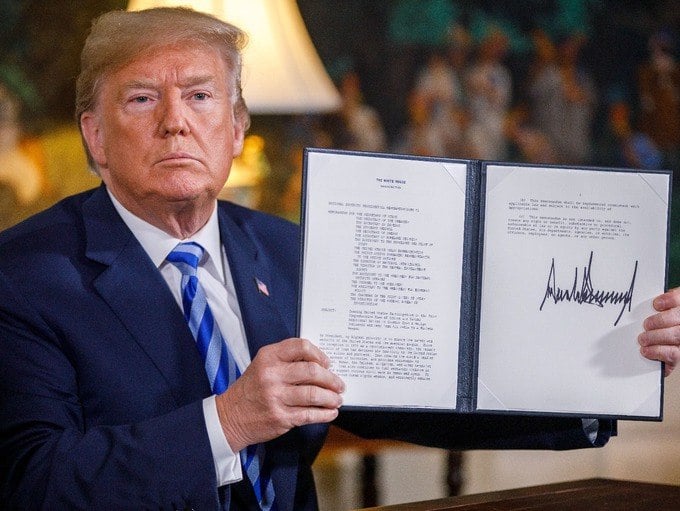
The administration of US President Donald Trump is preparing to launch the second wave of sanctions against Iran from November 4 in which a universal ban on the country’s oil exports appears to be a primary objective.

US officials have already said the sanctions would be meant to bring down Iran’s oil exports to zero. However, Iranian officials have repeatedly rejected the feasibility of this, stressing that international consumers cannot afford to lose Iranian supplies.

India had imported about 22 million tonnes of crude oil from Iran in 2017-18 and planned to raise that to about 30 million tonnes in 2018-19. But, as a condition of waiver, Indian oil firms will reduce their imports significantly, the source added.

Indian companies can import 1.25 million tonnes a month up to March 2019, the same as they ordered for October and November, the Economic Times wrote adding that an official statement on that front would be made within the next few days.

State oil firms are yet to decide on how this quantum will be split between them. A waiver will come as a big relief to Indian Oil and MRPL, the two largest Iranian oil consumers.

The Economic Times added that it was still not clear how Indian companies would pay for imports of Iranian oil and that a mechanism for the same purpose was still under negotiation between Iran and India.

It added that the two countries were likely to stick to the existing mechanism under which 55 percent of payment would be made in euro and 45 percent in rupee through India’s UCO Bank.

Under this, rupee is used for import of rice, drugs, and other products from India while the balance proceeds in rupee and euro sit idle in the Indian bank waiting for sanctions to go.

Iran, India, Russia to Discuss Building Alternative to Suez Canal

The International North-South Transport Corridor (INSTC), a multimode network of sea and rail routes, will link the Indian Ocean and the Persian Gulf via Iran to Russia and North Europe.

The project comes in the backdrop of China’s multi-trillion-dollar One Belt One Road initiative. Within Iran, the two routes overlap in a potential boon to future businesses.

New Delhi has been actively courting Tehran, given the utmost importance it attaches to the route and Iran has been receptive.

Once operational, the corridor will allow India to send its goods to Bandar Abbas in Iran by sea, from where they will be transported to Iran’s Bandar Anzali on the Caspian Sea by road. Next, they will be shipped to Astrakhan in Russia and transported into Europe by rail.

The route will cut the time and cost of delivering goods by about 30 percent to more than 40 percent. Compared with the Suez Canal, the corridor will reduce the transport time between Mumbai and Moscow to about 20 days. The estimated capacity of the corridor is 20 to 30 million tonnes of goods per year.

India’s Union Commerce and Industry Minister Suresh Prabhu on Saturday met a Russian business delegation in New Delhi, where he said “all issues may be resolved in order to operationalize the (INSTC) route as early as possible.”

An official statement said India, Russia and Iran will hold a trilateral meeting on November 23 to make the route operational soon, Indian media reported Tuesday.

“The INSTC is the shortest multimodal transportation route linking the Indian Ocean and Persian Gulf via Iran to Russia and North Europe,” India’s Ministry of Commerce and Industry said in the statement.

To access resource-rich Central Asia, India has to route its goods either through China, Europe or Iran. The routes through China and Europe are long, expensive and time consuming, with Iran being the most viable one.

The first dry run of the INSTC was conducted in August 2014 and the second in April 2017.

India is seeking to leverage the strategic Chabahar port in southeast Iran to link with the INSTC.

The country has committed $500 million to Chabahar that it is building chiefly to crack open a trade and transport route to landlocked Afghanistan.

Last week, senior officials from the two countries met their counterpart in Tehran to discuss a full commissioning of the port that the three countries are jointly developing.

It was the first trilateral meeting of the Coordination Council of the Chabahar Agreement, coming in the face of fresh sanctions imposed by Washington on the Islamic Republic.

“All sides shared the view that a full operationalization of the trilateral Chabahar initiative will promote connectivity and economic development of Afghanistan and the region,” India’s External Affairs Ministry said in a statement.

For landlocked Afghanistan, the corridor means opening the way to billions of dollars in trade and cutting the country’s dependence on foreigners for aid as well as stemming the illicit opium trade.

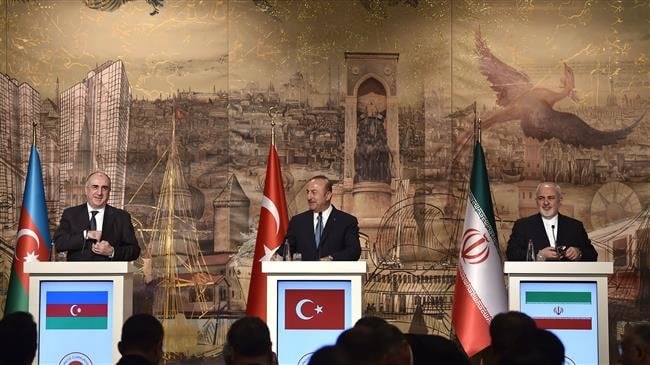
Tehran, Baku, Ankara Have Similar Stances on Mideast: Zarif

Zarif made the remarks in a joint press conference in Istanbul, Turkey, on Tuesday with his Turkish and Azerbaijani counterparts Mevlut Cavusoglu and Elmar Mammadyarov, respectively, following their sixth trilateral meeting.

“Cooperation among Tehran, Ankara and Baku is very important for development of the three countries, development of the region, the improvement of living conditions and the promotion of regional peace and security which is unfortunately facing with multiple challenges,” the top Iranian diplomat said.

He expressed hope that regional issues, particularly problems of the Syrian, Palestinian and Yemeni peoples, would be solved peacefully.

Zarif said, “We have always emphasized that regional issues should be settled based on [the principles of] international law and through peaceful methods.”

Elsewhere in his remarks, the Iranian foreign minister said the three sides also agreed to hold one meeting among their private sectors, adding it would be a “very important step” to boost regional cooperation.

Tehran, Ankara, Baku oppose unilateral decisions: Cavusoglu

The Turkish foreign minister, for his part, said Tehran, Ankara and Baku oppose unilateral measures on regional issues and believed that common and multilateral decisions must be made in this regard.

The three countries agreed that regional issues should be solved peacefully and through dialogue, he added.

Cavusoglu called for the continuation of joint cooperation to promote stability, peace and security in the region and said trilateral economic ties would also serve the interests of all regional states.

He further said Turkey has continued its cooperation with Iran after the United States withdrawal from a 2015 multilateral nuclear agreement signed between the Islamic Republic and the P5+1 group of countries.

The Turkish foreign minister emphasized that his country is holding consultations with European countries on the continuation of cooperation with Iran.

Earlier this month, Turkish President Recep Tayyip Erdogan slammed as unjust the United States’ move to impose sanctions against Iran and threaten to further toughen them.

Tehran, Baku, Ankara Have Similar Stances on Mideast: Zarif

He emphasized that the US had taken the wrong path by threatening and using blackmail instead of dialogue, saying it was impossible for any country to trust Washington.

US President Donald Trump announced in May that Washington was pulling out of the nuclear agreement, officially known as the Joint Comprehensive Plan of Action (JCPOA), which lifted nuclear-related sanctions against Tehran in exchange for restrictions on Tehran’s nuclear program.

A first round of American sanctions took effect in August, targeting Iran’s access to the US dollar, metals trading, coal, industrial software, and auto sector. A second round will be targeting Iran’s energy sector and financial transactions.

Azerbaijan calls for enhanced transport cooperation with Iran, Turkey: Mammadyarov

The Azerbaijani foreign minister said his country called for the expansion of cooperation with Iran and Turkey in trade and transportation sectors.

The last meeting among the Iranian, Turkish and Azerbaijani foreign ministers was held in the Azeri capital of Baku in December 2017, and the one before that in the northern Iranian city of Ramsar in April 2016.

World stands up to US sanctions: Zarif

Speaking to IRNA on the sidelines of the tripartite meeting, the Iranian foreign minister said the international community is standing up to the US sanctions against Tehran.

He added that the neighboring countries and Europeans nations have resisted against Washington’s unilateral measures.

“The Americans have not achieved their predicted goals by [imposing] illegal sanctions against Iran,” Zarif said.

He warned of the outcomes of Washington’s unlawful sanctions against Tehran and said, “Unfortunately this law-breaking country (the United States) wants to punish a country (Iran) that is abiding by law.”

This method will have severe consequences for the world order, Zarif pointed out.

The top Iranian diplomat told reporters upon his arrival in Istanbul on Monday that nothing new would happen after the imposition of the second batch of US sanctions.

Tehran, Baku, Ankara Have Similar Stances on Mideast: Zarif

“The possibility that the US will be able to achieve its economic goals through these sanctions is very remote and there is certainly no possibility that it will attain its political goals through such sanctions,” the top Iranian diplomat said, emphasizing that the new US sanctions would mainly have “psychological effects.”

Iran has stayed in the JCPOA for the time being, but has stressed that the other parties to the agreement have to work to offset the negative impacts of the US pullout for Iran if they wanted Tehran to continue to remain in it.

Europe has been taking a range of measures to meet Iran’s demand for practical guarantees.

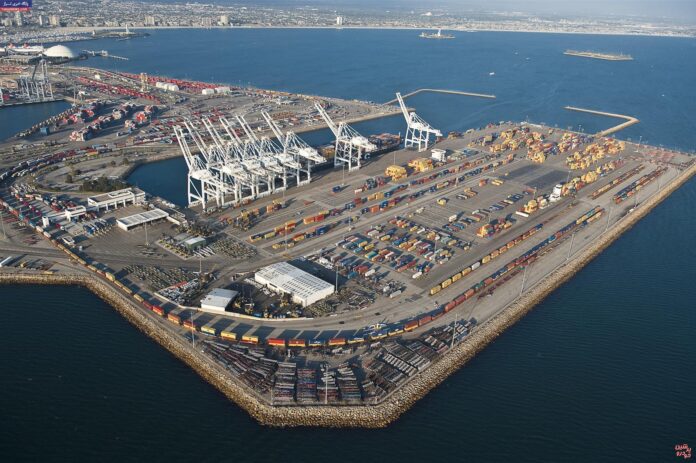
Iran’s Chabahar Port to Play Key Role in Future Economy of Region

India, Iran and Afghanistan have been involved in negotiations on the development of the Chabahar port since 2003. Chabahar was stuck and delayed for a long time due to the UN sanctions on Iran. The Indian government rushed in after the lifting of UN sanctions, earlier the same year (2016) on January 16 with the signing of JCPOA, the nuclear deal between Iran and world powers, before the situation deteriorated again. India, Iran and Afghanistan finally signed Chabahar port agreement on May 23, 2016.

“Studies show that… the (transport) corridor could bring down cost, time of cargo trade to Europe by about 50%,” India’s Prime Minister Narendra Modi said after the agreement was signed with Iran’s President Hassan Rouhani and Afghanistan’s President Ashraf Ghani.

Future plans include an International North-South Transport Corridor (INSTC) through Iran to Russia and Europe.

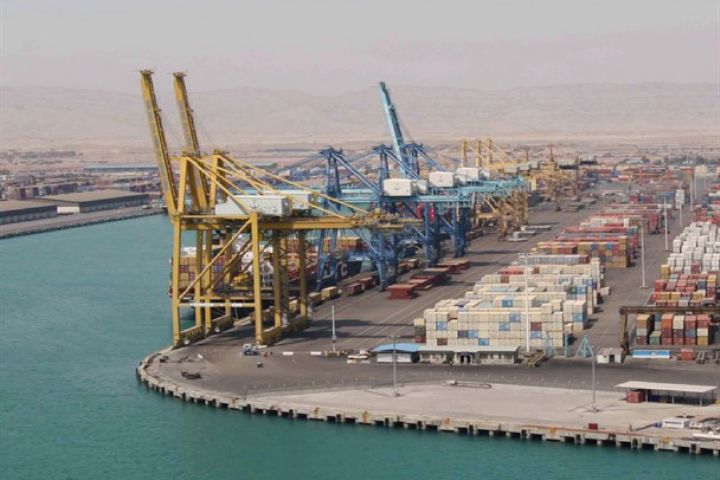
“The capacity of Chabahar’s Shahid Beheshti Port increased from 2.5 million tonnes to 8.5 million tonnes after the completion of the first phase, which was inaugurated on December 3, 2017.”

In the first phase of the port, 15 million cubic metres of dredging, 203 hectares of new land, and 1,650 breakwaters have been constructed, and its basin depth is 16.5 square meters. Currently, 100,000-ton ships are capable of mooring, and this can play a significant role in the import and export of basic goods.

Under the agreement signed in 2016, India is to equip and operate two berths in Chabahar Port Phase-I with capital investment of USD 85.21 million and annual revenue expenditure of USD 22.95 million on a 10-year lease.
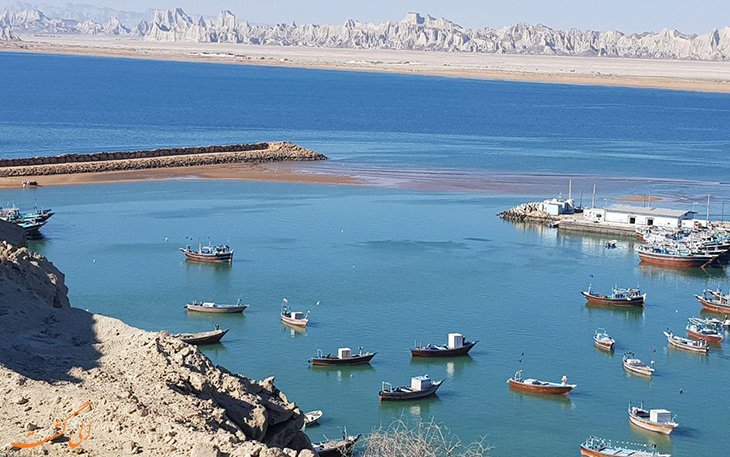
Iran’s Chabahar Port to Play Key Role in Future Economy of RegionThe next four phases of Shahid Beheshti Port will be completed and put into operation, which will eventually reach 82 million tonnes. A total of $1 billion has been spent on preparing and equipping the first phase of Chabahar’s Shahid Beheshti Port.

Chabahar Port is an interconnector between South-East Asia, Central Asia and Afghanistan. The development of Chabahar Port is a driving force for Iran’s economic development, especially in its South East, and port operations can create added value and employment in the south-east of Iran.

The first trilateral meeting between Iran, India, and Afghanistan within the framework of the Coordination Council of the Chabahar Agreement was held on October 23, 2018 in Tehran.

The Indian delegation was led by Secretary of Economic Relations T.S. Tirumurti; the Iranian delegation by Deputy Minister of Transport Mohammad Rastad; and the Afghan delegation by Imam Mohammad Warymoch, the Deputy Minister of Transport. An exclusive interview with Warymoch, the Deputy Minister of Transport of Afghanistan, on the proceedings of the meeting follows at the end of the article.

Detailed discussions were held between the three sides on full operationalisation of the trilateral Agreement for international transit and transport through Chabahar Port. All sides shared the view that full operationalisation of trilateral Chabahar initiative will promote connectivity and economic development of Afghanistan and the region.

It was decided to constitute a Follow-up committee that would hold its first meeting within two months in Chabahar Port, Iran. It would, inter alia, discuss and aim to finalise protocol to harmonise transit, roads, customs, consular matters that was shared by the Indian side at the meeting for making the route attractive, decrease logistic costs and pave the way for smooth implementation of the Trilateral Chabahar Agreement.

It was decided to hold the next meeting of the Coordination Council in the first half of 2019 in India.

A senior Afghan official stated off the record that the US sanctions are affecting trade scaring off Afghan businessmen.

“The amount of Afghan trace via Chabahar is quite small. What we need is clarity around Sanctions. Traders are unwilling to use the new route with the uncertainty.

There are also troubles with using the banking sector to pay for goods traveling through Chabahar, or even using international shipping companies.

The Indian government officials and people in foreign policy circles (journalists, think-tankers) talk about Chabahar a lot, even making tall claims. But so far they have not done anything concrete to make the Chabahar route into Afghanistan and Central Asia an economically feasible trade route with significant volume of trade handled.”

Jamal Bahrebar, Investment & Marketing Counselor at the Chabahar Port Authority (under PMO (Ports & Maritime Organization of Iran) says, “There are some equipment. Our agreement with Indian company IPGL is to operate and install more equipment. The agreements for the construction of the 2nd phase have not been chalked out yet.

The existing agreement between Iran and India is 18 months period. After 18 months they planned to go for long time agreement which is for 10 yrs. As decided in Tuesday’s meeting, India’s IPGL will start operation within 2 weeks for the 18 months agreement

For the Year 2018, the trade volumes via Chabahar are:

Oil and non-oil: 1,484,473 tonnes

Container: 47,152 TEU

There has been a lot of uninformed loose talk on Chabahar in Indian media articles and think-tanks (Indian and foreign with a New Delhi chapter) conferences & papers. Chabahar and Gwadar aren’t competing military bases! Iran isn’t allowing India to use Chabahar as a military naval base nor has India asked for it.

Yes, they are competing ports but only in the economic sense. Even there the trade isn’t exactly mutually-exclusive (zero sum game) competing but rather is complementary. Only someone who hasn’t looked at maps can indulge in such loose talk in on-record quotes to media or in op-eds or speaking at think tank panels. Otherwise, to be brutally honest, on US payroll to parrot the “String of Pearls” theory of Chinese encirclement of India to try draw India in a conflict with China in the Pacific ocean citing these imaginary threats. This term “String of Pearls” itself is dismissed as silly in serious Indian foreign policy circles. Interestingly, the term was coined by Christopher Pehrson in a 2006 research paper for the US Army War College.

Coming back to the issue of complementarity of trade and not outright competition even in the economic domain between Chabahar and Gwadar can be understood by just looking at maps! China is well connected to Central Asia and Afghanistan for trade, India however needs Chabahar for it, in the untapped region with great potential for mineral exports that both India and China as booming economies need. China’s usage of Gwadar is for multiple uses- both trade and military, as per reports. Now for China, the trade via Gwadar would be primarily with the middle-east and Africa, where China has great investments and imports from. Other than that the Gwadar-CPEC route would be short for exports by Central Asian countries outside of China. Moreover since the sea route is always cheaper, the Gwadar- CPEC route has a significant strategic importance for China- to be used as a contingency if US tries to choke the Malacca strait sea-route.
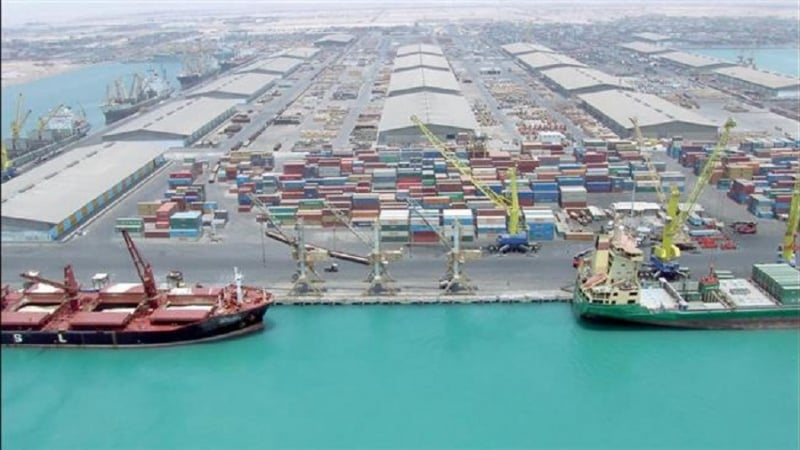
Iran’s Chabahar Port to Play Key Role in Future Economy of RegionAn Indian businessman trading with Afghanistan via Chabahar says off the record that, Gwadar and Chabahar are barely 70-80 km away from each other. There is a rat race going on between China and India to develop trade routes in the region. China has invested a lot in CPEC and Gwadar.”

Indian wheat shipments going to Chabahar however are marred with logistical issues.

India’s Border Roads Organisation (BRO) in its first project in Afghanistan constructed the Zaranj-Delaram highway connecting to Chabahar port via Iranian highways.

It was way back in 2005 that India was trying to route wheat shipments to Afghanistan through Chabahar.

There were no direct vessels going to Chabahar even from Dubai!!

Indian government officials are neither proactive nor do they think out of the box.

Indian businessmen have tried to do a vessel movement but a vessel movement has to be to and from and it cannot come empty from one side.

Then a lobby in Afghanistan is affected by the wheat exports by India via Chabahar.

The price of wheat falls down in Afghanistan and local traders don’t like it. Now the wheat from India goes as a grant, wheat biscuit, etc. but how commercially feasible is it in the long term.

An Afghan businessman lost 3-4 million dollars shipping via Chabahar. Additionally there was the issue of payment being delayed to the Iranians.

Moreover, given the unimaginative thinking of the Indian officials this route is proven to be more expensive, as fleets are, many a times, going empty from one side.

Sometime back, the ships used to go from Dubai to Bandar Abbas and would be reach Chabahar after one or two weeks from Iran’s Bandar Abbas!

China is already far ahead in the region, getting a head-start as Iran was affected by sanctions. Moreover Gwadar port had natural advantages over Chabahar that gave China an upper hand in its development. Gwadar is a natural deep water port whereas the Chabahar port needed the construction of wharfs

Another point of Chabahar connecting CIS countries via Zaranj, Afghanistan, into Turkmenistan, Uzbekistan and Tajikistan with the current situation and poor security in the south of Afghanistan and other customs border charges / transshipment related issues – the same also does not look feasible unlike a tried and tested logistics movements via Bandar Abbas.”
Iran’s Chabahar Port to Play Key Role in Future Economy of Region

Interview with Imam Mohammad Warymoch, Deputy Minister of Transport of Afghanistan:

Q. What are the major takeaways from Tuesday’s meeting?

A. It was a major promotion and gain in development, move on coordination in the implementation, what had we done in the past by the name of agreements, by the name of procedures and in commitments. So Tuesday’s coordination meeting was very good and fruitful. Afghanistan, India and Iran had evaluations and suggestions for better implementation of the agreements. So we can say it was a development in the process. Also taking new steps for the future of making great achievements, especially in Chabahar border. In the next meeting in India we will evaluate the progress of work.

Q. What are the measures discussed today to increase Afghan exports/ imports via the semi- operational Chabahar port?

A. Afghanistan proposed that exports through the Chabahar port. The Iranians agreed and now in Chabahar there are major infrastructure projects being completed. Now the capacity exists for exports and imports.

Q. When is the port expected to be completed at full planned operational capacity? Have any discussions been held regarding the amount of investment and the time required for it?

A. The completion is expected to be at full operational capacity. Negotiations are going on. There are some projects that should be completed by Afghanistan, by Iran and also India. Still these projects are under construction and evaluation and this is an ongoing process

The exact amount of investment has not been discussed. A major decision taken so far is that there will be a follow-up committee from technical teams of the 3 countries that will monitor the progress, study the opportunities and challenges in the future. Regular meetings of the follow-up committee will take place. They will provide their assessments to the political leadership of the 3 countries for taking decisions … on next projects. Besides that, a new committee is working on the evaluation and monitoring of the progress.

The meeting was very successful. There was optimism about the key role in transit for the Chabahar port in the near future; in exports and imports from Central Asia and Afghanistan to South Asia. There are measures still to be taken; especially inside Afghanistan we need infrastructure — new terminals and other facilities.

We should work together and we can say that Chabahar will play a key role in the future economy of the region. There will be another conference to market the opportunities for investment in Chabahar, which should be in Afghanistan as per plans. We plan to invite Central Asian countries beside these 3 countries (Afghanistan, India and Iran) there.


Five Reasons Why Trump’s Iran Sanctions Will Fail

Trump’s goal in reinstituting the sanctions is to kill the nuclear deal, to bring Iran’s economy to the point of total collapse, to contain Iran’s regional involvement in Syria, Iraq and Yemen, and, in spite of Washington’s denials, presumably to celebrate the collapse of Iran’s ruling regime. The White House’s official position is that, by increasing economic and political pressure, it aims to bring Iran back to the negotiating table in order to replace the JCPOA with a new deal that bears Trump’s name.

There are at least five reasons why Trump’s strategy will fail.

First, while the United States seeks to cut Iran’s oil exports to zero, it has become clear that this is impractical; there is no viable replacement for Iran’s 2.5 million barrels per day in oil exports. While Saudi Arabia previously claimed it had made up for any shortages, experts believe that Riyadh and its allies do not have the capacity to fully offset the loss of Iranian oil. Now that Iran’s oil exports have dropped to an estimated 1.5 million bpd – down from more than 2.5 million before the US withdrawal from the JCPOA in May – the price of the OPEC reference basket has gone up to around $76. If forecasts indicating that it could jump to $100 per barrel are correct, the price hike will make up for Iran’s loss of revenue even if Tehran’s exports are cut further to 1 million barrels.

Second, Trump’s trade war with China and the US imposition of economic sanctions against Russia make Beijing and Moscow less likely to work with Washington on Iran.

Moreover, the White House cannot count on cooperation from the European Union, which initiated nuclear negotiations with Iran in 2003 and which sees the JCPOA as one of its signature foreign policy achievements. Further, the EU increasingly views extraterritorial sanctions as a threat to its own identity and independence.

French Finance Minister Bruno Le Maire said recently that the “outcome of that crisis with Iran will be the chance for Europe to have its own independent financial institutions, so we can trade with whoever we want.” In the past, cooperation with all major powers was critical to creating an effective Iran policy.

Third, US sanctions have laid the groundwork for a historic change in the global financial system. For many decades, the US dollar has dominated the international financial markets. However, American withdrawal from the JCPOA has encouraged countries such as Russia, China, India and Turkey to use their local currencies to trade with Iran. If Europe succeeds in creating a financial system that is separate from the US dollar, other states can use euros in trade with Iran, diminishing US domination of global markets.

Fourth, the remaining signatories to the JCPOA view the nuclear deal as a means to counter American unilateralism. This is due to the fact that the JCPOA is a multilateral agreement backed by UN Security Council resolution 2231, which the Trump administration exited unilaterally and is now trying to punish other nations for implementing. Any capitulation to Washington on this issue would further buttress the current US approach. To avoid this, both Iran and the international community will see preserving the JCPOA as a strategic necessity.

Fifth, powerful US allies such as the EU and Japan continue to support the JCPOA.

Only a handful of regional allies – namely Saudi Arabia, the UAE and Israel – supported Trump’s decision to withdraw from the deal while other major regional players such as Turkey, Oman and Iraq continue to support the accord. At the same time, developments in other regional crises do not favor the United States and its allies: Bashar al-Assad, backed by Russia and Iran, is winning Syria’s civil war; the US campaign in Afghanistan has failed; Saudi Arabia has been unable to defeat the Tehran-backed Houthis in Yemen and Qatar has prevailed against the Saudi-led blockade. These developments will make it easier for Tehran to find workarounds to sanctions imposed by Washington.

For the past six decades, the United States has been the region’s hegemonic power.

However, Trump’s unilateralist approach and the future of JCPOA may change the calculation by creating a rift among the transatlantic allies, and bringing the eastern bloc powers, Europe and regional powers such as Iran, Turkey and Iraq, closer together. Moreover, the JCPOA has paved the way for other world powers – specifically Europe, China, Russia and India ¬– to preserve international agreements without the United States. This, coupled with American withdrawal from the international scene, has the potential to transform international power politics, shifting from an American-led system to a multi-polar world, with regional actors playing a more substantial role.

Against this backdrop, the next round of US sanctions against Iran is likely to increase Middle East tensions – and unlikely to bring Washington closer to achieving its goals on Iran.

* The article was originally published by Reuters news agency

Tehran Denies Reports of Selling Oil through Russia

Bijan Namdar Zanganeh told reporters that news released by Reuters and other news agencies in that regard was not true.

Zanganeh also commented on petroleum being offered on the bourse.

“Based on this plan, some 289 thousand barrels of oil have been offered on the bourse, so far,” he said.

Iran recently started supplying its crude oil to the private sector through its energy bourse, a local market which provides Iranian and foreign tradesmen with a chance to purchase Iran’s crude oil and export it to the international markets.

This marks a turning point in Iran’s contemporary history as supplying oil used to be a privilege at the hand of the government before and after the Islamic Revolution in 1979. Now, it seems a dramatic development is unfolding in Iran’s economy which is mainly dependent on oil revenue.

Many believe that the new development is one of the byproducts of the US sanctions which are aimed at reducing Iran’s oil exports to zero. The US is set to re-impose its second round of unilateral sanctions on November 4.

Now, for the first time over the past seven years, Iran has managed to sell its crude oil through Iran Energy Exchange (IRENEX).

On Sunday, a total of 280,000 barrels of oil was sold through the IRENEX at a rate of $74.85 per barrel.

According to the latest report by IRENEX, the country has already put up for grab a shipment of one- million barrels of crude oil.

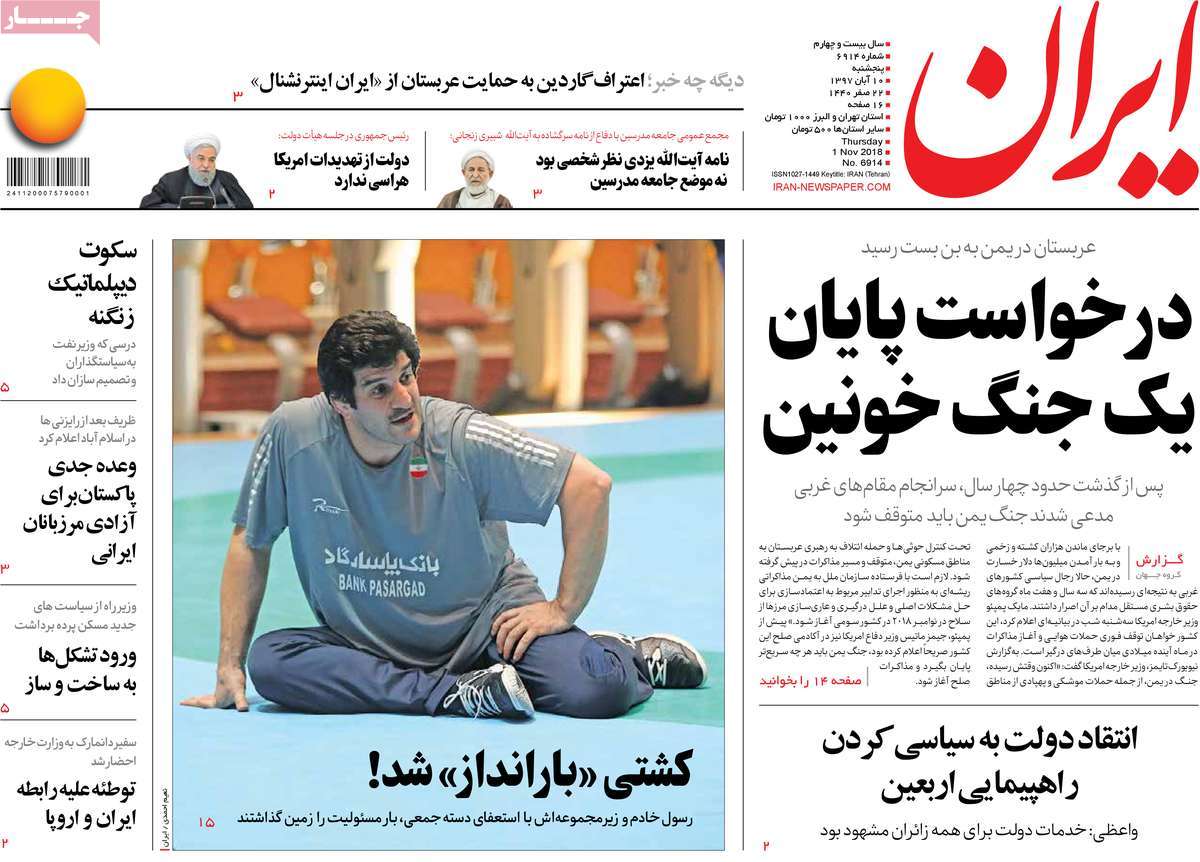
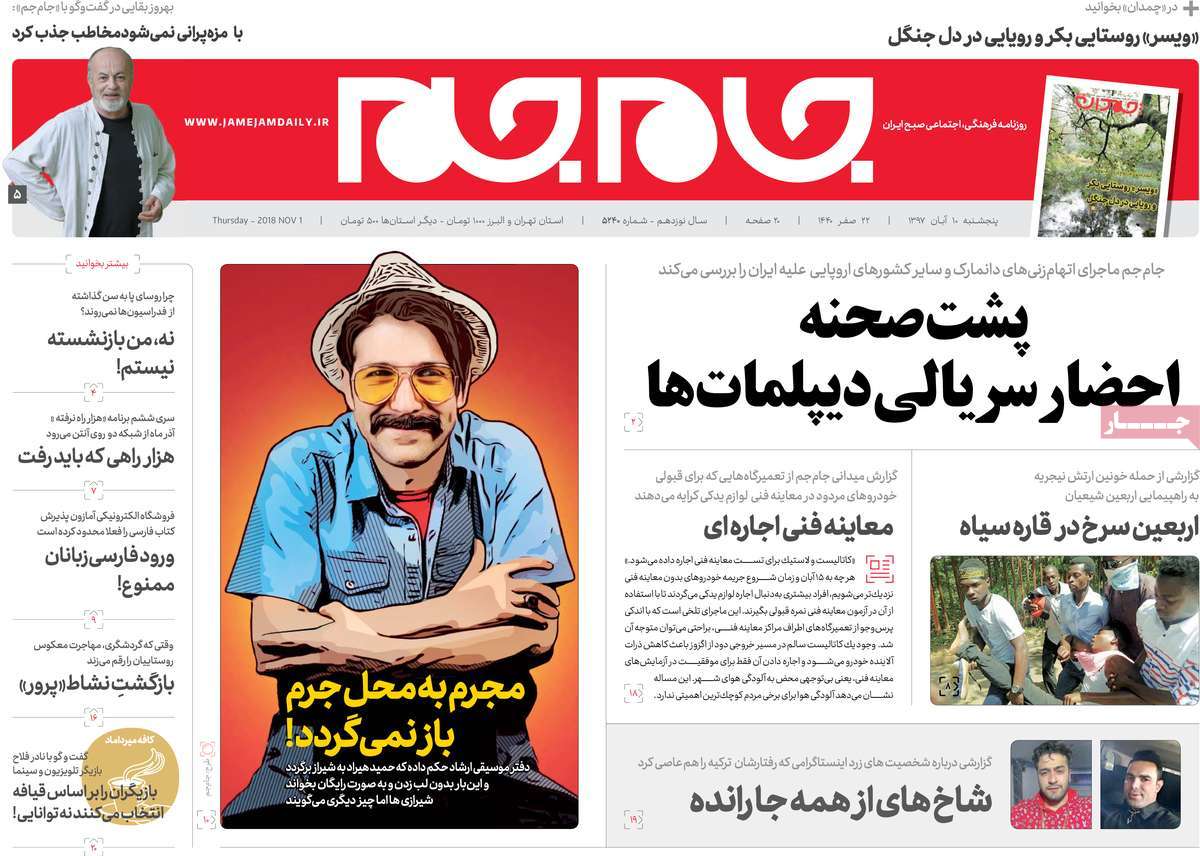
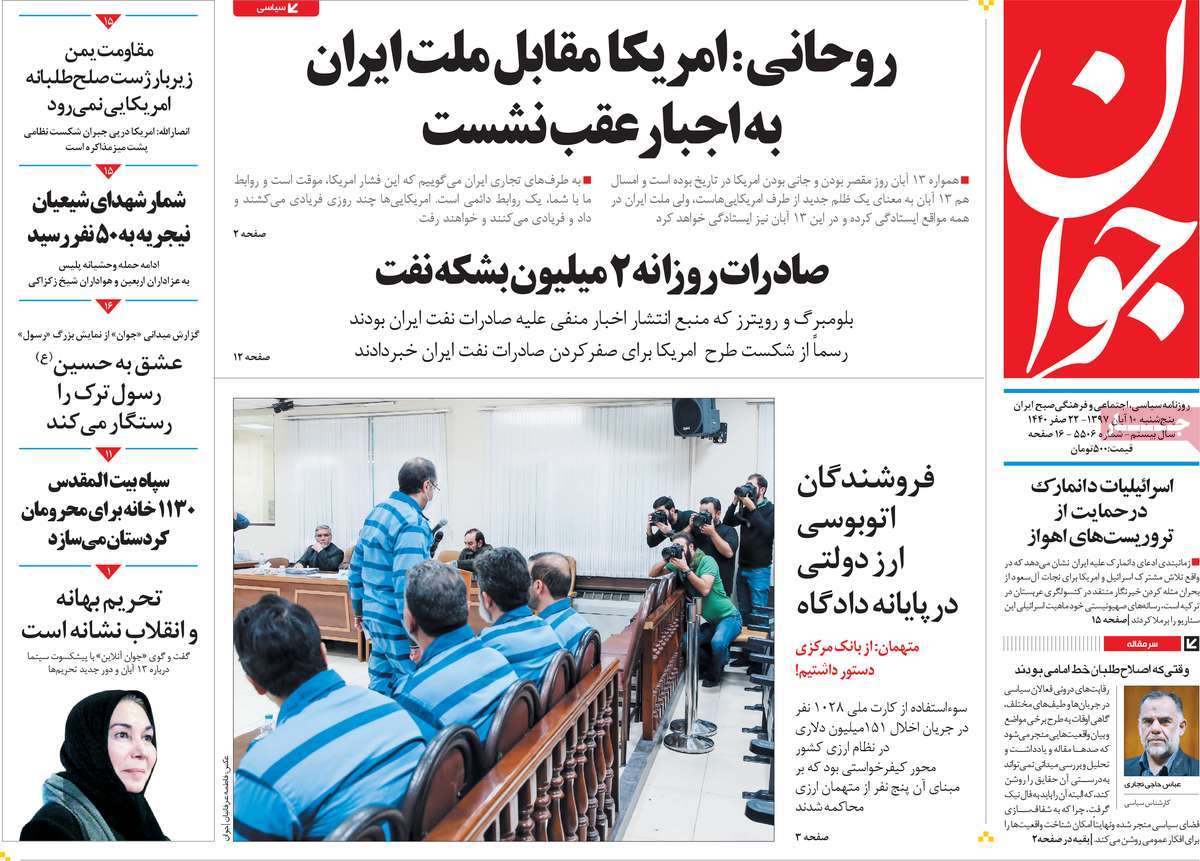
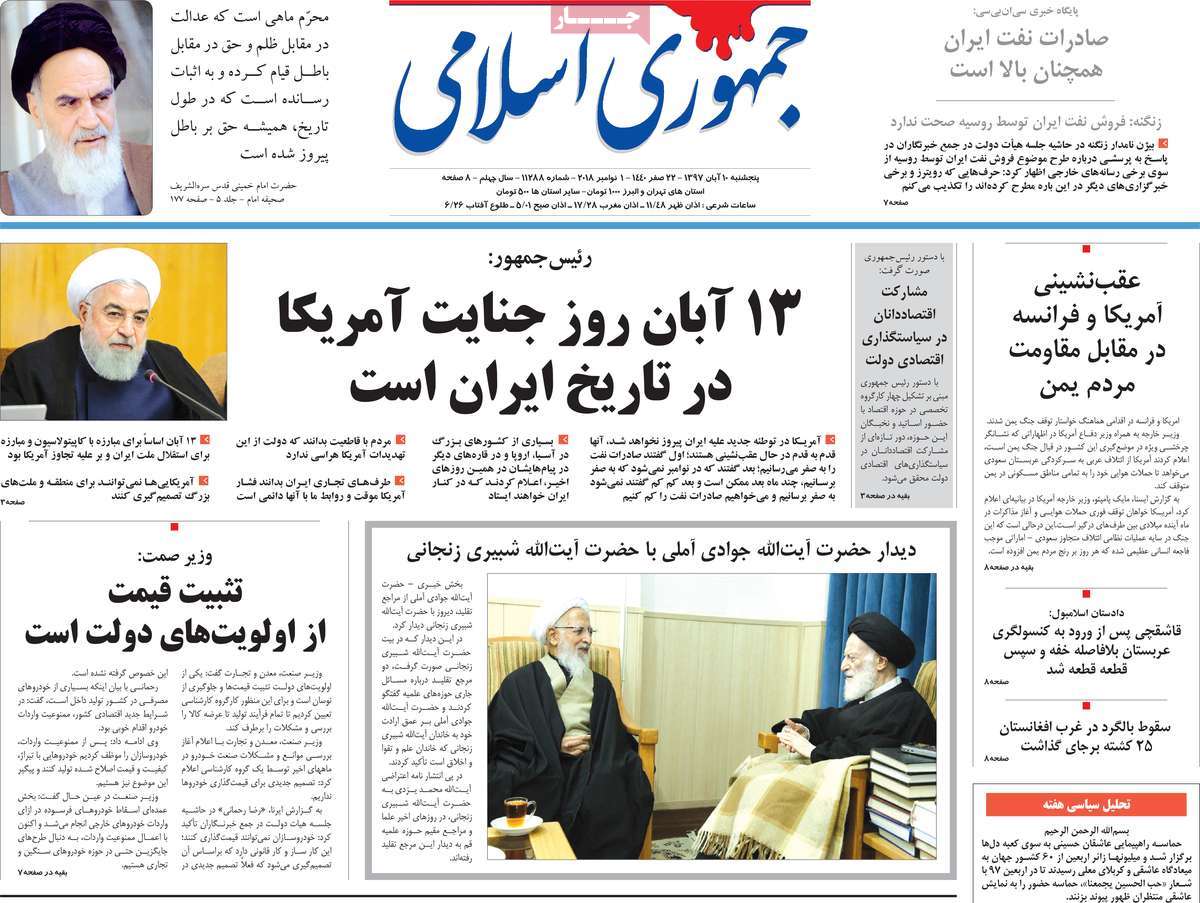
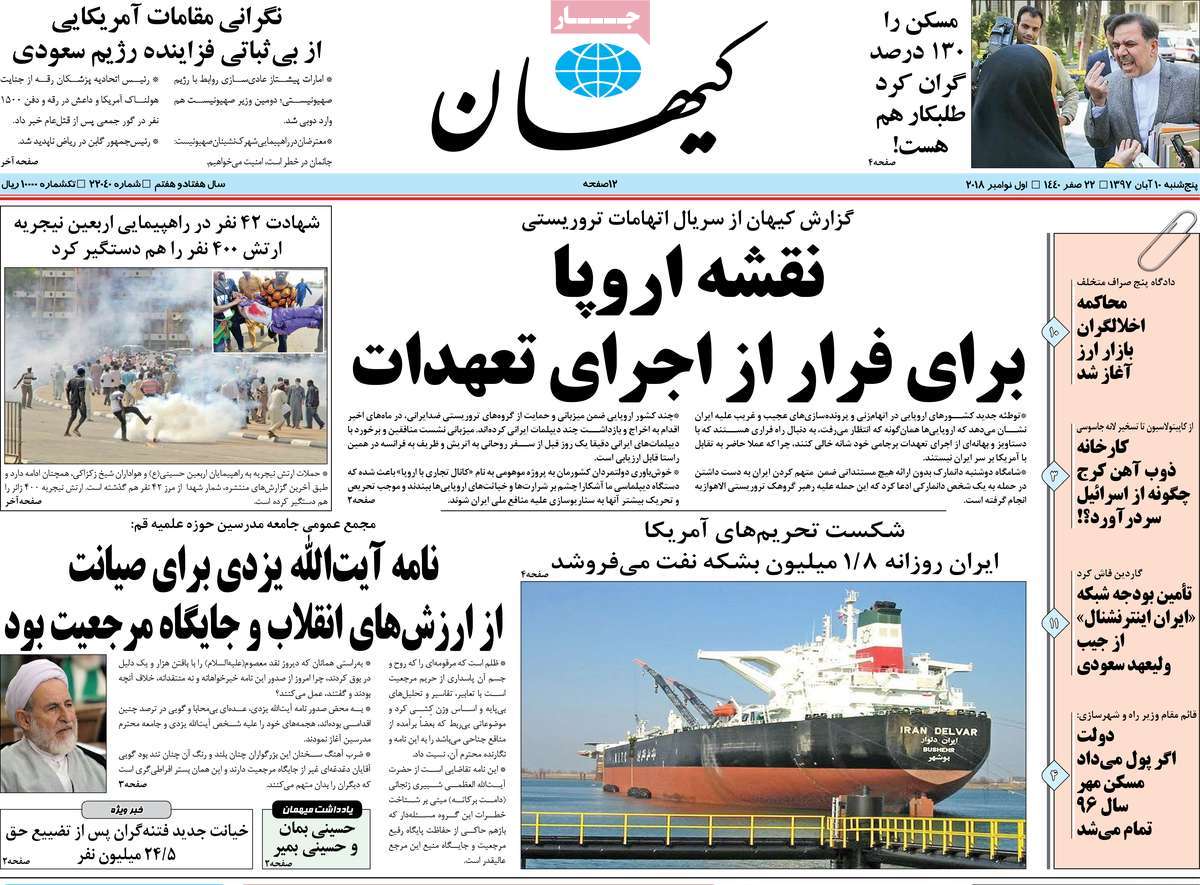
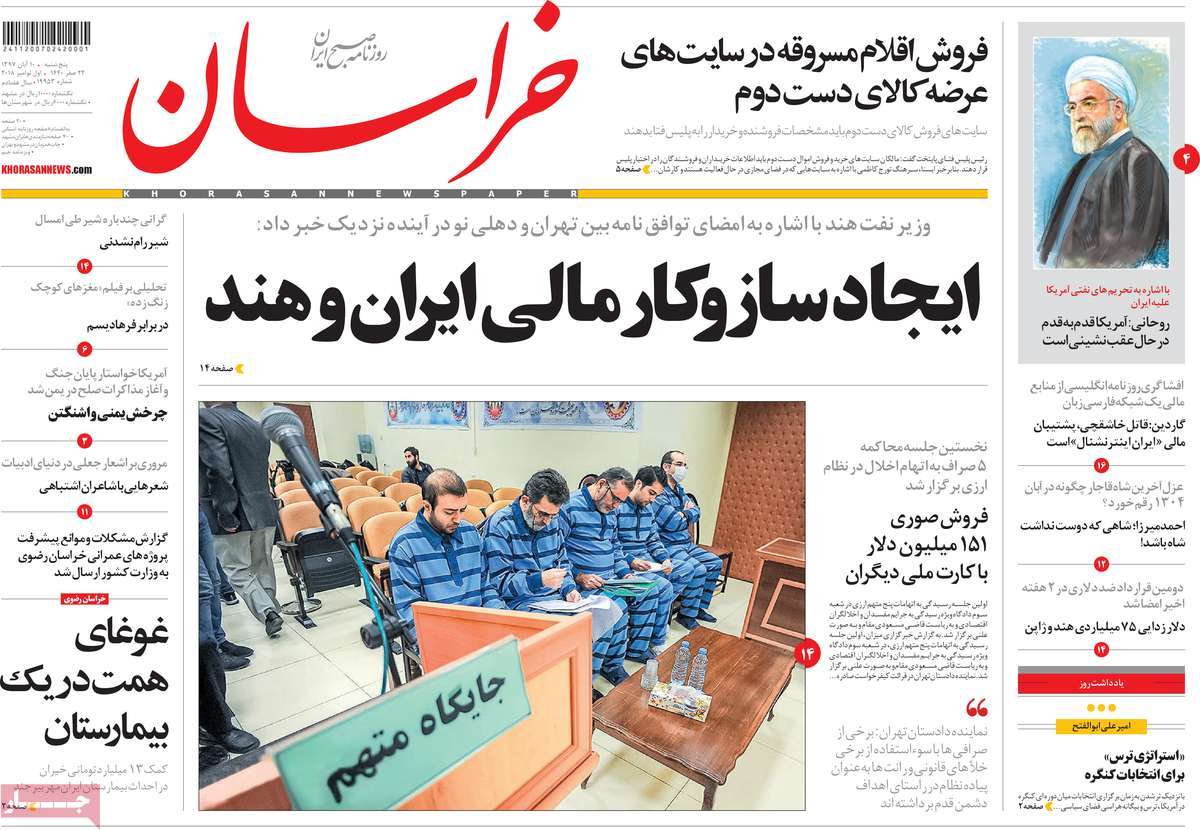
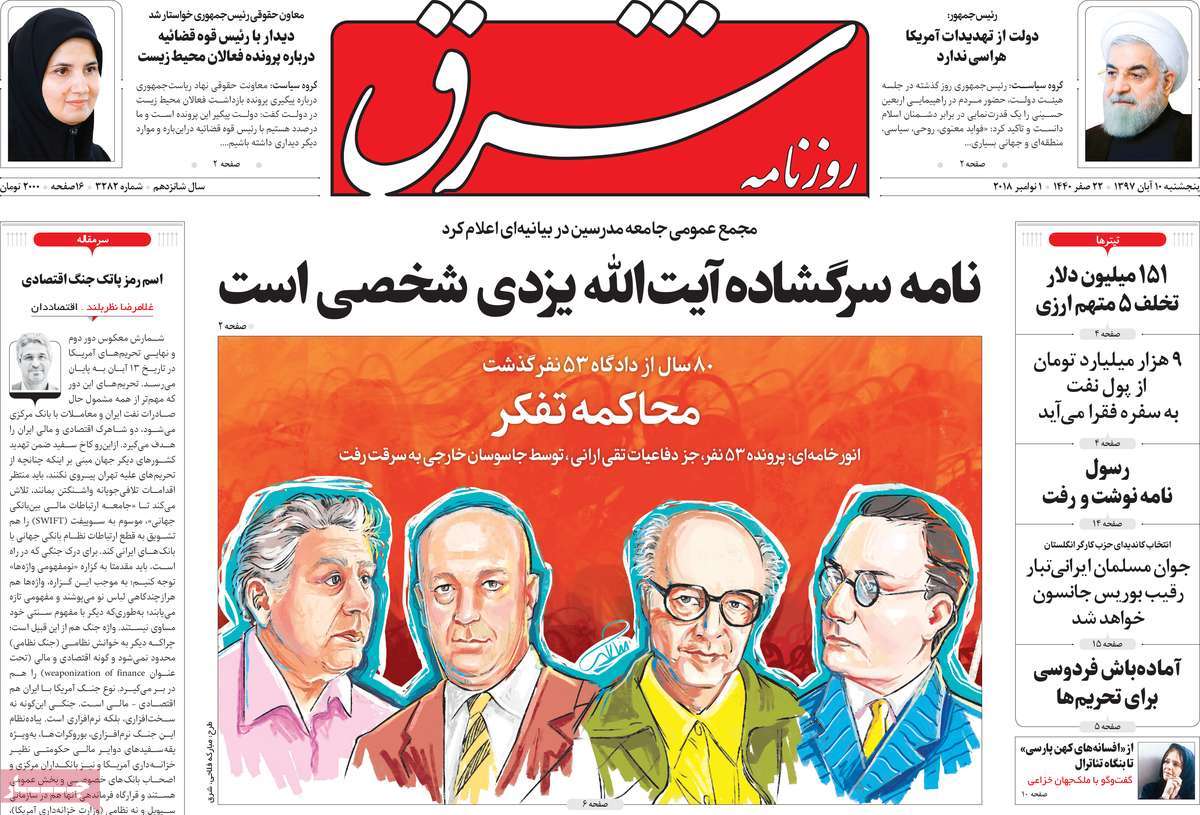
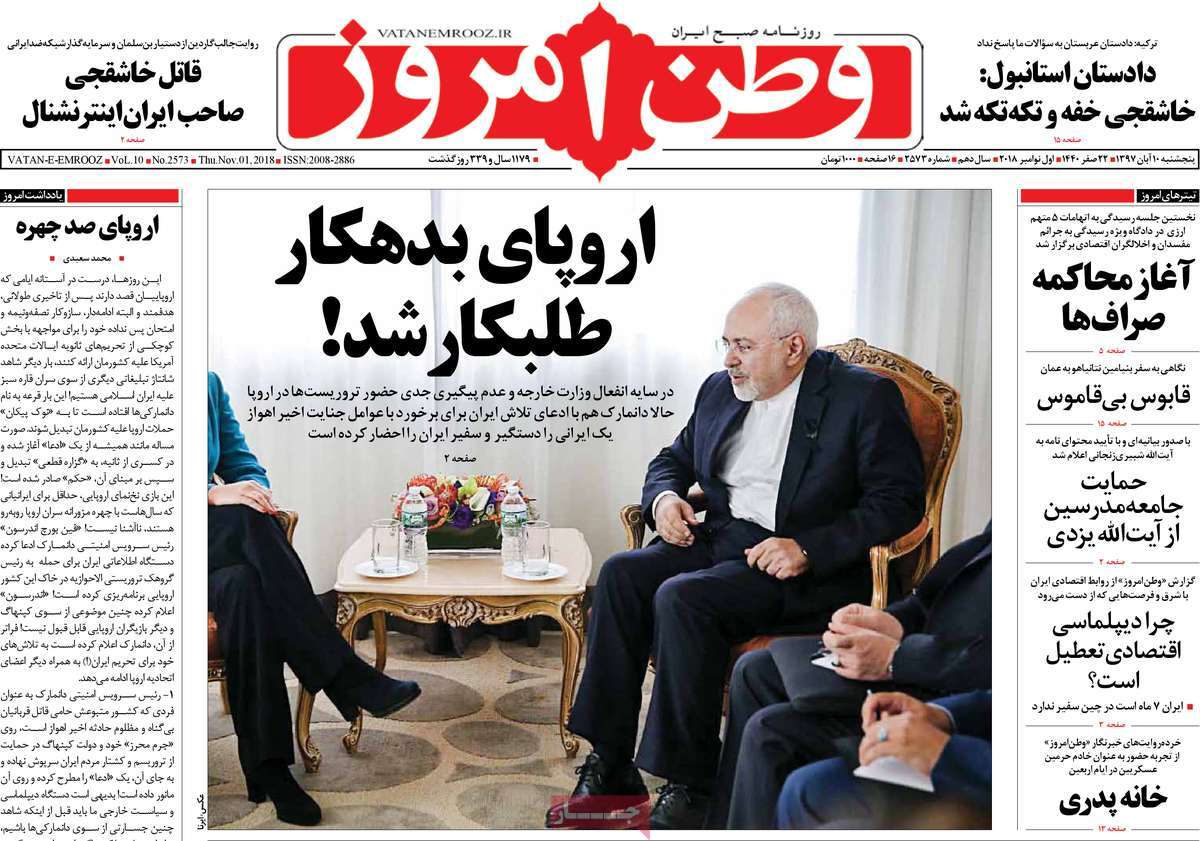
A Look at Iranian Newspaper Front Pages on November 1

A Look at Iranian Newspaper Front Pages on November 19

Almost all papers today covered the remarks made by Iranian President Hassan Rouhani about the upcoming US sanctions, which are to be implemented on November 4.

Also a top story was Iran’s reaction to the accusations raised by Denmark regarding a plot to assassinate an Iranian opposition figure, and generally the anti-Iran charges being raised by European countries these days.

Several papers also covered the visit of Iranian Foreign Minister Mohammad Javad Zarif to Pakistan and his talks with the country’s officials to secure the release of 12 Iranian border guards abducted and transferred to Pakistan by Jaish al-Adl terrorist group.

Reports by Reuters and Bloomberg which showed Iran is exporting over 1.8 million barrels of crude oil despite the US sanctions also received great coverage.

The above issues, as well as many more, are highlighted in the following headlines and top stories:


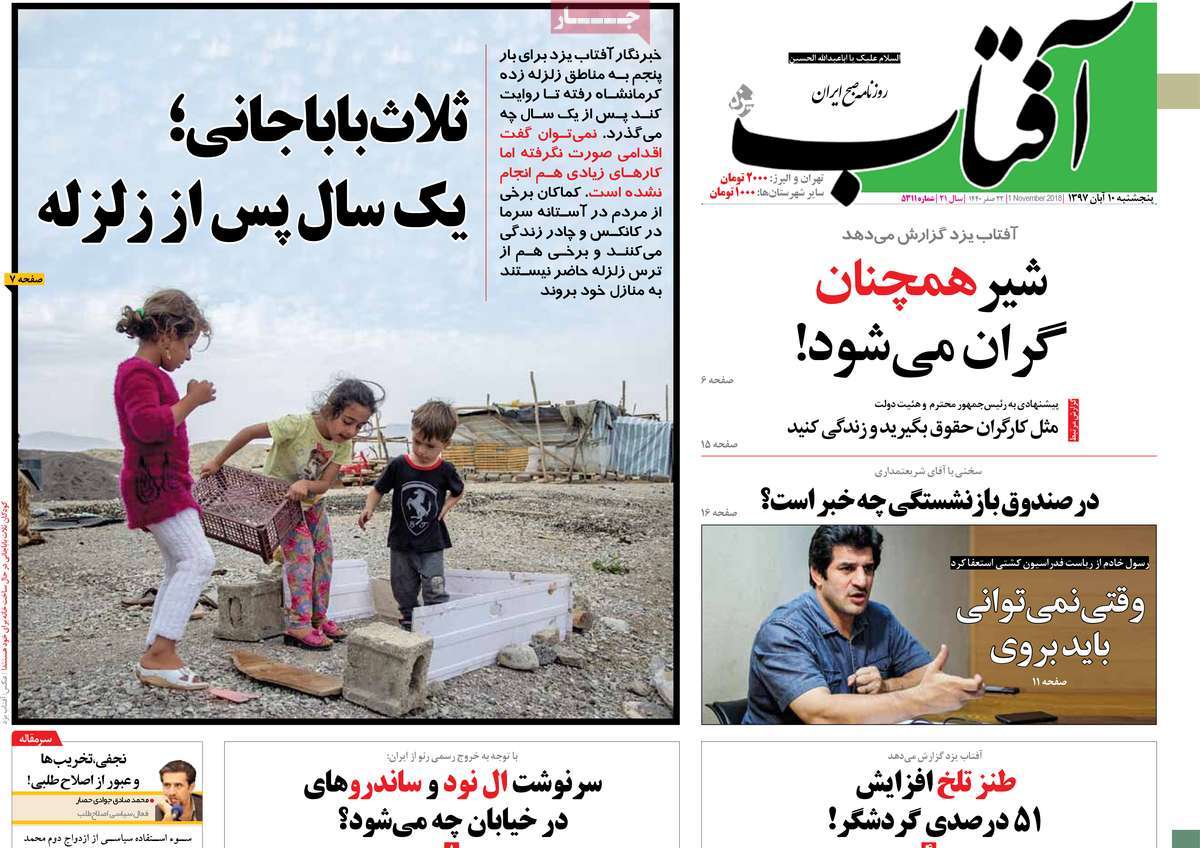
Aftab-e Yazd:

1- Salas-e Babajani, One Year after Kermanshah Quake

2- Milk Price Still Soaring

A Look at Iranian Newspaper Front Pages on November 1


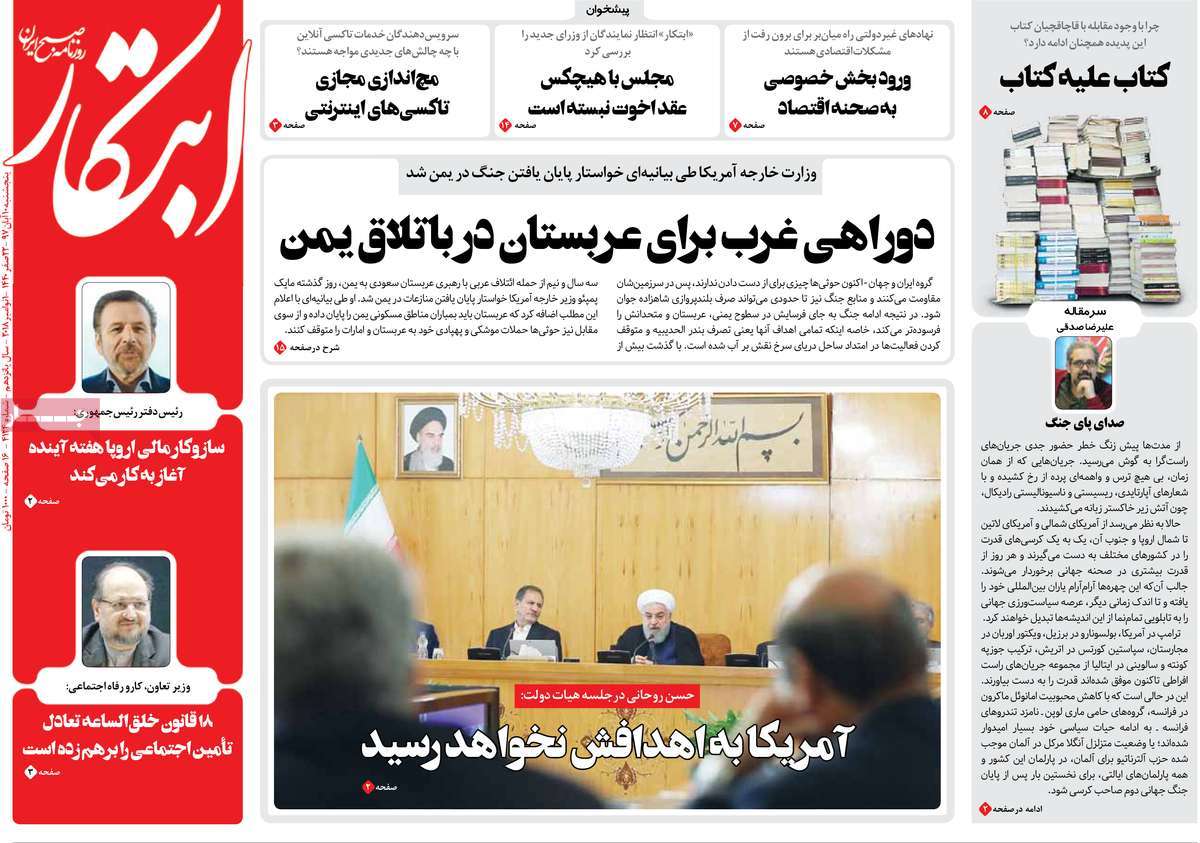
Ebtekar:

1- West Calls for Cessation of War in Yemen: Saudi Arabia in Quagmire

2- US Not to Achieve Its Goals: Rouhani

A Look at Iranian Newspaper Front Pages on November 1


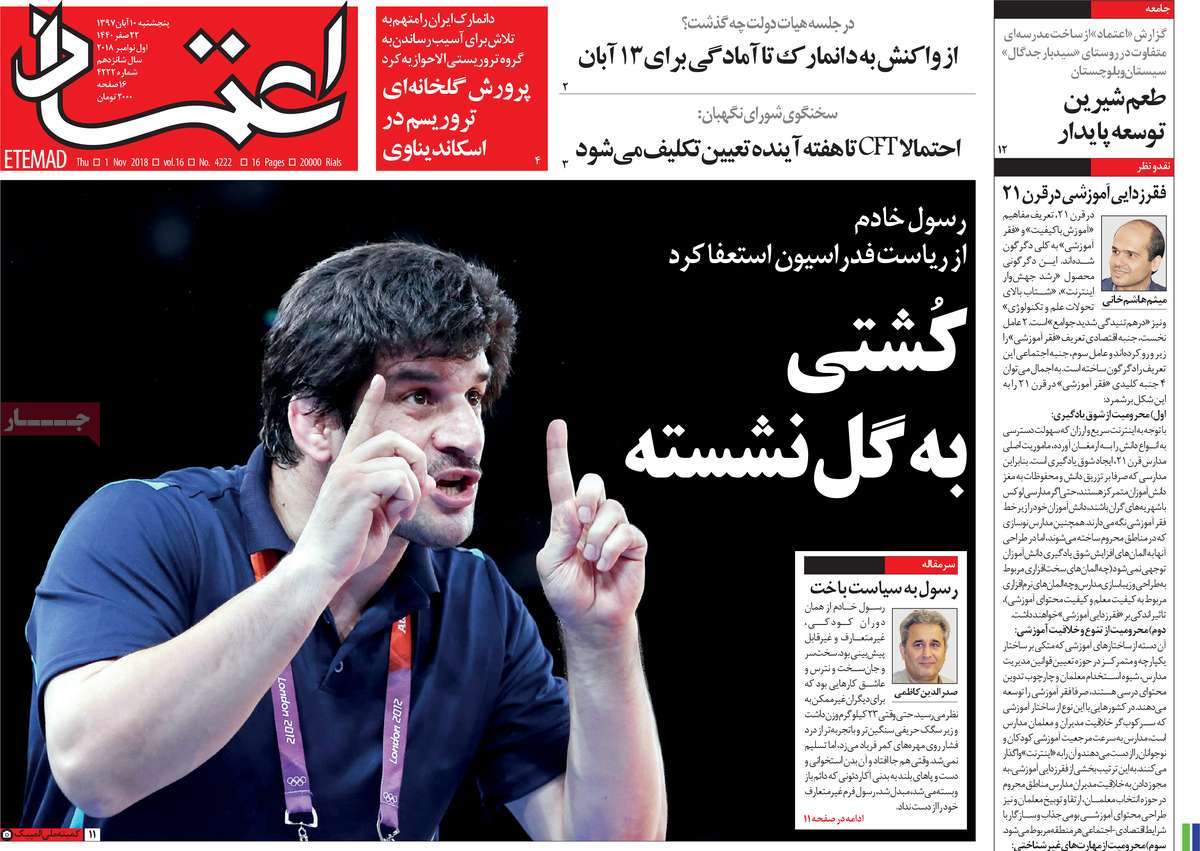
Etemad:

1- Sweet Taste of Sustainable Development

  • A Report on Construction of Different School in Remote Village SE Iran

2- Guardian Council Will Probably Make Its Decision about CFT by Next Week

A Look at Iranian Newspaper Front Pages on November 1


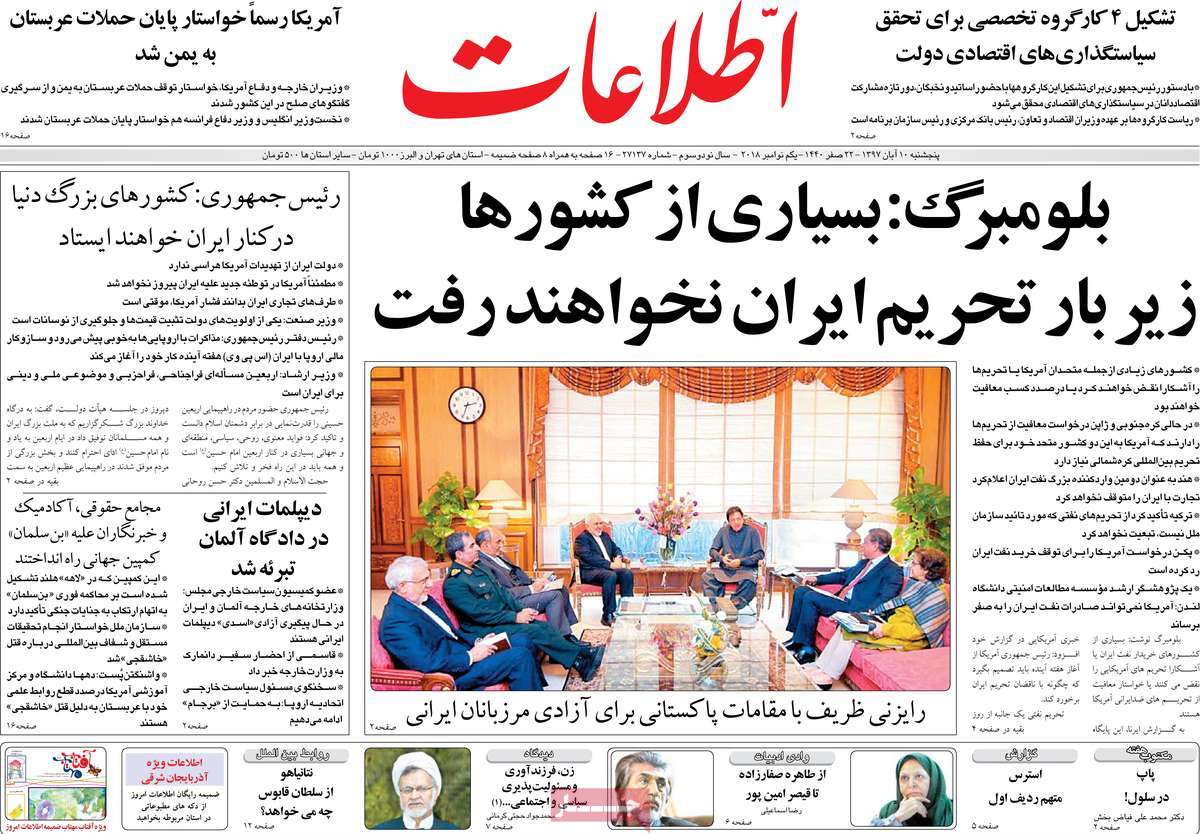
Ettela’at:

1- Bloomberg: Many Countries Won’t Implement US Sanctions on Iran

2- Zarif Holds Talks with Pakistani Officials for Release of Iranian Abductees

3- World’s Big Countries to Stand by Iran: Rouhani

4- Iranian Diplomat Exonerated by German Court

A Look at Iranian Newspaper Front Pages on November 1


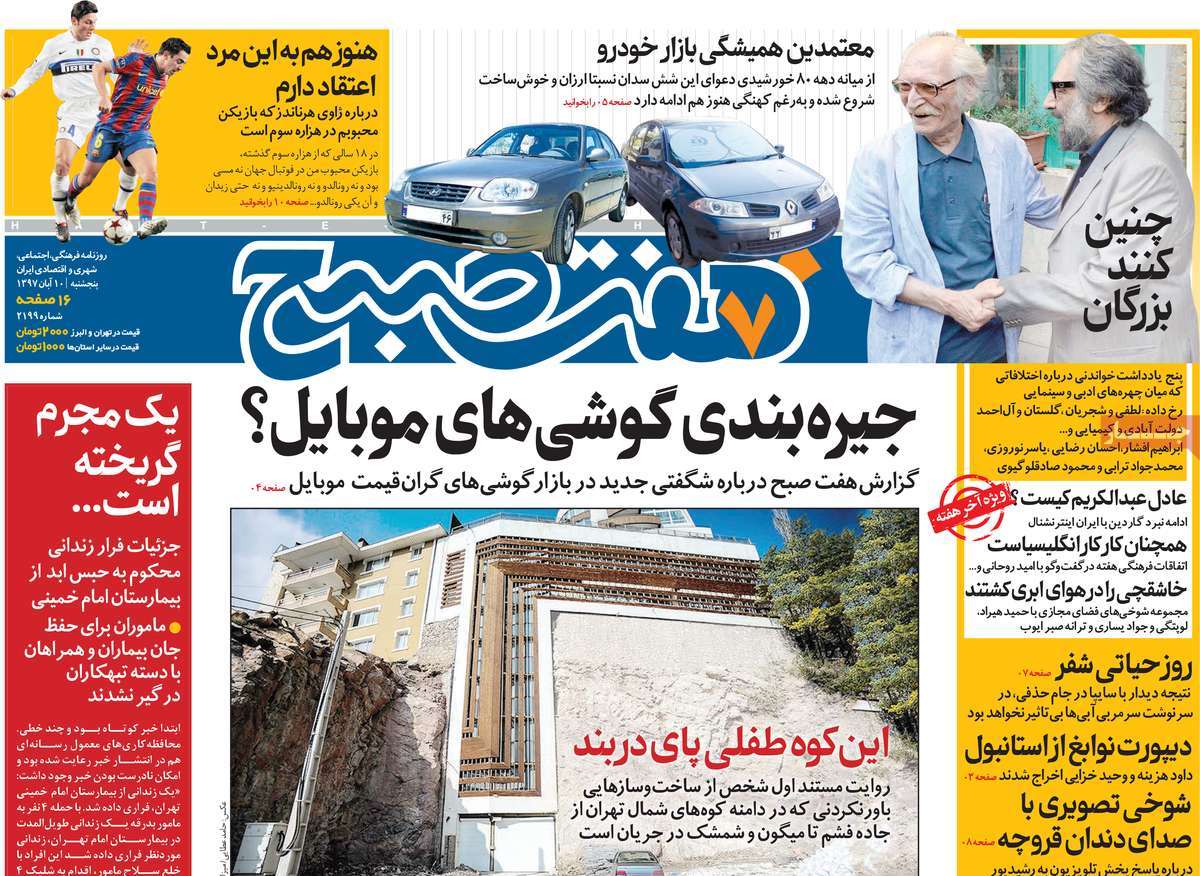
Haft-e Sobh:

1- Who’s Adel Abdulkarim? Guardian Continues Its Fight against Iran International

2- Four Gunmen Release Prisoner by Attacking Hospital in Tehran

A Look at Iranian Newspaper Front Pages on November 1


Iran:

1- Call for Ending a Bloody War: Saudi Arabia in Yemen Deadlock

2- Pakistan Gives Solemn Promise to Secure Release of Iranian Abductees

3- Conspiracy against Iran-EU Ties: Tehran Summons Danish Ambassador

A Look at Iranian Newspaper Front Pages on November 1


Jame Jam:

1- Secrets behind European Accusations against Iran

2- Iran’s Culture Ministry Sentences Offending Singer to Holding Free Concert

3- Red Arba’een in Black Continent: Nigerian Army Slaughters Arba’een Mourners

A Look at Iranian Newspaper Front Pages on November 1


Javan:

1- Rouhani: Iranian Nation Forced US to Back Down

2- Iran Exporting 2m Barrels of Oil per Day: US Plan Officially Failed

3- 50 Shiite Nigerians Killed in Brutal Army Attacks

4- IRGC to Build 1,130 Houses for Deprived People of Kurdistan

A Look at Iranian Newspaper Front Pages on November 1


Jomhouri Eslami:

1- Nov. 4 Day of US Crime in Iran’s History: President

2- Yemeni People’s Resistance Force US, France to Back Off

3- Khashoggi Strangled, Dismembered Right after Entering Saudi Consulate in Istanbul

A Look at Iranian Newspaper Front Pages on November 1


Kayhan:

1- Terror Accusations Are Part of Europe’s Plan to Evade Doing Its Commitments

2- Failure of US Sanctions: Iran Exporting 1.8m Barrels of Oil per Day

3- US Officials Concerned about Growing Instability of Saudi Regime

A Look at Iranian Newspaper Front Pages on November 1


Khorasan:

1- Iran, India to Create Financial Mechanism in Near Future

2- Turnabout in US’ Policies: Washington Calls for End of Yemen War

3- Khashoggi’s Murderer Funds Anti-Iran London-Based TV Channel Iran International\

A Look at Iranian Newspaper Front Pages on November 1


Shargh:

1- Government Not Afraid of US Threats: Rouhani

2- VP for Legal Affairs Calls for Meeting with Judiciary Chief on Detained Environmentalists

3- Young Muslim of Iranian Origin to Compete with Boris Johnson

A Look at Iranian Newspaper Front Pages on November 1


Vatan-e Emrooz:

1- Iran Foreign Ministry’s Passivity Turns the Defendant Europe into the Plaintiff!

2- Khashoggi’s Murderer Owns Iran International TV Channel

3- Europe Has One Hundred Faces [Editorial]

A Look at Iranian Newspaper Front Pages on November 1

‘Iraq’s Top Cleric Urged Shiite Forces to Shield Sunnis’

Ayatollah Sistani was quoted as saying by Ayatollah Mohsen Araki, the Secretary General of the World Forum for Proximity of Islamic Schools of Thoughts.

Ayatollah Araki, who recently met Ayatollah Sistani during his stay in the holy city of Karbala to take part in Arba’eeen pilgrimage, says the Iraqi top cleric has underlined the need to preserve unity between Shiites and Sunnis and added the latter have been deprived of security due to the relentless attacks by ISIS.

“In one of the recent meetings of Grand Ayatollah with a crowd of Hashd al-Sha’abi, one member said we have peaceful coexistence with our Sunni brothers. In reply, Ayatollah Sistani underlined that they should never use the term Sunni brothers because we are from the same origin and there is no difference between us and them,” Ayatollah Araki said.

According to Araki, Ayatollah Sistani also said he had urged Hashd al-Sha’abi to protect the Sunni families who are under ISIS attack under any condition.

“The top Shiite cleric said enemies are seeking to create division between the Shiite and Sunni Muslims in Iraq and there are many who call on him to issue a verdict in this regard but he has declined to do so until today because he thinks it is not in the interest of Iraq to contribute to any conflict between the two sides,” said Ayatollah Araki.

According to Sistani, when ISIS started attacking Sunni Muslims, most of them fled to the Shiite-populated regions and faced warm hospitality by their Shiite brothersand today, the Shiites are reaping the fruits of their deeds.


Enemies Hatching Plot to Divide Iraq

Araki says Ayatollah Sistani also expressed satisfaction with peaceful coexistence among Shiite and Sunni Muslims in Iraq and said “in the Sunni-populated city of Mosul, people decided to pick up a Shiite candidate during the latest parliamentary elections. This reveals that the two sides have good relations with each other.”

Ayatollah Sistani said since the early days of Saddam regime’s overthrow, the US insisted on dividing Iraq into a number of regions but he vehemently rejected any such plans saying that Iraq must never be divided.

“They said the Shiites will have the upper hand if Iraq is divided. They tried to tempt the Shiites into agreeing with Iraq’s division,” Ayatollah Sistani was quoted as saying.

Ayatollah Sistani said he resisted against any plan to divide Iraq and said Iraq must remain united and the Iraqis should remain brothers with each other regardless of their schools of thoughts.


Arba’een, Axis of Unity in Islamic World

“Of course Iran played a key role in creating peace and security in Iraq,” Ayatollah Sistani said, adding, during the Arba’een march, people from various races and beliefs stood hand in hand revealing the unity in the Islamic World.

“During Arba’een, not only Shiites and Sunnis but also people from other religions stood behind each other.”

Ayatollah Sistani then said that he benefits from the Iranian leaders’ ideas. “Under the Saddam regime, there were no appropriate communication channels. Today, I study other countries’ laws and regulations. I receive many books from Iran and fortunately good books are published there, which I draw on to deal with many issues.”

He finally prayed for the Iranian government and nation and expressed hope the issue of the unilateral sanctions on the country could be resolved soon and the Iranians could overcome their problems in the near future.

Iran Says Can’t Be Left Alone in Standing against Trump

Qassemi made the remarks in a Wednesday interview with the Iranian Students’ News Agency (ISNA).

He said hardliners in the US and the Zionist lobbies are angry with the European countries and other states, because they did not support their policies against Iran, but Europe needs to be more vigilant.

“We call on Europe to be more vigilant than ever, more precise and more aware of the actions taken by those who want to mar the ties, because today political relations between Iran and Europe and the countries of the region foil all their plots,” Qassemi said.

Asked about the efforts made by Europe to salvage the Iran nuclear deal ahead of the re-imposition of US Sanctions on November 4, Qassemi said the talks between Iran and the other remaining members of the 2015 nuclear accord have been fruitful, and major steps have been taken in this regard.

“As the Islamic Republic has repeatedly stated, the US never completely stopped its economic sanctions against Iran. However, after the nuclear deal and Donald Trump’s ascent to power with his selfish and unilateral thoughts, he prevented the full implementation of the agreements whose benefits were to be enjoyed by Iran,” he noted in an interview with ISNA.

“After the unilateral withdrawal of Washington from the nuclear accord, the president of the United States has done his utmost to reinstate unilateral, transnational, and unlawful sanctions against Iran. So far, he has not given up any attempt to harm Iran and other independent countries of the world as well as European and non-European companies.”


Trump’s Threat to Boycott EU Firms Insult to Entire World

The Iranian official noted that Donald Trump’s threats to impose sanctions on non-American companies of the world are an insult not only to these companies, but to all countries of the world.

He maintained that the US administration has shown its bad faith to the world by violating the United Nations Security Council Resolution 2231 and all the well-known global standards.

The US administration has shown that it is not loyal to its global commitments as it was proved when Washington violated UNSC Resolution 2231, added Qassemi.

He emphasised that despite the unilateral propaganda of certain countries of the region and US allies in the Middle East, Iran has remained committed to the nuclear deal despite the withdrawal of the United States.

The Islamic Republic has paid a lot for the fight against terrorism, extremism and terrorist groups, especially ISIS as well as other groups such as al-Qaeda and the Taliban. All these have been carried out to maintain peace and stability in the region and to prevent the growth of terrorist groups and Takfiris, reiterated Qassemi.

Referring to the assistance provided by the Islamic Republic of Iran to the Iraqi and Syrian governments on combating terrorism, the Iranian official underscored that “Iran, without any pre-conditions, modestly helped all the regional governments which were threatened by terrorism; the countries that were on the verge of disintegration and loss of land and sovereignty.”


Iran Has Least Military Spending

While Iran has the least military spending among major regional states, some countries in the Middle East are major buyers of arms, he noted.

“Another regime in the region, which is an ally of the United States, has attacked the Yemenis killing innocent people with expensive state-of-the-art arms purchased from the US and some European states. This comes as Washington and its allies claim the Islamic Republic helps the oppressed Yemeni people in their resistance. One day we see some Arab states of the region are complaining about the export of the Iranian Revolution, and the other day they express their fear of Iranian democracy.”

Referring to the opportunity that Iran has given the P 4+1 to provide mechanisms for Iran to enjoy the benefits of nuclear deal, he explained Tehran, not necessarily for this reason, but for its logical reasons and its international commitments, as well as its cultural teachings and attitudes, has so far been waiting for this mechanism by Europe.


No New Trick Left for US to Use against Iran

“The United States has used all its tricks against Iran, and its regional allies have been fully using their money over the past months to undermine the image and economy of Iran. However, Iran based on its experiences, knows how to defeat an enemy.”

The senior Iranian official stated that “if we consider Trump as a businessman of a particular kind, at least his advisers, who do not know Iran, the Iranians and the regional developments, would finally put the US president in trouble.”

As the new round of US sanction will hit Iran on November 4, Qassemi stressed that there is no remaining means left for the US to use against Iran and those who are unaware of history, geography, ethnology, and developments of the region would be defeated.

Iran is not committed to fulfilling all its international, moral and historical obligations while the US violates the world’s fundamental principles. However, it seems that the talks between Iran and remaining members of the JCPOA and the European Union have been fruitful, and major steps have been taken in this regard, said Qassemi.


Access to Food, Medicine under Sanctions

He told ISNA that in accordance with international standards and the International Court of Justice (ICJ) decision, the US cannot prevent the export of pharmaceuticals, medical equipment, food and agricultural items and airplane parts to Iran.

“We have the ability to purchase all of them under sanctions, but the world should teach Washington that the era of unilateralism is over.”

After the withdrawal from the JCPOA, the United States did not expect that only a few notorious regional states would support its decisions, underlined Qassemi.

Qassemi also pointed to Trump’s recent criticisms of Saudi Arabia, and said, “Today, it seems that Trump has somehow faced the realities, and has understood he is paying a heavy price for his support for dictators. In this context, he wants to moderate his positions and, in spite of all the pressures, he has moved in this direction to some extent.”