Thursday, December 25, 2025
Home Blog Page 3414

‘Bolton’s Remarks Show His Sadism, Grudge against Iranians’

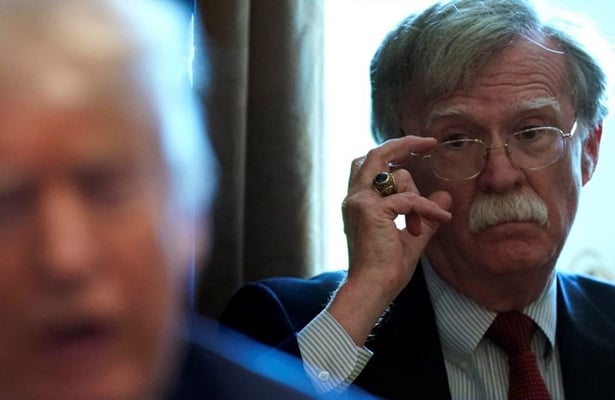
US National Security Adviser John Bolton at a cabinet meeting at the White House, April 9, 2018 / Photo by Kevin Lamarque Reuters

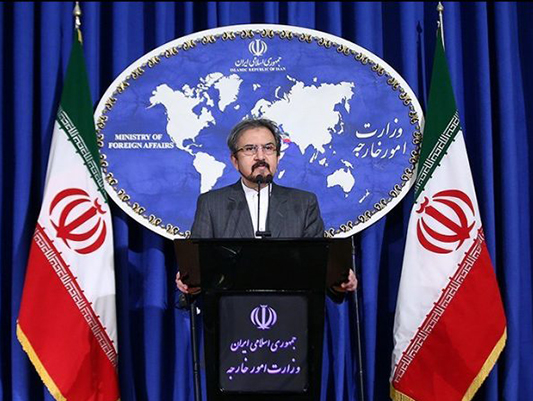
“Time, history and the Iranian culture have always been able to teach the necessary lessons to scoundrels who make excessive demands and who rave and rant, and [have been able] to easily tame insane, recalcitrant and unruly individuals,” Qassemi said in a Wednesday statement.

“The cheap remarks by John Bolton, which indicate his bellicose nature and spiteful personality in dealing with Iranian people, are nothing new and remarkable,” he added.

“As he has shown since long ago, he has a long-standing grudge against Iranians. He has abnormal behaviour and suffers from chronic sadism against Iran,” he said.

“He sometimes knowingly or unknowingly begins to talk and uses words that professional politicians usually avoid using,” the spokesman added.

He said such language basically does not exist in the diction of any professional and trained politician.

“It is no surprise to see an American official who has been in contact with some terrorist groups since long ago and who is in their pay make such cheap remarks,” he added.

“He speaks, with pleasure and very unconventionally and shamefully, of putting more pressure and imposing sanctions on Iran and threatening the country,” said the spokesman.

“Undoubtedly, he has not yet been able to grab a proper understanding of Iranians and Iran, and in the not-too-distant-future, will certainly find the chance to understand the capability, vigilance and prudence of the Iranian nation and to get familiar with their history and culture,” Qassemi added.

“Today, like always, the great Iranian nation will stand up to foreign aggressors and the enemies of this land and nation with strategic patience and prudence as it always has,” he said.

Qassemi said Iranians will definitely not allow the pipe dreams of these individuals to come true.

His comments came after Bolton said his country will keep up pressure on Iran after imposing new sanctions on the Islamic Republic early this month.

Bolton said on Tuesday that Washington’s ultimate aim was to zero Iran’s oil exports despite backing down on the pledge after eight importers were given waivers when the sanctions took effect on Nov. 5.

“The objective has been from the beginning to get oil exports from Iran down to zero,” Bolton said. “It is our intention to squeeze them very hard. As the British say: ‘Squeeze them until the pips squeak’.”
Europeans Hesitate to Pay Cost for Salvaging Iran Deal: Zarif

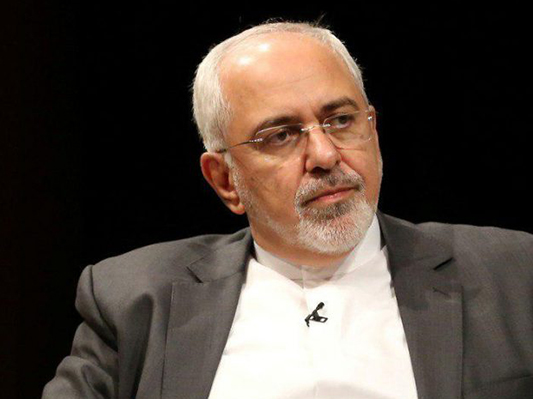
Speaking in an interview with the London-based al-Araby al-Jadeed media outlet published on Tuesday, Mohammad Javad Zarif said Europeans have vowed to support Iran’s economic cooperation with foreign countries, but they have failed to overcome operational challenges so far.

“Europeans are not yet ready to fulfill their political commitment while paying the economic cost. They are trying to keep their achievements without paying anything,” Zarif said.

“This policy won’t benefit Europeans in the long term. They will incur more cost,” he warned, urging the bloc to be serious and face up to the US.

The EU announced last September it will work to create a special payment mechanism, known as Special Purpose Vehicle (SPV), to facilitate trade with Iran.

The mechanism was to go into effect by November 5, but Europeans have apparently failed to make it operational so far.

European officials have announced that the mechanism could also be used by other countries, protecting Iran from efforts by the US to hamper its Asia and Europe trade.


Iran’s Economy to Beat Sanctions

The foreign minister said Iran is in constant contact with its European, Chinese and Russian partners, in search for ways of countering sanctions and limiting their impact.

Zarif said Iran’s economy is highly capable of resisting sanctions, as the country has enormous human, natural and technical resources.

“It’s right that the US has great economic power. But … all countries are against the US sanctions,” he said.

Zarif said the US was optimistic the economic pressure caused by sanctions will push the nation to force the government to change tack, but such hopes have been disappointed.

The top Iranian diplomat said the US has failed to cut down to zero Iran’s oil exports and proven unable to hamper Iran’s air and sea connections with the world.

Earlier this month, the US restored the sanctions targeting Iran’s banking and energy sectors.

The punitive measures targeted 700 individuals, banks, aircraft, ships and companies tied to Iran’s energy and financial industries.

The move came following months of efforts by the US to hamper Iran’s trade with Asia and Europe.

Iran-EU Nuclear Cooperation Unaffected by US Sanctions: Official

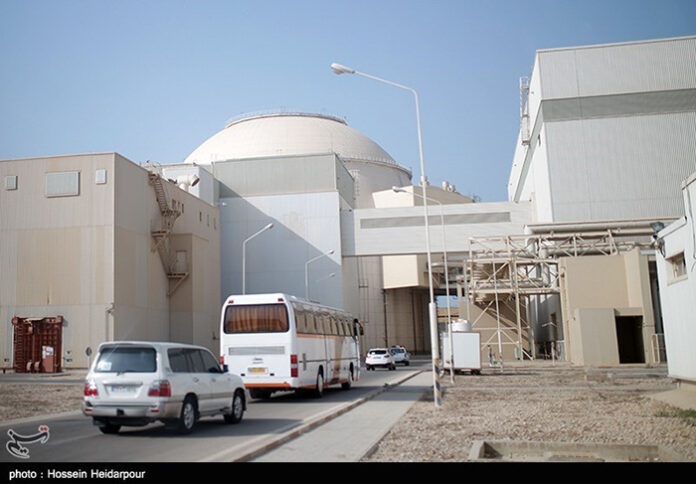
bushehr-plant

“Under the Iran nuclear deal, Tehran and the European Union have engaged in broad cooperation in various fields, including nuclear safety. Within this framework, a nuclear safety centre is going to be built inside Iran,” Spokesman for the Atomic Energy Organization of Iran (AEOI) Behrouz Kamalvandi said.

“I believe cooperation between Iran and Europe will continue in the two coming years,” he said, speaking to ISNA on Tuesday.

Kamalvandi said the third round of Iran-EU talks on nuclear cooperation will be held in Brussels later this month, co-chaired by the head of the Atomic Energy Organization of Iran Ali Akbar Salehi and EU Commissioner for Energy and Climate Miguel Arias Canete.

The second round of talks on peaceful nuclear energy between Iran and the EU was held in Iran in May.


Russia, China Won’t Accept Sanctions

Kamalvandi said Iran’s nuclear cooperation with Russia and China will also remain unaffected by the US sanctions.

Pointing to the fact that the three Iranian nuclear projects, namely the Bushehr power plant, the reconstruction of Arak nuclear site and production of radioisotopes in Fordow nuclear site, have been exempted from the US sanctions, Kamalvandi said the US knows it cannot hamper Iran’s nuclear work.

“These projects are being carried out by Russia and China. These countries have repeatedly announced they do not accept US sanctions and they won’t observe the bans. So the US exemption makes no difference,” he said.

“Iran, China and Russia won’t be intimidated by the US pressure and sanctions,” he said.

The US withdrew from the nuclear deal in May and has reinstated all the nuclear sanctions suspended under the nuclear accord.

Iran has announced the deal could remain in place only if European parties to the pact give Tehran firm assurances that its interests will be served if they remain in the deal.

Iran to Host Some 2022 World Cup Teams If FIFA Agrees: Qatar

The head of the organising committee of FIFA World Cup 2022 said on Monday that Qatar is considering an offer from Iran to host teams during the games, but no decision has been taken yet.

Chief organiser Hassan Al Thawadi noted that this is part of the operational plan, but obviously it will have to be OK’d by FIFA.

“Qatar has already received numerous proposals from neighbouring countries regarding the accommodation of teams during the World Cup, which will kick off on November 21, 2022,” he added.

“No decision has been taken yet and it is still being discussed,” he underlined.

Iran recently offered to host some of the teams that will qualify for Qatar World Cup, particularly using the potentialities of Kish Island, a well-known regional tourist resort.

Giving the green light to Iran would provide a major boost for the Islamic Republic at a time when the US is trying to impose cruel sanctions on the country internationally.

Since 2017, Saudi Arabia, Egypt, Bahrain, and the UAE have imposed an embargo on Qatar, accusing it of seeking closer ties with Iran and of supporting radical Islamist groups.

Qatar denies the charges, accusing its neighbours of seeking regime change.

Al Thawadi said he hoped the country’s neighbours would lift the ban on their citizens for the World Cup.

“I hope the blockading nations can see the value of this major tournament and can allow for their people to benefit from this tournament,” he mentioned.

Asked about whether Qatar was prepared to increase the number of teams at the Qatar World Cup to 48, as proposed by FIFA, Al Thawadi said the country is still planning for the usual figure of 32.

Our preparations right now are for 32 teams. All the preparations are ongoing based on that, he stressed.

Iran, Netherlands Discuss Business Ties, JCPOA, Regional Issues

During the Tuesday meeting, the two sides discussed the latest developments in bilateral relations, including the expansion of economic cooperation, and regional developments, particularly the situation in Syria and Yemen.

The two sides also conferred on the Iran nuclear deal, officially known as the Joint Comprehensive Plan of Action (JCPOA).

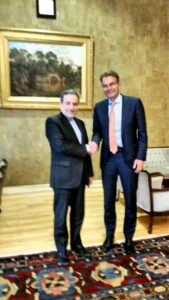
Haspels, who is in Iran to attend regular political consultations between Tehran and Amsterdam, earlier met with Iranian Deputy Foreign Minister Seyyed Abbas Araqchi.

During their Tuesday meeting in Tehran, Araqchi and Haspels talked about various bilateral, regional and international issues.

The Iranian official welcomed the Dutch government’s support for preservation and implementation of the nuclear deal, as well as the Netherlands’ position on standing against the US unilateralism and trans-national laws.

Iran, Netherlands Discuss Business Ties, JCPOA, Regional Issues“With its unilateral and illegal withdrawal from the nuclear accord, the United States has violated the UN Security Council’s resolution, and encourages or even forces others to violate it as well. If the deal known as the JCPOA fails, it means the diplomacy has failed, while bullying takes over the international arena. This will definitely add to the political complexities in the Middle East,” stated Araqchi.
The Iranian diplomat outlined the regional policies of Iran, saying that Tehran’s policy, unlike those of some other countries in the region who have been struggling with various political tensions in the region, is to maintain stability and expand security in the region.
He added that the Islamic Republic has therefore fought ISIS as the most important factor in the region’s instability.

For his part, the Dutch official noted that the Netherlands supports the JCPOA as a member of the European Union and a non-permanent member of the Security Council.
Haspels further mentioned that his country pursues the implementation of a banking mechanism with Iran in order to provide the Islamic Republic with the benefits of the nuclear agreement.

He also offered his condolences over the recent terrorist attack in the southern Iranian city of Ahvaz and condemned the act. The Dutch diplomat also appreciated Iran’s important role in fight against ISIS.

Dried Fruits Broth; Traditional Food from Iran’s Hamadan

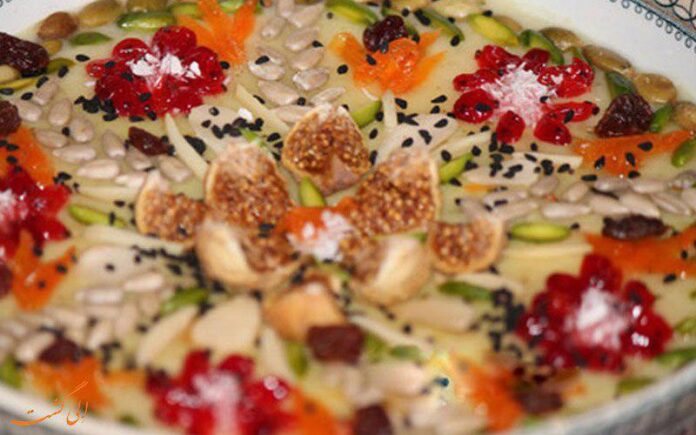
As the weather gets cold in Iran, different types of soups and broths find their way into the Iranian sufras. The dried fruits broth is of Hamadan one of the most popular ones, which is mainly made with such dried fruits as grapes, plums, berries, apricots, as well as nuts.

When these fruits get dried, the amount of sugar and some of their benefits increase.


Ingredients:

1.5 kilo of vegetables (leeks, parsley, coriander, dill, spinach)

½ cup of lentils

1 cup of peas

1 cup of beans

200 gr of bone-in meat

1 onion

½ cup of dried apricots

½ cup of dried black cherries

½ cup of dried peaches

½ cup of dried sour plums

Dough strips

Salt, pepper, turmeric

2 or 3 tbsp. of vinegar

Malayer grapes sap

Sautéed onions, mint, or garlic for dressing


Directions:

Soak the beans a night before. Soak the dried fruits before cooking as well. Cook the meat with beans, onions, pepper and turmeric.

In the last twenty minutes, add the dried fruits and vegetables to the broth and mix them. If the broth is not thick enough, add two to three tablespoons of rice. Then, let it get a little bit thicker.

Muslim Researchers Discuss Environmental Woes at KANS Competition

The researchers competed with each other in an event called Knowledge Application and Notion for Society (KANS), which was held at Tehran’s Amirkabir University.

The annual competition, organized by Mustafa (PBUH) Science and Technology Foundation (MSTF), looks for scientific approaches to address the problems of the Muslim World in five major fields.

One of the key topics addressed in the competition was the water and environmental issues, which have gripped the Muslim world.

The KANS is a competition in which professors, scholars and students participate to offer their own ideas in the form of videos of three to five minutes. In this way, they seek to offer solutions to community problems based on scientific methods.

For a brief review of Iran’s achievements in various fields of science and technology, check the book “Science and Technology in Iran: A Brief Review

In the first edition of this competition, most of the works were about water and environmental woes, indicating the importance of this area for scholars, professors and students.

The closing ceremony of KANS was held on November 12 at Amirkabir University. The top 15 scholars presented their works to the jury as well as domestic and international participants.

On the sidelines of the event, all participants wrote their views regarding the challenges of life and society on a wall.

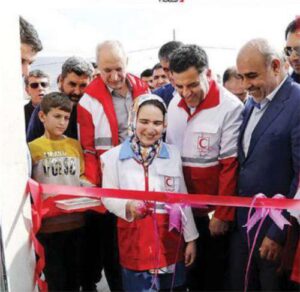
Little Girl Who Survived Iran Quake Finally Gets a House

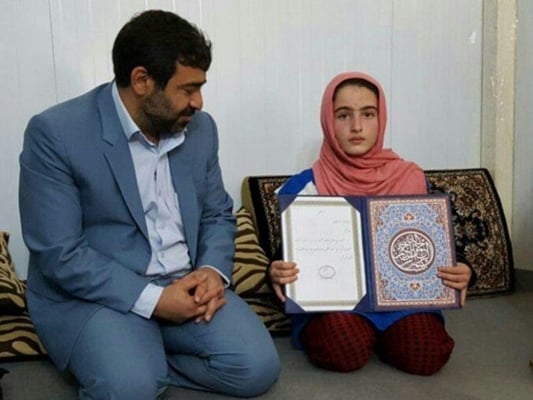
Setareh Ahmadi is an 11-year-old girl who is the only survivor of a family of six killed in the devastating earthquake that struck Sarpol-e Zahab in Iran’s western Kermanshah province and killed over 600 people.

Little Girl Who Survived Iran Quake Finally Gets a HouseThe promise that the chief of the Iranian Red Crescent Society (IRCS) gave last year has come true on the first anniversary of the quake, a report by Shahrvand daily said.
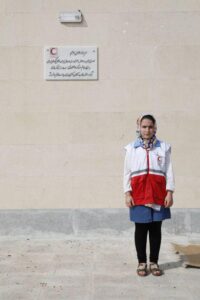
One year ago when Dr Ali-Asghar Peyvandi, the head of the Iranian Red Crescent Society, visited the quake-hit areas and saw for himself the tents set up for the quake victims and saw first-hand the situation of the people, he met a calm, young girl. On the night of the earthquake, she had stayed in her aunt’s home where her family members had a get-together. She had stayed in Sarpol-e Zahab and the rest of her family had returned to Nooshirvan.

Now, the only survivor of a family of six was standing in front of the director of the country’s Red Crescent Society.

“I don’t want a doll. I don’t even want a conex box. I want a house … in the same land that my father wanted to build one where we were going to live,” she said. It was a year ago, exactly the early days after the quake.

Little Girl Who Survived Iran Quake Finally Gets a House“A patient and resistant girl like you has every right to make such a demand,” Peyvandi had told her back then.

“I know you are in agony. I think even if I were you, I wouldn’t be brave enough to talk. It is not the Red Crescent’s responsibility to construct houses, but I promise you to build a house in the same place where your father’s house once stood …, so that you would always remember them and finally become an honour for the country,” he said.

Now, the dream of Setareh’s family has been fulfilled on the anniversary of the earthquake by the very same person who had promised to do so.

One year has passed since the quake hit, and we miss all of her family members.


US Making Big Mistake by Relying on MKO Info: Iran

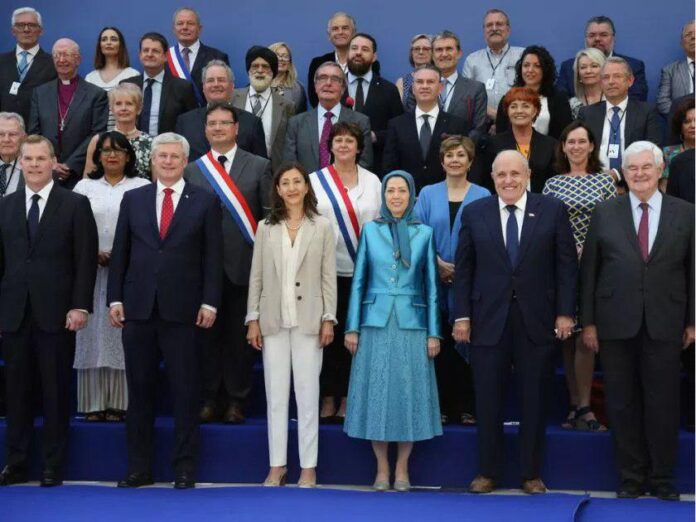
Members of anti-Iran terrorist group MKO along with its guests from the US and its regional allies in its annual gathering in Paris

Jahangiri made the comment at a ceremony to inaugurate a sewage refinery in the southern Iranian city of Ahvaz on Monday.

“Since last year, the Americans had pinned their hopes on the assumption that Iran would not be able to mark the 40th anniversary of the victory of the Islamic Revolution,” he said.

“One of the reasons they mentioned was that current Iranian officials would not be willing to celebrate the occasion. Maybe one of the reasons that caused the Americans to make a mistake in this regard was that the news source of the White House was basically the MKO,” he said.

Jahangiri said the Americans’ impression that people have taken to the streets in cities across Iran and that the Islamic Revolution is in disarray is due to the reports they receive from MKO members.

The vice-president underlined that the decisions made by the US government on Iran are based on the false and fabricated news it receives.

“US authorities make decisions that always deal a serious blow to the credibility of this country and their status on the international stage,” he added.

The top official further touched upon Washington’s unilateral withdrawal from the Iran nuclear deal, saying the move is a loss for the Americans.

“The Americans thought they could disrupt Iran’s economy by withdrawing from the Iran nuclear deal and beginning [to impose] the sanctions and, hence, spoil the country’s political and social situation, but we saw the opposite happened,” he noted.

“They wanted to stop Iran’s oil exports, but failed as well, and we exported petroleum as much as we needed to,” he said.

Iran Condemns Israeli Attack on TV Station in Gaza

Bahram Qassemi

The bloodthirsty Zionist regime’s opposition to the enlightening mission of media outlets is rooted in journalists’ disclosure of Tel Aviv’s heinous crimes over the past 70 years, Qassemi said in a Tuesday statement.

The informative role played by media has always been a nightmare to the occupying regime, which so blatantly commits such a horrible crime in Gaza, he added.

The headquarters of Al-Aqsa TV station run by the Palestinian resistance movement Hamas was razed to the ground on Monday in Israeli airstrikes on Gaza amid a fresh round of violence in the besieged enclave, which the world blames on the Israeli forces.

The building of Al-Aqsa TV station located in an-Nasr district, west of Gaza, was totally destroyed by the Israeli raids, footage of the attack shows.

Many local residents had reportedly fled after calls to evacuate, witnesses said. The TV station said it would resume broadcasts soon.

The raid was part of the fresh airstrikes and rocket attacks by Israeli warplanes and artillery which are targeting areas “throughout” the Gaza Strip and have so far killed several people, including a Hamas commander.

The Palestinian Ministry of Health puts the number at 10, within around 24 hours, according to media reports.