Tuesday, December 23, 2025
Home Blog Page 34

Navy chief reaffirms Iran’s sovereignty over Persian Gulf Islands, says foreign claims to fail

Naaz Islands in Persian Gulf
In an interview with the Tehran-based Jam-e Jam newspaper, Rear Admiral Shahram Irani underscored Iran’s historic and indisputable sovereignty over the three islands, saying that a powerful, vigilant, and united Iran will never allow any power to infringe upon its territorial integrity.
Rear Admiral Irani highlighted the geographic, economic, military, and geopolitical significance of the islands, noting that their location enables the Islamic Republic of Iran to maintain effective control over the Strait of Hormuz.
He added that both the surface and subsurface areas of these islands contain diverse and extensive fossil and marine resources.
According to the navy commander, from a geopolitical and military perspective, control over the three islands is as strategically important as possessing aircraft carriers, as the islands can serve as critical positions for strengthening Iran’s defensive and security capabilities in the face of potential threats.
He further emphasized that the islands also hold considerable economic potential due to their clear waters, rich marine biodiversity, and sub-surface coral formations, offering strong prospects for nature-based and maritime tourism.
Rear Admiral Irani noted that the islands overlook the main waterways entering and exiting the Persian Gulf—an element that has prompted some regional states, influenced by extra-regional powers, to raise unfounded claims in an attempt to create tension around the islands.
He asserted that Iran’s adversaries must not assume they can undermine Iran’s sovereignty by promoting fabricated disputes. Based on historical and legal evidence, Iran’s ownership of the three Persian Gulf islands is definitive, continuous, and indisputable.


Iran offers to extend Gas deal with Turkey, calls for boost in energy, economic cooperation

Speaking at a joint press conference in Tehran on Sunday afternoon following his meeting with Turkish Foreign Minister Hakan Fidan, Seyed Abbas Araqchi said that despite all efforts made and the positive results achieved, there is still a considerable gap before the full potential of the two countries—particularly in trade and economic relations—can be realized, and multiple steps must be taken to bridge that gap.

Araqchi noted that both ministers stressed the need to remove obstacles to bilateral trade and investment, adding that it was agreed the High-Level Cooperation Council and the Joint Economic Commission of the two countries would address these issues in detail.

Announcing the upcoming opening of Iran’s consulate general in the Turkish city of Van, Araqchi said the consulate would create new opportunities for bilateral ties, including enhanced cooperation between border provinces.

Elsewhere in his remarks, Araqchi said the repeated violations of the ceasefire in Gaza and Israel’s recent attacks on Lebanon and Syria show that the Israeli regime has broader plans to destabilize the region.

He stressed that stability, security, and calm in Syria are directly linked to preserving its territorial integrity, adding that the main threat to Syria’s security and stability comes from Israel’s occupation and aggressive actions.

Araqchi said it is the duty of regional countries to curb the regime’s aggression and expansionism, including in Syria and Lebanon.

He also reaffirmed Iran’s support for Turkey’s efforts to disarm the PKK terrorist group and to establish a terrorism-free zone.

Israeli PM submits formal pardon request

Benjamin Netanyahu

“The Office of the President is aware that this is an extraordinary request which carries with it significant implications. After receiving all of the relevant opinions, the president will responsibly and sincerely consider the request,” according to a statement by Herzog’s office.

US President Donald Trump wrote to Herzog earlier this month asking him to pardon Netanyahu, who has repeatedly denied wrongdoing in the ongoing court cases.


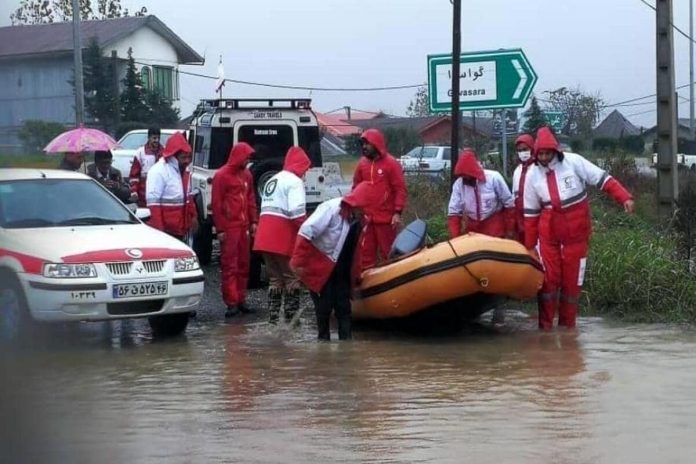
Tehran emergency services report 357 deaths in eight days as air pollution calls surge

According to Mohammad Esmaeil Tavakoli, head of Tehran Province EMS, 31% of the 57,000 emergency calls received during this period were related to pollution-induced health issues.

Speaking on a television program, Tavakoli said EMS has no legal obligation to station ambulances in public squares during pollution episodes, explaining that earlier policies had been revised.
He emphasized that the Ministry of Health is responsible for responding to public health needs, with EMS acting as its pre-hospital arm.

Tavakoli noted that in November, when the latest pollution wave began, EMS received 227,000 calls and conducted 93,000 missions, 22% of which were linked to poor air quality. In the most recent eight-day period, emergency missions rose to 28,000, with cardiac and respiratory complaints making up 31% of cases.

He also highlighted structural shortages, citing a deficit of 400 EMS stations and 500 ambulances in Tehran Province.

Although the system operates helicopters, fixed-wing aircraft and 240 motorlances, heavy traffic and the city’s geography limit response capacity.

Tavakoli urged authorities to address systemic gaps and asked the public to trust that emergency services remain fully operational despite the strain.

Egypt trains Palestinians for future Gaza police force

Gaza Strip

Egyptian Foreign Minister Badr Abdelatty announced the plan to train 5,000 officers for Gaza during talks with Palestinian Prime Minister Mohammad Mustafa in August.

A first group of more than 500 officers were trained in Cairo in March and since September the two-month courses have resumed to welcome hundreds more people, the Palestinian official told AFP on condition of anonymity.

He added all members of the force will be from the Gaza Strip and paid by the Palestinian Authority, which is based in Ramallah in the occupied West Bank.

“I’m very happy with the training. We want a permanent end to war and aggression, and we’re eager to serve our country and fellow citizens,” stated a 26-year-old Palestinian police officer.

He told AFP he hoped the security force would be “independent, loyal only to Palestine and not subject to external alliances or objectives”.

“We received outstanding operational training, with modern equipment for border surveillance,” said a Palestinian lieutenant who also requested anonymity for security reasons, as did everyone interviewed by AFP.

The lieutenant, who left Gaza with his family last year, added the training focused on the fallout of the October 2023 Hamas attack on Israel that triggered the war and the damage done to the Palestinian cause.

Hamas’s attack on Israel resulted in the deaths of 1,200 people.

Israel’s retaliatory assault on Gaza has killed at least 70,100 people, according to figures from the territory’s health ministry that the UN considers reliable.

The training also highlighted the role of the Palestine Liberation Organization (PLO) as the sole legitimate representative of the Palestinian people and stressed the importance of “protecting the dream of creating” a fully sovereign and independent Palestinian state.

A senior security official from the Palestinian Authority confirmed that its President Mahmoud Abbas had instructed Interior Minister Ziad Hab al-Reeh to coordinate with Egypt on the training.

During talks sponsored by Egypt late last year, the Palestinian movements — including the two main ones, Hamas and Abbas’s Fatah — agreed to a force of around 10,000 police officers.

Egypt would train half of them while the other 5,000 would come from the police force in Gaza, which has been under Hamas control since the militant group seized power there in 2007.

Under the agreement, the security force would be supervised by a committee of technocrats approved by the Palestinian movements.

A senior Hamas official confirmed to AFP that the movement supported “the details regarding security and management of the Gaza Strip” agreed during the talks.

The subject was also addressed in US President Donald Trump’s peace plan, which led to last month’s fragile Gaza ceasefire, and was later endorsed by a UN Security Council resolution.

The plan notably authorises the creation of an international force that would be responsible for securing border areas and demilitarising Gaza.

The European Union also wants to train up to 3,000 Palestinian police officers in the Gaza Strip under a scheme similar to one it already runs in the West Bank, an EU official told AFP.

The EU has financed a police training mission in the West Bank since 2006, with a budget of around 13 million euros ($15 million).

But many details remain up in the air.

A Hamas official questioned to AFP the possibility of an agreement with Israel on the precise details of a police force in Gaza.

Israeli Prime Minister Benjamin Netanyahu’s government opposes any role for Hamas or the Palestinian Authority in Gaza after the war ends.

AFP journalists have regularly observed that Hamas maintains armed men in Gaza to ensure traffic flows and to mediate disputes between residents, effectively providing a form of law enforcement.

Hamas has announced it no longer wants to govern Gaza but added that it does not intend to disappear and remains a central part of Palestinian political life.

On the thorny issue of disarmament, Hamas has stated it is not opposed to handing over part of its arsenal, but only as part of a Palestinian political process.


Four die in Iran after drinking bootleg alcohol, three detained

Ambulance Iran

The sale and consumption of alcohol has been banned in Iran since the 1979 Islamic revolution, leading to a huge illicit trade in bootleg products, some of them adulterated. Only non-Muslim minorities in Iran, which include Christians, Jews and Zoroastrians, are exempt from the alcohol ban, provided they do not drink in public.

“The consumption of homemade alcoholic beverages has led to the deaths of four people and the poisoning of five others in (southeastern) Iranshahr over the past 24 hours,” state news agency IRNA reported late Saturday, quoting a local medical official.

“Two injured people are in intensive care,” he was quoted as saying.

Police in Iranshahr have “identified and arrested three of the alcohol distributors”, IRNA added.

In October 2024, authorities executed four people who had been convicted of selling contaminated bootleg alcohol that had fatally poisoned 17 people the previous year.


Iran confiscates Eswatini-flagged vessel for smuggling fuel

IRGC Boat

“We seized a vessel carrying smuggled fuel in the form of gasoil and flying Swaziland’s (Eswatini) flag. It was brought to Bushehr’s coast following a judicial order and its content will be unloaded,” a navy commander said.

He added that the vessel’s 13 crew were from India and one neighbouring country.


Saudi deputy foreign minister visits Tehran for bilateral and regional talks

Iran and Saudi Arabia Flags

According to the ministry, the visit aims to facilitate discussions on bilateral relations as well as regional developments, including the situation in the occupied Palestinian territories, Lebanon and Syria.

The trip comes amid continued efforts by Tehran and Riyadh to strengthen dialogue following the restoration of diplomatic ties last year.

Al-Sati is scheduled to meet Iran’s foreign minister during his stay in Tehran. Iranian officials say such exchanges are part of a broader framework designed to manage regional issues through direct engagement and to expand areas of cooperation where possible.

Israel has ‘de facto state policy’ of organised torture: UN

The UN committee on torture expressed “deep concern over allegations of repeated severe beatings, dog attacks, electrocution, waterboarding, use of prolonged stress positions [and] sexual violence”.

The report, published as part of the committee’s regular monitoring of parties that have signed the UN convention against torture, also said Palestinian detainees were humiliated by “being made to act like animals or being urinated on”, were systematically denied medical care and subject to excessive use of restraints, “in some cases resulting in amputation”.

The UN committee of 10 independent experts raised concern about the wholesale use of Israel’s unlawful combatants law to justify the prolonged detention without trial of thousands of Palestinian men, women and children. The latest figures published by the Israeli human rights group B’Tselem announced that as of the end of September the Israel Prison Service was holding 3,474 Palestinians in “administrative detention”, meaning without trial.

The new UN report, covering a two-year period since the beginning of the Gaza war on 7 October 2023, draws attention to the “high proportion of children who are currently detained without charge or on remand”, noting the age of criminal responsibility imposed by Israel is 12, and that children younger than 12 have also been detained.

Children categorised as security prisoners, the report added, “have severe restrictions on family contact, may be held in solitary confinement, and do not have access to education, in violation of international standards”. It appeals to Israel to amend its legislation so that solitary confinement is not used against children.

The UN committee, which was established to monitor implementation of the 1984 UN convention against torture, goes further, arguing that the daily imposition of Israeli policies in occupied Palestine, taken as a whole, “may amount to torture”.

The report said 75 Palestinians had died in custody over the course of the Gaza war, during which detention conditions for Palestinians had undergone a “marked deterioration”. It found the death toll to be “abnormally high and appears to have exclusively affected the Palestinian detainee population”. It added that “to date, no state officials have been held responsible or accountable for such deaths”.

Israel’s government has repeatedly denied the use of torture. The UN committee heard evidence from representatives of Israel’s foreign ministry, justice ministry and prison service who argued that prison conditions were adequate and subject to supervision.

However, the committee pointed out that the inspector charged with investigating complaints on interrogations had brought “no criminal prosecutions for acts of torture and ill-treatment” over the past two years, despite widespread allegations of such practices.

It noted that Israel had pointed to just one conviction for torture or ill-treatment in that two-year period, an apparent reference to an Israeli soldier sentenced in February this year for repeatedly attacking bound and blindfolded detainees from Gaza with his fists, a baton and his assault rifle. In that case, the committee found that the seven-month sentence “appears not to reflect the severity of the offence”.

The report was published on a day when three Israeli border police officers were released after questioning over the fatal shooting of two Palestinians who had been detained in Jenin.

Video of the incident on Thursday evening showed the two men, Youssef Asasa and Mahmoud Abdallah, crawling out of a building. Asasa and Abdallah can be seen holding their hands up and lifting their shirts to show they are unarmed.

The men, both claimed by Palestinian Islamic Jihad as fighters in its al-Quds Brigades, were detained for a few seconds by border police officers, including a bald-headed officer with a beard who appears in the video to take charge and kick both detainees before making a gesture, seemingly ushering them back inside the building. Seconds later Asasa and Abdallah were shot by the officers at a range of about 2 metres.

According to Israeli media, the three border officers questioned on Friday about the incident claimed they “felt an immediate and tangible threat” to their lives. In their reported account of what happened the two detainees had refused to strip naked and had “put their hands in their pockets”, and then one of the men tried to “escape back into the building”.

The video from the scene, the authenticity of which has not been disputed by the Israeli authorities, does not show any obvious resistance from the two men, nor does it show them with their hands in their pockets. They appear to be reluctant to re-enter the building under the apparent orders from the border police officer.

The three border police officers were released after questioning on condition they did not discuss the case with others.


Iran’s foreign trade surpasses $76.5 billion in first eight months of year

Iran Trade

The figures show that overall trade value declined 9.38% compared with the same period last year, while total weight increased by 1.53%.

Exports stood at 105.23 million tons valued at $36.99 billion, reflecting a 1.17% rise in volume but a 3.48% drop in value year-on-year.
Imports reached 25.82 million tons worth $39.54 billion, marking a 3% increase in volume and a 14.29% decrease in value.

Analysts attribute part of the rise in export volume to energy imbalances affecting Iran’s industrial and mining sectors.

Reduced access to stable energy supplies has reportedly pushed producers toward exporting more raw materials, including iron ore concentrate and pellets, to utilize otherwise idle production capacity.

According to recent figures from the Iranian Steel Association, exports of iron ore concentrate rose by 82% in the first seven months of the year compared with the previous year.

Steel producers have expressed concern that the surge in raw material exports could strain domestic supply chains, as concentrate is a key input for steel manufacturing.