Monday, January 12, 2026
Home Blog Page 3396

Iran Welcomes Syrian Army’s Entry into Manbij

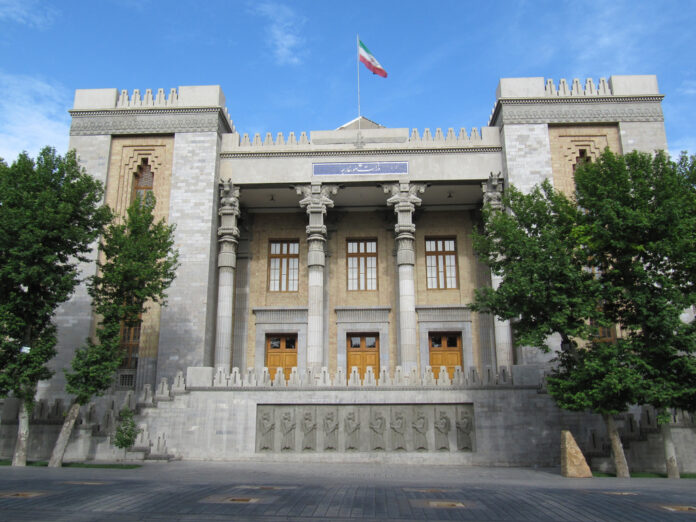
In a Friday statement, Qassemi said the Islamic Republic of Iran has always underlined the need to respect the national sovereignty and territorial integrity of Syria.

Iran views the hoisting of Syria’s national flag in Manbij as a significant step towards establishing the rule of Syria’s legitimate government across the country, he said.

Qassemi also noted that Tehran welcomes the move and considers it a new step towards resolving crisis in the Arab state.

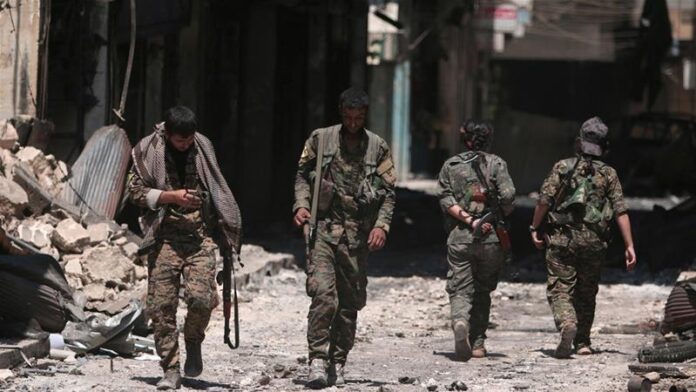
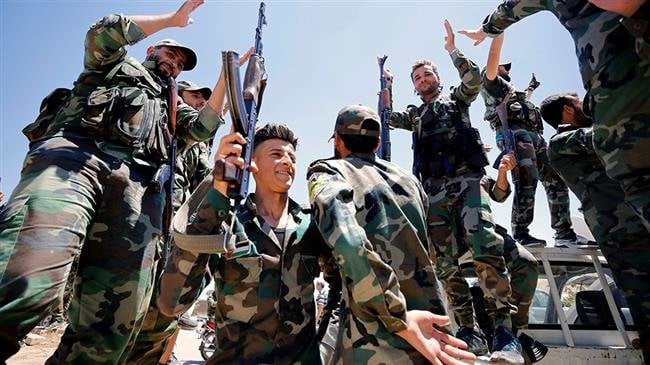
Syrian armed forces entered Manbij after Kurdish YPG militants urged the government in Damascus to protect them in the face of Turkish attacks. In a statement, the Syrian army said it guarantees full security for all Syrian citizens and others present in Manbij.

The army, which entered the Kurdish town after six years, said it is determined to defeat all invaders and called on Syrians to preserve the country’s sovereignty.

Syrian Army in Manbij to Protect Kurds from Turkey

The announcement came moments after the city’s residents asked the Syrian government to retake Manbij following a US pledge to withdraw troops from the Arab country.

The army said it would guarantee “full security for all Syrian citizens and others present in the area.”

Russia welcomed the development, with Kremlin spokesman Dmitry Peskov calling it a positive trend.

“Of course, this will help in stabilizing the situation. The enlargement of the zone under the control of government forces… is without doubt a positive trend,” he said.

State-run SANA news agency said the army raised the national flag in the city which is mainly populated by Syrian Kurds. It is not clear yet whether US troops, which had a base in Manbij, remain in place or have withdrawn.

The city was held by US-backed YPG militia which Turkey regards an offshoot of the outlawed Kurdistan Workers’ Party (PKK).

Turkey had been sending so-called Free Syrian Army (FSA) militants to Manbij in recent years, reportedly in preparation for an offensive to drive YPG fighters out of the city.

Turkish President Recep Tayyip Erdogan signaled earlier this month that a cross-border operation against the YPG would happen soon. Since 2016, Ankara has carried out two similar military operations in northern Syria.

Ankara has been assisting several militant groups fighting to topple the government of President Bashar al-Assad.

The country, however, has moderated its initial hostility toward the Syrian government and been working with Iran and Russia to restore peace to Syria within a framework known as the Astana peace process.

Earlier Friday, Russia’s Deputy Foreign Minister Mikhail Bogdanov said the presidents of the three countries, known as the guarantor states of ceasefire in Syria, are scheduled to meet in Moscow in early January.

“It’s our turn to host the summit… around the first week of the year. This will depend on the schedules of the presidents,” Bogdanov was cited as saying by Interfax news agency.

The Astana format – which has brought the parties to the Syria conflict to the negotiating table – has so far made numerous achievements both on the battlefield and the political stage.

The talks have helped significantly decrease the violence gripping Syria by creating for de-escalation zone there. They have also paved the way for the formation of a constitutional committee.

This is while a parallel UN-backed peace process in Geneva, Switzerland, has failed to deliver any breakthrough.

US Does Not Dare Mention Military Option against Iran: IRGC

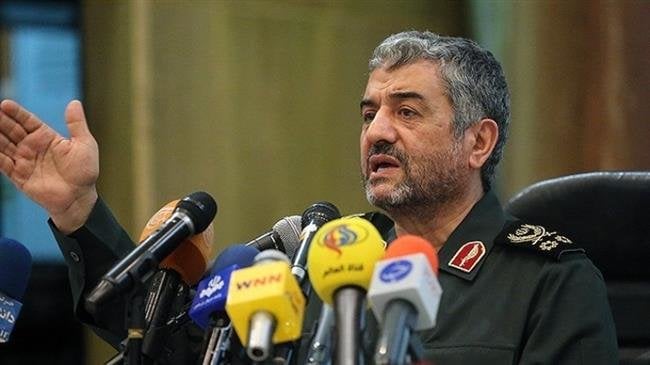
Speaking at a ceremony in Tehran on Thursday, Major General Mohammad Ali Ja’fari said Iran is no more facing a security threat in the light of its rising power.

“We have distanced ourselves from the security threat since many years ago and no superpower even dreams of aggression” against Iran while all of them “are extremely afraid of a conflict with Iran and its consequences,” the senior military commander said.

“When we compare the US power now with 40 years ago, we see that as put by the Leader [of the Islamic Revolution Ayatollah Seyyed Ali Khamenei] America is on the decline and today, they themselves confess to their weakness in the face of Iran. Iran is now so powerful that they do not dare mention the military option against Iran anymore,” the IRGC chief commander added.

Speaking in early November after the administration of US President Donald Trump decided to reinstate all US sanctions on Iran, which had been removed under the 2015 nuclear deal, known as the Joint Comprehensive Plan of Action (JCPOA), Ayatollah Khamenei said America’s power is on the decline and the country is much weaker today than it was 40 years ago.

“Many acclaimed American politicians believe that America’s soft war has been worn out,” the Leader said, adding, “Its hard power, namely America’s economic and military power, is also declining.”

Elsewhere in his remarks, the IRGC commander referred to the existing economic and management problems in the country, noting that although the Islamic Republic is currently engaged in an economic war with enemies, “the overall conditions in the country are not comparable to other regional countries.”

The latest remarks by the IRGC commander came only a few days after a senior Iranian commander said the country will never allow US warships to sail near its territorial waters.

Deputy Chief of Iran’s Army for Coordination Rear Admiral Habibollah Sayyari made the remarks in reaction to the return of US aircraft carrier USS John C. Stennis to the Persian Gulf on Friday after a long absence.

“The response of the Armed Forces and the Army of the Islamic Republic is that we will never allow them [US warships] to come near our territorial waters,” Sayyari said.

Coincident with the arrival of the US aircraft carrier, the IRGC held the main and final stage of massive exercises, dubbed the Great Prophet 12, in the Persian Gulf, launching an “offensive” component in Iran’s defensive strategy for the first time.

Iran has repeatedly warned that any act of trespassing on its territorial waters would be met with an immediate and befitting response.

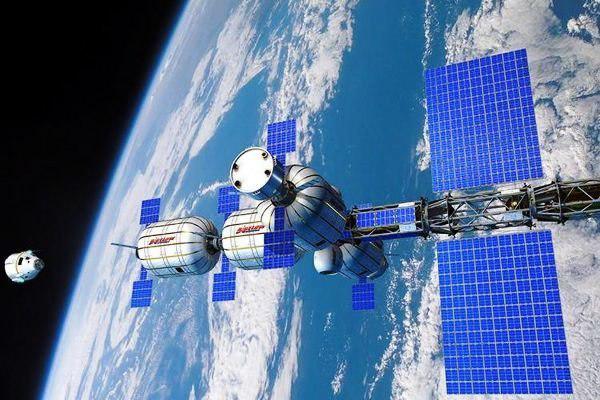
Iran Acquires Knowledge of Sending Space Cargo to Orbit

Designed and produced by Iran’s Space Research Centre, the new Orbit Transfer System is set to move satellites from low to medium (6,000 to 7,000 kilometers) earth orbits, Samimi said.

“A number of Iranian universities took part in the project. Amirkabir and Sharif universities cooperated respectively in the technology development and titanium structures and thruster control systems,” Samimi was quoted as saying in a report by Mehr news agency.

According to the Iranian official, the system serves as a significant step towards launching communication satellites into the orbit as well as transferring space cargo.

“Transferring space cargo to high Earth orbits is among the main technological development needs of our country,” he said, adding the achievement is totally homegrown.

Among the by-products of the project, he said, one can also refer to a number of technologies created for the first time in Iran including solid-propellant engine with a titanium body, a 3D Grain and 290 second special strike, titanium welding technology, orbit transfer system, thruster control and Lightband Separation technologies.

He also referred to the main features of the new system and said it can simultaneously run several satellite technologies to transfer space cargos to the orbit.

“The new system enjoys a strong propelled engine and a relatively low weight on the one hand and advanced control sub-systems on the other hand,” he noted.

Samimi said the new system is smart, and in case of any loss of connection with the earth, the central computer system begins to operate based on some pre-planned algorithms at an acceptable level of accuracy.

For a brief review of Iran’s achievements in various fields of science and technology, check the book “Science and Technology in Iran: A Brief Review

“The idea to design and develop the Orbit Transfer System was initiated in 2014. The first engineering model of the system was created in 2015 and unveiled in a ceremony by President Hassan Rouhani. It is now undergoing its final tests,” he said.

Elaborating on the tests the system has undergone, he said at the engineering phase, the system underwent 25 tests in terms of performance and environment resistance. It has already passed some environment tests like heat-vacuum, vibration, electromagnetic compatibility, shaft alignment and leakage tests. The whole system has already been assembled for quality tests.”

Performance tests of the system have been conducted at various temperature and vibrating conditions and other related tests have already been made by Iran’s Space Research Centre.

‘Iran Must Stop Fulfilling Commitments under Nuclear Deal’

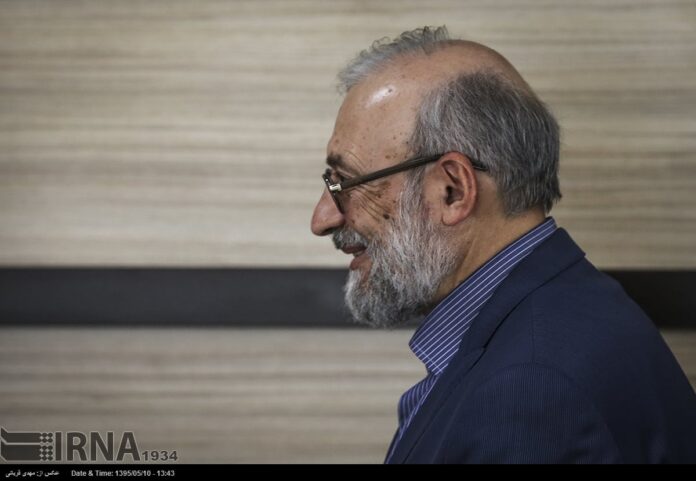
Mohammad Javad Larijani attends a press conference in Tehran on July 31, 2016 / Photo by IRNA

The remarks were made by Mohammad Javad Larijani, the secretary of Iran’s High Council for Human Rights and a senior theoretician, in a televised interview on Wednesday night.

“Although we might fulfill [our obligations under] JCPOA, we should announce we have no legal commitment to JCPOA … There are lots of interesting moves we can take to show the world we are not bound to the deal but we are still working to see how much would they cooperate,”.

Following the US withdrawal from the accord, Tehran has announced its continued commitment to the deal is conditional on EU’s binding guarantees assuring Iran its interests will be served if it remains in the deal.

The EU has offered Iran a support package to compensate for the US pullout, which obliges the European Investment Bank to support EU firms willing to enter Iranian markets, and creates a special payment mechanism, known as Special Purpose Vehicle (SPV), to facilitate trade with Iran.

Iran has announced the package is acceptable at the macro level, but talks on the details of the package have led to nowhere after several months, much to Iran’s frustration.

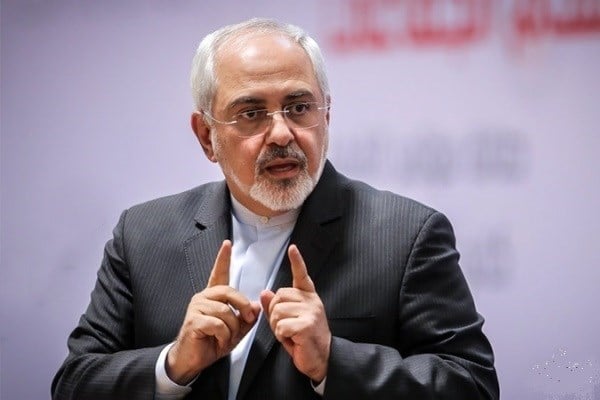
As recent as last week, Iran’s top diplomat Mohammad Javad Zarif warned Europe Tehran is not going to wait forever so they compensate for the US withdrawal from the nuclear pact, lamenting the European parties to the pact are dragging their feet.


Rouhani’s Mistakes in Talks

Larijani said there have been big mistakes in the government’s approach during the nuclear talks that led to the 2015 deal and following the US withdrawal.

He said Iran’s basic demands are not being met under the JCPOA and the country does not benefit from the deal.

“We had two indicators on JCPOA. The first indicator is that we should be able to freely sell our oil within our [OPEC] quota. Second, the banking system should allow us to spend oil revenues as we like. These two were our conditions for the talks but they were not met,” he said.

Larijani said the Iranian government had basically negotiated the JCPOA with wrong assumptions.

The theoretician said the Rouhani government argued that limiting Iran’s nuclear work is required for the Iranian economy to improve, while this assumption happened to be untrue.

The government talked of a win-win approach towards the talks, while the nuclear dispute between Iran and the West could not be subject to a win-win approach, as the western side held no respect for Iran’s rights and was doing its best to trample on Iran’s rights, Larijani said.

Moreover, the government believed we would be attacked by western armies unless we reach a deal, while this was not true, he said.

Larijani said the government should have adopted a step-by-step approach, refusing to fulfil all its obligations and wait for the other party to do Iran a favour by taking necessary steps.


No Commitment, No Withdrawal

Larijani said Iran should not be bound to JCPOA, although it doesn’t need to announce withdrawal from the pact.

“The world should not think we are responsible to take all steps and they should fulfil their commitments whenever they liked. We have no international commitment,” he said.

Larijani said Iran should stop honouring minor obligations, including allowing inspections of nuclear sites.

“JCPOA is a dead contract, but this is an international issue and our options are much more … than simply walking out of the deal,” he said.

Iran FM Laments Europe Dragging Its Feet on JCPOA

Iran Blasts Europe’s ‘Disastrous’ Subservience to US

The Iranian minister said Iran’s hands are not tied on JCPOA and Iran will tread in alternative paths if it is disappointed with Europe.

“Following the US withdrawal from the accord, we have lots of options and we will use these options whenever it is within national interests,” he said, speaking in a recent interview with the Beirut-based Al-Mayadeen TV channel.

The Iranian minister said it is undesirable for Iran that Europeans have yet to fulfil their pledges, months after the US walked out of the pact.

“Europeans are slow in meeting their commitments under the nuclear deal. We won’t keep waiting unless they take practical steps,” ISNA quoted him as saying.

In May, the US walked out of the nuclear deal and since then it is working to restore its sanctions on Tehran and push the world to cut trade with Iran.

Tehran has announced its continued commitment to the deal is conditional on EU’s binding guarantees assuring Iran its interests will be served if it remains in the deal.

The EU has offered Iran a support package to compensate for the US pullout, which obliges the European Investment Bank to support EU firms willing to enter Iranian markets, and creates a special payment mechanism, known as Special Purpose Vehicle (SPV), to facilitate trade with Iran.

Iran has announced the package is acceptable at the macro level, but talks on the details of the package have led to nowhere after several months.

Trump’s Sneaky Visit to Iraq Disrespect for Its National Sovereignty: Iran

Iran Condemns Bahrain’s Plan to Normalize Relations with Israel

“As Mr Trump himself said in his address to the US military in Iraq’s Ein al-Asad … he is now forced to visit one of the regional countries in a totally secret way, or in other words in a ‘sneaky’ manner, and with tightest protective-security measures,” Qassemi said in a Friday statement.

This comes despite Washington’s growing interferences in regional affairs, thousands of billions of dollars it wasted, and the heavy and irrecoverable price paid by American people for the US’ illegal and illegitimate presence in the region, particularly in Iraq, he added.

Qassemi stressed that the visit has sparked the criticism of experts, indifference of Iraqi officials, and opposition of the Iraqi nation.

The spokesman then severely criticized Trump’s meddlesome and opportunist remarks in Iraq and said “regional governments and nations will never allow aggressive and despicable outsiders to sow seeds of division among them.”

According to Qassemi, it was the vigilant nations of the region – not the rapacious US and its staunch support of terrorism – which managed to suppress terrorist groups created, equipped and financed by the US and the Zionism.

The regional nations routed terrorists by understanding the situation in the right time and synergizing their material and spiritual powers, he noted.

Qassemi said undoubtedly all regional states will soon come to the conclusion that their region’s stability and security will only be achieved by relying on their domestic, regional and international resources and capacities.

“Foreign forces, sooner or later, will also have to leave the whole region,” he added.

The spokesman said it is better for Trump to have a serious and multilateral review of the developments of the world and the West Asia from the time he took office up to now.

A review of what he has said, what has happened, and what may happen in the future will perhaps teach Trump the required lessons, Qassemi noted.

Trump made his unannounced visit to al-Asad Airbase in Iraq’s Anbar province on Thursday causing heated controversy in Iraqi political circles.

He also commented on the possibility of using Iraq as a base for the United States to launch military operations in Syria have further enraged Iraqi statesmen.

As announced by the office, Trump was supposed to have a meeting with Abdul-Mahdi, but the meeting was called off due to “differences over how it should be held, and both sides, in a phone conversation, discussed the situation, especially the circumstances following Washington’s announcement that it would withdraw its troops from Syria.

Trump’s Snap Visit to Iraq Triggers Controversy


Trump’s Snap Visit to Iraq Triggers Controversy

In particular, his comments on the possibility of using Iraq as a base for the United States to launch military operations in Syria have further enraged Iraqi statesmen.

The Iraqi Alsumaria News reported that Trump’s trip has received negative reactions from Iraqi political groups.

The Reform and Construction Bloc at Iraq’s parliament issued a statement, condemning Trump’s visit to Iraq.

The statement dismisses Trump’s visit as a flagrant violation of Iraq’s sovereignty. It says Trump’s entering the al-Asad airbase looks as if Iraq is one of the states of the US. The statement also says it is necessary the Parliament meet to review this violation of national sovereignty.

The parliamentary bloc has also stressed in its statement that US troops’ pullout from Syria is no justification for them to stay in Iraq and use Iraq as a base for the United States in the Middle East region.

Mahmoud Rubaie, a member of the Asaib Ahl Al-Haq political party, also said making a trip to Iraq like this by Trump is a testament to Washington’s disregard for the independence, sovereignty and credibility of the Iraqi government, which makes it all the more necessary to expedite efforts to adopt a law on the expulsion of foreign forces from Iraq.

Meanwhile, Hashem Mousavi, the spokesperson for Al-Najba’a Iraqi Movement, said “stupid” Trump should know that Iraq secured its sovereignty with blood, and that no US military bases would be established in Iraq. He said it is incumbent upon the Iraqi government to expel American troops because their presence in Iraq will harm the country’s sovereignty.

Also, Jafar Hosseini, the spokesperson for Hezbollah Brigades affiliated with the Popular Mobilizations Forces, said Islamic resistance forces will make the US withdraw its troops from Iraq.

He said Trump’s snap visit to Iraq and limiting it to simply meeting American soldiers at a military base show the US president has a sense of insecurity in Iraq.

According to Hosseini, Islamic resistance commanders in Iraq have vowed to cut off the hands that intend to encroach upon neighbouring countries, namely Syria.

He emphasized that it is up to the Iraqi nation and parliament, and not Trump, to decide on US troops’ pullout from Iraq.

As negative reactions to Trump’s visit to Iraq continue to pour in, Iraqi legislator Fateh al-Khazali said Trump should know that Iraq has not been the same as before since 2014, and the Iraqi government should expel US forces form Iraq. He said victorious Iraq is not a US state, and that Iraqi Prime Minister Adil Abdul-Mahdi should discharge his responsibilities according to Article 5 of the Constitution.

Khazali said the US, which suffered defeat in Iraq, wants to return to this country once again one way or another, “but we will not allow for that to happen.”

He said Trump’s meeting with US forces shows they do not have an advisory and training role, adding the Iraqi government should accept its responsibility in that regard.

The Iraqi lawmaker noted that the Iraqi parliament has already ordered a timetable be drawn up for the withdrawal of all foreign forces from Iraq, and added this has not materialized yet due to the existing corruption.

Naim al-Aboodi, another Iraqi legislator, also disclosed that Trump has asked Iraqi authorities, especially the prime minister, president and parliament speaker, to meet him at the airbase he is visiting.

Meanwhile, the Iraqi prime minister’s media office announced that American officials had already informed Baghdad of Trump’s willingness to travel to Iraq on Tuesday to congratulate the new Iraqi government.

The office said the Iraqi government had welcomed Washington’s request and that the Iraqi premier invited Trump to Baghdad, and that Trump, for his part, invited the prime minister to visit Washington and the White House.

As announced by the office, Trump was supposed to have a meeting with Abdul-Mahdi, but the meeting was called off due to “differences over how it should be held, and both sides, in a phone conversation, discussed the situation, especially the circumstances following Washington’s announcement that it would withdraw its troops from Syria. They also discussed mutual cooperation in fighting ISIS terrorists and establishing stability and security in regional countries.”

In the meantime, the White House weighed in on why the US president and the Iraqi prime minister did not meet during Trump’s visit to Iraq. The White House confirmed that there was no meeting between the two men because Baghdad was informed of Trump’s visit only shortly before the trip took place, which required the necessary measures to be taken to ensure the security of Trump during the meeting.

According to the White House, Trump invited Abdul-Mahdi to visit Iraq during his phone conversation, which was welcomed by the Iraqi side.

Trump and his wife met with US troops in Iraq in an unexpected trip. This is the first time Trump meets US troops outside the United States since he took office. He had been criticized by the US military for this reason.

The plane carrying Trump and his wife along with a group of his advisors and secret service agents plus a large number of journalists touched down at al-Asad airbase in west of Baghdad.

In a meeting with US forces at the airbase in Anbar province, Trump announced that Washington would use Iraq as a base to launch operations in Syria should need arise.

A Look at Iranian Newspaper Front Pages on December 27

A Look at Iranian Newspaper Front Pages on November 19

Almost all papers today covered the visit of Secretary of Iran’s Supreme National Security Council Ali Shamkhani to Kabul and his Confirmation of Tehran’s talks with the Taliban. During his one-day trip to Kabul, Shamkhani noted that Iran will continue talks with the Taliban to help resolve security problems in Afghanistan. He said that Tehran has been holding talks with the Taliban with the knowledge of the Afghan government.

The US decision to pull out its forces from Syria and its repercussions also remained a top story today. Several papers also focused on Israel’s attack on Syria.

The above issues, as well as many more, are highlighted in the following headlines and top stories:

Abrar:

1- Iran-Russia Naval Ties Develop: Navy Commander

2- We Face Crisis in Forming Government: Michel Aoun

3- Turkey Not Able to Eradicate ISIS in Syria

4- Israel again Launches Air Raid on Syria

A Look at Iranian Newspaper Front Pages on December 27


Aftab-e- Yazd:

1- Iran-Taliban Talks Confirmed

* Shamkhani Officially Confirms Tehran’s Negotiations with Taliban

A Look at Iranian Newspaper Front Pages on December 27


Ebtekar:

1- We Must Try to Reduce Suffering of People: Rouhani

2- Competition for Conquering Peace in Syria

* Report on Possibility of Syria’s Return to Arab League

A Look at Iranian Newspaper Front Pages on December 27


E’temad:

1- Trip to Kabul, Dialogue with Taliban

2- Tension between Trump, Imran Khan

A Look at Iranian Newspaper Front Pages on December 27


Ettela’at:

1- Improving People’s Livelihood First Priority of Budget Bill: Rouhani

2- Trump Counts on Saudi Arabia as ATM: Rai al-Youm

3- Policymaking in Tehran, Talks in Kabul

* Annihilation of ISIS Main Focus of Talks with Taliban

A Look at Iranian Newspaper Front Pages on December 27


Jomhouri Eslami:

1- Russia Warns US against Interference in Saudi Royal Succession

2- Mubarak-Morsi Face-off in Court

3- Tehran Reliable Partner for Seoul: South Korean President

4- Syria Intercepts 14 of 16 Israeli Missiles: Russia

A Look at Iranian Newspaper Front Pages on December 27


Kayhan:

1- Iran Warns about Attempts to Transfer ISIS Elements to Afghanistan

2- Germany Opposes Deployment of US Missiles to Europe

3- Our Role in US Withdrawal from Syria [Editorial]

A Look at Iranian Newspaper Front Pages on December 27


Mardomsalari:

1- Withdrawal from JCPOA Not Difficult If Europe Fails to Launch SPV: MP

2- Molavi Abdul Hamid Stresses Development of Ties between Iran, Oman

3- Trump Possible Impeachment: US Waiting for Outcome of Muller’s Investigations

A Look at Iranian Newspaper Front Pages on December 27


Sazandegi:

1- Bibi’s Gamble: Israel’s Snap Elections to Benefit or Detriment of Netanyahu?

A Look at Iranian Newspaper Front Pages on December 27


Shargh:

1- Iran Leader Leads Funeral Prayer for Ayatollah Hashemi Shahroudi

2- Talks with Taliban against ISIS: Iran-Taliban Dialogue to Continue

A Look at Iranian Newspaper Front Pages on December 27


Vatan-e Emrooz:

1- No One Knows What’s Going on Here: US Commander on Withdrawal from Syria

A Look at Iranian Newspaper Front Pages on December 27

Iran Extends Condolences on Prophet Zoroaster’s Death Anniversary

In a message on Wednesday, Qassemi offered condolences to the Zoroastrians across the world.

“I send my condolences to the kind Zoroastrians in Iran and in other countries on the death anniversary of Prophet Zoroaster,” reads his message.

“Zoroaster was the founder of religion of monotheism in the ancient Iran and harbinger and preacher of Good Thoughts, Good Words and Good Deeds. Zoroastrianism has still based its identity on promoting love and friendship among good humans and avoiding hatred and demonic behaviours,” he said.

Qassemi went on to say that the Iranian nation and the Islamic Republic of Iran are the examples of a country and people that have always been able to raise the flag of coexistence and friendship among various religions on its monotheist lands.

“For this, Iran prides itself on enjoying the high culture in the current chaotic and volatile world,” he added.

Zoroaster was an ancient Persian prophet who challenged the existing traditions of the Indo-Iranian religion and later developed into the religion of Zoroastrianism.

He inaugurated a movement that eventually became the dominant religion in Ancient Persia.

He was a native speaker of Old Avestan and lived in the eastern part of the Iranian Plateau, but his exact birthplace is uncertain.