Monday, January 19, 2026
Home Blog Page 3354

World Condemns Terror Attack on IRGC Forces

The UN Security Council on Thursday condemned “in the strongest possible terms” the “heinous and cowardly terrorist attack” in Iran’s southeastern Sistan and Baluchestan Province.

In a statement, all the 15 members of the council, including the US, offered their sympathy and condolences to the families of the victims and to the Iranian government and wished a speedy and full recovery to the injured.

The council members reaffirmed that terrorism in all its forms and manifestations constitutes one of the most serious threats to international peace and security.

They underlined the need to hold perpetrators, organizers, financiers and sponsors of terrorism acts accountable and bring them to justice, and urged all states to cooperate with the Iranian government and all other relevant authorities in this regard.

“Any acts of terrorism are criminal and unjustifiable, regardless of their motivation, wherever, whenever and by whomsoever committed,” they said, reaffirming the need for all states to combat threats to international peace and security caused by terrorist acts.

In a separate message, Spokesperson for the European Union’s External Action Service Maja Kocijancic said “there can be no justification for such an outrageous act of terror.”

“The European Union expresses its condolences to the families of the victims and to the people of Iran; we wish a speedy recovery to those injured.”

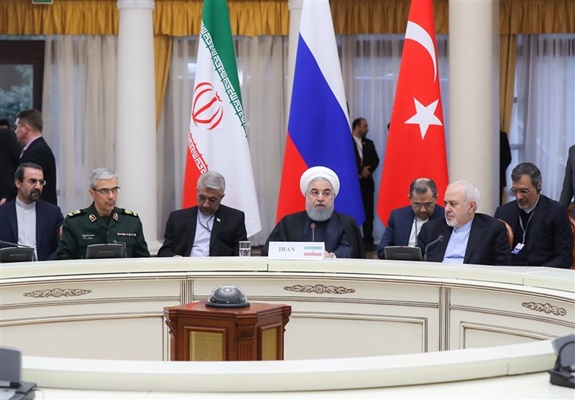
Turkish President Recep Tayyip Erdogan, at the beginning of his speech in a trilateral meeting with his Iranian and Russian counterparts in Sochi, strongly condemned the terrorist attack, and offered sympathy to Iran.

The Turkish foreign ministry had earlier released a statement in this regard. “We strongly condemn this heinous terrorist attack. We wish Allah’s mercy upon those who lost their lives and speedy recovery to the wounded. We convey our condolences to the people and Government of Iran.”

Chinese Foreign Ministry spokesperson Hua Chunying said Thursday that it condemns the suicide terrorist attack. “We express our condolences to the victims and sympathy to the bereaved families and the injured.”

Indian Ministry of External Affairs strongly condemned the dastardly terrorist attack, saying, “Terrorism, in all its forms and manifestations, is condemnable and perpetrators of such crimes should be brought to justice expeditiously and without distinction.”

The ministry also offered India’s condolences to the families of the victims, the people, and government of Iran, wishing speedy recovery to those injured.

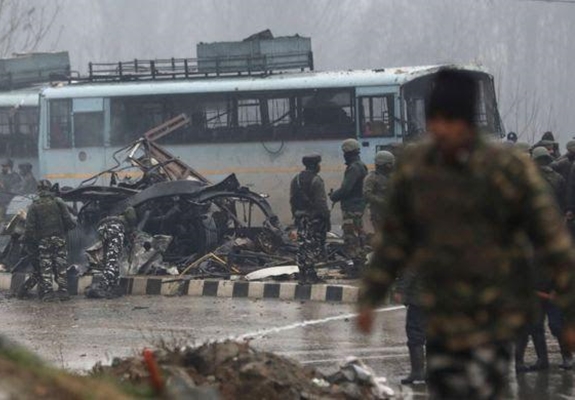
A suicide attack by Pakistan-based Takfiri elements on a bus carrying Iranian border guards in Zahedan-Khash road killed and wounded dozens of IRGC forces.

The attack, claimed by the so-called Jaish ul-Adl terrorist group, killed 27 and injured 13 others.

The IRGC’s Quds Headquarters said in a statement that an explosive-laden car rammed into the bus, which was taking the personnel back to their homes.

Following the deadly attack, the governor-general of Sistan and Baluchestan declared three days of mourning, and that of Isfahan – where the soldiers belonged – announced two days.

Iran FM in Germany to Attend Munich Security Conference

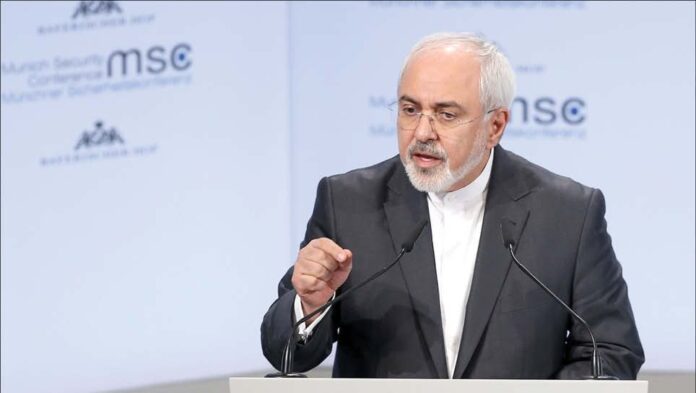
Over 100 officials, political, security, and international figures including presidents, foreign and defence ministers, and officials from certain international organizations are attending this year’s conference.

In addition to delivering a speech, the Iranian foreign minister is to hold talks with a number of officials and figures on the sidelines of the conference.

The Munich Security Conference (MSC) describes itself as the world’s leading forum for debating international security policy.

According to its official website, its objective is to build trust and to contribute to the peaceful resolution of conflicts by sustaining a continuous, curated and informal dialogue within the international security community.

It provides a venue for official and non-official diplomatic initiatives and ideas to address the world’s most pressing security concerns.

The MSC also offers protected space for informal meetings between officials and thus – as its original motto has it – build peace through dialogue.

Iran Strongly Condemns India Terror Attack

Offering condolences to the Indian government and nation, Qassemi sympathized with the families of the victims of the tragic incident.

“As a country that has been a victim of terrorism and has taken major and effective steps to root out terrorist groups in the West Asia region and has paid heavy costs and is resolved to keep up this path with strong determination, we believe using such bloody and inhumane methods by any group and with any motive and under any name is unacceptable,” he said.

At least 40 Indian paramilitary police have been killed in a bomb attack by militants on their convoy in Indian-administered Kashmir.

Police told the BBC that a car filled with explosives had rammed a bus carrying the troops to Srinagar.

Pakistan-based group Jaish-e-Mohammad said it was behind the attack.

It is the deadliest militant attack on Indian forces in Kashmir since the insurgency against Indian rule began in 1989.

Iran, Russia, Turkey Wrap Up Sochi Summit on Syria

What follows is the full text of the statement:

President of the Islamic Republic of Iran H.E. Hassan Rouhani, President of the Russian Federation H.E. Vladimir Putin and President of the Republic of Turkey H.E. Recep Tayyip Erdoğan gathered in Sochi on 14 February 2019 for a Tripartite Summit.

The Presidents:

  1. Discussed the current situation on the ground in Syria, took stock of the developments following their last meeting in Tehran on 7 September 2018 and underscored their determination to strengthen the trilateral coordination in light of their agreements.
  2. Emphasized their strong and continued commitment to the sovereignty, independence, unity and territorial integrity of the Syrian Arab Republic as well as to the purposes and principles of the UN Charter.
  3. Highlighted that these principles should be universally respected and that no actions, no matter by whom they were undertaken, should undermine them.
  4. Rejected all attempts to create new realities on the ground under the pretext of combating terrorism and expressed their determination to stand against separatist agendas aimed at undermining the sovereignty and territorial integrity of Syria as well as the national security of neighboring countries.
  5. Took note in this regard that the US decision on the withdrawal of its forces from Syria, if implemented, would be a step that would help strengthen stability and security in the country in compliance with the above-mentioned principles.
  6. Examined in details the situation in the Idlib de-escalation area, denounced and expressed serious concern with the attempts of the terrorist organization “Hayat Tahrir al-Sham” to increase its control over the area, and agreed to effectively counter these attempts as well as to take concrete steps to reduce violations in the Idlib de-escalation area through full implementation of the agreements on Idlib, including the Memorandum on Stabilization of the Situation in the Idlib De-escalation Area of 17 September 2018. They also reaffirmed the determination to continue cooperation in order to ultimately eliminate DAESH/ISIL, Al-Nusra Front and all other individuals, groups, undertakings and entities associated with Al-Qaeda or DAESH/ISIL, and other terrorist groups, as designated by the UN Security Council.
  7. Discussed the situation in the north-east of Syria and agreed to coordinate their activities to ensure security, safety and stability in this area including through existing agreements, while respecting sovereignty and territorial integrity of the country.
  8. Reaffirmed their conviction that there could be no military solution to the Syrian conflict and that it could only be resolved through the Syrian-led and Syrian-owned, UN-facilitated political process in line with the UN Security Council Resolution 2254.
  9. Reaffirmed their determination to facilitate the launch of the Constitutional Committee as soon as possible, including by agreeing on its composition and elaborating recommendations for its rules of procedure based on the work undertaken by the three guarantors. They emphasized in this regard the importance of continuing interaction and coordination with the Syrian parties and the United Nations Secretary-General’s Special Envoy for Syria Geir O. Pedersen.
  10. Welcomed the successful development of the second mutual release of detainees within the framework of efforts of the respective Working Group. The releases that took place on 24 November 2018 and 12 February 2019 constituted important contribution of the Astana format to building confidence between the Syrian parties and creating necessary conditions for advancing the political process.
  11. Emphasized the need to continue all efforts to help all Syrians restore normal and peaceful life as well as alleviate their sufferings. In this regard, they called upon the international community, particularly the United Nations and its humanitarian agencies, to increase their assistance to Syria by providing additional humanitarian aid, restoring humanitarian infrastructure assets, including water and power supply facilities, schools and hospitals.
  12. Highlighted the importance of creating conditions for the safe and voluntary return of refugees and internally displaced persons (IDPs) to their original places of residence in Syria. They assessed positively the interaction with all interested parties, including the Office of the United Nations High Commissioner for Refugees (UNHCR), and reaffirmed their readiness to continue this coordination.
  13. Agreed to assign their representatives with the task of holding the next International Meeting on Syria in Astana in April 2019.
  14. In addition to the Syrian issue, discussed recent developments in the world as well as their collaboration in different fields and decided to boost joint economic and commercial cooperation.
  15. Condemned the recent terrorist attack in Iran (Sistan-Balouchestan Province). President of the Russian Federation H.E. Vladimir Putin and President of the Republic of Turkey H.E. Recep Tayyip Erdoğan expressed their condolences to the families of the victims of this attack and sympathy with the people and the government of the Islamic Republic of Iran.
  16. Decided to hold the next Tripartite Summit in the Republic of Turkey upon the invitation of President of the Republic of Turkey H.E. Recep Tayyip Erdoğan.
  17. The Presidents of the Islamic Republic of Iran and the Republic of Turkey expressed their sincere gratitude to President of the Russian Federation H.E. Vladimir Putin for hosting the Tripartite Summit in Sochi.

Int’l Community Must Join Hands to Reconstruct Syria: Rouhani

“The International community must help the Syrian people in returning the displaced and refugees to their country and starting the reconstruction of Syria,” he said.

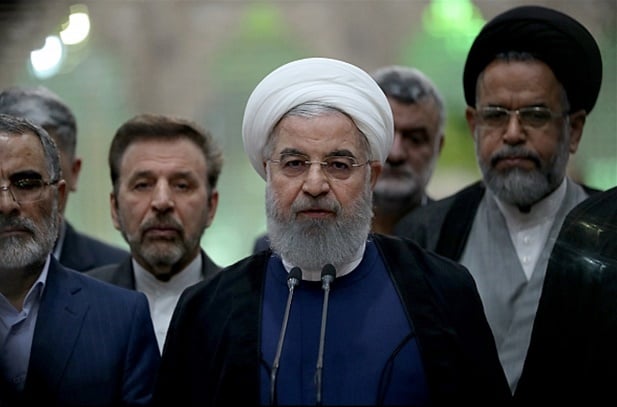
Rouhani made the statement in an address to a trilateral meeting in the Russian city of Sochi on Thursday, dedicated to discussing latest developments in the country.

The one-day meeting also aims to review the outcome of the Astana conference on the Syria peace process, as the seven-year conflict in the country is moving toward an end.

Rouhani, Recep Tayyip Erdogan and Vladimir Putin will also discuss the fight against terrorism and cooperation for reconstruction of Syria.


Need for Inclusive Anti-Terror Fight

Rouhani said the anti-terror fight in the country must continue until the remaining terrorists are eradicated.

“The fight against all terrorist groups in Syria must continue until they are eradicated,” he said.

Rouhani said governments across the globe must refrain from supporting terrorists in the country.

“Terrorists must not feel safe in this country or any other place across the globe, and their supporters must not think they can use the terrorism card in internal, regional and international equations,” he said.


US Must Quit Syria

The Iranian president said the US must end its Syria presence as soon as possible, as the country is still supporting terrorists in Iraq and Syria and uses them to its own benefit.

The Iranian president said there are credible reports that the US is assisting the US is moving Daesh terrorists to Syria and Afghanistan.

“The presence of US forces in Syria must end as soon as possible,” he said.


World Should Prevent Israel’s Anti-Syria Attacks

The Iranian president said the world must move to stop Israeli attacks against Syria.

“The international community must deal with the Zionist regime’s arbitrary attacks against Syria,” he said.

Israel has committed numerous air strikes against the Syrian forces in recent years, many of them remain unpublicized.

Before the start of the summit, the Iranian president held separate meetings with Erdogan and Putin to discuss bilateral relations and international developments.

Iran Gov’t Urges Quick Approval of FATF as Deadline Approaches

Foreign Ministry Condemns FATF’s Blacklisting of Iran

Laya Joneydi, the vice president for legal affairs, made the statement on Wednesday, while speaking to reporters after a Cabinet meeting.

Out of four parliamentary bills required for Iran’s accession to the Financial Action Task Force (FATF), only two of them have so far gone into effect and the fate of the other two are still in limbo.

A bill amending Iran’s Combating the Financing of Terrorism (CFT) law and a bill on Iran’s accession to the United Nations Convention against Transnational Organized Crime are still problematic in the eyes of the Guardian Council, the legislative watchdog.

The FATF announced late last year it extends the deadline for Iran to complete reforms to meet conditions for getting out of the body’s black list until the February meeting.

The upcoming Financial Action Task Force meeting is to be held in Paris on February 17-22.

No Iranian representative will attend the upcoming FATF meeting.

Foreign Ministry Explains Why Iran Not Invited to FATF Meeting


Deadline Likely to Be Extended

Joneydi said it is likely that the global anti-money laundering body extends Iran’s deadline to meet the body’s conditions, but the Expediency Council ought not to take the risk.

Ayatollah Mohsen Shabestari, a member of Iran’s Expediency Council, announced on Wednesday the bill on Iran’s accession to Palermo Convention is to be discussed in the council Saturday, expressing hope it will be approved.

In the last meeting of the council, several commissions had expressed a negative view on the approval of the bills.

Iran’s accession to the G7-created FATF has faced problems over concerns among some officials that the move could endanger Iran’s national security and economic interests.

This is while proponents of the FATF accession say the measure would smooth the path for Iran’s increased financial transactions with the world and allow Iranian financial sector to function more easily in the international economy.

Iran Seeks Amicable Ties with Saudi, UAE: Zarif

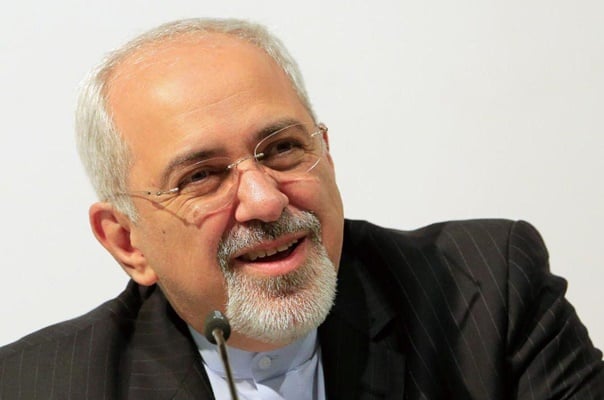
“Our relations with Russia, Turkey, Pakistan, Iraq and some Persian Gulf countries are unique, and we want similar relations with Saudi Arabia and the United Arab Emirates,” Zarif said in a recent meeting.

“We have no problem having logical relations with the world, except with one entity (the Israeli regime),” the foreign minister noted.

Zarif said Iran condemned Iraq’s attack on Kuwait before members of the [Persian] Gulf Cooperation Council did so.

He said Iran also supported the Turkish government when a coup took place in the country “because we did not accept that military might should dominate the power of democracy.”

“When Qatar came under the Saudi blockade, we immediately opened up our airspace to them despite all the concerns we had about some of Qatar’s policies and our differences,” the foreign minister said.

“Was Qatar Shiite? Was Turkey Shiite? Was Kuwait Shiite? Why did we support them? What is the axis of Shiism?” he asked.

He said call for interaction and constructive relations is a central plank of Iran’s policy.

“We need good relations in the region. Moreover, we get our power from inside, but we need good regional ties despite this power. We want good relations with all, whether with the Persian Gulf countries, or northern neighbours or eastern neighbours,” he said.

He noted Iran is pleased to be having good relations with many of its neighbours.

Zarif made the comment at a meeting held to discuss the Islamic Republic of Iran’s foreign policy over the past 40 years.

The meeting was attended by former Iranian foreign ministers who were in office after the 1979

Islamic Revolution as well as ambassadors and heads of foreign diplomatic missions in Tehran.

What follows is a full report of what he said during the meeting:

“When it comes to national interests and national security, this nation braves the elements and puts on a show [of power] in front of the world, which is unprecedented,” said the top Iranian diplomat.

He noted that people support the establishment despite all the shortcomings and pressure which exist due to both managerial problems and foreign sanctions.

Zarif said he bows to the Iranian nation out of respect.

“As the [late] Imam [Khomeini] said, we are all servants of these people. This nation has put up a stiff resistance over the past forty years despite all the pressure and wars,” the foreign minister said.

The top diplomat underlined that people are the pillars of this government, “and that is why it is not only a moral thing, but a national security requirement to observe the rights of these people.”

“We are dependent on nothing other than the people. We are nothing without the people, and everything with these people. This is the first rule of the Islamic Republic. We managed to regain and preserve our independence, development, security and tranquility with reliance on the people,” Zarif said.

The foreign minister went on to say that the Islamic Republic of Iran has based its foreign policy on two principles in addition to wisdom and expediency.

“One of these two principles is to be endogenous, and the other is to be outward-looking,” he said.

“Our being endogenous emanates from Iranian people’s historical experience,” he added.

“In the past, we saw foreigners seeking to gain domination over this country and its destiny, and they saw that our foreign policy was adopted at foreign embassies, and decisions about our future and destiny were made in other countries,” he said.

“Not that the previous government [before the revolution] was following them in all arenas. Neither was this the case, nor is it fair to say so. It tried to strike a balance in certain fields, but what actually happened was that it aligned itself with major powers whenever it was important for them,” he said.

“In certain cases, the previous government expressed some viewpoints on its own behalf, and this is a reality. But in the past, [our] policies were determined at embassies. So, the element of self-reliance and self-confidence were the most important elements that emerged during the course of the Islamic Revolution, and that was what the nation wanted,” said Zarif.

The foreign minister noted that the Islamic Revolution of Iran did not come to fruition on the back of efforts by a foreign-backed movement, but it was the people led by Imam Khomeini who took to the streets and brought the revolution to victory.

The foreign minister then touched upon the Iraqi-imposed war on Iran in the 1980s.

“It is unprecedented in the history of the United Nations Security Council that [the world body] wait for a week amid an act of aggression and then adopt a resolution which does not even ask the warring sides to return to internationally recognized borders,” he said.

“Saddam [Hussein] attacked both Iran and Kuwait. When you compare resolutions 479 and 660, there is an unprecedented difference,” he said.

He said the US, France, Britain, the Soviet Union and Germany gave arms support to Saddam Hussein during the Iraqi war against Iran.

“What does Bolton think about when he says they will celebrate in Iran in 2019? This nation is the base of the revolution and our power, and as long as this nation supports us, we are endogenous, which means our security is ensured based on domestic power,” he said, adding that Iran’s security emanates from inside.

“We not only do not need foreign backing to ensure security, but also our development and progress come from inside the country despite foreign pressure,” the foreign minister said.

“If one day they close the doors of cooperation to us, our people will not be destroyed, though we are not interested to see that happen,” Zarif said.

He said no country has been targeted by foreign conspiracies as frequently as Iran has.

“They said they would drag conflicts into Iran. They blatantly announced this in their interviews. They held meetings with our dissidents, and attended the meetings of dissidents and groups that had been on the list of terrorist groups until two years ago. Their animosity towards this nation was so intense that they announced in a terrorist group meeting that ‘we will celebrate your freedom in Iran.’ In other words, they not only not supported us, but hatched plots against this nation every day; however, they got nowhere,” he said.

The minister said foreign powers have, over the past four decades, been of the conviction that they can put pressure on Iranian people by hatching plots, but this way of thinking harmed themselves more than anybody else.

He said the reason that superpowers armed Saddam Hussein to the teeth was that they wanted to suppress Iranian people.

“What made them bring the Taliban, al-Qaeda and the ISIS to power? Was it anything other than an attempt to limit Iran? When do they want to stop this wrong policy and realize that this policy is a nonstarter?” said Zarif.

“How many times should they make predictions which turn out to be false? Brzezinski announced that the Islamic Republic [of Iran] would not survive more than a week after the Iraqi attack. However, Saddam Hussein has been dead for years, and we still stand tall and free. Brzezinski himself has died, too,” he said.

He asked why Western countries do not want to accept that their predictions have been wrong and they need to stop making such predictions one day.

“All folks who are following up on Iran’s foreign policy need to realize that everything we have is because of these people. We look to domestic security, development and progress, and the more they exert pressure on us, the more we rely on the people and the stiffer the people’s resistance will become,” said the foreign minister.

Addressing the ambassadors and heads of foreign diplomatic missions at the meeting, Zarif said, “You saw [the massive turnout of Iranian people in the rallies] yesterday. Report to your capitals that these people are standing behind the revolution. [In your reports] Write that these people cannot be separated from the government through pressure. Rather, pressure is counterproductive, and the reason is that we run this country based on being endogenous, and this is the main building block of our might,” Zarif added.

“Believe this. We as agents, and you as our friends, and your governments as our friends, [should] believe that you might be able to influence some Western countries which are your friends, but pressure will backfire with regards to Iran,” he said.

The foreign minister noted that Iran will not respond to pressure, but will respond to respect and to interaction based on an equal footing.

He said “being endogenous” is what the Islamic Revolution has brought us, adding, “Our dialogue is endogenous and we have new things to say.”

Zarif further noted that Iran’s global rule has been longer than the whole lifetime of certain countries, “but we seek engagement and relations based on mutual respect.”

He said a letter proposing the establishment of a collective security system in the Persian Gulf was submitted by Iran to the UN secretary general in 1985.

“Also today, we are saying that we would like to establish a regional dialogue forum in the Persian Gulf. We are pursuing the same idea, which is also mentioned in [UN] Resolution 598,” the foreign minister said.

“The reason why we do not accept anyone as a domineering power in the region is that we are not seeking domination ourselves, nor do we accept others to become domineering powers,” he noted.

Zarif said Iran condemned Iraq’s attack on Kuwait before members of the [Persian] Gulf Cooperation Council did so.

He said Iran also supported the Turkish government when a coup took place in the country “because we did not accept that military might should dominate the power of democracy.”

“When Qatar came under the Saudi blockade, we immediately opened up our airspace to them despite all the concerns we had about some of Qatar’s policies and our differences,” the foreign minister said.

“Was Qatar Shiite? Was Turkey Shiite? Was Kuwait Shiite? Why did we support them? What is the axis of Shiism?” he asked.

He said call for interaction and constructive relations is a central plank of Iran’s policy.

“We need good relations in the region. Moreover, we get our power from inside, but we need good regional ties despite this power. We want good relations with all, whether with the Persian Gulf countries, or northern neighbours or eastern neighbours,” he said.

He noted Iran is pleased to be having good relations with many of its neighbours.

“Our relations with Russia, Turkey, Pakistan, Iraq and some Persian Gulf countries are unique, and we want similar relations with Saudi Arabia and the United Arab Emirates,” he said.

“We have no problem having logical relations with the world, except with one entity (the Israeli regime),” the foreign minister noted.

He said Iran seeks logical relations. “We will never accept to see someone question our power base, i.e. our people and reliance on people.”

Zarif said the world should know after forty years of pressure and sanctions since the Islamic Revolution that Iran’s power is endogenous.

“They held the previous conference in Sharm el-Sheikh a photo of which I have posted on my Twitter page. Which one of those in that picture are here today? But we are here because our power is based on our people and our legitimacy is due to what these people want,” he said.

“People may have complaints against us, but they are domestic complaints. We, as the government of the Islamic Republic of Iran, have a duty to reinforce and protect these people, who are the greatest source of our power, provide the best for them, and stop any pressure on them, and try to pave the way for the progress of the people by maintaining good relations,” said the top diplomat.

He said it is the responsibility of the government to provide better living conditions for the people.

“We don’t want to expel our neighbours from the region as it would be impossible to eliminate regional countries from the region,” Zarif noted.

He said the US keeps asking what Iran is doing in the region.

“The question is, what are YOU doing in this region? This is our region. Where are we supposed to go? We cannot be removed from this region.”

He said one of the reasons behind Iran’s influence in the region is the West’s mistakes.

“If the Westerners hadn’t made mistakes and if they didn’t want to topple the democratic systems in the countries of this region, we wouldn’t have the influence that we have today. So, if you made a mistake and we made the right choice, why are you blaming us?” said Zarif.

He said the US should rectify its approach rather than spend $7 trillion.

“Once Mr Kerry told me Iran is spending money is Syria. I told him ‘you are talking with me about money while your allies are spending hundreds of times as much as we do; the problems is that you have chosen the wrong side,” said Zarif, stressing that the Americans have selected the wrong allies.

“If you believed that people are the power base, then you would choose people as your allies. Then Saddam’s pressure would go, and Iraqi people would remain. Then pressure on Lebanon would go, and the Lebanese people would stay,” he said.

Zarif also touched upon his trips to Iraq and Lebanon in recent weeks, and added, “It is unlikely that a foreign minister can claim he travels to these countries and is received so warmly by people. We take pride in their (people’s) resistance.”

He said Iran takes pride in the resistance of the people of Iraq, Syria and Lebanon as well as that of Palestinians.

“We are proud to be under pressure for the sake of Palestine,” he said.

Zarif said those who chose to be allies of the Israeli regime have no place in the region.

“Those who are trying today to secure their rule through establishing a hollow alliance with Netanyahu, they are having a pipe dream,” he noted.

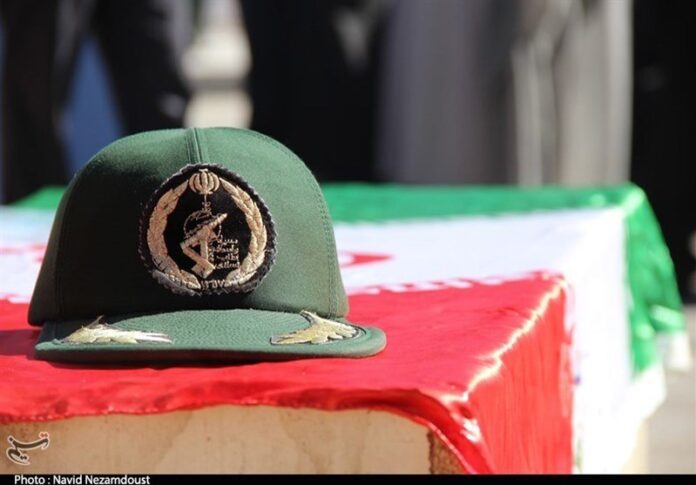
IRGC to Avenge Foreign-Backed Terrorists’ Attack on Its Forces

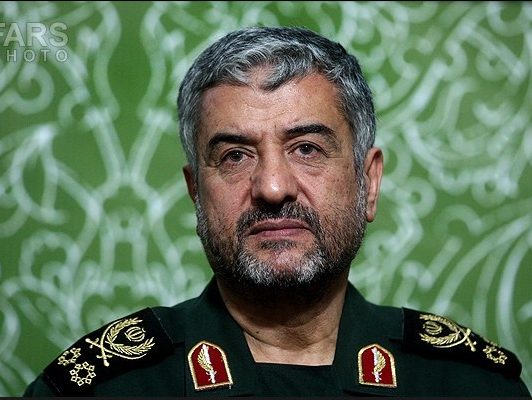
Mohammad-Ali Jafari

In a statement, General Jafari strongly condemned the “brutal” terrorist attack in Zahedan-Khash road in Sistan and Baluchestan province, which killed 27 and injured 13 other IRGC personnel.

He offered sympathy to the families of the victims, the Supreme Leader, and the people of Isfahan province, which was the place where the majority of the martyrs had been born.

He also gave assurance that the IRGC will continue its mission to secure the country’s borders in a more determined way, and will take revenge against the wicked enemies affiliated with the global arrogance.

The attack was carried out only two days after the miraculous turnout of tens of millions of Iranians in nationwide rallies marking the 40th anniversary of the Islamic Revolution, and this shows the hegemonic powers, the Zionists, and the American sponsors of terror have been given a slap in the face, he said.

General Jafari further noted that the “brotherly” government of Pakistan, its security bodies and army are expected to tighten their security measures in their joint borders with Iran in a bid to restrict the activities of Takfiri terrorists and mercenaries who are the enemies of both nations.

Iran Appoints Sunni Woman as Ambassador

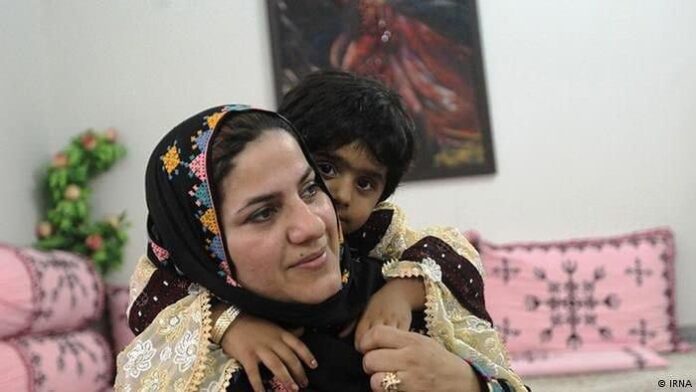
Rigi is the second woman to serve as an ambassador, following Marzieh Afkham, who is currently serving as Iran’s ambassador to Malaysia.

Forouzandeh Vadiati will also start her work as Iran’s ambassador to Finland as the country’s third female ambassador.

Afkham is a career diplomat and Vadiati has served as the Foreign Ministry’s director-general for human rights and women affairs.

Rigi was the first Sunni female governor in Iran.

Those behind Attack on IRGC Staff to Be Punished Soon: Rouhani

In a message on Thursday, President Hassan Rouhani said the brutal attack on the bus carrying the devoted personnel of Iran’s Islamic Revolution Guards Corps (IRGC) on the Khash-Zahedan road signifies the true extent of the desperation of criminal mercenaries and the cronies of the Iranian nation’s enemies.

The full text of the president’s message follows:

In the Name of God, the Compassionate, the Merciful

“And those who emigrated in the way of God and then were killed or died, God will bless them well ” (Koranic Verse)

Criminal mercenaries and the cronies of the Iranian nation’s enemies could not tolerate the glorious and epic turnout of our countrymen on the 40th anniversary of the victory of the 1979 Islamic Revolution of Iran, and showed off the great extent of their desperation and disappointment by launching a savage attack on a bus carrying the devoted personnel of the IRGC on the road from Khash to Zahedan.

This terrorist and cowardly act, which killed or wounded a large number of brave IRGC forces and those who had put their lives on the line to safeguard the security and power of Islamic Iran, touched the hearts of all Iranians.

While expressing my heartfelt condolences to the bereaved families, I also condole with the Supreme Leader [of the Islamic Revolution Ayatollah Seyyed Ali Khamenei], the Iranian nation, and the Armed Forces, especially brave IRGC personnel, and wish the most elevated positions for those martyrs, wish patience and reward for the survivors, and wish rapid recovery for those wounded in the incident.

This crime is yet another ignominious blot on the dark track record of main supporters of terrorism at the White House, in Tel Aviv, and of their regional cronies, who both carry out farcical and fabricated acts to promote Iranophobia, and claim to be fighting terrorism and seeking to create security in the Middle East. However, the lives and property of people across this region have fallen victim to their arms deals and dollars stained with the blood of the oppressed.

Incontrovertibly, those ordering this sinister and shameful act as well as its perpetrators will soon receive their retribution thanks to the efforts and perseverance of the country’s powerful security and law enforcement forces, and the rapport and integrity of Iranian people in safeguarding the lofty ideals of the Islamic establishment and national sovereignty will once again kill off their pious hopes.”