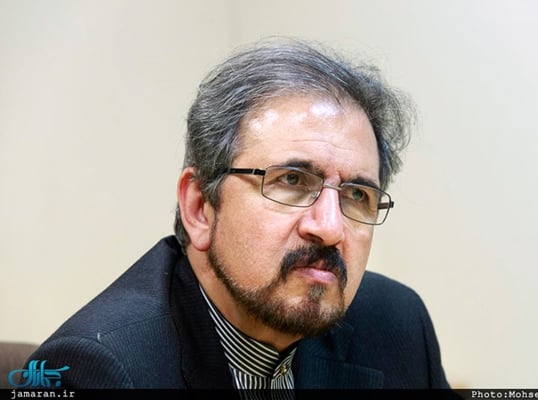
In a Monday statement, Qassemi strongly condemned the brutal and inhumane attack, saying that the Iranian foreign ministry and the country’s embassy in Baghdad are seriously looking into the incident and pursuing the conditions of those wounded.
“The rejected and defeated terrorist groups in Iraq are still under the delusion that they are in existence,” he noted.
“They wishfully think that they can damage the strong bonds and unity among the Iranian and Iraqi nations by committing such inhumane crimes, but they won’t achieve their inauspicious goals,” Qassemi said.
“Such disasters will strengthen the two nations’ resolve to fully eradicate the remnants of criminals,” he added.
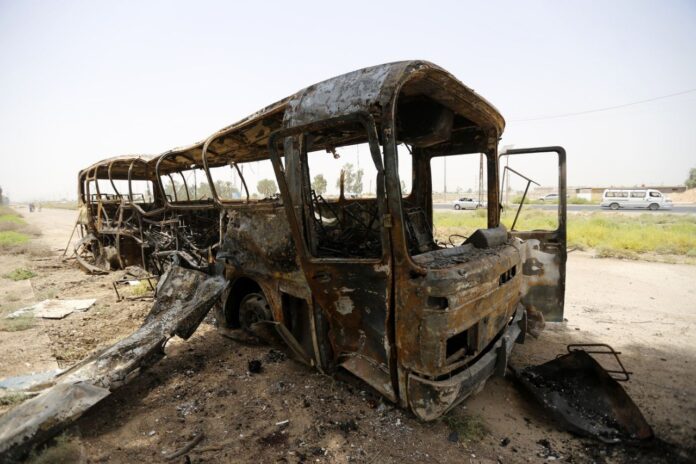
Several Iranian pilgrims were wounded on Sunday after the bus carrying them in the south of Iraq’s Saladin governorate was targeted by terrorists, an Iranian official confirmed.
Nine Iranian pilgrims and an Iraqi assistant driver have sustained injuries in the attack, three of whom are in serious conditions, said Morteza Aqaei, a senior Iranian pilgrimage official.
Seven people have been transferred to a local hospital in the city of Al-Balad, and others to Kadhimiya hospital, he added.
The pilgrims were from the Iranian city of Parsabad Moghan in Ardabil province, north-west of Iran.
Regarding the type of the attack, some media reports described it as an improvised explosive device (IED) that exploded in the roadside, but there were also reports that the terrorist have opened fire on the bus.
Britain, France and Germany said they are to launch a new trade vehicle called Instrument in Support of Trade Exchanges, which was set up to enable non-dollar trade between Europe and Iran.
In their statementannouncing the move, European powers said the mechanism will function under international standards on anti-money laundering, combating the financing of terrorism, so they expect Iran to “swiftly implement all elements of its FATF action plan.”
Brigadier General Ahmad Vahidi, Iran’s former defence minister, said on Saturday the EU move was just a small step toward fulfilling its commitments under the JCPOA.
“The move by European countries was a small part of Europe’s commitments to Iran on JCPOA,” he said, adding that the EU’s limited obligations have not been implemented yet.
General Vahidi, a member of the Expediency Council, said the implementation of Europe’s financial mechanism would not affect the Expediency Council’s decision on approving parliamentary bills required for Iran’s FATF accession.
Iran’s accession to the G7-created FATF has faced problems in recent months, mainly over concerns among some officials that the move could endanger Iran’s national security and economic interests.
This is while proponents of the FATF accession say the measure would smooth the path for Iran’s increased financial transactions with the world and allow Iranian financial sector to function more easily in the international economy.
General Vahidi, himself a critic of FATF, warned that the world body is a framework for eliciting information that is controlled by the US and its European allies.
Hence, he said, the body could be used for boosting effectivity of anti-Iran US sanctions.
Last month, the council, which is Iran’s state arbitration body, approved a bill to amend Iran’s anti-money laundering law in compliance with the FATF guidelines, pushing Iran closer to fulfilling requirements for getting out of the body’s black list.
However, out of four bills proposed by the government and approved by the Parliament in order to take Iran out of the blacklist of the global anti-money laundering body, only two of them have so far gone into effect and the fate of the other two are still in limbo.
EU Yet to Take Practical Moves
Separately, the chairman of the Parliament’s National Security and Foreign Policy Commission echoed Vahidi’s stance, saying the EU should not expect Iran to take positive moves on FATF because of INSTEX.
Heshmatollah Falahatpisheh told ISNA the mechanism does not fulfill much of Iran’s economic needs.
The lawmaker said the mechanism’s real importance is in its political effect,
The implementation of the mechanism would further isolate the US in the international scene, showing other countries are not following the path US is taking, he said.
However, the lawmaker said the EU should not relate the mechanism with FATF.
“Europeans have not taken practical steps on JCPOA yet, so they should not expect Iran to take steps on FATF for Europe,” he said.
Falahatpisheh said Europeans should know that implementing their obligations on JCPOA would be the best move they can take to motivate Iran to work closer with them.
Moreover, the lawmaker said Europeans must be assured that Iran would not yield to pressures for talks on limiting its missile and nuclear activities.
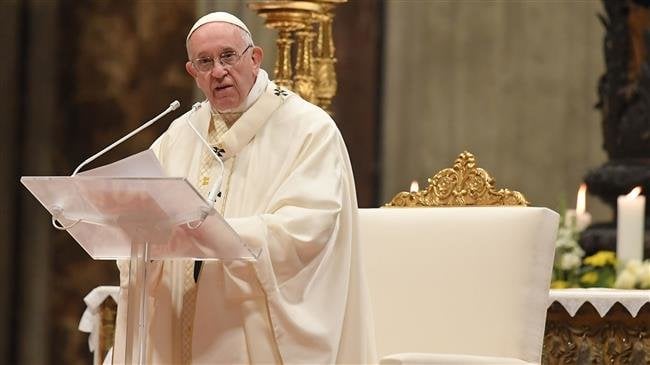
“The cry of these children and their parents rise up to God,” the Pontiff told tens of thousands of people in Vatican City on Sunday, before traveling to the United Arab Emirates which is a part of the Saudi-led coalition fighting in Yemen since 2015.
“The people are exhausted by the long conflict and many children are hungry, but humanitarian aid isn’t accessible.”
“Let us pray strongly because they are children who are hungry, who are thirsty, they don’t have medicine and they are in danger of death,” he said.
The Pope said that he was following the urgent humanitarian crisis in Yemen with great concern during the first-ever papal visits to the Arabian Peninsula. He also urged all sides to implement a fragile peace deal and help deliver food, water, and medicine to millions of hungry people.
Also on Sunday, the United Nations mission in Yemen warned warring sides that the Hudaydah truce is fragile.
Retired Dutch General Patrick Cammaert, who also chairs Redeployment Coordination Committee (RCC) – a UN-appointed committee tasked with monitoring the Hudaydah ceasefire – made the comment during meetings with former government officials and Ansarullah forces aboard a ship anchored off the key port city.
He said the talks were cordial and constructive and urged both sides to observe the ceasefire. Cammaert said any violations would jeopardize the Stockholm Agreement and the Yemeni peace process.
The talks were held on a ship because the representatives of Ansarullah refused to enter areas controlled by Saudi-led aggressor forces.
According to a UN statement, Cammaert boarded the vessel on Saturday and picked up representatives of the former regime at a rendezvous in the Red Sea before returning to Hudaydah to await Houthi envoys, who arrived later on Sunday.
The RCC was formed on the back of an agreement reached under the auspices of the UN in Sweden last December.
The breakthrough deal calls for a ceasefire in Hudaydah — which has been under a Saudi-led siege — the withdrawal of both Saudi-backed forces and the Yemeni defense units from the city, and the deployment of UN observers there.
Saudi Arabia and some of its vassal states invaded Yemen four years ago to restore a Riyadh-aligned regime that had resigned and fled the country. The Houthis and their allies — who have since been running state affairs — have been defending the country against the Saudi-led invasion.
The onslaught has killed tens of thousands of people and driven the entire Yemen close to the edge of famine.
UAE violation of human rights
Pope Francis raised his criticism of the war in Yemen before boarding a flight to Abu Dhabi, where he was warmly greeted by its Crown Prince Sheikh Mohammed bin Zayed al-Nahyan.
Vatican officials have said it is not clear whether Pope Francis will address the sensitive subject in public or private during his visit to Abu Dhabi, which is aimed at promoting interfaith dialogue.
The Pontiff has also been urged to use the historic visit to raise human rights concerns with Arab officials.
Pope Francis (Left) is greeted by Abu Dhabi’s Crown Prince Sheikh Mohammed bin Zayed al-Nahyan during the former’s visit to the UAE on Feb. 3, 2019. (Photo by AFP)
The UAE faces criticism from human rights groups for jailing activists, including Ahmed Mansoor, an Emirati who is serving a ten-year sentence for criticizing the government on social media.
“We are calling on Pope Francis to raise the issue of their incarceration with his hosts, and urge their immediate and unconditional release,” Amnesty International said in a statement on Saturday.
“The UAE authorities are trying to brand 2019 as the ‘year of tolerance’ and are now seeking to cast the Pope’s visit as proof of their respect for diversity. Does this mean they are ready to reverse their policy of systematic repression of any form of dissent or criticism?” said Lynn Maalouf, Amnesty International’s Middle East Research Director.
“Since 2011, the authorities have systematically cracked down on their critics, including activists, judges, lawyers, academics, students and journalists by way of arbitrary detentions, enforced disappearance, torture and other-ill-treatment”.
Amnesty have said that the papal visit should not be used as an opportunity to mask over human rights violations taking place within the UAE.
“It will take more than symbolic meetings to gloss over the UAE’s appalling human rights record. The fanfare around Pope Francis’ visit will be missed by the many human rights defenders, including Ahmed Mansoor, Nasser bin Ghaith and Mohammed al-Roken, who are serving lengthy prison sentences simply for exercising their right to freedom of expression. We are calling on Pope Francis to raise the issue of their incarceration with his hosts, and urge their immediate and unconditional release,” said Maalouf.
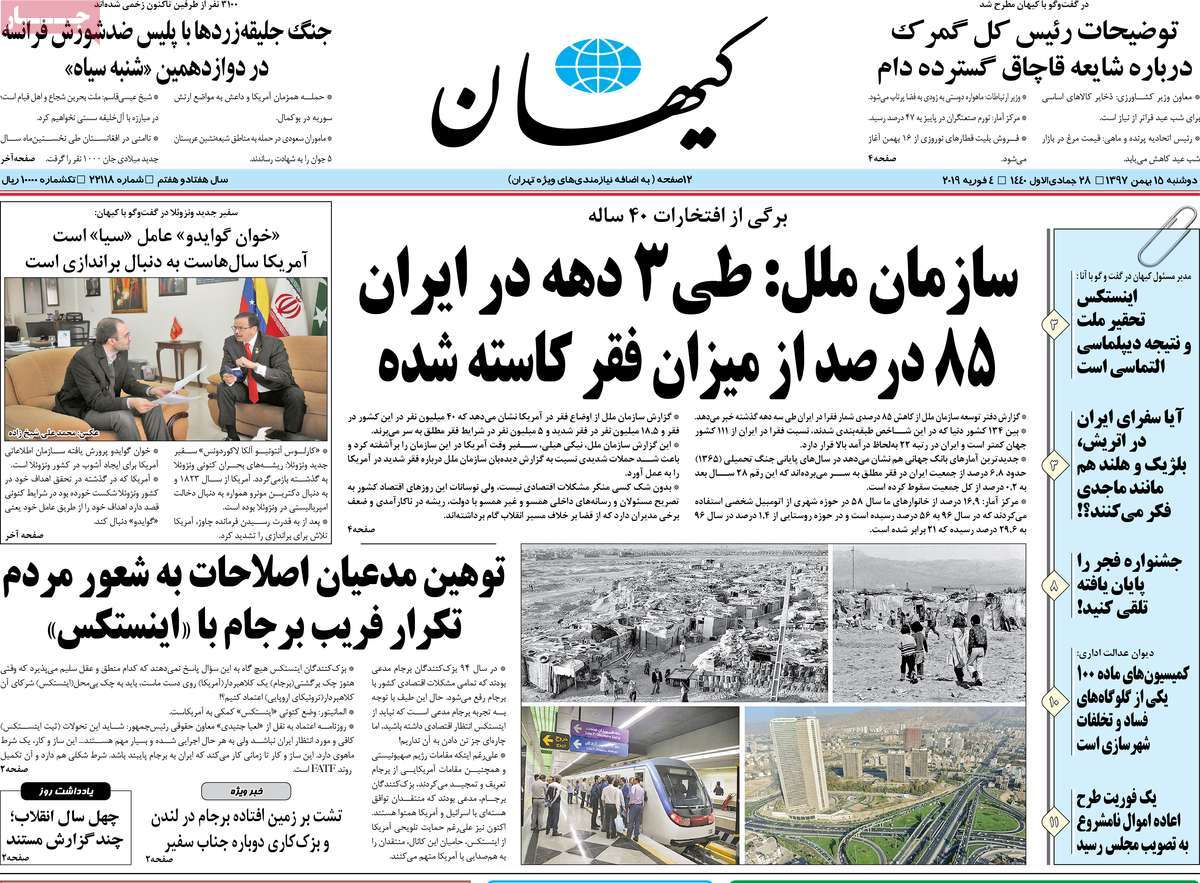
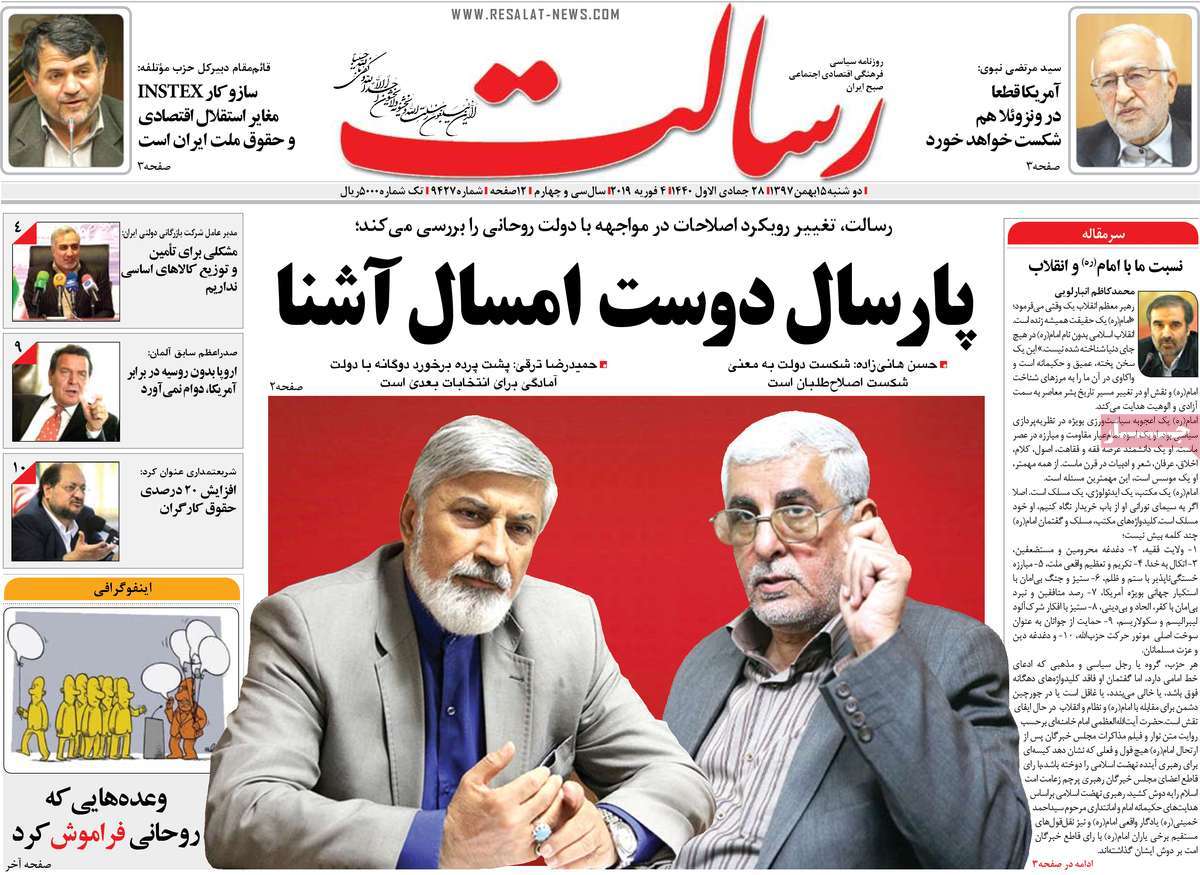
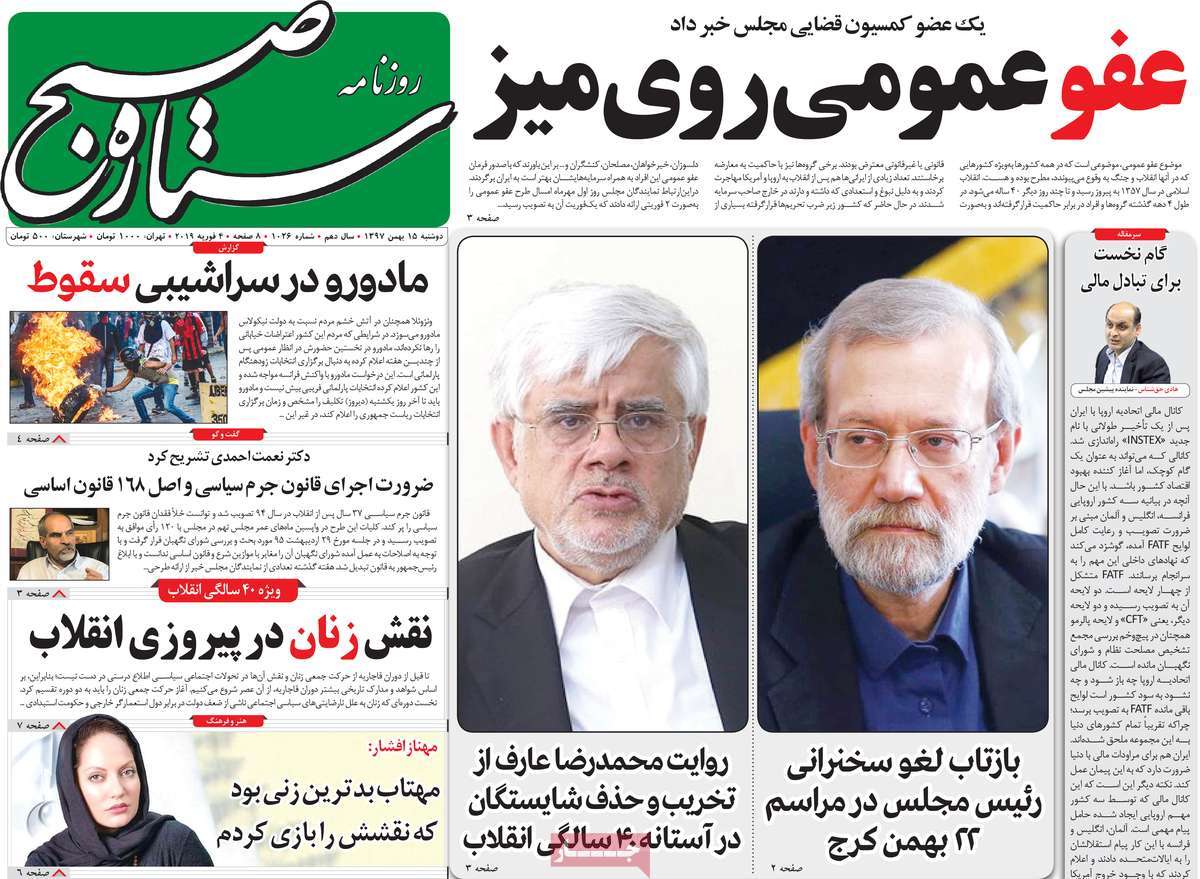
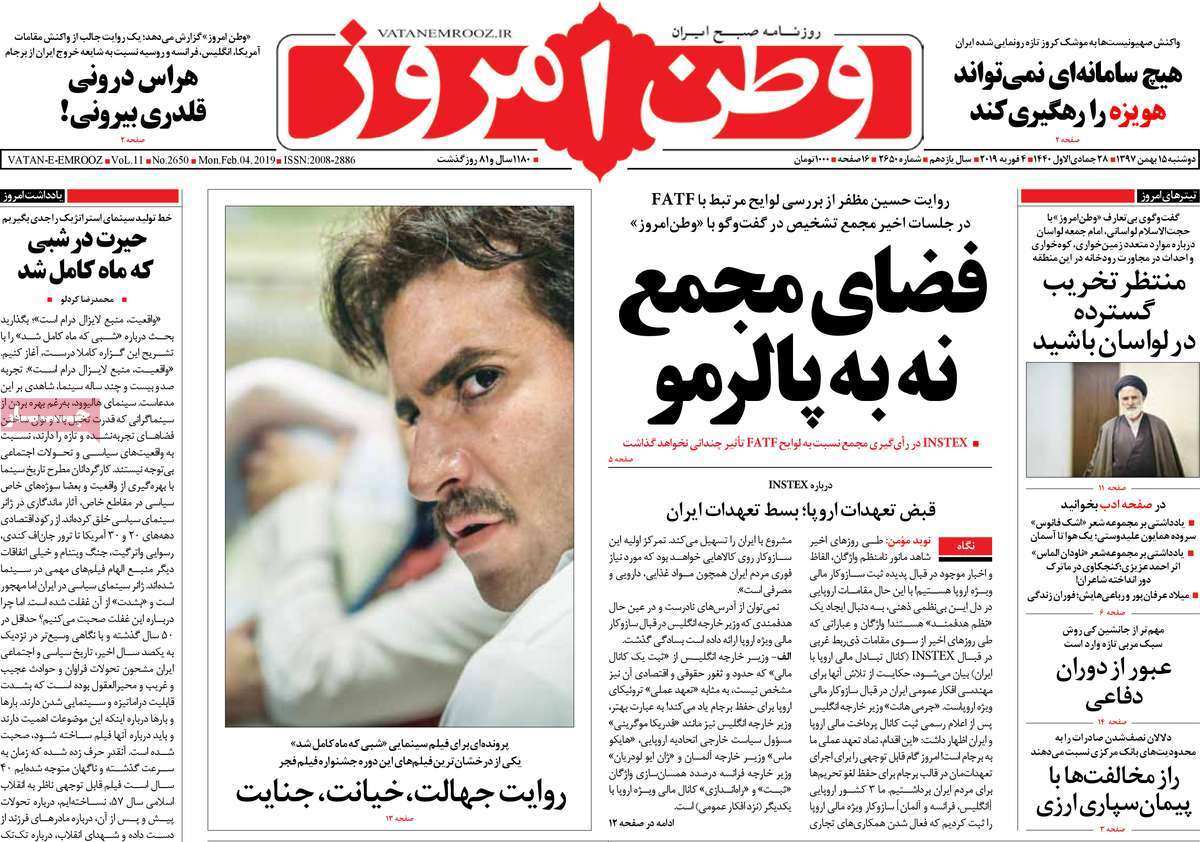
Iranian papers today widely covered the latest developments in Venezuela, including simultaneous rallies held by the supporters of President Nicolas Maduro and his main rival Juan Guaido in the streets of Venezuela.
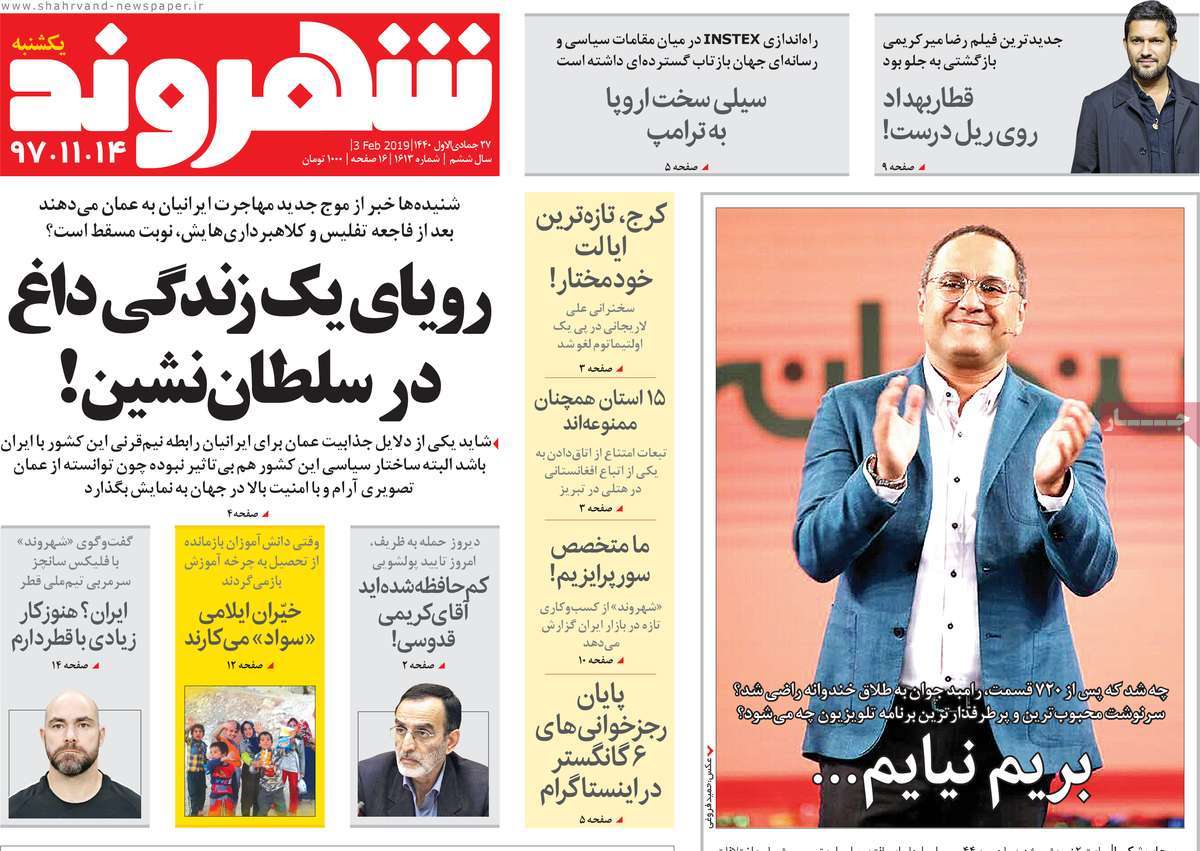
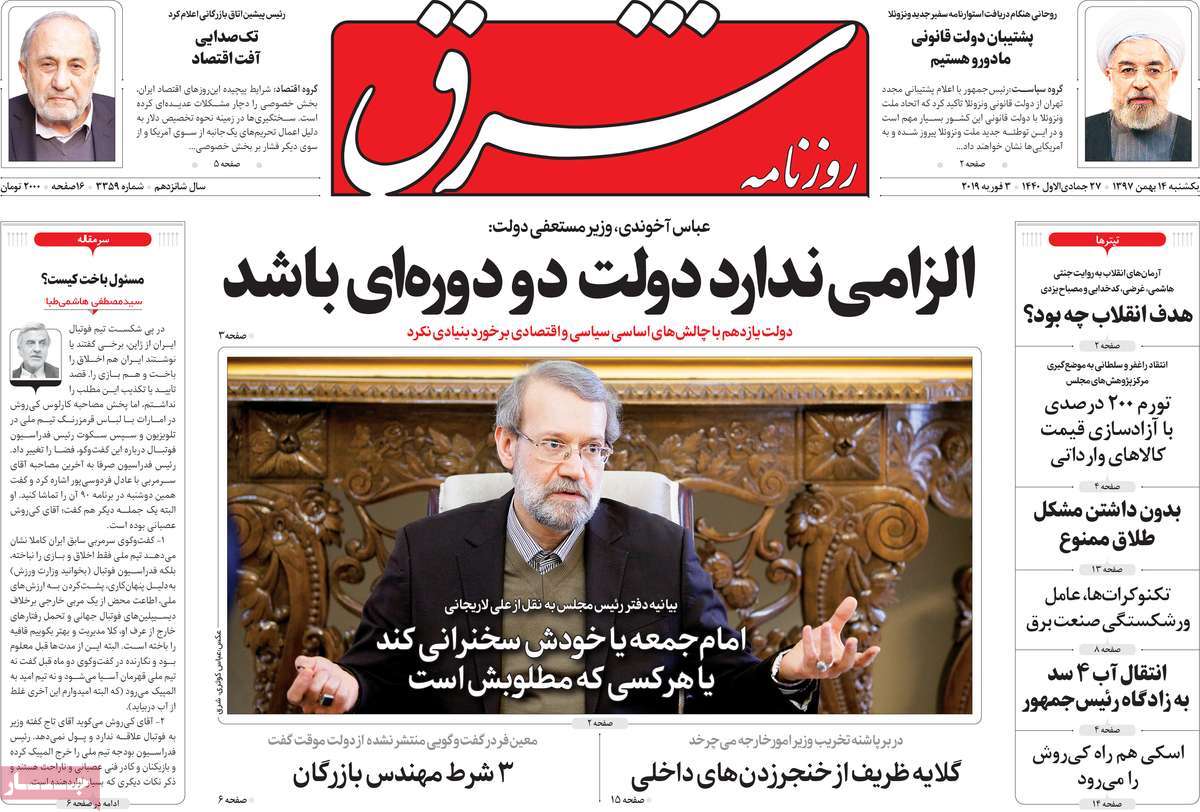
Reactions to Europe’s special payment channel, known as INSTEX, remained a top story in Iranian papers today.
The Israeli regime’s reaction to Iran’s test of its new cruise missile Hoveizeh also received great coverage.
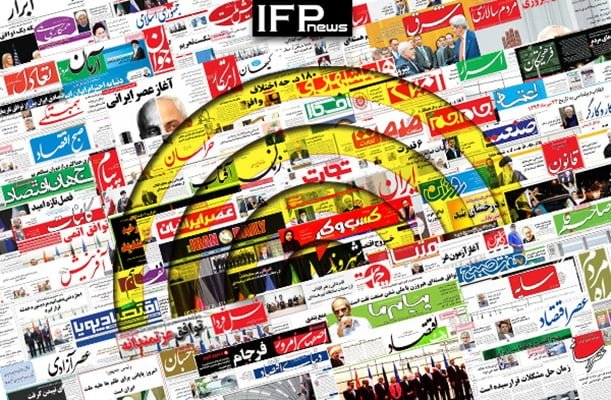
The above issues, as well as many more, are highlighted in the following headlines and top stories:
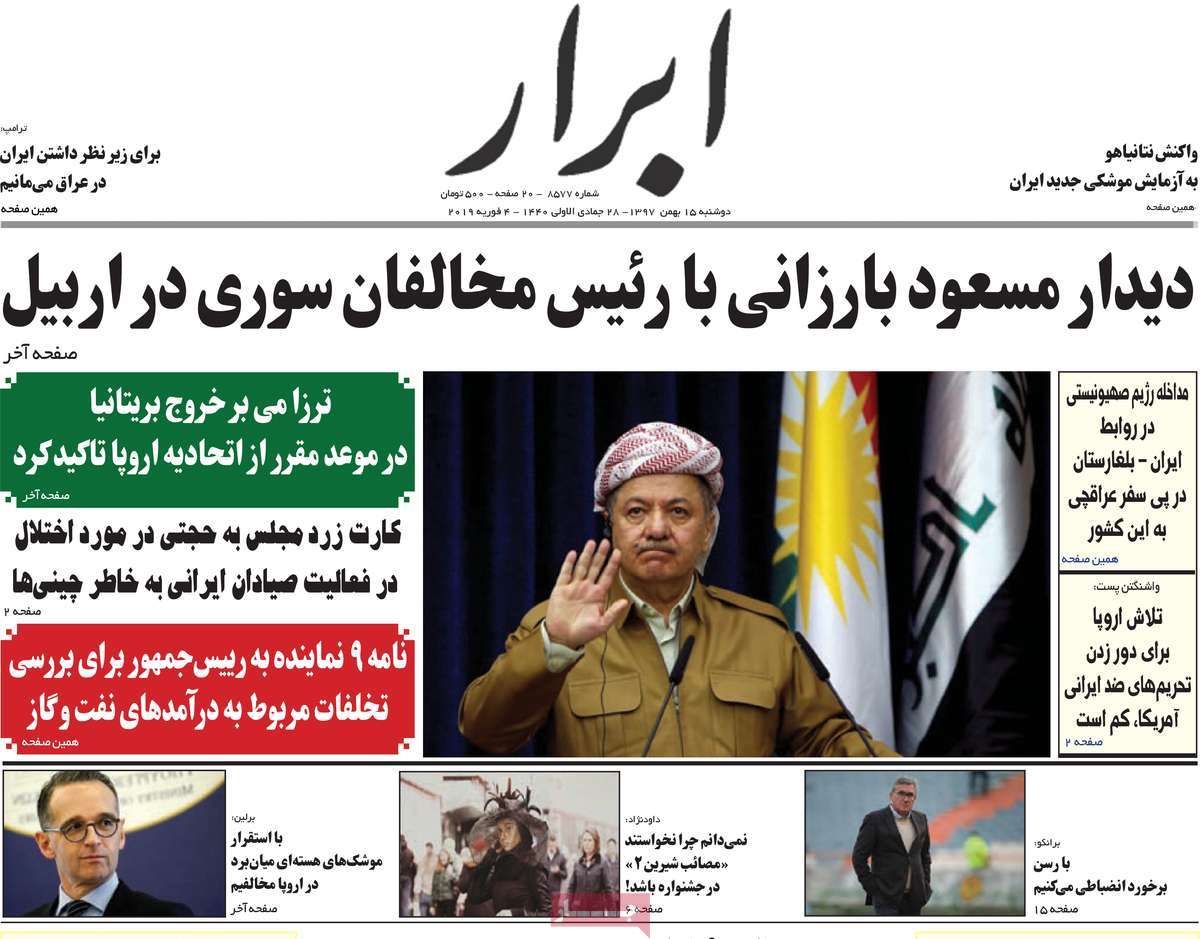
Abrar:
1- Masoud Barzani Meets Leader of Erbil-Based Syrian Opposition
2- Netanyahu’s Reaction to Iran’s New Missile Test
3- Trump: We’ll Stay in Iraq to Keep Close Eye on Iran
4- Israel Meddles in Iran-Bulgaria Ties after Araqchi’s Visit
5- Theresa May Stresses Brexit in Due Time
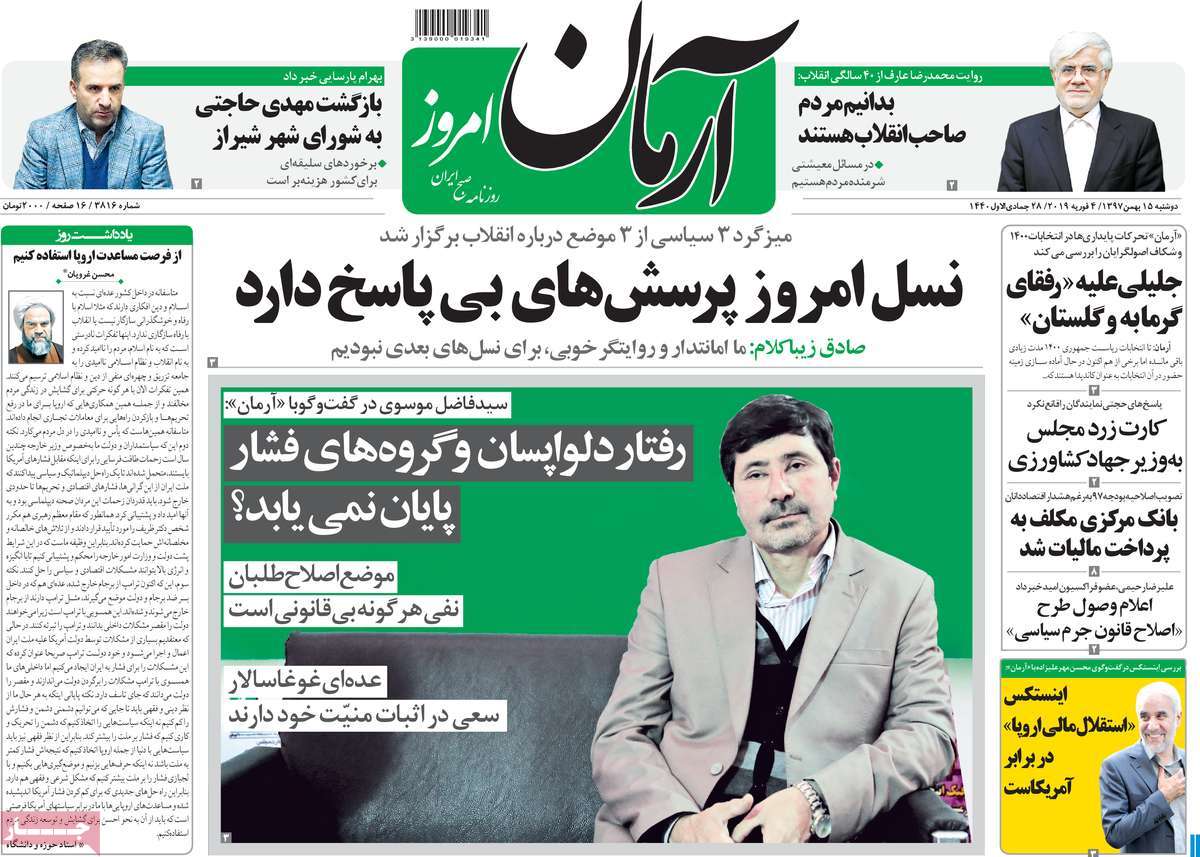
Arman-e Emrooz:
1- INSTEX Is Europe’s Financial Independence from US
2- Central Bank Obliged to Pay Tax
3- Iran Must Seize Opportunity of Europe’s Assistance
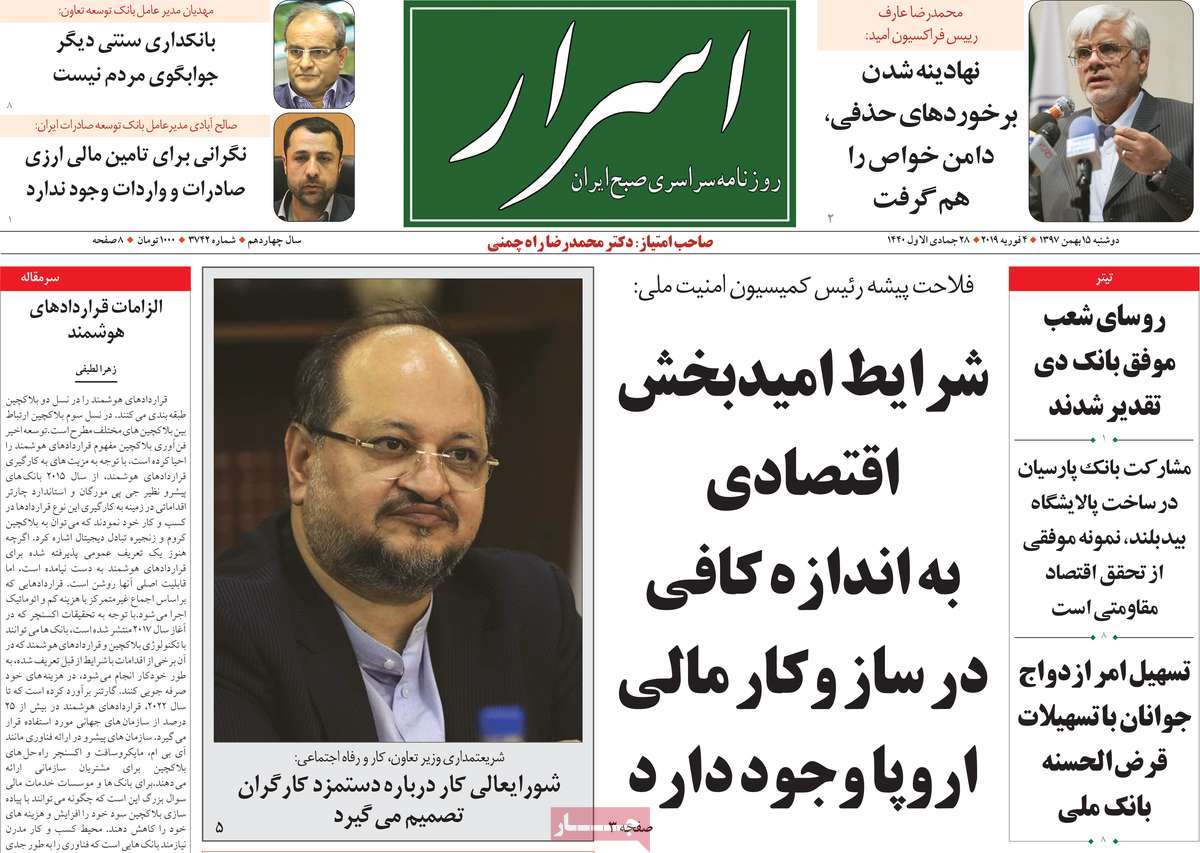
Asrar:
1- INSTEX Includes Conditions that Keep Iran Hopeful: Senior Lawmaker
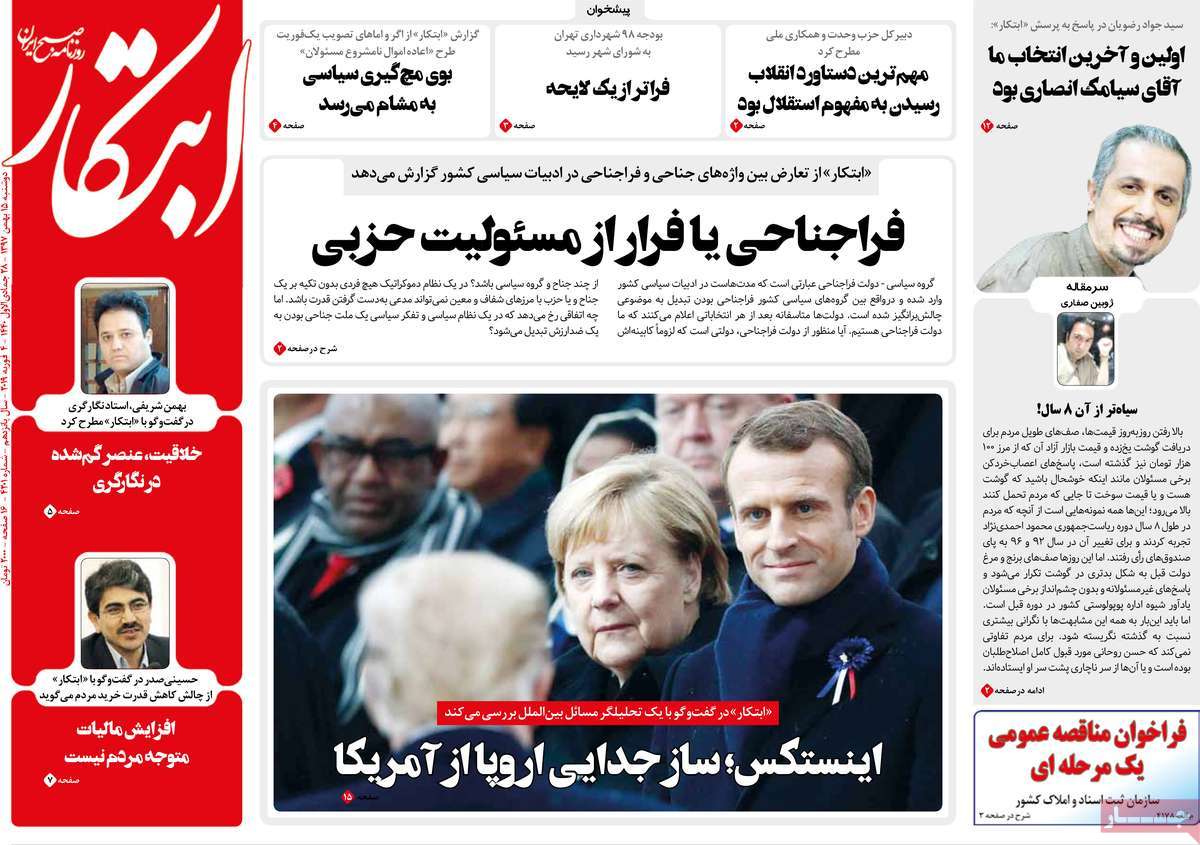
Ebtekar:
1- INSTEX, Beginning of Europe’s Departure from US
Etemad:
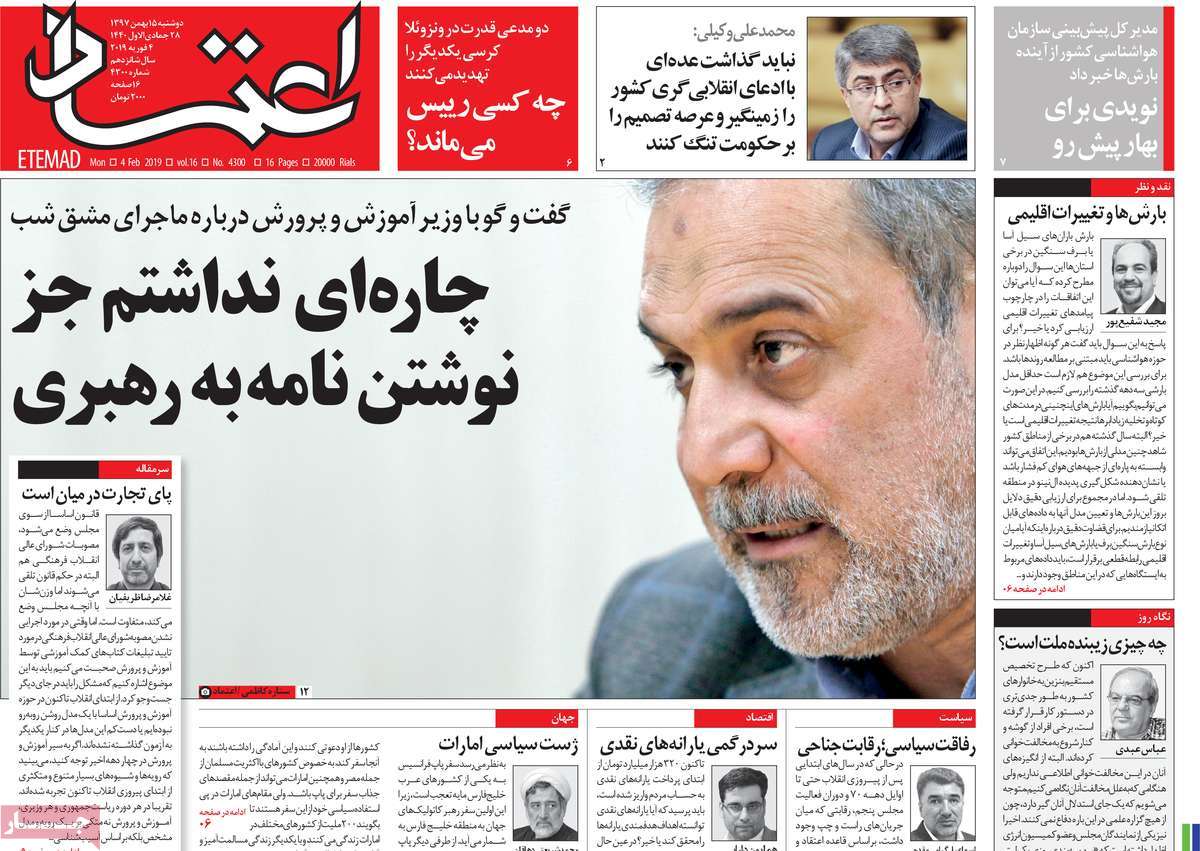
1- Who Will Remain the Leader? Maduro, Guaido Threatening Each Other’s Seats
Hamdeli:
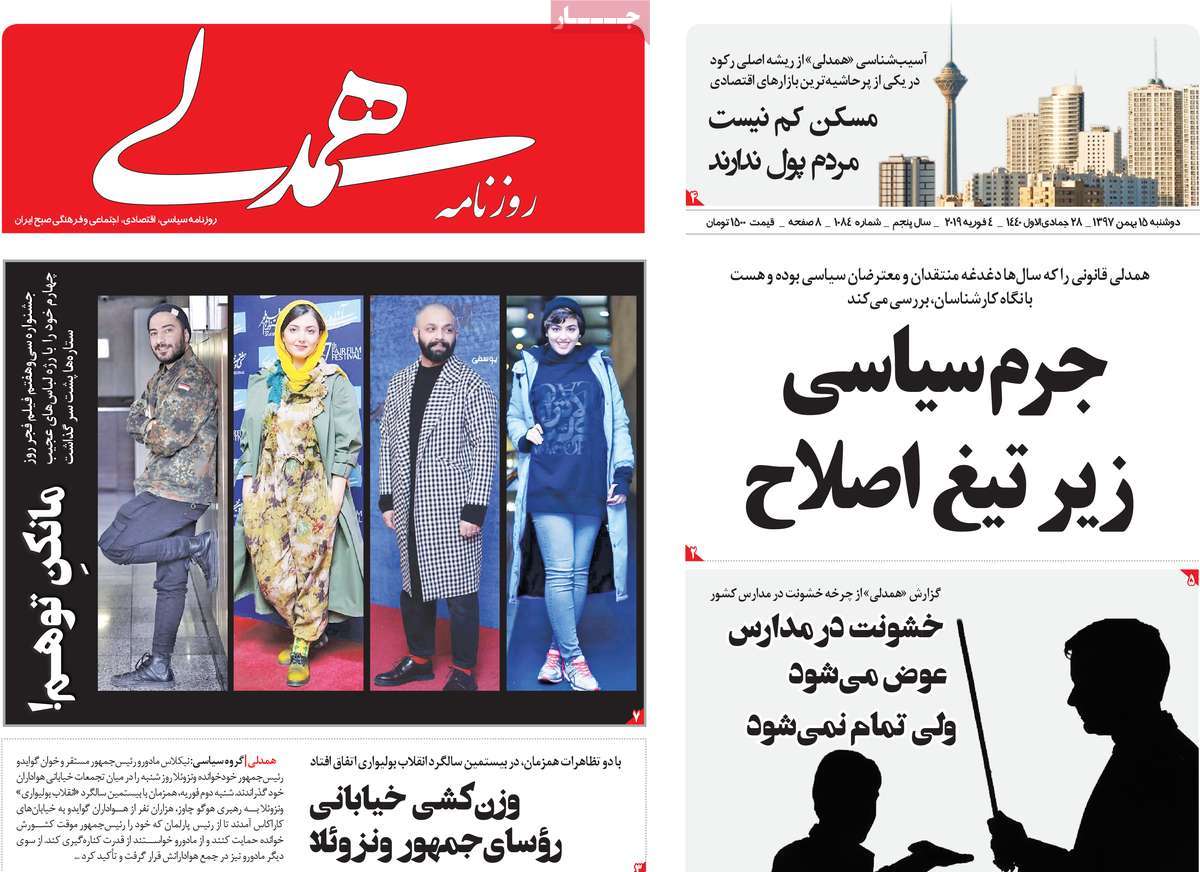
1- Venezuelan Presidents Bring Their Supporters to Streets
* Two Simultaneous Rallies Held at 20th Anniversary of Bolivarian Revolution
Iran:
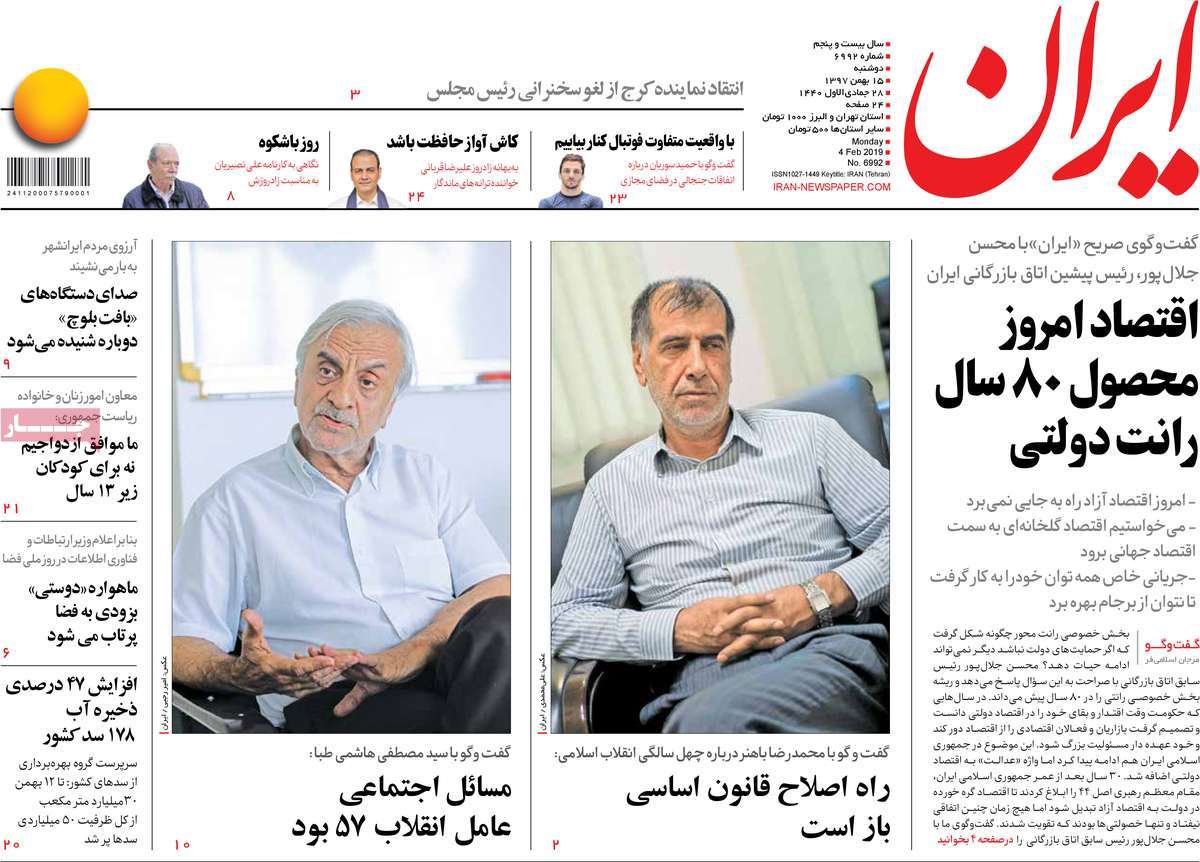
1- Iran to Send ‘Friendship’ Satellite into Orbit
2- 47-Percent Increase in Water Reserves of 178 Dams of Iran
Jame Jam:
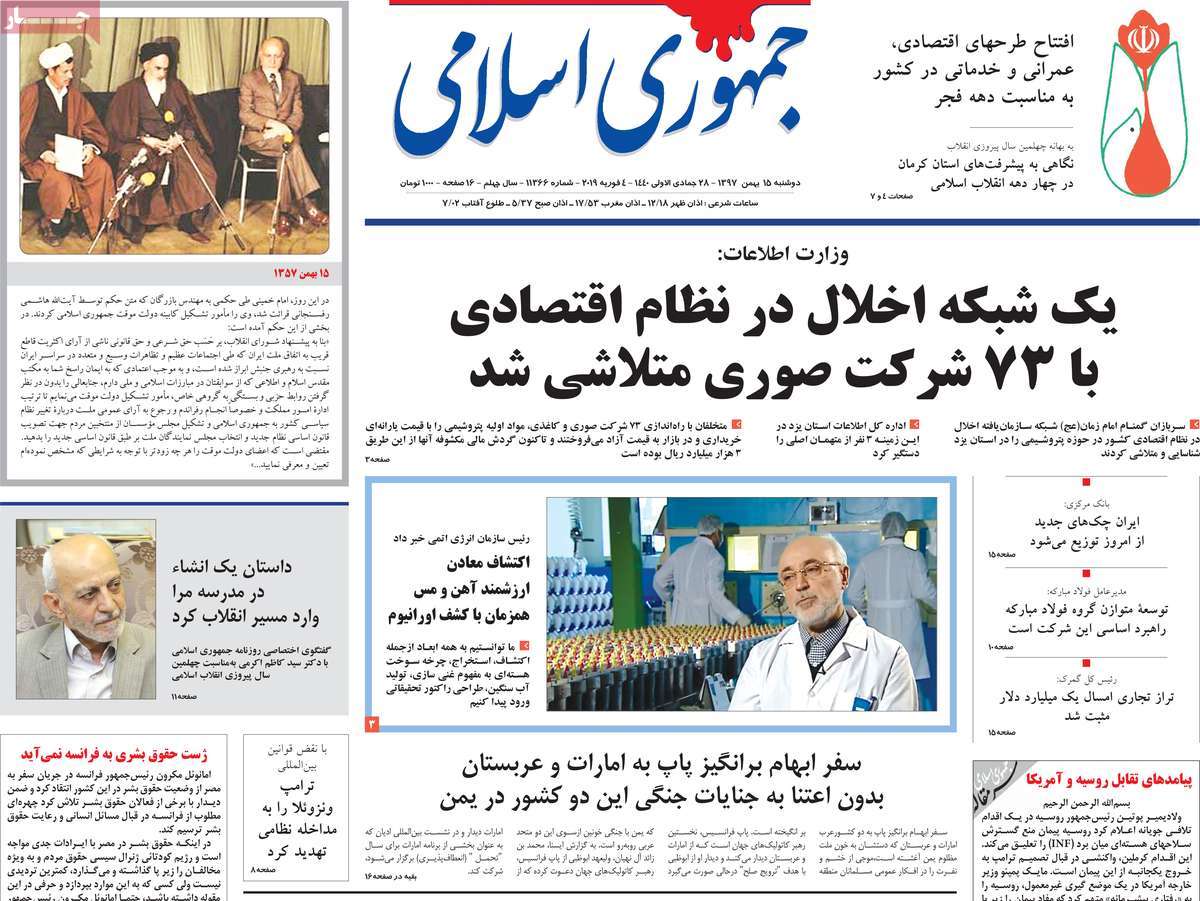
1- Controversial Visit of Pope Francis to UAE, Saudi without Regard to Yemen Crimes
2- Value of Iran’s Exports $1bn More than Its Imports This Year
A file photo of a burnt bus in Taji, north of Baghdad July 24, 2014. / Photo by Reuters
Nine Iranian pilgrims and an Iraqi assistant driver have sustained injuries in the attack, three of whom are in serious conditions, said Morteza Aqaei, a senior Iranian pilgrimage official.
Seven people have been transferred to a local hospital in the city of Al-Balad, and others to Kadhimiya hospital, he added.
A woman, in serious condition, has also been transferred to a hospital in Baghdad.
The pilgrims were from the Iranian city of Parsabad Moghan in Ardabil province, north-west of Iran.
On the type of the attack, some media reports have described it as an improvised explosive device (IED) that exploded in the roadside, but there were also reports that the terrorist have opened fire on the bus.
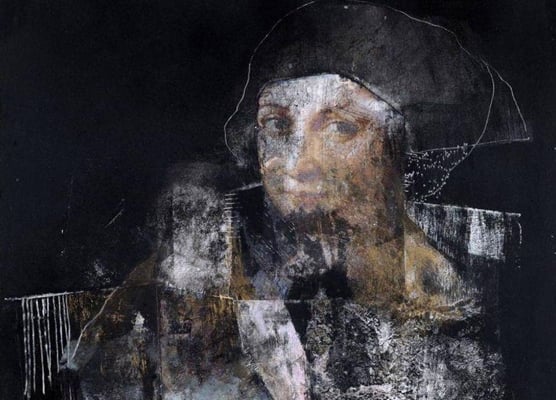
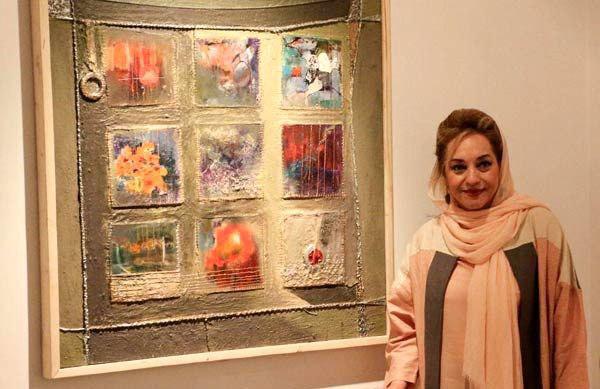
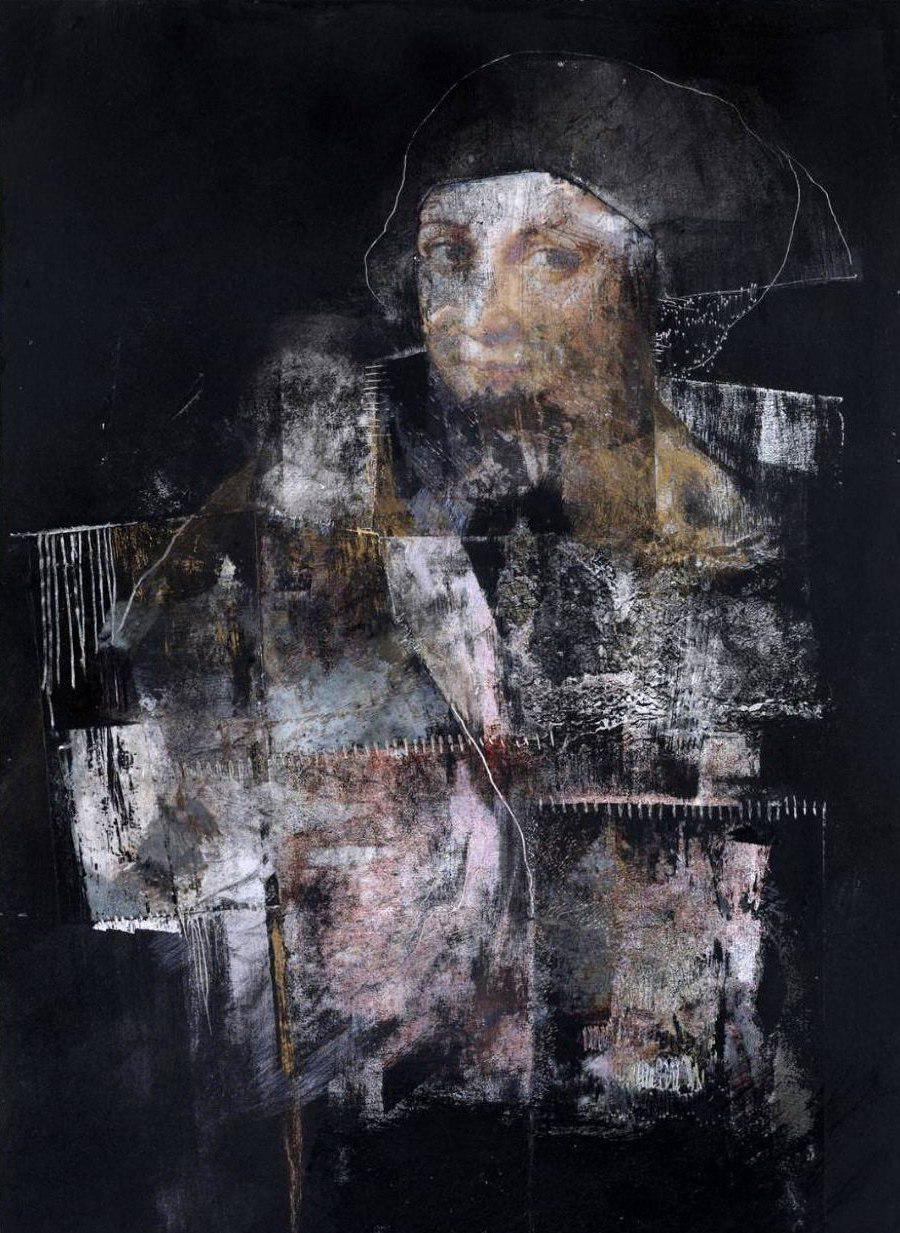
Fereshteh Setayesh was born in Tehran, Iran. She has been painting for over 35 years and has hold 12 individual exhibitions and participated in more than 90 group painting exhibitions. She is a continuous member of Iranian Painters Association and a member of the Biafarin Canadian Incorporation.
In an interview with Honar Online, Setayash elaborated on her art piece, saying the painting is part of a collection which was put on display in 2012 at Tehran’s Art Centre Gallery.
“I was invited last year … to attend the Premio LYNX international competition in Italy and finally I became one of the 47 finalists of the event,” she said.
She went on to say that the finalists’ pieces were displayed in three exhibitions and “my piece, Mona Lisa, was picked up by Turin Museum of Modern and Contemporary Art and was put on display in its permanent collection.”
On the name of her painting, she said each artist picks up the name of his/her piece during its creation when various emotions and memories are intrigued during their work.
“While working on this piece, I went through a series of events. I chose the name Mona Lisa after selecting a portrait by the Italian painter Raphael to use in my painting and the smile in the portrait led me to choose this name. But I never intended to make a comparison between my painting and that of the all-time legendry painter Leonardo Da Vinci.”
Setayesh then referred to the acquisition of the painting by the Turin Museum and said it signifies an important and impressive point.
“The choice led me to this conclusion that a nation with a rich cultural and artistic history can judge various art pieces from various nations impartially and even display a piece from the Middle East in line with the national heritage of western states. Art and culture could thrive only in such a progressive environment.”
Touching on her career, she said “I began my career as a collage artist in 2002 by including different images of various leading art pieces in my works. I often used images from various nations with various customs and cultures in my pieces. I’m of the opinion that people from around the world have common roots in their happiness, sorrows, pains and powers regardless of their differences and borders among them.”
Setayesh said she has already put on display her art pieces in various countries including the United Arab Emirates, China, Canada, US and so on.
On her future plans, she said after the success gained in Turin, she is now invited by a number of galleries in Italy to showcase her works.
“I’m now involved in talks with some of the galleries but given the current sanctions put on Iran, I have many problems in transferring my works to Italy,” she concluded.
The Turin Museum of Modern and Contemporary Art, known as The MIIT Museum in the international art scene, in a certificate issued for joining this artwork to the museum, recognizes La Gioconda as a visionary and metaphysical artwork that makes an immortal sensation of space-time.
While expressing his satisfaction with the addition of this splendid artwork to the collection, Guido Folco, director of the MIIT Museum, said that “La Gioconda” is praised by MITT Museum Committee for intense communicative and symbolic language, exquisite and elaborate complex structure, the ingenious use of mixed media and innovative collage technique, which offers a neat and vivid perspective with great delicacy.
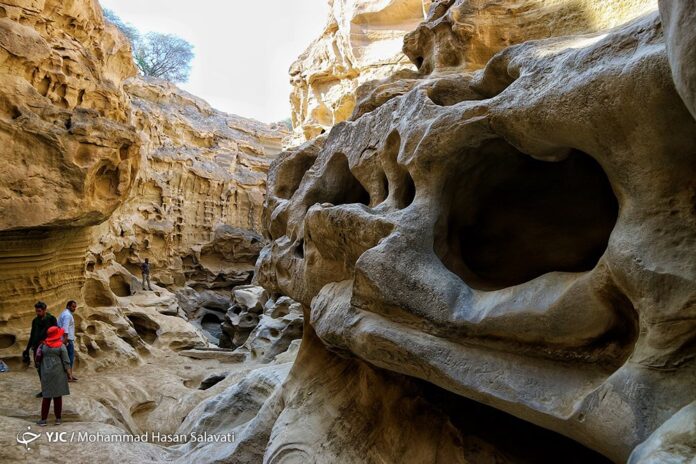
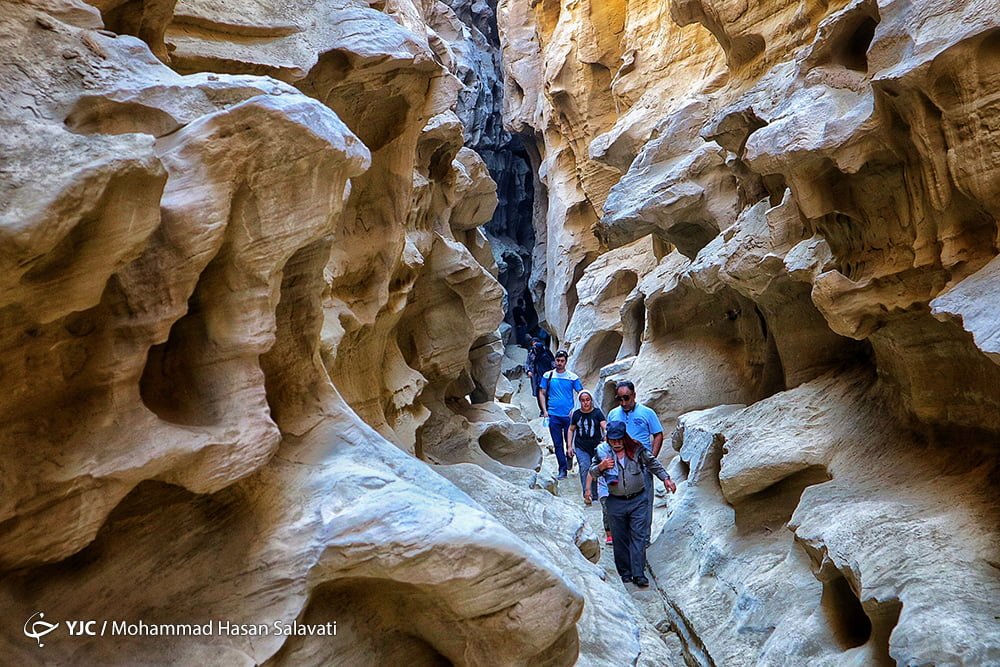
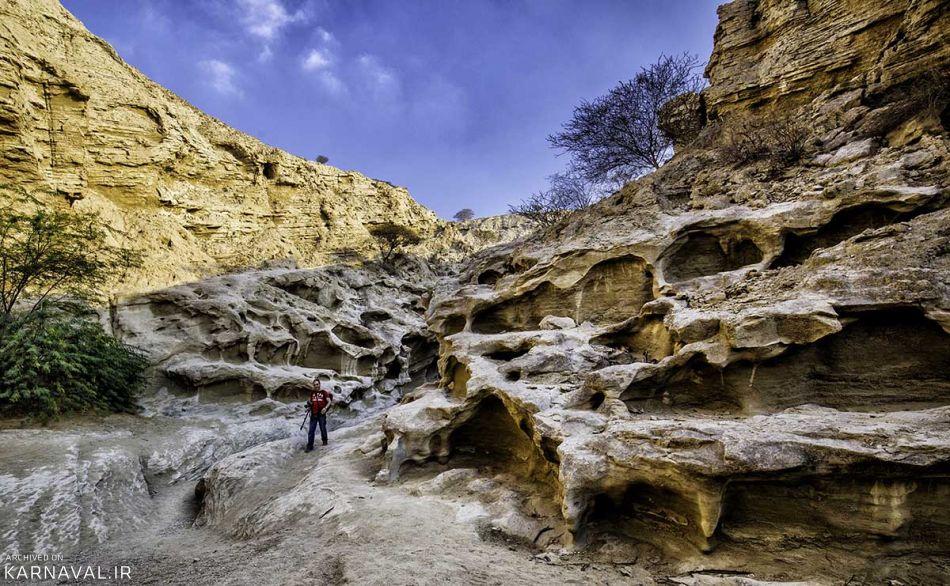
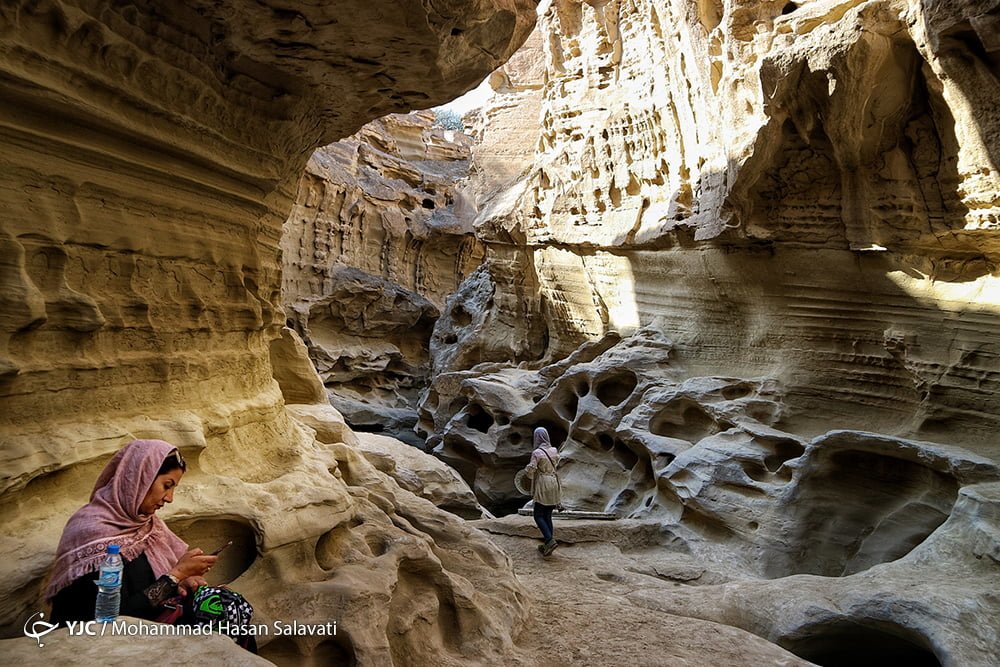
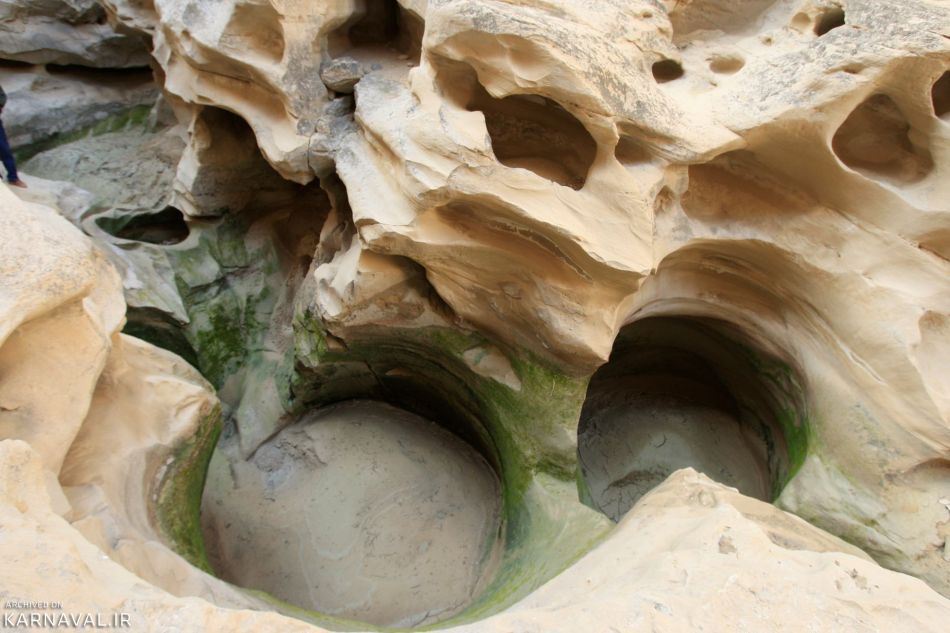
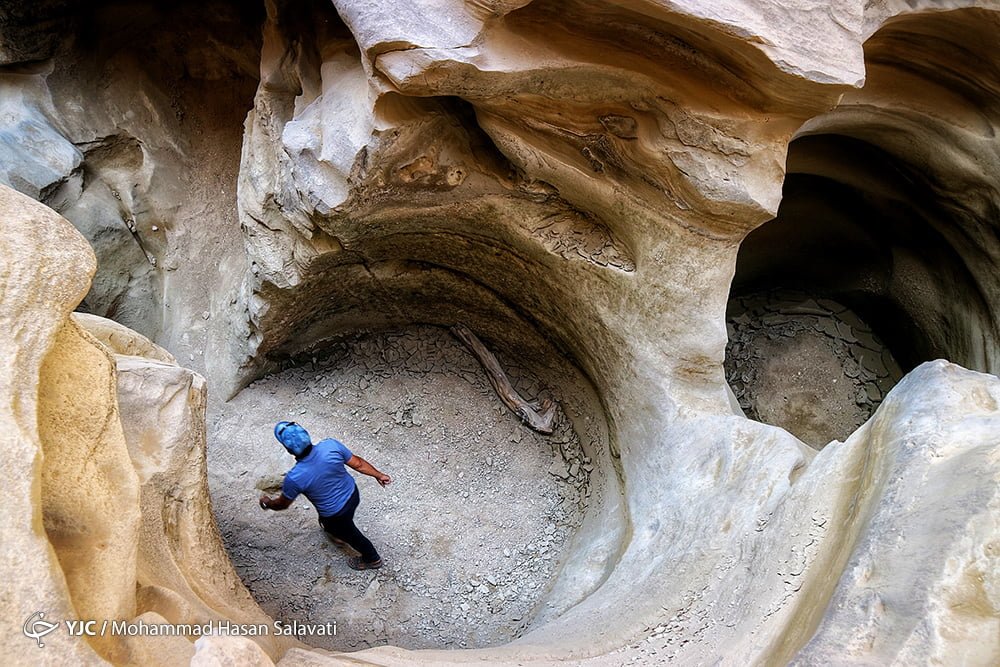
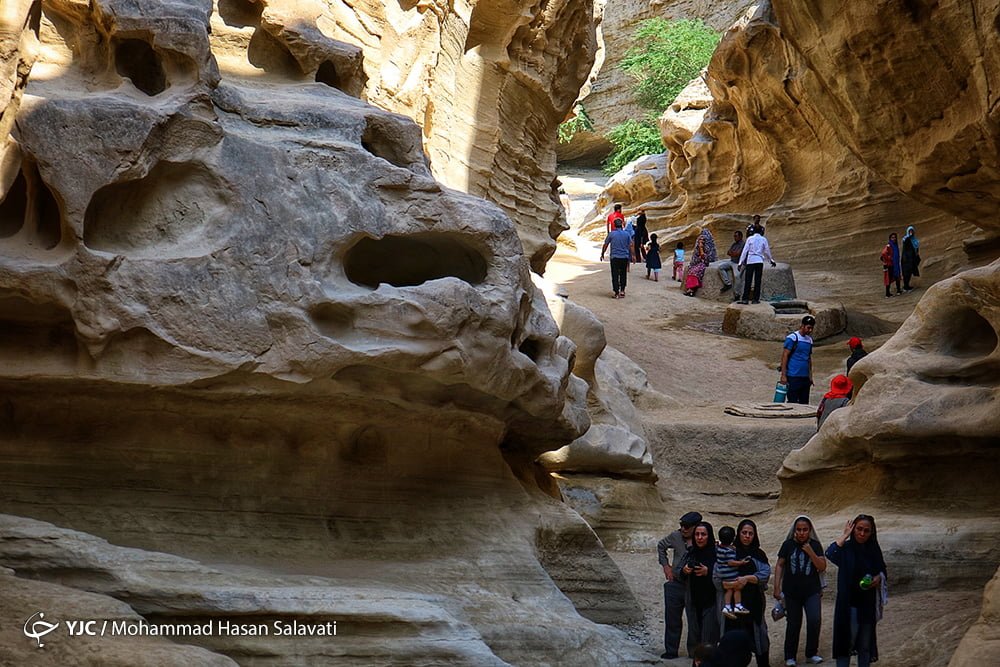
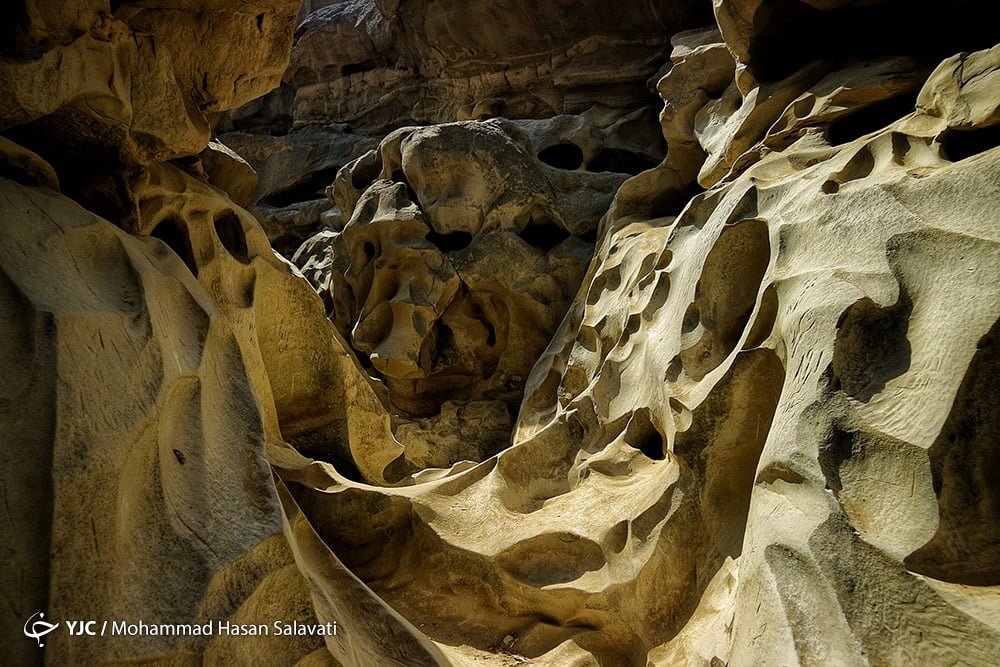
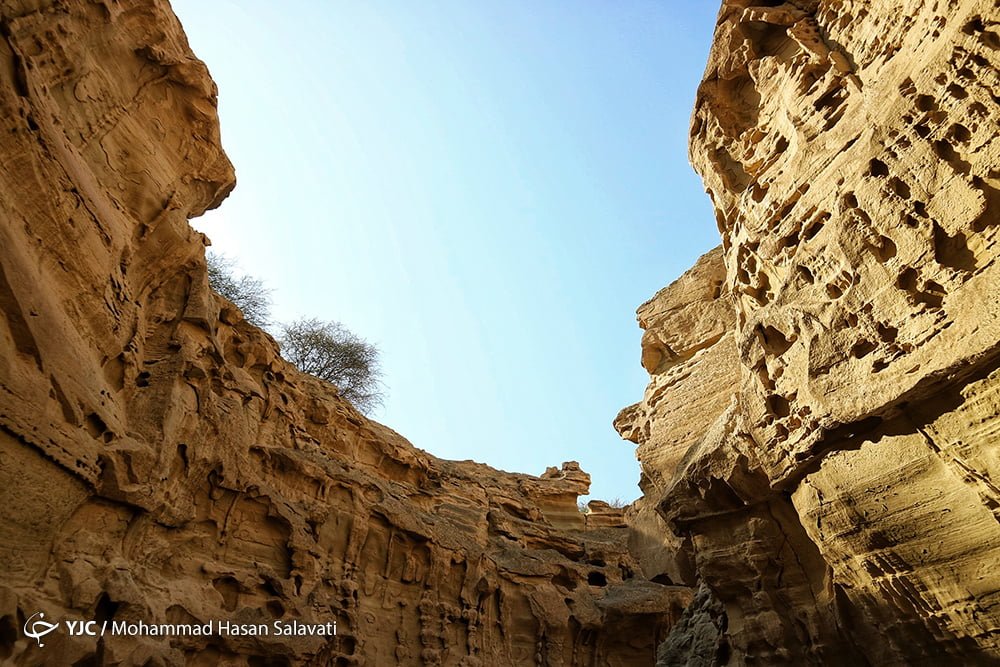
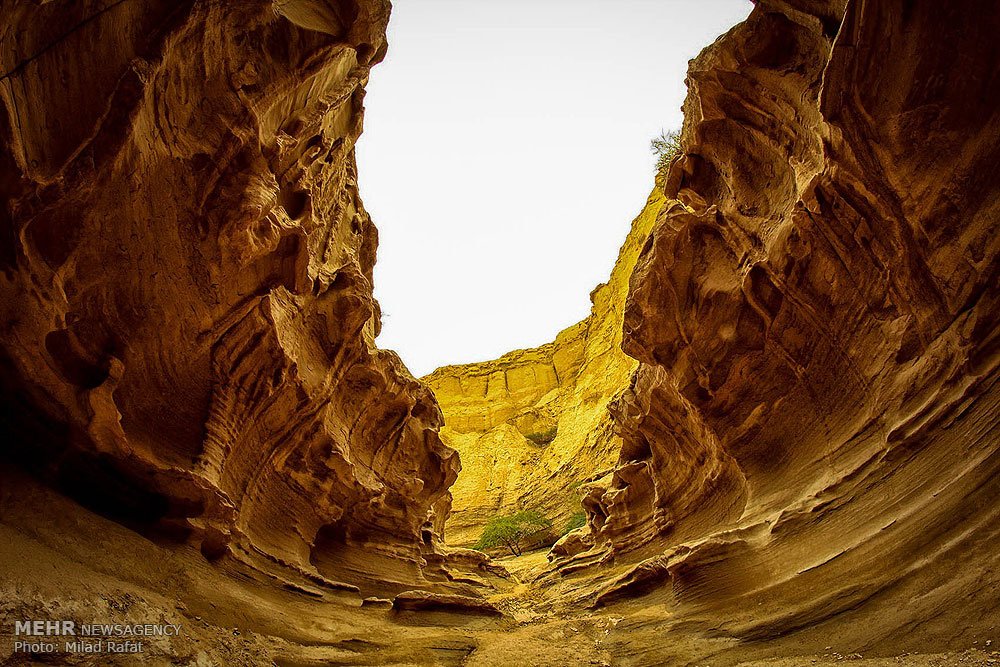
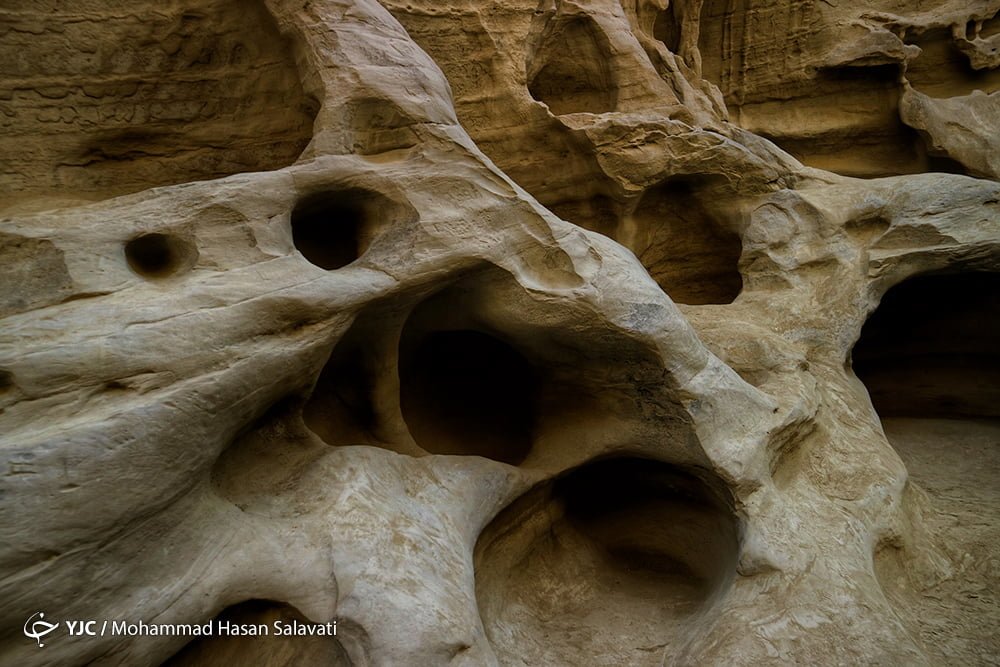
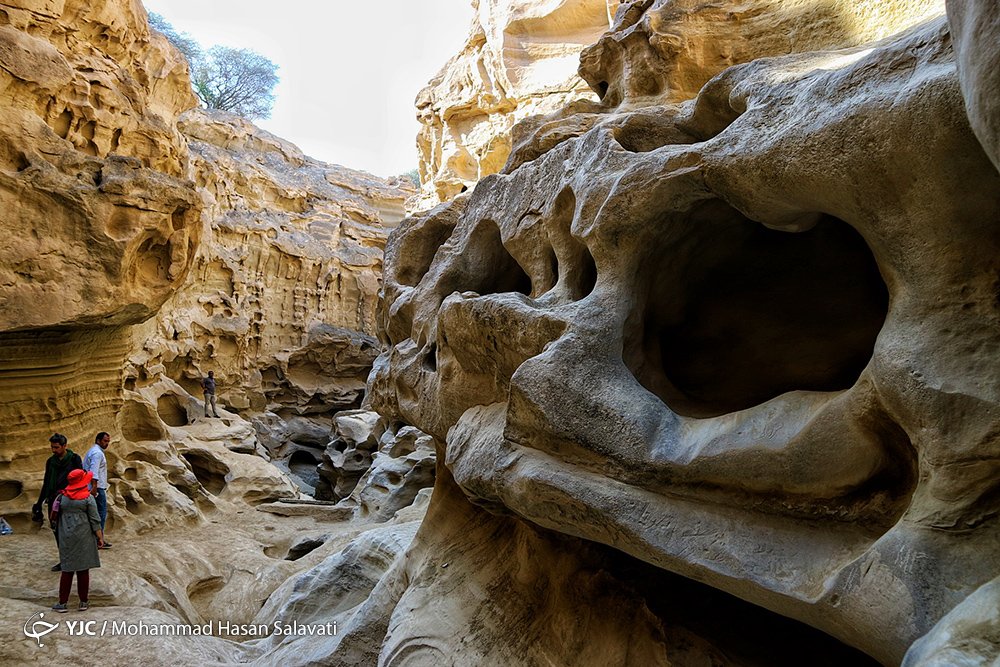
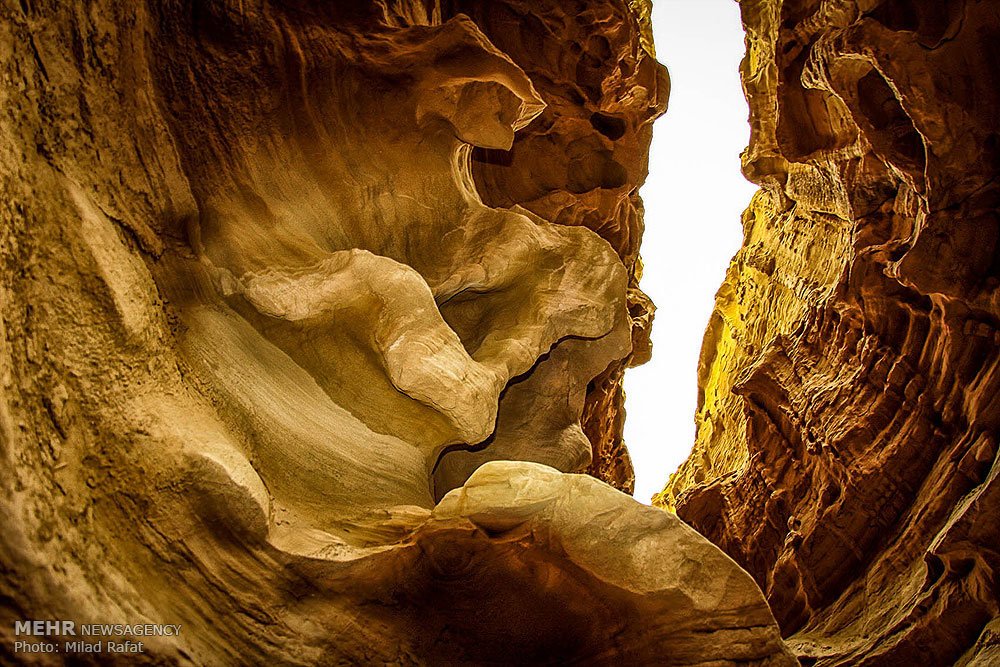
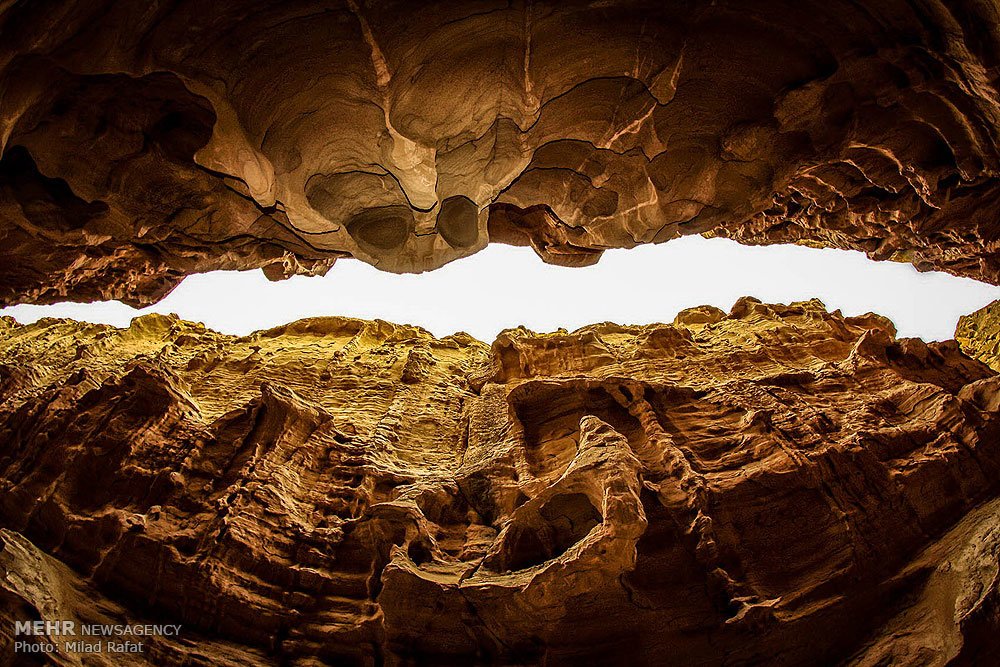
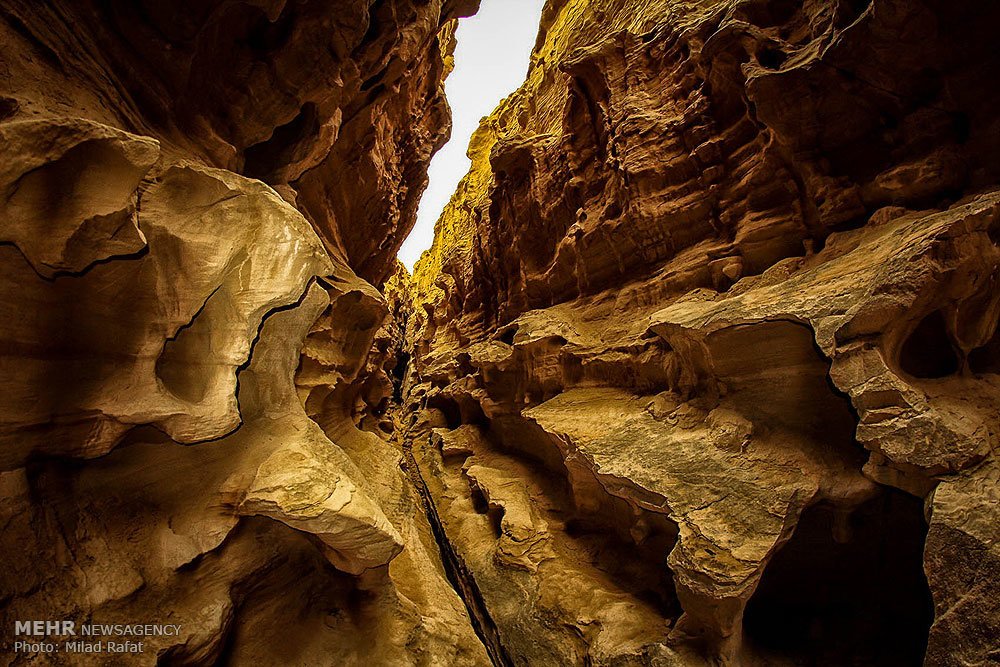
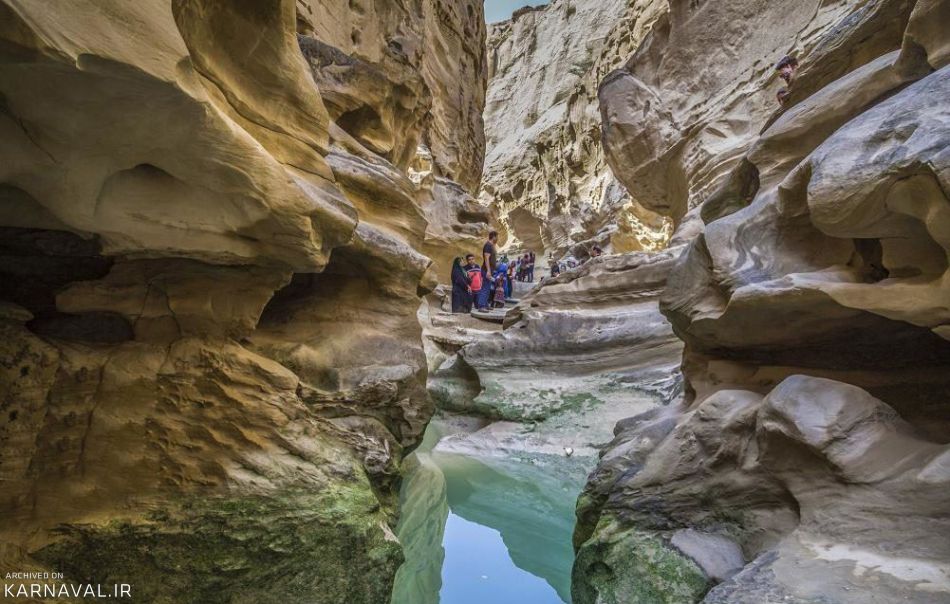
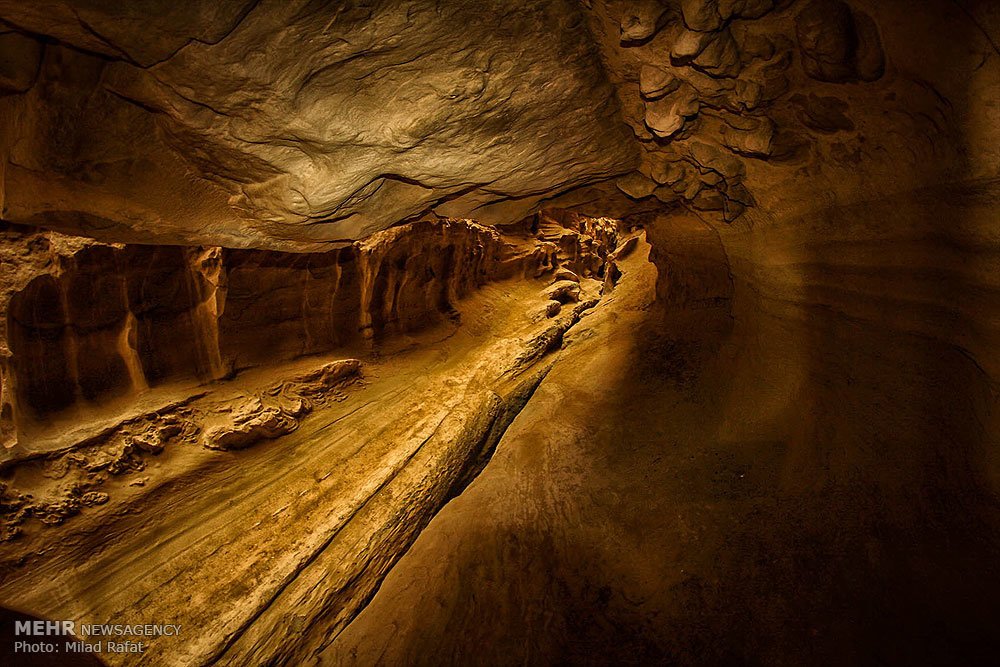
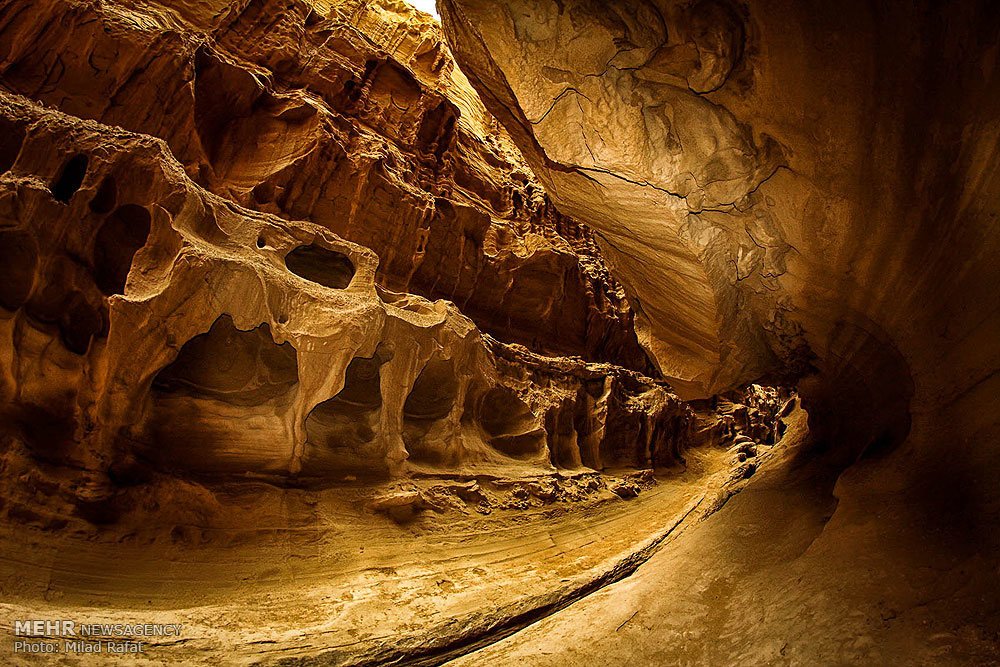
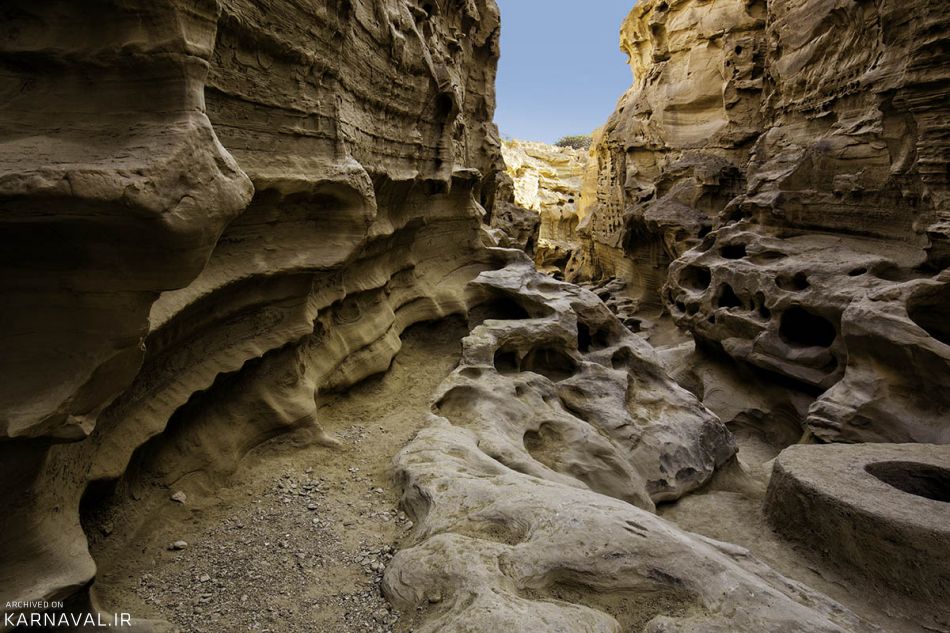
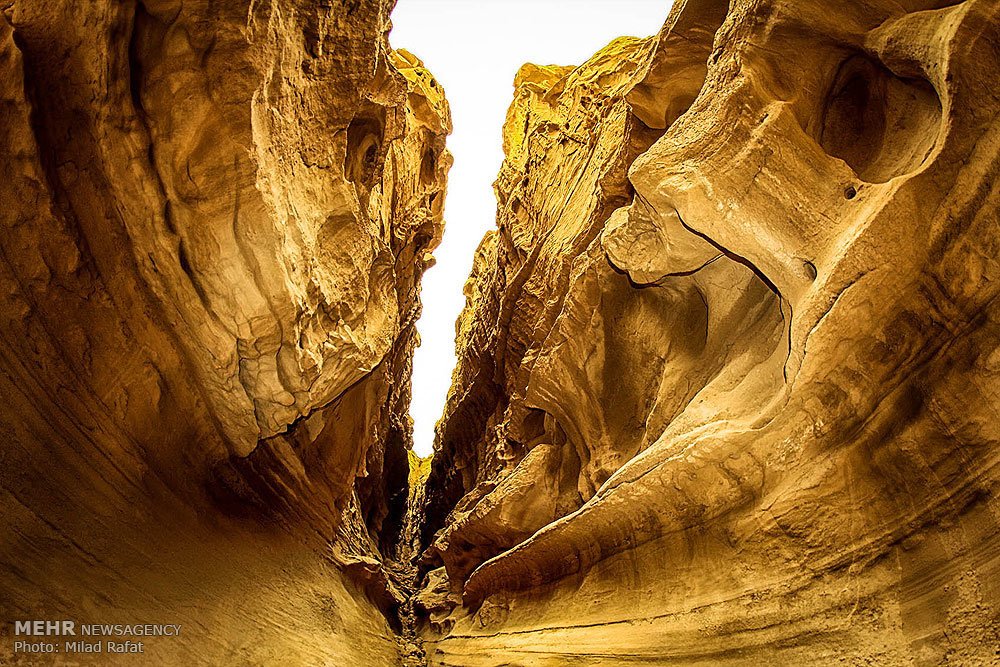
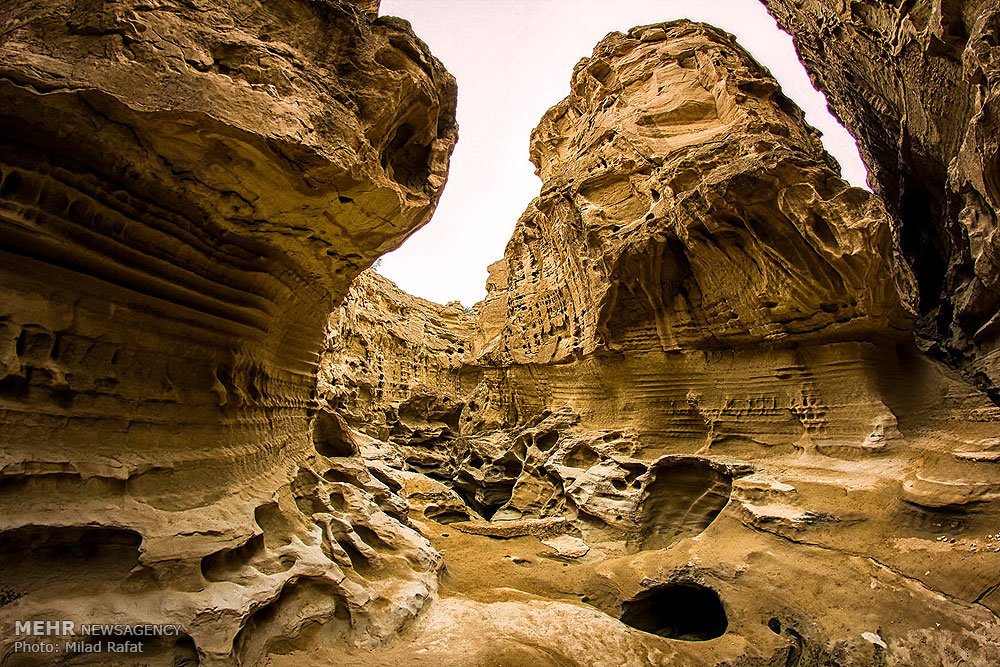
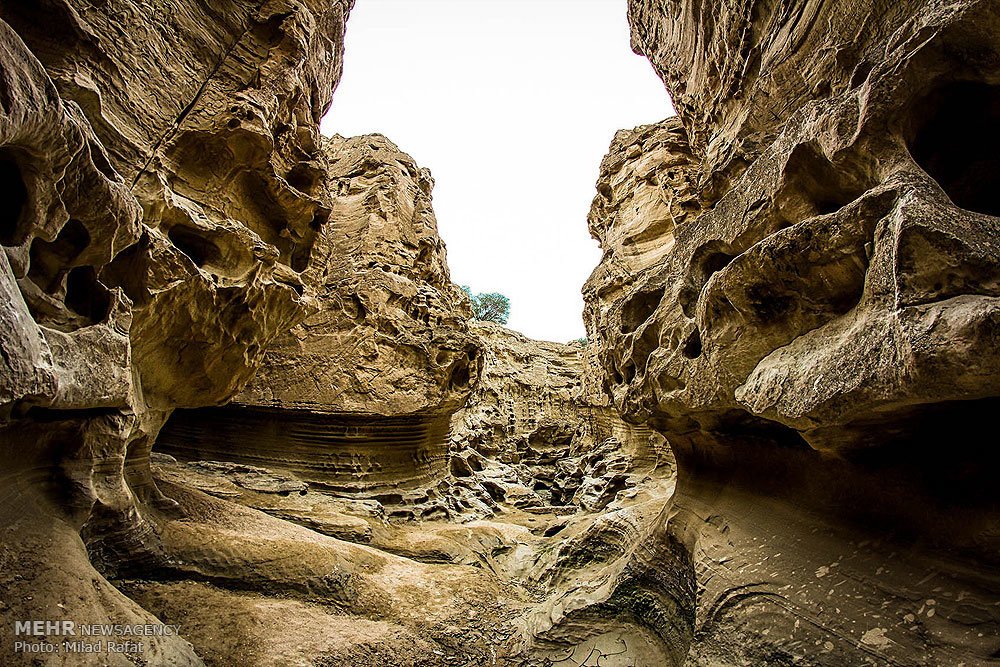
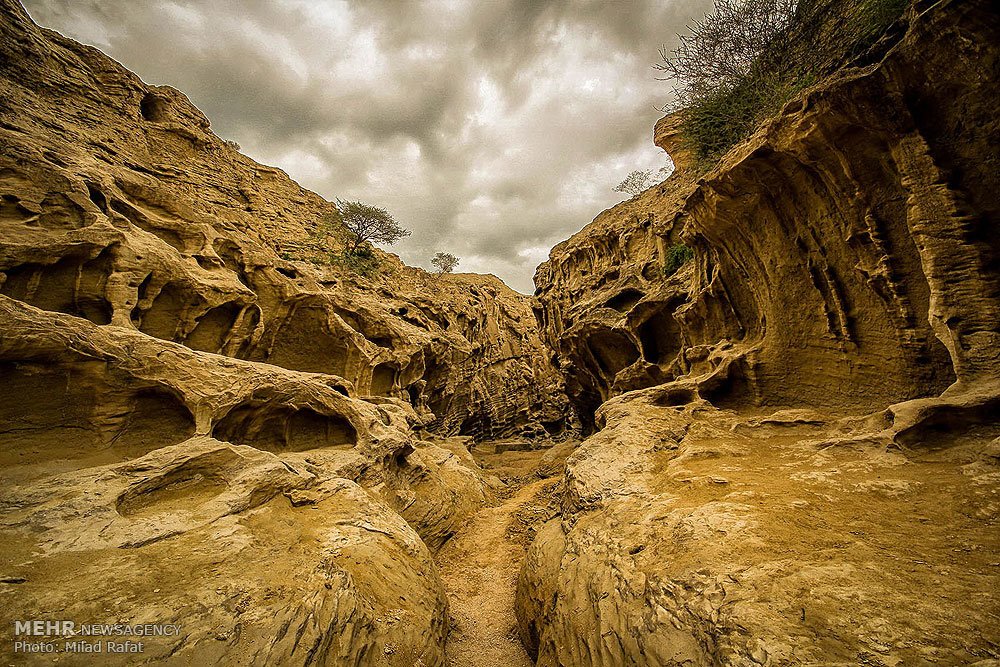
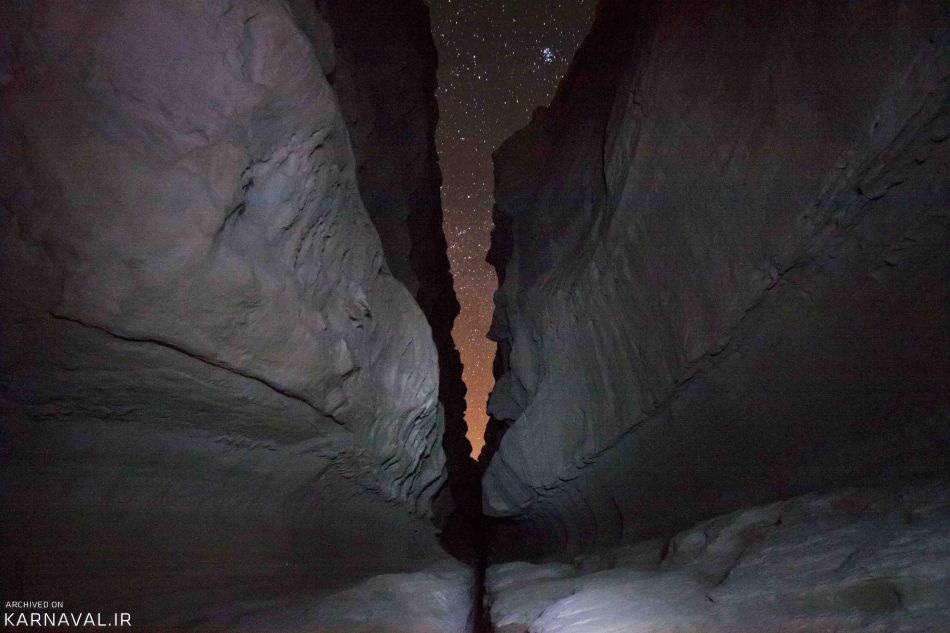
Chahkouh Canyon, as deep as 100 metres, is located in Shahab, a town on Qeshm Island in the southern Iranian province of Hormozgan.
The deep valley, a magnificent display of the erosion of sedimentary rocks, is in the northwest of the island and one of its greatest tourist attractions.
What follow are photos of this magnificent natural masterpiece retrieved from various sources:
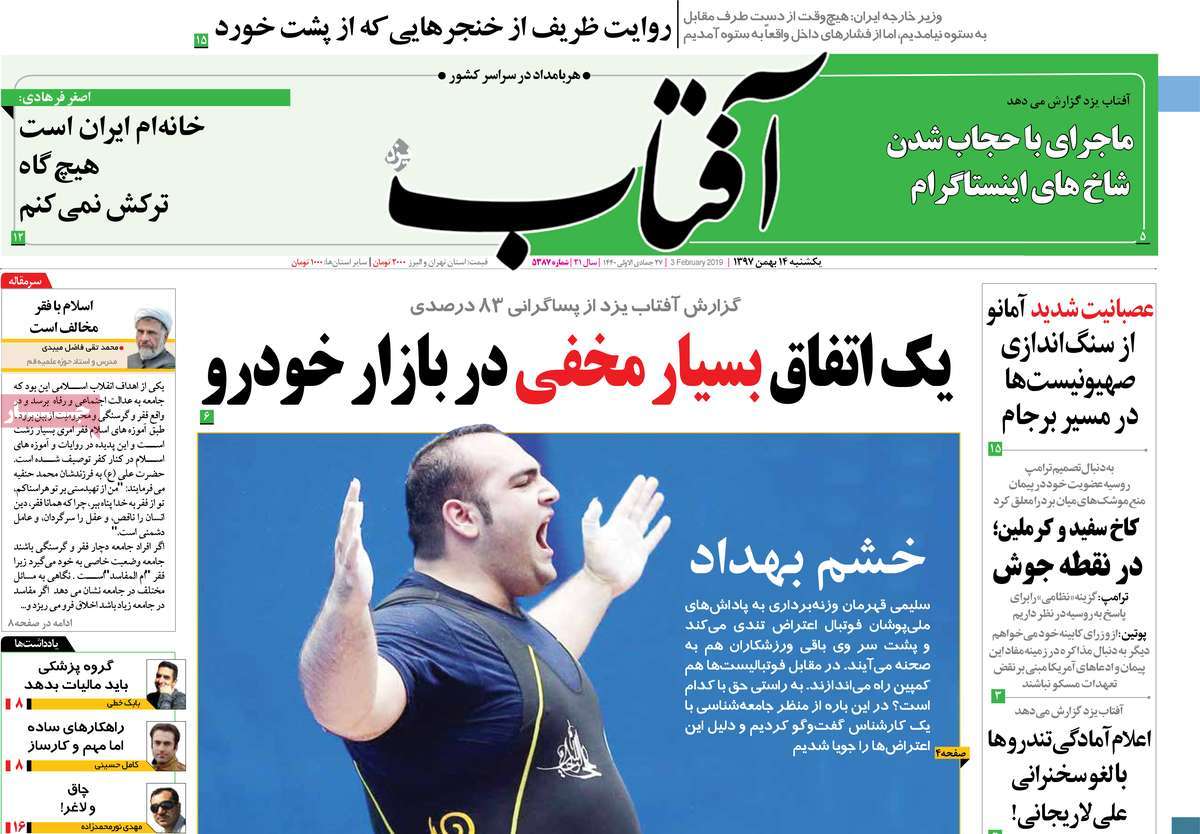
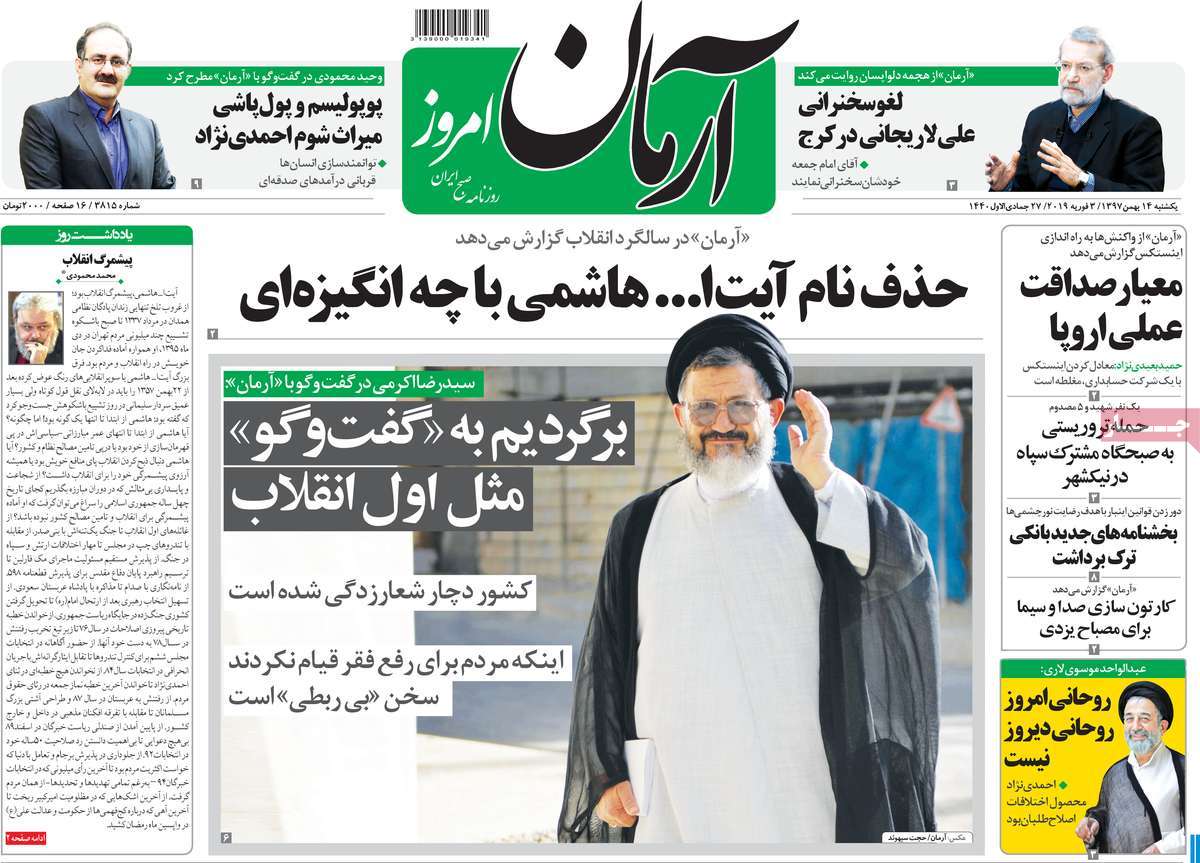
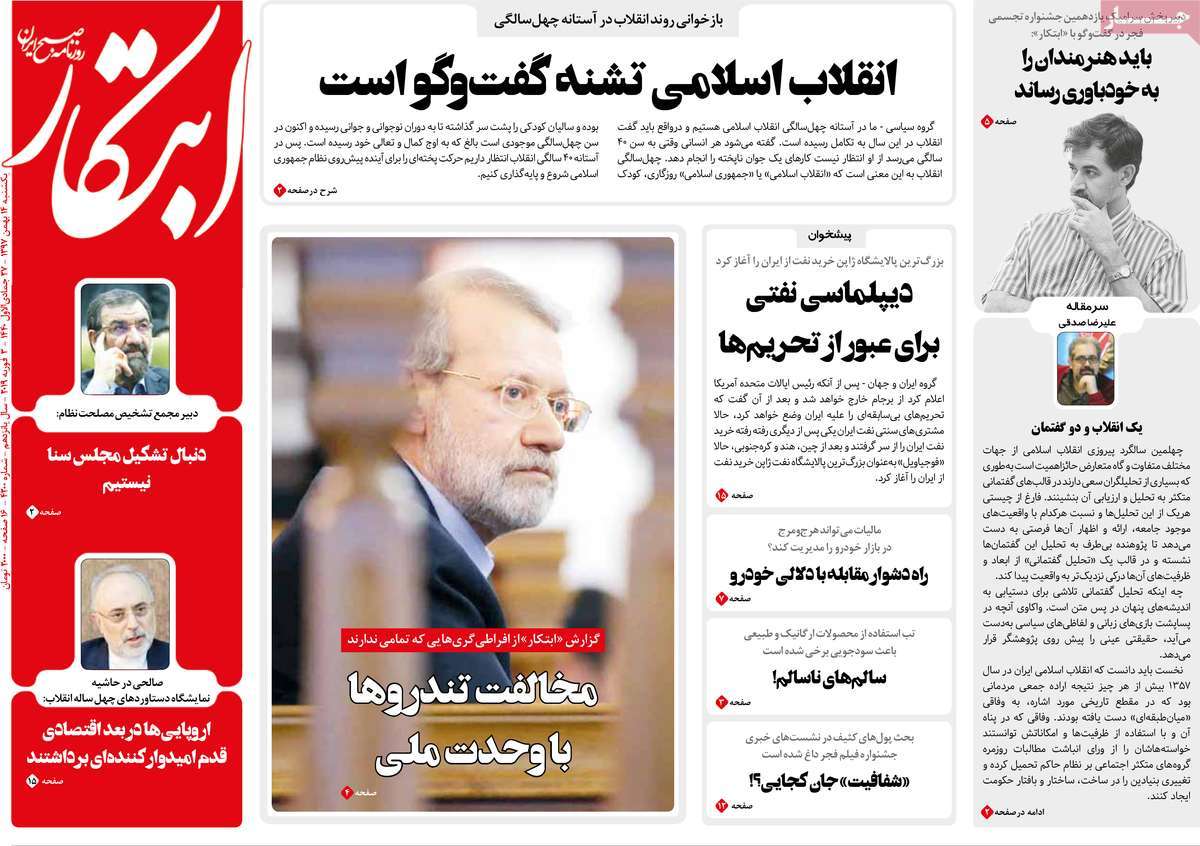
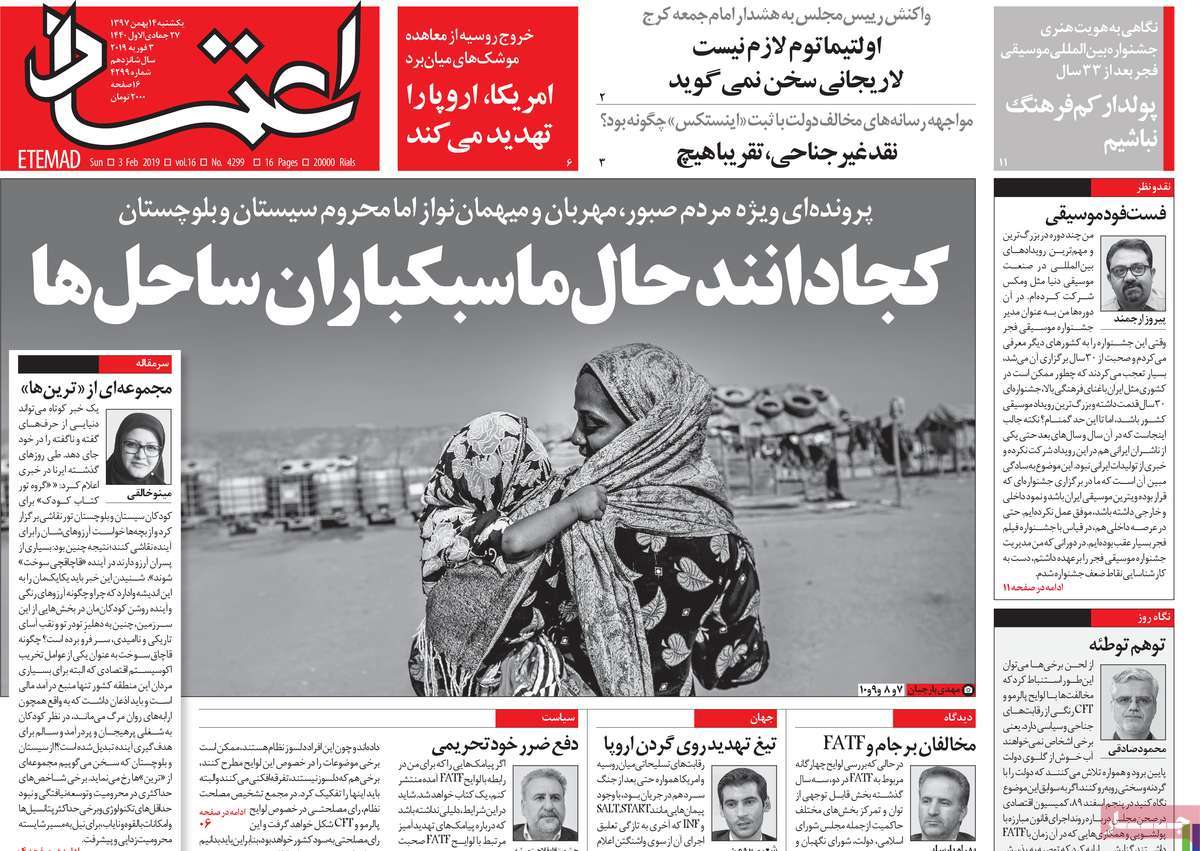
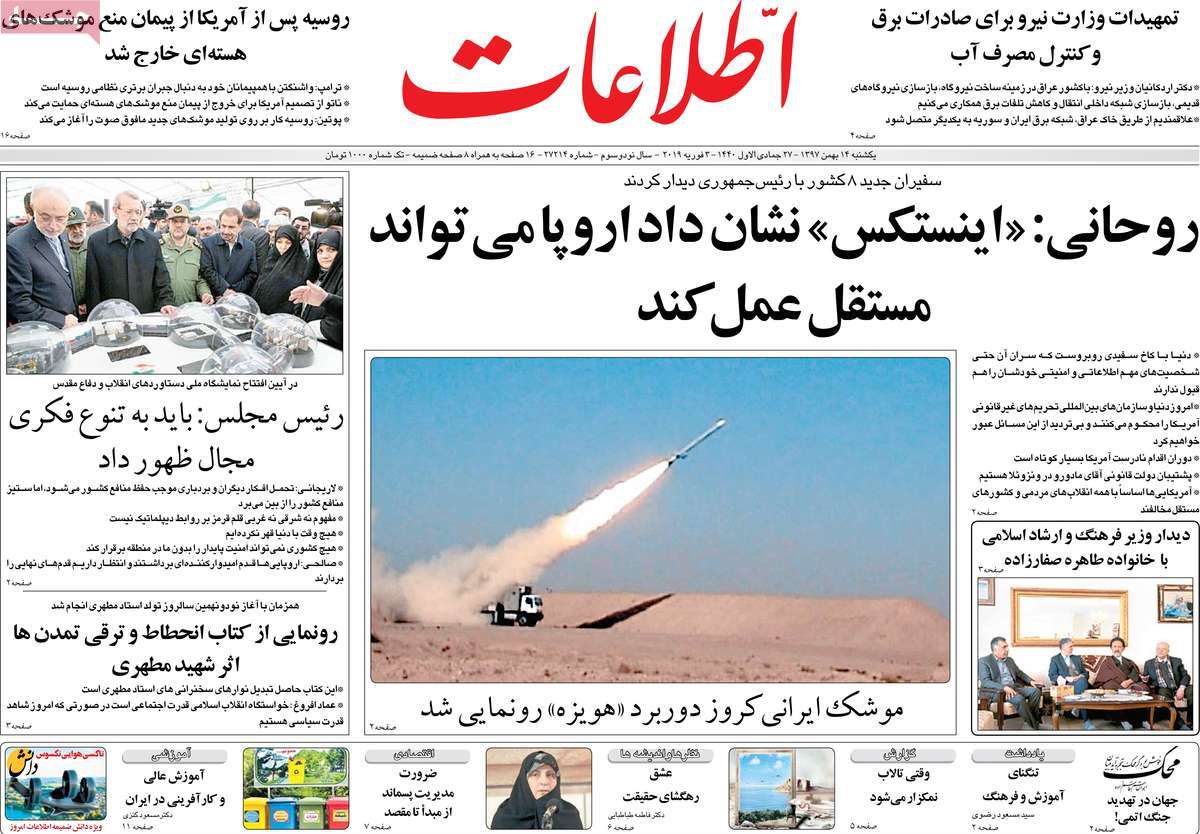
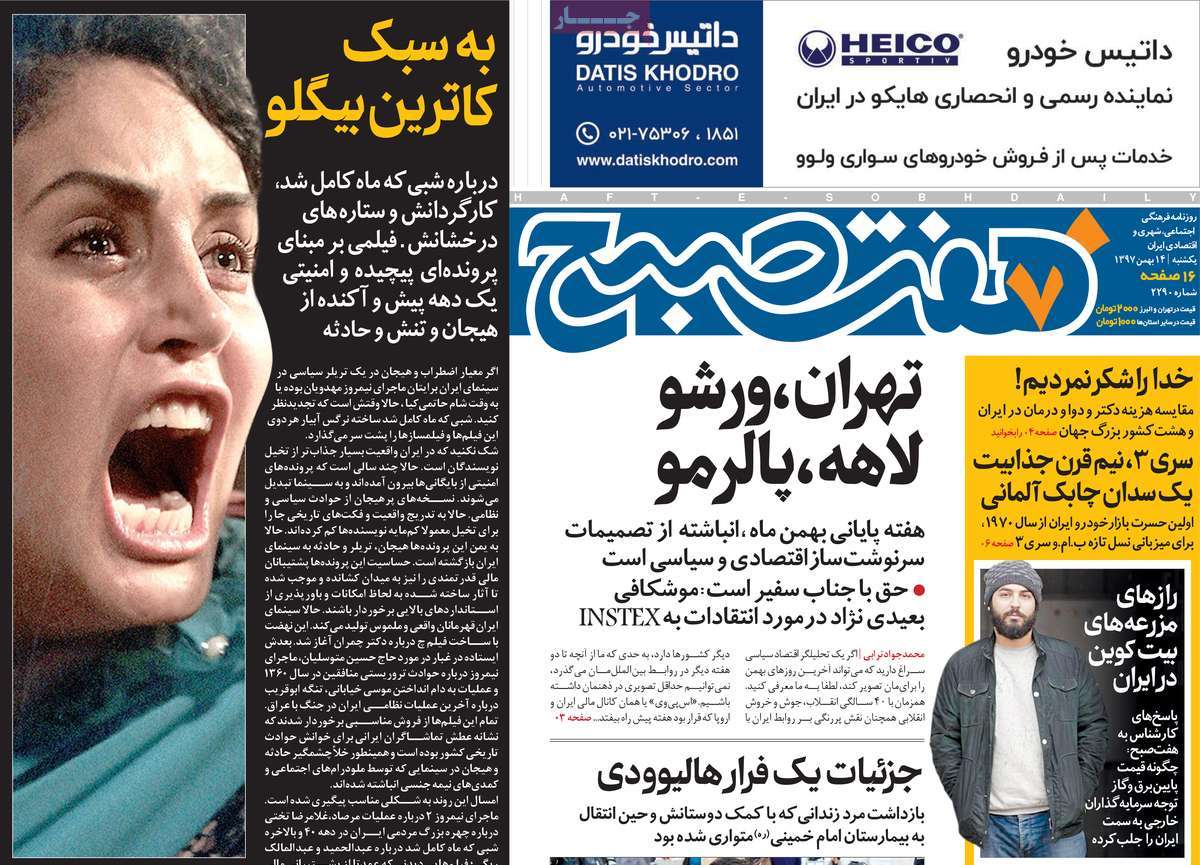
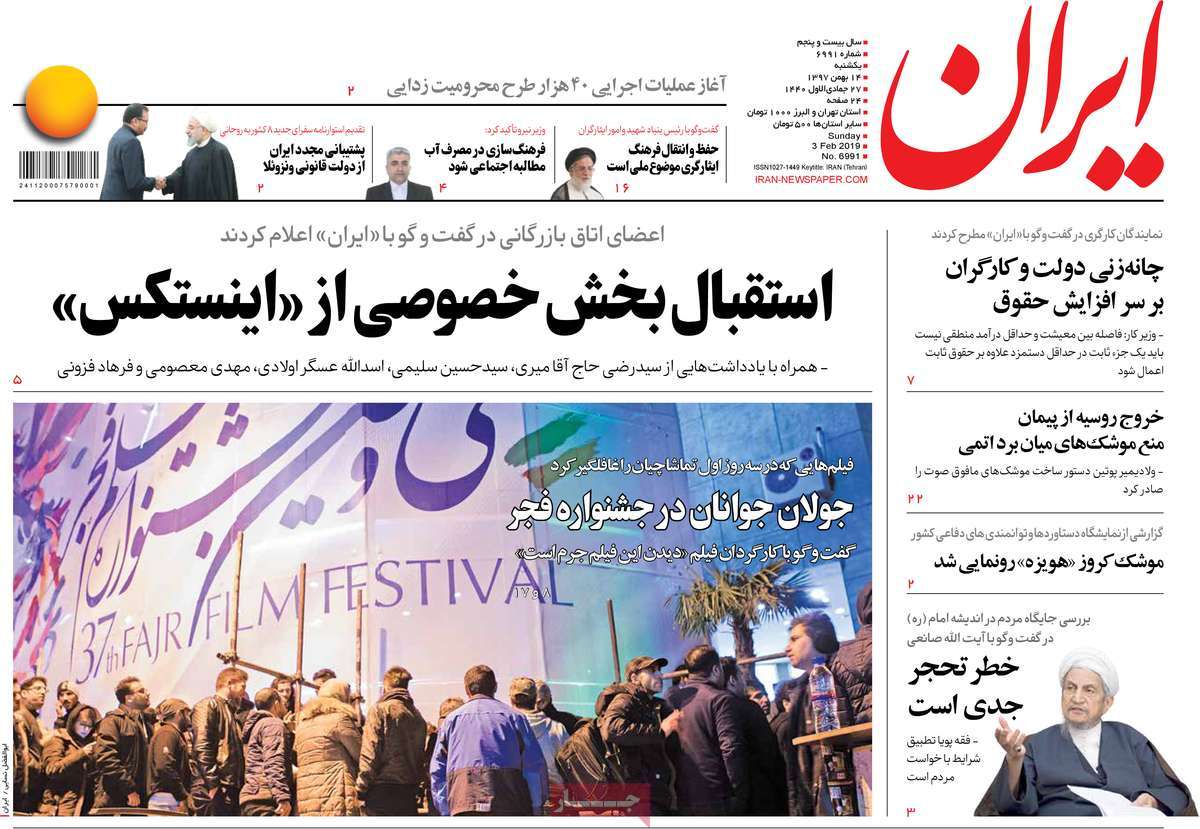
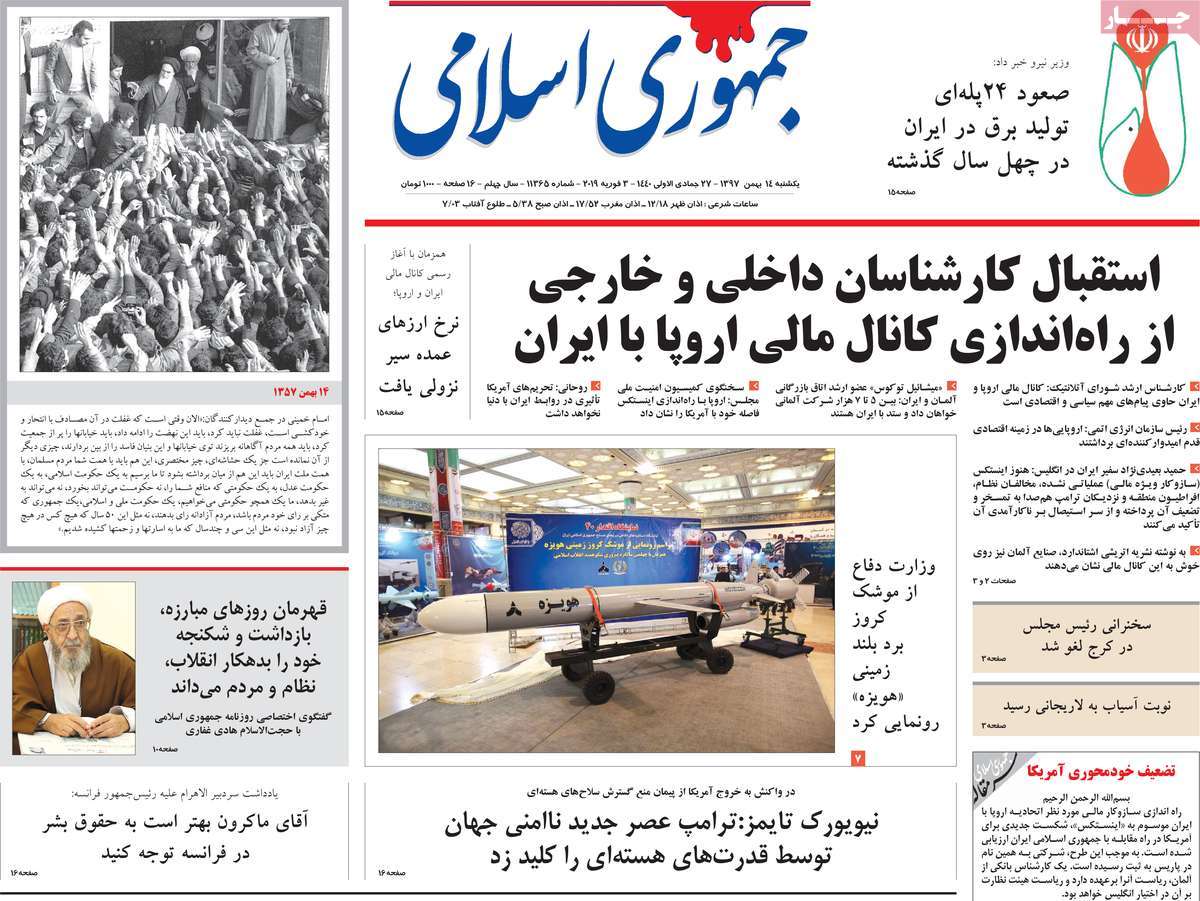
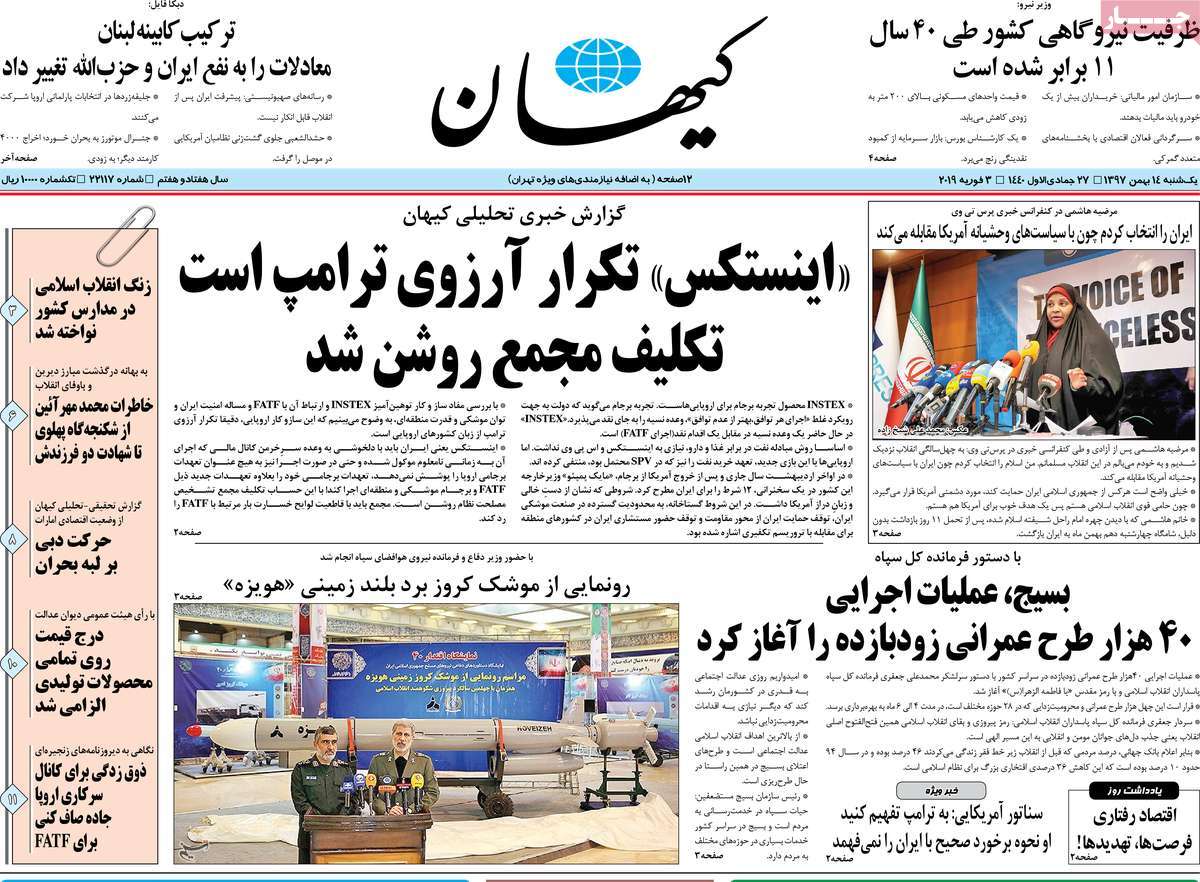
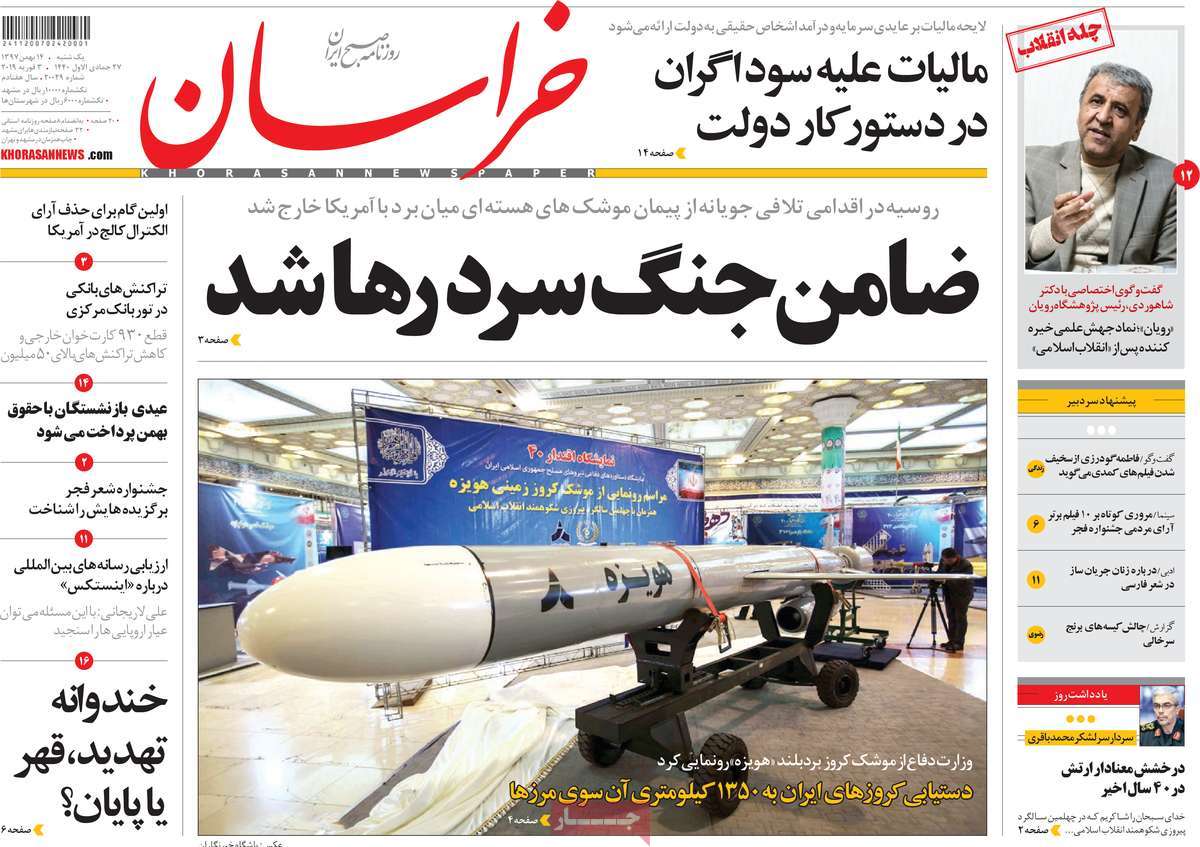
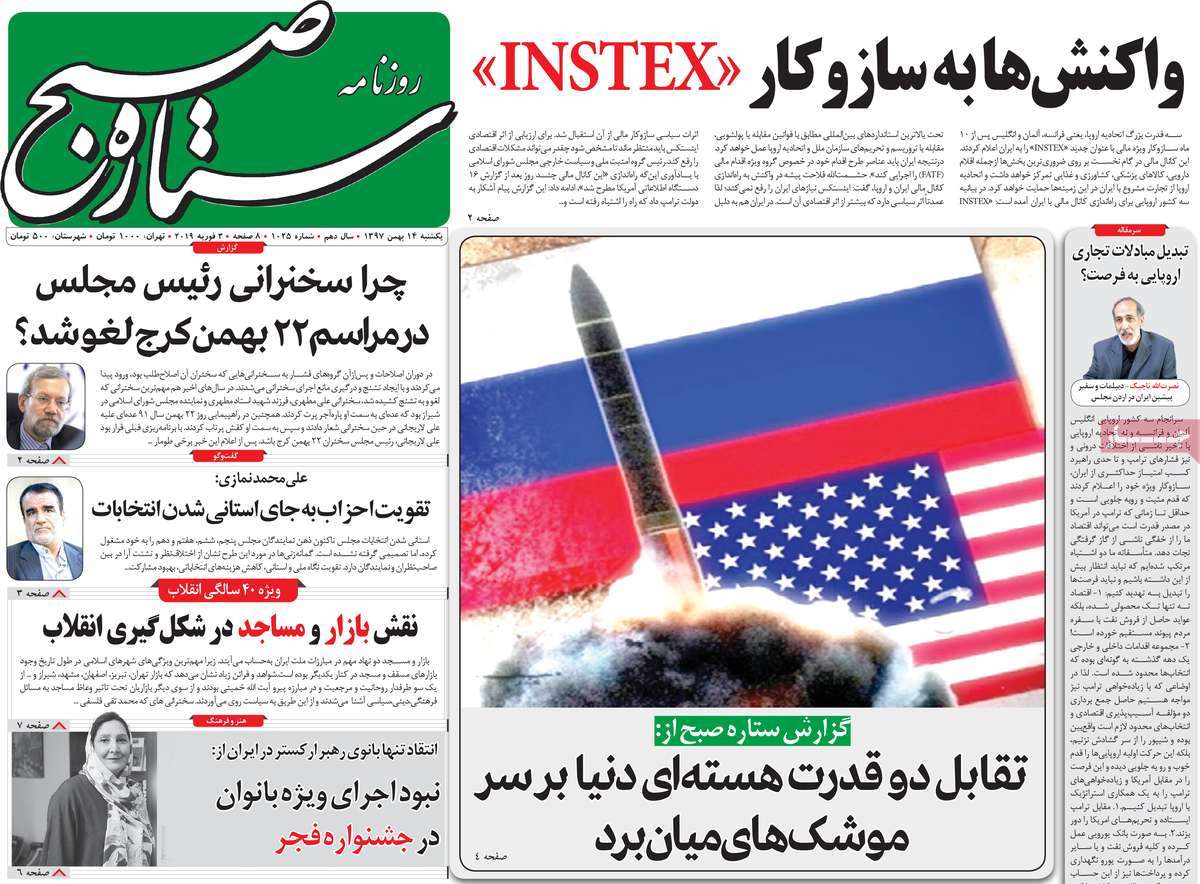
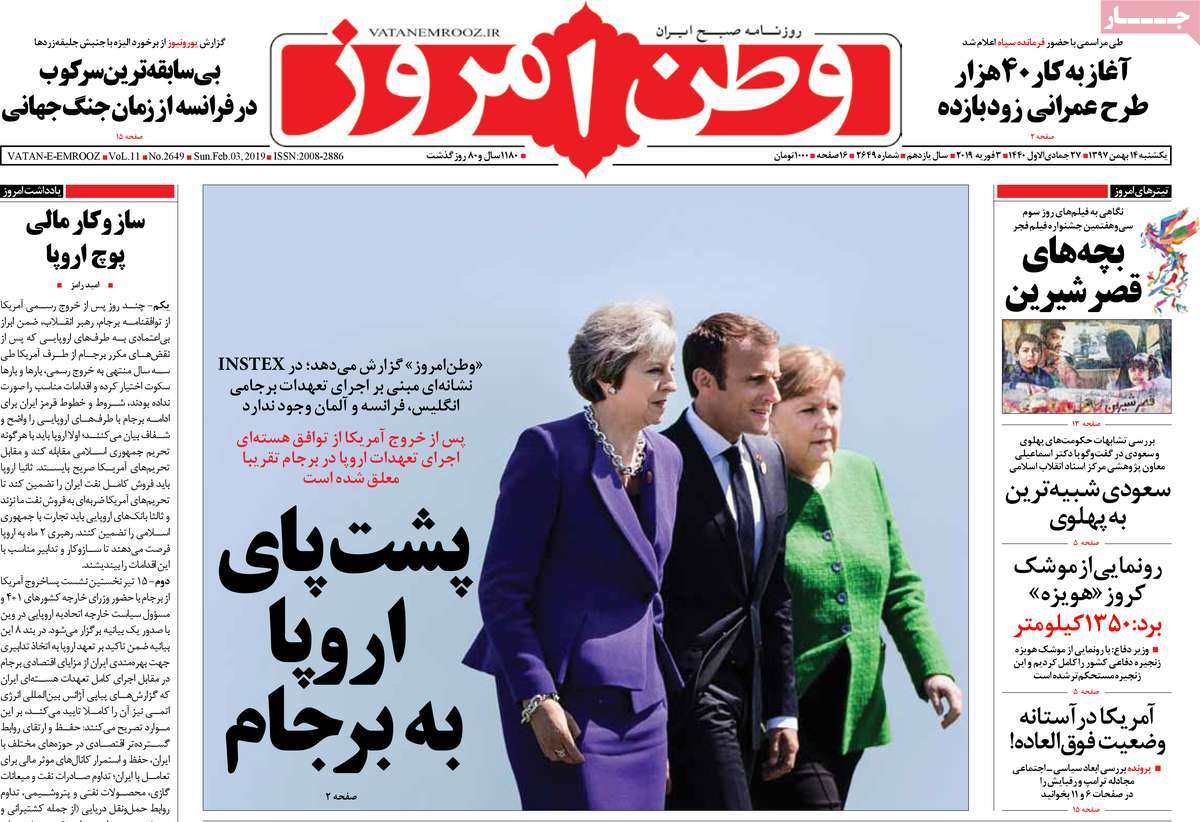
Iranian papers continued to cover global reactionsto the European Union’s launch of its special purpose vehicle, known as INSTEX, which is aimed at facilitating trade with Iran.
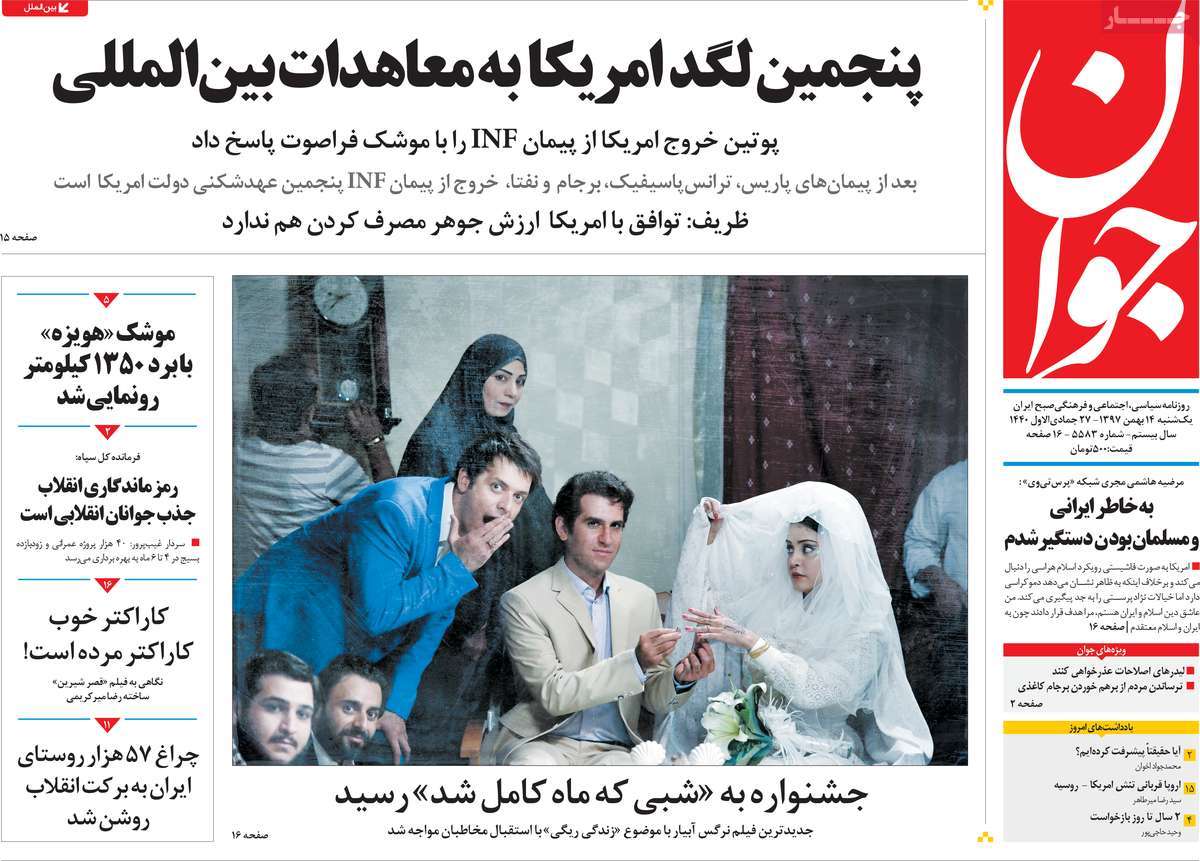
Russia’s retaliatory move to withdraw from its Intermediate-Range Nuclear Forces Treaty with the US also received great coverage.
Also a top story was the Saturday terrorist attack on a morning parade of IRGC forces in south-eastern Iran, which killed one and wounded five others.
The above issues, as well as many more, are highlighted in the following headlines and top stories:
Aftab-e Yazd:
1- Amano Outraged by Zionists’ Destructive Moves against JCPOA
2- Zarif’s Account of Hardliners’ Moves to Stab Him in Back
3- Asghar Farhadi: Iran My Home, I’ll Never Leave It
Arman-e Emrooz:
1- Ali Larijani’s Speech in Karaj Cancelled after Hardliners’ Protest
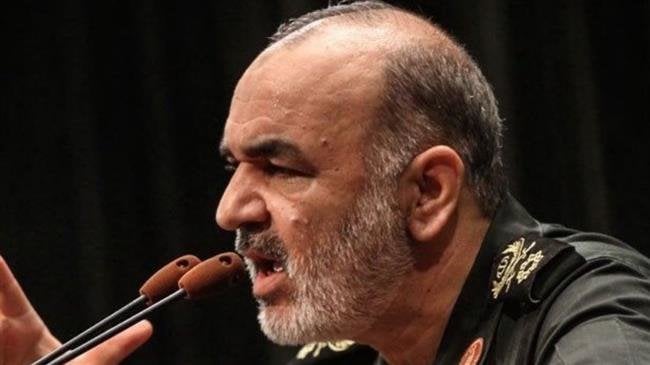
Brigadier General Hossein Salami said late on Saturday that Iran’s strategy to maintain a cap on its missile power will change if the European Union and others seek to force the country into disarmament.
“If the Europeans and others want to pursue the missile disarmament of the Islamic Republic of Iran based on a conspiracy, we will have no option but to resort to a strategic leap,” said Salami while speaking to the Iranian television.
The commander said Iran had no technical limits to expand the range, the destructive power and the propulsion system of its missiles, adding that it was Tehran’s policy to maintain a certain cap on the range of the missiles based on its own defensive strategy.
Salami said, however, that cap could be removed if others decide to pressure Iran into dismantling its long-range missile arsenal.
“Our defense strategy can change commensurate with the conditions and changes in the behavior of role-players,” said the IRGC commander.
The remarks come amid statements by certain EU governments about the need for Iran to avoid long-range missile tests in order for the country to enjoy the economic benefits of a nuclear agreement it signed in July 2015 with world powers.
Iran has repeatedly dismissed the statements, saying its missile program is not up for negotiation as part of efforts to preserve the Joint Comprehensive Plan of Action (JCPOA), an international deal on the country’s nuclear activities which has suffered as a result of a decision last year by the United States to unilaterally withdraw from the agreement.
Iran on Saturday unveiled a surface-to-surface missile with a range of more than 1,350 kilometers during celebrations marking the 40th anniversary of the 1979 Islamic revolution.
The missile, named Hoveyzeh after a city in southwest Iran known for its resistance during the 1980s Iraqi war, was showcased at an exhibition of defense achievements in Tehran on Saturday.
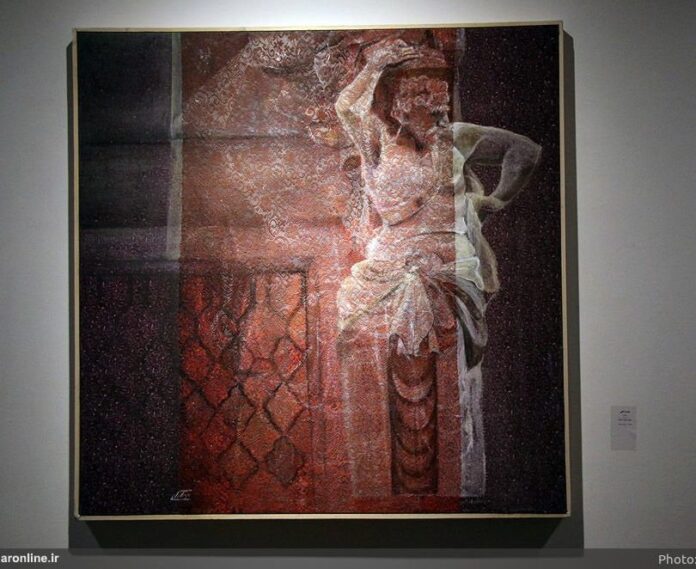
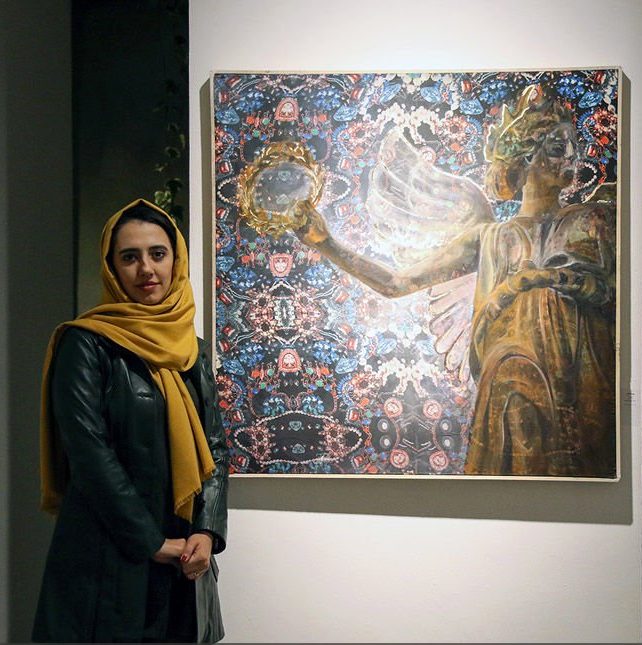
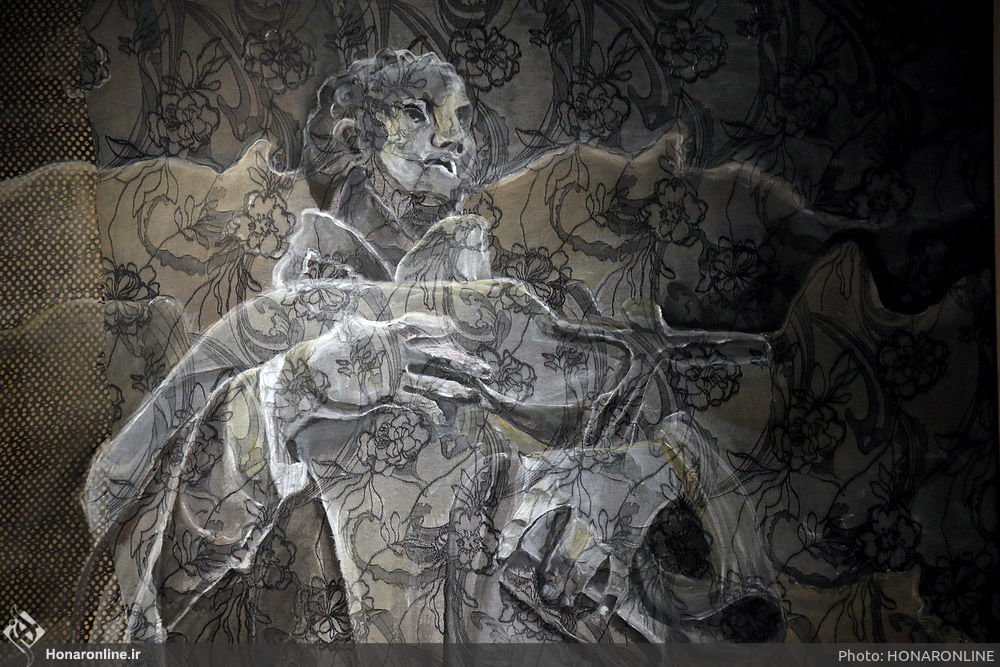
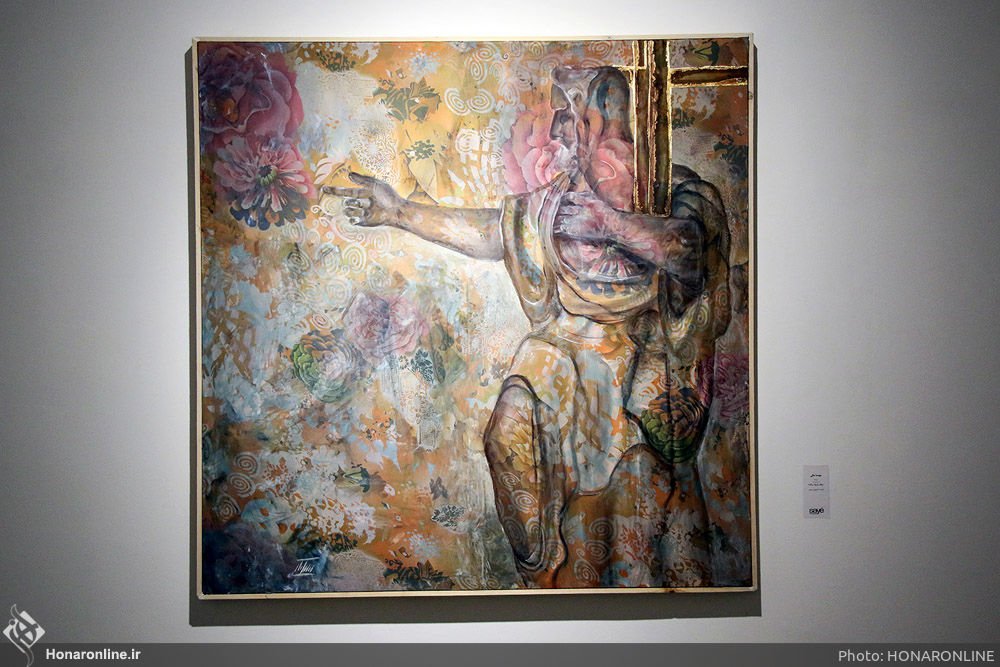
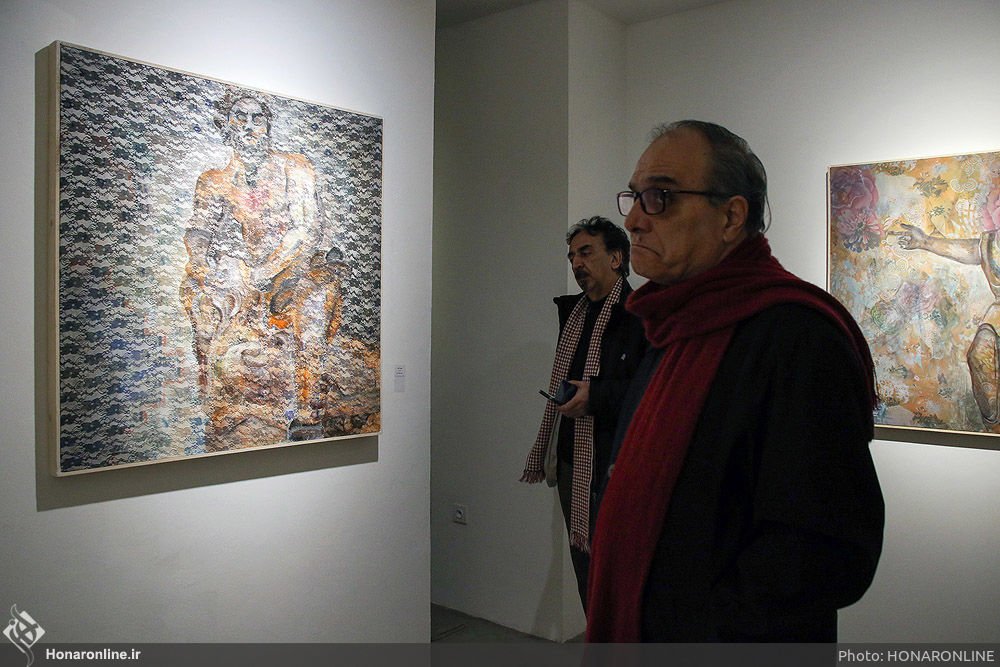
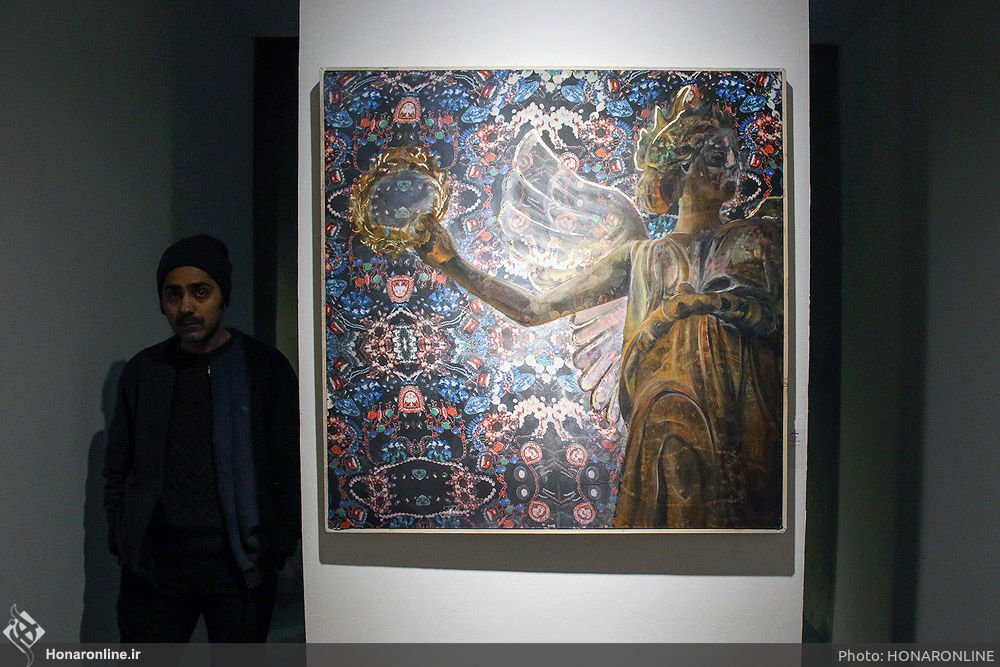
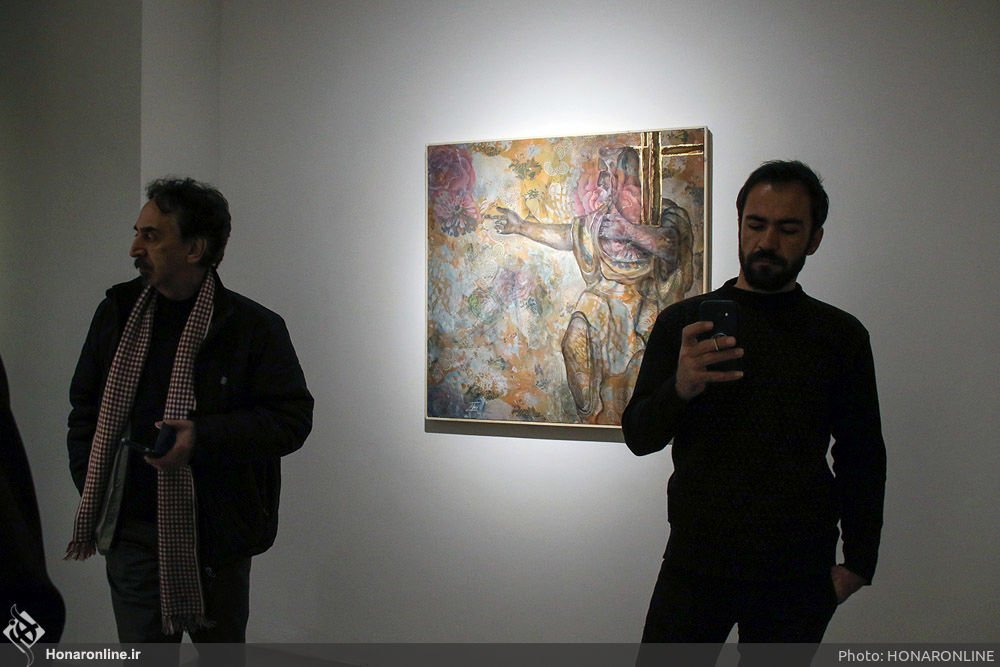
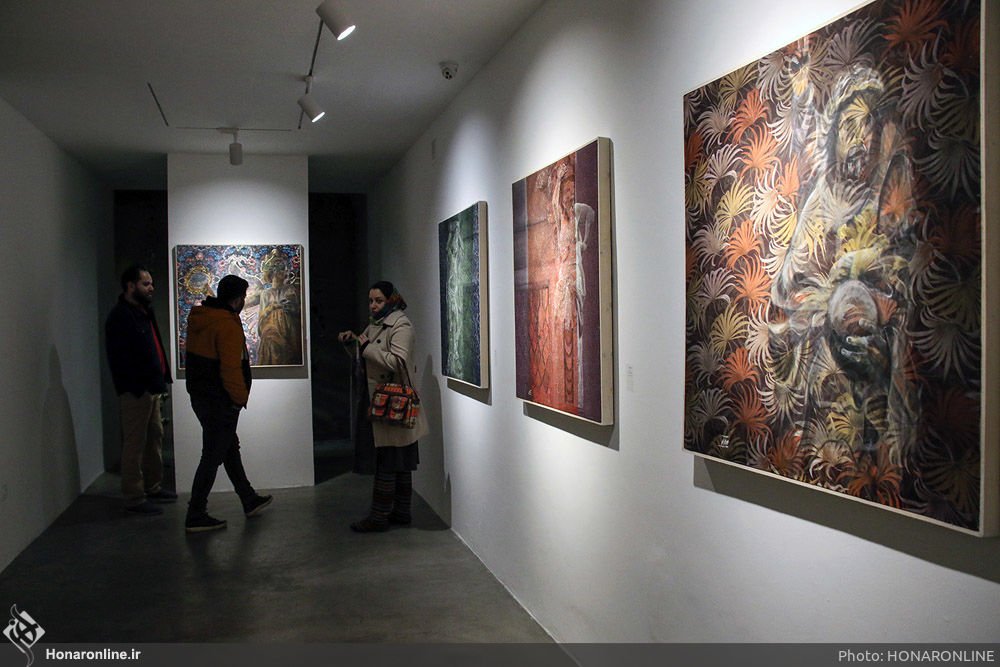
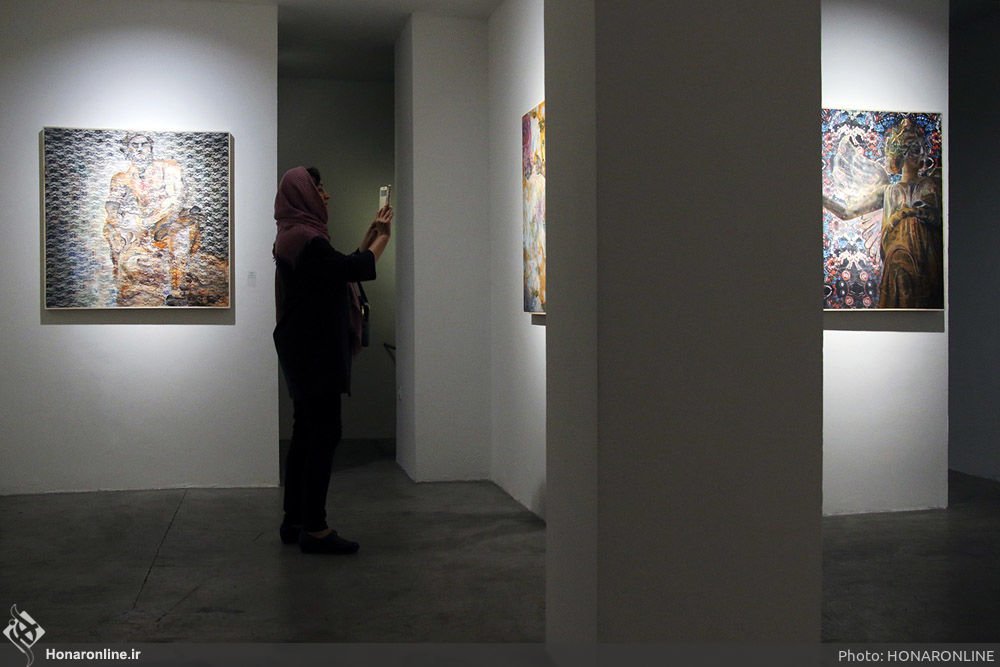
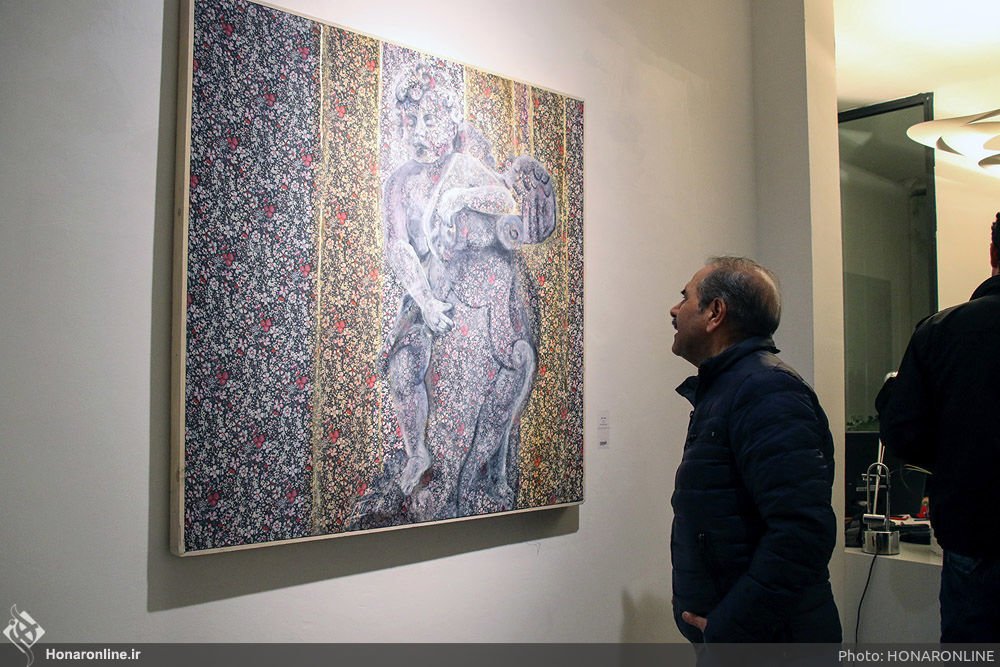
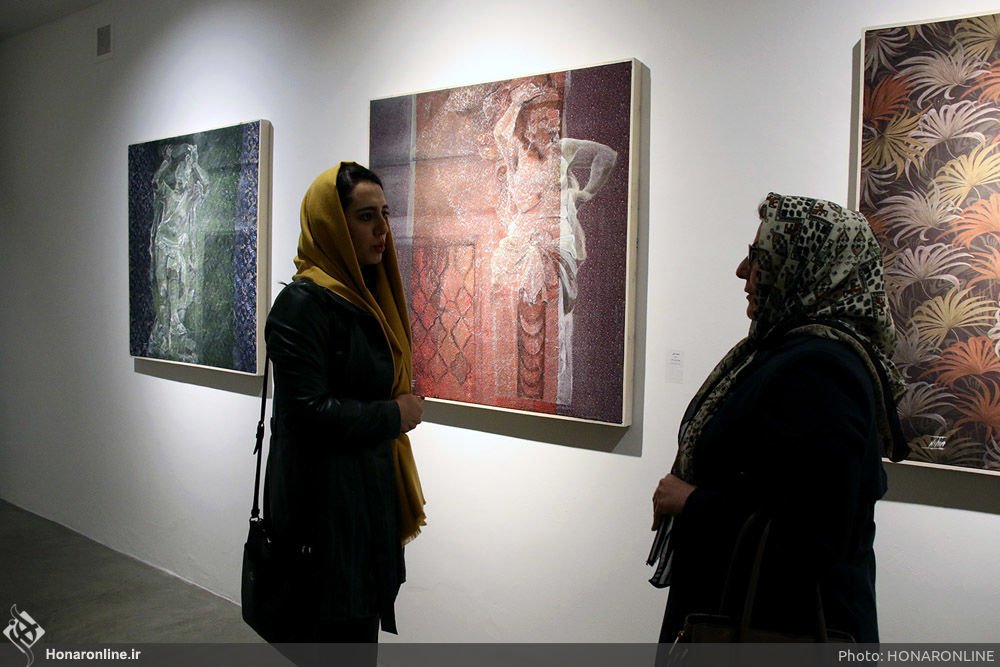
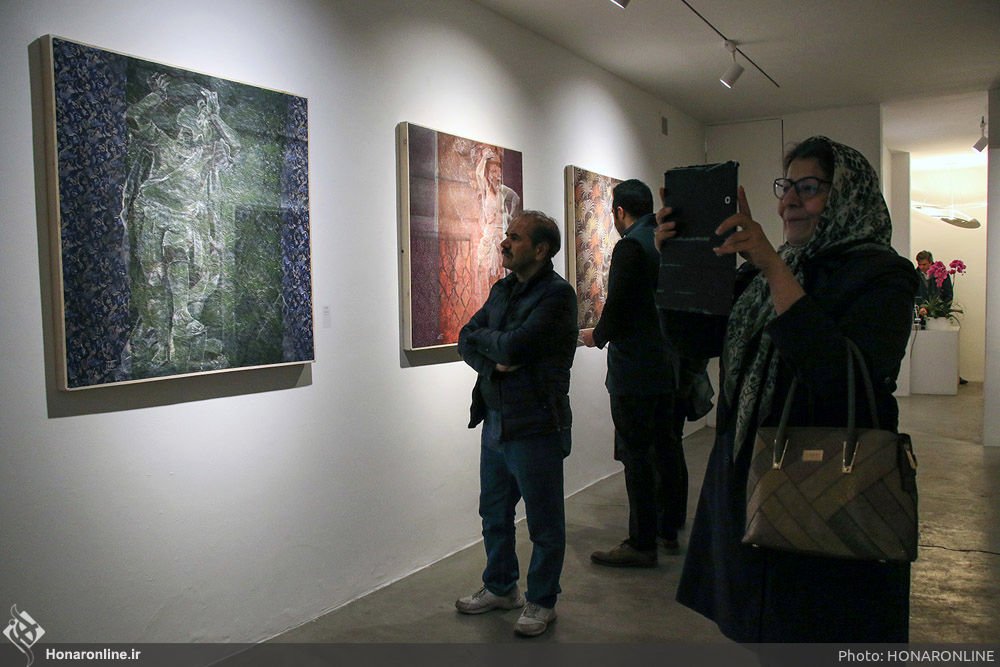
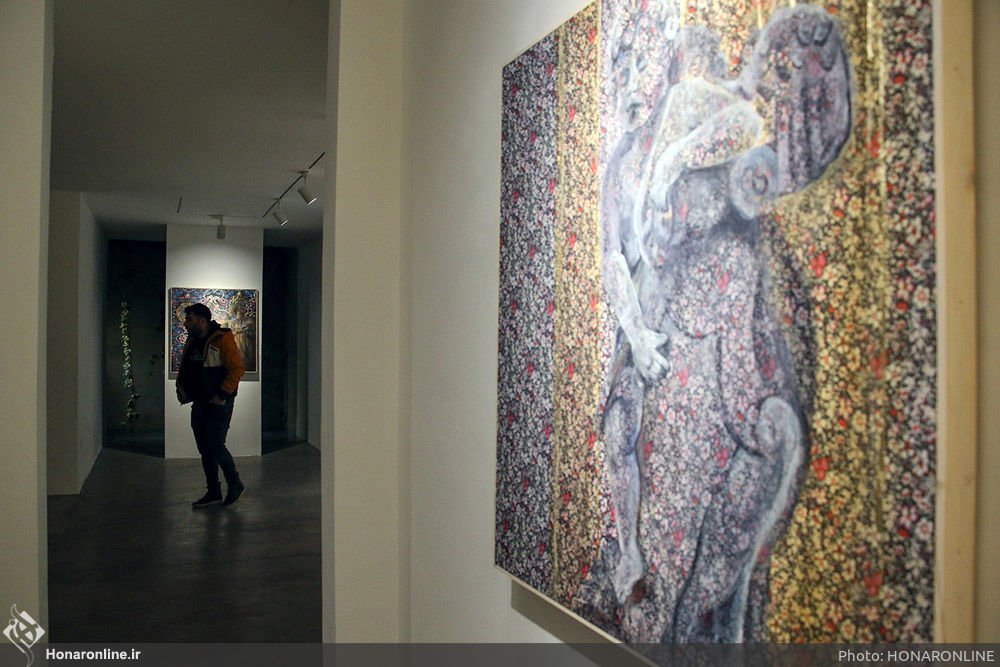
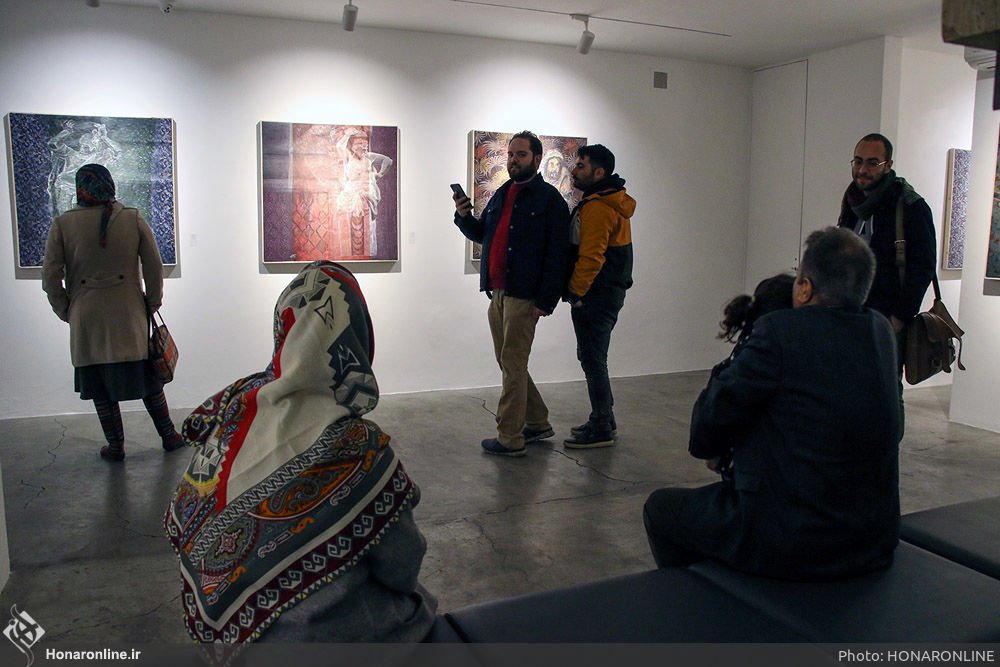
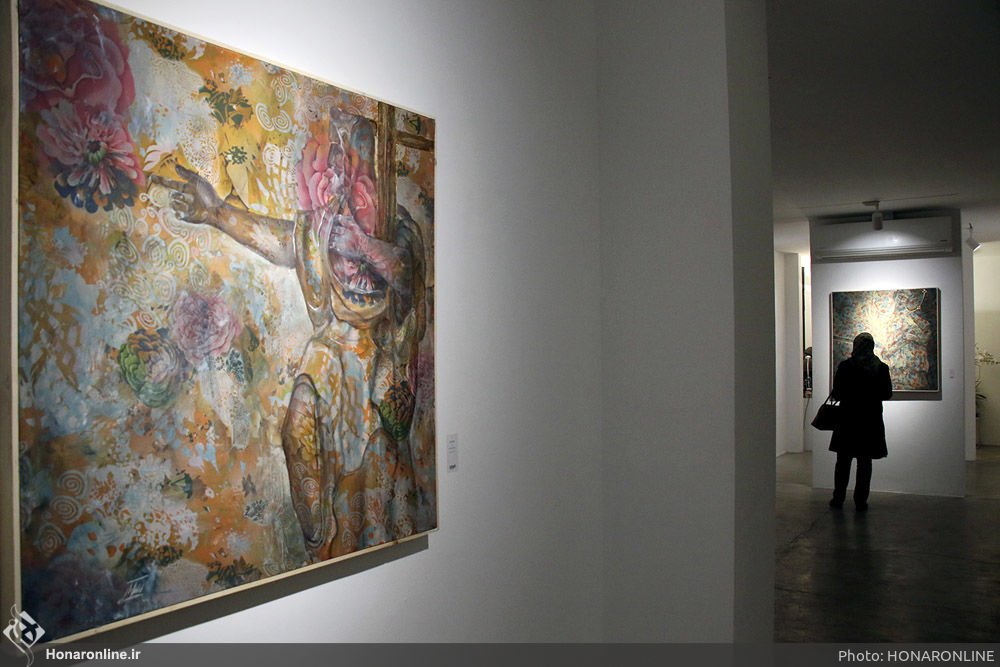
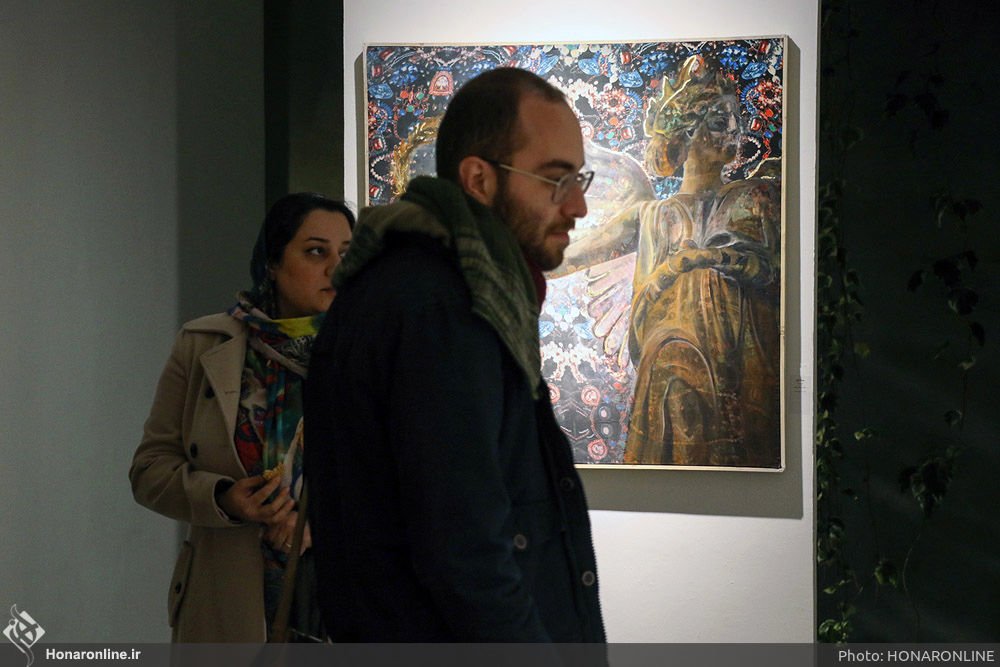
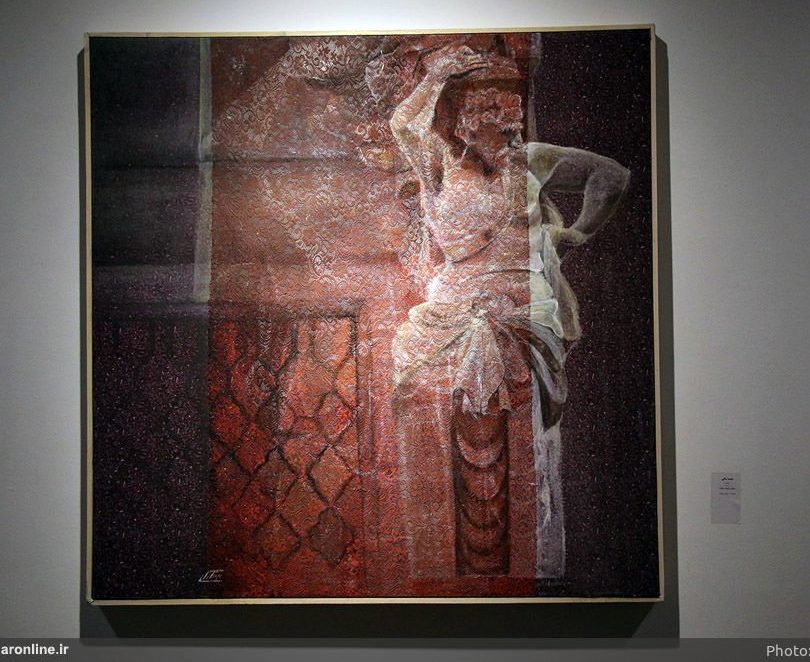
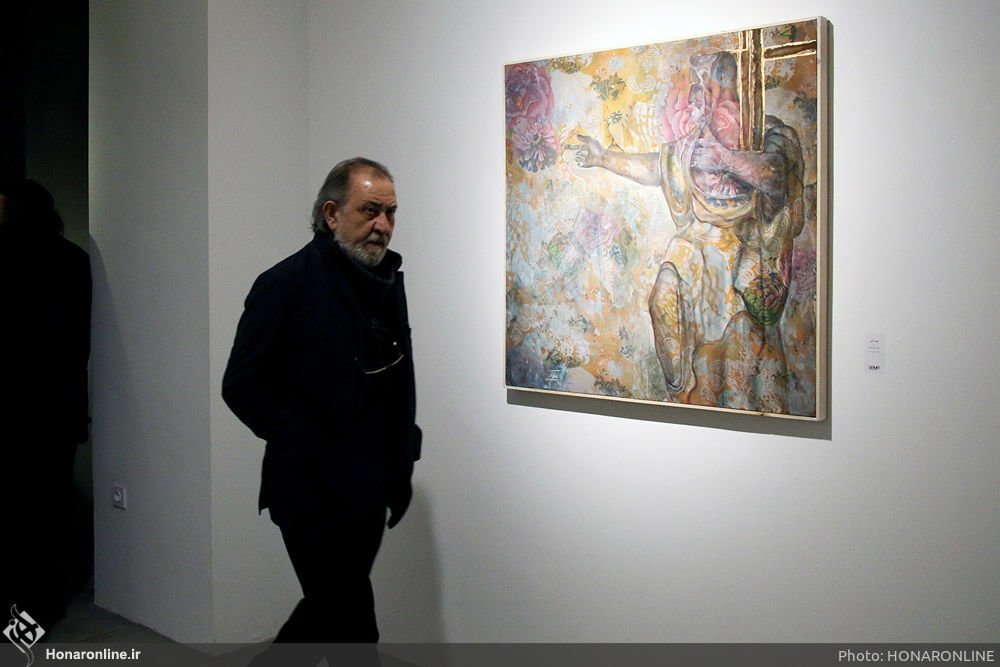
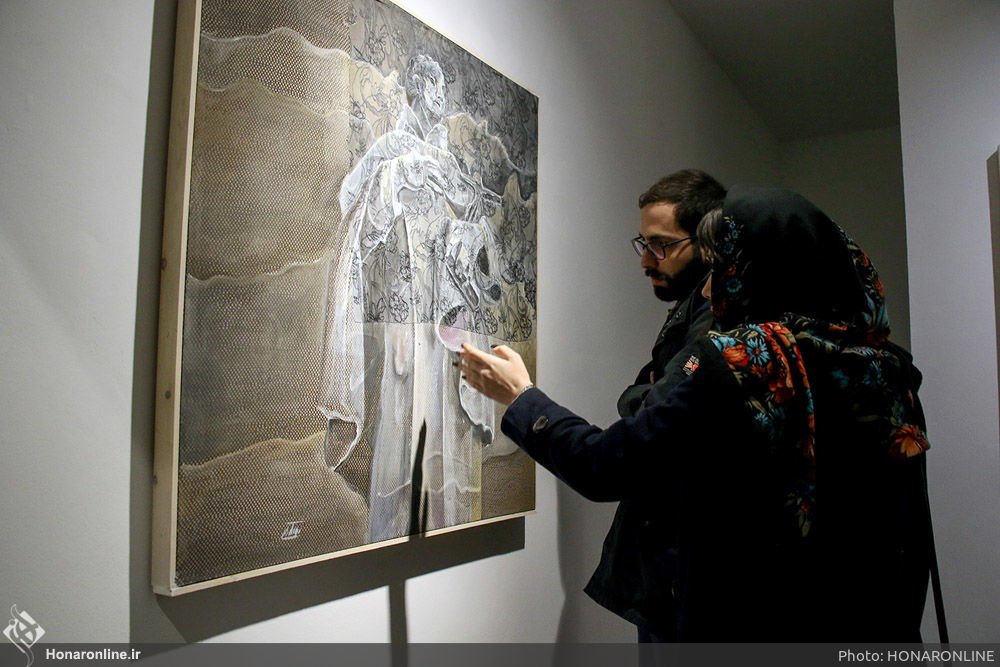
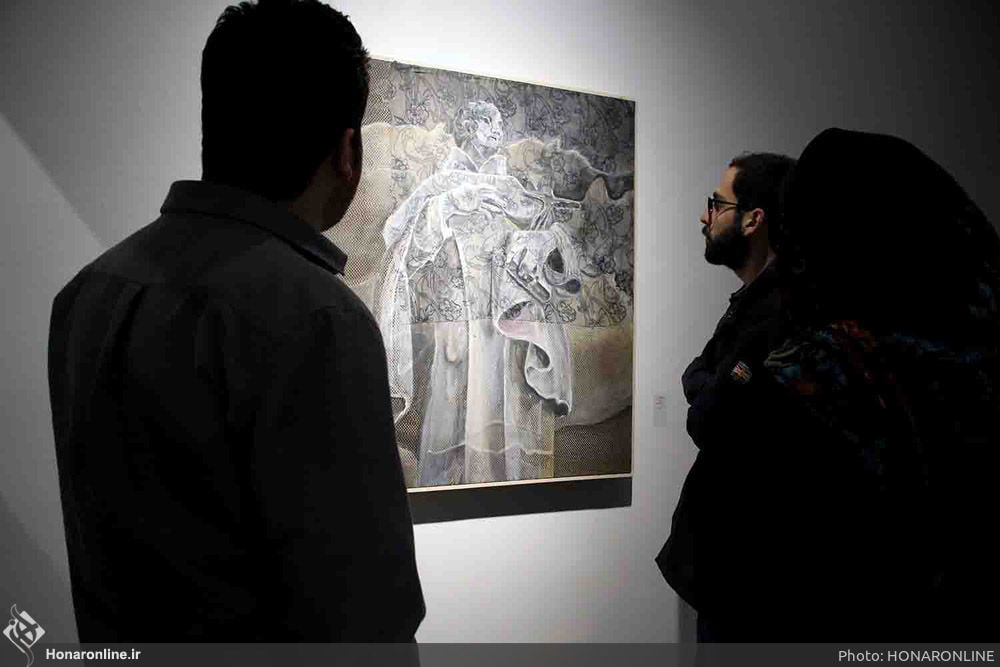
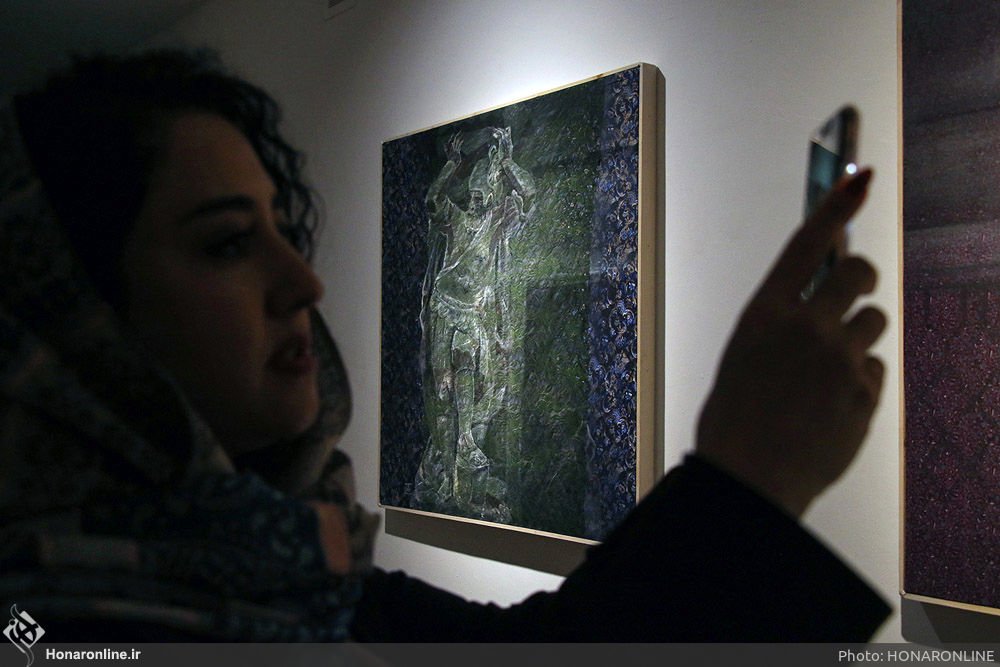
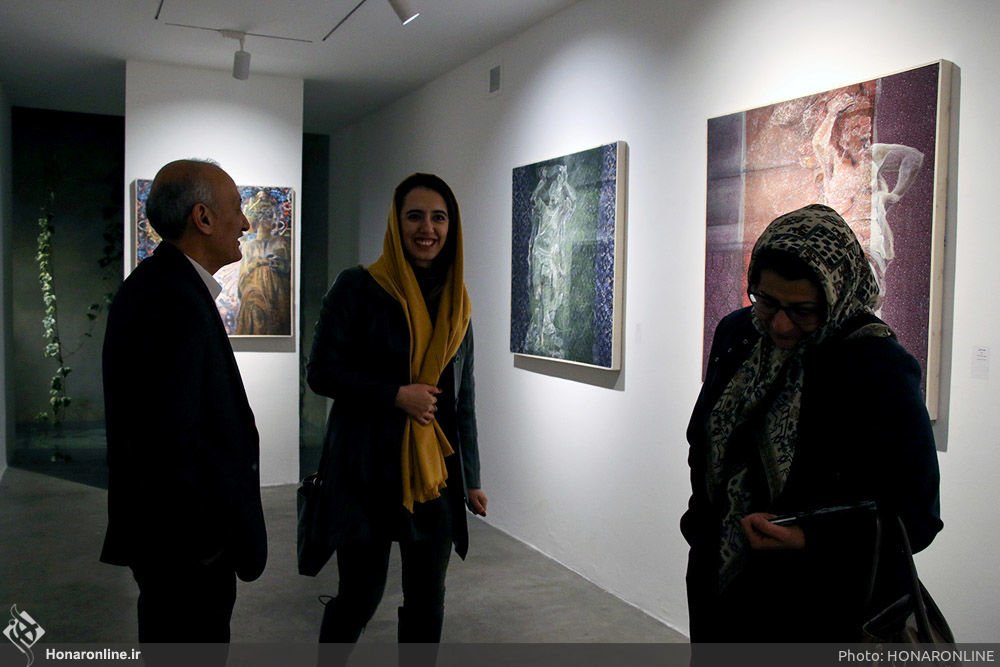
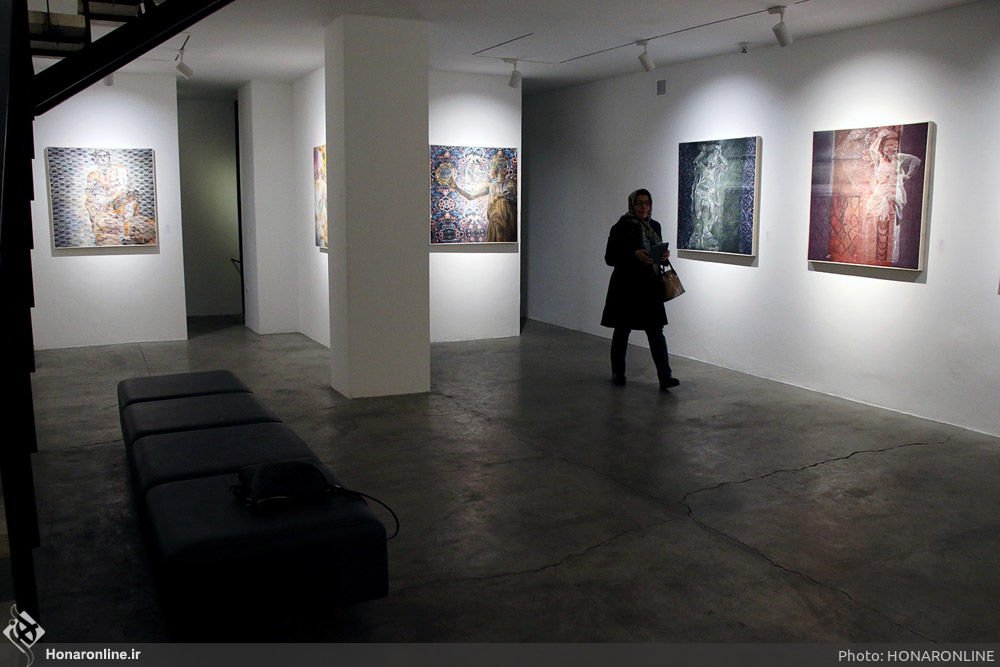
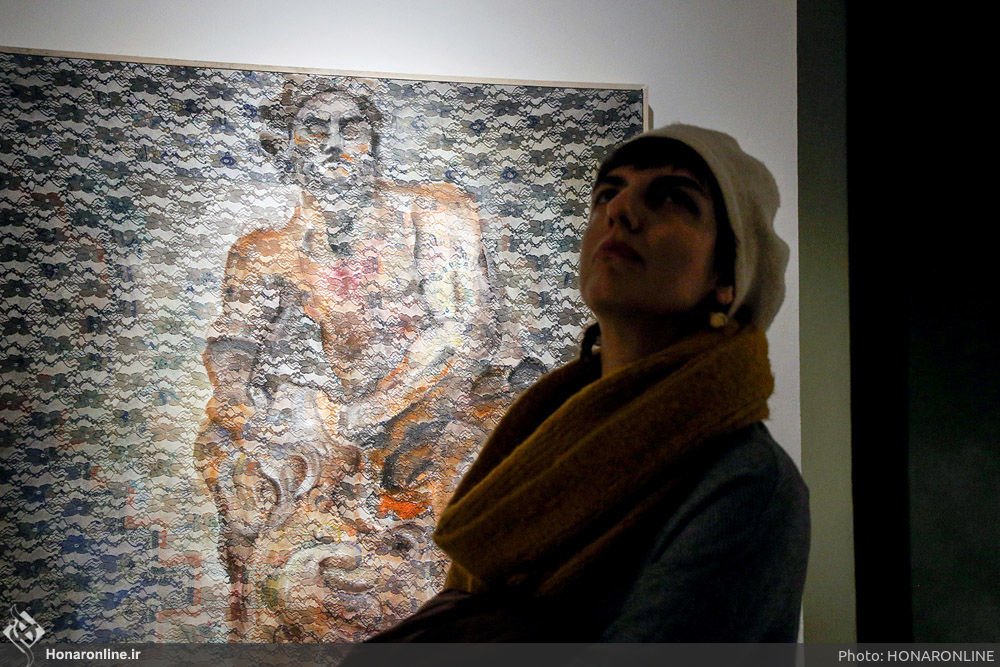
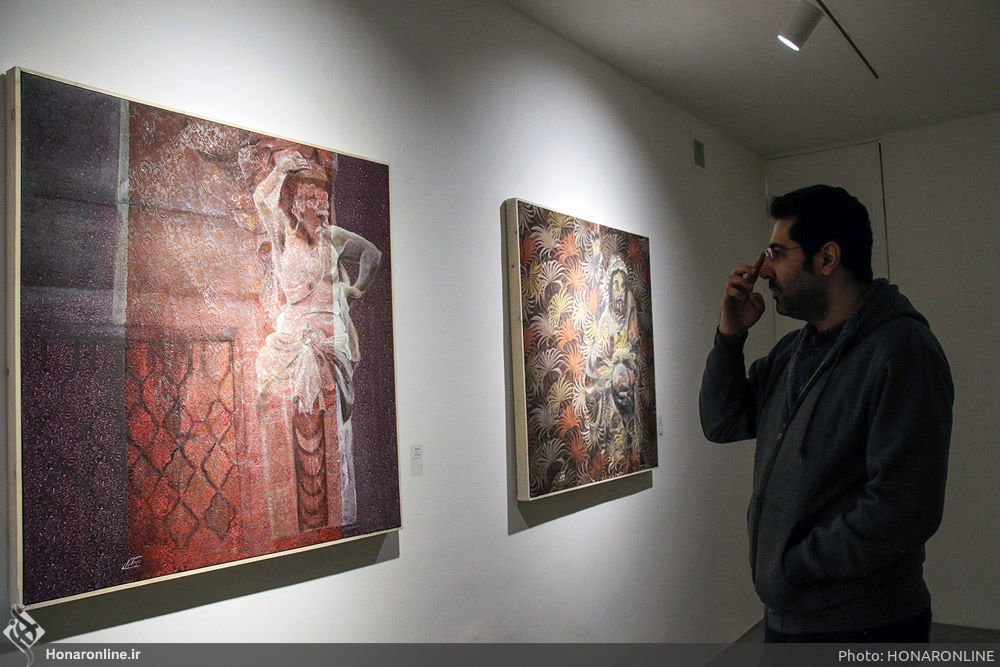
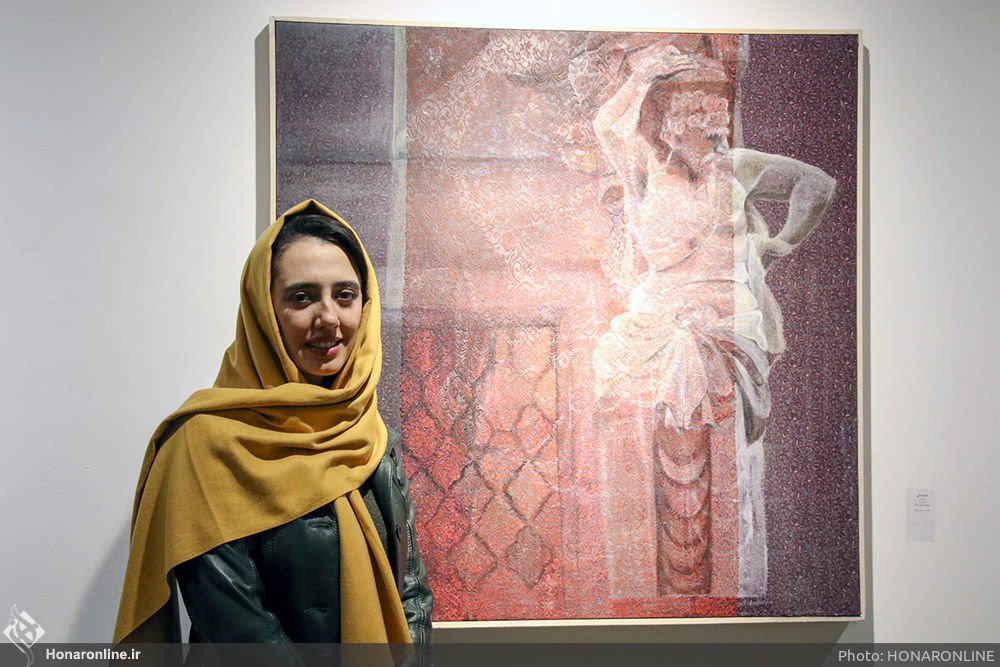
The exhibition, titled “Posture, Fabric, Prague”, puts on display paintings by Mahsa Makki showing sculptures mixed with Iranian fabric motifs.
The idea of the exhibition came to Mahsa’s mind after a visit to the Czech, where she saw dozens of sculptures of famous Eastern European figures.
“Prague’s statues had a big impact on me. Behind these valuable statues are years of life and history of an era,” she said.
“To keep the spirit of sculptures alive, I preferred to mix them with fabrics with Iranian motifs. The [feeling of] life in the fabrics’ design helps present the spirit inside the sculptures,” she said.
This is the first solo exhibition of Mahsa, a 29-year-old graduate of painting who has held several group exhibitions inside and outside Iran.
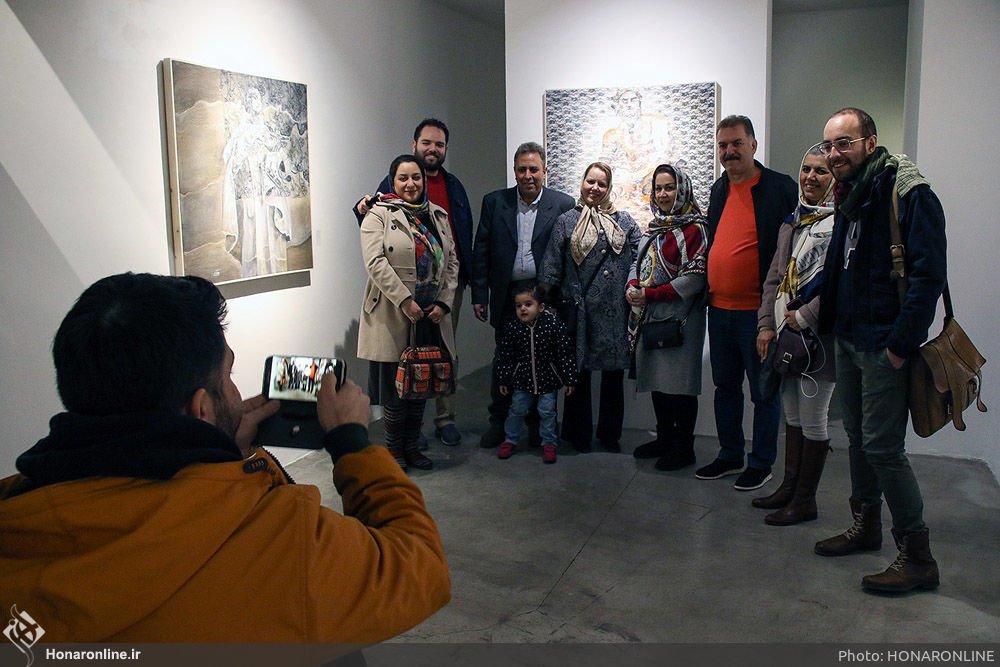
The exhibition was held at the Sayeh Gallery in Tehran’s Karim Khan Avenue.
The following are photos of the exhibition published by honar Online news agency: