Tuesday, January 13, 2026
Home Blog Page 3241

Iran’s Rank in Global Innovation Index Up by 55 Spots: VP

Iran’s Rank in Global Innovation Index Up by 55 Spots: VP

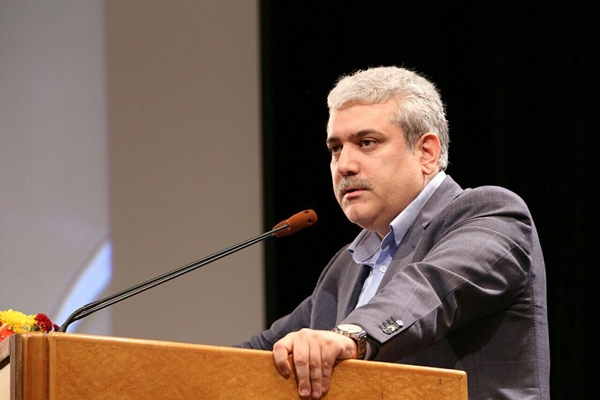
“With the efforts made over the past years, Iran has managed to move up by 55 ranks in the Global Innovation Index. This has motivated many countries in the world to get closely familiar with Iran’s mechanisms and plans,” he said.

He made the remarks on Sunday, addressing a conference held ahead of the Asia-Pacific Innovation Forum slated for June 10 to 12 in Tehran.

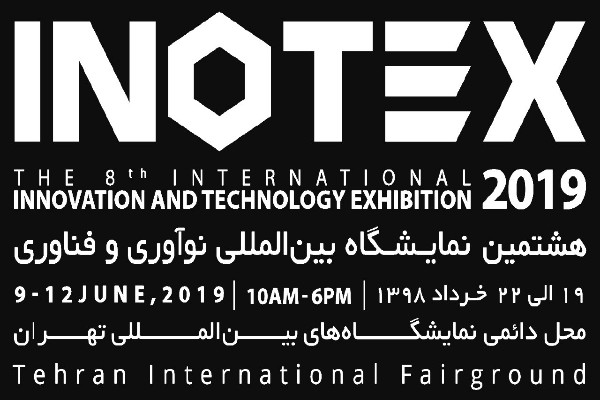
Sattari named the current Iranian week as the Week of Startups and added in addition to the first Asia-Pacific Innovation Forum, Iran is also hosting the 8th International Innovation and Technology Exhibition (INOTEX) which is underway in the capital.

He went on to say that the idea of holding the Asia-Pacific Innovation Forum in Iran was raised and approved during the last year’s meeting of the Asia-Pacific Social and Economic Commissions of the UN in Thailand.

Sattari said he would serve as the chairperson of the forum in Iran and added delegations from at least 50 countries are set to take part in the forum.

For a brief review of Iran’s achievements in various fields of science and technology, check the book “Science and Technology in Iran: A Brief Review – 2019

The official then referred to a tour of Iranian Science and Technology parks as one of the marginal events of the forum and expressed hope that the forum could provide Iranian knowledge-based firms with new opportunities to expand the scope of their activities.

Elsewhere, he said Iran ranks 39th in the ICT area across the globe and called on Iranian ICT firms to tap into the existing capacities to push their way into the markets using Persian language.

“The Persian-language websites of some Iranian firms are among the most-visited websites in the world,” he said.

He said plans are underway to create innovative ecosystems in areas like cell stem, health, and environment, among others.

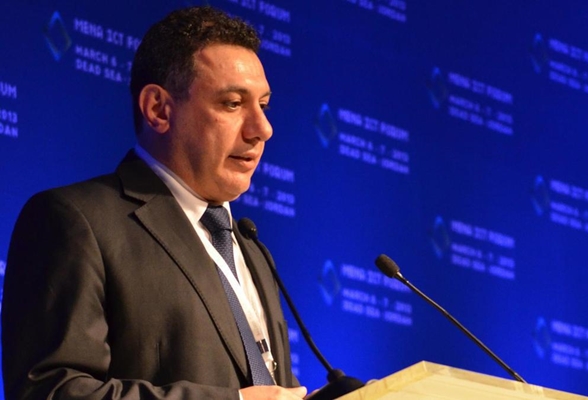
Iran Denies Reports of Releasing Nizar Zakka

Photo of Lebanese-American national Nizar Zakka who has been jailed in Iran since 2015

Judiciary Spokesman Gholam-Hossein Esmaeili made the remarks shortly after the Leader of Iran’s Islamic Revolution Ayatollah Seyyed Ali Khamenei granted clemency to 691 prisoners on the occasion of Eid al-Fitr at the request of the Judiciary chief.

Zakka, who is convicted of cooperating with the US intelligence service, was expected to be among those who received the clemency.

However, Esmaeili said that the Judiciary did not include his name in the list of suggestions submitted to the Leader’s office.

Iran Denies Reports of Releasing Nizar Zakka
Iran Leader Grants Clemency to 691 Prisoners

A source familiar with the case had told The Daily Star Saturday that Zakka will arrive in Beirut within 48 hours.

The Lebanese Foreign Ministry announced earlier this week that Iran had agreed to free Zakka after President Michel Aoun and Foreign Minister Gebran Bassil asked that he be released as a good-willed gesture for the Muslim holy month of Ramadan.

Esmaeili confirmed that the Iranian Judiciary has received a request from the Lebanese president regarding his release, and Zakka himself has also asked to be released on bail.

The requests are being studied within the framework of the country’s legal rules and regulations, and the Judiciary will announce its final decision in case of achieving any result, he added.

Zakka was arrested during a trip to Iran in 2015 on charge of having “deep links” to US intelligence services.

Iran Leader Grants Clemency to 691 Prisoners

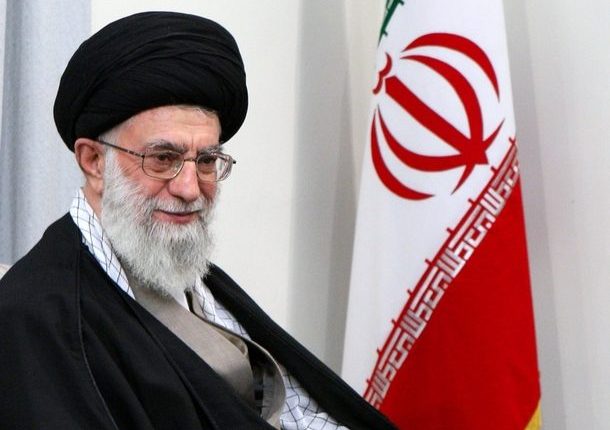
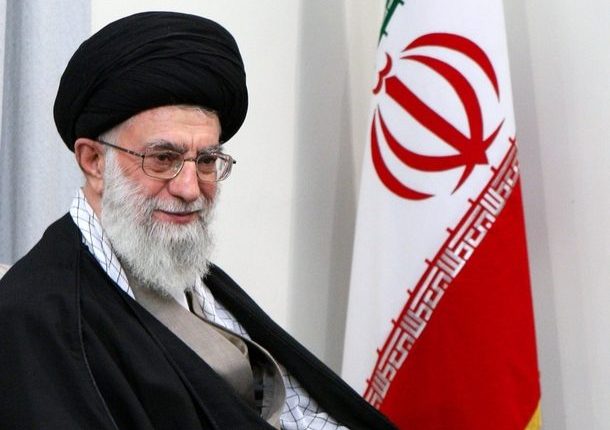
Iran Leader - Ayatollah Khamenei

The pardon was granted at the request of the country’s Judiciary Chief Ebrahim Raisi on the occasion of Eid al-Fitr, one of the most important Islamic festivals.

Nizar Zakka, a Lebanese-American national who has been imprisoned in Iran since 2015 on charge of working with the US intelligence service, was expected to be among those released on this occasion based on Lebanese media reports.

However, Iran’s Judiciary Spokesman Gholam-Hossein Esmaeili announced on Sunday Zakka is not among those pardoned on the occasion.

The Judiciary did not include his name in the list of suggestions submitted to the Leader’s office, Esmaeili said.

A source familiar with the case told The Daily Star Saturday that he will arrive in Beirut within 48 hours.

The Lebanese Foreign Ministry announced earlier this week that Iran had agreed to free Zakka after President Michel Aoun and Foreign Minister Gebran Bassil asked that he be released as a good-willed gesture for the Muslim holy month of Ramadan.

Zakka was arrested during a trip to Iran in 2015 on charge of having “deep links” to US intelligence services.

Article 110 of the Constitution grants the Leader the right to pardon or reduce the sentences of convicts upon a recommendation from the head of the Judiciary.

The clemency, however, does not apply to all types of convicts, including those who have been sentenced for their role in armed struggle against the country, armed or organized drug trafficking, rape, armed robbery, arms smuggling, abduction, bribery and embezzlement.

Eid al-Fitr, also called the Feast of Breaking the Fast, is an important religious holiday celebrated by Muslims worldwide.

The religious festival is a day that Muslims are not permitted to fast on that specific day.

The holiday celebrates the conclusion of the 29 or 30 days of dawn-to-sunset fasting during the entire month of Ramadan. The day of Eid, therefore, falls on the first day of the month of Shawwal.

Iranian Researchers Develop Highly Durable coloured Asphalt

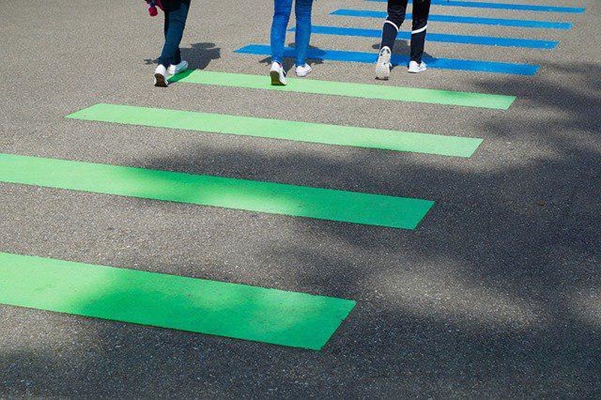
Iranian Researchers Develop Highly Durable coloured Asphalt

Researchers at a knowledge-based company have produced coloured SPG asphalt, which not only enjoys a long life, but is resistant to the pressure exerted by tyres on the surface of the road.

This company began its activities in the field of producing complements in the tar and asphalt industry as well as coloured pigments (coloured asphalt and coloured concrete) in 2006. Currently, the company is regarded as the first producer and inventor of SPG polymer asphalt. The durable asphalt has been produced based on the climatic conditions in Iran. The product is offered on world markets as well.

Project manager Mohammad Reza Qassemi says adding SPG polymers to asphalt doubles its lifetimes.

“In addition to having a longer life, this kind of asphalt makes the surface more resistant to the pressure of tyres.”

He added the company is currently working to increase the resistance of the asphalt to “pull and cut.”

He said the product is completely developed domestically at a price one fifth that of foreign-made asphalt.

The project manager noted that coloured asphalt is another product developed by the company with a useful life of four years while the conventional types of coloured asphalt have a useful lifetime of only six months.

He said the price of the coloured asphalt produced is one third of that of foreign ones.

Iran Unveils New Homegrown Missile Defence System

The new system can simultaneously intercept and take action against six targets. It can also be prepared for operation in less than five minutes.

The system, which uses the homegrown Sayyad-3 missile, can track targets such as jet fighters and combat drones within a range of 150 kilometres, and intercept them within a 120km range.

The 15th of Khordad can also intercept stealth targets within a range of 85km, and destroy them in a 45km range.

Sayyad-3 is an indigenous long-range air defence missile designed to hit high-altitude targets.

Over the past years, Iran has made major breakthroughs in its defence sector and attained self-sufficiency in producing military equipment and hardware despite sanctions and economic pressures on the country.

The Islamic Republic maintains that its military power poses no threat to other countries and is merely attentive to its military doctrine of deterrence.

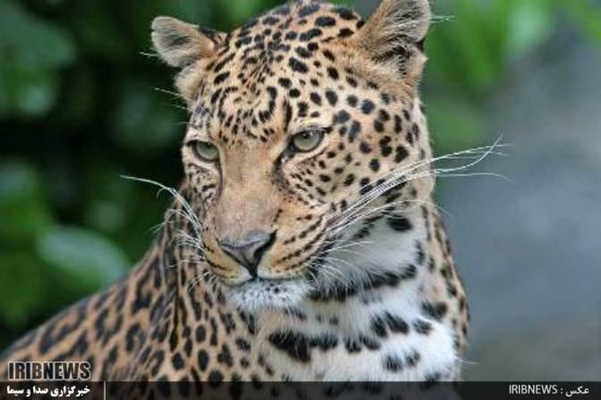
Persian Leopard Surprisingly Spotted in Middle of Lake Urmia

Persian Leopard Surprisingly Spotted in Middle of Lake Urmia
File photo of a Persian leopard spotted in Iran's Gilan province / Photo by IRIB News

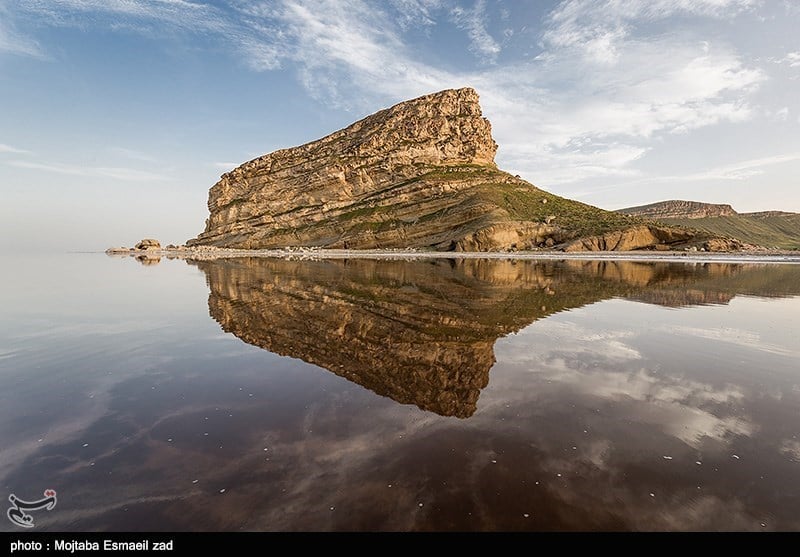
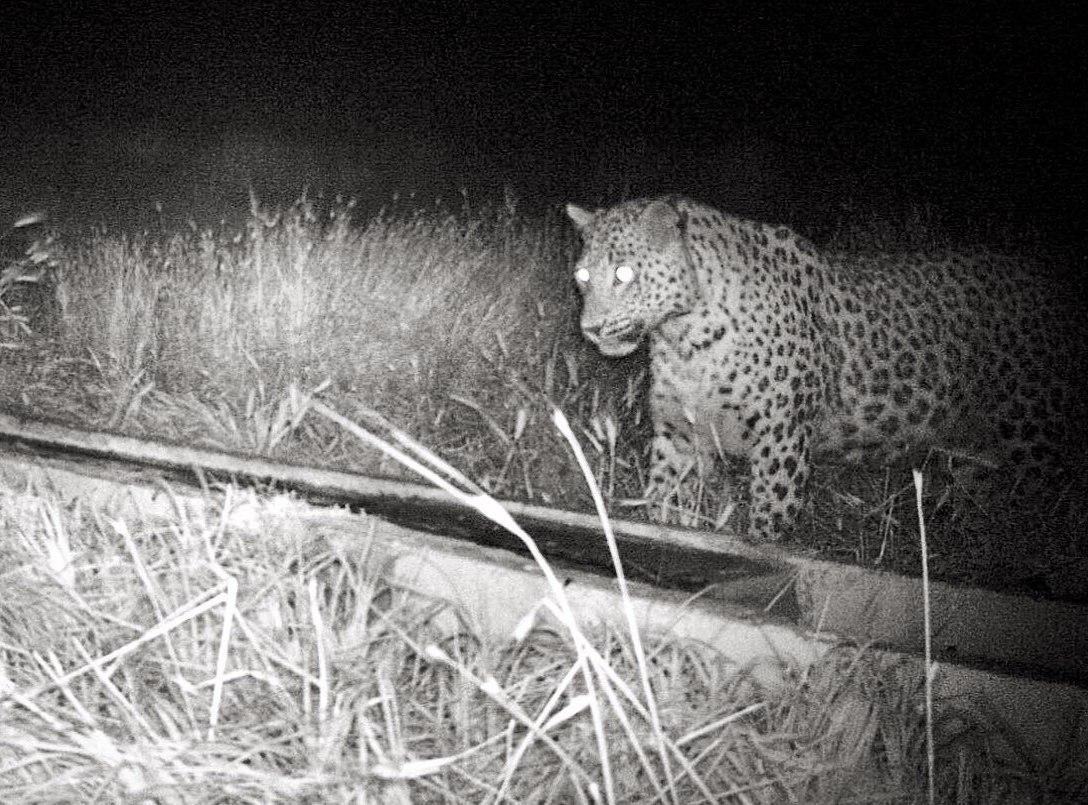
Cameras installed on Kaboodan island in Lake Urmia have recorded images of a leopard. It is not clear how the feline was able to make its way to the island, which has never ever been a habitat for leopards.

Experts believe the leopard, whose gender is still unknown, is the same leopard filmed on Ashk island last year. They say the leopard entered Kaboodan as water levels dropped, connecting the two islands.

The presence of this leopard on an island in Lake Urmia is very strange because the islands in the lake as well as surrounding land stretching kilometres away are not habitats for leopards.

Persian Leopard Surprisingly Spotted in Middle of Lake Urmia
Read more about Lake Urmia and efforts to save it

It is still not known how and from where the animal got to the islands in the lake.

Some wildlife experts say the big cat could have made its way to the lake from Sahand mountains when water levels were low.


It seems the motive for the leopard to go to the island was the ewe and ram population there which it could use as prey.

It is said that the Department of the Environment moved a male and a female leopard to the island back in 1970 to control the ewe and ram population there. However, both of them died after some time and the carcass of one of them was discovered.

Persian Leopard Surprisingly Spotted in Middle of Lake Urmia
Photo of the Persian leopard surprisingly spotted on an island in the middle of Lake Urmia in north-western Iran. / Photo by the Department of Environment

Europeans Not in Position to Criticize Iran’s Policies: Zarif

Iran Blasts Europe’s ‘Disastrous’ Subservience to US

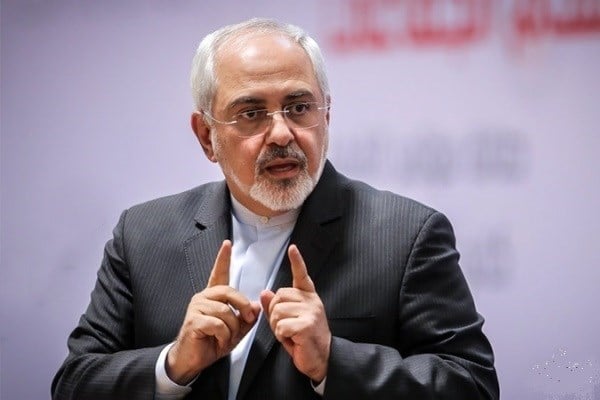
Speaking to reporters on Sunday, he lashed out at the Europeans for their destructive regional policies and said the policies of Europe in particular and those of the West in general have only left destruction in the Middle East.

Some countries like Germany stopped selling arms to Saudi Arabia which are used in the Saudi aggression against Yemen but there are many others which are still providing the Saudi regime with arms, he said.

The Europeans have allowed despotic regimes in the region to commit crimes, he added.

Iran’s top diplomat then referred to the 2015 nuclear deal and said based on the JCPOA, Iran’s economic situation should become normalized. “So, the Europeans should explain to what extent they are ready to try to normalize Iran’s economic ties.”

He underlined that when it comes to the JCPOA, efforts are not enough by themselves. “We need results. The Europeans say they have done whatever in their power but no result has been achieved yet. We can do the same and do our best without yielding any tangible result,” he concluded.

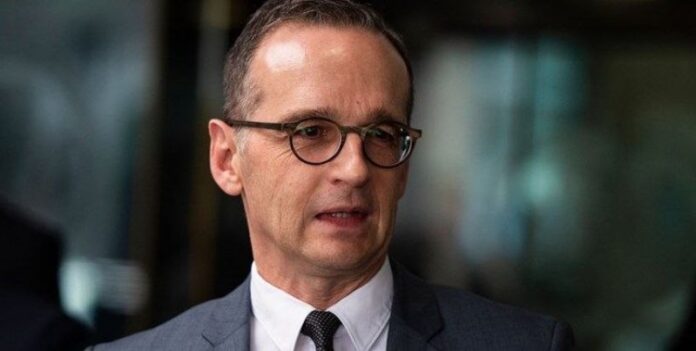
Zarif is to meet his German counterpart, Heiko Maas, on Monday in Tehran. He is expected to discuss the future of the Iran nuclear deal which is in a limbo following the US unilateral withdrawal from the deal last year. Iran has repeatedly blamed the Europeans for their passive approach towards preserving the nuclear accord.

Iran’s Actions Proportionate to Europe’s Moves

In his Sunday remarks, Zarif also noted that Iran will take action on the Iran nuclear deal proportionate to the steps taken by the Europeans.

He said a snapback mechanism remains an option if Europe makes good on its commitments with regards to the Joint Comprehensive Plan of Action (JCPOA).

“If they take action in accordance with their obligations, we will either stop our actions or scale them down proportionate to the steps they take,” he told reporters.

The top diplomat said Iran has already announced its program regarding the actions the country will take in the 60 days it has given Europeans to revisit their approach and deliver on their obligations

“We have announced our program. We said that we would do such and such in the first sixty days, and such and such in the next 60 days, and later we will decide about our next moves,” Zarif noted.

Macron Changes His Words Based on Person He Meets: Iran

“The recent remarks made by French President Emmanuel Macron in his meeting with US President Donald Trump were amateurish and a source of regret,” Larijani said in an address to an open parliamentary session on Sunday.

He said it was not unlikely to hear such words from Trump, but Macron’s recent remarks were totally inconsistent with what he had earlier said in his numerous meetings and phone conversations with Iranian President Hassan Rouhani.

“It seems that Macron’s comments are based on what is liked by the person he meets,” Larijani added.

Macron Changes His Words Based on Person He Meets: Iran
Iran Slams Macron’s Unconstructive Comments on JCPOA

“If Macron is so much skilled in resolving international issues and threatening other nations, isn’t it better for him to settle his own country’s internal problems first to prevent so much casualties from the French nation?” the Iranian speaker asked.

Iranian Foreign Ministry Spokesman Seyyed Abbas Mousavi had earlier dismissed Macron’s statements, saying such remarks will not at all help save the Iran nuclear deal.

“Despite [making] some remarks and [issuing] political statements, the European parties have failed so far to fulfil their commitments under the JCPOA and their obligations following the US’ illegal withdrawal from the agreement,” Mousavi said.

The Europeans, he added, have failed to prepare the grounds for Iran to fully benefit from the multilateral agreement.

Iran’s reaction came after Macron told Trump he doesn’t think Paris and Washington have differences over Iran.

“I think we do share the same objective on Iran,” the French leader said.

He listed four common priorities of the US and France in addressing Iranian behaviour moving forward: preventing Iran from getting a nuclear weapon, reducing Iran’s ballistic activity, containing Iran’s regional activity and establishing peace in the region.

“All the other debates are about technicalities,” he said, calling for fresh negotiations to extend the terms of the JCPOA and to achieve those goals.

Orangery of Qavam ; Manifestation of Persian Art, History

Qavam orangery, Shiraz, Iran

Qavam orangery is an iconic site remaining from the Qajar era; known to the public also as Qavam Garden or Qavam House.

By visiting the bitter orange garden you can enjoy its nice, artistic environment. You can also find samples for seven Iranian arts; to name plaster, traditional painting, mirror work, brickwork, stone craving, wood inlaid working and wood craving in the wonderful mansion that’s situated in Qavam Garden.

Qavam orangery, an important manifestation of the country’s art and history, has been registered in the list of Iran’s national heritage in 1974.

What follows are ISNA’s photos of Qavam orangery:

Iran Says Europe Must Pay Its Share of Combating Drug Trafficking

Head of Iran’s Anti-Narcotics Police Brigadier General Massoud Zahedian made the remarks in criticism of what he called the West’s lack of cooperation in Iran’s fight against drugs.

He said Europe should contribute to the fight against narcotics and if there is no contribution in supporting the forces and countries that are at the forefront of the struggle, they must rest assured that their people will be at risk.

This Iranian official added that Europeans are the main users of the drugs produced in Afghanistan, and this country has been the world’s largest opium producer since the early 21st century.

Nevertheless, neighbouring countries and states that are in the way of smuggling drugs to Europe have not been immune from this, he noted.

He further mentioned that Iran has a vast joint border with Afghanistan and is the first country in the route of smuggling drugs to Europe.

“The Islamic Republic has had the most casualties in the fight against drugs. Iranian agents are at the forefront of the fight against narcotics that are targeting Europe. The more drugs are produced in Afghanistan, the more difficult it is to fight, and the danger for Europe will be even greater.”

Here is the text of an interview with General Zahedian conducted by IRNA:

Q: Iran has paid a lot in the fight against narcotics and many forces have been martyred in the fight against the transfer of narcotics to Iran and other countries. Despite the fact that Europe in face of the recent cruel sanctions has had no support for Iran so far, what would happen if it does not pay its share?

A: Europe should pay its share in the fight against drug trafficking, because we cannot stand against them alone. The whole world knows that Iran is fighting this phenomenon beyond its responsibilities very well. But the world has done nothing. Certainly, our facilities, and equipment are limited, and if we are not supported, we can control just part of it, and the rest of it will be out of our control and will cross [the borders].

Q: How do you assess the poppy cultivation in Afghanistan? Has it been influenced by the increase or decrease in downpours?

A: Considering the rise of downpours this year, it is anticipated that we will see an increase in the production and cultivation of narcotics in Afghanistan and their production would be more than ever.

Q: Given the increase in poppy cultivation and the production of drugs in Afghanistan and the costs that Iran has to pay without support from European countries in the fight against narcotics, what are your plans for Afghanistan?

A: By consulting with international societies and other countries as well as Afghan officials, we are seeking to increase their responsibility in the fight against narcotics and force them to fight against drugs more. Last year, we seized more than 800 tonnes of drugs, while in Afghanistan only 200 tonnes were seized. It shows that this country is not practically taking measures to fight drug trafficking. Accordingly, Afghanistan’s policy to cope with drug trafficking should be reviewed.

Q: Why do we see an increase in drug production in Afghanistan, despite the presence of Western countries in the country to fight against drug smuggling?

A: Not only has Afghanistan not been developing an anti-narcotics campaign, but also Western countries that have been there under the pretext of fight against narcotics have failed to do anything. There has also been an increase in the production of drugs where they were present, and it raised concerns that they are involved in the production of these drugs and are benefiting from it.

Q: To what extent is the rise of industrial narcotics in Afghanistan affected by the presence of Western countries?

A: However, when we see that in the past few years, this has developed very rapidly and some of the raw materials needed to convert drugs to industrial forms imported to Afghanistan, it raises concerns that this may have happened with the help of intelligence services of foreign countries. This issue should be monitored and reviewed by international bodies such as the United Nations because Afghanistan is not the producer of this type of narcotics.

Earlier, Iran’s President Hassan Rouhani warned the West that targeting Iran with sanctions and undermining and disrupting the Iranian economy would have catastrophic consequences for Europe.

He said this will lead to rush of narcotics, refugees and terrorism to the continent.

Rouhani also noted that the Islamic Republic spends $800 million annually on drug trafficking, which results in more security for people from Eastern Europe to West America and from North Africa to West Asia.

“Now, for a moment, imagine what a catastrophe would be caused if this dam breaks. Without these sacrifices and expenses, this region witnessed the emergence of ISIS in a very broad area. This endeavour guarantees the security of human lives, regardless of nationality, ethnicity and religion. We do not expect the West to pay their share of the security and stability that we have provided for them, but they must know that by sanctioning Iran they are damaging our ability to fight against drugs and terrorism. I warn that if our ability to fight drugs and terrorism is damaged, you will not be able to get out of the rubble of drugs, asylum seekers and bombs and terrors. Confronting drug trafficking and terrorism has been among the core principles of the Islamic Republic of Iran over the past four decades, and the government has always tried to cooperate with international institutions in this regard. Death of thousands is a proof of this cooperation,” President Rouhani had undermined in an international conference on illicit drug trafficking.

Secretary General of Iran’s Drug Control Headquarters Eskandar Momeni, who had traveled to Moscow last year to consult with Russian authorities, had also warned of increasing drug trafficking to Europe in an interview with IRNA.

“Iran does not need the verbal support of European countries to combat the trafficking of drugs to the Europe. We are at the forefront of the fight against drugs, and instead of verbal supports, we need serious support and sending of modern equipment to tackle smuggling,” underscored Momeni.

“We have repeatedly told Europeans that they should pay their own share of the fight against narcotics. Given the sanctions imposed, we will no longer be able to prevent drug trafficking to Europe as before.”

More than three thousand Iranian forces have been killed and around 10,000 wounded during the course of combating illicit drugs, according to a former Iranian drug control official.

The number of those killed or disabled in the Iranian war on drugs equals that of countries in the European Union, North America, the Pacific and Asia, says Saeed Sefatian, the former director-general for treatment affairs at the Iran Drug Control Headquarters.