Monday, December 22, 2025
Home Blog Page 3223

Politician’s Murder of His Wife Grabs Headlines in Iran

A Look at Iranian Newspaper Front Pages on November 19

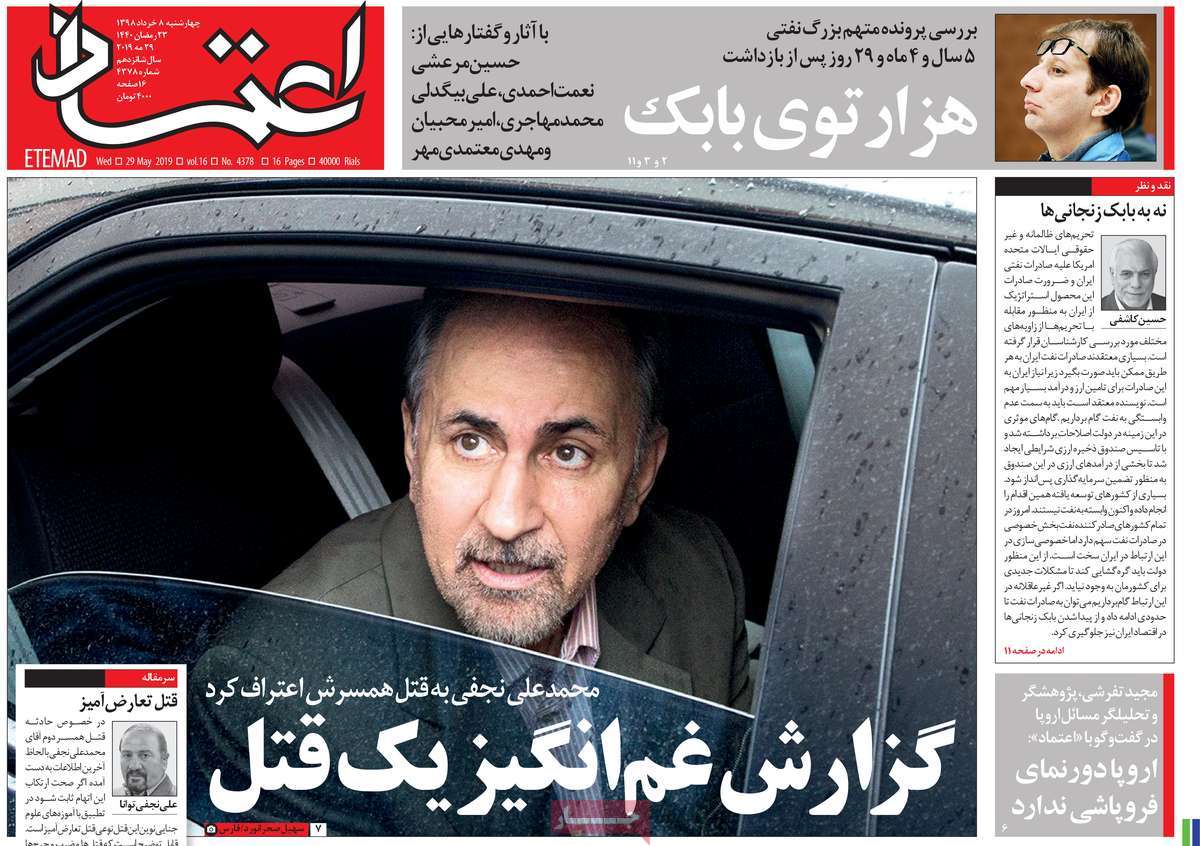
Iranian papers on Wednesday widely covered the shocking case of Mohammad Ali Najafi, the ex-mayor of Tehran and former vice-president who confessed on Tuesday to the murder of his wife Mitra Ostad at her apartment.

Also a top story was the Iranian foreign ministry’s reaction to US President Donald Trump’s softened rhetoric. The foreign ministry’s spokesman said Tehran sees no prospect for talks with the US for now, and that it expects Trump to act rather than talk.

The above issues, as well as many more, are highlighted in the following headlines and top stories:


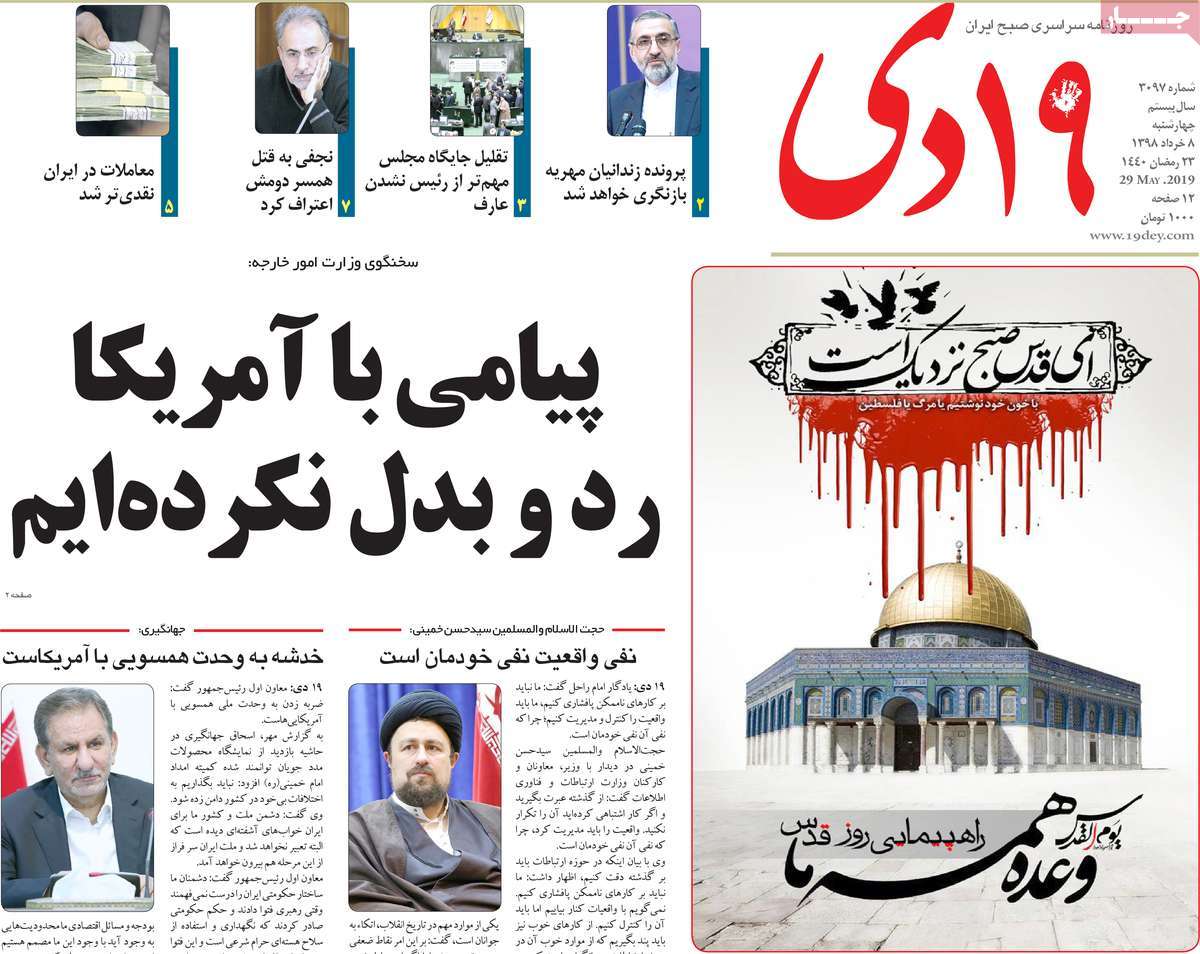
19 Dey:

1- We Haven’t Exchanged Any Message with US: Iran

2- Najafi Confesses to Murdering His Second Wife

3- Iran First VP: Damaging Unity to Serve US Interests

Politician’s Murder of His Wife Grabs Headlines in Iran


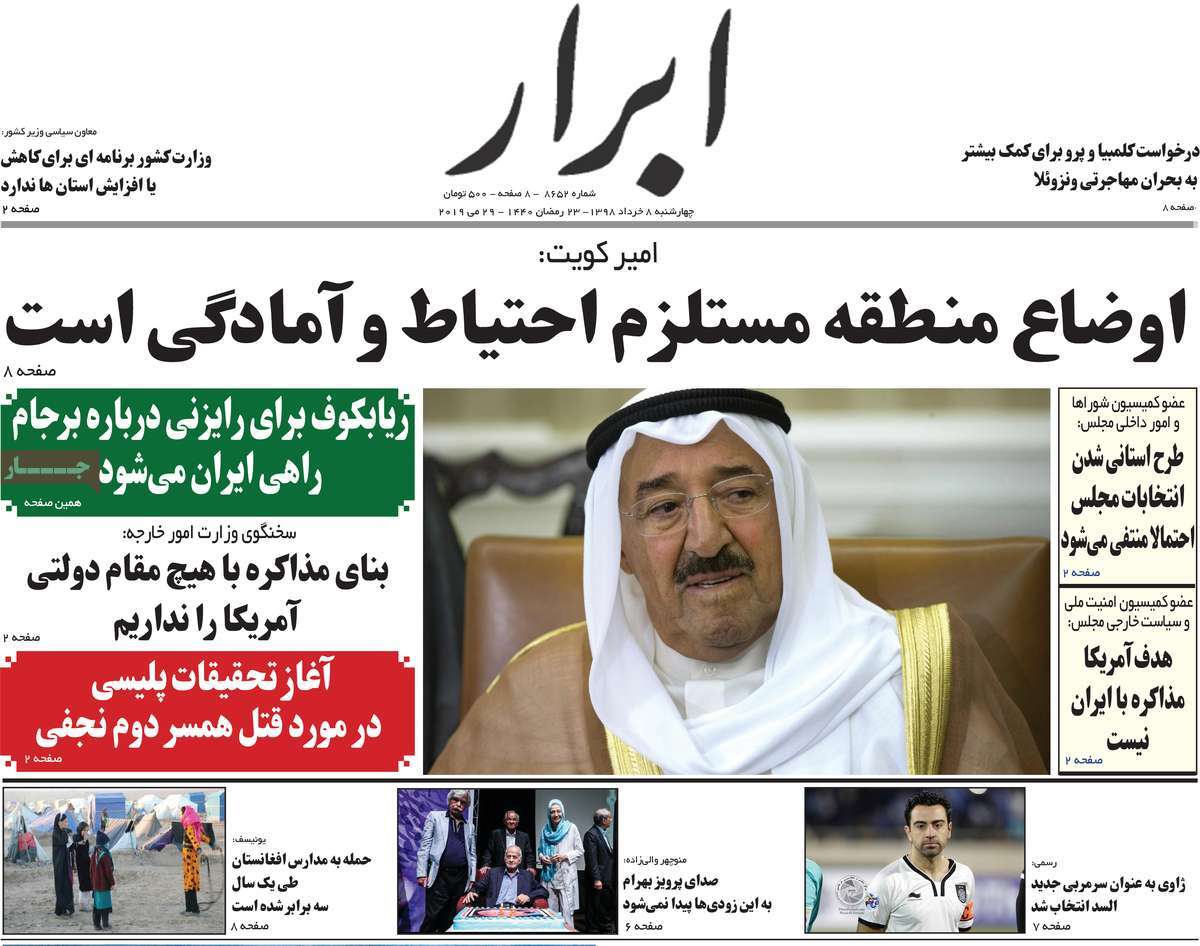
Abrar:

1- Kuwaiti Emir: Regional Situation Needs Caution, Preparedness

2- Ryabkov to Visit Iran for Talks on JCPOA

3- Iran Says Not after Negotiation with Any US Official

4- US’ Goal Not Negotiation with Iran: MP

Politician’s Murder of His Wife Grabs Headlines in Iran


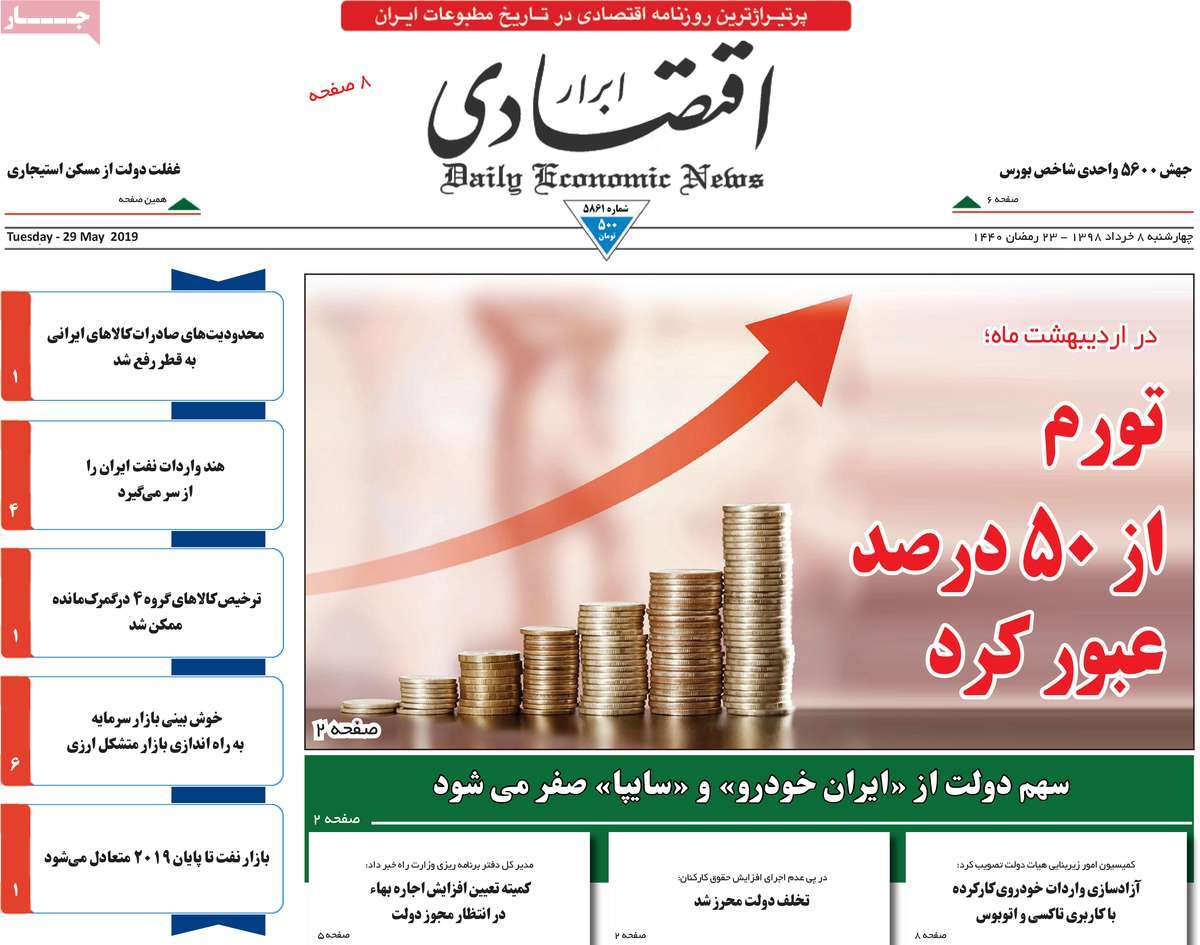
Abrar-e Eqtesadi:

1- Limits on Iran’s Exports to Qatar Removed

2- India to Resume Oil Imports from Iran

Politician’s Murder of His Wife Grabs Headlines in Iran


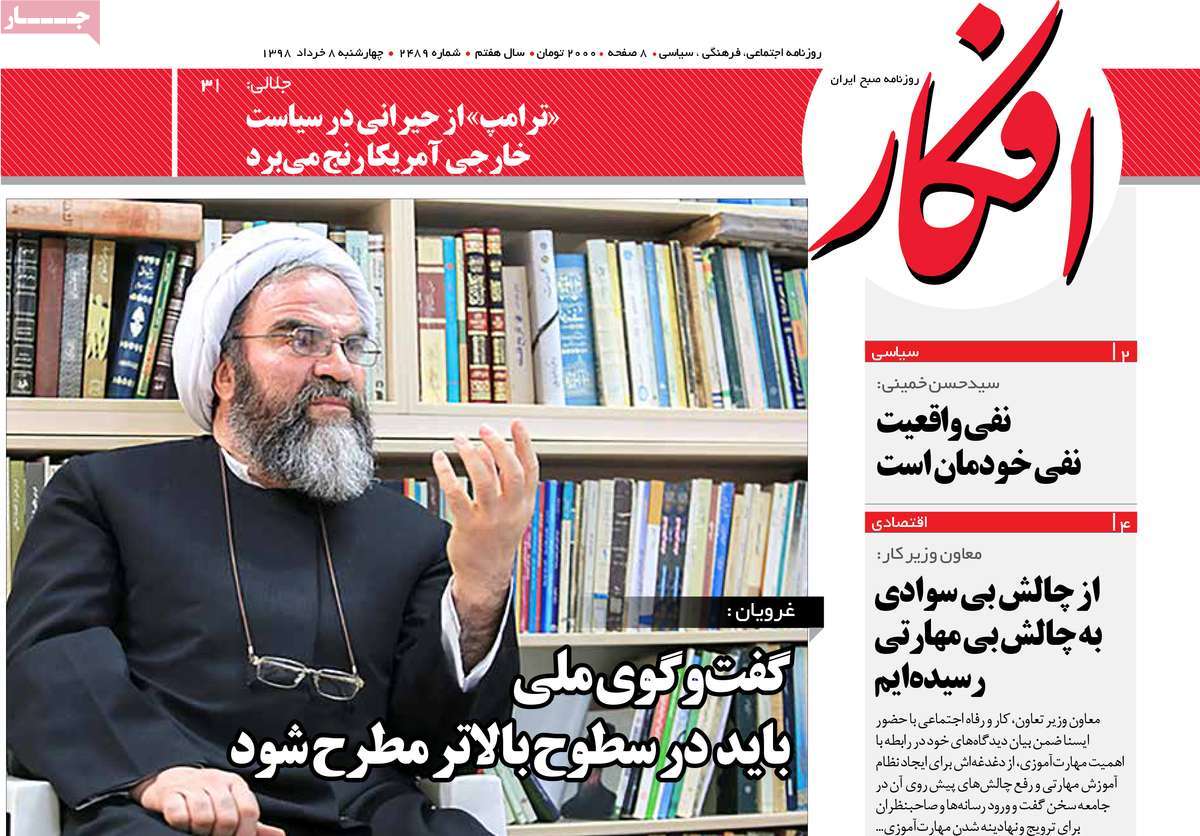
Afkar:

1- Trump Suffering from Confusion in Foreign Policy: Iran General

2- Imam Khomeini’s Grandson: We Can’t Deny the Truths

Politician’s Murder of His Wife Grabs Headlines in Iran


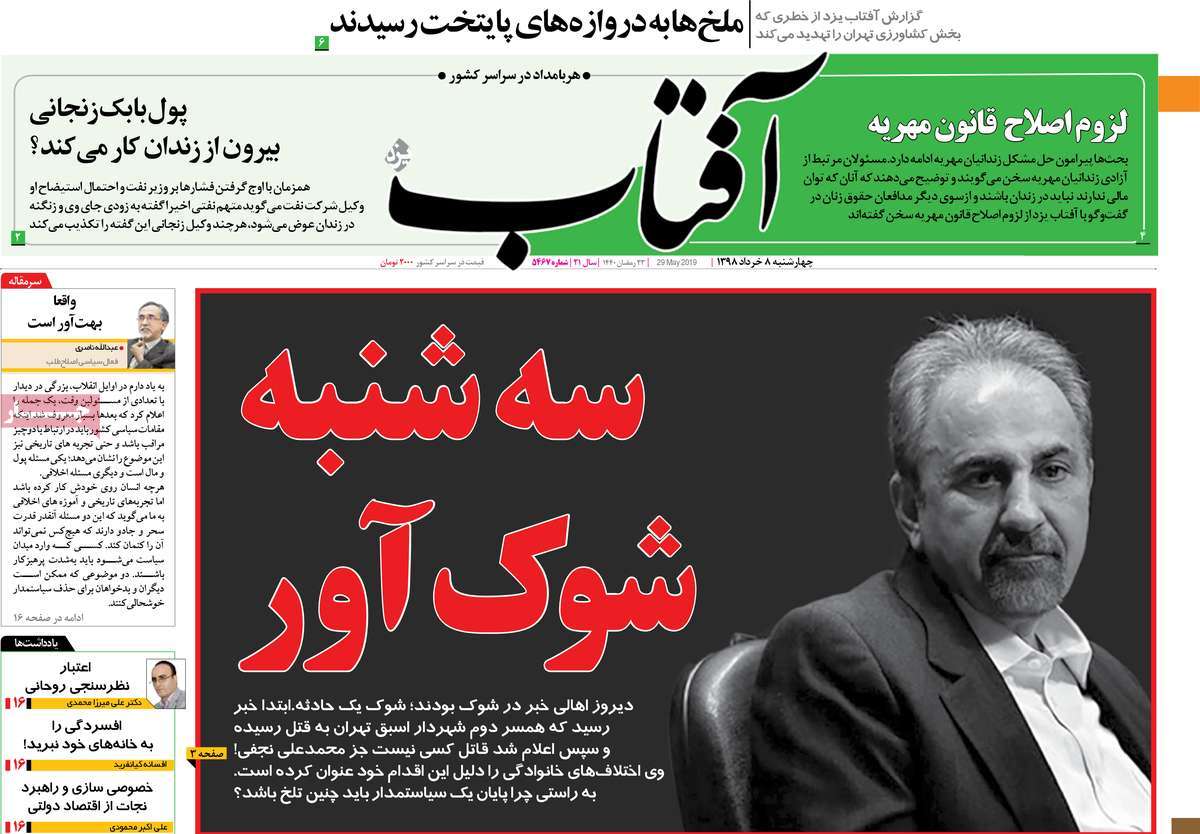
Aftab-e Yazd:

1- Locusts Arrive in Tehran: Farms in Danger

2- Shocking Tuesday: Najafi Kills His Wife

Politician’s Murder of His Wife Grabs Headlines in Iran


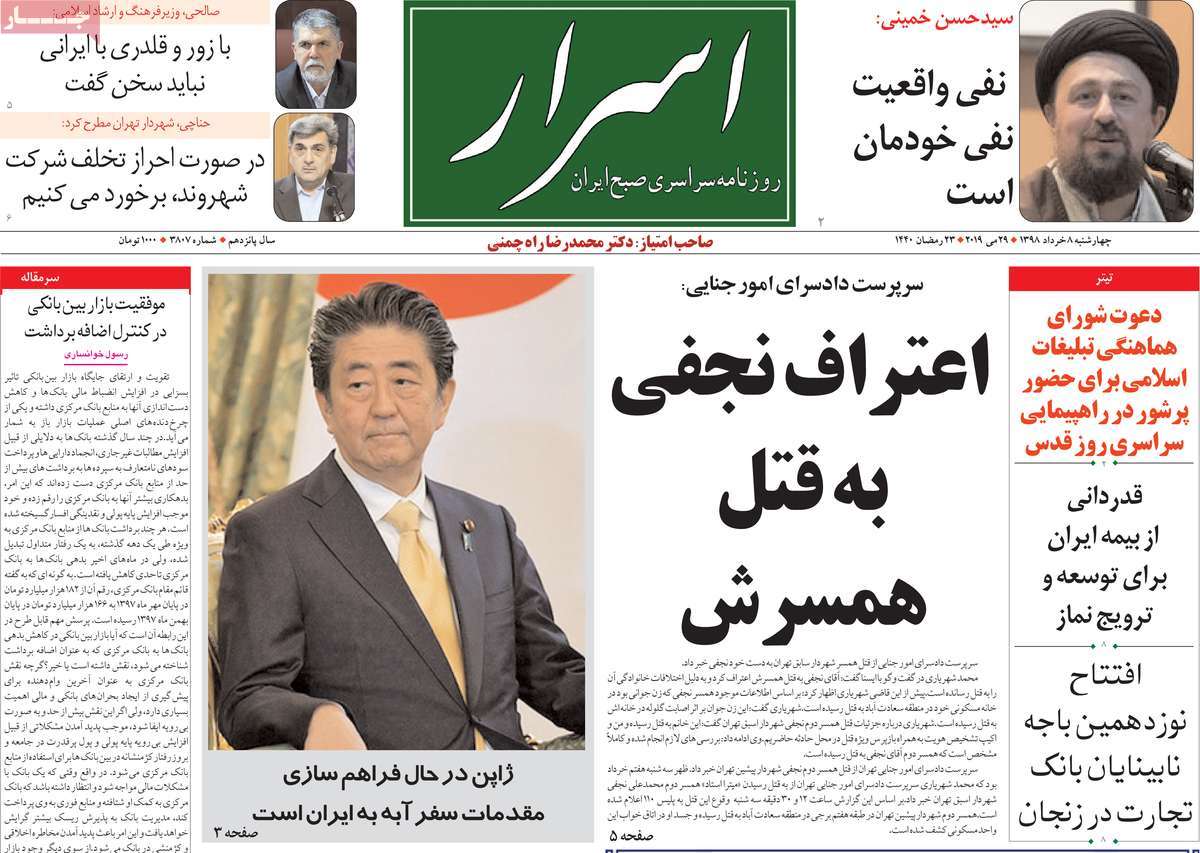
Asrar:

1- Japan Making Arrangements for Abe’s Visit to Iran

2- Culture Minister: No One Should Speak to Iranians with Coercion

Politician’s Murder of His Wife Grabs Headlines in Iran


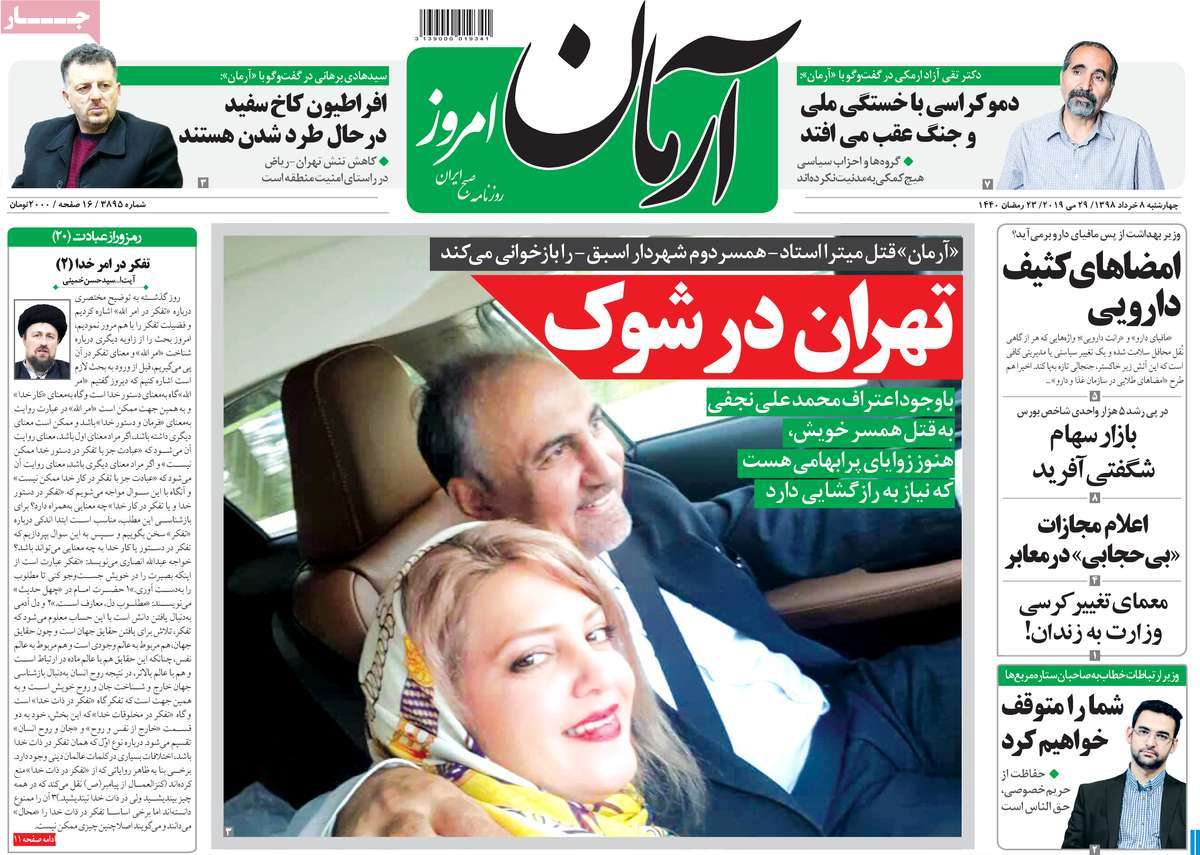
Arman-e Emrooz:

1- Tehran in Shock: A Review of Murder of Ex-Mayor’s Wife

2- White House Hawks Being Expelled

* Decreased Tension between Iran, Saudi to Serve Regional Security

Politician’s Murder of His Wife Grabs Headlines in Iran


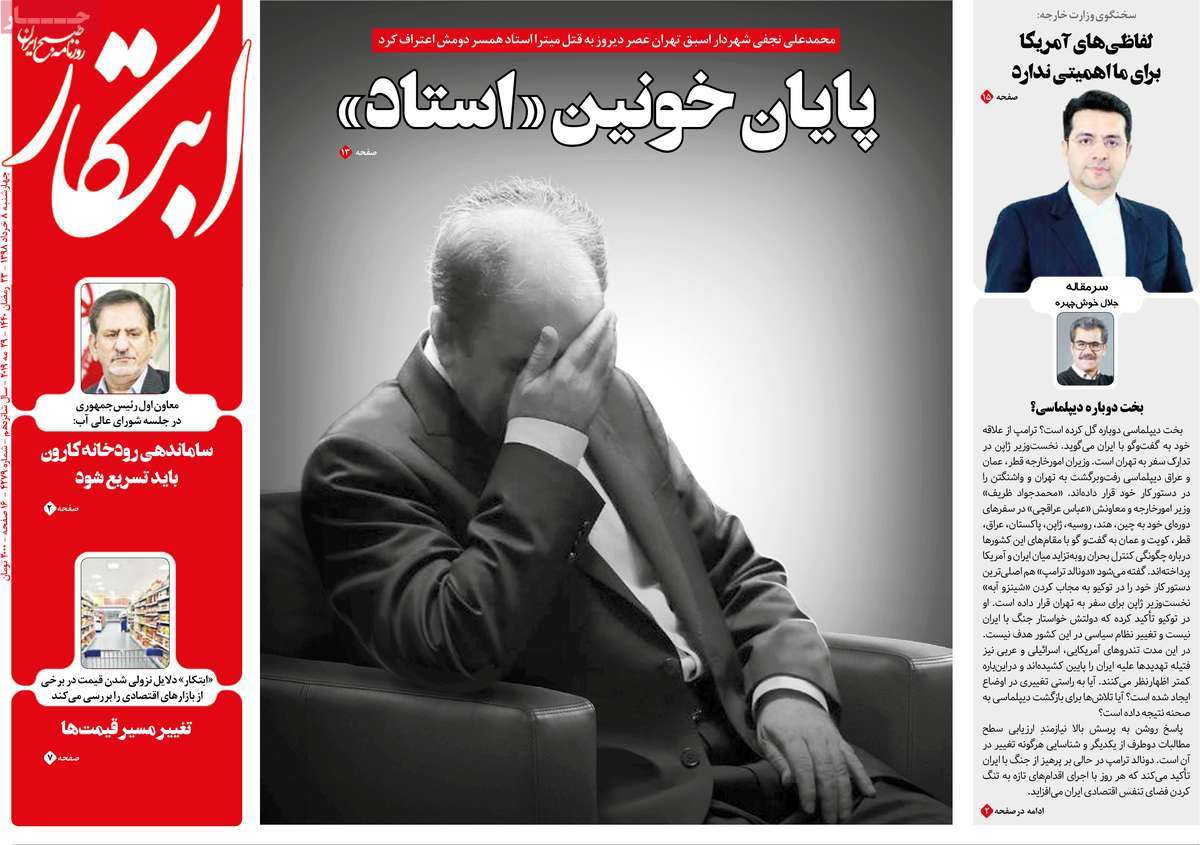
Ebtekar:

1- US’ Rhetoric Doesn’t Matter: Iran Foreign Ministry

2- Another Chance for Diplomacy? [Editorial]

3- Bloody End of Mitra Ostad: Ex-Mayor of Tehran Confesses to Murder

Politician’s Murder of His Wife Grabs Headlines in Iran


Etemad:

1- No Prospect for Europe’s Collapse: Analyst

2- Tragic Report of a Murder: Najafi Confesses to Murdering His Wife

Politician’s Murder of His Wife Grabs Headlines in Iran


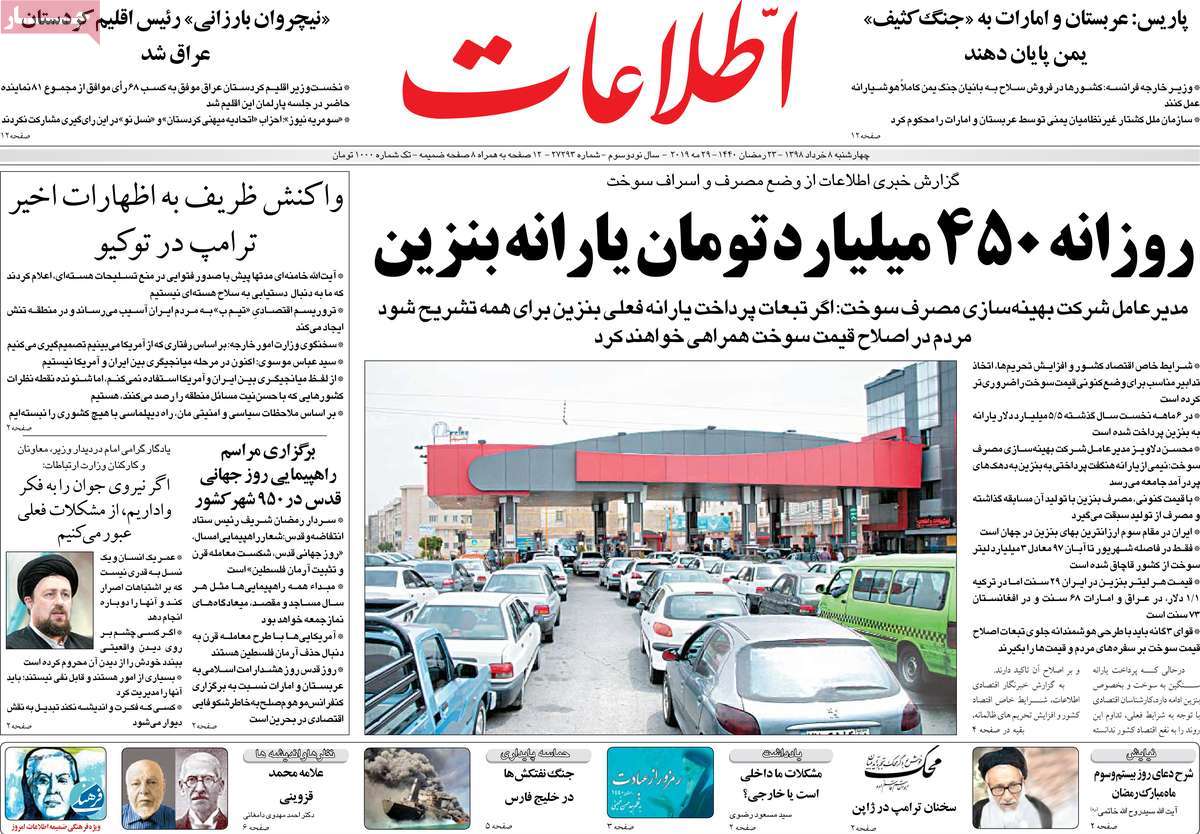
Ettela’at:

1- Paris: Saudi, UAE Must End Filthy Yemen War

2- Nechirvan Barzani Elected Head of Iraq’s Kurdistan Regional Gov’t

Politician’s Murder of His Wife Grabs Headlines in Iran


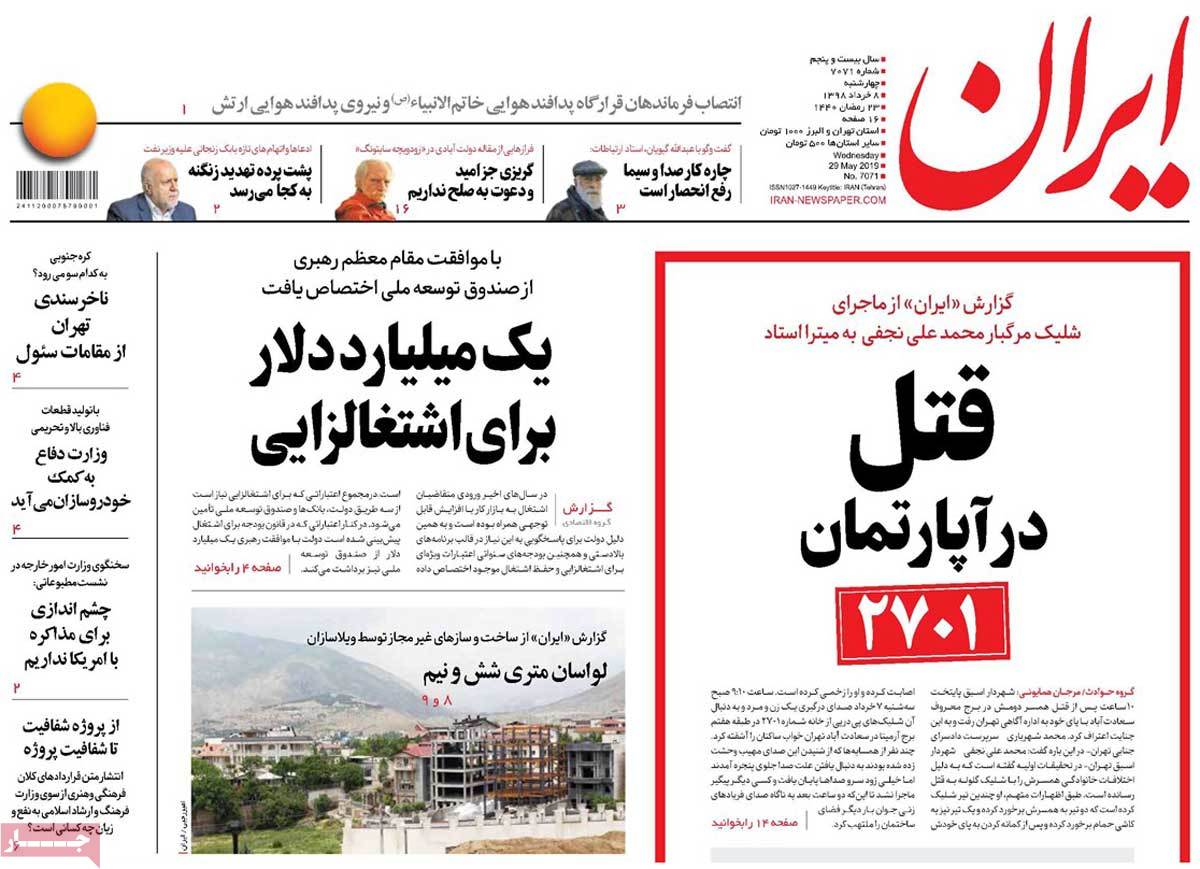
Iran:

1- New Commanders of Khatam al-Anbia Air Defence Base, Army Air Defence Force Appointed

2- Tehran Slams Seoul Officials

3- No Prospect for Talks with US: Iran

Politician’s Murder of His Wife Grabs Headlines in Iran

Iran President Calls for Mass Turnout in Quds Day Rallies

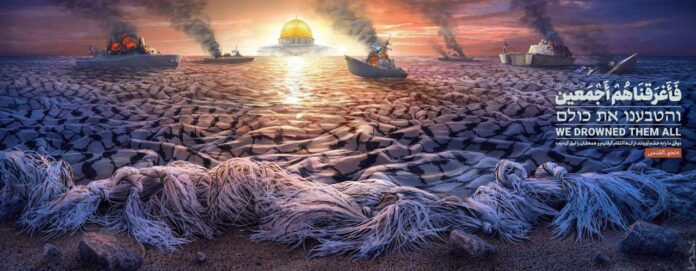
The latest design of the huge hoarding installed at the corner of Tehran's Valiasr Square ahead of the 2019 International Quds Day

Speaking on Wednesday, President Hassan Rouhani said the Iranian nation will never leave Palestinians alone.

“This year, too, the Iranian nation will turn out en masse in Quds Day demonstrations to chant their support for the oppressed through history, especially the Palestinian people, and will announce that they will stand up to oppressors until victory is achieved,” said Rouhani in a Cabinet meeting.

He said the Iranian nation has, over the past 40 years, always defended the oppressed and stood up to aggressors.

The president underlined Iran has always helped other nations such as Syria, Lebanon, Iraq, Afghanistan and Yemen, not to mention Palestinians.

“The oppressed nations of Yemen and Palestine have been resistant people and are not afraid of aggressors, and force the enemy to retreat through sacrifice, devotion, resistance and power,” the president added.

He said Palestinians once only had stones to defend themselves, but now they have developed their local industries and can give Israelis a “crushing response.”

“Today, missile is the response to missile,” he said.

“After 48 hours, Zionists had to retreat and their iron dome could not withstand Palestinian combatants,” the president added.

“Although these nations are resistant, great and devoted people, on the other hand, superpowers’ crimes are on the rise as well and they are sending modern weapons to the region and exposing the oppressed people of Yemen and Palestine to bombardments,” President Rouhani added.

He said Palestinians have been homeless for 71 years now.

“Three or four generations of Palestinian people have not had security, freedom and calm. Their ancestral homes have been destroyed and captured by occupiers. They have lived in camps or have been force to go to other countries as refugees,” he said.

He further warned against plots hatched against occupied Palestine and the region.

Rouhani also pointed to US President Donald Trump’s plan for a so-called “Deal of the Century”, saying that it is, in fact, the “Bankruptcy of the Century” for those who have initiated the scheme.

The International Quds Day is an annual event during which demonstrators express their solidarity with the Palestinian people and opposition to the occupation of the Palestinian territories by Israel.

The day is seen as the legacy of the late founder of the Islamic Republic of Iran, Imam Khomeini, who officially declared the last Friday of Ramadan as International Quds Day back in 1979.

This year’s rallies will be held under the slogan “En Route for Quds” in the Arab countries.

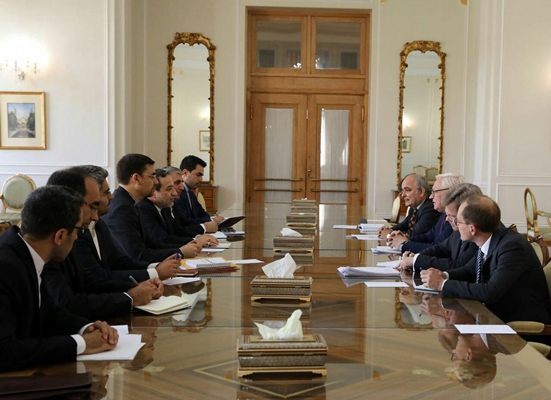
Iranian, Russian Diplomats Discuss JCPOA in Tehran

Iranian, Russian Diplomats Discuss JCPOA in Tehran

During the Wednesday meeting, the two sides discussed the latest developments in mutual ties, the Joint Comprehensive Plan of Action (JCPOA), and regional and international issues.

Araqchi and Ryabkov particularly conferred on Iran’s recent move to reduce its commitments under the deal.

They also called for the continuation of consultations among the remaining parties to the JCPOA and their mutual and multilateral cooperation with Iran to meet the Islamic Republic’s demands and pave the way for removal of the US illegal sanctions.

The Iranian deputy foreign minister referred to the obstacles in the way of implementing the JCPOA and pointed out that it is now the turn of the remaining signatories to adopt some practical and tangible measures to preserve the nuclear accord.

For his part, the Russian diplomat appreciated Iran’s patience over the past year and underlined his country’s support for the JCPOA. He also said that Russia will continue its efforts to preserve the nuclear deal.

During the talks, the two sides also agreed to continue their close and intensive consultations at all levels and remain in touch until the next meeting of the JCPOA Joint Commission.

Ryabkov entered Tehran earlier in the day on a one-day visit for talks on the 2015 Iran nuclear deal.

He told reporters ahead of the trip that he was headed to Tehran to discuss the agreement in the wake of Iran’s recent decision to stop fulfilling some of its commitments in reaction to the US’ violations.

Iran has warned the European signatories of the deal that they have only 60 days to deliver their end of the bargain in the wake of a fierce pressure campaign by the US, which left the deal in May 2018.

Moscow has in the past days called for an extraordinary meeting of the Joint Commission of the JCPOA.

Iran Blames Turkish Traders for Rising Prices of Agricultural Produce

Iran Blames Turkish Traders for Rising Prices of Agricultural Produce

Incontrovertibly, rainfall and transportation problems also contribute to increasing prices of a product. Nevertheless, at a time when production is at a good level and products are bought from producers at rather low prices, there should be other reasons behind a sudden increase in prices.

Some experts believe unregulated exports are to blame for the sudden rise in the price of a product despite its availability on the market.

Reza Nourani, the head of Iran’s National Agricultural Produce Association, told ILNA that unregulated exports deal a serious blow to production and the market.

“When there is no supervision over exports, profiteers using temporary business cards step into any market which ensure their interests,” he said.

He stressed the presence of profiteers at the agricultural produce market is more destructive than any other market.

“It is very important to maintain the balance in the agricultural produce market, given its impact on food security,” he noted.

Iran Blames Turkish Traders for Rising Prices of Agricultural Produce
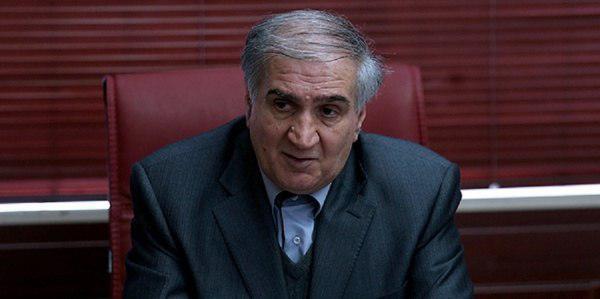
Reza Nourani

“A lack of supervision over exports has led to Turkish businessmen coming to [Iran’s] fruit and vegetables markets, and they buy products wholesale at these markets every now and then, so that a certain product is suddenly rare to find on the market,” he said.

Under such circumstances, the official added, it is natural that prices go up.

He said these businessmen also go to farmers’ fields.

“In the season when a special product is harvested, Turkish businessmen go to farms in a province and buy the produce before it is offered on the market. So, we see the product does not leave the province and does not reach consumers on the market,” he noted.

He said the absence of domestic traders is the reason why foreign businessmen are throwing their weight around in the agricultural produce market.

The official underlined strict laws and regulations are the reason why local businessmen have cut down on their activities in the agricultural produce market.

Ramadan Rituals in Iran’s Sistan and Baluchestan

Ramadan in Iran’s Sistan and Baluchestan Province

One of these ancient rituals is Ramadan Khani (Reading Out Ramadan), or as locals call it Ramezoonikeh, which dates back to over a thousand years ago.

Ramezoonikeh ritual begins on the first day of the holy month and is held regularly for 21 consecutive nights till Ramadan 21st which marks the martyrdom anniversary of Imam Ali, the first Shiite Imam.

During the ritual, which begins after the sunset and lasts till the midnight, a group of teenagers and youths led by the elders of their neighbourhood begin to read out poems praising Imam Ali as well as the glories of the holy month.

Walking in group through the alleys of their neighbourhood, the youths and teenagers stop at each house and pray for the health and happiness of their members. In return, the household donates dates, flour, bread or even cash. At midnight, the youths and teenagers give the donations to the poor and orphans in the neighborhood.

Arak Barak Ritual

Arak Barak is another Ramadan ritual practiced in Sistan and Baluchestan, which is among the most ancient regions and one of the hubs of the country’s civilizational history.

The ritual’s name means “Bringing and Taking” in the local language of the people. Fortunately, the ancient ritual has been kept alive in most villages and towns of the province.

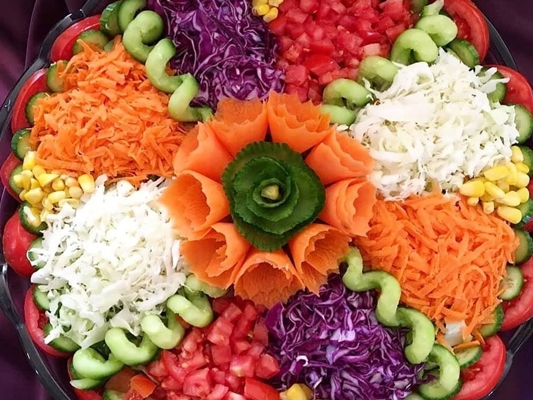
Most of the foods served during the ritual are simple local dishes like Rice Pudding and Shole Zard. The ritual begins before the sunset. People from all walks life bring affordable foods to the grand mosque of their neighborhood and share them with each other during Iftar to break their fast.

Japan Hosting Exhibition of Iranian Children Books

The event, entitled “The Land of Poetry and Legends: Children’s Books in Iran”, is part of a series of meetings and events aimed at introducing the world’s literature works for children.

The book fair, which has started on May 21 and will run until July 21, is part of a program marking the 90th anniversary of the establishment of diplomatic relations between Iran and Japan.

The event features speeches by two Japanese translators of the Persian language, who will talk about the attractions of the Iranian children’s literature as well as book-reading in Iran. They will also introduce the “Read with Me” program as one of the successful plans in Iran aimed at promoting book-reading.

One of the translators has already met with the manager and one of the coordinators of the “Read with Me” program and got familiar with the event.

The “Read with Me” program aims to promote book-reading, especially in deprived regions. It seeks to provide all children with proper and high-quality books, especially children who have no access to such books in their daily lives. The theme of the program is, “All children have the right to read high-quality books.”

This exhibition consists of three sections: “The Land of Poetry and Legend”, “Children’s Books in Iran” and “Illustrators and Authors of Children’s Books in Iran.”

Included in this exhibition are works based on poetry and legends that are important in Iranian culture as well as works by internationally known Iranian illustrators or authors.

Friday Prayer Leader Stabbed to Death in Southern Iran

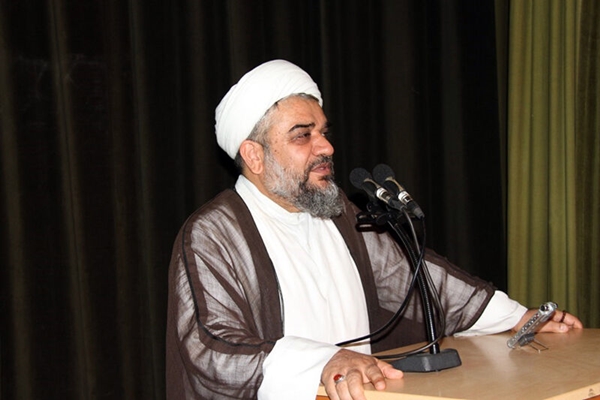
Mohammad Khorsand was stabbed to death by an assailant at 3:30 am on Wednesday, May 29, 2019.

According to police, he was stabbed in the abdomen by an attacker outside his home and succumbed to his wounds on the way to hospital.

The assailant, identified as Hamid Derakhshandeh, fled the scene but was arrested by police a few hours later.

No further details have been announced by officials, so far.

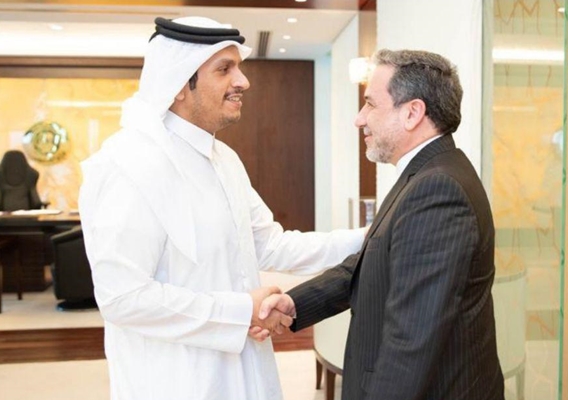
Iran Gives Priority to Talks with Regional States, Not US

Iran Gives Priority to Talks with Regional States, Not US

He made the remarks in a Tuesday meeting with Qatari Deputy Prime Minister and Foreign Minister Mohammed bin Abdulrahman Al Thani.

During the meeting, the Iranian official referred to the US policy of exerting maximum pressure and wage an economic war on the Islamic Republic and said full security cannot be established in the region unless the national security of all regional states is established and their economic interests are secured.

“The Islamic Republic has always played its role in establishing regional security, but the US, the Zionist regime and the states accompanying them must take responsibility for the repercussions of their acts in the region,” he said.

Araqchi once again ruled out the possibility of any negotiations with the US and underlined that the Islamic Republic gives priority to talks with the regional states.

“By establishing such mechanisms as the regional dialogue forum in the Persian Gulf and signing a non-aggression treaty, we can pave the way for confidence building and constructive interaction among regional states,” he said.

The Qatari official, in turn, welcomed mutual talks and meetings between the two countries’ officials.

He also expressed concern over the critical situation created in the region and called for continuation of negotiations between Iran and Qatar.

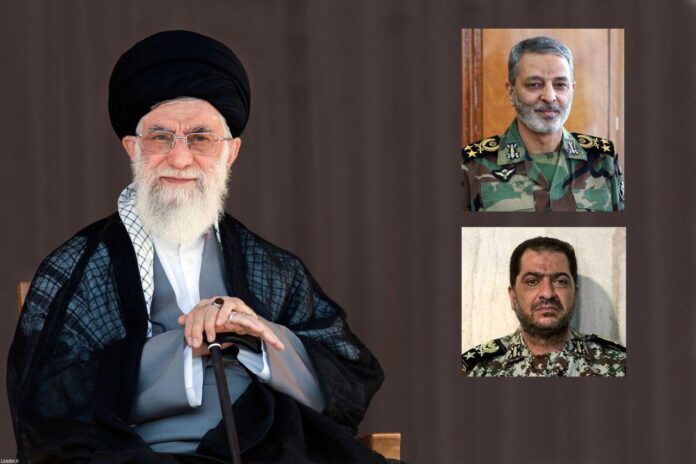
Ayatollah Khamenei Appoints New Air Defence Commanders

Ayatollah Khamenei Appoints New Air Defence Commanders

In a Tuesday decree, the Leader appointed Major General Abdolrahim Mousavi, the current chief-commander of the Iranian Army, as the new commander of Khatam al-Anbia Air Defence Base.

In the decree, the Leader urged General Mousavi to use all the facilities and capacities of the country’s Armed Forces to defend the Iranian airspace and reinforce the integrated and strong network of Iran’s air defence command and control.

In a separate decree, the Leader appointed Brigadier General Alireza Sabahifard as the commander of the newly established Air Defence Force of the Iranian Army.

General Sabahifard was chosen upon the joint recommendation of the General Staff of the Iranian Armed Forces and the Khatam al-Anbia Air Defence Base, and the recommendation of the Army chief.

In his decree, Ayatollah Khamenei called on General Sabahifard to pay special attention to the internal growth and strengthening of the Air Defence Force, particularly through professional training of forces and up-to-date maintenance and optimum use of the equipment.

The new commander was also urged to keep the Air Defence Force vigilant and use various defence methods while maintaining an effective interaction with the Khatam al-Anbia Air Defence Base.

Sabahi Fard was previously in charge of the Khatam al-Anbia Air Defence Base.

Will Russia Remain Neutral in Case of Iran-US War?

Earlier this month, Russian President Vladimir Putin declared his country’s impartial stance towards the recent escalation of tension between Iran and the US.

Speaking in a joint press conference with his Austrian counterpart, Putin explicitly said Russia is not “a fire brigade” and could not “rescue everything” as tension rise between the US and Iran.

Many western media highlighted the statement by Putin, saying that it was kind of green light to Washington.

However, Putin did not clarify who he was addressing: Iran, Europe, the US, or the international crisis caused by Trump’s warmongering?

Some political experts say it does not matter exactly who Putin was addressing in the statement; in fact, the statement by the Russian president is somehow his declaration of impartiality in the face of sanctions, and emphasises that no one should expect Moscow to do anything.

Ettela’at newspaper, which is Iran’s oldest daily, in a recent article criticized Putin for making those remarks.

“Putin was expected to make remarks that strongly deterred the US escalation in the Persian Gulf against the Islamic Republic of Iran,” the newspaper said.

“At least he could take a similar stance to that of Europeans. Federica Mogherini said in early May that she and the foreign ministers of Germany, France and Britain were urgently calling on the US to show maximum restraint and avoid escalation that would lead to military crisis,” reads the piece.

Putin has made a clear message that Iran should keep its own expectations of potential Russian help soberly modest. However, it could be speculated that Putin’s reaction in the wake of a full-scale conflict between Iran and the US might be different.

Russia’s direct involvement in the US-Iran conflict, should such a confrontation take place, is highly improbable.

However, Moscow may take certain cautious steps in order to strengthen Iran’s deterrence capacities.

It is doubtful that Moscow will make any radical changes to her policy of not supplying Tehran with offensive weapons, but that doesn’t mean Russia cannot enhance Iran’s defense capabilities, The Moscow Times reported.

Recent years’ military-to-military ties between Tehran and Moscow could provide a picture of what pragmatic steps Moscow may take to assist Tehran. Since 2011 Russian-Iranian cooperation evolved around three main categories. Arms sales, highlighted by the delivery of S-300 PMU2 systems; intelligence sharing focused on ISIS and Syrian battles; and operational cooperation mainly in the form of battle coordination and joint military operations in Syria. These unique pillars of the interplay between the two countries, accompanied by joint commissions to facilitate them have institutionalized the military cooperation between Moscow and Tehran far beyond Syria.

Russian involvement in the U.S.-Iran conflict is likely to be broadly based on this threefold pattern.

Moscow ’s first option of responding to the escalation between Iran and the US could be the fortification of Iran’s air defense system capacities to suppress US air superiority. Russian involvement in Syria has demonstrated that Kremlin is confident about using advanced air defense systems to change the balance of forces amid ongoing battles.

Moscow’s decision to provide the Syrian Army with S-300 units in Syria in response to a Russian reconnaissance plane being mistakenly shot down by the Syrian military is a clear example of that. It showed Russian willingness to readjust the military balance through the swift supply of arms.

Thus Russia may reserve the option to improve Iran’s defensive capabilities via the supply of more advanced units, should such a necessity arise.

Providing S-400 batteries or the ground-based Electronic Warfare systems including Borisoglebsk-2 and Krasukha-4S which have the potential to hamper US air superiority could constitute a part of Russia’s response, the report by Moscow Times added.

One of the other forms of Russian response can potentially take is a deployment of Russian military assets to Iran. Russia has recently demonstrated that it is ready to deploy limited military units to contested countries in order to combat threats to her interests.

The case of Tu-160 and limited force deployment in Venezuela to deter US threat in support of President Nicolas Maduro’s government is the latest example, putting forward strategic military deployments as a possible option. Teheran is also likely to support Russian troops being stationed on Iranian territories.

These developments raise the possibility that Russia may be willing to apply the same model to support the Iranian government. The move will have limited operational value, though it sends a strong signal of political support to Washington.

However, this policy could work only as a prevention tool, discouraging a potential opponent from engagement in a military conflict. The moment violence escalates, stationing troops will no longer be an option for Russia.

Finally, Russia may provide Iran with operational intelligence prior to or during the break-out of the war with the US.