Monday, December 29, 2025
Home Blog Page 322

Iran Says US Veto of UNSC Gaza Resolution Sign of Moral Decline

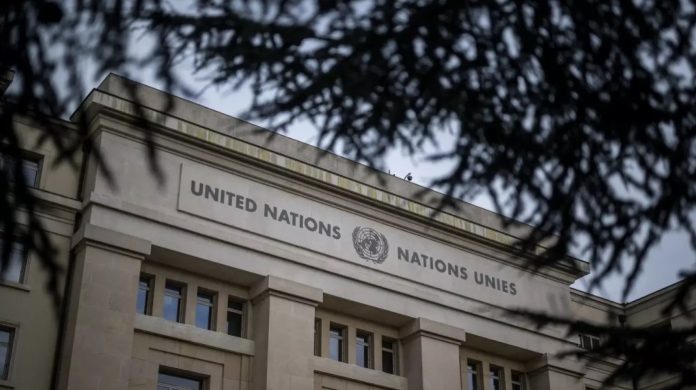
Esmail Baqaei, in reaction to the UN Security Council’s failure to adopt a resolution calling for an immediate ceasefire and an end to the genocide in Gaza, strongly condemned the US government’s action in blocking the resolution, describing it as a continuation of its complicity in the crimes committed by the Zionist regime.

Baqaei said that the resolution was supported by 14 out of the 15 council members, with only the United States opposing it. He added that the US veto of a resolution is proof of Washington’s complicity in the killing of civilians and children in occupied Palestine.

Baqaei noted that over the past few decades, the US has used its veto more than 50 times to oppose Security Council resolutions that sought to enforce international law and prevent gross violations by the Israeli regime. This has undoubtedly contributed to the entrenchment of impunity for the occupying regime and has been one of the main factors behind the continuation of colonial occupation and genocide by Israel, placing the US in the position of a direct accomplice in these crimes.

The Foreign Ministry spokesperson emphasized the responsibility of all governments and international organizations to confront the war crimes and acts of genocide by the Zionist regime.

US presses NATO member states to agree on defence spending hike

NATO

The US president has said NATO allies should boost investment in defence to 5 percent of gross domestic product (GDP), up from the current target of 2 percent.

“To be an alliance, you got to be more than flags. You got to be formations. You got to be more than conferences. You need to be, keep combat-ready capabilities,” Hegseth stated as he arrived for a meeting of defence ministers in Brussels on Thursday.

“We’re here to continue the work that President Trump started, which is a commitment to 5 percent defence spending across this alliance, which we think will happen,” Hegseth continued, adding: “It has to happen by the summit at The Hague later this month.”

In an attempt to compromise with the new target, NATO Secretary General, Mark Rutte has proposed that members of the military alliance boost defence spending to 3.5 percent of GDP and commit a further 1.5 percent to broader security-related spending.

“We have to go further and we have to go faster,” Rutte told reporters on Wednesday.

“A new defence investment plan will be at the heart of the NATO summit in The Hague,” he added.

Since Russia launched its full-scale invasion of Ukraine in February 2022, European NATO members have been steadily increasing their defence spending.

Diplomats have said that countries are attempting to negotiate the timeline to achieve the 5 percent target.

Rutte has proposed reaching the target by 2032, which some countries consider too late, while others think it’s unrealistic, considering current spending and industrial production levels.

Lithuanian Defence Minister Dovile Sakaliene stated on Wednesday that the 2032 target was “definitely too late, and pushed for a target of 2030 at the latest.

Swedish Defence Minister Pal Jonson told reporters on Thursday that Stockholm also wants to see the bloc reach the 5 percent target by 2030.

Meanwhile, NATO officials have estimated that, on average, meeting the new targets would cost countries between 3.5 and 3.7 percent of GDP.

Iran’s defense minister warns Israel against any military action

Iran Armed Forces

In an interview with Lebanon’s Al-Mayadeen TV, General Nasirzadeh stated that Iran possesses significant military capabilities that render it immune to Israeli threats.

“Israel is not in a position to pose a real threat to Iran,” he said. “Those who can actually challenge Iran do not speak in such terms.”

He went on to call recent Israeli statements “useless bluster,” asserting that any hostile act would be met with overwhelming force.

The remarks come amid heightened regional tensions and follow a series of exchanges between Iranian and Israeli officials. Tehran has repeatedly said it will respond decisively to any aggression targeting its territory or interests.

Killer of Iranian park ranger arrested in surprise operation

Iran Police

Colonel Mansour Silavi, Behbahan County’s police chief, said the arrest followed detailed investigations and coordination with judicial authorities.

The operation comes just days after Didban was killed while responding to reports of gunfire in the Tang-e Bistom area.

Didban, 51, was ambushed on Tuesday by illegal hunters and shot in the head at close range with an assault rifle before he could exit his vehicle.

The assailants fled the scene with his gear. He had served more than 20 years in the Department of Environment and was known for his expertise and dedication.

The Khaeez Protected Area spans over 32,000 hectares across parts of Khuzestan and Kohgiluyeh and Boyer-Ahmad provinces, though it is managed by the latter.

Investigations are ongoing as police search for additional suspects involved in the killing.

Islamic states should block all avenues of assistance to Israel: Iran’s Leader

Ayatollah Khamenei

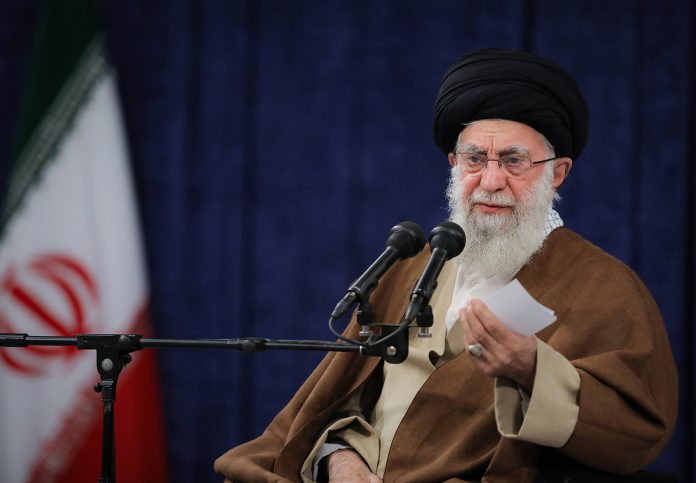
In a message to the 2025 Hajj pilgrims, the Leader also said the United States is a definite accomplice in the crimes of the Zionist regime.

“America’s associates in this region and other Islamic regions must heed the call of the Quran about defending the oppressed. They must compel the arrogant US government to end this oppressive behavior,” Ayatollah Khamenei said in the message, the full text of which, according to Khamenei.ir, is as follows:

In the Name of Allah, the Compassionate, the Merciful

Praise be to Allah, Lord of the Worlds, and peace and blessings be upon the best of Allah’s creation, Muhammad al-Mustafa, and upon his Pure Progeny, his chosen Companions and those who follow them in righteousness until the Day of Judgment.

Hajj is the believer’s longing, the Eid of those who are eager, the spiritual sustenance of the fortunate. If it is accompanied by knowledge of its spiritual essence, it becomes a remedy for the major ailments of not only the Islamic Ummah, but of all humanity.

Hajj is not like other journeys that are undertaken for trade or tourism or other purposes, where acts of worship or good deeds may incidentally be a part of that journey.

Hajj is the preparation for migrating from ordinary life towards the ideal life, the tawhidi (monotheistic) life in which there is constant tawāf (circumambulation) around the Axis of Truth (the Ka’aba), continuous sa’ī (the running between the hills of Safā and Marwāh), the perpetual ramī (casting of stones) of evil Shaytān, the wuqūf (resting) that is accompanied by dhīkr and supplications, feeding the weakened poor and the traveler and viewing all colors, races, languages and people from various geographies as equal.

And at all times, a person is ready to serve, seeks refuge in God and raises high the banner of defending the Truth. These are its main, eternal components.

The Hajj ritual gathers within itself symbolic examples of this life, familiarizes the pilgrim with these examples and invites them to these.

This invitation should be heeded. One must open the heart and eyes to see both the outer and the inner world. One must learn and be steadfast in one’s resolve to put these lessons into practice.

Everyone can step forward in this path in accordance with their capacity, but scholars, intellectuals, those entrusted with political authority and people of social standing should do more than others.

The Islamic world needs to apply these lessons now more than ever. It is now the second season of Hajj that is taking place at the same time as the catastrophes unfolding in Gaza and West Asia. The criminal Zionist gang occupying Palestine has with horrifying cruelty and unparalleled savagery and evil, taken the tragedy in Gaza to an unbelievable level.

Palestinian children are now being killed not only by bombs, bullets, and missiles, but also by thirst and starvation. The number of families grieving for their loved ones, their youth, their fathers and their mothers are increasing day by day. Who must stand up against this human catastrophe?

Undoubtedly, Islamic governments are the first ones responsible to act on this duty and the people must demand this action from their governments. Muslim governments may have differing political opinions on various issues, but this should not prevent them from coming to a consensus and cooperating in the case of the horrendous situation in Gaza. It should not stop them from defending the most oppressed people in the world today.

Muslim governments must block all avenues of assistance to the Zionist regime and restrain their criminal hands from continuing these barbaric actions in Gaza.

The United States is a definite accomplice in the crimes of the Zionist regime. America’s associates in this region and other Islamic regions must heed the call of the Quran about defending the oppressed. They must compel the arrogant US government to end this oppressive behavior. The act of barā’at (renunciation of the mushrikīn) during Hajj is a step in this direction.

The miraculous resistance of the people of Gaza, has put the Palestinian issue right at the top of the concerns of the Islamic world and all freedom-loving people around the world. This opportunity must be seized and efforts must be made to rush to the aid of this oppressed nation.

Despite the efforts of the arrogant powers and the supporters of the Zionist regime to erase the name and any memory of Palestine, the evil nature of the leaders of that regime and their foolish policies have created a situation in which Palestine’s name shines more brightly today than ever before and public hate of the Zionists and their supporters is also more severe than ever. This is an important opportunity for the Islamic world.

Public speakers and people of social standing must raise people’s awareness and sensitivity and significantly increase demands regarding the issue Palestine.

And you blessed pilgrims, do not neglect the opportunity to pray and seek Almighty God’s help during the Hajj and beseech Almighty God for victory over the Zionist oppressors and their supporters.

May Allah’s peace and greeting be upon the Noble Messenger of Islam, his Pure Progeny and Hazrat Mahdi – the vestige of Allah remaining on earth – may Allah hasten his reappearance.

May Allah’s greetings, mercy and blessings be upon you

Sayyid Ali Khamenei

Dhu al-Hijjah 3, 1446

May 30, 2025

US redirecting anti-drone tech from Ukraine to American forces in Middle East: WSJ

Pentagon

According to the WSJ, special fuzes used in ground-to-air rocket systems that protect against drone attacks will be redirected towards units in the Middle East, as the U.S. braces for conflict with Iran as well as Houthi militants in Yemen.

The Pentagon notified Congress last week in a previously undisclosed message that the redirection of the fuzes, used in Advanced Precision Kill Weapon System, was identified by Defense Secretary Pete Hegseth as an “urgent issue.”

The fuzes were initially bought for Ukraine by the Joe Biden administration.

The decision comes as Russia has intensified its drone attacks in recent months, targeting cities across Ukraine. On the night of June 1, Russia launched its largest swarm of attack drones since the start of the full-scale invasion, topping out at 472 total units at once.

President Volodymyr Zelensky said on June 4 that Russia has launched over 20,000 drones towards Ukraine since the start of 2025.

A source in Ukraine’s military intelligence (HUR) told the Kyiv Independent on June 4 that Russia will soon be able to deploy more than 500 long-range drones a night to attack Ukraine as it ramps up production and builds new launch sites for them.

Most people across the globe have negative views of Israel: Survey

Israel Army

Views on Israel were mostly negative in 20 out of 24 countries surveyed by Pew between January and April 2025.

Most people in Arab and Muslim countries have had a negative view of Israel for decades, but the Pew poll showed widespread negative attitudes across Europe and East Asia. It also showed that positive views of Israel are decreasing in Western Europe and among young people.

In Italy, 66 percent of people had a negative view of Israel, measured by “somewhat or very unfavorable” opinions. In Greece, Sweden and Spain, the negative sentiment towards Israel was all above 70 percent. In the Netherlands, the number reached 78 percent.

Even in Poland, whose government is traditionally supportive of Israel, public sentiment was 62 percent negative. Likewise, in Hungary, 53 percent of respondents had a negative opinion of Israel.

The Pew poll also showed widespread negative sentiment towards Israel in Indonesia, the largest Muslim-majority country in the world, where 80 percent of respondents viewed Israel either somewhat or very unfavourably.

Elsewhere in Asia, the views were negative, including 80 percent of respondents in Japan and 60 percent in South Korea.

US sentiment towards Israel was also included, referencing a poll Pew published in April.

According to that survey, a majority of Americans, 53 percent, have a negative view of Israel. That number was up from 42 percent in March 2022, before the 7 October 2023 Hamas-led attack on southern Israel and Israel’s subsequent war on the Gaza Strip.

In the US, Democrats are still more likely than Republicans to express a negative opinion of Israel by 69 percent to 37 percent, respectively. But the Pew poll said that the number of Republicans who hold negative opinions on Israel has increased 10 percentage points since 2022.

Young Republicans, those under the age of 50, especially, are now more likely to have an unfavourable view of Israel, with 50 percent polling in that direction.

That gap comes as more popular conservative voices, like Candice Owens and Tucker Carlson, have become more open to challenging US military support for Israel and the treatment of Christians inside the occupied Palestine.

Pew said that the last time it asked respondents in the UK about their view on Israel, in 2013, 44 percent had an unfavourable view. Today, that number is 61 percent, and that trend has held across the globe.

“In 10 other countries, we last asked this question in 2013. In seven of these countries, the share of adults with a negative view of Israel has increased significantly,” the report said.

Views of Israel also differ by age group.

“In some countries, younger people are more likely than older people to have an unfavourable view of Israel. This is particularly the case in the high-income countries surveyed: Australia, Canada, France, Poland and South Korea and the US,” the report said. The US has one of the most significant age gaps.

Confidence in Netanyahu was also low across the 24 countries surveyed. In Australia, France, Germany, Greece, Indonesia, Italy, Japan, the Netherlands, Spain, Sweden, and Turkey, around three-quarters of adults or more have little or no confidence in Netanyahu.

Russia ‘will have to respond’ to Ukraine drone attack: Putin tells Trump

Putin Trump

Putin “will have to respond” to Ukraine’s recent drone attack on military airfields, Trump said after holding a call with the Russian president.

Trump said he spoke to Putin over the phone for approximately an hour and 15 minutes on Wednesday.

“We discussed the attack on Russia’s docked airplanes, by Ukraine, and also various other attacks that have been taking place by both sides,” Trump wrote on his Truth Social account after the call.

“It was a good conversation, but not a conversation that will lead to immediate peace. President Putin did say, and very strongly, that he will have to respond to the recent attack on the airfields.”

Trump made no further comments regarding the “response” and did not say whether the U.S. had urged restraint.

Ukraine on June 1 launched a game-changing drone attack on four key Russian military airfields, damaging 41 planes, including heavy bombers and rare A-50 spy planes.

The operation, dubbed Spiderweb, took 18 months to plan and was overseen directly by President Volodymyr Zelensky and carried out by the Security Service of Ukraine (SBU). The SBU said 117 drones, launched from concealed trucks positioned across Russian territory, simultaneously struck airfields in at least four regions — including sites thousands of kilometers from the Ukrainian border.

The Kremlin was initially quiet about the operation. Days after the attack, Kremlin spokesperson Dmitry Peskov on June 3 said that Putin had been informed of the “incident” and that an investigation had been launched.

Trump was also uncharacteristically silent about the attack, which was hailed in Ukraine as a major success. The White House confirmed on June 3 that Ukraine did not inform Trump in advance about the operation.

Trump’s Special Envoy for Ukraine, Keith Kellogg, warned that the attack could lead to escalations in the full-scale war.

“I’m telling you the risk levels are going way up,” Kellogg told Fox News on June 3.

“When you attack an opponent’s part of their national survival system, which is their nuclear triad, that means your risk level goes up because you don’t know what the other side’s going to do,” he added.

Ukraine’s drone strike followed several days of Russian escalation as Moscow launched some of the heaviest aerial attacks in the full-scale war over a span of three nights. Operation Spiderweb targeted some of the very bombers that rained destruction on Ukrainian cities and civilian targets.

Zelensky stated on June 4 that Ukraine would not have carried out the attack on Russia’s airfields if Moscow had agreed to the many proposals for a ceasefire put forth since March.

Operation Spiderweb struck Russia the day before the second round of direct peace talks between Kyiv and Moscow took place in Istanbul on June 2. The U.S. has praised the talks as a sign of Trump’s successful intervention in the peace process — even though Russia continues to reject a ceasefire.

Putin said on June 4 that Russia was no longer interested in negotiating with Ukraine.

“The current Kyiv regime does not need peace at all,” he added during a televised meeting with senior officials. “What is there to talk about? How can we negotiate with those who rely on terror?”

Despite the Kremlin’s persistent refusal to impose a ceasefire or make significant steps towards peace, Trump has not followed through on threats to sanction Russia. While Republican lawmakers, including staunch Trump allies, have rallied around legislation sanctioning Russia, Trump has shied away from pressuring Moscow.

Iranian ambassador: Putin to visit Tehran soon as $5 billion Russian investment finalized

Russian President Vladimir Putin

Speaking at a meeting with prominent Russian Iranologists on Wednesday, Jalali confirmed that Russia has finalized nearly $5 billion in investments in Iran’s gas sector as part of a larger $8 billion agreement.

He noted that Russia was the largest foreign investor in Iran in 2024, primarily focused on energy and gas field projects.

The ambassador highlighted the recent implementation of a free trade agreement between Iran and the Eurasian Economic Union, and ongoing cooperation on major infrastructure projects, including the purchase of 50,000 hectares of land for the Rasht-Astara railway as part of the North-South Transport Corridor.

Jalali also emphasized growing financial cooperation, noting the interconnection of Russia’s Mir and Iran’s Shetab banking networks, which now allow for smoother transactions for small businesses, Iranian students, and tourists.

The news of the Russian president’s trip to Iran also comes as US President Donald Trump revealed on Wednesday that Putin suggested he would participate in the nuclear talks between Tehran and Washington.

Trump signs travel ban targeting 12 countries, including Iran

Trump

The proclamation, which echoes a travel ban Trump instituted in his first term, fully restricts the entry of nationals from Afghanistan, Burma, Chad, Republic of the Congo, Equatorial Guinea, Eritrea, Haiti, Iran, Libya, Somalia, Sudan and Yemen.

It also partially restricts entry into the U.S. for nationals coming from Burundi, Cuba, Laos, Sierra Leone, Togo, Turkmenistan and Venezuela.

The proclamation makes exceptions for nationals from all 19 of those countries who are lawful permanent residents of the United States or existing visa holders and individuals “whose entry serves U.S. national interests.

“President Trump is fulfilling his promise to protect Americans from dangerous foreign actors that want to come to our country and cause us harm,” White House spokesperson Abigail Jackson posted on X.

“These commonsense restrictions are country-specific and include places that lack proper vetting, exhibit high visa overstay rates, or fail to share identity and threat information,” Jackson added.

The travel ban proclamation comes after Trump on his first day in office signed an executive order that called for increased vetting and screening of migrants entering the United States, citing national security concerns.

The president has taken numerous actions in his first four months in office to crack down on both the flow of migrants at the southern border and legal pathways into the United States.

Trump in his first term implemented a travel ban that, after legal challenges, banned the entry of nationals from several Muslim-majority countries. The ban was revoked by then-President Joe Biden in 2021.