Monday, December 22, 2025
Home Blog Page 3219

Iraq to Convey Iran’s Proposal to Saudi Arabia, UAE, Bahrain

سفیر عراق

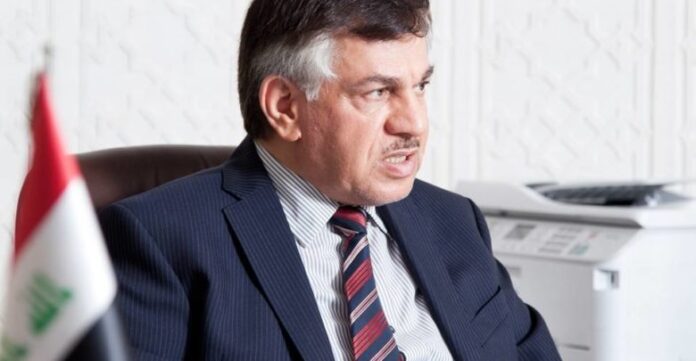
In an interview with ISNA, Saad Abdul Wahhab Jawad Qandeel said Iranian Foreign Minister Mohammad Javad Zarif has proposed the idea of signing a regional non-aggression pact during his most recent trip to Iraq.

Iraqi officials have welcomed the Iranian suggestion and has announced that they will convey the proposal to the Persian Gulf littoral countries, particularly those which have no relations with Iran, including Saudi Arabia and Bahrain, he added.

The ambassador then confirmed that Iraq is going to play the role of a mediator by relaying the Iranian message to Riyadh, Abu Dhabi and Manama.

Asked whether Iraq has taken any practical measure in this regard so far, Qandeel said Iraqi President Barham Salih must have delivered the message to those three Arab countries during his trip to Saudi Arabia for participation in the Organization of Islamic Cooperation (OIC) summit.

Zarif had made the proposal for a non-aggression pact among the regional countries during a trip to Iraq in late May.

Iraq’s ambassador to Moscow has announced earlier that Baghdad will support any initiative for de-escalation in the Persian Gulf.

Math Student Develops Iranian Programming Language

Gov't Provides Iranians with Free Internet at Home amid Corona Outbreak

Seyyed Ali Mohammadiyeh, a student of mathematics at the University of Kashan, has been working on the programming language for 7 years.

Explicating his achievement, Mohammadiyeh said his innovative language would enable the Iranian programmers to enjoy a fully homemade program that serves as the basic tool for computer systems.

The young researcher noted that he has applied for a patent for his software, saying modifications have been made to the original version of the programming language in recent years.

The Iranian programming language can be used for a direct and independent creation of software with a machine code’s language, which obviates the need for any additional languages, even an assembly language, he explained.

The achievement has won first prizes in a number of national scientific conferences inside Iran and has also received the award for “best homegrown product”, given by the presidential office’s department for science and technology, ISNA reported.

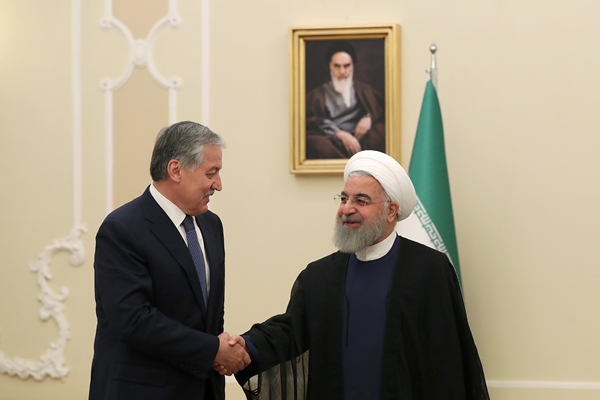
Iran Best Way for Transit of Tajik Goods: Rouhani

Rouhani

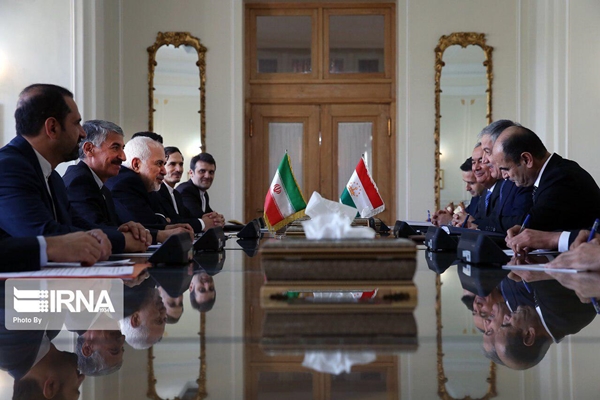
The Iranian president made the comments during his Saturday meeting with Tajik Foreign Minister Sirodjidin Muhriddin who is in Tehran on an official visit.

Rouhani further noted that Iran and Tajikistan have a great deal of cultural, historical, literary, religious, and linguistic commonalities.

“Tehran and Dushanbe must strive to expand relations in different sectors which are in the interests of the two nations and extend friendships,” he added.

The Islamic Republic of Iran is constantly calling for stability, full security, advancement and progress of Tajikistan, Rouhani said, calling for the strengthening of relations and boosting of cooperation between the two sides.

“We are ready to contribute to the implementation of Tajikistan’s projects by providing technical and engineering services and transferring experiences.

This is an honour for the companies and the private sector of Iran to provide the best services to friendly countries.”

The president said that today the region is in a special condition and faces terrorism and foreign intervention.

“Today, while terrorists have left Iraq and Syria, there are concerns that they want to be active in the Central Asia and the Caucasus. Therefore, Iran and Tajikistan can further expand their cooperation in the fight against terrorism.”

For his part, Muhriddin emphasised that Tajikistan and Iran have always been friends and brothers in the two countries and that they will move forward in the future to develop friendships and fraternities.

He also stressed that “the development of relations and cooperation between Tehran – Dushanbe is very important.”

Muhriddin emphasised that it is a must to expand bilateral economic and trade relations and cooperation, asking Iran to let Tajikistan benefit from the advantages of Chabahar port and developing cooperation in the transit sector and using the experience of Iranian companies and specialists in providing technical and engineering services, especially in the areas of energy and infrastructural issues in this country.

Iran’s Chabahar Port to Play Key Role in Future Economy of Region

“We believe that the existence of terrorist groups is very dangerous for the people of the region, and we must therefore all work together on the path to fight terrorism,” he said, adding that the policy of combating terrorism and extremism in the region has had a lot of positive effects.

The Tajik foreign minister said the Tajik government is willing to boost ties with Iran saying that the Tajik President has officially invited President Hassan Rouhani and expressed hope that the Islamic Republic of Iran will attend the CICA Summit which will be held soon in Dushanbe.

Muhriddin, who arrived in Tehran on Friday, earlier met with his Iranian counterpart Mohammad Javad Zarif and exchanged views about expanding political, parliamentary, consular, economic, transport, and cultural cooperation, as well as the fight against extremism and terrorism.

On Friday, Muhriddin also visited Iran’s Energy Minister Reza Ardakanian.

With a shared language and cultural links, Iran and Tajikistan enjoyed a close relationship following Tajikistan’s independence in 1991.

Iran was the first country to establish an embassy in Dushanbe, the Tajik capital, in January 1992, and hosted peace talks that helped to end the civil war in Tajikistan in 1997.

Following the war, Iran invested in Tajikistan, building a tunnel at Anzob in 2006 and the Sangtuda‑2 hydroelectric plant in 2011. By 2014, bilateral trade had reached US$228m, making Iran Tajikistan’s fifth-largest trading partner.

Iran, Tajikistan Discuss Bilateral Issues in Tehran

In December 2015 relations worsened after the Islamic Republic invited a Tajikistani opposition leader, Muhiddin Kabiri, to a conference in Tehran.

In September 2015 Tajikistan’s justice ministry classified the Islamic Renaissance Party of Tajikistan (IRPT), which Kabiri leads, as a terrorist organisation. In an official protest, the Tajik government accused Iran of being a “supporter of terrorism” and Tajikistan’s state media published a series of articles criticising the country.

A series of punitive measures followed. In January 2016 Tajikistan’s President, Imomali Rahmon, traveled to Saudi Arabia, Iran’s main rival for regional hegemony, signing a series of co-operation agreements.

In April, Tajikistan blocked Iranian meat and tea imports. Officials could not agree as to why this was done. Although some stated it was because of the poor quality of the products, others argued it resulted from labels not being written in the Tajik language.

The suspension of the Imam Khomeini Relief Foundation’s activities, and shutting Iran’s Cultural Attache’s office in Dushanbe, Iran’s Red Crescent Society and IRIB Bureau and many other issues are the latest in this series of moves against Iranian activities in Tajikistan.

Muslim People Say ‘Big No’ to ‘Deal of Century’: Iran Papers

A Look at Iranian Newspaper Front Pages on November 19

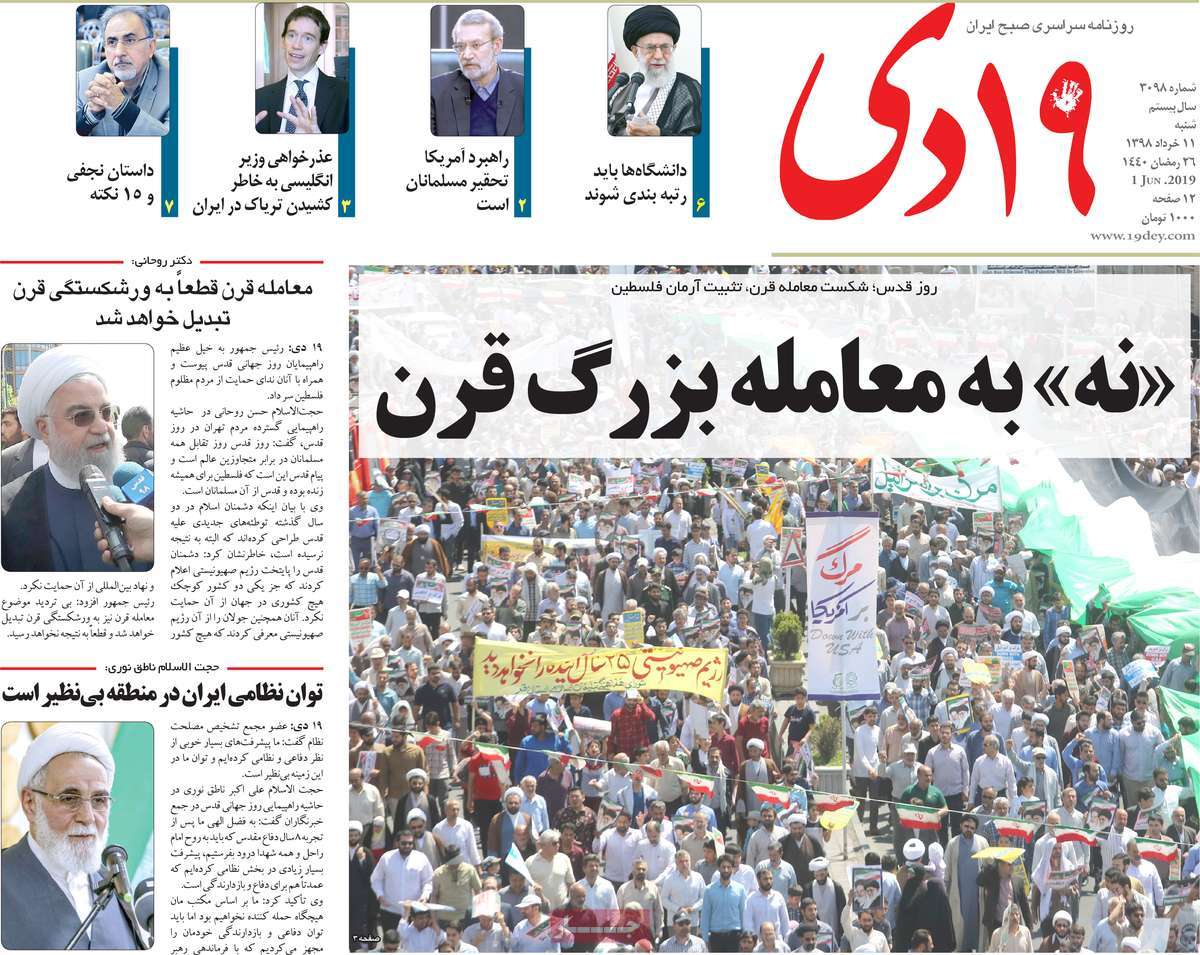
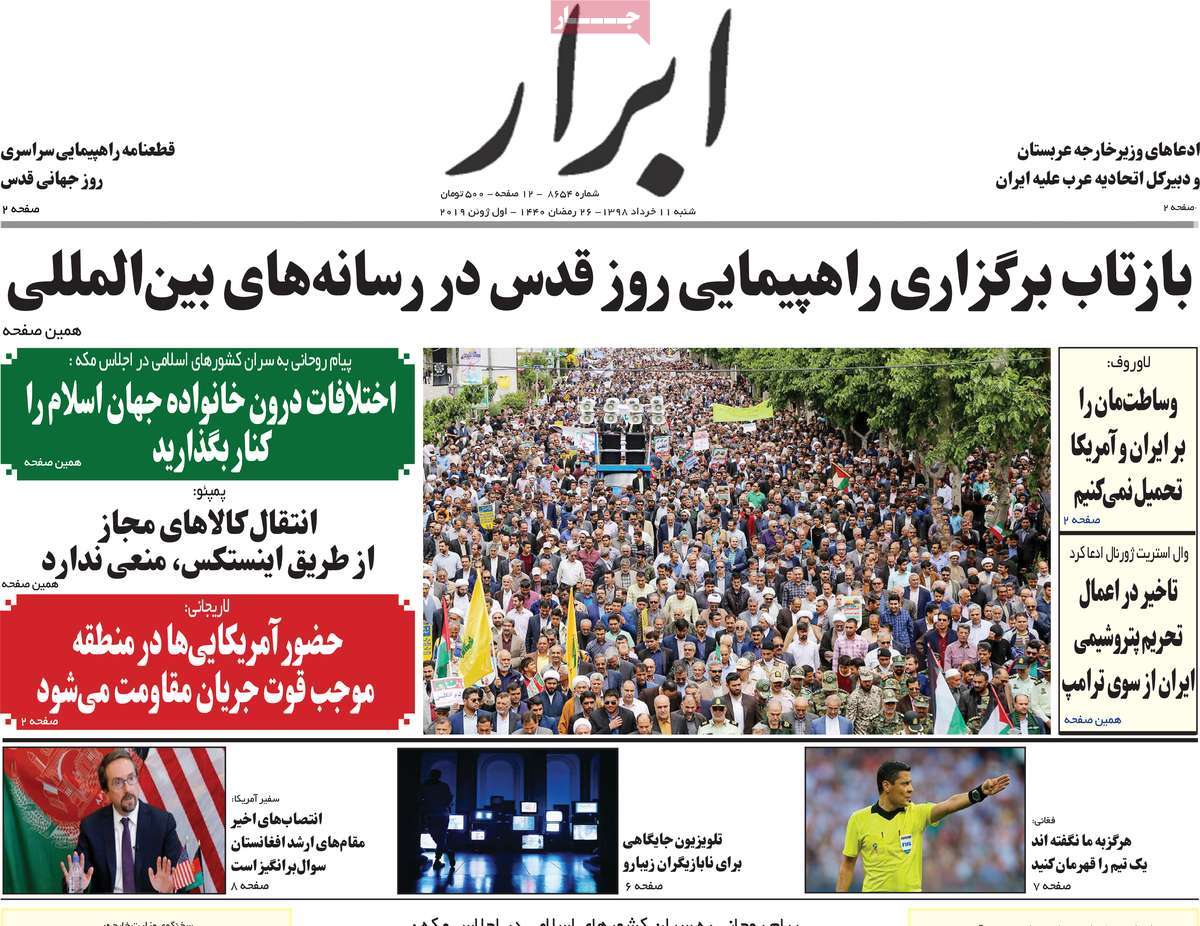
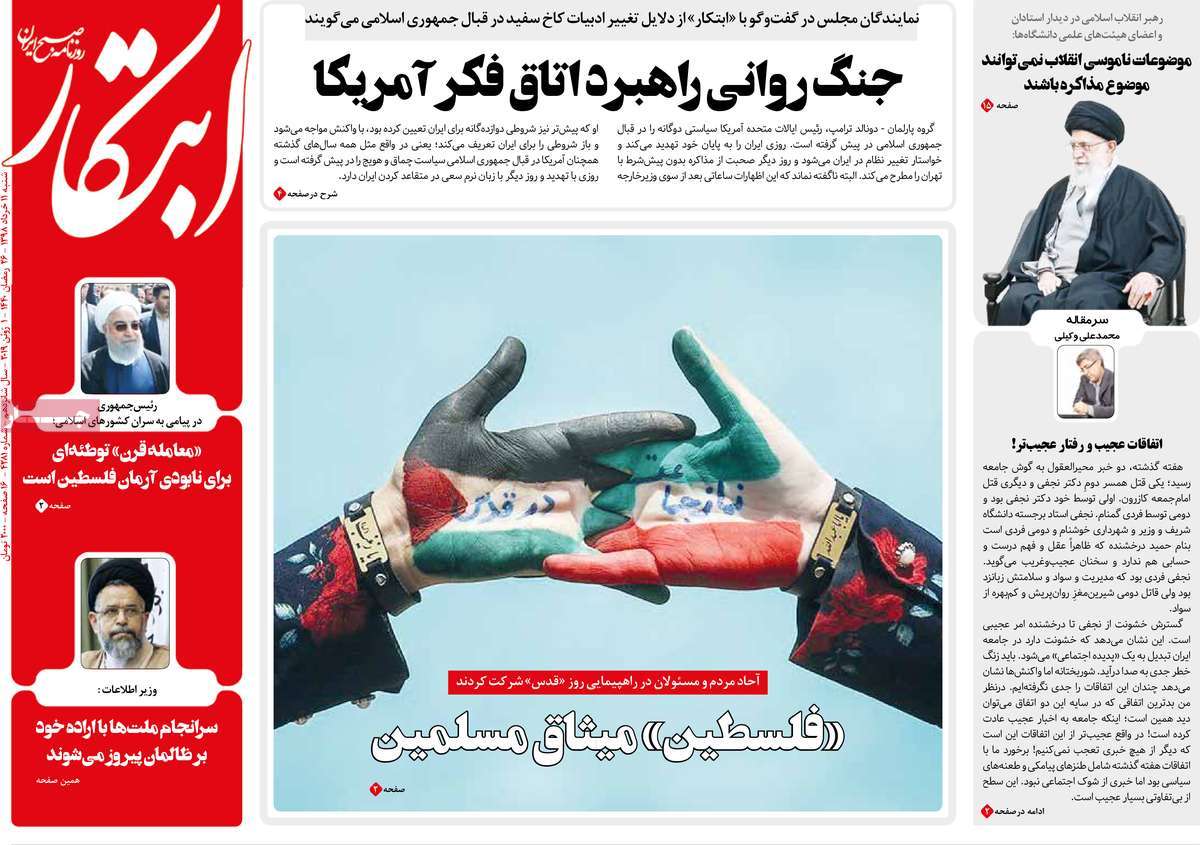
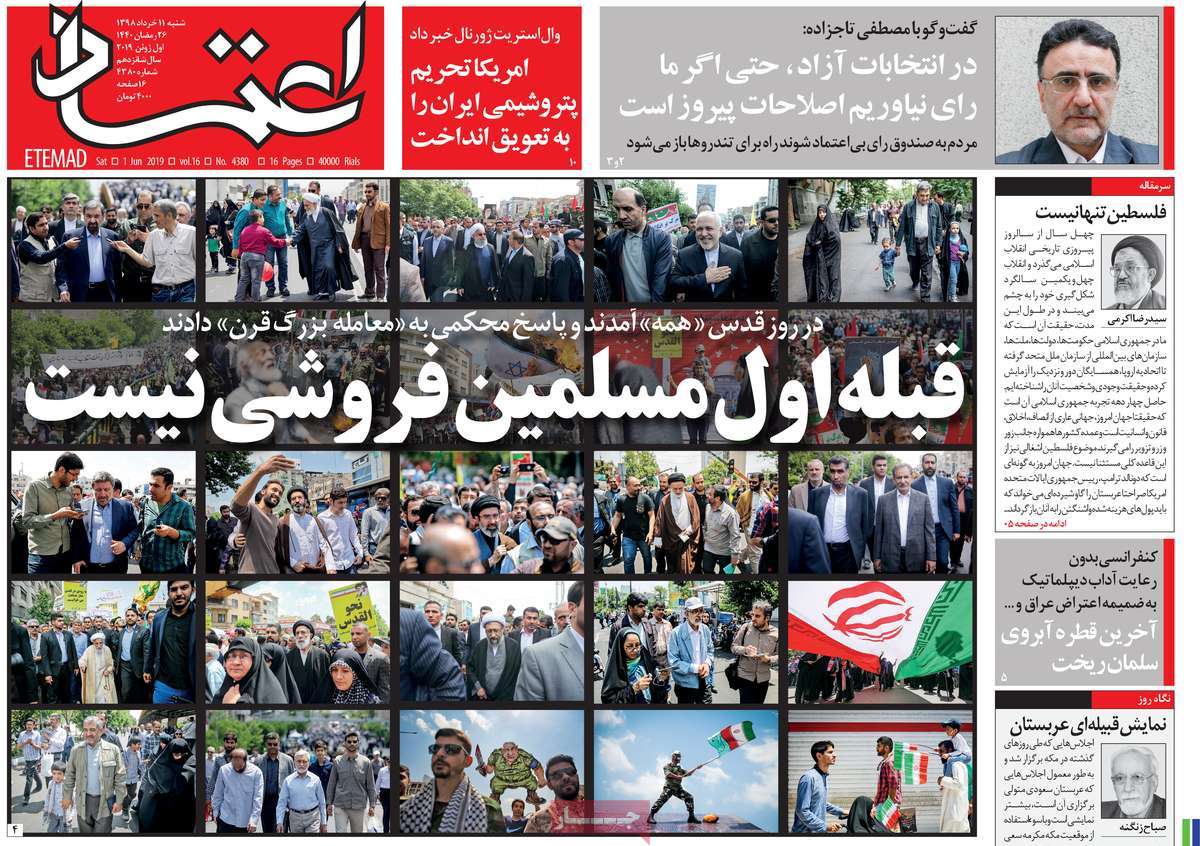
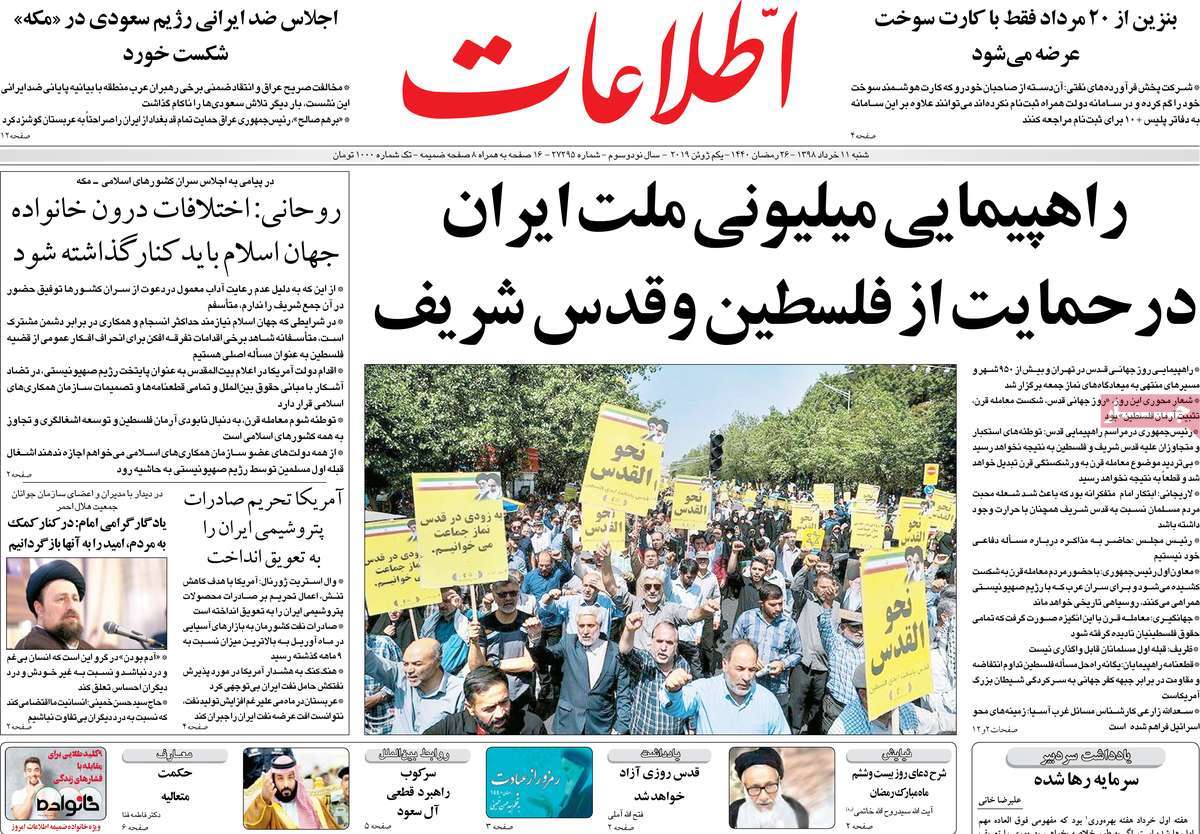
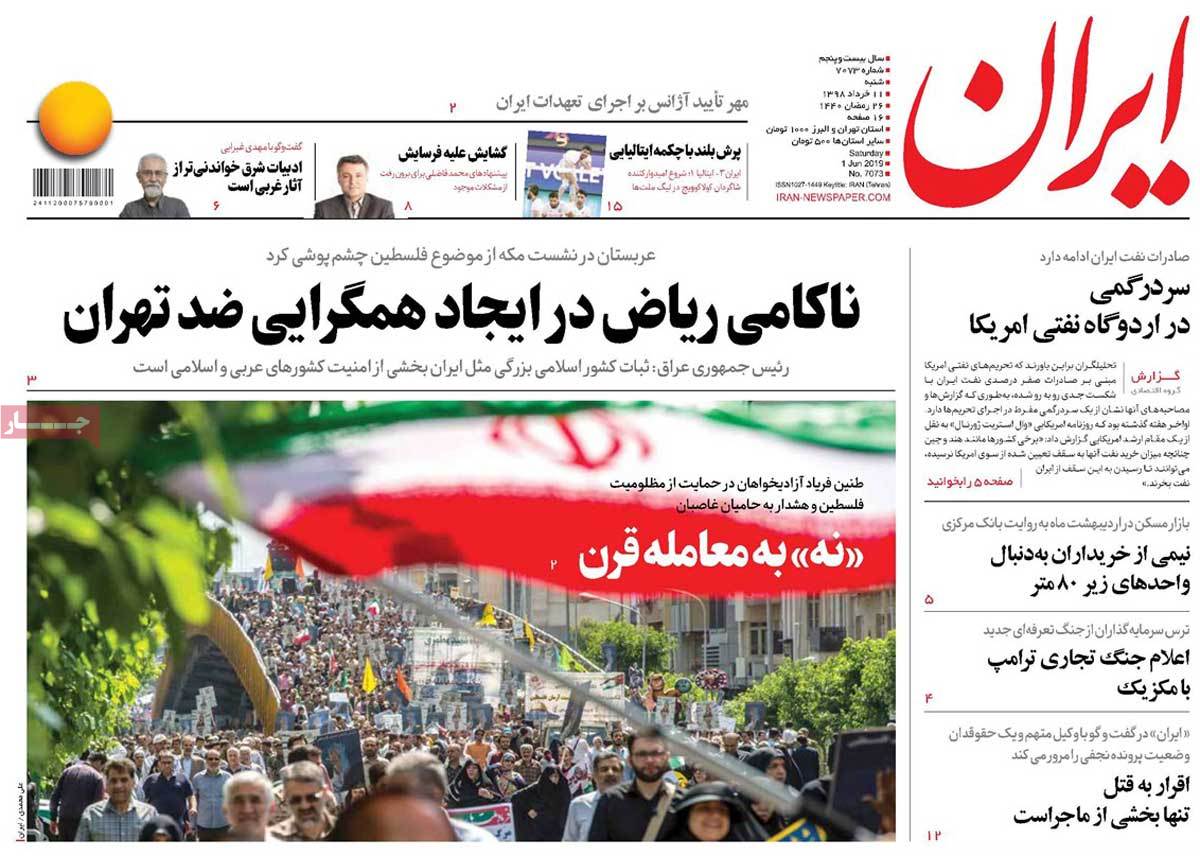
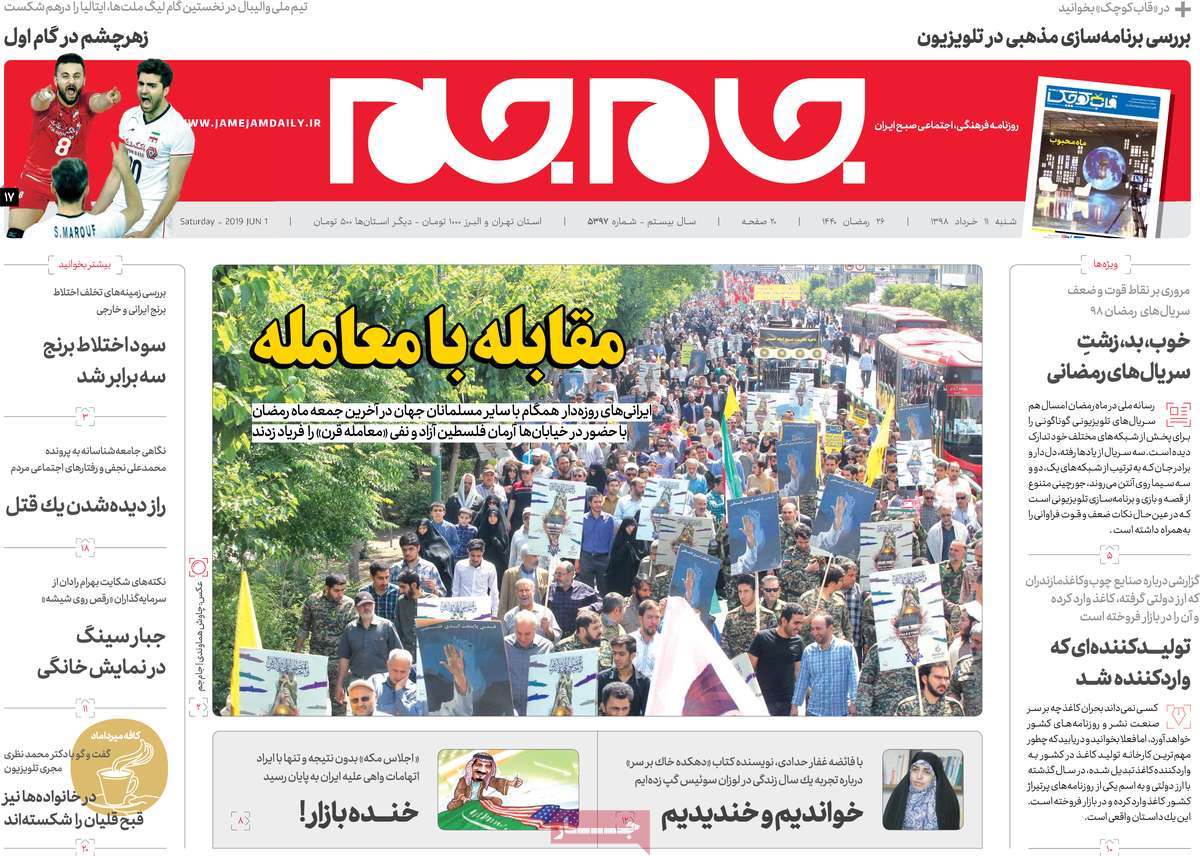
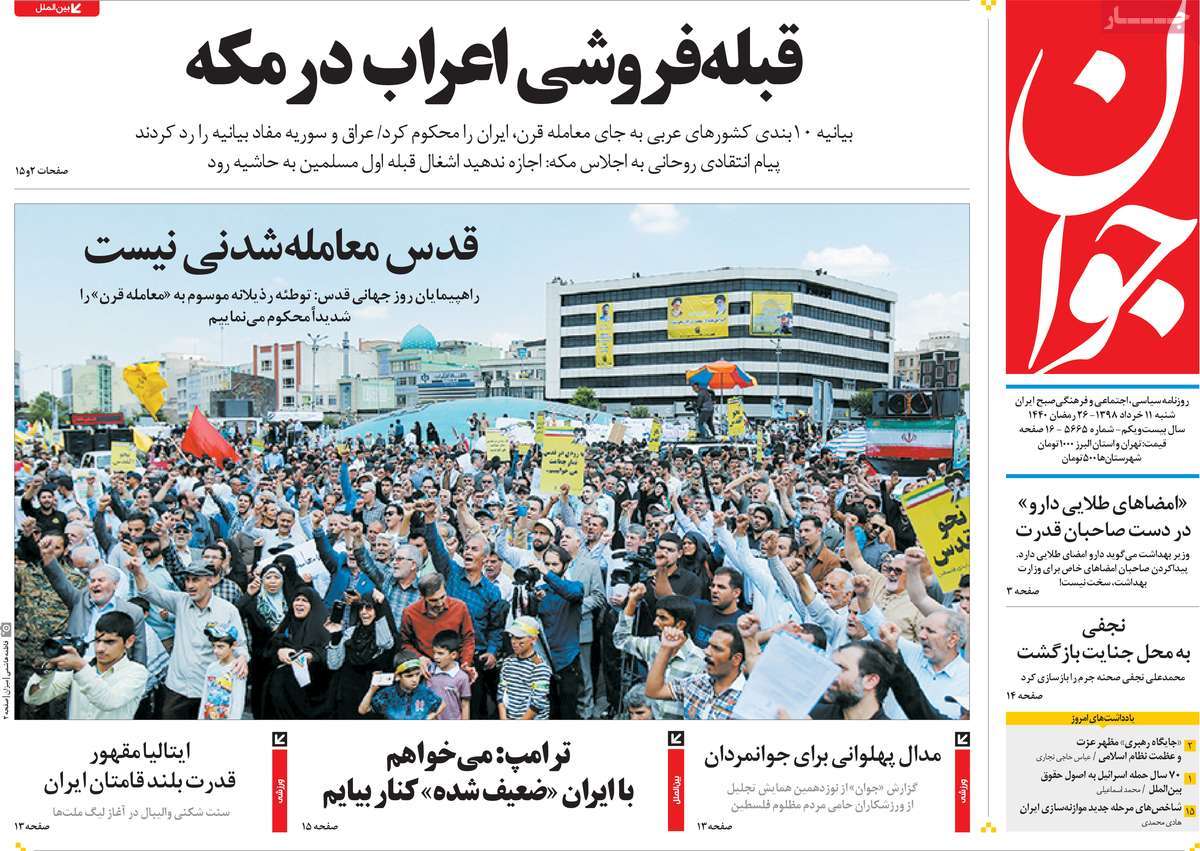
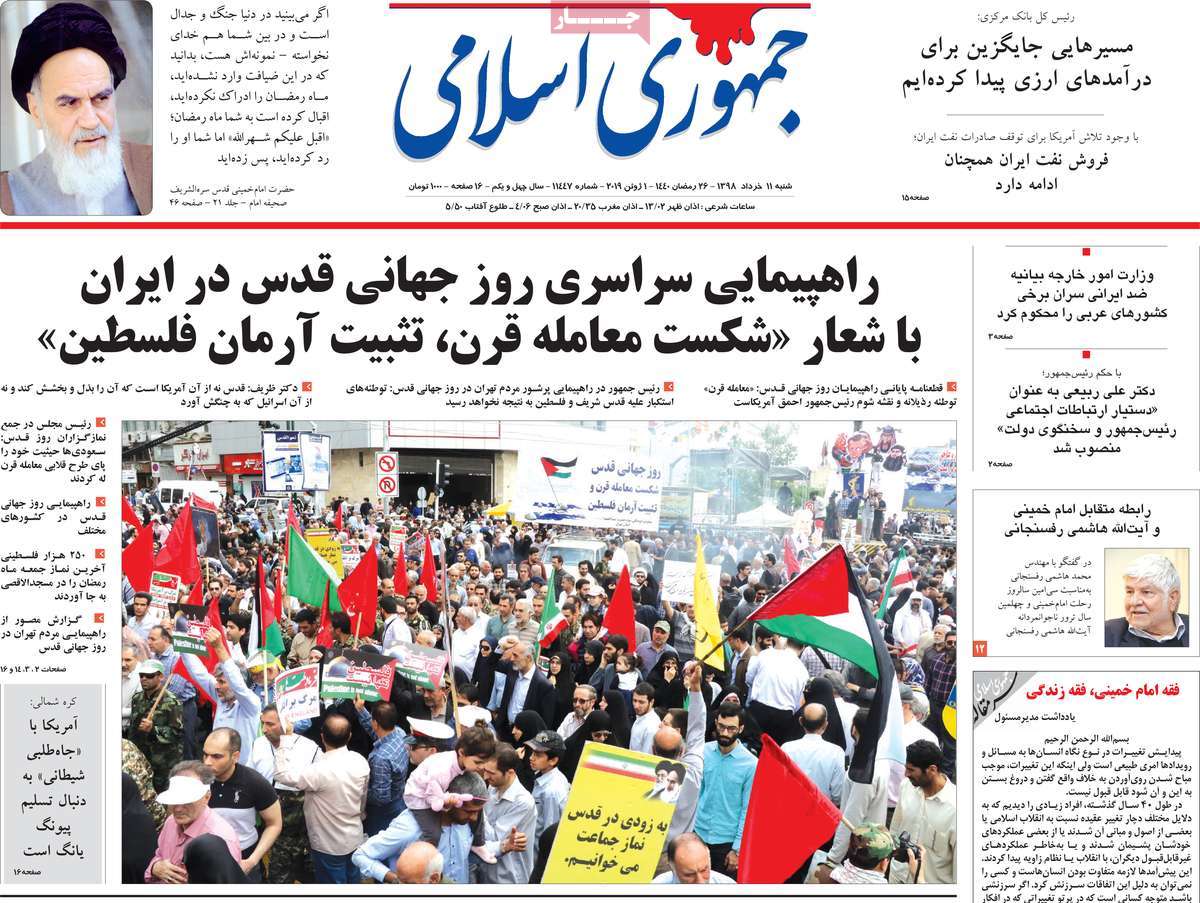
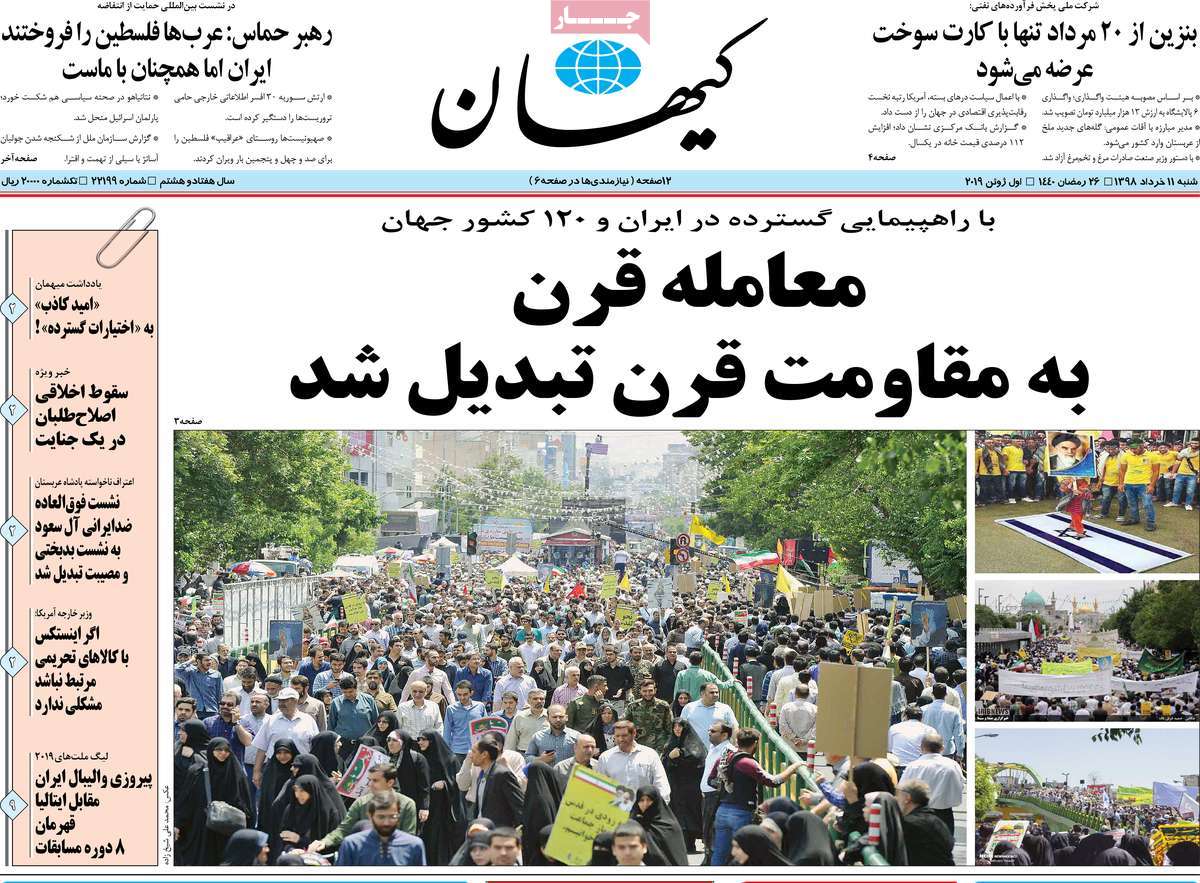
All Iranian papers today covered the massive Quds Day rallies held in Iran and other parts of the world in solidarity with the Palestinian nation and in condemnation of the Israeli atrocities.

The majority of headlines highlighted the demonstrators’ slogans against US President Donald Trump’s so-called peace plan for the Middle East, known as the “Deal of the Century”.

Also a top story was the comments made by the Leader of Iran’s Islamic Revolution Ayatollah Seyyed Ali Khamenei in a meeting with a group of academics and university professors.

The above issues, as well as many more, are highlighted in the following headlines and top stories:


19 Dey:

1- No to Deal of the Century

2- Rouhani: Deal of Century Will Turn into Bankruptcy of Century

Muslim People Say ‘Big No’ to ‘Deal of Century’: Iran Papers


Abrar:

1- Lavrov: We Won’t Impose Our Mediation on Iran, US

2- Larijani: Americans’ Presence in Region to Strengthen Resistance Movement

Muslim People Say ‘Big No’ to ‘Deal of Century’: Iran Papers


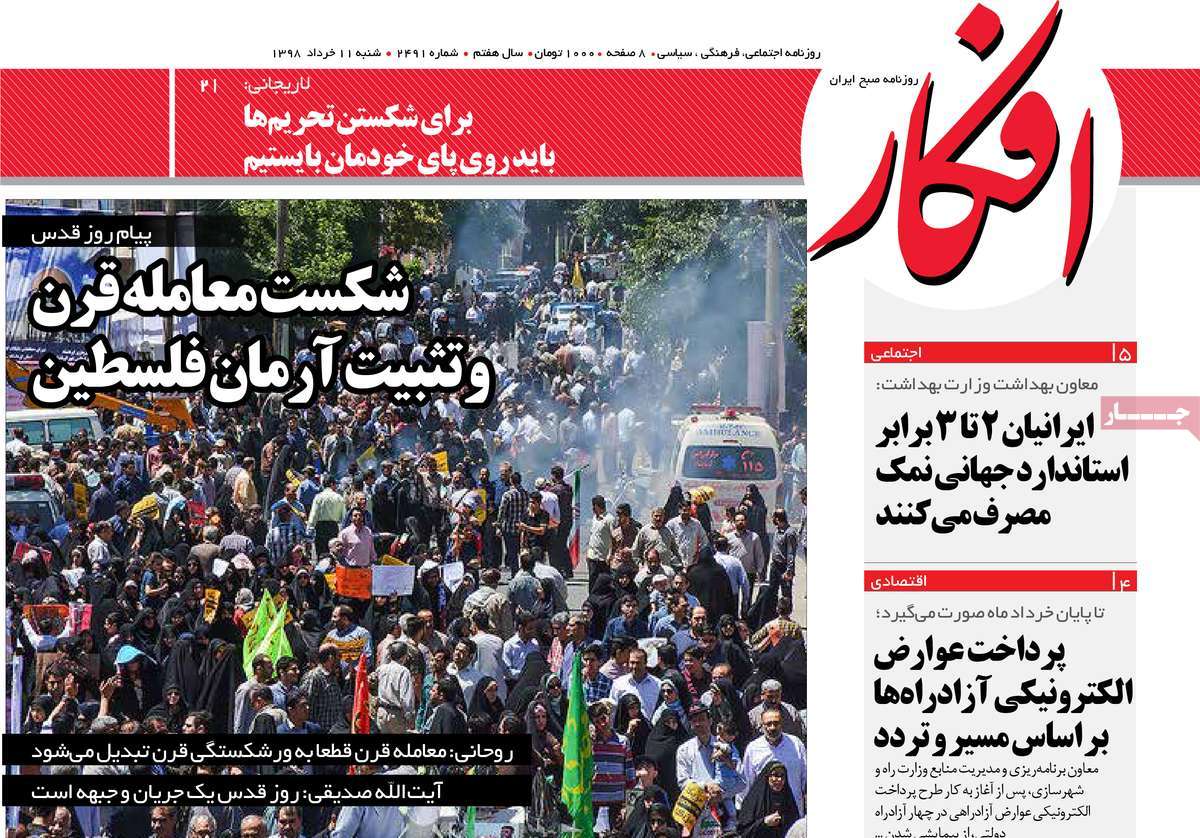
Afkar:

1- Message of Quds Day: Failure of Deal of Century, Stabilization of Palestinian Cause

Muslim People Say ‘Big No’ to ‘Deal of Century’: Iran Papers


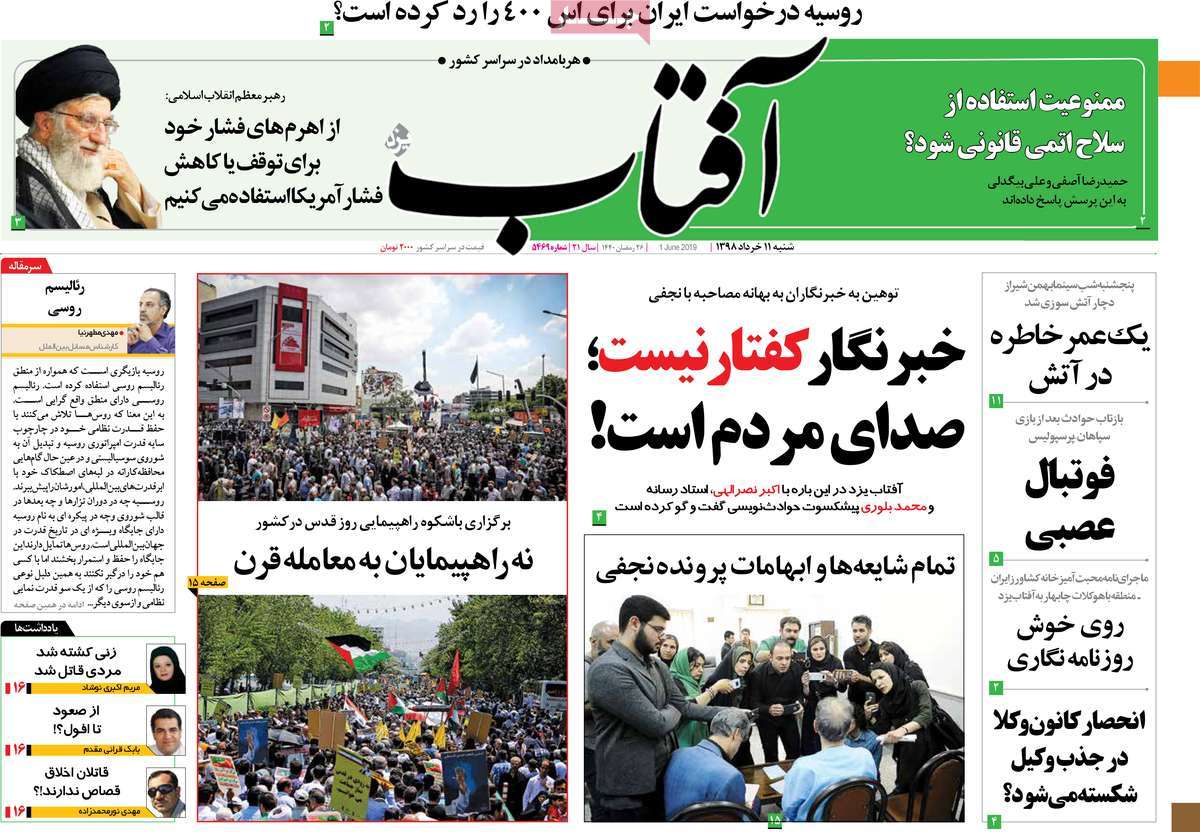
Aftab-e Yazd:

1- Demonstrators Say No to Deal of Century

2- Iran Leader: We’ll Use Leverage at Our Disposal to Reduce US Pressure

Muslim People Say ‘Big No’ to ‘Deal of Century’: Iran Papers


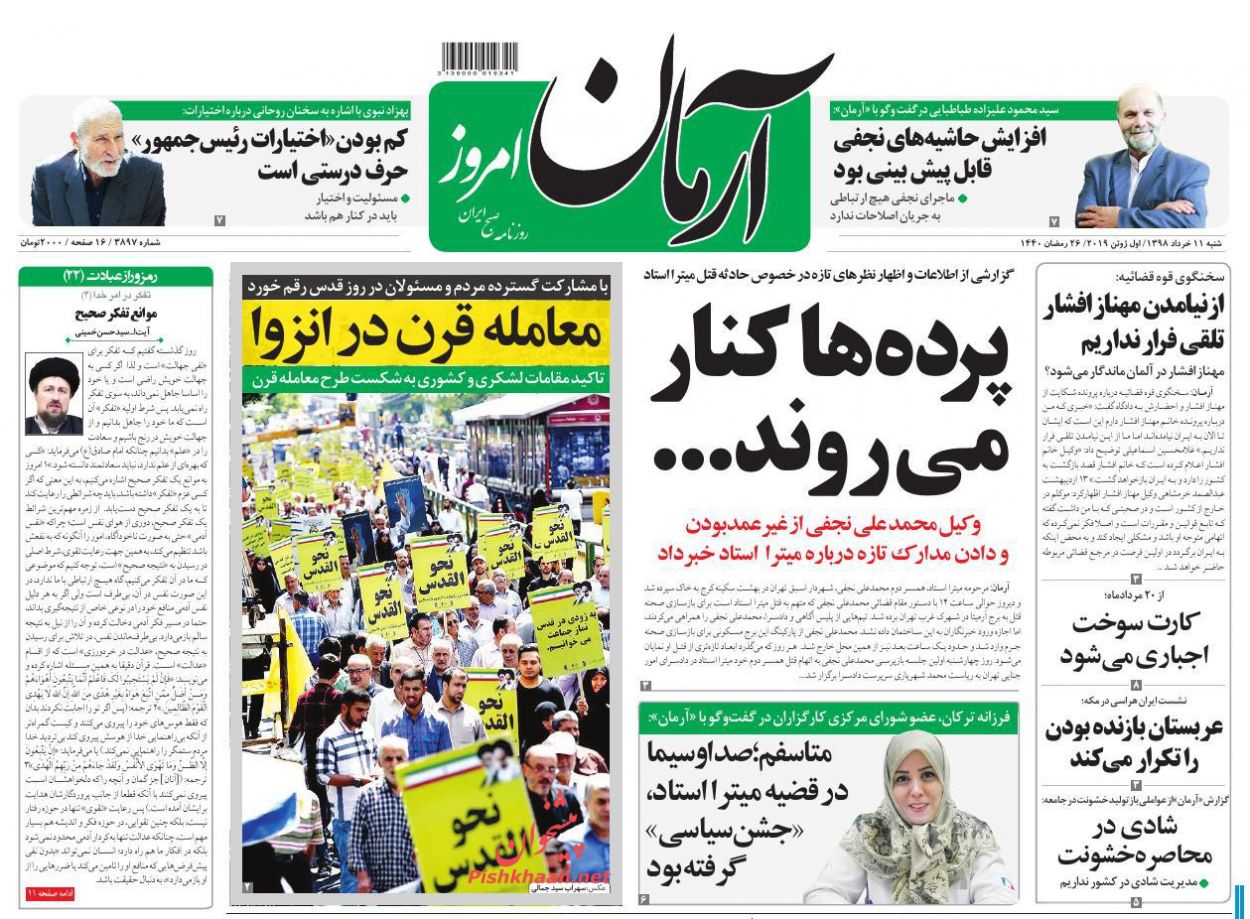
Arman-e Emrooz:

1- Deal of the Century Isolated

2- Iranophobic Meeting in Mecca: Saudi Arabia Repeats Being a Loser

Muslim People Say ‘Big No’ to ‘Deal of Century’: Iran Papers


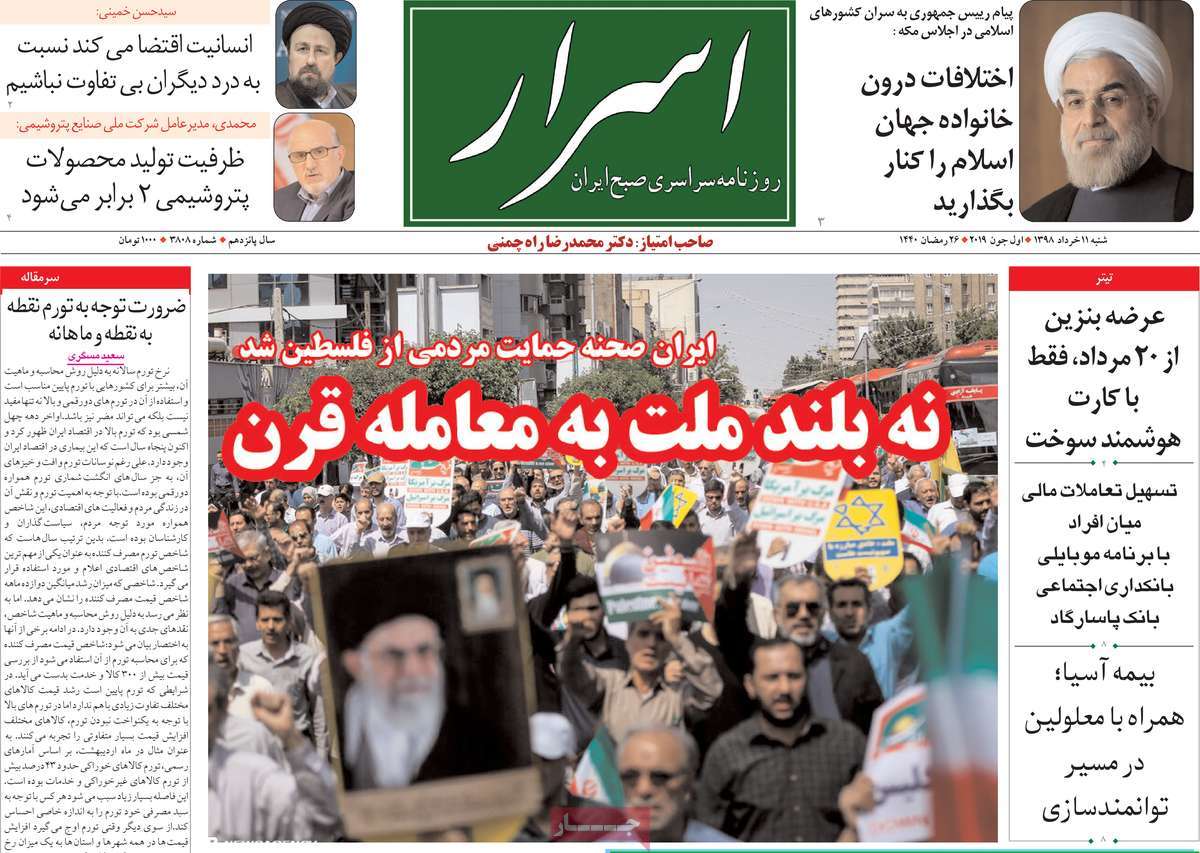
Asrar:

1- Iranian Nation Says Big No to Deal of the Century

* Iran Turns into Scene of Popular Support for Palestine

2- Rouhani’s Message to Muslim Leaders in Mecca: Put Aside Differences Inside Muslim World

Muslim People Say ‘Big No’ to ‘Deal of Century’: Iran Papers


Ebtekar:

1- Palestine, Covenant of Muslim People

* Massive Number of Iranian People, Officials Attend Quds Day Rallies

2- Rouhani: Deal of the Century Plot to Destroy Palestinian Cause

Muslim People Say ‘Big No’ to ‘Deal of Century’: Iran Papers


Etemad:

1- First Qibla of Muslims Not for Sale

* Harsh Response to Deal of the Century

2- Palestine Not Alone [Editorial]

Muslim People Say ‘Big No’ to ‘Deal of Century’: Iran Papers


Ettela’at:

1- Millions of Iranians Rally in Support of Palestine

2- US Postpones Sanctions against Iran’s Petchem Exports

Muslim People Say ‘Big No’ to ‘Deal of Century’: Iran Papers


Iran:

1- Riyadh Fail to Create Anti-Iran Convergence

* Saudis Ignore Issue of Palestine in Mecca Summit

2- US’ Oil Camp Confused: Iran’s Oil Exports Maintained

Muslim People Say ‘Big No’ to ‘Deal of Century’: Iran Papers


Jame Jam:

1- Countering the Deal

* Fasting Iranians Chant Support for Free Palestine, No to Deal of Century

Muslim People Say ‘Big No’ to ‘Deal of Century’: Iran Papers


Javan:

1- Quds Not Up for Deal

2- Trump: We Want to Deal with ‘Weakened’ Iran

3- Arabs Selling Their Qibla in Mecca

* Arab Countries’ Statement Condemns Iran Instead of Trump’s Plan

Muslim People Say ‘Big No’ to ‘Deal of Century’: Iran Papers


Jomhouri Eslami:

1- Rouhani: Hegemony’s Plots against Al-Quds, Palestine Doomed to Fail

2- Zarif: Quds Not for US to Be Gifted, Not for Israel to Be Seized

Muslim People Say ‘Big No’ to ‘Deal of Century’: Iran Papers


Kayhan:

1- Deal of Century Turns into ‘Resistance of Century’ with Massive Rallies in Iran, 120 Countries

2- Hamas Chief: Arabs Sold Palestine, But Iran Still Standing by Us

Muslim People Say ‘Big No’ to ‘Deal of Century’: Iran Papers


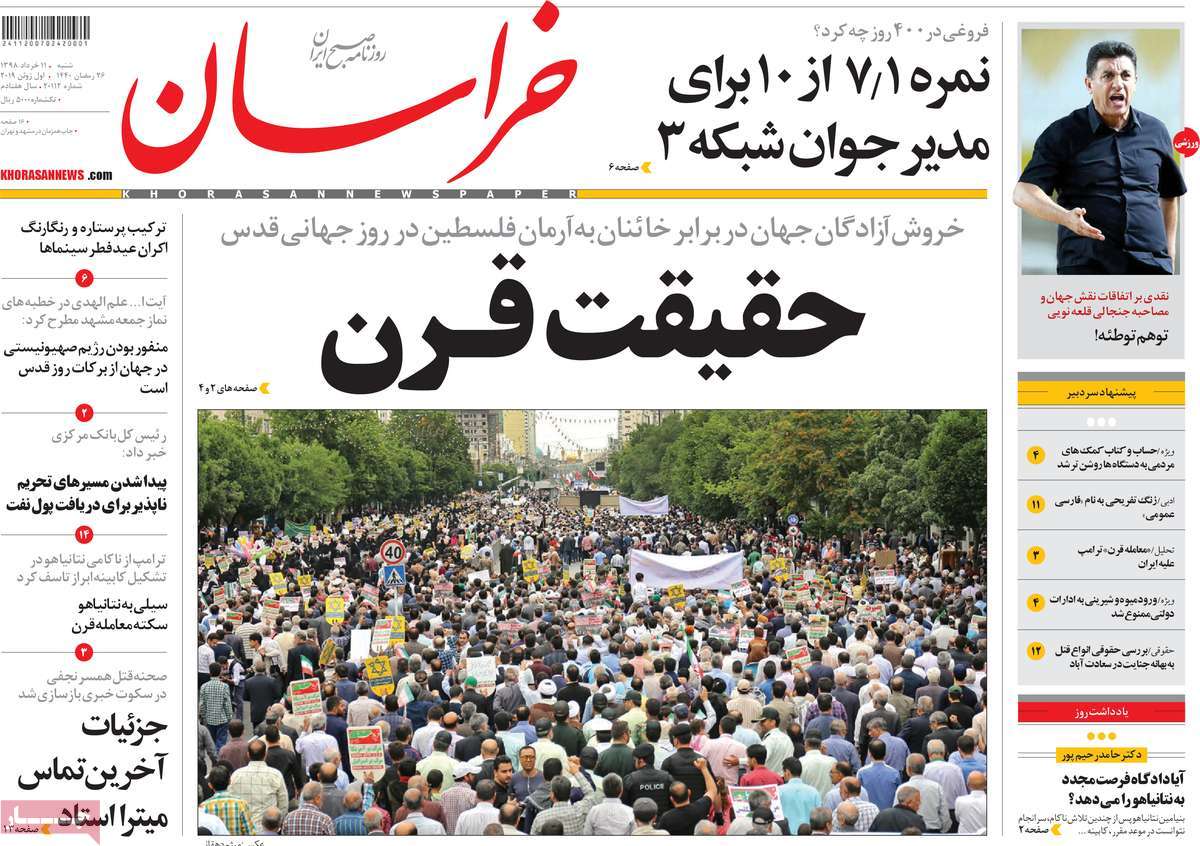
Khorasan:

1- Truth of the Century

* World’s Freedom Seekers Rise against Those Who Betrayed Palestine Cause

Muslim People Say ‘Big No’ to ‘Deal of Century’: Iran Papers


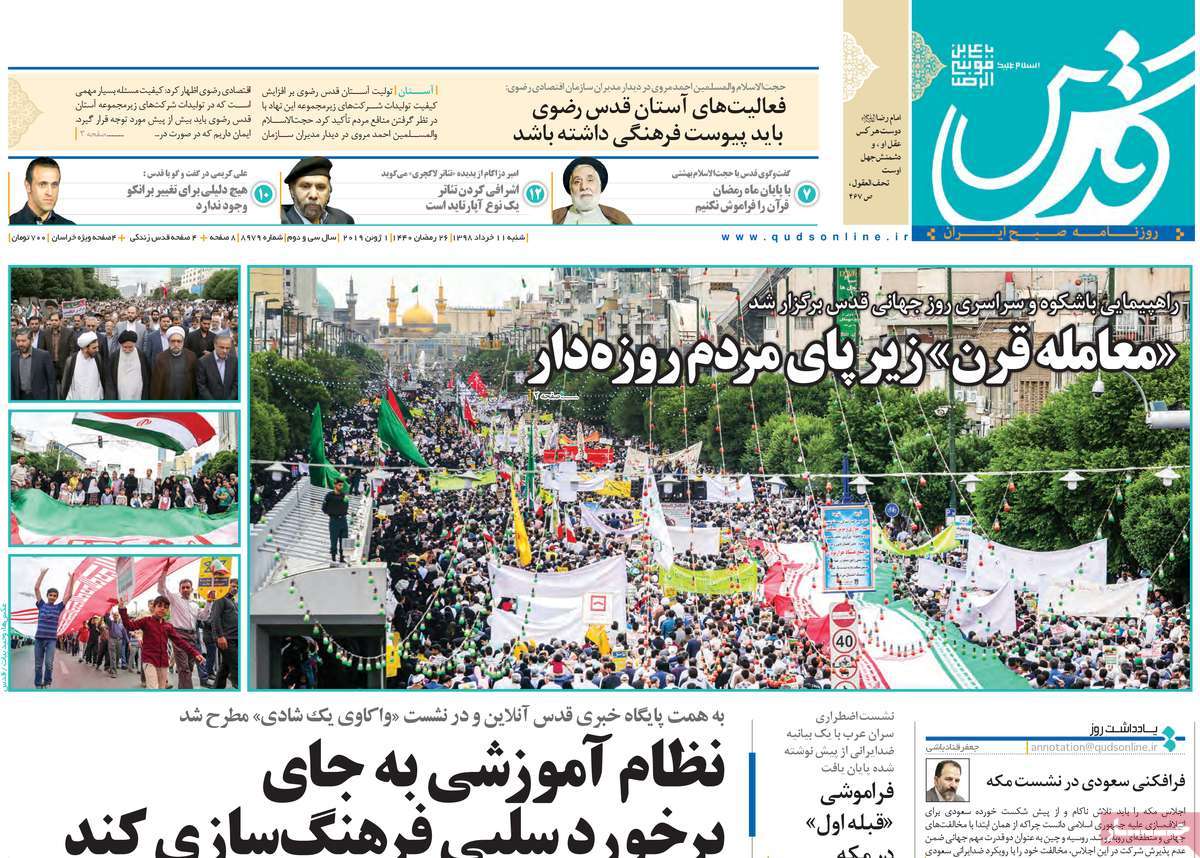
Quds:

1- Deal of the Century under Feet of Fasting People

Muslim People Say ‘Big No’ to ‘Deal of Century’: Iran Papers


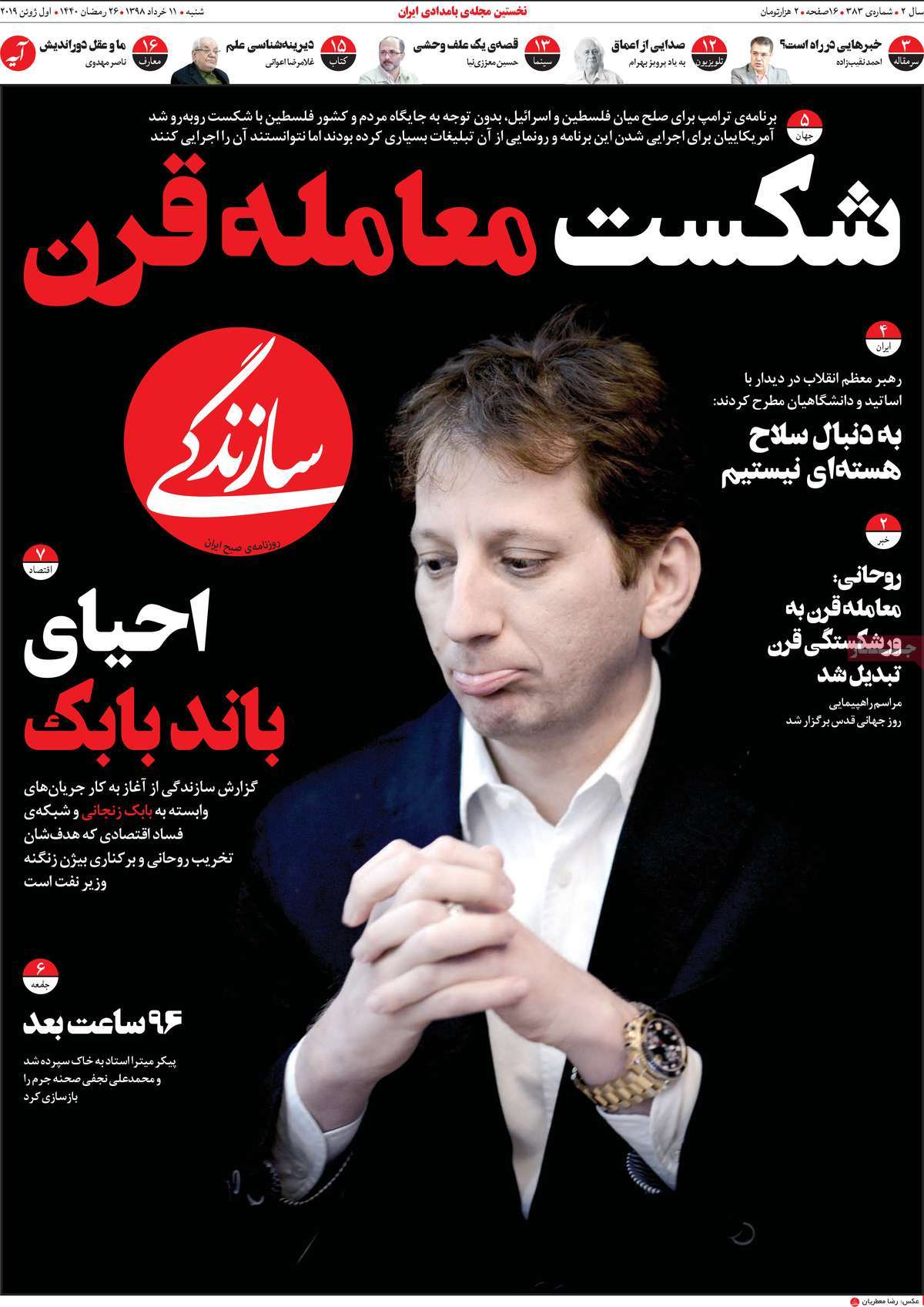
Sazandegi:

1- Defeat of Deal of the Century

2- Iran Leader: We’re Not after Nuclear Weapons

Muslim People Say ‘Big No’ to ‘Deal of Century’: Iran Papers


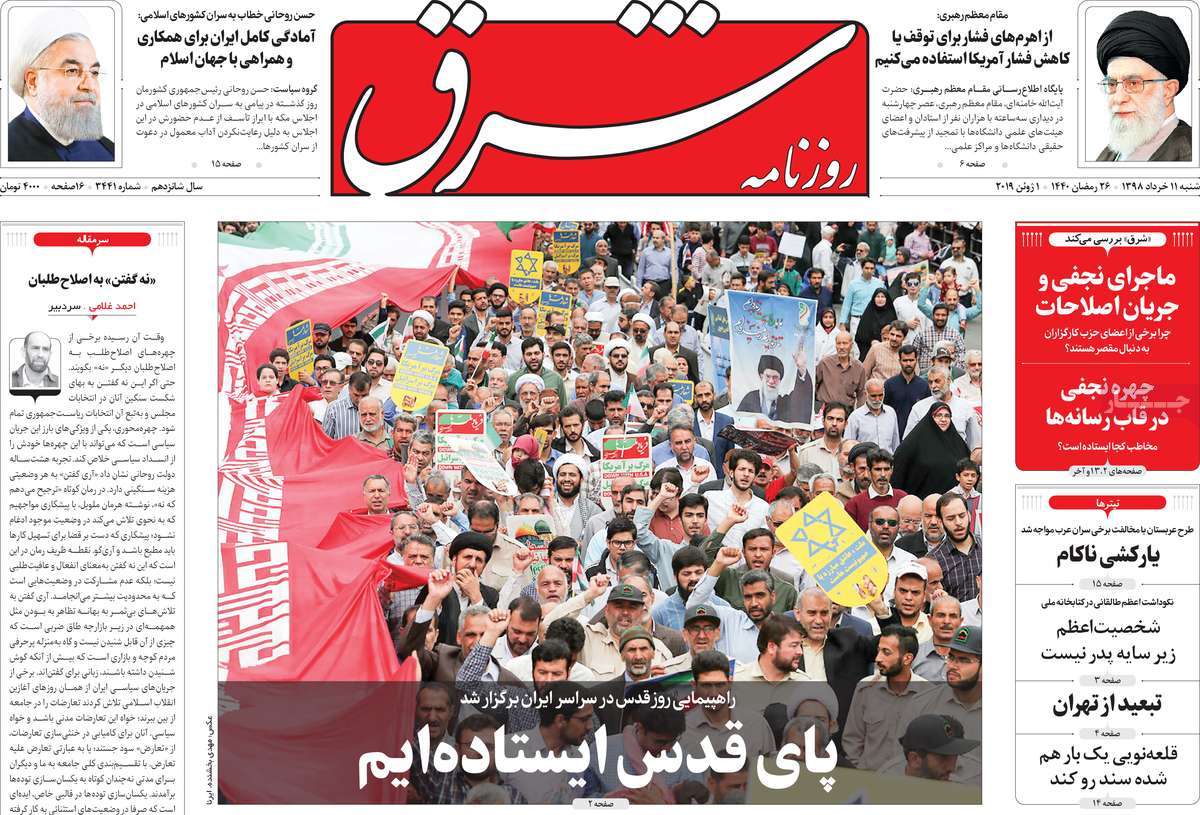
Shargh:

1- We’re Standing behind al-Quds

2- Rouhani: Iran Fully Prepared to Work with Muslim World

Muslim People Say ‘Big No’ to ‘Deal of Century’: Iran Papers

Iran Releases Two European Diplomats Arrested at Party

Iran Releases Two European Diplomats Arrested at Party

The two diplomat had attended a mixed-gender party in Velenjak neighbourhood in northern Tehran, which is forbidden when the participants do not observe the Islamic rules.

“Unlawful acts” were committed at the party where the two diplomats were arrested, Tasnim News Agency says.

The two diplomats were first handed over to the police, but shortly afterwards they were released when their identity was discovered in custody.

Iran FM Says He ‘Can Be in Riyadh Tomorrow’

Mohammad Javad Zarif made the comment in an interview with the Iranian Arabic-language news network Al-Alam. Excerpts from the interview follow.


Tehran Ready for Talks If Saudis Change Tack

Al-Alam: Given the current situation in the region, when will we see you in Riyadh?

Zarif: If the Saudi government is ready to change its policy, I can be in Riyadh tomorrow.

Key Issue Not War, But US Breach of Law

Al-Alam: What messages were you carrying during your recent visits to India, China, Iraq, Japan, the United States and some other countries.

Zarif: What the world needs to know well is this reality – the Islamic Republic of Iran has always wanted peace and compliance with international obligations, but cannot remain indifferent toward the United States’ policy of imposing wars. Trump said recently that Washington had no intention of getting involved in a military war with Iran, but that the US was involved in an economic war against Iran. That means the US government is targeting Iranian people.

All of our partners need to know this reality. The key issue is that the US government has broken the law, has imposed an illegal war [on the Iranian nation] and even tries to keep food and medicine from reaching Iran, and this should be stopped.

That was the message I had during my visit to countries in and out of the region.

Iran Welcomes All Persian Gulf Countries with Open Arms

Al-Alam: It seems that these trips will continue and you will visit other countries as well. What countries are you going to visit?

Zarif: Our focus is on our neighbours. I have visited most neighbouring countries. The [Iranian] deputy foreign minister has also traveled to a number of neighbouring countries to the south of the Persian Gulf. A few neighbouring countries are left, which we will hopefully visit after the holy month of Ramadan.

We welcome all Persian Gulf countries with open arms. Unfortunately, there are two or three Persian Gulf littoral countries which has chosen another path. We believe the path they have chosen is not an effective one, but a dangerous one, and it is most dangerous to them themselves. We have never wished these countries ill. We believe we are neighbours.

Reason behind US Pressure on Iran is Our Power in Region

Al-Alam: In your trip to Iraq, you put forward the “regional non-aggression treaty” initiative. Unfortunately, some people say the reason behind this proposal is the pressure that Iran is under. How are you dealing with this issue and with regional countries?

Zarif: By God’s grace and thanks to the Islamic Republic of Iran’s prudent policies, Iran is at its maximum power in the region today, and we are not in a tough situation, and the reason behind the United States pressure on Iran is its concerns over Iran’s power in the region.

I first put forward the idea in an article in Asharq al-Awsat newspaper where I proposed a dialogue with regional countries. We said our negotiations about the region should take place with regional countries, and at that time I announced that Iran is ready for talks with member states of the Persian Gulf Cooperation Council.

Unfortunately, it was Saudi Arabia which announced it had no intention of holding talks with Iran and that it would drag the war into Iran. Our friends in some countries have forgotten history and think these proposals have been put forward recently. I floated the idea of a non-aggression treaty in those very articles and I said a regional Persian Gulf dialogue forum can lead to the signing of a non-aggression accord.

US Tone Sometimes Harsh, Sometimes Positive

Al-Alam: As for mediation, it is said that some delegations have some to Tehran confidentially. Even it is said that there have been confidential contacts with European countries. Could you let us in on this mediation issue and the confidential or non-confidential contacts?

Zarif: We follow a transparent foreign policy. Our logic is clear, too. We have said that we need no mediation. The US has waged an economic war against our people. When the Americans speak, they use a harsh tone one day and use more positive comments another day. But in our view, it is action that counts. Today, the US is involved in a very active economic ear against Iran. Washington even threatens individuals and warns them against having logical economic relations with Iran.

Not only does the US itself violate the UN Security Council resolution, but it also forces others to do so. This is the policy that the United States is pursuing today. This policy has to stop. This is a policy of bullying, a policy of imposition, a policy of economic terrorism against the Iranian people.

Policy of Threat Should Not Be Used against Any Nation

Al-Alam: Have you seen any softening of tone or retreat on the part of the US?

Zarif: In words, yes. But what determines our policy is action, not words. Their stances are also important. It is important that they talk to Iran with respect. But respect does not mean exerting economic pressure and waging an economic war. Respect should come on an equal footing. Economic war shows a policy of imposition and bullying, and this policy never works with regards to Iran. I said once that ‘Never threaten an Iranian.’ I’m still saying that the policy of threat should not be used against any country or people. As an Iranian, I’m saying that this policy does not work with regards to Iran.

U.S. Pursuing Ambiguous Policy

Al-Alam: Trump constantly claims that he is ready for talks with Iranians and welcomes negotiations. He says he supports Iranian people and identifies with the Iranian nation. But on the other hand, he speaks of a destructive war against Iran and he has reinforced the US military equipment in the Kuwait region. How do you interpret his threat to take military action and claims of being prepared for talks?

Zarif: Washington’s policy is marked by a show of willingness to talk. This is a problem. The second problem is the ambiguity of the policy adopted by the current US administration. Moreover, Trump is saying that he is interested in Iranian people, but puts pressure on Iranians by trying to prevent the sales of food and medicine and aircraft spare parts. The US does not even allow banking transactions to take place in this regard. Such and administration cannot claim that it identifies with Iranian people.

We Talked to US; They Failed to Fulfill Commitments

Al-Alam: When will you contact Trump? Is it possible that you might answer Trump’s phone call?

Zarif: Any decision in that regard should be made by Iran’s high-ranking authorities. We believe the prerequisite to that there should be a point when holding talks. Holding talks has a point only when the other side remains committed to its obligations. We held talks with the US for months before. The Obama and Trump administrations both reneged on their commitments.

Europe Not Abiding by JCPOA Provisions

Al-Alam: The European countries insist that they remain committed to the Iran nuclear deal (JCPOA) and say they do not want to withdraw from the agreement. Why don’t they put pressure on the US?

Zarif: Iran has remained committed to its obligations under the JCPOA. Europe has not complied with any of the terms of the agreement in practice. Ostensibly, it has, but not in practice. What Europe has to do is to implement the deal. The UN Security Council issued a resolution on the JCPOA. The resolution follows two objectives: guarantee the peaceful nature of Iran’s nuclear program and guarantee the normalization of Iran’s economic relations with the world.

‘Deal of Century’ Will Turn into ‘Bankruptcy of Century’

Al-Alam: Regarding the current issues in the region, namely exerting economic pressure on Iran, military presence in the region, the problems that the region is facing today, and even the JCPOA which is discussed from a different perspective each time, do you think all these issues are aimed at implementing Trump’s deal (Deal of the Century)?

Zarif: In my opinion, the final objective is to trample Palestinians’ rights underfoot. Whatever is known as the “Deal of the Century” will definitely turn into the “Bankruptcy of the Century” through people’s resistance.

War with Iran to Burn Entire Middle East: Nasrallah

The rhetoric and threats of a war against Iran have ebbed because US President Donald “Trump, his administration, and his intelligence apparatus know well that any war on Iran will not remain confined to Iran’s borders,” Sayyed Hassan Nasrallah said in a Friday televised speech broadcast live from Beirut.

“Any war on Iran would mean the whole region will be set ablaze,” he noted, warning that the US’ interests in the region will be annihilated if such a war breaks out.

“All US forces and interests in the region will be exterminated and those who conspired (with them) will pay the price; first Israel, then Al Saud,” Nasrallah added.

In early May, the Trump administration announced plans to build up Washington’s military presence in the Middle East to counter unspecified Iranian “threats,” shortly after toughening oil sanctions against the Islamic Republic.

However, after several wars of words with Iranian officials over the past few weeks, Trump has gradually softened his tone, emphasizing that his country is not at all after a military conflict with Iran.

During a visit to Japan on Monday, Trump used a more conciliatory tone, saying the US was not seeking a regime change in Iran and that the Islamic Republic “has a chance to be a great country with the same leadership.”

Deal of the century a ‘historic crime’

In his Friday remarks, Nasrallah also slammed Trump’s so-called peace plan for the Middle East, and said what the US describes as the “deal of the century” is a “void deal” and a “historic crime”.

“This deal is a loss of Palestinian, Arab and Islamic rights,” Nasrallah said.

“It is a religious, moral, national and political obligation to oppose [the peace plan], since this is a deal that is unjust and is contrary to the rights of the holy places.”

He said “the responsibility is clear; we must confront this deal, and we are capable of obstructing it.”

According to Nasrallah, the current situation shows that the plan is on its way to failure.

“The United States, Israel and other regimes in the region are working to implement the deal, alongside an axis that opposes it,” he explained. “There is a conflict between the two factions, and I hope we can prevent the historic crime that is liable to occur in our land.”

Nasrallah also highlighted the military capabilities of the resistance front against the Israeli regime, saying, “The Palestinian resistance today is hitting Tel Aviv and what is beyond it, and it is capable of hitting all the Zionist settlements.”

He said the Lebanese Hezbollah also has enough precision-guided missiles to “change the face of the region.”

“We have in Lebanon precision rockets that are able to target certain posts in Israel and that would change the face of the region,” he said, adding that the resistance movement would respond to any Israeli aggression on any resistance target in Lebanon “quickly, directly and strongly”.

Iran, Tajikistan Discuss Bilateral Issues in Tehran

Iran, Tajikistan Discuss Bilateral Issues in Tehran

In their Saturday meeting in Tehran, Mukhriddin and Zarif touched upon the political and strategic significance of relations between the two friendly, brotherly, and neighbouring countries.

They also stressed the need to boost mutual cooperation in bilateral, regional and international domains.

High on the agenda of the talks were the enhancement of political, parliamentary and economic relations as well as cooperation between friendship groups of both countries.

The two top diplomats also conferred on promotion of cooperation in water, energy and transportation, holding political and consular consultations, expansion of bilateral and international cultural cooperation, especially within the UNESCO, and countering extremism and terrorism.

Iran was the first country to recognize Tajikistan’s independence in the early 1990s and acted as one of the mediators in talks to end its 1992-97 civil war.

However, ties between the two nations have been strained since a leader of a banned Tajik Islamist party, Islamic Renaissance Party, attended a conference in Tehran in 2015, which angered the government in Dushanbe.

The Emomali Rahmon administration accused the Islamic Renaissance Party of Tajikistan of being behind a failed coup attempt in September 2015 and later banned the party, jailing some of its leaders and activists.

In 2017, Tajikistan accused Iran of intervening in the 1990s Tajik civil war, sending assassins and saboteurs into the former Soviet republic, which worsened the situation in the country.

In a documentary broadcast by Tajikistan’s television in 2017, three Tajiks claimed that following training in Iran, they killed politicians and other prominent figures inside Tajikistan during the 1992-97 war and attacked a Russian military base there.

Tehran, however, denies the allegations.

The shuttering of several Iranian centres in the country at the request of Tajik authorities and their decision to slap travel and trade restrictions on citizens and goods from Iran in recent years contributed to the souring in relations.

Another irritant has been the fate of the assets of jailed Iranian billionaire Babak Zanjani, whose international business empire once included assets in Tajikistan.

Anti-Iran Terrorists Making Inroads into US Lobby Groups

Anti-Iran Terrorists Making Inroads into US Lobby Groups

The MKO terrorist organisation is a militant and political group that teaches suicide attacks, and in the past have committed self-immolation, and even held demonstrations in front of international bodies to disrupt Iran’s relations with other countries.

Now, such opportunities in the present situation in the region are used to create conflicts and unwanted battles between Iran, the United States and other countries of the region. They want to turn this into a battlefield to topple what they called the “Iranian regime” to secure their own interests.

Editor-in-chief of Etemad newspaper’s online website, Mojtaba Hosseini, has in a recent piece argued that the terrorist group, which Iran says has killed over 17,000 people so far, is using lobby groups inside the US administration to trigger a war against Iran.

Here is the full text of the article by Hosseini:

The conditions of the region and the constant developments, as well as the publication of controversial news by global sponsors has made the issue very complicated and strange. In order to understand what is going on in the wake of all these developments and conflicts, it is enough to evaluate and analyse the publication of the news by the media networks affiliated with world powers.

The New York Times’ news of deployment of 120,000 US troops to the region in May, which was widely covered by US, European, Arab, domestic and Persian-speaking media abroad, was among the news that were basically fake. However, this fake news was immediately published by Reuters, Voice of America and the French Radio to fan the flames of war against Iran.

The coverage of a fake news by the American, European, Arabic and Persian-language media continued until Donald Trump explicitly announced the news of the deployment of 120,000 US troops to the region was false.

The monitoring of such news and information in the current situation clearly shows that there are active elements with a specific strategy in these media who are after turning these domestic and foreign news agencies into their own news station.

The management of information and media alerts is carried out in an organised way by the United States, Israel and the neighbouring countries of the region against Iran.

This suggests that an intelligence unit opposed to regional security and the national interests of Iran and the United States, which considers itself to be a rival to the United States and the party which wants to overthrow the current ruling body of Iran, is carrying out destructive operations.

The actions of terrorist militants in sabotage operations against UAE ships and Katyusha attack near the US embassy in Baghdad were steps to wage a war between Iran, the United States and the countries of the region; a war to lead to downfall of the Islamic Republic.

The MKO terrorist organisation is the main culprit behind such actions. They are a militant and political group who teach suicide attacks, and in the past they have committed self-immolation, and even held demonstrations in front of international bodies to disrupt Iran’s relations with other countries.

At the moment, such events in the present situation in the region are used to create conflicts and unwanted battles between Iran, the United States and other countries of the region. They want to turn this region into a battlefield to topple the so-called “regime” of Iran to achieve their own interests.

If the Americans want to resolve their problems with Iran, first, it is better to resolve their problems with their international rivals without putting Iran in the middle of the story. Secondly, in order to better understand the conditions in Iran, it is necessary to close the file of such groups as the MKO. At the same time the Americans must look at them as a threat that challenge their security and intelligence.

The MKO’s sabotage, espionage, and intelligence services are not exclusive to Americans; they have done the same for states like France.

Accordingly, it’s enough for the Americans to read a little bit of history and recall how once they were the target of their number-one source of information:

  • Eavesdropping at US embassy
  • Assassination of US military personnel, such as Colonel Hawkins, Colonel Turner, Donald J. Smith, Robert R. Krongrad and William C.
  • Explosion of bombs at more than a dozen sites throughout Tehran, including the Iran-America Society, the offices of Pepsi Cola, General Motors, Pan-American Airlines, and Shell Oil Company
  • Attack on the US Embassy before the embassy takeover by revolutionary students
  • Cooperation with KGB in the case of Major General Moqqarebi

Of course, the anti-US measures of the organisation are not only these five cases. They even asked for the interrogation of US embassy personnel in 1979. However, their request was turned down by the Revolution Council. The organisation also called for extradition of the Shah, cutting off of relations with US imperialism, stopping the export of oil to the United States, and abolishing all political-economic and military agreements with the United States. It also disclosed the CIA and SAVAK spy networks in Iran, and stressed that outright anti-authoritarian and anti-imperialist policy must be mentioned in the constitution.

Americans should answer the following questions: why the MKO, which is currently playing the role of the intelligence agent of the B-Team, even after leaving Iran did not seek shelter in the US, and instead chose France as their command centre to launch campaign against the Islamic Republic?

Don’t the Americans know the MKO has initiated an uninterrupted communication with representatives of the socialist and communist parties of Europe, at the same time, to secure their political life to find a way to gain power in Iran through the world powers?

Have the US authorities forgotten that when the MKO returned to France, Masoud Rajavi and other leaders of the organisation did not withdraw from their anti-American positions and uttered swearwords against US Ambassador William Sullivan who condemned the assassination of Ayatollah Beheshti?

Have the Americans been able to understand the root cause of the total change of organisation’s approach towards Washington? Is it possible that the Americans have not understood the reality of the war between Iran and Iraq and the loss of the organisation’s assassination machine in the Mersad Operation was the main reason for Masoud Rajavi change of mind and the MKO’s anti-imperialist and anti-American slogans?

If the Americans read a little bit about Iran’s recent history, it will be well known that the MKO, based on its mission in Europe, apparently put aside its leftist approach and became a friend of the United States. The organisation’s strategy with this goal was launched and the new values of the organisation were announced by its leadership: “We as a revolutionary force benefited from the conflict between imperialism and the reactionary (Islamic Republic) to achieve power!”

The funny point was that the leadership of the organisation had already said to its members and sympathisers that the Islamic Republic should be destroyed to eliminate imperialism. But then argued that to destroy the Iranian ‘regime’ they must get help from imperialism!

Although the Americans did not immediately accept the organisation’s change of approach, but eventually some Republican senators, who had good connections with the French Social Democrats, propagated this argument that “the enemy of my enemy is my friend,” and therefore the MKO, which was on the list of US terrorist groups, was supported and used by Americans as one of its service providers. The presence of figures such as John Bolton and Rudy Giuliani at the annual MKO conferences was in line with such a policy.

The MKO, by paying money to people like Bolton and Giuliani, is making inroads in the US Congress and State Department, spreading Iranophobia by fabricating news. They are also trying to impose themselves on Americans as a powerful, efficient organisation and an alternative to the Islamic Republic.

Undoubtedly, the ruling administration of the United States, especially the White House, is subject to great deception. This great deception can be seen from the very moment that the organisation and Maryam Rajavi condemned Trump’s decision to relocate the US embassy to Jerusalem. The organisation’s opposition to Trump’s decision was in line with France’s interests, and perhaps this behaviour implies that the MKO still gets its main services from countries such as France, which, for historical reasons, still defines Palestine in its sphere of influence.

If Trump pays attention to the statements of Iran’s Leader on July 30, 2018, in which he named France and Britain as the parties receiving the organisation’s services, he will understand that the MKO terrorist organisation has provided more services for the US international rivals including French and European socialists rather than the US itself.

This may be enough to let Trump know that his foreign policy body with people like John Bolton is playing in MKO’s court.

Iranian Artworks Warmly Received at French Biennial of Fine Craft

“This was the first time Iranian artists were participating in the important Fine Craft exhibition, and this is very significant in the current state of the Islamic Republic in the face of unfair sanctions,” says Pouya Mahmoudian, the deputy head of Iran’s Cultural Heritage, Handicraft and Tourism Organisation.

“We strived to show Iran’s outstanding artistic power and beauty at this exhibition. We also held meetings with the Iranian Ambassador to France to highlight the importance of the presence of Iranian artists in this artistic event,” she noted.

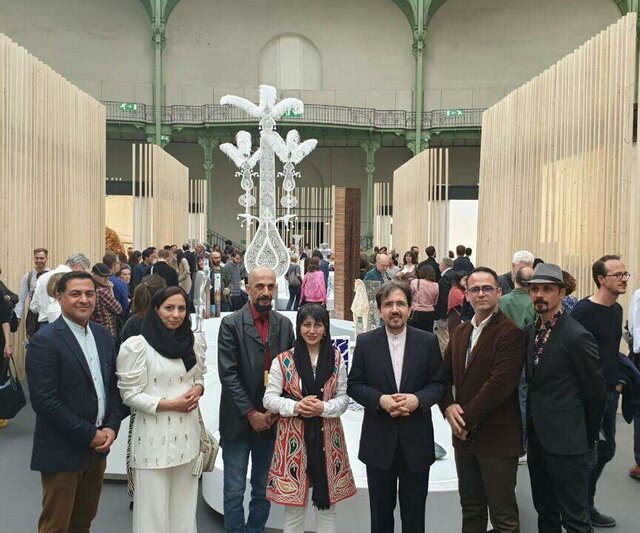
“In this exhibition, which was opened on May 22 and wrapped up earlier this week, in the presence of ambassador of the Islamic Republic of Iran to France Bahram Qassemi and Iranian cultural attaché in Paris, part of Iran’s artistic power and beauty has been featured.”

Reports say Iranian works have been warmly welcomed at the exhibition, and the organisers of this cultural event have also welcomed the presence of Iranian artists.

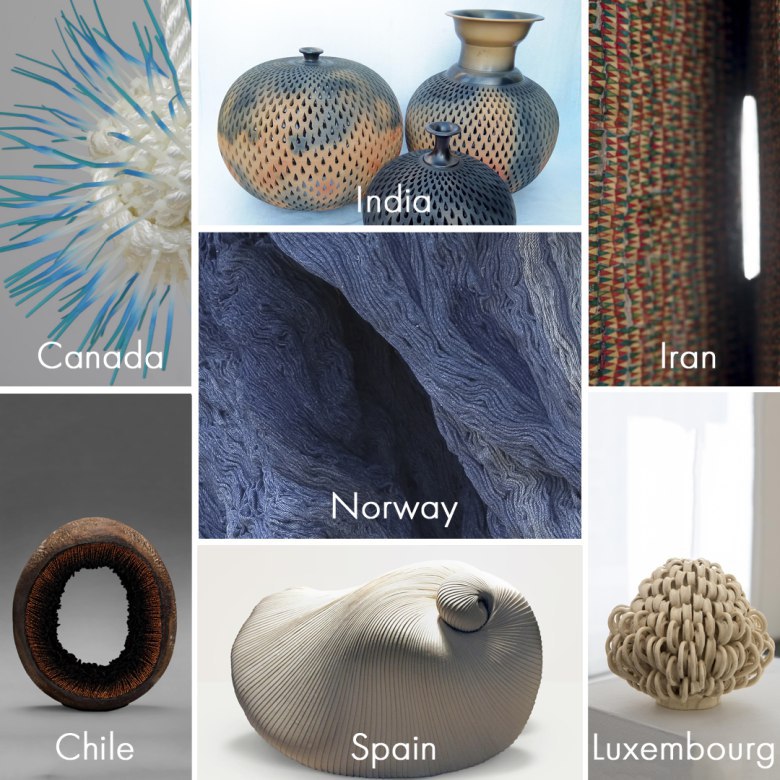
Iranian Artworks Warmly Received at French Biennial of Fine CraftMehdi Shirahmadi, Nima Nasiri, Mohammad Bahabadi, Mohammad Reza Khalaji, Nafiseh Khalaj, Kourosh Arish, Behzad Azhdari, Mohammad Ali Sajadi, Mohsen Tohidi and Hirbod Hemmat Azad took part at the Fine Craft Festival of France.

Mehdi Shirahmadi, Mohammad Behabadi and Mohammad Reza Khalaji are sculptors, Nima Nasiri is an enamel painter artist, and the rest of them are ceramic artists.

According to Mahmoudian, many of the fans and visitors have paid great attention to the Iranian artworks for their originality and creativity.

The Fine Craft exhibition was held in Champs-Élysées Avenue in Paris.

Iran’s Ambassador, who had a two-hour visit to this exhibition, in an interview with the artists and officials of the Iranian pavilion, praised their works, saying that the exquisite art used in these works, inspired by craftsmanship, has made it possible to display the magnificence of this new and influential art to the audience.

Iranian Artworks Warmly Received at French Biennial of Fine Craft