Wednesday, January 7, 2026
Home Blog Page 3218

Iran Says 33 Million Cyber Attacks Thwarted in Past Year

Azari Jahromi made the remarks in a Monday tweet, but did not reveal who was behind the attacks.

He said the country has been facing cyber terrorism since a long time ago, and that includes the Stuxnet and unilateral sanctions.

The minister’s comments come after US media reported that Washington launched a cyber-attack on Iranian weapons systems.

It was claimed the cyber-attack disabled computer systems controlling rocket and missile launchers. The reports said it was in retaliation for the shooting down of a US drone as well as attacks on oil tankers that the US has blamed on Iran. Neither Iran nor the US have rejected or confirmed the reports.

Iran has disconnected much of its infrastructure from the internet after the Stuxnet computer virus disrupted Iranian centrifuges in the late 2000s.

Europe Not Active Enough to Save JCPOA: German MP

Omid Nouripour, who sits on the Foreign Relations Committee of the German Parliament, said in an interview with Mehr News Agency that the Iran nuclear deal known as the Joint Comprehensive Plan of Action (JCPOA) as well as Iran’s security should be preserved.

“I think the JCPOA is a very important agreement for the security of Europe, Iran, the Middle East and, generally speaking, international security,” said the parliamentarian, who held some consultations with Iranian officials about the JCPOA during a his recent day-long trip to Tehran.

The Iranian-born German MP also weighed in on his assessment of the meetings he held with Iranian authorities.

“The Europeans have not been active enough to preserve the JCPOA, and they have not shown enough reaction to the United States,” he said.

“Of course, it is a tough situation now, and I should say the US economic pressure is not on Iran only; so, it would be a little bit difficult to create a balanced situation under the current circumstances,” the legislator added.

He underscored the importance of preserving the JCPOA in a bid to ensure Iran’s security.
“One of the reasons behind the importance of safeguarding the JCPOA is that if the agreement is scrapped, Saudi Arabia would become more inclined to boost its nuclear activities in order to develop an atomic bomb, which will be perilous for the Middle East and Asia,” he said.
He also responded to the question that whether or not he had any special message for Iranian officials.

“The first message is that the JCPOA is very important for Europe. The second message is that we [Europeans] know that we should be more active, and, finally, the third message is that preserving the JCPOA would contribute to Iran’s security as well,” the MP said.

Mehr News Agency said evidence shows Europe is not only not serious enough to implement the Instrument in Support of Trade Exchanges (INSTEX) mechanism, but seeks to buy time. In response, the MP said:

“INSTEX can be a very strong mechanism. I hope the Europeans will become more active in the remaining days until June 27, 2019 and show they are prepared to invest in efforts to save the JCPOA,” he noted.

The German legislator said the Iranians have more expectations from Germany than they have from France and Britain when it comes to preserving the JCPOA.

“Europe has come to realize the importance of the JCPOA, and Germany, France and the UK are all interested in making every effort to preserve the agreement,” he said.

“Meanwhile, it is noteworthy that at this juncture, the US economic pressure on Iran has made the job a little difficult for China and Europe. So, the foreign ministers and economy ministers of all European countries have held discussions and meetings in that regard,” he said.

He was asked whether or not the foreign ministers of the three European countries would have a new package of proposals for Iran if they possibly travel to Iran in the future. In response, he said Europe has not been active enough, so far.

“The Europeans should know that the packages that they have presented so far have not been enough, and they need to become more active than ever. In addition to the economic issue, the issue of Iran’s security should be taken into account as well,” he said.

“Preserving the JCPOA is directly linked to Saudi Arabia’s failure to acquire nuclear weapons, and if both sides come to realize this important point, we will be witnessing better achievements,” he said.

He also commented on Europe’s failure to react to Riyadh’s nuclear activities.

“Europe’s silence in that regard was, is, and will be a big mistake. The technical reason behind it is Europe’s numerous problems with the US government. This case is one of them,” the German legislator said.

Nouripour said the JCPOA serves as an impediment to Saudi attempts to gain nuclear arms.

The German lawmaker also touched upon the recent incident in which two oil tankers were hit by explosions in the Sea of Oman.

Europe Not Active Enough to Save JCPOA: German MP“In my view, this issue should be taken out of Britain and the United States’ hands and assigned to the UN for better, further and more precise follow-up work, so that no country would be able to create hurdles for another one,” said the parliamentarian.

“The important point is that Germany will act as a European Union member with regard to this issue; meanwhile, one should bear in mind that any military action in the region would be catastrophic for everyone. So, we oppose the United States’ militarism in the region,” he said.

Iran Says No Reason Left for It to Honour Nuclear Deal

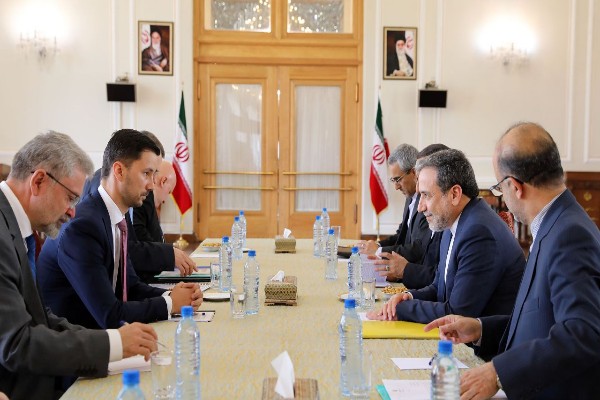
Less than two weeks before Iran’s 60-day deadline for balancing the nuclear deal in accordance with the Article 36 of the JCPOA, British Deputy Foreign Secretary for the Middle East Mr Andrew Murrison visited Tehran on Sunday, June 23, 2019, and held a meeting with Deputy FM Araqchi.

In the meeting, Mr Murrison reaffirmed his government’s commitment to the JCPOA, and said, “The UK is determined to bring the INSTEX financial channel into operation as soon as possible.” He also called for a continuation of Iran’s full commitment to the JCPOA.

In response, Iran’s deputy foreign minister highlighted the European countries’ procrastination and failure to honour their commitments under the JCPOA, saying, “Sadly, there is no balance between our obligations and rights under the JCPOA; therefore, there remains no more reason for Iran to continue honouring the JCPOA.”

“We are convinced that Europe’s lack of commitment to its JCPOA undertakings was not because of incapability, but lack of determination. Europe is not ready to pay any cost for preserving the JCPOA. The European companies dare not to disobey the US Treasury Department’s orders, which means Europe’s lack of sovereignty, even inside its own borders,” Araqchi added.

“The decision to scale down Iran’s commitments under the JCPOA is a national and irreversible decision, and the Islamic Republic of Iran will keep to this trend until its demands are met,” he stated.

Araqchi also criticized the UK government’s one-sided stances on the regional issues, including its baseless accusations against Iran after the attacks on oil tankers, noting, “It appears that the British government’s entanglement with the predicament of Brexit has prevented it from having a correct understanding of the global realities. Immature companionship with the US’ bully-style measures will result in nothing but an increase in the Iranians’ historical aversion to the UK policies.”

The two officials also discussed bilateral issues, including Britain’s financial debts to Iran. Pointing to the UK government’s debt to the Iranian nation unpaid for forty years, Araqchi called for an immediate settlement of the debts, stressing that the UK government’s refusal to do so would not be acceptable with any justification.

On the prisoners with dual nationality and Mrs Zaghari’s husband’s sit-in in front of the Iranian Embassy in London, Araqchi said, “The Islamic Republic of Iran’s Judiciary will not be influenced by such acts of blackmail, and those convicted of espionage must serve their terms.”

Afghanistan Producing 84% of World’s Opium: Iran

Secretary of an anti-drug council in Iran’s southeastern province of Sistan and Baluchestan said Iran’s neighbour, Afghanistan, produces more than 84 percent of the world’s opium, a thick paste from poppy used to make heroin.

A report from ISNA quoted Zandi as saying that as many as 803 synthetic drugs have been created in the world and their production has jumped by 384 percent.

Around 800 servicemen have been martyred and 2,400 others injured in the war on drugs in the province of Sistan and Baluchestan alone, he added.

Iran shares a 900-kilometer border with Afghanistan and has been used as a main conduit for smuggling Afghan drugs to narcotics kingpins in Europe.

Despite high economic and human costs, the Islamic Republic has been actively fighting drug-trafficking over the past decades.

The country has spent more than $700 million on sealing its borders and preventing the transit of narcotics destined for European, Arab and Central Asian countries.

The war on drug trade originating from Afghanistan has claimed the lives of nearly 4,000 Iranian police officers over the past four decades.

Cryptocurrency Miners in Iran Warned of Power Cut

A Comprehensive Guide for Beginners Planning to Become a Bitcoin Trader!

In comments on Sunday, the spokesperson for Tavanir, an Iranian state-run company in charge of power supply and distribution, said the country’s consumption in the previous Iranian month has risen by 7 percent compared to the corresponding period last year.

Such increase was mainly caused by the Bitcoin miners’ outsize thirst for electricity, Mostafa Rajabi Mashhadi added.

It is illegal to use the national grid for cryptocurrency mining, he added, saying the electricity users producing digital currencies, like Biotcoin, will be detected and their power will be cut off.

Every Bitcoin mining machine that is powered by the same cheap source of electricity available to houses consumes the equivalent of 24 dwellings, the spokesman added, saying the administration has not still set a tariff on the power consumption of digital currency miners.

With electricity so reasonably subsidized that many Iranian occupants buy modern air conditioners with powerful compressors, the number of digital currency miners using power in the residential areas has been growing in recent years.

Bitcoin is a cryptocurrency and a form of electronic cash which many computer geeks believe will form the future of the global economy.

In a report released this month, Iranian economic daily Financial Tribune quoted the deputy energy minister of Iran as saying that electricity bills for digital currency miners should be calculated in accordance to real prices.

Homayoun Haeri has insisted that electricity bills for cryptocurrency mining activities should be priced according to the same rates established for power exports.

The administration reportedly pays nearly $1 billion in subsidies per annum to bridge the gap in real electricity costs and what consumers are billed.

Era of Gunboat Diplomacy Is Over: Iranian Nuclear Official

In a Sunday meeting at the Atomic Energy Organization of Iran, AEOI Spokesman Behrouz Kamalvandi and the UK’s Foreign Office Minister Andrew Murrison discussed the latest developments surrounding the 2015 Iran nuclear deal as well as the international issues.

In the gathering, held at the request of the visiting British minister, the Iranian official called on the parties to the nuclear deal to honor their commitments.

Kamalvandi also highlighted Iran’s resolve to carry out a series of measures in accordance with the Articles 26 and 36 of the JCPOA, noting that the Islamic Republic will continue to enrich uranium according to what has been declared by the president and the Supreme National Security Council.

In response to Murrison who called on Iran to show self-restraint and save the nuclear deal and also described the JCPOA violation as threatening, Kamalvandi said, “Such threats and maximum pressures imposed by the US are doomed to failure.”

“The era of gunboat diplomacy is over,” the Iranian official noted, saying Americans must have learnt from the recent weeks’ upheavals that their destructive policies have not only not led to the desirable results, but also escalated the tensions.

Murrison has visited Tehran to discuss “urgent de-escalation” of regional tensions during “constructive” and “transparent” talks with top Iranian officials.

Earlier, the UK Foreign Office had announced the trip, saying that “the UK has an ongoing diplomatic dialogue with Iran.”

In announcing May 8 that it would no longer observe several limitations on its nuclear program, Iranian officials have decided to confront the “maximum pressure” campaign initially by beginning a “soft” diplomatic step based on articles 26 and 36 of the JCPOA.

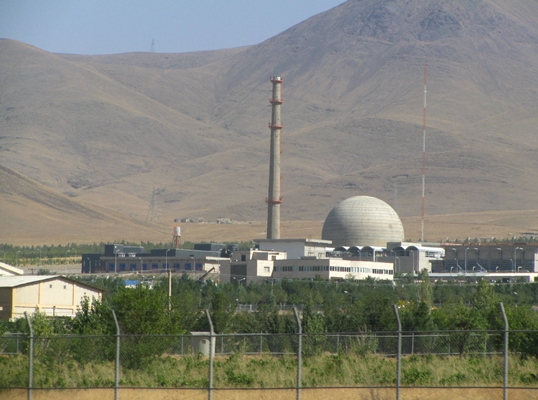
Iran’s hope is that the remaining members of the deal, especially the European countries, take the matter seriously and find a viable means of trading with Iran. If this doesn’t happen, Iran will take the second step including enriching uranium beyond 3.6 percent and redesigning the Arak heavy water nuclear plant, which can produce plutonium, another potential fuel for nuclear weapons.

All Sorts of US Sanctions Already Imposed on Iran: Spokesman

Spokesman Answers Questions on Cyberattacks on Iran

In comments on Sunday, Abbas Mousavi said the US sanctions against Iran are only serving Washington’s propaganda purposes.

“The US has already imposed every kind of sanctions it has been considering, and there is no more sanction remaining,” he added.

Pointing to the litany of American sanctions imposed on the Iranian individuals and companies and denouncing the White House’s economic terrorism and war against Iran, the spokesman said there is no more type of sanctions that may have been untried by the US.

“They (the US) have been imposing sanctions on us for forty years, and we have been resisting to them for forty years,” Mousavi concluded.

In remarks earlier this month, Mousavi condemned the most recent American sanctions imposed on Iran’s petrochemical industry as a brazen instance of economic terrorism, saying the hostile move lays bare the US hypocritical call for negotiations.

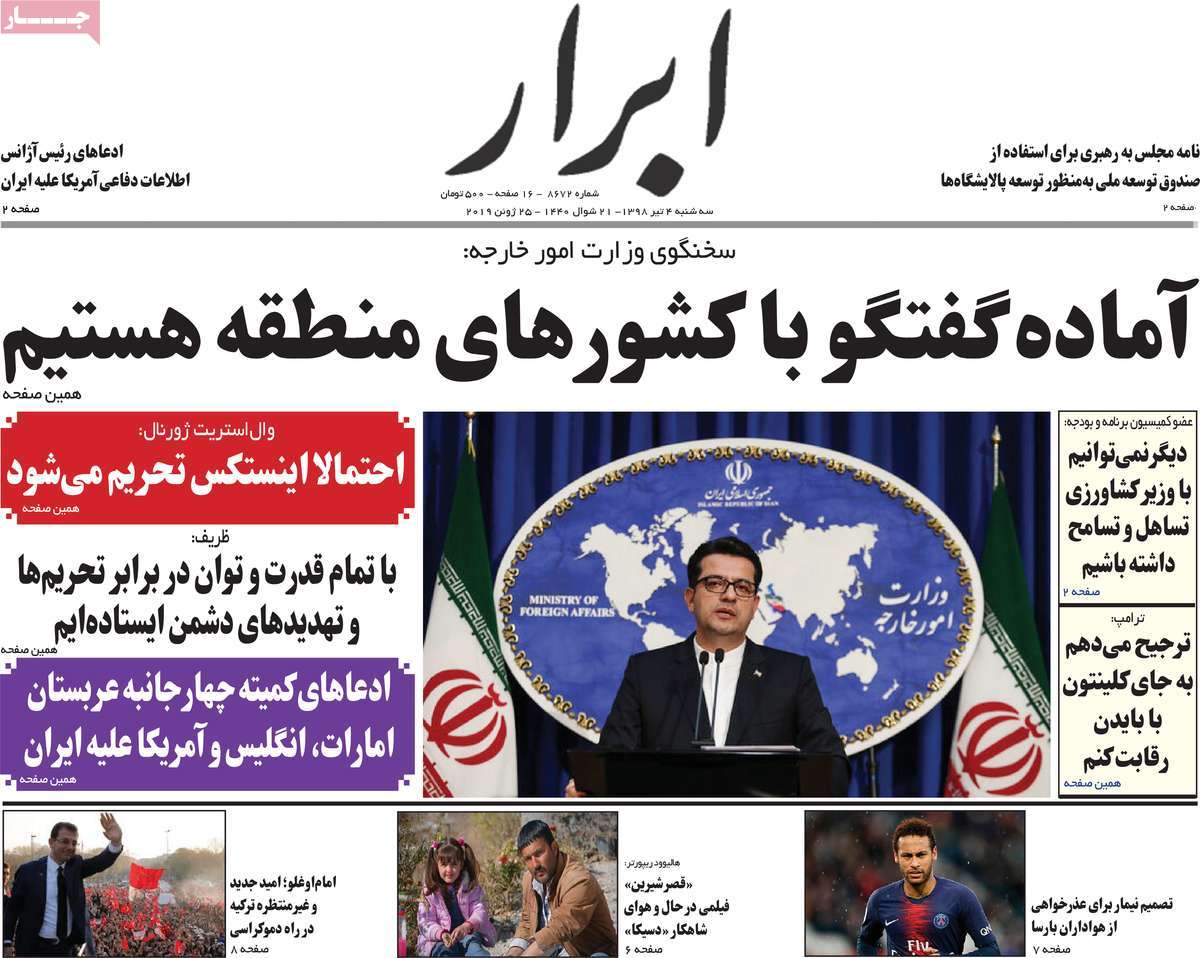
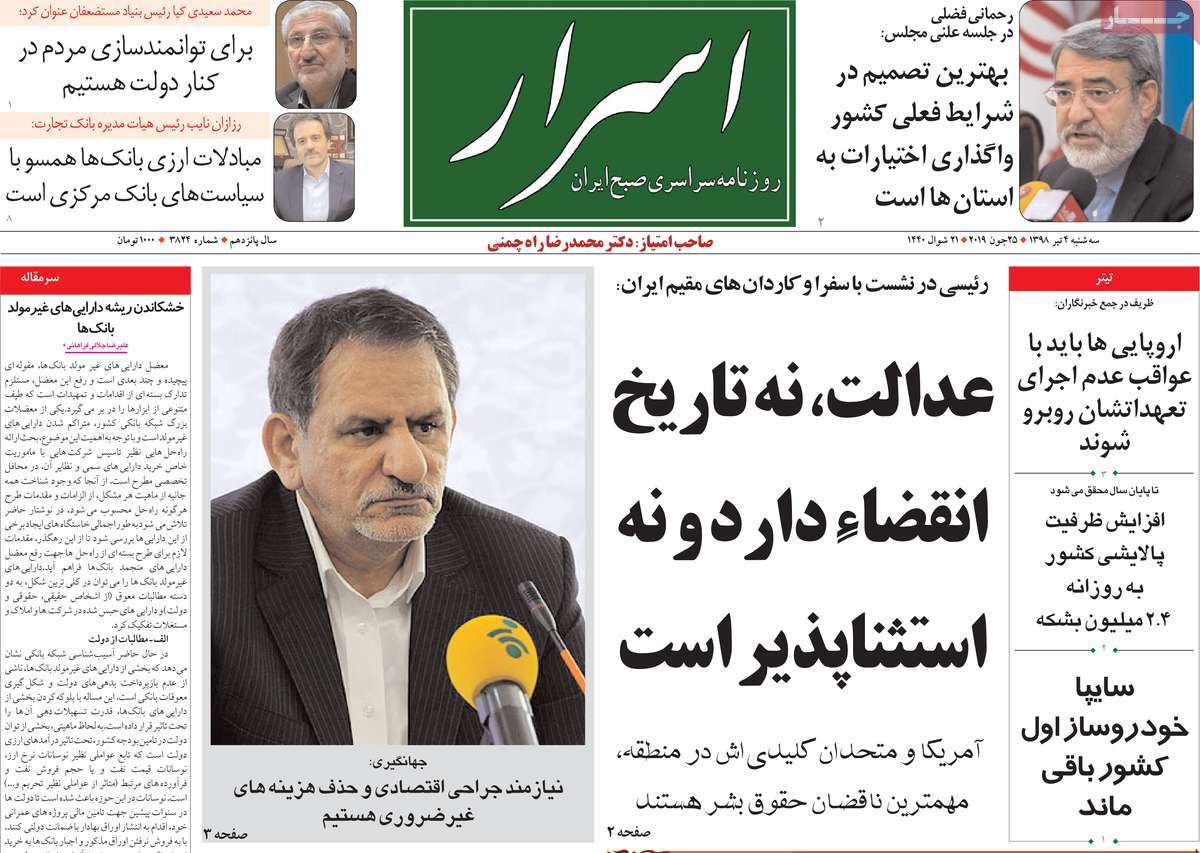
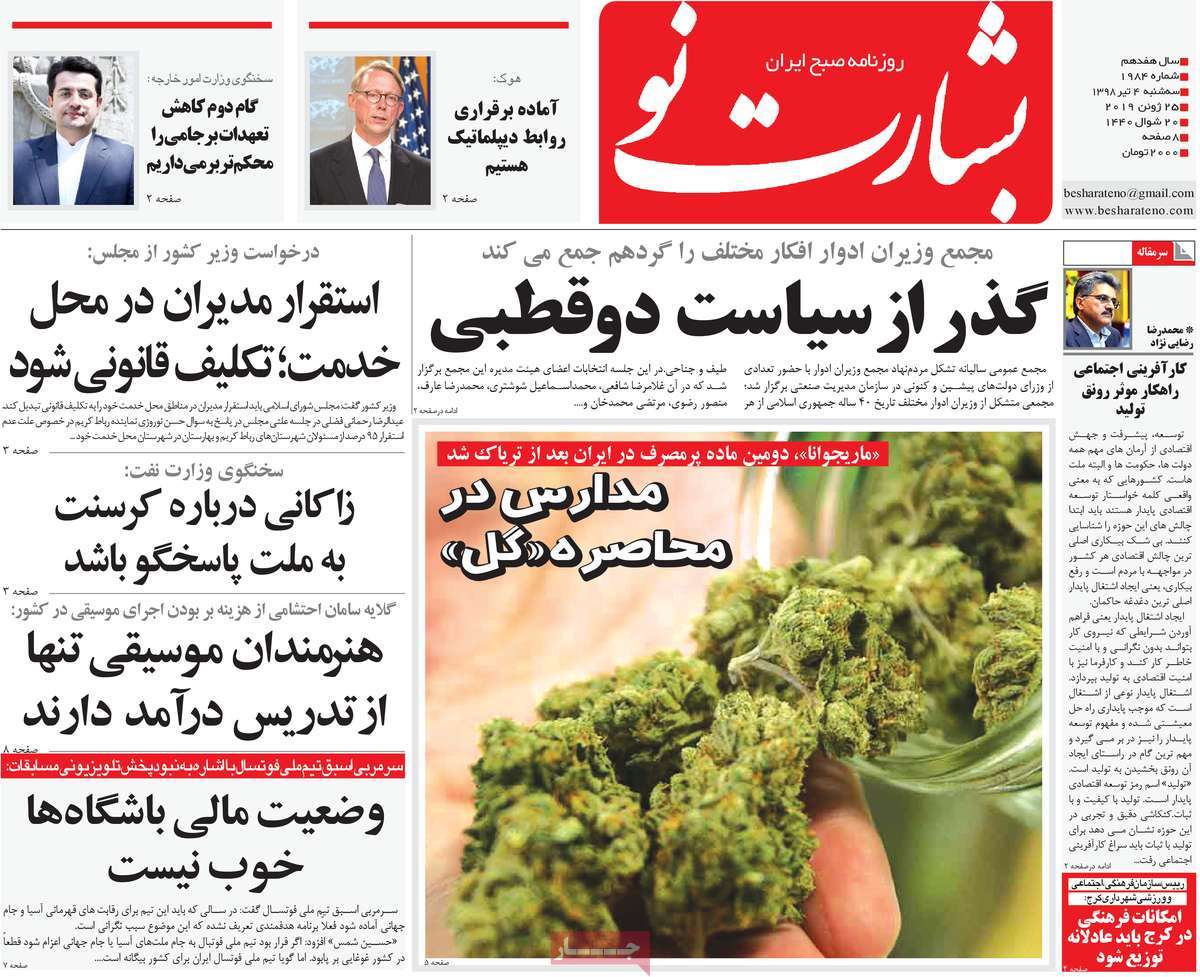
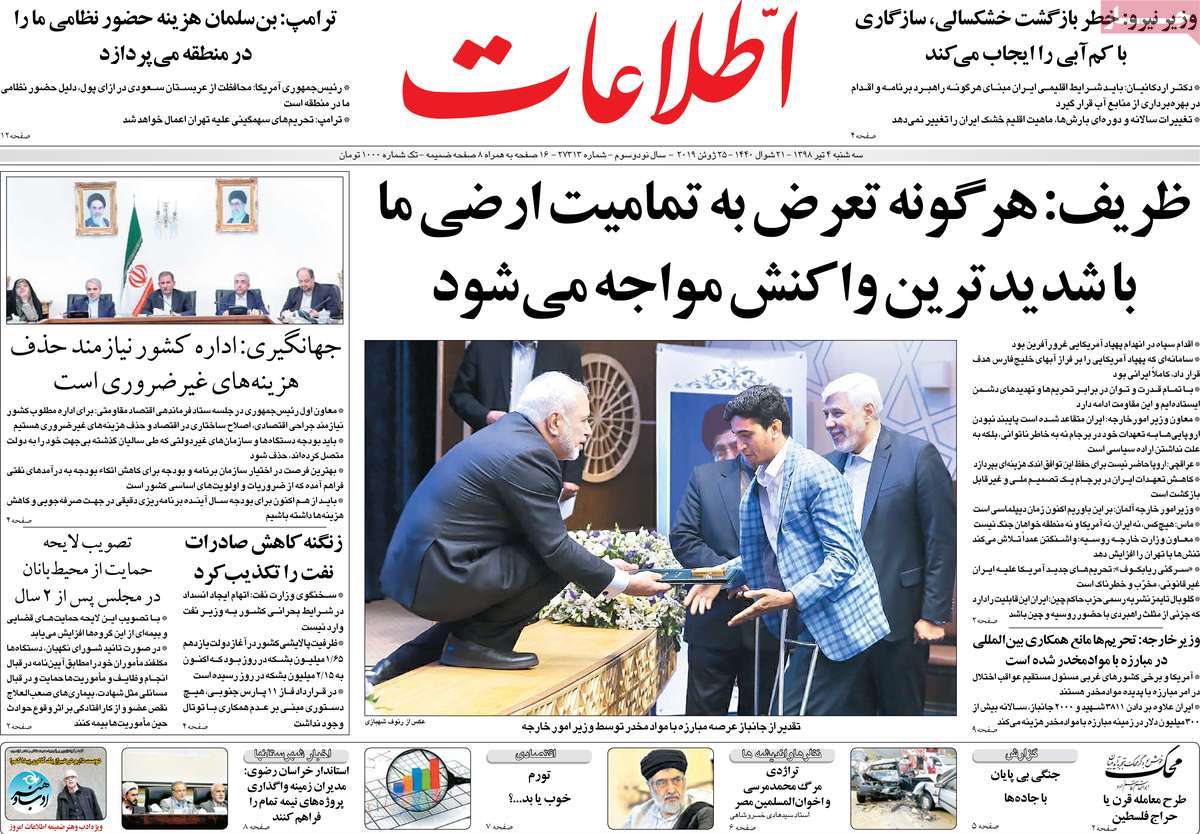
A Look at Iranian Newspaper Front Pages on June 23

A Look at Iranian Newspaper Front Pages on November 19

Dey 19:

1- This Is US that Provokes Iran: Mahathir Mohamad
2- Pulling Out of JCPOA Trump’s Big Mistake

A Look at Iranian Newspaper Front Pages on June 23


Aftab-e Yazd:

1- 17 Iranian Reformist Figures Write Letter to UNSG about US Behaviour, Nuclear Deal Pullout

2- “Russia Behind EU in Implementing JCPOA”

A Look at Iranian Newspaper Front Pages on June 23


Arman-e Emrouz:

1- Trump Needs Iran for Elections: Expert
• Trump after Disintegrating Iran

A Look at Iranian Newspaper Front Pages on June 23


Ebtekar:

1- Trump’s Enigma
• US President Once Again Call for Negotiation with Iran without any Preconditions
2- Arba’een to Beat Record
• Arba’een March to Be Jointly Recorded at UNESCO

A Look at Iranian Newspaper Front Pages on June 23


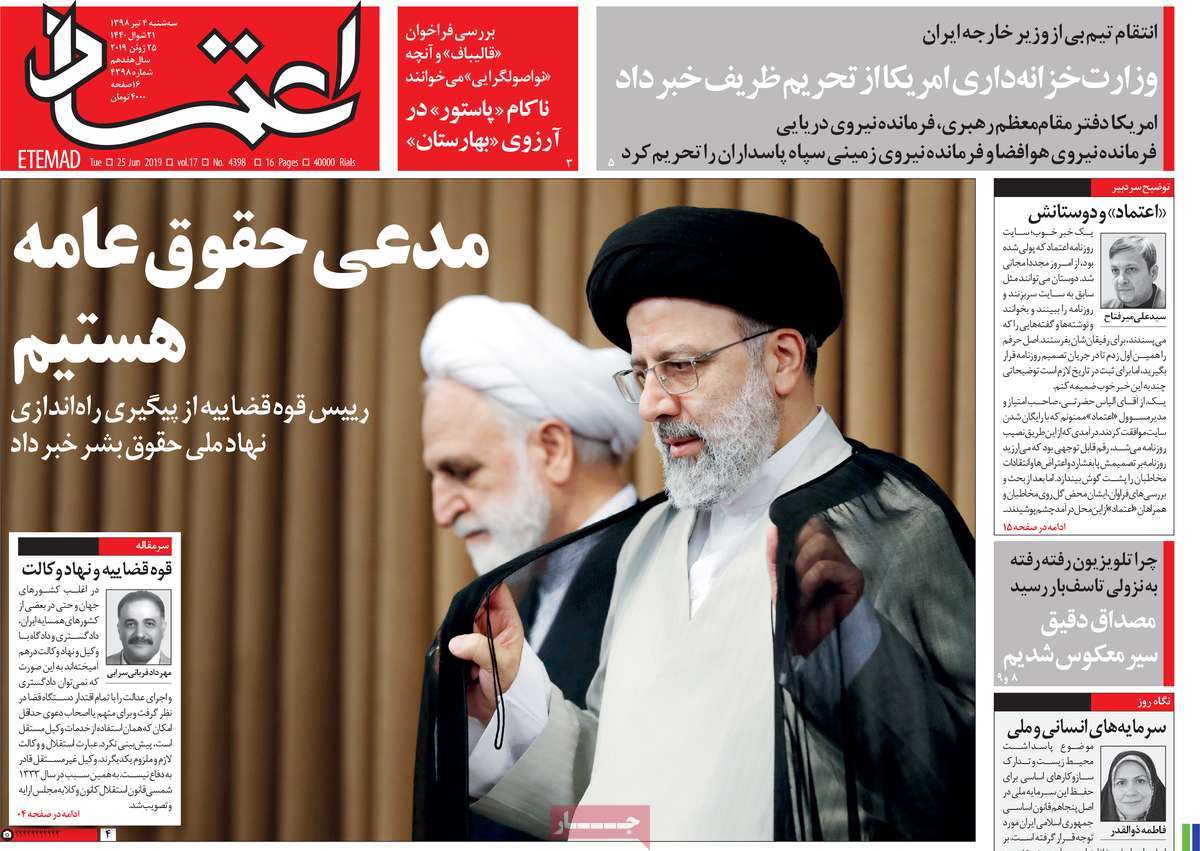
E’temad:

1- Georgians Stage Anti-Russia Protests
2- Foreign Airliners Still Fly over Iran Despite Propaganda against Iran

A Look at Iranian Newspaper Front Pages on June 23


Iran:

1- Europe’s Message to Iran
• We know that Iran Is Angry, but INSTEX to Be Launched Soon: Mogherini

A Look at Iranian Newspaper Front Pages on June 23


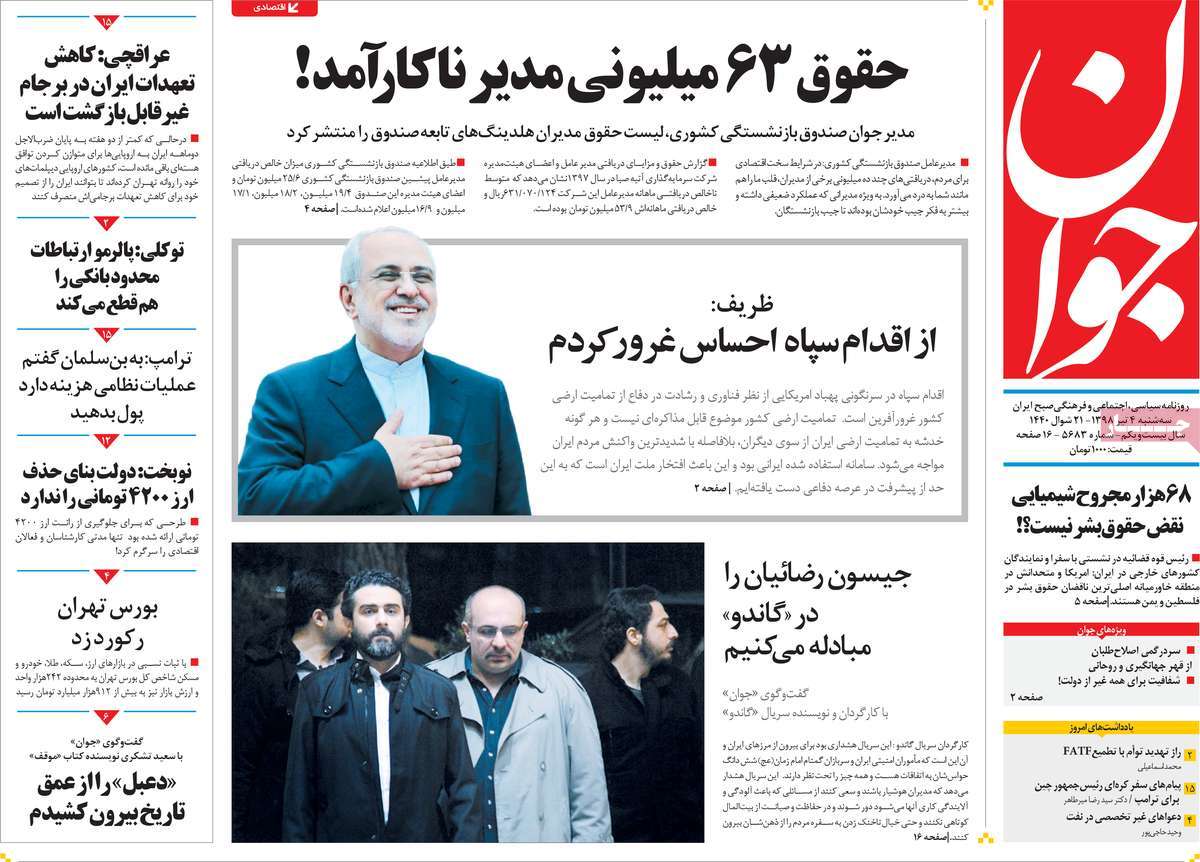
Javan:

1- Trump Cancels Attack for Fear of Iran’s Response: US Sources
2- We Appreciate that Iran Did Not Shoot Down P-8 Aircraft: Trump

A Look at Iranian Newspaper Front Pages on June 23


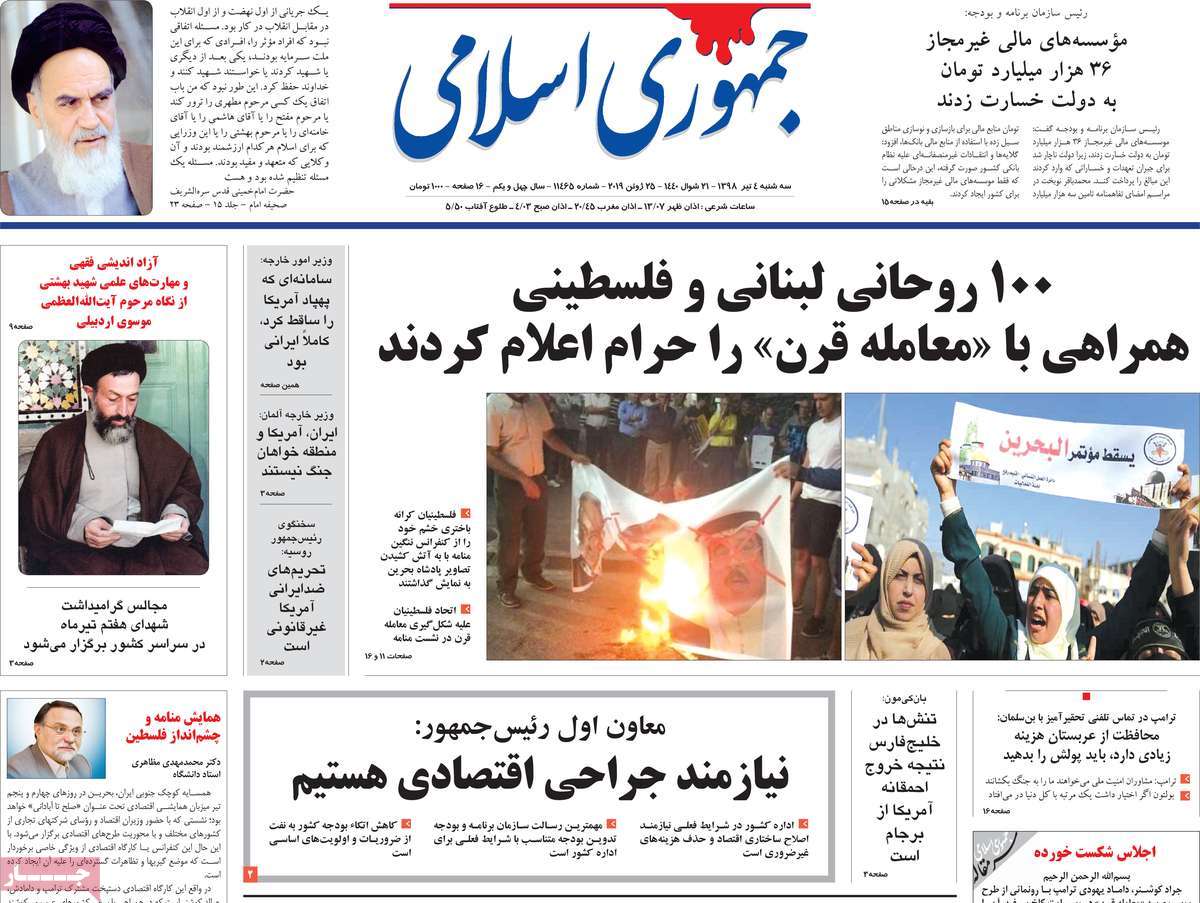
Jomhouri Eslami:

1- US, European Media Rebuke Trump
2- We Do Our Best to Save JCPOA: Mogherini
3- Planners of Deal of the Century Made Mistakes that Even Novice Politicians Did Not: Ex-Mossad Chief

A Look at Iranian Newspaper Front Pages on June 23


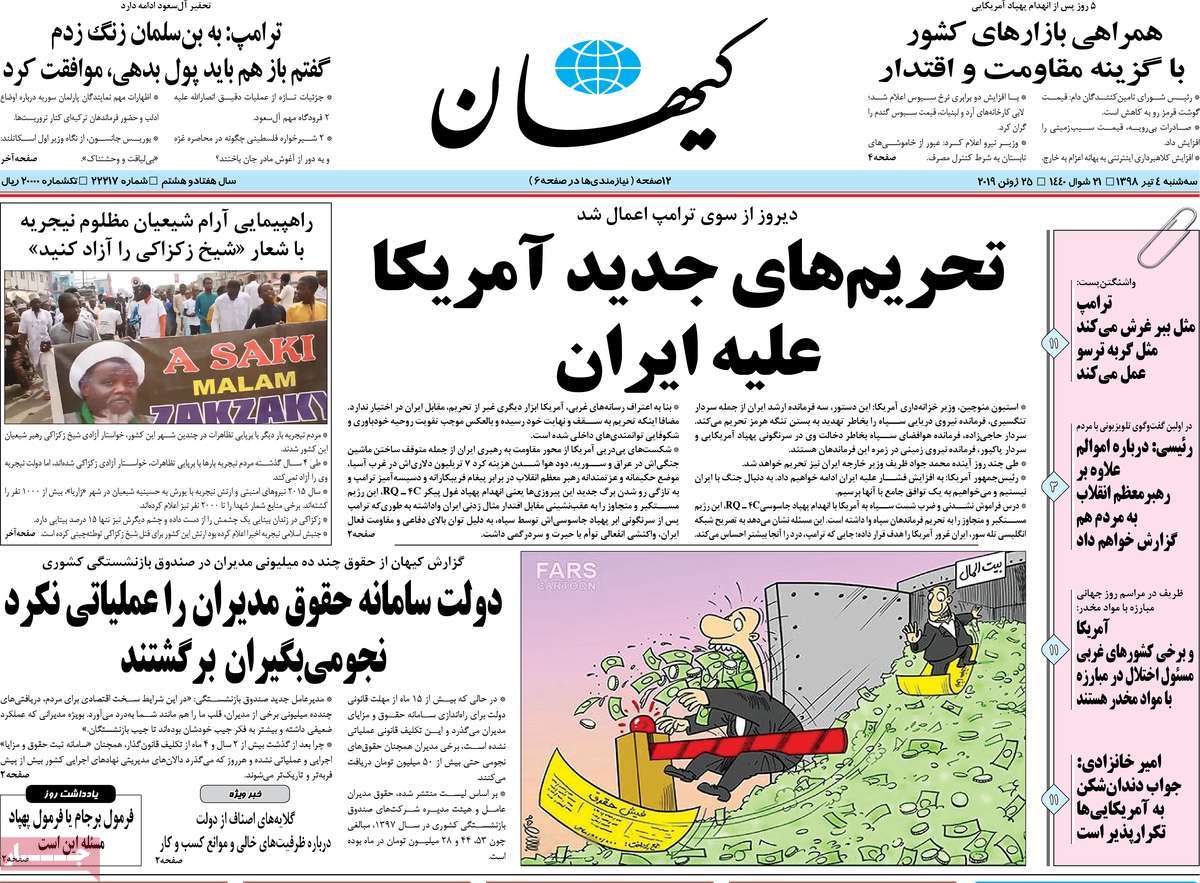
Kayhan:

1- US Army Humiliated; Trump Bombards Iran with His Tweets!
2- Iran’s Sky Safest Space for Flights: Iran Civil Aviation Organisation

A Look at Iranian Newspaper Front Pages on June 23


Sazandegi:

1- Who Stopped Trump?
• US Military Men against Armed Response to Drone Downing

A Look at Iranian Newspaper Front Pages on June 23


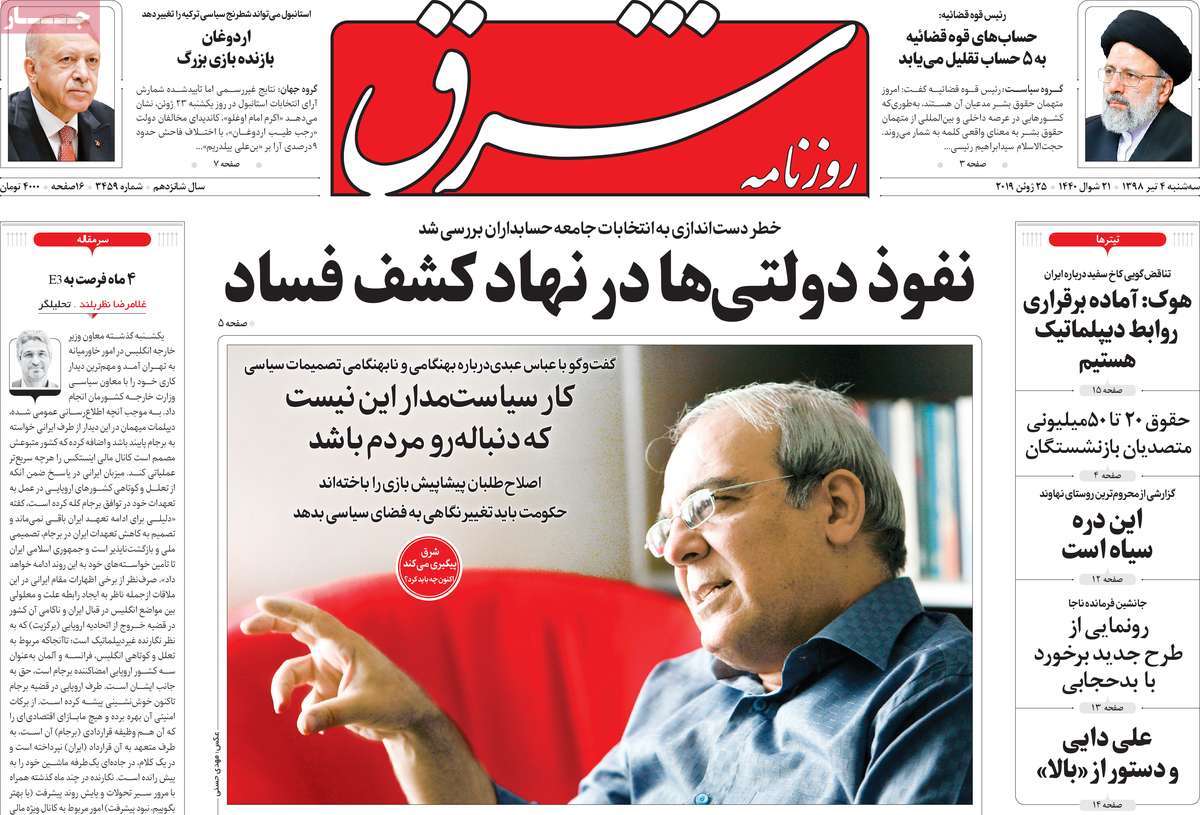
Shargh:

1- Why US President Did Not React to Downing of Drone
2- Iran ‘Very Wise’ Not to Shoot Down Manned US Plane: Trump
3- IRGC Commander Warns against More Airspace Intrusion

A Look at Iranian Newspaper Front Pages on June 23


Ta’adol:

1- Russia Says Will Purchase Iran’s Oil, Develop Cooperation with Iran if INSTEX Fails
2- We Do Not See Military Presence in Persian Gulf as Positive

A Look at Iranian Newspaper Front Pages on June 23


Vatan-e Emrouz:

1- We Thank Iran!: Trump
2- Mahathir Mohamad’s Full Support for Iran
• Malaysian PM Slams US for Tension in Region, Anti-Iran Sanctions
A Look at Iranian Newspaper Front Pages on June 23

Prudence Prevented B-Team from Taking Trump into War: Iran

“More evidence — including encroachment of a MQ9 spy drone on 5/26, speedboat purchases & phone calls planning to attribute ship attacks to Iran — indicate B-Team was moments away from trapping Trump into a war,” Zarif said on Sunday.

“Prudence prevented it, but Economic Terrorism brings tension,” he went on to say in his tweet.

The new pieces of evidence highlighted by the Iranian foreign minister include the leaked audio of a phone conversation between two MKO elements, which revealed a Saudi plot to frame Iran for the recent tanker attacks.

In the audio, which was first released by the Iran Front Page, two members of the anti-Iran terrorist group, the Mujahedin-e-Khalq Organization, are heard talking about Saudi Arabia’s collusion with the MKO elements to pin the blame on Iran.

Shahram Fakhteh, an official member and the person in charge of MKO’s cyber operations, is heard talking with a US-based MKO sympathizer named Daei-ul-Eslam in Persian.

In this conversation, the two elements discuss the MKO’s efforts to introduce Iran as the culprit behind the recent tanker attacks in the Persian Gulf, and how the Saudis contacted them to pursue the issue.

“In the past week we did our best to blame the [Iranian] regime for the [oil tanker] blasts. Saudis have called Sister Maryam [Rajavi]’s office to follow up on the results, [to get] a conclusion of what has been done, and the possible consequences,” Fakhteh is heard saying.

“I guess this can have different consequences. It can send the case to the UN Security Council or even result in military intervention. It can have any consequence,” Daei-ul-Eslam says.

Attacks on two commercial oil tankers in the Gulf of Oman on June 13, and an earlier attack on four oil tankers off the UAE’s Fujairah port on May 12, have escalated tensions in the Middle East and raised the prospect of a military confrontation between Iran and the United States.

The US, Saudi Arabia, and the UAE have rushed to blame Iran for the incidents, with the US military releasing a grainy video it claimed shows Iranian forces in a patrol boat removing an unexploded mine from the side of a Japanese-owned tanker which caught fire earlier this month.

The MKO which has assassinated over 17,000 Iranians receives support from the US and its allies in the region, including Saudi Arabia.

World Must Rap US Violation of Iranian Airspace: Rouhani

Rouhani made the remarks in a Sunday meeting with President of the Inter-Parliamentary Union Gabriela Cuevas Barron in Tehran.

“The US recently violated Iran’s airspace with their UAVs and Iran’s defence forces downed a drone after it did not pay attention to multiple warnings. This region is a very sensitive and the security of the Persian Gulf and the Sea of Oman are important to many countries, so we expect all international institutions respond appropriately to this aggressive US action.”

He went on to say that during the past 17 years, US interventions in Afghanistan, Iraq, Syria and recently in Yemen have caused many problems, and Tehran believes the security of all regions of the world and the Persian Gulf must be provided by the regional countries.

Rouhani further said unilateralism is the main problem in the world today, and many of the regional and global problems are due to the dictatorship and bullying of some countries, especially the United States.

He noted that this dictatorship is rooted in violating international law and moving towards unilateralism.

Rouhani further noted that the Islamic Republic of Iran’s approach is to reduce tensions, to avoid any conflict between the military forces of the countries, and to develop peace and stability in the region and the world.

The president noted terrorism, unilateralism and environmental problems are among the problems of today’s world, and in order to overcome them, parliamentary and international cooperation must be developed.

Rouhani further stressed the Islamic Republic of Iran has always had good cooperation and close ties with the Inter-Parliamentary Union, saying that “it is very important to examine the important international issues and to hear the views of members of the parliaments of different countries at various meetings of this union to reach a joint conclusion.”

He said in the past year the United States pulled out of the nuclear deal as a multilateral agreement and violated the United Nations Security Council resolution 2231. “Today, we see that the countries which are acting in accordance with UN resolution 2231 are being punished by the United States,” maintained Rouhani.

The Iranian president pointed out that the United States has launched economic terrorism against the Iranian people, and it even has imposed sanctions on pharmaceuticals and food.

For her part, Gabriela Cuevas Barron said the Islamic Republic of Iran has played an important role in the peaceful dialogue and resolution of conflicts and promoting multilateralism in the world.

She said the nuclear deal proved that multilateralism and interaction is very important to achieve peace across the region and the world.

“The JCPOA has a very strong content and today, the whole world knows that dialogue and engagement are crucial to achieve stability and peace,” added IPU president.

“Today, the world must learn from Iran’s successful experience and respect international negotiations and agreements.”

The IPU like Iran believes that unilateralism does not provide any solution to global problems, noted Cuevas Barron.

The IPU president said the JCPOA was a very good example of multilateralism in the international system saying “We hope Europe will comply with its commitments as soon as possible, because we believe people should not pay the price of other’s mistakes.”