Tuesday, December 30, 2025
Home Blog Page 3163

Iran Raps Europe’s ‘Hostile’ Deployment of Force to PG

Speaking at a press conference on Sunday, Ali Rabiei, the spokesman for the Iranian administration, said Iran believed that security in the region should be provided by the countries of the region and that the Islamic Republic would be “the main advocate” of such security action.

“A while ago, we heard that they intend to bring a European fleet to the Persian Gulf. It is believed that such measures are menacing under the current circumstances, carry a hostile message, and would stir tensions,” Rabiei said.

On Monday, former British foreign secretary Jeremy Hunt unveiled plans for a European-led naval mission in what he claimed would be aimed at ensuring safe shipping through the Strait of Hormuz. He also said that the planned European mission was not part of the US policy of exerting “maximum pressure” on Iran.

It came a few days after Iran’s Islamic Revolution Guards Corps (IRGC) impounded a British-flagged tanker because it failed to stop after hitting an Iranian fishing boat — as is required by international law — in the Strait of Hormuz.

The Iranian capture came 15 days after British naval forces seized an Iranian-owned supertanker and its cargo of 2.1 million barrels of oil in the Strait of Gibraltar, claiming that was carrying the oil to Syria in violation of the European Union (EU)’s unilateral sanctions on the Arab country.

While Tehran denied that the supertanker was bound for Syria, it warned that the move would not go unanswered.

Tehran also condemned the confiscation as “maritime piracy,” which reportedly took place at the request of the US.

“They should stop the robbery and release the ship,” Rabiei said in his Sunday remarks. “Definitely, we, too, would make a decision based on goodwill.”

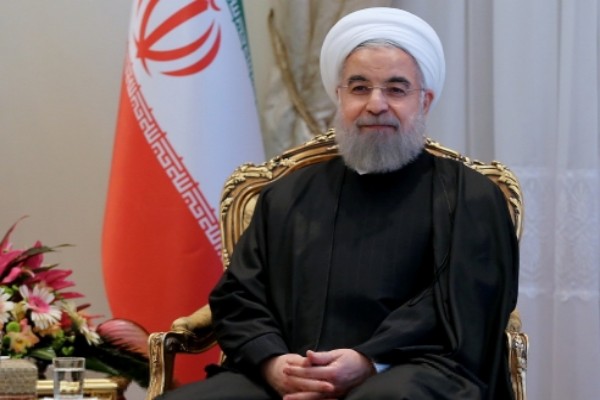
Foreign Forces’ Presence Root Cause of Regional Tensions: Rouhani

President Rouhani made the remarks in a meeting with Oman’s Foreign Minister Yusuf bin Alawi on Sunday in Tehran.

President Rouhani underlined that Iran has always sought to create a secure environment for free shipping in the Persian Gulf, Strait of Hormuz and the Sea of Oman.

Foreign Forces’ Presence Root Cause of Regional Tensions: Rouhani
Oman after Resolving Oil Tankers Dispute in Persian Gulf: Iran

He also expressed Tehran’s interest in expanding mutual ties with Muscat in all areas and said the relations between Iran and Oman have always been friendly.

“We should make hard efforts to expand mutual ties in various areas particularly energy and trade through more reciprocal visits and consultations on all issues,” he said.

Oman’s top diplomat arrived in Iran on Saturday to hold talks with Iranian officials amid rising tensions in the region.

Tensions have been running high between Iran and the US since last year after the latter unilaterally withdrew from the 2015 multilateral nuclear deal and unleashed the “toughest ever” sanctions against the Islamic Republic.

Oman says it is seeking to reduce tensions between the two sides.

Story of Pottery Entrepreneur Who Started from Ground Zero

Amin Mohebbi now employs more than 70 people in Narenjkala village near the city of Lahijan in northern Iranian Gilan province. He exports high-quality products to Iraq, Georgia and the Netherlands.

Mohebbi is known as one of the major producers of clayware in the country. Through his efforts and perseverance, Mohebbi has converted a small home workshop to a big factory, and is expanding it. This way, he will employ some 250 villagers from the locality and nearby areas.

Mohebbi has spoken of how he began his business.

“When I was a child, my father had a small pottery workshop. Pottery was the local job of people in Narenjkala,” he tells Fars News Agency.

Story of Pottery Entrepreneur Who Started from Ground Zero“When I married, I left our village like many other people in order to find work,” he adds.

“I used to work at a company in Qazvin and I had a comfortable life. As my father got old, his pottery shop was closed,” he says.

“Everything was running its normal course, but my brother, who was doing his military service, died in a car accident. So, I returned to my town to console my parents,” he says.

Mohebbi says it was hard for them to make ends meet when he returned.

“When we came back to [my hometown] the north [of Iran], we had nothing. I bought a pick-up with so much difficulty to make a living by carrying goods, but to no avail,” he adds.

“Then one of my friends suggested I put into service my father’s workshop, which had remained idle for years,” Mohebbi says.

“I had nothing. Even the old furnace had almost been destroyed and the [pottery] wheels had been worn out. But in the corner of the yard there were still as many pieces of clayware as would fit into a 6mx6m room. The clay had been left behind since the times my father used to work there. I laid the clay in the yard, picked the good pieces and loaded them onto my pick-up. I pulled over in front of the first clay shop in Astaneh and showed the shopkeeper the clayware that my father had made. The shopkeeper gave his compliments when he saw the samples and told me to unload as many of them I had. Then he ordered another 1000 pieces and fully paid for them in advance. At that time, the amount was equal to the annual salary of a worker,” said Mohebbi.

Story of Pottery Entrepreneur Who Started from Ground Zero“When I got home, I remembered that I had nothing to use to make clayware and that I had almost forgotten how to do it. I didn’t know where to start. I bought some earth and made clay out of them on the first night using my feet. I reviewed the things I knew with my father, and he reminded me of some techniques, too. I spent a whole day making the first item. I kept botching up the work and I had to start over. I prepared 5 pieces of clayware in the first week. Little by little, I got the knack of it. I filled a number of the orders and got orders again. Finally, I put the furnace into operation,” he said.

“After three months, the number of orders increased. We worked round the clock. We had become so skillful, and there were so many orders that we couldn’t keep up no matter how many pieces we produced. We decided to recruit workforce. We taught them how to do pottery. Our production increased considerably, and we employed more masters. We increased the number of furnaces, too, and launched the enameling system. Now, we have 70 masters and several furnaces, but they are not enough to handle the high number of orders.”

“We have promised every single one of those living in my village to expand the factory up to two-fold and employ 250 people directly. I’m doing this and it will soon happen,” he said.

“In and those I work with are members of one family. I have told them themselves that we wouldn’t make progress if it weren’t for them and their hard work. Some individuals come here without any assets. I give them materials and give them assets, so they will work and become skillful. I do this in order to thank those who helped me when I started this business,” he says.

Story of Pottery Entrepreneur Who Started from Ground Zero

Oman after Resolving Oil Tankers Dispute in Persian Gulf: Iran

Mohammad Reza Nouri Shahroudi has referred to the ongoing visit of Omani foreign minister to Tehran and said the Omanis are seeking to resolve regional disputes by finding a solution to the oil tankers dispute in the Persian Gulf.

In an exclusive interview with Alef website, the ambassador said Oman has shown it has a fair approach towards regional issues particularly when it comes to Iran. “We hope that this time, the Omanis could reach a fair solution to the current crisis,” he said.

He expressed hope that as in its previous efforts, Oman could act fairly in its mediatory efforts to resolve the dispute.

Nouri Shahroudi then said the main goal of the Omani foreign minister’s visit to Iran is to find a solution to the current oil tanker dispute in the Persian Gulf. “The Omani official is seeking to find a way to release the oil tanker with Iranian oil seized by Britain in Gibraltar and is holding talks with the Iranian officials on the issue.”

He then referred to the repercussions of the US economic terrorism in the region and said during his stay in Tehran, the Omani diplomat also holds talks on other issues including the US sanctions on the country.

“The Omani government is seeking to offer some economic solutions to Iran’s problems. To this end, Oman is trying to facilitate visa issuance for Iranians so that they can visit the Arab country for 10 to 30 days without visa,” he said.

On mutual ties between Iran and Oman, he said the two sides have already resolved their differences on a number of issues including infrastructure and shipping.

The foreign minister of Oman Yusuf bin Alawi arrived in Tehran for talks with Iranian officials amid mounting tensions in the Persian Gulf between Iran and the United States.

British royal marines seized an oil tanker with Iranian oil near Gibraltar earlier this month. The seizure was made on the suspicion that it was ferrying a cargo of 2.1 million barrels of Iranian crude oil to Syria, in contravention of European sanctions. Iran denied the tanker was heading for Syria.

Later, Iran also seized a British-flagged oil tanker in the Strait of Hormuz over the vessel’s violation of international maritime rules.

Iran’s Beauties in Photos: Kordasht Historical Bath

You may enter the building via a staircase leading to its first vestibule; then you will arrive in the bath’s Sarbineh– dressing room- with an octagonal structure, which is attached to the ceiling with eight columns.

The lime art on the bath’s walls is a main attraction of the building. The bath’s water used to be supplied by Aras River.

The building was constructed at the time of the great Safavid king, Shah Abbas (1588-1629), and was later renovated during the reign of Qajar kings to be used as the residence of Abbas Mirza, the son of Fath-Ali Shah (1789-1833).

When Shah Abbas built the bath, it could only be used by the kings and rulers of the region. However, after the Safavid dynasty, the first Qajar King Agha Mohammad Khan (1789-1797) turned the bath into a public one.

A few years later, poor maintenance resulted in the partial destruction of the bath, and people no longer used it.

What follows are IRNA’s photos of Kordasht bath:

Italian Coach’s Wife Charmed by Tehran’s Beauties

The Italian coach’s wife, along with their two children, arrived in Tehran a few days ago and was taken by club officials to the five-star Espinas Palace Hotel where Stramaccioni is staying.

In recent days, photos shared by Stramaccioni’s wife on her Instagram page have attracted the attention of many, especially the fans of Esteghlal FC, and the number of her followers has dramatically increased.

It seems to have been quite a surprise to Stramaccioni’s wife, Dalila, as she publishes the number of likes and visits to her page in separate stories!

Italian Coach’s Wife Charmed by Tehran’s BeautiesDalila published a photo on the first day of her stay in Tehran showing her sitting in a traditional restaurant at the Espinas Palace Palace Hotel, while smoking hookah!

Perhaps before this, Dalila had never experienced smoking hookah, but when she arrived in Tehran, she got to know it. Now it seems smoking hookah has turned into one of Stramaccioni and his wife’s hobbies in Tehran.

In recent days, Dalila repeatedly pointed to the beauty of the Iranian capital by posting pictures of Tehran on her page.

She currently has to live with her husband in the hotel until Esteghlal FC managers rent them a house.

In one photo, she is seen standing on the terrace of the hotel to take pictures of Tehran’s beauties at night, which seem to have attracted Dalila’s attention.

Italian Coach’s Wife Charmed by Tehran’s BeautiesThe Italian coach’s wife believes Tehran is a beautiful and wonderful city.

Now, with the arrival of Stramaccioni’s family in Tehran, it seems calmness has returned to his life, and now the Italian coach, with more focus, can advance his work as the head couch of one of the country’s most popular teams.

Probably from now on, Dalila’s Instagram posts would grab more attention as her followers are increasing every day more than ever.

She may visit the spectacular places of Tehran in the coming days and will probably publish more photos on her page. For now, everything goes well for Stramaccioni and his wife in Tehran.

‘Iran Needs No One’s Permission for Missile Tests’

The source noted that Iran’s missile program is only to respond to possible aggressions against the country’s territorial integrity.

The Islamic Republic of Iran does not need to obtain permission from any power in the world to defend itself and considers defence as the inherent responsibility of the Establishment and Armed Forces of the Islamic Republic, the source added.

Earlier, a CNN correspondent quoted a US official as saying that Tehran has test-fired a medium-range ballistic missile late Wednesday that travelled 1,000 kilometress from its southern launch point into northern Iran.

The US officials said the launch of the Shahab-3 missile did not pose a threat to shipping or US bases, and remained inside Iran for the duration of its flight.

Iran Raps Bahraini Regime for Execution of Protestors

Iran Vows to Take Action against US Move to End Nuclear Sanctions Waiver

In a statement on Saturday, Mousavi lashed out at the Bahraini government for executing a number of political protestors after coercing them into making confessions through torture.

The spokesperson also pointed to the reports about the confession under duress and torture, the unfair trial of the executed protestors, and the international calls on Bahrain to halt the executions, saying, “The Bahraini government’s sectarian measure to execute the protestors reveals that the Bahraini government is still insisting on its wrong policy of suppression of protestors instead of choosing the path to rationality and trying to resolve the self-inflicted crisis through reconciliation with the people.”

He also highlighted the documented evidence for and the Bahraini government’s record in employing the extremist groups and the terrorist members of al-Qaeda for eliminating the opposition figures, adding, “The execution of protestors on various pretexts is a continuation of the same previous approach, with the difference being that this time, the government has personally undertaken to carry out the policy of elimination of protestors instead of cooperating with the terrorist groups.”

“Intensification of security-policing approaches would not help settle the crisis in Bahrain,” he concluded.

Bahrain has executed three people convicted in two separate cases.

Human rights groups had been warning against the execution of two men, Ali Mohamed Hakeem al-Arab and Ahmed Isa Ahmed Isa al-Malali.

Malali and Arab were convicted in a mass trial involving 60 people in January 2018. Both had exhausted all possible judicial appeals.

A last-minute appeal to stop their imminent execution was also issued by the UN special rapporteur on extrajudicial killings, Agnès Callamard.

Callamard said in a statement the men were allegedly tortured, prevented from attending their trial and sentenced to death in absentia.

Iran, China to Hold Joint Addiction Workshop

The joint workshop will be held in order to develop cooperation between Iranian and Chinese scientific and research centres and to implement collaborative research projects by researchers from both countries.

Paving the ground for strengthening joint clinical trials between the Chinese Institute of Psychology, under the Chinese Academy of Sciences (CAS), and Iran’s National Science Foundation (INSF), is among the goals of holding the first joint workshop between Iran and China in the field of addiction.

In this workshop, 13 leading Iranian and Chinese scholars and researchers will share their latest findings and information in the area of addiction, and in this context, the issue of implementing joint research projects will also be discussed at specialised panels.

All the students, researchers, faculty members and elites in the field of basic research, prevention, treatment and other specialised aspects of addiction have been asked to attend this scientific meeting to present their suggestions and views to strengthen the development of international cooperation.

This international workshop on addiction will be held with the support and cooperation of several other scientific and academic centres, including National Brain Mapping Lab of Iran, Shahid Beheshti and Tehran Universities of Medical Sciences, Tarbiat Modarres University, Tehran University, Ferdowsi University of Mashhad, and the Laser and Plasma Research Institute as of August 16.

Iran Successfully Tests E-Voting ahead of Parliamentary Polls

Over 500,000 people cast their ballots using the e-voting machines, which helped the organizers to immediately announce the final results a day after the elections.

Some 7,000 fully-electronic ballot boxes were used in 1,700 polling stations, according to Hamid Tahayei, secretary of the executive committee of Tehran’s City Council.

A total of 12,328 candidates had registered for the election, some 12,030 of which were qualified to run in the elections, the official said.

The e-voting was tested on Friday ahead of the upcoming parliamentary elections, which are to be held electronically in most parts of the country.

The parliamentary and Assembly of Experts elections will be held simultaneously across the country in February 2020, according to the spokesman for Iran’s Interior Ministry.

Seyyed Salman Samani said back in February that the 11th round of the parliamentary elections and the mid-term election of the Assembly of Experts will be held on February 21, 2020.

There are currently 290 seats in the Iranian parliament, known as Majlis, elected by direct vote of people in nationwide election for four years.

The Assembly of Experts is a high-ranking body that elects and oversees the activities of the leader of the Islamic Revolution.

Members of the assembly are directly elected to office by people for an eight-year term. It holds biannual meetings to appoint a new chairman.