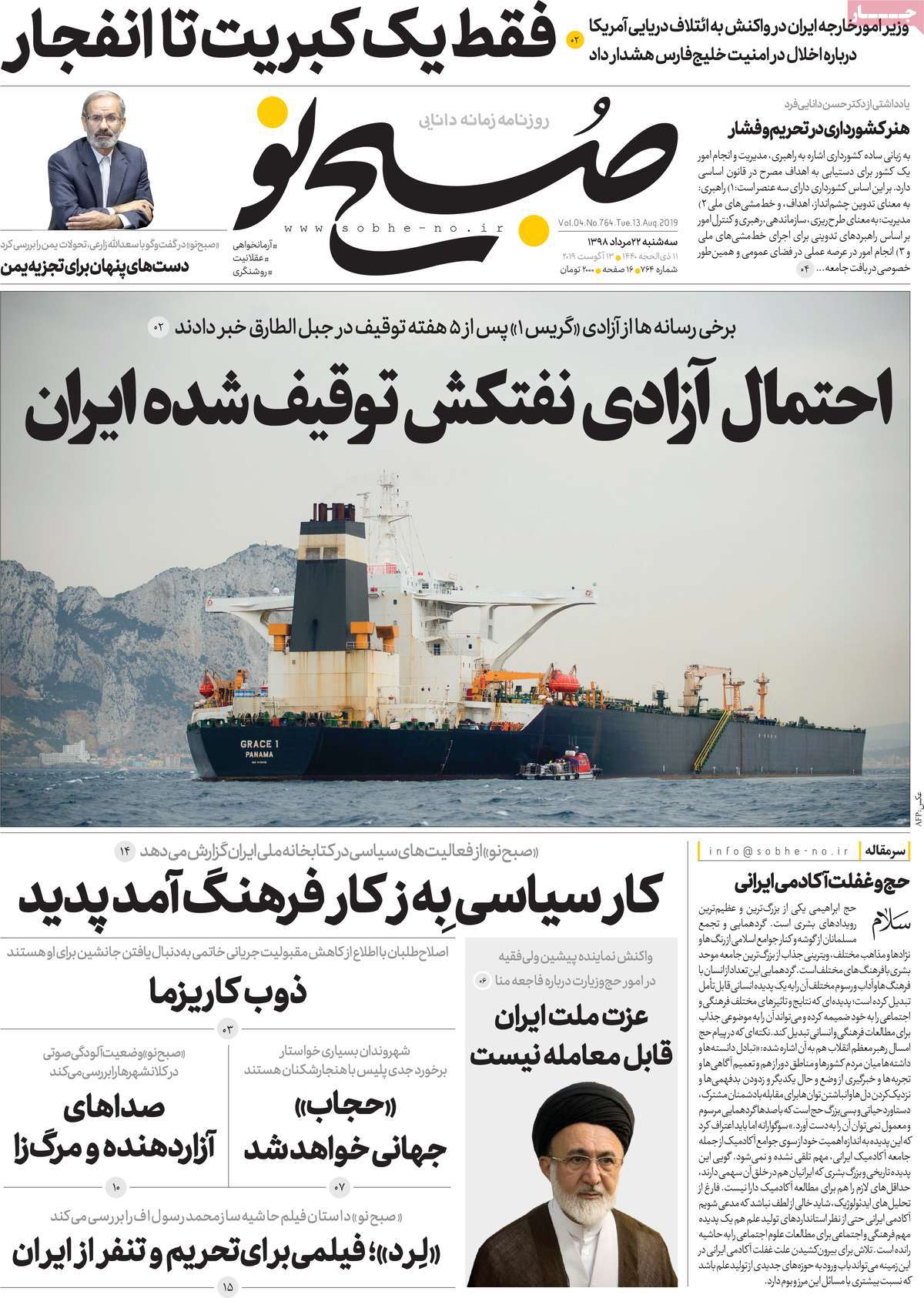
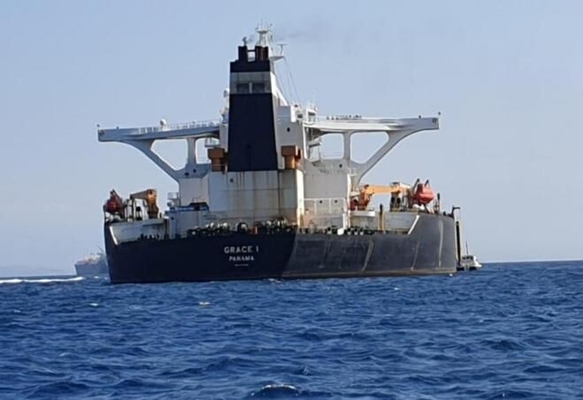
A senior Iranian official said on Tuesday that Britain might free its oil tanker Grace-1 soon, after some documents were exchanged that would help the seized ship’s release.
“Britain is interested in releasing Iran’s oil tanker Grace-1,” the deputy head of Iran’s ports and Maritime Organisation, Jalil Eslami, said.
“Following the exchange of some documents, we hope the release will take place soon,” he said.
In another sign of de-escalation, Gibraltar also said it was seeking to de-escalate issues arising with Iran since the detention of the Grace-1 tanker.
“We continue to seek to de-escalate issues arising since the lawful detention of Grace 1,” a spokesman for Gibraltar said.
The current detention order on the vessel expires on Saturday night, the spokesman said.
British Royal Marines seized the Iranian oil tanker on July 4 off the coast of the British Mediterranean territory of Gibraltar on suspicion of violating EU sanctions by taking oil to Syria, which Tehran denies.
Meanwhile, the Turkish news agency EHA announced on Tuesday that Gibraltar will release the Iranian tanker later in the day.
However, sources have told the Iran Front Page that Iran has no information about the release of the tanker on Tuesday.
Meanwhile, the Persian service of the British Broadcasting Corporation (BBC) says sources have confirmed that the tanker will be released soon.
The UK Foreign Office, however, says “the investigations being conducted around the Grace 1 are a matter for the Government of Gibraltar.”
“As this is an ongoing investigation we are unable to comment further.”
The tanker’s release is expected to facilitate Tehran’s reciprocal release of the UK tanker it seized last month on charge of violating international maritime rules.
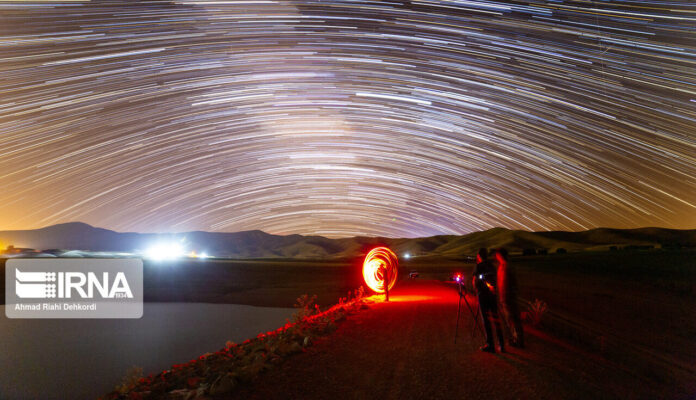
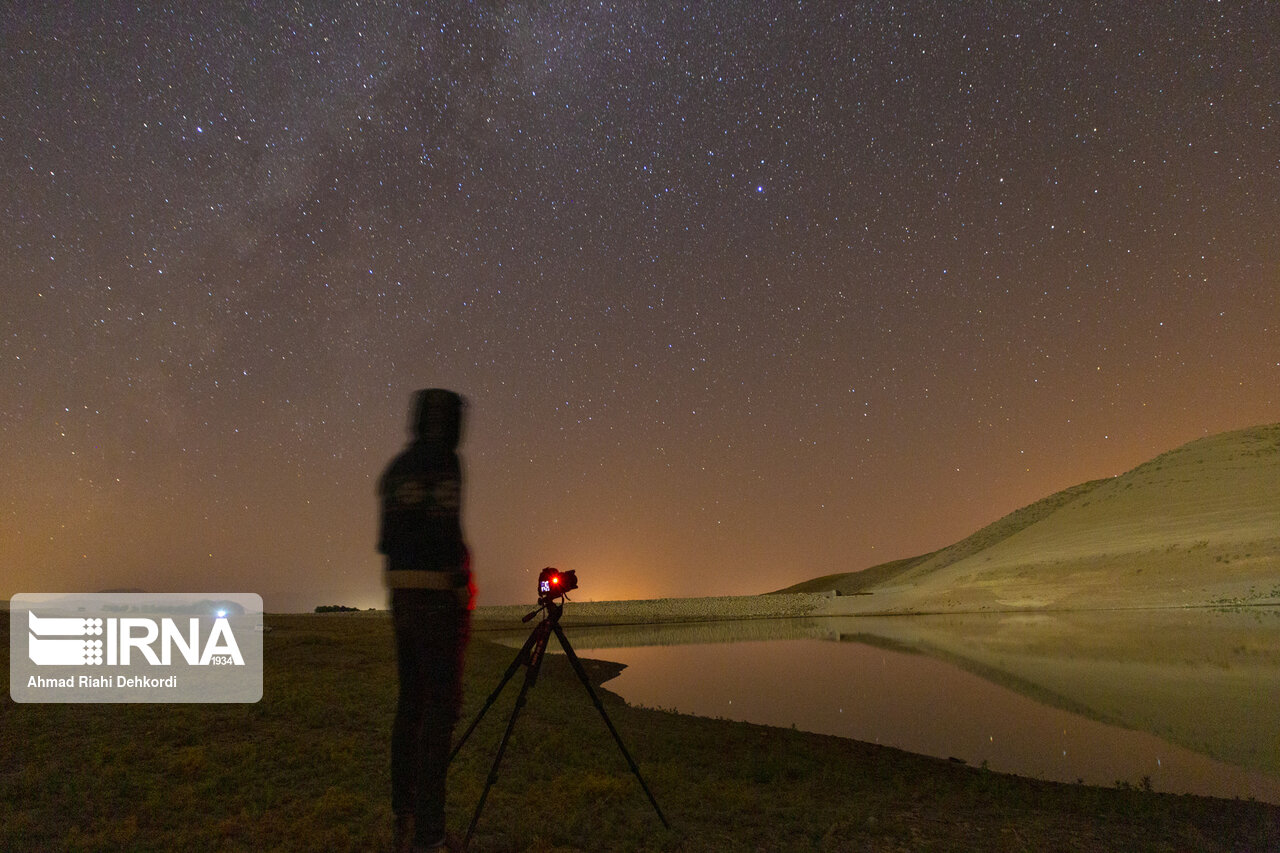
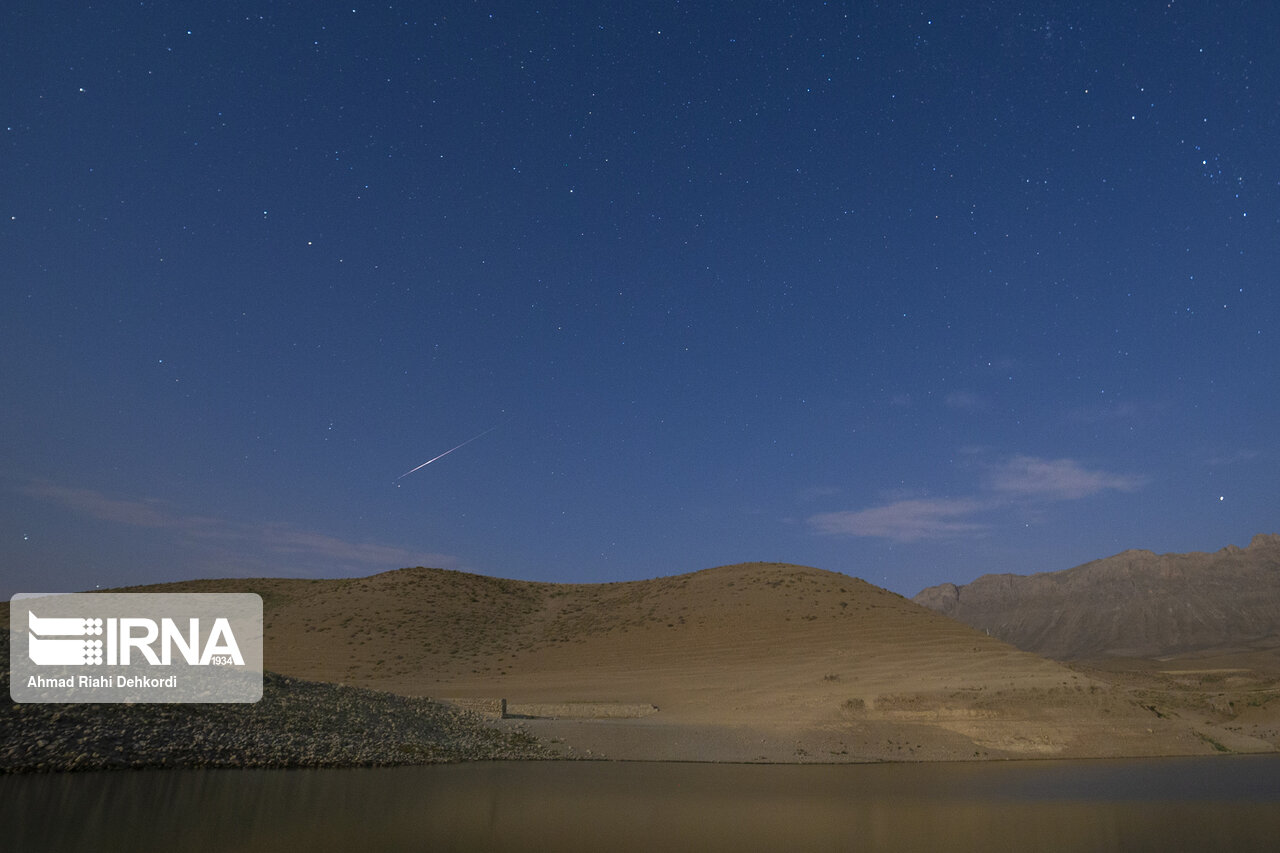
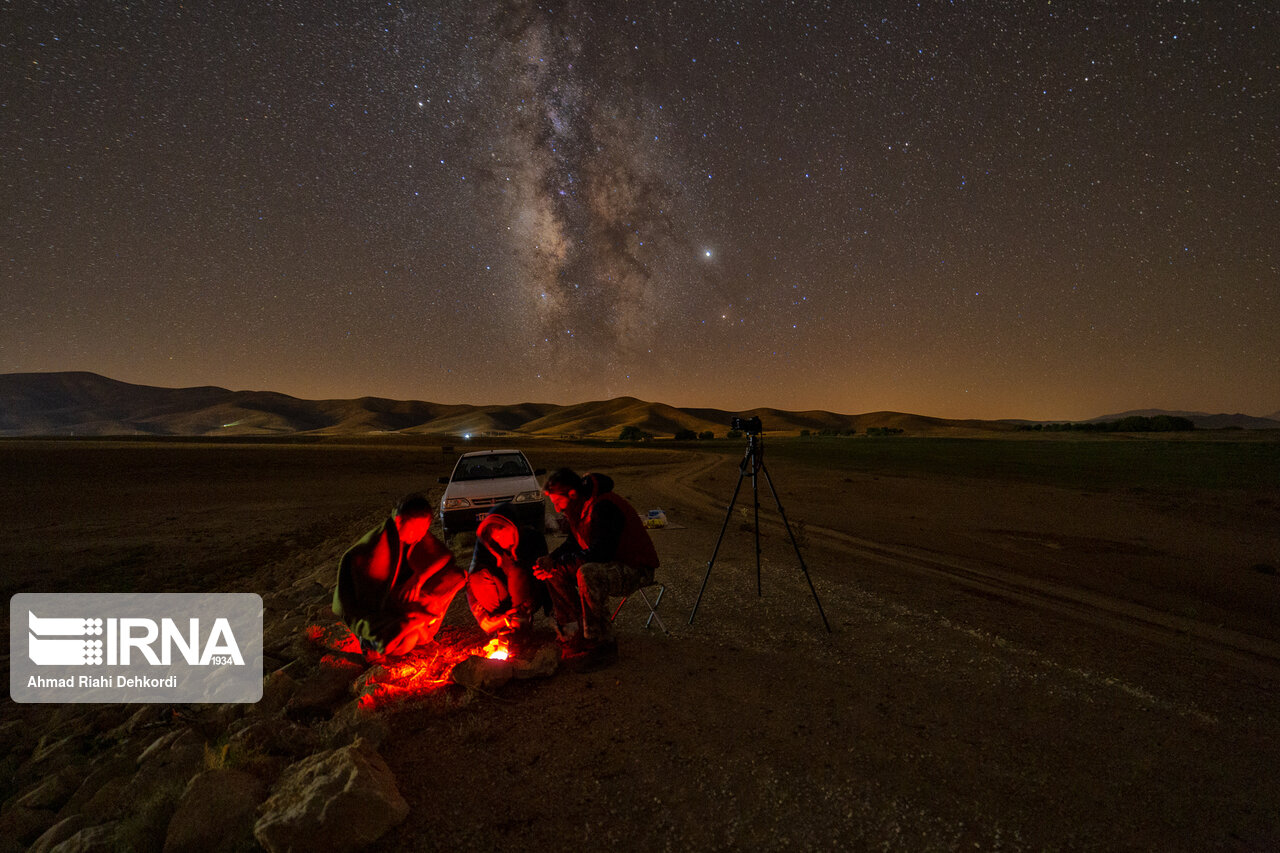
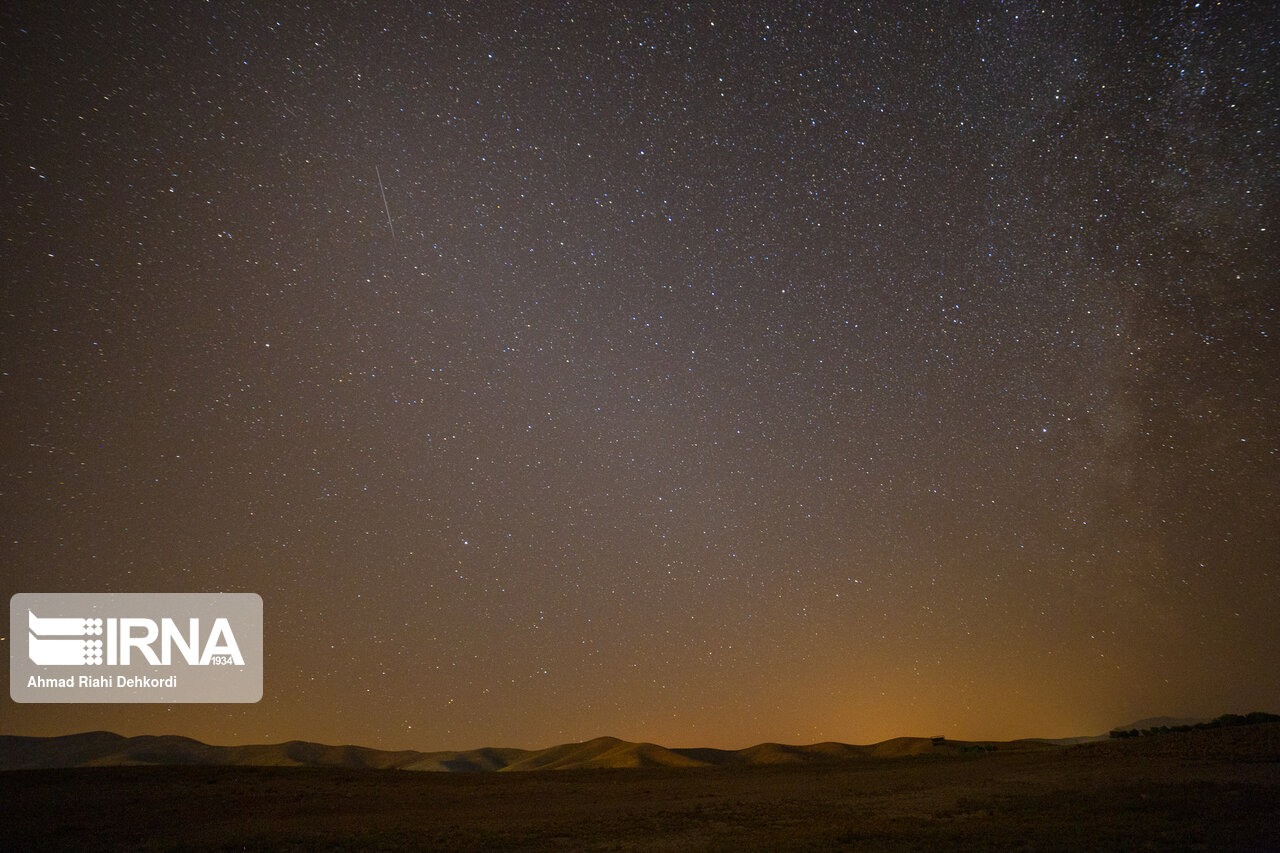
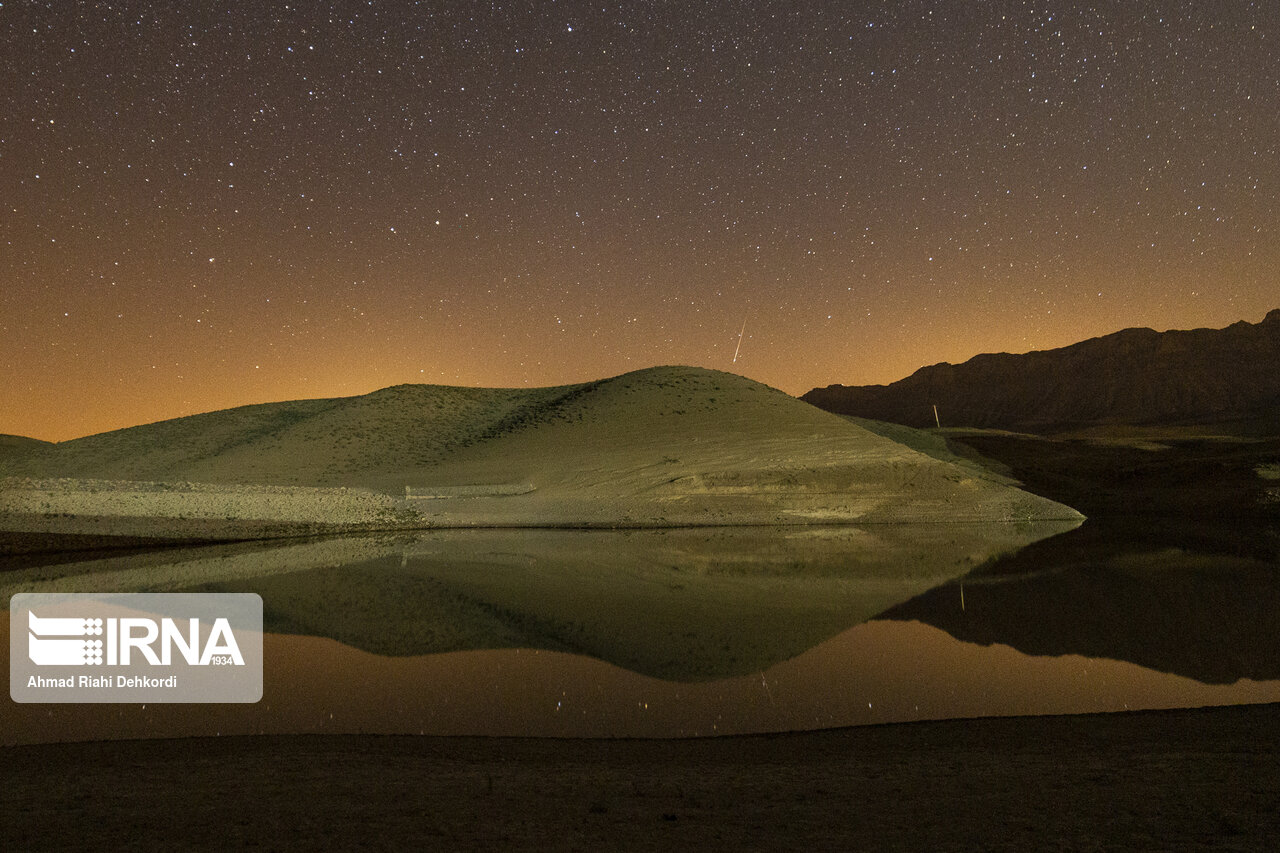
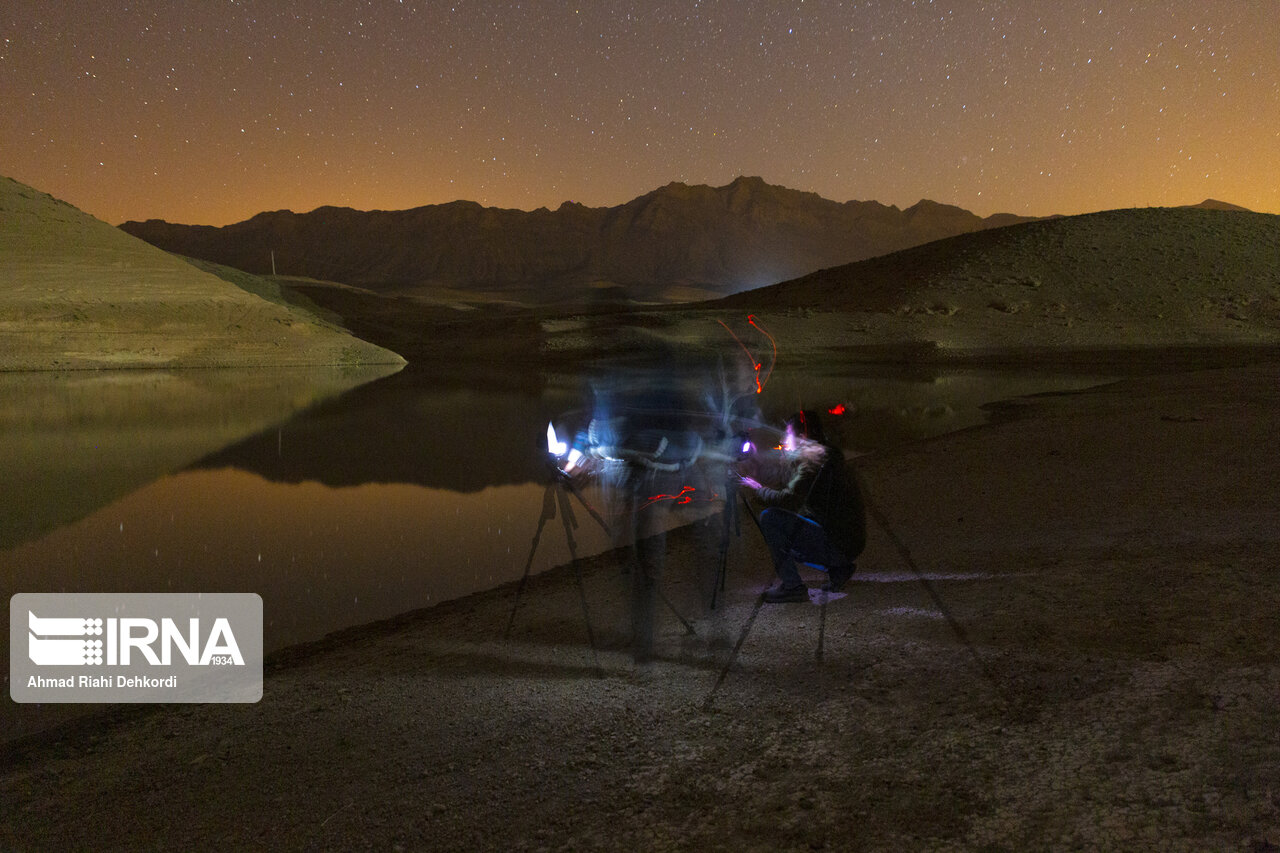
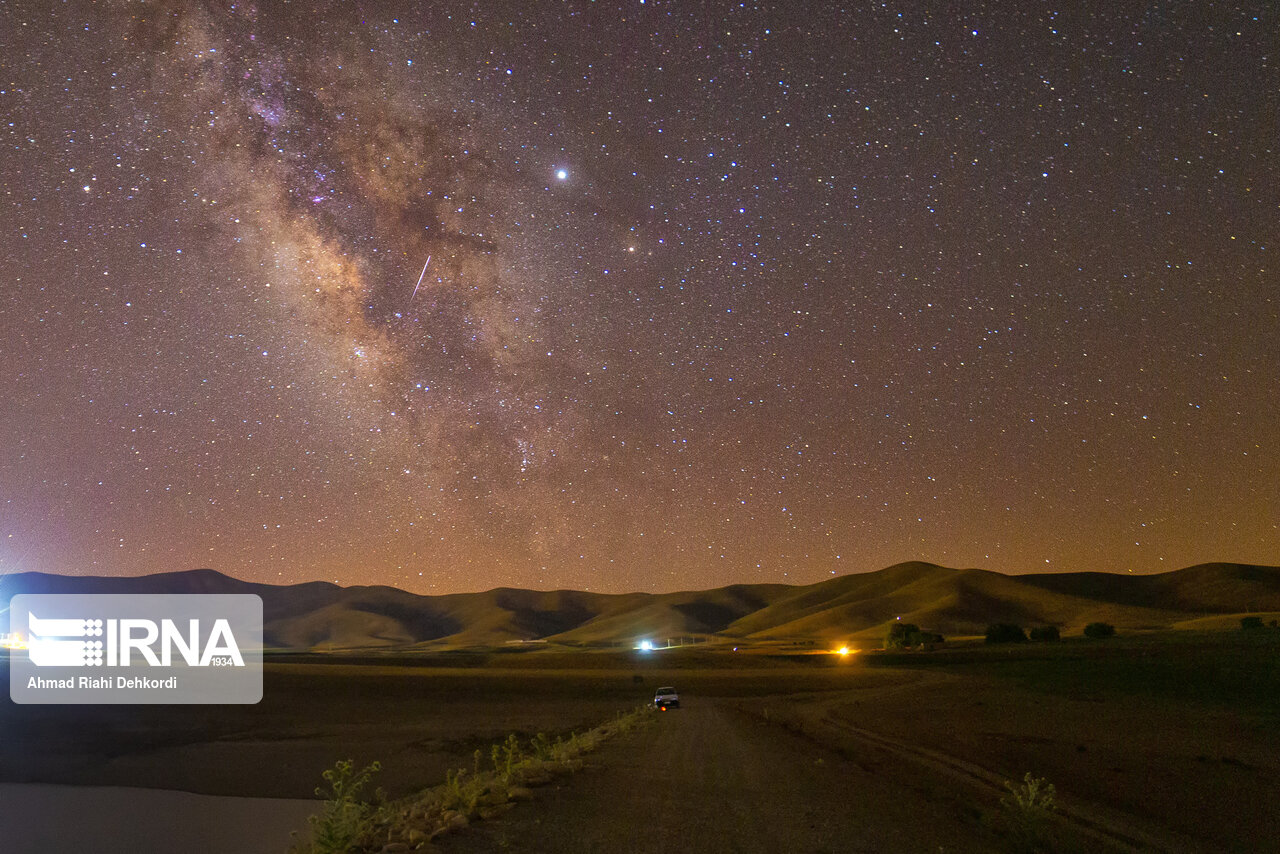
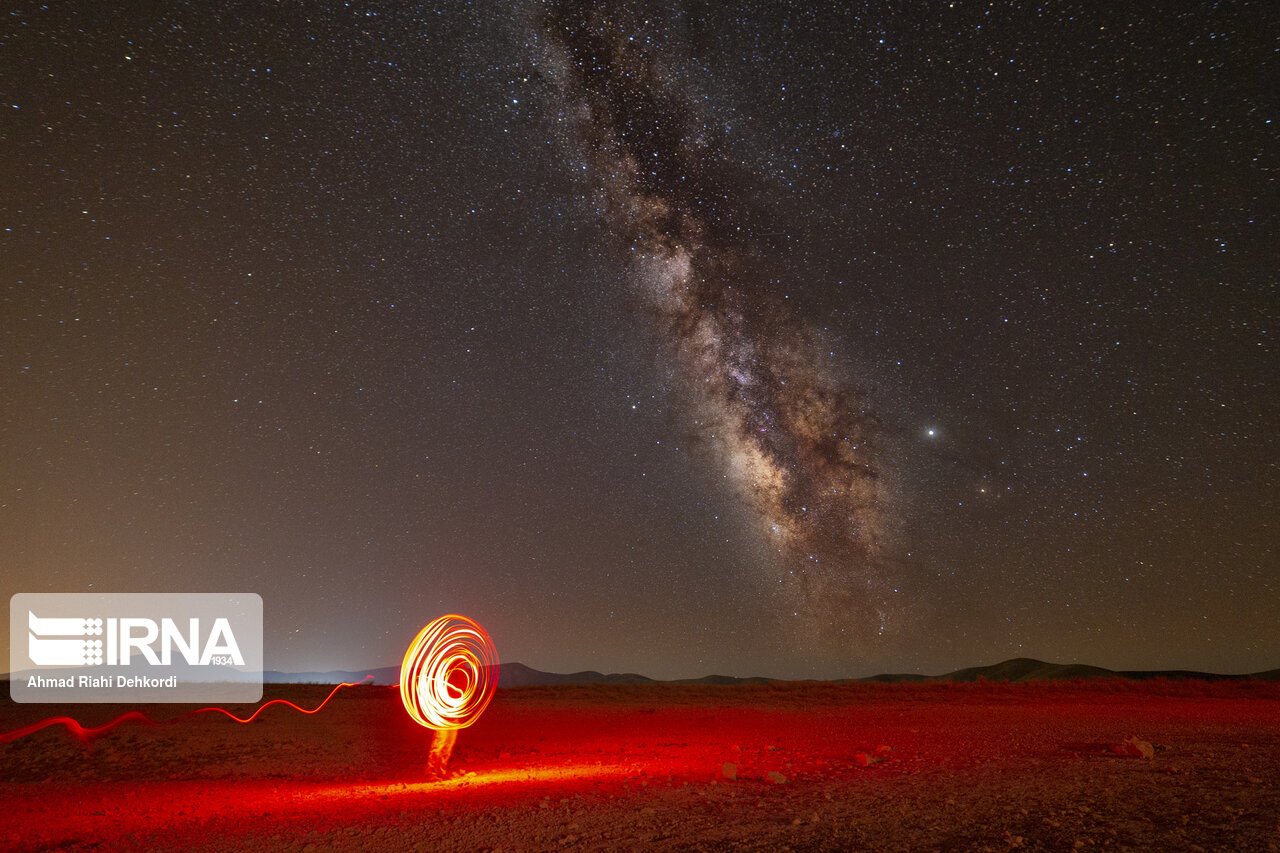
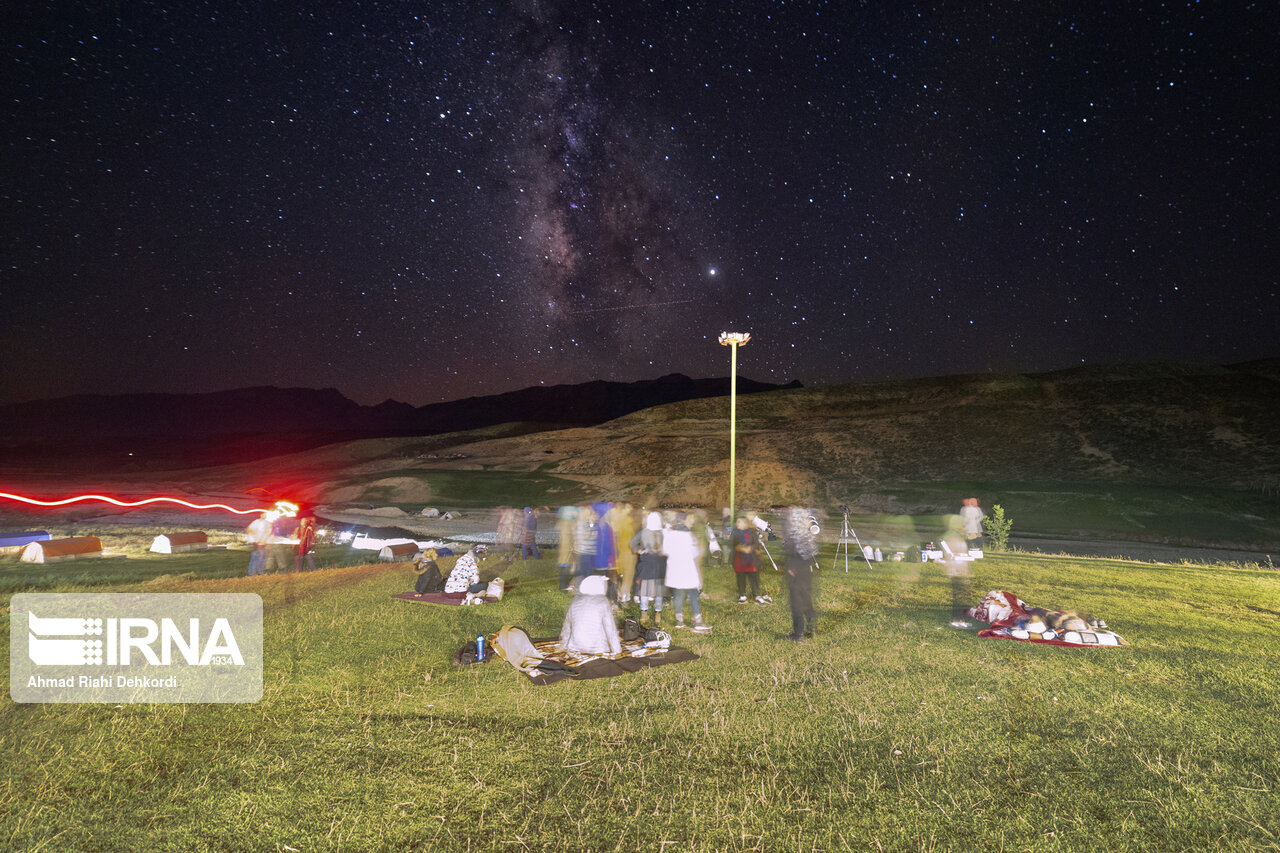
The meteor shower is caused by the passing of particles left over from Swift-Tuttle comet with Perseus constellation as their axis.
Many amateur astronomers and ordinary people can watch this phenomenon because it is visible with naked eye and doesn’t require any observational tools. This year, however, the dimmer meteors weren’t visible due to the moonlight.
What follows are IRNA’s photos of the Perseids meteor shower, taken during several nights in different parts of Chaharmahal and Bakhtiari Province in south-western Iran:
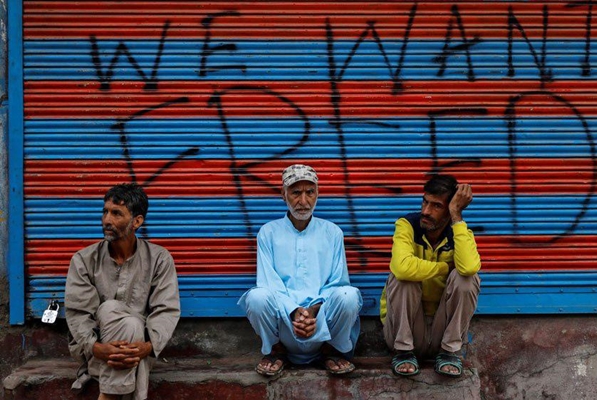
Kashmiri men wait before Eid-al-Adha prayers in Srinagar. / Photo by Reuters
In a statement on Tuesday, Mousavi also called on Indian officials to take measures to return the people’s lives to normal as soon as possible, and let them enjoy all their natural and recognized rights.
Earlier, Pakistan also condemned the Indian government’s curtailment of religious freedom of Muslims in Indian-administered Kashmir.
In a statement on Monday, Pakistan’s Foreign Ministry accused that India has curtailed religious freedom of millions of Kashmiri Muslims on an important festival of Eid al-Adha.
Restrictions and curtailment of this fundamental religious freedom of millions of Kashmiri Muslims constitute a serious violation of applicable international human rights law, to which India is a party, Mohammad Faisal, spokesman for the Foreign Ministry, said.
Indian troops imposed tight restrictions on mosques across Kashmir for the Eid al-Adha festival, fearing anti-government protests over the stripping of the Muslim-majority region’s autonomy, according to residents.
The Himalayan region’s biggest mosque, the Jama Masjid, was ordered to be closed and people were only allowed to pray in smaller local mosques so that no big crowds could gather, witnesses said.
Tensions between Islamabad and New Delhi, the two long-time rivals, have further escalated following India’s move to revoke the special status of Jammu and Kashmir — which allowed Kashmiri citizens to enact their own laws and prevented outsiders to settle and own land in the territory.
Kashmiri leaders and citizens fear this step is an attempt by the Indian government to change demography of the Muslim-majority state, where some groups have been fighting against Indian rule for independence, or for unification with neighbouring Pakistan.
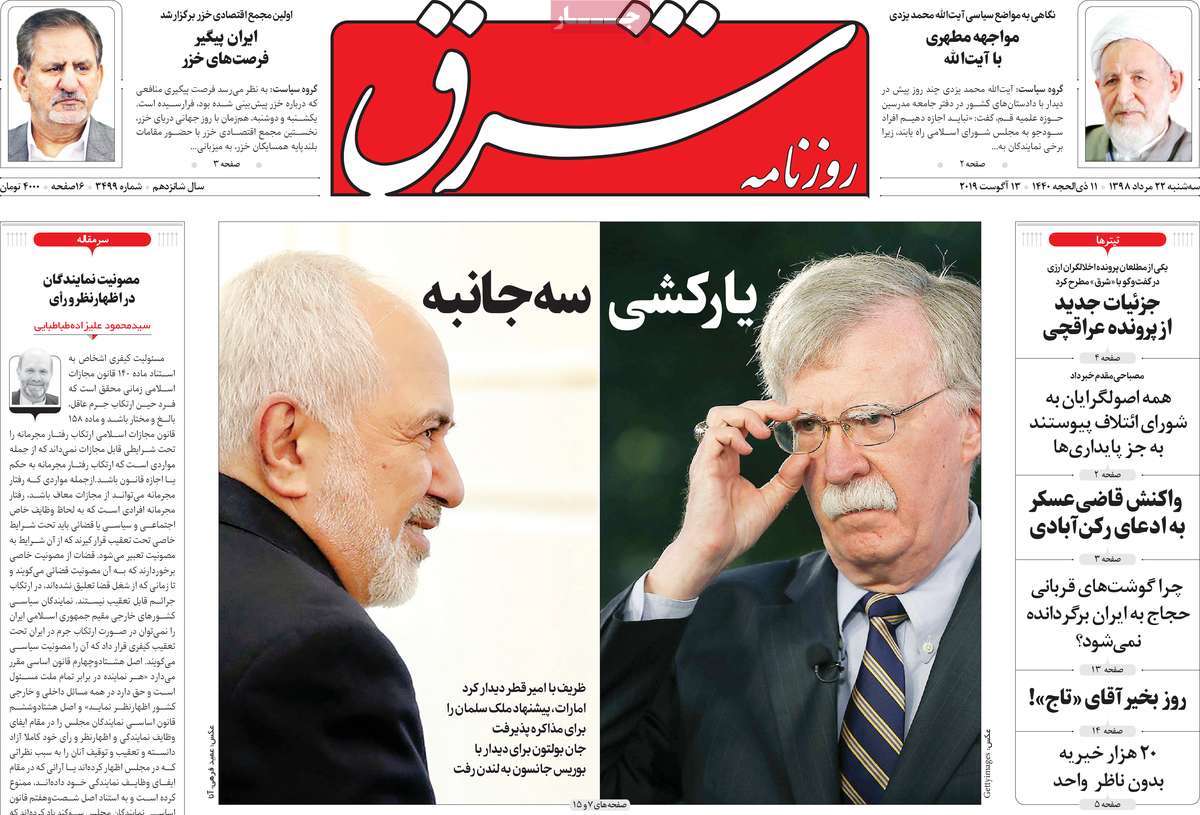
In an exclusive interview with Al Jazeera on Monday, Zarif said more warships in the Persian Gulf would only lead to more insecurity.
“The US [sold] $50bn worth of weapons to the region last year. Some of the countries in the region with less than a third of our population spend $87bn on military procurement,” Zarif told Al Jazeera in Qatar’s capital, Doha.
“Let’s make a comparison; Iran spent last year $16bn on all its military with almost one million people in the army. The UAE with a total population of one million spent $22bn, Saudi Arabia spent $87bn,” he continued.
“If you are talking about threats coming from the region, the threats are coming from the US and its allies who are pouring weapons in the region, making it a tinderbox ready to blow up.”
Zarif’s comments come after the United States announced it is working to form a military coalition to protect commercial shipping in the Persian Gulf following suspected attacks on oil tankers near the Strait of Hormuz.
Tensions have soared in recent months around the strategic waterway, where about 20 percent of the world’s oil passes through.
The friction is rooted in US President Donald Trump’s decision in May 2018 to unilaterally withdraw Washington from a landmark nuclear deal signed in 2015 between world powers and Iran.
Since then, the US has reinstated sweeping sanctions against Tehran as part of a “maximum pressure” campaign and has also increased its military presence in the region.
Tensions between the two nations escalated again in May, when Washington accused Iran of sabotaging tankers in the shipping route, allegations denied by Iran.
In June, Iran downed a US military spy drone in the Persian Gulf with a surface-to-air missile. Iran says the drone was in its airspace, but Washington says it was in international skies.
At the time, Trump said he had been prepared to attack three Iranian targets in retaliation but called off the operation at the last minute because such a response would not have been “proportionate”.
In his remarks to Al Jazeera on Monday, Zarif said the presence of US and foreign naval fleet never produced “security”.
“This is a tiny body of water and the more foreign naval vessels you have in this body [of] water the less secure it is for everybody. Based on experience, the presence of US and foreign naval fleet in the Persian Gulf has never produced security,” he said.
“We have sad memories of a US ship downing an Iranian airliner in 1988 [and] killing 290 passengers.
“We believe the best the Americans can do for protection of maritime navigation is to just leave people alone. Don’t interfere, this is a hostile act against Iran and I don’t believe any other impact other than insecurity,” Zarif added.
Iran’s relations with the United Kingdom have also been strained since British authorities early last month seized an Iranian tanker off the coast of Gibraltar on suspicion it was transporting oil to Syria in breach of European Union sanctions. Tehran denied the allegation, accusing the UK of acting at the behest of the US and demanding the immediate release of the ship.
On July 19, Iran seized a British-flagged tanker in the Strait of Hormuz, claiming that it had collided with a fishing boat and violated international law.
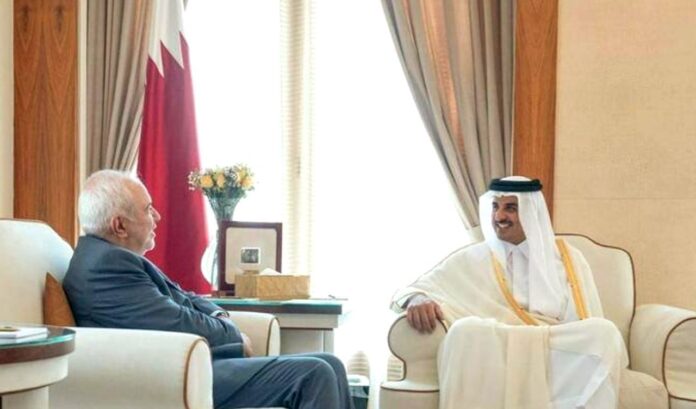
The Iranian top diplomat was in Qatar for bilateral talks with the country’s emir, Sheikh Tamim bin Hamad Al Thani, and its foreign minister Mohammed bin Abdulrahman bin Jassim Al Thani.
“We hope the presence of Mr Zakzaky abroad will provide a better opportunity for the resolution of the recent years’ problems between the Islamic Movement in Nigeria (IMN) and the government in order to protect the Shiites’ rights, remove restrictions on the Movement, and secure the release of prisoners,” Mousavi said in a statement on Tuesday.
“While supporting the process, the Islamic Republic of Iran expresses its preparedness for any assistance,” Mousavi added.
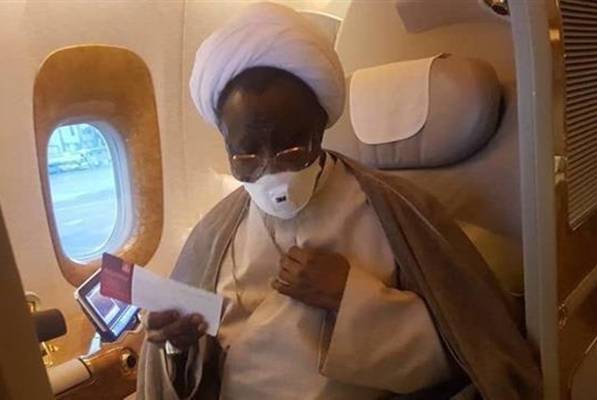
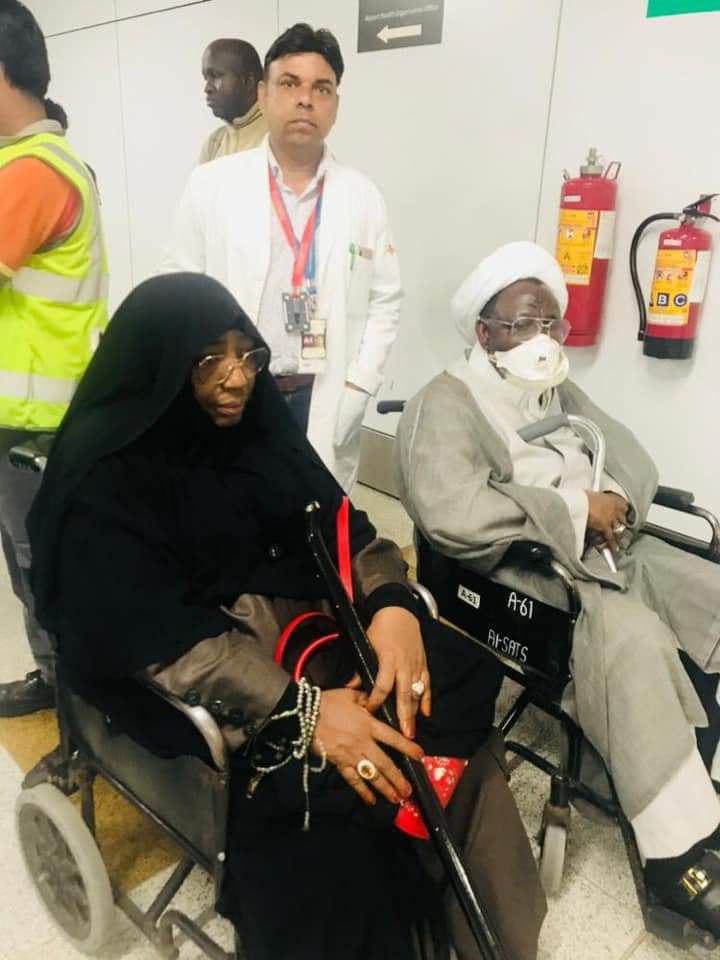
Sheikh Zakzaky, a top Nigerian Muslim cleric, has headed for India to receive treatment as his health condition is deteriorating after spending four years in detention along with his wife, who was also injured during a crackdown by Nigerian authorities in 2015.
According to Nigerian media reports, the 66-year-old cleric, along with his wife Zinat, embarked on a journey to India on Monday.
The reports say earlier in the day, the couple was heavily escorted by armed security forces of Nigeria’s domestic intelligence agency, Department of State Services (DSS), from their residence in the city of Zaria to the airport in the capital Abuja, where they could fly to India.
Sheikh Zakzaky, the leader of the Islamic Movement in Nigeria (IMN), is also being accompanied by some officials of security services as well as medical personnel, while travelling to India, the reports further said.
The top cleric has been in detention since December 2015 after his home in Zaria was brutally raided by Nigeria’s forces, during which he was beaten and lost his left eye.
Three of his sons lost their lives, his wife sustained serious wounds and more than 300 of his followers were killed during the violent crackdown.
Residents evacuate Ye in south-east Myanmar after the region was deluged by monoon rains. / Photo by AFP
In his Tuesday message, Mousavi also sympathized with the nations and governments of the three countries as well as the bereaved families of the victims.
Flooding and mudslides have killed at least 97 people in the Indian states of Karnataka, Maharashtra and Gujarat.
Flooding downpours have also struck northern India with at least 34 deaths reported in the state of Uttarakhand.
In Kerala at least 76 deaths have been reported in the past week, and more than 290,000 people have been affected by the flooding.
Nearly 227,000 people are seeking shelter from the flooding in Karnataka, where 60 people have been killed. Chief Minister B.S. Yeddyurappa told Reuters that the flooding was the worst the state had endured in 45 years.
Southern Pakistan has also endured deadly weather with at least 17 deaths reported thus far.
Also a typhoon wreaked havoc in southern China over the weekend killing at least 33 people. Rescue workers used rubber dinghies to evacuate people left stranded as swift currents swept through villages.
Among the dead were 23 people killed when a landslide blocked a river and then engulfed a village in Yongjia county.
Heavy monsoon rainfall has also been deadly in Myanmar where more than 50 people have lost their lives in the past week. Monsoon rainfall will continue across Myanmar this week; however, downpours are not expected to be as widespread as last week.
Climate scientists in 2015 ranked Myanmar at the top of a global list of nations hardest hit by extreme weather. That year more than 100 people died in floods that also displaced hundreds of thousands.
Every year monsoon rains hammer Myanmar and other countries across south-east Asia, submerging homes, displacing residents and triggering landslides.
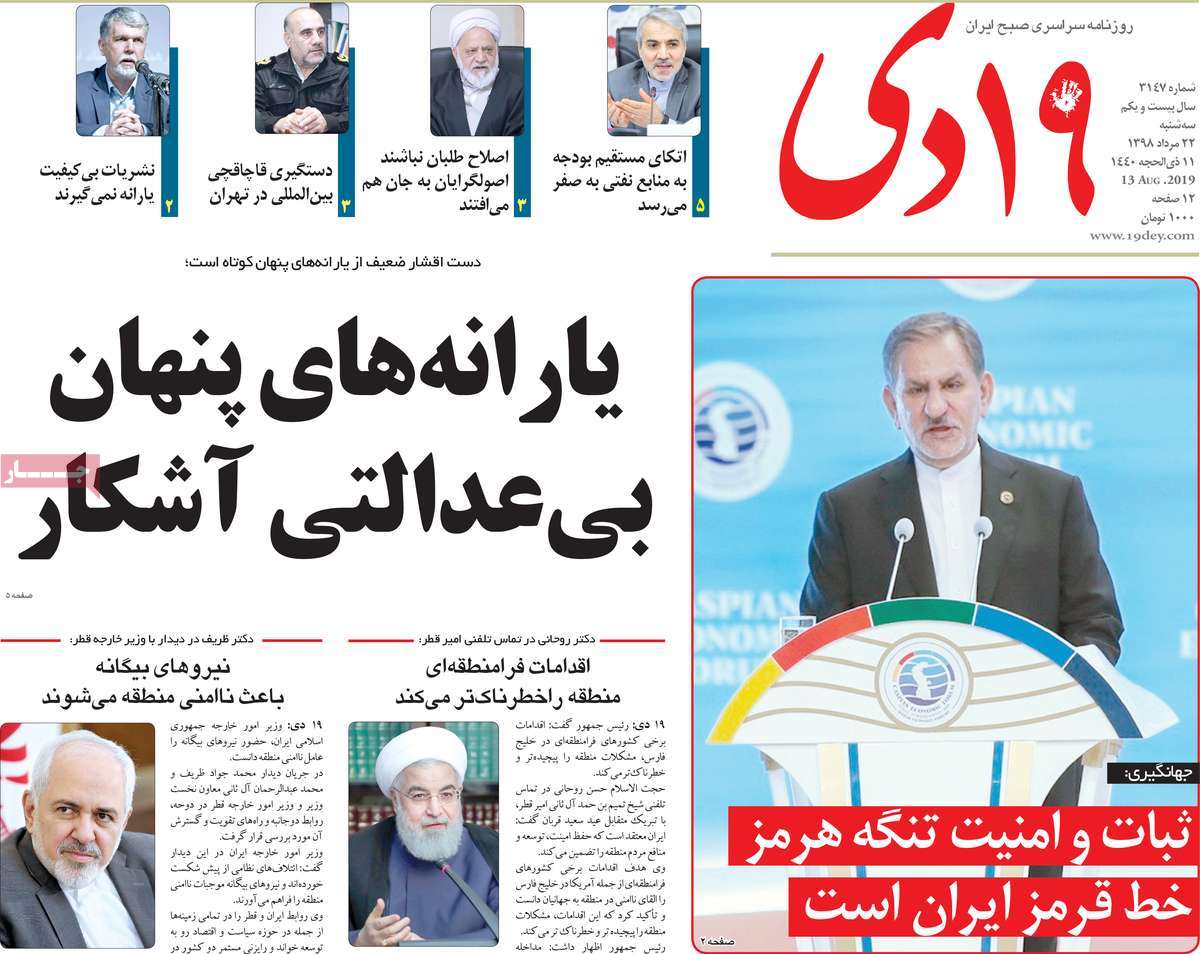
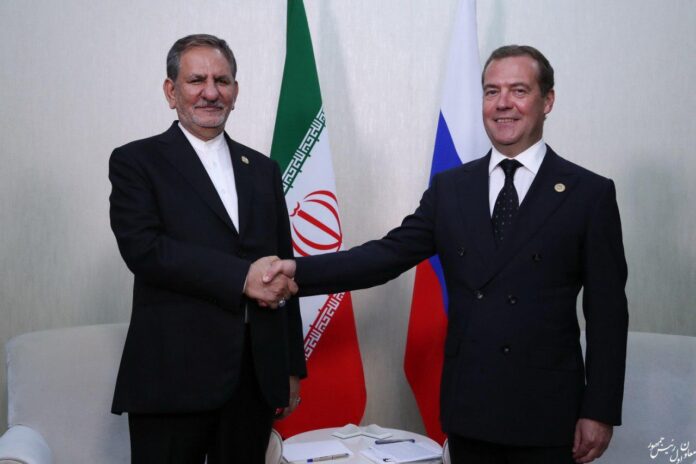
Iran’s First Vice President Eshaq Jahangiri meets Russian Prime Minister Dmitry Medvedev in Turkmenistan's Avaza on August 12, 2019. / Photo by the Iranian VP's official website
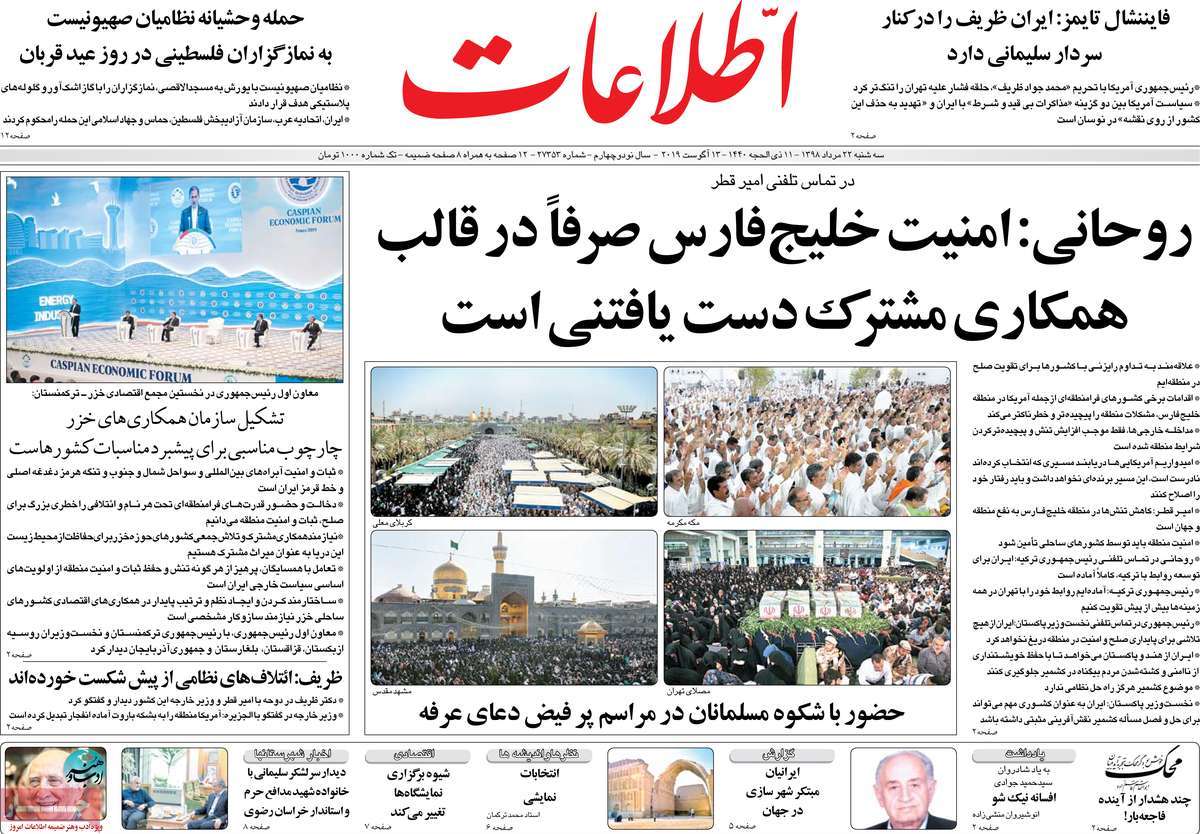
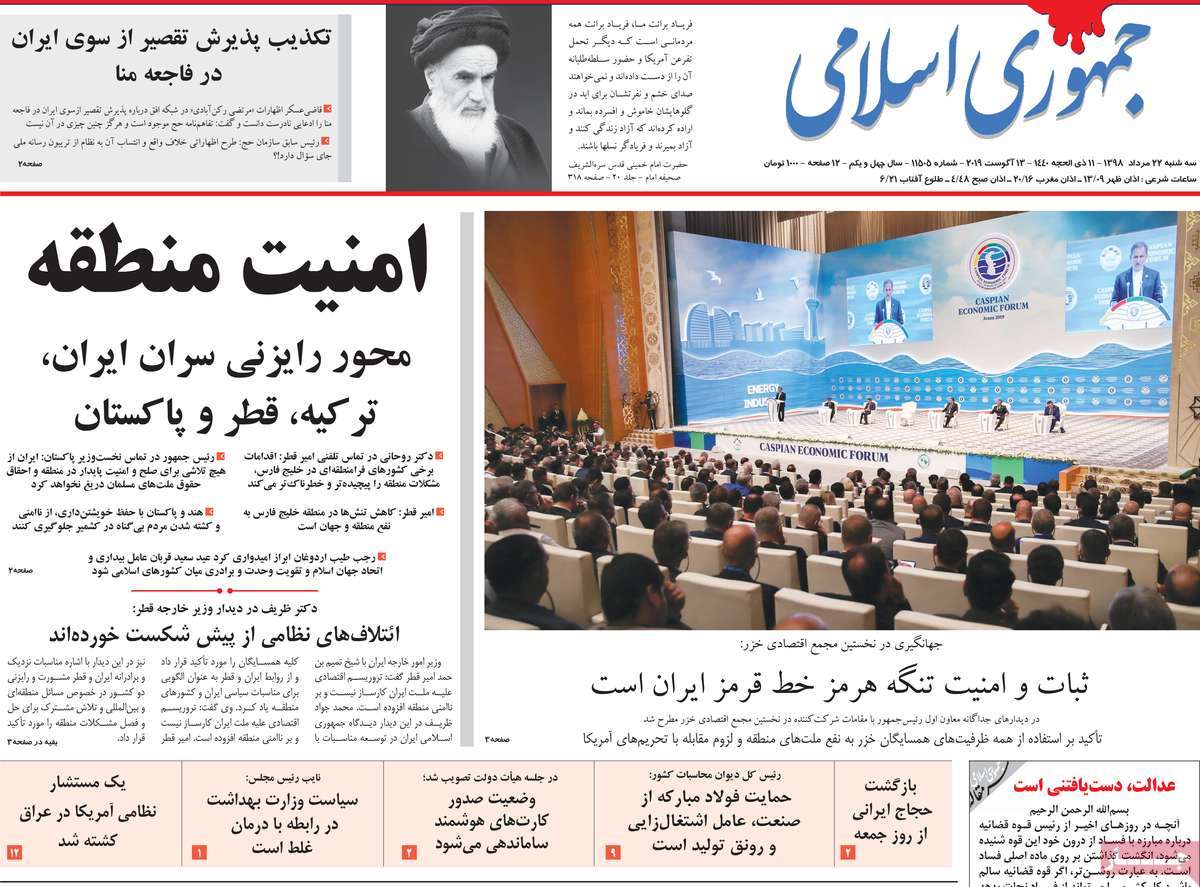
Apart from an address to the 1st Caspian Economic Forum in Turkmenistan’s coastal city of Turkmenistan on Monday, the Iranian first vice president held separate meetings with Turkmenistan’s president and the prime ministers of Russia, Kazakhstan, and the Republic of Azerbaijan on the sidelines of the forum.
US after Insecurity in Persian Gulf
In a meeting with Russian Prime Minister Dmitry Medvedev, Jahangiri decried the US administration for pulling out of the 2015 nuclear deal and imposing “cruel and inhumane sanctions” against Tehran.
He also noted that the US has been seeking insecurity in the Persian Gulf and the Strait of Hormuz to find a pretext for creating a maritime coalition in the Persian Gulf.
“We deem all such (US) measures disruptive to regional stability and security, and expect the UN Security Council’s major member states, such as Russia, to warn the US against such measures,” the Iranian vice president added.
He also emphasized the need for the enhancement of relations between Tehran and Moscow in various fields, including the energy and railroad industries.
For his part, the Russian premier expressed Moscow’s respect for Tehran’s “logical and mighty” reaction to the US withdrawal from the multilateral nuclear agreement, saying the Russian authorities unanimously believe that the US sanctions on Iran are illegal.
Medvedev also called for diversification of the foreign currencies used in Iran-Russia trade and banking transactions, saying the US attempts to mount pressures on Moscow and Tehran.
Turkmenistan Eyes Joint Caspian Projects with Iran
In one of the other meetings, President of Turkmenistan Gurbanguly Berdimuhamedow thanked the Iranian first vice president and his delegation for taking part in the Caspian Economic Forum, saying Ashgabat and Tehran can work on joint energy projects in the Caspian Sea.
Jahangiri also urged efforts to remove the obstacles to banking relations between Iran and Turkmenistan in order to pave the way for closer cooperation between the private sectors.
Iran’s First Vice President Eshaq Jahangiri meets with President of Turkmenistan Gurbanguly Berdimuhamedow in the city of Turkmenistan on August 12, 2019. / Photo by the Iranian VP’s official website
Kazakhstan’s Role in Syria Peace Talks Undeniable
In another meeting with Kazakh Prime Minister Askar Mamin in Turkmenistan, Jahangiri praised Kazakhstan for hosting a series of negotiations for peace in Syria, known as the Astana peace process.
Highlighting the 110 cooperation agreements that Iran and Kazakhstan have signed over the past three decades, Jahangiri voiced Tehran’s readiness for the promotion of banking and trade ties with Nur-Sultan.
For his part, Mamin expressed gratitude to Iran for supporting Kazakhstan’s stances on the Astana peace talks, hoping that an upcoming session of a joint commission with Iran would result in the enhancement of bilateral ties.
Iran’s First Vice President Eshaq Jahangiri meets Kazakh Prime Minister Askar Mamin in Turkmenistan’s Turkmenistan on August 12, 2019. / Photo by the Iranian VP’s official website
Baku Eager for Industrial, Medical Cooperation with Tehran
The ways to boost economic and trade ties between Iran and the Republic of Azerbaijan was the main topic of a meeting between Azeri Prime Minister of Novruz Mammadov and Eshaq Jahangiri.
A multiplication of shipment of goods through Iran via the International North-South Transport Corridor indicates Iran’s strategic position in the region, the Azeri premier noted, voicing Baku’s willingness for industrial and medical cooperation with Tehran.
Jahangiri also announced in the meeting that promotion of trilateral and multilateral cooperation among Iran, Azerbaijan, Turkey, Russia, Turkmenistan and Georgia would raise the volume of trade exchanges between Tehran and Baku.
Iran’s First Vice President Eshaq Jahangiri meets Azeri Prime Minister of Novruz Mammadov in Turkmenistan’s Turkmenistan on August 12, 2019. / Photo by the Iranian VP’s official website
In his short trip to Doha on Monday, Foreign Minister Zarif held separate meetings with his Qatari counterpart and with the Arab country’s Emir.
In the meeting with the Qatari leader, Zarif highlighted Iran’s policy of expansion of relations with all neighbours, and described the bonds with Qatar as an example to Iran’s political relations with the other regional countries.
“Economic terrorism against the Iranian nation is ineffectual and has escalated insecurity in the region,” Foreign Minister Zarif deplored.
The Emir of Qatar, for his part, pointed to the close and brotherly relations between Iran and Qatar, stressing the need for bilateral consultation about the regional and international issues and for joint efforts to address the region’s problems.
The Qatari emir also highlighted Qatar’s constant readiness for the establishment of peace and stability in the region.
In the other meeting with Qatar’s foreign minister earlier on Monday, Zarif underlined that the security of Persian Gulf must be ensured by its littoral states, not foreign forces whose presence only brings about insecurity.
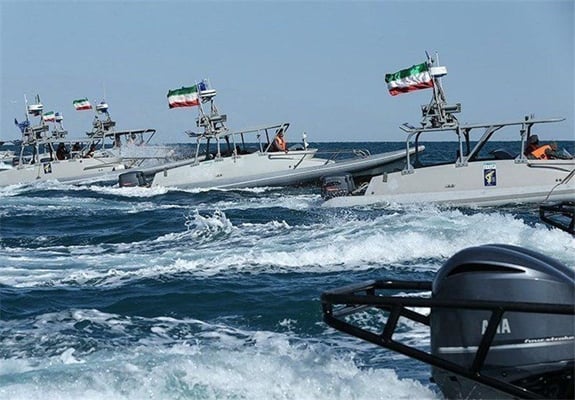
“The United States and the United Kingdom must assume responsibility for the Zionist regime’s illegal presence in the Persian Gulf waters,” IRGC Navy Commander Rear Admiral Alireza Tangsiri told the Lebanese TV channel Al Mayadeen on Sunday.
“Any presence of the Zionist regime in the Persian Gulf waters is illegal, as it may result in war and confrontation in the region,” the top commander warned.
The comments came after Israel said it will join a US maritime coalition in the Persian Gulf, which the US says is aimed at boosting the security of navigation in the body of water.
Israeli foreign minister Israel Katz said on August 7 that the regime would be part of the US-led coalition to “protect the security of the Persian Gulf”.
On Friday, Iran’s Foreign Ministry spokesman Seyyed Abbas Mousavi warned that the country considers possible Israeli presence in a US-led coalition in the Persian Gulf as a clear threat to its national security, and reserves the right to counter it.
“Within the framework of the country’s deterrence and defensive policy, the Islamic Republic of Iran reserves the right to counter this threat and defend its territory,” he noted.
“The US regime and the illegitimate Zionist regime are responsible for all the consequences of this dangerous move,” the spokesman added.
In his Sunday comments, the IRGC Navy commander slammed the “illegal” formation of the maritime coalition, and said Washington and London fabricate various scenarios to legitimize their presence in the Persian Gulf.
“By establishing an illegal coalition in the region, the US and the UK are trying to implement their own scenarios,” he added.
Admiral Tangsiri said the IRGC Navy is responsible for ensuring the security of the Strait of Hormuz and the Persian Gulf, and “we don’t need the presence of foreigners.”
“The security of Persian Gulf is among Iran’s priorities, and we believe Iran’s shipping lanes must remain international,” the IRGC general said.
He underlined that the world and the regional countries must know Iran will ensure the security of the Strait of Hormuz as long as its oil is allowed to be exported through the waterway.
“Iran is the flag-bearer of security in the Persian Gulf, but that hinges on the export of our oil and the country’s ability to use the region. We’ll ensure the security of Persian Gulf as long as our own security is ensured,” the top commander said.
The United States has been trying to persuade its allies to form an international coalition with the declared aim of providing “security” for merchant shipping in the Strait of Hormuz — through which about a fifth of all oil consumed globally pass —and other strategic Middle Eastern shipping lanes.
The US had officially asked Germany to participate — alongside Britain and France — in the coalition, a request that was declined by German Foreign Minister Heiko Maas. The UK, however, accepted to join the US-led coalition.
Japan has likewise refused to join the force, and France has expressed reservations.
Washington claims Tehran has played a role in two separate attacks on oil tankers in the Sea of Oman in May and June, without providing any credible evidence to support the accusations.