Saturday, December 27, 2025
Home Blog Page 3135

Iran Denies Renaming Grace-1 Tanker to Bypass Sanctions

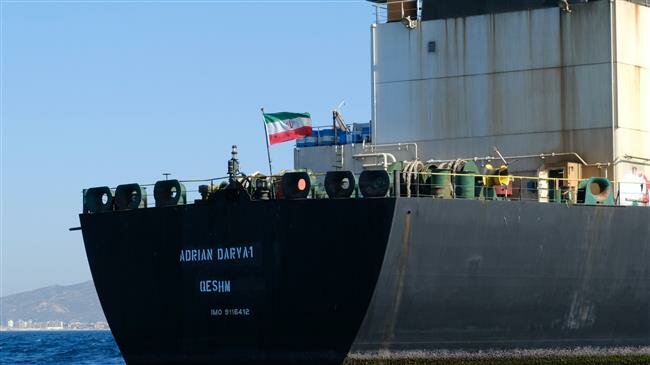
Hamid Baeidinejad said on Sunday that Iran renamed Grace 1 to Adrian Darya simply because Panama as the previous flag state of the ship had refused to continue to keep it registered after it was detained in Gibraltar for alleged breach of sanctions on Syria.

“Renaming the tanker carrying Iranian oil created this wrong perception for some that the move was meant to circumvent the sanctions,” wrote Baeidinejad in a tweet.

He said that based on maritime regulations, a ship bears the flag of the country where it is registered and therefore, it should have a name chosen by that country.

“Naturally, with the registration of the ship in Iran, a new Iranian name was picked for it,” said the envoy, reiterating that the tanker is free from any sanctions and its oil cargo belongs to the National Iranian Oil Company.

On Thursday, Gibraltar’s government announced it was releasing Grace 1 supertanker despite pressure from the US for the vessel’s continued detainment.

The announcement came just before the US Department of Justice (DOJ) unveiled a warrant for the seizure of the Iran-operated ship.

Britain’s naval forces unlawfully seized the Grace 1 and its cargo of 2.1 million barrels of oil in the Strait of Gibraltar on July 4 under the pretext that the supertanker had been suspected of carrying crude to Syria in violation of the European Union’s unilateral sanctions against the Arab country.

Tehran, however, rejected London’s claim that the tanker was heading to Syria and slammed the seizure as “piracy.”

Suicide Bombing at Kabul Wedding Kills 63, Injures 200

An Afghan woman who has lost his husband and two sons grieves at the door of the hospital after a bomber attacked a wedding in Kabul on August 17, 2019. (Photo by REX)

The Taliban denied responsibility for the blast at a west Kabul wedding hall, in a minority Shiite neighbourhood, packed with more than 1,000 people celebrating a marriage.

Interior Ministry spokesman Nusrat Rahimi said the attacker set off explosives among the wedding participants.

He later said 63 people had died and 182 wounded in the attack. “Among the wounded are women and children,” he added.
Both the Taliban and a local affiliate of the ISIS terrorist group carry out bloody attacks in the capital.

The blast occurred near the stage where musicians were and “all the youths, children and all the people who were there were killed,” witness Gul Mohammad said. One of the wounded, Mohammad Toofan, said that “a lot of guests were martyred.”

“There are so many dead and wounded,” said Ahmad Omid, a survivor who said about 1,200 guests had been invited to the wedding for his father’s cousin. “I was with the groom in the other room when we heard the blast and then I couldn’t find anyone. Everyone was lying all around the hall.”

Suicide Bombing at Kabul Wedding Kills 63, Injures 200

FM Zarif Meets Members of Iran-Kuwait Friendship Association

The top Iranian diplomat left Tehran for Kuwait City on Saturday evening to hold talks with the Arab country’s authorities.

In his meeting with members of Iran-Kuwait Friendship Association, Zarif discussed a broad range of issues, such as the friendly and age-old relations between Iran and Kuwait.

They also exchanged views on regional issues including the Palestinians’ conditions, the necessity for cooperation in the Persian Gulf, the current situation in the region, and the US’ economic terrorism against people of Iran.

In a post on his Twitter account on Saturday night, Zarif said he is “in Kuwait for high-level talks” after a busy day of “active diplomacy”.

Iran, Japan Weigh Plans to Broaden Ties

Iranian Deputy Foreign Minister for Political Affairs Seyyed Abbas Araqchi and Senior Deputy Minister for Foreign Affairs of Japan Mori Takeo met in Tehran on Saturday for the 26th round of Iran-Japan political negotiations.

In the meeting, the two sides had plain talks about the bilateral relations, the ways to expand the ties, the developments in relation to the Joint Comprehensive Plan of Action (JCPOA), as well as the situation in the Persian Gulf region and the West Asia.

The two deputy ministers also highlighted the significance of Japanese Prime Minister Abe’s recent visit to Tehran, and expressed willingness to continue high-profile political consultations.

Earlier in the day, the visiting Japanese diplomat had held a meeting with Iranian Foreign Minister Mohammad Javad Zarif, who hailed as good and constructive the ties between the two countries.

In his first visit to Tehran since the 1979 Revolution, Japan’s Prime Minister Abe visited Tehran on June 13, and held talks with top Iranian officials during his two-day trip.

He held talks with Leader of Iran’s Islamic Revolution Ayatollah Seyyed Ali Khamenei and Iranian President Hassan Rouhani in a visit that was reportedly aimed at mediating between Tehran and Washington.

Abe is going to hold another meeting with President Rouhani in September on the sidelines of the UN General Assembly.

‘Iran Welcomes Continued Talks with Japan on Regional Issues’

He made the remarks in a Saturday meeting with Japan’s Senior Deputy Minister for Foreign Affairs Takeo Mori in Tehran.

In the meeting, Mori highlighted the “constructive” talks he earlier held with Iranian Deputy Foreign Minister for Political Affairs Seyyed Abbas Araqchi, and said his country attaches great importance to its relations and continued consultations with Tehran.

Zarif also hailed good and constructive ties between the two countries, highlighting the recent landmark and important visit of Japanese Prime Minister Abe Shinzo to Tehran and his meeting with Iran’s Leader.

In his first visit to Tehran since the 1979 Revolution, the Japanese Prime Minister visited Tehran on June 13, and held talks with top Iranian officials during his two-day trip.

He held talks with Leader of Iran’s Islamic Revolution Ayatollah Seyyed Ali Khamenei and Iranian President Hassan Rouhani in a visit that was reportedly aimed at mediating between Tehran and Washington.

He is going to hold another meeting with President Rouhani in September on the sidelines of the UN General Assembly.

Iran, Ansarullah, European Diplomats Discuss Yemen Crisis

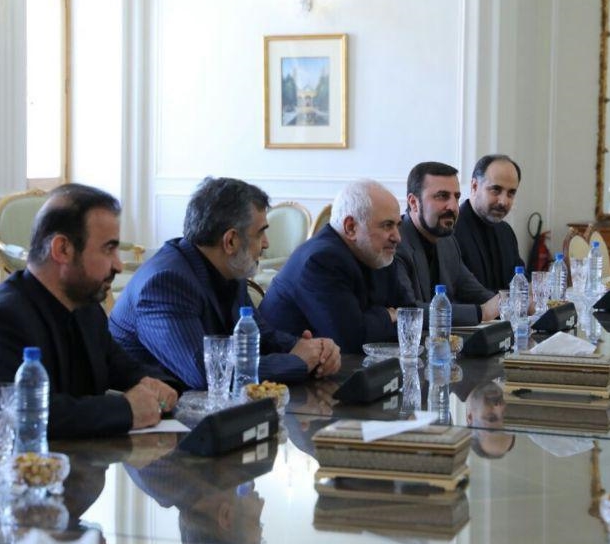
The meeting was held at the Iranian Foreign Ministry’s building within the framework of Iran’s international consultations to settle the Yemen crisis in a political way.

The talks were attended by Ali-Asghar Khaji, a senior assistant to Iran’s Foreign Minister in special political affairs, a delegation from Yemen’s Ansarullah Movement headed by the group’s spokesman Mohammed Abdul-Salam, and the ambassadors and heads of missions of the four European Union countries known as the EU/E4 (Britain, France, Germany, and Italy).

During the meeting, the participating delegations elaborated on their respective countries’ views regarding the Yemen developments, including the political and humanitarian issues and the developments on the ground.

They also expressed deep regret over the continuation of critical situation in the Arab country, which has resulted in the killings and injuries of tens of thousands of Yemenis and the destruction of the country’s infrastructures.

At the end of the meeting, the participating delegations underlined the necessity for ending the war as soon as possible, and called for political solutions as the ultimate way to resolve the Yemen crisis.

They further voiced concern over the humanitarian situation in Yemen, urging expedited delivery of humanitarian aid to the people.

The delegations also called for the full implementation of Stockholm agreements, and that all parties live up to all their commitments, describing it as a prelude to the final settlement of the political crisis in the Arab state.

The Yemeni delegation, headed by Abdul-Salam, arrived in Tehran a few days ago, and has since held talks with top Iranian officials including Leader of the Islamic Revolution Ayatollah Seyyed Ali Khamenei and Foreign Minister Mohammad Javad Zarif.

In the meeting with Ayatollah Khamenei, Abdul-Salam praised Tehran over its support for the Yemeni nation, equating Iran’s backing for the world’s oppressed people, especially Yemenis, with “a religious and ideological position.”

The Yemenis are confronting a war being waged by as many as 17 nations, Abdul-Salam said, pledging that the nation’s resistance and steadfastness in the face of the oppressors will last until “complete victory.”

Saudi Arabia and a number of its regional allies launched a devastating campaign against Yemen in March 2015, with the goal of bringing the government of former president, Abd Rabbuh Mansur Hadi, back to power and crushing Ansarullah.

A number of Western countries, the US, France and Britain in particular, are also accused of being complicit in the ongoing aggression as they supply the Riyadh regime with advanced weapons and military equipment as well as logistical and intelligence assistance.

The US-based Armed Conflict Location and Event Data Project (ACLED), a nonprofit conflict-research organization, estimates that the Saudi-led war has claimed the lives of over 60,000 Yemenis since January 2016.

The war has also taken a heavy toll on the country’s infrastructure, destroying hospitals, schools, and factories. The UN says over 24 million Yemenis are in dire need of humanitarian aid, including 10 million suffering from extreme levels of hunger.

Yemeni Army Attacks Largest Saudi Oilfield with 10 Drones

This file photo shows a view of Shaybah oil field in eastern Saudi Arabia.

Oil facilities at Shaybah, which has the largest strategic oil reserve in Saudi Arabia near the UAE border, were targeted by 10 Yemeni drones, the Yemeni broadcaster said Saturday.

The facilities attacked included a refinery and oil storage, al-Masirah said, citing Yemen’s armed forces spokesman Brigadier General Yahya Sare’e.

Shaybah, operated by state-oil company Saudi Aramco, is located in the east of the kingdom, close to the United Arab Emirates border.

Sare’e said the operation was launched as part of “a legitimate deterrence for the aggression crimes and siege” against the Yemeni nation.

He renewed call on companies and civilians to stay away from all vital sites in Saudi Arabia, adding that Yemen’s bank of targets inside the kingdom “expands daily” and that the future attacks would be more painful to the enemy.

“Forces of aggression have no choice but to stop the war and lift the siege on the Yemeni people,” Sare’e said.

Yemeni fighters regularly target positions inside Saudi Arabia in retaliation for the Saudi war, which began in March 2015 in an attempt to reinstall the country’s Riyadh-allied former regime and crush the popular Houthi Ansarullah movement.

The Western-backed military aggression, coupled with a naval blockade, has killed tens of thousands of Yemenis, destroyed the country’s infrastructure and led to a massive humanitarian crisis.

Saudi-led coalition attacks Aden

Early on Saturday, Saudi-led coalition warplanes fired flares over Yemen’s southern port city of Aden near camps occupied by the Emirati-backed separatists.

The coalition also urged the southern separatists to withdraw from all sites they have recently captured in Aden.

However, Aden local officials said that although the UAE-sponsored elements had moved away from the nearly empty presidential palace and central bank, they were not quitting the city’s military camps.

“We will not retreat, we will not budge and planes will not scare us,” a statement from one of the brigades fighting as part of the Emirati-backed militants.

In recent days, Aden has witnessed deadly clashes between UAE-backed southern separatists and Saudi-led militants loyal to ex-Yemeni president Abd Rabbuh Mansur Hadi in Aden, a gateway for commercial and aid supplies.

Both camps serve the Riyadh-led coalition, and have been engaged, since 2015, in a bloody military campaign against Yemen aimed at reinstating Hadi, who resigned in 2014 and later fled to the Saudi capital.

The clashes erupted weeks after the UAE announced a surprise plan to withdraw part of its troops from Yemen in a major blow to its coalition allies.

Man Turns into Attraction after Selling Cold Drinks for 30 Years!

Ali Tagari (which literally means cold), has been selling cold drinks along the street for over 30 years. He is very well-known in the south-western city of Ahvaz to such an extent that some say he has become a tourist attraction himself.

Ali began his job in 1987 when Iraq’s imposed war on Iran ended. At that time Ali and his two brothers were looking for a job to make a living. Finally, they decided to buy a few boxes of beverages, and sell cold drinks in the hot weather of Khorram Koushk Street in Ahvaz.

This street was very crowded at that time, and still after 30 years, Ali is selling these drinks. On the corner of a sidewalk, there is a pot full of ice cubes and soft drinks!

The key to Ali’s success is his sociability. Ali Tagari is a man who does not even have a shop to sell beverages, but has managed to cope with the difficulties for many years.

Cold carbonated soft drinks, lemonade, and non-alcoholic beer have turned this 53-year-old man into one of Khuzestan’s tourism brands and attractions, so much so that every stranger loves to take a photo with him.

Iran to Become Self-Sufficient in Aircraft Engine Production: Top General

Iran Will Definitely Change Approach to UAE: Top General

In a meeting with the Defence Ministry’s personnel on Saturday, Major General Baqeri highlighted the major advances that Iran has made in the military and defence sector, particularly in the aviation industry.

The Islamic Republic has been making steady progress in the production of aircraft engines in recent years, the general said, describing the engine technology as the main subject in the propulsion systems in the course of manufacturing aircraft, missiles, drones and many other equipment.

Baqeri said development of the technical know-how to make engines began with the local production of a number of simple components, adding that Iran is now on the verge of manufacturing the engines of modern jets and helicopters and achieving full self-sufficiency in developing such systems.

What makes Iranian technicians’ achievements outstanding is that the self-sufficiency has been gained under the foreign sanctions, he added.

The senior commander also highlighted the great contribution that the military sector has made to non-military industries, referring to the supply of critical auto parts for the local carmakers by the Defence Ministry.

In August 2016, Iran unveiled a domestically-made turbojet engine, dubbed Owj.

Iranian military technicians have in recent years made great headways in manufacturing a broad range of indigenous equipment, making the armed forces self-sufficient in the arms sphere.

Tehran has always assured other nations that its military might poses no threat to regional countries, saying that the Islamic Republic’s defence doctrine is entirely based on deterrence.

Iraq’s Interior Minister in Iran for Arba’een Coordination

Upon arrival in Tehran’s Imam Khomeini International Airport, Yassin Taha al-Yasseri was welcomed by Iranian Deputy Interior Minister for Economic Affairs Dinparast.

During a meeting at the airport, the Iranian official expressed hope that the Iraqi minister’s meetings in Tehran would pave the way for further promotion of Iran-Iraq ties in various fields, especially in facilitating the presence of millions of pilgrims in Arba’een.

Al-Yasseri is to hold talks with his Iranian counterpart Abdolreza Rahmani Fazli later on Saturday.

The two sides are to hold talks over re-opening Khosravi border crossing in Iran’s Kermanshah province to further ease the passage of millions of pilgrims during this year’s Arba’een.

Last month, Iraq removed visa requirements for Iranian pilgrims going to the Arab country for Arba’een rituals based on an agreement signed by the two sides in Tehran.

The deal was signed by Iranian Deputy Interior Minister Hossein Zolfaqari and his Iraqi counterpart in a meeting held in Tehran on Monday morning.

Based on the deal, from now on Arba’een pilgrims can enter Iraq with their passports and letters of insurance.

The long-awaited agreement came after repeated calls by Iran for a visa-free regime in order to facilitate the visit of Iranian pilgrims to the neighbouring state.

Around 2 million Iranians normally visit Iraq during the period, which coincides with the 40th day of the martyrdom of Imam Hussein (AS), the third Shiite imam whose shrine is in the holy city of Karbala, in central Iraq.

The Arba’een mourning ceremony is one of the largest religious gatherings in the world.

Last year, around 20 million pilgrims from all over the world gathered in Karbala on Arba’een.