Wednesday, December 24, 2025
Home Blog Page 3101

Iran Says Muqtada Sadr Wasn’t Carrying Any Message

Seyyed Abbas Mousavi said on Monday that Muqtada Sadr has long been making regular visits to Iran like other Iraqi friends of Iran, who have either been in Iran or commuting to the country.

“Sadr’s presence in Iran is nothing special and new,” Mousavi said in a press briefing in Tehran.

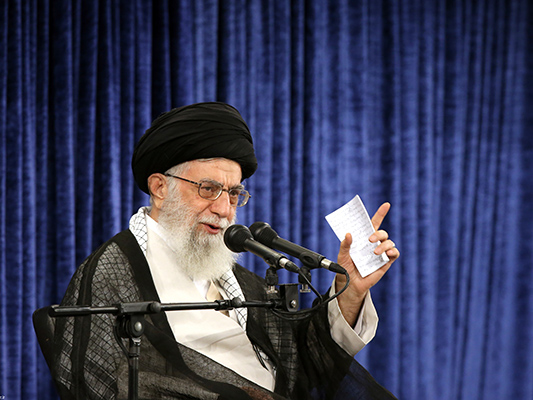
“He has been a friend of Iran and his presence is a blessing,” he noted, adding, however, that the influential cleric was not carrying any special message when he attended a recent mourning ceremony hosted by the Leader of Iran’s Islamic Revolution Ayatollah Seyyed Ali Khamenei.

In comments in April 2018, Muqtada al-Sadr expressed readiness to resolve some disputes between Iran and Saudi Arabia.

In July 2017, Sadr made a rare visit to Saudi Arabia and met the crown prince and other officials in the Red Sea port city of Jeddah.

‘Iran, Russia, Turkey on Verge of Reaching Final Deal on Syria’

Speaking in a press briefing in Tehran on Monday, Mousavi expressed the hope that the Monday talks between President Hassan Rouhani of Iran, Vladimir Putin of Russia, and Recep Tayyip Erdogan of Turkey would yield a result that serves the Syrian people’s interests.

“We are on the verge of reaching a good deal on restoration of peace to Syria,” he said, adding that the fight against terrorism will continue until full eradication of the phenomenon.

While moving towards de-escalation and easing of tensions in the region, Iran, Russia, and Turkey will respect the sovereignty of Syria, Mousavi noted.

“All sides must respect Syria’s territorial integrity and sovereignty if we want to settle the conflict there,” he added.
Rouhani has travelled to Ankara at the official invitation of Erdogan to take part in the fifth trilateral summit of Iran, Turkey and Russia – the three guarantors of the Astana peace process for the resolution of Syria crisis.

In addition to the tripartite summit, the presidents of Iran, Russia and Turkey are going to hold negotiations on the promotion of mutual cooperation on various economic issues and the regional communications.

President Rouhani is also planned to hold separate meetings with Erdogan and Putin for talks on the major bilateral, regional and international issues.

Iran, Russia and Turkey are guarantor countries that brokered a ceasefire in Syria in December 2016, leading to the Astana talks, which are running parallel to the Geneva peace talks.

The leaders of the three countries regularly meet for an assessment of the process which focused on Idlib and adjacent areas – the last stronghold of the rebels – and a political process which awaits the formation of a constitutional committee.

Canada’s Sale of Iran Assets Aimed at Appeasing Trump: Analyst

Canada's Prime Minister Justin Trudeau shakes hands with US President Donald Trump during a meeting at the G7 leaders summit in La Malbaie, Que.. / Photo by Canadian Press

“Recently, US-Canada relations have been hit by tensions and it seems Canada’s move is more of a green light to Trump to improve ties between the two countries,” Sabah Zanganeh, a former Iranian diplomat, said in an interview with ISNA.

“This move can be a green light by Canada to the US to improve mutual relations at a time when the United States is exerting pressure on the Islamic Republic of Iran,” the expert said.

“A bone of contention between Canada and the US was the revocation of an agreement between the US, Canada and Mexico. Reciprocal measures by Canada and Mexico prompted Trump to make some changes to trade policies as well as trade agreements between the three countries,” he noted.

However, Zanganeh added, Canada and Mexico did not achieve what they had in mind completely, which sustained pressure on trade and economic transactions between the two countries.

“As a result, Canada has been seeking to pursue Trump’s approach, which includes economic sanctions, seizure of Iranian assets, the imposition of bans on authorities and other methods,” he said.

“The policy that Canada is pursuing somehow plays into Trump’s hands. In fact, Canada has adopted a policy similar to that of Trump toward Iran,” he added.
He underscored the move by the Canadian Prime Minister Justin Trudeau administration to seize Iranian property has no legal basis and seems more like theft on own soil.

“Canada regards itself as being among the countries which advocate human rights and the countries which, politically speaking, are against Iran. So, due to these reasons, and, in fact in order to get political mileage from the situation, Canada has opted to confiscate Iran’s assets, property and facilities,” said the expert.

“This is in violation of rules and regulations pertaining to ownership of landed property and security of deposits at banks,” he noted, urging that Iran should follow up on Ottawa’s action through Canadian courts.

The expert said other issues are also at play when it comes to Tehran-Ottawa relations.

“Apart from these issues, there are also other issues involved in Iran-Canada transactions, issues which have not been followed up,” he said.

“These issues are related to embezzlers who transferred huge amounts of Iranian money and property to this country. In such cases, cooperation by Canadian financial, political and economic systems has paved the way for such actions; otherwise, these individuals would not have been able to take Iranian public assets to Canada so easily,” he said.

“Such issues have not been fully followed up by Iranian authorities, who were simply seeking the extradition of those people through Interpol,” he said.

“The actions by these individuals (embezzlers) amount to an international crime, and Canada’s receiving them is an international crime, too,” he said.

He urged Iranian authorities to file a complaint over Canada’s move and pursue the matter as needed.

“Iran can follow up on this issue through both Canadian courts and international courts at The Hague and in France,” he said.

Saudi Says Damaged Oil Facilities Cannot Be Fixed Overnight

Attacks by 10 Yemeni drones on Saudi Arabia’s key oil facilities in Abqaiq and Khurais have shut down about 50 percent of the kingdom’s crude and gas production, cutting the state oil giant’s crude oil supply by around 5.7 million barrels per day.

An oil industry source briefed on the developments said on Sunday it is unclear how long the oil production shutdown will continue, as it is impossible to fix the “big” damages overnight.

Aramco has given no timeline for output resumption. However, a source close to the matter told Reuters the return to full oil capacity could take “weeks, not days”.

Another source briefed on the developments said the kingdom’s oil exports would continue to run as normal this week thanks to large storage in the country.

High-resolution satellite photos of the damaged facilities “declassified” by the US administration on Sunday show the drone attacks have hit at least 19 points with great precision.

A senior US official, asked not to be named, has claimed that evidence shows the launch area was west-northwest of the targets – the direction of Iran and Iraq – not south from Yemen.

The official has also quoted Saudi officials as saying that there are signs that cruise missiles were used in the attack.

This comes as Yemen has clearly stated it used 10 drones for Saturday’s operation, which was one of their largest retaliatory attacks ever inside the kingdom.

Earlier in the day, Tehran dismissed the US’ claim of Iranian involvement in the drone attacks, saying “futile allegations and blind statements as such are incomprehensible and meaningless within the framework of diplomacy.”

Foreign Ministry spokesman Abbas Mousavi said such remarks “seem more like a plot being hatched by secret and intelligence organizations aimed at tarnishing a country’s image and setting the stage for future actions.”

He also criticized Saudi Arabia for fueling the flames of war in the region by committing various war crimes in Yemen for about five years, and hailed Yemen for putting up resistance in the face of the aggression.

Iraq has also denied reports alleging that the country was the site from where Yemeni drones were launched to attack Saudi oil installations.

The statement came from Iraqi Prime Minister Adil Abdul-Mahdi’s office on Sunday. It said Iraq would act “decisively” if anyone tried to use its territory to attack other countries, AP reported.

Iran Must Seize Canadian Shipments in Retaliation: MP

“An order should be issued to confiscate ships and goods that set off from the Hormuz region to the destination of Canada,” said Heshmatollah Falahatpisheh on Sunday, adding, “This measure should be adopted as soon as possible.”

The comments came two days after Iranian Foreign Ministry warned Canada that the country should await consequences if it does not revoke a decision to sell Iranian properties worth tens of millions of dollars in an alleged bid to compensate so-called victims of terror.

In a Friday statement, the ministry strongly condemned the move as “a clear breach of the international law,” and urged the Canadian government to immediately return the properties.

Foreign Ministry Spokesman Abbas Mousavi said Tehran will take action by itself to restore its rights based on international regulations if Ottawa fails to immediately revoke the unlawful decision and compensate the damages.

Falahatpisheh, a senior member of Iranian parliament’s Committee on National Security and Foreign Policy, said that courts in Iran should be authorized to seize Canadian government properties in Iran.

He said, however, that responding in kind to the ruling issued in August by the Ontario Superior Court of Justice to sell the two Iranian-owned buildings would not suffice as Canada has not enough assets in Iran that could be subject to a similar court verdict.

The lawmaker, who made the remarks in an interview with the parliament news service, said Iran had a duty to “decisively counter” the sale of the properties in Canada, a move which he said was clearly influenced by political lobbies who seek to “plunder” Iran’s wealth.

Iraqi Airspace Not Used for Drone Attacks on Saudi Oil Facilities: PM

The statement came from Iraqi Prime Minister Adel Abdul-Mahdi’s office on Sunday.

It said Iraq would act “decisively” if anyone tried to use its territory to attack other countries, AP reported.

The Saudi major Aramco facility in the eastern city of Abqaiq came under attack early on Saturday.

Later in the day, the spokesman for Yemeni Armed Forces said the country’s military sent a squad of drones hundreds of kilometers into the heart of Saudi Arabia to carry out coordinated attacks on two of the country’s vital energy sites. The attacks marked the most effective and far-reaching drone strikes carried out by Yemeni forces.

The statement by Iraq came after a report by the Wall Street Journal claimed that the strike may have come from Iraq.

Diplomats Finalize Draft Communiqué of Rouhani-Erdogan-Putin Summit

The meeting was attended by Ali-Asghar Khaji, a senior assistant to Iranian Foreign Minister on special political affairs; Alexander Lavrentiev, the Russian president’s special envoy for Syria; and Sedat Onal, a deputy Foreign Minister of Turkey, and the delegations accompanying them.

In the meeting, the Iranian, Turkish, and Russian negotiators reviewed and finalized the draft version of the final statement of a meeting of the leaders of the three guarantor states, which is to be held in Ankara on Monday.

Iranian President Hassan Rouhani, Turkish President Recep Tayyip Erdogan, and Russian President Vladimir Putin will hold a trilateral summit on Syria in the Turkish capital of Ankara on Monday.

Iran, Russia and Turkey are guarantor countries that brokered a ceasefire in Syria in December 2016, leading to the Astana talks, which are running parallel to the Geneva peace talks.

The leaders of the three countries regularly meet for an assessment of the process which focused on Idlib and adjacent areas – the last stronghold of the rebels – and a political process which awaits the formation of a constitutional committee.

Iran Digging for New Gas Reserves in Persian Gulf

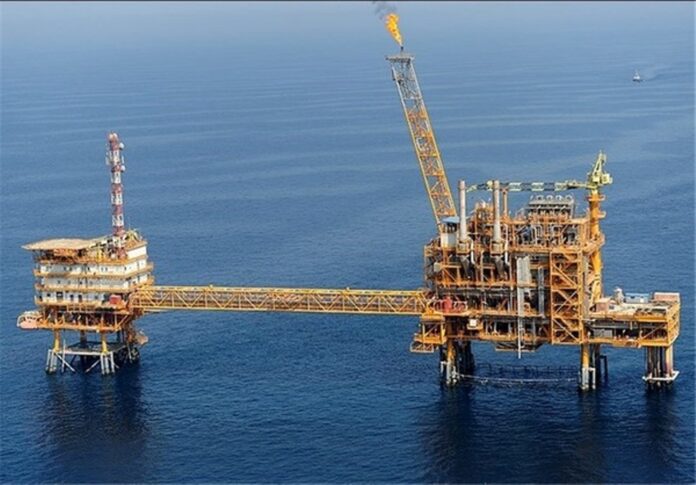
The energy-rich Persian Gulf region has gained more reputation in recent decades for bearing the world’s largest natural gas field, the South Pars (aka North Dome) field.

However, the offshore natural-gas condensate fields located in the Persian Gulf are not confined to South Pars, which is jointly operated by Iran and Qatar.

Iran has had the good luck to host several other gas fields, located entirely in its own territorial waters. North Pars, Golshan, and Ferdowsi are among the fields with unshared reserves, which is why Iran has been in no hurry to work on them.

However, a predictable drop of pressure at the South Pars reserves in the near future has forced Tehran to explore for new fields. The efforts have led to the detection of Balal gas field, located in the eastern side of South Pars. An Iranian contractor has undertaken to develop the new field.

CEO of Pars Oil and Gas Company Mohammad Meshkinfam says Iran has devised short- and long-term plans to maintain the pressure of gas extracted from South Pars and to develop new fields in the surrounding area, such as Balal and North Pars.

It is now widely expected that exploration of more gas reserves will give Iran new natural gas blocks and even big fields.

Iran has divided the development of South Pars to 24 phases, all of which are now operational except for phases 11 and 14.

Irish Tour Organizers in Iran to Get Familiar with Its Tourist Attractions

A top Iranian tourism official said the five-strong delegation comprising the head of the Irish union of travel agencies, executives of well-known travel agencies and journalists will see for themselves the tourism potential of Iran during their 10-day tour.

“The Irish delegation’s familiarization tour has been held in cooperation with the private sector and features visits to tourist spots in the provinces of Tehran, Isfahan, Fars and Yazd,” said Mohammad-Ebrahim Larijani, the director-general for tourism marketing and advertising at the Iranian Ministry of Tourism.

He said one of the key objectives of the tour is to make the Irish visitors more familiar with the potentialities of health tourism in Iran.

“So, the team are also going to visit the Infertility Centre of Yazd, the Orthopedics Centre of Shiraz and the Tehran Ophthalmology Centre,” he added.
Iran’s President: War on Terror in Idlib Must Go On

Hassan Rouhani - President of the Islamic Republic of Iran

Speaking to reporters at Tehran’s Mehrabad Airport before leaving for Ankara for a trilateral summit on Syria, President Rouhani said the main outstanding issues surrounding the crisis in Syria include “the Idlib region and east of the Euphrates, the Zionist regime’s acts of aggression, and the US meddlesome presence” in the Arab country.

“Terrorists are still present in Idlib region, and it is necessary to fight against them in that region,” he stressed.

“Syria is also faced with problems in the eastern part of the Euphrates. The presence of Americans is intrusive, illegal and interfering, and has always caused this part of Syria to remain restive,” the Iranian president added.
He also noted that Iran, Russia, and Turkey are concerned about the Israeli aggression against Syria, the Zionist regime’s support for the terrorists, and its military strikes on the Syrian people and infrastructures.

The president also hit back at the US for the allegation that Iran has had a role in a Saturday drone attack on Saudi Arabia’s oil installations, saying Washington levels accusations against the resisting people of Yemen or the other regional nations every now and then, instead of confessing to its adverse interference in Syria, Yemen and the other regions.

“Americans are supporting Saudi Arabia and the United Arab Emirates. They supply arms and information, and run part of the war operations, as we see today that a bunch of innocent people get killed in Yemen every day and insecurity lingers in the region,” Rouhani deplored.
The Iranian president finally emphasized that in order to establish real security in the region, the American acts of invasion and the provocative Israeli meddling in the region must come to an end.
Rouhani has travelled to Ankara at the official invitation of Turkish President Recep Tayyip Erdogan to take part in the fifth round of trilateral summit of Iran, Turkey and Russia –the three guarantors of the Astana peace process for the resolution of Syria crisis.

Iran, Russia and Turkey are guarantor countries that brokered a ceasefire in Syria in December 2016, leading to the Astana talks, which are running parallel to the Geneva peace talks.