Monday, December 22, 2025
Home Blog Page 31

Florida talks aimed at ‘creating a pathway’ for sovereign Ukraine: Rubio

“This is not just about peace deals. It’s about creating a pathway forward that leaves Ukraine sovereign, independent and prosperous,” Rubio said at the start of the meeting.

Ukrainian security council secretary Rustem Umerov added, “We are discussing about the future of Ukraine, about the security of Ukraine, about no repetition of aggression of Ukraine, about prosperity of Ukraine, about how to rebuild Ukraine.”

The Ukrainian team led by Umerov discussed US President Donald Trump’s peace roadmap in a meeting that included the president’s peace envoy Steve Witkoff and informal adviser Jared Kushner.

Speaking to reporters afterwards, Rubio said that while progress had been made, “there’s more work to be done.”

“There are a lot of moving parts and obviously there’s another party involved here that’ll have to be a part of the equation and that’ll continue later this week when Mr. Witkoff travels to Moscow,” Rubio continued, adding that the US had been in touch with the Russians and has “a pretty good understanding” of Moscow’s position.

Umerov called the talks “difficult, yet productive,” adding that there was “tangible progress on the way to a just peace.”

Although critics in Ukraine and the West have derided Trump’s plan as favoring Russia too much, the president said it was conceived with input from both sides and was later “fine-tuned” during additional meetings earlier this month.

Ukraine has so far rejected several of Russia’s key demands, including the withdrawal of troops from the Donbass and recognizing its new borders. Russian President Vladimir Putin said last week that a ceasefire was impossible as long as Ukraine continues to occupy parts of Russian territory.


Israelis protest outside Herzog’s home to demand rejection of Netanyahu pardon request

Opposition lawmakers, including Knesset member Naama Lazimi, joined the protest, which demanded Herzog reject the pardon request, The Times of Israel daily reported.

Protesters held signs blaming Netanyahu for Israel’s political crisis and chanted, “You are the leader; you are the guilty.”

One demonstrator wore a Netanyahu mask and an orange prison-style jumpsuit to highlight his ongoing corruption trial.

The demonstration was held under the slogan “Pardon = Banana Republic,” with participants standing behind a large pile of bananas topped with a sign labeled “Pardon” in a satirical reference to the clemency request.

The protest came amid strong political and public reactions to Netanyahu’s move asking the president to end his years-long trial.

Earlier, Israeli opposition leader Yair Lapid urged Herzog not to grant a pardon unless Netanyahu admits guilt and retires from political life.

Netanyahu, 76, formally requested clemency on Sunday without admitting guilt, despite Israeli law requiring a confession before the president can issue a pardon.

His three corruption cases include Case 1000, which accuses Netanyahu and family members of receiving expensive gifts from businessmen in exchange for favors; Case 2000, which focuses on alleged dealings with Yedioth Ahronoth publisher Arnon Mozes to secure positive coverage; and Case 4000, which centers on alleged regulatory benefits to Bezeq telecommunication owner Shaul Elovitch in exchange for favorable coverage on the Walla news site.

Beyond the domestic charges, the International Criminal Court (ICC) issued an arrest warrant for Netanyahu on Nov. 21, 2024, for war crimes and crimes against humanity in Gaza, where more than 70,000 people have been killed, mostly women and children, and nearly 171,000 others injured since October 2023.


Trump says sets no deadlines for Russia on Ukraine war

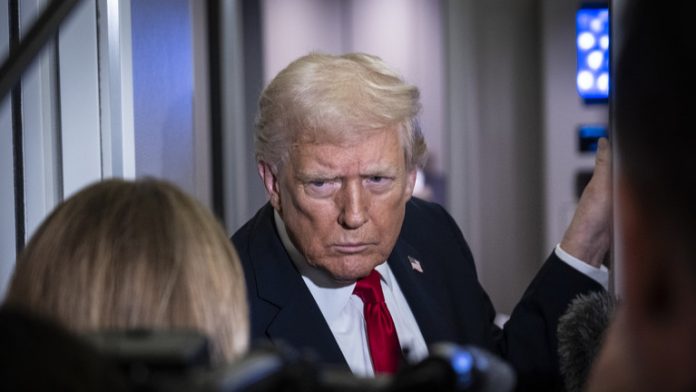
“I don’t have a deadline,” he told reporters aboard his plane as he traveled to Washington from Florida, where he spent the Thanksgiving weekend.

This was Trump’s response to a question about whether he was trying to impose any deadlines on Russia for taking steps to resolve the crisis.

“I have a deadline — when the war is over,” the US president added.

He made the remarks just hours after Secretary of State Marco Rubio held talks with the Ukrainian delegation in Florida.

Corruption remains one of Ukraine’s main problems, Trump stated, while commenting on the prospects of brokering peace between Moscow and Kiev.

Speaking to journalists aboard Air Force One on Sunday, Trump said Ukraine has “some difficult problems.”

When asked to clarify, the president pointed to a “corruption situation going on, which is not helpful.”

Trump added that both Russia and Ukraine would like the conflict to end, and that “there’s a good chance we can make a deal.”

Ukraine was rocked by a major corruption scandal last month involving figures in President Volodymyr Zelensky’s inner circle. The country’s Western-backed anti-corruption agencies alleged that Timbur Mindich, the Ukrainian leader’s former longtime business partner, was the ringleader of a $100 million kickback scheme in the energy sector, which relies heavily on foreign aid. Mindich fled the country to evade arrest, apparently after being tipped off.

The scandal led to charges against seven people and the resignation of two government ministers, with opposition MPs claiming that more top officials may have been involved.

Another of Zelensky’s close associates, Andrey Yermak, resigned as his chief of staff last week after his apartment was raided by anti-corruption investigators. Although Yermak has not been charged, he said he stepped down to avoid causing “problems” for Zelensky.

Ukraine has faced several major corruption scandals in recent years. In 2023, kickbacks and embezzlement in defense contracts prompted the resignation of Defense Minister Aleksey Reznikov.
 

NATO says needs to be ‘more aggressive’ towards Russia

NATO

Admiral Giuseppe Cavo Dragone, chair of the NATO Military Committee, told the Financial Times (FT) in an interview published on Sunday that member states have been weighing options to respond to what he described as Russia’s “hybrid war.”

“We are studying everything … being more aggressive or being proactive instead of reactive is something that we are thinking about,” Dragone said.
The commander added that a “pre-emptive strike” could be considered a “defensive action,” though it would be “further away from our normal way of thinking and behavior.”

According to FT, diplomats from Eastern Europe have been especially vocal in demanding tougher actions against Russia, including retaliatory cyberattacks. Dragone noted, however, that NATO’s decision-making has been constrained by legal and ethical concerns, as well as jurisdiction.

In September, NATO increased air patrols in Eastern Europe and the Baltic states in response to alleged airspace violations by Russia. Moscow has denied claims that its aircraft and drones encroached on NATO airspace and accused the allies of warmongering.

Politico Europe reported last week that NATO was also considering joint offensive cyber operations against Moscow. Russia has denied hacking Western institutions, insisting that it has instead been the target of numerous cyberattacks, including some claimed by pro-Ukrainian groups.

Russian Ambassador to Belgium Denis Gonchar said last week that NATO members were pursuing a “rampant militarization” of Europe under the guise of deterring Russia’s “non-existent” plans to attack them.


Iran’s president highlights importance of unity, cooperation among Muslim states

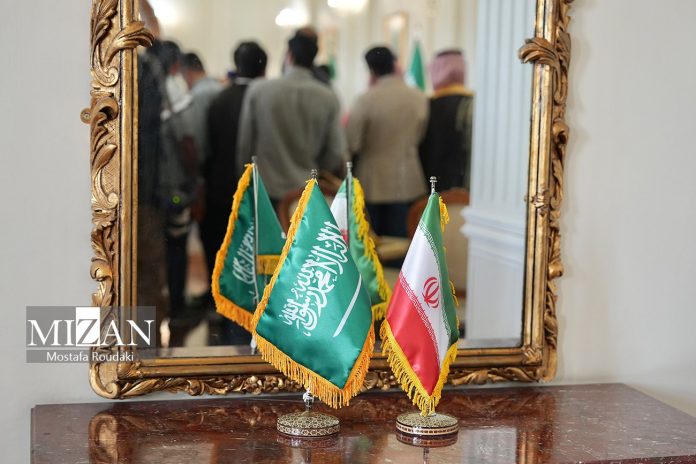
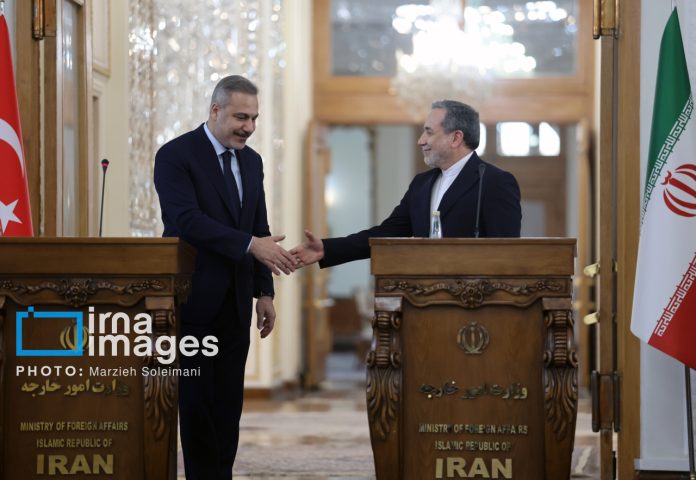
During a meeting on Sunday evening, the Iranian president and visiting Turkish Foreign Minister Hakan Fidan emphasized the need to strengthen bilateral relations and enhance unity within the Islamic world.

Pezeshkian highlighted the sensitive circumstances facing the Islamic world, stating that at a time when the common enemies of Muslim nations are seeking to increase pressures, Islamic countries should ease conditions for one another and avoid complicating regional issues. Iranians and Turks are brothers, he added.

The president described the relationship between Tehran and Ankara as deeply rooted in shared history and culture, noting the vast potential for expansion. He stressed that if Muslim countries move forward with a unified will based on solidarity and the exchange of experience, no external power will be able to create problems for them.

Pointing to Europe’s experience, where historical rivalries eventually gave way to integrated financial, political, and commercial structures, Pezeshkian said the Islamic world, with even deeper cultural and civilizational commonalities, can also pursue cohesive cooperation and collective development by connecting flows of trade, knowledge, and culture.

The Turkish foreign minister, who conveyed warm greetings from Turkey’s president and a message underscoring the importance of expanding economic and regional cooperation, praised President Pezeshkian’s sincere and committed outlook toward the Islamic world. He said internal divisions have cost Muslim nations valuable time and that today the regional situation demands joint and collective action.

Fidan emphasized that the time has come for Islamic countries to advance cooperation through coordinated and equal efforts, stating that nations such as Iran and Turkey, together with other Muslim countries, can help remove discord among the Islamic Ummah.

He also remarked on developments in Iran, saying that Ankara acknowledges that since the victory of the Islamic Revolution in Iran, the country has advanced with remarkable speed and dynamism.


Navy chief reaffirms Iran’s sovereignty over Persian Gulf Islands, says foreign claims to fail

Naaz Islands in Persian Gulf
In an interview with the Tehran-based Jam-e Jam newspaper, Rear Admiral Shahram Irani underscored Iran’s historic and indisputable sovereignty over the three islands, saying that a powerful, vigilant, and united Iran will never allow any power to infringe upon its territorial integrity.
Rear Admiral Irani highlighted the geographic, economic, military, and geopolitical significance of the islands, noting that their location enables the Islamic Republic of Iran to maintain effective control over the Strait of Hormuz.
He added that both the surface and subsurface areas of these islands contain diverse and extensive fossil and marine resources.
According to the navy commander, from a geopolitical and military perspective, control over the three islands is as strategically important as possessing aircraft carriers, as the islands can serve as critical positions for strengthening Iran’s defensive and security capabilities in the face of potential threats.
He further emphasized that the islands also hold considerable economic potential due to their clear waters, rich marine biodiversity, and sub-surface coral formations, offering strong prospects for nature-based and maritime tourism.
Rear Admiral Irani noted that the islands overlook the main waterways entering and exiting the Persian Gulf—an element that has prompted some regional states, influenced by extra-regional powers, to raise unfounded claims in an attempt to create tension around the islands.
He asserted that Iran’s adversaries must not assume they can undermine Iran’s sovereignty by promoting fabricated disputes. Based on historical and legal evidence, Iran’s ownership of the three Persian Gulf islands is definitive, continuous, and indisputable.


Iran offers to extend Gas deal with Turkey, calls for boost in energy, economic cooperation

Speaking at a joint press conference in Tehran on Sunday afternoon following his meeting with Turkish Foreign Minister Hakan Fidan, Seyed Abbas Araqchi said that despite all efforts made and the positive results achieved, there is still a considerable gap before the full potential of the two countries—particularly in trade and economic relations—can be realized, and multiple steps must be taken to bridge that gap.

Araqchi noted that both ministers stressed the need to remove obstacles to bilateral trade and investment, adding that it was agreed the High-Level Cooperation Council and the Joint Economic Commission of the two countries would address these issues in detail.

Announcing the upcoming opening of Iran’s consulate general in the Turkish city of Van, Araqchi said the consulate would create new opportunities for bilateral ties, including enhanced cooperation between border provinces.

Elsewhere in his remarks, Araqchi said the repeated violations of the ceasefire in Gaza and Israel’s recent attacks on Lebanon and Syria show that the Israeli regime has broader plans to destabilize the region.

He stressed that stability, security, and calm in Syria are directly linked to preserving its territorial integrity, adding that the main threat to Syria’s security and stability comes from Israel’s occupation and aggressive actions.

Araqchi said it is the duty of regional countries to curb the regime’s aggression and expansionism, including in Syria and Lebanon.

He also reaffirmed Iran’s support for Turkey’s efforts to disarm the PKK terrorist group and to establish a terrorism-free zone.

Israeli PM submits formal pardon request

Benjamin Netanyahu

“The Office of the President is aware that this is an extraordinary request which carries with it significant implications. After receiving all of the relevant opinions, the president will responsibly and sincerely consider the request,” according to a statement by Herzog’s office.

US President Donald Trump wrote to Herzog earlier this month asking him to pardon Netanyahu, who has repeatedly denied wrongdoing in the ongoing court cases.


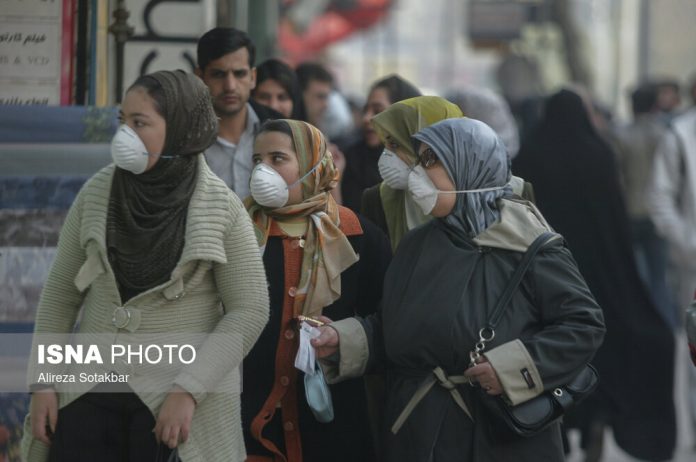
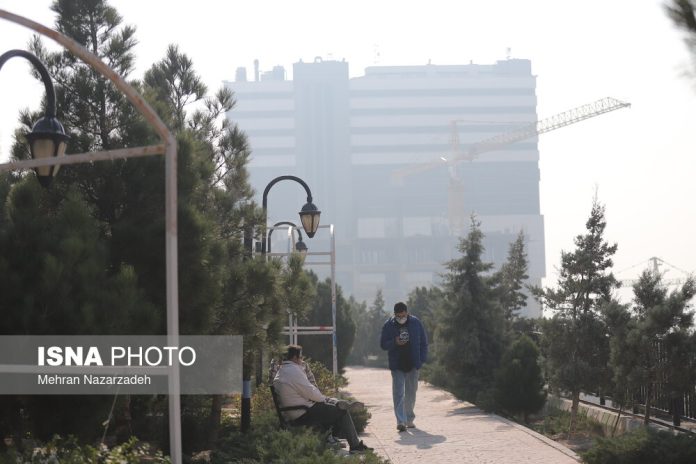
Tehran emergency services report 357 deaths in eight days as air pollution calls surge

According to Mohammad Esmaeil Tavakoli, head of Tehran Province EMS, 31% of the 57,000 emergency calls received during this period were related to pollution-induced health issues.

Speaking on a television program, Tavakoli said EMS has no legal obligation to station ambulances in public squares during pollution episodes, explaining that earlier policies had been revised.
He emphasized that the Ministry of Health is responsible for responding to public health needs, with EMS acting as its pre-hospital arm.

Tavakoli noted that in November, when the latest pollution wave began, EMS received 227,000 calls and conducted 93,000 missions, 22% of which were linked to poor air quality. In the most recent eight-day period, emergency missions rose to 28,000, with cardiac and respiratory complaints making up 31% of cases.

He also highlighted structural shortages, citing a deficit of 400 EMS stations and 500 ambulances in Tehran Province.

Although the system operates helicopters, fixed-wing aircraft and 240 motorlances, heavy traffic and the city’s geography limit response capacity.

Tavakoli urged authorities to address systemic gaps and asked the public to trust that emergency services remain fully operational despite the strain.

Egypt trains Palestinians for future Gaza police force

Gaza Strip

Egyptian Foreign Minister Badr Abdelatty announced the plan to train 5,000 officers for Gaza during talks with Palestinian Prime Minister Mohammad Mustafa in August.

A first group of more than 500 officers were trained in Cairo in March and since September the two-month courses have resumed to welcome hundreds more people, the Palestinian official told AFP on condition of anonymity.

He added all members of the force will be from the Gaza Strip and paid by the Palestinian Authority, which is based in Ramallah in the occupied West Bank.

“I’m very happy with the training. We want a permanent end to war and aggression, and we’re eager to serve our country and fellow citizens,” stated a 26-year-old Palestinian police officer.

He told AFP he hoped the security force would be “independent, loyal only to Palestine and not subject to external alliances or objectives”.

“We received outstanding operational training, with modern equipment for border surveillance,” said a Palestinian lieutenant who also requested anonymity for security reasons, as did everyone interviewed by AFP.

The lieutenant, who left Gaza with his family last year, added the training focused on the fallout of the October 2023 Hamas attack on Israel that triggered the war and the damage done to the Palestinian cause.

Hamas’s attack on Israel resulted in the deaths of 1,200 people.

Israel’s retaliatory assault on Gaza has killed at least 70,100 people, according to figures from the territory’s health ministry that the UN considers reliable.

The training also highlighted the role of the Palestine Liberation Organization (PLO) as the sole legitimate representative of the Palestinian people and stressed the importance of “protecting the dream of creating” a fully sovereign and independent Palestinian state.

A senior security official from the Palestinian Authority confirmed that its President Mahmoud Abbas had instructed Interior Minister Ziad Hab al-Reeh to coordinate with Egypt on the training.

During talks sponsored by Egypt late last year, the Palestinian movements — including the two main ones, Hamas and Abbas’s Fatah — agreed to a force of around 10,000 police officers.

Egypt would train half of them while the other 5,000 would come from the police force in Gaza, which has been under Hamas control since the militant group seized power there in 2007.

Under the agreement, the security force would be supervised by a committee of technocrats approved by the Palestinian movements.

A senior Hamas official confirmed to AFP that the movement supported “the details regarding security and management of the Gaza Strip” agreed during the talks.

The subject was also addressed in US President Donald Trump’s peace plan, which led to last month’s fragile Gaza ceasefire, and was later endorsed by a UN Security Council resolution.

The plan notably authorises the creation of an international force that would be responsible for securing border areas and demilitarising Gaza.

The European Union also wants to train up to 3,000 Palestinian police officers in the Gaza Strip under a scheme similar to one it already runs in the West Bank, an EU official told AFP.

The EU has financed a police training mission in the West Bank since 2006, with a budget of around 13 million euros ($15 million).

But many details remain up in the air.

A Hamas official questioned to AFP the possibility of an agreement with Israel on the precise details of a police force in Gaza.

Israeli Prime Minister Benjamin Netanyahu’s government opposes any role for Hamas or the Palestinian Authority in Gaza after the war ends.

AFP journalists have regularly observed that Hamas maintains armed men in Gaza to ensure traffic flows and to mediate disputes between residents, effectively providing a form of law enforcement.

Hamas has announced it no longer wants to govern Gaza but added that it does not intend to disappear and remains a central part of Palestinian political life.

On the thorny issue of disarmament, Hamas has stated it is not opposed to handing over part of its arsenal, but only as part of a Palestinian political process.