Tuesday, December 23, 2025
Home Blog Page 3068

FM Zarif Slams US Economic Terror as War Crime

Iranian People to Survive Latest of US Cruelties: Zarif

He made the remarks in a Wednesday address to the International Conference on Global Economy and Sanctions”, held in Al-Zahra University of Tehran.

In his speech, he discussed the US’ hostile policies against Iran, giving a definition of “sanction” and “economic terrorism”.

He said that using the term “sanction” for the United States’ measures has no legal ground.

He also stated that the US measures are in violation of the JCPOA and the UN Security Council Resolution 2231, and not only have not been taken for law enforcement but are aimed at breaking the law and for the US’ illegal use of a legal term.

In response to comments by the US secretary of state who had claimed that if people of Iran want to have food to eat, they should force their government to change its policies, Foreign Minister Zarif said using starvation of civilians is a blatant example of war crime, and terrorism is also an example of an international crime.

“This measure by the US not only does not bear the legal conditions of sanctions, but involves the legal conditions for economic terrorism. Since the main target of economic terrorism and war is civilians, it amounts to a war crime.”

Zarif also noted that the primary and fundamental strategy of the Islamic Republic of Iran and people for countering the United Sates’ maximum pressure is maximum resistance.

Highlighting the reliance on internal forces and capabilities as the examples of such resistance, the foreign minister underlined that Iran’s capabilities are growing in this path.

Zarif also noted that one of the ways to combat the US economic terrorism is to minimize the unnecessary tensions in relations with the other governments, particularly with the neighbours, by observing the principles of wisdom, dignity and expediency.

“We must believe and be committed to concentrating our national strength on the immediate target, namely countering the US ‘economic terrorism’ and getting through these conditions.”

He also emphasized the necessity for vigilance and caution in countering the US measures, stressing, “We should not allow the US to turn its hostile and illegal policies against Iran into an issue and stance of the international community or to change the question and its unilateral economic terrorism against the Iranian nation into a legitimate international issue.”

The Iranian foreign minister also described the use of national currencies for economic exchanges as another way to deal with the US economic terrorism, stating, “We have begun negotiations with many countries about the complicated barter systems, some of which have yielded results and some others are going to be finalized, as the INSTEX mechanism proposed by the Europeans is founded on this basis – in case the Europeans have their own political power and will – and this would be an alarm for the US to see its closest friends, at least in theory and not in practice, breaking away from (the US) dollar.”

Syria Condemns Turkish Military Operation, Shelling Kills 4 Civilians

In a statement on Wednesday, the Syrian Foreign Ministry condemned in the strongest terms the reckless statements and hostile intentions of the Turkish government and the military build-up at the common border, which it said constitutes an outrageous violation of the international law and a blatant breach of the UN Security Council’s resolutions that affirm respect for Syria’s sovereignty and territorial integrity.

Turkey launched a military operation in northeast Syria on Wednesday. The so-called Operation Peace Spring began with air raids on Tuesday.

SANA reported on Wednesday that three Syrian children and a woman have been killed in a shell attack from the Turkish forces on a house in Bashiryah neighborhood in Qamishli.

In its statement, the Syrian Foreign Ministry said Turkey’s “hostile behavior” is part of its policy of expansionist ambitions in the Syrian territories, stressing that such policy could not be justified under any pretext.

“What the Turkish regime claims regarding the security of the borders is refuted by this regime’s ignorance of Adana Agreement,” the statement noted.

Syria holds certain Kurdish organizations accountable for what is taking place due to their subordination to the US project, as they have been previously warned against the dangers of the project and serving the US policy against their homeland, but these organizations have insisted on being tools in the hands of foreigners, the Syrian Foreign Ministry deplored.

The statement also reaffirmed the Damascus government’s determination to confront the Turkish aggression by all legitimate means, saying Syria is ready to embrace all of its misled citizens if they return to the correct path in a way that would guarantee Syria’s unity and territorial integrity.

“Syria reminds that if Erdogan’s regime insists on launching its aggression, it will classify itself as one of the terrorist organization and armed groups and it will absolutely lose its position as a guarantor of the Astana process and it will deal a strong blow to the political process as a whole,” the statement concluded.

Turkish President Recep Tayyip Erdogan says the offensive is aimed at removing Kurdish-led forces from the border area and creating a “safe zone” to which millions of Syrian refugees can be returned.

The move came after the US announced it was withdrawing its troops from the region, effectively abandoning the Syrian Democratic Forces (SDF).

The SDF, led by the Kurdish People’s Protection Units (YPG), has appealed to the US and its allies for a “no-fly zone” to protect it from the Turkish attacks. Turkey considers the YPG a “terrorist” group.

Iranian Speaker Cancels Istanbul Trip over Turkish Military Operation


Iranian Speaker Cancels Istanbul Trip over Turkish Military Operation

Iran Threatens to Reconsider Nuclear Cooperation with IAEA

Ali Larijani had been invited by his Turkish counterpart to take part in a parliamentary conference in Istanbul.

The Iranian speaker cancelled his trip on Wednesday evening, hours after Turkey launched a military operation in Syria.

Iranian authorities, including President Hassan Rouhani, had urged the Ankara government to avoid taking military action in the Syrian territories.

President of Turkey Recep Tayyip Erdogan says the offensive -which began with air raids on Tuesday- is aimed at removing Kurdish-led forces from the border area and creating a “safe zone” to which millions of Syrian refugees can be returned.

Syria Condemns Turkish Military Operation, Shelling Kills 4 Civilians

A Look at Iranian Newspaper Front Pages on October 9

A Look at Iranian Newspaper Front Pages on November 19

Abrar:
1- Trump to Erdogan: Turkey to Be in Big Trouble If US Lives Endangered
2- US Preparing for Drills to Defend Europe with Participation of 18 States
3- Top Diplomats of US, UK Discuss Anti-Iran Moves

A Look at Iranian Newspaper Front Pages on October 9


Aftab-e Yazd:
1- Saudis in Hurry, Iranians Showing Patience
* Details of Abdul-Mahdi’s Efforts to Mediate between Tehran and Riyadh
2- Propaganda Moves by Two Presidents
* Why Turkey Attacks Northern Syria, US Leaves the Region
3- US Hotel Not Allowed to Sell Even Bottle of Water to Zarif

A Look at Iranian Newspaper Front Pages on October 9


Ebtekar:
1- Secure Society Instead of Police State; Rouhani Explains Intelligence Ministry’s Approach
2- Foreign Ministry: Iran to Take Fourth Nuclear Step If Status Quo Not Changed

A Look at Iranian Newspaper Front Pages on October 9


Etemad:
1- Zero Hour of Invasion: Turkish Army’s Heavy Equipment Deployed in Syria Border
2- Iran Leader Visits Exhibition of Knowledge-Based Products

A Look at Iranian Newspaper Front Pages on October 9


Hamshahri:
1- Overcoming Trap of Sanctions
* Iran First VP: We’ve Passed Difficulties of Sanctions
2- Trump Still Has Highest Chance of Winning 2020 Elections

A Look at Iranian Newspaper Front Pages on October 9


Javan:
1- Unprecedented Disappointment of Allies with US
* After UAE, Saudis, Syrian Kurds, Now Israel Disappointed with US Loyalty
2- Iran Leader Urges Removal of Barriers for Young Inventors

A Look at Iranian Newspaper Front Pages on October 9


Jomhouri Eslami:
1- Widespread Opposition to Turkey’s Possible Military Invasion of Northern Syria
2- Iran Unveils Nine New Medicines
3- Yemeni Army’s Crushing Response to Saudi Aggressors in Assir and Najran

A Look at Iranian Newspaper Front Pages on October 9


Kayhan:
1- Iranian Talent, Revolutionary Work Can End Economic Woes: Leader
2- US Traps Turkey in Syria after Trapping Saudi in Yemen

A Look at Iranian Newspaper Front Pages on October 9


Mardom Salari:

1- FM Zarif Outlines Tehran’s Condition for Talks with Saudis

2- No Red Line in Preserving People’s Health

3- Turkey Attacks Heart of Syrian Kurds with Trump’s Green Light

A Look at Iranian Newspaper Front Pages on October 9


Shargh:

1- Intelligence Rise against US President

2- Point of Trump’s Support for Trump in Ukrainegate

A Look at Iranian Newspaper Front Pages on October 9

Turkish President Declares Beginning of Syria Incursion

Earlier in the day, Turkey’s Foreign Minister Mevlüt Çavuşoğlu said his country will inform all relevant countries, including the Syrian government, about its operation into northeastern Syria.

Speaking at a news conference in Algeria, Çavuşoğlu said the operation will be carried out in line with international law and that the only target of the operation is terrorists in the region.

He said President Erdoğan had told US President Donald Trump in the weekend that Ankara would launch the operation after Washington stalled efforts to form a safe zone in the region.

Turkey’s Operation Peace Spring covers east of the Euphrates River in northern Syria and is aimed at securing its borders by eliminating terrorist elements to ensure the safe return of Syrian refugees and Syria’s territorial integrity, Ankara claims.

Turkey has said the terrorist group PKK and its extension the YPG/PYD constitute the biggest threat to Syria’s future, jeopardizing the country’s territorial integrity and unitary structure. Turkey has also stressed that supporting terrorists under the pretext of fighting ISIS is unacceptable.

Turkey has a 911-kilometre (566-mile) border with Syria and it has long decried the threat from terrorists east of the Euphrates and the formation of a “terrorist corridor” there.

Iranian Army Holds Unannounced Drill near Turkey Border

The unannounced military exercise has been held in regions near Oroumiyeh, capital of the northwestern province of West Azarbaijan, with Army Commander Major General Abdolrahim Mousavi in attendance.

The military drill involves rapid reaction units, mobile and offense brigades, and helicopters from the Army Ground Force’s Airborne Unit.

Held with the theme “One Target, One Shot”, the exercise is aimed at evaluating the combat preparedness of Army units and their mobility and agility in the battlefield.

Iran’s Armed Forces hold routine military exercises throughout the year.

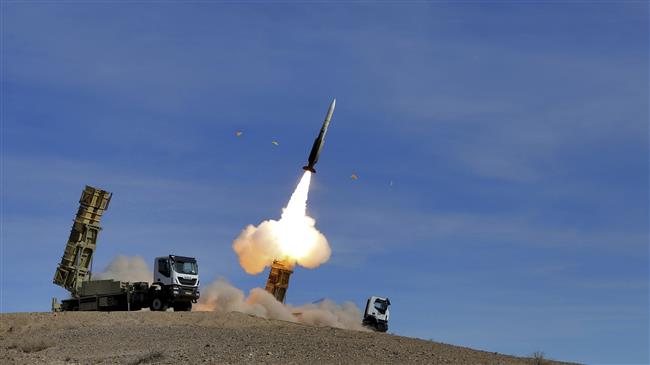
Iranian officials have repeatedly underscored that the country will not hesitate to strengthen its military capabilities, including its missile power, which are entirely meant for defense, and that Iran’s defense capabilities will be never subject to negotiations.

Iran Has No Reason to Develop Nuclear Weapon: Leader

Ayatollah Seyyed Ali Khamenei said Iran’s position in that regard is firm and definitive.

“Although we could have taken a step in that path, we announced the use of this weapon (nuclear arms) religiously forbidden as instructed by the respected religion of Islam,” said the Leader in a meeting with elite and top scientific figures on Wednesday.

“So, there is no reason for us to spend money on the production and stockpiling of weapons whose use is absolutely forbidden,” Ayatollah Khamenei added.

Elsewhere in his remarks, the Leader said the very important and beneficial “nuclear science,” when coupled with certain countries’ thirst for power, led to the development of nuclear bombs and turned into a major threat to the world and humanity.

Ayatollah Khamenei also said imitating the culture of Western universities will kill scientific innovations.

“Imitating others will destroy innovation and real scientific dynamism as well,” he noted.

Ayatollah Khamenei noted that Iran’s scientific progress has even won the praise of the enemies.

Among the achievements of the country on the scientific front, he said, have been the enhancement of national defence might, control and treatment of diseases, promotion of technical-engineering services, accomplishments in the field of biotechnology and progress in peaceful nuclear technology.

He said the progress that Iranian universities have made over the past forty years is mind-boggling compared to that before the 1979 Islamic Revolution.

Zarif Raps US Sanctions on Central Bank as War Crime

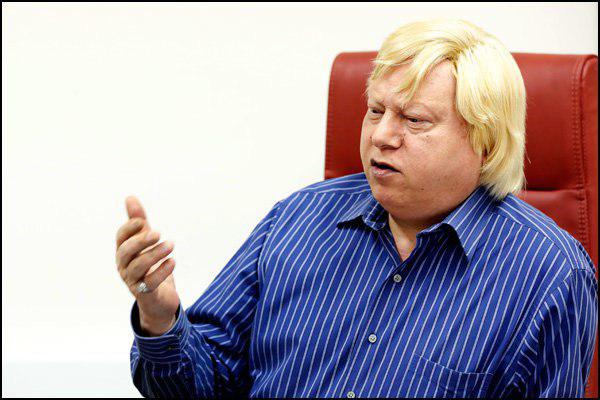
Foreign Minister of Iran Mohammad Javad Zarif addresses the International Conference of Global Economy and Sanctions held on Oct. 9, 2019 in Al-Zahra University of Tehran / Photo by IRNA

Mohammad Javad Zarif said the new ban amounts to a food and drug sanction on Iran.

He said the CBI has, so far, been sanctioned as Specially Designated National (SDN). However, he added, the title has changed to Specially Designated Global Terrorist (SDGT), which means the bank cannot buy food and medicines from now on.

“It means the CBI, as the economic lever and tool of foreign policy of the Islamic Republic of Iran, is not allowed to buy food and drugs for Iranian people,” said the top diplomat.

Meanwhile, Zarif touched upon recent remarks by US Secretary of State Mike Pompeo, who had said, “If you (Iran) want your people to eat, you have to change your policy.”

Zarif noted all these developments show Washington’s move is tantamount to economic terrorism.

Despite what the US officials claim, the US-made medications are hard to obtain reportedly due to banking sanctions that hamper money transactions which causes some Western companies to refuse to sell the necessary drugs and medical equipment to Iran.

Tensions have been running high between Tehran and Washington since last year, when Trump unilaterally withdrew the US from the Iran nuclear deal, officially known as the Joint Comprehensive Plan of Action (JCPOA), and unleashed the “toughest ever” sanctions against the Islamic Republic.

Iran Urges Turkey to Reconsider Decision to Invade Syria

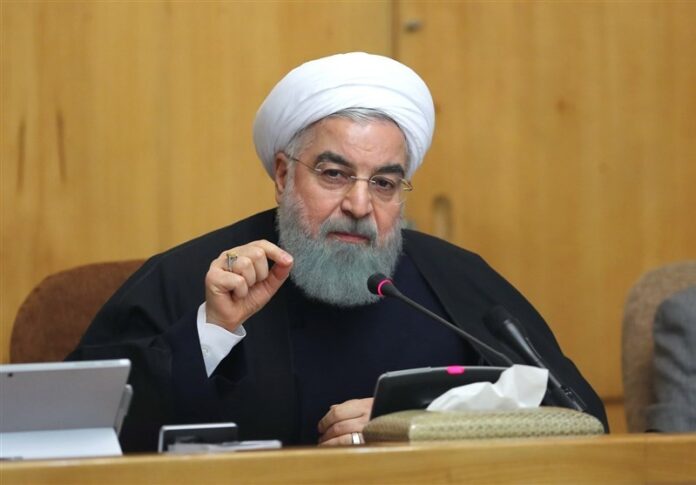
“The Turkish government has concerns about its southern borders, and it is their right that their concerns are addressed. However, we believe the right path and method must be chosen for that purpose,” Rouhani said.

“During the trilateral meeting of Iran, Russia, and Turkey, we clearly announced the only solution to establish security in northern borders of Syria and southern Turkey is the presence of the Syrian army,” the president told a cabinet session on Wednesday.

“We should prepare all the grounds for the presence of the Syrian army in these regions. Other countries should also help. The Americans must leave the region, and the Kurds stand by the Syrian army in this region, which is indeed their own country,” he added.

Rouhani said the path Turkey is treading today and the agreements reached behind the scenes do not serve the region’s interests.

“We want the friendly and brotherly country of Turkey and its government to show more patience and care in such affairs, and reconsider the path they have chosen,” he noted.

“We believe the path currently chosen is not an appropriate and good way for the region, because today we are in a condition where calm is a necessity for the region, and the displaced Syrians must return home as soon as possible,” Rouhani noted.

The president said the main issue today is not northern Syria and Eastern Euphrates. “Rather, the top problem in the region is Idlib, where all the terrorists have gathered.”

“We hope that regional countries contribute to [solving] the problem, and the Turkish government be more careful in this region so that we would not encounter any further problem in the region,” he added.

Turkey started its military incursion into northern Syria on Monday night, after the US in a major shift in its policy gave the green light to Ankara to launch the operation against Washington’s long-time Kurdish allies in northern Syria.

In a phone conversation on Monday, Turkey’s Foreign Minister Mevlut Cavusoglu assured his Iranian counterpart Mohammad Javad Zarif that Ankara’s military operation in northern Syria is a temporary one.

Zarif, in turn, expressed Iran’s opposition to Turkey’s military action, and said the Adana Agreement is the best approach for Syria and Turkey to address their concerns.

Later on Tuesday, Iran’s Foreign Ministry said the country is closely monitoring the worrying reports about the possibility of Turkish military forces entering the Syrian territories.

“The Iranian Foreign Ministry believes such a move, in case of occurrence, would not only fail to address Turkey’s security concerns, but also will inflict heavy material and humanitarian damages,” it said in a statement.

“Accordingly, the Islamic Republic of Iran is opposed to any possible military operation,” it added.

Iran Prepared for Talks If Saudis Stop Killing Civilians: Zarif

Zarif made the remarks in an interview with ICANA on Tuesday in reaction to a report by The New York Times quoting officials of Iraq and Pakistan as saying that Saudi Crown Prince Mohammed bin Salman had asked the leaders of those two countries in recent weeks to speak with their Iranian counterparts about de-escalation.

“Under the circumstances that the Saudis have developed an interest in talking with Iran, if they pursue regional issues at the negotiating table, not by killing people, they will certainly have the Islamic Republic along with them,” Zarif said.

The top diplomat was referring to the massacre of civilians during the Saudi-led military campaign against Yemen, which meant to reinstall a former Riyadh-friendly regime in the impoverished state.

“The Ministry of Foreign Affairs [of Iran] is always ready to cooperate with our neighbors for the security of the region and we have officially announced this position,” the top Iranian diplomat added.

He noted that in line with such a policy, Iranian President Hassan Rouhani presented the United Nations General Assembly with the country’s new regional peace initiative, dubbed Hormuz Peace Endeavor (HOPE).

In an address to the 74th session of the General Assembly on September 25, Rouhani said as a steward of maritime security in the Persian Gulf and the Strait of Hormuz, Iran invites all countries that are affected by developments in the strategic region to join HOPE.

He said that the “coalition of hope” aims to promote peace, stability, progress and prosperity of littoral states and help achieve mutual understanding and establish peaceful and friendly relations among them.

“This initiative entails different sectors such as cooperation in providing collective energy security, freedom of navigation and free flow of oil and other [energy] resources from and to the countries off the Strait of Hormuz and beyond that,” the Iranian president added.

The spokesman for President Rouhani’s administration late last month confirmed reports that Saudi leaders have been sending messages to Iran’s president through a head of state, though refraining to give any details on the nature of those messages.

“Yes, this is true that they have sent messages to Mr. Rouhani through a head of state,” Ali Rabiei said, adding, “We must see signs of it [Saudi’s goodwill] without any ambiguity, and the first sign of it is to stop the aggression against Yemen and put an end to the massacre of Yemenis.”

Saudi Arabia and a number of its regional allies launched a devastating campaign against Yemen in March 2015, with the goal of bringing the government of Abd Rabbuh Mansur Hadi back to power and crushing Ansarullah.

The US-based Armed Conflict Location and Event Data Project (ACLED), a nonprofit conflict-research organization, estimates that the war has claimed more than 91,000 lives over the past four and a half years.

The war has also taken a heavy toll on the country’s infrastructure, destroying hospitals, schools, and factories. The UN says over 24 million Yemenis are in dire need of humanitarian aid, including 10 million suffering from extreme levels of hunger.