Tuesday, December 23, 2025
Home Blog Page 3067

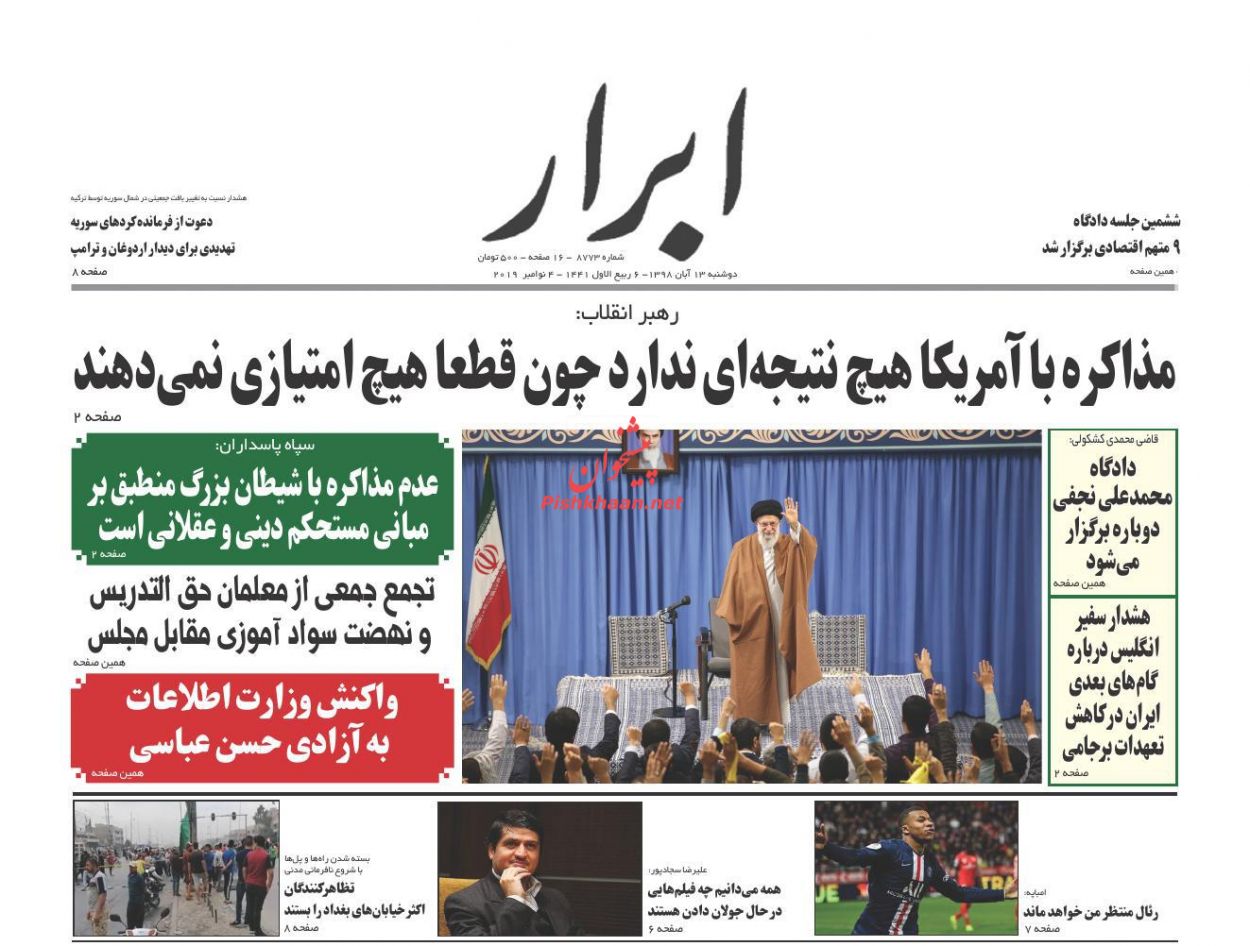
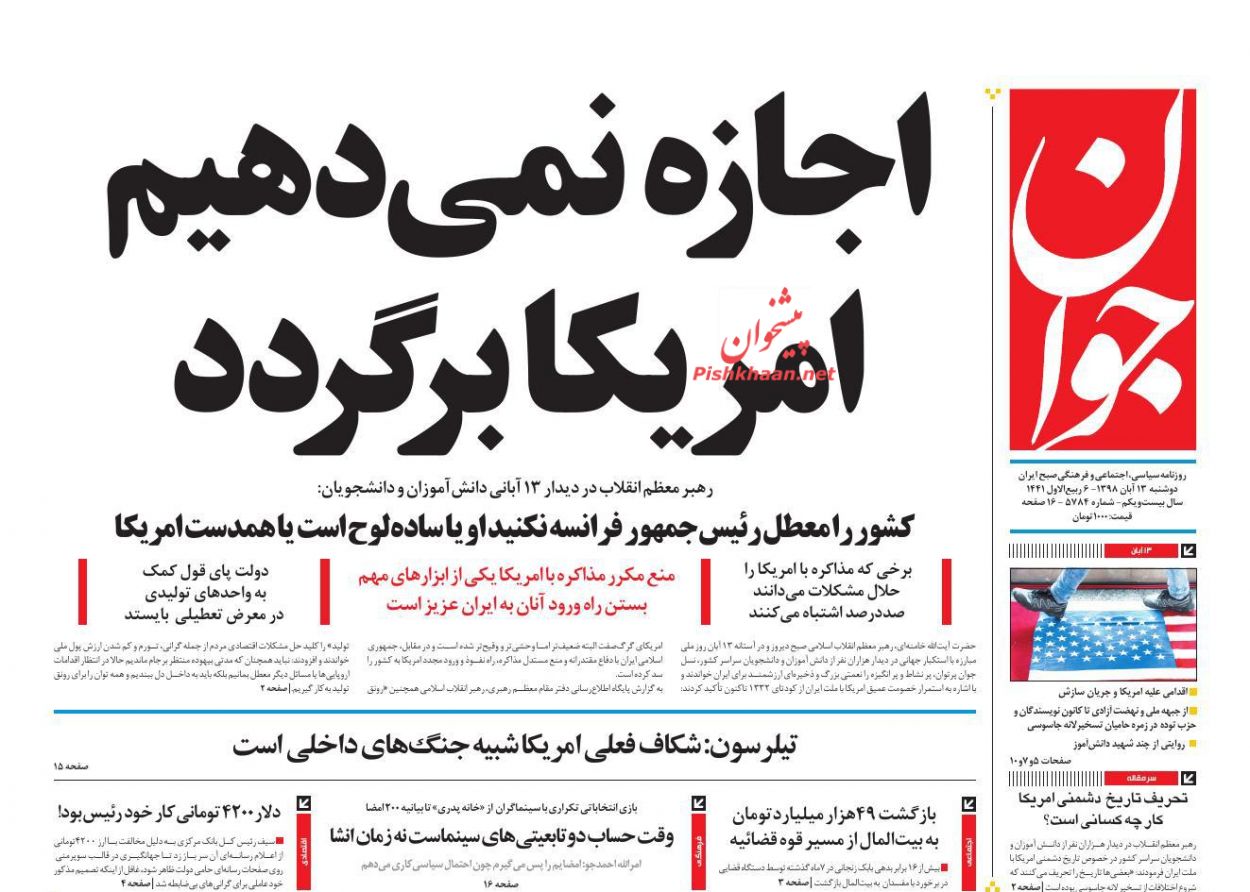
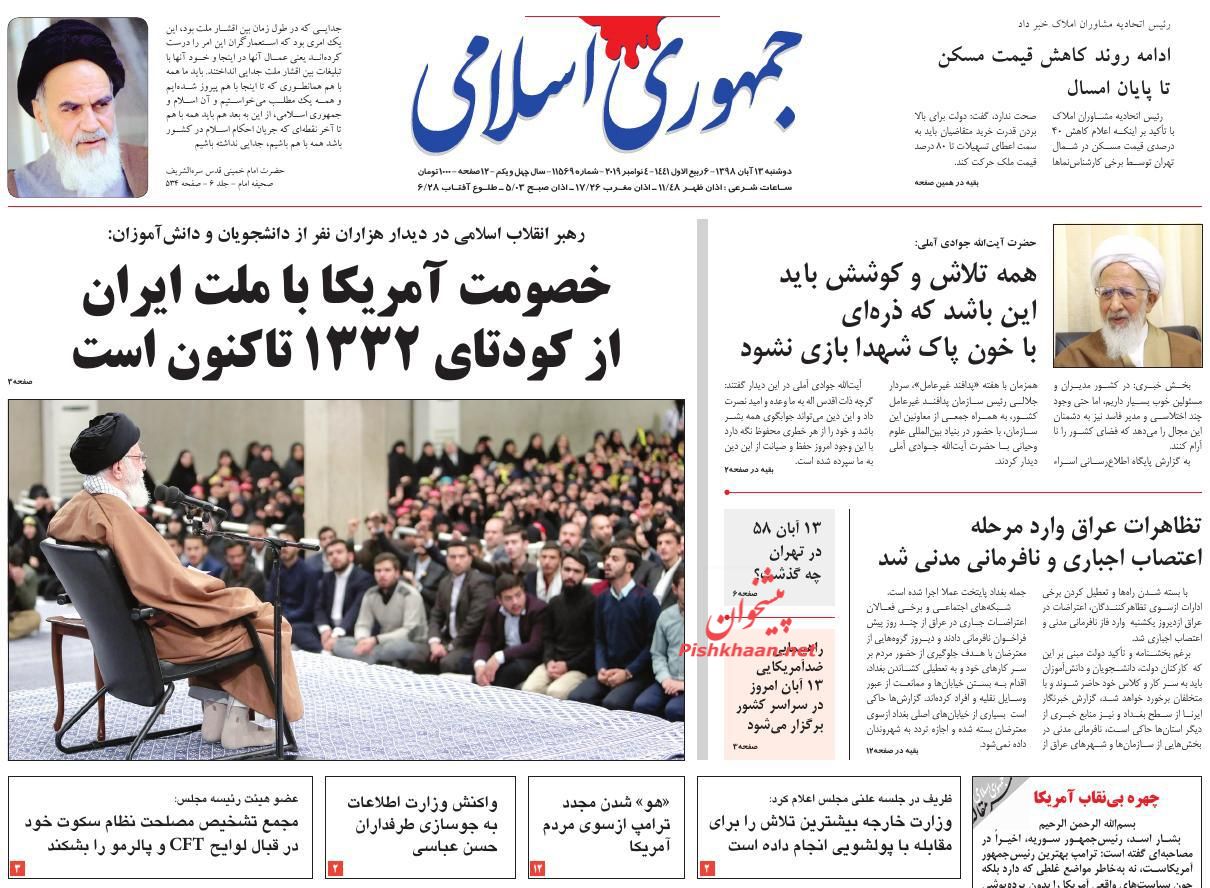
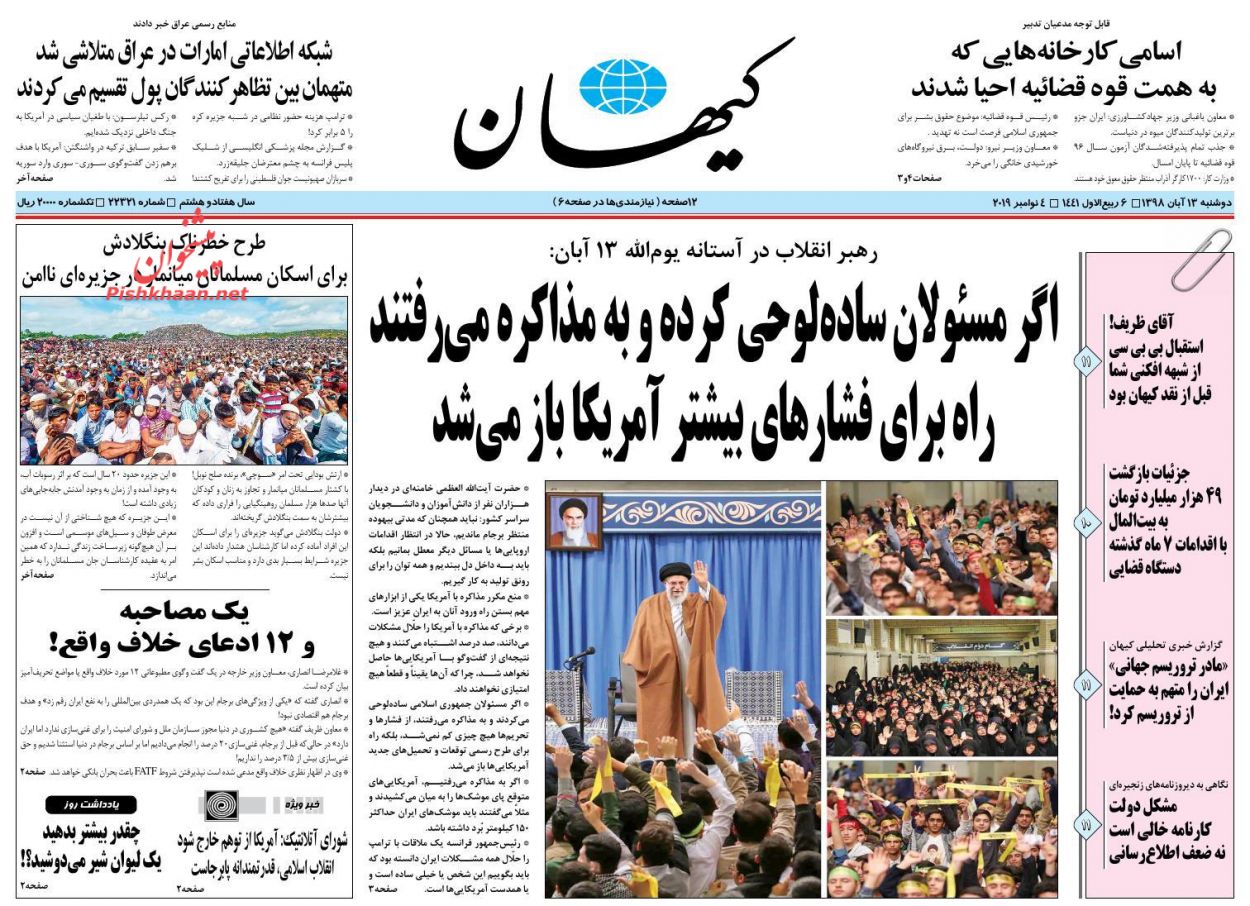
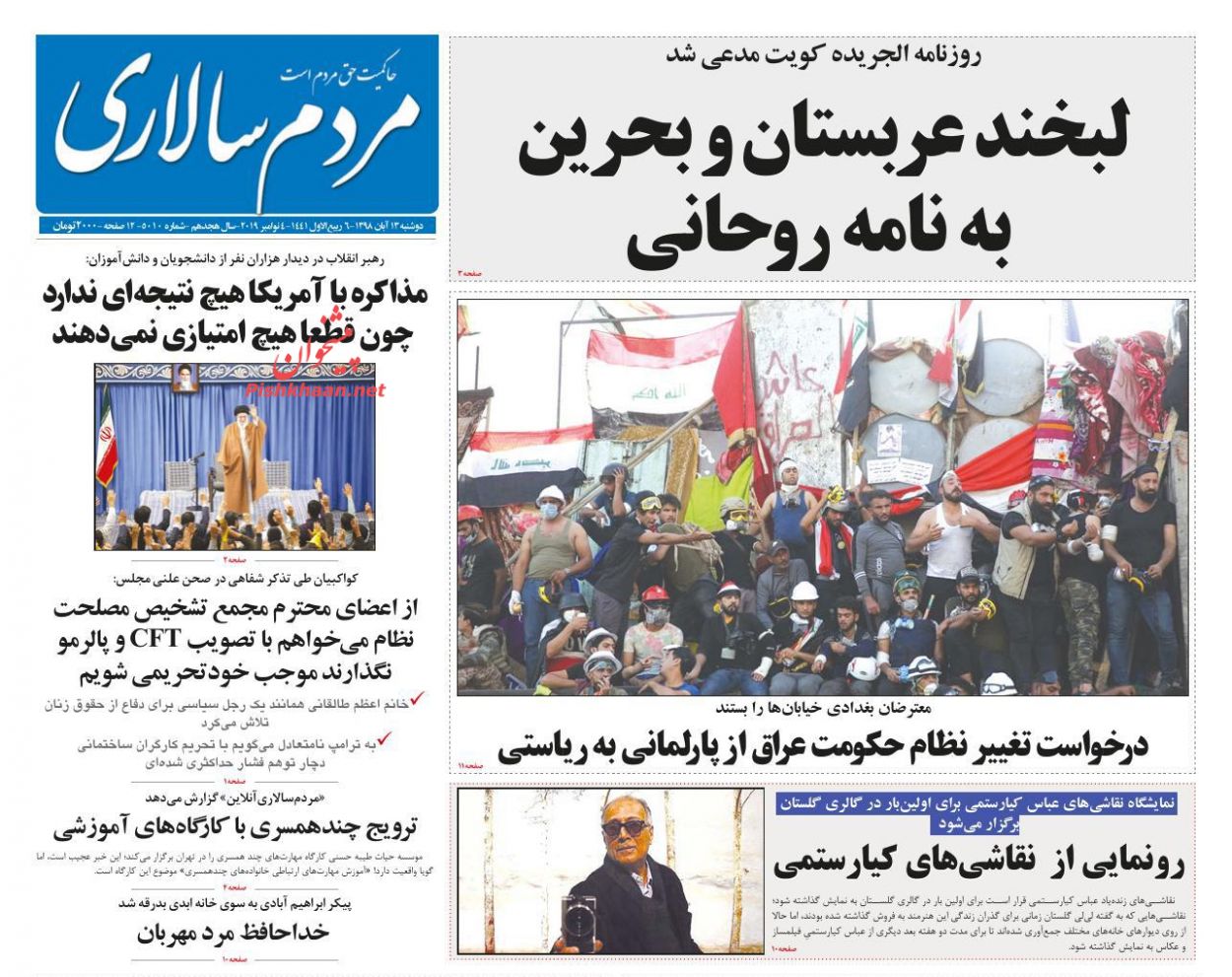
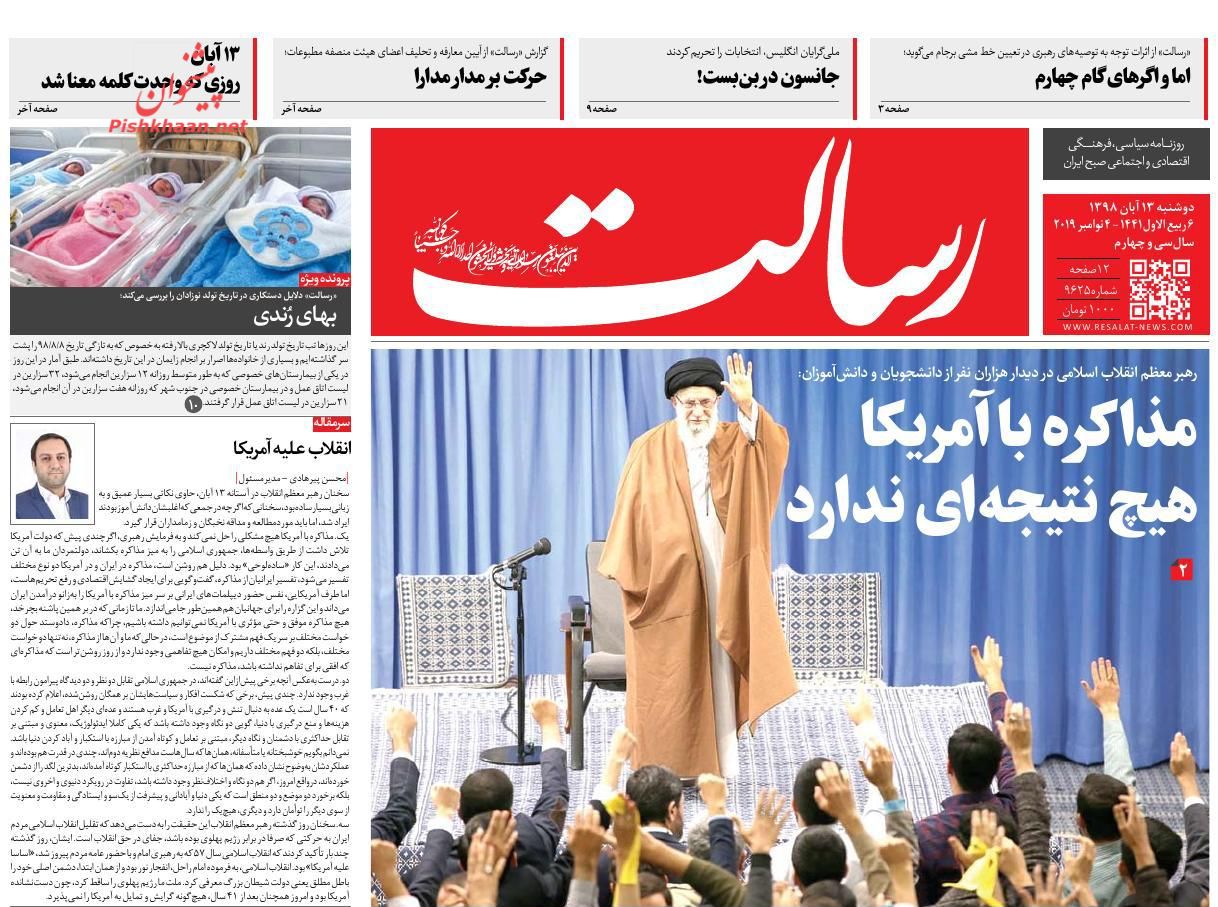
A Look at Iranian Newspaper Front Pages on October 10

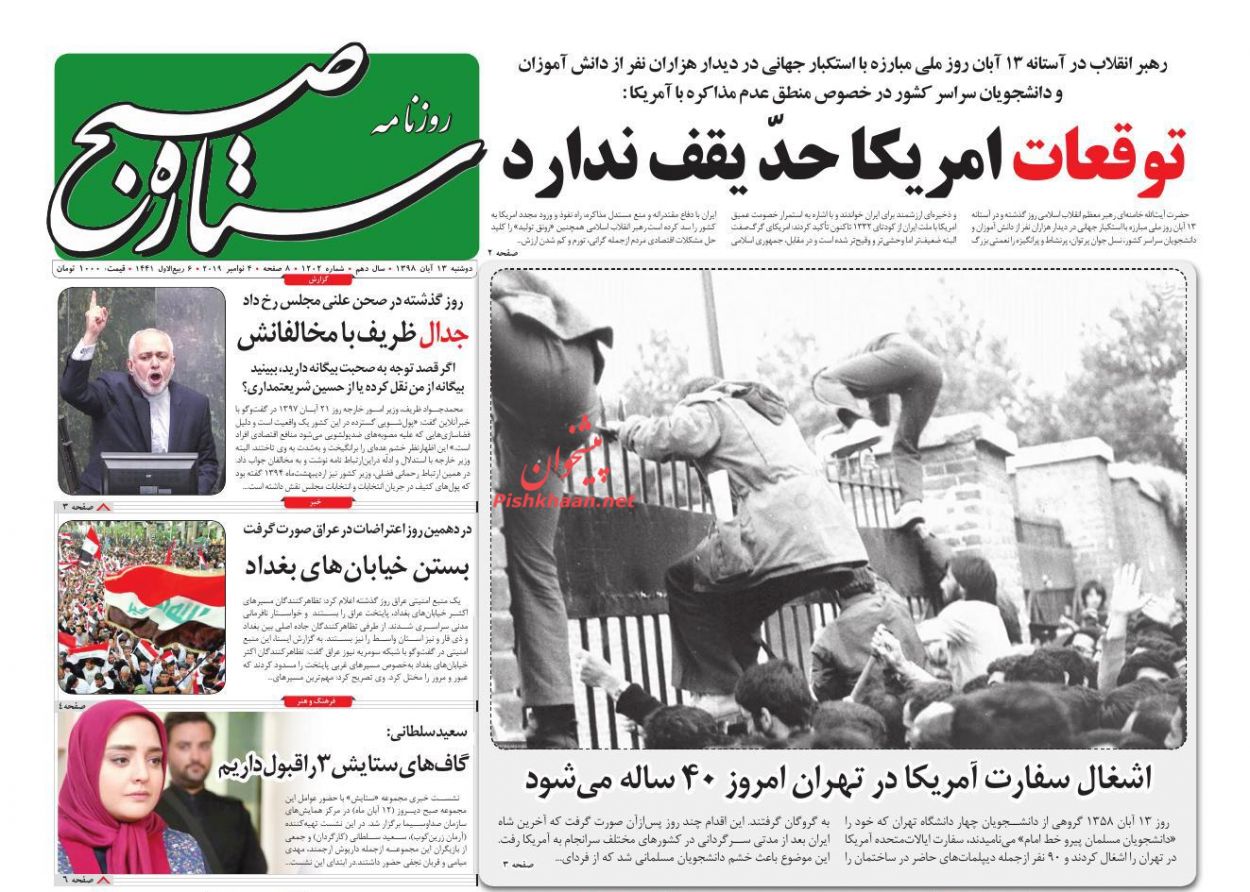
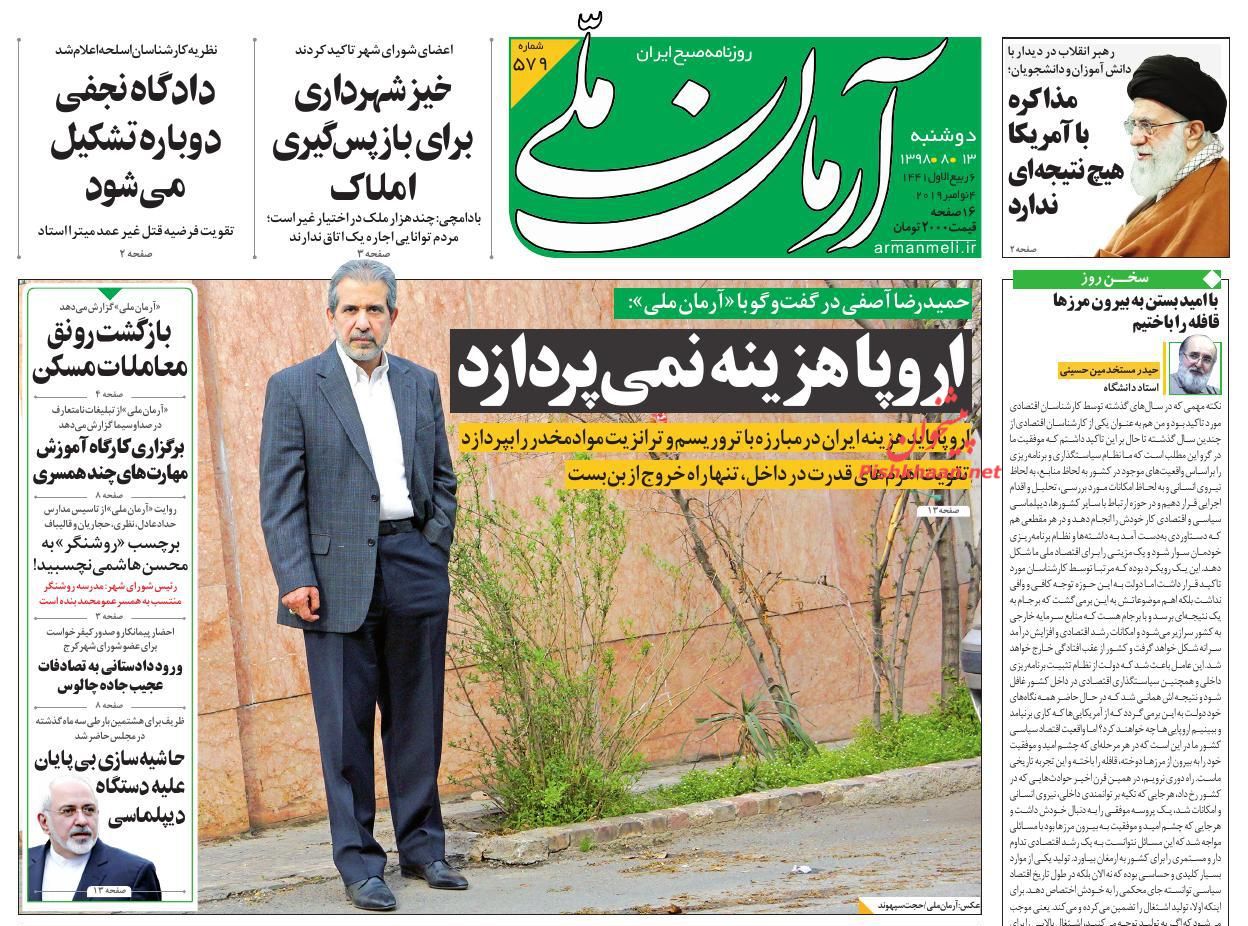
A Look at Iranian Newspaper Front Pages on November 19

Abrar:
1- Imran Khan to Visit Iran at Saudi Request
2- Iran Urges UN Office for Outer Space Affairs to Continue Its Cooperation
3- 35 Russian Forces Killed in Libya
4- Zarif Urges Avoiding Unnecessary Tensions with Neighbours to Counter US Pressure
5- UN Security Council’s Meeting on North Korea

A Look at Iranian Newspaper Front Pages on October 10


Aftab-e Yazd:
1- Iran Leader: We Could, but Didn’t Start Developing Nuclear Bomb
2- UN Security Council Meeting on Turkey Incursion

A Look at Iranian Newspaper Front Pages on October 10


Arman-e Melli:
1- Iran Leader: Elites Are Part of My Soul
2- Imran Khan’s Visit to Iran at Saudi Request to Mediate between Tehran, Riyadh
3- Rouhani: We Want Turkey Not to Attack Syria

A Look at Iranian Newspaper Front Pages on October 10


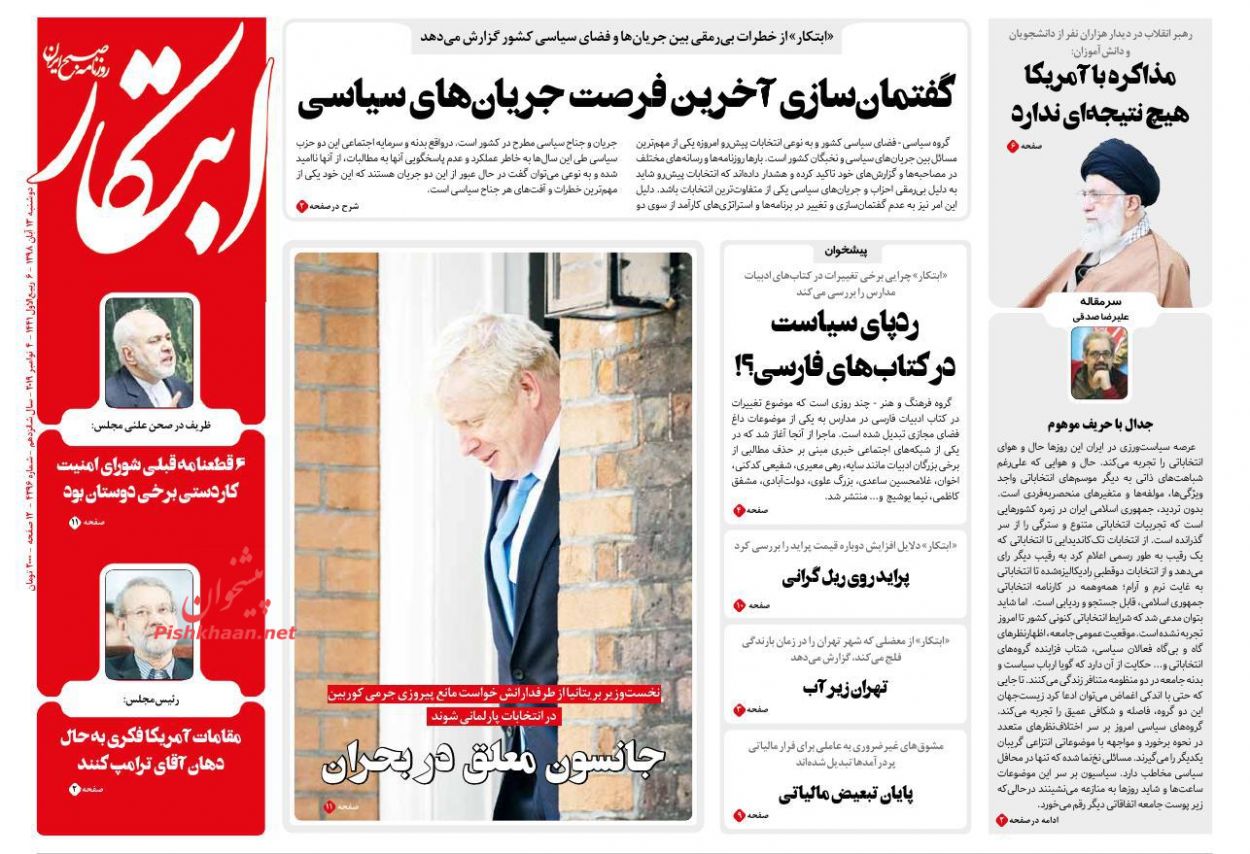
Ebtekar:
1- Trump against Congress: White House Officially Opposes Cooperation with Congress on Ukrainegate
2- Iranian Talent a Permanent Gift: Iran Leader

A Look at Iranian Newspaper Front Pages on October 10


Iran:
1- Invasion of Syrian Territory: Erdogan Starts Operation against Kurds
2- Use of Nuclear Bomb Definitely Forbidden: Leader

A Look at Iranian Newspaper Front Pages on October 10


Jomhouri Eslami:
1- Massive Gas Field Found in Southern Iran
2- Rouhani: Maximum Pressure No Longer Effective
3- Trump: I’ll End Stupid US Wars in World

A Look at Iranian Newspaper Front Pages on October 10


Kayhan:
1- War on Ansarullah Costs Bin Salman $800 Billion
2- Iran Self-Sufficient in Producing Rice
3- Aramco Attacks Changed Security Calculations of Israel, Saudi, UAE
4- Ukrainegate Scandal: Will Trump Leave or Remain?

A Look at Iranian Newspaper Front Pages on October 10


Setareh Sobh:
1- Use of Nukes Forbidden by Sharia: Iran Leader
2- What Happened in Int’l Conference on Global Economy and Sanctions?
3- Government Poised to Go Beyond Oil-Dependent Economy

A Look at Iranian Newspaper Front Pages on October 10

Zarif Urges PG States to Help Implement Hormuz Peace Endeavour

In his Al-Rai article published on Thursday in Arabic, Mohammad Javad Zarif has argued that either all countries in the Persian Gulf region will benefit from security or all of them will be deprived of it. The full text of the article follows.

The Hormuz region is of strategic significance in international and energy trade. Some 15 million barrels of oil are supplied to consumers on a daily basis, and at the same time a large amount of goods are traded between countries dependent on this region and those beyond. For the regional countries, security and stability are an undeniable necessity in a bid to guarantee access to international markets. It has been centuries that regional security has been ensured by regional states, and doing so would not be possible without cooperation and interaction.

The current critical situation should lead us to believe that what the region is in dire need of to achieve lasting security, but has not attained yet, is to develop the common understanding that security cannot be achieved by purchasing massive amounts of weapons and signing military accords with foreign powers, which pose the greatest threat to regional security with their relentless interference and by supporting the Zionist regime. Rather, security is contingent upon reliance on people and national potentialities as well as boosting relations to enjoy good neighbourliness with other countries in the region. Our region is suffering from a lack of comprehensive regional dialogue in different domains, which can uproot peace and prosperity forever. Our region is more in need of intra-regional dialogue than accusations, harsh and aggressive rhetoric, and stockpiling of weapons and an arms race. The Islamic Republic of Iran has, in the past, realized the dangers ahead and put forward two initiatives: a forum for regional dialogue and a non-aggression treaty. Now, with an awareness of growing threats and challenges, we feel the need for the realization of new dialogue in the region more than ever in order to save the region and bring it back from the brink of annihilation. We believe it is the common responsibility of all regional countries to ensure security in the region, and we are confident that with the cooperation of all countries in the Hormuz region, it would be possible to steer the region through rough and rogue waves towards the coast of tranquility, progress and prosperity. It is the key responsibility of all regional states to ensure security in the region. Security should be endogenous and not affected by foreign intervention. The destiny of people and nations in the Persian Gulf region is closely intertwined thanks to religious, cultural, traditional, historical, geographical and family commonalities. Security in that region cannot be divided. Either all in the region enjoy security or all are deprived of it. Accordingly, the Hormuz Peace Endeavour (HOPE) initiative was presented by President Rouhani during his speech at the UN General Assembly meeting.

The Hormuz Peace Endeavour brings together eight countries, namely the Kingdom of Saudi Arabia, the Republic of Iraq, the Sultanate of Oman, the United Arab Emirates, the State of Kuwait, the State of Qatar, the Kingdom of Bahrain and the Islamic Republic of Iran. The proposed plan has what it takes to realize lasting security in the region through intra-regional dialogue.

This plan is based on principles such as commitment to objectives and axioms of the United Nations, good neighbourliness, respect for territorial sovereignty and integrity, non-violability of international borders, peaceful settlement of all differences, rejection of threat or use of force or participation in any military coalition or accord against one another, non-interference in each other’s domestic affairs and foreign relations, respect for one another’s national, religious and historical sanctities and symbols, mutual respect, mutual interests and the welfare of all governments and peoples in the region, promotion of mutual understanding and peaceful and cordial relations, cooperation to eradicate terrorism, extremism and sectarian tensions, resolving tensions and settlement of all divisions and conflicts through peaceful means and dialogue, enhancement of relations and preventive warnings, collective provision of energy security, freedom of shipping and free transfer of oil and other resources, supporting the environment and expansion of collaboration, interaction, business, trade and investment at different levels and in different areas between governments, people and the private sector.

Achieving the above-mentioned objectives will be pursued by holding meetings at the levels of experts, ministers and heads of state as well as specialists, think tanks and the private sector along with forming the necessary action groups in high-priority areas.

Areas of cooperation and issues on the agenda of talks by actions groups and meetings of the eight countries may include a non-aggression and non-interference agreement, control of weapons and confidence-building measures, creation of areas free from Weapons of Mass Destruction, military communications and the exchange of information and data, permanent contact lines, preventive warning systems, war on drugs, terrorism and human smuggling, improvement of energy security and freedom of shipping for all, joint investment in the areas of oil, natural gas, energy, transit and transportation, boosting transactions in the private sector, business and trade, cultural and social cooperation including dialogue among religions, cultural exchanges and tourism, scientific collaboration including the exchange of scientists and university students, joint scientific-technological projects, cooperation in emerging cyber-domains such as cybersecurity, nuclear safety, protection of the environment, especially the marine environment and the negative effects of dust particles and particulate matter, humanitarian cooperation, particularly with regards to migrants, asylum-seekers and homeless people.

Also, the United Nations’ potential will be tapped to create an international coverage and allay the possible concerns of some parties and ensure the legitimate interests of the international community.

It goes without saying that the success of any plan entails the contribution of all members as well as mutual trust. President Rouhani has instructed me to begin my consultations in order to learn about the viewpoints of governments and elites in the region and complete and reinforce the Hormuz Peace Endeavour initiative. The elites, think tanks and the private sector can offer their constructive opinions and suggestions to contribute to the formation and reinforcement of the Hormuz Peace Endeavour initiative. We have pinned our hopes on the implementation of this initiative and await positive reaction to the proposed plan by the regional countries. We hereby announce our readiness to enter into comprehensive and overarching talks within the framework of the above-said principles and objectives.

Massive Onshore Gas Field Found in Southern Iran

The find was made in a reservoir 3,900 meters below the earth’s surface. The site is estimated to house enough energy to power all homes in Tehran – a city of more than 12 million people – for 16 years, the report said.

“This field was discovered after a year of continuous exploration in southern Iran,” head of exploration at the National Iranian Oil Company (NIOC) Saleh Hendi told Fars.

More detailed information about the land-based hydrocarbon discovery will soon be announced by the NIOC managing director, the news agency added.

Hendi also confirmed the discovery of new oil reserves in the southwestern Dezful region, first announced in August.

The reservoir was found in the Ilam and Gurpi formations which are extended in the provinces of Khuzestan, Lorestan and Fars.

The Gurpi Formation is one of the most important lithostratigraphic units in the Zagros foreland basin because of its significance in the petroleum geology of Iran as the source rock.

Iranian officials have said the country is pressing ahead with its energy development plans despite intensified US sanctions which seek to cripple the country.

Last December, Hendi said some 35-40 new hydrocarbon reservoirs had been discovered across Iran, which needed development. “We are now ranked first in the world for oil and gas reserves,” he said.

Hendi also said Iran was scouring 60 percent of its total area for new oil and gas reserves, including in places which were deemed until recently the least likely to have hydrocarbon-bearing formations.

In January, the country struck oil in Abadan, containing reserves of “very light and sweet”. The discovery on Minoo Island was the first ever oil find in the general area of Abadan which is home to Iran’s largest and oldest oil processing facility.

President Donald Trump has described Iran as a country of “tremendous potential”, but ruled out lifting unilateral US sanctions on Tehran.

Iran’s Minister of Petroleum Bijan Zangeneh on Tuesday admitted that the sanctions have led to the country’s oil industry falling behind but Tehran will resist.

“The conditions in Iran are in a way that once every few years the oil industry receives a deadly blow and the economic sanctions can be considered one of those,” he said.

“This has caused Iran’s oil industry to fall behind from the international position and space but we will resist in this area,” Zangeneh added.

The minister said talks were underway with several domestic companies to extract more oil from South Pars, but they had not come to a conclusion yet.

South Pars is the world’s largest gas field, but it also has significant oil reserves which Iran shares with Qatar across from the Persian Gulf.

Zangeneh said China’s national petroleum company CNPC had pulled out of developing phase 11 of South Pars and the project had been awarded to NIOC subsidiary Petropars.

“China has pulled out of developing the phase 11 of the South Pars field and Petropars will carry out the job,” he said.

Petropars signed a $440 million contract last month to produce 500 million cubic feet per day of gas from the Belal field in the Persian Gulf.

“Despite US sanctions, the train of the oil industry development has not stopped … sanctions have not stopped us; we are alive; we are active and are making efforts for the sake of Iran’s oil industry,” Zangeneh said at the signing of the contract.

On Tuesday, the minister said Iran also plans to begin operation at Farzad B gas field and its contract will be signed in the coming months.

Indian companies discovered the Farzad B gas field in Iran in 2008 and had bid several times for its development. But each time they either dragged their feet at the time of sanctions on Iran or made financial proposals unacceptable to Tehran when those sanctions were lifted.

Iran Releases Russian Journalist Yulia Yuzik

Russian journalist, Yulia Yuzik

“As a result of joint efforts by the Russian Foreign Ministry and its embassy in Tehran, Iran decided to release Yulia Yuzik, the Russian journalist detained in Tehran,” the Russian embassy said in a tweet on Thursday.

“She left Tehran for Russia on Thursday, October 10, with an Aeroflot flight,” the embassy added.

A press officer at the Russian embassy later told Tass that Yuzik was “feeling well” after her release.

Iran’s Government Spokesman Ali Rabiei had earlier announced that the journalist’s case was undergoing “quick review”.

“Her case was a matter of visa violation and it was not related to espionage,” said Rabiei on Monday, dismissing her ex-husband’s claim that the journalist was detained on charge of spying for Israel.

Iran had earlier announced that it would soon release the Russian journalist.

“Russian Deputy Foreign Minister Igor Morgulov summoned Iranian Ambassador to Moscow Sanaei to the Russian Foreign Ministry on October 4 to demand clarification on the circumstances for the detention of Russian citizen Yuzik in Tehran. Sanaei confirmed that Yuzik had been detained by law enforcement agencies to give explanations on a number of issues, and will soon be released,” the Russian Foreign Ministry said.

Russia’s Foreign Ministry had summoned the Iranian ambassador on Friday over Yuzik’s detention and the Kremlin said on Monday it hoped Yuzik would be released soon.

Iran Nano 2019 Kicks Off in Tehran

Iran Nano Exhibition 2019, Sorena Satari

The exhibition was opened on Thursday in a ceremony attended by Vice-President for Science and Technology Sorena Sattari and Energy Minister Reza Ardakanian at Tehran Permanent International Fairground.

In this edition, 25 nanomaterial producers are attending the exhibition, which is the highest number of representatives in a single sector.

Manufacturers of construction equipment rank second with 22 representatives, and producers of analysis equipment rank third with 10 companies.

In addition, nine textile industry companies, seven commercialisation firms, seven representatives of agriculture and packaging industry, seven companies in the health and healthcare field as well as seven auto industry firms are attending the event.

17 other companies are also offering their products in fields like environment and water, paint and coatings, buildings and advanced materials.

Moreover, four laboratories are presenting their services and capabilities in the field of nanotechnology at the 12th Nanotechnology Exhibition.

Representatives from seven universities are also attending the Iran Nano 2019 to present their achievements.

The International Nanotechnology Festival is held every year by Iran’s Nanotechnology Innovation Council. It is the largest and most prestigious exhibition in the field of nanotechnology in the country. It is also considered as one of the largest nanotechnology festivals in Asia.

Iran Nanotechnology Innovation Council (INIC) has invited businessmen, industry managers, and industry experts to attend the 12th International Nanotechnology Festival to have the opportunity to get familiar with the latest technological and commercial advancements in the field and meet and negotiate with nanotech companies.

On the margins of the event, visitors can attend matchmaking sessions, visit companies, and participate in the arranged workshops and seminars.

None of Options on US Table Feasible: IRGC Chief

IRGC Chief General Salami

Major General Hossein Salami also added that the Americans have reached a stage that the more they spend, the less they can achieve, and it means they have failed.

“The problem is that their huge economic and military expenditure cannot turn into political gain,” he stressed in a Thursday meeting during his visit to Ardabil province in north-western Iran.

“The Islamic Revolution of Iran means great success and this has made us superior to our enemies, and as time goes on we are becoming more powerful while the US and [global] arrogance are getting weak.”

General Salami reiterated that today the power of the Islamic Republic of Iran has reached a level that the enemy is rapidly withdrawing wherever Iran shows up.

“Saudis and Israelis, who are the US allies, are disenchanted by America and know that in their difficult days the US will not be able to support them,” he concluded.
What Does Erdogan Have in Mind?

Turkish President Recep Tayyip Erdogan / Photo by EPA

The plan includes a safe zone, 32 kilometres deep in northern Syria, which would extend along Turkey’s southern border for 480 kilometres. Ten cities and 140 villages are planned to be established in the zone for the settlement of up to 3 million Syrians refugees in Turkey.

This ambitious plan would be a brazen violation of the Syrian territory, and is actually designed to counter the Syrian Kurds and Syria’s Kurdish PYD (Democratic Union Party). From the Turkish government’s viewpoint, PYD is not different from PKK, the archenemy of Turks.

Since 2014 and after the Syrian Army’s withdrawal from the Kurdish regions of Syria following an agreement with the Kurds, the Kurdish regions of northern Syria and the three Kurdish cantons, including Cizre, Kobane and Afrin, had been governed autonomously by the Kurds and the PYD. Later, the administration governing those regions changed its name to Democratic Federation of Northern Syria or Confederation of Northern Syria in order to reduce concerns. The Kurds also invited the Arabs, Assyrian and Syriac Christians, as well as the other minorities to cooperate and have a role in the administrative and military arrangements.

It was unbearable for Turkey to see this new Kurdish neighbour next to its southern borders, particularly given that there is no natural boundary, such as a river, mountain or valley, between the Syrian and Turkish Kurds. In fact, the railway known as the East Express, which had been planned to connect Baghdad to Germany before the First World War, was the criterion for demarcation of border between Turkey and France, as Syria was a French League of Nations Mandate following World War I. This borderline was agreed upon later by Turkey and Syria, but caused a lot of subsequent problems for Turkey.

The Turkish and Syrian Kurds have common language and dialect, share tribal qualities and have age-old bonds. Moreover, many Syrian Kurds are emigrants coming from Turkey and have merged into the Syrian society.

Turkish President Declares Beginning of Syria Incursion

In the first reaction to its new autonomous neighbour, Turkey launched operations against the Kurds on the Syrian soil in alliance with the Free Syrian Army. In a new development, Turkey occupied western regions of the Euphrates, including Afrin canton and a large section of Kobane in two operations: Operation Euphrates Shield in 2016 and Operation Olive Branch in 2018. Turkey and its proxy forces practically gained control of a major section of those two cantons, including the cities of Afrin, Jarabulus and Al Bab, stretching over 4,000 square kilometres on the Syrian territory. The only major Kurdish city in west of the Euphrates that has not yet fallen into the hands of Turkey is the important and strategic city of Manbij. According to an agreement among PYD, the Syrian Army, and the Russian forces, Syria’s military forces entered Manbij and prevented the fall of the city.

Nevertheless, Turkey is sensitive and concerned about the eastern parts of the Euphrates as well, the regions rich in oil and gas resources and an area with fertile soil in Cizre canton in Syria’s Al-Hasakah Governorate. Turkey has repeatedly threatened to take action against the Kurds in that region, but the US mediation had prevented a Turkish attack, as the PYD has worked as the US ally in attacking the ISIS forces in Syria in recent years.

Meanwhile, Erdogan’s government is pressurized even inside Turkey into settling the fate of those regions. For instance, Devlet Bahceli, chairman of Turkey’s Nationalist Movement Party (MHP) and the biggest ally of the Justice and Development Party in the Turkish parliament has strongly criticized the government’s policies, stressing that east of the Euphrates must be set on fire and a buffer security zone should be established 30 kilometres into the region.

Turkey has no good memories of PKK in northern Syria, because former Syrian leader Hafez al-Assad used the PKK and its leader Abdullah Ocalan as a Kurdish card for playing with Turkey given his relations and differences with Ankara. The PKK forces launched tens of attacks against Turkey from northern Syria for years, until the Adana agreement was signed in 1998.

The other point is that the ‘Arab Belt’ initiative proposed by Erdogan at the UN was not a new plan. In fact, it was initially put forward in 1963 by Lieutenant Muhammad Talab Hilal, head of Syria’s secret service in Hasakah. His proposed belt would have begun from Sari Kani city in the west and stretched for 280 kilometres in an area 10 to 15 kilometres deep in Syria along the Turkish border, and would have reached the Iraqi border in the east. Under that plan, the Arabs would have replaced around 140,000 Kurdish people in 332 villages across that area, but the plan was aborted after Hafez al-Assad took power in Syria in 1970.

It seems that Erdogan’s proposal will remain as a plan on the paper, and that neither the regional players, such as Iran and Syria, nor the extra-regional actors like Russia and the US would approve of such a plan in northern Syria. Such schemes will definitely tighten the geopolitical knots in northern Syria. Turkey needs to behave more realistically towards the issues in northern Syria. Such Turkish plan may even force the Syrian Army and its allies to get engaged in the military clashes in northern Syria in order to protect Syria’s territorial integrity.


* Article by Seyyed Mohsen Mostafavi, a visiting fellow at the Centre for Scientific Research and Middle East Strategic Studies (CMESS)

‘Rouhani’s UNGA Visit Results in Global Pressure on US’

Rouhani and Macron meeting in UNGA

“International pressure is increasing against the US, and its reason is the successful presence of the Iranian president and foreign minister at the UN meeting and their meetings on the sidelines,” Massoumeh Ebtekar told Khabar Online.

She went on to say the president’s visit took place while the White House, in addition to sanctions, was seeking to wage a war of nerves and political campaign against Iran.

“Under such circumstances, Mr. president’s meetings and contacts and interviews with important news channels like Fox News and ABC had been planned using expert views, which showed there were strong reasoning and logic behind all those actions,” said Ebtekar, the vice president for women and family affairs.

She said Iran showed in this UN General Assembly meeting that the country still enjoys stability despite all problems.

“The Iranian political delegation’s behaviour suggested that Iran was not on the brink of chaos, and that it enjoyed enough stability and weight on the international transactions arena despite all problems,” she said.

Ebtekar underscored that during the president’s New York trip, all countries wanted to sit down for talks with Iran and favoured Iran’s presence in international talks.

FM Zarif Slams US Economic Terror as War Crime

Iranian People to Survive Latest of US Cruelties: Zarif

He made the remarks in a Wednesday address to the International Conference on Global Economy and Sanctions”, held in Al-Zahra University of Tehran.

In his speech, he discussed the US’ hostile policies against Iran, giving a definition of “sanction” and “economic terrorism”.

He said that using the term “sanction” for the United States’ measures has no legal ground.

He also stated that the US measures are in violation of the JCPOA and the UN Security Council Resolution 2231, and not only have not been taken for law enforcement but are aimed at breaking the law and for the US’ illegal use of a legal term.

In response to comments by the US secretary of state who had claimed that if people of Iran want to have food to eat, they should force their government to change its policies, Foreign Minister Zarif said using starvation of civilians is a blatant example of war crime, and terrorism is also an example of an international crime.

“This measure by the US not only does not bear the legal conditions of sanctions, but involves the legal conditions for economic terrorism. Since the main target of economic terrorism and war is civilians, it amounts to a war crime.”

Zarif also noted that the primary and fundamental strategy of the Islamic Republic of Iran and people for countering the United Sates’ maximum pressure is maximum resistance.

Highlighting the reliance on internal forces and capabilities as the examples of such resistance, the foreign minister underlined that Iran’s capabilities are growing in this path.

Zarif also noted that one of the ways to combat the US economic terrorism is to minimize the unnecessary tensions in relations with the other governments, particularly with the neighbours, by observing the principles of wisdom, dignity and expediency.

“We must believe and be committed to concentrating our national strength on the immediate target, namely countering the US ‘economic terrorism’ and getting through these conditions.”

He also emphasized the necessity for vigilance and caution in countering the US measures, stressing, “We should not allow the US to turn its hostile and illegal policies against Iran into an issue and stance of the international community or to change the question and its unilateral economic terrorism against the Iranian nation into a legitimate international issue.”

The Iranian foreign minister also described the use of national currencies for economic exchanges as another way to deal with the US economic terrorism, stating, “We have begun negotiations with many countries about the complicated barter systems, some of which have yielded results and some others are going to be finalized, as the INSTEX mechanism proposed by the Europeans is founded on this basis – in case the Europeans have their own political power and will – and this would be an alarm for the US to see its closest friends, at least in theory and not in practice, breaking away from (the US) dollar.”

Syria Condemns Turkish Military Operation, Shelling Kills 4 Civilians

In a statement on Wednesday, the Syrian Foreign Ministry condemned in the strongest terms the reckless statements and hostile intentions of the Turkish government and the military build-up at the common border, which it said constitutes an outrageous violation of the international law and a blatant breach of the UN Security Council’s resolutions that affirm respect for Syria’s sovereignty and territorial integrity.

Turkey launched a military operation in northeast Syria on Wednesday. The so-called Operation Peace Spring began with air raids on Tuesday.

SANA reported on Wednesday that three Syrian children and a woman have been killed in a shell attack from the Turkish forces on a house in Bashiryah neighborhood in Qamishli.

In its statement, the Syrian Foreign Ministry said Turkey’s “hostile behavior” is part of its policy of expansionist ambitions in the Syrian territories, stressing that such policy could not be justified under any pretext.

“What the Turkish regime claims regarding the security of the borders is refuted by this regime’s ignorance of Adana Agreement,” the statement noted.

Syria holds certain Kurdish organizations accountable for what is taking place due to their subordination to the US project, as they have been previously warned against the dangers of the project and serving the US policy against their homeland, but these organizations have insisted on being tools in the hands of foreigners, the Syrian Foreign Ministry deplored.

The statement also reaffirmed the Damascus government’s determination to confront the Turkish aggression by all legitimate means, saying Syria is ready to embrace all of its misled citizens if they return to the correct path in a way that would guarantee Syria’s unity and territorial integrity.

“Syria reminds that if Erdogan’s regime insists on launching its aggression, it will classify itself as one of the terrorist organization and armed groups and it will absolutely lose its position as a guarantor of the Astana process and it will deal a strong blow to the political process as a whole,” the statement concluded.
Turkish President Recep Tayyip Erdogan says the offensive is aimed at removing Kurdish-led forces from the border area and creating a “safe zone” to which millions of Syrian refugees can be returned.
The move came after the US announced it was withdrawing its troops from the region, effectively abandoning the Syrian Democratic Forces (SDF).

The SDF, led by the Kurdish People’s Protection Units (YPG), has appealed to the US and its allies for a “no-fly zone” to protect it from the Turkish attacks. Turkey considers the YPG a “terrorist” group.

Iranian Speaker Cancels Istanbul Trip over Turkish Military Operation