Tuesday, December 23, 2025
Home Blog Page 3066

Iran Not to Sit for Talks with Saudis on Behalf of Yemenis

Iran Condemns New US Sanctions on China

Ali Rabiei said Islamabad is one of several governments that have been trying to act as an intermediary between Iran and Saudi Arabia.

“Several countries have tried, in good faith, to mediate a détente between Tehran and Riyadh, and some of them have carried messages from the Saudis. At the public level, at least, the Pakistani premier officially announced that the Saudi Crown Prince had asked him to talk with the Iranian president about the Saudis,” said Rabiei.
He further touched upon remarks by Saudi Minister of State for Foreign Affairs Adel al-Jubeir who had said the Saudi king had not talked to Iran about Yemen and would not do so, and that the issue of Yemen was completely related to Yemenis.

“We do not deem it necessary to enter into talks with Saudi Arabia on behalf of the Yemenis or in their absence because we are sure that the Yemenis are well capable of defending their rights in diplomatic negotiations with other countries,” he added.

“Moreover, Iran has stressed from the outset and still emphasizes that the way to establish peace in Yemen is to hold intra-Yemeni talks,” he said.

“But the Saudi minister, who has said the issue of Yemen is completely related to Yemenis, should be asked how the Saudi-led aggression against Yemen can be justified. How is it that they have intervened in an issue which is related to Yemenis themselves and have imposed a deadly war on them?” he said.

Imran Khan is due in Tehran on Saturday, October 12, 2019, in a bid to pursue the mediation initiative, and it remains to be seen what developments will unfold in Tehran-Riyadh relations accordingly.

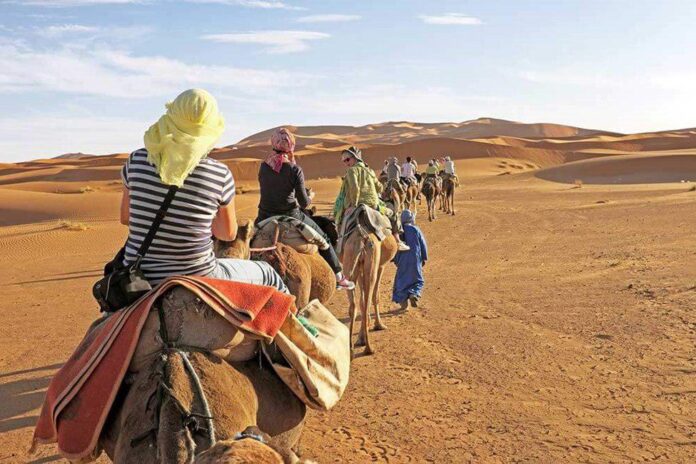
Iranian Influencer Brings Top Travel Bloggers to Iran on Famtrip

What comes to the mind of a travel agent when hearing the term Famrip is normally an exclusive program, including seminars and meetings, organized by tour operators to market their services and maximize profits.

But for Hoda Rostami, a Famtrip has become her new way to introduce Iran and its beauties to a world of social networks.

The Iranian girl, known as an Instagram influencer with over 400,000 followers blogging about tourist attractions, could finally carry out her Famtrip project after a year of planning and tireless efforts. Hoda’s goal is to change the wrong image of Iran that people in the world may have in mind and to pave the way for more tourists to visit the country. In the first phase of her Famtrip project, 12 influencers from around the world have arrived in Iran.

“Born in Tehran, nomadic life in world,” Hoda explains herself in her Instagram page. She has been travelling around the world for years and sharing her experiences with her followers.

Hoda and her family emigrated to Sweden when she was a teenager. She decided to leave MSc courses in the final semester to begin her new career as a traveller and photographer. Rostami now lives in Iran and is independently involved in activities to promote Iran’s tourism industry. She has invited the international tourism ambassadors to visit Iran in a self-planned Famtrip aimed at presenting the true image of Iran to the world.

Iranian Influencer Brings Top Travel Bloggers to Iran on Famtrip

Hoda provides more description of the Famtrip on her Instagram page:

“This Famtrip is not indeed a project organized by a travel agency for attracting fifteen foreign tourists to make a profit. In fact, the Famtrip is a result of months of planning and research by experienced people in the tourism industry and sustainable development of tourism, familiar with Iran. It is supposed to help create a new image of Iran in the minds of people across the world, shape dreams and goals before visiting a country named Iran, and encourage the tourists to come to Iran and discover all of its cities and unknown places.”

Iranian Influencer Brings Top Travel Bloggers to Iran on Famtrip

During the first phase of the project, Hoda takes her guests to Kashan, Isfahan and Shiraz. She says the itinerary includes a well-known route with stops in famous cities. “That’s because it is a well-known journey route with hotels meetings international standards and appropriate infrastructure for the tourism ambassadors in Iran.

These tourism ambassadors, who are major influencers in this sector, take photos and shoot videos of the attractions, publish them on the social networks, and will help change the cliché image of what people in the world think about Iran. It could build trust and eventually encourage them to visit Iran to discover the other places.”

The first stage of Hoda’s Famtrip began with 12 influencers, starting from Tehran.

Iranian Influencer Brings Top Travel Bloggers to Iran on FamtripRostami says the tourism ambassadors are going to become acquainted with the Iranian culture and traditions apart from sightseeing in the cities. “We decided to plan a modern-day (visit to) Tehran for them to surprise them both upon arrival and during the rest of the journey with the beauties of the cities along the Silk Road inside Iran.”

The trip begins from Tehran and heads due south to Kashan, after a stop in Qom to visit the confectionary shops producing Sohan -a traditional Persian saffron brittle toffee.

Kashan is where foreigners will remember their first encounter with the desert and its houses with traditional designs, Rostami explained, saying the group of ambassadors would stay in a typical Iranian house in the desert areas to enjoy supper in a delightful evening at the watered yard of the house.

“We and a young meal planner, with exquisite taste and great cooking skills, designed the meals for the entire Famtrip. We’re going to set such tables for them that would be indelibly imprinted on their photos,” Hoda said.

On how she came up with the idea of arranging the Famtrip, Rostami said in her Instagram page, “Last year, I was in Turkey’s Çanakkale with a group of trip influencers from various countries. We talked about our countries, and, as usual, they asked about Iran, and I told them ‘I’d invite you soon…’. I did not imagine that the very same invitation and idea would become the Famtrip project a year later.”

Iranian Influencer Brings Top Travel Bloggers to Iran on Famtrip

In order to attract financing for the project and buckle down to work, Hoda Rostami came up with a plan to design and sell a “Travel Book” at her office, called “Ro Studio”. A non-Iranian airline has agreed to sponsor the flights for the Famtrip.

“The Travel Book is a functional planner accompanying you from the time you begin to plan a trip until you return home,” she says.

Rostami noted that a long list of world renowned influencers and travel photographers had been compiled in the beginning, while a final list of 15 people with a combined total of 16 million followers was chosen for the visit to Iran.


The guests finally arrived in Iran on October 6. They include:

Iranian Influencer Brings Top Travel Bloggers to Iran on Famtrip* Çiler Geçici; managing director of a famous concert hall in Istanbul with 705,000 followers

Iranian Influencer Brings Top Travel Bloggers to Iran on Famtrip* Alina Rudya; a famous Ukrainian photographer residing in Germany; Her photos have been published in prominent magazines like “Vogue” and “Der Spiegel”. She has 65,000 followers. Alina’s wedding ceremony will be held two days after the Famtrip to Iran.

Iranian Influencer Brings Top Travel Bloggers to Iran on Famtrip* Mehmet Kırali; a famous Turkish photographer living in Turkey. His style of ‘travel photography’ has attracted 1.2 million Instagram followers. Mehmet has been listed among the world’s wealthiest and most successful photographers.

Iranian Influencer Brings Top Travel Bloggers to Iran on Famtrip* VuThéara Kham; a renowned French photographer with 1.2 million followers. He published a book “Point Of Vuth” in 2013. He is known as the most influential French Instagrammer.

Iranian Influencer Brings Top Travel Bloggers to Iran on Famtrip* Ekaterina Mishchenkova; a Russian photographer and artist with more than 1.3 million followers in two Instagram pages.

Iranian Influencer Brings Top Travel Bloggers to Iran on Famtrip* Alex Atmolex; he has not ever published photo taken by himself, but has attracted around 480,000 Instagram folllowers by publishing the photographs of travel and other influencers.

* Cathy; a Chinese expert on media and management and a travel blogger. She is the author of 12 best-selling books, and is going to write a book on Iran after the Famtrip project.


Iranian Influencer Brings Top Travel Bloggers to Iran on Famtrip* Harjinder Singh Kukreja; a famous Indian businessman, social activist and restaurant owner, famous for his family trips in the social networks. Harjinder has 1.6 million followers on Twitter and more than 100,000 Instagram followers.

Iranian Influencer Brings Top Travel Bloggers to Iran on Famtrip* Shi Enbo-hugo; one of the most famous and the representative of Chinese bloggers with more than 2 million followers in 3 Chinese social networks.

Iranian Influencer Brings Top Travel Bloggers to Iran on Famtrip* Vanessa Ziletti, an Italian beauty and fashion blogger with some 186,000 Instagram followers. Vanessa works with famous brands such as Hermes, L’Oreal, and other popular clothing brands.

Iranian Influencer Brings Top Travel Bloggers to Iran on Famtrip* Artem Shestakov; a Ukrainian travel influencer, businessman, and social media specialist with around 1.1 million followers on Instagram. Artem has worked with major carmakers such as Porsche, Land Rover, Ferrari, and Mercedes Benz.

Iranian Influencer Brings Top Travel Bloggers to Iran on Famtrip* Erika Santos; she has more than 1.5 million followers on two Instagram pages. She has won the prize for the best World Travel Blogger 2019.

Travel Begins

“Our guests have all arrived in Iran, finally. The trip begins today in an effort to present Iran from the viewpoint of twelve influencers and travel bloggers who have come here from different countries. Let’s hope for a memorable trip and experience,” Hoda Rostami wrote on her page.

The photos and stories of the Famtrip are shared with #famtrip and #letsfeeliran in the page ‘feeliran’ on Instagram and Twitter.

The following pictures have been taken during the first two days of the Famtrip from Tehran to Kashan, uploaded on Hoda Rostami’s Instagram page and on feeliran.

Meanwhile, the Iranian administration has also welcomed the idea of the Famtrip, saying it would reflect a good image of Iran.

Iranian Influencer Brings Top Travel Bloggers to Iran on Famtrip

Iran’s Deputy Minister of Tourism, Vali Teymuri, has told ILNA that the ministry welcomed the proposal for the Famtrip it had received three months ago.

He said the ministry found no problem with the proposed trip after careful consideration, and the foreign influencers were permitted entry.

Teymuri said all plans, coordination and costs for the Famtrip have been deal with by the private sector, and the Ministry of Tourism has only facilitated the program.

“We need a good image of Iran to be displayed by the world media, thus, we would pursue any method perceived to be easy or less costly in compliance with the Islamic Republic of Iran’s regulations. The ‘Feel Iran’ Famtrip has been carried out with the spiritual support from the Ministry of Cultural Heritage, Tourism, and Handicrafts as their plans are under control,” the deputy minister noted.

“We do our best to create a good image of Iran in the minds of the world people,” he concluded.


Iran Calls Attack on Its Oil Tanker ‘Dangerous Adventure’

Oil Shipment Seized by US Already Sold, Paid for: Iran

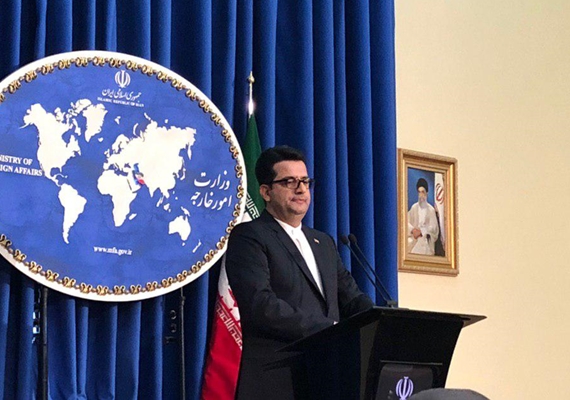
“The investigations conducted by the National Iranian Tanker Company (NITC) indicate the Iranian tanker has been damaged after being targeted twice, at half-hourly intervals, from a place near its shipping route in the east of the Red Sea,” Mousavi said on Friday.

Mousavi said the oil tanker’s condition is under control, the crew members of the vessel have fortunately not been harmed, and the vessel is at a stable condition.

“Over the past few months, other acts of sabotage have been launched against Iranian oil tankers in the Red Sea,” he said, adding that investigations are being conducted on the culprits behind these acts.

He expressed concern about the pollution caused by the massive oil spill in the region after damages inflicted on the vessel’s tanks, and said, “All the responsibilities for the act, including the extensive environmental pollution in the region, fall on those behind the dangerous adventure.”

The spokesman finally emphasized that a probe has been launched into the details of and culprits behind the dangerous move, and the results will be announced once a conclusion is reached.

Two separate explosions, possibly caused by missile attacks, hit the Iranian oil tanker SABITI operated by the National Iranian Tanker Company (NITC) near the Saudi port city of Jeddah early on Friday.

Explosions Hit Iranian Oil Tanker near Saudi Arabia

The incident took place some 60 miles from Jeddah. The explosions have reportedly hit the vessel’s hull, causing heavy damages to the vessel’s two main tanks, which resulted in an oil spill in the Red Sea. The spill is currently stopped, according to officials.

Technical experts are currently investigating the cause of the explosion. They believe it was a “terrorist attack”, unnamed sourced told the Iranian Students News Agency (ISNA).

A statement by NITC said the SABITI tanker was hit by two separate explosions at 5:00 and 5:20 am, probably after being struck by missiles.

It said the crew members are currently safe and none of them has been harmed in the explosions. The tanker is currently in a stable condition, the statement added.

The NITC later dismissed the reports that the vessel had caught fire, according to the Iranian Ministry of Petroleum’s official news agency SHANA.

Explosions Hit Iranian Oil Tanker near Saudi Arabia

The SABITI vessel has been hit 60 miles from the Saudi port city of Jeddah, the NITC said in a statement on Friday.

Heavy damages have been inflicted on the vessel, and its oil was leaking in the Red Sea, but it has been contained according to officials.

A statement by the NITC said the tanker was hit by two separate explosions at 5:00 and 5:20 am, most probably caused by missile attacks.

It said the crew members are currently safe and none of them has been harmed in the explosions. It also said that the tanker is currently in a stable condition.

Experts are already investigating the explosion, and do not rule out the possibility of an act of terrorism.

The explosion reportedly happened on the hull of the vessel, and caused severe damages to two main tanks of the tanker, hence the oil spill.

Explosions Hit Iranian Oil Tanker near Saudi Arabia
A screenshot of the location of Iranian oil tanker SABITI which was hit by two blasts on Oct. 11, 2019 near the Saudi port city of Jeddah in the Red Sea (Via Marine Traffic)

Iran Says Ready for Cooperation with New EU Foreign Policy Chief

EU Foreign Policy Chief to Visit Iran for First Time

Mousavi made the remarks on Thursday in response to reporters’ question about Mr Borrell who is set to take over next month as the new foreign policy chief of the European Union.

The Iranian spokesman highlighted the constructive efforts of Ms Federica Mogherini during her term in office, her balanced and positive look at international relations, multilateralism, and serious and effective diplomacy, especially her role in the negotiations that resulted in the JCPOA.

“Considering what we know of Mr Borrell’s views in his previous posts, we hope that he, for his part, could succeed in meeting the challenges at a time when extremist unilateralism and acts of bullying by the US and a number of regional actors have caused the greatest troubles for diplomacy and constructive relations among countries based on respect,” Mousavi noted.

“The Islamic Republic of Iran welcomes mutually respective cooperation and interaction in good faith with Mr Borrell and his colleagues in the European Union,” he noted.

Having served as the foreign minister of Spain since 2018, the Catalan 72-year-old political is to replace Mogherini on November 1.

Borrell is adamantly opposed to the United States’ unilateralism. On April 26, he took a swipe at Washington’s unilateral moves and interventionist measures, including revoking sanctions waivers for Iranian oil.

He is also one of advocates of the Iran nuclear deal. In comments on May 8, in response to Iran’s scaling back its commitments under the nuclear deal, he said Iran fortunately did not tear up the nuclear agreement and kept it from being completely torn apart. He said the Europeans would be the first countries to be affected by Iran’s ramping up its nuclear activities. Borrell also noted that Washington’s denunciation of the nuclear deal is bad news.

Iranian Foreign Minister Mohammad JavadZarif sat down for talks with Borrell at an international forum called The Raisina Dialogue in early 2019.

Borrell, in a tweet in February 2019, offered congratulations to Iran on the 40th anniversary of the victory of the 1979 Islamic Revolution and described Iran as a regional heavyweight.

Given his caution and great diplomatic experience, Borrell is expected to adopt stances that would be closer to Iran and farther away from the US and its regional allies including Israel and Saudi Arabia.

Iran Celebrates Women’s First Free Stadium Attendance with 14 Goals

Iran crushed Cambodia with four goals by Karim Ansarifard, a hat-trick by Sardar Azmoun, two goals by Mahdi Taremi, two by Mohsen Mohebbi, and three others by Ahmad Nourollahi, Mohammad-Hossein Kanaanizadegan, and Mehrdad Mohammadi.

The easy match was particularly important as over 3,500 women had been allowed for the first time in four decades to freely but tickets and attend a football match.

When the ticket sales started last Thursday, women were quick to get their hands on tickets to attend the match at Tehran’s 78,000-capacity Azadi Stadium.

The first batch sold out in less than an hour, and additional seats were also snapped up in short order, finally capped at some 3,500, despite the fact that over 70,000 more seats remained available.

However, women still call it a victory and a good starting point, as the viral videos of the match showed dozens of thrilled girls bursting into tears for making history.

The bumpy road Iranian women have travelled to gain such access to stadiums has not been without tragedy.

Sahar Khodayari died last month after setting herself ablaze outside a court in fear of being jailed for trying to attend a match.

Dubbed “Blue Girl” because of the colours of the club she supported — Esteghlal FC — she had reportedly been detained last year when trying to enter a stadium dressed as a boy. The Iranian Judiciary denied that she had been told she would be jailed.

Her death sparked an outcry, and intensified pressures – particularly by the international football federation FIFA – on the government to let women go to stadiums.

The ban on women in stadiums is not written into law or regulations, but it has been strictly enforced.

Since the 1979 Islamic revolution, women have only rarely had access to stadiums in Iran.

For now, the ban is lifted for international matches, but is still in place for club matches. Government officials have vowed to gradually lift the ban on club matches as well.

Iran Urges Turkey to End Military Operation in Syria

Iran Condemns Bahrain’s Plan to Normalize Relations with Israel

In a Thursday statement, the Ministry of Foreign Affairs of the Islamic Republic of Iran expressed its misgivings over Turkey’s military action in northeast Syria. The full text of the statement follows.

The Foreign Ministry of the Islamic Republic of Iran voices concern over Turkey’s military action in Syrian territories, and stresses the need for an immediate end to the attacks and the pullout of Turkish forces from Syrian soil given the importance of the humanitarian situation and dangers posed to civilians in the conflict zone.

The Foreign Ministry of the Islamic Republic of Iran understands Turkey’s security concerns, but, as it has underlined before, believes not only is military action not the right way to allay this country’s security concerns, but also it inflicts extensive material and humanitarian damage and, hence, expresses its opposition to such a move.

As it has already announced, the Islamic Republic of Iran regards the current situation in the region as the fallout from extra-regional interference, especially by the United States, and expresses its readiness to play a role between the two countries, as it is in touch with both sides at the moment, with a view to settle problems within the framework of regional potentialities. Iran believes the only way to ease the current tension is through peaceful means and respect for Syria’s national sovereignty and territorial integrity and also through the Adana agreement.

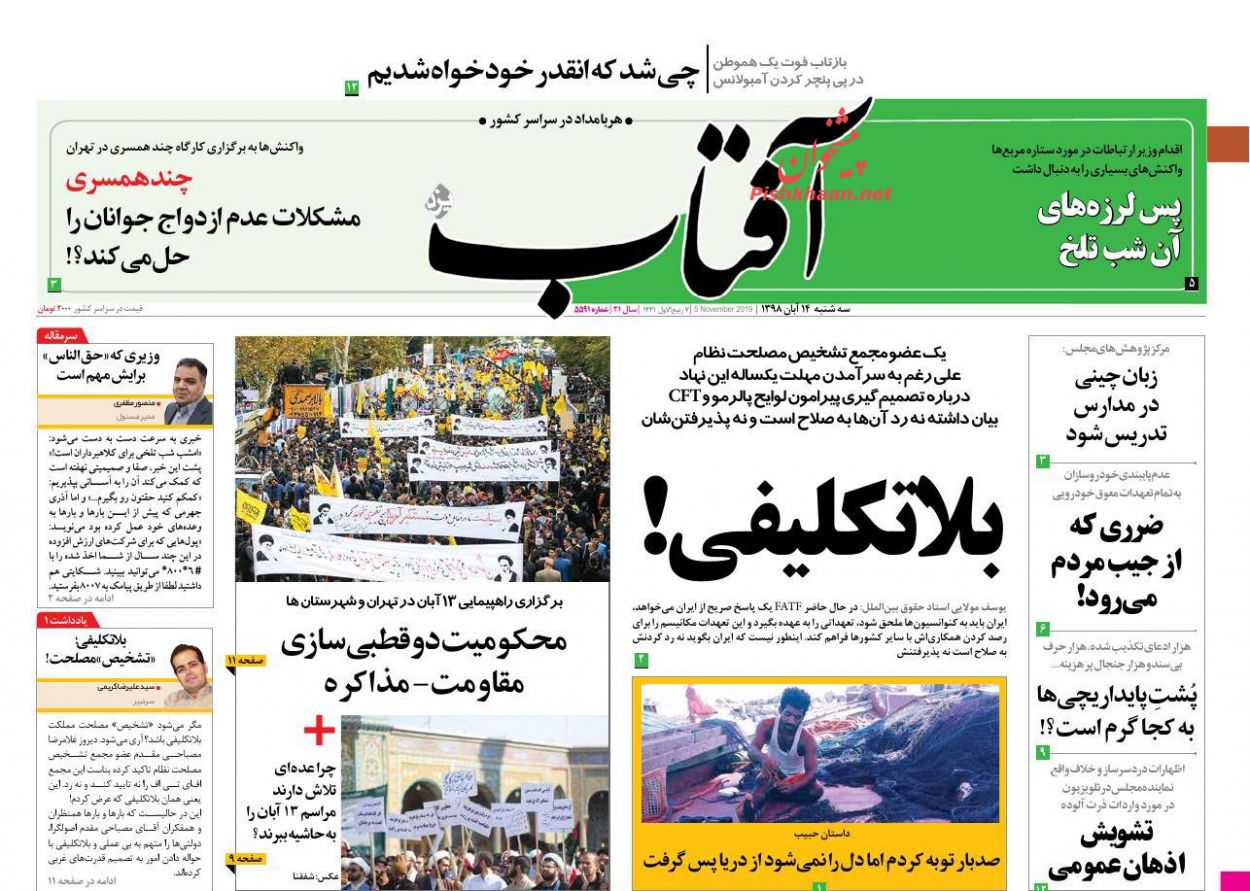
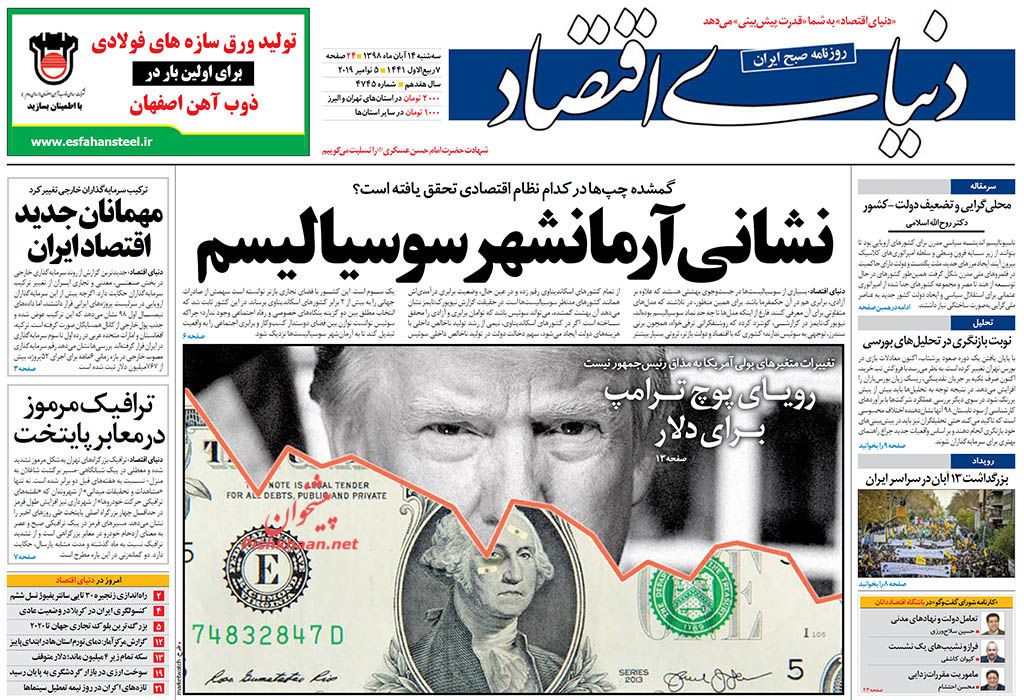
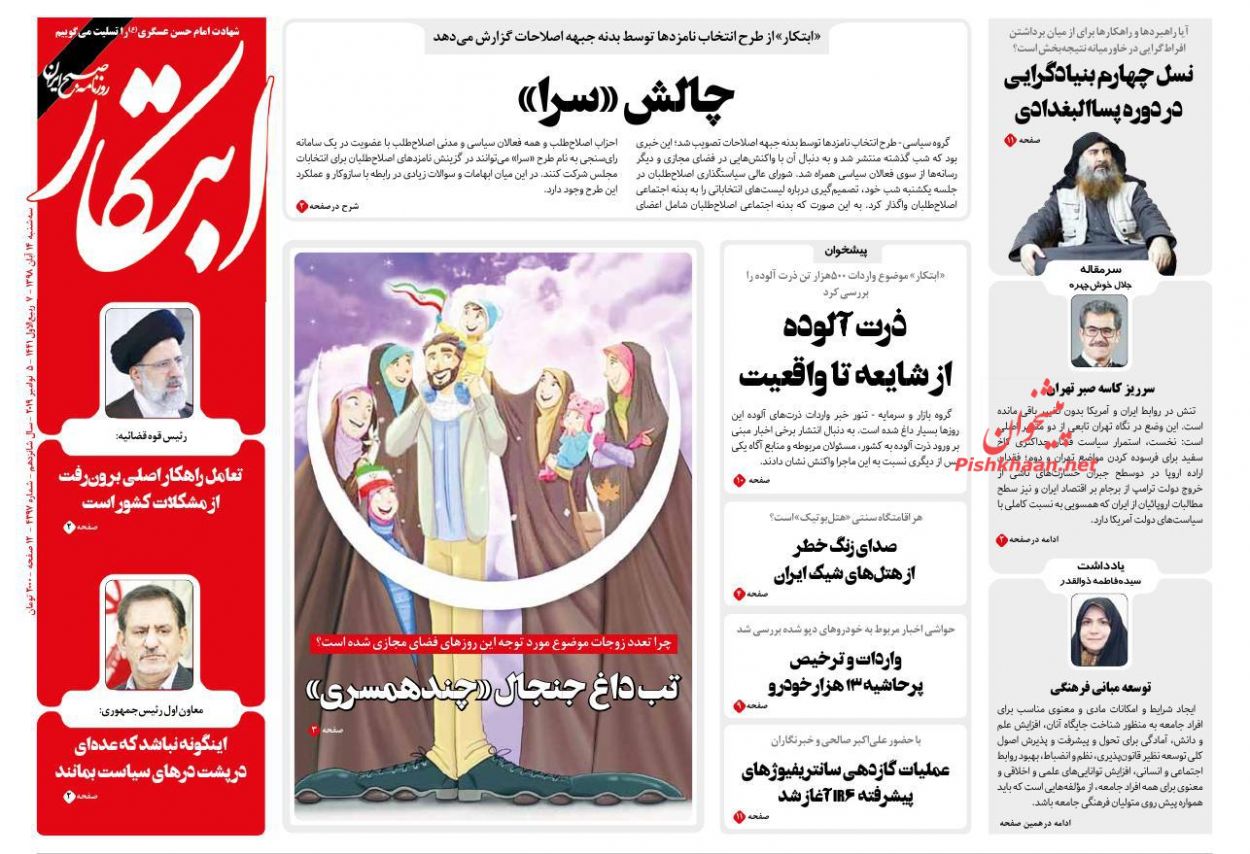
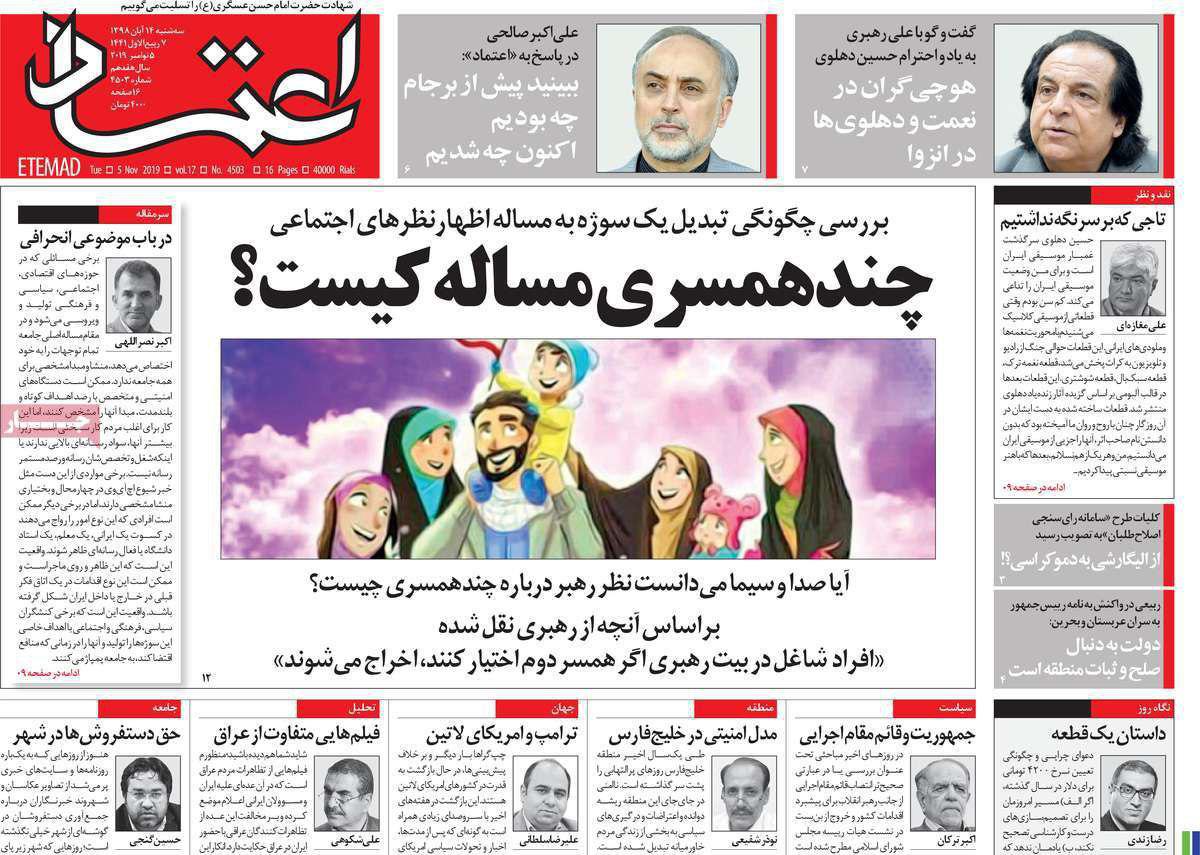
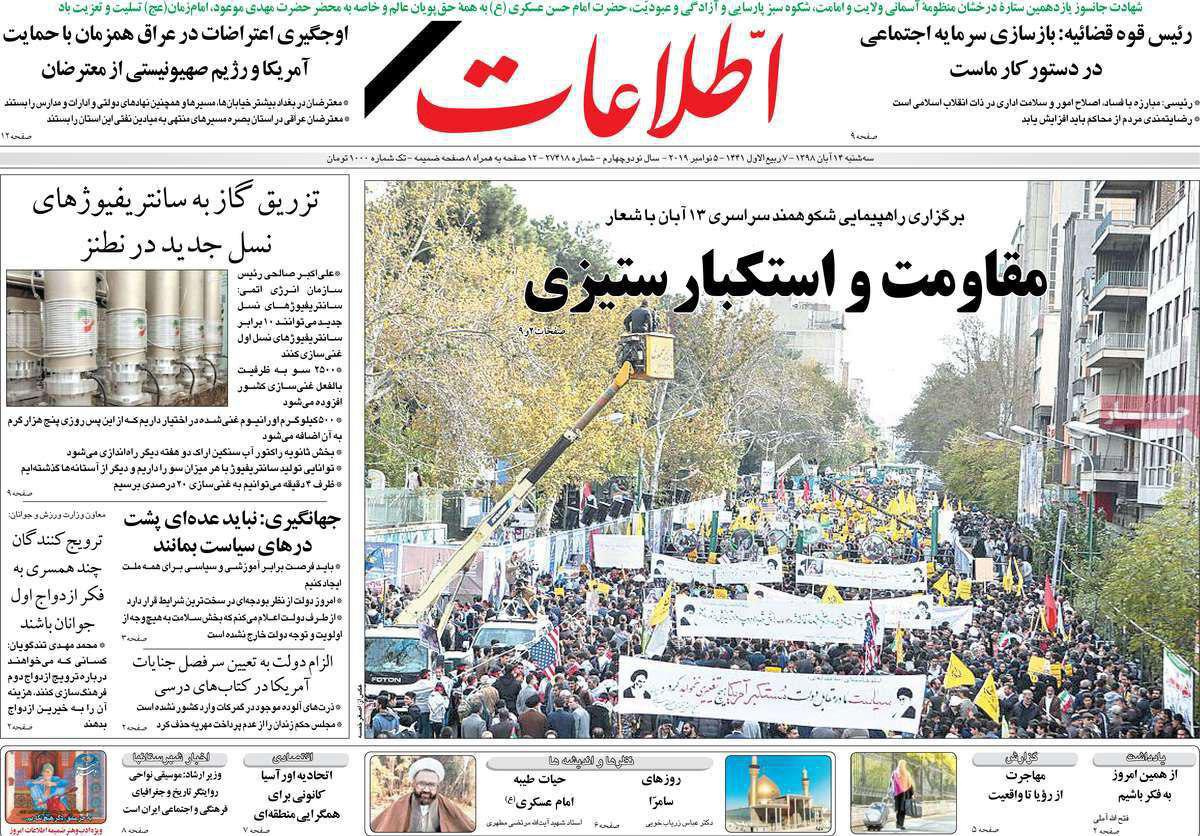
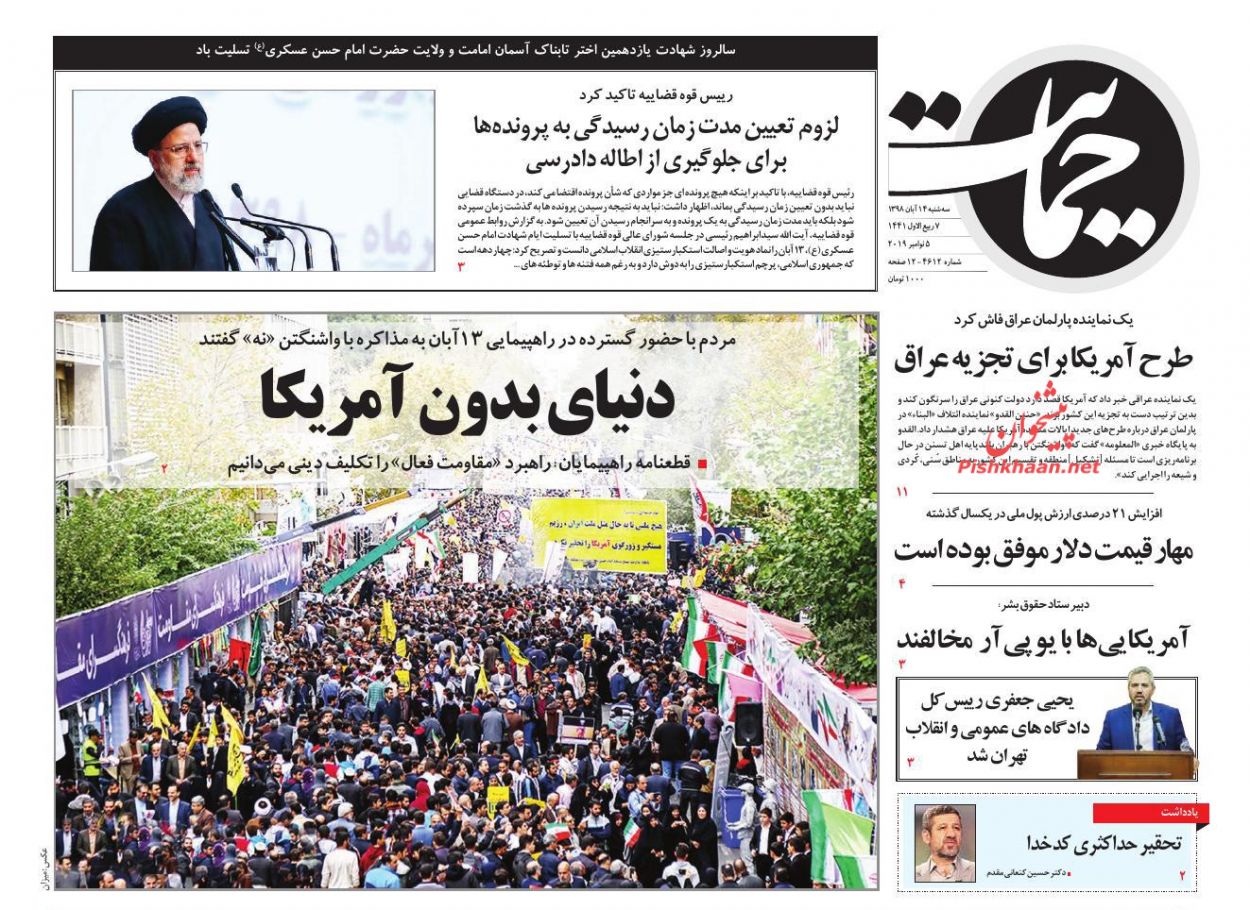
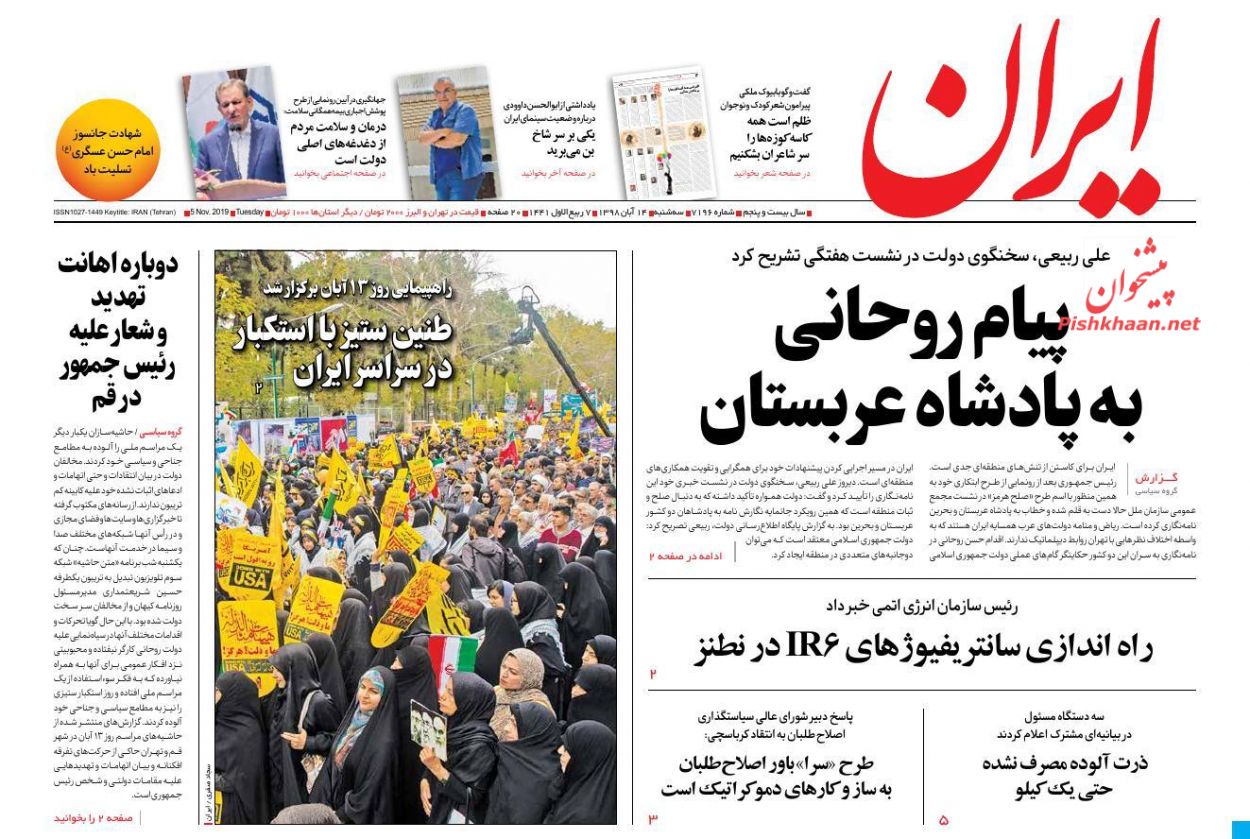
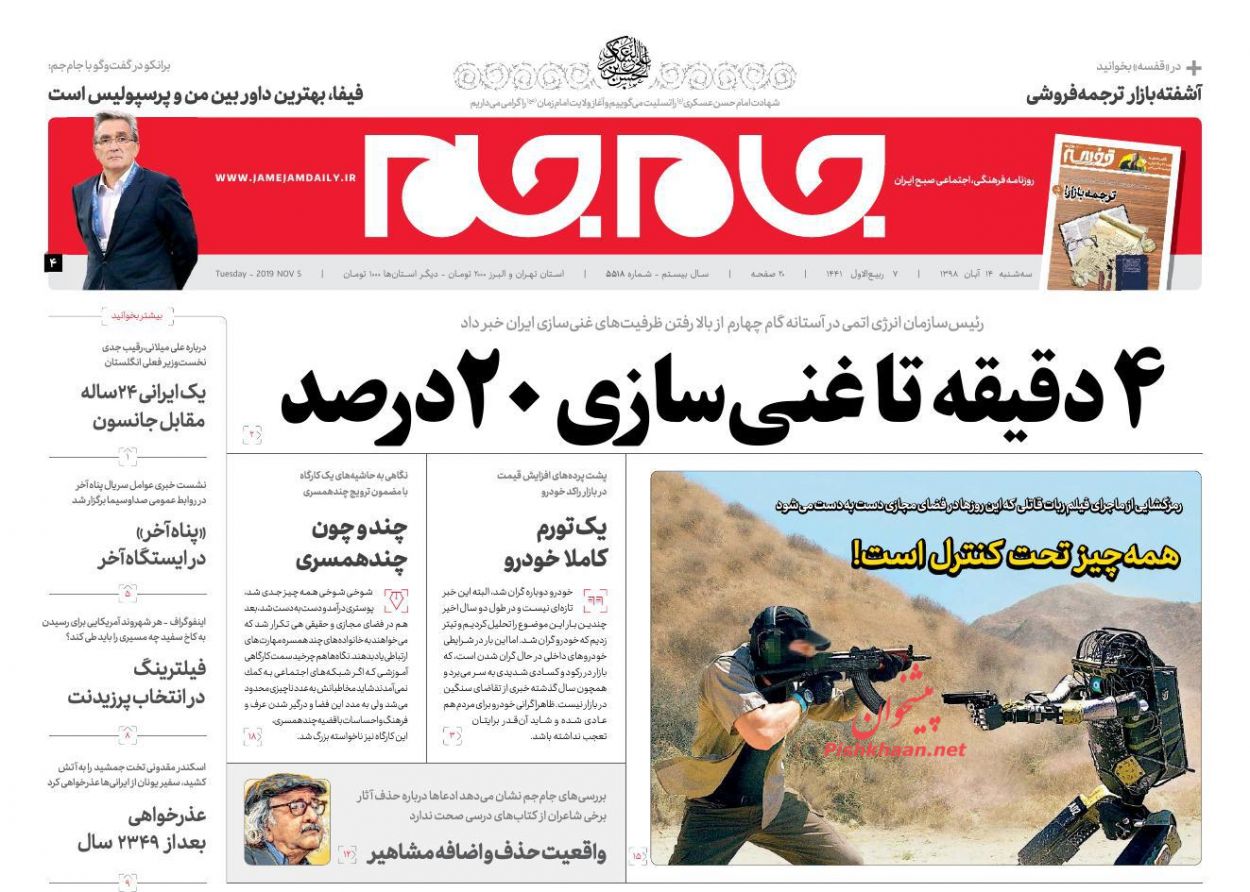
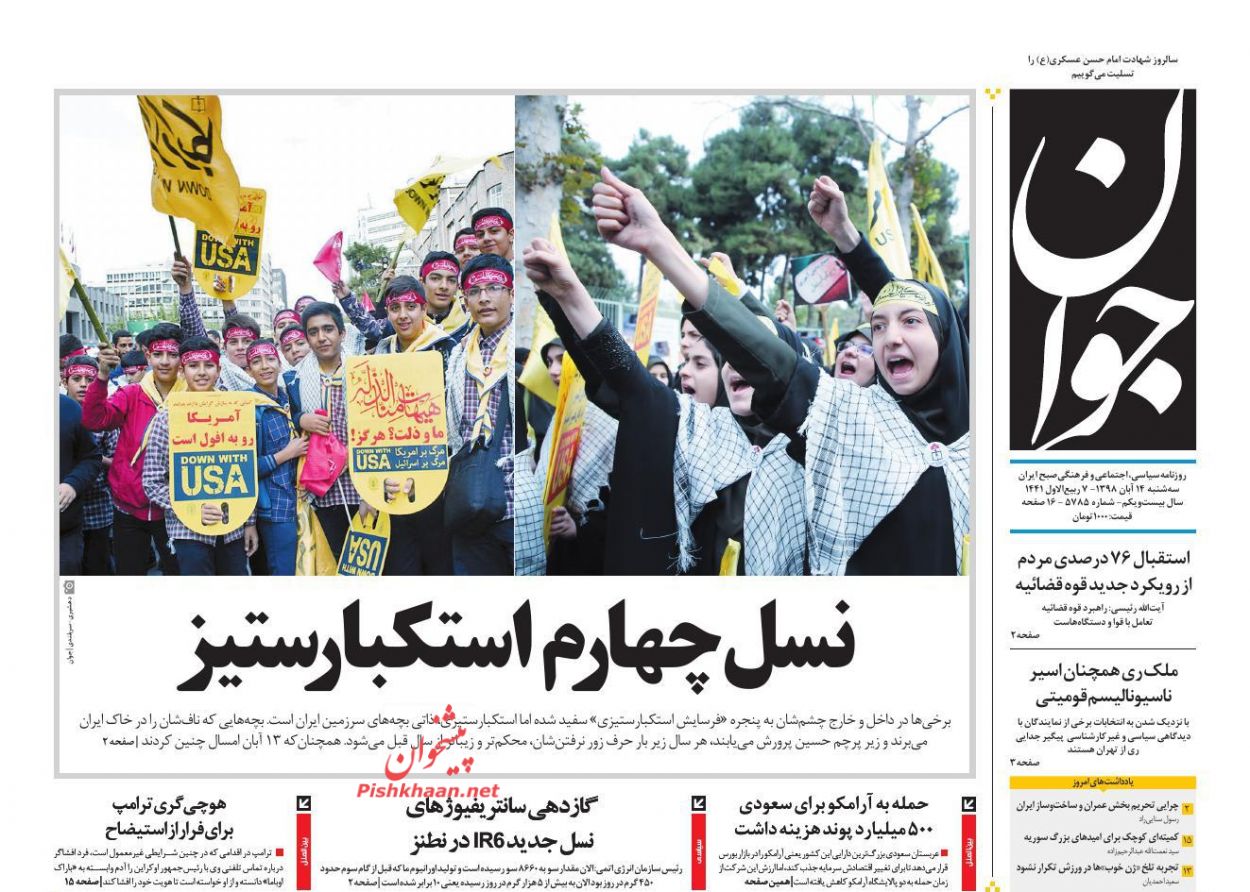
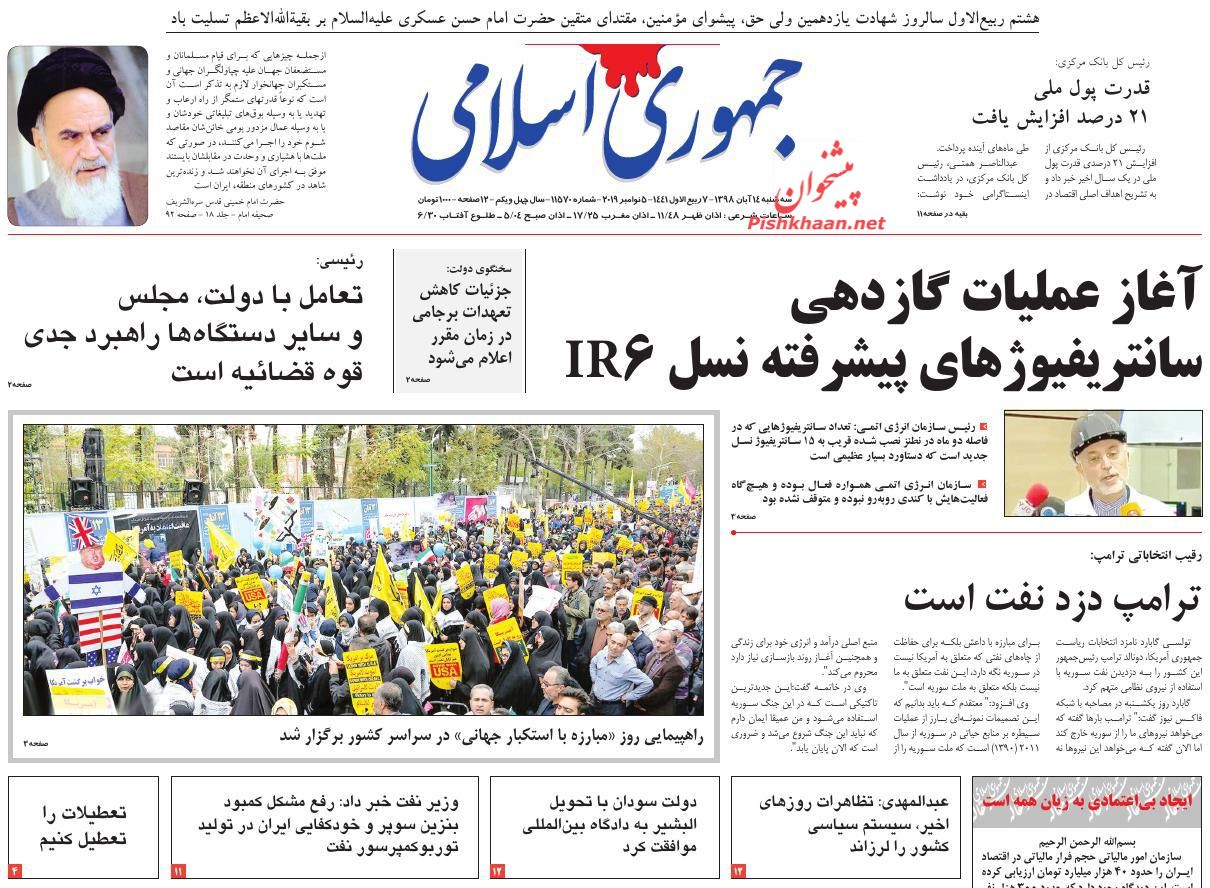
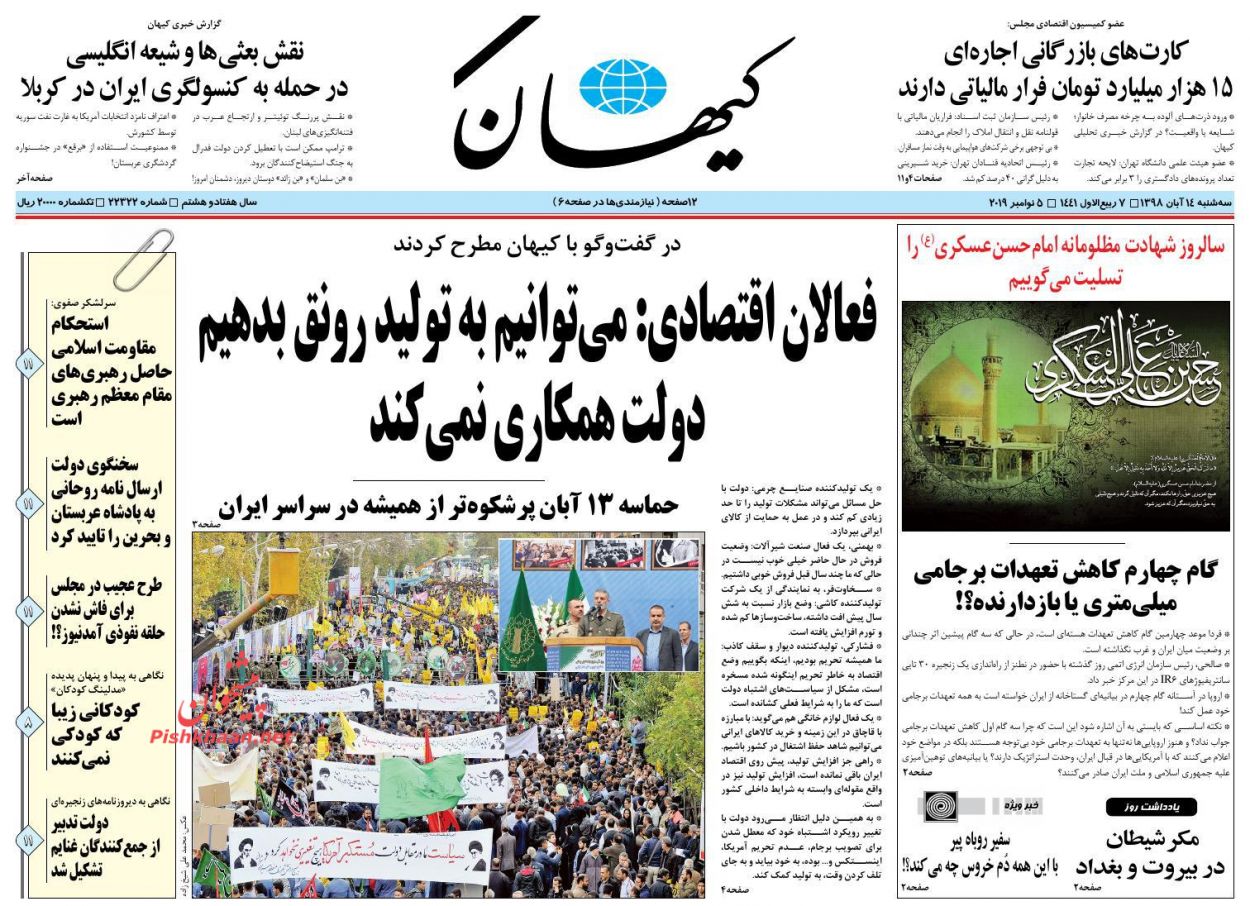
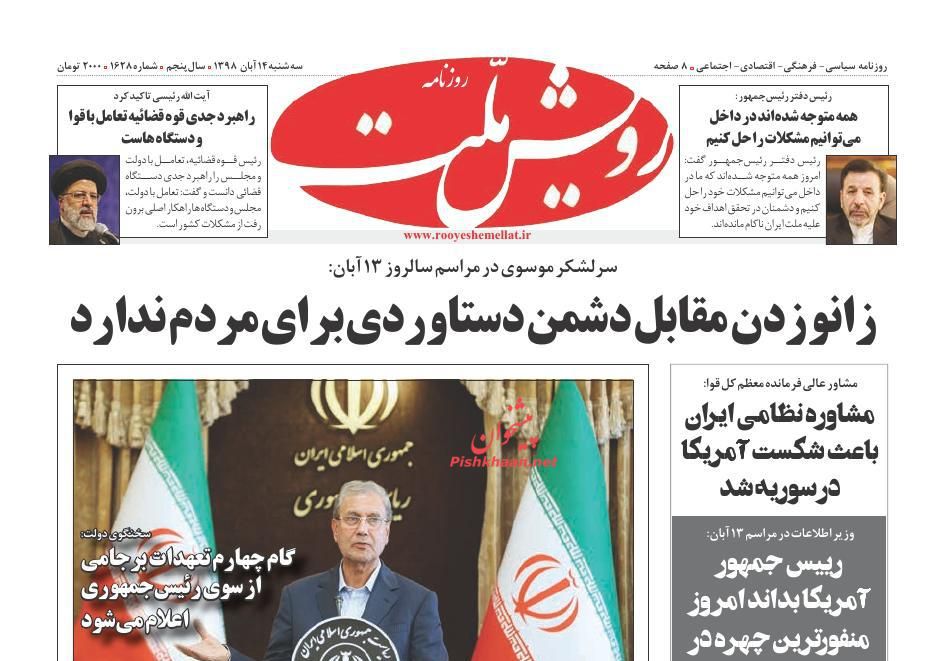
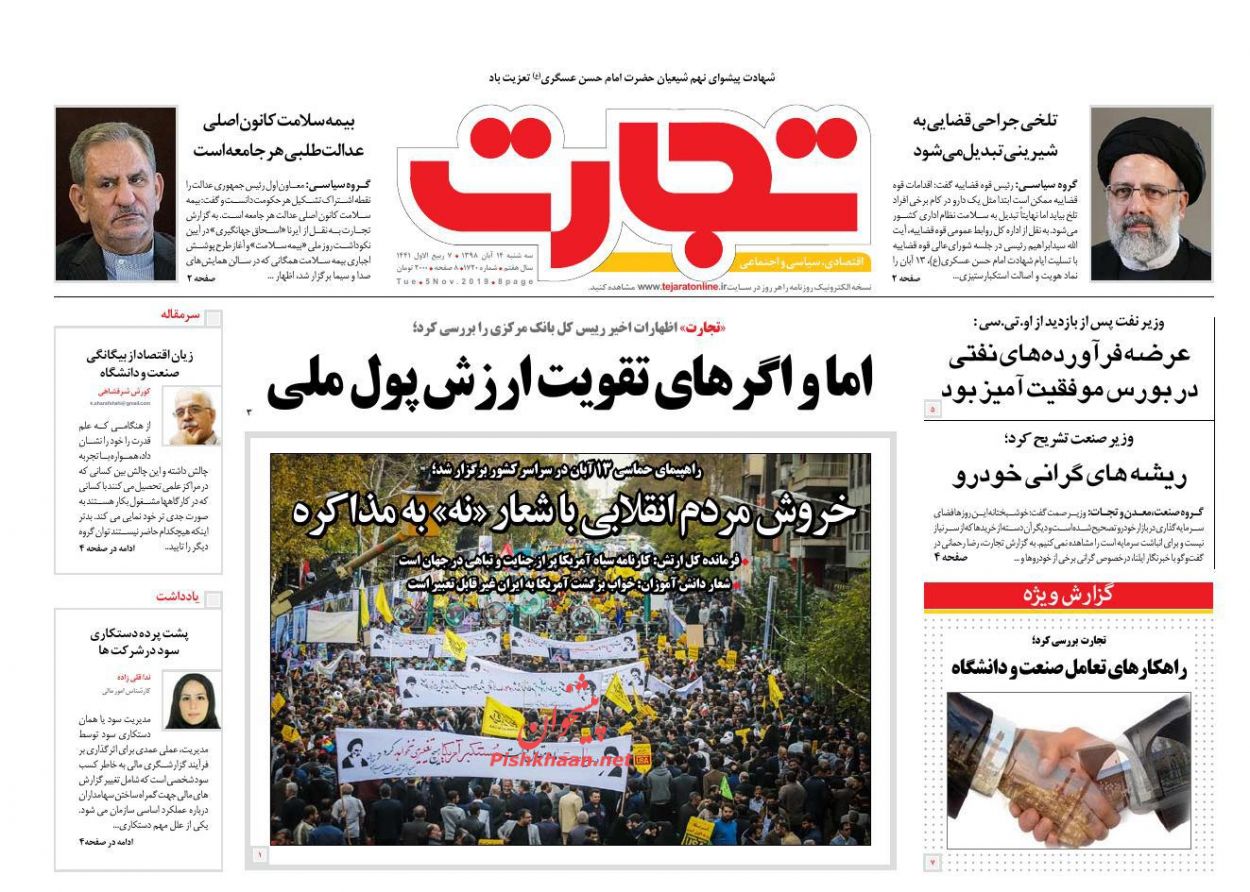
A Look at Iranian Newspaper Front Pages on October 10

A Look at Iranian Newspaper Front Pages on November 19

Abrar:
1- Imran Khan to Visit Iran at Saudi Request
2- Iran Urges UN Office for Outer Space Affairs to Continue Its Cooperation
3- 35 Russian Forces Killed in Libya
4- Zarif Urges Avoiding Unnecessary Tensions with Neighbours to Counter US Pressure
5- UN Security Council’s Meeting on North Korea

A Look at Iranian Newspaper Front Pages on October 10


Aftab-e Yazd:
1- Iran Leader: We Could, but Didn’t Start Developing Nuclear Bomb
2- UN Security Council Meeting on Turkey Incursion

A Look at Iranian Newspaper Front Pages on October 10


Arman-e Melli:
1- Iran Leader: Elites Are Part of My Soul
2- Imran Khan’s Visit to Iran at Saudi Request to Mediate between Tehran, Riyadh
3- Rouhani: We Want Turkey Not to Attack Syria

A Look at Iranian Newspaper Front Pages on October 10


Ebtekar:
1- Trump against Congress: White House Officially Opposes Cooperation with Congress on Ukrainegate
2- Iranian Talent a Permanent Gift: Iran Leader

A Look at Iranian Newspaper Front Pages on October 10


Iran:
1- Invasion of Syrian Territory: Erdogan Starts Operation against Kurds
2- Use of Nuclear Bomb Definitely Forbidden: Leader

A Look at Iranian Newspaper Front Pages on October 10


Jomhouri Eslami:
1- Massive Gas Field Found in Southern Iran
2- Rouhani: Maximum Pressure No Longer Effective
3- Trump: I’ll End Stupid US Wars in World

A Look at Iranian Newspaper Front Pages on October 10


Kayhan:
1- War on Ansarullah Costs Bin Salman $800 Billion
2- Iran Self-Sufficient in Producing Rice
3- Aramco Attacks Changed Security Calculations of Israel, Saudi, UAE
4- Ukrainegate Scandal: Will Trump Leave or Remain?

A Look at Iranian Newspaper Front Pages on October 10


Setareh Sobh:
1- Use of Nukes Forbidden by Sharia: Iran Leader
2- What Happened in Int’l Conference on Global Economy and Sanctions?
3- Government Poised to Go Beyond Oil-Dependent Economy

A Look at Iranian Newspaper Front Pages on October 10

Zarif Urges PG States to Help Implement Hormuz Peace Endeavour

In his Al-Rai article published on Thursday in Arabic, Mohammad Javad Zarif has argued that either all countries in the Persian Gulf region will benefit from security or all of them will be deprived of it. The full text of the article follows.

The Hormuz region is of strategic significance in international and energy trade. Some 15 million barrels of oil are supplied to consumers on a daily basis, and at the same time a large amount of goods are traded between countries dependent on this region and those beyond. For the regional countries, security and stability are an undeniable necessity in a bid to guarantee access to international markets. It has been centuries that regional security has been ensured by regional states, and doing so would not be possible without cooperation and interaction.

The current critical situation should lead us to believe that what the region is in dire need of to achieve lasting security, but has not attained yet, is to develop the common understanding that security cannot be achieved by purchasing massive amounts of weapons and signing military accords with foreign powers, which pose the greatest threat to regional security with their relentless interference and by supporting the Zionist regime. Rather, security is contingent upon reliance on people and national potentialities as well as boosting relations to enjoy good neighbourliness with other countries in the region. Our region is suffering from a lack of comprehensive regional dialogue in different domains, which can uproot peace and prosperity forever. Our region is more in need of intra-regional dialogue than accusations, harsh and aggressive rhetoric, and stockpiling of weapons and an arms race. The Islamic Republic of Iran has, in the past, realized the dangers ahead and put forward two initiatives: a forum for regional dialogue and a non-aggression treaty. Now, with an awareness of growing threats and challenges, we feel the need for the realization of new dialogue in the region more than ever in order to save the region and bring it back from the brink of annihilation. We believe it is the common responsibility of all regional countries to ensure security in the region, and we are confident that with the cooperation of all countries in the Hormuz region, it would be possible to steer the region through rough and rogue waves towards the coast of tranquility, progress and prosperity. It is the key responsibility of all regional states to ensure security in the region. Security should be endogenous and not affected by foreign intervention. The destiny of people and nations in the Persian Gulf region is closely intertwined thanks to religious, cultural, traditional, historical, geographical and family commonalities. Security in that region cannot be divided. Either all in the region enjoy security or all are deprived of it. Accordingly, the Hormuz Peace Endeavour (HOPE) initiative was presented by President Rouhani during his speech at the UN General Assembly meeting.

The Hormuz Peace Endeavour brings together eight countries, namely the Kingdom of Saudi Arabia, the Republic of Iraq, the Sultanate of Oman, the United Arab Emirates, the State of Kuwait, the State of Qatar, the Kingdom of Bahrain and the Islamic Republic of Iran. The proposed plan has what it takes to realize lasting security in the region through intra-regional dialogue.

This plan is based on principles such as commitment to objectives and axioms of the United Nations, good neighbourliness, respect for territorial sovereignty and integrity, non-violability of international borders, peaceful settlement of all differences, rejection of threat or use of force or participation in any military coalition or accord against one another, non-interference in each other’s domestic affairs and foreign relations, respect for one another’s national, religious and historical sanctities and symbols, mutual respect, mutual interests and the welfare of all governments and peoples in the region, promotion of mutual understanding and peaceful and cordial relations, cooperation to eradicate terrorism, extremism and sectarian tensions, resolving tensions and settlement of all divisions and conflicts through peaceful means and dialogue, enhancement of relations and preventive warnings, collective provision of energy security, freedom of shipping and free transfer of oil and other resources, supporting the environment and expansion of collaboration, interaction, business, trade and investment at different levels and in different areas between governments, people and the private sector.

Achieving the above-mentioned objectives will be pursued by holding meetings at the levels of experts, ministers and heads of state as well as specialists, think tanks and the private sector along with forming the necessary action groups in high-priority areas.

Areas of cooperation and issues on the agenda of talks by actions groups and meetings of the eight countries may include a non-aggression and non-interference agreement, control of weapons and confidence-building measures, creation of areas free from Weapons of Mass Destruction, military communications and the exchange of information and data, permanent contact lines, preventive warning systems, war on drugs, terrorism and human smuggling, improvement of energy security and freedom of shipping for all, joint investment in the areas of oil, natural gas, energy, transit and transportation, boosting transactions in the private sector, business and trade, cultural and social cooperation including dialogue among religions, cultural exchanges and tourism, scientific collaboration including the exchange of scientists and university students, joint scientific-technological projects, cooperation in emerging cyber-domains such as cybersecurity, nuclear safety, protection of the environment, especially the marine environment and the negative effects of dust particles and particulate matter, humanitarian cooperation, particularly with regards to migrants, asylum-seekers and homeless people.

Also, the United Nations’ potential will be tapped to create an international coverage and allay the possible concerns of some parties and ensure the legitimate interests of the international community.

It goes without saying that the success of any plan entails the contribution of all members as well as mutual trust. President Rouhani has instructed me to begin my consultations in order to learn about the viewpoints of governments and elites in the region and complete and reinforce the Hormuz Peace Endeavour initiative. The elites, think tanks and the private sector can offer their constructive opinions and suggestions to contribute to the formation and reinforcement of the Hormuz Peace Endeavour initiative. We have pinned our hopes on the implementation of this initiative and await positive reaction to the proposed plan by the regional countries. We hereby announce our readiness to enter into comprehensive and overarching talks within the framework of the above-said principles and objectives.

Massive Onshore Gas Field Found in Southern Iran

The find was made in a reservoir 3,900 meters below the earth’s surface. The site is estimated to house enough energy to power all homes in Tehran – a city of more than 12 million people – for 16 years, the report said.

“This field was discovered after a year of continuous exploration in southern Iran,” head of exploration at the National Iranian Oil Company (NIOC) Saleh Hendi told Fars.

More detailed information about the land-based hydrocarbon discovery will soon be announced by the NIOC managing director, the news agency added.

Hendi also confirmed the discovery of new oil reserves in the southwestern Dezful region, first announced in August.

The reservoir was found in the Ilam and Gurpi formations which are extended in the provinces of Khuzestan, Lorestan and Fars.

The Gurpi Formation is one of the most important lithostratigraphic units in the Zagros foreland basin because of its significance in the petroleum geology of Iran as the source rock.

Iranian officials have said the country is pressing ahead with its energy development plans despite intensified US sanctions which seek to cripple the country.

Last December, Hendi said some 35-40 new hydrocarbon reservoirs had been discovered across Iran, which needed development. “We are now ranked first in the world for oil and gas reserves,” he said.

Hendi also said Iran was scouring 60 percent of its total area for new oil and gas reserves, including in places which were deemed until recently the least likely to have hydrocarbon-bearing formations.

In January, the country struck oil in Abadan, containing reserves of “very light and sweet”. The discovery on Minoo Island was the first ever oil find in the general area of Abadan which is home to Iran’s largest and oldest oil processing facility.

President Donald Trump has described Iran as a country of “tremendous potential”, but ruled out lifting unilateral US sanctions on Tehran.

Iran’s Minister of Petroleum Bijan Zangeneh on Tuesday admitted that the sanctions have led to the country’s oil industry falling behind but Tehran will resist.

“The conditions in Iran are in a way that once every few years the oil industry receives a deadly blow and the economic sanctions can be considered one of those,” he said.

“This has caused Iran’s oil industry to fall behind from the international position and space but we will resist in this area,” Zangeneh added.

The minister said talks were underway with several domestic companies to extract more oil from South Pars, but they had not come to a conclusion yet.

South Pars is the world’s largest gas field, but it also has significant oil reserves which Iran shares with Qatar across from the Persian Gulf.

Zangeneh said China’s national petroleum company CNPC had pulled out of developing phase 11 of South Pars and the project had been awarded to NIOC subsidiary Petropars.

“China has pulled out of developing the phase 11 of the South Pars field and Petropars will carry out the job,” he said.

Petropars signed a $440 million contract last month to produce 500 million cubic feet per day of gas from the Belal field in the Persian Gulf.

“Despite US sanctions, the train of the oil industry development has not stopped … sanctions have not stopped us; we are alive; we are active and are making efforts for the sake of Iran’s oil industry,” Zangeneh said at the signing of the contract.

On Tuesday, the minister said Iran also plans to begin operation at Farzad B gas field and its contract will be signed in the coming months.

Indian companies discovered the Farzad B gas field in Iran in 2008 and had bid several times for its development. But each time they either dragged their feet at the time of sanctions on Iran or made financial proposals unacceptable to Tehran when those sanctions were lifted.