Monday, December 22, 2025
Home Blog Page 3050

Iran Sets Up Permanent Pavilion in Azerbaijan to Promote Knowledge-Based Products

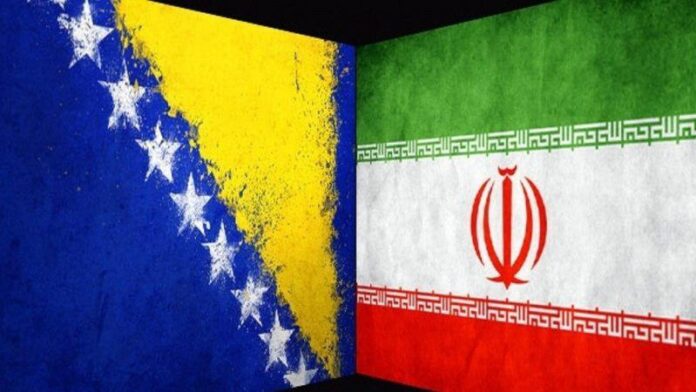
Iran Azerbaijan Flags

Considering the Iranian Vice Presidency for Science and Technology’s target of promoting the domestic and foreign knowledge-based products market, Iran inaugurated its first permanent pavilion in Baku, the capital of Republic of Azerbaijan.

Representatives of a number of Iranian knowledge-based companies traveled to the Republic of Azerbaijan in mid-October in order to boost the export of various homegrown products, such as high-resistant flooring materials, probiotics and livestock medication, food flavors, as well as biological and environmentally friendly fertilizers and pesticides.

Baku played host to 50 Iranian knowledge-based enterprises during the 4-day event.

The Iranian representatives also held trade meetings with the Azeri companies that resulted in 6 memorandums of understanding worth $4 million, which are expected to expand export interaction and the transfer of technology between the two sides.

Moreover, the first permanent pavilion of Iran in Baku was opened during the event, exhibiting Iranian knowledge-based products in cooperation with the private sector. The pavilion is providing Iranian marketing groups from the knowledge-based companies with booths to display their products in the permanent fair.

The pavilion, founded with financial support from the Vice Presidency for Science and Technology and from the Innovation and Development Fund, is going to work as a base for the export of Iranian knowledge-based products to the Republic of Azerbaijan and to the markets in the Commonwealth of Nations.

In comments on the sidelines of the event, Chairman of the Innovation and Development Fund Ali Vahdat hailed the new agreements as a new chapter in the cooperation between Iran and Azerbaijan in the knowledge-based activities.

During their stay in Baku, the Iranian delegation also visited High Tech Park of Azerbaijan and the advanced factories of the STP Company. The two Azeri centers have a great capacity to attract advanced technologies and investment for the promotion of applied products.

People, Global Trade Put at Risk by US Sanctions: Zarif

Zarif made the remarks in an address to the preparatory ministerial meeting of the 18th NAM Summit in the Azerbaijani capital city of Baku on Wednesday.

“In fact, the US’ addiction to sanctions—or more correctly economic terrorism—against the people of many non-aligned countries, including Cuba, Venezuela, Syria, Iran and even major powers such as China and Russia, is undermining the fabric of international economic relations, and putting hundreds of millions of people, as well as global commerce, at risk,” he said.

Zarif also underlined the urgent need for the international community to take a “unified stance” in order to avert a global catastrophe by compelling Washington “to reverse its dangerous course.”

The top Iranian diplomat further stressed that the “irresponsible” US withdrawal from a 2015 multilateral deal on Iran’s nuclear program has been “another major disrupting element in our region and beyond. “

“The American economic war — indeed its economic terrorism — targeting ordinary Iranian people and wishfully attempting to starve them into submission — is not just a willful and publicly-announced crime against humanity, but a grave and immediate threat to international peace and security,” he added.

Elsewhere in his address, Zarif said Western Asia suffers the most from the vendetta against the global order.

Touching on the issue of Palestine, he warned that the nation’s right to self-determination, as one of the most important NAM objectives, was being trampled on by “unilateral and destructive” US policies, particularly by Washington’s “illegal and dangerous” position on occupied Jerusalem al-Quds and the Golan Heights.

“The Zionist regime has been emboldened by the US’ blind support—and unfortunately also by the short-sighted acquiescence of some in our region — to usurp and absorb more, and even more, of Palestine,” Zarif said.

He further referred to the horrendous atrocities being committed by the Saudi-led coalition against the people of Yemen, with full US backing, saying the situation is spiraling out of control and leading to further escalation and insecurity in the region and beyond.

Iran DM Says Trump’s Threat of War ‘A Bluff’

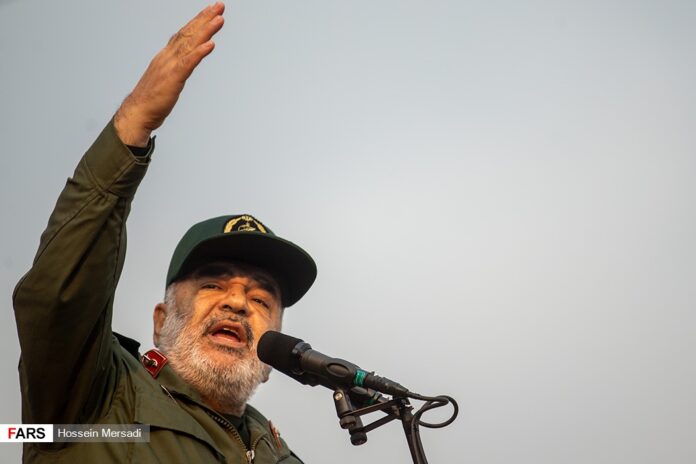
“It seems more like a bluff to cover their chagrin” for their failed policies, General Hatami told reporters on the sidelines of a cabinet meeting on Wednesday.

The minister’s remarks came in response to Trump who said on Monday that the US may get into new wars, when asked about Washington’s foreign policy priorities.

Trump insisted that he is working to bring home American soldiers but warned the US may soon enter into new military conflicts.

“We may have to get into wars.  We’re better prepared than we’ve ever been. If Iran does something, they’ll be hit like they’ve never been hit before. I mean, we have things that we’re looking at,” he said in a cabinet meeting.
The Iranian minister warned the US about a crushing response in case of making the mistake of taking a measure against Iran.

“If they make a mistake, they will receive a response that will make them more ashamed than the previous measures which brought about humiliation to them,” Hatami said.

He said that the Iranian Armed Forces stand fully ready to protect the nation and the country’s borders and will give a crushing response to any threats or excessive demands.

Chairman of the Chiefs of Staff of the Iranian Armed Forces Major General Mohammad Baqeri also underscored the Islamic Republic’s deterrent power on Tuesday, warning that enemies will have to pay heavy costs if they carry out any act of aggression against the country.

Such a confrontation, he added, would merely bring the enemies heavy casualties and humiliation.

The chief commander of Iran’s Army also said earlier this month that the country will give a crushing response to any threat posed by enemies at any level.

Major General Abdolrahim Mousavi said the Iranian Armed Forces have simulated “the most severe and worst-case” threats against the country, and are ready to respond in kind and defend the Iranian borders, skies and nation as well as the Islamic Revolution’s ideals.

US, Israel Pit Regional States against Each Other: Zarif

Zarif made the remarks in an address to the Meeting of the Non Aligned Movement Ministerial Committee on Palestine, held on 23 Oct. 2019, in Baku, Azerbaijan Republic.

He also blamed the US for its contempt for international law, saying the administration of Donald Trump is aiding and abetting Israel to promote its expansionist policy.

“The extremist and unilateral policy pursued by the US coupled with its contempt for international law has had a devastating impact on the Palestinian people,” he said.

“The Trump administration is aiding and abetting the aggressive Israeli regime in its expansionist behavior, which seeks to undermine the status of the Palestinian issue as the pivotal issue in the Middle East,” the Iranian top diplomat noted.

What follows is the full text of his speech:

Mr. Chairman,
Distinguished Friends

The holding of the meetings of the NAM Committee on Palestine has acquired particular importance given this moment of great uncertainty and volatility for the Palestinian people.
The extremist and unilateral policy pursued by the US coupled with its contempt for international law has had a devastating impact on the Palestinian people. The Trump administration is aiding and abetting the aggressive Israeli regime in its expansionist behavior which seeks to undermine the status of the Palestinian issue as the pivotal issue in the Middle East. The most important reason for the US administration and the Israeli regime to ignite hostilities within and among the countries of our region and to push the non-issues such as Iran’s peaceful nuclear program, is to eclipse the plight of the Palestinian people and force a regional realignment to its detriment. What is indeed extremely regrettable is that some States in our region are buying this trick, thus furthering the agenda of the US and the Zionist regime. It is of great importance that the NAM countries maintain and strengthen their united front and do not allow the Zionist regime and its enablers to succeed in their aim of relegating the Palestinian question to the margin.

The US vicious moves about al-Quds al-Sharif and the creation of a viable Palestinian State despite the clear UN resolutions are frustrating and detrimental to the efforts towards finding a just and lasting solution for the crisis. While none of the US administrations in the past ever intended to help Palestinians create a viable States, this administration has taken off the mask and pursues the same policy in an aggressive and shamelessly transparent way, providing more encouragement to the expansionist Zionist regime.

Netanyahu’s recent declaration to annex the Jordan Valley in the Occupied West Bank should be also viewed in this light. This provocative threat followed previous similar cynical declarations about the annexation of other Israeli illegal settlements. It came in the wake of the Israeli attempts to illegally and forcibly alter the demography, character, identity and legal status of the Palestinian territory occupied in the past seven decades.

This disastrous trend will continue unless we change course. We all need to brace ourselves and tap all our resources and potentials to stand firm—not just in our declarations, but in our policies and actions—against aggression by the Israeli regime and their American enablers. The resolute rejection of the delusional “deal of the century” by the Palestinian people and leadership has already shown its impact, imposing a setback on those who have tried in vain to denigrate the rights of an entire people to a real estate deal.

Washington and Tel Aviv should be made to understand that peace and economic prosperity could never be achieved without addressing the occupation, which lies at the core of the Palestinian question. They are being increasingly isolated at least in their delusion that the Palestinian right to self-determination, Palestinian sovereignty and statehood could be exchanged with their empty financial promises. Undoubtedly, any initiative detached from international law and dismissive of Palestinian human and political rights can neither be viable, nor just, and will certainly fail abjectly.

Mr. Chairman,

At this difficult moment for Palestine, it is imperative that we, as NAM Member States, act on what we have said since the birth of our Movement. The illusion that Israel and the United States can be reliable partners must be abandoned.

We in Iran are ready to set aside all our differences and grievances with any and all Muslim and Non-Aligned countries and work hand in hand to create a strong unified stance to reverse the exacerbating audacity of the Zionists. It can be done.

Iran Producing $80 Billion Worth of Agricultural Products

Minister of Agriculture Mahmoud Hojjati attended the 9th meeting of representatives of Tehran’s Chamber of Commerce, Industries, Mines and Agriculture on Tuesday, October 23.

Pointing to the statistical figures showing a rise in the output of agricultural products in Iran, Hojjati said his ministry’s priority has been to increase productivity in the water and soil management.

Praising the growing investment in Iran’s agriculture sector over the past decades, the minister said more than 2.5 million hectares of fields, particularly in the southern and eastern areas, have been equipped with irrigation systems and a huge investment has been made in the water management systems.

He also refuted the US claim that the delivery of food and medicine to Iran has not been subject to sanctions, saying the restrictions in money transaction caused by the American sanctions have practically targeted those two sectors.

“A major part of the country’s demand for agricultural imports are supplied from the Americas, with a pressing need for currencies like dollar and euro. Nonetheless, we have no concerns about the supply of oilseeds, soybean press cake, raw oils and maize. For instance, the supply of maize has now reached 2 million tonnes,” he added.

Hojjati noted that the value of agricultural products in Iran has reached $80 billion, saying the fluctuation in currency rates that began last year upset the order of production of certain goods.

The Agriculture Ministry has purchased 360,000 tonnes of tomato from the local farmers over the past 40 days, he noted, adding that tomato production in the current Iranian year has risen by more than a million tonness compared to the previous year.

Unveiling plans to establish a chain of production system in various agricultural sectors, Hojjati said his ministry was seriously pursuing inclusive plans to set up processing industries.

He also noted that Iran’s non-membership in many regional and international treaties and unions has adversely affected the export of agricultural products and foodstuff.

Hailing the administration’s plan to join the Eurasian Economic Union (EAEU) as an ideal opportunity for the country’s agro-food industries, Hojjati said Iraq is the main destination for Iranian agricultural products.

The minister further called on the Iranian farmers and producers to work on the basis of supply and demand standards to avoid the problems caused by Iraq’s arbitrary regulations or occasional restrictions on the import of Iranian produce.

He further stated that the total saffron production in Iran in the current year has surpassed 500 tonnes, and the countrywide output of apple has exceeded 400 million tonnes.

The minister further highlighted the role of start-ups in managing the distribution of agricultural products and foods.

He then noted that the total volume of water for growing a watermelon has decreased to 30 to 40 liters, saying most of the watermelon patches in Iran have begun to use dry farming techniques.

The minister also noted that Iranian farmers have been reluctant to sell wheat to the Agriculture Ministry this year despite an increase in the total output of wheat, citing a remarkable difference in the wheat prices between Iran and the neighboring countries that resulted in lower purchases from the local farmers.

Hojjati then highlighted the low price of Iranian meat in comparison with the foreign countries, saying while one kilogram of meat is sold for $2 in Iran, the price of meat in Brazil and Mongolia stands at $7.5 and $5, respectively.

He finally pointed to the Agriculture Ministry’s schemes to minimize the use of pesticides, insecticides, and chemical fertilizers across the country, saying the optimum consumption of pesticides requires contract-based production and training courses for a population of four million farmers across the nation.

Iran, Oman Weigh Plans for Visa-Free Travels

Iranian Minister of Cultural Heritage, Handicrafts, and Tourism Ali-Asghar Mounesan held a meeting with Oman’s Minister Responsible for Foreign Affairs Yusuf bin Alawi bin Abdullah on Wednesday.

In the meeting held in Muscat, the Iranian minister said, “You are a popular character in Iran. Our people are very interested in you. Oman has always had a constructive role in the region and the good leadership of His Excellency Sultan Qaboos has created such (close) ties between the two nations as well. We and Oman’s tourism minister are promoting tourism ties between the two countries.

I thank you for facilitating the visa issuance. We also lifted the visa requirement for Omanis with the Foreign Ministry’s efforts.”

“I am glad to see your affection for the people of Iran,” he noted, adding, “We have been friends and brothers with the neighboring state (Oman) for years, and this is a trend that the Revolution’s Supreme Leader has been insisting on.”

“The more the Americans exerted pressures on us, the stronger we got,” Mounesan added.

“Iran has diverse and many historic sites.

Considering the proximity (of Iran and Oman), it can be a good destination for the people of Oman,” the Iranian minister added, noting, “I heard that the countries (tourists destinations) must be on your medical list. You can also make arrangements to put Iran on this list. Your Health Ministry experts have apparently highlighted this issue during a visit to Iran last year.”

“Iran has also great capabilities in the field of organ transplantation, as well as heart and brain surgeries,” Mounesan noted.

“I thank God that the tourism industry between the two countries is growing. We have around eight million tourists travelling abroad, the bulk of whom travel to the regional countries. We are interested to see a large number of them visit Oman, and reciprocally, to host more Omani tourists in Iran,” he added.

“If possible, the visa fees should be eliminated to allow for the presence of more Iranian tourists. We have bilaterally lifted the visa regime with Turkey, which has attracted a large number of Iranian tourists,” Mounesan noted.

For his part, the Omani foreign minister said, “We have very age-old ties with Iran. Every time I visit Iran, I feel as if I’m in my own country, and everybody feels comfortable at their home country.

The blessings of God always exist for a country with such great leaders and nation.”

“I will pursue the issue of lifting visa for sure,” Yusuf bin Alawi bin Abdullah stressed, adding, “The most important subject is health tourism. Many Omani people travel to southern Iran, particularly to Shiraz.”

“Iran has great medical capabilities. A big revolution in the progress and development has occurred in Iran. Our people prefer to travel to Iran for treatment, particularly for eye diseases. There is special affection between the nations of the two countries, and Iranians are welcomes here with open arms,” he added.

“Iran and its nation have proved several times that they can overcome the sanctions and this in not anything new. I believe that these sanctions will eventually end,” the Omani minister noted, adding, “These are historical realities about people of Iran.”

“Our people travel to Thailand and India for treatment as well, but they prefer to go to Iran for treatment. Omanis do not have much information about kidney transplantation. A patient may even wait for months for kidney transplantation to find a donor. It is perfect that you have reached a high level of treatment,” he added.

The meeting was also attended by Iran’s ambassador to Muscat Noori Shahroodi.

Iran’s Minister of Cultural Heritage, Handicrafts, and Tourism has travelled to Oman with a 60-strong delegation from the private sector in order to promote the tourism industry.

Iran’s ‘Museum of Science & Nature’ Inscribed by ICOM

Head of the Museum of Science and Nature University of Shahid Chamran University in Ahvaz Bijan Barazandeh said that vast scientific, research and educational activities as well as innovations, inventions and observance of standards of quality control at the Museum paid off.

Established in 2001, the Museum with the aim of elevating students’ theoretical and applied knowledge tries to create educational, scientific, and artistic atmosphere, the official website of Shahid Chamran University reported.

This place can increase students’ self-confidence and keeps them in close contact with science, as well as nurturing the research spirit and prevent them from wasting their time, it added.

Iran Responds to Erdogan’s Criticism of Anti-Ankara Stances

Iran Rejects Russia's Mediation, Says Has No Plans for Direct Talks with US

Vaezi said Recep Tayyip Erdogan’s comments are not directed at the Iranian government, but are mostly about the sporadic stances taken across the country.

He added that the Islamic Republic has good relations with Turkey and Syria, and Tehran must take a stance that does not worsen the conflicts.

Hailing the recent agreement between Russia and Turkey on northern Syria, he said Iran’s position is clear.

On the one hand, Iran understands and recognises Turkey’s security issues, but on the other hand, Syria’s territorial integrity must be preserved and these attacks must not disintegrate Syria, Vaezi said on the sidelines of a cabinet meeting on Wednesday.

“Tuesday’s deal seems to be in this line, and Iran generally welcomes that there will be no war again.

The media should also consider this issue,” he continued.

Moscow has warned Kurdish forces to quickly withdraw from the Turkey-Syria border – after an agreement between Moscow and Ankara adding that Washington had “betrayed and abandoned” the Syrian Kurds.

On Tuesday, Turkey and Russia agreed to deploy Syrian and Russian forces to northeast Syria to remove Kurdish fighters and their weapons from the border. On October 9, Turkey launched an offensive aimed at creating a “safe zone” cleared of the Kurdish-led Syrian Democratic Forces (SDF), which Ankara considers as terrorists.

Regarding the FATF, Vaezi noted that the government’s stance on the FATF is clear. Iran is not discussing FATF membership, but the important point is the four bills that have been approved and the various opinions the government received on them.

“The government has applied these ideas. The government’s point is that Iran needs these bills.

We need these bills to be transparent and to combat money laundering. In order to prevent the spread of the rumours of Iran’s support for some groups and facilitating banking relations, Tehran needs these bills to be approved. Unfortunately, some have opposed these bills and turned them into political matters. Wherever they are, they must accept responsibility for their opposition to the FATF,” reiterated Vaezi.

He went on to say that the FATF bills were discussed at the Supreme Economic Coordination Council and the outcome of these discussions has been announced to the Leader of Islamic Revolution. The government and parliament have done their job, but the body that has disrupted their approval has to explicitly announce to the public the cost of its act.

“Based on the last decision taken, the FATF has given Iran four months, and during this period, if no action is taken, no further extensions will be granted and we will be automatically blacklisted, and we actually boycott ourselves in banking relationships with the world,” concluded Vaezi.

The global anti-money-laundering watchdog is increasing pressure on Iran to meet its standards while giving the country more time to do so.

The Financial Action Task Force on Friday extended until February a deadline for Iran to implement certain measures or face further restrictions. The earlier deadline was June 2019.

Iran in recent years has passed legislation to address money-laundering and terrorist-financing issues, but bills ratifying treaties related to combating these problems haven’t come into force, the FATF said. The watchdog added that it considers only fully enacted legislation when reviewing a country’s efforts.

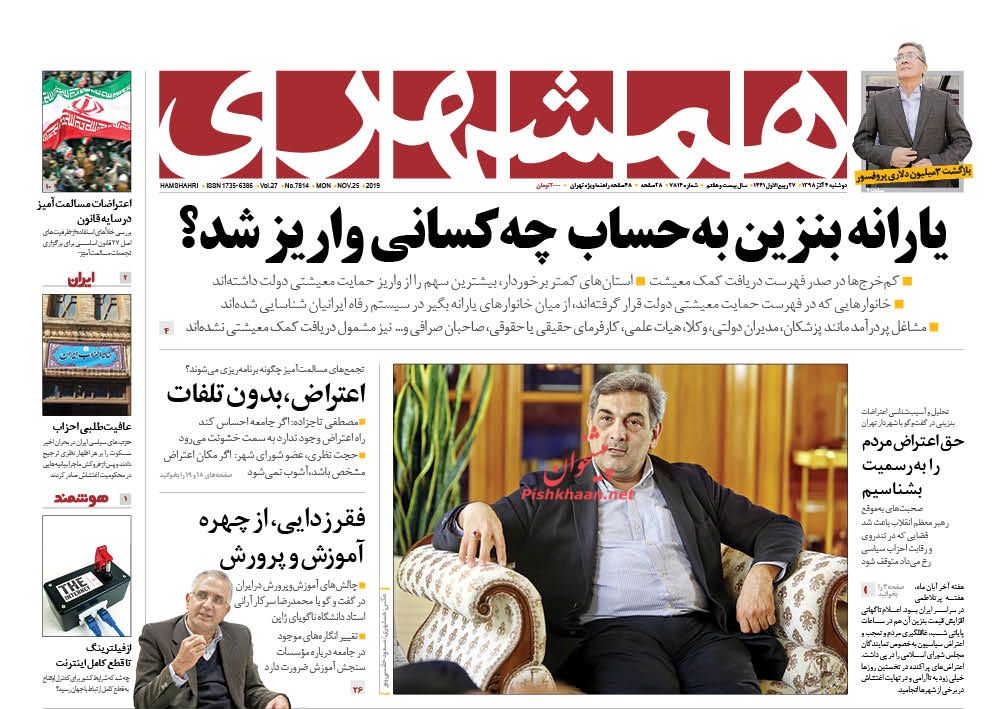
A Look at Iranian Newspaper Front Pages on October 23

A Look at Iranian Newspaper Front Pages on November 19

Abrar:
1- If Iran Does Something, They’ll Be Hit Like They’ve Never Been Hit Before: Trump
2- Erdogan: Iran’s Anomalous Voices Bother Me
3- Pompeo: Trump ‘fully prepared’ to take military action against Turkey if needed
4- If Kurds Go, Operation Stops: Turkey’s Presidential Spokesman

A Look at Iranian Newspaper Front Pages on October 23


Arman-e Melli:
1- Iran’s Judo Banned Permanently
2- Turn Off Voice of Peace Critics: Erdogan Asks Rouhani
3- Expediency Council Must Pass FATF Bills ASAP: VP

A Look at Iranian Newspaper Front Pages on October 23


Ebtekar:
1- We Ready for Bilateral or Multilateral Dialogue with Saudi Arabia: Foreign Ministry Spokesman
2- End of Netanyahu
• Benjamin Netanyahu Leaves Cabinet Formation to Zionist Chief

A Look at Iranian Newspaper Front Pages on October 23


Javan:
1- Erdogan Rhetoric Similar to Trump
• The Turkish President Uses Same Words Donald Trump Used in Letter against Him
• Erdogan Calls on Iranian President to Silence Voices inside Iran against Turkish Operations

A Look at Iranian Newspaper Front Pages on October 23


Jomhouri Eslami:
1- Erdogan Returns from Russia Empty-handed
• China, Russia Call for End of Turkish Military Operations in Syria
2- Trump: Saudis Have Nothing but Money

A Look at Iranian Newspaper Front Pages on October 23


Kayhan:
1- Saudis Have Nothing but Money: Trump
• Washington Once Again Humiliates Saudis
2- Lebanese Demonstrators Set Fire to Israeli Flag Again
3- Newsweek: Trump’s Care about Iranians Means Depriving Them of Food, Medicine
4- Kim Jong-un is Gentleman; Obama Called Him 11 Times But He Didn’t Answer: Trump

A Look at Iranian Newspaper Front Pages on October 23


Mardomsalari:
1- FATF Bills Must be Approved as Soon as Possible: VP Jahangiri
2- We Are Ready for Mutual or Multilateral Talks with Saudi Arabia: Iran Spokesman
3- Countdown for Trump’s Impeachment
• US President Getting Ready to Face with Congressmen

A Look at Iranian Newspaper Front Pages on October 23


Setareh Sobh:
1- FATF Approved by Leader, Three Branches: Iran VP in Meeting with Clergymen

A Look at Iranian Newspaper Front Pages on October 23


Shargh:
1- US Fear of JCPOA in 2020
• Pompeo, Hook Warn against End of Iran’s Weapons Embargo

A Look at Iranian Newspaper Front Pages on October 23

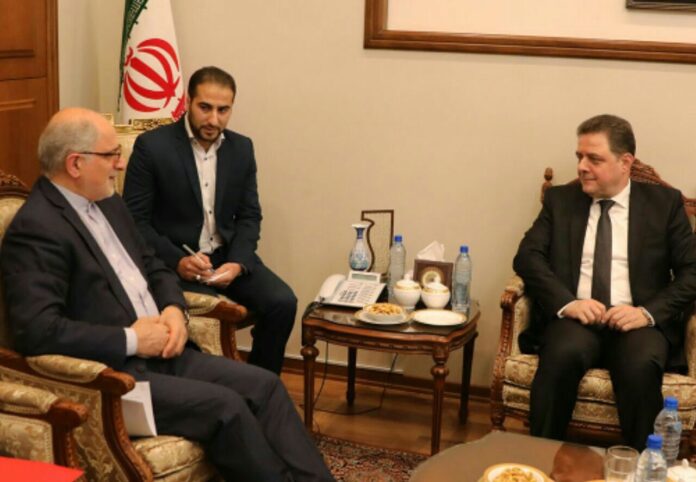
Iran FM Meets Azerbaijani, Serbian Counterparts in Baku

Bilateral political and economic ties and regional issues were among the issues Zarif and the Azeri FM discussed and consulted on.

Zarif also held talks with his Serbian counterpart on the sidelines of the Non-Aligned Movement Foreign Ministers’ Meeting in Azerbaijani capital of Baku.

The two sides discussed bilateral ties and major regional and international issues.