




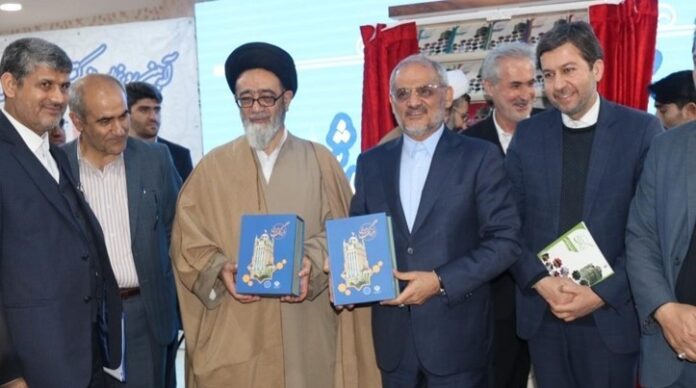
In a ceremony on Thursday, attended by the Iranian deputy Interior Minister and the Leader’s representative in the East Azarbaijan Province, Minister of Education Mohsen Haji-Mirzaei unveiled the 26-volume ‘Citizenship Culture’ book, compiled and published by the Municipality of Tabriz.
The Education Minister also unveiled the comprehensive plan for teaching citizenship in the schools of Tabriz.
The Citizenship Culture books have been compiled by the Cultural and Social Department of Municipality of Tabriz in cooperation with the Environment and Sustainable Development House of Tabriz.
The book has employed the latest training methods in the world, and will be taught in 2,249 schools and 13,000 classes across Tabriz.
The Education Ministry has distributed 353,700 volumes of the Citizenship Culture book among the schools of Tabriz, including 322,000 books for the students in different grades and 32,000 teacher’s guidebooks.
More than 1,000 teachers and educators working at the preschools and elementary schools of Tabriz as well as the instructors at the Tabriz Municipality’s cultural centers have received training in teaching the book.
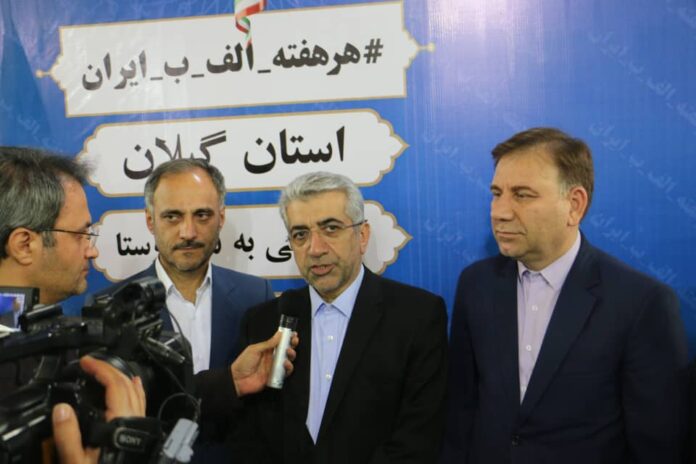
“The rubber dam is the same as green dam, namely a dam which is entirely fruitful, benefits the people and the environment, and is widely applicable with low costs and trivial damages,” Ardakanian said on the sidelines of inauguration of Galesh Kolam dam, the fourth rubber dam in Iran’s northern province of Gilan.
The minister also noted that the new rubber dam protects coastal areas from tidal flooding, prevents salt water intrusion into fresh water, creates employment, provides water for the irrigation of 2,500 hectares of nearby farmland, and would be also used for fish and shrimp farming.
He also expressed hope that all 11 rubber dams under construction would become operational soon, so that the necessary water resources for protecting natural vegetation in the northern provinces would be supplied within a reasonable period of time.
A considerable amount of water is being wasted in the Gilan Province due to lack of suitable reservoirs, the minister added, saying the water demands of the region are satisfied from the resources in distant areas.
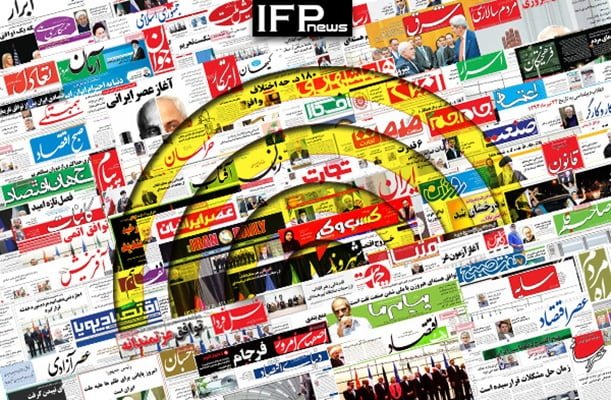
Abrar:
1- Turkey Parliament to Consider Deployment of Troops in Libya
2- Israeli Army Chief: Conflict with Iran Not Unlikely
3- Iran Not to Stop Its Foreign Relations Because of US: MP
4- Saudi Arabia, Iran, Kuwait Will Soon Hold Negotiations
5- Iraqi MPs Approve Election Law

Aftab-e Yazd:
1- Why Expediency Council Cancelled Its Meeting?
* Air Pollution or Possible CFT Voting?

Arman-e Melli:
1- Rouhani: We Foiled Plot that Introduced Iran as Not Ready for Talks
2- DM Says Crash of Fighter Jet at Sabalan Mountain Must Be Investigated
3- Government Worried about FATF

Ebtekar:
1- End of the Game for FATF Accession
* A Report on Proponents’ Efforts to Ratify FATF Bills Ahead of Last Deadline
2- Rouhani: We Shouldn’t Let Popular Dissatisfaction Keep People from Voting
3- Trump Waiting for Kim’s Christmas Gift

Iran:
1- China, Russia Urge Iran to Adopt FATF Standards
2- Central Bank Chief: It’s Better for Our Banking System that Iran Not Blacklisted by FATF
3- Rouhani: We’ll Pursue Japan’s JCPOA Offers

Jomhouri Eslami:
1- Iran, Saudi, Kuwait on Verge of Reaching Marine Security Agreement
2- Parliament, Government, Private Sector All Agree on Need for FATF Accession
3- Chinese FM: Beijing Has Kept JCPOA Effective

Kayhan:
1- No Ties between Iran and US: Leader’s Aide
2- Iraq Envoy: We Don’t Recognize US Sanctions against Iran

Mardom Salari:
1- Iran, Russia, China to Hold Joint Drills
* East’s Military Message to West
2- Spokesman: Government Insists on Ratifying FATF
3- Central Bank Governor: It’s in Our Country’s Interest to Accept FATF
4- Palermo Convention Didn’t Have Enough Votes at Expediency Council, Hence We Postponed Voting: Official

Vatan-e Emrooz:
1- INSTEX Is Just Lip Service: Iran Chief Banker

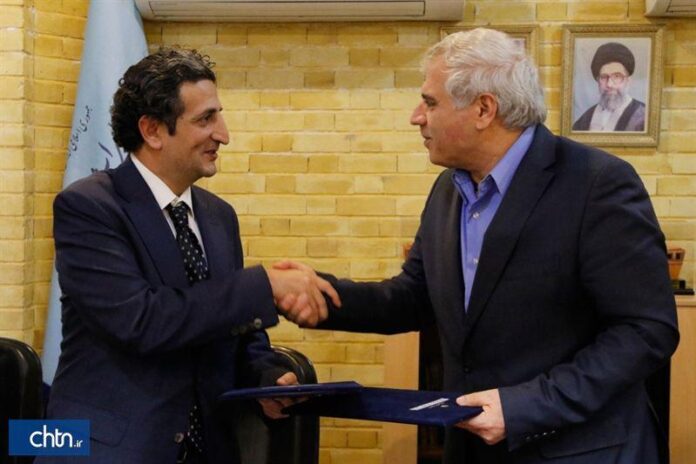
In a meeting in Tehran on December 25, Iranian Deputy Ministry of Cultural Heritage, Tourism and Handicrafts Mohammad Hassan Talebian and Chairman of the UN-Habitat Disaster Mitigation Office in Tehran, Mehmet Emin Akdogan, signed a memorandum of understanding, according to which the two sides would work together to create capacities for, promote, and carry out the joint plans and projects on conservation and improvement of durability of the cultural and natural heritage, sustainable development, urban engineering, as well as the protection and improvement of districts.
“The memorandum includes subjects such as the energy produced by the windmills and wind catchers, or how such energy could be used in the life of people. The other types of green and clean energies are also taken into account,” the Iranian deputy minister said.
According to Talebian, the agreement also entails a crisis management plan for the Qal’eh Dokhtar (Dokhtar castle) in Firoozabad in the Fars Province and also part of the historic district of Dezful, which he said are facing many problems such as excessive structural loads.
The Iranian deputy minister added that the agreement also entails a special program for the historic district of Kang village to conserve its tangible and intangible heritage, as well as a plan to protect and promote the adobe structures in Iran’s Boshrouyeh, Tabas and Yazd in cooperation with the UN-Habitat.
He also unveiled plans for cooperation with a number of domestic organizations to carry out the joint projects, such as the Road, Housing and Urban Development Research Center of the Iranian Ministry of Roads and Urban Development, and the Yazd University, which have established adobe research centers.
“Plans are going to be proposed for those projects. This memorandum provides a general framework, and we will most probably work on joint projects with the United Nations Human Settlements Programme in various international spheres. I believe that signing of this memorandum was a major development, because the projects are clear from our viewpoint, and we can easily put them into practice,” Talebian noted.
The Iranian deputy minister finally noted that a joint workshop will be held in the historic district of Kang in February 2020 to allow the experts and university professors to discuss the projects and reach a conclusion.
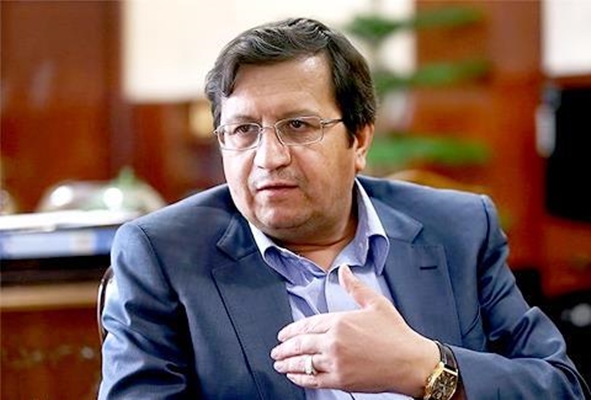
In an interview with Fars News Agency on the prospect of a special European financial channel for Iran called INSTEX, Abdolnasser Hemmati said the Islamic Republic has prepared everything in terms of regulation and organisation.
Following the unilateral withdrawal of the United States from the Joint Comprehensive Plan of Action, three European countries pledged to set up a mechanism to safeguard trade ties between Iran and Europe against the backdrop of US sanctions.
England, France and Germany first introduced the Special Purpose Vehicle known as the SPV, but after nine months, they finally implemented another mechanism as part of the SPV, called INSTEX, in February 2018.
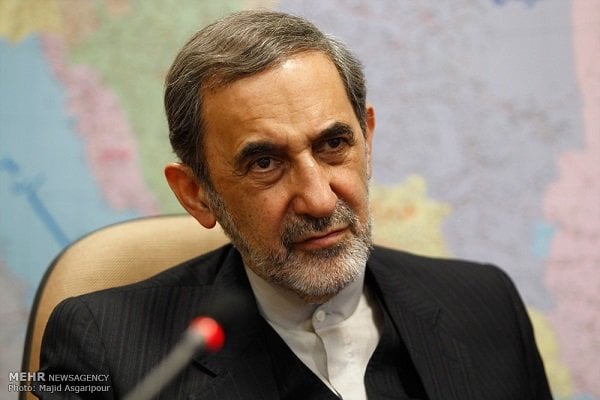
Ali-Akbar Velayati said Tehran will help if Damascus asks for assistance.
“If the Syrian government asks, Iran is ready to help them with regards to the pullout of American troops from the country,” said Velayati, a top advisor to Leader of the Islamic Revolution Ayatollah Seyyed Ali Khamenei for international affairs.
“Given our potentialities, we are prepared to lend assistance for the withdrawal of US forces from Syria in response to Syrian officials’ request,” he said.

Parliamentary elections were held in Uzbekistan on 22 December 2019, with a second round on 5 January 2020. They are the first votes held after the death of Islam Karimov in 2016.
People in Uzbekistan voted for a parliament with a 71.1-percent turnout, which the Central Election Committee called a success and great achievement for the country.
Uzbekistan used a Unified Electronic Voter List for the first time, with more than 20.5 million voters registered, according to the CEC.
In these elections, 128 deputies of the 150-seat lower house of the Uzbek parliament were elected and the second round of the elections will be held in two weeks.
The Liberal Democratic Party of Uzbekistan led the vote, winning 43 seats, and the National Revival Democratic Party came second with 35 seats, CEC Chairman Mirza-Ulugbek Abdusalomov said, adding that the Social Democratic Party Adolat got 21 seats and ranked third, followed by the People’s Democratic Party and the Ecological Party, winning 18 and 11 seats respectively so far.
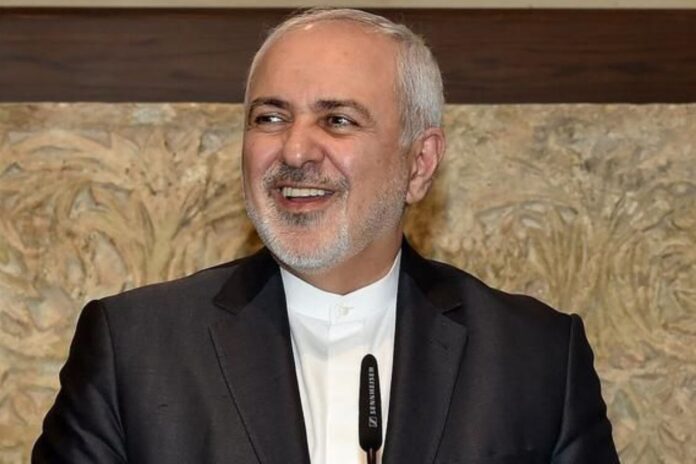
In the Wednesday talks, the Iranian foreign minister congratulated the two Kuwaiti officials on their new positions.
They also exchanged views on bilateral relations, regional issues, and the Hormuz Peace Endeavour (HOPE) initiative proposed by Iran.
Kuwait formed a new government on December 17 that replaced the son of the emir as defence minister and named an interior minister from outside the ruling family, a month after the former cabinet quit due to a row between members of the family and parliament.
The oil minister of the OPEC producer retained his post while new foreign and finance ministers were named, the state news agency KUNA said.
Kuwait has a parliament wielding power to pass legislation and question ministers, although senior posts are occupied by ruling family members.
Emir Sheikh Sabah al-Ahmad al-Sabah last month tapped then foreign minister Sheikh Sabah al-Khalid al-Sabah to take over as premier and form a cabinet. The prime minister traditionally helps navigate often tense relationships between parliament and government. The emir has final say in state matters.
The key post of oil minister remained occupied by Khaled al-Fadhel, but Ahmad Mansour al-Ahmad al-Sabah was appointed defense minister, Anas Khaled Nasser al-Saleh became interior minister, and Ahmad Nasser al-Mohammad al-Sabah became foreign affairs minister.

Are you looking for the best box mods and vape mods UK? You may have to conduct a little research before deciding on the best vape mod that will suit you, although there are various models and brands of vape mods in the UK. To that effect, we have come with a detailed review of the 3 best vape mods in the UK to help you choose a suitable one.
GeekVape Aegis X MOD
The GeekVape Aegis X MOD is a finely designed box mod vape that offers an AS 2.0 Chipset, a magnificent IP67 marking, and can be paired with a lot of vaping atomizers. Provided with a double 18650 battery layout, the slot of the battery storage is accessible from the bottom, unbolting the hinged door to accept cells at a size of 18650.
The Geek Vape box mod has a rating of IP67 that prevents water and dust from affecting the hardware and electronics of the device. In addition, the AS 2.0 Chipset unlocks an impressive, intelligent atomizer detection with a comprehensive temperature control suite to dial the ideal vaping settings. The hardware temperature control suite comprises compatibility with stainless steel, titanium, and nickel wire compatibility.
Features Of The Geek Vape Aegis X 200W TC Box Mod
Product Content
SMOK RPM40 Pod Mod Kit
The SMOK RPM40 Pod Mod Kit is a vape system presenting an improved IQ-R intelligence Chipset, an intrinsic pod mod vape UK system that comprises a rechargeable 1500mAh battery and holds a 4ml upwards of your desired nicotine or eJuice salts in diversified pods for a pleasurable and new vaping experience. The structure of this device is built from light materials to produce an evolution vaping pod system that won’t weigh us down.
Furthermore, this pod mod vape system is regulated for aromatherapy and alternative oils, which provides a lot of coil alternatives to vaporize the full contents with efficiency and ease. In addition, they feature replaceable coils with refillable pods, allowing stored nicotine salts or eJuice of up-to 4.5 mL, based on the pod in use.
Product Feature
Product Content
Dovpo M VV II Mod
The Dovpo M VV II Mod is an exquisite voltage-output based box mod that displays a high detailed colored graphics with raised textures, integrating a voltage-based output and a dual slotted 18650 battery bay. Built from zinc alloy and durable PC materials, the structure of the device is durable to hold out against light drops and falls.
The Dovpo M VV II Mod makes use of a LED tricolor battery life gauge light that shows the integrated volt with its corresponding color. The Dovpo M VV II Mod comprises a gold-plated and threaded 510 connections to guarantee a steady and reliable connection.
Features Of Dovpo M VV II Mod
Package Content
Conclusion
In the context above, we explored the 3 best vape mod available in the UK vape shop. We hope this will help you in choosing what you want. Not only will you customize your vaping experience with the vape mod of your choice, but you will also have more control over your vape.
© All Content by IFP News ( Iran Front Page ) is licensed under a Creative Commons Attribution 4.0 International License.
