Friday, January 2, 2026
Home Blog Page 3012

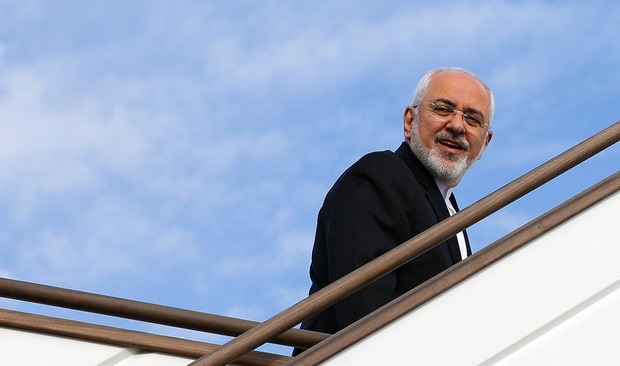
Iran President Leaves Kuala Lumpur for Tokyo

Rouhani left Malaysia early Friday after a three-day trip, which was made upon the invitation of Prime Minister Mahathir Mohamed and with the aim of attending the Kuala Lumpur 2019 Summit.

During his stay in Kuala Lumpur, Rouhani participated in the KL Summit and delivered a speech before the world leaders and officials attending the event.

He also elaborated on the Islamic Republic’s regional and international policies and strategies at the Round Table Session of the Priority of Development and the Challenges held on Thursday.

Addressing top Muslim world leaders and officials participating in the session, the Iranian president presented plans for the development and progress of the Muslim world and ways to encounter the challenges ahead of Muslim people.

On the sidelines of the KL Summit, Rouhani also held separate meetings with Prime Minister Mahathir, Malaysian King Abdullah of Pahang, Turkish President Recep Tayyip Erdogan, and Qatari Emir Sheikh Tamim bin Hamad Al Thani on issues of mutual interest, regional and international affairs.

On the first day of his trip to Malaysia, President Rouhani held a friendly meeting with Iranian expatriates living in the country. In the meeting, representatives of university professors, students, and businesspeople raised their problems, and urged that the issues are resolved with the president’s help.

Top Regional Officials Discuss Common Challenges at Tehran Security Conference

National security advisors and top security authorities from Iran, Russia, China, India, Afghanistan, Tajikistan and Uzbekistan have wound up a day-long meeting focusing on the issue of Afghanistan.

In their final statement, the delegates underlined the need to work out mechanisms for regional cooperation in order to counter common security challenges.

“While being aware that common challenges with a transnational nature such as terrorism, narcotics, organized crime, migration, poverty, low level of education and economic weakness threaten the security of regional countries, the delegates stress that actions taken individually by countries have little effect when it comes to countering these challenges, and draw attention to the necessity of working out mechanisms for regional cooperation to tackle these problems,” read part of the statement.

The statement also highlights the need for collective cooperation to establish and reinforce safe transit routes and develop the necessary infrastructure. The participating countries also underlined the necessity of facilitating trade relations among them and continuing to implement plans to contribute to the reconstruction of Afghanistan.

The delegates emphasized that the Afghanistan issue has no military option.

“The only way wo establish peace and security in Afghanistan is to achieve an intra-Afghan negotiated settlement with the focus being on the ownership and control of Afghanistan,” read part of the statement.

They stressed that the continued presence of foreign troops in Afghanistan is one of the key contributors to the ongoing war and instability in the country, and underlined the need for immediate withdrawal of foreign forces from the country.

The statement further highlighted the importance of energy, reiterating that all member states of the Organization of Petroleum Exporting Countries (OPEC) are entitled to have free access to the energy market in the region.

IRGC Chief Rejects Idea of Interacting with Enemy

General Hossein Salami

Major General Hossein Salami says interaction is the most difficult path, and resistance is the easiest way.

“Some think if we engage with the enemy and submit to it, we will achieve a result more easily.

However, the easiest way is to resist because the path of resistance is one where we are blessed divine power,” said General Salami, the commander of the Islamic Revolution Guards Corps (IRGC).

“Moreover, while interacting with the enemy, we would lose part of our power and have to rely on others,” he said.

The top general added the enemy seeks to make us face different issues in order to achieve its objectives.

He also said the sanctions imposed on Iran are aimed at making the nation unable to solve its problems, “and if we cannot solve our problems, we will have to lean toward the enemy.”

Elsewhere in his remarks, General Salami said scientific power brings the country defence power.

He further said that Iran is on the path to development and “our enemies are on the decline.”

“The enemy still thinks power and wealth are the only national assets of a country, but countries which have possessed [only] these powers have collapsed,” he said.

Iran, Turkey Coordinate Efforts on Syria Peace, Closer Ties

Iranian President Hassan Rouhani and his Turkish counterpart Recep Tayyip Erdogan held a meeting on the sidelines of the KL Summit 2019 in Malaysia on Thursday.

In the meeting, both presidents hailed the Malaysian prime minister’s initiative to bring the heads of a number of Muslim states together at a summit in Kuala Lumpur for addressing the Islamic world’s problems, and stressed the need for closer cooperation and solidarity among the Islamic nations.

The Iranian and Turkish presidents also talked about the regional issues, particularly the course of developments in Syria, and called for cooperation between Tehran and Ankara within the framework of the Astana Process.

In the gathering, President Rouhani expressed concern about the lingering presence of American forces in Syria and the US attempts to take control of Syria’s oil resources, and called for closer cooperation among Iran, Turkey and the Syrian government.

The Iranian president also stressed the need for cooperation with the Damascus government to facilitate the withdrawal of terrorist groups from Idlib and restore calm in the Arab country.

Elsewhere in the meeting, Rouhani and Erdogan conducted a review of the latest status of relations between Iran and Turkey, and urged efforts to enhance the bilateral ties in various fields, including the energy industry, transportation, trade and banking sector.

It was also decided that the special envoys of the two presidents would pursue the agreements reached at the meeting and carry out the agreements made at Iran-Turkey Joint Commission on Economic Cooperation.

The two presidents also decided to hold the next session of Supreme Council of Iran-Turkey Economic Coordination in Tehran in spring, to be chaired by the presidents and attended by the cabinet members of the two neighbours.

The KL Summit 2019 kicked off in Kuala Lumpur on Thursday, attended by hundreds of Muslims leaders, politicians, and thinkers.

A Look at Iranian Newspaper Front Pages on December 19

Newspaper Headlines

Abrar:

1- Erdogan’s Advisor: Libya Part of Turkey’s Responsibilities

2- Japan Foreign Ministry’s Statement on Abe-Rouhani Meeting

3- Shamkhani: Iran to Further Cut Its Nuclear Commitments If EU Fails

4- UK Foreign Secretary: Iran’s Measures Endangering JCPOA

5- US to Decrease Level of Its Diplomatic Presence in Iraq

A Look at Iranian Newspaper Front Pages on December 19


Arman-e Melli:

1- Americans Will Have to Return from Sanctions: Rouhani to Mahathir

A Look at Iranian Newspaper Front Pages on December 19


Ebtekar:

1- Treading on Lose-Lose Path: Rouhani on US Sanctions

2- 95% of Those Running for Parliamentary Votes in Tehran Qualified by Interior Ministry

3- Poland May Be Fired from EU

A Look at Iranian Newspaper Front Pages on December 19


Hamshahri:

1- Diplomacy from Tehran to East Asia

* Iranian, Malaysian, Qatari, Turkish Leaders Attend Meeting Snubbed by Saudi, Allies

A Look at Iranian Newspaper Front Pages on December 19


Javan:

1- Tehran Security Conference Dismissed Allegations of Iran Isolation

2- Shamkhani: Presence of Seven Influential States in Tehran Shows Regional States Standing against US Maximum Pressure

A Look at Iranian Newspaper Front Pages on December 19


Jomhouri Eslami:

1- Merkel: We’re Opposed to US Sanctions on Iran

2- 17 Members of US Congress Protest US’ Economic War on Iranian Citizens

3- Thousands in Various US States Rally in Support for Trump Impeachment

A Look at Iranian Newspaper Front Pages on December 19


Kayhan:

1- Number of Candidates for Replacing Abdul-Mahdi Increased amid Complicated Situation in Iraq

2- Shamkhani: We Can’t Be Both Sanctioned and Stripped of Channels to Bypass Bans by Accepting CFT

3- Rouhani: Sanctions Cannot Continue

A Look at Iranian Newspaper Front Pages on December 19


Mardom Salari:

1- Concerns Raised at Tehran Security Conference about Transfer of ISIS by US

2- Trump Outraged by Impeachment: President’s Opponents in Streets

3- Muslims Must Feel Responsible towards Each Other: Rouhani to Mahat

A Look at Iranian Newspaper Front Pages on December 19

Iran Condemns UNGA’s Human Rights Resolution

Iran Vows Appropriate Response to US Interception of Mahan Air Flight

In a statement on Thursday, Iranian Foreign Ministry Spokesman Seyyed Abbas Mousavi condemned the draft resolution on the situation of human rights in Iran, which was adopted in the 74th session of the UN General Assembly with the support of Canada and certain Western states.

The Iranian spokesman said the document is based upon selective approaches, is partial, confrontational, and meant to serve political objectives.

Mousavi also noted that an obvious reason for illegitimacy of the resolution is that it has been endorsed by the front of Zionism and the reactionary regional regimes, who ignore all kinds of human rights norms, sponsor terrorism and extremism, and violate the basic human rights.

“The political and instrumental use of human rights and the employment of double standards in this area are in contravention of the sustainable promotion of human rights,” the spokesman added.

“Despite this fact, the attitude of supporters of the resolution is adoption of ‘double standards’ on the status of human rights in the countries and referral of the issue to the international circles, particularly to the United Nations. Accordingly, we deplore the fact that the UN mechanisms have been subject to such abuses,” he added.

Mousavi also noted that the destructive approach that supporters of the resolution have adopted against the Islamic Republic of Iran contains multiple errors and flaws, such as the instrumental and political employment of human rights, ignoring the values, the creeds, and the distinguishing cultural features of various societies, ignoring the facts under the influence of an anti-Iran media propaganda, and the disregard for and silence on the widespread violation of the Iranian nation’s human rights as a result of the cruel and illegal sanctions.

“The Islamic Republic of Iran is a democratic religious administration that has taken steps to promote and advance human rights at the national, regional and international levels within the framework of the religious and moral commitments and in conformity with its Constitution, normal regulations and the international treaties, and also feels practically obligated to observe them,” the spokesperson underlined.

Talks with Iran as Valuable as Nobel Prize for Trump: Ex-Envoy

Talks with Iran as Valuable as Nobel Prize for Trump: Ex-Envoy

In an interview with Khabar Online, Iran’s former ambassador to the Republic of Azerbaijan Mohsen Pakaein expounded on the main purposes of President Hassan Rouhani’s tour of East Asia.

He said the Iranian president’s visit to Malaysia for the KL Summit 2019 would provide a perfect opportunity for the bilateral meetings and multilateral negotiations to resolve the Islamic world’s woes and de-escalate the regional tensions.

On the Iranian president’s plan to visit Japan after Malaysia, Pakaein said Japanese Prime Minister Abe Shinzo had already received a “negative response” from Iran when he conveyed a message from the US during his trip to Tehran a couple of months ago.

Deploring Washington’s policy of sanctions and pressures against Iran, the former ambassador said even a prisoner swap between Iran and the US would not be regarded as a “positive pulse” given the White House’s hostile plots against the Islamic Republic.

“As a result, the Japanese will not receive a positive response about the US talks during Mr. Rouhani’s visit,” he noted.

Asked about the US administration’s desperate need for a political achievement ahead of the next US presidential election and Washington’s possible attempts to use Japan as a mediator to move closer to Iran, Pakaein said, “Trump has had no achievement in the diplomatic sphere, and has even ruined Barack Obama’s achievements, as it has turned into Donald Trump’s Achilles’ heel and has been taken advantage of by the Democrats.”

“Trump has had a failed policy towards North Korea, West Asia, and countries like Syria, Yemen and Afghanistan. We clearly saw his blatant mistake of pulling the United States out of the JCPOA, which was yet another achievement of the Obama administration,” he added.

“What he (Trump) is pursuing for now is persuading Iran to hold talks despite a broad range of sanctions,” the former ambassador noted.

“The US administration’s talks with Iran is so important for Trump that a European official has recently told an Iranian official that for Trump, dialogue with the Iranian authorities is as significant as winning the Nobel prize,” Pakaein stated.

Highlighting Trump’s failure to celebrate any foreign policy achievement in his tenure, the ex-envoy said the US leader seeks to hold talks with Iran without making any concessions.

“Iran has made it clear several times that it would never accede to (US’ call for) talks under the sanctions,” Pakaein underscored, adding, “On the other hand, Japan has behaved in such a way that obeys the US sanctions, and it’s unlikely that some progress will be made in this regard and on the economic subjects during Mr. Rouhani’s trip to that country (Japan).”

“However, it does not mean that the presidential visit was not necessary at this juncture, because the country (Iran) requires such diplomatic movements, while other issues such as the Middle East and regional security could be among the other major topics,” the Iranian diplomat concluded.

Iran Condemns Any Kind of Pressure on Qatar: Rouhani

Iran President, Emir of Qatar Meet in Malaysia

Rouhani made the remarks in a Thursday meeting with Qatari Emir Sheikh Tamim bin Hamad Al-Thani on the sidelines of the Kuala Lumpur Summit 2019.

Rouhani stressed the importance of enhancing relations in all areas, and said, “We have stood by Qatar and will continue to do so, and we condemn any pressure and tightening the grip on this country.”

He urged Qatar to use its proximity with Iran to boost its economic and trade relations.

“The two countries can have close cooperation in different areas,” he said.

President Rouhani underlined that Tehran and Doha can meet many of each other’s needs under the current economic conditions.

“We can work together in making joint investments,” he said.

The Qatari Emir, in turn, expressed pleasure to have met the Iranian president, saying Tehran and Doha enjoy special relations. He called for more contacts between the two countries.

He also thanked Iran for its stance on Qatar sanctions. He also said Iran and Qatar can weather the current tough situation they are facing.

Rouhani and the Qatari emir met on the sidelines of the Kuala Lumpur Summit 2019, a gathering of Muslim world leaders, also attended by Turkish President Recep Tayyip Erdogan.

Donald Trump Finally Impeached by US House

US House of Representatives Impeach Trump

The Democratic-led House’s passage of two articles of impeachment on a mostly party-line vote sets the stage for a trial next month in the Republican-controlled Senate – friendlier terrain for Trump – on whether to convict and remove him from office.

No president in the 243-year history of the United States has been removed from office by impeachment. That would require a two-thirds majority in the 100-member Senate, meaning at least 20 Republicans would have to join Democrats in voting against Trump – and none have indicated they will.

The Senate’s top Republican, Mitch McConnell, has predicted there is “no chance” his chamber will remove Trump when it holds its trial.

“This lawless, partisan impeachment is a political suicide march for the Democrat Party,” Trump told a raucous rally for his re-election campaign in Battle Creek, Michigan, as the vote was under way in the House.

“They’ve been trying to impeach me from day one. They’ve been trying to impeach me from before I ran,” he said.

Trump, who is seeking another four-year term in the November 2020 presidential election, has denied wrongdoing and called the impeachment inquiry, launched by House Speaker Nancy Pelosi in September, a “witch hunt.”

The first of the articles accused Trump, 73, of abusing his power by pressuring Ukraine to investigate political rival Joe Biden, a leading contender for the 2020 Democratic presidential nomination, as well as a discredited theory promoted by the president and beneficial to Russia that Democrats conspired with Ukraine to meddle in the 2016 election.

Democrats said Trump held back $391 million in security aid intended to combat Russia-backed separatists and a coveted White House meeting for Ukrainian President Volodymyr Zelenskiy as leverage to coerce Kiev into interfering in the 2020 election by smearing Biden.

“President Trump abused his power, violated his oath of office, and betrayed our nation,” Biden said on Twitter, adding, “In the United States of America, no one is above the law — not even the president.”

The second article accused Trump of obstruction of Congress by directing administration officials and agencies not to comply with lawful House subpoenas for testimony and documents related to impeachment.

During a daylong debate before the vote, Pelosi read the US Pledge of Allegiance and said, “We are here to defend democracy for the people.”

“If we do not act now, we would be derelict in our duty. It is tragic that the president’s reckless actions make impeachment necessary,” Pelosi said.

As the debate unfolded, Republicans accused Democrats of seeking to use an unfair, rigged process to nullify the 2016 election and suggested Democrats would pay a price in the 2020 election.

“The matter before the House today is based solely on a fundamental hatred of our president. It’s a sham, a witch hunt – and it’s tantamount to a coup against the duly elected president of the United States,” Republican Representative Mike Rogers said.

Republican Representative Mike Kelly compared the impeachment to the Japanese attack on Hawaii’s Pearl Harbor in 1941, calling the House proceedings another “date that will live in infamy” – similar to the words Democratic President Franklin Roosevelt used to describe the raid that killed about 2,400 people and led to America’s entry into World War Two.

The abuse of power article was passed on a 230-197 vote and the obstruction article was passed by 229-198. All of the House Republicans opposed the articles, and two Democrats, Collin Peterson and Jeff Van Drew, voted no on both. Democrat Jared Golden voted against the obstruction charge but for abuse of power.

“The only part of the vote that was bipartisan was in opposition. The President is just getting stronger while support for the Democrats’ political theater has faded,” Trump campaign manager Brad Parscale said in a statement.

US Representative Tulsi Gabbard, a Democratic presidential candidate, voted present on both articles, declaring in a statement, “I could not in good conscience vote either yes or no.”

Speaking after President Donald Trump was impeached for abuse of power in a historic vote in the US House of Representatives, Speaker Nancy Pelosi calls the date, December 18, “a great day for the constitution of the United States,” but a “sad one for America.”

Muslim World Must Get Rid of Dollar Dominance: Rouhani

Rouhani at KL Summit 2019
Iranian President Hassan Rouhani addresses the KL Summit 2019 in Malaysia on Thursday, Dec. 19, 2019 / Photo by president.ir

The Iranian president made the remarks in a speech at the inauguration ceremony of Kuala Lumpur 2019 Summit in the Malaysian capital.

What follows is the full text of President Rouhani’s Thursday speech:

Your Excellency Dr Mahathir Mohamad, Honourable Prime Minister of Malaysia

Esteemed Presidents and Prime Ministers

Heads of Delegates

Ladies and Gentlemen

Assalamu alaikum wa rahmatullahi wa barakatuh,

At the outset, I would like to appreciate the nation and government of Malaysia for their warm hospitality and organising this summit. Also, I would like to appreciate Tun Dr Mahathir Mohamad for presiding this important initiative and creating a valuable model of peaceful cultural diversity as well as taking new steps for bridging the east and the west of the Muslim world and his foresight in bringing diverse attitudes closer together.

Excellencies,

The Muslim world is facing emerging challenges at the national and international levels which have impeded the track of development and progress. The most important such challenges include the following:

  1. Cultural and identity challenges

The danger of weakening national and Islamic identity, the younger generation distancing from their identity and domination of foreign cultures are the most serious threats to the Muslim world. The western pioneering in the development of new technologies has resulted in their strength in imposing and mainstreaming news, the culture of consumption and western lifestyle. Joint efforts to compensate under-development in information technology, moving towards national and regional communication networks and increasing share of Muslim states in the digital economy constitute the roadmap of our future in combatting these crises.

  1. Security challenges:

It is regrettable that the Muslim world, from the far western spot in North Africa to the farthest area in East Asia, is grappling with serious security threats and problems ranging from the continued threats imposed by the Zionist Regime that is killing our brothers and sisters in Palestine on a daily basis to the military, political, and economic threats by the United States against some Muslim countries, to the threat of terrorism and mental and behavioural radicalism in some Muslim societies which has paved the ground for foreign intervention. The war in Syria, Yemen, and riots and turbulences in Iraq, Lebanon, Libya and Afghanistan is the outcome of the combination of domestic extremism and foreign intervention.

  1. Challenges of under-development:

Maladies as weakening governance, poverty, unemployment, corruption, increasing and eroding violence and extremism have endangered national sovereignty in some parts of the Muslim world. Macro processes such as the globalisation of economy and society, emergence of new discourse in the area of democracy and human rights, increasing attention to semantic and software power, increasing access to information and progressing growth of non-state actors have added to the dimensions of this challenge. Idealistic, but realistic, policy making in the area of development is now an inevitable necessity.

  1. Economic challenges:

Economic sanctions have turned into the main tools of domineering hegemony and bullying. The interconnectedness of international economic, commercial and financial systems with the American economic regime and dollarization of national and global economies have provided the US with the possibility of advancing its hegemony under the threat of sanctions and economic terrorism and impose its illegitimate demands on the other nations. The Muslims world should be designing measures to save it from the domination of US dollar and the American financial regime. The fact of the matter is that Muslim states are complementary to each other in economic terms and therefore, the creation of special mechanisms for banking and financial cooperation among Muslim nations, the use of national money in mutual trade, conclusion of preferential trade agreements in the Muslim world as well as investment in areas with relative advantage and similar ideas should be thoroughly investigated by the economists and experts of Muslim states.

Distinguished colleagues and dignitaries

If we return to our national and Islamic capacity and rely on our own domestic power and strength, we would be able to convert all the above-mentioned challenges to an opportunity of growth and promotion. I consider the following capacity as the main components of power in the Muslim world:

  1. Islam is the central component of identity among us as Muslims. Islam is both a source and destination as well as path and track. The divine will has been based on the foundation that Muslims, following the model and role presented by our holy Prophet, should be adopting and promoting moderation so as to act as a role model for the whole world: “And we have made you a moderate nation to the witness of people and the Prophet will witness you”.
  2. People are the main source of power. Democracy, when coupled with faith in religion, would culminate in people and Muslim Ummah being mobilised. The spread of social justice, political and cultural security, the right to enjoyment of a decent life and good governance are the main essentials of Islamic concepts and teachings as well as the main reasons for people’s alignment.
  3. Science and technology are the key to power and development. Knowledge is power. Whoever finds it, will be victorious. It is the matter of regret that Muslim countries have no alternative at the moment but to resort and refer to others to supply their scientific and technological needs. Our young generation are undying source of creativity and hope, and the movement of education, research and innovation is the priority of the Muslim world’s today and tomorrow.
  4. Cooperation and interaction among Muslim nations is an unreplaceable principle. Consolidation of political and economic capacities could turn the Muslim world into a powerful bloc in international relations. The accumulation of scientific and technological capacities of Muslim countries can compensate many of the present time underdevelopments and eliminate grounds for the imposition of hegemony by the others. The standing mechanisms and institutions of the Muslims world, which have been designed for this purpose, have regrettably failed to accomplish its noble goals and purposes.

Dear friends

When I talk about hope towards confronting the challenges and problems of the Muslim world, I mean to present the success story of the Islamic Republic of Iran. My country for the past four decades has been facing all sorts of threats and conspiracies, but it has managed to overcome successfully any threat or challenge and has gained more strength and experience in a manner that we are now recognised in the world as a model of resilience and steadfastness. After its Islamic Revolution, Iran has overcome three main powerful waves of threats:

  1. Terrorism: Since the beginning of the 1980s, my county has been confronting the scourge of terrorism inside and outside of its soil. I am confident enough to say that the people of Iran have been at the forefront of the fight against terrorism and have attained the highest success in confronting it.
  2. War: Eight years of resistance in the extensive war imposed on Iran incurred heavy material and human costs on our nation. However, it made my country self-sufficient in defence, and today, such indigenous capability guarantees Iran’s defensive deterrence.
  3. Sanctions: The Islamic Republic of Iran has been under oppressive sanctions of the United States of America. Recently, they were seeking the collapse or surrender of the Islamic establishment through the imposition of the heaviest sanctions or so-called crippling sanctions. While only since 8 May 2018, when the US withdrew from the nuclear deal, more than 93 sanctions measures have been imposed against Iran, today the Iranian economy has recovered properly and economic indices are improving. Under such circumstances, economic reforms are underway and the current budget of the country now being reviewed by the parliament is totally independent from oil.

Our reliance on God, enjoyment of Islamic principles and values, contribution of peoples, development of domestic capabilities and ultimately attention to science and technology are the key to success of the Islamic Republic of Iran. I firmly believe that such a success story and model could be transferred to the Muslim world.

Ladies and Gentlemen,

I deem it necessary to refer to the issue of Palestine now. Palestine and resistance against the occupation of the Zionist Regime remains the main issue of the Muslim world. Any ignorance and lack of attention to the issue of Palestine, while highlighting sideline and divisive issues world be a big deviation. Palestine has chosen the path of resistance and in this regard, Palestinians are benefitting from the support of Muslim nations.

Numerous crises in the Middle East, especially in Yemen, Afghanistan, Syria, Libya and Lebanon are clear examples of irresponsible and divisive policies. In order to resolve the internal problems of the Muslim world, we believe we need to provide necessary grounds for dialogue and engagement through tolerance of various Islamic schools of thought and respect to national sovereignty of all nations.