Wednesday, April 8, 2026
Home Blog Page 30

China says Japan’s nuclear ambitions undermine stability in Asia Pacific

“China is shocked at how senior Japanese officials are openly saying that Japan should possess nuclear weapons,” he stressed.

According to the diplomat, the Japanese defense minister’s plans to review “the three non-nuclear principles” and keep all options on the table are a blatant violation of Tokyo’s international obligations and the Treaty on the Non-Proliferation of Nuclear Weapons.

According to Lin, while this year marks the 80th anniversary of the victory in the world war against Nazism, such discussions indicate attempts by Japan’s right-wing forces to step up the country’s remilitarization and review the outcome of World War II. Beijing believes that it is unacceptable for Japan to undermine the international nuclear non-proliferation regime, citing fictitious threats.

Tensions between Tokyo and Beijing escalated after Japanese Prime Minister Sanae Takaichi stated during a parliamentary debate that a potential military crisis off Taiwan would pose “an existential threat” that would force Japan to exercise its “right to collective self-defense.” This sparked a strong reaction from Beijing, which issued a serious warning to Tokyo. Chinese Consul General in Osaka Xue Jian in an X post threatened to “cut off” the Japanese prime minister’s head, but the post was later deleted. The Chinese Foreign Ministry warned the country’s nationals against traveling to Japan.

Taiwan has been governed by its local administration since 1949, when the remaining Kuomintang forces, led by Chiang Kai-shek (1887-1975), fled to the island after being defeated in China’s civil war. Since then, Taiwan has preserved the flag and some other symbols of the Republic of China that had existed in mainland China before the Communists came to power. However, Beijing considers the island to be one of its provinces, a position shared by the majority of countries, including Russia.


Global nuclear arms control under pressure in 2026: Report

The first half of the year will see two key events: the US-Russia bilateral treaty, New START, expires on February 5, and in April, New York hosts the Review Conference (RevCon) of the Treaty on the Non-Proliferation of Nuclear Weapons (NPT) — the cornerstone of global nuclear security frameworks.

The RevCon, held every four to five years, is meant to keep the NPT alive. But during the last two sessions, the 191 signatory states failed to agree on a final document, and experts expect the same outcome in April.

“I think this is going to be a difficult RevCon,” said Alexandra Bell, head of US-based global security nonprofit the Bulletin of the Atomic Scientists, at a UN-hosted online conference in early December.

“In terms of the current state and near future prospects of nuclear arms control architecture, things are bleak,” she added.

Anton Khlopkov, director of Russian think-tank the Center for Energy and Security Studies (CENESS), took an even starker point of view, saying at the same event that “we are at the point of almost complete dismantlement of arms control architecture”.

“We should be realistic in the current circumstances. At best, I think we should try to preserve what we have,” he added.

From US strikes on Iranian nuclear sites to Russia’s test of the new Burevestnik nuclear-powered cruise missile and US President Donald Trump’s remarks about possibly resuming nuclear tests — the international nuclear landscape darkened in 2025.

At the same time, “the arms control architecture is crumbling”, Emmanuelle Maitre of France’s Foundation for Strategic Research (FRS) told AFP.

A key challenge hinges on a shift in global relations.

Nuclear control had been built over decades around a Moscow-Washington axis, but China’s growing power and rapid technological advances have shifted the international playing field, which is simultaneously increasingly strained.

“The growing interlinkage between nuclear and conventional forces and the emergence of disruptive technologies (such as the US Golden Dome defence system and new hypersonic weapons) have transformed traditional nuclear deterrence into a multi-domain concept, especially in a multipolar world,” stated Peking University’s Hua Han.

“This trilateral configuration introduces complexities far beyond the Cold War-era bilateral model. Increasing China-Russia cooperation further complicates deterrence calculations, particularly in the two main theatres of concern: Europe and the Asia-Pacific,” she added, according to the minutes of an April event held by Pakistan’s Center for International Strategic Studies.

A likely result of the changing landscape is the lapse of New START, which sets weapon limits and includes inspection systems.

“The entire inspection component is no longer functioning, the notifications when a missile is moved, etc, all of that has vanished. What remains is only the voluntary commitment to stay within the limits,” said Maitre.

But allowing New START to lapse is “in American interest”, according to Robert Peters of the influential Heritage Foundation, reflecting the stance of much of the US strategic community to avoid tying Washington’s hands to Moscow alone.

Beijing, which currently has fewer weapons, has so far refused to engage in trilateral disarmament talks.

“China is the fastest growing nuclear power on the planet. It’s building 100 new warheads a year and now has more ICBM (intercontinental ballistic missile) silos than the US has active Minuteman III silos,” Peters said at a recent online International Institute for Strategic Studies event.

“New START does nothing to address” that issue, he added.

However, Maitre said, a New START lapse doesn’t mean the world should expect serious consequences as early as February 6.

In both Washington and Moscow, “there is a small margin to bring some weapons back into service, but the numbers cannot be very significant. There are bottlenecks” that will slow any buildup, she added.

Nor will the lack of a final document from the RevCon cause “immediate or damaging consequences” to the NPT, she continued.

But, she warned, fewer safeguards risks leaving the world without diplomatic tools to resolve tensions.

“The less functional the NPT becomes, the harder it is to forge collective solutions in the event of a crisis.”

Russia says US intelligence conclusions cited by Reuters ‘not true’

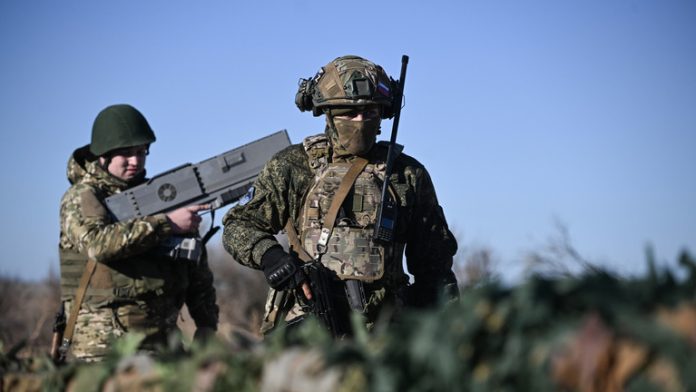
Russian Army

Reuters cited six unidentified sources last week ‌as saying U.S. intelligence reports continued to warn that Putin has not abandoned what it called his aim of capturing all Ukraine and reclaiming parts of Europe once in the former Soviet bloc.

Kremlin spokesman Dmitry Peskov told reporters ⁠Moscow did not know how ‌reliable the sources quoted by Reuters were, but that if the report was accurate then the U.S. intelligence conclusions ‍were wrong.

“This is absolutely not true,” Peskov said of the intelligence conclusions.

Putin sent tens of thousands of troops into Ukraine in February 2022, and Russian forces now control ​about a fifth of the country. Some European and Ukrainian leaders ‌have accused Putin of having ambitions beyond Ukraine.

The Russian president has never said in public that he wants to conquer the whole of Ukraine. But he has said repeatedly that Russian forces will take more of Ukraine if Kyiv does not agree to cede the remaining part of the Donbas ⁠region in eastern Ukraine that Ukrainian forces ​still control.

Moscow sees the eastward enlargement of ​the NATO military alliance, which now includes states in eastern Europe that were part of the Soviet bloc after World War ‍Two, as a ⁠threat to Russia.

Putin has said he does not seek to restore the Soviet Union or to attack a NATO member. He said this ⁠month that Russia did not want a war with Europe but that if Europe ‌started one, then Russia would be victorious.


Report: Dengue fever cases surge in southern Iran, raising public health alarm

According to official data, 255 confirmed cases have been recorded in the province since the beginning of the year, with an overwhelming concentration in the capital city, Bandar Abbas, where 248 patients have been identified.

Health officials say the surge signals a shift from isolated, imported cases to sustained local transmission of the mosquito-borne virus, which is spread by the Aedes mosquito.

Symptoms include high fever, headache, muscle and joint pain, nausea and vomiting, and in severe cases, bleeding and a dangerous drop in blood platelets. Sixty-eight patients have required hospitalization so far.

Nationwide, Iran has reported more than 1,080 dengue cases this year, most linked to local transmission rather than travel abroad.
Experts warn that Hormozgan’s hot, humid climate, combined with urban density and widespread stagnant water sources, provides ideal conditions for the mosquito to thrive.

Public health specialists stress that controlling dengue now requires large-scale environmental measures and public participation, not just border screening.

They also warn that limited public awareness and strained medical facilities risk worsening the situation if preventive action is delayed.

Iran Army Chief: Armed forces closely monitor enemy moves, will respond decisively to any aggression

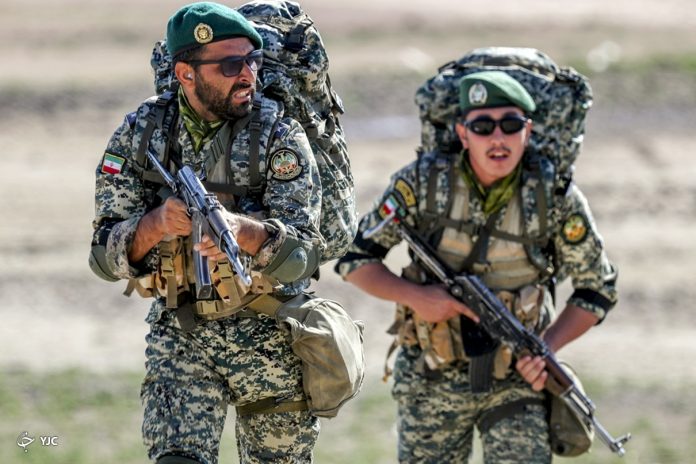
Iran Army

Major General Amir Hatami made the remarks during a visit to army units in western Iran, saying that continuous efforts are underway to enhance readiness to confront any threat, including asymmetric and irregular warfare.

Referring to the preparedness and combat capability of army units, Major General Hatami noted that their equipment and facilities have also been upgraded in line with experiences gained from the 12-day imposed war.

He added that the Army of the Islamic Republic of Iran, with firm resolve and determination, has mobilized everything necessary to confront enemies.

All army training and exercises, he said, are conducted in accordance with military principles, particularly passive defense, and are realistically designed to prepare forces for the battlefield.

The Army chief further stated that during the 12-day war, the enemy’s first advanced Heron drone entered Iranian territory from the country’s western borders and was immediately struck by air defense systems upon crossing the border, stressing that any violation will be met with the same level of decisiveness.

He added that today, too, the army’s mission is to safeguard Iran’s territorial integrity and national independence, and that all personnel are striving to fulfill this mission in the best possible manner.

Major General Hatami emphasized that the enemy must know that all are ready for martyrdom, sacrifice and selflessness, saying that while Iran’s forces will stand firm to the last drop of blood, they will not allow the slightest harm to be inflicted on the people of Iran.

IEA figures show increase in Iranian oil production

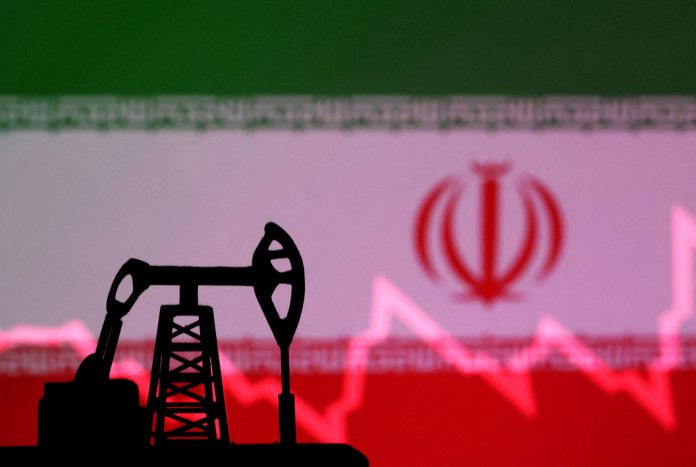
Iran Oil

IEA data cited in a Sunday report by the Fars news agency showed that Iranian oil production had reached 3.5 million barrels per day (bpd) in November.

The figure marked no change from October output but represented an increase of 110,000 bpd compared with production levels reported in December 2024.

The increase has come despite Iran remaining under a strict US sanctions regime that imposes heavy penalties on buyers of Iranian oil and on entities involved in its production and shipment.

It has also occurred five months after Iran was involved in a conflict with Israel, during which the United States carried out targeted attacks on Iranian nuclear facilities.

A series of United Nations sanctions resolutions reimposed in late September have also failed to affect Iran’s oil production and export levels.

Figures released by leading energy analytics firm Tanker Trackers in early November showed that Iran had exported an average of 2.3 million bpd of crude oil through much of October, marking a new record since US sanctions were imposed on the country in 2018.

This compares with oil exports falling to historic lows of nearly 300,000 bpd in May 2019, when Washington tightened sanctions on Iran.

Experts say Iran’s growing ability to produce and market its oil highlights the failure of US President Donald Trump’s administration and its so-called maximum pressure campaign against Iran.


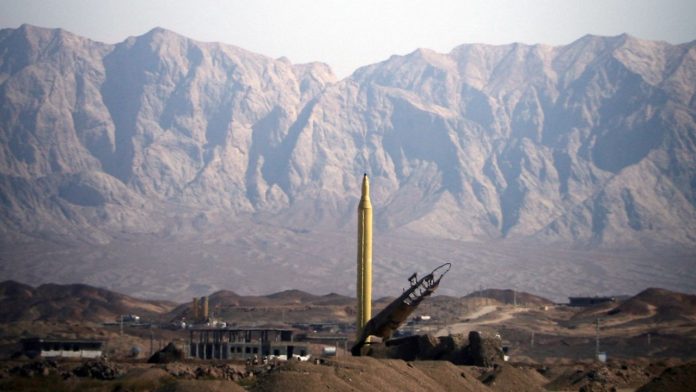
Foreign Ministry Spokesnan: Iran missile program developed for national defense, not negotiation

Iran Missile

Esmail Baqaei, spokesman for the Ministry of Foreign Affairs of the Islamic Republic of Iran, made the remarks on Monday during his weekly press briefing with the media.

He said it is a clear case of hypocrisy that Iran’s defensive program is portrayed as a threat while, at the same time, a steady flow of weapons is sent to the Zionist regime, which is carrying out killings.

Baqaei added that this represents an obvious sign of moral decay for which the United States and the regime’s supporters must be held accountable.

Baqaei said the media hype is part of a war narrative initiated by the Zionist regime and the United States.

According to the Foreign Ministry spokesman, the Islamic Republic remains focused on its path, and Iran’s armed forces are fully capable of defending the country.

He underlined that both the armed forces and the Iranian nation will continue their work with full focus and determination.

Ukraine remains ‘fully committed to achieving a just and sustainable peace’: US

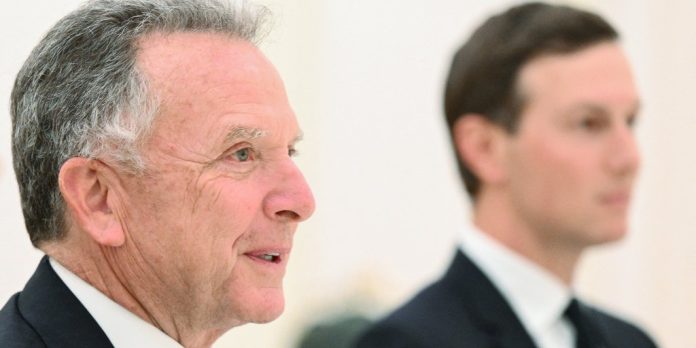
Witkoff said on the social platform X that he, along with President Donald Trump’s son-in-law, Jared Kushner, and White House senior adviser Josh Gruenbaum, held a “series of productive and constructive meetings” with a Ukrainian delegation over the last three days in Florida.

The special envoy added that “key European National Security Advisors” joined the discussions.

“Ukraine remains fully committed to achieving a just and sustainable peace,” Witkoff noted.

“Our shared priority is to stop the killing, ensure guaranteed security, and create conditions for Ukraine’s recovery, stability, and long-term prosperity.”

“Peace must be not only a cessation of hostilities, but also a dignified foundation for a stable future,” he continued.

Negotiations over a ceasefire and peace agreement have ramped up in recent weeks, as the Trump administration seeks to broker an end to the conflict that began in February 2022. The U.S. initially proposed a 28-point plan on ending the war to Ukraine last month, before the latter countered with a 20-point framework earlier this month.

Witkoff said Sunday that the 20-point plan, security guarantees for Ukraine and Europe and an economic recovery plan for Ukraine were discussed.

Ukrainian President Volodymyr Zelensky also stated on X on Sunday morning that the negotiations in Florida “were constructive” but noted that the onus is on Russia to end the war. He added earlier in the morning on X that Russia has launched roughly 1,300 attack drones, nearly 1,200 guided aerial bombs and nine missiles against his country over the past week.

“Much depends on whether Russia feels the need to end the war for real – it must not be a rhetorical or political game on Russia’s part,” the Ukrainian leader said.

“Unfortunately, the real signals coming from Russia remain only negative: assaults along the frontline, Russian war crimes in border areas, and continued strikes against our infrastructure.”

Earlier in the day, Witkoff wrote on X that talks over the prior two days in Florida between himself, Kushner, Gruenbaum and Russian envoy Kirill Dmitriev were also “productive and constructive.”

Dmitriev told reporters Sunday that talks were “proceeding constructively” and would continue into Monday.


Macron ‘betrayed’ Merz over Russia assets: FT

Earlier this week, EU leaders failed to agree on the European Commission’s controversial proposal to use Russia’s immobilized central bank funds to finance Kiev’s military and economy.

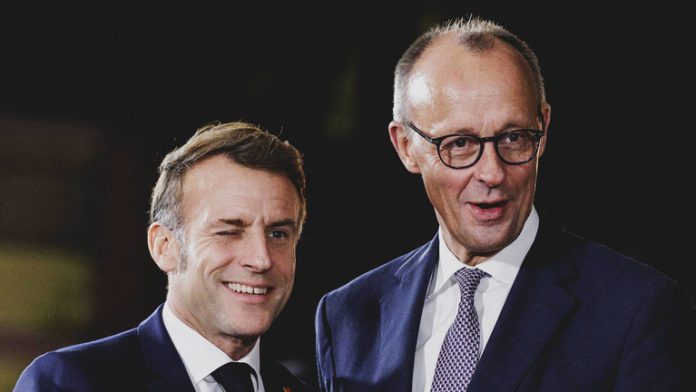
On Sunday, the FT, citing an anonymous senior EU diplomat, reported that “Macron betrayed Merz, and he knows that there will be a price to pay for that.” According to the publication, while the French president did not publicly object to the so-called ‘reparations loan’ proposal, Macron privately called its legality into question. Moreover, his team reportedly indicated that France, saddled with mounting debt, would be unlikely to issue guarantees in case the impounded assets had to be returned to Russia.

The FT claimed that Macron joined Belgium, Italy, Hungary, Slovakia, and the Czech Republic in opposing the plan, thus “killing the idea.”

EU leaders instead approved an interest-free €90 billion ($105 billion) loan to Ukraine backed by the bloc’s budget. Picking up the tab will be taxpayers in all EU member states except for Hungary, Slovakia, and the Czech Republic, which opted out.

Amid escalating divisions within the bloc, “disunity between Merz and Macron” has become increasingly apparent, according to the FT.

Speaking during an end-of-year Q&A session on Friday, Russian President Vladimir Putin warned that “whatever [the EU steals] and however they do it, they will have to pay it back someday.”

Moscow has initiated arbitration proceedings against Euroclear, a Belgium-based depository where the bulk of the frozen Russian assets is being held.

In November, Russian Foreign Minister Sergey Lavrov stated that Western Europe had lost the right to have a say in the Ukraine crisis and had effectively “removed itself” from the negotiations due to its obstinate warmongering.

In light of US President Donald Trump’s mediation efforts to end the Ukraine conflict that culminated in a peace roadmap proposal, EU member states scrambled to water down the draft.

Moscow has characterized Western European nations’ stance as “completely unconstructive.”


Gaza health ministry reports ‘alarming’ medicine shortages

Gaza War

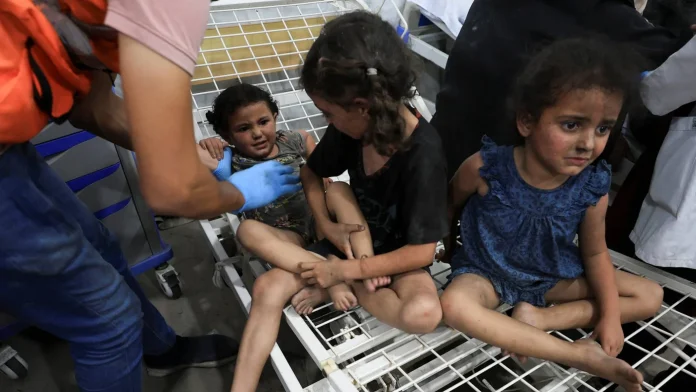
The ministry said on Sunday that the shortages were making it difficult to provide diagnostic and treatment services.

Doctors in the war-ravaged Palestinian territory have long warned that they are struggling to save lives because Israel is not allowing the most essential medical supplies in. During Israel’s genocidal war, which has spanned more than two years, nearly all of Gaza’s hospitals and healthcare facilities were attacked, with at least 125 health facilities damaged, including 34 hospitals.

“The number of items completely out of stock on the essential medicines list has reached 321, representing a 52 percent shortage,” the health ministry announced in a statement.

“The number of items completely out of stock on the medical consumables list has reached 710, representing a 71 percent shortage. The shortage rate for laboratory tests and blood bank supplies has reached 59 percent,” it added.

The most critical drug shortages are in emergency services, particularly life-saving intravenous solutions, intravenous antibiotics, and pain killers, the ministry said.

The shortage in emergency and intensive care services is potentially depriving 200,000 patients of emergency care, 100,000 patients of surgical services, and 700 patients of intensive care, it added.

The ministry cited additional shortages in kidney, oncology, open-heart surgery, and orthopedic supplies, among others.

“Given these alarming figures, and with the continued reduction by the occupation of the number of medical trucks entering Gaza to less than 30 percent of the monthly need, and with the insufficient quantity of supplies available, the Ministry of Health urgently appeals to all relevant parties to fully assume their responsibilities in implementing emergency interventions,” it noted.

Despite a United States-backed ceasefire deal that took effect on October 10, Israel continues to violate its agreement with Hamas by failing to allow in the agreed quantities of medical aid trucks, deepening what the Gaza Health Ministry has described as a critical and ongoing health emergency.

More than 70,000 Palestinians, mostly women and children, have been killed, and more than 171,000 others have been wounded in attacks in Israel’s war on Gaza since October 2023.