Wednesday, December 24, 2025
Home Blog Page 2992

Iran Says Won’t Forget Friends of Its Tough Times

Iran Vows Appropriate Response to US Interception of Mahan Air Flight

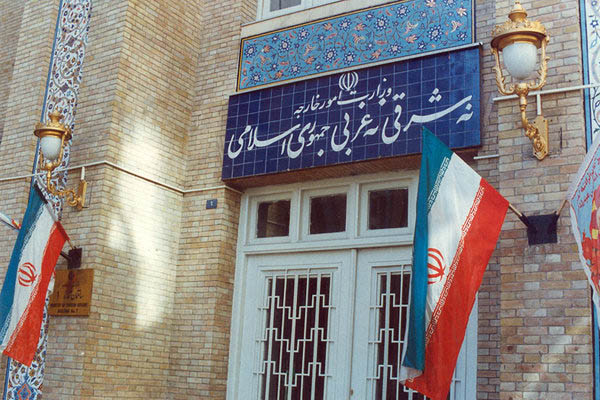
Foreign Ministry spokesman Seyyed Abbas Mousavi made the remarks in an interview with IRNA, during which he hailed the amicable ties between Tehran and Moscow.

“Iran and Russia have age-old and special ties, and despite the ups and downs that have existed in mutual relations in different eras, especially in the past two centuries and after the Islamic Revolution, we have had special relations with Russia particularly in recent years,” he said.

“There are enemies and troublemakers with regards to these relations, but we, as two neighbouring countries and two powers in the region, have no option but to stand together as we do at the moment,” he added.

“In recent years, leaders of the two countries decided to follow up on these historical relations in a special manner to make them comprehensive in such a way that they encompass all items of bilateral, regional and international cooperation,” he added.

He said Iran and Russia have common ground and good cooperation in international circles, and are working together to help ease tensions in Syria and restore stability and security to the country, “and this stability will influence the whole region.”

He said Russia has stood by Iran as much as possible despite US sanctions on Iran

“That is why Iran looks at Russia and China differently from other signatories to the Iran nuclear deal, including Britain and Germany,” said the spokesman.

New Alert System Warns Tehran Citizens 20 Seconds Before Quake

New Alert System Warns Tehran Citizens 20 Seconds Before Quake

Speaking at a press conference, director of Tehran’s Crisis Management and Prevention Organization said a total of 46 accelerometers would be installed around the capital city to give advance warning to people between 10 and 20 seconds before an earthquake.

“There are a lot of fault lines around Tehran, so that these accelerometers must be placed around the entire city,” Reza Karami noted.

He also unveiled plans for a rapid damage assessment system in the capital city involving a total of 60 accelerometers for detecting the vulnerability and providing a quick evaluation of damage in different areas.

Another crisis management project for Tehran is a network of 130 telecommunications towers, each 60 meters high, the official added, saying they would obviate the need for optical-fiber cables or any other infrastructure at the time of disaster.

Seismologists predict that Tehran could see a major earthquake within the next few decades, calling for plans to fortify structures across the city.

Iranian Embryo Born 13 Years after Being Frozen

Iranian Embryo Born 13 Years after Being Frozen

The baby named Nafas was born on Monday 12 years after the birth of her twin brother.

Dr Asadollah Kalantari, a specialist in gynecology, says there are a large number of frozen embryos in the banks.

The number has grown to over 500,000 embryos from around the country and from even abroad, he added.

According to the Young Journalists’ Club (YJC), Iranian doctors are using vitrification as the most up-to-date method of freezing embryos in the world.

Dr Nasr Esfahani, an embryologist and director of the Royan Research Institute, says “The amniotic sac is filled with low-volume antifreeze and rapidly taken to minus 190 degrees Celsius. In this method, the freezing speed is so high that the crystal does not have the chance to form. This is called vitrification.”

Many have found the baby’s birth very inspiring as it could signify the potential for even more people to become parents through this technology.

US Will Lose If Fails to Negotiate with Iran: Spokesman

Iran Says Ready for Prisoner Swap with US without Preconditions

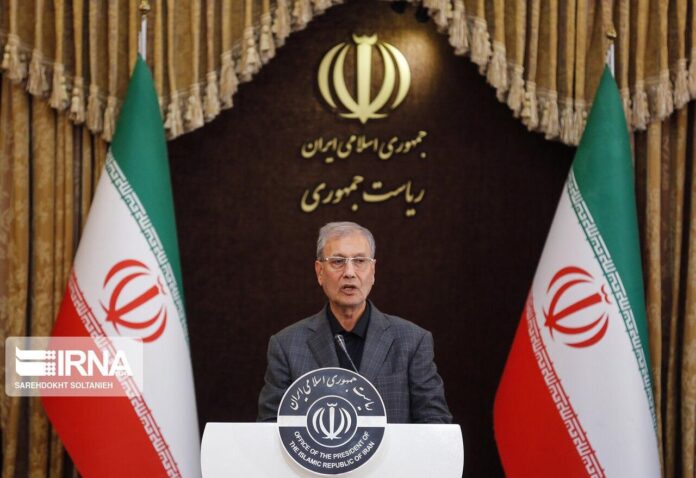
Ali Rabiei made the remarks during a press conference on Monday afternoon in Tehran.

He referred to the Iranian president’s recent visits to Malaysia and Japan, and said the significant trips highlighted the failure of the US’ bid to isolate the Islamic Republic.

He said these trips and the level of meetings and negotiations showed that active and constructive diplomacy of the country continues to remain strong and that the diplomatic and dialogue-driven processes for the development of the country and advancement of Iran will never stop.

“Rouhani’s visit to Malaysia and Japan showed that he does not recognise the sanctions as a fact in the Iranian lives and has used all domestic and foreign capabilities to remove the inhumane sanctions.”

Rabiei said the government has put the development and promotion of Iran and the national interests top on the agenda with a focus on both the capacity of domestic capital and the use of diplomatic power.

“The visits to Malaysia and Japan were also an important step towards a global consensus against the cruel and illegal US sanctions because in addition to Europeans, countries such as Japan, which are among US allies, are trying to break the US unilateral sanctions against Iran,” underlined the government spokesman.

President Hassan Rouhani’s visits to Japan and Malaysia indicated that pressures can be completely foiled through national and revolutionary diplomacy. This strategy has two factors, “national endurance and unity inside the country” and “promotion of regional peace and active diplomacy in regional and global relations,” he noted.

“As the Leader of the Islamic revolution prudently analysed, Iran’s siege will be broken when the domestic production be strengthened to such extent that the sanctions become ineffective,” reiterated Rabiei.

In reaction to a question by Al-Jazeera regarding the plans set forth during Rouhani’s visit to Japan and the French president’s initiative to mediate between Tehran and Washington, Rabiei said Emmanuel Macron’s plans in this regard have failed.

“Due to our long-standing cultural relationship with Japan and the fact that no other state in the world can tolerate the situation that the US has created for the countries of the region, some plans were proposed by Japan, and we presented our own ideas,” underlined Rabiei.

He did not elaborate on the details of these plans, but noted that some of these plans have certainly been rejected, and if there is a new idea, they will be re-examined. However, exchange of plans will be continued.

“The French initiative failed because of the inflexibility of the Americans and our initial position that sanctions should be lifted first,” Rabiei stressed.

Nevertheless, we re-examine every plan that guarantees our national interests and is within the framework of the Islamic Republic’s establishment, he concluded.

Iran Rejects Reuters’ ‘Worthless’ Report on Riot Death Toll

Iran Rejects Reuters' 'Worthless' Report on Riot Death Toll

The London-based news outlet said in a report on Monday that, “About 1,500 people were killed during less than two weeks of unrest that started on November 15, including at least 17 teenagers and about 400 women as well as some members of the security forces and police.”

Reuters claimed that the figures had been provided “by three Iranian interior ministry officials,” without further elaboration or naming any of them.

In an interview with Tasnim news agency, head of the SNSC’s Information and Communications Secretariat dismissed the Reuters’ report and said such claims were based on “false propaganda.”

“Such types of news writing and making accusations are by no means a complicated task. These claims are leveled based on a set of premeditated psychological warfare and lack credibility,” Alireza Zarifian Yeganeh said.

“The protestations that Reuters made in its report are totally worthless not only in terms of security issues and intelligence but in the field of news and media, and will damage the already-tarnished credibility of this agency,” he added.

The Iranian government raised gasoline prices last month in order to moderate the national consumption rate, which stands at 110 million liters per day, 40 million liters per day above the maximum domestic requirement.

The move prompted some peaceful protests, but riotous elements, taking advantage of the situation, quickly entered the scene, destroying public property, setting ablaze banks and gas stations among other facilities, and opening fire on people and security forces.

Shortly after the riots broke out, Leader of the Islamic Revolution Ayatollah Seyyed Ali Khamenei tasked the Supreme National Security Council with compiling a report detailing the reasons behind the riots and immediate attending of the families of the victims.

Iran’s Judiciary has said a number of those elements were tied to the notorious US-backed Mujahedin-e Khalq Organization (MKO) terror group, royalists as well as separatists — who were nabbed in the country’s border provinces — besides members of organized groups trained towards staging acts of sabotage.

Iran has arrested over 100 ringleaders and masterminds of the violent attacks.

‘Regional Multilateralism to Better Serve Peace and Security in Middle East’

Undoubtedly, the adoption of the “multilateralism” approach, in a bid to boost political-economic cooperation in the region and form a collective security system, is a major step for promoting peace and stability in the Middle East. However and in order for this approach to be more effective and adjustable with the regional changing geopolitics, the methodology of employing multilateralism should change to a “bottom to up” approach.

At present, multilateralism in the region is seen in its traditional and conventional format that is a “top to bottom” approach, and within the context of “globalization” and states’ economic-political interdependency in the form of transferring capital, commodities and technology from a global to a regional and national level. Accordingly, world’s major powers such as the United States, China, Europe and Russia, each with its own special objectives, view the settlement of the current problems in the Middle East within the context of preserving their own interests in light of global political interactions and the existing multilateralism.

Although, the US has deviated from this approach during President Donald Trump’s tenure, in my view the United States’ deep state and political-economic bureaucracy will force the US president to reverse this trend. Although Russia and China still distrust the Western-style globalization, yet they (especially China) reap the benefits of this trend in order to preserve their national interests and enhance their status in global politics. Europe, for its part, views the philosophy behind global peace in the context of preserving Western-oriented institutions and structures created after the Second World War In this respect, European governments regard “transatlantic relations” as a must to preserve the West’s hegemonic power in the global politics equation and are strongly opposed to Trump’s “inward-looking” policies.

Yet , the outcome of applying this West-oriented type of multilateralism in the Middle East has been the emergence of a new kind of “political realism”, increasing geopolitical rivalries between states in order to preserve and maximize their individual interests, leading ultimately to further tensions and instability in the region. Two vivid examples of such situation are the fate of the 2015 Iran nuclear deal, known as the Joint Comprehensive Plan of Action (JCPOA), and regional crises such those of Syria and Yemen.

The JCPOA is gradually failing, mainly due to the fact that the United States, some European countries, their conservative Arab allies, and at the top Israel, believe that the combination of superior geopolitics and advanced technology in the case of Iran will enhance the country’s extensive regional role and power. region, shifting the balance of power in favor of Iran.

The intervention of international institutions such as the United Nations or Western countries has not only failed to help settle regional crises in Syria and Yemen, but further increased their complexity. These crises have somehow abated only when regional countries involved in the crises such as Iran, Russia and Turkey took measures compatible with the local, national and regional characteristics of these crises.

In fact, the conventional Western-style multilateralism has added to the intensity of the current geopolitical rivalries in the regional crises zones, through weapons’ sailing and transferring or behind the scene political-security bargaining. Perhaps the main reason is that Western countries perceive an increase in the regional role of rival powers such as Iran, Russia and even Turkey at the expense of their own and regional allies’ interests in the Middle East. Indeed, Trump’s justification for the US withdrawal from the JCPOA was based on this very conception.

Therefore, connecting to the concept of “economic interdependency,” the basic principle of global liberal economy, together with the political constraints imposed on Iran by the West in transferring technology and providing investments, the primary goal of the supposed lifting of sanctions, did not lead to positive results in Iran’s negotiations model. Although Russian, China and Europe are opposing with the United States’ current policies, they will ultimately have to rely, at least for the time being, on global economic networks, powerful banking systems, and generally the existing Western political-economic trends for preserving their interests.

Although European governments emphasize that they have strong interests in preserving the JCPOA, they don’t have the necessary capabilities to challenge their independent financial and banking networks and institutions, which are the real owners of technology and wealth, in a faceless global economy situation, created as a result of “top to down” multilateralism. In fact, they themselves are at the rein of these powerful networks. Therefore, there is little hope that their so-called independent financial mechanism such as the Instrument in Support of Trade Exchanges (INSTEX),a mechanism for financial transfers to Iran, will be effective and help work out solutions.

Indeed, the conventional multilateralism diverge the two concepts of “technological cooperation” and “geopolitical interests” (deterrence against threats) among states in the Middle East. This situation makes it all the more necessary to move toward a “regional multilateralism,” model i.e., considering economic, political and security integration in a “bottom to up” approach. This method takes into account the current political-economic realities on the ground, adjustable with the dynamic and changing geopolitical environment in the region. In this approach, the simultaneous relations and role of international institutions become all the more important for economic, communicative and political-security integration in a bid to establish coordination at two national and regional levels, before going for an international integration. In other words, what takes priority is triangular integration and focusing on the simultaneous dynamic trends between “society”, “government” and the “region” in the first stage , and “the international community” in the second stage.

To this end, creating “political consensus” in countries’ domestic politics for convincing the public of the benefits of entering into regional cooperation to serve the national interests of their country will become significant. In other words, the path to the success of “regional multilateralism” crosses through enhancing national economic and political-security systems, the result of which would be the accumulation of economics, politics, and security at the national and regional level, that is already the focus of states’ foreign relations, due to the determination and significance of geographical and historical connectivity in creating stability and economic growth in today’s world.

Implementing this approach will result in each player employing its own share and, as a result, the necessary “coordination” for accumulation of national and regional efforts will be created for establishing peace and stability. As for international players, if they really favor regional stability and peace, the best approach for them would be to support “regional multilateralism” and prevent threats by nation-states in the region themselves. The Hormuz Peace Endeavour (HOPE) initiative put forward by Iran is based on the same principle. The initiative is “subject-oriented” and “endogenous security-oriented” and seeks “inclusive engagement,” interpretive of the necessity of using a new model of regional multilateralism.

A vivid example with regards to the ongoing tensions between Iran and Saudi Arabia is resorting to the existing conventional multilateralism. As a result of Western sanctions, which are the fallout from the activities of powerful economic-financial networks and their putting pressure on their own governments, Tehran puts the main blame on Riyadh (and Tel Aviv), as the main responsible party to provoke Trump in adopting and continuing the so-called “maximum pressure” policy, or as Iranian Foreign Minister Mohammad Javad Zarif puts it, “economic terrorism.” As a result, the dominant political-security trend in Iran logically conditions the possible easing of tensions with Saudi Arabia to seizing support for Trump’s current policy against Iran. This policy calls for the collapse of Iran’s economy, which is equivalent to the collapse of the state of Iran from Tehran’s view and considered currently as an “existential threat” to its national security.

In contrast, Saudi Arabia perceives the transfer of Western technology and capital to Iran, as a result of full implementation of the JCPOA amounts to a national security threat, as the move will tip the balance of power in favor of Iran in the region.

Saudi Arabia knows well that a combination of technology and superior geopolitics, territorial size, population, economic potentials and extensive human assets in Iran, will tip the balance of power in the region in favor of Iran, and hence, it wants to prevent it by all the means available. Indeed, concentration on the Western-style “globalization” has had no result for the two countries other than increased tension. Indisputably, Iran and Saudi Arabia will ultimately reach agreement, mainly due to their “neighborhood geographical determination” and “common concern” from the spread of instability in the region. Yet, the real solution to reach such a settlement, requires changing the current methodology and focusing on a regional multilateralism.

* Kayhan Barzegar made the remarks in an address to the China Foreign Ministry’s Middle East Security Forum held in Beijing on November 27-28, 2019.

Charity Worker Helps Wishes of 453 Cancer Kids Come True

Charity Worker Helps Wishes of 453 Cancer Kids Come True

Hoda Rashidi is a 37-year-old woman from the city of Ahvaz in the south of Iran. She has so far managed to help the dreams of 453 cancer kids come true!

Hoda started her charity work in 2001. “I was 19 when I started a charity to take care of orphans. At that institute, I became the painting instructor of children and a new horizon opened for me,” she said.

“It was hard for me to get in touch with the kids at the beginning. These kids hate being pitied. I remember that on the seventh session of work at that charity they brought a boy from Abadan. Her parents had been killed in the accident and there was no one to take care of him. The boy was crying a lot, and when he entered the classroom, everyone was impressed. While crying, he put his head on my lap and fell asleep.”

“Suddenly, two of the kids in the class, who by chance had a good relationship with me, came up and punched me and said in panic that ‘you are not our mother’ [they were mad at me for showing kindness to that child]. It was one of the hardest days of my life,” ISNA quoted her as saying.

This seemingly bitter event became a turning point in Hoda’s life.

“From that day on, I decided to be strong and change the way I interact with kids. I told the kids you have no difference with other children. I told them you only live in a multipurpose institution, and that doesn’t mean you are weaker than kids out,” she noted.

The days of teaching at the institute continued with new experiences.

“I had a charity drawing class for seniors in 2011, and after a few sessions I realised that these people only use black and brown in their paintings. After talking to the centre’s manager, I realized they had not been out for a long time. I decided to do something for these people. In collaboration with a band that was not officially registered anywhere, we organised two festivals: “Walking Festival for Over 50 People” and “Ahvazi Grandparents”. Because of not having a license, we faced some problems, but I finally could get a charity (cultural and artistic) institute license.”

We wanted to have an institution where we could create hope for people, she underlined, adding that “Once, on World Wind Day, we held a wonderful program at one of the city’s squares. At the suggestion of a friend, we wanted to create a wind park in the city (Ahvaz Shafa Hospital) and needed money that was raised with the help of charity workers. However, we found that creating a wind park is forbidden. So we created a hospital playroom to work on treating children with cancer.”

“One day, I went to the hospital and saw a cardboard tree mounted on the wall and small pieces of paper hanging from the tree. I saw that some wishes had been written and painted on the papers. The room had one official who I called “Aunt of Wishes” the same day. I asked her what is going on, and she told me the kids were just painting their dreams. I was saddened by this answer and objected that they are creating hopes for kids out of nothing,” she continued.

This was the beginning of a new horizon for Hoda Rashidi.

Charity Worker Helps Wishes of 453 Cancer Kids Come True
Maryam, a three-year-old kid diagnosed with cancer, wished to have a balloon party
Kid Who Wants to Become Police Officer

Bashir was the first cancer kid who Hoda decided to help his wish come true.

“I decided to do it myself. The first dream I came across was the dream of a 6-year-old boy named Bashir who he had only one week to live. He wished to be a police officer to see his city clean and beautiful. We put on uniforms and cleaned a large street in the centre of city with the help of salespersons and brought Bashir with the latest model car and spread a red carpet. When Bashir got out of the car, he saw his city clean, while at the same time two thousand people cheered and shouted, “We love you Bashir!” I have to tell you that Bashir, who had only a week to live, is 18 years old now. He has defeated cancer and is in love.”

Charity Worker Helps Wishes of 453 Cancer Kids Come TruePink Bridal Dress

Hoda says she has helped the wishes of 453 cancer kids come true.

“Parand was an 8-year-old girl born in Andimeshk who is now hospitalised in Ahwaz. She wished that one day she would wear a pink bridal dress. We fulfilled her wish a few days ago. She was a cute girl and was constantly texting the hospital’s psychologist as to what kind of nail polish or crown she likes for her event,” said Hoda.
However, there are also wishes that Hoda Rashidi could never help come true because time was up and the kid died.
All in all, Hoda Rashidi is pleased with the choice she has made for her life so far. “I feel well talking to you now and I’m the luckiest person on earth,” she concluded.

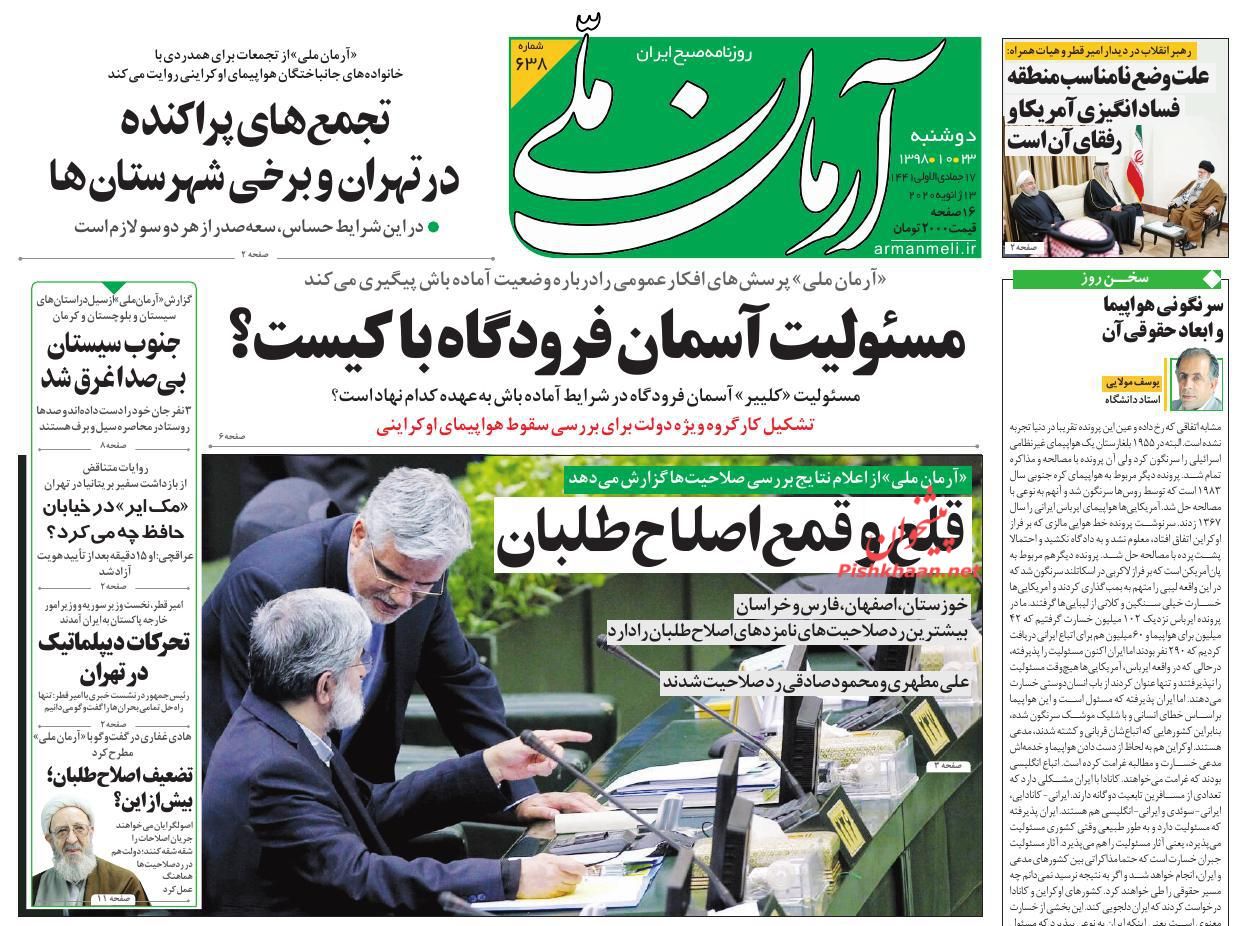
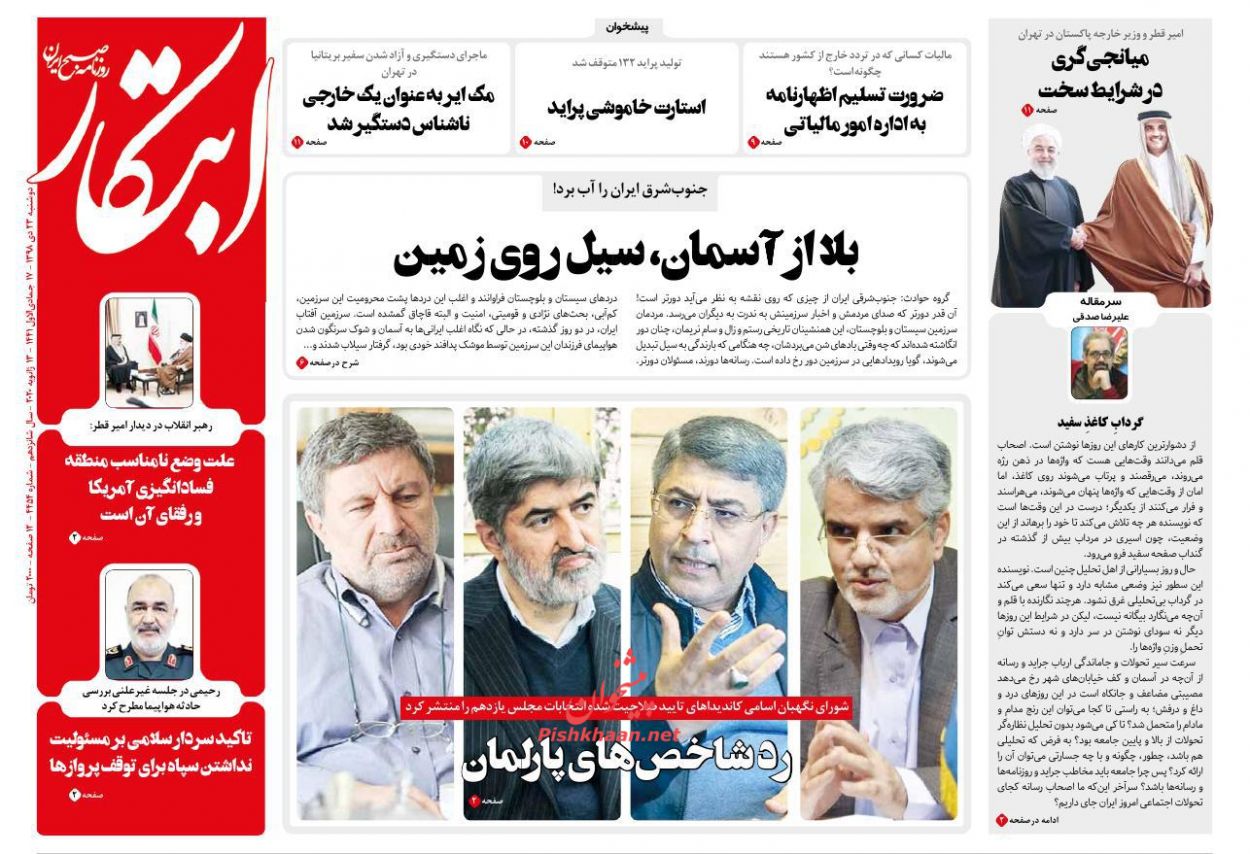
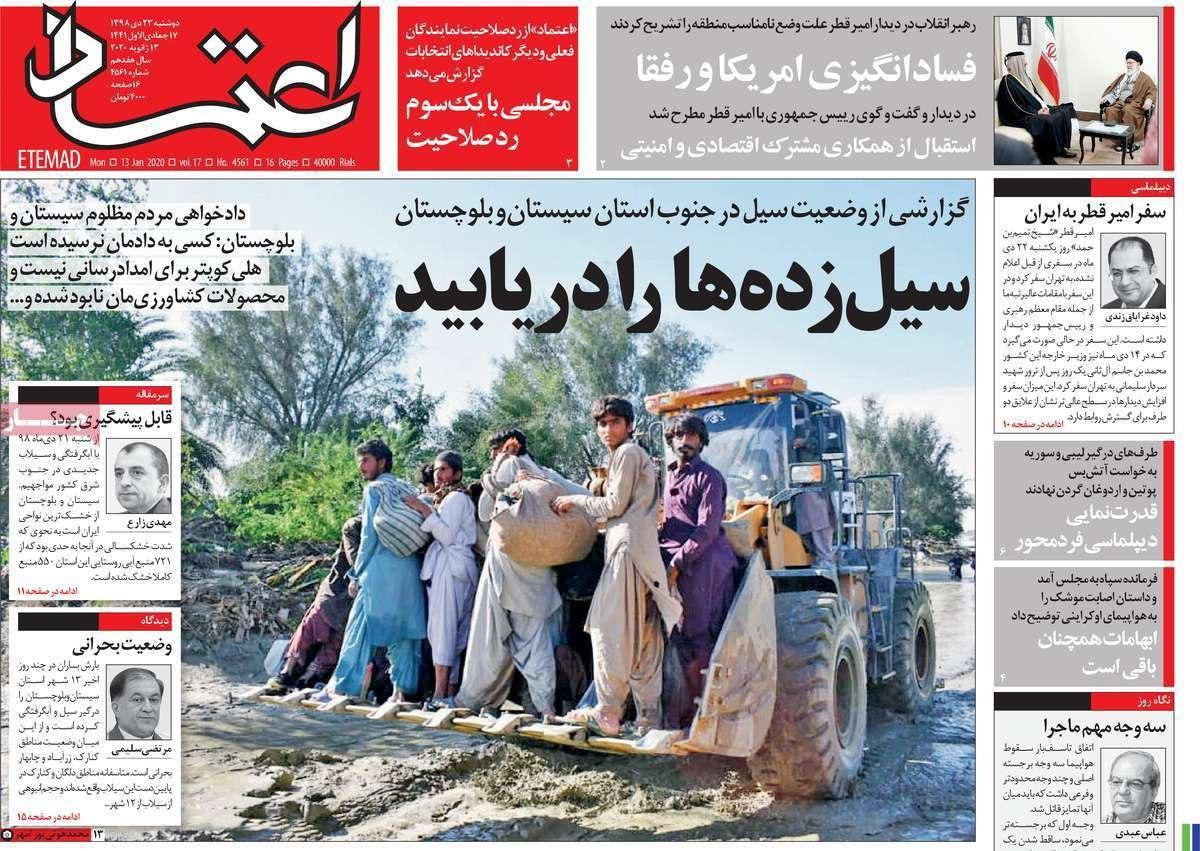
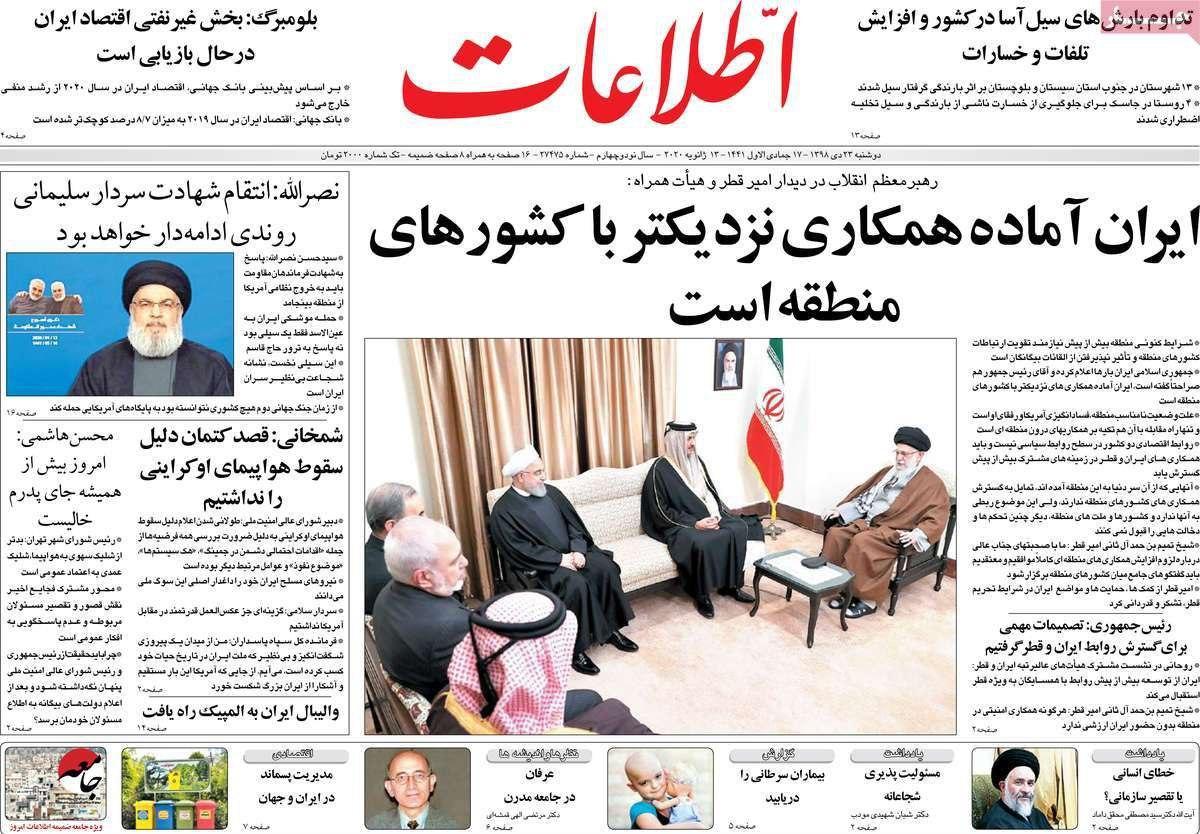
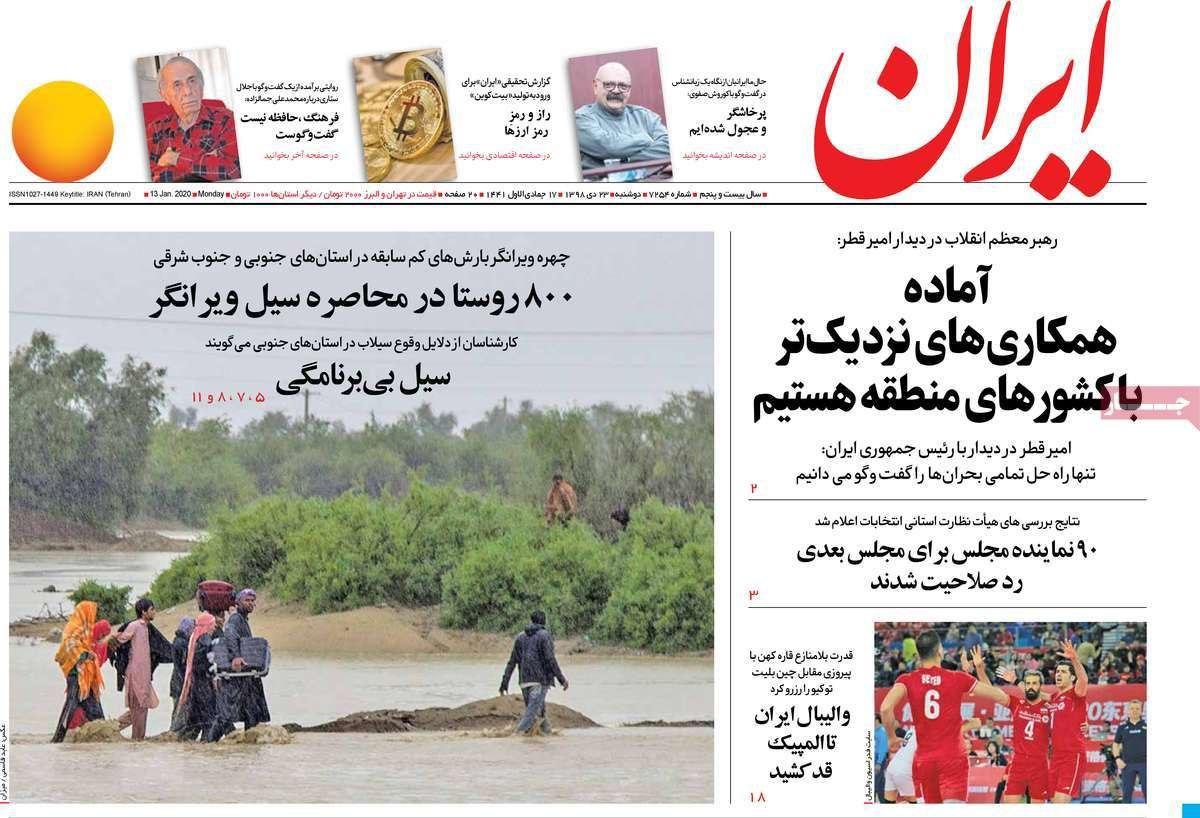
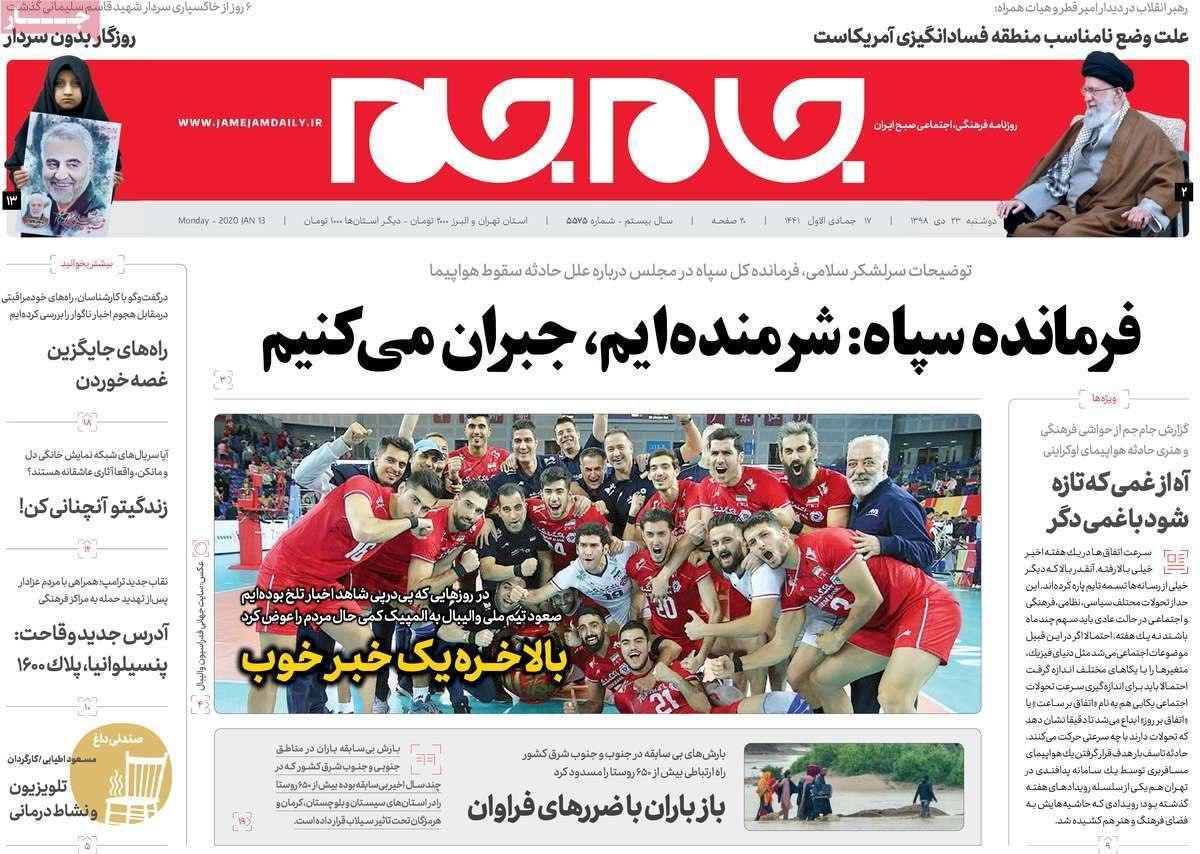
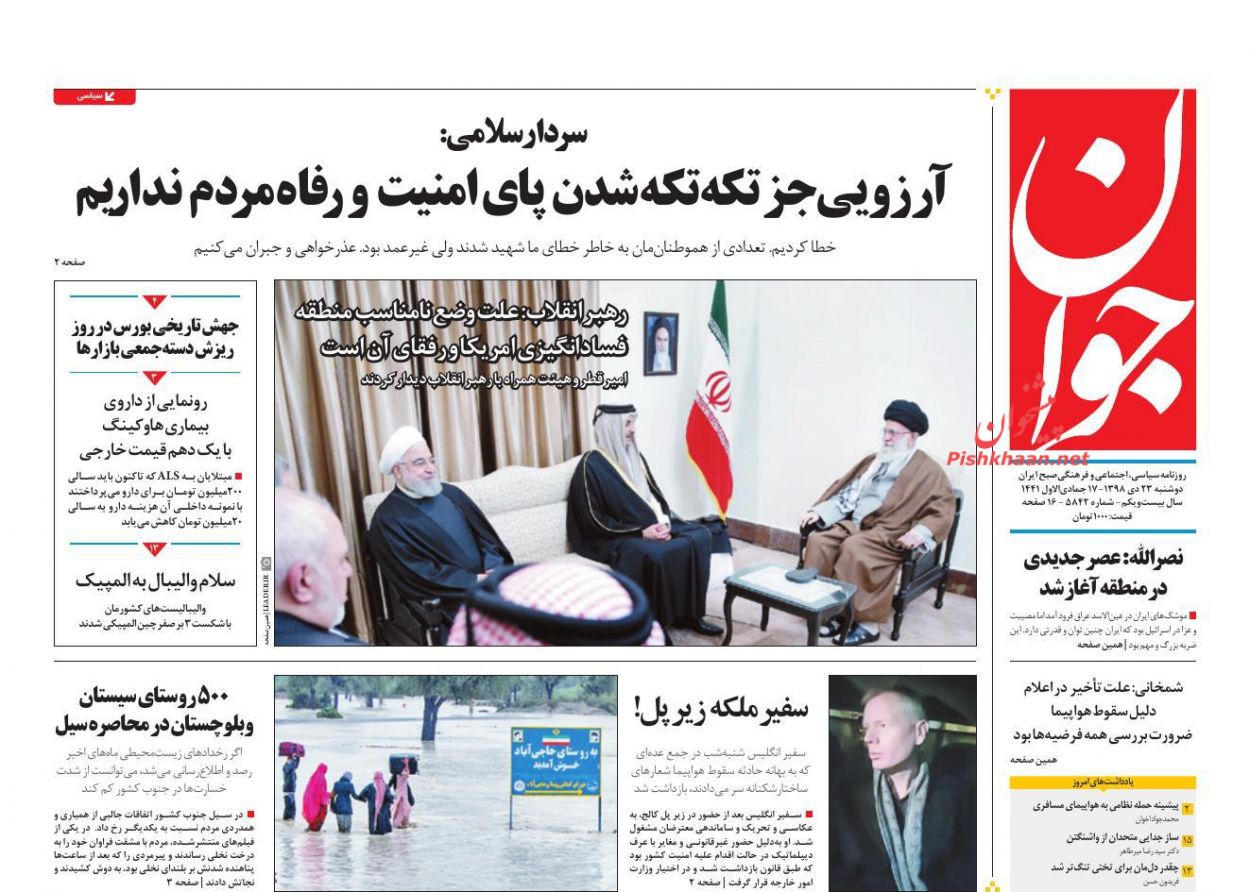
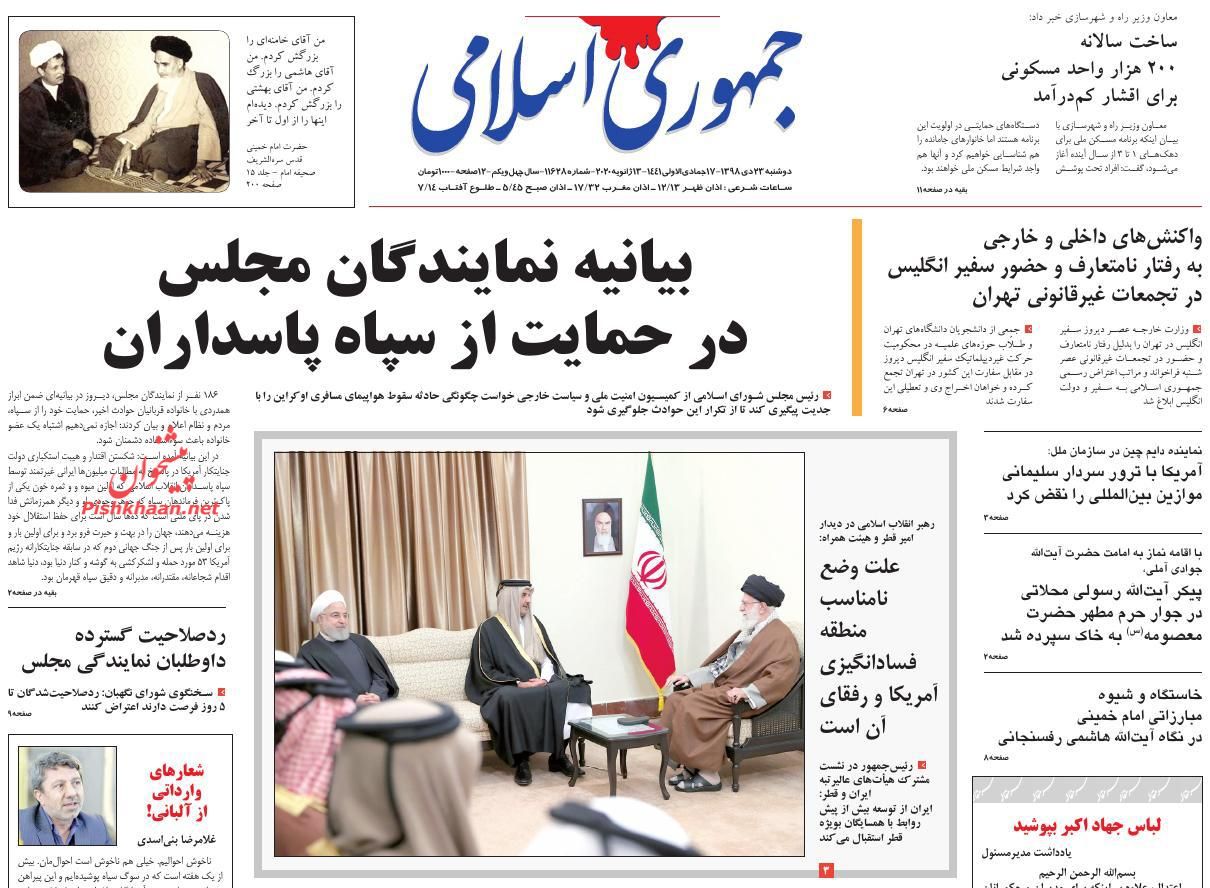
A Look at Iranian Newspaper Front Pages on December 23

Newspaper Headlines

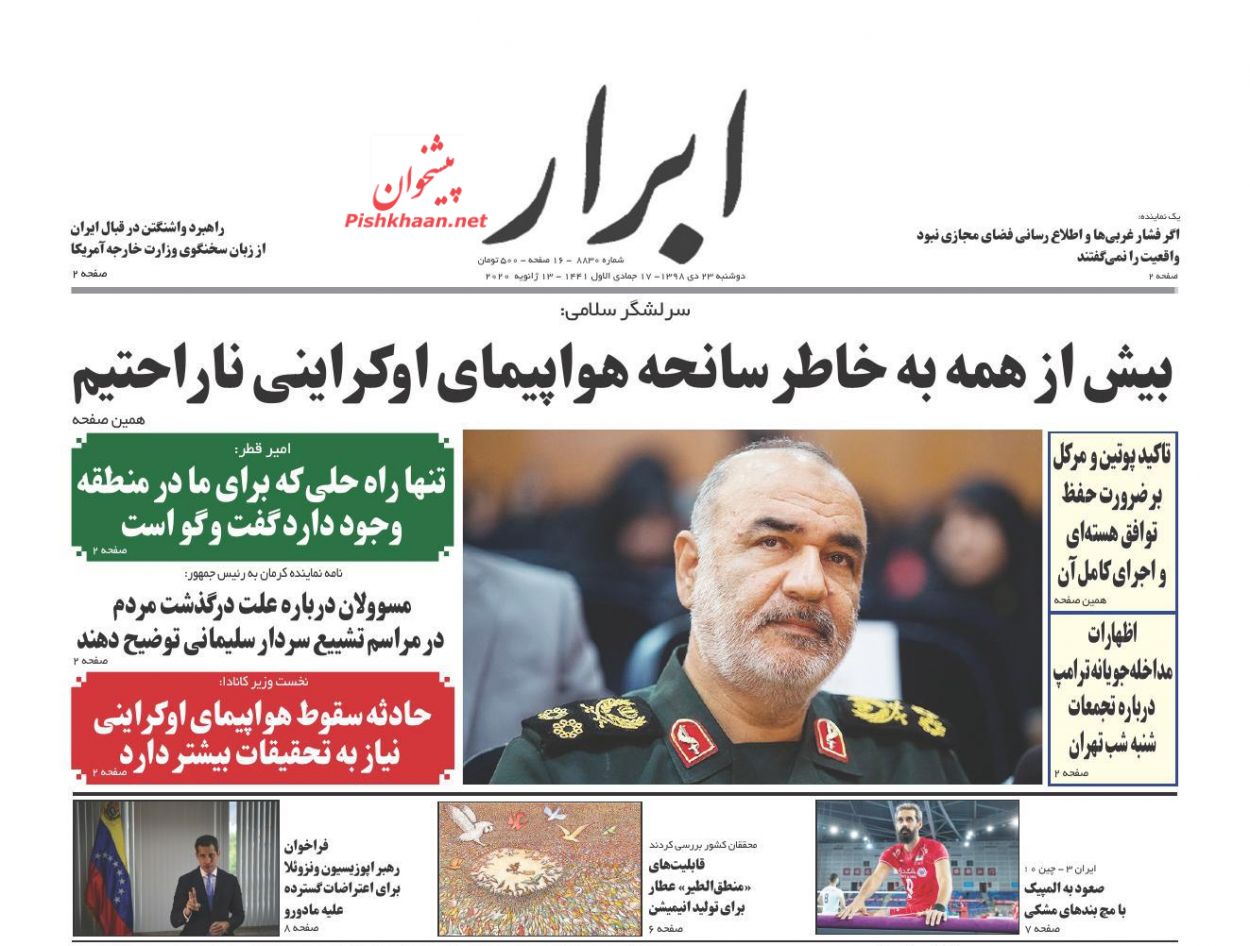
Abrar:

1- Larijani: Sanctions Made Iran’s Industry More Active

A Look at Iranian Newspaper Front Pages on December 23


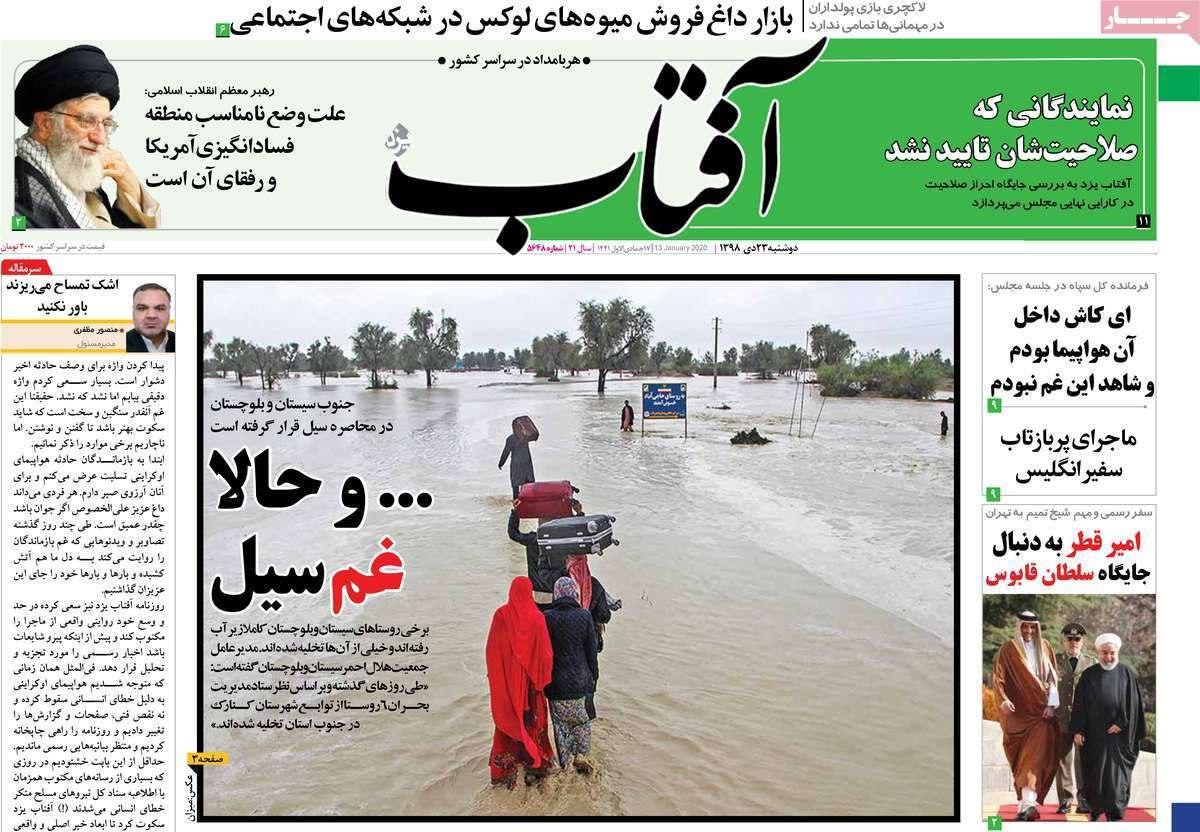
Aftab-e Yazd:

1- FATF Bills Will Finally Be Ratified: MP Predicts

A Look at Iranian Newspaper Front Pages on December 23


Ebtekar:

1- Vicious Cycle of Clashes between Ghani, Abdullah

2- Trump: Crazy Pelosi Had No Choice But to Impeach Me!

3- Prosecutor General: Nov. Riots Limited in Eight Provinces

A Look at Iranian Newspaper Front Pages on December 23


Etemad:

1- Afghanistan Once Again in Limbo

2- Complicated Situation of Afghanistan [Editorial]

A Look at Iranian Newspaper Front Pages on December 23


Javan:

1- Abe Gives Trump 75-Minute Report on His 60-Minute Meeting with Rouhani!

2- Abe-Trump Long Conversations Shows Trump Worried about Iran’s Exit from JCPOA

A Look at Iranian Newspaper Front Pages on December 23


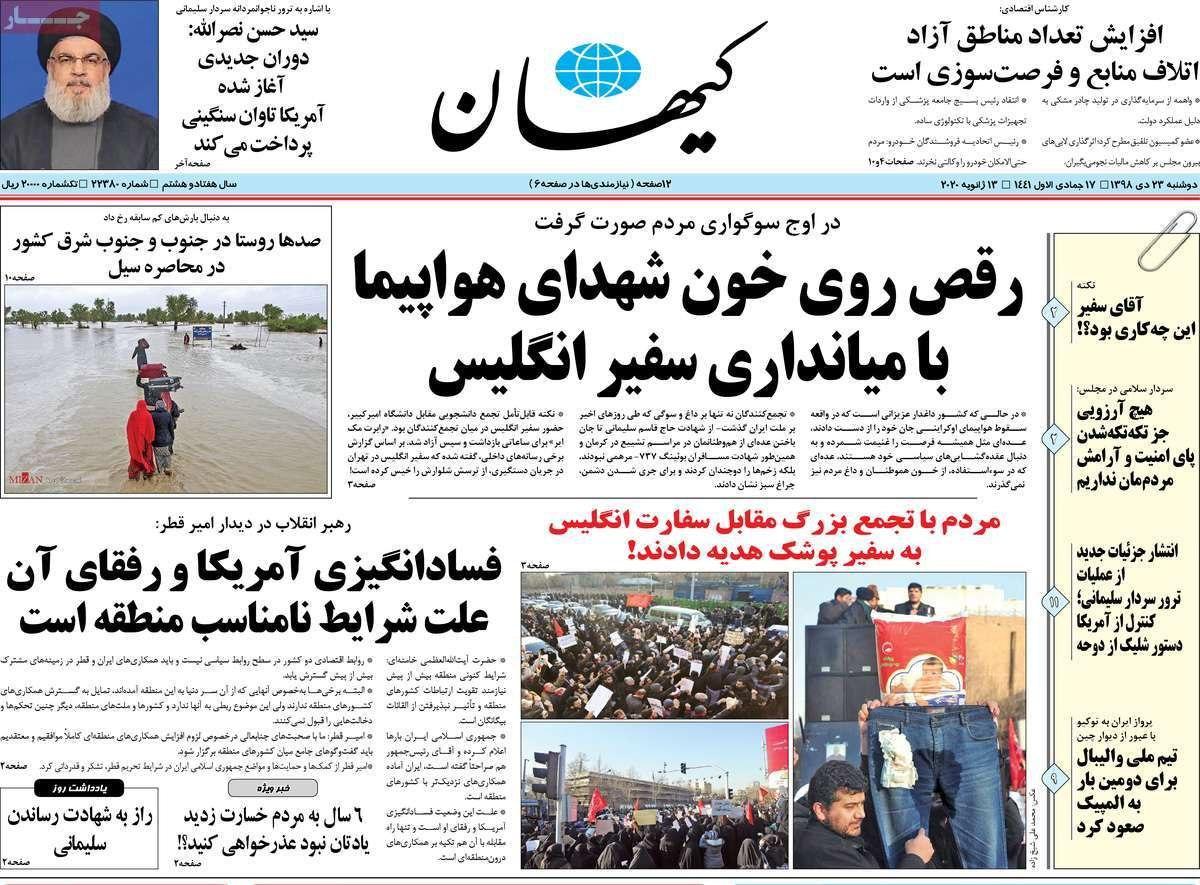
Kayhan:

1- Efficient Parliament Needed to Realize People’s Demands from Gov’t

2- Souvenir of Japan Trump: A Mirage Not Taken So Seriously Even by Optimists

3- Number of Homeless People in California Breaks Records

* Housing Secretary: Situation Is Critical

A Look at Iranian Newspaper Front Pages on December 23


Mardom Salari:

1- Europe Escaping Forward Using Trick of Trigger Mechanism

A Look at Iranian Newspaper Front Pages on December 23


Setareh Sobh:

1- Controversy over Results of Afghan Elections

2- What’s Logic of FATF Opponents?

A Look at Iranian Newspaper Front Pages on December 23


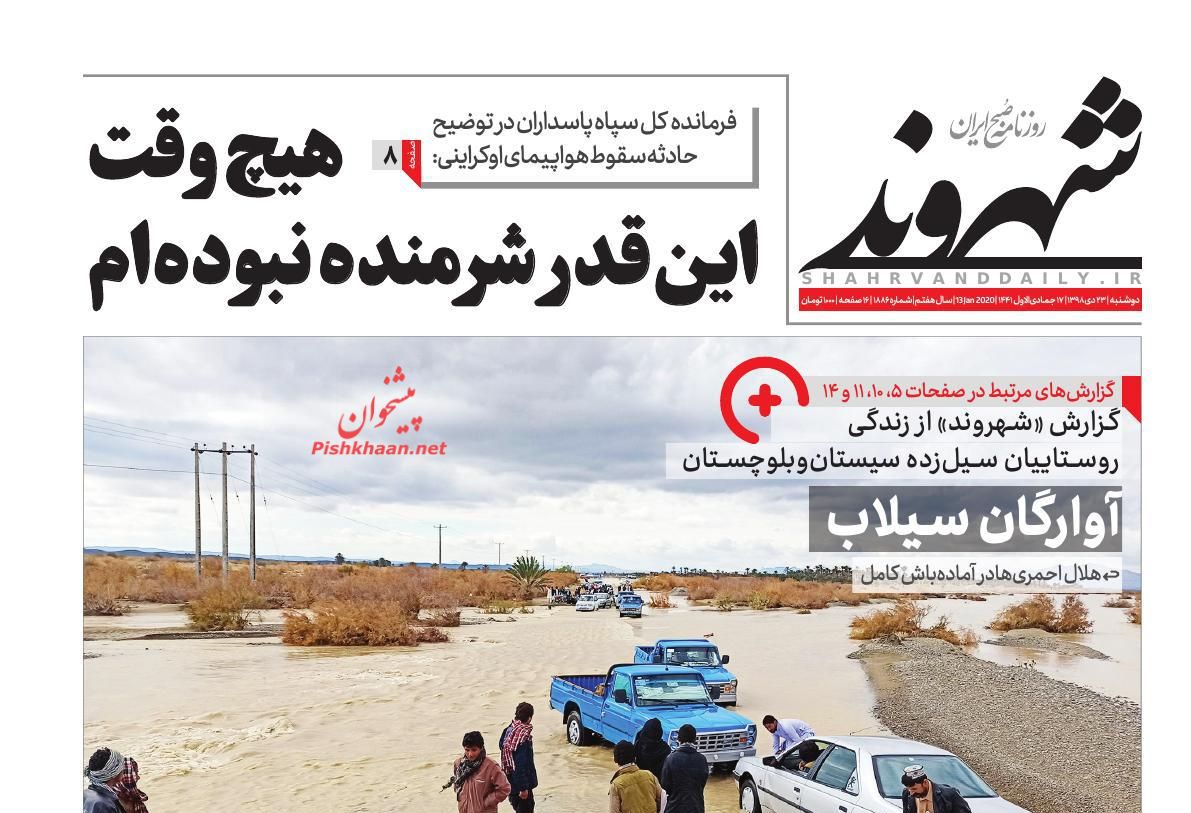
Shahrvand:

1- Police Arrests 220 Junkies in Northwest of Tehran

A Look at Iranian Newspaper Front Pages on December 23


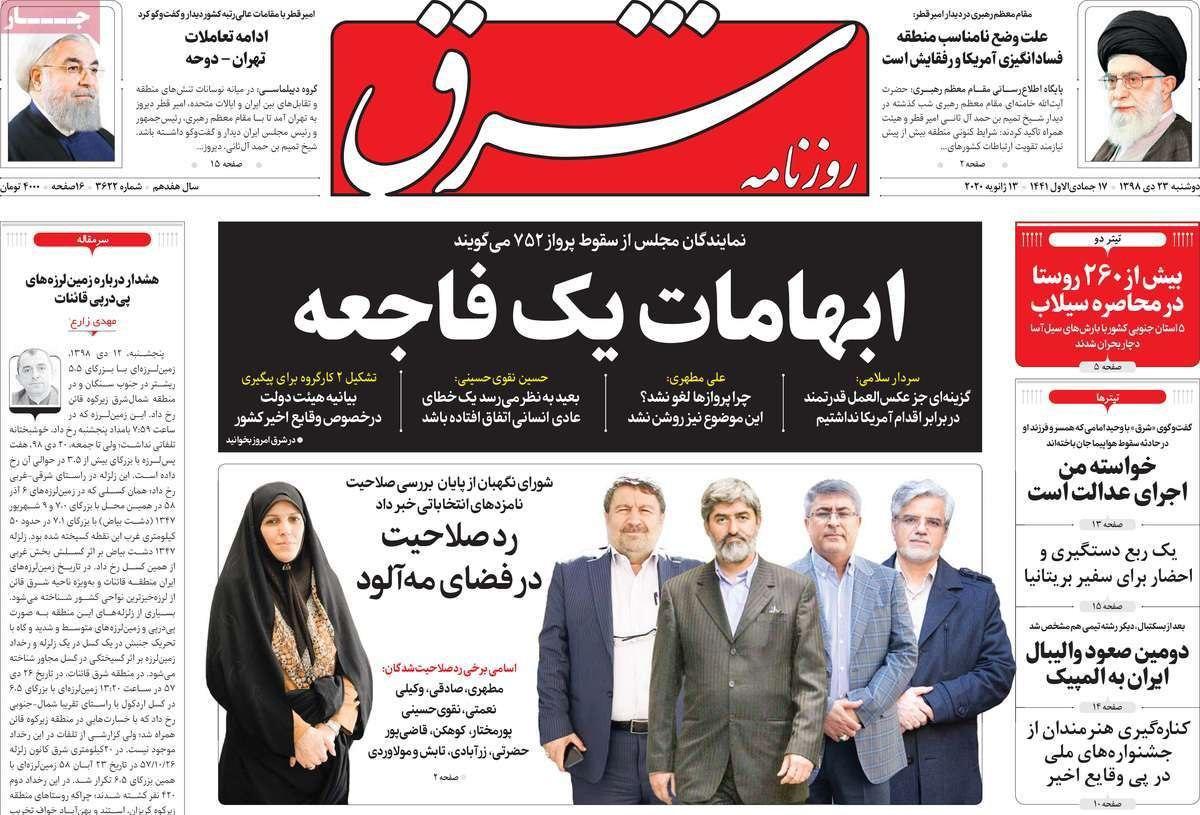
Shargh:

1- Abe, Trump Hold Phone Talks after Rouhani’s Visit

2- Araqchi: There Are Obstacles to Improvement of Iran-Japan Ties

A Look at Iranian Newspaper Front Pages on December 23

Iran Exporting Lab Equipment to Europe, Asia, South America

With the help of the Export Development & Technology Exchange Corridor of the Iranian Vice Presidency of Science and Technology, at least 20 companies participating in the Iran-Made Exhibition of Equipment and Materials have managed to export their medical and laboratory equipment products.

“As the Vice Presidency’s Export branch, we provide knowledge-based and technology-based companies with the services to increase their exports,” said Masoud Hafezi, an International Business Development official at the Vice Presidency.

“At least 20 companies in the field of laboratory equipment and materials have managed to export their products to different countries in the past two years with the assistance of the Vice Presidency for Science and Technology. China, South Korea, Ecuador, Malaysia, Cuba and European countries were among the export destinations that Iranian-based products were sent to,” added Hafezi.

Referring to various services offered, he said, “To help knowledge-based companies to export their products, showrooms are set up for export purposes so that visitors can get acquainted with the quality of Iranian goods.”

Business meetings with foreign clients is another service that these companies enjoy with the assistance of the Vice Presidency for Science and Technology and the agencies affiliated with it.

Technological companies interested in receiving services from the Vice Presidency are first evaluated to measure their export performance, he noted.