Sunday, April 19, 2026
Home Blog Page 293

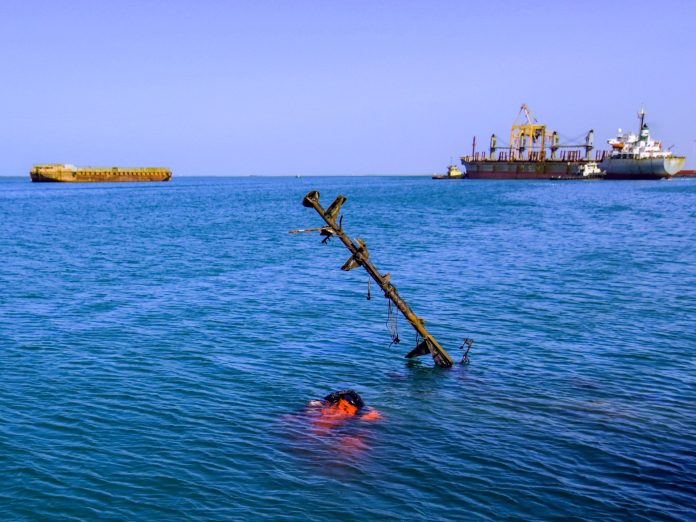
Crew abandons cargo ship in Red Sea after aerial strike

The attack, which took place some 94km (51 nautical miles) southwest of the Yemeni port of Hodeidah on Sunday, was the first such incident in the vital shipping corridor since April.

The United Kingdom Maritime Trade Operations (UKMTO) said the bulk carrier Magic Seas was first “engaged by multiple small vessels” that “opened fire with small arms and self-propelled grenades”.

The attack set the ship ablaze and caused it to take on water, it added.

All of the crew abandoned the ship and were rescued by a passing merchant vessel, UKMTO said, adding that “all crew are well and safe”.

No group has claimed responsibility for the attack yet.

Ambrey, a private British maritime security firm, said in a separate advisory that the ship was attacked by four unmanned surface vehicles [USVs].

“Two of the USVs impacted the port side of the vessel, damaging the vessel’s cargo,” Ambrey added.

While no one has claimed responsibility, Ambrey noted the attack matched the “established Houthi target profile“.

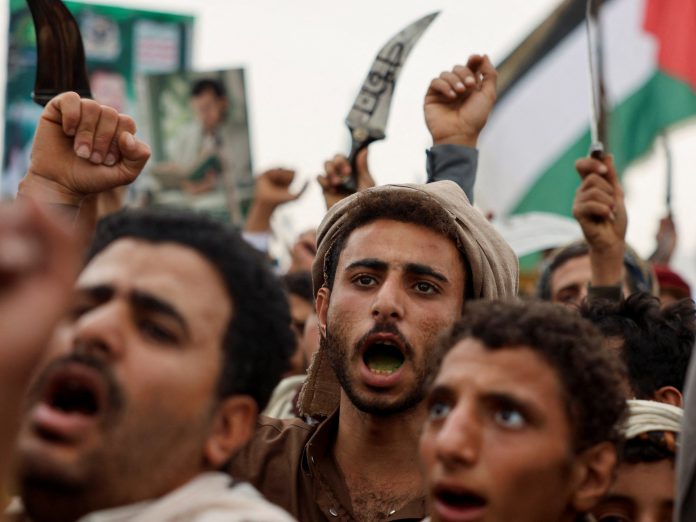
The Houthis, who control most of Yemen, began targeting vessels in the Red Sea shortly after Israel’s war on Gaza began in October 2023, in a campaign the rebel group stressed was in defence of the Palestinians living in the besieged enclave.

Between November 2023 and January 2025, the Houthis launched more than 100 attacks targeting commercial vessels, disrupting global shipping and forcing firms to reroute. During that period, the group also sunk two ships, seized another and killed at least four seafarers.

The Houthis paused the attacks in January, following the brief ceasefire between Israel and Hamas in Gaza, but hostilities escalated again in mid-March when the United States launched a broad assault against the group.

The two sides agreed on a ceasefire in May, and the Houthis have not attacked a vessel since then, though they have continued occasional missile attacks targeting Israel.

Shipping through the Red Sea, while still lower than normal, has meanwhile started to increase.

But the latest attack on Sunday could escalate tensions as it could again draw US and Western forces to the area. It also comes at a sensitive moment in the Middle East as a possible ceasefire in the war on Gaza hangs in the balance, and Iran weighs whether to restart negotiations over its nuclear programme following US air strikes targeting its most sensitive atomic sites.
US threatens additional tariffs on nations ‘aligning’ with ‘anti-American’ BRICS

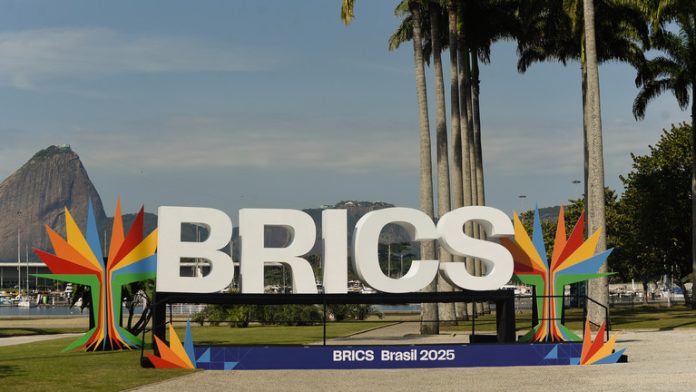
“Any Country aligning themselves with the Anti-American policies of BRICS, will be charged an ADDITIONAL 10% Tariff. There will be no exceptions to this policy. Thank you for your attention to this matter!” Trump wrote in a Truth Social post Sunday evening.

The threat comes after members of the BRICS group issued a declaration on Sunday condemning the U.S. increase in tariffs, as well as the strikes on Iran — all without mentioning Trump by name.

The group’s statement raised “serious concerns” tariffs, saying they are “inconsistent with WTO (World Trade Organization) rules” and threaten to “reduce global trade, disrupt global supply chains, and introduce uncertainty.”

The group also criticized NATO’s decision to increase defense spending to 5 percent of GDP by 2035 — a decision prompted by Trump’s insistence that Europe shoulder more of the alliance’s defense burden.

BRICS was founded by Brazil, Russia, India, China and South Africa, but the group last year expanded to include Indonesia, Iran, Egypt, Ethiopia and the United Arab Emirates.

Brazil, which is hosting this year’s two-day summit, has sought to avoid more controversial issues to avoid becoming the target of higher taxes. Trump has threatened to impose 100 percent tariffs against the bloc if they take any moves to undermine the dollar.

Trump’s 90-day pause on his sweeping reciprocal tariffs is set to expire on July 9. Treasury Secretary Scott Bessent has said the higher tariff rates will be imposed on Aug. 1 if countries do not strike trade deals with U.S. sooner.

Iranian political activists: Internet filtering pure harm, security threat

Mobile Internet Iran

Abbas Abdi, Fayyaz Zahed, and Mohammad Mohajeri wrote in the article that since this is an economic crime — and even a threat to national security — its proponents don’t admit it and instead invoke imaginary espionage threats as a pretext.

The article stated that some official estimates indicate the annual turnover from VPN sales is around 20 trillion tomans (approximately $400 million). According to recent studies, unblocking WhatsApp led to an 8–12% drop in VPN use, which caused about 2 trillion tomans in losses for VPN sellers — who are now lobbying to have WhatsApp blocked again.

Responding to the claim by filtering advocates that social networks are espionage tools, the authors added: “Let’s assume that’s true. What exactly does filtering solve? A real spy will buy the best and most expensive VPN and continue their work regardless.”

The article went on to say that filtering has blocked Iranians’ access to many global websites and has essentially contaminated Iran’s internet. Worst of all, it argued, VPNs themselves can become channels for espionage, since many of the major VPNs are made by or under the influence of Israel and Western countries.

The three experts concluded their article by proposing that President Pezeshkian appoint an independent, trusted, and well-known panel of experts to study and report on filtering — and then fully implement their findings.

Iran FM: US, Europe support and impunity emboldening Israel

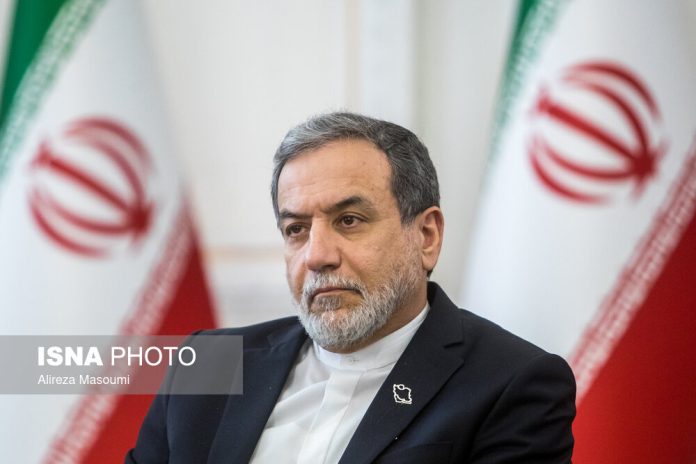
Abbas Araghchi

Seyed Abbas Araghchi made the remarks in a meeting with his Brazilian counterpart Mauro Vieira, on the sidelines of the 17th BRICS Summit in Rio de Janeiro, Brazil.

Araghchi underscored the legal and moral responsibility of all governments to halt the Zionist regime’s crimes against Palestinians and its aggression against the people of the region.

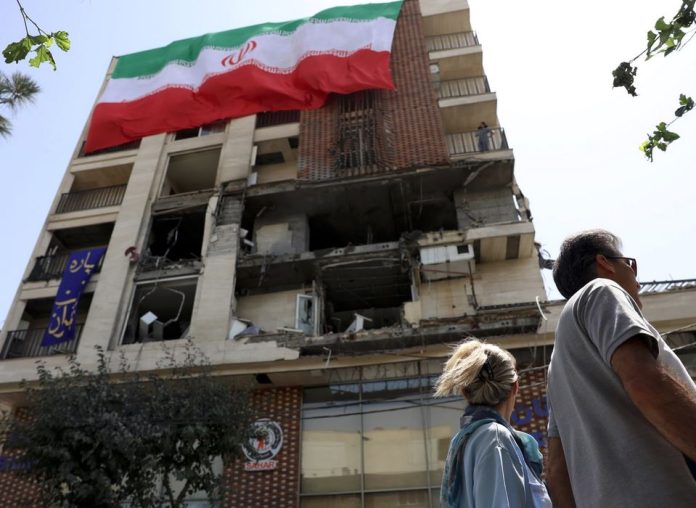
Referring to the military aggression of the Zionist regime and the US against Iran, Araghchi appreciated Brazil’s firm and principled stance on the issue and its condemnation of such acts of aggression.

He stressed that the unlawful attacks by the US and the Zionist regime constituted not only a blatant violation of the UN Charter but also an unprecedented assault on the NPT and the foundations of diplomacy which have serious implications for regional peace and security.

Araghchi also described the role of BRICS in strengthening multilateralism and the rule of law at the international level as highly significant.

The Brazilian foreign minister reaffirmed his country’s firm position on the need to condemn military aggression against the territorial integrity and sovereignty of Iran, particularly its peaceful nuclear facilities, and underlined the responsibility of the UN Security Council to uphold international peace and security.

The Iranian and Brazilian foreign ministers also agreed that the growing economic and trade ties between the two countries are satisfactory and also agreed on holding a joint economic commission in the near future.

Brazil, Russia, India, China, South Africa, Egypt, Ethiopia, Iran, Saudi Arabia and the United Arab Emirates (UAE) are BRICS member states

Intl. law expert: Reimposing UN sanctions against Iran absurd

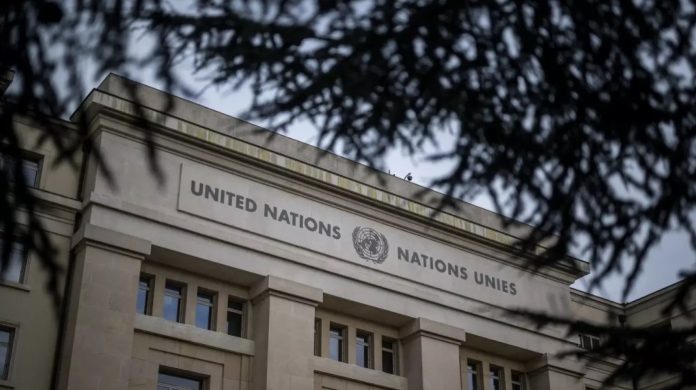
United Nations

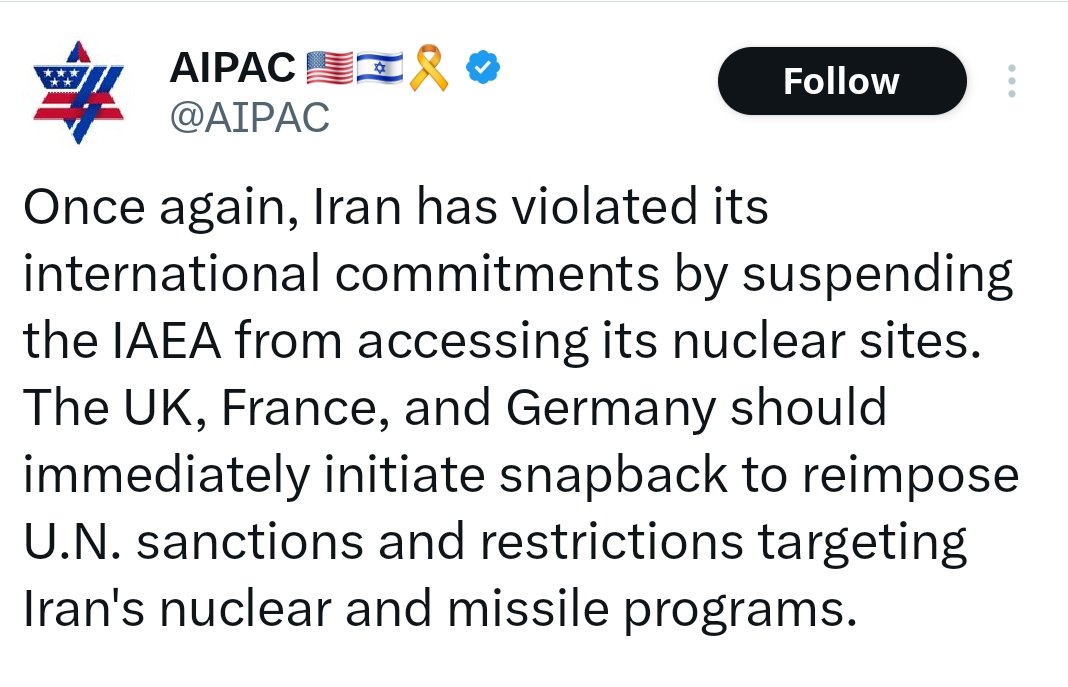
In his account on X social media, Nasri wrote: “Initiate snapback to reimpose UN sanctions?”

He added, “But by @realDonaldTrump’s own account, the physical destruction of Iran’s nuclear facilities has eliminated the very sites those Security Council resolutions were meant to constrain.” He was referring to the recent US assaults on Iran’s nuclear facilities.

Nasri said, the IAEA has confirmed that the strikes disrupted Iran’s enrichment capabilities, making compliance monitoring nearly impossible.

He went on to ask, “Isn’t it absurd to reimpose sanctions targeting activities that the aggressors themselves have already “obliterated”?”

Nasri pointed out, “If we were to believe Donald Trump, the object and subject matter of the resolutions no longer exist. Any attempt to resurrect their terms is a blatant and cynical abuse of international law.”

In a reference to the European trio’s threats to initiate the so-called snapback mechanism against Iran, Nasri pointed out: “Are European governments truly prepared to sacrifice what little remains of their credibility – and further antagonize Iran while deepening the crisis – by endorsing yet another illegal act orchestrated by Israel?”

Intl. law expert: Reimposing UN sanctions against Iran absurd

Israel bombs Yemen, Houthis fire more missiles

The Israeli military announced on Sunday that it struck the ports of Hodeidah, Ras-Isa and as-Salif on the Red Sea coast as well as the Ras Kathib power plant.

The regime added it also struck a radar system on the Galaxy Leader ship, which was seized by the Houthis and remains docked in the port of Hodeidah.

There were no immediate reports of casualties.

The Israeli attacks late on Sunday were the first on Yemen in almost a month and came after the military claimed that it intercepted a missile fired by the Houthis in the early hours of the day.

The rebel group, which controls Yemen’s most populous areas, responded to the latest Israeli attacks by launching more missiles at Israel in the early hours of Monday.

The Israeli military said two missiles were fired from Yemen, and that it attempted to intercept the projectiles. The attack set off sirens in the cities of Jerusalem, Hebron and near the Dead Sea.

Israel’s emergency service noted there have been no reports of injuries or impact from the projectiles.

The Houthis say their attacks on Israel are in solidarity with Palestinians in Gaza who are under Israeli attack. The group has fired hundreds of missiles at Israel and launched more than 100 attacks on commercial vessels in the vital Red Sea corridor, since Israel’s war on Gaza began in 2023.

The Houthis paused their attacks after a ceasefire between Hamas and Israel in January, but resumed them after the United States launched attacks on Yemen on March 15, killing nearly 300 people in the weeks that followed.

The latest escalation comes at a sensitive moment in the Middle East as a possible ceasefire in Israel’s war on Gaza hangs in the balance.

In Yemen on Sunday night, the Houthi-affiliated news outlet Al Masirah TV reported that raids hit the port city of Hodeidah, while the Saba news agency confirmed the attacks on the three ports as well as the power station.

A spokesman for the Houthis, Ameen Hayyan Yemeni stated the group’s air defences forced “a large portion” of Israel’s warplanes to retreat.

Locally-manufactured surface-to-air missiles were used to respond, “causing great confusion among enemy pilots and operations rooms”, he wrote in a statement on X.

BRICS summit condemns U.S.-Israeli regime military attacks against Iran

According to Paragraph 21 of the BRICS Leaders’ Declaration, released on Sunday afternoon local time in Brazil, the military assaults on the Islamic Republic of Iran since June 13 have been denounced as violations of international law and the UN Charter.

The statement also describes the deliberate attacks on Iran’s peaceful nuclear facilities as breaches of international law and the resolutions of the International Atomic Energy Agency, IAEA.

The BRICS communiqué further addresses a broad range of issues related to international peace and security, development, economic inequality, the environment, unilateralism, economic sanctions, and the genocide and crimes perpetrated by the Zionist regime in the occupied Palestinian Territories.

BRICS is an intergovernmental organization comprising ten countries – Brazil, Russia, India, China,
South Africa, Egypt, Ethiopia, Indonesia, Iran and the United Arab Emirates.

Israel strikes several targets across Lebanon despite ceasefire

Lebanon war

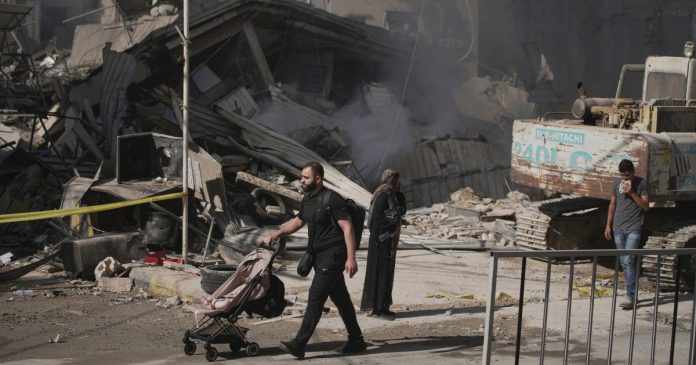
The strikes targeted the town of Kfar Melki in Akkar district in Northern Lebanon and the town of Flawiye, West of Baalbek, Lebanon’s state-run National News Agency (NNA) reported.

Israeli warplanes also carried out three airstrikes targeting the outskirts of the town of Bodai, West of Baalbek.

In Southern Lebanon, Israeli aircraft launched an airstrike on the area between the towns of Ain Qana, Sarba and Houmine Al Faouqa in the Iqlim Al-Tuffah region.

Israeli fighter jets also carried out a heavy airstrike on Wadi Al-Zararia–Razai in Sidon district in the country’s South, in addition to another airstrike targeting the outskirts of the towns of Arzi and Burj Rahal in Tyre district.

NNA reported that Israeli warplanes also bombed the area between the town of Al-Matariyyah on the banks of the Litani River in the Qasmiyeh area of Tyre district in Southern Lebanon.No casualties were reported due to the attack.

Lebanese Prime Minister Nawaf Salam earlier Monday made a visit to the Eastern region of Bekaa, which was bombed by the Israeli military tonight.

“I have repeatedly stated that there is no stability in the country without Israel’s complete withdrawal from Lebanon and the cessation of its aggressive actions,” he wrote in a post on X, adding that weapons must be confined to the state alone for Lebanese people to feel safe.

Salam stated that the country also needs safety nets to protect its citizens and “balanced development across the homeland”.

This comes as the prime minister, along with President Joseph Aoun and parliament Speaker Nabih Berri, are expected to meet with US envoy Tom Barrack in Beirut to discuss the future of Lebanon.

Israel launched an assault on Lebanon on October 8, 2023 that escalated into a full-scale war by September 23, 2024. The conflict has killed more than 4,000 people, wounded over 17,000 and displaced nearly 1.4 million, according to official data.

Israeli forces have conducted near-daily attacks in Southern Lebanon, claiming to target Hezbollah’s activities despite a November ceasefire between Israel and Lebanon.

The truce ended months of cross-border warfare between Israel and the Lebanese resistance group.

Lebanese authorities have reported nearly 3,000 Israeli violations of the truce including the deaths of at least 231 people and injuries to more than 500 since the agreement was signed.

Under the ceasefire deal, Israel was supposed to fully withdraw from Southern Lebanon by January 26, but the deadline was extended to February 18 after Tel Aviv refused to comply.

Israel still maintains a military presence at five border outposts.

Hezbollah secretary-general says won’t disarm until Israel leaves southern Lebanon

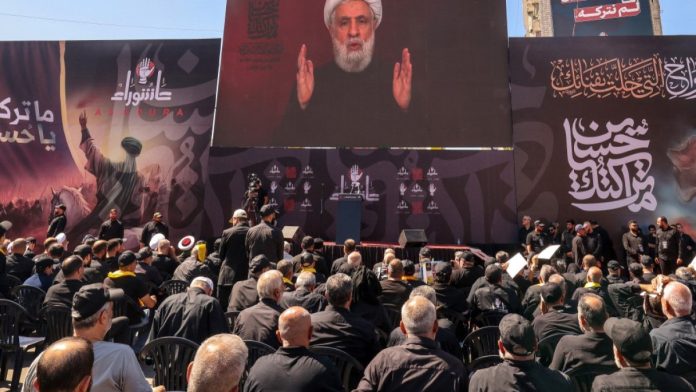
“We cannot be asked to soften our stance or lay down arms while [Israeli] aggression continues,” Naim Qassem told thousands of supporters gathered in Beirut’s southern suburbs on Sunday for Ashura.

The Beirut area, a Hezbollah stronghold, was draped in yellow banners and echoed with chants of resistance as Qassem delivered his speech, flanked by portraits of his predecessor, Seyyed Hassan Nasrallah, who was killed by Israel in September last year.

Israel launched a wide-scale assault on Lebanon on October 8, 2023 – a day after Palestinian group Hamas, which counts Hezbollah as an ally, stormed the occupied territories, killing some 1,200 people and taking about 250 others captive.

The Hamas attack was immediately followed by Israel’s bombing of the Gaza Strip, which has killed more than 57,000 Palestinians, most of them women and children. The Israeli genocidal campaign was accompanied by a brutal blockade on entry of food and medical aid, bringing the enclave’s 2.3 million residents to the brink of starvation.

Israel’s simultaneous attack on Lebanon escalated into a full-scale war by September 2024, killing more than 4,000 people, including much of Hezbollah’s top leadership, and displacing nearly 1.4 million, according to official data. A United States-brokered ceasefire nominally ended the war in November.

However, since the ceasefire, Israel has continued to occupy five strategic border points in southern Lebanon and has carried out near-daily air strikes that it says aim to prevent Hezbollah from rebuilding its capabilities. Those strikes have killed some 250 people and wounded 600 others since November, according to Lebanon’s Ministry of Health.

“How can you expect us not to stand firm while the Israeli enemy continues its aggression, continues to occupy the five points, and continues to enter our territories and kill?” Qassem said in his video address.

“We will not be a part of legitimising the occupation in Lebanon and the region. We will not accept normalisation,” he added, in an apparent response to Israeli Foreign Minister Gideon Saar saying his government was “interested” in such a move.

Qassem stated Hezbollah’s weapons would not be on the negotiating table unless Israel “withdraws from the occupied territories, stops its aggression, releases the prisoners, and reconstruction begins”.

“Only then,” he noted, “will we be ready for the second stage, which is to discuss national security and defence strategy”.

On Saturday, Israeli drones carried out four strikes on southern Lebanese towns, killing one person and wounding several others. Most of the Israeli attacks have targeted areas near the border, but Israeli warplanes have also hit residential neighbourhoods in Beirut’s southern districts, causing panic and mass evacuations.

Qassem’s speech came as the US envoy to Turkiye and Syria, Tom Barrack, was expected in Beirut on Monday. Lebanese officials say the US has demanded that Hezbollah disarm by the end of the year. Israel has warned it will continue striking Lebanon until the group is disarmed.

But Lebanon’s President Joseph Aoun has repeatedly called on the US and its allies to rein in Israel’s attacks, noting that disarming Hezbollah is a “sensitive, delicate issue”.

IRGC cmdr.: Iran’s precision missiles neutralize threats at their roots

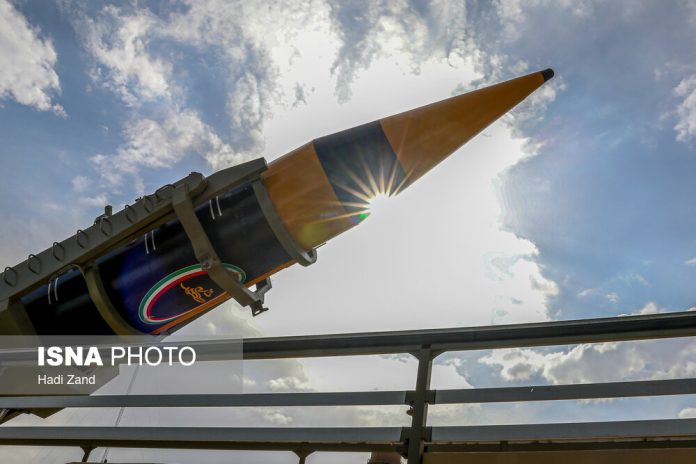
Khaibar Missile

Speaking amid ongoing regional tensions, the IRGC commander emphasized that Iran had recently faced an unprecedented multi-pronged assault.

“The latest scenario saw hundreds of enemy drones and missiles launched simultaneously, while foreign-backed saboteurs and infiltrators attempted to breach Iran’s borders,” he said.

He added that the assault was designed not only to destroy Iranian infrastructure, but to divide the nation and impose foreign will on the Iranian people.

Underscoring Iran’s readiness, General Khadem Seyed al-Shohada declared, “Today, we are engaged in a direct confrontation with enemies such as the Zionist regime and the United States. Iran is prepared for battle and poised to secure historic victories.”

He concluded by pointing to global solidarity with the Iranian people: “From London to Khuzestan, the voice of resistance echoes. Iran’s flag is raised high, and the world is hearing the call of a resilient nation.”