Monday, December 22, 2025
Home Blog Page 2917

Fajr Visual Arts Festival Underway in Iran

Fajr Visual Arts Festival Underway in Iran

The 12th Fajr Visual Arts Festival kicked off in ‘Saba Cultural and Art Institute’ in Tehran on February 19 and is going to end on Friday, February 28.

More than 900 works of art were competing in the Fajr Visual Arts Festival in various fields, including painting, graphic art, photography, sculpture, ceramics, calligraphy, Persian miniature, illustration, animation, caricature, and modern art.

The festival included diverse sections, such as ‘Golden Tooba’, ‘Art Crossroads’ and ‘Chaharkhaneh’ in the provincial cities, as well as the sections on research, the revered figures, and the commemorative events.

The Golden Tooba section saw competition among 448 works of art created by 338 artists. For the first time in the history of the festival, the works of art exhibited in the Golden Tooba section were put up for sale after hearing the participants’ views.

The Art Crossroads section focused on the activities of the art galleries in Tehran and the provincial cities and the display and sale of the works of arts created by the artists of those galleries, while the Chaharkhaneh section involved forums for discussion about photography in the provinces of Iran.

Following are a number of photos of the Golden Tooba section, exhibiting works of art in Persian miniature, calligraphy and illustration, published by Honar Online news agency:

Iran to Receive 20,000 Coronavirus Test Kits from China: Spokesman

Iran Says What IAEA Wants to Access “Not A Site”

In a statement on Thursday, Seyyed Abbas Mousavi outlined the measures taken by the Iranian Ministry of Foreign Affairs to assist the hardworking Iranian healthcare and medical sector in the battle with the COVID-19.

“Immediately after the confirmation of outbreak of coronavirus in the country, the Ministry of Foreign Affairs has also put the efforts to pursue the international dimensions of the issue, such as the supply of the medical needs, on the agenda in company with the Health Ministry by setting up the headquarters of the fight against coronavirus,” the spokesman added.

Mousavi said the plans for receiving voluntary help from the friendly countries have been pursued and are being gradually finalized.

“The first consignment in this regard (the fight against COVID-19) has been provided by the Chinese government and Red Cross, which includes around 20,000 coronavirus test kits and some other supplies, and will be delivered to the country tomorrow with a special flight of Mahan Air, according to the plans,” the spokesperson noted.

Mousavi finally praised the Chinese government and people for their generous help, adding that further details about the aid provided by China and the other friendly countries will be announced after finalization.

Coronavirus in Iran: 106 New Cases Confirmed

Iran to Mass Produce Homegrown Coronavirus Testing Kits

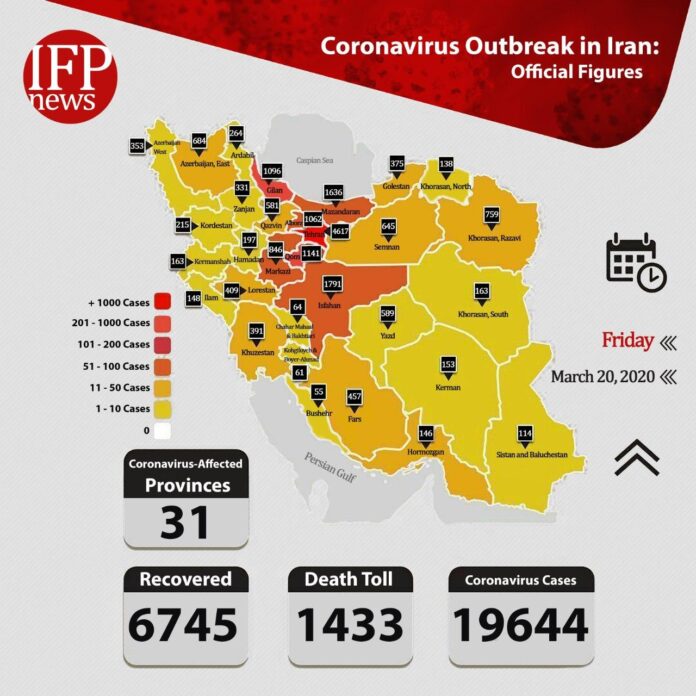
The Health Ministry spokesman, Kianoush Jahanpour, told the state TV on Thursday 106 new cases of coronavirus infection have been confirmed during the past 24 hours, raising the total number of confirmed cases to 245.

Seven people among the 106 new cases have died, according to the spokesman.

This increases the total number to 26.

Iran Says Flights to/from UAE Will Resume Soon

Iran Condemns US Oil Deal with Syrian Kurdish Group

In comments on Thursday, Foreign Ministry Spokesman Mousavi answered a question from reporters about an abrupt and unannounced suspension of the flights from the United Arab Emirate to Iran, and vice versa, which has caused problems for a number of the Iranian citizens trying to return home.

He said the Iranian Ministry of Foreign Affairs and the Iranian diplomatic missions in Abu Dhabi and Dubai have made ceaseless efforts to make arrangements with the authorities at Iran Civil Aviation Organization and the UAE Embassy in Tehran in order to obtain permission for the resumption of flights operated by the Iranian airlines.

“According to the latest information, the basic approval has been granted to give permission for the flights, and the related flights will be operated soon,” Mousavi added.

The spokesman finally noted that the Foreign Ministry has been doing its utmost to resolve the problem, expressing hope that the coordination among the whole relevant organizations would allow for the repatriation of the Iranian citizens.

His comments came after the United Arab Emirates decided to suspend all flights to and from Iran for at least a week over the outbreak of the new coronavirus.

The UAE’s General Civil Aviation Authority made the announcement on Tuesday via the country’s state-run WAM news agency, just hours after Dubai International Airport, the world’s busiest for international travel, said there would be restrictions on flights there.

‘US Sanctions Impeding Coronavirus Treatment in Iran’

‘US Sanctions Impeding Coronavirus Treatment in Iran’

In an interview with Khabar Online, Dr. Mohrez said the situation in the most important coronavirus treatment hospital in Iran is not favourable due to US bans. Excerpts from the interview follow.
“Unfortunately, we have a lot of shortages as a result of sanctions. Today, I was giving consultation at a section of the hospital when I found out all disinfectants there had run out. I was told that people had emptied the containers into cola bottles [and taken the bottles with them].
There is so little equipment under the current situation. Masih Daneshvari hospital, where patients confirmed to have been infected with the coronavirus are kept, should have a lot of facilities, but that’s not the case; rather, due to sanctions, were are short of many supplies at a time when we do need disinfectants.
We have been under sanctions for a long time and need raw materials to produce some pieces of equipment, and we face problems when demand rises. In this year’s flu epidemic, none of the medicines were supplied on time, and we were short of vaccine, too. We are really under sanctions.
We don’t have as many problems as we did in the past, but we have been short of coronavirus diagnosis kits over this time. If it weren’t for the sanctions, all this equipment would be available.
The European company producing the diagnosis kits does not sell its equipment to Iran fearing US sanctions. The World Health Organization recently sent the kits to Iran, and after that we were able to diagnose the disease in people infected with the coronavirus.
Still, that European firm refuses to sell rapid diagnosis kits to Iran. The World Health Organization recently procured and sent the kits to Iran. We need thousands of kits to test everybody, and that’s why we should import them via the company which produces them.

A Look at Iranian Newspaper Front Pages on February 27

Newspaper Headlines

Iran Newspapers

Aftab-e Yazd:

1- Russia Changes Track!
* Despite Earlier Remarks in Support of Iran, Russia Leaves Iran Railway Project


A Look at Iranian Newspaper Front Pages on February 27


Arman-e Melli:

1- Gilan Has Worrying Situation: Chinese Dam Workers Banned from Leaving

2- Gov’t Calls for Removal of Barriers to Ratification of CFT, Palermo Bills

3- Sanders Has Great Chance for Winning Presidency: US May Return to JCPOA If Democrats Win

A Look at Iranian Newspaper Front Pages on February 27


Ebtekar:

1- Rouhani: Some Die of Simple Cold!

2- Gov’t Issues Statement on Efforts to Get Iran Out of FATF Blacklist

3- New Signals to Preserve JCPOA

4- US Cannot Do Any Damn Thing: IRGC Aerospace Chief’s Reaction to US Bans

A Look at Iranian Newspaper Front Pages on February 27


Etemad:

1- Indian Police Just Watches How Mobs Slaughter Muslims

2- Gov’t Says Iran Should Show Its Anti-Terrorism Face to World in Face of FATF Blacklisting

A Look at Iranian Newspaper Front Pages on February 27


Ettela’at:

1- Industry Minister: No Need to Worry, All Basic Commodities Provided for Nowruz

2- Health Minister: Novel Coronavirus Contained in Iran

3- Gov’t: Barriers to Ratification of FATF Bills Must Be Removed


A Look at Iranian Newspaper Front Pages on February 27


Kayhan:

1- All Profiteers of Coronavirus: From Pompeo to Mask Hoarders

2- 24 Coronavirus Patients Fully Recovered, Discharged from Hospital

3- Rouhani: Coronavirus Shouldn’t Be Turned into Enemy’s Weapon to Shut Down Production

A Look at Iranian Newspaper Front Pages on February 27


Khorasan:

1- Important Decisions by National Coronavirus HQ

* Restrictions Imposed on Travel, Pilgrimage, Friday Prayers

2- Behind Scenes of Modi’s Ethnic Cleansing: Clashes in India Kill 24, Wound 200

A Look at Iranian Newspaper Front Pages on February 27


Shargh:

1- Dream of Seeing an Anti-Israel Jew in White House If Sanders Win

2- World Quarantines Its Cities, While Iran Vows Return to Normalcy

A Look at Iranian Newspaper Front Pages on February 27

Coronavirus Infection Rate in Iran to Drop in Coming Weeks: Expert

In an article, Payman Salamati has referred to memoirs by renowned American epidemiologist Larry Brilliant, who was the brain behind the eradication of smallpox in the world.

In his memoirs, Brilliant speaks of the time when the H1N1 virus had broken out. The American specialist says he asked top epidemiologist what would happen if the disease would become a pandemic. In response, they answered that around one billion people would be infected and some 165 million would die.

Salamati mentioned this brief extract to highlight people’s concern over the coronavirus outbreak in Iran. However, he said he personally believes the disease will be controlled in Iran soon.

“In recent days, we have witnessed a new disease outbreak in the country, which has caused great panic among our fellow countrymen. For different reasons, I believe that this disease will be controlled in the coming weeks, and the infections and fatality rate from the disease will decrease,” he said.

He refers to a February 24, 2020 report by the World Health Organization to support his claim.

Salamati says the report shows the rate of coronavirus infection in China slowed down after 3 to 4 weeks.

“The report says no major changes happened to the genome of the virus in that [3-to-4-week] period,” says Salamati.

“All the above points show we are facing a similar situation in the country, and there are no worries about a possible genetic change to the virus, which is a dangerous and uncontrollable forms of epidemics,” Salamati added.

He also referred to good cooperation between medical personnel, the health ministry and people as another reason why he believes the rate of coronavirus infection in the country will fall in the coming weeks.

He said doctors and medical personnel are trying their best and people are observing hygiene rules, which contributes heavily to controlling the disease.

Salamati further said it would be a good idea to create panic among people, so that they will fully abide by hygienic principles.

“Some doctors and experts believe when it comes to medical-hygienic issues, people should have deep fears, so that they will comply with instructions,” he said.

The expert then underscored that experience shows epidemics in recent years have all finally been controlled.

“Since the beginning of this century, the H1N1 virus, Severe Acute Respiratory Syndrome (SARS) and Middle East Respiratory Syndrome (MERS) went through a trend for some time and then were brought under control,” he added.

Given the above-mentioned points, he says, the rate of infection is expected to drop soon.


Related Articles:

Iran to Use Get E-Bikes for Its Mail Service

Iran to Use Get E-Bikes for Its Mail Service

Under a quadripartite agreement signed among the Iranian Vice Presidency for Science and Technology’s Center for the Promotion of Space Technologies and Advanced Transportation, the Traffic and Transportation Organization of Tehran Municipality, the Islamic Republic of Iran Post, and a domestic manufacturer of electric motorcycles, the Iranian mailmen are going to receive around 3,000 e-bikes.

In the first phase of the plan, a total of 50 electric motorcycles will be manufactured by the local factory.

In comments at the signing ceremony, secretary of the Iranian Vice Presidency for Science and Technology’s Center for the Promotion of Space Technologies and Advanced Transportation, Manoochehr Manteqi, said the figures show that motorcycles, mostly driven by carbureted engines, are to blame for 18 percent of air pollution in Tehran.
He also noted that implementation of a major plan to replace 300,000 gas motorcycles with the electric ones in capital Tehran is expected to reduce air pollutants by nearly 1.5 million tonnes in the metropolis.

Iran to Electrify Motorcycles to Reduce Air Pollution: Minister

Manteqi explained that the four-party agreement has been signed in an effort to promote and institutionalize the use of electric means of transportation, support the local knowledge-based companies in manufacturing homegrown electric motor vehicles, and develop the infrastructures for the utilization of e-bikes.

The Iranian motorcycle manufacturer is going to make 50 e-bikes in a pilot project at the first stage of the plan. If the other parties to the agreement are satisfied with the quality and efficiency of the e-bikes and the time of delivery of the orders, a separate contract will be signed for the production of 2,950 other electric motorcycles, provided that the necessary funding is received.

European Parties to JCPOA Willing to Save It: Araqchi

Azerbaijan-Armenia Peace Deal Based on Iran’s Proposal: Araqchi

Araqchi made the remarks after the 15th meeting of the JCPOA’s Joint Commission in Vienna aimed at finding ways to save the agreement.

“All remaining participants in the JCPOA confirmed once again the importance of this deal and their support for the deal, and their efforts, their willingness to protect this deal to make sure that the JCPOA would stay alive,” Araqchi told reporters.

“We are still open to any initiative, which can ensure Iran’s [benefits] of the JCPOA and we are fully prepared to reverse the steps we have taken so far in return for the fulfillment of the other sides’ commitments in the JCPOA,” he added.

He said that during the Wednesday meeting the Europeans put forward more serious and pragmatic ideas to reinforce INSTEX, a non-dollar direct payment channel — officially called the Instrument in Support of Trade Exchanges, adding that INSTEX has almost reached an operational stage.

“There is a willingness to strengthen INSTEX so it can cover major parts of Iran-EU trade. We discussed about different ways to strengthen this mechanism,” he noted.

The three European signatories to the JCPOA — the UK, France and Germany — unveiled late in January 2019 the long-awaited mechanism meant to safeguard their trade ties with Tehran following the US withdrawal from the nuclear deal and in the face of the harsh sanctions imposed by the United States against the Islamic Republic.

In its initial stage, INSTEX was supposed to facilitate trade of humanitarian goods such as medicine, food and medical devices, and later be expanded to cover other areas of trade, including Iran’s oil sales. However, it has not resulted in any trade deals so far.

In 2018, the US left the JCPOA and returned its sanctions against Iran in defiance of the agreement’s multilateral nature and the fact that it had been ratified by the United Nations Security Council.

Washington then began forcing other parties to toe its sanctions line. The three European signatories to the deal have stopped their transactions with the Islamic Republic, bowing under the pressure.

In response to the US moves, Tehran has so far rowed back on its nuclear commitments four times in compliance with Articles 26 and 36 of the JCPOA, but stressed that its retaliatory measures will be reversible as soon as Europe finds practical ways to shield the mutual trade from the US sanctions.

On January 5, Iran took a final step in reducing its commitments, and said it would no longer observe any operational limitations on its nuclear industry, whether concerning the capacity and level of uranium enrichment, the volume of stockpiled uranium or research and development.

Araqchi said that Iran was still keen and making efforts to keep the JCPOA alive but reaffirmed that Tehran would continue to suspend its commitments under the JCPOA unless its economic demands were met.

The Islamic Republic stressed in every meeting and also this meeting that without its demands being met in economic sectors Iran’s full return to the JCPOA is not possible, he said, adding that nevertheless, Iran’s intention is still to keep the JCPOA  and make efforts to this goal.

Helga Schmid, secretary general of the European Union’s External Action Service (EEAS), said on Twitter that the JCPOA’s Joint Commission meeting on Wednesday “concluded with substantial discussions on next steps.”

Schmid added, “As a follow up to the statement by @JosepBorellF (https://bit.ly/2v98z5r), participants reviewed experts level discussions which have taken place in different formats in past weeks.”

The Joint Commission was chaired by Schmid on behalf of EU High Representative Josep Borrell.

After the meeting, a statement by Borrell was also issued. It said that the meeting addressed both Iran’s steps in reducing its nuclear commitments under the JCPOA, as well as longstanding concerns, recognized by all participants, regarding the impact of the US withdrawal from the agreement and its re-imposition of sanctions.

“Participants also acknowledged that the re-imposition of US sanctions did not allow Iran to reap the full benefits arising from sanctions-lifting,” read part of the statement, adding, “All participants reaffirmed the importance of preserving the agreement recalling that it is a key element of the global nuclear non-proliferation architecture.”

It said that participants reviewed expert-level discussions which have taken place in different formats in past weeks, both as regards nuclear implementation issues and the wider impacts of the withdrawal of the US from the JCPOA and its re-imposition of sanctions and benefits arising from sanctions-lifting.

Dispute mechanism launch no solution to woes: China

Meanwhile, Permanent Representative of China in Vienna Wang Qun said at the end of the JCPOA’s Joint Commission meeting that the launch of the dispute resolution mechanism enshrined in the Iran nuclear deal is not the right way to respond to the challenges of the deal and thus is not on the agenda of the meeting.

“The re-imposition of sanctions or the launch of the [dispute resolution] mechanism are not answers to the challenges standing before us.

The participants of the meeting agree that this must not be included on the agenda. Yes, there are different points of view, but it is not on the agenda,” Wang said.

Wang added that the participants of the meeting reaffirmed their commitment to the JCPOA and underlined the need to uphold its tenets.

Last month, the three European signatories to the Iran deal accused Iran of violating the terms of the accord and announced that they plan to trigger a dispute settlement mechanism that could eventually restore UN Security Council sanctions against the Islamic Republic.

Araqchi said on January 19 that the three European signatories to the Iran nuclear deal cannot logically activate the dispute settlement mechanism, because Iran has already done that.

“We are now engaged in complicated legal discussions and Russia and China are of the same opinion. It was Iran that first resorted to Article 36 [of the JCPOA] and completed its application. Therefore, logically, legally and even politically speaking, the European countries cannot take advantage of this article, because we have already done that and applied its mechanism in full,” Araqchi said.

WHO, Foreign Ambassadors Briefed on Iran’s Battle with COVID-19

WHO, Foreign Ambassadors Briefed on Iran’s Battle with COVID-19

The meeting was held at the Iranian Foreign Ministry on Wednesday evening, attended by the WHO representative, the ambassadors of foreign countries residing in Tehran, and the Iranian Health Ministry authorities.

The participants in the meeting were briefed on the latest preventive and therapeutic measures that Iran has taken amid the outbreak of coronavirus.

In comments at the gathering, the WHO representative said Iran has the necessary fundamental capacities to address the disease.

The Iranian Health Ministry officials also provided information on the latest status of the battle with the coronavirus epidemic in the country, and reaffirmed Iran’s commitment to the internationally-recognized health regulations. The Health Ministry authorities also emphasized that Iran enjoys the whole necessary technical and specialized capabilities to counter the coronavirus.

Elsewhere in the meeting, the WHO representative hailed Iran’s capabilities and performance as a successful and exemplary example in the region and the world.

Considering Iran’s transparent measures in this regard and the sufficient and effective information provided about the disease, the health authorities, the relevant officials and the WHO representative demanded that the international community avoid imposing strict policies beyond the international standards and regulations, particularly in the trade interaction sphere.

In the meeting,the Iranian Health Ministry also presented a list of the necessary supplies for controlling, curing and containing the coronavirus disease to the representatives of the countries willing to provide assistance.

The participants also described the international cooperation and maintenance of medical stances on the problem of coronavirus as key factors in the fight against the disease.

At the conclusion of the meeting, the ambassadors asked the Iranian authorities a series of questions.