Monday, December 22, 2025
Home Blog Page 2879

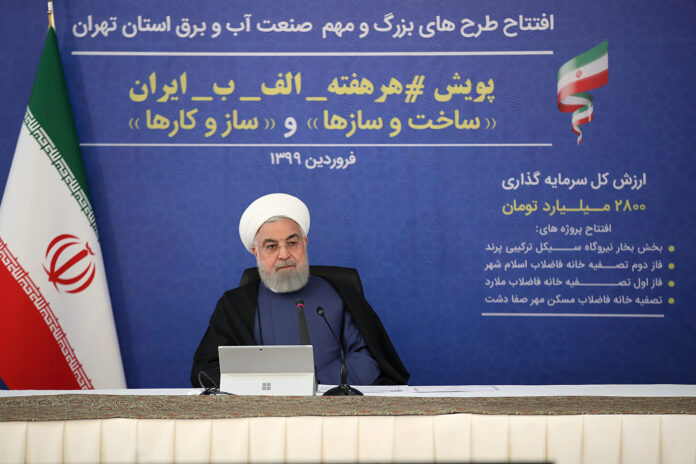
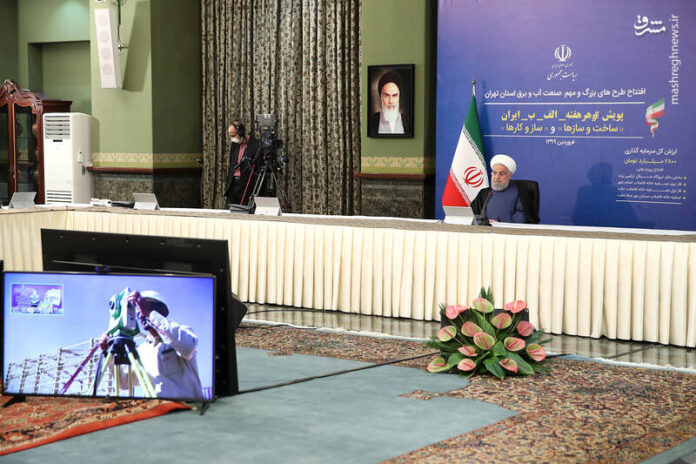
$5 Billion Set Aside for Businesses Affected by COVID-19: Iran President

Rouhani said some Rls. 50 trillion will also be earmarked for the Unemployment Insurance Fund.

He said the government will offer low-interest loans to businesses which have suffered losses as a result of the coronavirus outbreak, provided that they have not fired their workers since the outbreak of the virus.

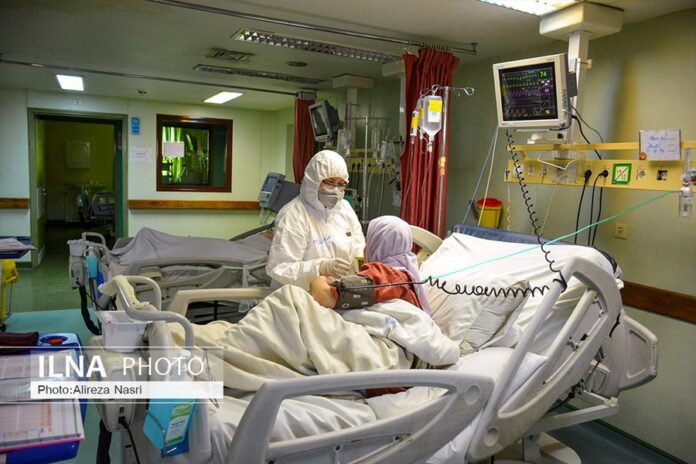
The president noted tens of thousands of beds at convalescent care facilities are now ready to offer services to patients. He added some 20 thousand hospital beds are also free and can be used for potential coronavirus patients needing inpatient treatment.

He reiterated the importance of the social-distancing plan which has just come into force across the nation to contain the spread of the disease.

President Rouhani said as the medical sector continues to offer services, measures have also been adopted to compensate the losses that businesses have suffered.

Artists from 68 Countries to Take Part in Iran’s Corona Cartoon Contest

The international competition is going to be held with the help of Shiraz University of Medical Sciences and other institutions such as Department of Visual Arts of Ministry of Culture and Islamic Guidance and Vice Presidency for Science and Technology.

Seyyed Masoud Shojaei Tabatabaei, the competition’s secretary, tells IRNA that more than 2,000 entries from 68 countries have been received till March 26.

“About 800 works have been uploaded to the online gallery on Iran Cartoon website, and to date it has been viewed more than 421,000 times,” he added.

The deadline for submitting entries to this international competition is March 30, 2020.
Interested parties can submit their works via [email protected].

Tejarat Bank Museum Tied to Spirit of Old Tehran

Located in the eastern side of Toopkhaneh (arsenal) Square –currently named Imam Khomeini Square- in Tehran, the Tejarat Bank museum gallery was constructed during the Qajar dynasty as the Shahi Bank, which was renamed Bazargani (commerce) Bank later.

The historic building is the only construction from the old Toopkhaneh Square that has remained intact after more than 130 years.

Designed by Markar Galstiants, an Iranian architectural engineer of Armenian descent, the bank building features unique designs that include fabulous decorative elements of Iranian architecture, such as bowls in a semi-dome at the portal of the building, ceramic tiles and exquisite plasterwork.

Tejarat Bank Museum Tied to Spirit of Old TehranThe building was inscribed on the list of Iran’s national sites on February 1, 2003.

Bank Shahanshahi (the Imperial Bank of Persia) bought the building on March 31, 1890. The new building of the bank was also constructed afterwards when the site was still under the ownership of Bank Shahanshahi.

On February 16, 2020, the Tajarat Bank of Iran opened its first museum gallery at the site of the building by unveiling 15 antique and repaired paintings in a ceremony attended by the ranking managers of the bank and top Iranian artists.

Tajarat Bank has constructed a symbolic branch office inside the main building of the art complex that displays the popular designs of offices in the 1960s and 1970s.

A number of the oldest documents of the banking industry in Iran have been also put on display at the Tejarat Bank museum, open to the public.

Following are a series of photos of the museum, taken by IRNA:

Will US Remove Iran Sanctions amid Coronavirus Outbreak?

With the outbreak of the coronavirus in Iran, the country’s foreign policy has focused on getting unfair sanctions on the Islamic Republic lifted. Iran rightly emphasizes the point that US sanctions on the country has created problems in terms of providing medications and medical supplies at a time when the nation is gripped by the coronavirus epidemic. US President Donald Trump’s decisions are the key contributor to the difficulties Iran is facing. On the other hand, Washington has proposed to help Iran fight the coronavirus outbreak without even mentioning the economic problems that it has created for the Islamic Republic. Under such circumstances, some countries dismiss the sanctions as a violation of human rights. Now, to what extent can Iran’s call for the lifting of US sanctions and Tehran’s accusing Washington of committing economic terrorism contribute to the lifting of sanctions? To discuss that further, Khabar Online has interviewed Mahdi Motaharnia, a university professor and international relations expert, who has weighed in on the matter and explained the different dimensions of the issue. The highlights of the interview follow.

 

What the United States is doing under the current circumstances is to make the public opinion believe that it is trying to help Iran weather the coronavirus crisis. Since the beginning of the outbreak, Washington has announced that it stands ready to help Iran, so that a climate for cooperation may emerge amid the coronavirus outbreak. In their foreign policy, US authorities argue that they have problems with Iranian officials, not its people. … Iran rejected Washington’s offer of help, calling for the lifting of all sanctions instead. … The Leader of Iran’s Islamic Revolution also expressed his total distrust in the US, and even dismissed the country as dangerous. So, on the political front, Iran cannot engage in any such type of interaction with the US.
Now, the US claims that lifting sanctions can jeopardize the world. Given the approaches adopted by both sides, there is no hope for efforts that would see unfair sanctions on Iran lifted. However, the US is saying that it will try to assist Iran through some channels which still exist.

In fact, the US will not give up its sanctions on Iran; rather, it will try to give an offer of help to Iran in a bid to create the impression for other countries that it was Tehran that rejected the offer of help.

The US is saying that it will give Iran medicines and money, but that it wants to monitor the trend of work itself. Iran’s rejection of Washington’s offer of help is a political issue, as is the US offer of help. All statesmen around the world have political objectives in mind, but what is important is how to pursue those goals. The United States explicitly bears animosity toward Iran, but at the same time announces that it has no problems with Iranian people and wants to help them overcome the coronavirus crisis. Iran would not accept such an offer of help from the US. The White House is trying to make the public opinion believe that it is pressuring Iranian officials, not people. If Iran allows the US to actually help it, then the world public opinion may move toward the direction that the US wants. On the other hand, If Iran remains defiant, the world public opinion will accuse it of being obdurate.

Iran has gone for something in between, i.e., trying to get the sanctions lifted. This comes as the US says is has left a door open for help. At the moment, there are also some other countries which call for the lifting of US sanctions at this juncture. They want to compete with Trump, and this rivalry is especially obvious among countries such as Russia, China and France. As a case in point, we are seeing that France releases an Iranian prisoner who the US wanted to be extradited, turning a deaf ear to Trump’s demand.

Europe wants to help get the sanctions lifted, but is much concerned about penalties. We know that they will face consequences if they work with Iranian companies. The US can impose fines on banks and disrupt relations between other countries and Iran. None of these countries are completely satisfied with the US. However, the US has what it takes to enforce its demands and will keep pressuring Iran as long as it wants to. At the same time, one cannot ignore the fact that European countries seek to cash in on the issue of the coronavirus pandemic. Their rivalry with the United States should also be taken into account. It will be too idealistic to say that Europeans are trying to preserve Iran’s interests. At the moment, we accept assistance from China, but what is really the difference between Beijing and Washington in this regard? The Chinese, too, take advantage of economic issues in order to further expand their influence on other countries, something which is not limited to the United States. So, we should not forget that any help by any country under the current circumstances is not only a humanitarian move; rather, it comes to serve their political objectives. From this perspective, there is not much difference between countries.

Iranian Teachers Get 20 GB of Free Internet amid Corona Outbreak

ICT Deputy Minister Hossein Fallah Joshaqani says this bonus pack is given within the framework of the ministry’s social responsibilities.

Here is IRNA’s interview with Joshaqani who explained the details of this pack:

Q: How were the teachers identified for this plan?

A: Based on an order by the ICT minister, it was decided to give 20 gigabytes of free internet to teachers. They enrolled in a portal that was specialized to this purpose. By 3 pm Tuesday, about 600,000 teachers signed up to receive the gift package.

Q: How much was the share of each operator?

A: Hamrah-e Aval, Irancell and Rightel will give services to 440,000, 133,000 and 11,000 teachers respectively.

Q: When were the packages activated?

A: Rightel activated the packages since Tuesday, and by 1pm Wednesday, Hamrah-e Aval and Irancell activated the service as well.

Q: Can this amount of internet be enough for teachers’ virtual training and video upload for three months?

A: According to our estimates, this amount is enough. Of course, we hope the Coronavirus will soon be eradicated in the country and students attend classes again. We hope we don’t need to renew this package.

Q: Given the internet package available to teachers, other jobs that require the internet may expect the ministry to provide free internet for them as well. Is the ministry obliged to provide this service for everyone?

A: Providing free internet access is not the responsibility of the ICT ministry. Every person, organisation, and ministry must do its share to overcome the crisis. Free internet packages were provided to teachers while 100 gigabytes of free internet was provided to home users based on the social responsibility of the operators.

Q: The Internet is our vital infrastructure these days. Shopping, training, entertainment and teleworking in the current critical state is a top priority for any country. As the frequency capacity of the operators is saturated, is it not the time for the IRIB to release its available frequency bands?

A: Good point. Our frequency supply is declining, as the frequency bandwidth of the cellular network is saturated and we have to move to 5G in the near future. Therefore, the need to use frequency bands is increasing. This should be decided at the macro level and we hope that the efforts will work.

France, Czech Pulling Out Forces from Iraq: Reports

The Iraqi website Almaaloma on Wednesday quoted Major General Abdul-Karim Khalaf, spokesman for Iraq’s General Commander of the Armed Forces, as saying the French troops had left Iraqi territory and exited an airbase.

He did not mention the base’s name saying that the departure is carried out based on the agreements with the Iraqi government.

Meanwhile, the Czech Ministry of Defence announced Wednesday that it has withdrawn 30 troopers due to security concerns and the spread of the Coronavirus.

Al Ekhbariya quoted a statement from the Czech Ministry of Defence as saying that the soldiers left Iraq with an A-31 aircraft and landed at Prague military airport.

France and Czech Republic forces have been involved in the so-called US-led international coalition against the terrorist group ISIS.

Contradictory reports emerged over the past week about the withdrawal of coalition forces from the military bases in Anbar province in western Iraq.

Coalition forces were said to have withdrawn from the two bases in Anbar province and delegated control of their headquarters to Iraqi forces.

The Iraqi Security Forces announced last week that they had “taken over the Al-Qaim military base in Al-Anbar province, in the western part of the country, after the withdrawal of the international coalition forces from them with all their military equipment.”

Recently, the US-led coalition has been withdrawing its forces from some bases in Iraq.

Iran Ready to Help US Fight Coronavirus If It Needs: IRGC Chief

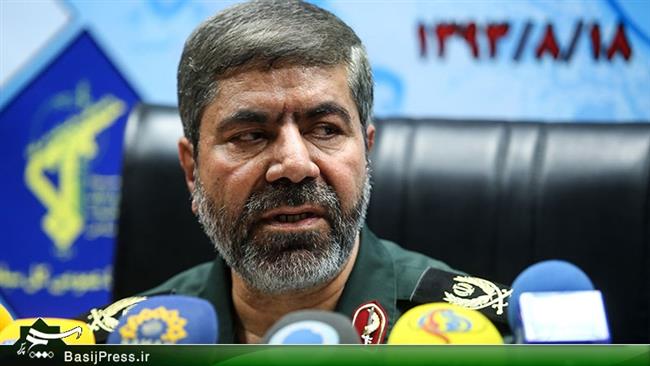
Major General Hossein Salami said Thursday the United States itself has been gripped by this virus, and the country’s health infrastructure is unable to protect American people against the epidemic.
“If the US nation need help, we can help them, but we don’t need their help,” said General Salami, the commander of Iran’s Islamic Revolution Guards Corps (IRGC).

He reiterated Washington’s animosity toward the Iranian nation.
“They never liked Iranian people, and the US president called Iranian people terrorists,” he said.

“The Americans put our nation under pressure and economic sanctions to create livelihood problems for them, but fortunately, by God’s grace, US officials failed in this path, too,” he noted.
The top general said hospitals of the IRGC are offering services to tackle coronavirus patients.

“Since the beginning of the coronavirus outbreak in the country, we (the IRGC) began work,” he said.

“We have the capacity to increase the number of our mobile and makeshift hospitals if need be,” he said.

The top general said the IRGC is always ready for countering biological warfare “because we predict that there is a possibility of nuclear, chemical and biological warfare.”

He touched upon a recent drill for biological defense, saying all resources of the IRGC have been mobilized in this drill to disinfect crowded public places across the nation.

Over 47 Million Iranians Screened for Coronavirus: Minister

“Fortunately, by 12:00 noon Wednesday, the number of people screened in this plan has exceeded 47 million,” said Saeed Namaki.

He said the national mobilisation plan against the coronavirus has turned into an international model which is approved by the entire world.

The health minister further mentioned that the ministers have approved the Social Distancing Plan and it will be announced by President Hassan Rouhani.

“The implementation of the Social Distancing Plan will prevent a second wave of disease outbreak. Although it will increase the number of patients over a period of time, it will reduce the number of cases later on,” he underlined.

1st Wave of Coronavirus Epidemic in Iran Contained: Health Minister

Iran's Health Minister Commends Interior Ministry, Basij for Efforts in War on Coronavirus

Saeid Namaki said the achievement was secured with the cooperation of all medical personnel and other relevant institutions.

“Since the very early days, one of our plans was to limit travel and gatherings which contributed to the spread of the disease,” said the minister, speaking in an interview regarding the latest decisions made by the national committee set up to tackle the coronavirus outbreak.

“The closure of schools, universities and gyms, the cancellation of games, the closure of cinemas and theatre halls, the cancellation of congregational Friday prayers and the shutdown of religious centres were among these measures,” said the minister.

He noted that most public centres were closed with the cooperation of authorities, but of the persisting concerns was people’s nonessential travel.

“Despite all sanctions, the first wave of the epidemic was controlled with the cooperation and help of all my colleagues at the forefront of the treatment of the disease and the fight against its spread,” he said.

The minister noted that now a new set of measures have been put in place to tackle a possible second wave of the spread of the virus.

As a case in point, he said, decisions have been made on which businesses should be closed and which ones can remain open to offer services to the public.

“Supermarkets and businesses selling people’s basic needs will be open 24/7, and people shouldn’t be worried about this,” said the minister.

Based on the new measures, he said, travel within and between cities and provinces will be further restricted.

“Of course, we have determined a period of time for the return of travellers and we will allow them to return to their homes during that time,” he said.

“This plan will definitely be instrumental in containing the spread of the coronavirus,” he noted.

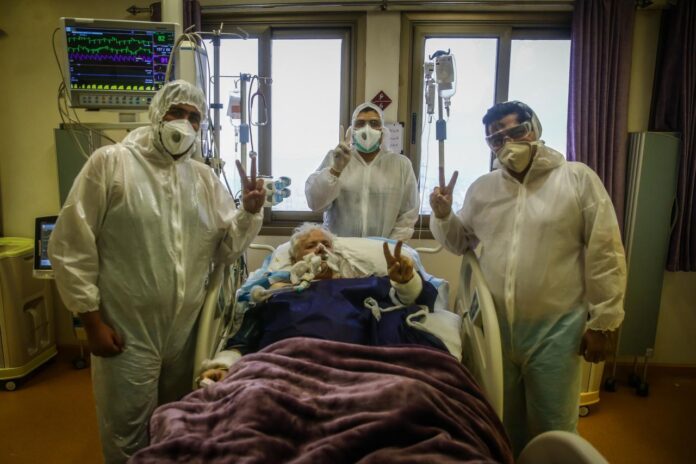
The health minister underscored that there are enough hospital beds in the country to go for every patient.

Iran Army Ready to Set Up 8,000 More Hospital Beds: Cmdr.

General Kioumars Heidari

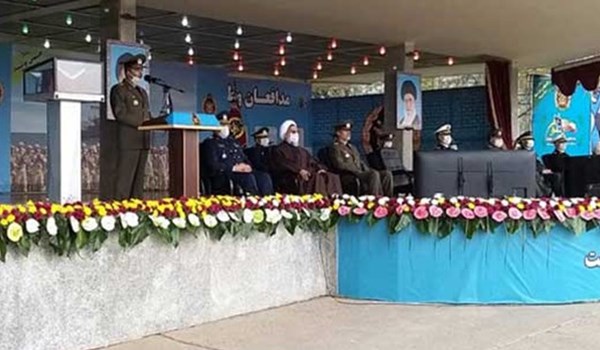
Brigadier General Kioumars Heidari noted that the army ground forces are ready to run 8,000 more hospital beds across the country.

He said the ground forces’ look at the coronavirus has been a forceful one to eradicate the deadly disease.
He stated that the maneuvres of the ground forces will continue until the full eradication of the pandemic.
Heidari made the statements during the inauguration ceremony of the army’s makeshift Shahid Hejrati 2,000-bed Hospital in Tehran.
“The ground forces have been conducting a large military exercise 24 provinces. In this exercise, 19 regional bases are commanding 63 units,” he continued.
The Armed Forces have been assisting the health ministry in the fight against COVID-19 since the early days of the outbreak in Iran.