Monday, December 22, 2025
Home Blog Page 2872

INSTEX; A European Effort to Save JCPOA or Another Anti-Iran Plot?

The German Foreign Ministry has, in a message, announced the shipment of the first consignment to Iran within the framework of the Instrument in Support of Trade Exchanges (INSTEX), a European special-purpose vehicle (SPV) for conducting trade with Iran.

The message published on Twitter reads that France, Germany and Britain confirm that INSTEX successfully conducted its first truncation and facilitated exports of medical supplies from Europe to Iran. The message also reads that INSTEX and its Iranian counterpart will cooperate to conduct more transactions and boost this mechanism.

Last December, France, Germany and the UK, the three European state signatories to the Iran nuclear deal known as the Joint Comprehensive Plan of Action (JCPOA), welcomed six other European countries (Belgium, Denmark, Finland, the Netherlands, Norway and Sweden) joining INSTEX, a financial mechanism established in order to cushion the effects of US sanctions against Iran and open a trade channel with the Islamic Republic.

At the same time, in a joint press briefing with Iranian Deputy Foreign Minister Abbas Araqchi, the Chinese deputy foreign minister asked the Europeans to speed up the implementation of INSTEX.

It is said that with INSTEX going into force, all European countries can use it for financial transactions with Iran.

What is INSTEX?

INSTEX stands for the Instrument in Support of Trade Exchanges. It was registered in Paris within the framework of French laws. In addition to France, Germany and Britain, too, are its main shareholders. However, other countries, whether in Europe or elsewhere, such as China and Russia, can join it as well.

Last year, the remaining signatories to the JCPOA agreed to establish the channel for financial transactions with Iran in order to urge Iran to remain in the JCPOA and make it possible for the Islamic Republic to reap the economic benefits of the lifting of sanctions.

The foreign ministers of Germany, Britain, China, Russia and France along with the European foreign policy chief, who had travelled to New York in September to attend the UN General Assembly meeting, announced their decision to establish such a special financial channel aimed at neutralizing US sanctions against Iran.

A joint statement by Iran’s partners in the JCPOA says that given the urgency and necessity of reaching tangible results, delegates to the meeting welcomed practical proposals to continue and develop channels for financial payment to Iran, especially to establish a special-purpose vehicle (SPV) aimed at facilitating payments related to Iran, namely those pertinent to oil exports.


Trying in Vain

Last month, the New York Times published an opinion piece by a German journalist, who described INSTEX as an example of Europe’s futile attempts to achieve strategic independence from the US.

Back in January 2019, Germany, France and Britain established a special financial mechanism to continue trade with Iran. Now, one year on since the establishment of this mechanism called INSTEX, the German Foreign Ministry has announced that the first deal has been conducted with Iran through that channel.

German officials have put the volume of that trade deal at less than one million Euros, and at the same time emphasized that the trade transaction is not in contravention of US sanctions as the commodities exported to Iran are medical supplies produced by a German company.

Moreover, the names of this company and other firms exporting goods to Iran are supposed to remain completely confidential and regarded as a state secret, like the names of banks working with INSTEX. Companies may be subjected to Washington’s punitive measures for working with INSTEX. At the same time, still no deal has been specified for the import of Iranian goods into Europe as stipulated in INSTEX.

The New York Times article says Europe has, after all these years, launched a mechanism to covertly send to Iran humanitarian aid worth less than one million Euros.

Since US President Donald Trump withdrew from the JCPOA in May 2018, European countries have been trying to preserve the nuclear deal. The agreement was signed by Iran, the United States, France, Germany, Britain, France, China and Russia. Under the deal, Iran agreed to stop the development of its nuclear program in return for the lifting of economic sanctions.

Despite being insured by the International Atomic Energy Agency (IAEA) that Iran has remained committed to its obligations, Trump pulled out of the JCPOA and reinstated US sanctions against Iran, including the secondary sanctions. The secondary sanctions not only ban American companies and citizens from doing trade with Iran, but affects foreign companies and individuals conducting deals with Iran.

Trump’s withdrawal from the JCPOA was a U-turn in Washington’s foreign policy. Unlike its European allies, the White House turned to the “maximum pressure” policy against Iran, and at the same time, it turned out that from Washington’s point of view, Europe was standing in the wrong place.

For the European signatories to the JCPOA, the deal turned into a major strategic challenge after the US new foreign policy. The countries, including, Germany, had promised Iran that they would live up to their commitments with regards to continuing trade with Iran. Nevertheless, Europe is facing a very tough situation for making good on its obligations.

European companies’ misgivings over losing the US market are not the only reason behind the effectiveness of the United States’ secondary sanctions. Rather, it is the power of the greenback and the Untied States’ ability to control financial systems which have paralyzed trade with Iran.

By having launched its special financial mechanism, Europe wants to prevent direct payment of money in trade deals between European and Iranian firms. The value of these deals is registered in INSTEX, and the European Union becomes the exporting or importing side.

This mechanism seems fine in theory and on paper, but it is very complicated in practice. Berlin has confessed that it would be very difficult, in practice, for parties to deals with Iran to remain anonymous.

The New York Times further refers to an order by Trump to assassinate General Qassem Soleimani, the commander of the Quds Force of Iran’s Islamic Revolution Guards Corps (IRGC), saying Europe is completely incapacitated vis-à-vis Trump’s foreign policy and has no say. Many European experts believe the decision to kill Soleimani was a high-risk one and could have triggered another war.


A Ploy to Keep Iran in Playing Field

Although Iran’s basic demand is to be able to continue its oil exports, this demand has not been met so far. Accordingly, Iranian officials have, time and again, expressed their discontent with Europe’s failure deliver on their commitments under the JCPOA. Still, Brussels still seeks to keep Iran in the playing field by making convincing and interesting statements.

If the JCPOA had gone as planned, it would have had economic benefits for Iran. However, Washington’s breach of promises and Europe’s indecisiveness deprived Iran of these benefits; hence, it began to scale down its obligations under the JCPOA.

It seems that Europe is using INSTEX as a ploy to prevent the total collapse of the JCPOA and limiting Tehran’s development of its nuclear activities and knowhow. So, news is likely to be published in the future on trade deals worth less than a million Euros, which will be aggrandized by European officials and media. However, what is certain is that such a level of trade neither fulfils Iran’s interests nor is a way for Europe’s independence from the US.


Over 65 Million Screened for Coronavirus in Iran

According to Deputy Health Minister Alireza Raisi, more than 65 million Iranians have been screened for coronavirus as of Tuesday evening.

He said over 54.4 million citizens have been screened by the medical and health centres, while more than 11 million others have taken part in the national scheme on the Internet via the website ‘salamat.gov.ir’.

The deputy minister also called on the remaining Iranians to join the nationwide screening project by contacting the Health Ministry via telephone or on the Internet.

Raisi further called on all people to stay home on the Nature Day, stressing that observing the health protocols in compliance with the national mobilization plan will help the country make a great stride in controlling coronavirus pandemic.

He warned that picnicking in parks, countryside and public places on the Nature Day –the 13th day of spring- would result in the spread of disease and nullify the achievements of the Coronavirus Fight National Mobilization scheme.

According to health authorities, the total number of coronavirus cases in Iran exceeded 44,600 on Tuesday and the death toll has risen to 2,898.

Iran Warns US’ Military Moves in Iraq May Escalate Tensions

In a statement on Wednesday, the Foreign Ministry spokesman pointed to the American military presence and moves in Iraq, saying, “While the Secretary-General of the United Nations and the international community are emphasizing the need for halting the tension-creating and warmongering measures amid the outbreak of coronavirus, these (US) moves are against the official and announced will of the Iraqi government, Parliament and people, would create tensions, and could steer the regional situation towards instability and catastrophic conditions.”

The Iranian spokesperson also called on the American forces to respect the Iraqi government and people’s demands for withdrawal from that country and to avoid creating tensions in the region.

His comments came against a backdrop of reports that American troops are preparing for a confrontation with Iraqi popular forces in the Arab country and that the Pentagon has been reviewing action plans for operations in the coming weeks.

The New York Times wrote on Friday that the Pentagon has issued a confidential order for planning an operation against Iran-backed forces in Iraq.

Iran’s Red Crescent Screens 20 Million Nowruz Travellers for COVID-19 

The caretaker of the society said 84,344 of its staff along with 9,780 equipped vehicles have been providing services for people at the entry and exit points of the cities. 

Karim Hemmati said on Tuesday that during the implementation of this national plan, the people on 7,218,979 vehicles were screened by the Red Crescent Society forces at the entry and exit points of the provinces.

14,131 people with fever and corona disease symptoms were also sent to medical centres and hospitals, he added. 

Iran’s Red Crescent Society was founded in 1922 and became affiliated with the International Federation of Red Cross and Red Crescent Societies in 1924. 

The society is one of the world’s largest national societies within the IFRC. Since inception, the IRCS has participated in a variety of public activities. Its core activity is to perform relief and rescue operations to help victims and the injured in natural disasters and accidents. It also engages in a wide range of humanitarian services in health and rehabilitation, training and research. 

Iranian Knowledge-Based Firms Seeking More Creative Presence in Int’l Arena

Iran’s Vice Presidency for Science and Technology has released a report of its activities in the past Iranian solar year and the prospects for its future plans in the New Year. 

The report was released on Tuesday by Rouhollah Estiri, the Director of the Office of International Business Development at the Vice Presidency, who expressed hope for more creative presence of Iranian knowledge-based companies in the international arena in the New Year. 

Here is the full text of this report:

The past Iranian year was full of ups and downs for the country’s export industry and knowledge-based companies. Despite the problems caused by the sanctions and lack of banking relations, Iranian entrepreneurs were able to effectively lift sanctions by focusing on regional markets and taking steady steps towards exports. 

Business meetings held for knowledge-based companies in other countries arouse new hopes for export for Iranian knowledge-based companies. It showed that despite all the economic and political problems, innovation and creativity in the creation of a product can lead it to find its place in the international arena. 

Opening of a business base for Iran’s Science and Technology Vice Presidency in Baku in the autumn paved the way for export for more than 20 Iranian companies to Azerbaijan Republic. Software products, polymer based goods, nano-technological colours and flavours, domestic animal medicines and human probiotics were the most noticeable products in the market.

By the efforts of this business base, the total volume of knowledge-based export contracts to Azerbaijan is expected to reach more than $ 6 million.

Business meetings with Chinese and Turkish companies, which were held in the winter the past year with the participation of almost 100 Iranian companies, led to the conclusion of very positive export contracts, especially in the field of information technology for Iranian knowledge-based companies.

More than five export brokers in the cities of Ankara, Istanbul and Izmir have the ability to provide export services to knowledge-based companies by offering products at permanent exhibitions and providing marketing and product sales services.

Under sanctions, Turkey has been a good launching pad for Iranian knowledge-based companies to gain access to global markets.

The huge Chinese market has also provided good access for Iranian companies in the field of polymeric materials and cell therapies. It is hoped that they can be followed up after the coronavirus restrictions are lifted.

The Vice Presidency for Science and Technology did not forget Africa’s emerging markets during the past year.

Reconstruction and renovation of the old building of the Iranian Embassy in Nairobi, Kenya, and its conversion into a centre for Trade and Technology Cooperation was a major step taken in the past year. This centre will be operational in the fall of the current Iranian year.

By providing communal work spaces, offices, permanent exhibitions, residences and consulting services to local businessmen, this business centre can be a good platform for reducing the cost of business trips and export activities of knowledge-based companies.

Marketing consulting and activities of this export base in Kenya have also provided the opportunity for delivery of services of Iranian knowledge-based companies in the fields of information technology, solar energy, water services, pharmaceuticals, and medical equipment.

The East African market is fully prepared to host the Iranian companies in this developing region.

Although knowledge-based exports were decreasing in the first half of the past year, with the thoughtfulness and creativity of knowledge-based companies in the second half of the year, the country’s export figures increased and got very close to the targets set for non-oil exports.

It is heart-warming that the country’s non-oil export basket in the field of knowledge-based products is developing. There is also hope to see the knowledge-based exports increase in the current new Iranian year with the support of the Vice Presidency for Science and Technology. 

Iran Says Social Distancing Plan Enforced in Iran with No Delay

Iran Says New US Sanctions Show Trump’s Desperation

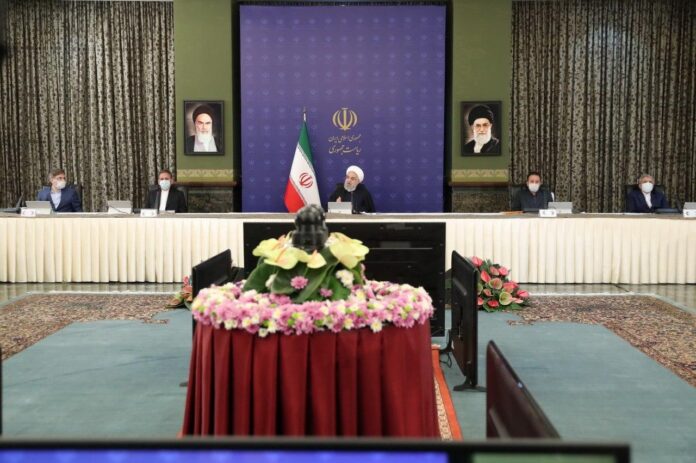
Chief of Staff of the Iranian president Mahmoud Vaezi rejected certain allegations that the government delayed the enforcement of the social distancing plan.

“The first phase of this plan went into force right when the disease entered the country by closing schools and universities, canceling religious, cultural and sports gatherings, and urging people to stay in their homes plus commencing the national campaign against the coronavirus,” said Vaezi.

He also touched upon the issues brought up at a meeting of the National Coronavirus Fight Headquarters.

“Today, at the meeting of the Headquarters, promising reports and figures were presented with regards to the trend of managing the coronavirus epidemic,” he said.

“The country’s health and treatment system has had very good performance in fighting the coronavirus in cooperation with other government and state sectors as well as people’s very good cooperation,” he said.

“This achievement has been the result of not only round-the-clock efforts and sacrifice of medical staff and other institutions contributing to the management of the crisis, but also the government’s investment in the health sector over the past years,” he said.

The president’s chief of staff underlined that the coronavirus outbreak is a global issue and “we’d better base our judgement about our country’s performance in countering its spread on comparison with other countries’ track record.”

“What can be understood from statistics offered by the World Health Organization about the trend of the coronavirus outbreak in different countries is that unlike Italy, Spain and the United States where the coronavirus is fast spreading, in our country the trend of contracting the disease and its spread has become relatively stable, which indicates the efficiency of Iran’s decisions and policies in fighting the coronavirus,” Vaezi noted.

He said prompt detection of the disease upon its outbreak in the country is one of the reasons behind the success of Iran’s health and treatment in countering the coronavirus.
“Iran was the second country to detect the existence of the disease, and, fortunately, we enforced the national campaign against the coronavirus without delay, and since the very outset, enforced control and treatment measures as phase one of the social distancing plan” by closing educational centres and canceling social gatherings and congregations.

“Although school and university students as well as the youth deal with the COVID-19 more easily, they are among the most important carriers of the virus, and that is why the closure of schools and universities considerably stemmed the spread of the disease,” the president’s chief of staff said.

He underscored that the government fully complies with viewpoints of expert as well as directives of the National Coronavirus Task Force in adopting control and management measures.

“The success in controlling the disease in comparison with other countries has been the result of these very measures and policies, and we hope with the continuation of this trend, we will fully overcome this disease,” he said.

“We hope groups that are not of any help at this juncture and only seek to find faults and criticize and oppose [the government’s measures] will procrastinate efforts to settle political scores for the sake of people’s health at least for the time being when the country is grappling with this wicked virus,” he said.

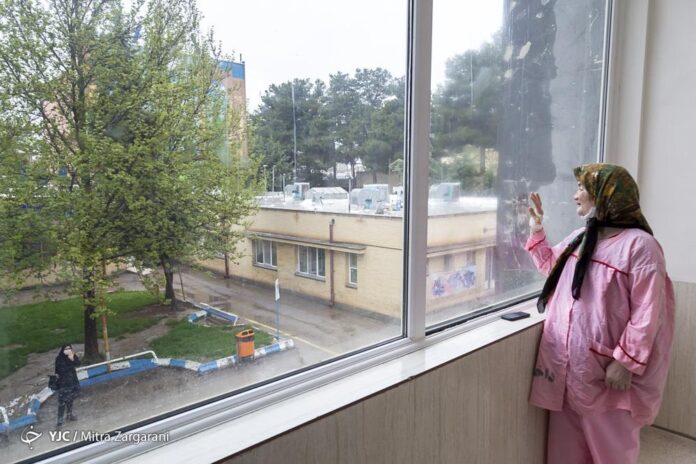
98-Year-Old Iranian Woman Recovers from Coronavirus

Iran Reports Highest Daily COVID-19 Fatalities in Two Weeks

She was admitted in early March to Imam Reza hospital and was hospitalised at the ICU.
Her daughter, Saeedeh Hasanzadeh says her mother had symptoms of corona disease including severe fever and chills, chest pain, and headache.

“She was hospitalised after she tested positive for Covid-19. My mother had a kidney disease, but fortunately she could recover from coronavirus.”

She also thanked the medical staff for their great efforts in helping her mother to recover, Fars News Agency quoted her as saying.

Addressing the public, she asked people to listen to the recommendations and stay home so that the medical staff would not be worried about increasing of the number of these patients.

Iran Confirms 3,111 New Cases of Coronavirus Infection

Iran’s COVID-19 Cases Hit 650,000: Health Ministry

The new figures increase the total number of infections to 44,606 and the death toll to 2,898, Health Ministry Spokesman Kianoush Jahanpour said on Tuesday.
“14,656 infected patients have also recovered and been discharged from the hospital,” he added.

According to Jahanpour, 3,703 patients are in severe conditions.
The Iranian official said that up to now over 65 million Iranians have been screened for COVID-19 as part of the national mobilization plan.

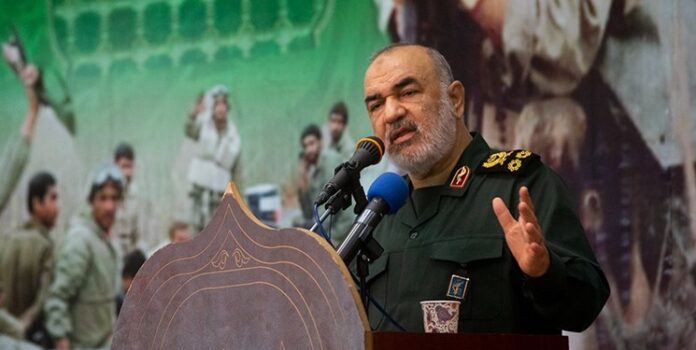
Iran’s IRGC Strongly Warns Enemies against Making Any Mistake

Anti-Islamism Expediting Fall of US, Zionism: Iran's IRGC

The statement was issued to mark the historical referendum in 1979 during which the Iranian nation unanimously voted for the Islamic Republic establishment during a nationwide plebiscite.

The IRGC warned in this statement that the smallest mistake by the vicious and adventurous enemies at any point against the Islamic Republic of Iran will be their latest mistake.

“The decisive responses of the Islamic Revolution Front will be unbelievable and will not even give the enemies the opportunity to express regret.”

In part of this statement the IRGC has said that 41 years after the victory of the revolution in spite of the evil schemes of arrogance to contain, restrain and dismantle this revolution, the Islamic Republic and the Iranian nation have continued their evolution towards the new Islamic civilisation during the past four decades.

“The spirit, thought and discourse of this great miracle (the Islamic Republic) have transformed the lines of contact and influence of Iran, even beyond the strategic West Asia region, and turned it into the nightmare of American leaders, the Zionist regime, and their wicked allies,” reads the statement.

In another part of the statement, the IRGC has stressed that the discourse of the Islamic Republic of Iran has influenced the geography of humanity and has marginalised the arrogant front, especially the dictatorial, terrorist regime of the United States in the world’s strategic developments.

Farvardin 12 known as the Islamic Republic Day is registered as the anniversary of the 1979 establishment of the Islamic Republic. Two months after victory of the Islamic Revolution in 1979, the new government held the Iranian Islamic Republic referendum proposing to change the Pahlavi dynasty into an Islamic Republic. On Farvardin 12, the referendum results were announced, with 98.2 percent of the Iranians voting for an Islamic Republic.