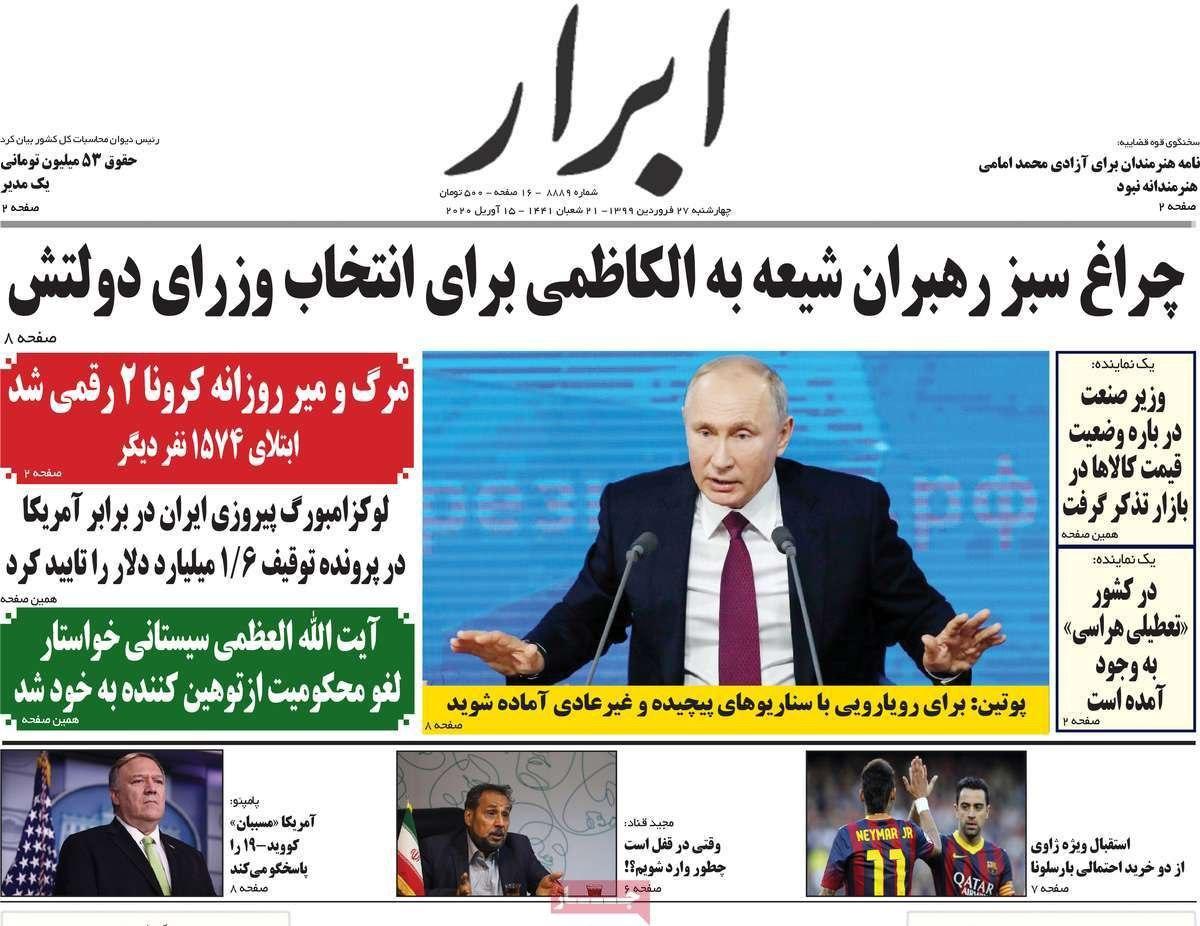
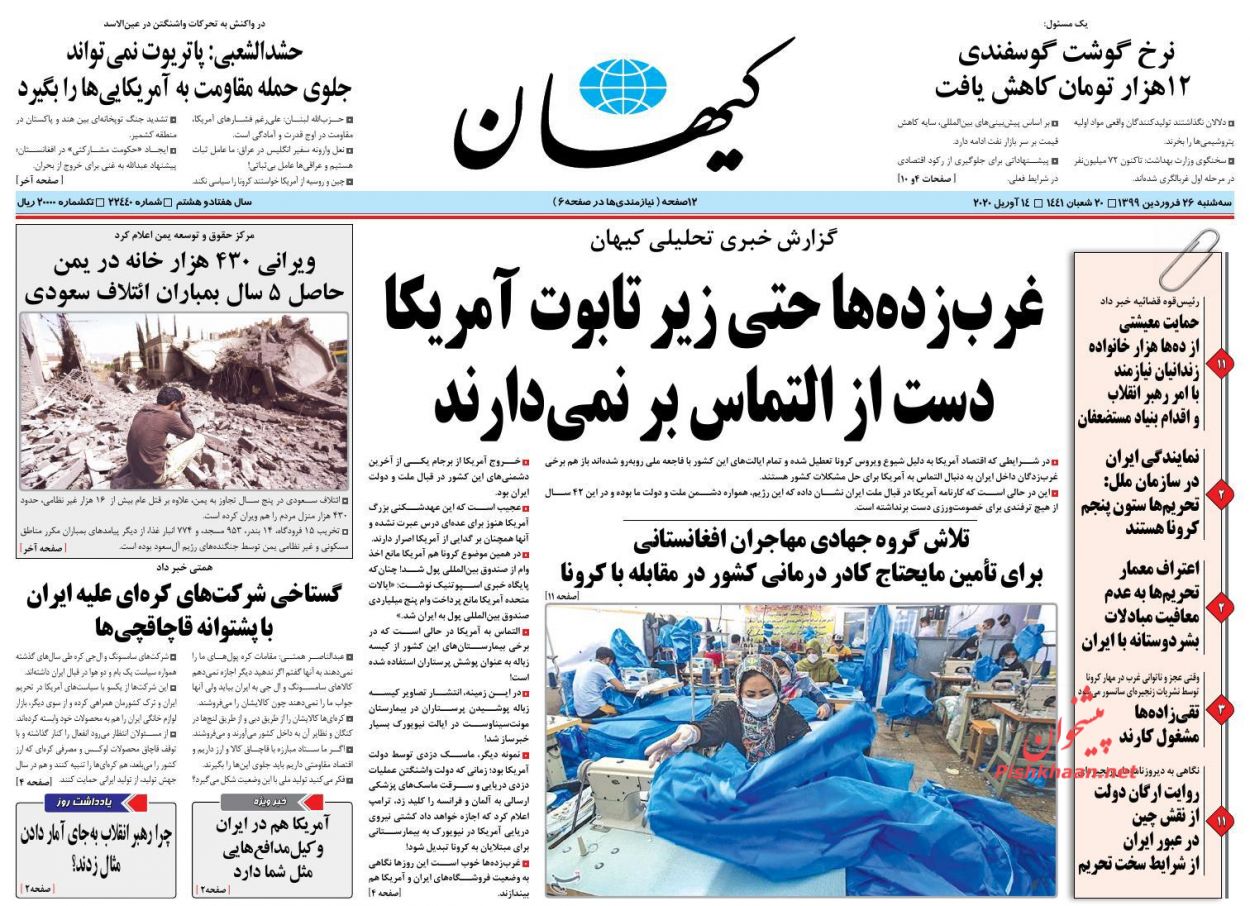
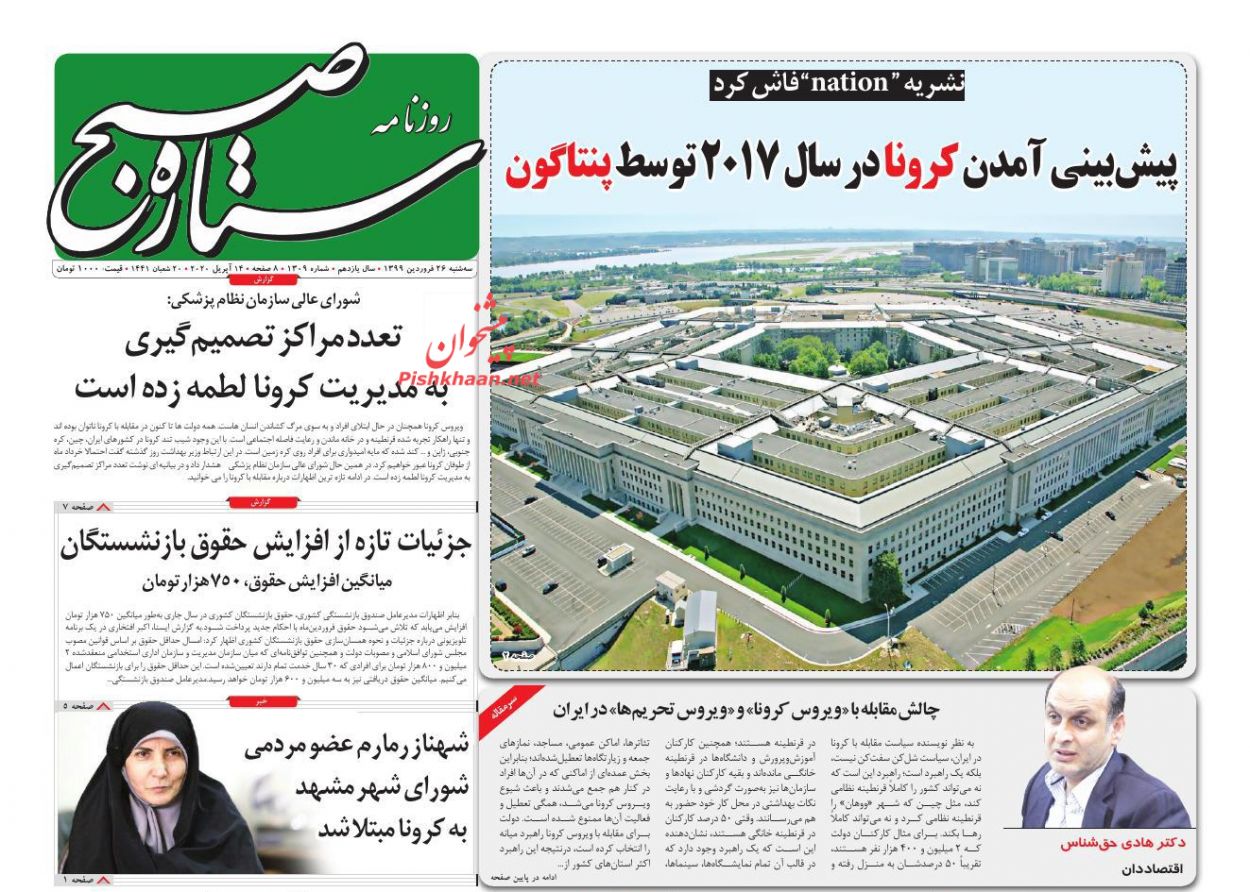
1- Luxembourg Confirms Iran’s Victory over US in $1.6-Billion Case
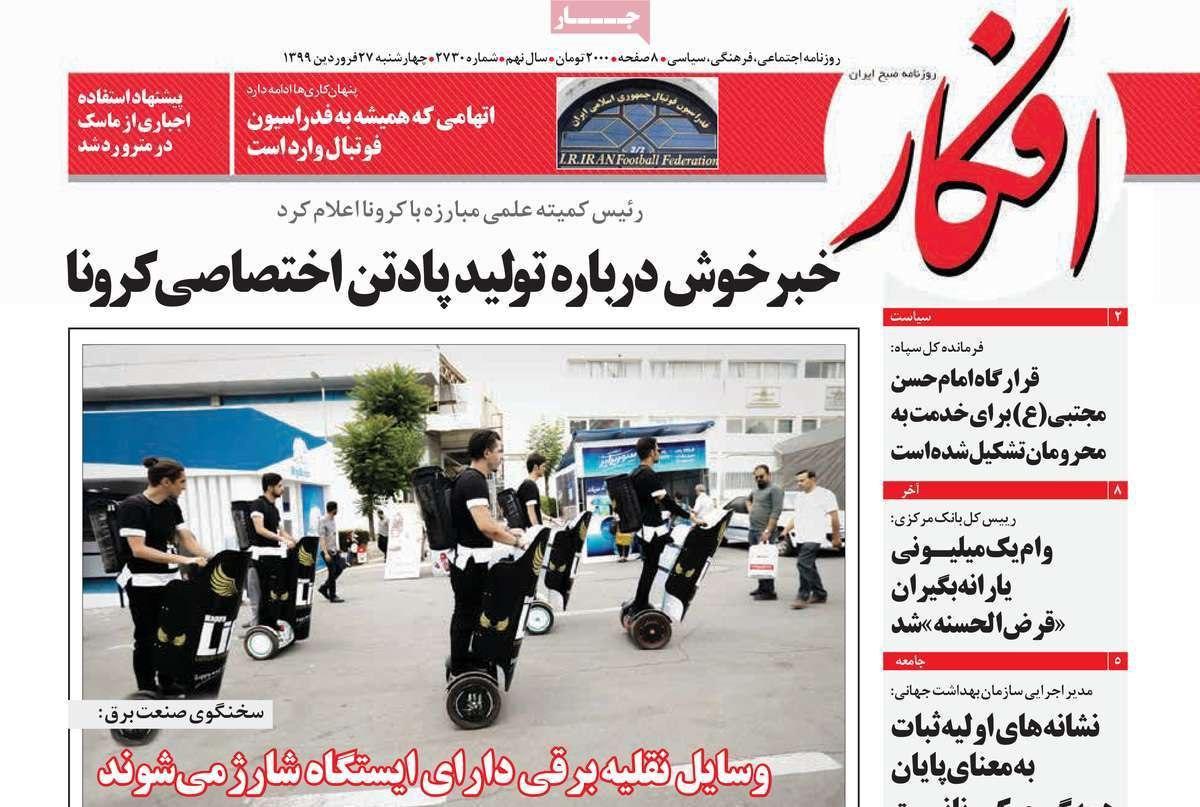
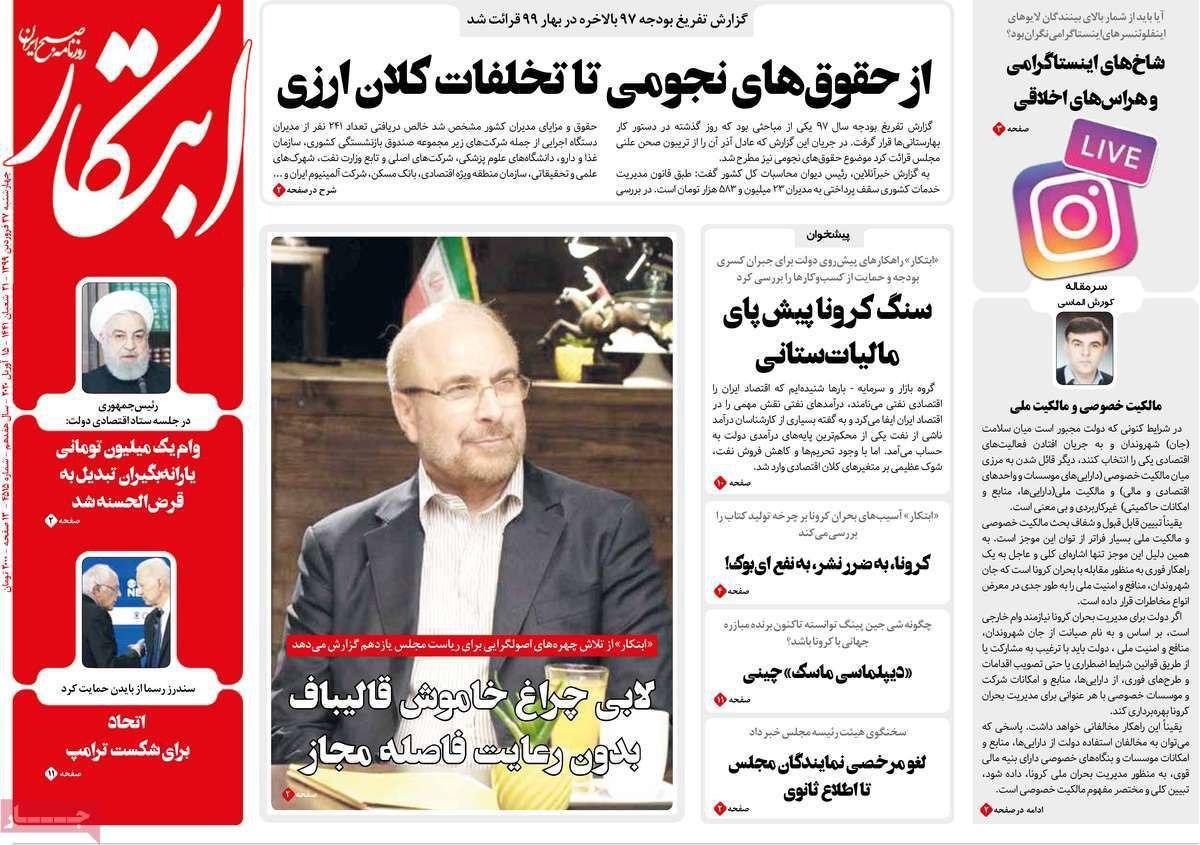
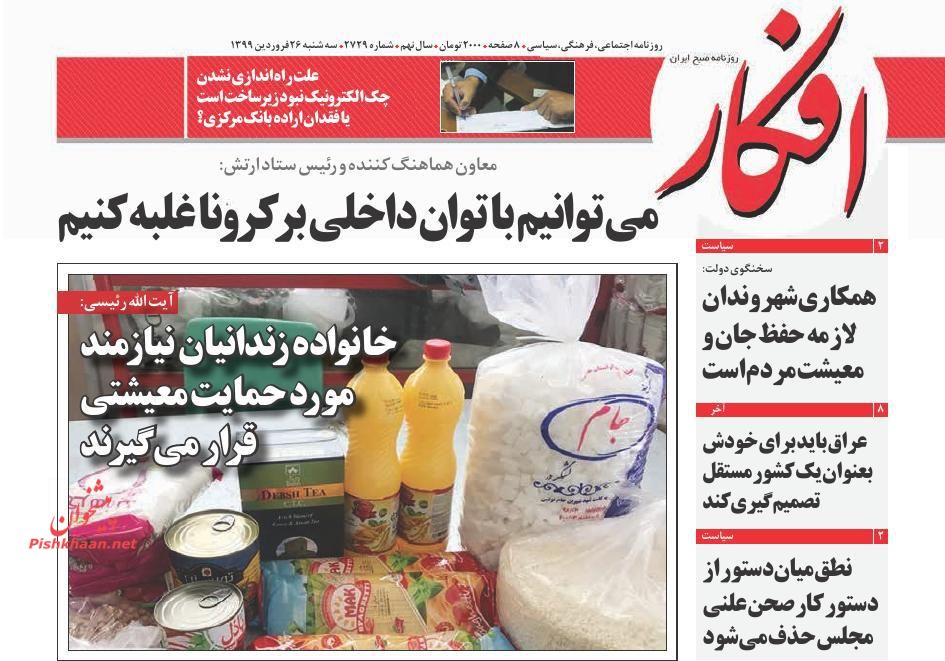
Afkar Newspaper:
1- Good News: Iran Says Exclusive Antibody Made for Coronavirus
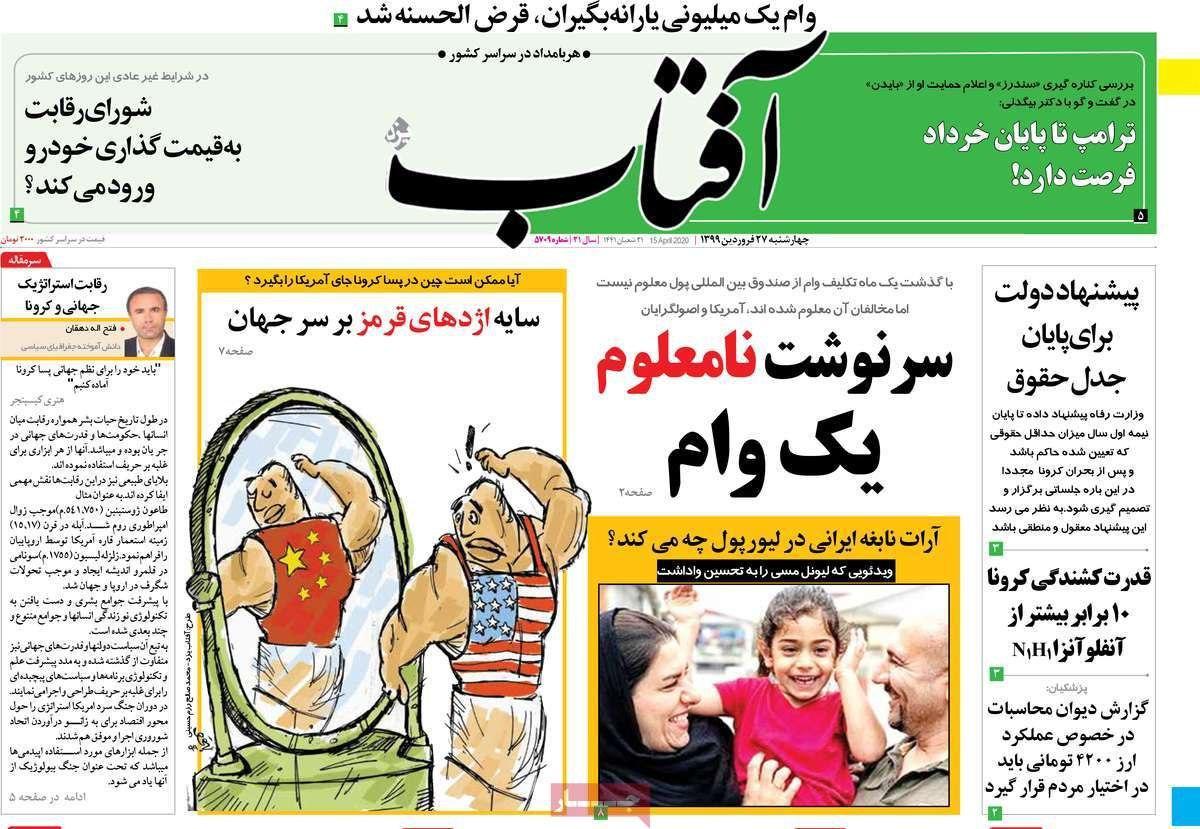
Aftab-e Yazd Newspaper:
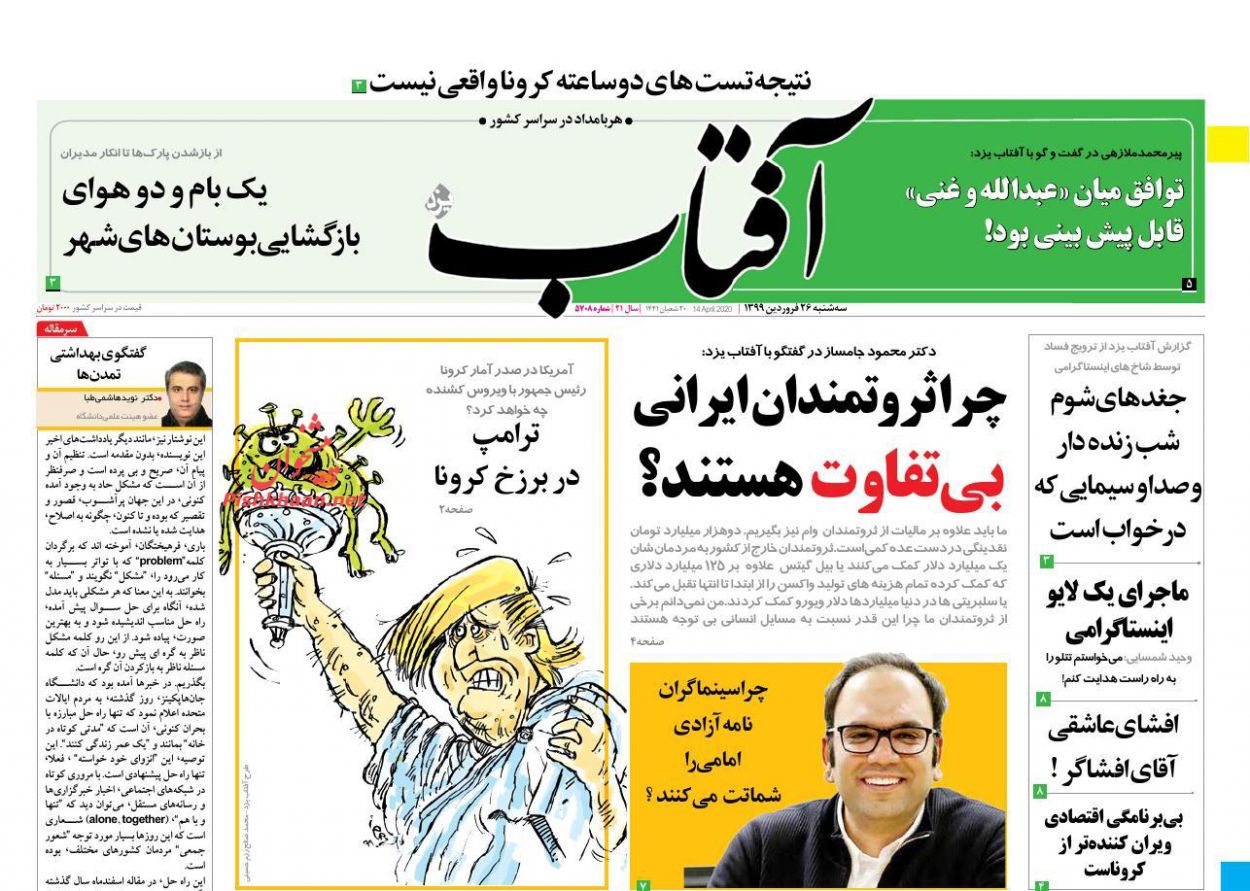
1- World Under Shadow of Red Dragon
2- An Analysis of Sanders’ Withdrawal, His Endorsement of Biden
3- Iranian Genius ‘Arat’ Praised by Messi
* What’s He Doing in Liverpool?
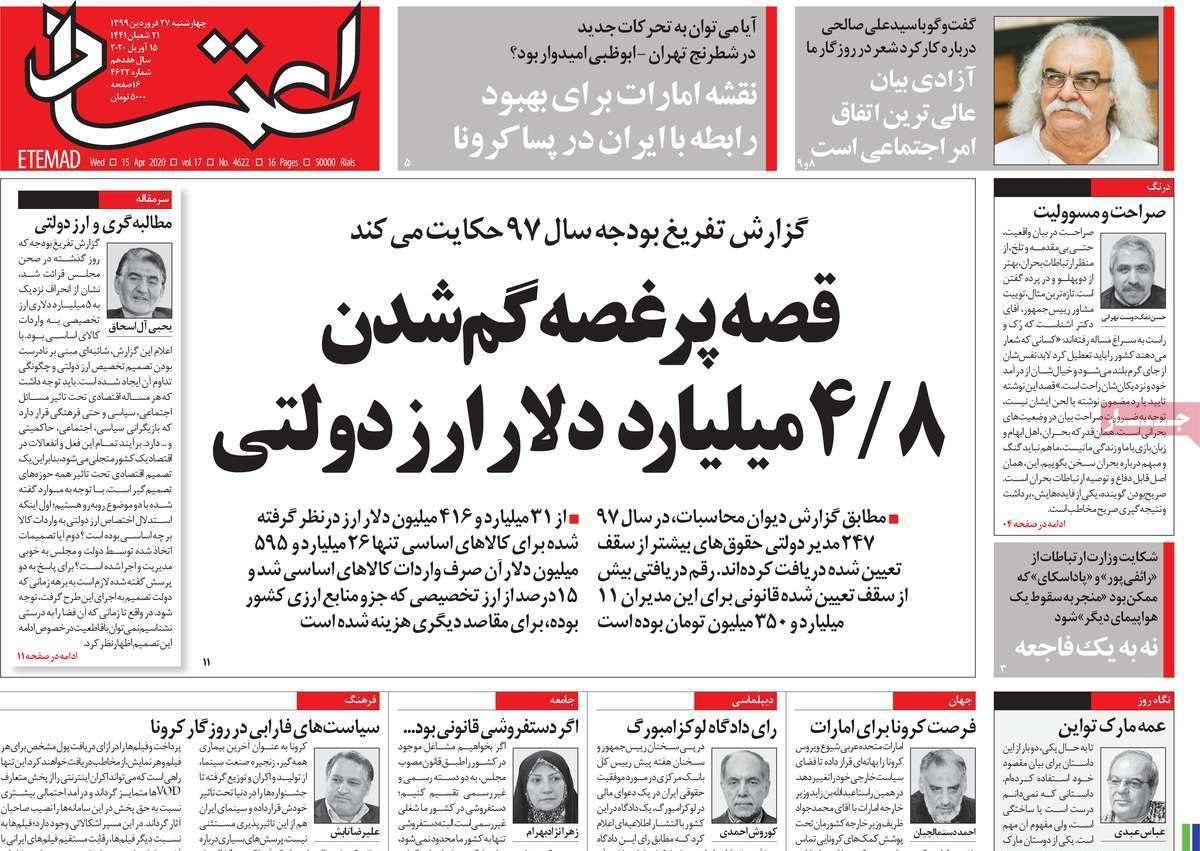
1- UAE’s Plan to Improve Ties with Iran in Post-Corona Era
2- Sad Story of $4.8 Billion Worth of Missing Public Funds
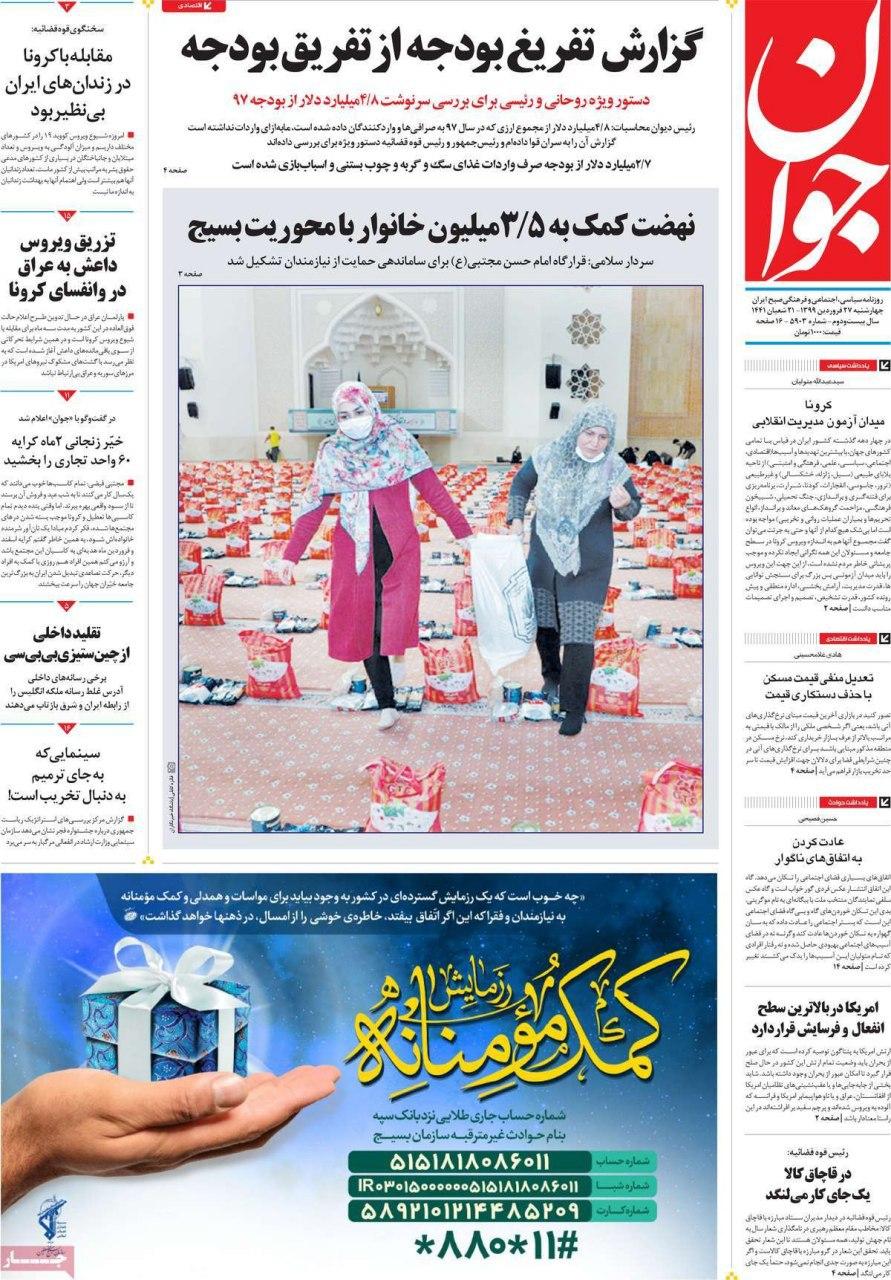
Javan Newspaper:
1- Judiciary Spokesman Praises ‘Unmatched’ Fight against COVID-19 in Iran Prisons
2- Basij Launches Movement to Help 3.5 Million Families
3- Injecting ISIS Virus to Iraq amid COVID-19 Outbreak
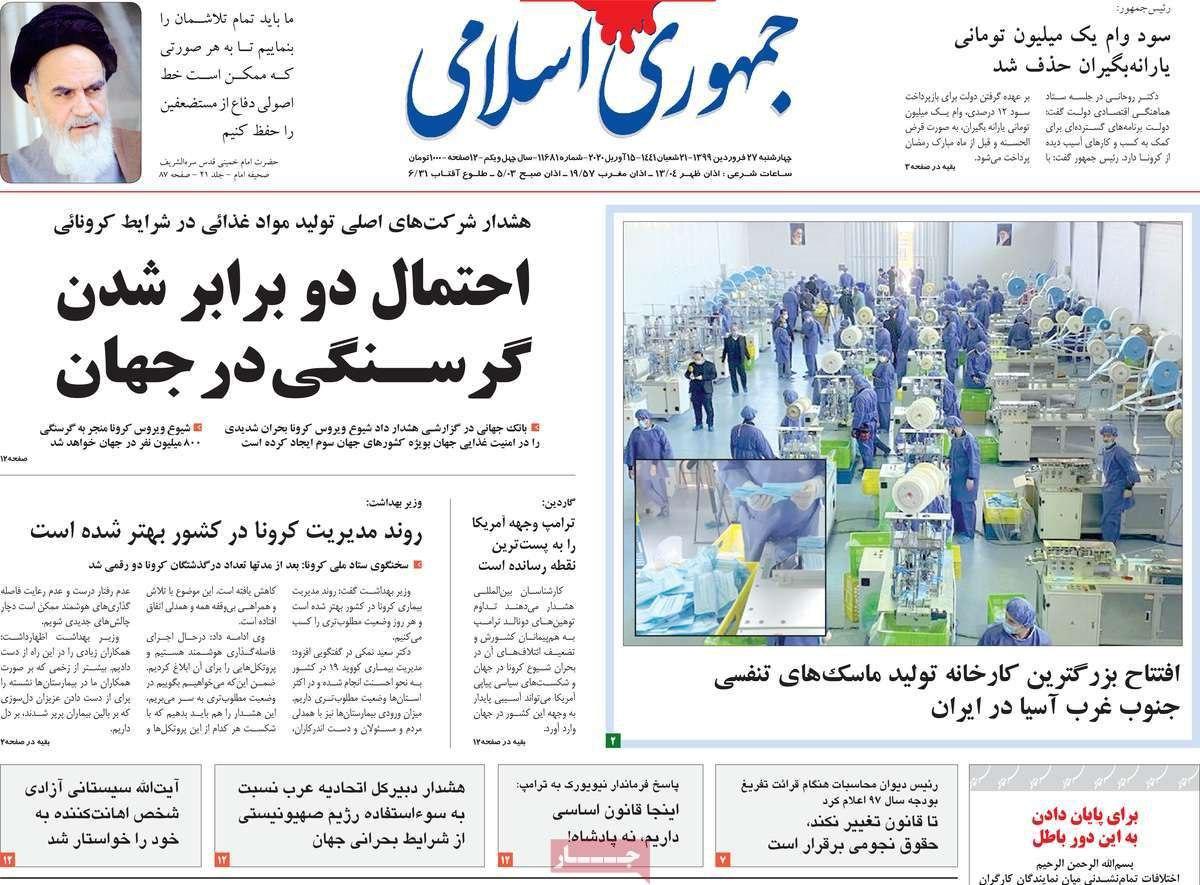
Jomhouri Eslami Newspaper:
1- Major Food Producers Warn Hunger May Double amid COVID-19 Outbreak
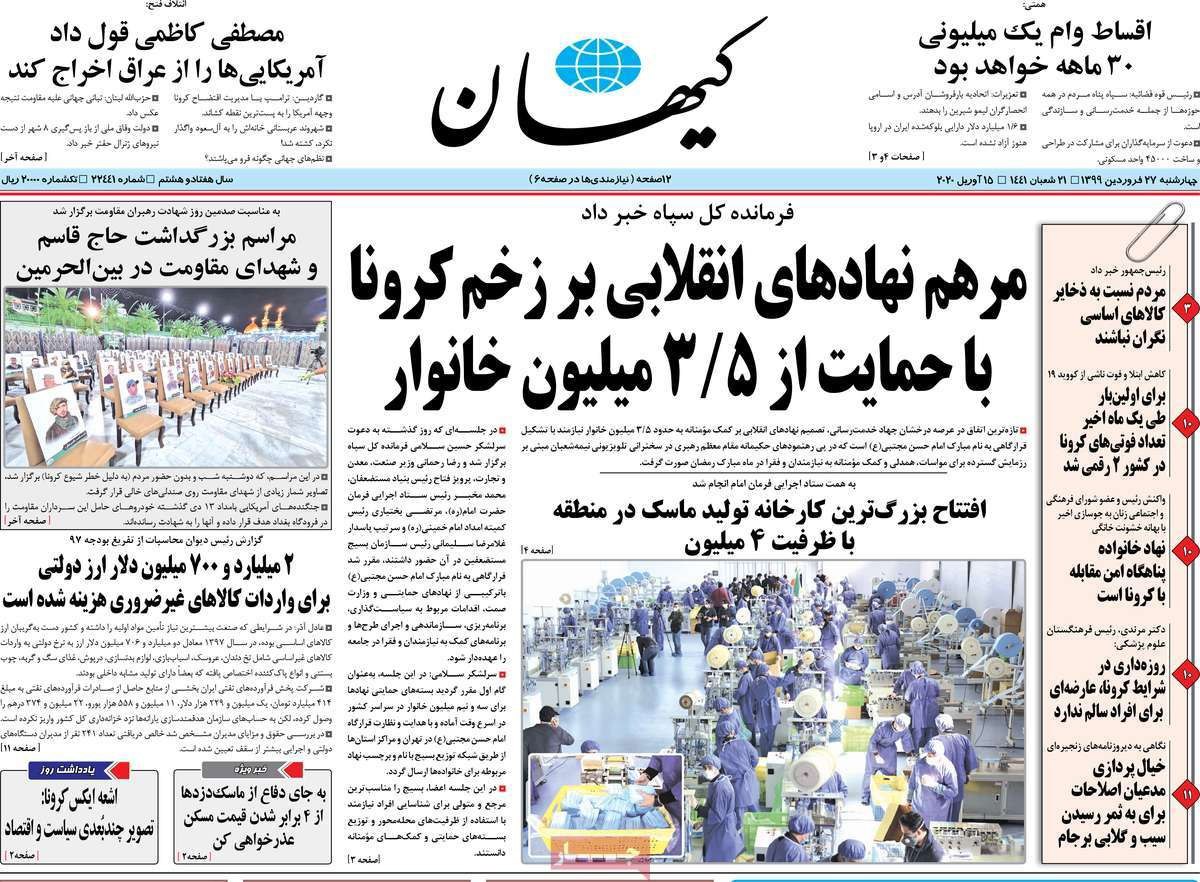
Kayhan Newspaper:
1- IRGC Chief: Revolutionary Bodies Helping 3.5 Million Families to Heal Their Corona Wounds
2- Al-Kazemi Vows to Expel Americans from Iraq
3- Middle East’s Biggest Mask Production Factory Opened with Capacity of 4 Million Masks
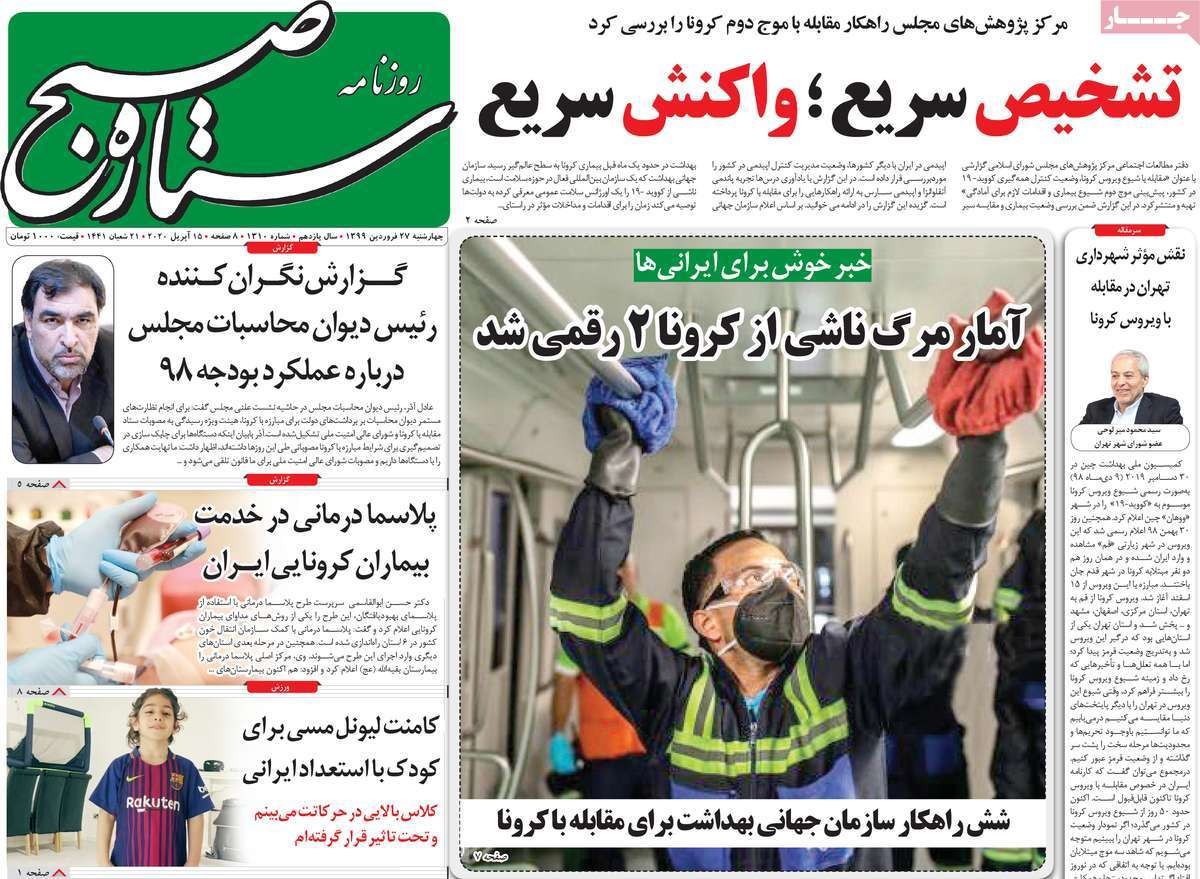
Setareh Sobh Newspaper:
1- COVID-19 Daily Deaths in Iran Below 100
2- Plasma-Therapy Used to Treat Corona Patients in Tehran
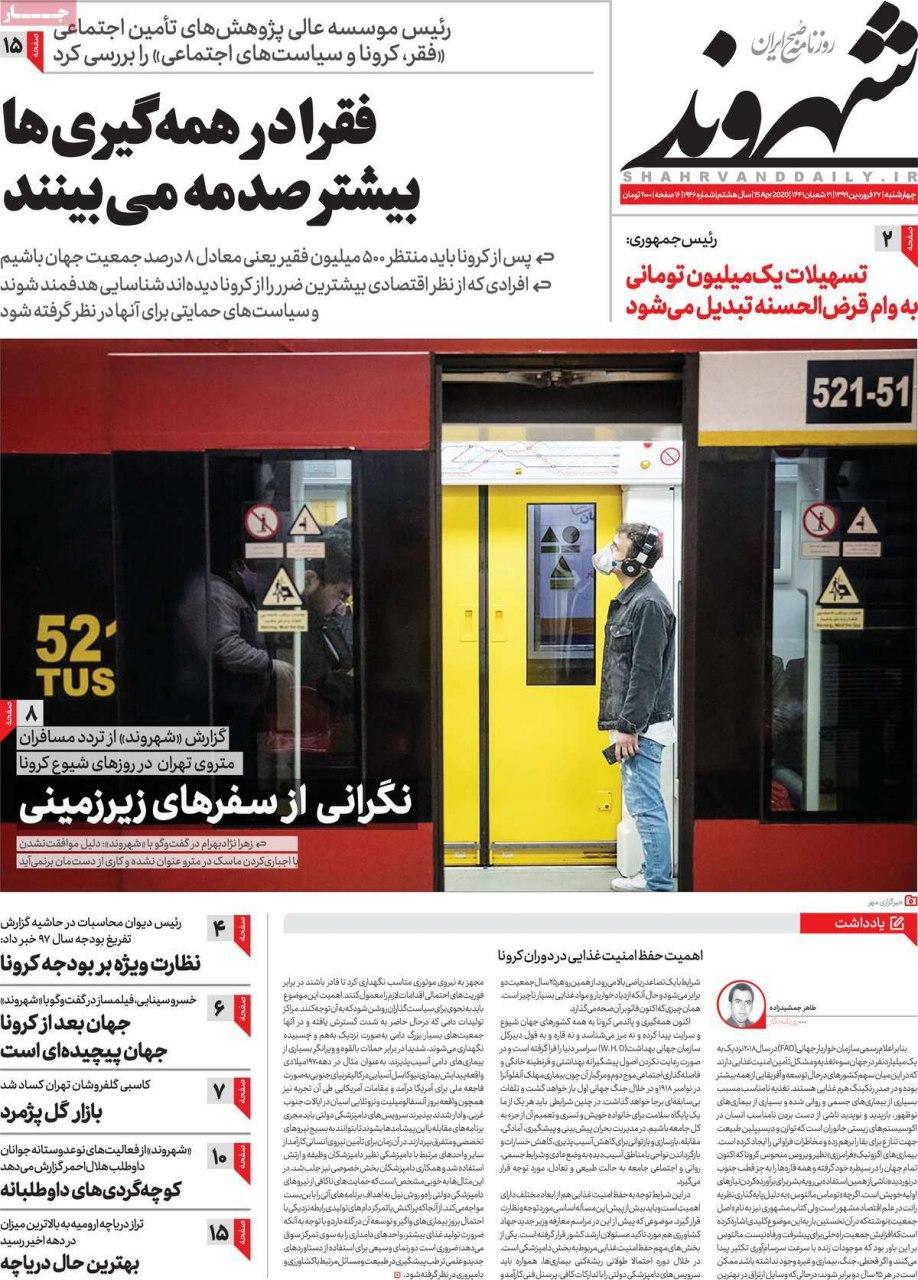
Shahrvand Newspaper:
1- Poor People Are Most Affected by Pandemics
2- Rouhani: Interest-Free Loans to Be Paid to Iranian Families
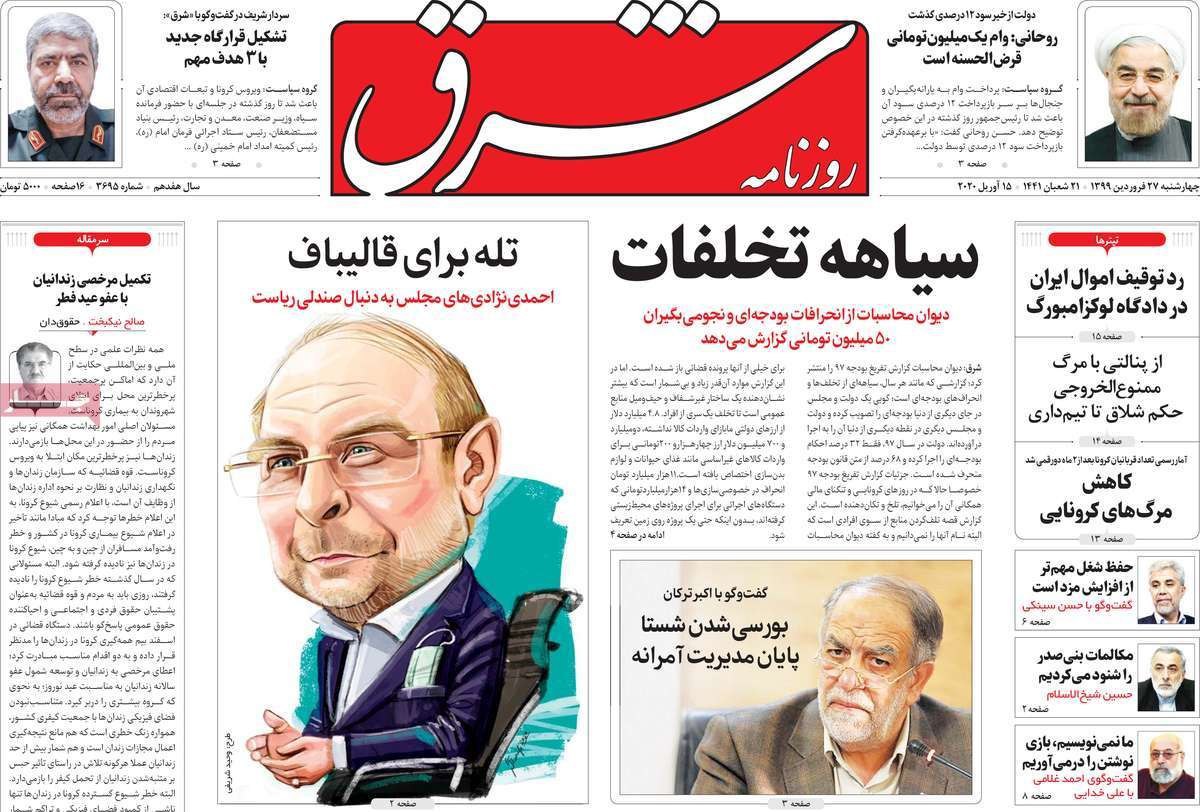
Shargh Newspaper:
1- Luxembourg Rejects US’ Bid to Seize Iran’s Assets
2- Decrease in Number of Deaths Caused by COVID-19
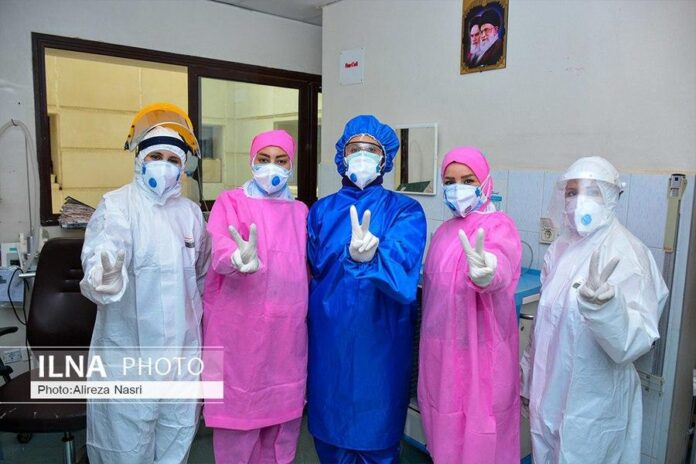
Kianoush Jahanpour announced on Wednesday that 1,512 new cases of coronavirus infections have been confirmed in the past 24 hours, which brings the total number of cases to 76,389.
He also noted that 49,933 patients have so far recovered and been discharged from the hospital.
According to the spokesman, 3,643 COVID-19 patients are currently in severe conditions of the disease.
So far, 299,204 COVID-19 tests have been taken across the country, Jahanpour said.
Except for one day of rise in the daily number of infections and fatalities (Apr. 10), the figures have been decreasing in the past 16 days.
This is the second day in a row that the daily number of fatalities has remained below 100.
Officials, however, have warned people to continue taking the virus seriously as any negligence may result in the second wave of the disease.
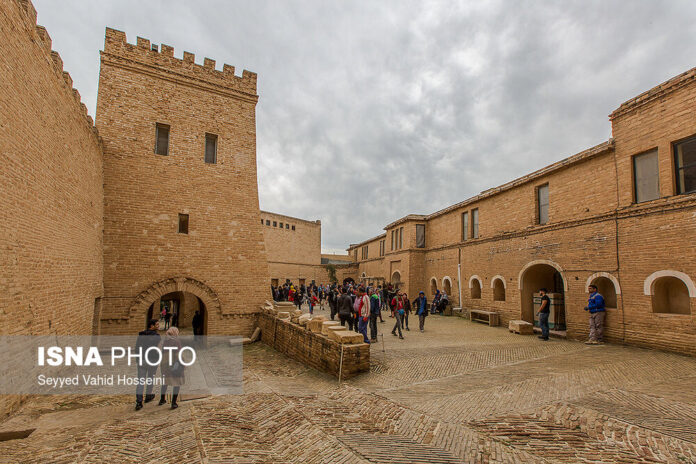
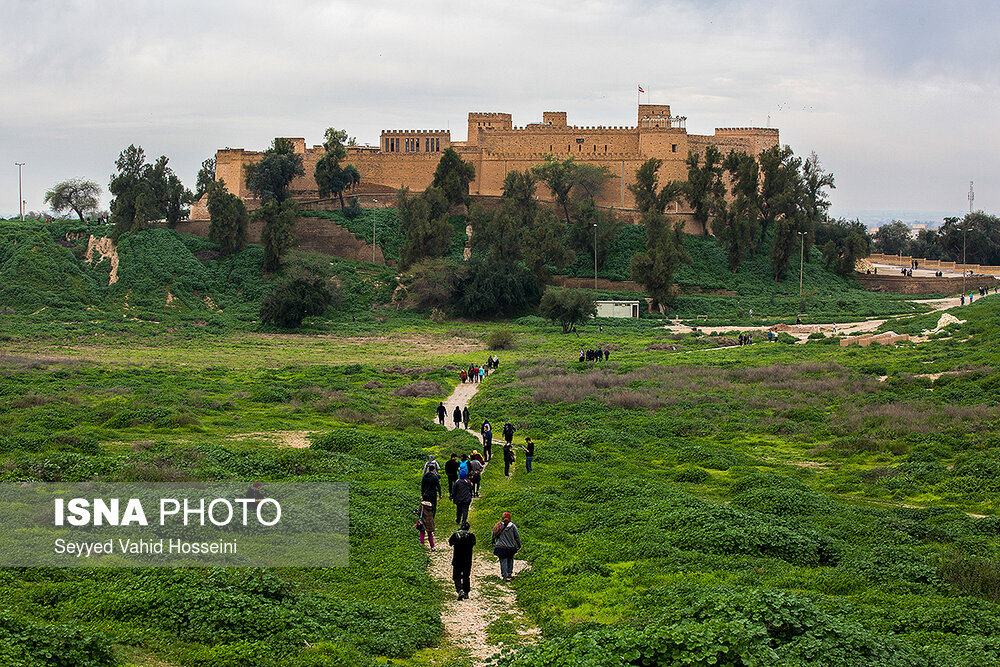
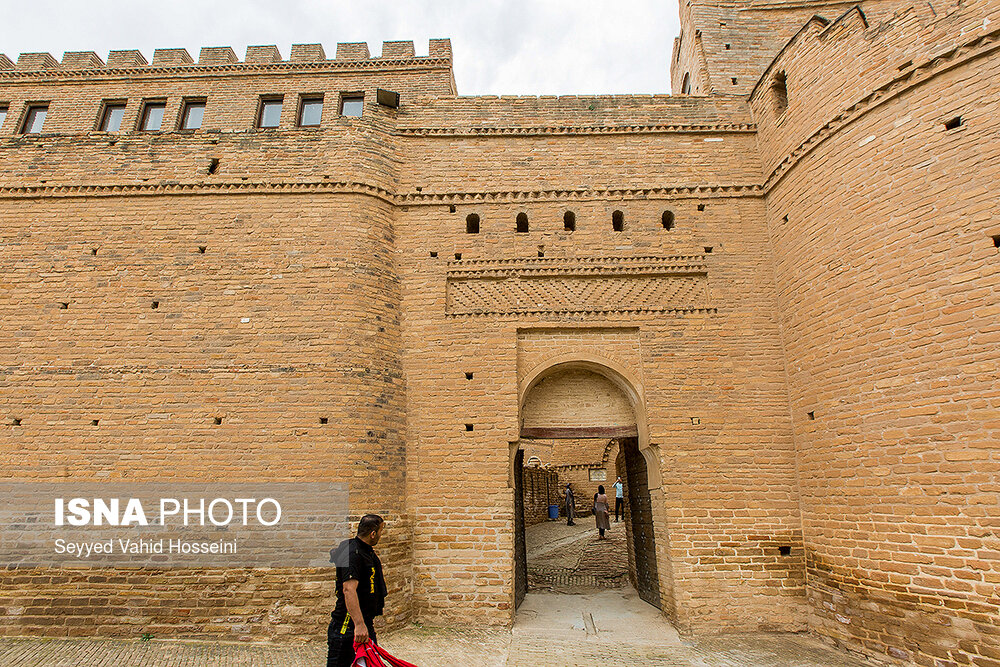
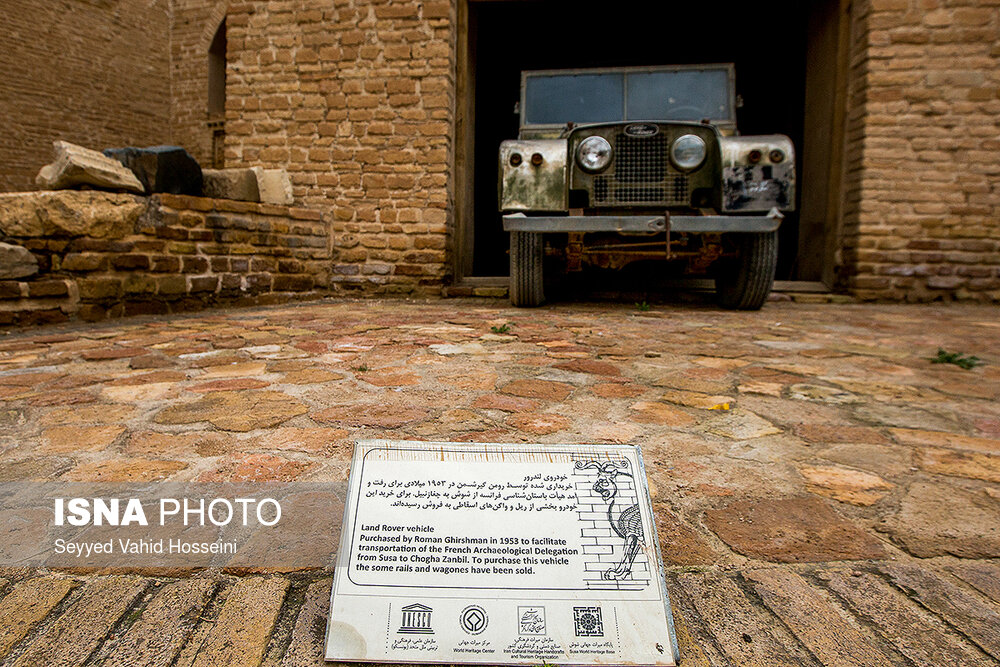
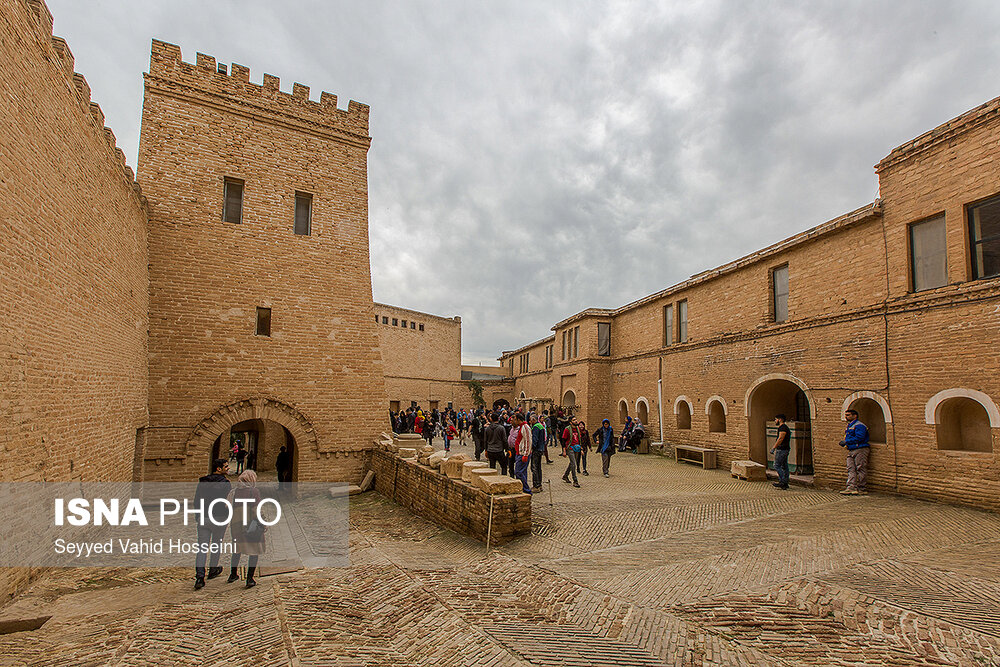
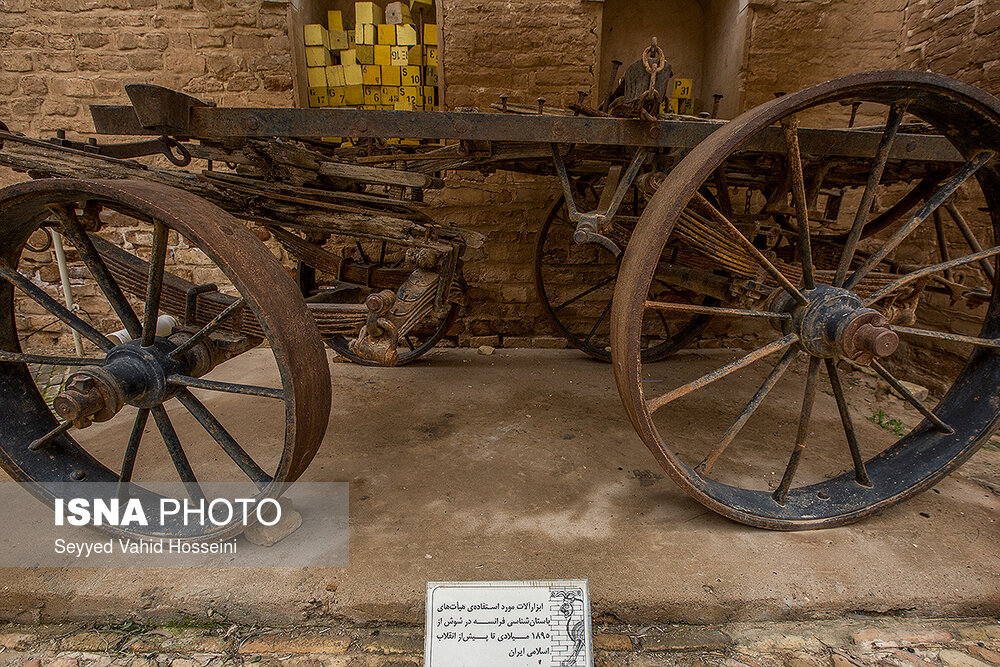
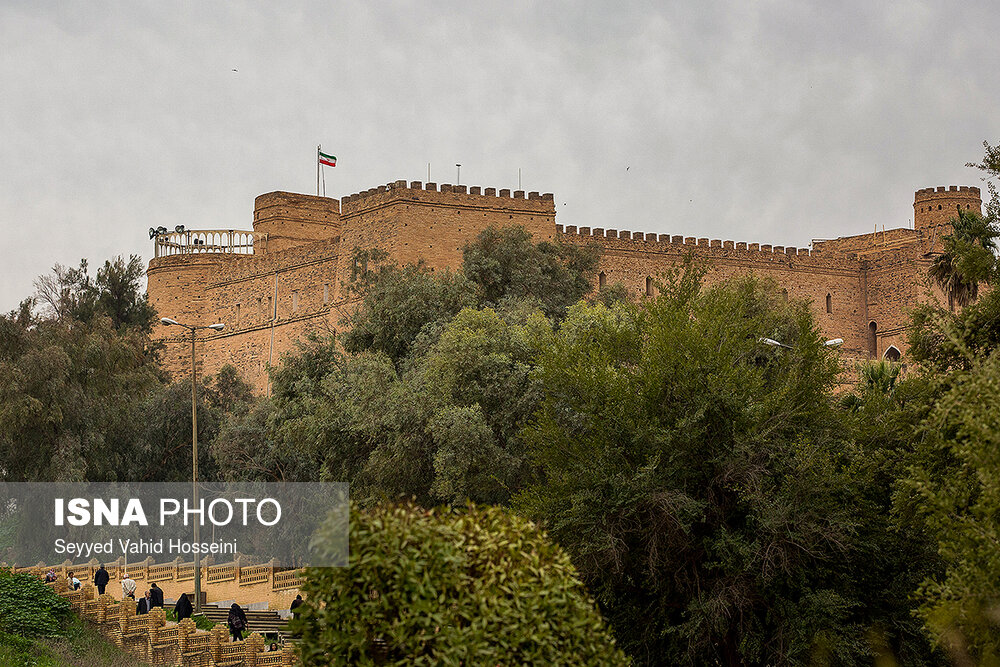
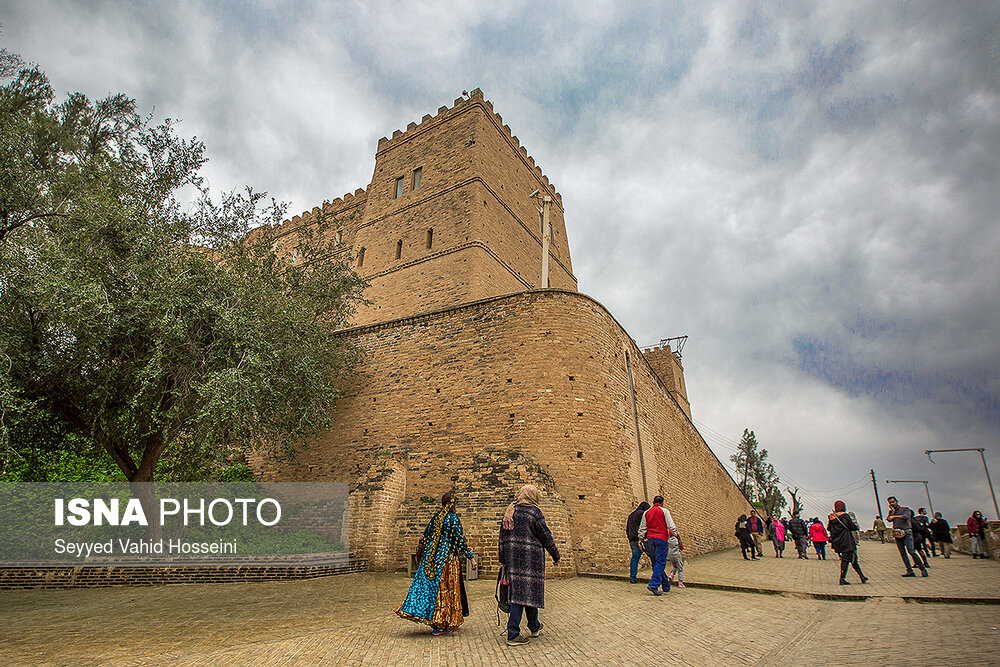
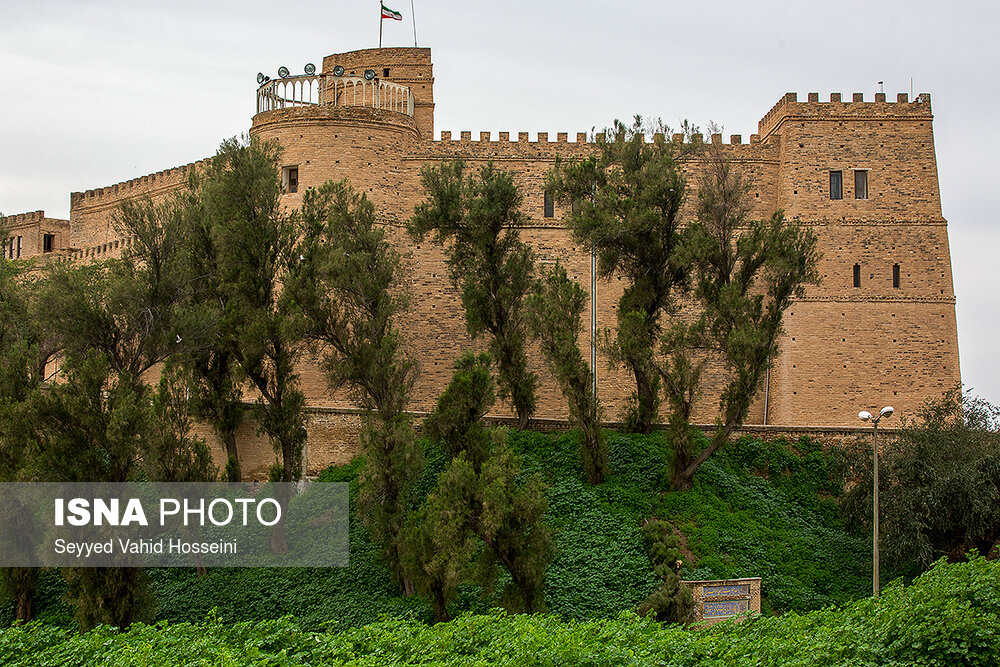
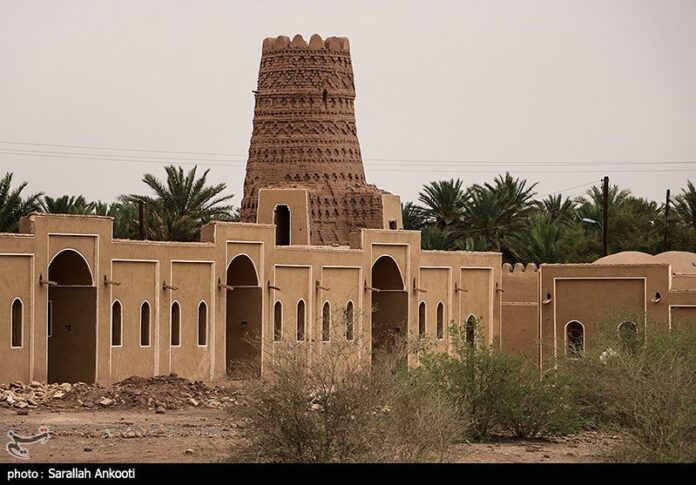
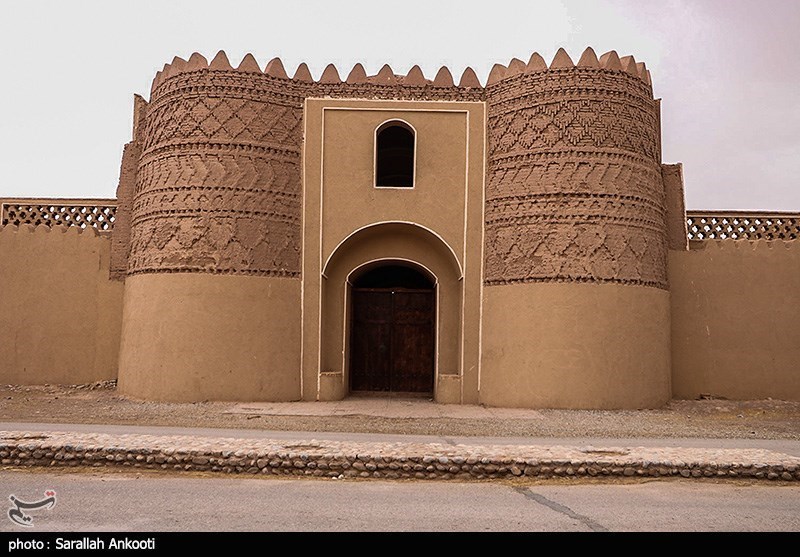
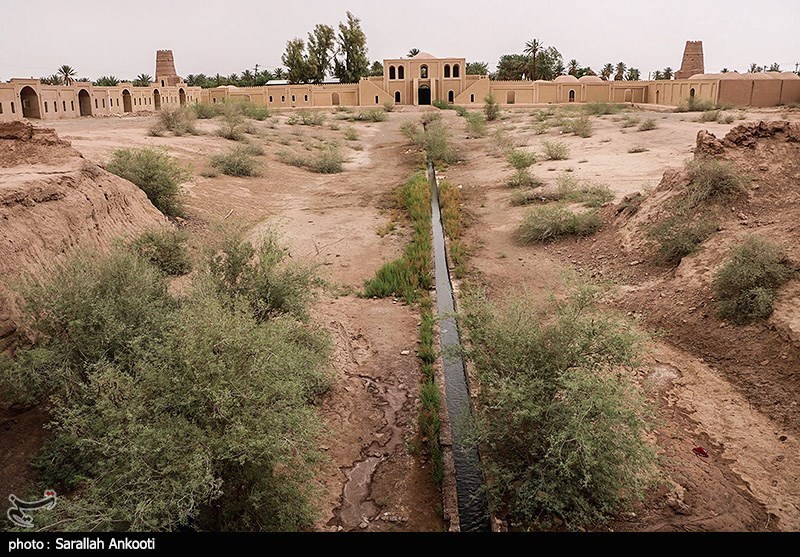
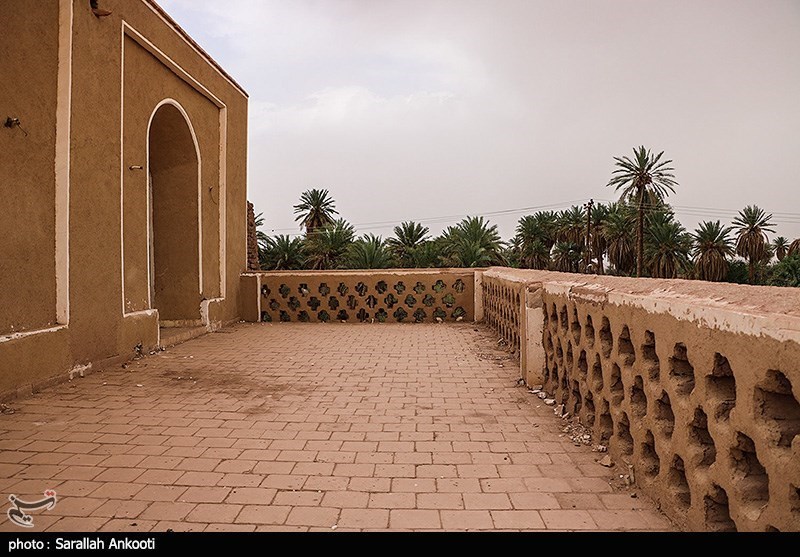
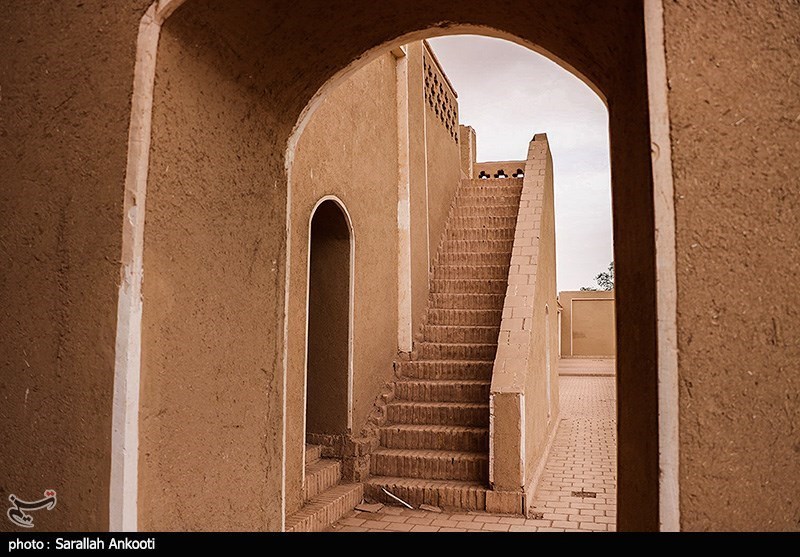
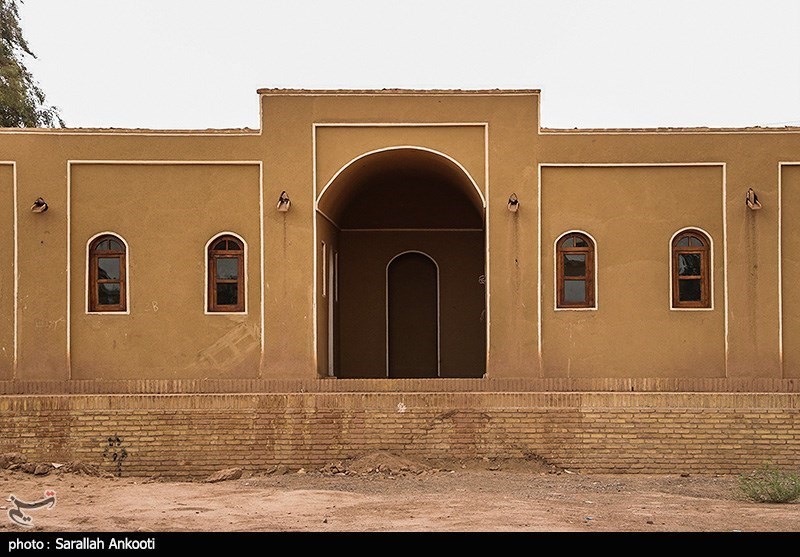
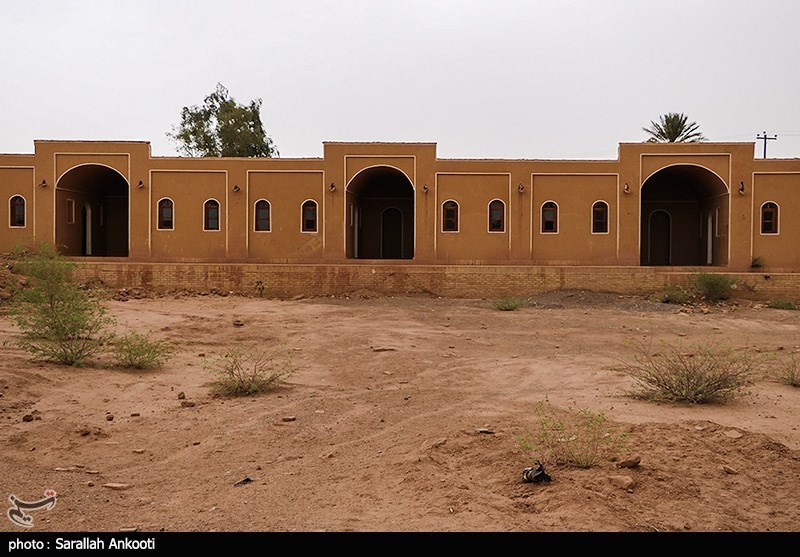
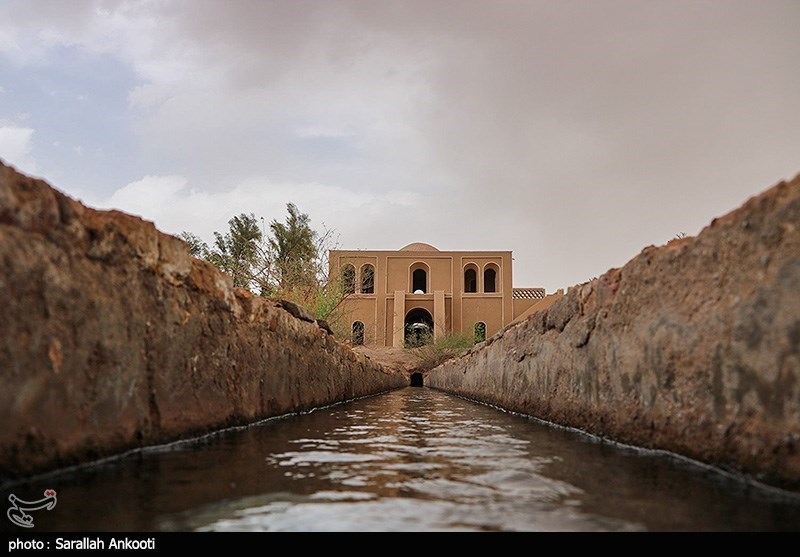
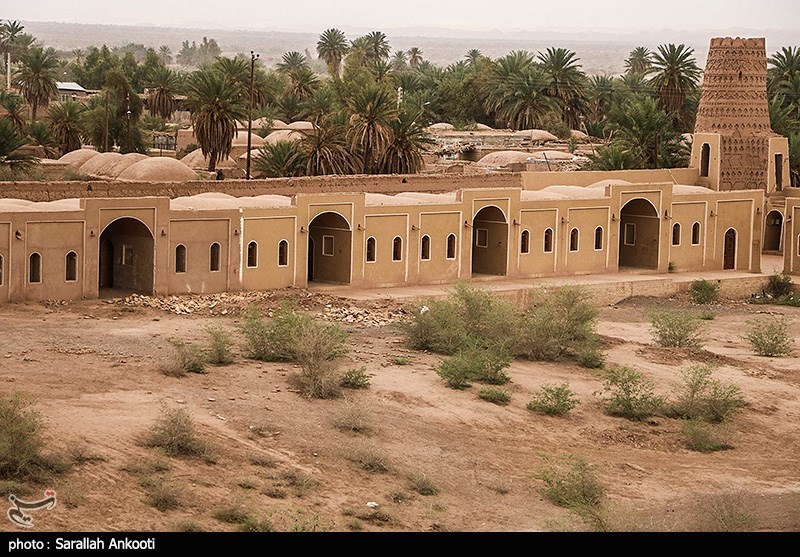
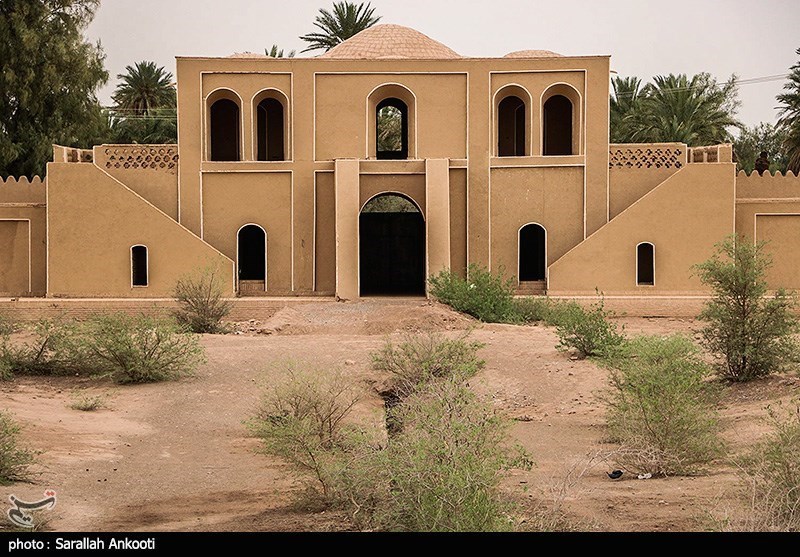
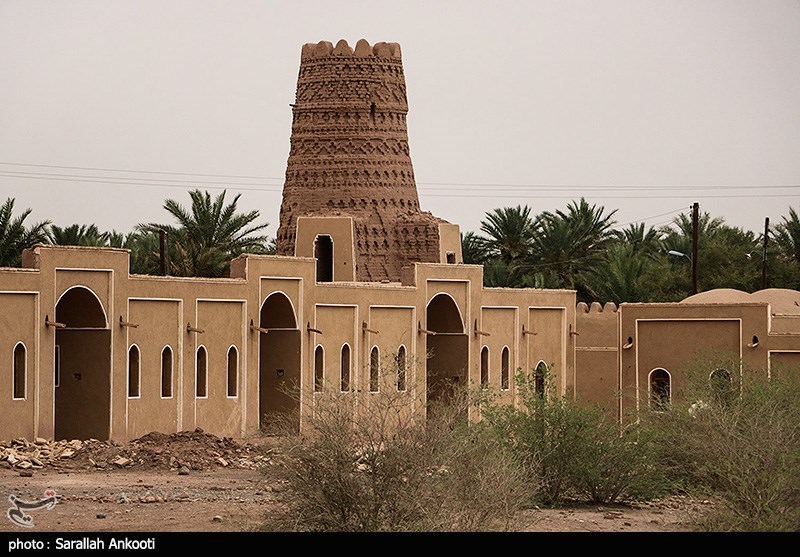
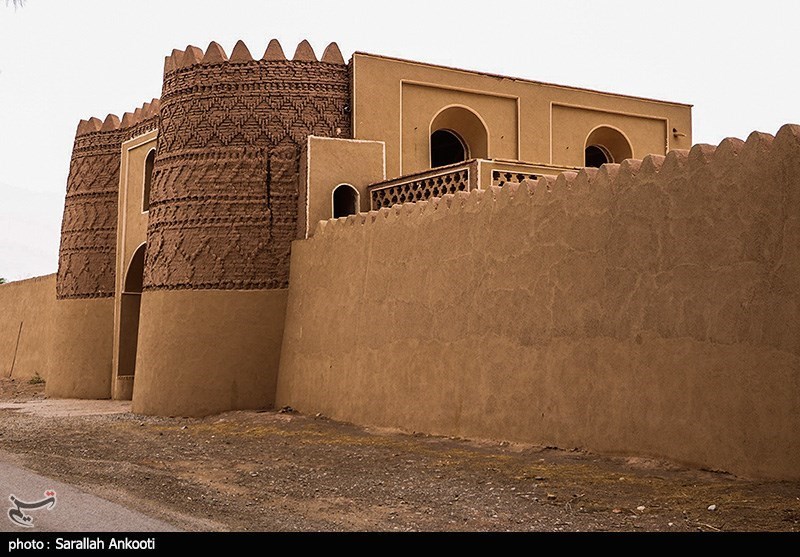
For this reason, the French castle is commonly known as the French castle or the castle of de Morgan.
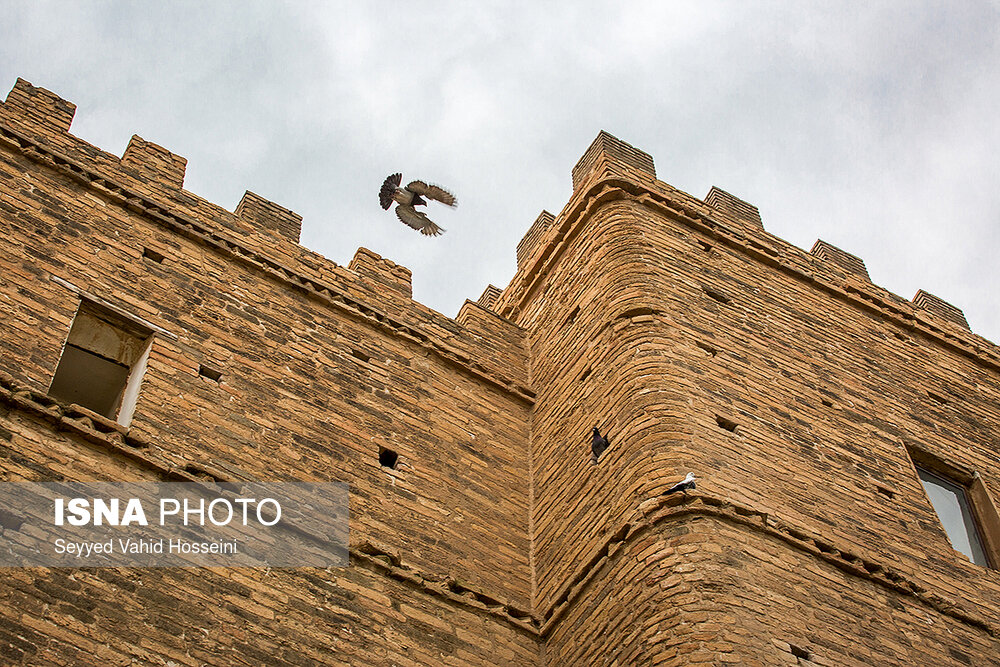
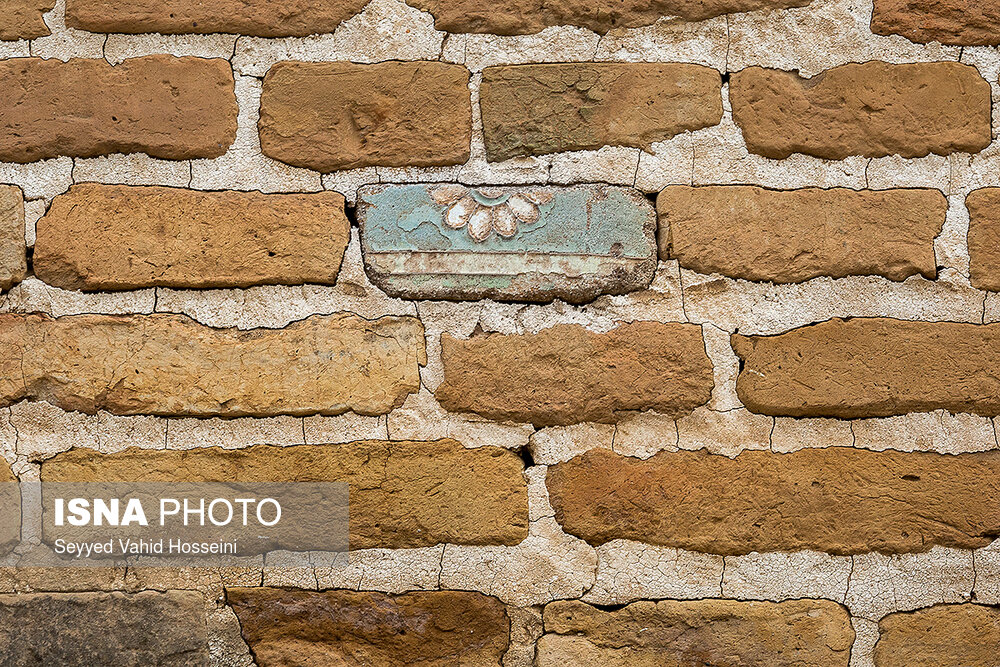
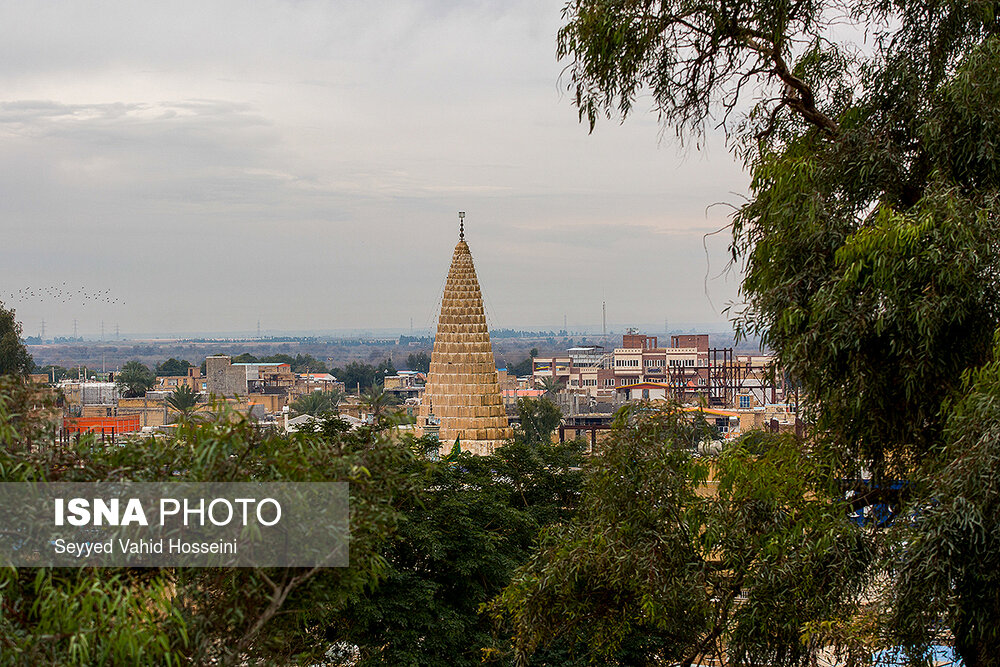
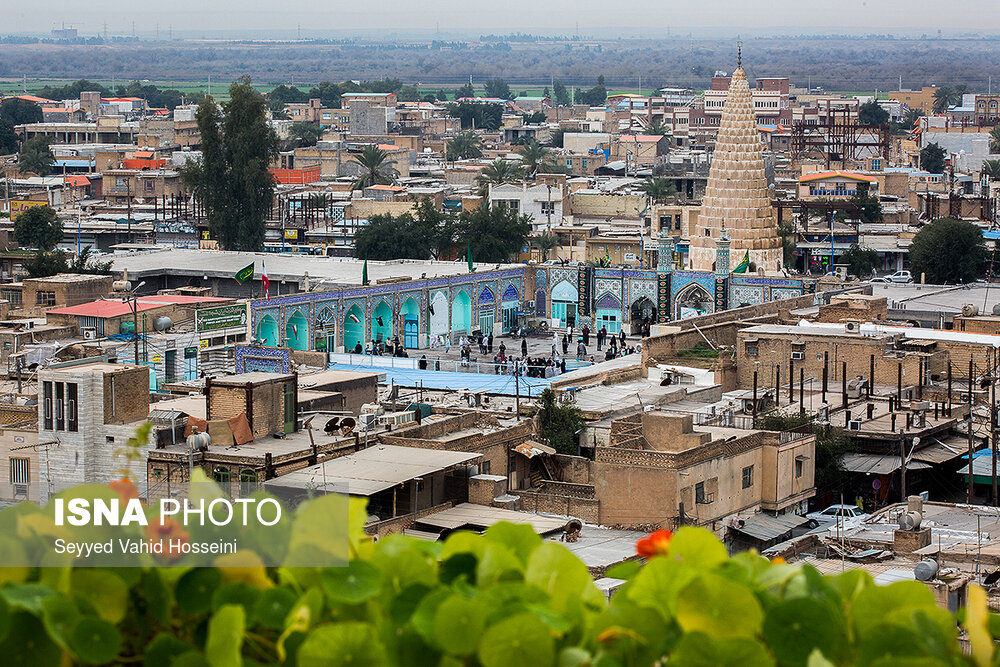
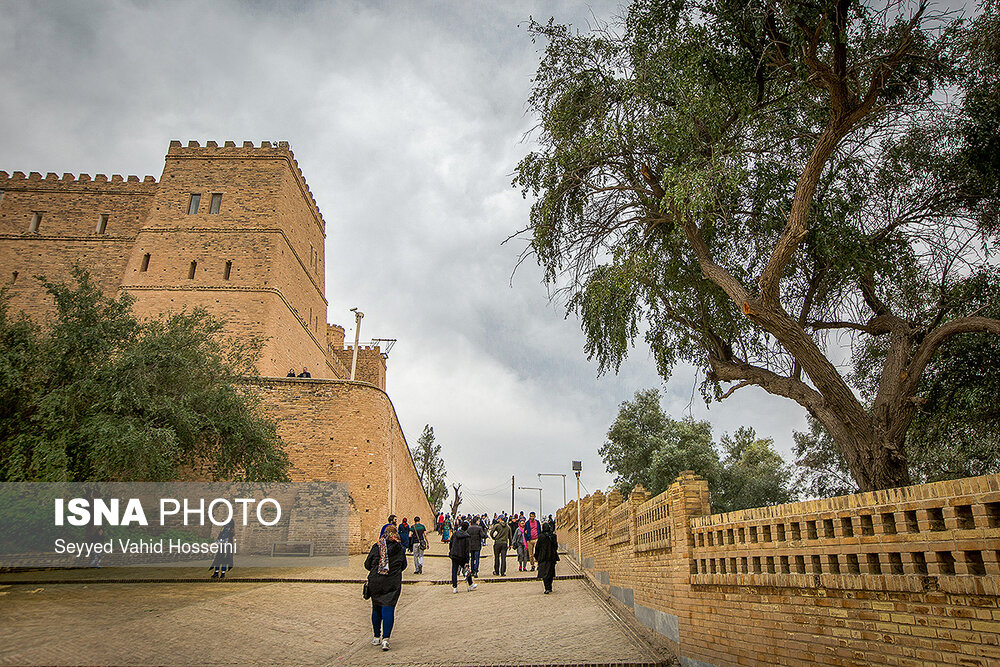
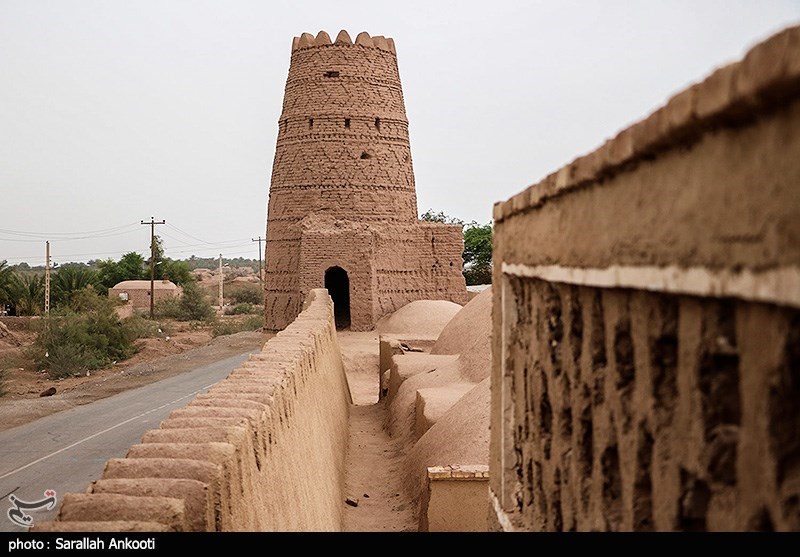
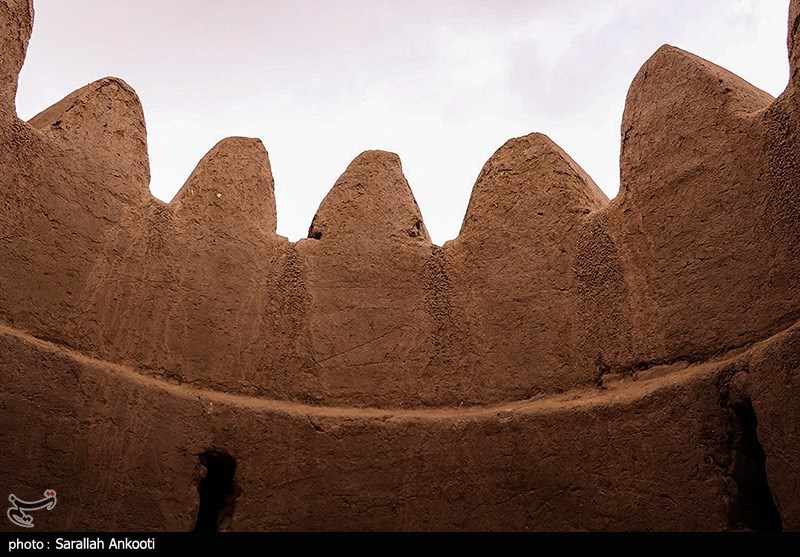
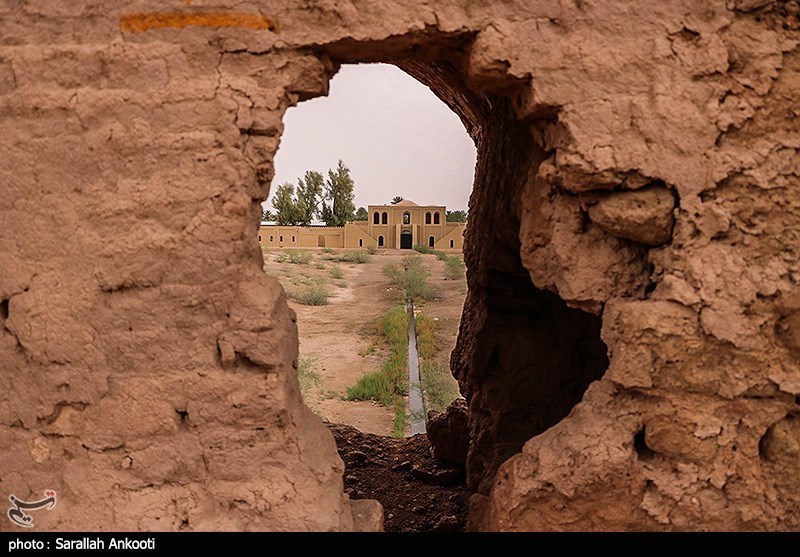
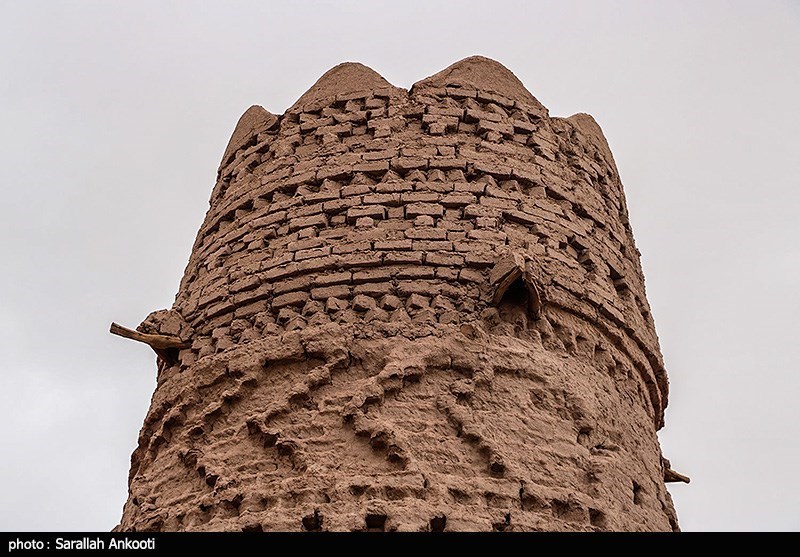
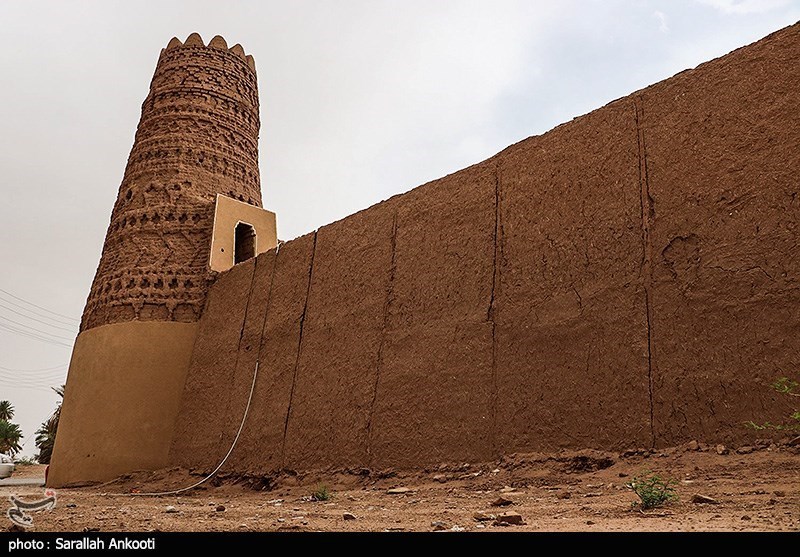
The castle is similar to the Bastille Castle in France. The structure was built by local craftsmen with bricks taken from two other archaeological sites, the Achaemenid Darius castle and the Elamite Choqazanbil ziggurat located in the nearby ancient city of Susa. The plan of the castle is trapezoidal in shape.
The historical castle was registered in 2001 in the list of national heritage of Iran.
The castle was heavily damaged by Iraqi bombs during the 1980s Iran–Iraq war, but has since been completely restored by the Iranian government.
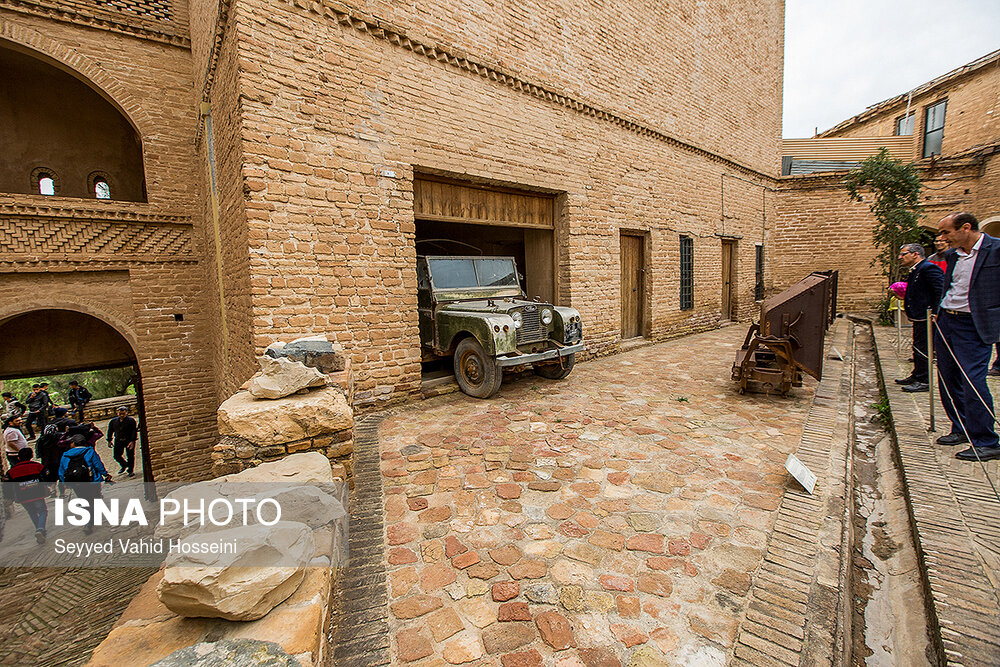
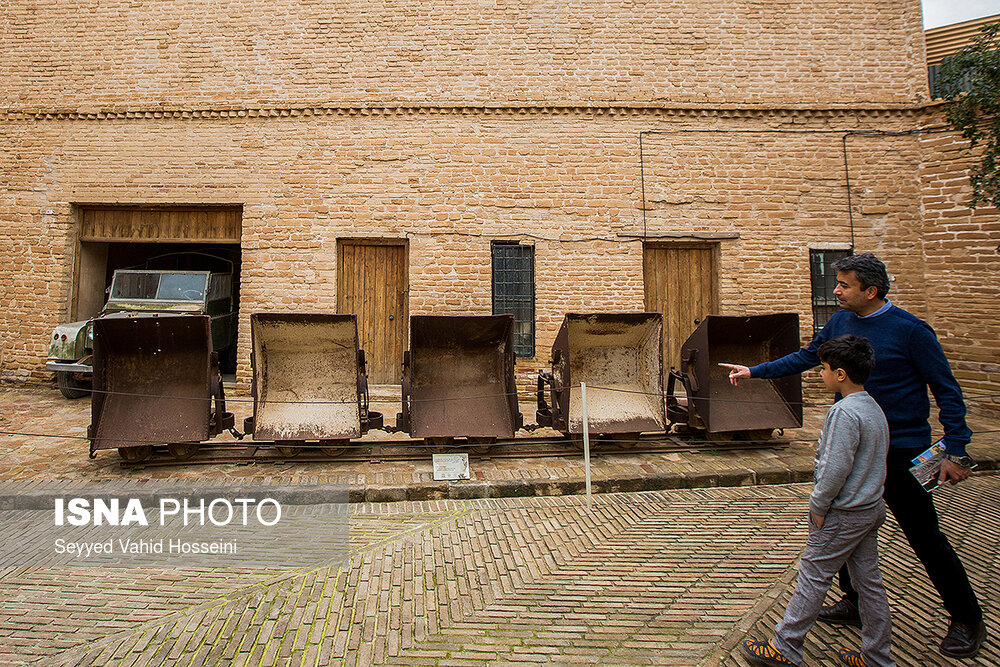
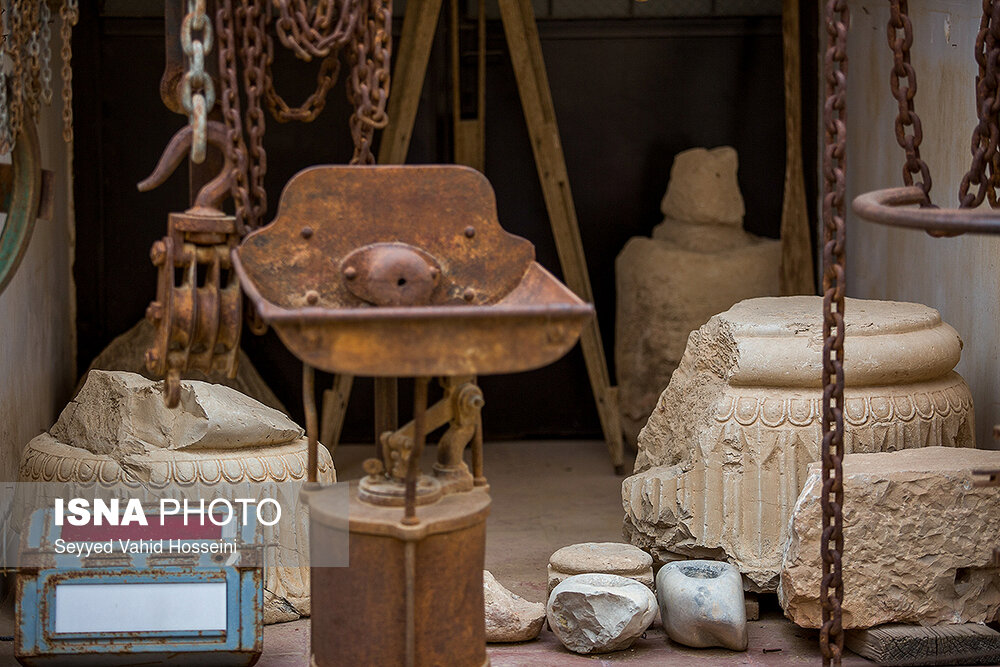
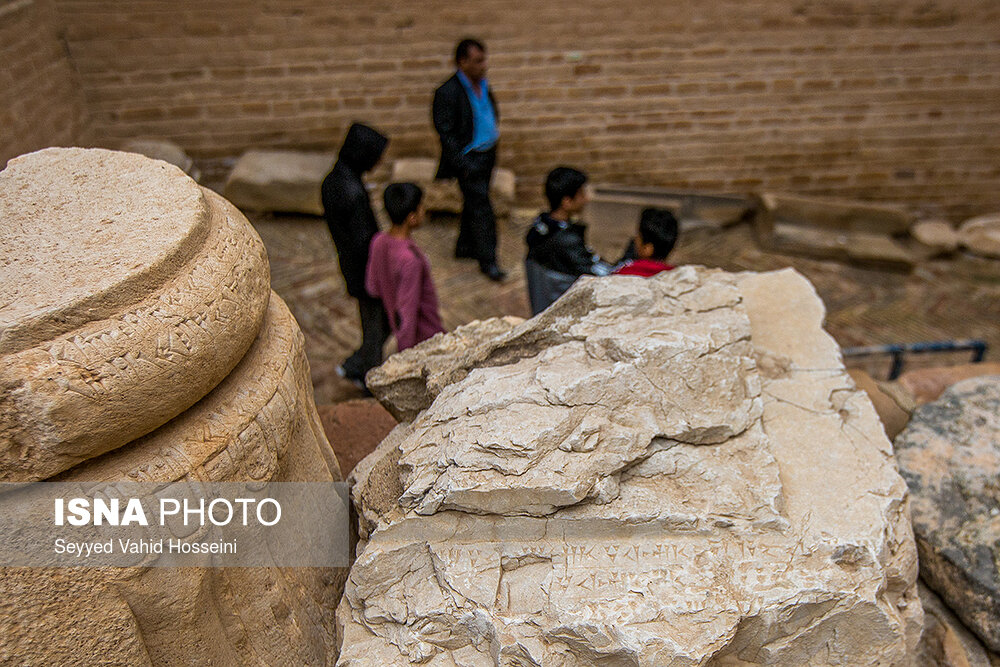
It is now used as a museum and the historical objects as well as tools of the French archeology are kept in it.
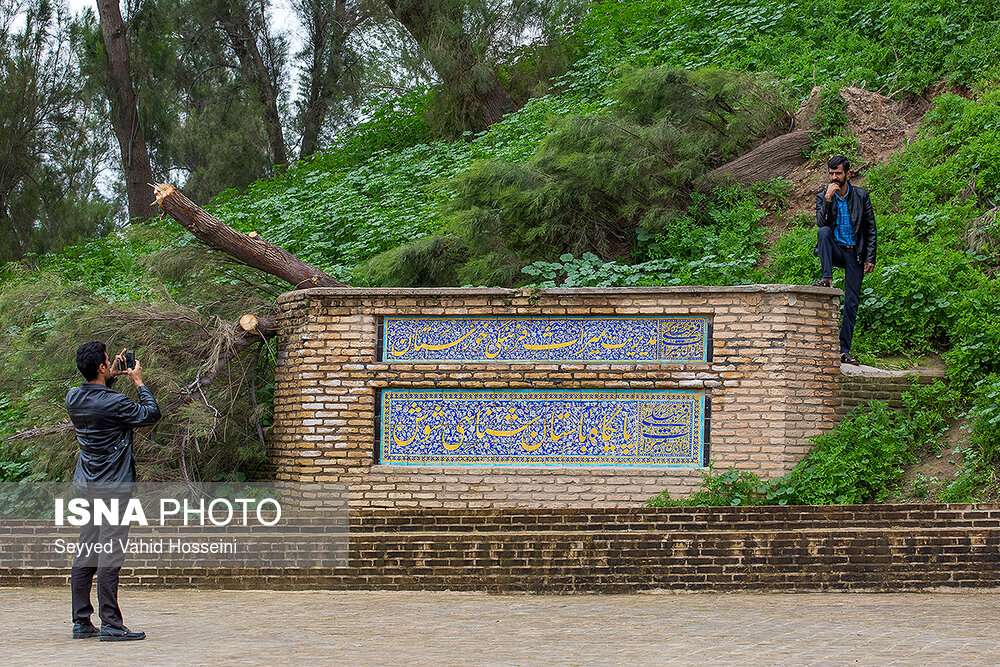
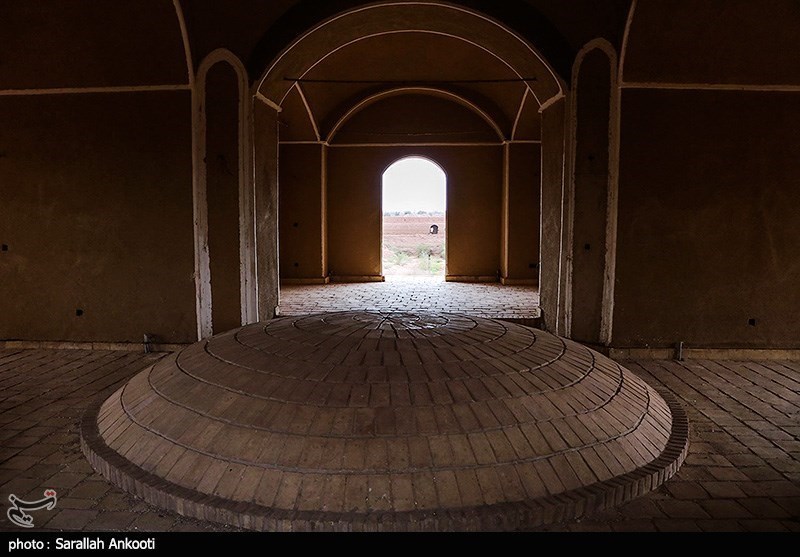
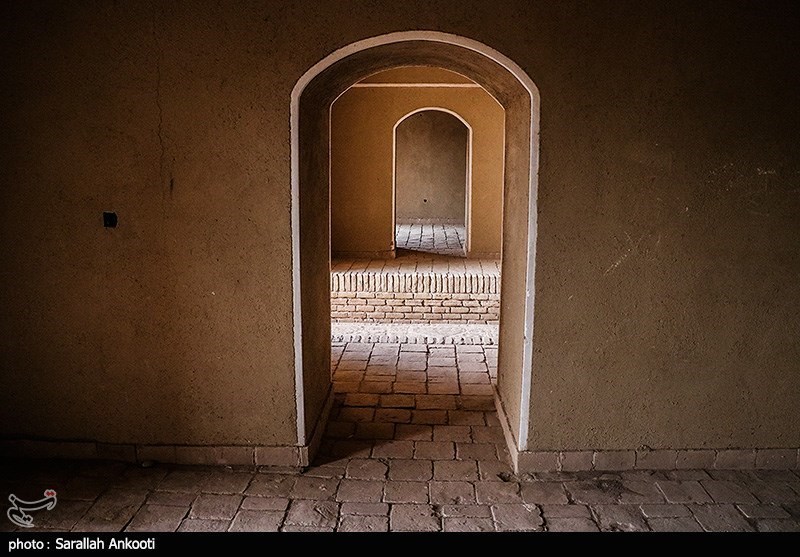
Here are photos of the castle retrieved from ISNA:
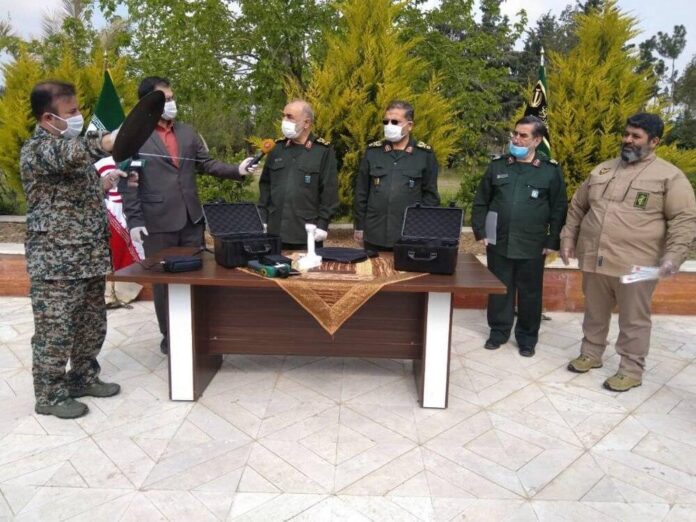
The apparatus devised by the Islamic Revolution Guards Corps (IRGC) was unveiled in a ceremony attended by IRGC Chief Commander Major General Hossein Salami as well as several other top military officials Wednesday.
“The apparatus can detect the virus within a distance of almost 100 metres,” said General Salami.
“The device does not need to take blood samples and is capable of detecting the virus both on surfaces and on humans,” he said.
The top general noted the system has been tested in different hospitals and its performance has been positive by up to 80 percent.
With people across Iran advised to stay home to stem the coronavirus pandemic’s spread, activists have reported a rise in domestic violence cases since the start of self-quarantines.
Meanwhile, Iranians received a text message on their mobile phones on Friday, sent by the Health Ministry, which asked people to call a hotline to report domestic violence cases.
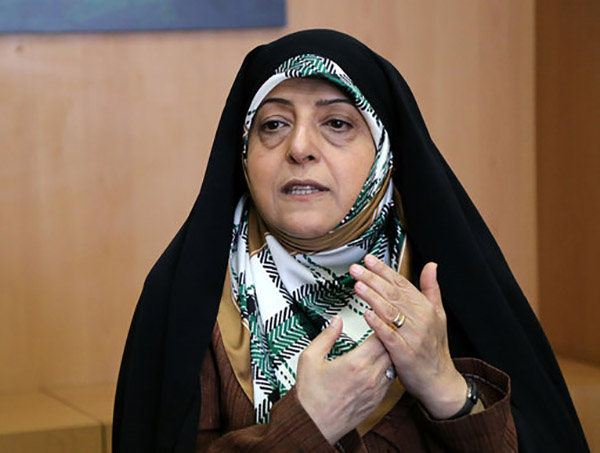
In remarks on Tuesday, Vice-President for Women and Family Affairs Masoumeh Ebtekar said 123 is a national domestic abuse helpline serving as “Social Emergency Service” that provides advice and support to people.
The hotline can also prevent the commitment of crimes, because informing people about such social emergency service will deter the abusers and criminals from any wrongdoing, she noted.
123 is a free-phone 24 hour helpline run by the State Welfare Organization of Iran, which provides advice and psychological support to victims of domestic violence.
Ebtekar has announced that the helpline will greatly help strengthen the family foundations, since the service is not confined to a specific gender and is designed to address every type of violence that may harm the families.
She noted that while the social distancing programs have been carried out as a common protocol in the world to stop the spread of coronavirus, they have put family members in perpetual proximity to each other, which has increased the risk of tensions and domestic violence.
There has been a rise in the number of reports of domestic abuse in the world after the coronavirus-related lockdown restrictions, she added, saying the number of applications for divorce has risen by several times in Iran.
Ebtekar finally noted that the Vice-Presidency for Women and Family Affairs has prepared a series of podcast to help prevent domestic violence.
1- Judiciary Chief: Prisoners’ Families Will Receive Economic Support
Aftab-e Yazd Newspaper:
1- Trump in Limbo of Coronavirus
2- Deal between Abdullah, Ghani Was Predictable: Analyst
3- Analyst Asks Why Rich Iranian People Are Indifferent
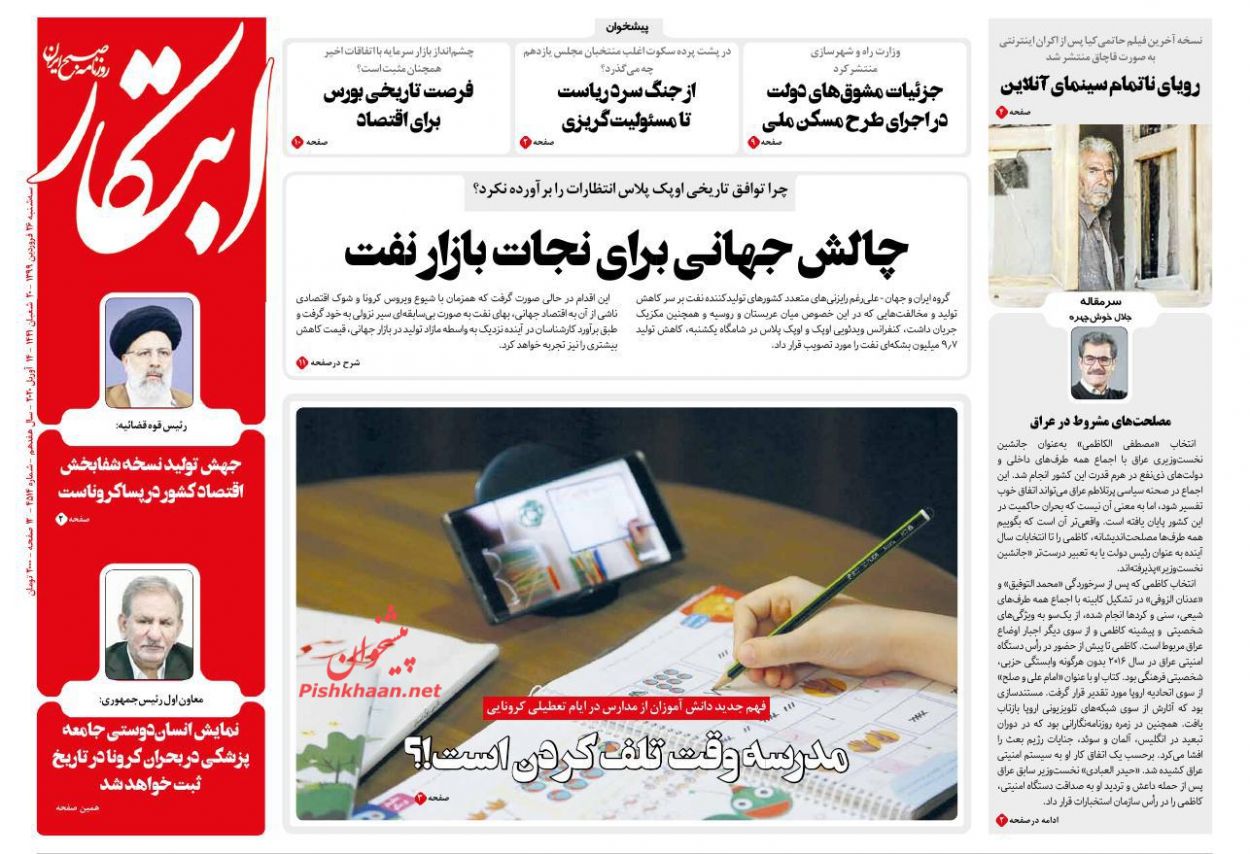
Ebtekar Newspaper:
1- Global Challenge to Save Oil Market
2- Iran First VP: Medical Community’s Show of Humanity Will Go Down in History
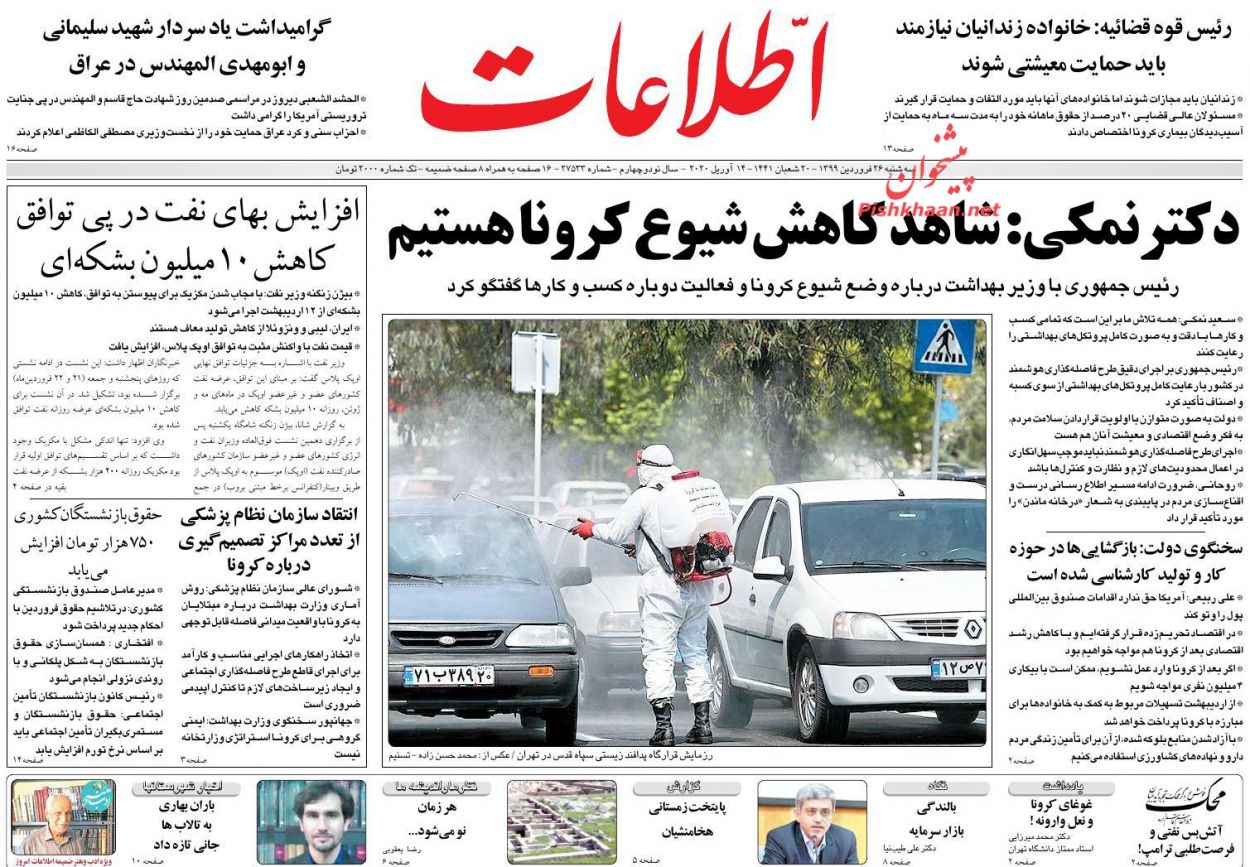
Ettela’at Newspaper:
1- Spread of COVID-19 Slowed Down: Health Minister
2- Increase in Oil Prices after Deal to Cut 10m bpd
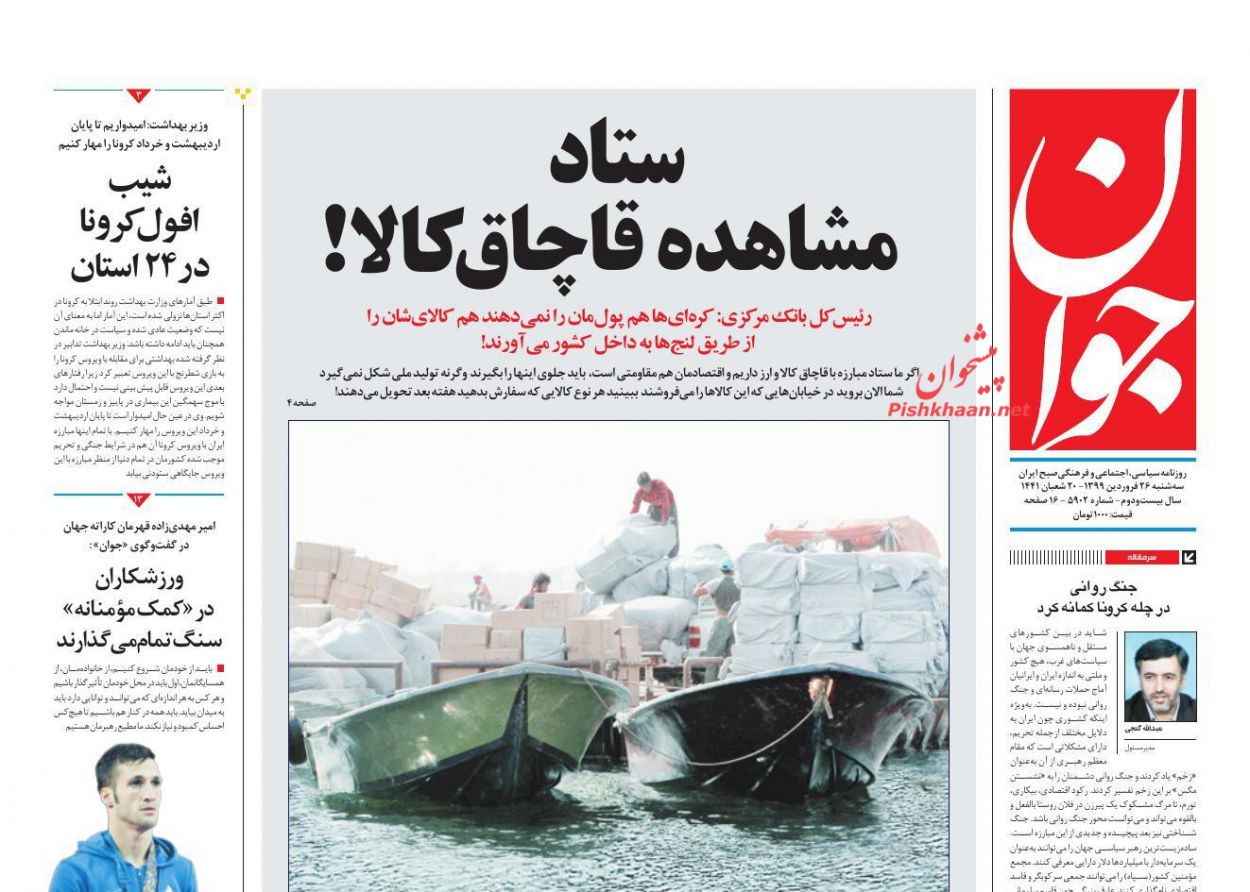
Javan Newspaper:
1- Coronavirus Decreasing in 24 Provinces
2- Central Bank Chief: Koreans Don’t Pay Our Money, But Still Export Their Products to Iran through Small Boats
Kayhan Newspaper:
1- Afghan Immigrants’ Efforts to Supply Masks Needed by Iranian Medical Workers
2- Korean Companies’ Impudence against Iran, Backed by Smugglers
3- Architect of Iran Sanctions Admits Humanitarian Exchanges with Iran Not Exempted
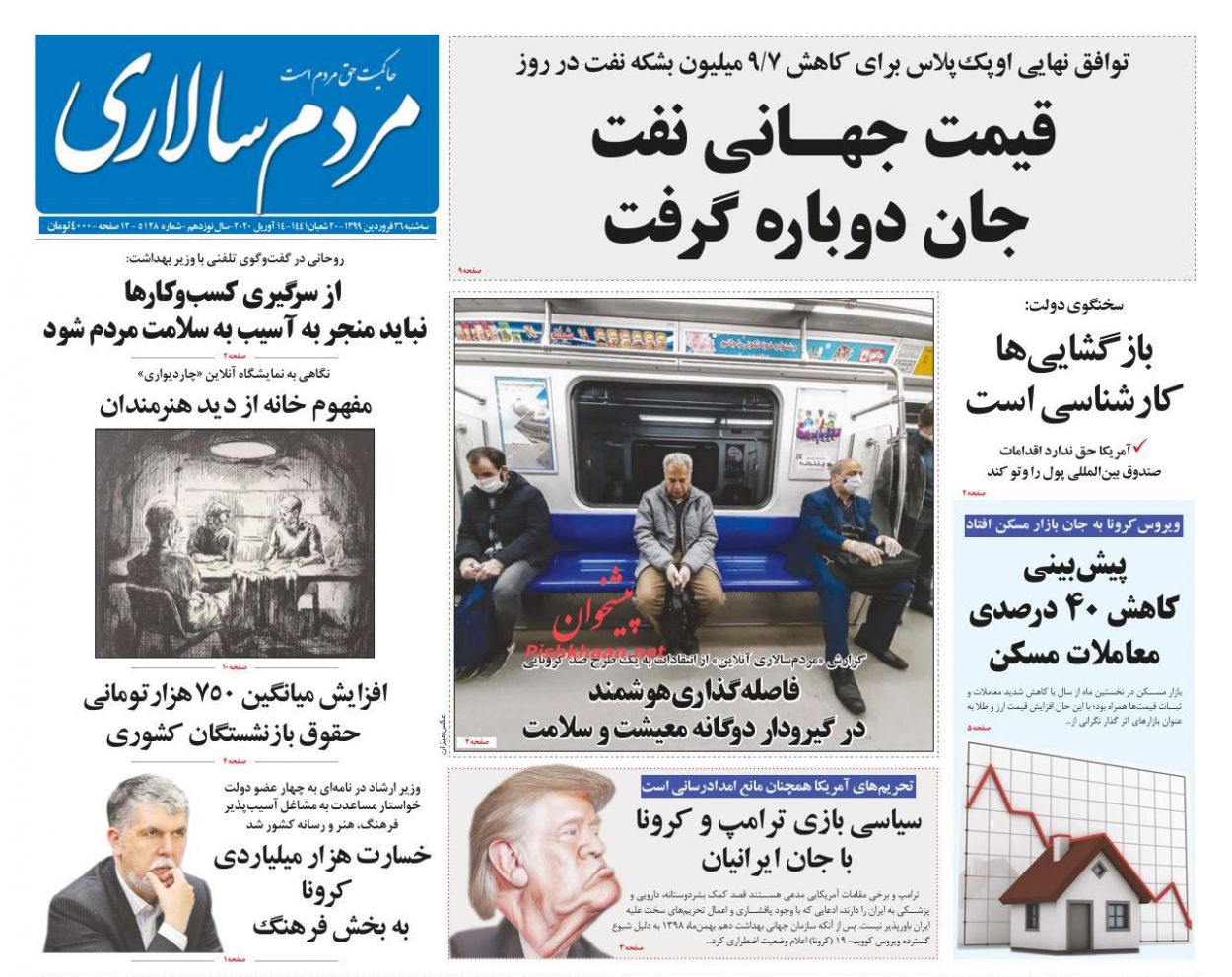
Mardom Salari Newspaper:
1- Gov’t Spokesman: Experts Approve of Our Decision to Reopen Businesses
2- Trump, Corona Playing with Lives of Iranians
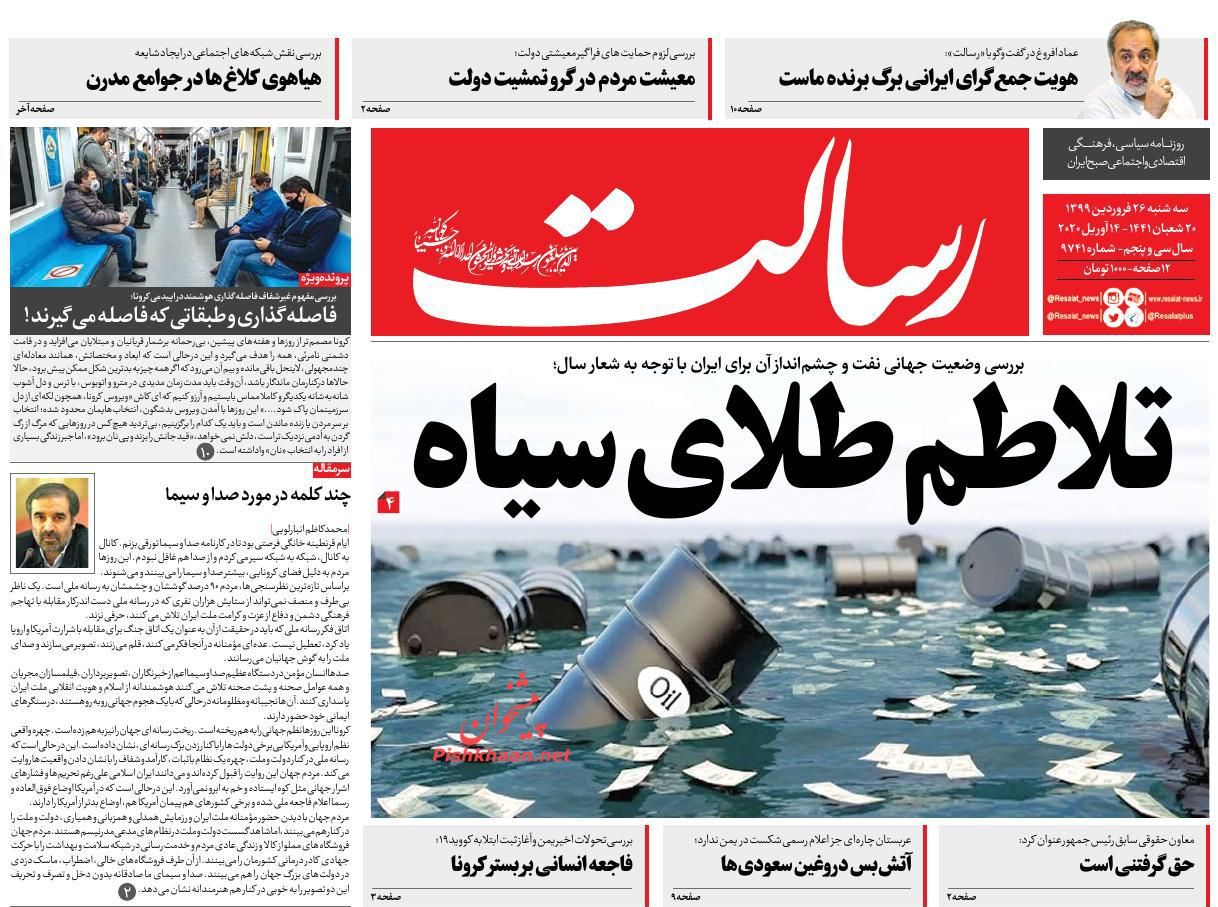
Resalat Newspaper:
1- Oil Market Fluctuations
2- Saudis’ Fake Ceasefire: Riyadh Has No Choice but to Officially Declare Defeat in Yemen
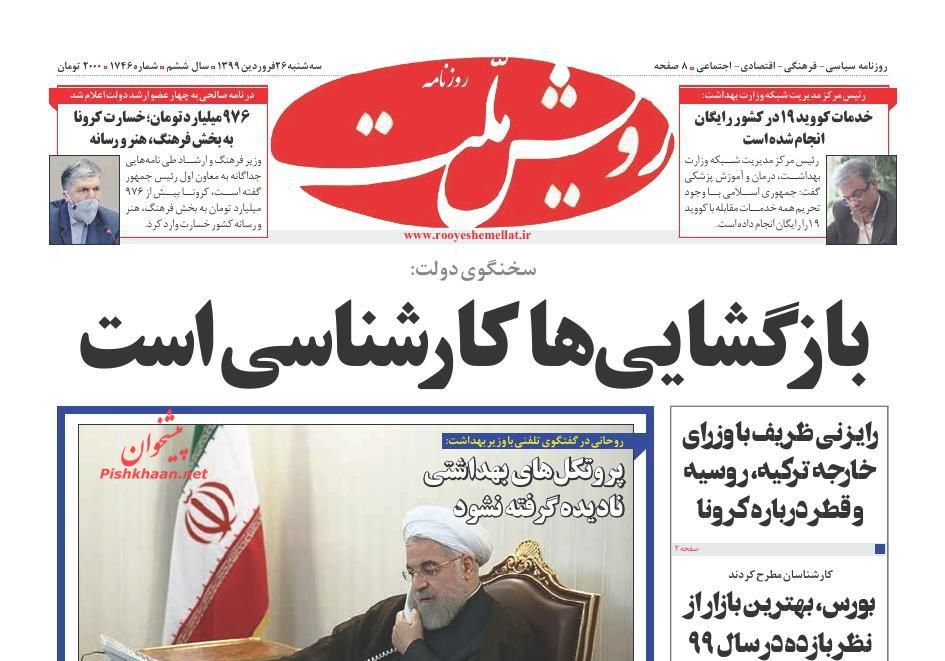
Rooyesh-e Mellat Newspaper:
1- Zarif Holds Talks with Turkish, Russian, Qatari Counterparts on COVID-19
Setareh Sobh Newspaper:
1- Nation Reveals: Pentagon Had Predicted COVID-19 Outbreak in 2017
Shargh Newspaper:
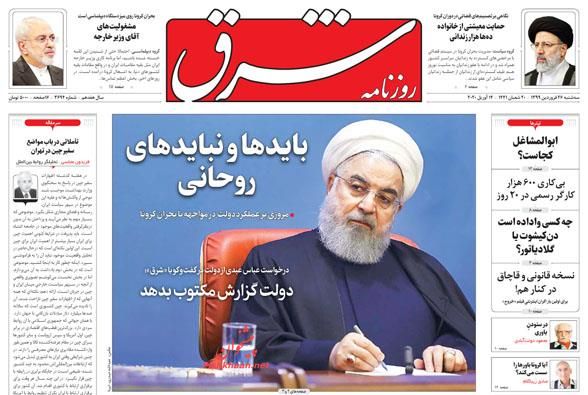
1- Do’s and Don’ts of Rouhani: A Review of Government Handling of COVID-19 Crisis
2- Mr Foreign Minister’s Busy Days: Corona Crisis on Foreign Ministry’s Agenda
Kianoush Jahanpour announced on Tuesday that the new deaths increase the death toll to 4,683.
He said 1,574 new infections have been confirmed in the past 24 hours, which raise the total number of cases to 74,877.
So far, 48,129 patients have recovered and been discharged from the hospital, he noted.
According to the spokesman, 3,691 are currently in severe conditions of the disease.
He also put the overall number of COVID-19 tests taken so far at 287,359.
The food of each country is part of that country’s individualities and is known as one of the factors introducing its culture. Some of them are so interesting and noticeable that can even be considered as one of the attractions in the world today.
The Iranian food culture is of great diversity, and at every point a new taste can be discovered and enjoyed.
Pontia Fallahi, the Iranian-American woman, has a different look at this culture, and in an article introduces ten Iranian desserts that could be a different experience for those who travel to this land.
According to a Farsi report by Karnaval.ir, Pontia was born and lived in America and has the experience of living in three other countries. In her article, she has described ten local desserts that everyone should try them.
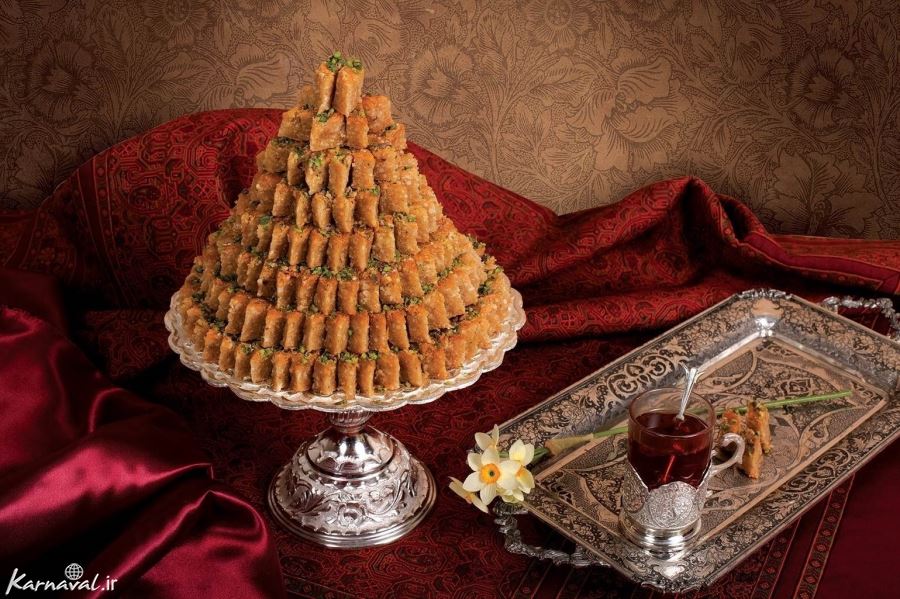
Qottab (Ghottab) is a traditional Persian sweet pastry
She says Chelow kabab [the national dish of Iran, consisting of cooked rice and one of the many varieties of Iranian kebab] is one of the most well-known Iranian cuisines and almost everyone knows it, but does anyone pay attention to desserts in this country?
“Iranians have a friendly culture and use every opportunity to get together and drink tea. The interest in the tea has made the Iranians attracted to sweet tastes. These tastes are a different experience that few people pay attention to. They have three inseparable elements: saffron, rose water and cardamom.
Best and popular Iranian Desserts
Here, we will introduce you to a number of famous Iranian desserts.
Zulbia & Bamiyeh; One of the Iranian desserts for Ramadan
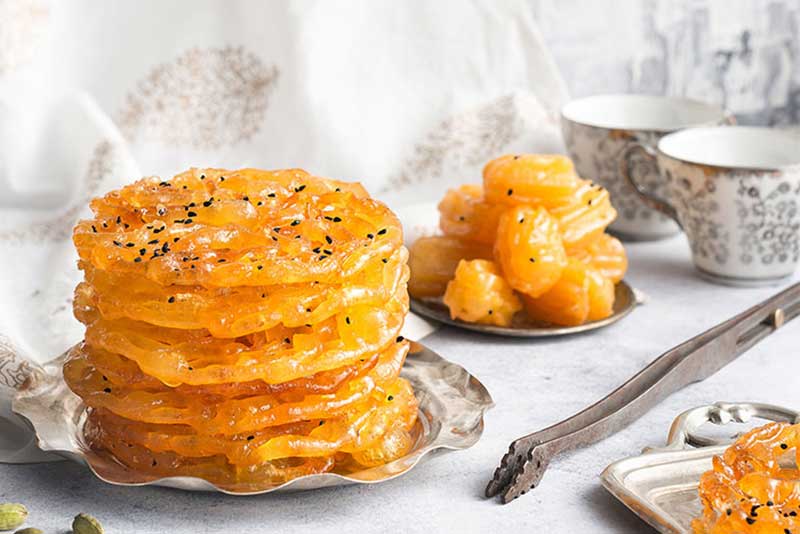
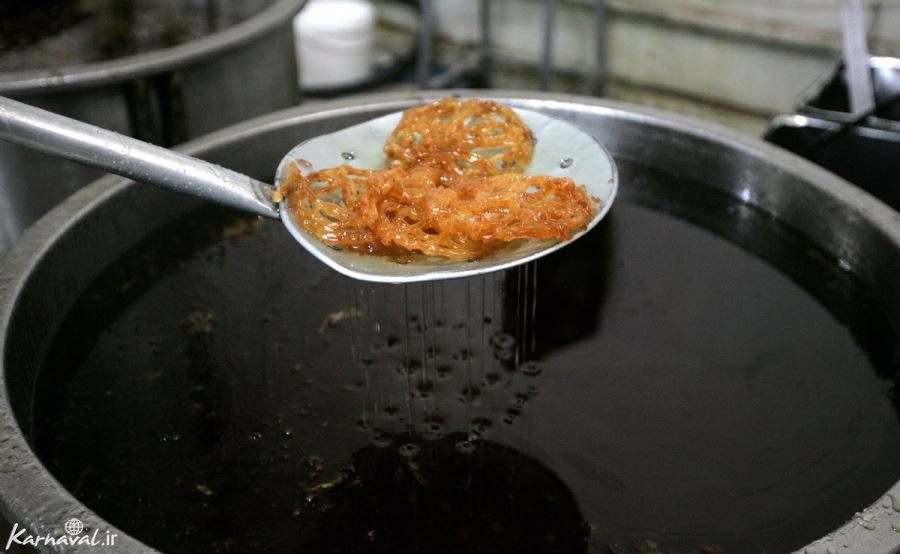
Zulbia is the name of a sweet that is poured into oil by a funnel and deep-fried in pretzel or circular shapes. Then, it is soaked in rosewater and saffron syrup to get a different taste.
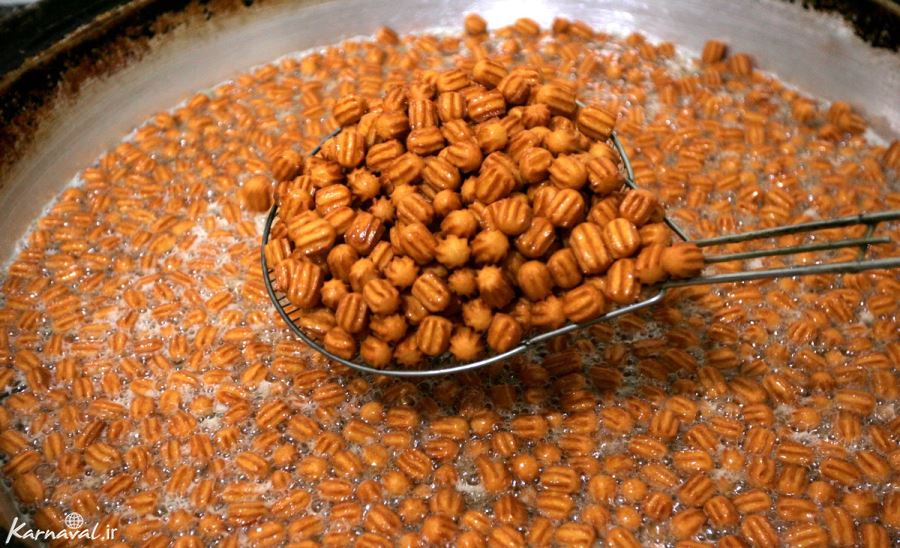
Bamiyeh is also the name of another sweet that is usually served together with Zulbia and is very similar to Chorru (a Spanish fried-dough pastry). Bamiyeh is also dipped in sugar syrup.
These two sweets have many fans in the holy month of Ramadan because after a day of fasting, it provides the body with the sugar it needs.
How to cook jalebi at home:
Jalebi and sweet okra (Zoolbia and Bamia) are among the most consumed and popular sweets on the table during the holy month of Ramadan. If you prepare and consume jalebi and okra fresh at home, they will certainly be healthier and more cost-effective.
Tips to make homemade jalebi:
1-Pour a glass of starch into a bowl and add a glass of yogurt.
2-Add a spoonful of flour along with baking powder to the yeast and mix it thoroughly with a spoon until all the ingredients are uniform.
3-Add brewed thick saffron to the ingredients and mix. 4-Pour some oil in a frying pan on medium heat until it is completely hot. 5-Pour the ingredients into the pan as well in a circular and round shape. 6-Then Take the jalebis and okras out of the container and put them in syrup.
2. Ranginak Traditional Persian Desserts of southern Iran
South of Iran and the Persian Gulf islands display a kind of different culture in Iran that is even touchable in their cuisine.
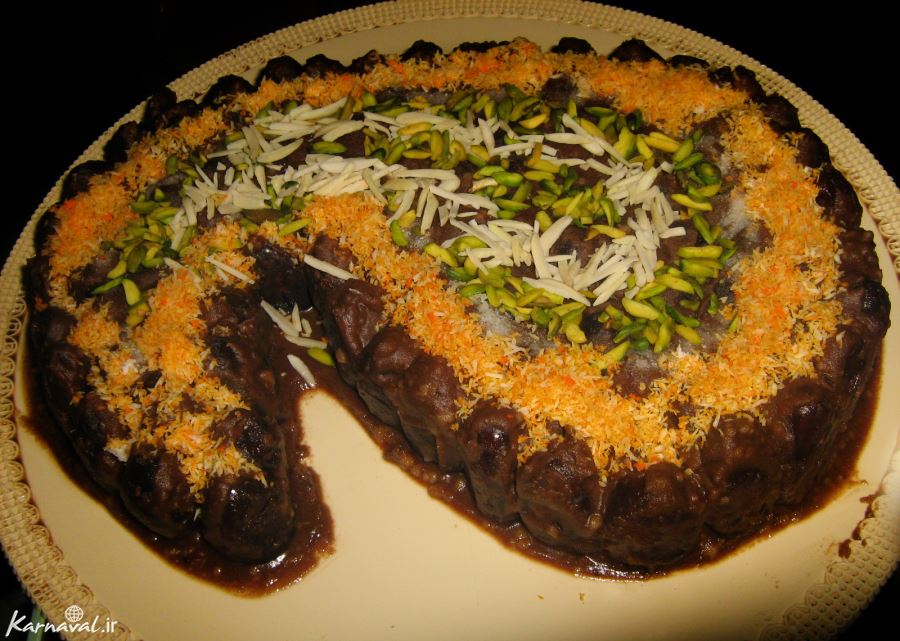
In these regions of Iran, people fill in soft dates with walnuts, then put them in a blend of fried flour, saffron, cardamom, and cinnamon to make a delicious dessert called Ranginak. This delicious dessert can make everyone crazy with its appearance, and its taste can put a spell on you.
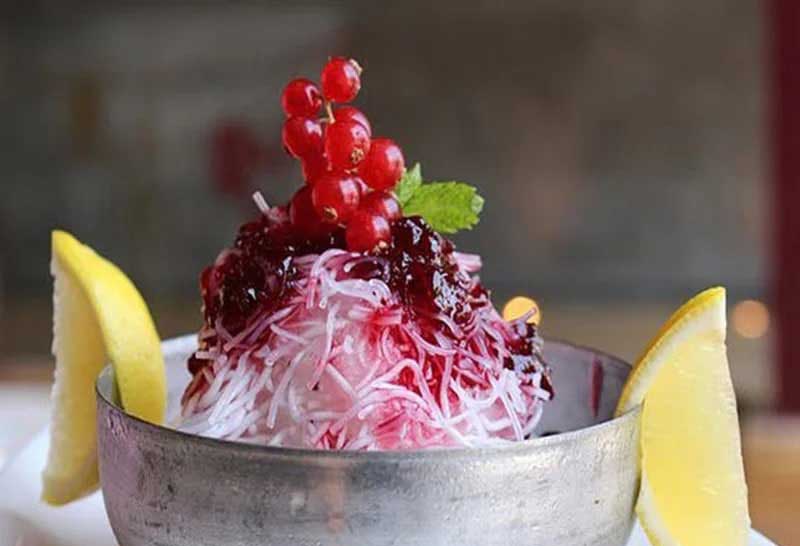
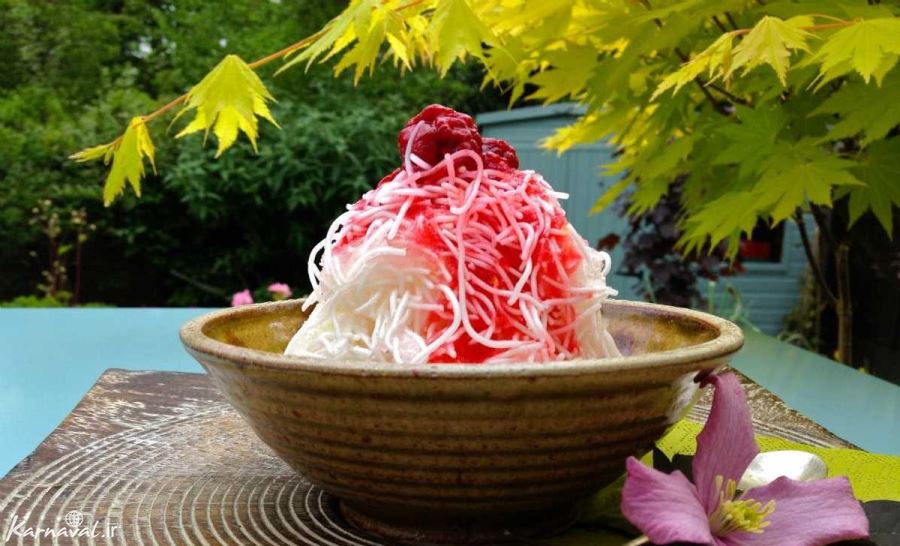
3. Faloodeh Shirazi;The most famous Iranian dessert in Shiraz
With the first look at Faloodeh, you may ask yourself:
Who would eat noodles as desserts?
But if you taste these noodles that are dipped in the rosewater syrup, for sure you will not trust your eyes when choosing something to eat.
There are many choices ahead; you can have this dessert with lemon juice or enjoy it with sour cherries and other syrups.
Faloodeh is the best choice in the hot summer days and you can find the best ones in the city of Shiraz.
4. Akbar Mashti Ice Cream or Traditional Ice Cream
In the 1950s, a person named Akbar Mashhadi introduced a delicious ice cream that has become the most famous ice cream in Iran today.
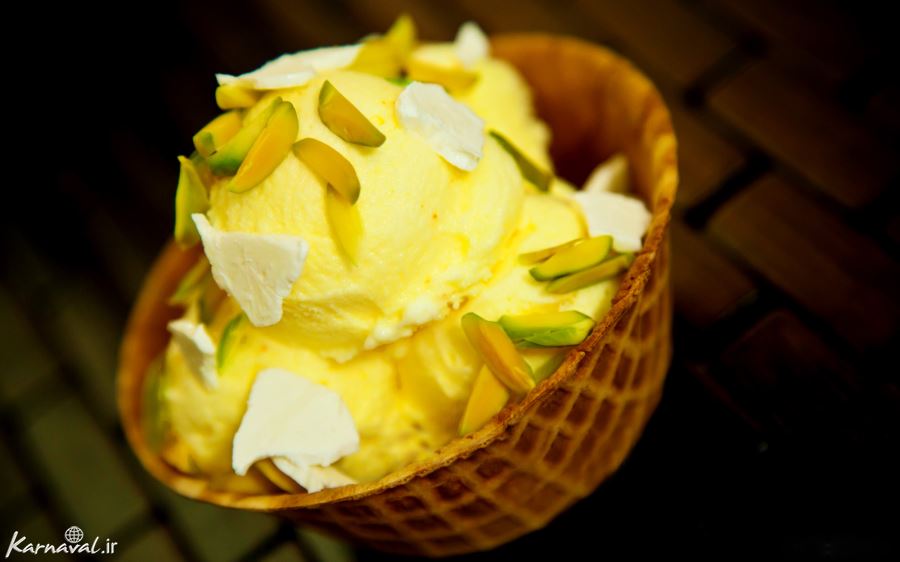
Saffron Ice Cream is also known as the traditional ice cream and has many fans. The combination of vanilla ice cream, saffron with rose water and pistachios can be an exciting experience for you, but not as much as when frozen cream pieces surprise you and make you feel good.
This ice cream is served both in a cup and in a special Iranian form of ice cream sandwiches.
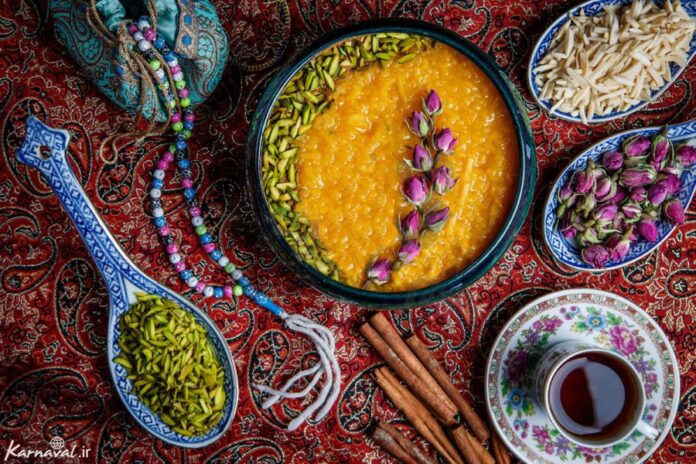
5. Shole Zard; Persian saffron rice pudding
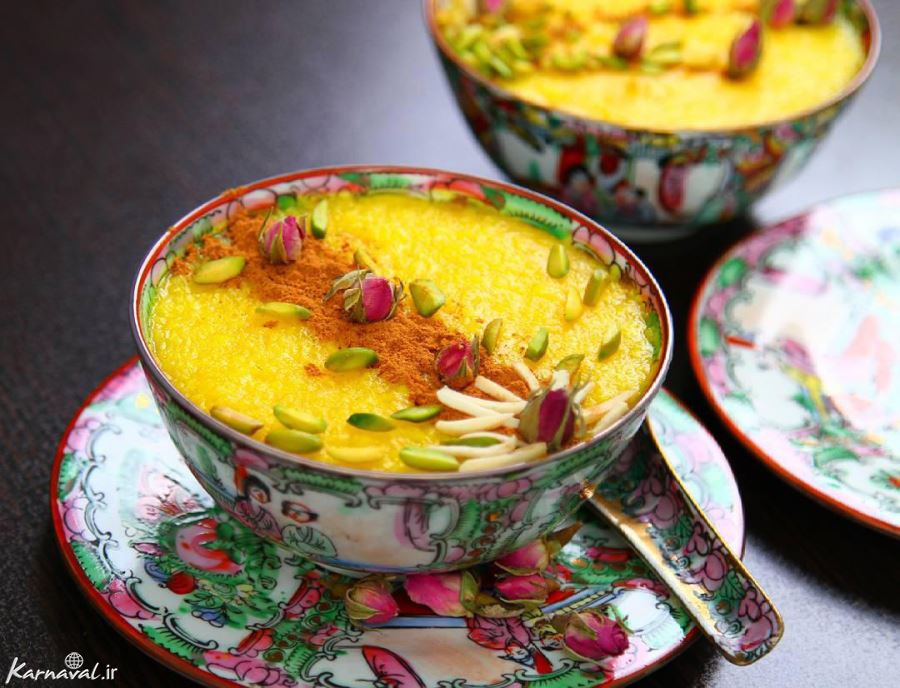
Now it’s time to introduce the special Iranian pudding which is made with rice. The high-quality Iranian saffron also gives it an excellent yellow colour and aroma. Cinnamon is also an ingredient, but is used exclusively for dressing.
In the religious ceremonies and during the holy month of Ramadan (Wikipedia), Shole-Zard is served among Muslim communities free of charge.
6. Yazdi Sweets
Yazd in central Iran is one of the cities that are famous for delicious sweets. In this city you can try different types of Baklava including the Greek and Turkish ones.
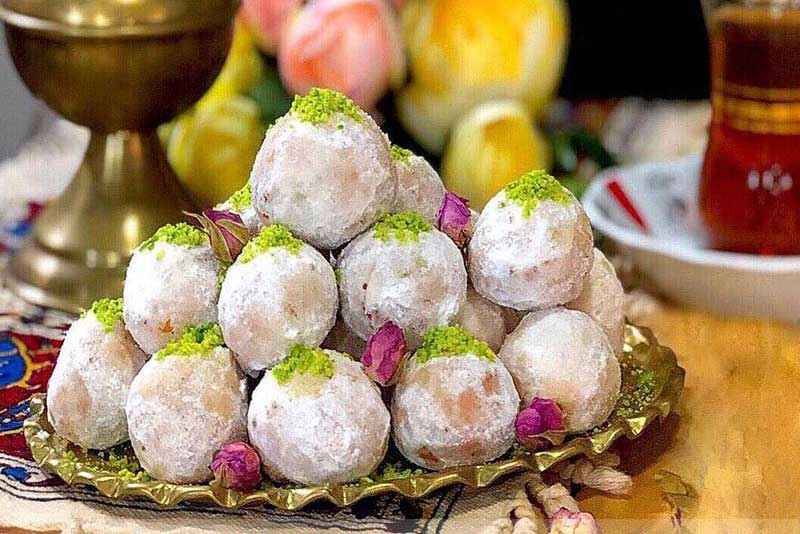
You can also taste Qottab [almond-filled deep-fried Iranian cuisine pastry] Loz-e Nargil {Iranian coconut sweets with rosewater] and cotton candy. Of course, never miss a cup of hot tea next to these delicious sweets.
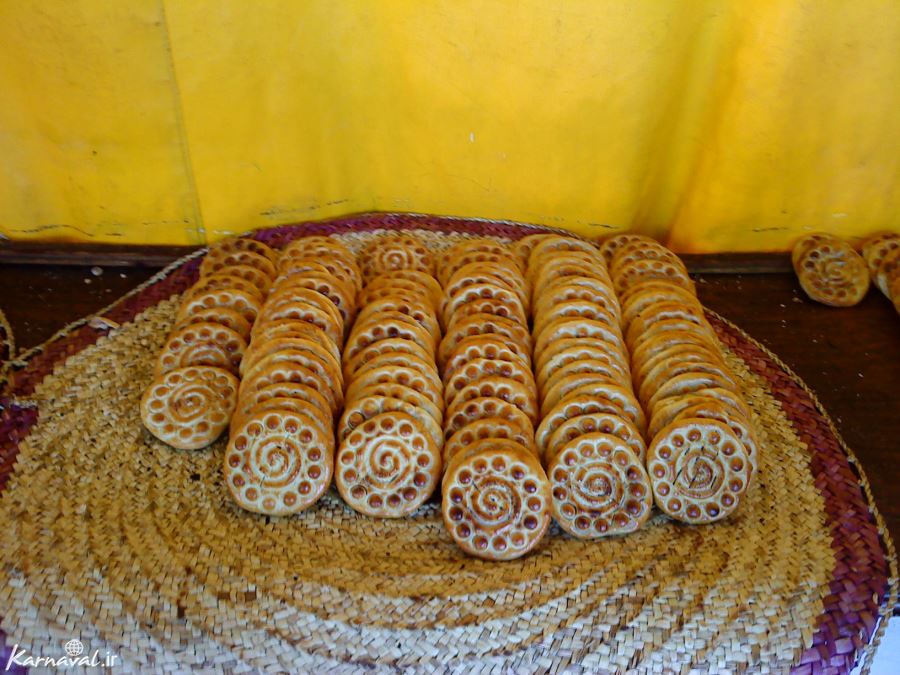
Koloocheh is a delicious cookie with different flavours such as cinnamon, walnut, cocoa, etc. Different regions of Iran have Koloochehs with different shapes.
Koloocheh can be served in the afternoon along with your tea, or during your breakfast.
8. Sohan; famous traditional Iranian sweet
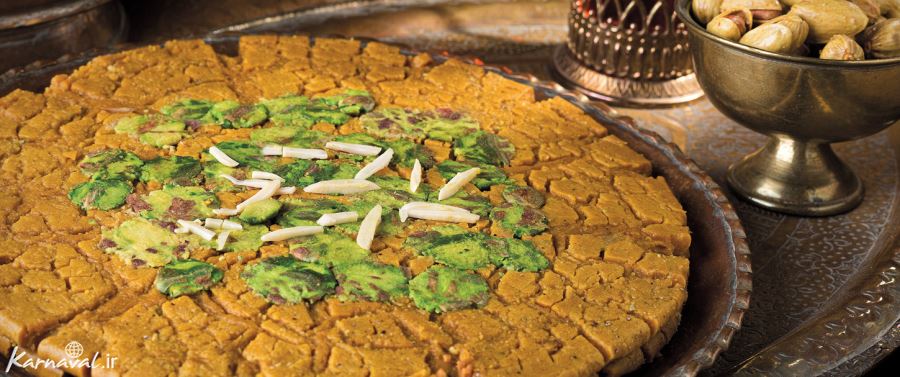
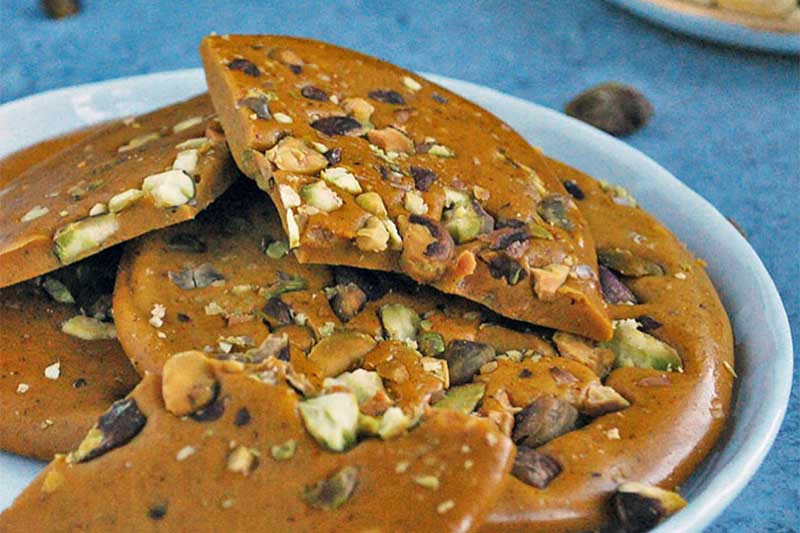
The ingredients of this brittle toffee are saffron, eggs, rosewater, sugar, butter, and cardamom. Its colour and the pistachio on top of it can make you crazy! Every time you have Sohan, you will need to brush your teeth.
Some points about sohan (confectionary)
Sohan is made and sold in different forms and types such as:
Honey Sohan, Sesame Sohan, Halvai Sohan, Badami Sohan, Gezi Sohan, Morsel Sohan, Circular Sohan, Pashmaki Sohan, Sohan Dessert, and so on.
Qom’s Sohan is the most famous Sohan in Iran. In fact, the most diverse types of Sohan are produced in Qom.
In other cities like Zarand, Kerman and Isfahan, Sohan is also produced. Isfahan’s Sohan is called Honey Sohan. Zarand’s Sohan, which is also registered nationally, is much crispier and much thinner than Qom’s Sohan.
Zarand’s Sohan contains much less oil than Qom’s Sohan. This makes it more durable. This sweet used to be produced mostly in a traditional way and by hand. Now it is made using special machinery and molds.
9. Gaz
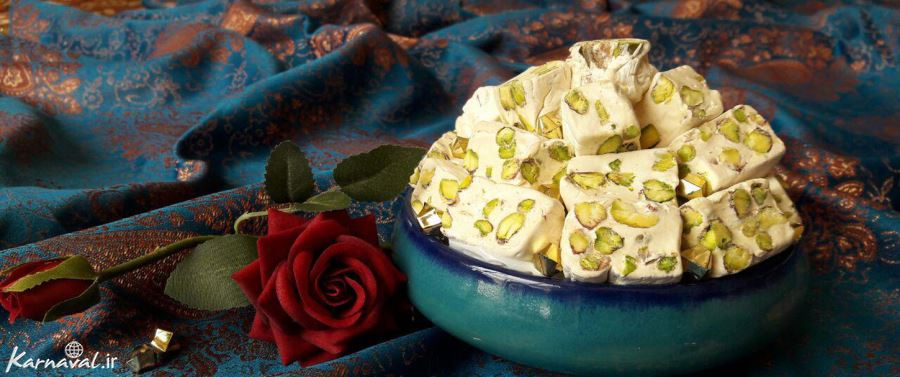
Isfahan province in central Iran is the origin of this delicious candy. Sap of Angabin (a plant), rosewater, and egg whites are the main ingredients of Gaz while almonds and pistachios could be added to it as well.
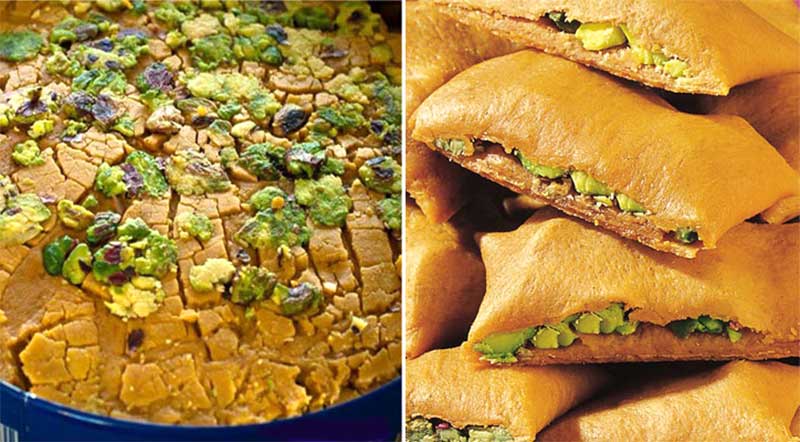
10. Halva; Delicious Iranian dessert
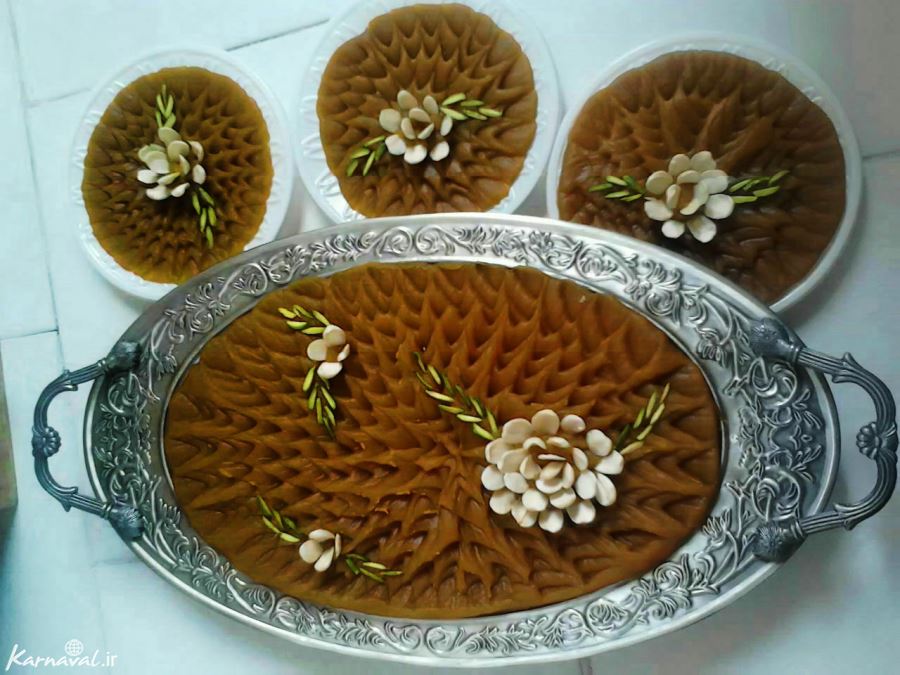
Iran’s halva (Read more) is different from its other forms in the Middle East. To prepare it, the Iranians slowly sauté wheat flour in oil or butter and then add sugar, rosewater and saffron to it.
Almonds and pistachios are used to make it pleased to the eye. This dessert has a special place in traditional religious ceremonies.