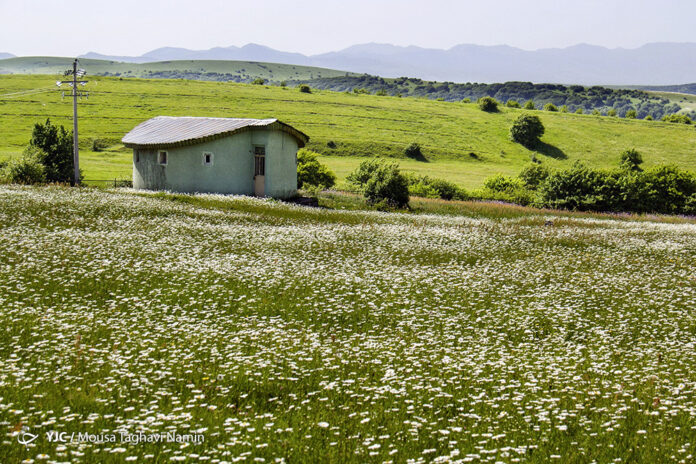
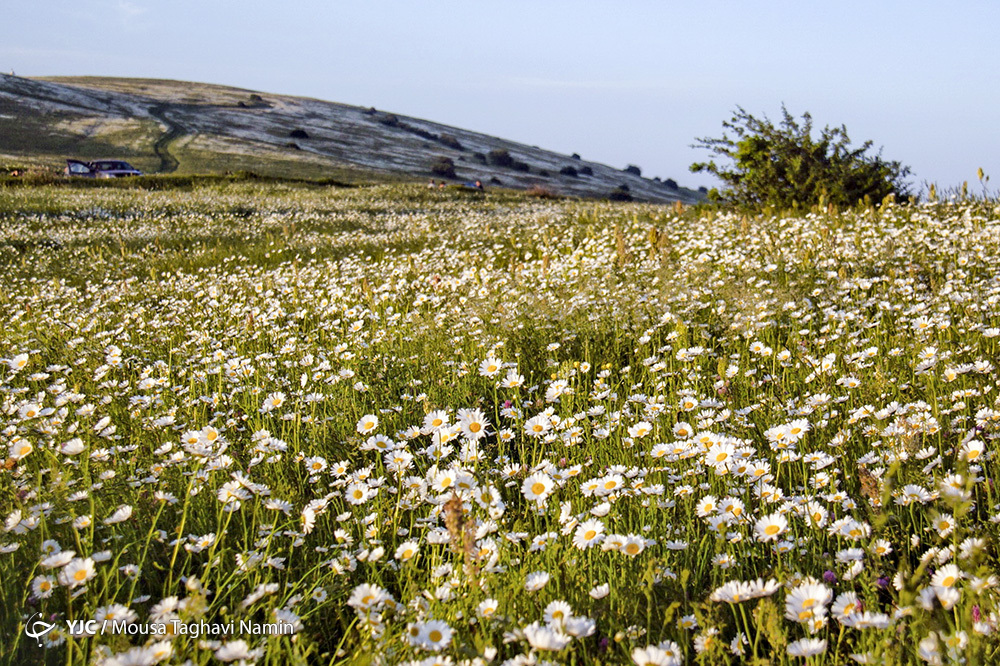
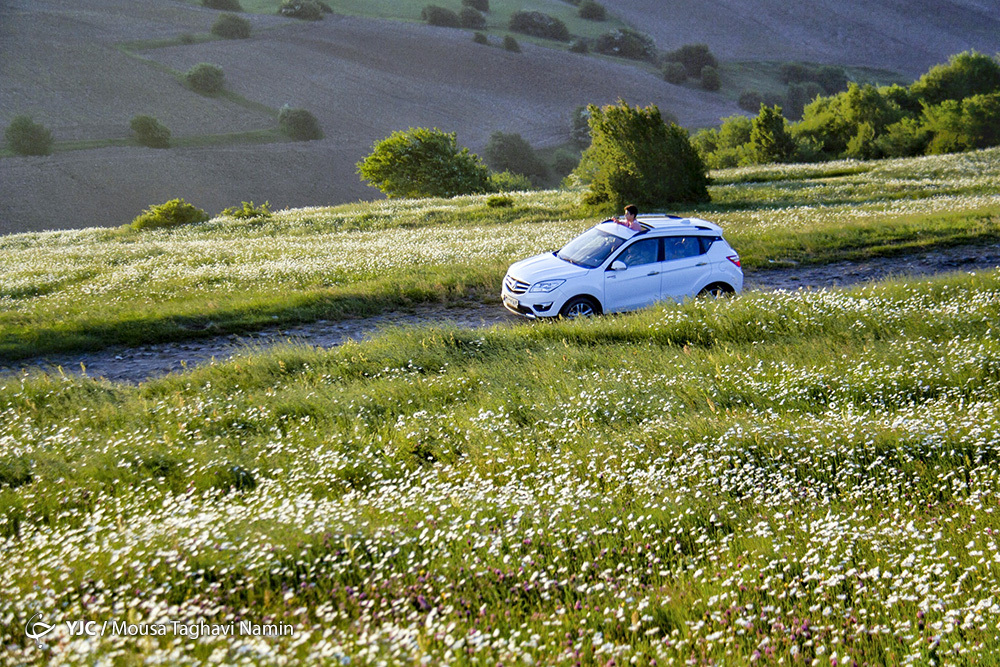
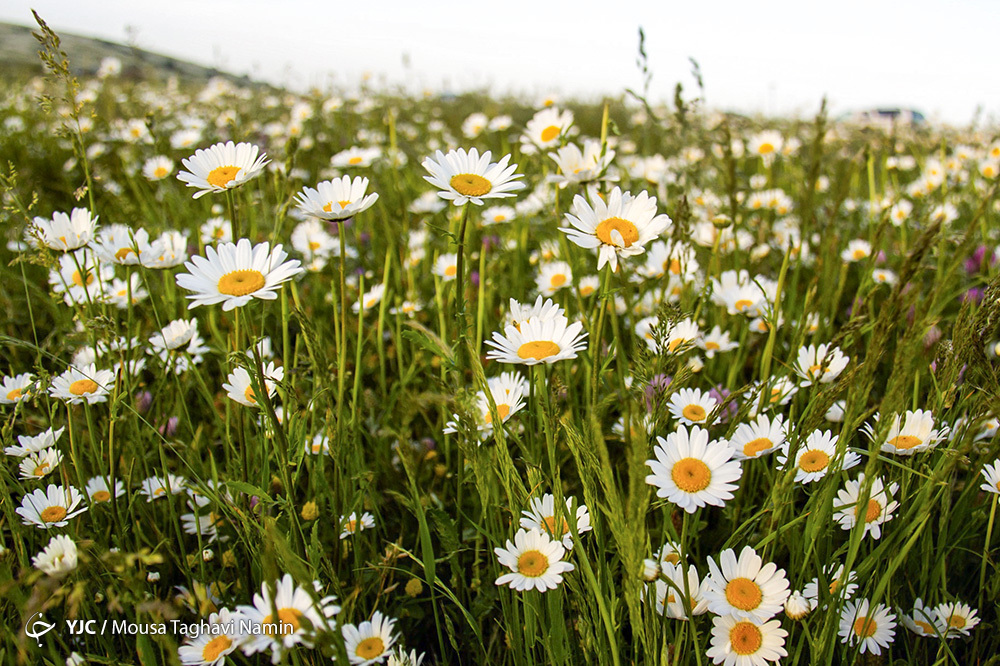
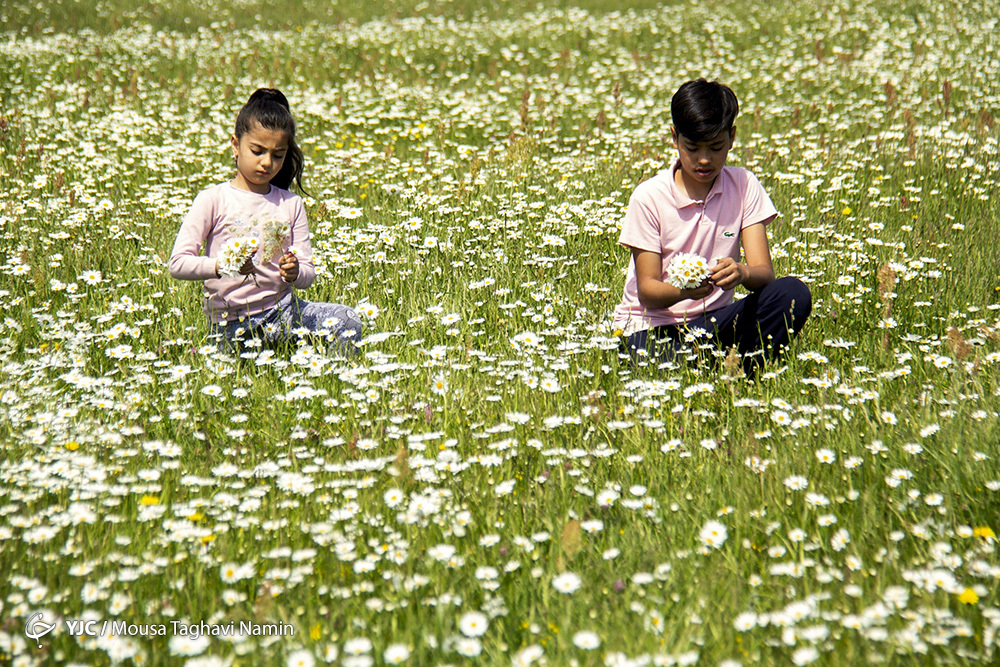
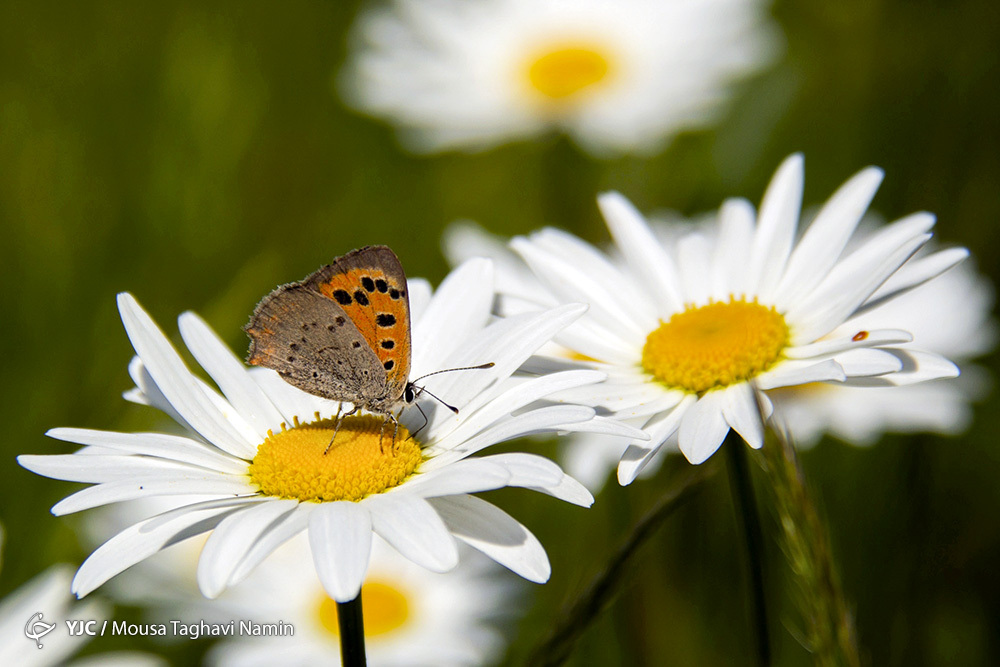
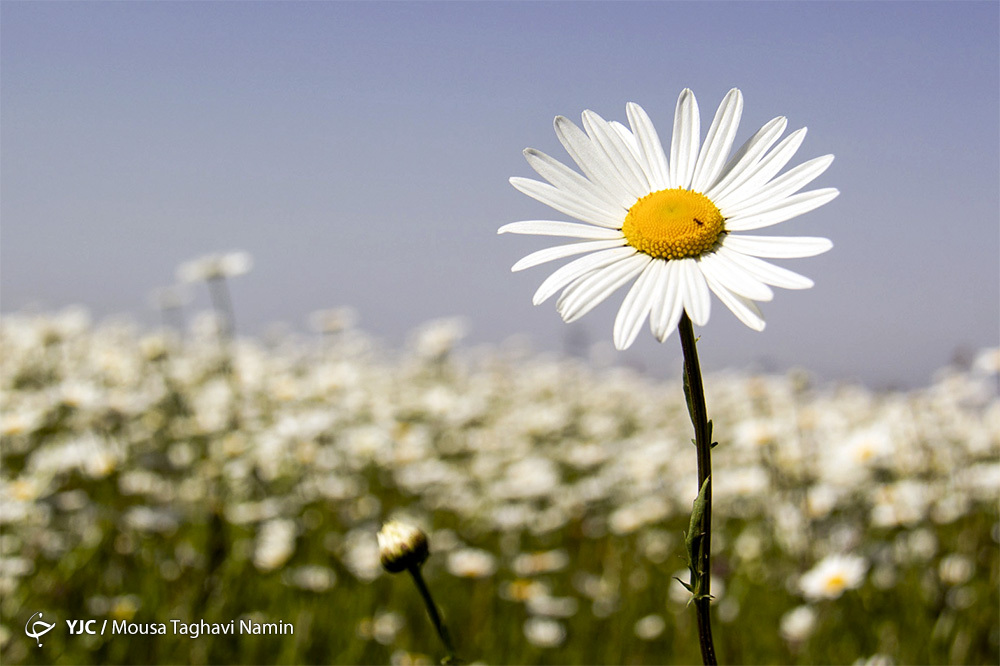
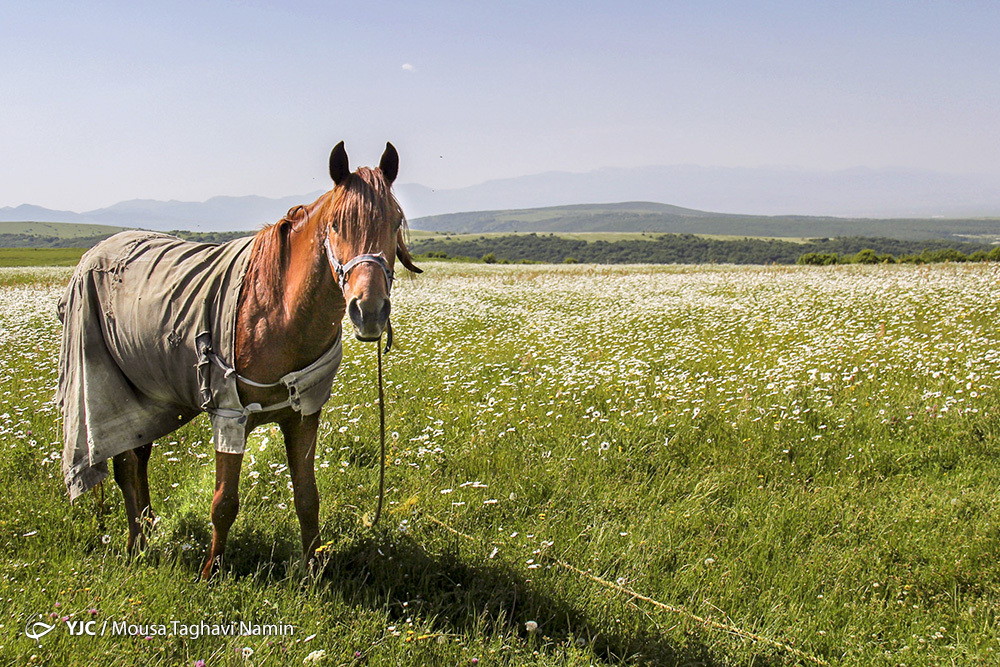
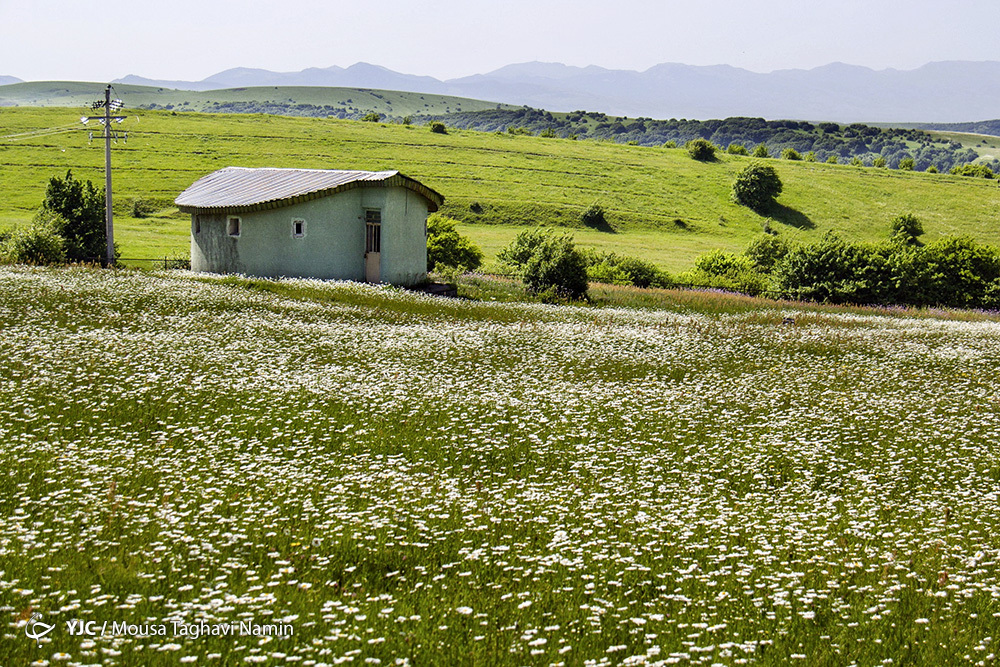
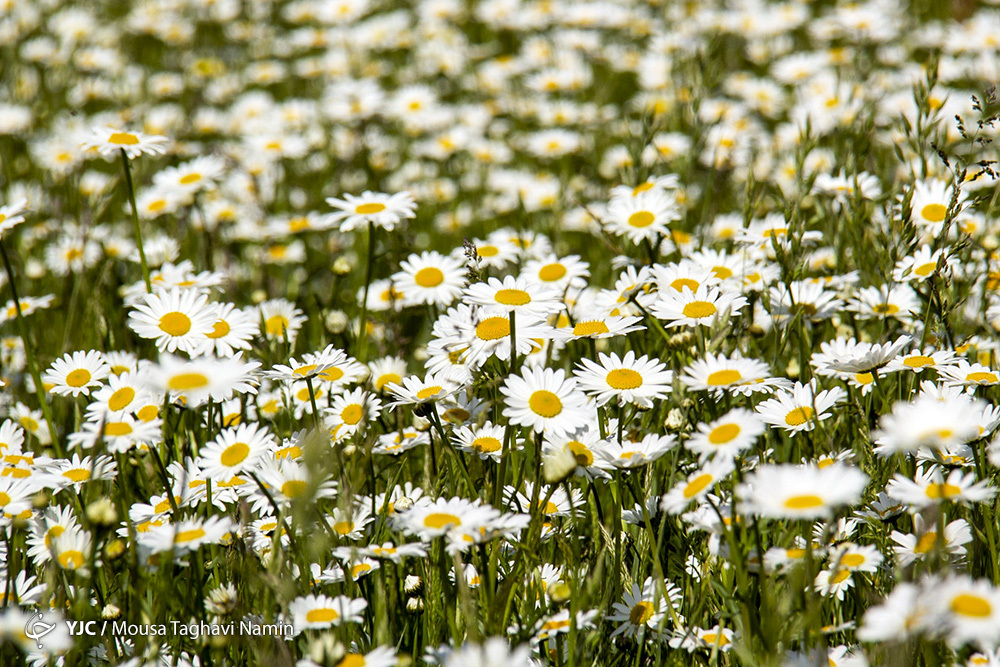
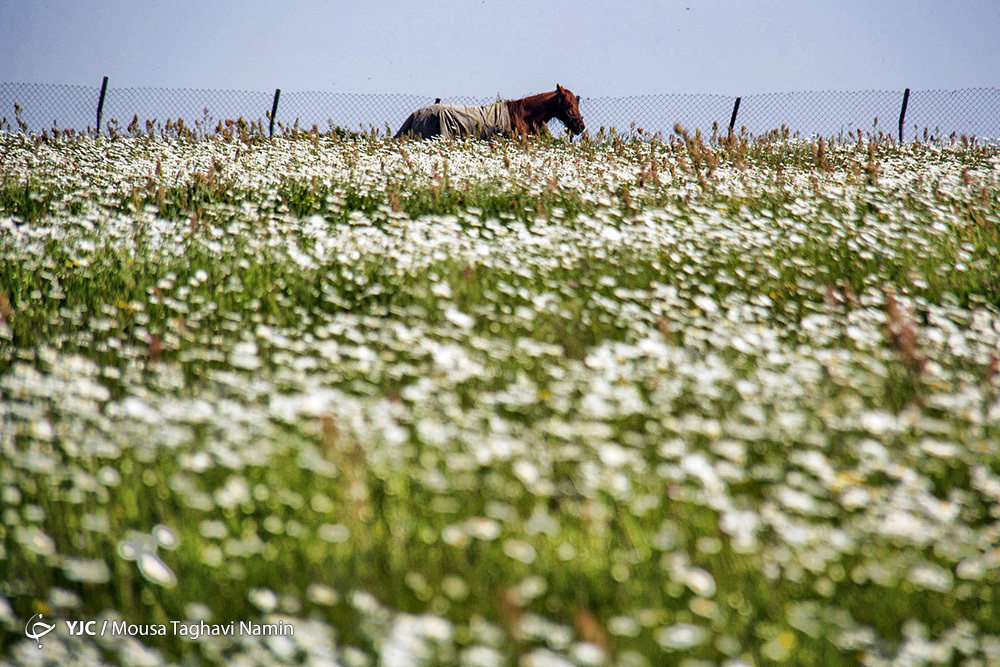
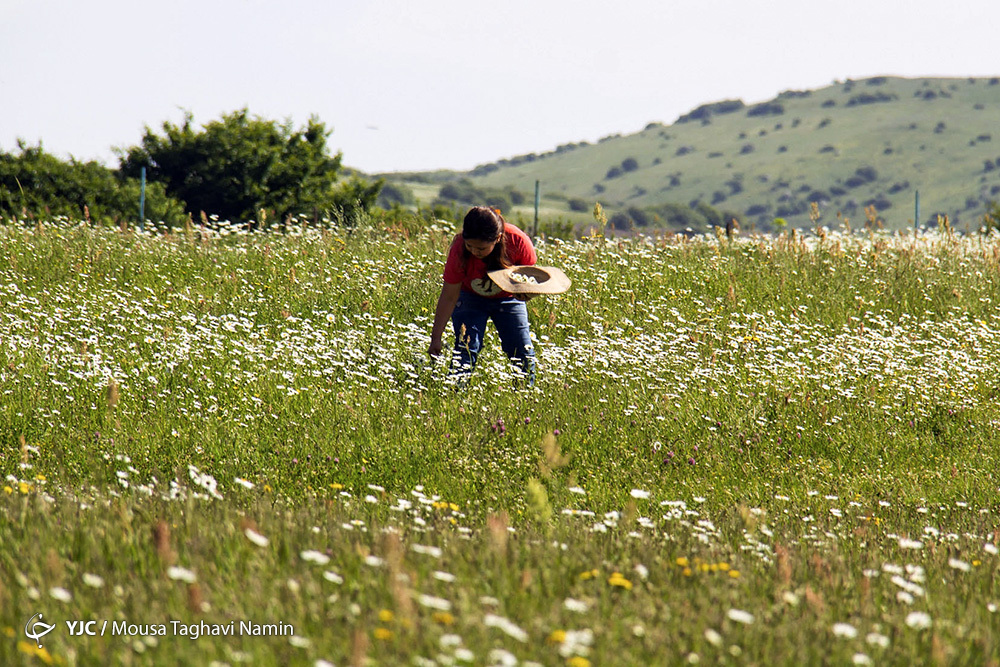
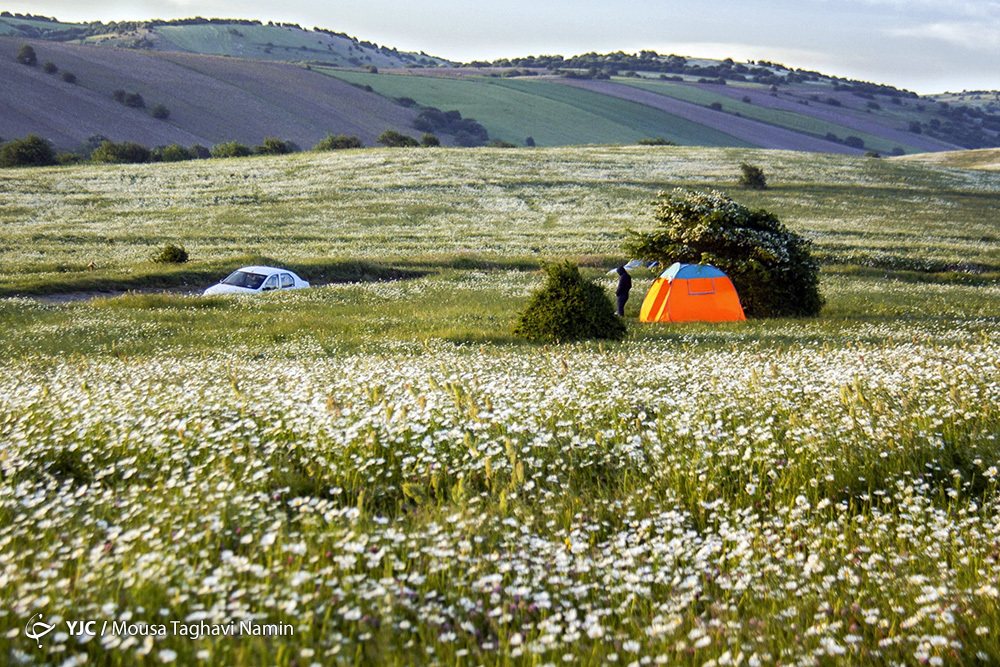
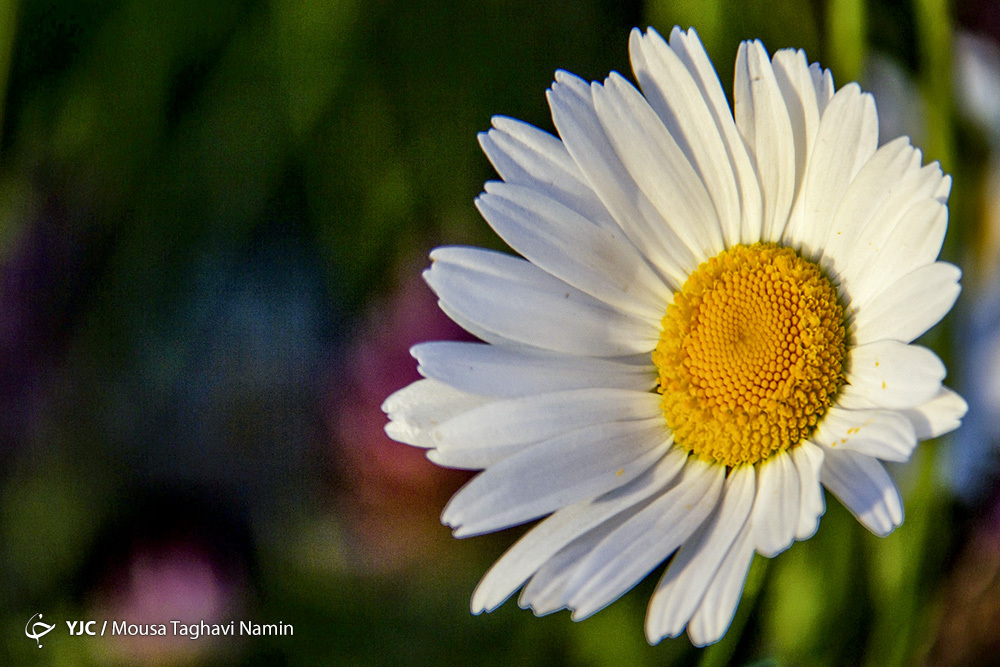
Fandoqloo Forest is located 10 km from Namin city in Ardabil province. The chamomile flowers give a special grace to this tourist resort and attract many visitors every spring.
What follows are YJC’s photos of the plain of chamomiles in northwestern Iran:
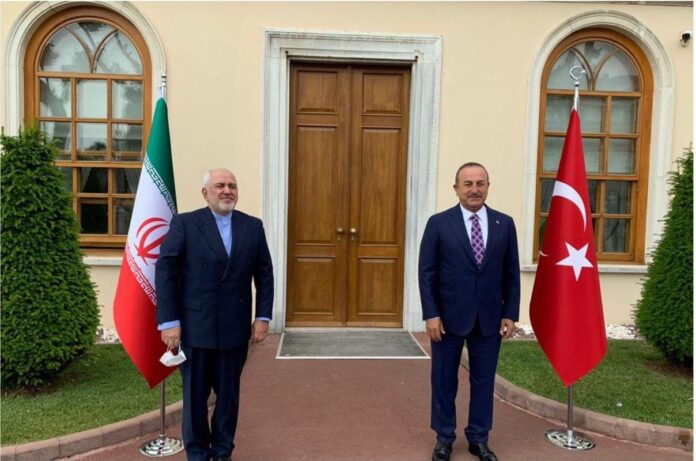
In a meeting with his Turkish counterpart on Monday, Foreign Minister Zarif stressed the need to resume gas exports to Turkey and repair and reconstruct a section of the gas pipeline that has been damaged.
Natural gas exports from Iran to Turkey came to a halt in April after an explosion and fire at a pipeline on the Turkish side of the border.
The top Iranian diplomat, who is leading a delegation to Turkey, further expressed solidarity with and support for Turkey in the fight against the coronavirus pandemic and its consequences in the meeting.
Foreign Minister Zarif and his Turkish counterpart Mevlut Cavusoglu also weighed plans to make up for a decline in trade exchanges between Tehran and Ankara over the past four months due to restricting regulations in the wake of the coronavirus outbreak.
In two rounds of negotiations, the Iranian and Turkish foreign ministers agreed on holding a virtual meeting of the Astana Process Summit in the coming weeks before an actual summit in Tehran at the first possible moment, and also discussed the issues relating to Syria, Yemen, Libya, and the fight against terrorism.
Here’s how you can go about finishing your dissertation while obeying social distancing.
Make Use of Online Resources
Visiting the school or public library is not an offer on the table. How then do you get the information you need to write your dissertation? The answer is using online resources. There are multiple virtual libraries on the Internet with free access. Google’s online library is one such resource. Getting information from resources on the Internet is the perfect solution to getting a quality education at home.
The question on the lips of many students is “How can I get help to write my dissertation online?” Online resources don’t stop at libraries, there are dozens of tools on the internet that can help you write during the lockdown. You can get professionals to help with writing your dissertation for you, or any other form of assistance when you’re looking for the best quality. The proofreading tools on the internet will help keep your grammar and spellings excellent. Get online dissertation help with your thesis, project, and more.
Be Positive
Keeping a positive outlook in life is the first step to solving a problem. This rule also applies to the Corona lockdown. At a time when it seems negativity is drowning the world, you’d need to stay strong and appreciate the positives. Focus on the highs rather than the lows.
It can be difficult to stay motivated and focused on writing your dissertation when the lockdown keeps exposing the frailty of things we once thought compact. This possibility is why it’s essential to have a topic you are passionate about for your project. In moments where your zeal seems fleeting, remember the reason for selecting your dissertation topic.
If you didn’t select a topic that interests you earlier, thanks to the lockdown you have enough time to change and complete it. Contact your supervisor to discuss possible options.
Communicate Using Social Media Apps
Your supervisor and project partner(s) are crucial members in finishing your dissertation. You need to check in with the former to gain guidance throughout the entirety of your project. Thanks to social media platforms you can keep in touch with your supervisor and classmates without leaving your home. You can perform group video chats using applications such as WhatsApp, Facebook, Zoom, Skype, and more.
Exercise at Home
Exercising is an excellent way to keep your mind and body in perfect shape. Lockdown means that you can go to the gym or go on hikes. 5There’s nothing stopping you from exercising at home. The are multiple body training you can perform while social distancing. This information is easy to access thanks to smartphone apps and online videos.
Take Breaks
Staying at home doesn’t mean you have to overwhelm yourself with work. The brain needs rest and you should always indulge it. After working for a few hours, take a time out to replenish your mind.
You can take a day off your dissertation after working at it for two weeks. You should find creative ways to de-stress while still adhering strictly to social distancing rules.
Minimize Procrastinating
Procrastination is the bane of every student and avoiding it is critical to writing dissertation during lockdown. It might appear you have ample time to finish your work, but this perception can be misleading. Many students ask “When should I start writing my dissertation?” The answer is right away.
Putting things off can become a habit, and you find yourself barely halfway through your project with a few weeks before it’s due. Dissertations are notorious for appearing simple to complete at surface level, but 30% into it, the veil falls off and students find that they’ve their work cut out for them. There’s a reason why it carries the bulk of your finals grade.
Steps to Take
Here’s how you can minimize procrastination.
Avoid distractions.
Create a schedule and stick with it.
Ensure your writing period coincides with the time of the day that you’re most productive.
Make your room conducive for studying.
Set goals and objectives.
Treat yourself when you accomplish a milestone in your dissertation
Final Thoughts
Lockdown isn’t a prison, keep a positive attitude, and make use of the online tools at your disposal. Get to writing your dissertation while using the internet to get all the information and research data you need.
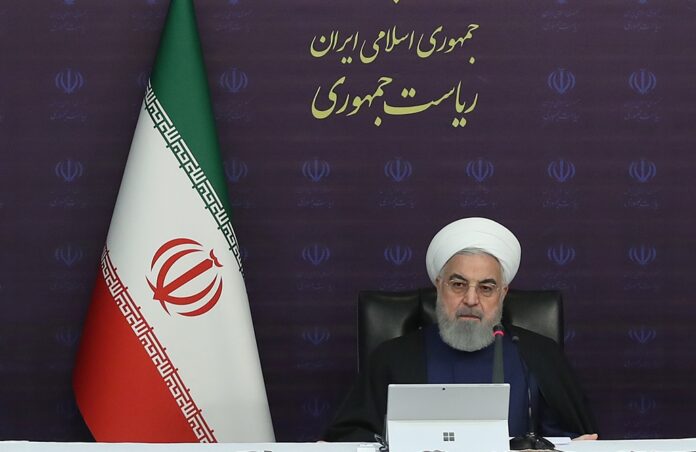
In remarks at a cabinet session on Sunday evening, President Rouhani decried the US administration’s push to extend the arms embargo on Iran.
“The subject of termination of the arms embargo in October is one of the major achievements of the JCPOA, and if the Americans intend to question this achievement, the other big countries are aware that what our reaction will be,” the president said.
He also expressed hope that “all Members States of the Security Council and the (IAEA) Board of Governors would be fully aware of the US plans for such plots.”
“God willing, we will overcome these plans that the US has formulated against Iran,” the president underlined.
He further denounced the US attempts to block an IMF loan for Iran for the battle with the coronavirus pandemic, saying, “On the International (Monetary) Fund, which we have asked a $5 billion loan, the Americans unfortunately continue with obstructionism. We hope that the IMF Board would not give in to the US pressures and to honor its commitments vis-à-vis all countries.”
The president further pointed to the US government’s terrible handling of the coronavirus outbreak, its violation of freedom of the American people and the rights of other nations, as well as its disregard for the international organizations, adding, “However, the Americans have been always unsuccessful and have failed in this regard, as they will fail once again.”
“Recently, the Americans have begun to intimidate and exploit both the International Atomic Energy Agency and the (UN) Security Council somehow. We are confident that both our diplomats and our country’s officials will stand against the US very well in this regard, and we will not let the Americans succeed,” he emphasized.
Over the past months, Washington has stepped up calls for the extension of a UN arms embargo on Iran, which will expire in October under UN Security Council Resolution 2231, which endorses Iran nuclear deal, officially known as the Joint Comprehensive Plan of Action (JCPOA).
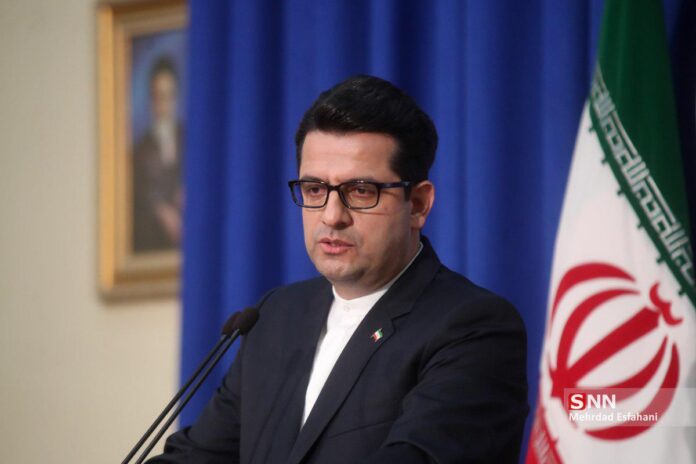
“We urge the agency (IAEA) to be a little realistic about it, to pose its question (from Iran) on a legal basis, and not to get entangled in marginal issues,” the spokesman said in a press briefing on Monday.
Bemoaning the fact that the upcoming meeting of the IAEA Board of Governors on Iran is founded upon a report from the Zionist regime, Mousavi said, “We do not deem such an approach of the agency constructive. Our cooperation with the agency continued even when it (the IAEA) reduced commitments. If such a process goes on, the interaction with the organization (IAEA) will become difficult.”
The Iranian diplomat expressed hope that the UN nuclear agency would not make an “irrelevant and unconstructive” decision.
“Naturally, if they make an unconstructive decision, Iran will show a proportionate reaction, and they probably know what the decision would be,” he said.
“We hope the results of the (IAEA Board of Governors) meeting would be constructive for regional peace and stability,” he added, according to Tasnim.
The IAEA Board of Governors is meeting today to discuss reports that Iran has blocked inspection of two sites where “nuclear activity may have occurred”.
The Vienna-based IAEA expressed “serious concern” in a report earlier this month claiming that Iran has been blocking inspections at the sites.
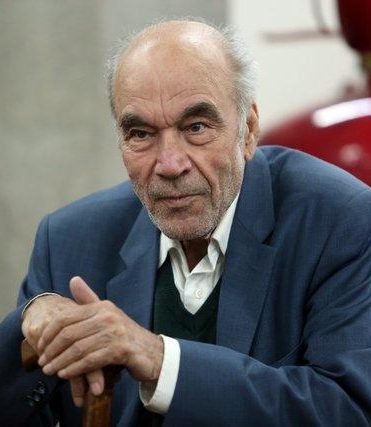
“If COVID-19 is gone, it is unlikely to return so soon; but one should be awaiting COVID-20 and other versions of COVID, and perhaps the chain of infections will keep going on,” said Dr. Reza Davari Ardekani.
Dr. Reza Davari Ardekani
He made the comment during his speech titled “Philosophical Deliberations on Coronavirus; A Philosophical View toward Consequences and Disadvantages of Coronavirus” at a virtual meeting on the human-social dimensions of the COVID-19 pandemic.
“Coronavirus has, so far, been the source of detrimental effects and harm in our country and across the world, and more repercussions of the outbreak could emerge in the future,” said Ardekani.
“It is also said that Coronavirus has come to expedite the trend of the world’s collapse,” he added.
“Although some expect to see countries’ political systems undergo adjustments for the good of the public, what has actually happened so far are scourges such as a rise in the number of unemployed and hungry people, anxiety in the production economy, a sort of uncertainty in international economy, the shutting down of religious practices, and people being forced to stay at home, people who could barely stand being alone.”
“Of course, one should not forget the beautiful scenes of popular groups [helping fight the virus] and the sacrifices of doctors and nurses,” he said.
“As for political and social developments, most predictions indicate that it is not clear what will become of the world after the coronavirus pandemic is over,” he says.
“Some changes related to the principle of democracy should take place, especially in developing countries, so that many of neoliberal policies will be somehow adjusted, or, at least, all the fuss in the age of neoliberalism will somehow subside. Unfortunately, coronavirus is unlikely to be content with these changes because it might be targeting the world order,” he said.
“Renowned experts such as Jurgen Habermas and Noam Chomsky, who have moral interests, hope the coronavirus pandemic will bring to light the fact that people in developed countries in Europe and the United States are defenceless, democracies are a sham and governments are unable to deal with scourges and disasters,” he said.
“They are optimistic about future and don’t rule out the possibility that the world might move toward favarouble democracy,” he added.
“As mentioned before, their desire is likely to be fulfilled; but whatever change takes place, will be transient because a world which is fast approaching nihilism can hardly move toward reforms,” he added.
“The current world system is against nature. During Coronavirus tests, it was revealed that governments’ power was just a show in the face of the COVID-19 pandemic. So, it is not unlikely that governance in some countries will move toward democratic socialism, and as there is no democracy, the government will get more radical,” he noted.
“But the incidents mentioned above do not amount to a change in world order because the world order is ruled by some regulations to which even natural disasters cannot make direct changes,” he said.
Is Coronavirus Pandemic A Wake-up Call?
“We don’t know why all or most people pay more attention to the direct effect of the coronavirus outbreak, and why no one regards this disaster (which is markedly different from all epidemics and pandemics in the past and has now sent shockwaves across the world order) as a sign of a major danger and the disruption of the world order?” he said.
“When an order collapses, either another order should replace it or chaos takes hold,” said Ardekani.
Significance of Origin of COVID-19
He then touched upon what possible stance pharmaceutical companies might adopt vis-à-vis the pandemic.
“What stand will major drug firms take on coronavirus? Whatever they might do, they should not be expected to conduct research on the origin of pandemics because it is a responsibility of researchers and scientists to do so,” he said.
“Among important issues in the COVID-19 saga is the origin of this disease. If we know its origin and starting point, we can guess better. One assumption is that this virus exists in the nature and has come from the nature and has gripped people’s lives,” he said.
“This hypothesis is hard to accept because if it were the case, it must have become clear by now from where and how the virus originated,” said Ardekani.
“Secondly, if it exists in the nature, why didn’t people in past times contract it?” he asked.
“Thirdly and finally, a natural issue is dependent on special natural circumstances. How can a virus which suddenly emerges, spreads everywhere in two or three months and becomes an epidemic, be natural? A stronger possibility is that the virus was produced in a laboratory or came into existence there by accident,” he noted.
“This issue is important because if the virus has a natural origin, maybe a cure will be found for it … but if its origin is nature itself, it won’t be able to tackle it and, at most, will develop a vaccine for it,” he said.
“This means we should be concerned about COVID-20,” he said.
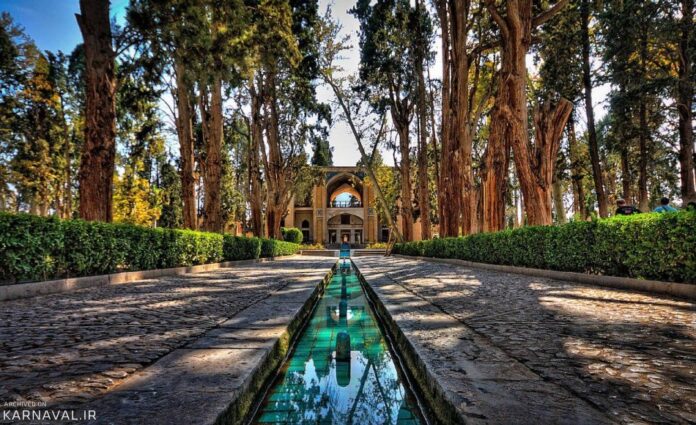
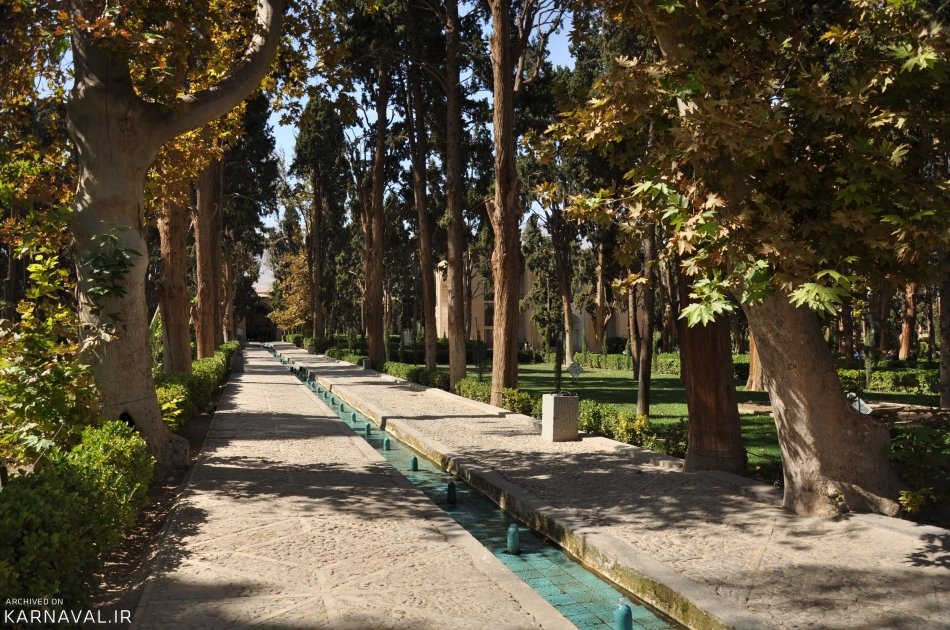
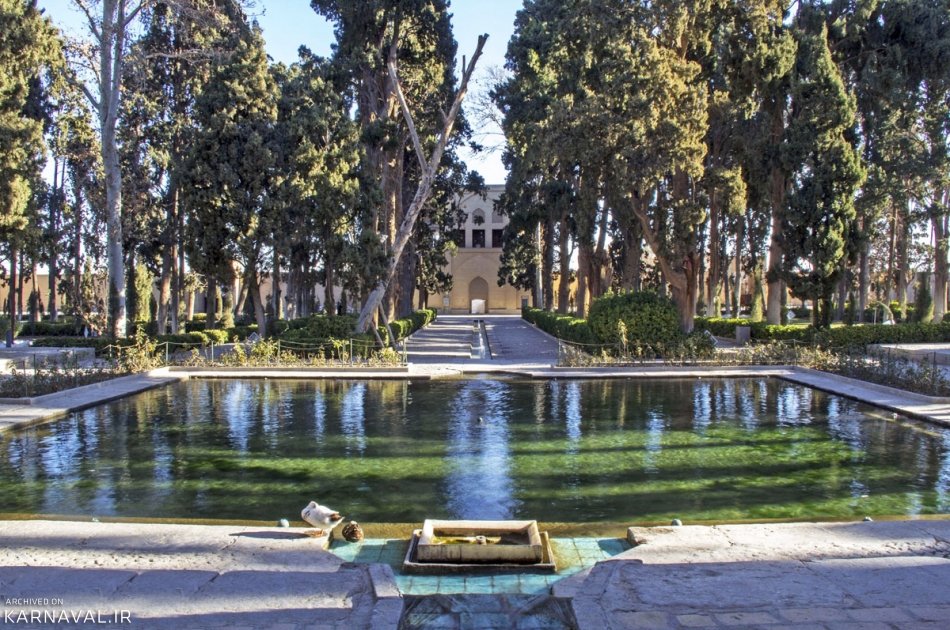
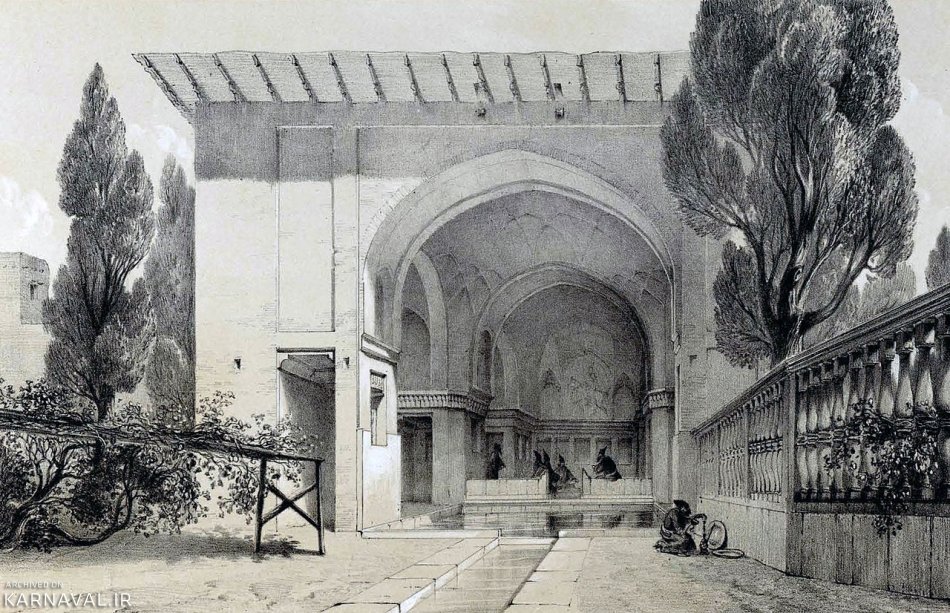
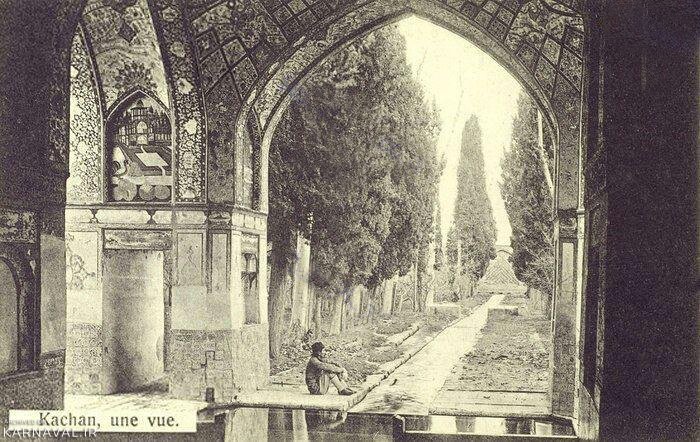
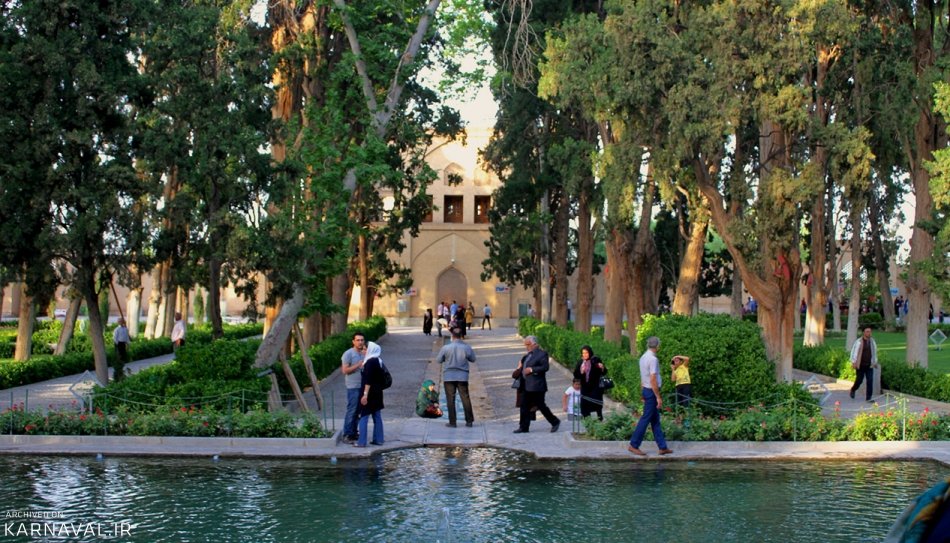
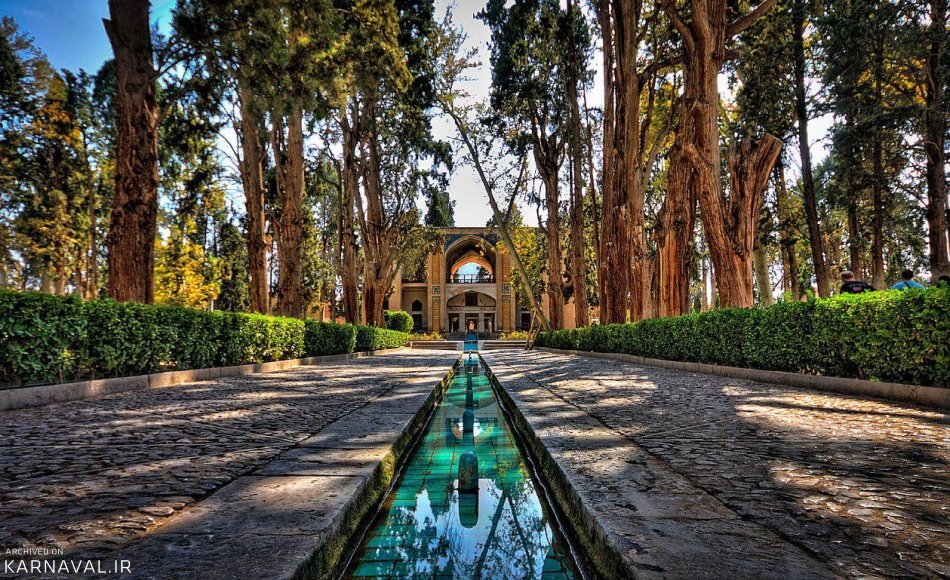
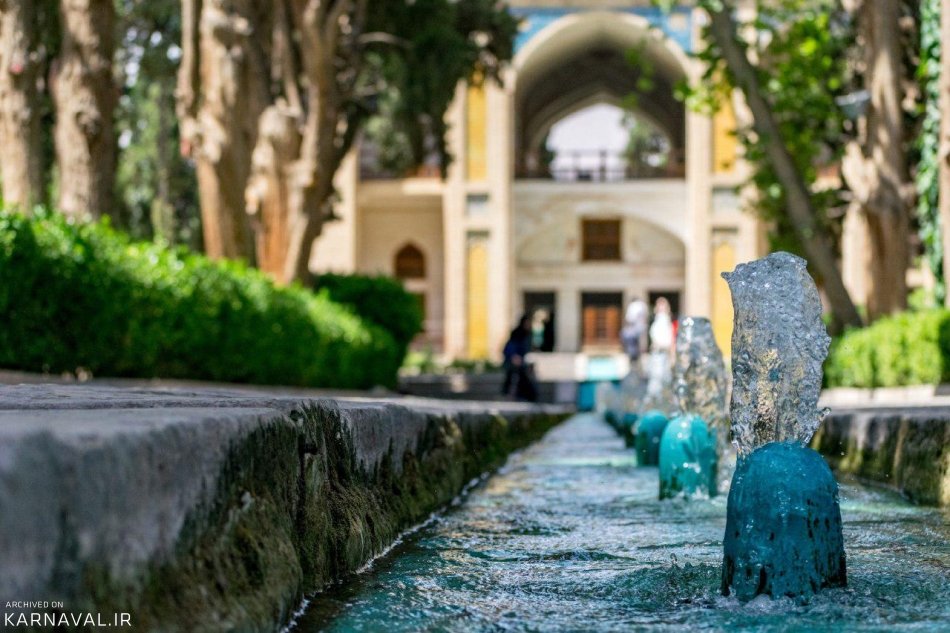
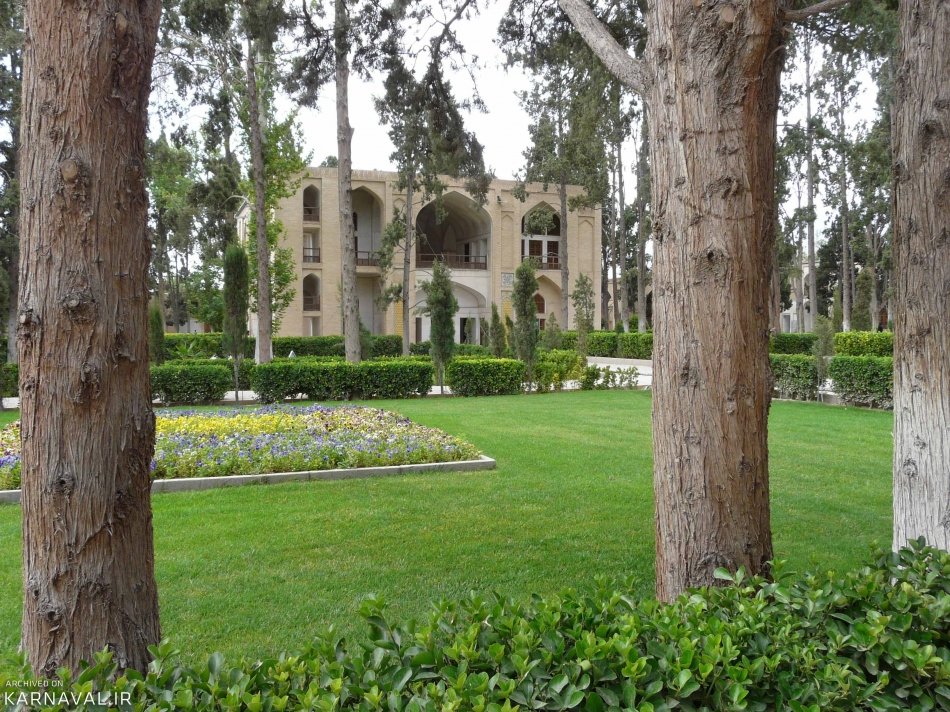
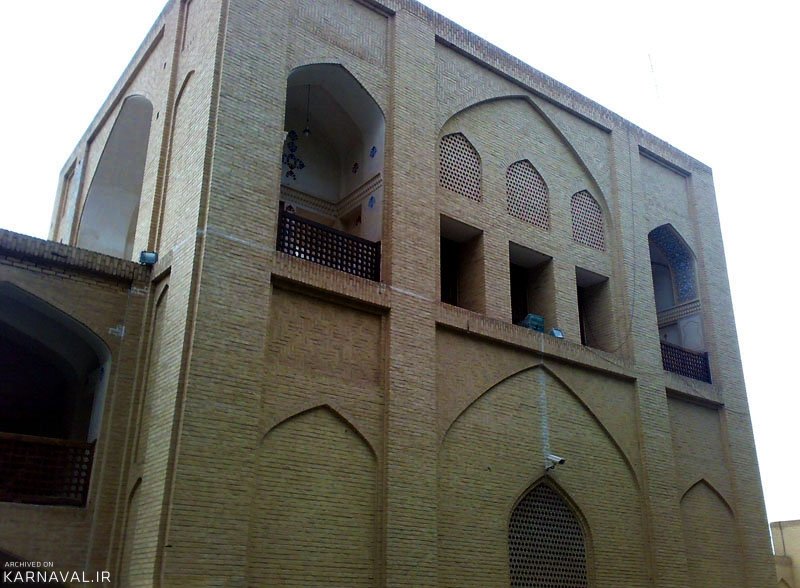
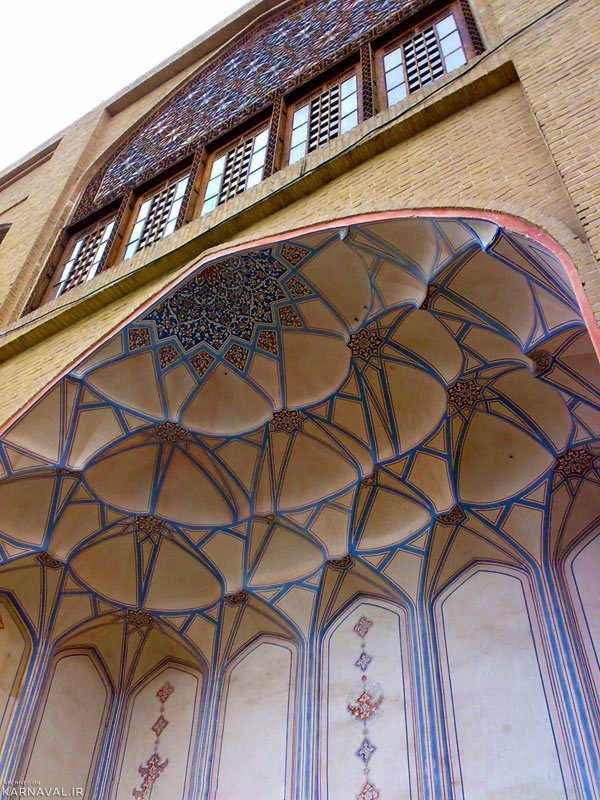
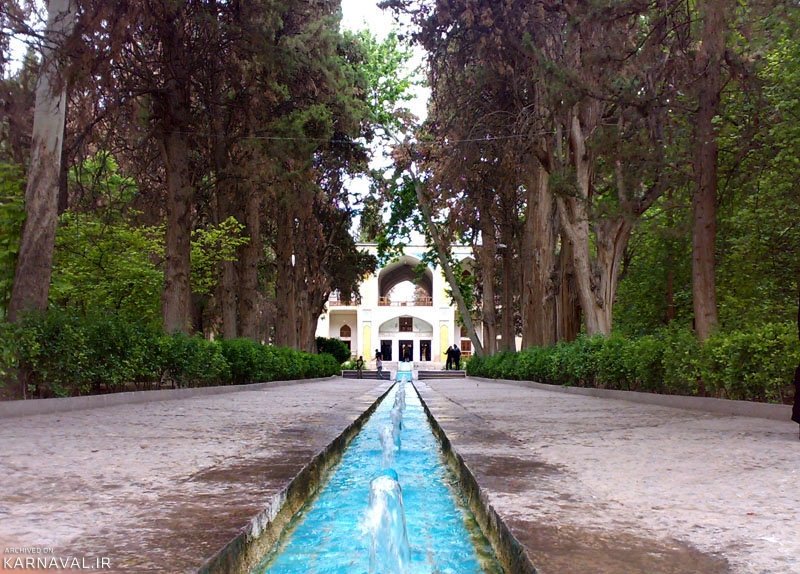
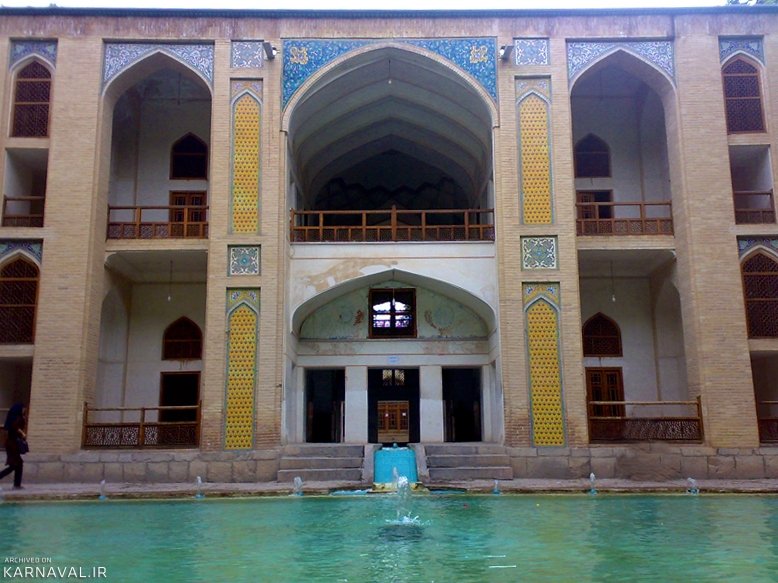
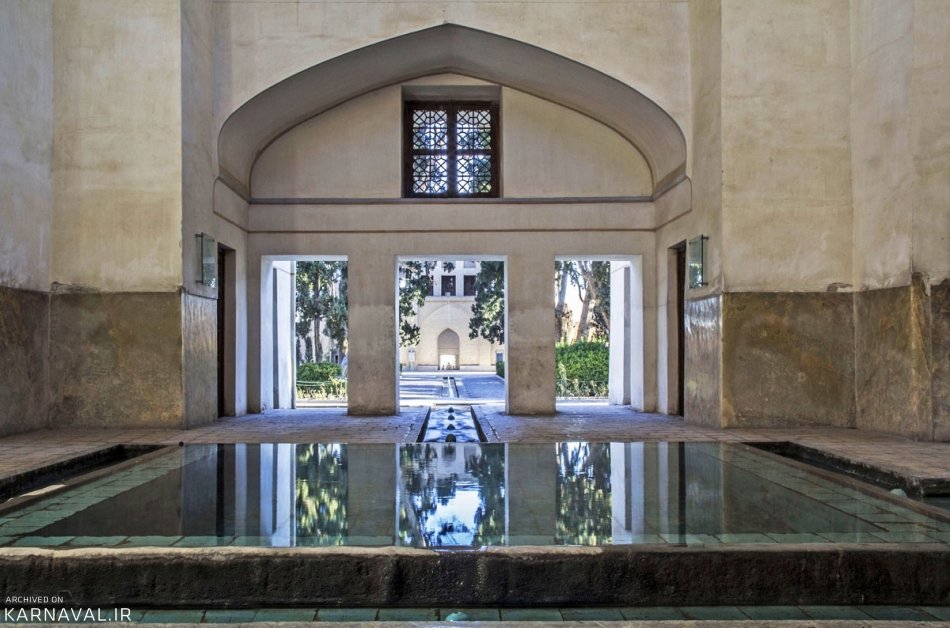
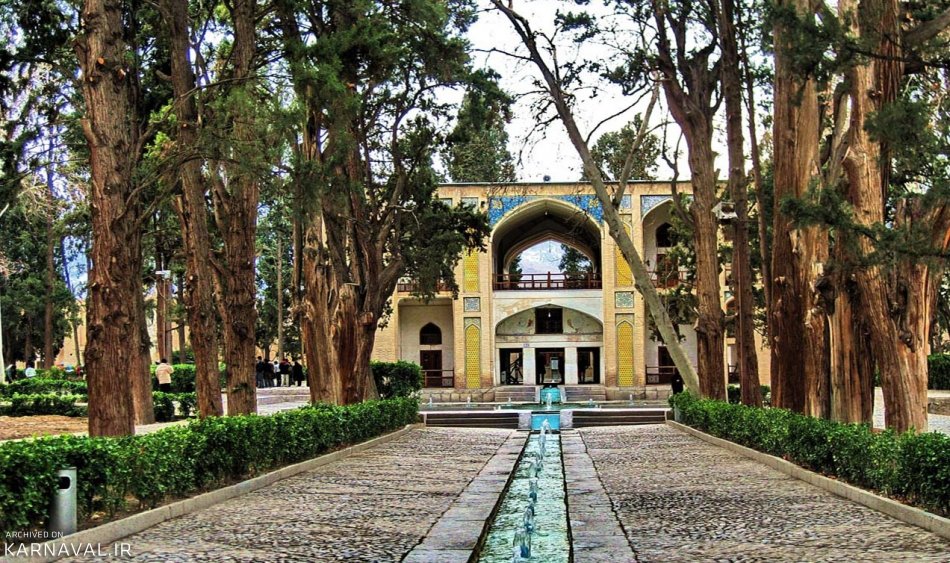
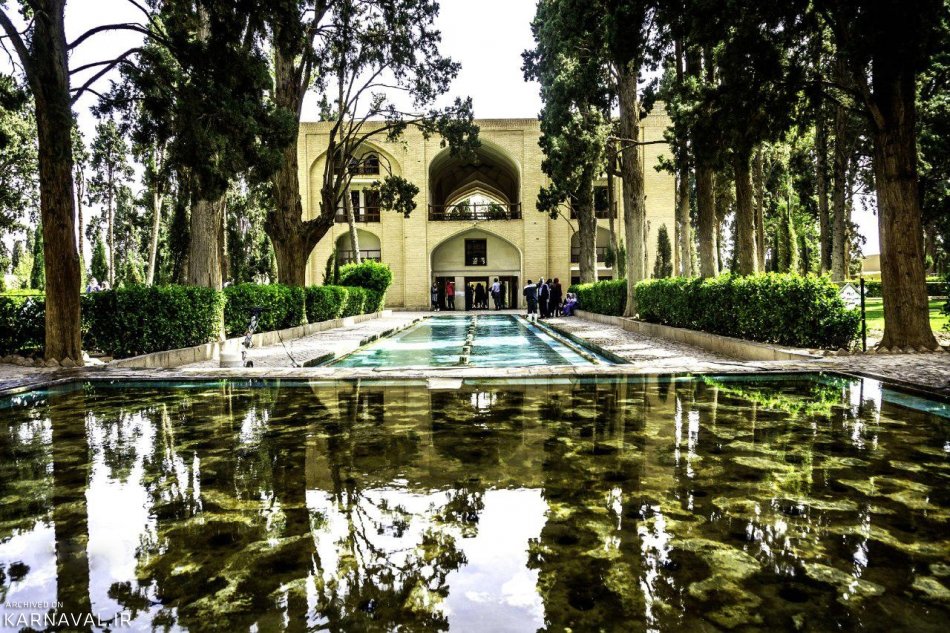
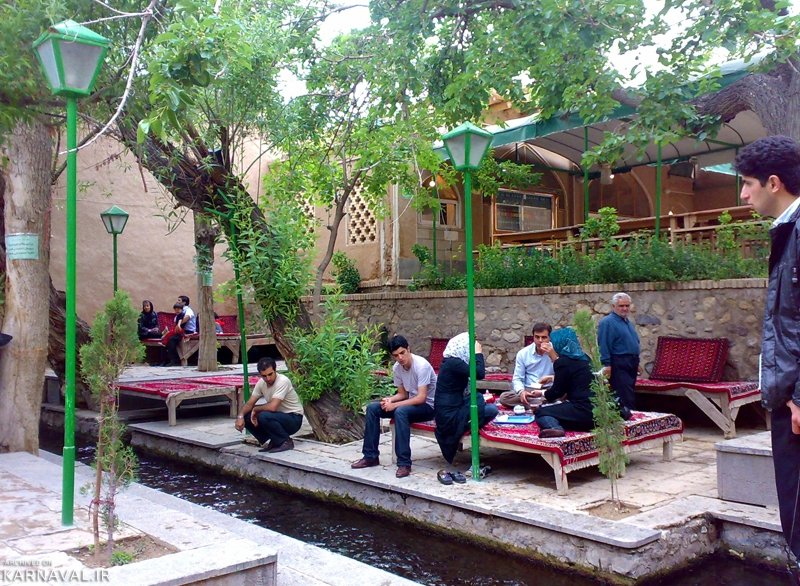
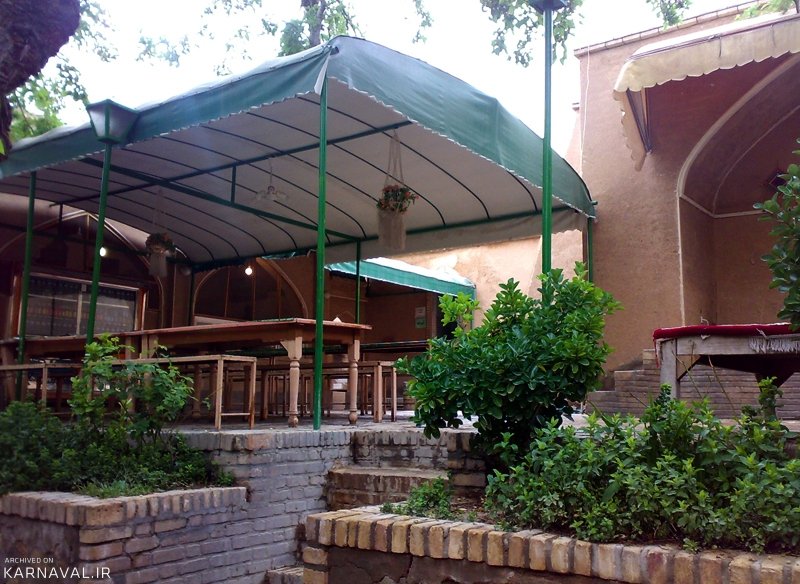
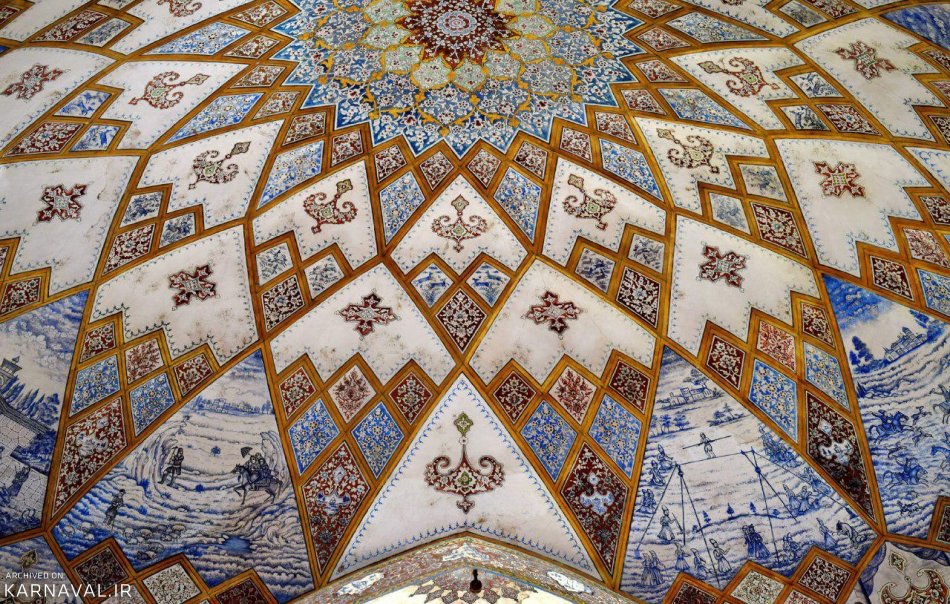
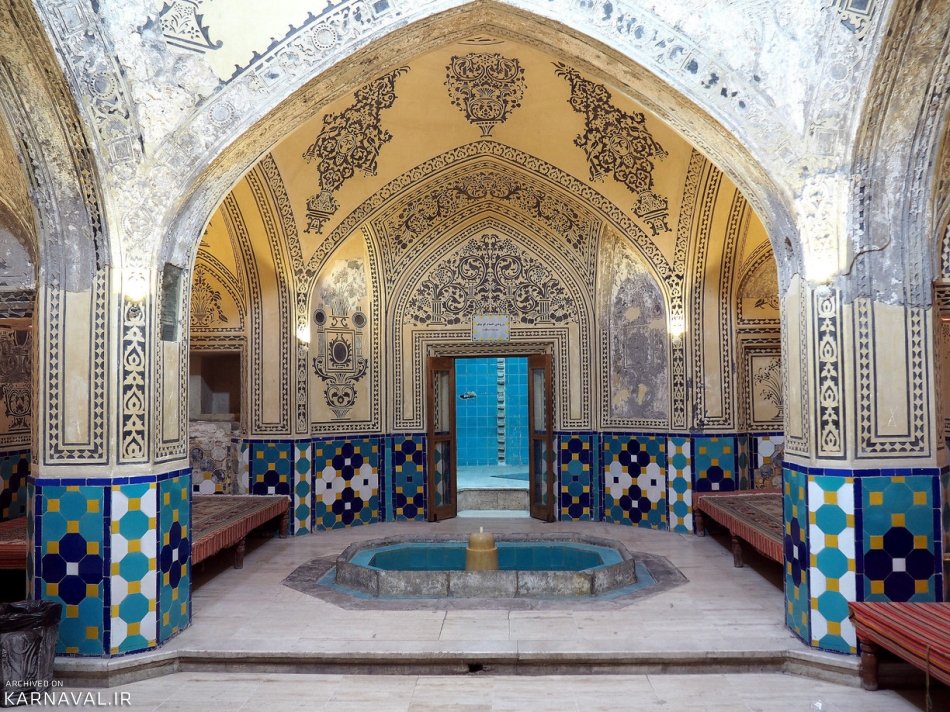
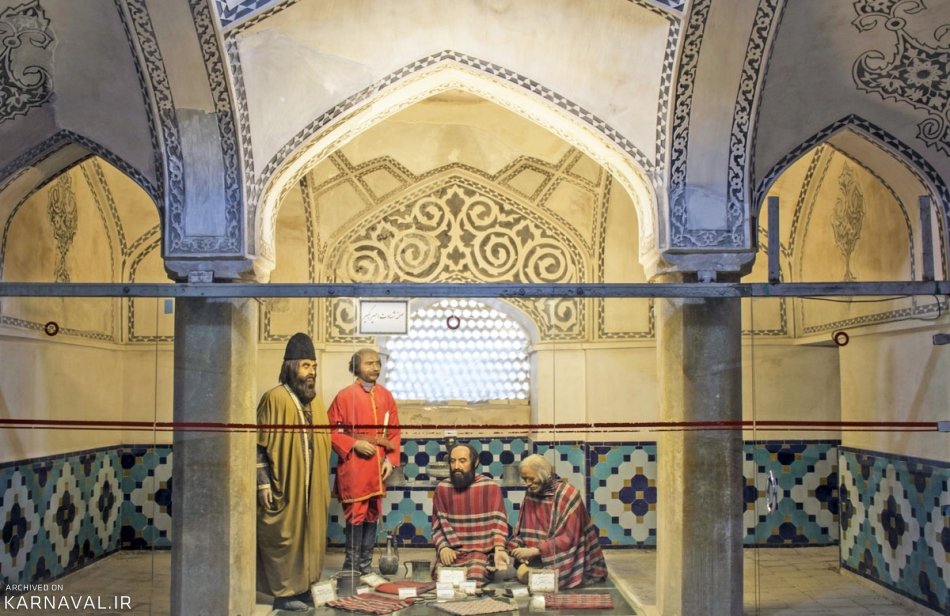
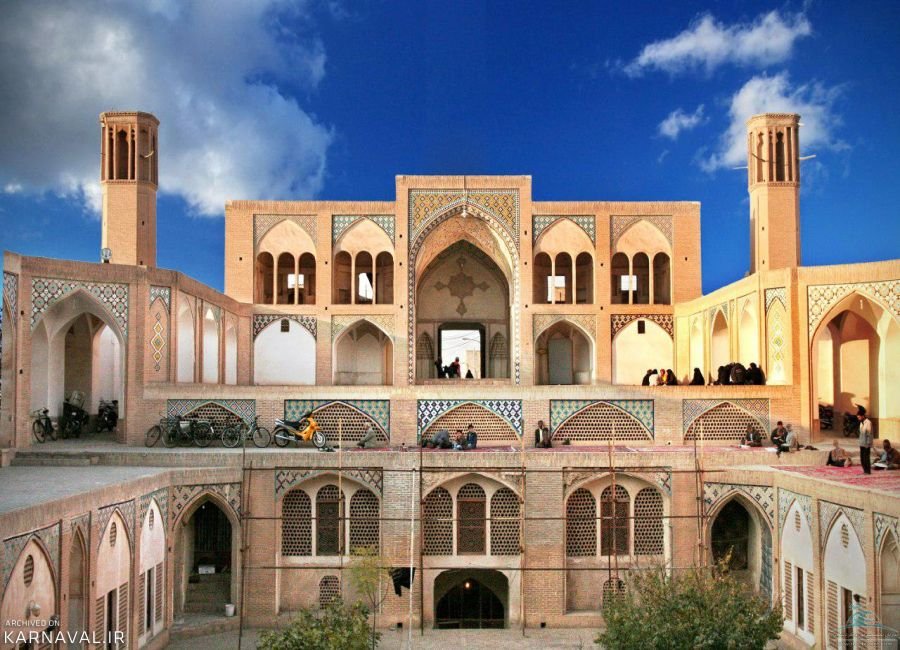
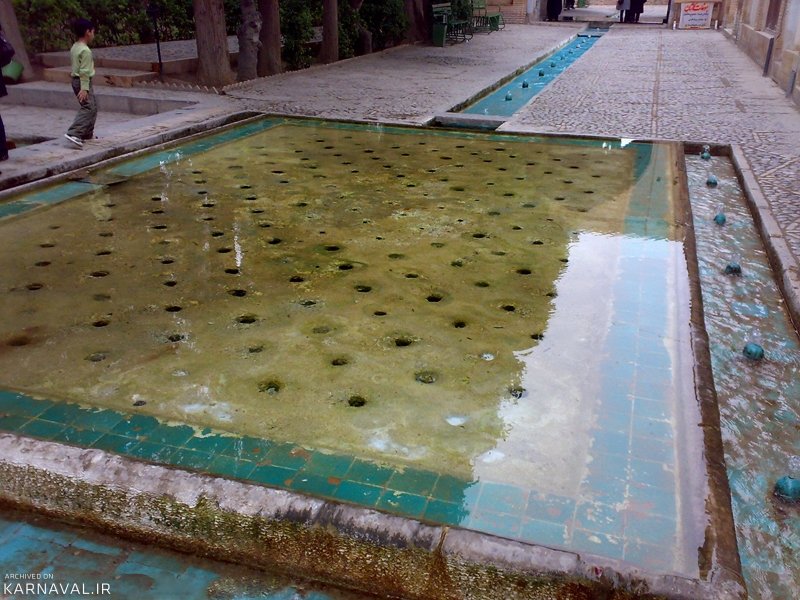
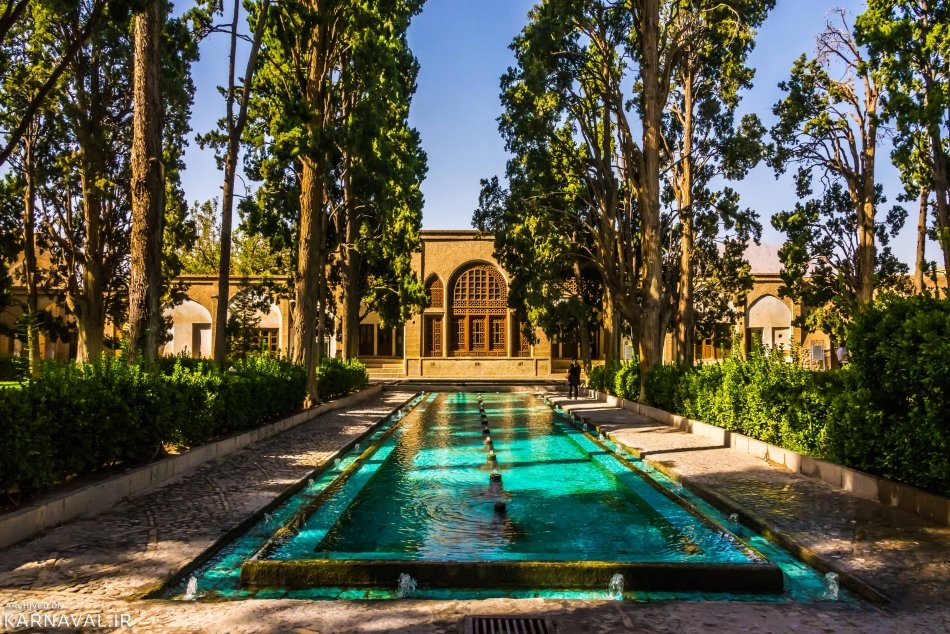
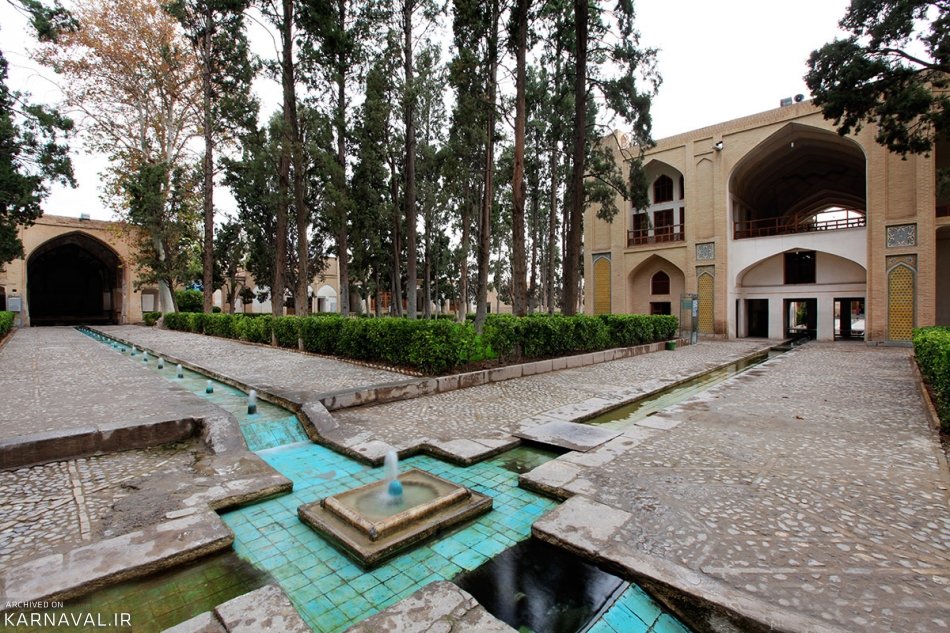
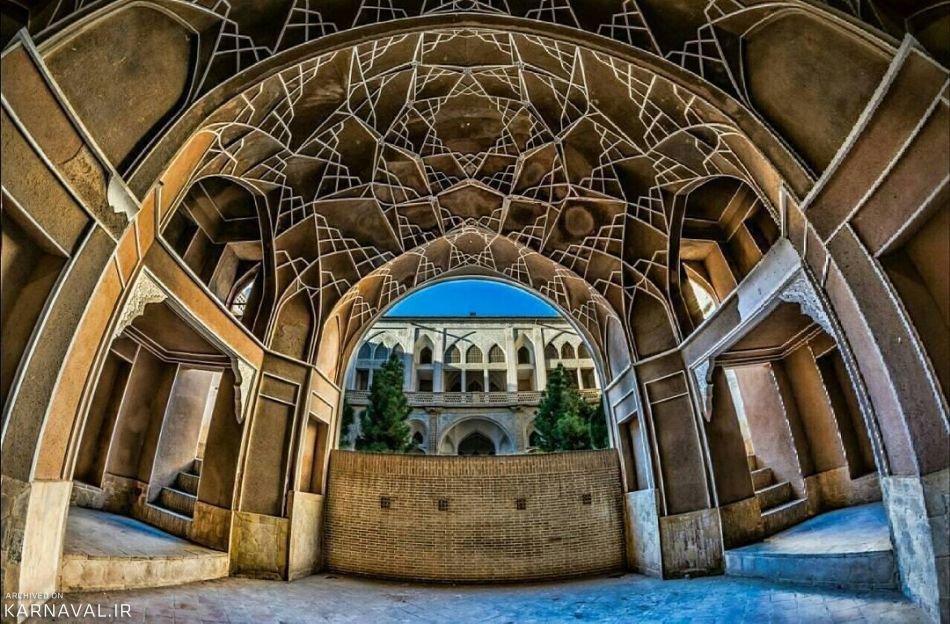
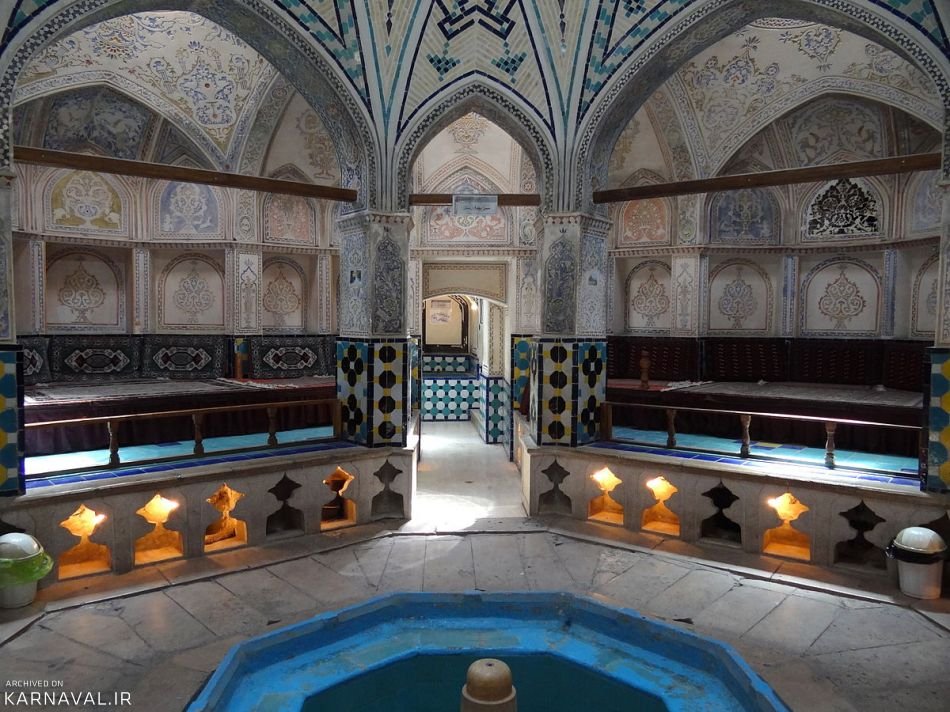
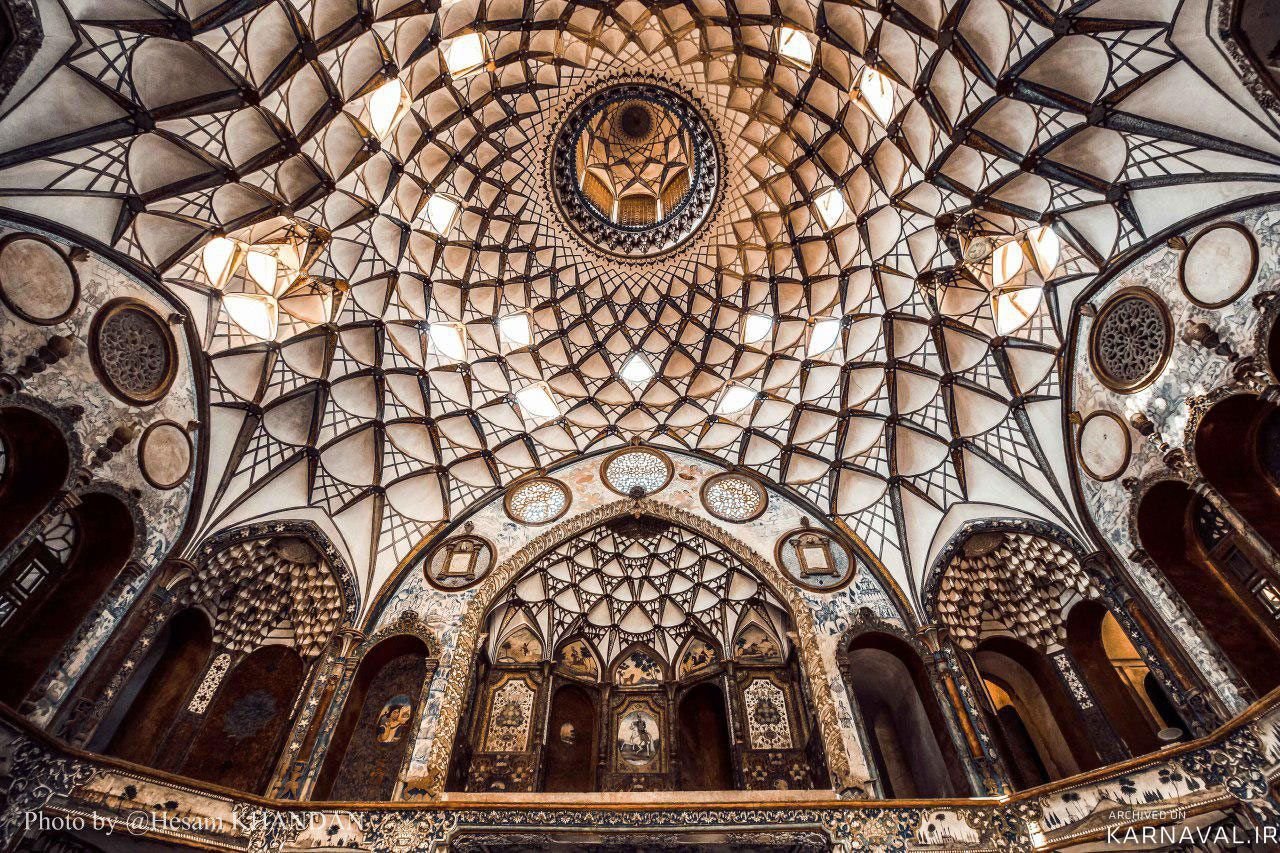
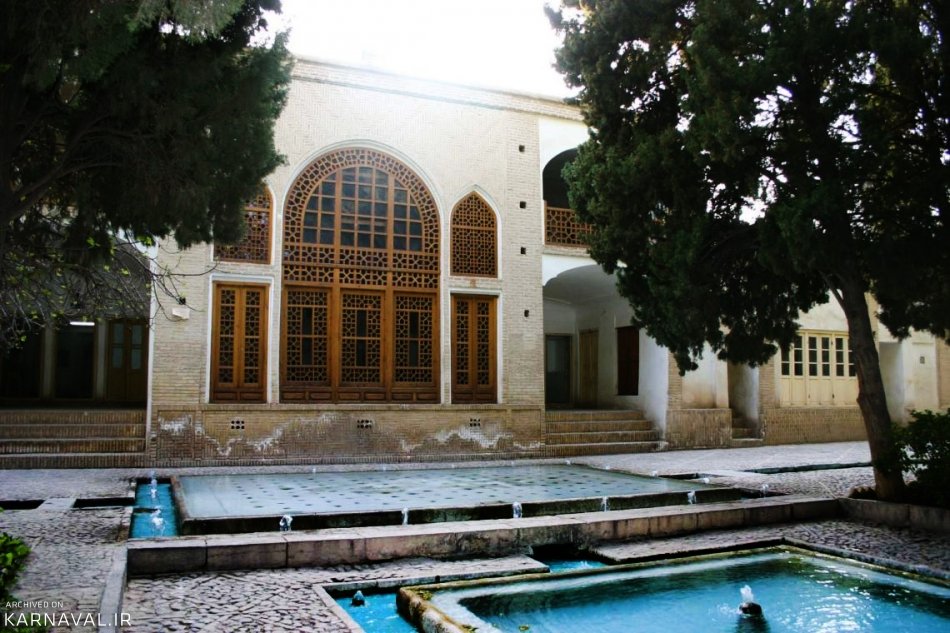
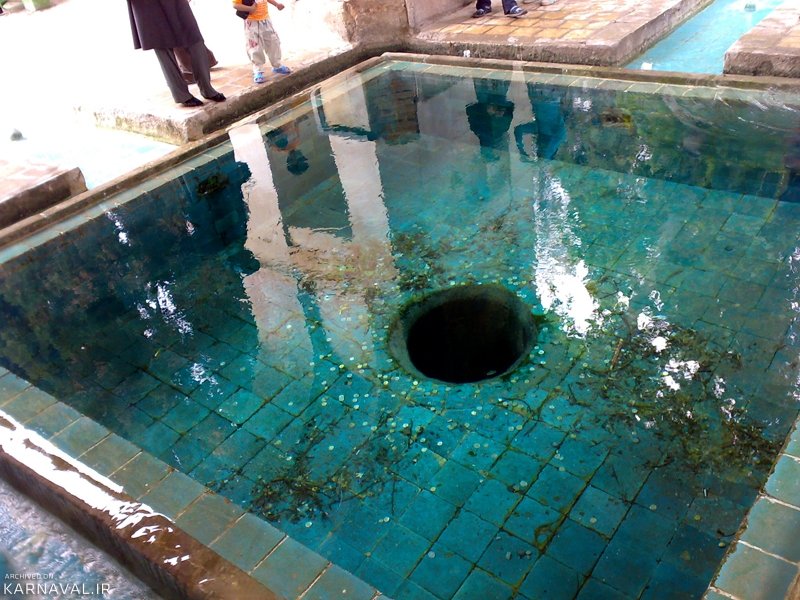
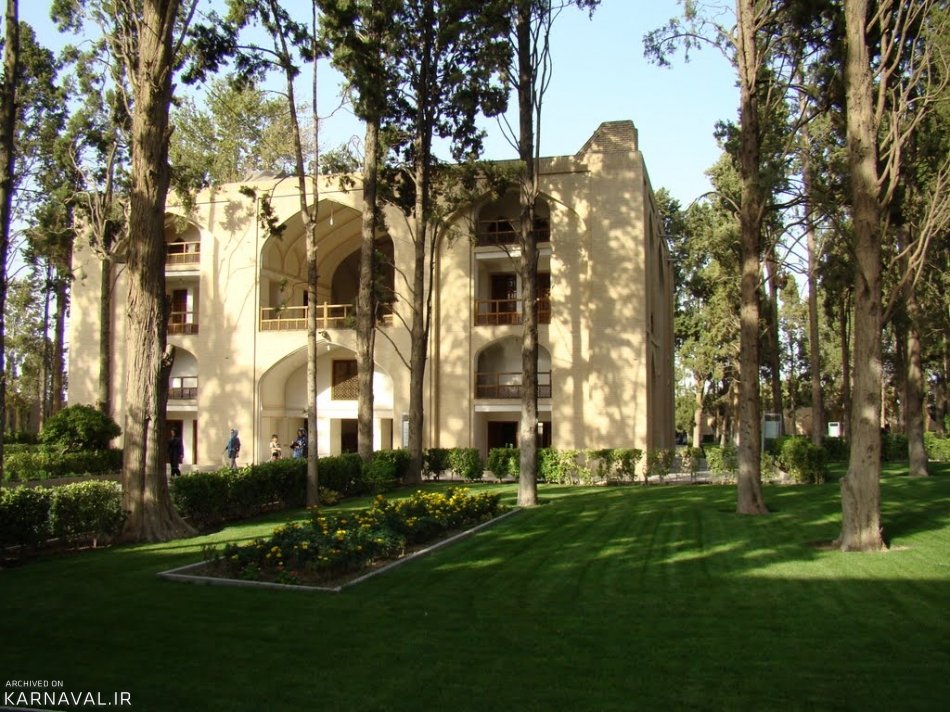
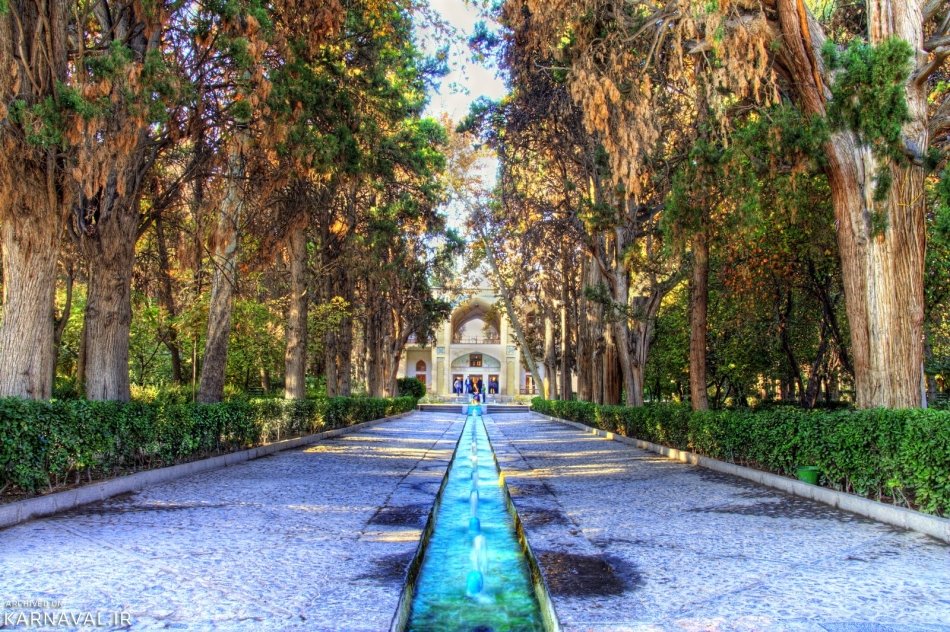
Fin Garden, located in Kashan, Isfahan Province, is a historical Persian garden containing Kashan’s Fin Bath, where Amir Kabir, the Qajar chancellor, was murdered by an assassin sent by King Nasereddin Shah in 1852. Completed in 1590, the Fin Garden is the oldest extant garden in Iran.
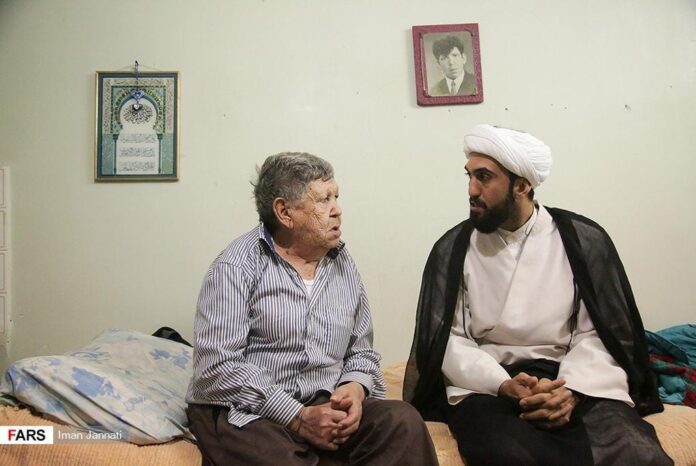
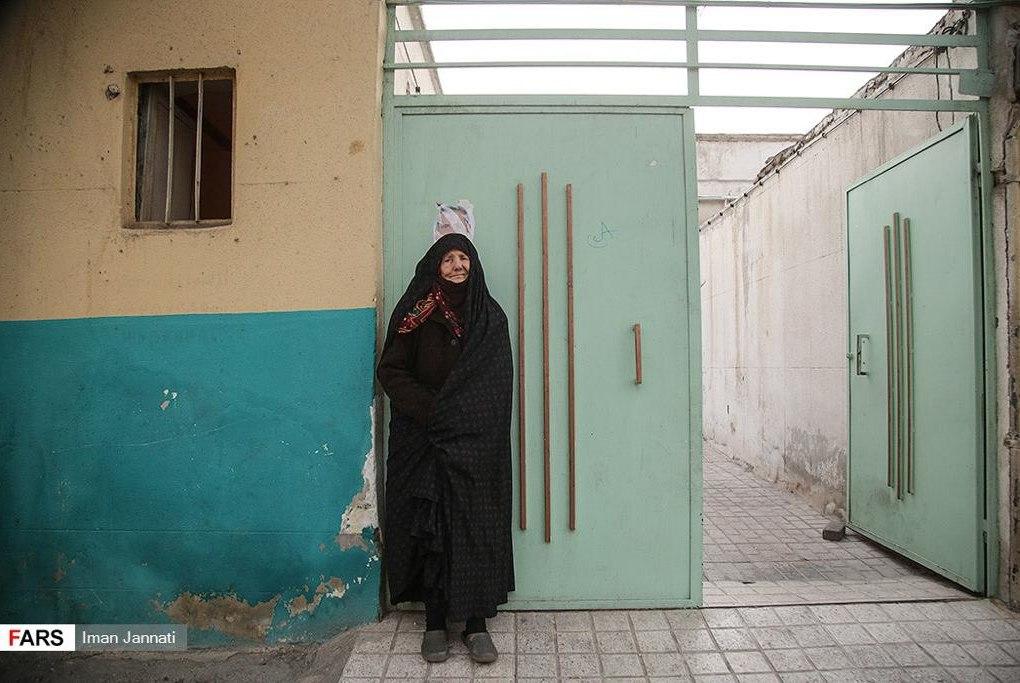
When the medicine science still had not found a treatment for the bacterium causing leprosy, lepers came to Mashhad, hoping they could be cured via divine healing at the holy shrine of Imam Reza. Accordingly, they settled down and stayed in the holy city in northeastern Iran. Afterwards, a definitive cure was found for leprosy. Medications were sent to Iran, and the advancement of the disease stopped when patients began to take the drugs. Nevertheless, the word “lepers” became a stigma attached to their names and they were ostracized and remained isolated forever.
Pressured by grief and agony, lepers in Mashhad spent their youth and became old. Now, at a time of sorrow and regret, a young clergyman emerges to help. Hojjatoleslam Sadeq Abbasi stood by the lepers and did not forget them despite all problems amid the coronavirus crisis.
Lepers Defeat COVID-19
“We are going to have a get-together tonight at the home of one of the lepers who has just recovered from coronavirus and has passed his quarantine period. It was a divine miracle that he stayed alive; we had no hope that he would survive because he was old and suffering from a collection of underlying health conditions,” said the clergy in a phone interview with Fars News Agency.
“Now is not the right time to tell you how things turned out that I found myself in the lepers’ neighbourhood. Just know that after coronavirus broke out, the lepers became lonelier than before. The lepers knew nothing of coronavirus. In this neighbourhood live around 100 families all of whom are healthy. All they own is a meagre room with fading paint. They either don’t have a TV or have a small one. Not knowing about global developments as well as events taking place around them, they spend weeks and months,” says the clergyman.
“When they heard a disease had emerged whose patients had a condition similar to what they were suffering years ago, i.e., everybody stayed away from those contracting the disease, the bitter memories of all those years were rekindled for them. Coronavirus was more of a joke to the lepers. They were indifferent toward coronavirus and didn’t take it seriously. However, old age, underlying health conditions and frail health increased the possibility of the lepers contracting COVID-19 and, accordingly, made it all the more important to look after them,” said the clergyman.
Abbasi speaks of the ambience in the streets in lepers’ neighbourhood amid the coronavirus pandemic.
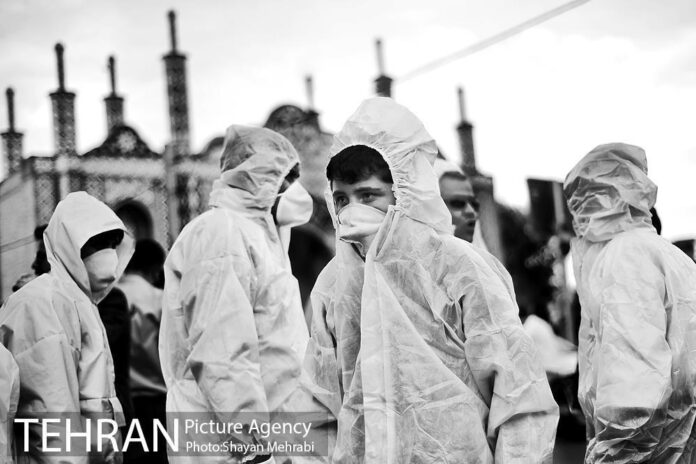
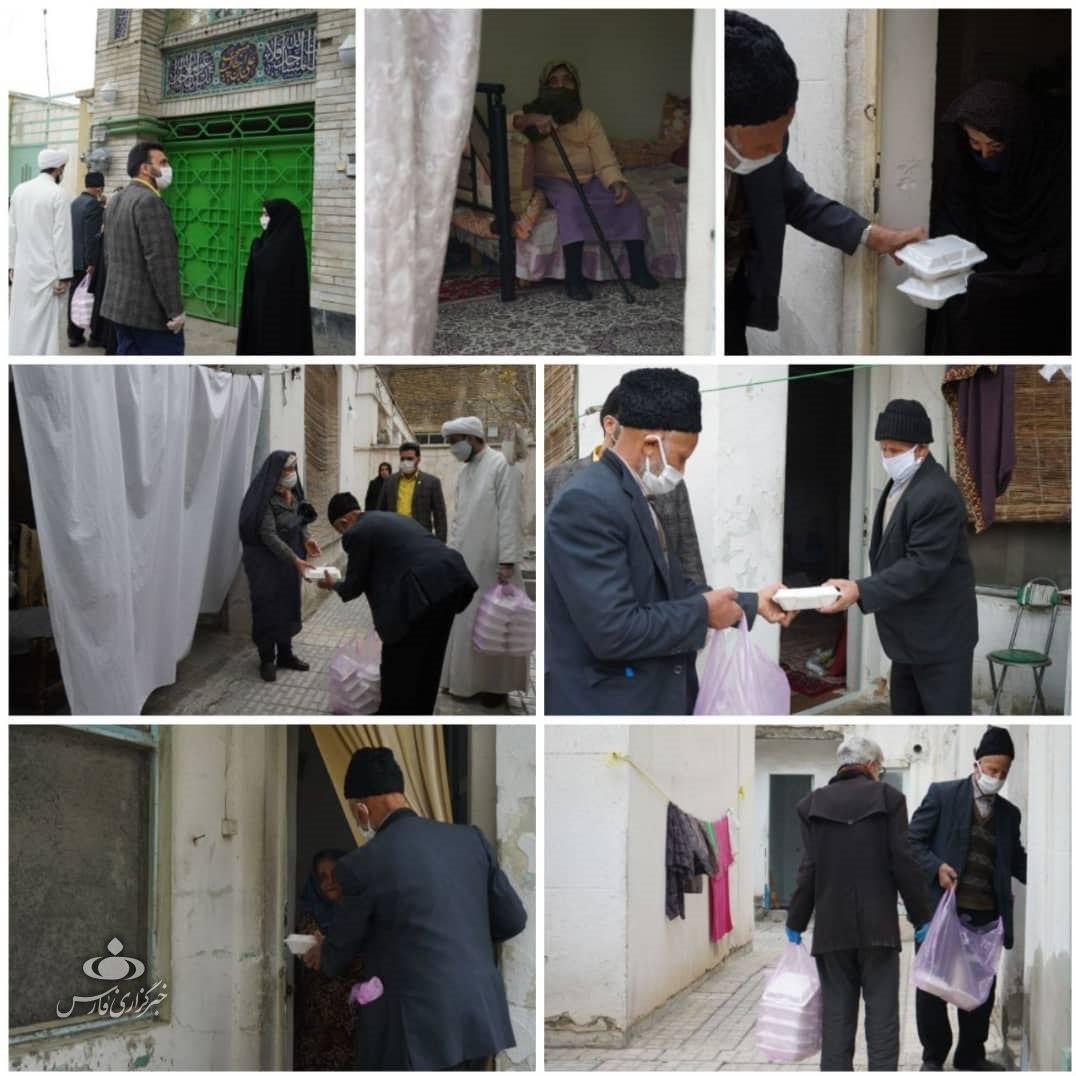
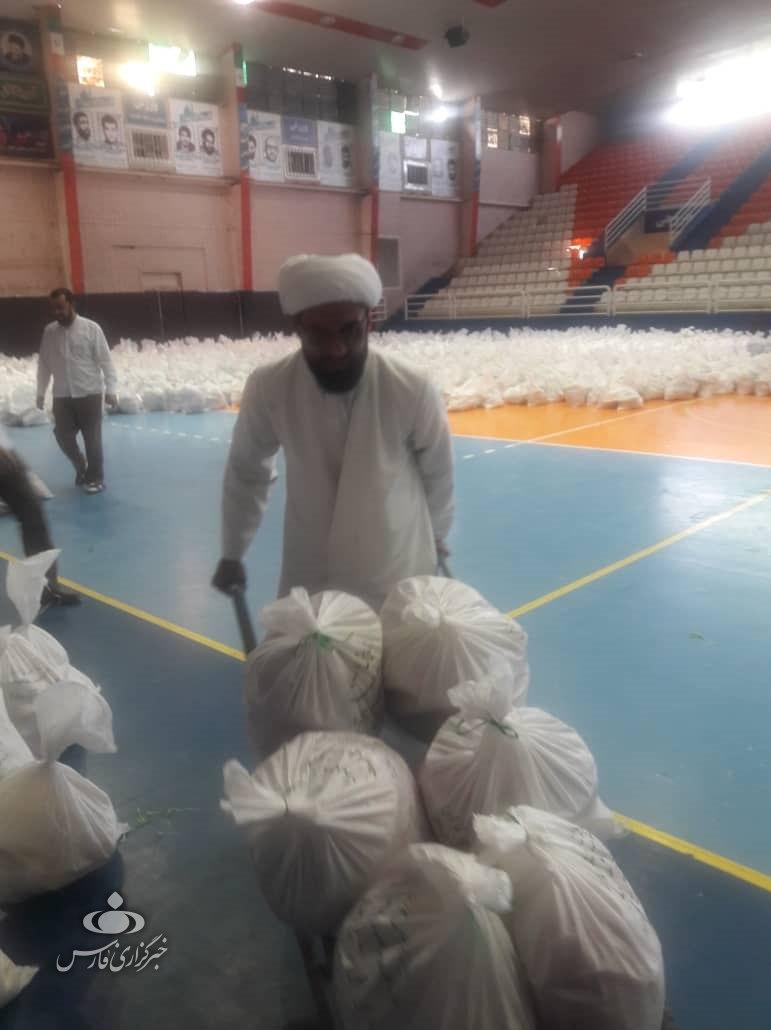
“Groups fighting coronavirus were not paying attention to the lepers. I have lived with the lepers for two years now. When coronavirus broke out, I myself went into action. I had consultations with the Municipality and the office charged with handling the affairs of the Imam Reza shrine. We provided masks and disinfectants for them. We distributed among them packages containing basic goods. We also gave them warm food. In a nutshell, we made whatever we could to keep them from leaving home,” he says.
“We went door-to-door and talked to them about this virus and its dangers. We asked mosque-goers for help. We disinfected the homes of those who I had tried, for two years, to make them understand leprosy is neither contagious nor dangerous. We disinfected their houses to keep coronavirus from spreading among the lepers, so that their situation won’t get any worse than what it is now. We continue to support them,” he says.
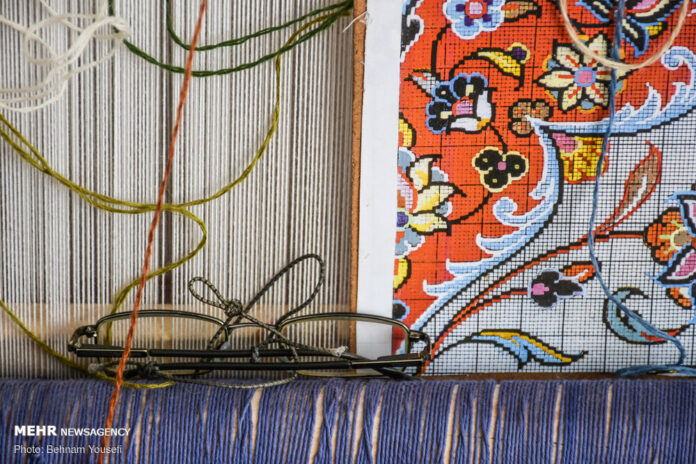
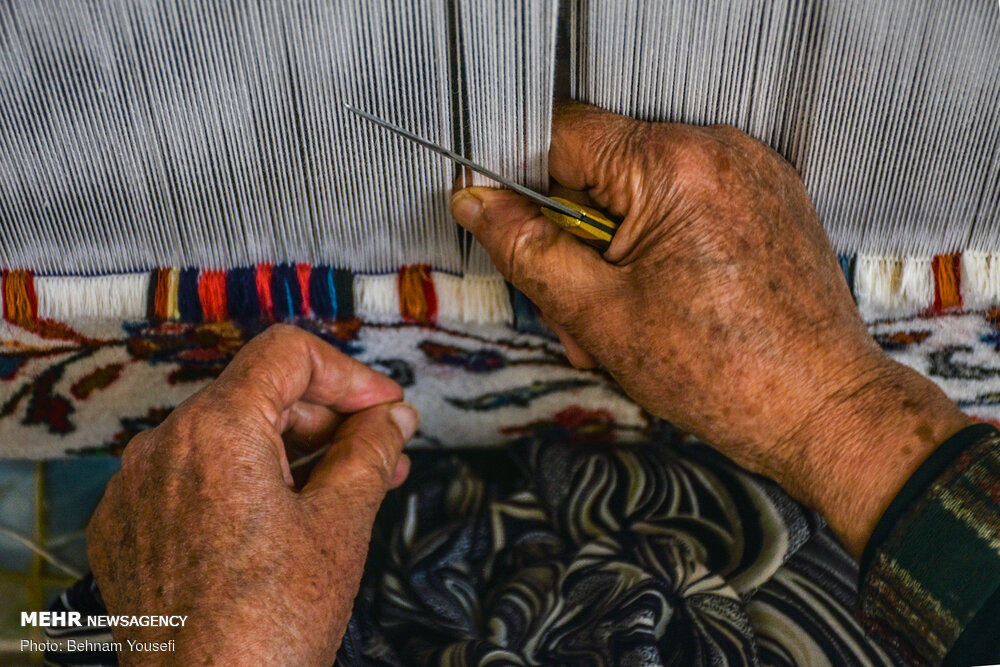
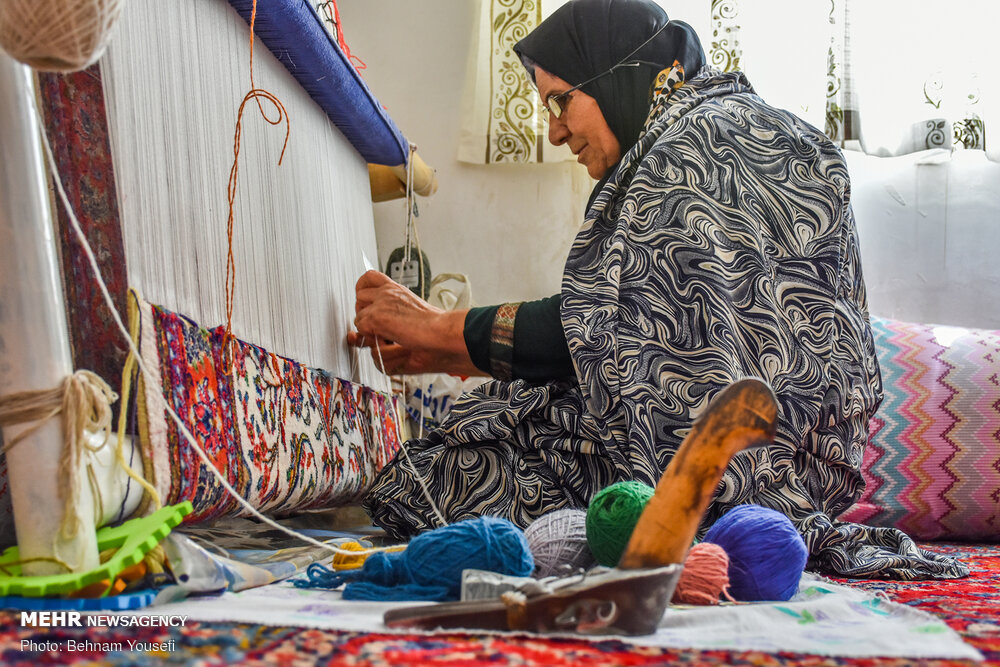
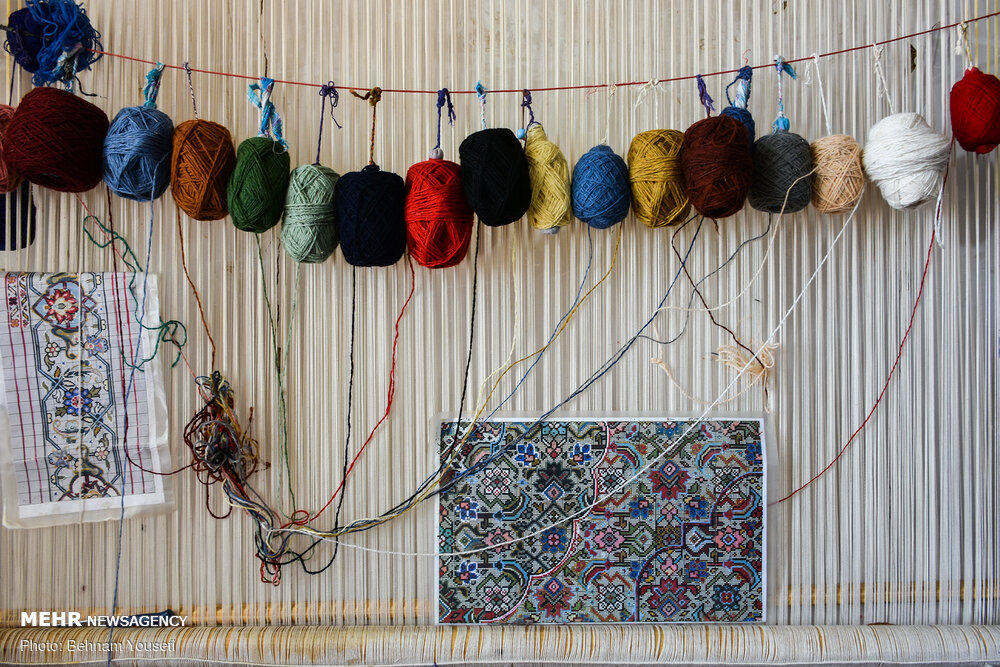
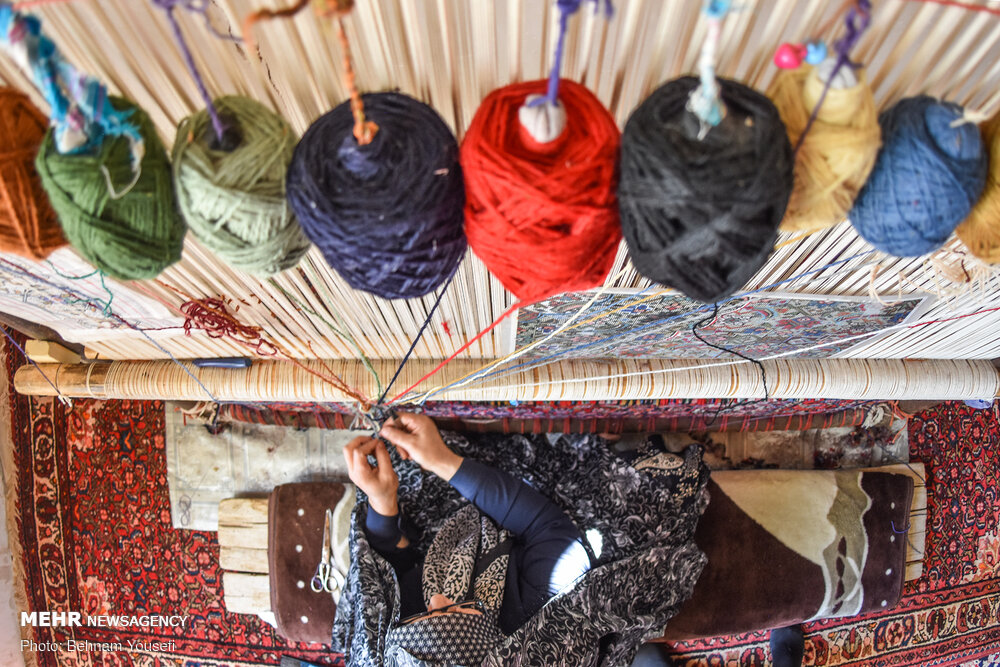
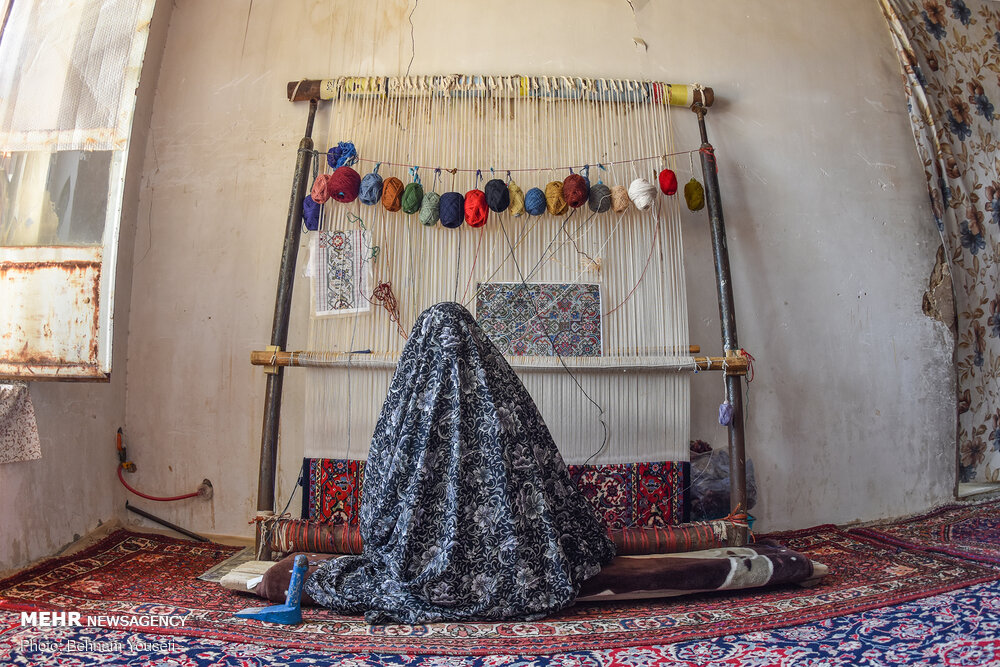
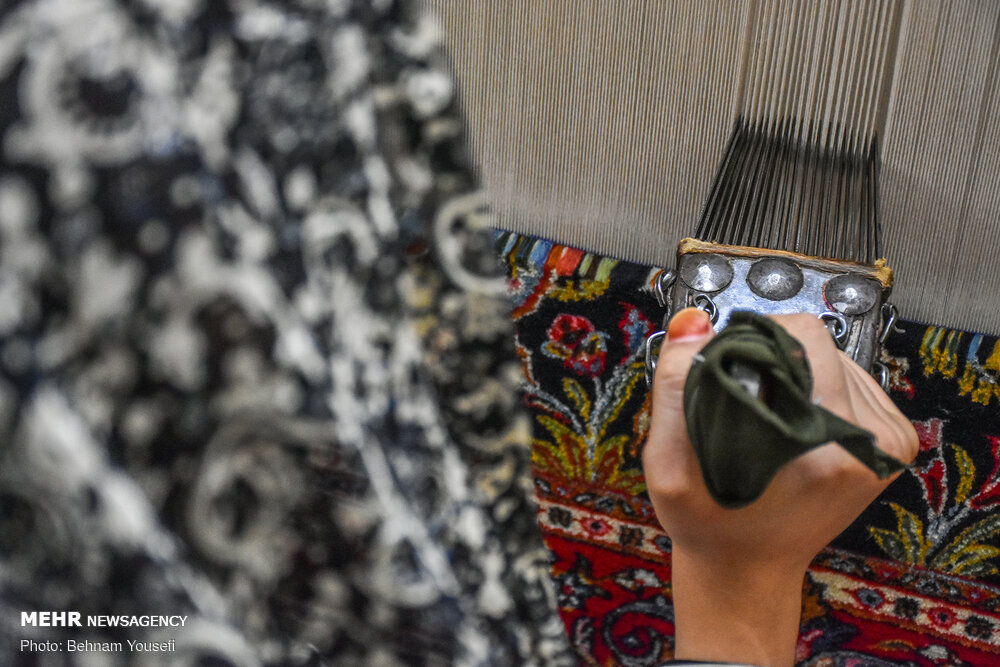
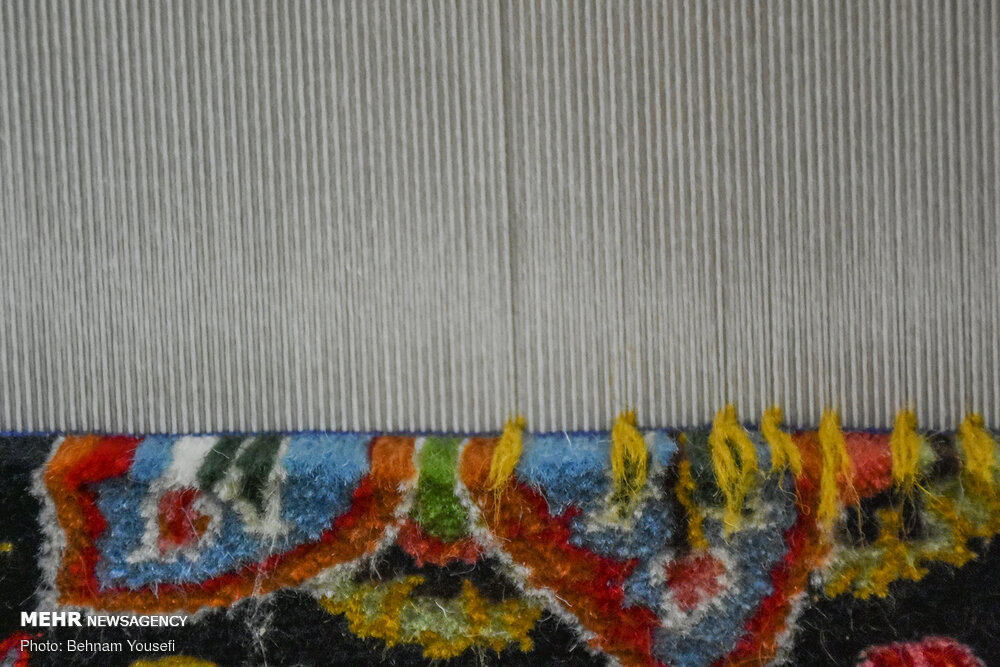
The Sarooq region enjoys a long history in terms of producing handwoven carpets. Sarooq and Jiria are two villages in the north of Arak, central Iran, and women there have special dexterity in weaving carpets. The centuries-long history of weaving carpets in these two areas has made the brand name Sarooq famous, so much so that European and American businesspeople are well familiar with this brand.
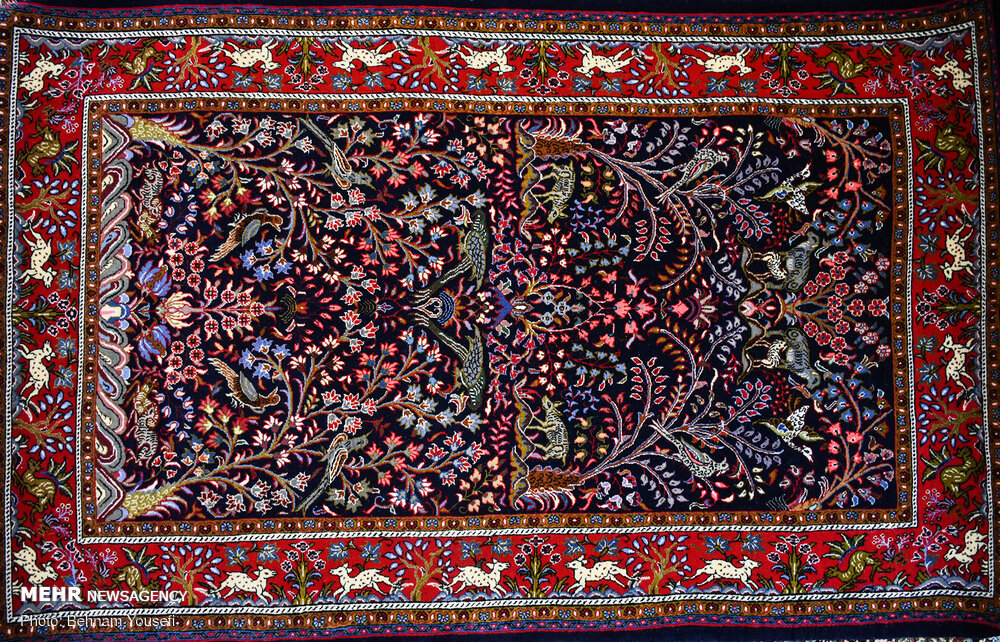
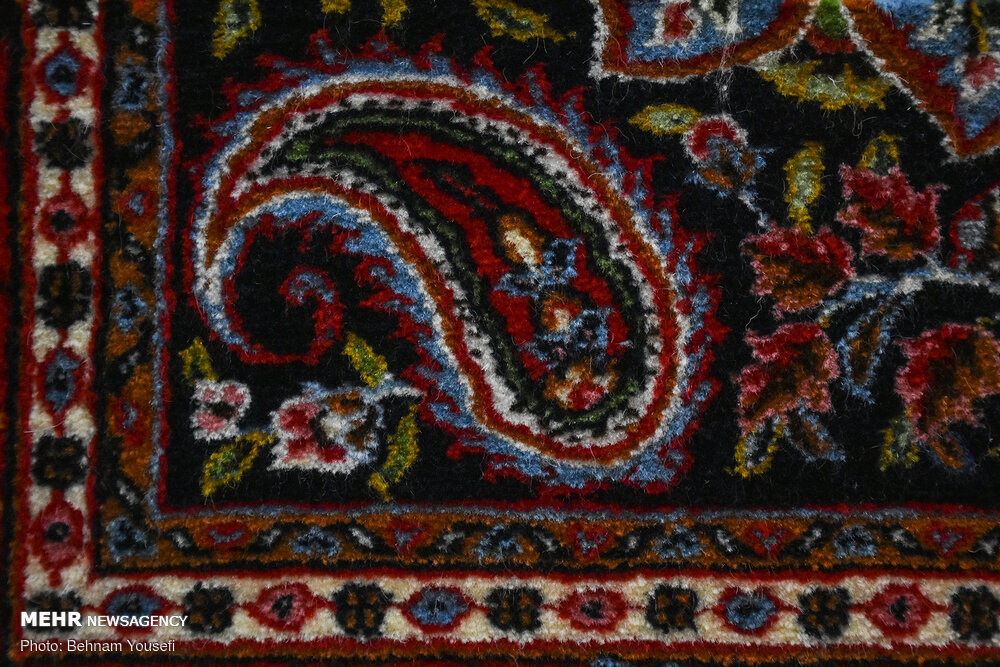
Of course, weaving this type of rug is more popular in Jiria and most Sarooq carpets are woven by local residents. The special feature of hand-woven Sarooq rugs and carpets is that they bear geometric and curvy designs.
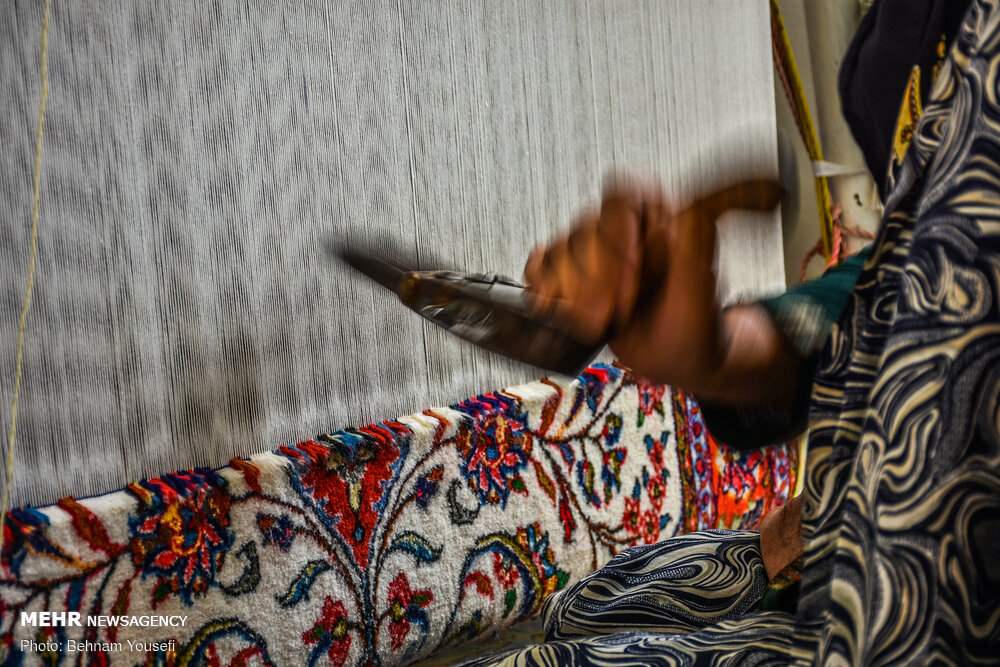
Traditional designs have two forms: Afshan or Toranj. The Toranj design bears hexagonal, oval, rhombus or round shapes with which rugs are decorated.
The most attractive traditional design is Lachak Toranj which is made up of a geometric, and at the same time flowery shape reminiscent of nature.
Although Sarooq carpet is very famous, still experienced and sharp eyes are required to distinguish original Sarooq carpets from other rugs woven in adjacent villages.
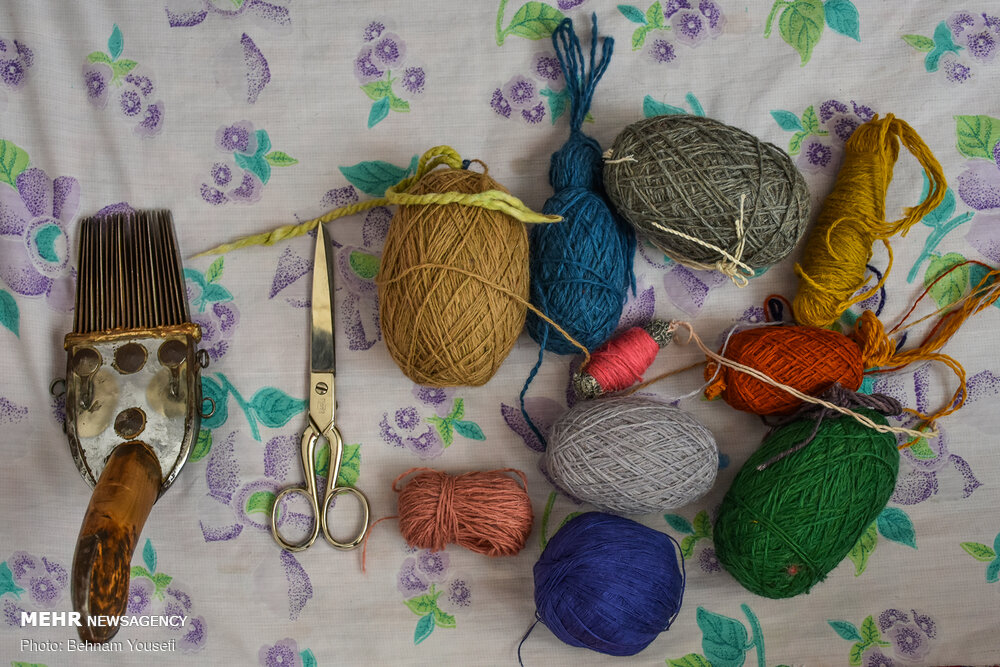
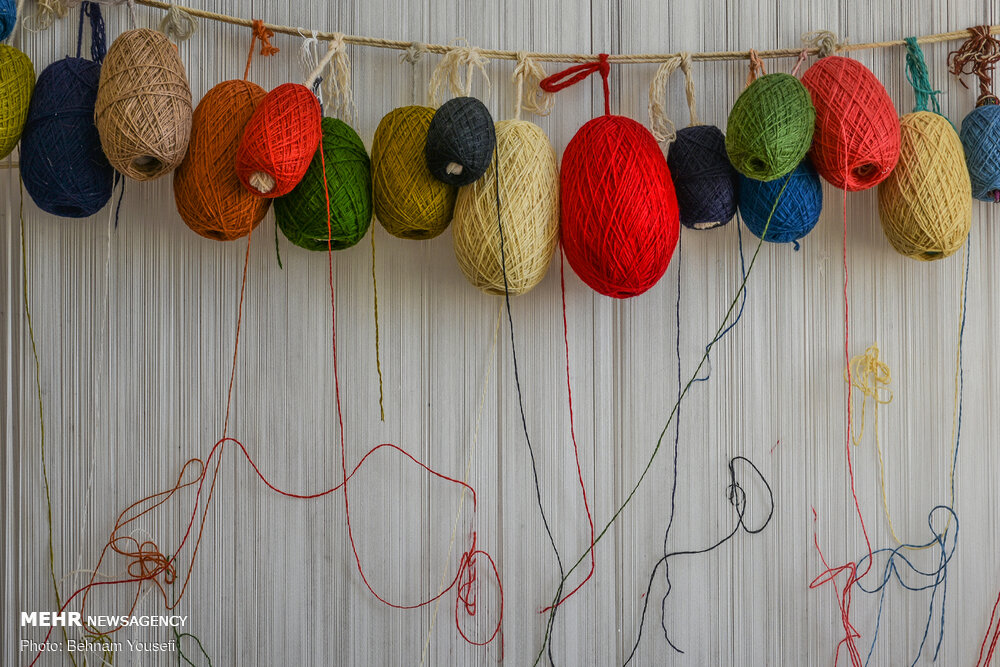
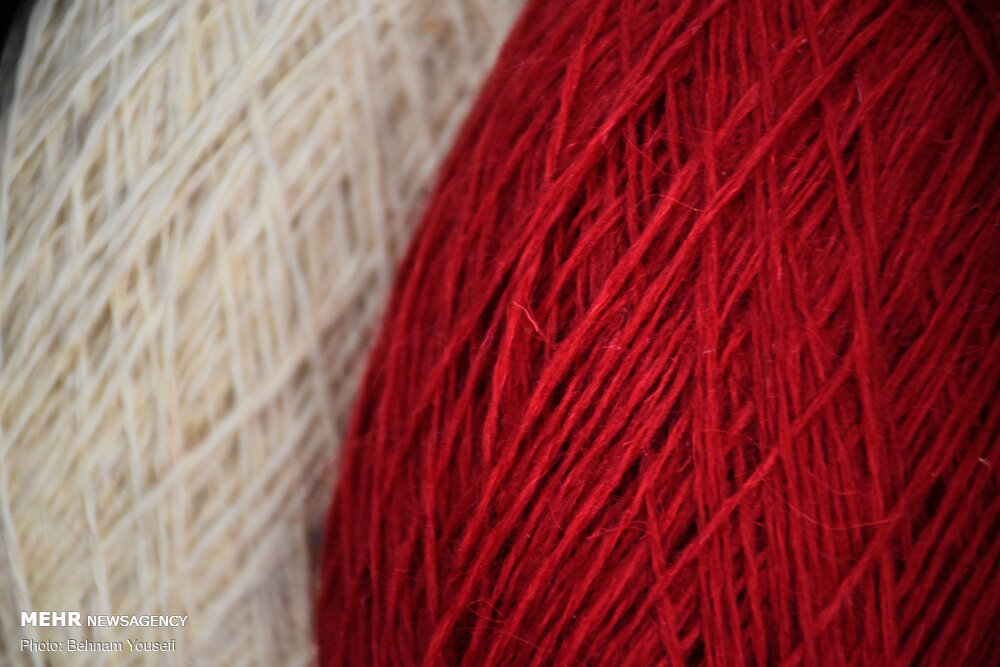
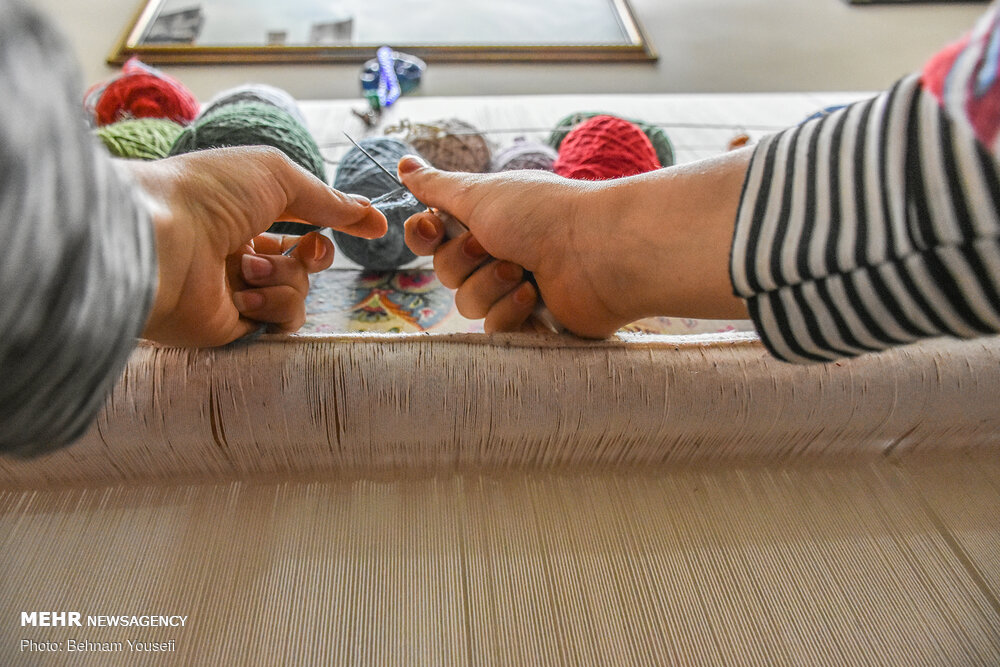
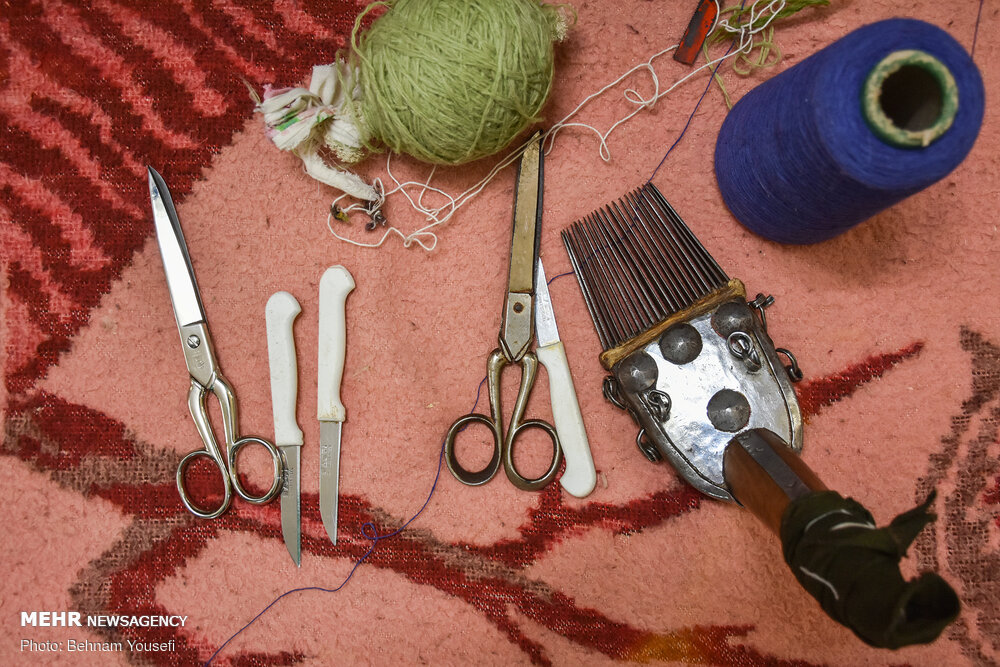
The following are images of weaving Sarooq carpets courtesy of Mehr News Agency: