Thursday, December 25, 2025
Home Blog Page 2777

Iranian, Afghan Top Diplomats Issue Joint Statement

Iranian, Afghan Top Diplomats Issue Joint Statement

What follows is the full text of the statement:

In the Name of God

Joint Statement from the Minsters of Foreign Affairs of the Islamic Republic of Afghanistan and the Islamic Republic of Iran

Tehran

Monday, June 22, 2020

Mohammad Hanif Atmar, the honourable caretaker of Ministry of Foreign Affairs of the Islamic Republic of Afghanistan, visited Tehran at the head of a high-ranking delegation on June 21, 2020, for an official two-day visit. During the trip, Mr. Atmar and the accompanying delegation held meetings with the Islamic Republic of Iran’s Minister of Foreign Affairs, Secretary of the Supreme National Security Council, Minister of Interior, Minister of Energy, and Minister of Cooperatives, Labour, and Social Welfare.

In the meetings, the two sides discussed the expansion of relations between the two countries in various fields within the framework of eight working committees, including the committees on comprehensive document, legalization of residence of nationals, border cooperation, labour, water, cultural cooperation, energy, and health.

The two sides reached the following conclusions:

1. In order to institutionalize and organize the bilateral relations, the two sides agreed on the necessity of proceeding with the negotiations to finalize the comprehensive document on strategic cooperation between the two countries and preparing the document for signature by the Presidents within three months.

2. The Islamic Republic of Iran welcomed the process of peace under the ownership and guidance of the Afghan government and people, and expressed readiness to employ its capacity and capabilities to facilitate the process of intra-Afghan negotiations and to host the negotiations at the request of the Islamic Republic of Afghanistan.

3. The two sides emphasized the need to reduce violence in Afghanistan with the purpose of building trust and creating a positive atmosphere in order to launch the intra-Afghan negotiations as soon as possible, achieve a lasting ceasefire, and establish sustainable peace.

4. Considering the significance of regional and international consensus on the establishment of peace and security in Afghanistan, the two sides stressed the need to strengthen the regional and international cooperation and consultations and activate the capacities available in the region with the purpose of facilitating the negotiations and supporting the Islamic Republic of Afghanistan’s establishment. As a result, they agreed about the necessity for the formation of a regional initiative pivoting on Afghanistan and participation of the neighbouring countries and partnership of the other influential countries and the role of the United Nations in supporting the intra-Afghan peace process.

5. The two sides touched on the good cooperation and coordination between the two countries in the international circles, the issues of mutual interest, and the common concerns, including human rights and protecting the rights of nationals, and stressed the need to proceed with the cooperation in future.

6. The two sides stressed the necessity of strengthening cooperation in the media sectors in order to provide information and increase the level of mutual understanding between the public opinion in the two countries. In this regard, media cooperation between the two countries will grow in future.

Iran to Make Medical Services More Affordable for Afghans

Iran to Make Medical Services More Affordable for Afghans

Minister of Cultural Heritage, Handicrafts and Tourism Ali-Asghar Mounesan says efforts are underway to moderate hospital fees for Afghan nationals in Iran.

“However, this is subject to precise verification by watchdog bodies as [Afghan migrants’] willingness to work without permit can make the process more complicated,” he said.
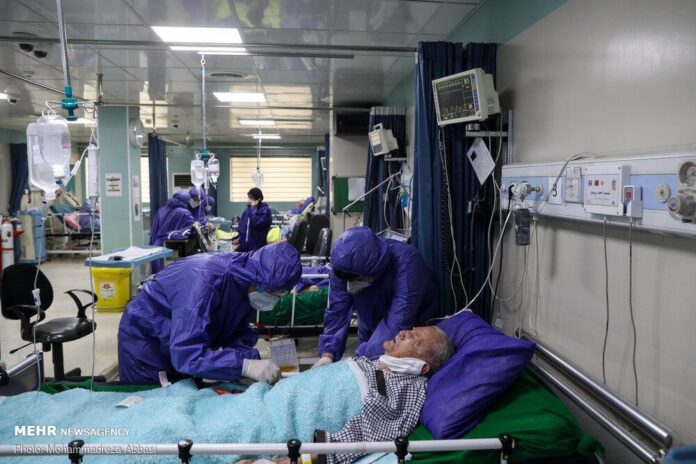
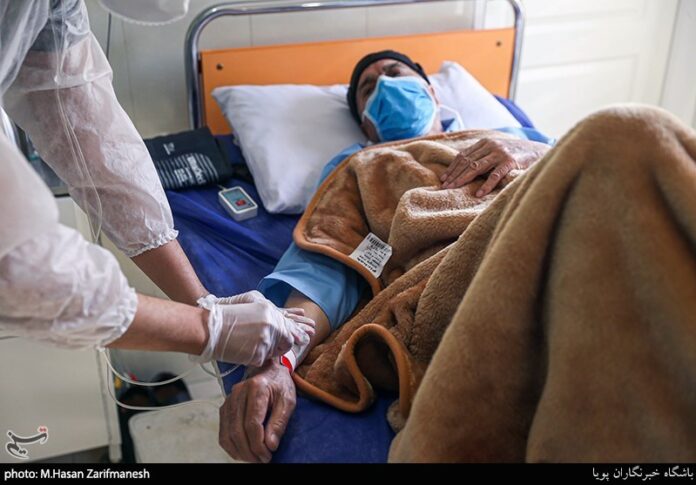
“In the health tourism sector, more than 125,000 were hospitalized in Iran in the one year to March 2020,” he said, adding around 50% of them were Afghans.

“The reasons why they were hospitalized include gynecological problems, childbirth and infertility, eye surgery, heart conditions and orthopedic treatment,” he said.
“What is important is to generate income from health tourists,” he said.

Elsewhere in his remarks, the minister referred to efforts to control borders to prevent illegal entry of Afghan nationals.

“Iran has around 1,000 kilometres of common border with Afghanistan and it should be controlled in a smart and comprehensive manner,” he added.

He also touched upon the promotion of cultural tourism, saying joint cultural events have been held, so far, to that end.

Saudi Arabia Dragging Feet on Hajj Issue: Iran

Saudi Arabia Dragging Feet on Hajj Issue: Iran

The head of the Iranian Hajj and Pilgrimage Organization, who had earlier said Iranian pilgrims would start going on Hajj pilgrimage as of June 26, 2020, says Riyadh has not yet made any announcement on whether or not the Hajj rituals would be held this year or how it would be held.

“We have serious grievances to air against Saudi officials over the important issue of Hajj as a religious duty,” Alireza Rashidian said on Monday.

“The Saudi government should have formed a consortium by inviting representatives from different countries and consult with them on what measures can be adopted for holding this religious duty,” he added.

“Despite the correspondence and regular contacts by our colleagues at Iran’s representative office, Saudi Arabia has, unfortunately, given no response but to call for patience and saying they will soon announce how things would move forward,” the official added.

“Given the coronavirus pandemic, we, as a Muslim country, felt duty-bound to give some suggestions to the Saudi Hajj Ministry with regards to health protocols,” he said.

“As the Islamic Republic of Iran, we expressed our readiness for consultation, assistance and cooperation, but we received no response,” said the official.

He further took a swipe at Riyadh for its “contradictory” approach on the Hajj issue.

“On the one hand, Saudi Arabia opens the doors of holy shrines in Mecca and Medina and enforces strict protocols, indicating it is getting ready for holding the hajj rituals, and on the other, it kills time and does not answer to countries and apparently shows that it does not have the capacity and potential needed to offer proper services to pilgrims,” he said.

The Saudi government has been quoted by Reuters as saying that it intends to accept only a few pilgrims as a symbolic move for the hajj rituals this year.

‘Caesar Sanctions’ on Syria Sign of US Military Failure: Iran

‘Caesar Sanctions’ on Syria Sign of US Military Failure: Iran

Mohammad-Baqer Qalibaf said on Monday that the demands of enemies of Syria have failed to materialize so far.

“Today, we are seeing that the enemies of Syria, Iran and the Muslim community are disappointed,” he noted in a meeting with Saudi Ambassador to Tehran Adnan Mahmoud.

Qalibaf further said that Tehran and Damascus have always enjoyed strong relations.

“History shows Iran and Syria have always had deep-rooted and unbreakable bonds, which stems from the beliefs of both countries’ people,” he added.

“We always regard Syria as being the frontline of the resistance front,” the top Iranian parliamentarian said.

Qalibaf noted there have been times when Iran stood by Syria alone.

Elsewhere in his remarks, the parliament speaker touched upon the role of top Iranian general Qassem Soleimani, who was assassinated by the US military in Iraq in January.

“All of us know that martyr Soleimani had a unique role in Syria,” he said.

The Syrian diplomat, in turn, congratulated Qalibaf on becoming Parliament speaker, and appreciated efforts made by martyr Soleimani.

He said the strategic accomplishments achieved are of high significance, and it is necessary to preserve the achievements.

Renko Charts Strategy:  A Clear Picture of It

Japanese technical analysis suggested presenting the value of a product in a special way using the Renko chart. Candlestick charts invented in Japan became the de facto standard for displaying price movements in all popular trading platforms. For 200 years, their patterns have been generating steady profits despite high-frequency trading (HFT) and other technical innovations. However, they also have worthy alternatives, such as Renko price bars. Find out how the best Renko trading system works and what things you need to keep in mind when using it.

The Trading Strategy Based on Renko Charts

The central element of the trading strategy based on Renko is Standard Deviation, which determines the moment when the price begins to return to its “central” value. In fact, this will be an entry signal – as soon as the deviation unfolds to the average, you should open a deal according to the trend. You should do additional smoothing of random fluctuations in the graphs using RSI.

The Take Profit and Stop Loss values ​​are set depending on the asset or in the standard way after the last local highs/lows, which are clearly visible on Renko. Close the position when the return signal appears. Experienced traders can try to average over the new signal if the correction continues. The Renko chart was primarily designed to simplify the visual analysis of the market.

The Advantages and Disadvantages of Renko


Like any other market analysis technique, the Renko chart has advantages and disadvantages that must be taken into account using similar non-standard charts. Let’s start with Renko benefits.

  • Renko, like other charts that do not take into account the time factor, is based on closing prices (Close) and is clearly more informative – symmetric candles allow you to see the “real” trend and strong support/resistance levels.
  • There is practically no market “noise” on the charts, and thus, local highs/lows and trend reversal points are more clearly defined on Renko.
  • If the Renko chart changes color, it will be a signal to buy or sell. Their appearance can be used to confirm other indicators, especially moving averages with their delay.

What about the disadvantages? Despite the obvious advantages of Renko, there are several problems that make it difficult to interpret them correctly:

  • Charts remove not only noise but also volatility. For the formation of the Renko bar, a certain time is needed from several minutes to hours. The display goes only after the candle closes, which may cause some concern for novice traders.
  • At the same time, when there is a flat, there may be impulses and bounces from the borders of the range, which can be easily traded according to scalping strategies. Such situations are immediately visible on the candlestick chart, so use them as an addition to Renko.

Despite the shortcomings, the Renko chart continues to be one of the most effective tools for determining trends, reversals, and strong price levels on any financial asset. Moreover, traders admit that the best results were obtained on intraday trading and transactions lasting at least 2-3 hours.

Can Iran See US sanctions Lifted in Next Decade?

Donald Trump

Iran and the United States have been in turmoil for a long period. Most recently, in 2020 the assassination of Iran’s top commander General Qasem Soleimani further triggered the conflict between the two countries.

Even though there have been attempts to resolve the situation peacefully, we have not come to the moment yet when Iran and the US are willing to sit at the table and talk about the resolution of the crisis.

But the main question arises – will the United States somehow express a willingness to lift Iran sanctions in the next decade? Considering the current situation, it seems less likely. But in politics, things do not always work that way. We have seen cases where enemies become friends and friends became enemies. And who knows – perhaps the United States will do the same one day. Considering the situation revolving around the coronavirus and oil market crash in 2020 in the United States, the latter may decide to retreat a little bit.

The harsh stance of the United States

Washington is not going to lift sanctions from Iran until Tehran begins negotiations. This was stated by President Donald Trump’s national security adviser Robert O’Brien in an interview with Axios on January 12, 2020.

The adviser declared that the Trump administration has made it clear that it will never lift the sanctions before the start of negotiations.

According to O’Brien, Tehran must first give up something in order to receive privileges to negotiate with the United States. He added that the US does not need these negotiations.

The position clearly shows that lifting sanctions from the United States requires Iran to take a straightforward decision. The situation between the two countries has a direct impact on the world market. Brokers are concerned with Iran sanctions because it has an impact on assets. A lot of Iranians tend to trade on the global markets and are restrained from these sanctions. That is why various brokers, including Axiory, are paying careful attention to the events taking place in the world.

At the same time, the presidential adviser believes that despite Tehran’s statements, the Iranian authorities will soon sit at the negotiating table. According to O’Brien, the harsh situation will persuade them to do so.

If we remember the past events, Donald Trump wrote on his Twitter that he was not interested in whether Iran would negotiate or not.

The President of the United States of America declared that the National Security Advisor suggested sanctions and protests had already cut off oxygen to Iran and would force it to start negotiations.

Trump added that relations between states depend only on Tehran, noting that it does not accept any nuclear weapons.

Earlier on January 12, Pentagon chief Mark Esper said the United States was ready for negotiations with Iran without any preconditions. He noted that the decision to assassinate General Qasem Soleimani was correct, but could not provide evidence of the preparation by the Iranian military leader of attacks on American embassies.

How will the situation end?

Considering the events that take place in the US and Iran nowadays, both countries look hesitant to start negotiating with each other. The coronavirus has had a significant impact on the world, and it significantly disrupted the normal way of life. It seems very unlikely that in the next decade, Iran will see its sanctions lifted from the United States but once again nothing seems unexpected in the field of politics.

Iran to Send Ukrainian Plane’s Black Box to France in Coming Days

Iran Denies Receiving Canada’s Lawsuit over Ukrainian Plane Tragedy
Photo by Borna Qassemi, ISNA

In a telephone conversation with Minister of Foreign Affairs of Canada Francois-Philippe Champagne on Monday, Foreign Minister Zarif informed him that Iran will send the black box of the Ukrainian plane to France within the next few days to have its data analyzed.

The top Iranian diplomat noted that the decision to send the flight recorder has been made for a while, saying the decision is going to be implemented soon.

Foreign Minister Zarif also notified his Canadian counterpart that the Islamic Republic of Iran has already informed Ukraine of its readiness to address the legal issues, the procedure for paying compensation to the families of the passengers who have died in the tragic incident, as well as paying compensation for the Ukrainian jetliner.

However, Zarif added, Ukraine has not still assigned a delegation to hold negotiations, but the Islamic Republic of Iran continues to pursue the issue.

The outbreak of coronavirus and a halt to the international flights had resulted in a suspension of plans to read the black box and other measures, while the executive measures to address the case will soon resume with the limited resumption of flights.

Ukraine International Airlines Flight 752 (PS752) was a scheduled international passenger flight from Tehran to Kiev operated by Ukraine International Airlines (UIA). On 8 January 2020, the Boeing 737-800 operating the route was shot down shortly after take-off from Tehran Imam Khomeini International Airport. All the 176 passengers and crew were killed.

According to Iranian officials, 146 passengers used an Iranian passport to leave the country, 10 used an Afghan passport, five used a Canadian one, four a Swedish one, and two used Ukrainian passports.

The Ukrainian government, however, says there were 82 Iranians, 63 Canadians (mostly Iranian-Canadian dual nationals), 11 Ukrainians, 10 Swedes, 7 Afghans, and 3 Britons on the plane, which was accidentally shot down by Iran’s Air Defence.

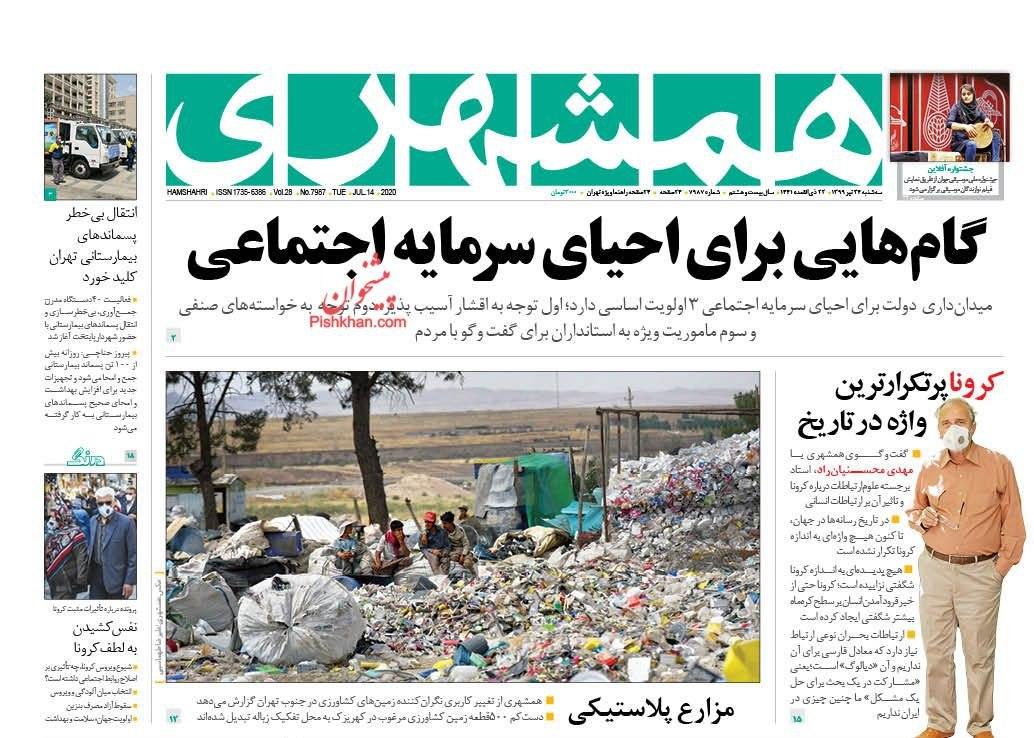
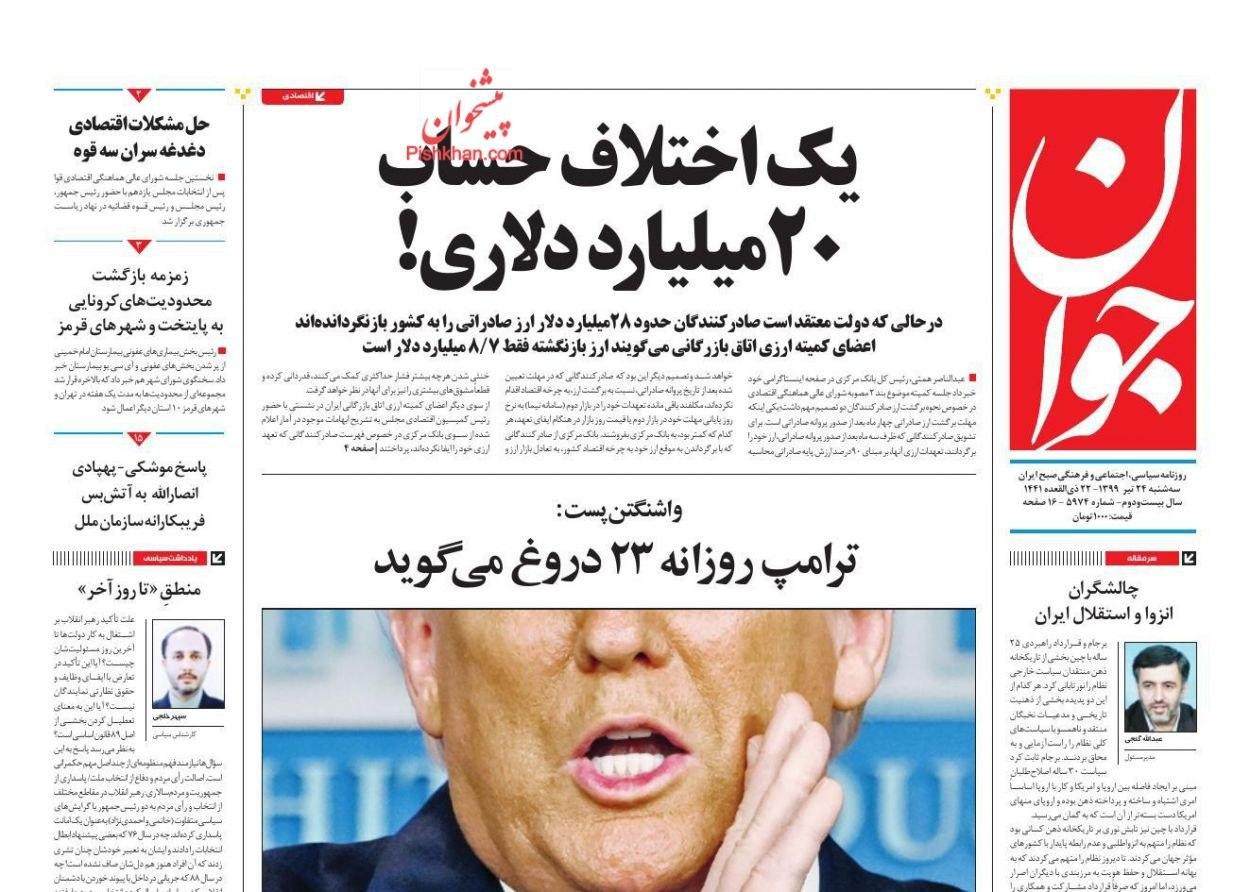
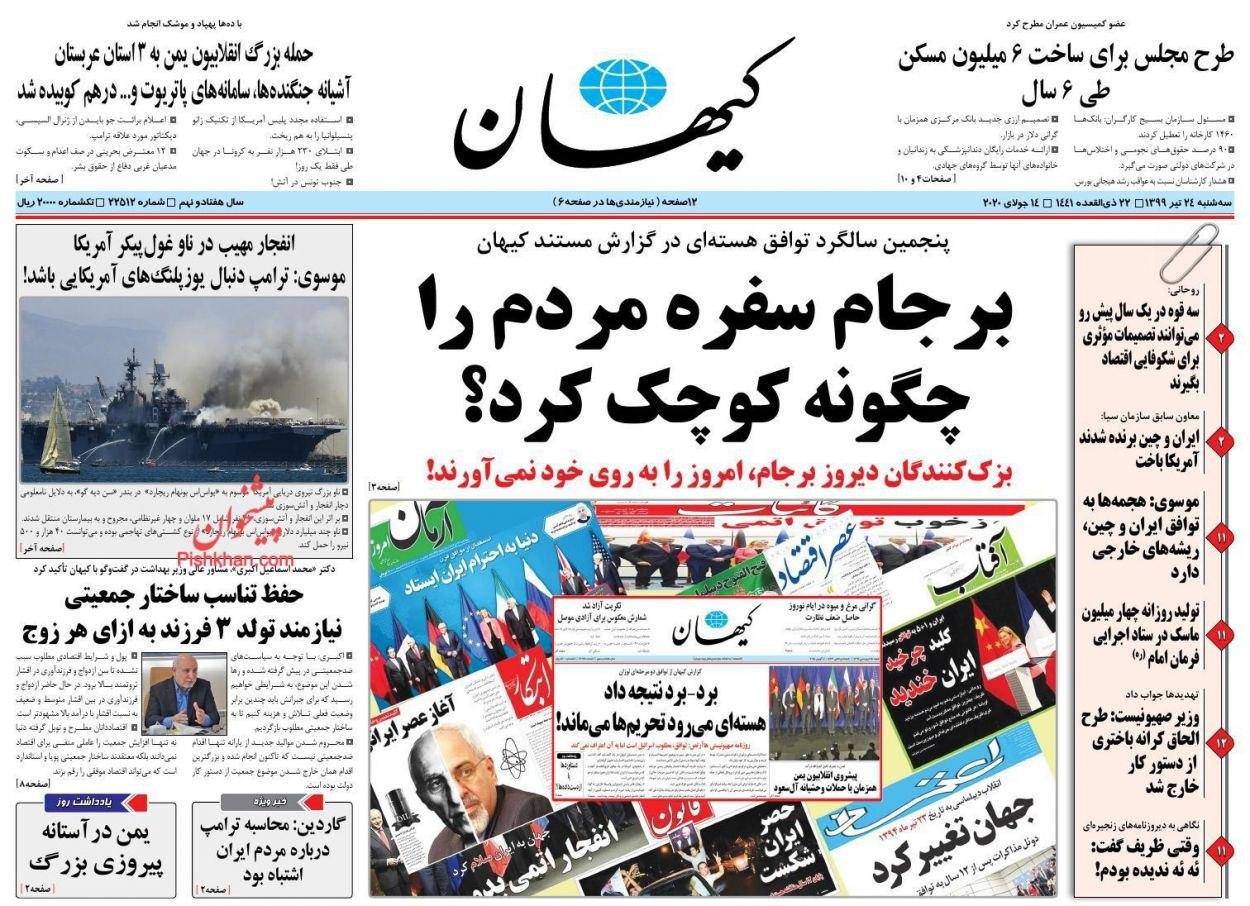
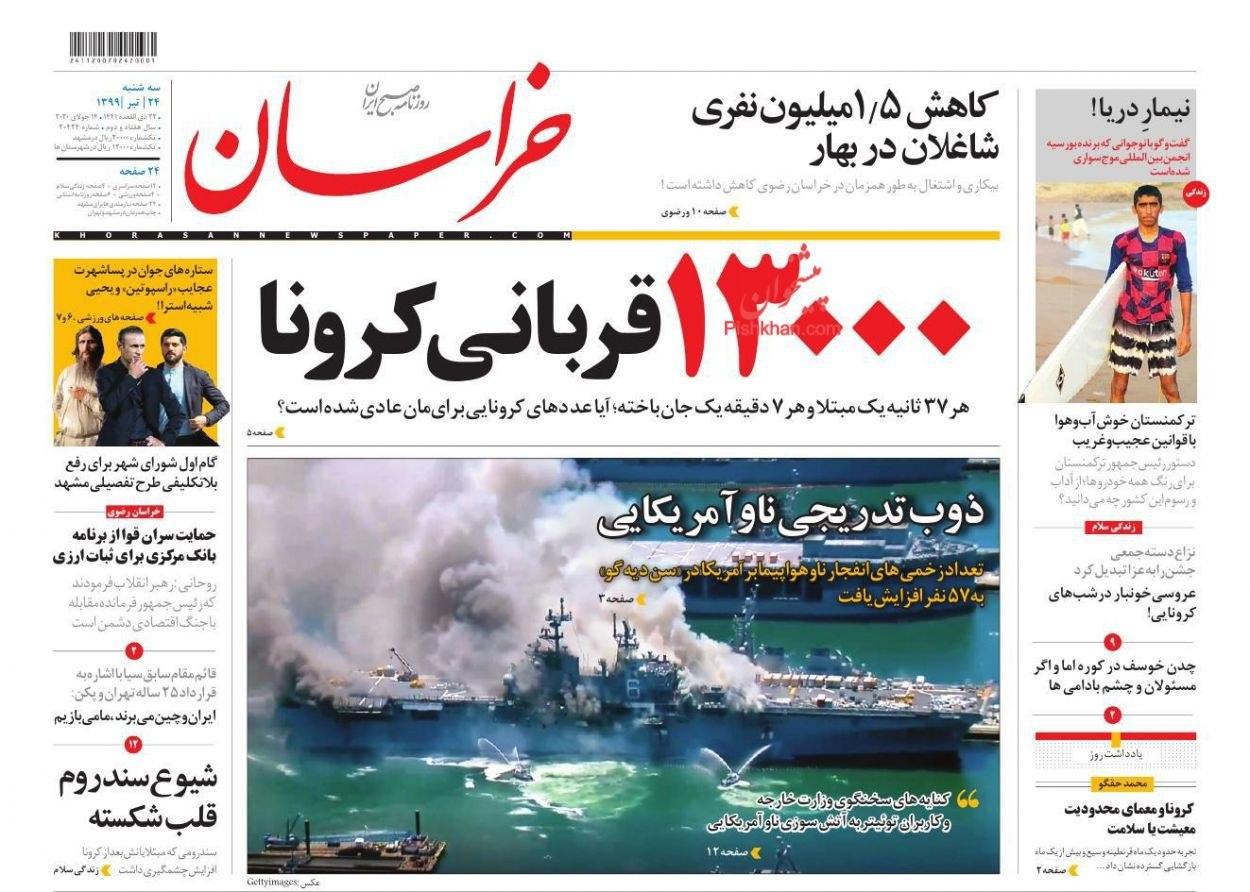
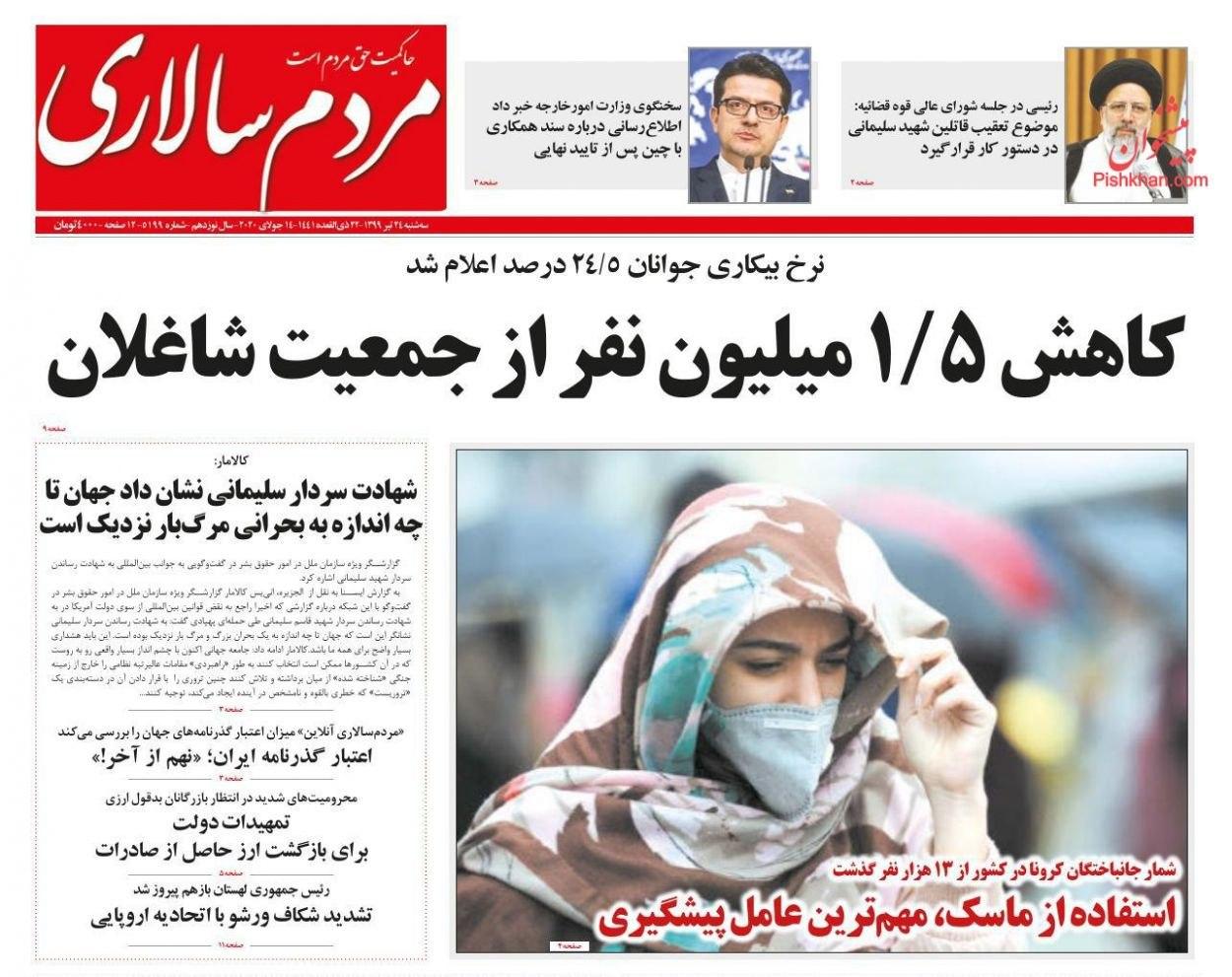
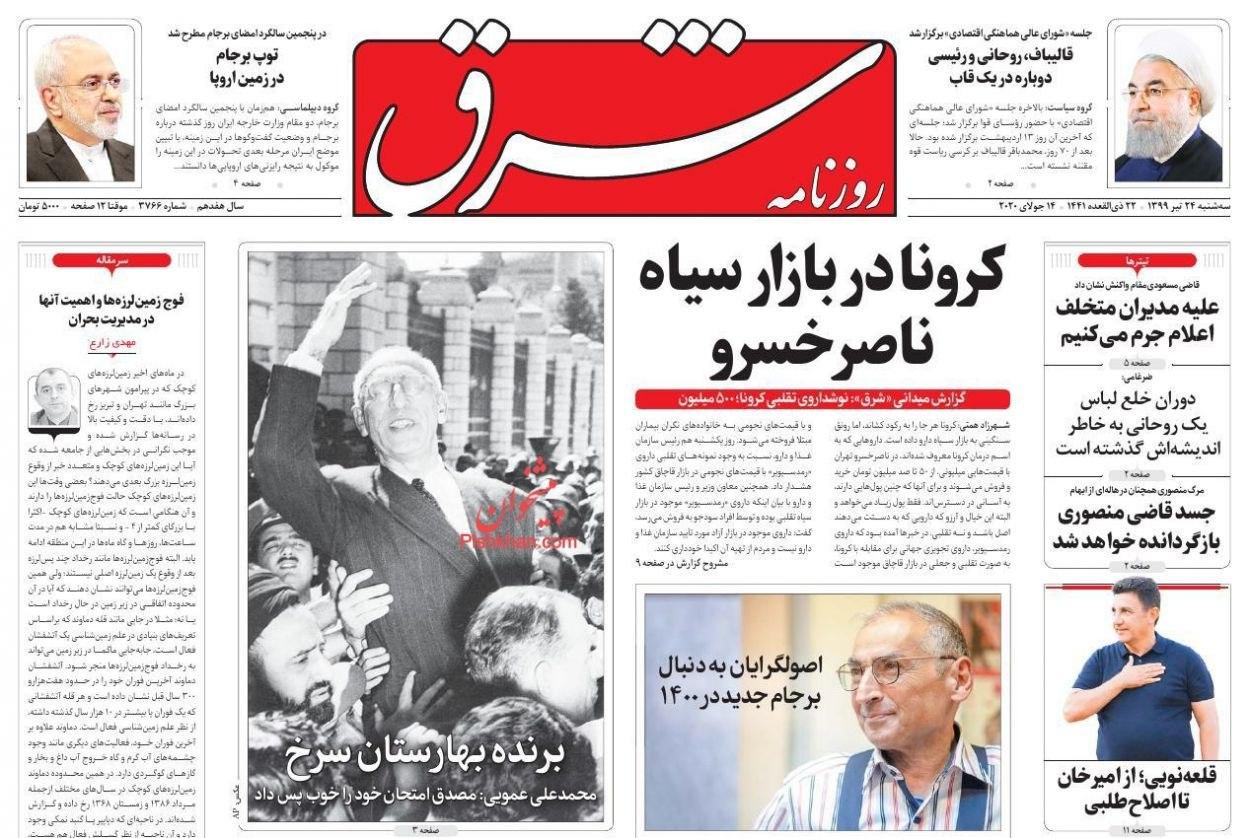
A Look at Iranian Newspaper Front Pages on June 22

Iranian Newspapers

Iranian Newspapers

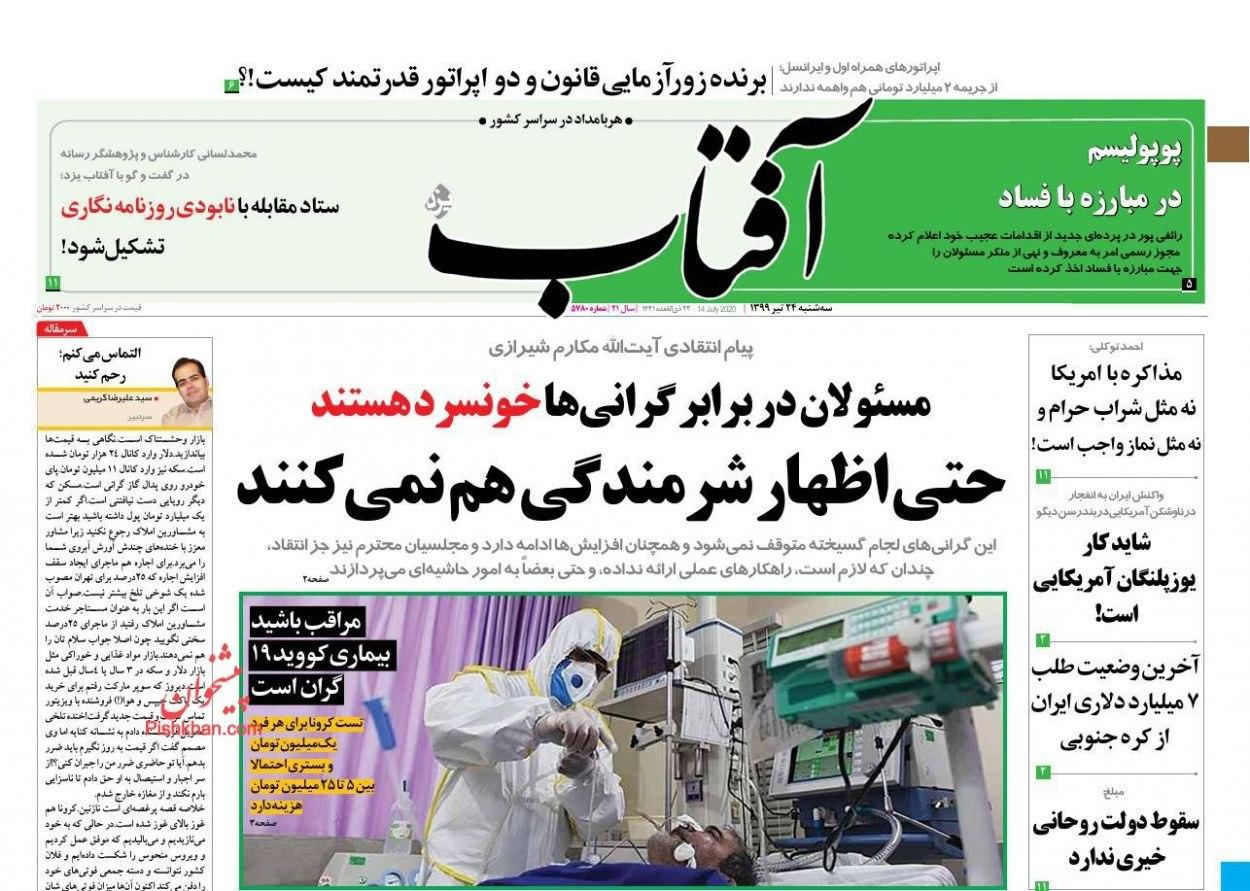
Aftab-e Yazd Newspaper:

1- Parliament Working on Two Issues These Days: Blocking Instagram, Leaving NPT

2- John Bolton; A Stupid Enemy!

3- Rouhani: Difficult Conditions of the Country Must Be Understood

A Look at Iranian Newspaper Front Pages on June 22


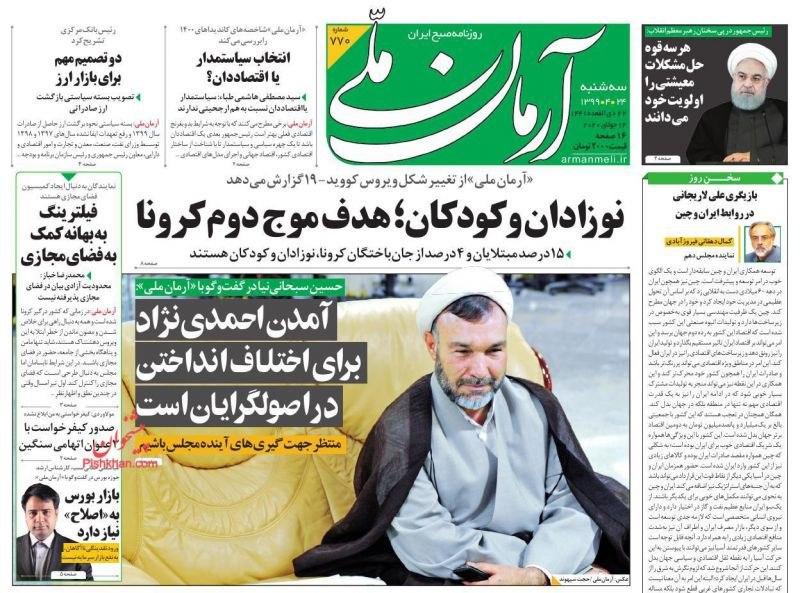
Arman-e Melli Newspaper:

1- Trump; Negotiation under Emergency Situation of Elections

2- Judge Mansouri Could Give Hints to Other Corruption Cases: Lawyer

A Look at Iranian Newspaper Front Pages on June 22


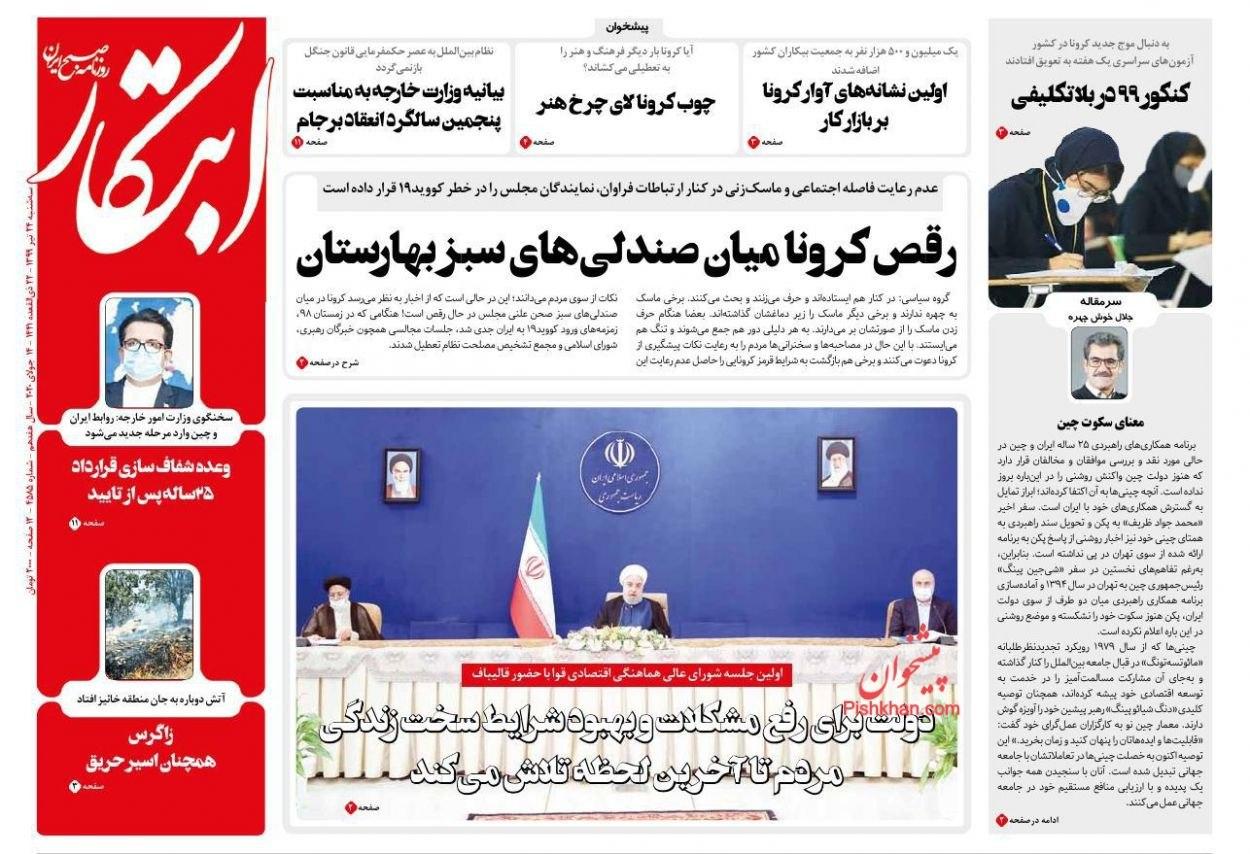
Ebtekar Newspaper:

1- Cyberspace Under Scrutiny of New Parliament

2- Parliament Threatens to Take Iran Out of NPT

A Look at Iranian Newspaper Front Pages on June 22


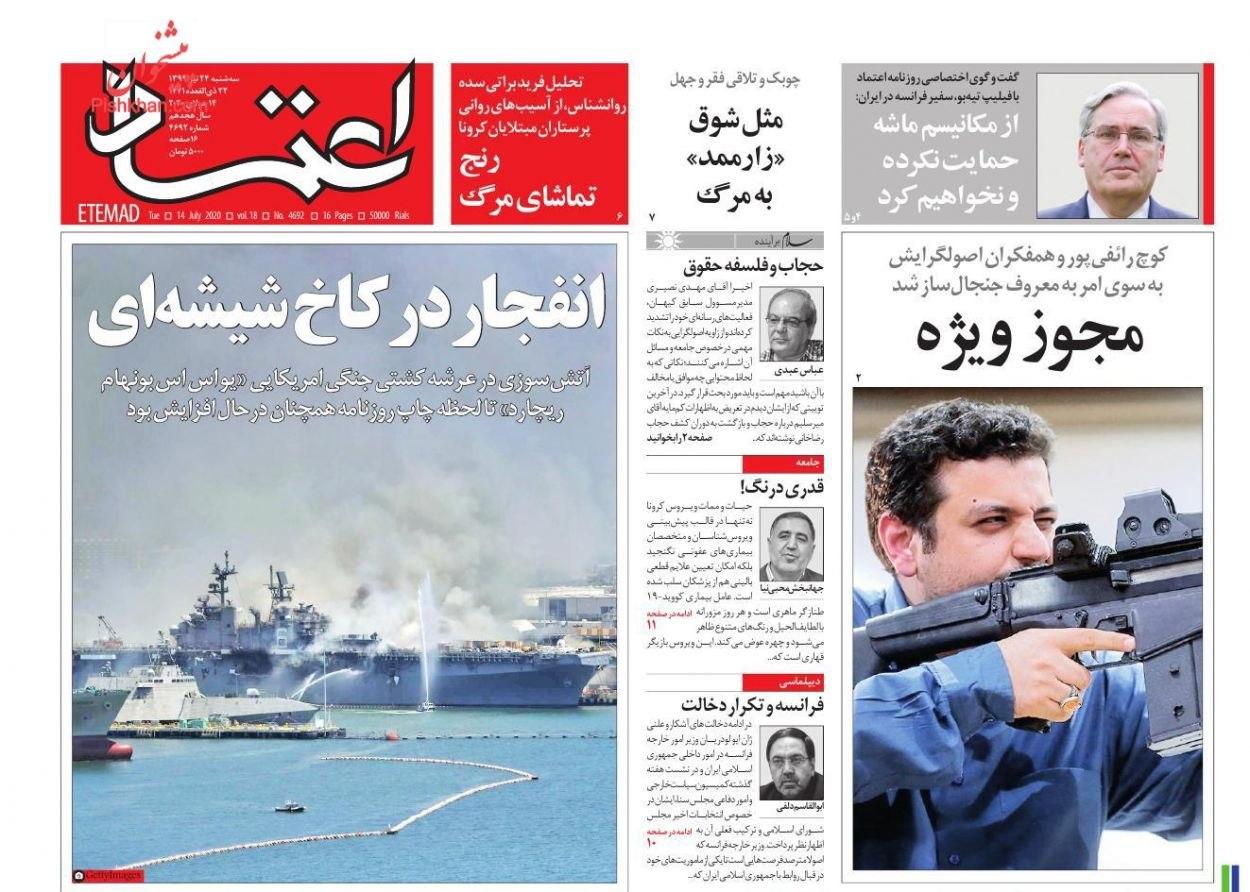
Etemad Newspaper:

1- Iran in Bolton’s Memoirs

2- Iran Lawmakers Threaten to Block Instagram

3- Tourism Minister: Iran Ready to Facilitate Entry of Afghans

A Look at Iranian Newspaper Front Pages on June 22


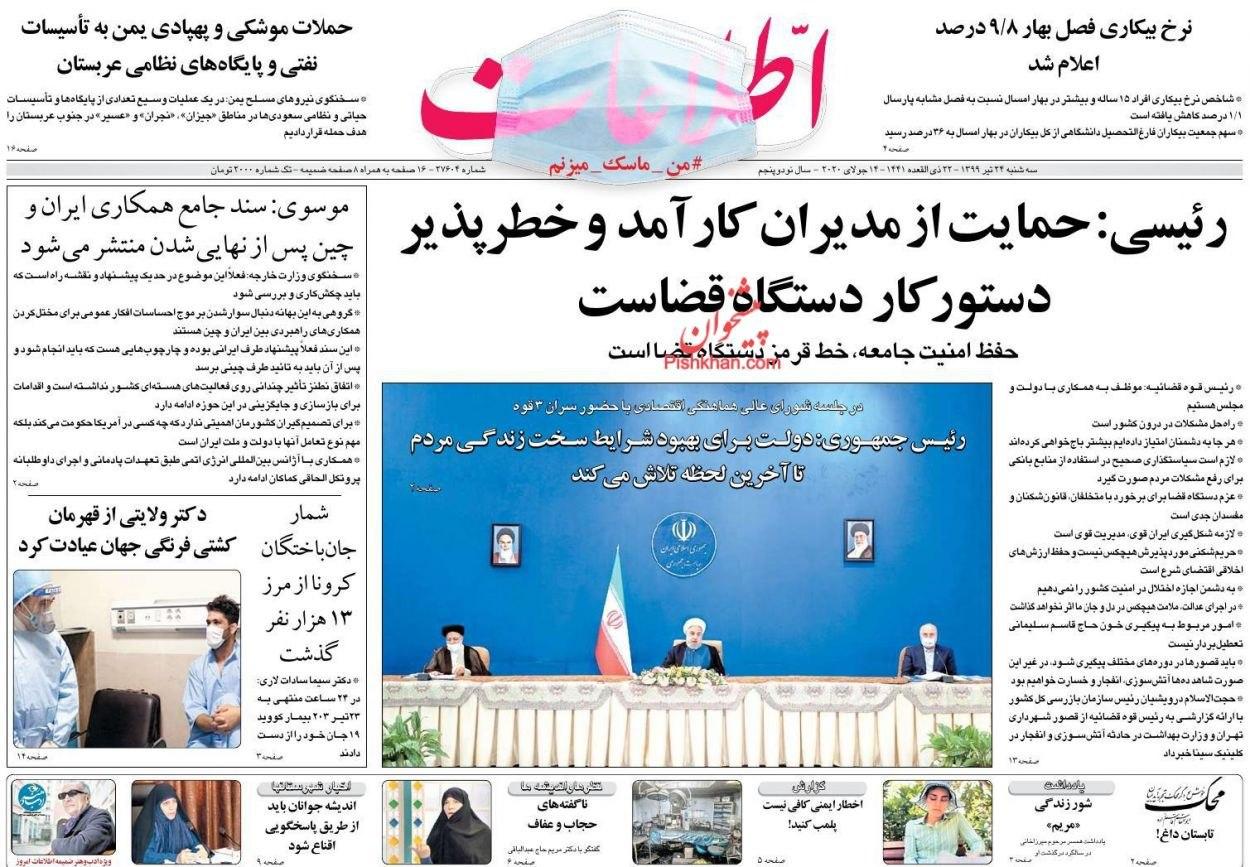
Ettela’at Newspaper:

1- Iran Nation Has Opted for Active Resistance

A Look at Iranian Newspaper Front Pages on June 22


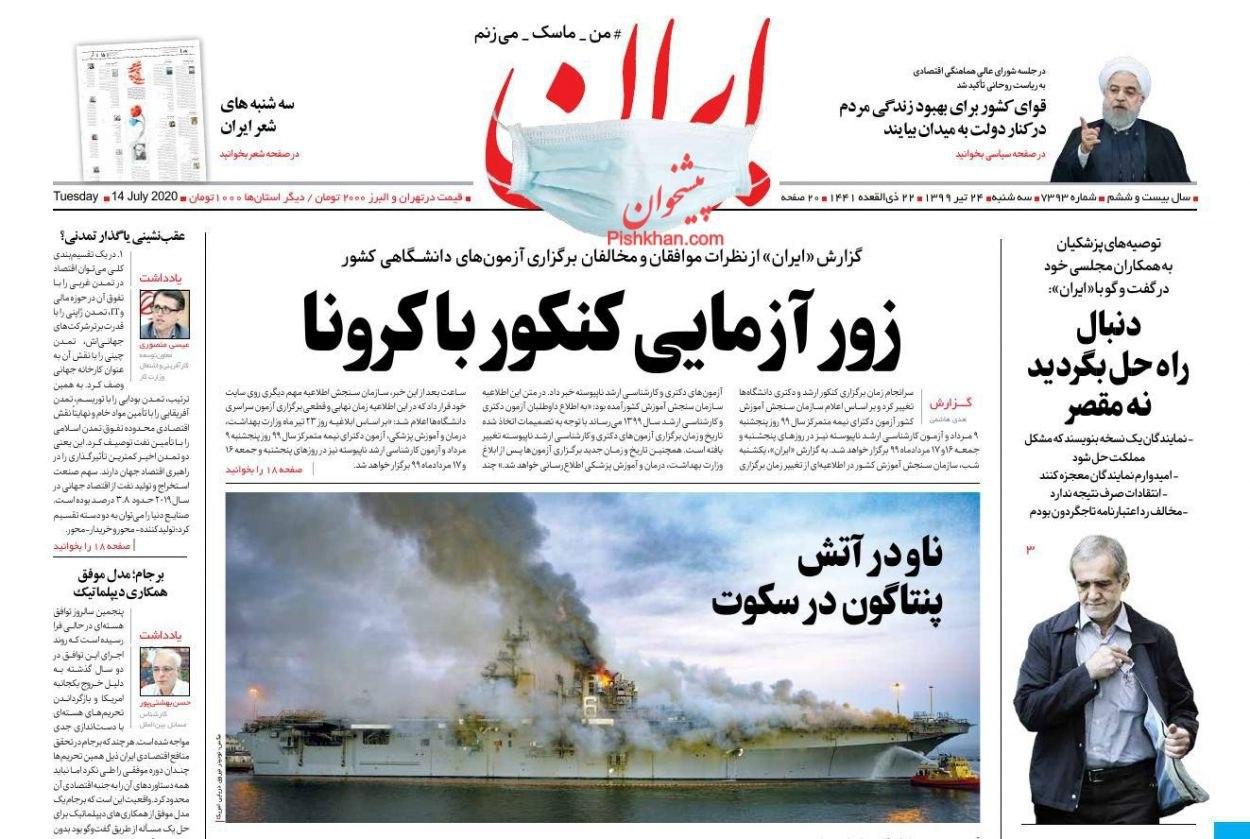
Iran Newspaper:

1- Health Minister: Corona Has Got 1,000 Faces

2- Rouhani: Names of Those Who Disrupted Forex Market Must Be Revealed

3- Iran, Afghanistan to Finalize Document on Comprehensive Cooperation

A Look at Iranian Newspaper Front Pages on June 22


Javan Newspaper:

1- Rouhani Calls for Disclosure of Names of Those Disrupting Forex Market

2- Trump Begging for Deal with Iran Four Months Ahead of Nov. Elections

3- Complete Failure to Control Cyberspace

A Look at Iranian Newspaper Front Pages on June 22


Kayhan Newspaper:

1- Trump Once Again Talks of His Dream of Negotiating with Iran

2- Statues and Symbols of Slavery Taken Down One by One in US

3- Parliament Speaker: We’re Not against Diplomacy, but Talks with US Totally Harmful, Forbidden

A Look at Iranian Newspaper Front Pages on June 22


Khorasan Newspaper:

1- Ultimatum Given amid Historic Devaluation of Iran’s Currency

2- ICT Minister Questioned by Lawmakers

A Look at Iranian Newspaper Front Pages on June 22


Mardom Salari Newspaper:

1- Attack on Cyberspace Instead of Resolving Economic Woes!

2- Iran Urges Romania to Give Clear Response to Iranian Judiciary

3- Trump: I’m Ready for Quick Deal with Iran

4- Putin Implies He’s Open to Lifetime Presidency

A Look at Iranian Newspaper Front Pages on June 22


Shahrvand Newspaper:

1- Iran at New, Dangerous Phase of Coronavirus

2- Several Villages under Water after Gotvand Dam Filled with Water

A Look at Iranian Newspaper Front Pages on June 22


Shargh Newspaper:

1- Iran Still Cannot Confirm Mansouri’s Death in Romania: Judge

2- Is Kremlin Pleased with US Unrest?

3- Trump Taken to Edge of Precipice by Bolton

A Look at Iranian Newspaper Front Pages on June 22

Iran, Oman Discuss Closer Ties, Int’l Developments

Iran, Oman Discuss Closer Ties, Int'l Developments

Iranian Foreign Minister Mohammad Javad Zarif and his Omani counterpart Yusuf bin Alawi on Monday held talks via video conference where they moved forward with regional consultations. Delegations from both sides were also present at the discussions.

In the virtual meeting, the two sides exchanged views on the latest regional and international developments as well as issues of mutual interest, including the enhancement of Tehran-Muscat cooperation.

They stressed that mutual consultations should continue.

Iran Condemns UN’s ‘Biased’ Human Rights Resolution

Iran Vows Appropriate Response to US Interception of Mahan Air Flight

In a statement on Monday, Mousavi said the resolution, presented by Sweden and backed by some Western countries, is based on a discriminatory, prejudiced, confrontational and politically-motivated approach.

“It is regrettable that using human rights as a tool for political gain and adopting double standards in this domain is turning into an ordinary practice,” he said.

“Accordingly, the quality of the reactions and stances of these countries vis-à-vis the crackdown on anti-racism protests in the United States is a suitable yardstick against which to measure and verify the concerns of these countries over human rights,” he added.

“The approach adopted by supporters of the resolution on the human rights situation in the Islamic Republic of Iran is based on double standards on the human rights situation in countries and has set the stage for abusing UN mechanisms,” he added.

Mousavi expressed regret over the situation, adding the move is an embarrassment for supporters of the resolution as well.

“The Islamic Republic of Iran is a system based on religious democracy and acts within the framework of religious commitments and abides by the Constitution as well as ordinary laws and international regulations. It takes steps to promote human rights at the national, regional and international levels, and feels duty-bound to comply with them in practice,” he added.

The spokesman said the destructive approach adopted by supporters of the resolution on Iran has numerous faults and problems, including their use of human rights as a tool for political gain, disregard for the values and beliefs and special cultural features of different societies, inattention to realities as a result of being swayed by media campaigns against Iran, and disregard and silence in the face of extensive violation of the rights of the Iranian nation as a result of unfair sanctions.