Thursday, April 23, 2026
Home Blog Page 2723

EU Must Choose between Keeping Iran Deal, Appeasing Trump: UK Diplomat

French President Emmanuel Macron, German Chancellor Angela Merkel and British Prime Minister Theresa May - File Photo by Emmanuel Dunand, AFP

From 2001 to 2006, Jenkins served as Britain’s Ambassador to the IAEA with a primary focus on the nuclear aspects of international peace and security, especially the Iranian nuclear issue, at a point when the nuclear talks between Iran and the European Union appeared to hold promise.

He has been active within the international movement supporting negotiations with Iran and seeking diplomatic solutions that respect Iran’s rights to a civil nuclear power industry.

Speaking in a recent interview with the Persian-language Etemad daily, Jenkins criticised the policy of keeping US President Donald Trump in the Iran nuclear deal at any price, saying that such an approach is wrong.

He also described the Joint Comprehensive Plan of Action (JCPOA) as the most important diplomatic achievement of the EU in modern era, and urged the bloc to preserve it.

What follows is the full text of Sara Massoumi’s interview with Jenkins, published earlier this week by Etemad newspaper:
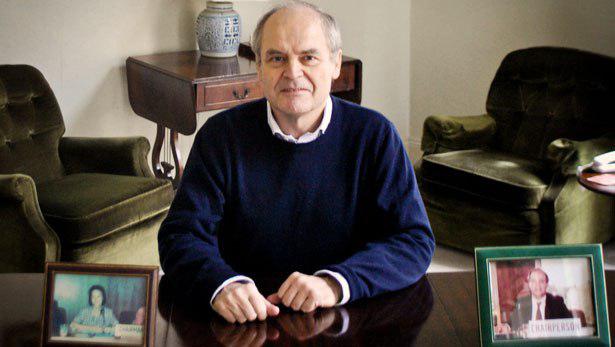
EU Must Choose between Keeping Iran Deal, Appeasing Trump: UK DiplomatWhat are the dangers of E3 decisions to appease President Donald Trump to discourage him from withdrawing from the JCPOA?

I am less worried than I was earlier this month when I learned that the E3 had agreed to take part in a “working group” with US State Department officials to look for ways of meeting President Trump’s recent demands, the most notable of which relates to the fact that voluntary restrictions on uranium enrichment, offered by Iran as confidence-building measures, will lapse between 2026 and 2031. I am hearing that there have been diplomatic conversations between the E3 and Iran, and I am confident that these will have enabled the E3 to understand how the Iranian government views President Trump’s demands. This will have helped the E3 to perceive that satisfying President Trump is totally incompatible with preserving the JCPOA. That ought to be enough to persuade them that any thought of appeasing President Trump must be abandoned.

Do you think the E3 will finally accept to fix the flaws which Trump asked for?

No, I think that the E3 will be forced to choose between trying to fix the alleged flaws – and inevitably failing because the “flaws” cannot be “fixed” without Iran’s consent and that consent will never be forthcoming – and defending what is one of the very few really significant EU diplomatic achievements of the last 15 years. Since the E3 (and the EU) still want to be seen as rational and enlightened actors on the international stage, I believe that they will opt for preserving the JCPOA. President Trump’s demands are unreasonable. Preserving a hard-won nuclear non-proliferation agreement is rational.

Iran insists that its ballistic missile program is not negotiable but it seems the EU has its own concerns about it. How do you see the future of this deadlock?

Yes, the EU has expressed concern about Iran’s development and possession of missiles. Since most of Europe is beyond the range of Iran’s missiles, I sense that this is largely a “proxy” concern. Nonetheless, it exists. How to resolve it, however, is far from clear. Iran has as much right to acquire missiles to deter potential aggressors as any other state in the region. Iran’s missile programme is not in violation of international law. So demanding that Iran restrict or terminate it is a non-starter. At the most, in my view, the EU can explore with Iran, on a basis of respect and reciprocity, whether Iran is ready to volunteer measures which would demonstrate that its intentions are defensive, not offensive. Also, promoting a region-wide dialogue on missile proliferation, as some people have been advocating, bears thinking about.

How serious are the flaws of JCPOA which Trump asks the E3 to fix? Do you think the complaints like the sunsets will be a danger for nuclear proliferation?

The JCPOA is not flawed. It is fit for purpose. Those who claim it is flawed are either disingenuous or ignorant of what is and is not compatible with international nuclear non-proliferation law. That is why President Trump’s demand is unreasonable. When restrictions on uranium enrichment lapse, Iran will remain subject to its NPT and IAEA safeguards obligations, and to a pledge to calibrate production of enriched uranium to commercial needs. There is no reason to suppose that under such circumstances Iran will pose any greater a proliferation threat than other NPT Non-Nuclear Weapon States.

Do you think that, if the United States pulls out, the JCPOA is worth preserving for Iran?

Yes, I do – very much so. With the US out Iran will not receive all the trade and investment benefits that it anticipated when it negotiated the JCPOA. (Shamefully, Iran has not received them at any stage over the last two years because the US has failed to respect its commitments). But Iran will still receive some of those trade and investment benefits. There will still be plenty of European and Asian companies and banks that do not have US business interests and consequently have no reason to fear the US Treasury’s disproportionate fines and threats. Iran will still be in a much better position than it was between 2012 and early 2016 when sanctions halved Iran’s oil exports and severely affected other forms of trade, as well as foreign investment. Conversely, if Iran allows President Trump to provoke Iran into withdrawing from the JCPOA, this will “make his day”; it will cause jubilation in the White House, Jerusalem and Riyadh. Why? Because it will enable these enemies of Iran to start once more spreading disinformation about the nature and intent of Iran’s nuclear programme, so as to win global opinion over to restoring penal sanctions and, ultimately, to the use of force to deprive Iran of dual-use nuclear technologies. Much better, if the US pulls out, to react by showing contempt and scorn than by giving President Trump what he really wants when he talks about flaws!

Iran complains that it couldn’t enjoy all of the benefits of removing nuclear sanctions because of US actions. Do you think EU and other JCPOA partners could compensate economically if the US withdraw from the JCPOA?

Sadly, no! Most of the larger European companies and banks have important US business interest. They are and will be unready to sacrifice those in order to do business in or with Iran. Their directors owe it to shareholders to base their decisions on cost/benefit considerations. European governments cannot hope to persuade them to do otherwise. The EU could try to influence decisions by re-introducing a so-called “blocking regulation”, first used in 1996 as a counter to the US Helms-Burton Act. But experts doubt whether banks and companies with US interests would see the protection afforded by that regulation as sufficient. All this said, however, there are plenty of European banks and companies, and many more Asian banks and companies that do not have US interests. They cannot fully compensate for US bad faith, but they can ensure, as I said above, that Iran is still much better off with the JCPOA than it used to be, or than it would be without it.

Iran Slams West’s Monopoly on Human Rights Bodies

UN Human Rights Council's Headquarters in Geneva, Switzerland

Mohammad Javad Larijani, the secretary of the Iranian Judiciary’s Human Rights Council, says in Iran’s view, the US and Europe, who have committed bloody crimes, by no means are qualified to talk about human rights.

“So we must play an active role in the conceptual and structural reconstruction of human rights,” he said on Saturday, according to a Farsi report by ISNA.

Larijani was speaking before departing Tehran for the UN headquarters in Geneva to attend a meeting on Iran during the 37th regular session of the United Nations Human Rights Council.

In the UNHRC meeting, scheduled for Monday, UN members will discuss the latest report of the late UN special rapporteur for human rights in Iran Asma Jahangir, a Pakistani lawyer who took the post in September 2016.

She had frequently delivered reports to UN bodies censuring the Iranian government for widespread rights violations before she died of cardiac arrest early February.

Iran has refused to allow the UN special rapporteurs to visit the country, arguing the use of country-specific mechanisms to address human rights issues is unacceptable.

Besides, Iran says the situation of human rights in Iran by no means is a special situation to warrant a special mandate.

Tehran says the appointment of a UN special rapporteur on Iran results from the heavy influence of western governments in the UN and part of its pressure campaign against Iran since the Islamic Revolution toppled the rule of US-backed dictator Mohammad Reza Pahlavi.


Disservice to Human Rights Cause

Larijani said the US and a number of its European allies, who are actively contributing to flagrant violations of the rights of millions of people across the region, abuse the noble cause of human rights in order to advance their short-sighted political interests.

“One of the major obstacles to furthering the cause of human rights is double standards and political deception at the UN,” Larijani said.

The secretary said western states use human rights as a cover for defending terrorists in Syria, and at the same time they keep mum over genocide by aggressors in other countries.

“Today, thousands of people have been martyred and millions of people are on the verge of fatal hunger in Yemen. However, the aggressors are being widely supported [by the west] and the defenders [of the Yemen nation] are being attacked [for human rights violations],” he said.

He was referring to the Saudi Arabia’s military campaign against Yemen, which has left a huge number of casualties and triggered a deadly cholera epidemic across the poorest Arab country.

Tehran will not remain silent in the face of glaring contradictions in the behaviour of western countries, Larijani said, adding it will work to reveal the true face of the self-proclaimed champions of human rights.

Iran Leader Blasts Double-Standard Policies on Use of Chemicals

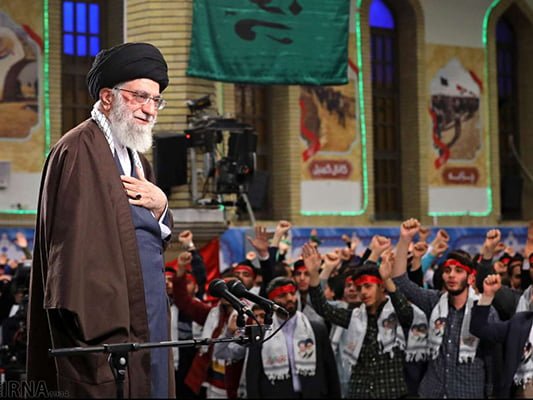
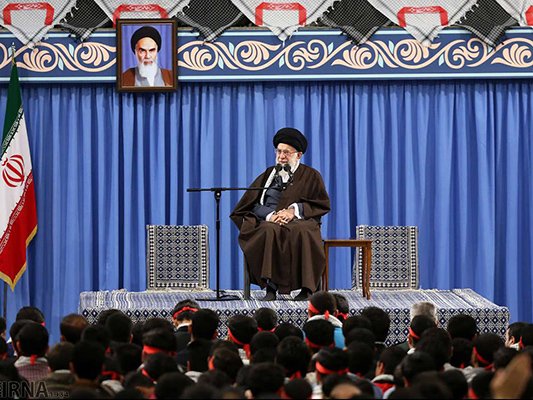
At a Saturday meeting with a group of teenagers and youths in Tehran, the Leader pointed to the use of chemical weapons by the regime of the former Iraqi dictator Saddam Hussein against Iranian people during the eight-year war in 1980s.

In the course of that war, Ayatollah Khamenei said, France gave its most advanced planes and helicopters to the Saddam regime, while Germany supplied it with toxic chemical materials.

“Those who are today attacking a certain group over the accusation of using chemicals, openly gave Saddam such materials for making bombs,” the Leader said.

Ayatollah Khamenei said there are still Iranian soldiers who continue to suffer from the aftereffects of Saddam’s chemical attacks, and many others have been martyred.

Hundreds of thousands of Iranians were killed in the Iraqi-imposed war and many more were affected by the chemical weapons like mustard gas that were used by the Saddam regime.

Iran Leader Blasts Double-Standard Policies on Use of ChemicalsIraq once possessed a huge arsenal of chemical weapons, the production of which was facilitated by exports of chemicals as well as financial and technological support from the United States and other Western countries.
According to reports, the US spy agency CIA knew about Iraq’s use of chemical weapons as early as 1983, but the US took no action against the violations of international law, and even failed to alert the UN.

Ayatollah Khamenei’s remarks come at a time when the US and its allies are accusing the Syrian government of using chemical weapons during its fight against terrorist groups. Damascus has rejected the accusations, saying they are meant to protect the foreign-backed terrorists in the face of army gains.

The Leader further said International powers imposed the eight-year war Iran with the aim of destroying the Islamic Revolution, but they failed to achieve this goal thanks to the Iranian youth’s bravery, prudence and sacrifices.

Despite the West’s widespread financial and military support for the Saddam regime, Iranians managed to foil all enemy struggles against the Islamic Revolution by relying on their “faith” and the guidelines of late Imam Khomeini, the Leader added.

IRGC Chief Says Basij Forces Ready to Plant Trees across Iran

IRGC Chief Says Basij Forces Ready to Plant Trees across Iran

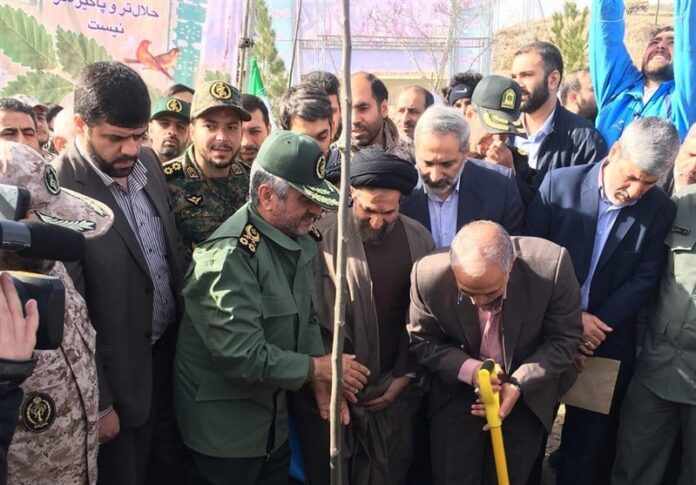
Speaking to reporters on the sidelines of an event celebrating the ‘IRGC Tree Planting Week’ in Tehran on Saturday, Major General Jafari said the numerous forces serving in the Basij, who are under the IRGC’s command, are ready to provide various services in the country.

The Basij forces are ready to help in tree planting programs across Iran, particularly in high-priority areas like Khuzestan, the commander added, referring to a southwestern province of Iran that is struggling with heavy dust pollution and desertification.

Pointing to the IRGC-sponsored tree planting programs carried out in vast areas of Khuzestan and the sources of dust pollution, the general said such initiatives will continue in the coming Iranian year, which begins in less than two weeks.

It is up to the administration and the executive officials to tap into the huge potential of Basij forces in tackling environmental problems, he added.

On Tuesday, Leader of the Islamic Revolution Ayatollah Seyed Ali Khamenei planted fruit saplings to mark the national Week of Natural Resources, calling for efforts to protect Iran’s plants, forests and grasslands and to prevent destruction of trees in cities.

Back in November 2015, in a letter to heads of the executive, legislative, and judicial branches of the Iranian government, Ayatollah Khamenei had outlined 15 environmental policies developed in consultation with the Expediency Council in line with implementing the first paragraph of Article 110 of the Islamic Republic of Iran’s Constitution.

Development of an integrated national environmental system and the necessity for comprehensive, coordinated and systematic management of the country’s vital resources (including water, soil, air, and biodiversity) are among the most important policies underlined in the letter.

The general policies call for criminalization of destruction of the country’s environment and punishment for polluters and destroyers of the environment.

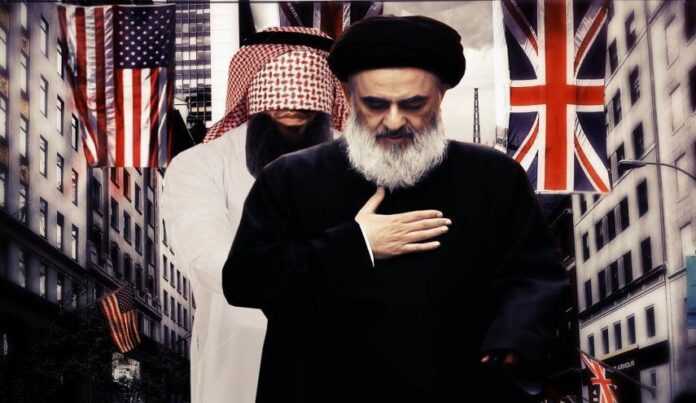
Extremist Shiite Community behind Attack on Iran Embassy in London

“The group attacking the Iranian Embassy in London represents an extremist Shia community,” Baeidinejad said in a tweet on Saturday.

“They have a sectarian interpretation of Shia [Islam] and insist on insulting the grand Sunni leaders,” he went on to say.

The Iranian ambassador stressed that the UK government, however, has “an unwavering commitment to assure the inviolability of the Embassy.”

A representative of Sadeq Shirazi told the BBC on Friday that the group of assailants had no organizational links to Shirazi and his cult, and that they were just his loyalists who attacked the embassy “independently”.

The Shirazi cult, also known as the British Shiites, was behind the attack which ended after all the four assailants were arrested by the London police. They are influenced by a person called Seyyed Sadeq Shirazi, whose supporters, including Yasser Habib, the owner of the satellite TV network Fadak, are generally known for spreading divisive views in the Muslim world. The network broadcast the storming of the Iranian embassy in London live.

Leader of Iran’s Islamic Revolution Ayatollah Seyyed Ali Khamenei hinted at the cult and its activities back in 2016.

“You see some radio or TV stations have emerged in the world of Islam which, posing as Shiites and in the name of Shiites, curse great scholars respected by the other Islamic faiths; it is clear that they are funded by the UK Treasury. They are financed by Britain. This is UK-style Shiite Islam,” said the Leader.

“You see, Muslims are being killed from the easternmost part of Asia all the way to Myanmar to West Africa in Nigeria and the like; Muslims [are killed] everywhere; in one place by Buddhists, in one place by Boko Haram, ISIS and the like. And there are some people who fuel this fire,” Ayatollah Khamenei noted.

“British-style Shiite [Islam] and US-style Sunni [Islam] are similar; they are the two edges of a pair of scissors; they are trying to pit Muslims against one another; this is the message of determination to sow discord, which is an evil will; but the message of unity is that they (different Muslims faiths) should set these difference aside, stay side by side and work together,” Ayatollah Khamenei noted.

Iran Must Raise Steel Import Tariff to Counter Trump’s Levy

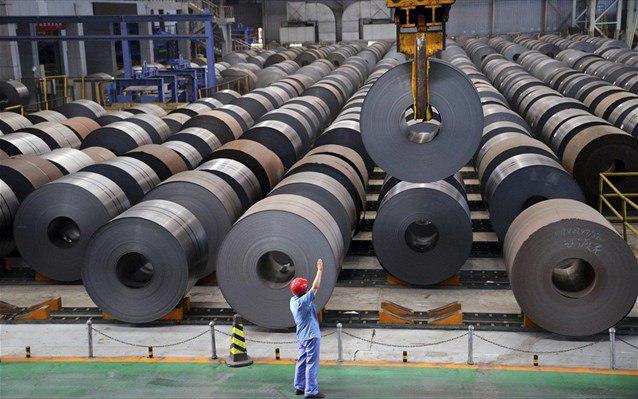
US President Donald Trump last week announced that he would impose tariffs of 25 percent on all imported steel and 10 percent on aluminum.

In reaction, Iranian lawmaker Ramezan-Ali Sobhanifar said, “Considering the fact the US is a major consumer of steel, the tariff increase could push major steel producers to look for new markets.”

The US steel industry is under threat because it is incapable of competing with Chinese or even European steel producers, Sobhanifar said, adding that such a situation could threaten Iranian steel industry too.

“Countries with low steel tariffs could be good export markets for these producers,” he said, according to a Farsi report by ICANA.

However, the lawmaker said Iran’s steel industry can fulfill the domestic demand and the country needs no steel imports.

“So we need to increase steel tariff to the extent that major producers see no benefit in trying to penetrate into the Iranian market”, he said.

Trump, who cited a rarely invoked national security section of US trade law as the legal basis for his decision, said he aims to protect the US industries.

The Trump’s protectionist steel tariff sparked outrage across the globe, AFP reported.

Canada, the top source of steel to the US market, has already vowed to take “appropriate, responsive measures” if the Trump administration goes ahead with the tariffs.

The European Union has threatened to hit big-name US brands such as Harley Davidson motorbikes and Levi’s jeans with import duties.

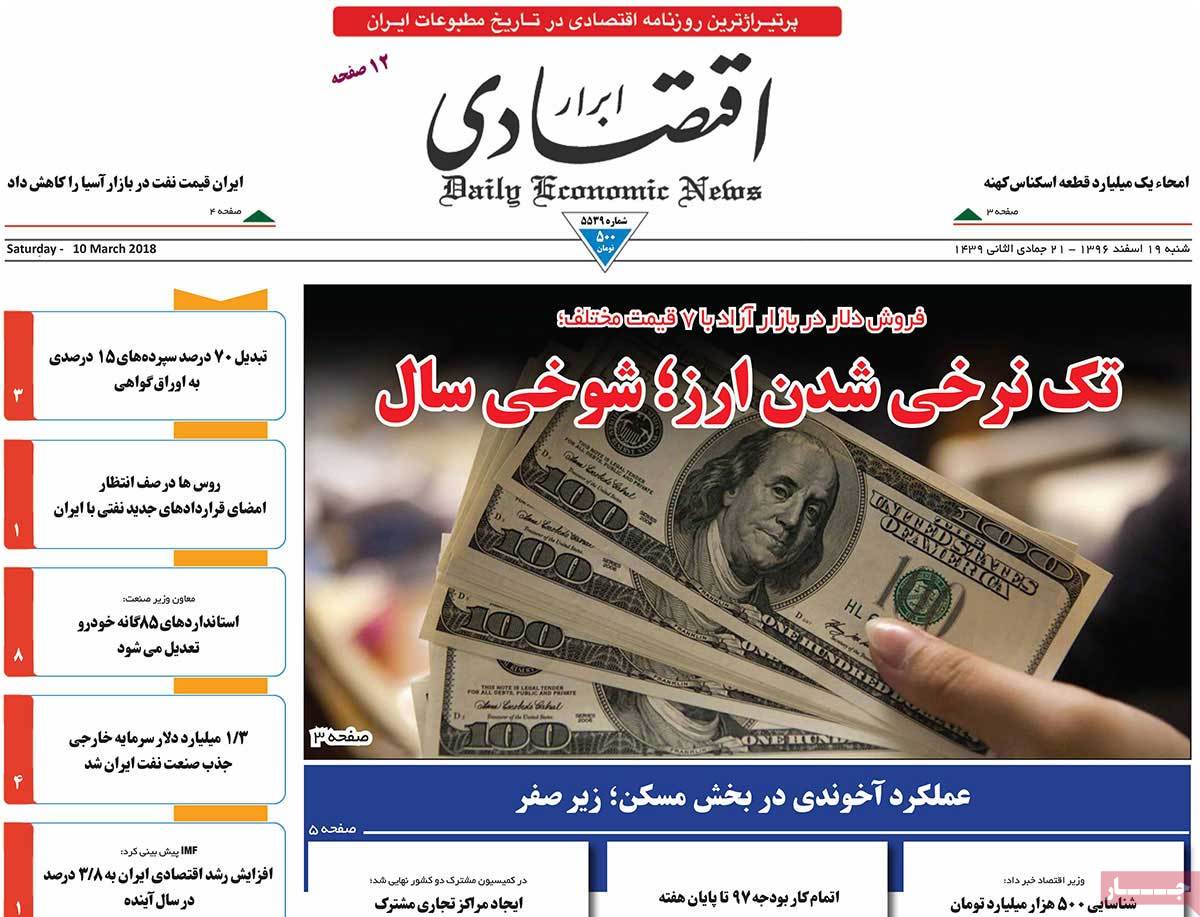
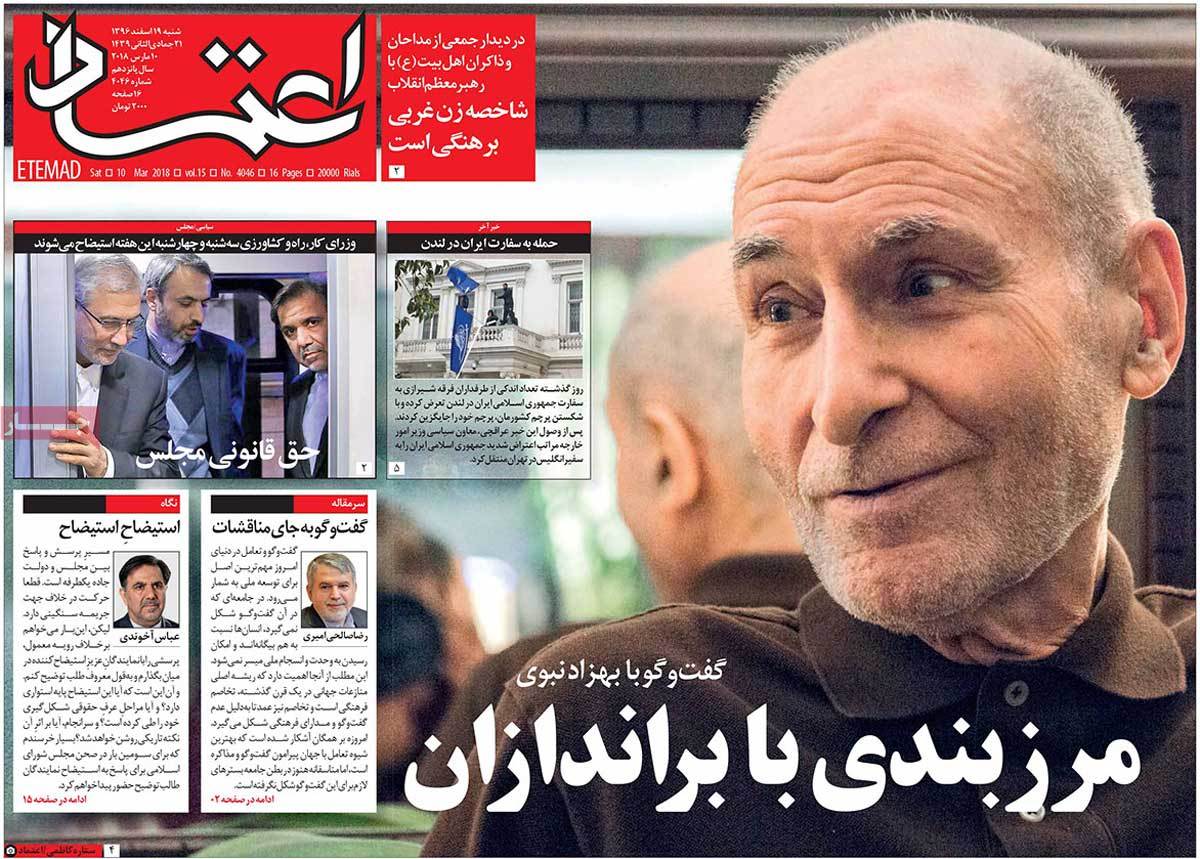
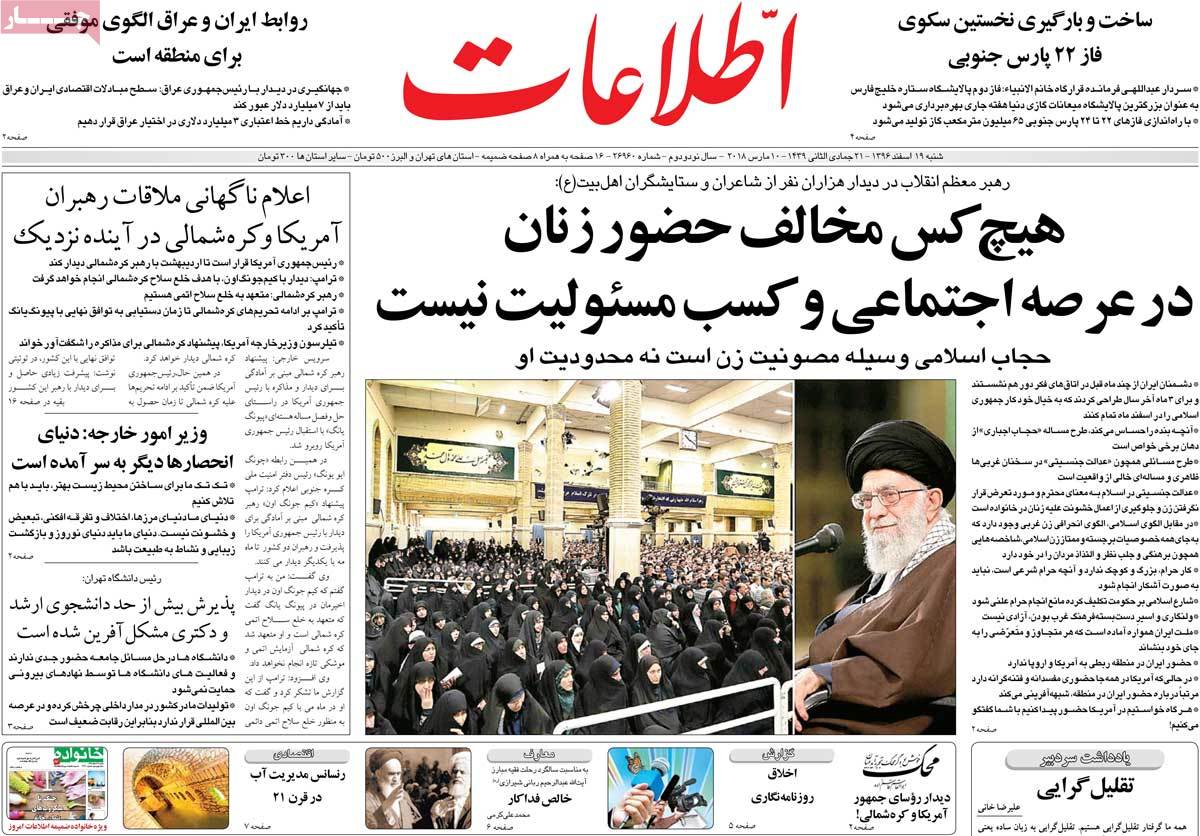
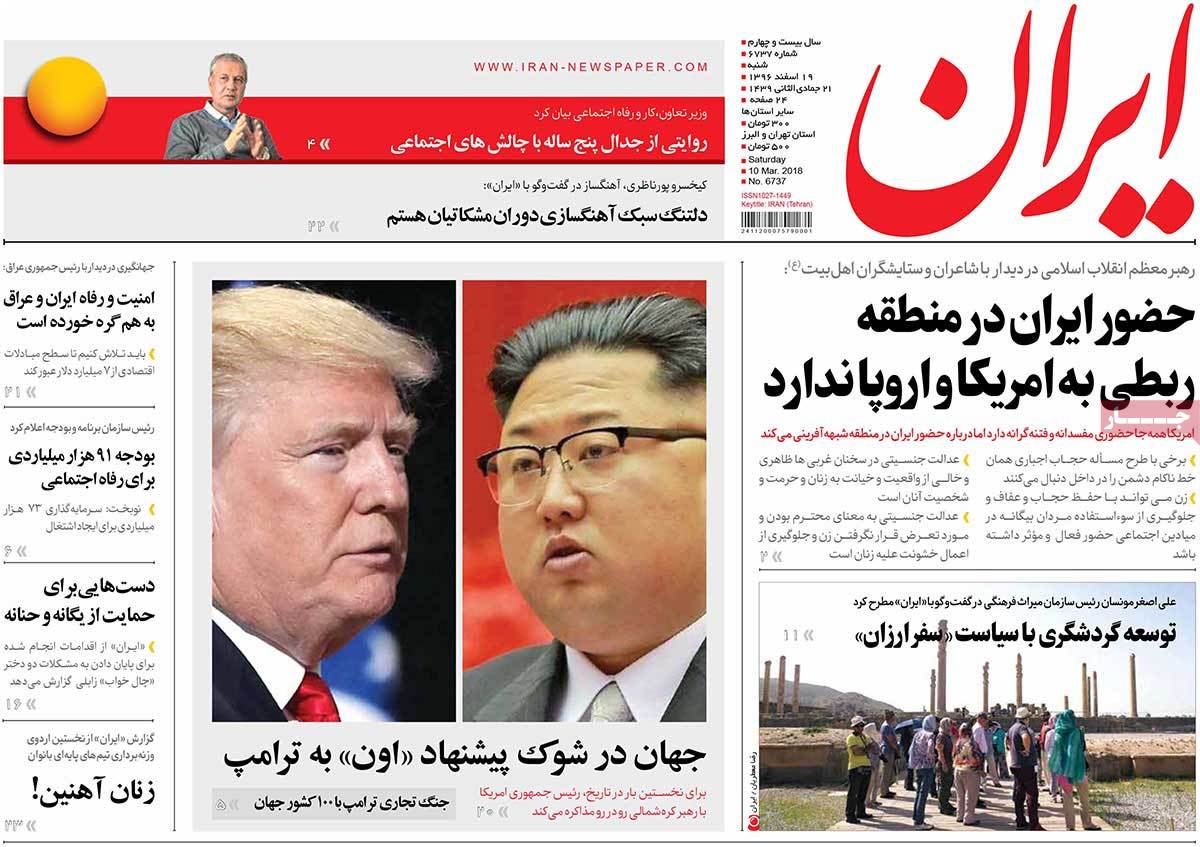
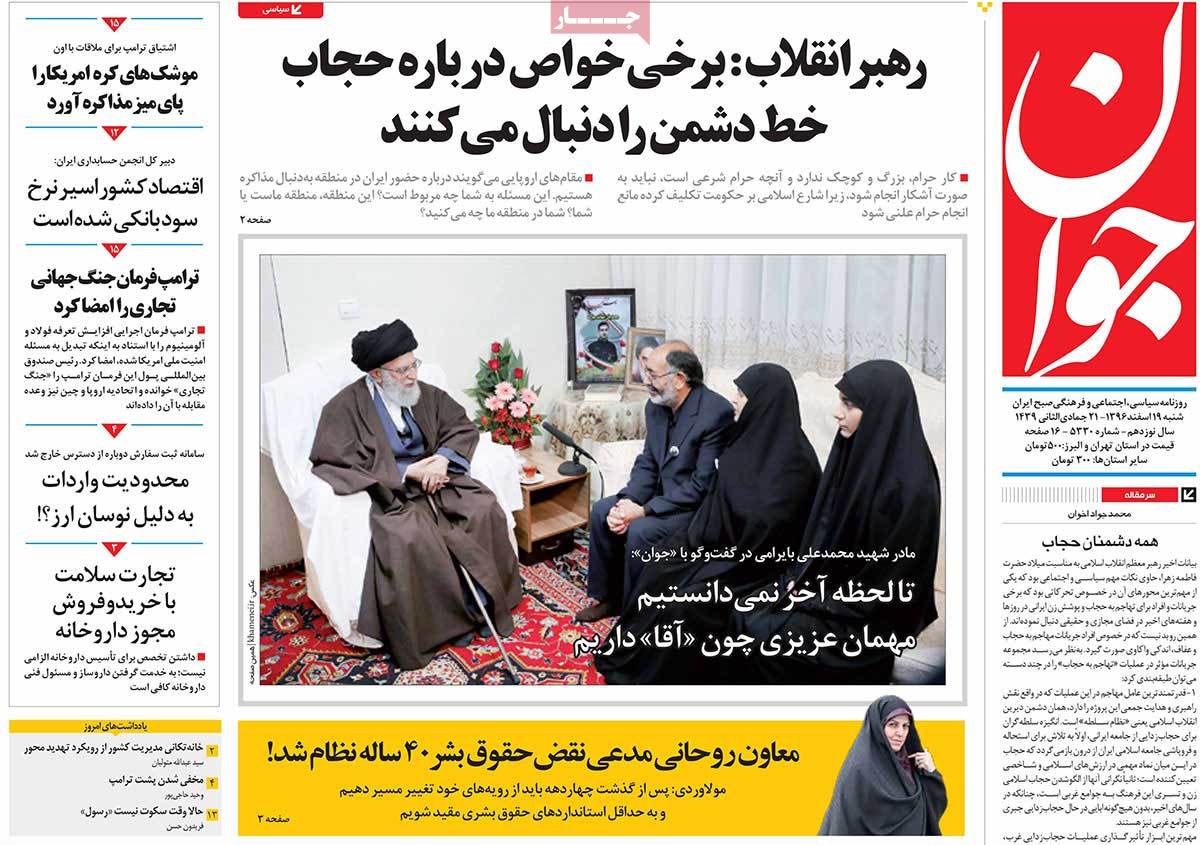
A Look at Iranian Newspaper Front Pages on March 10

A Look at Iranian Newspaper Front Pages on November 18

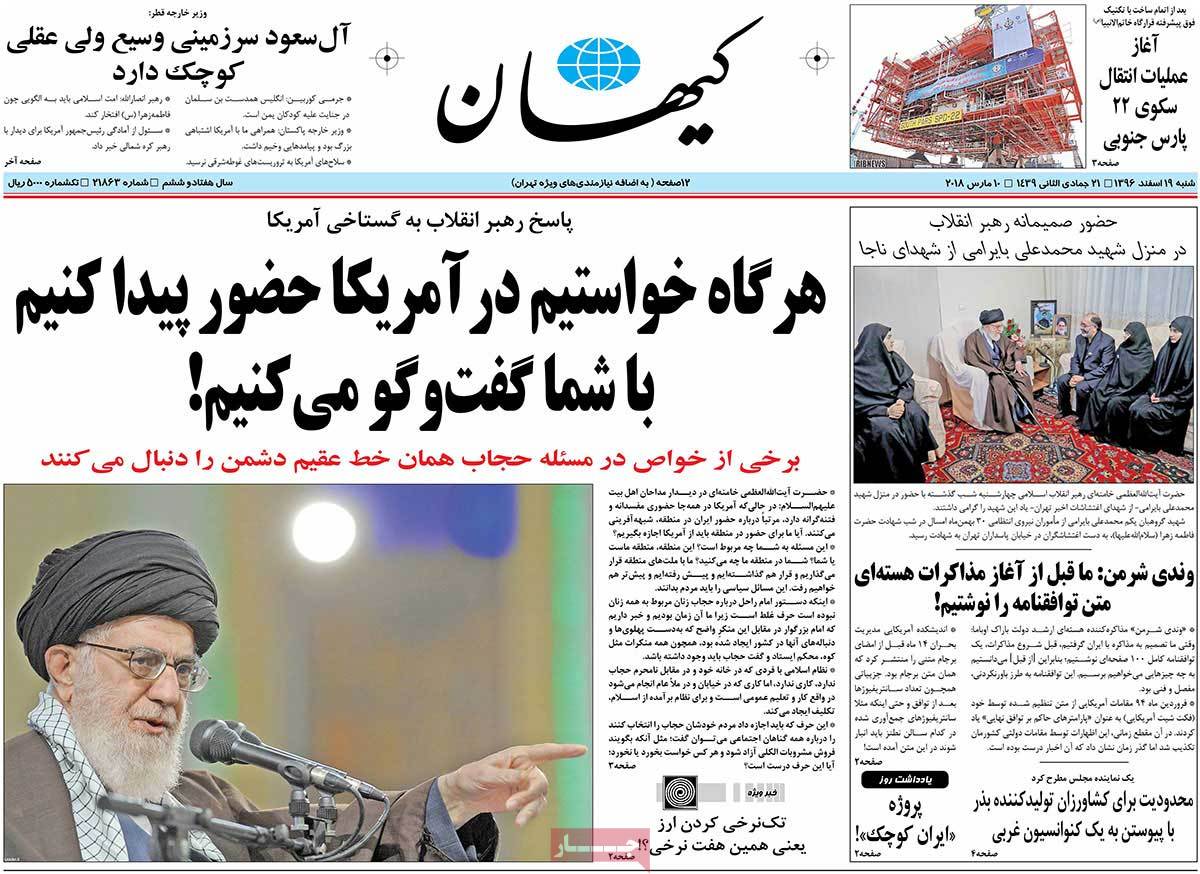
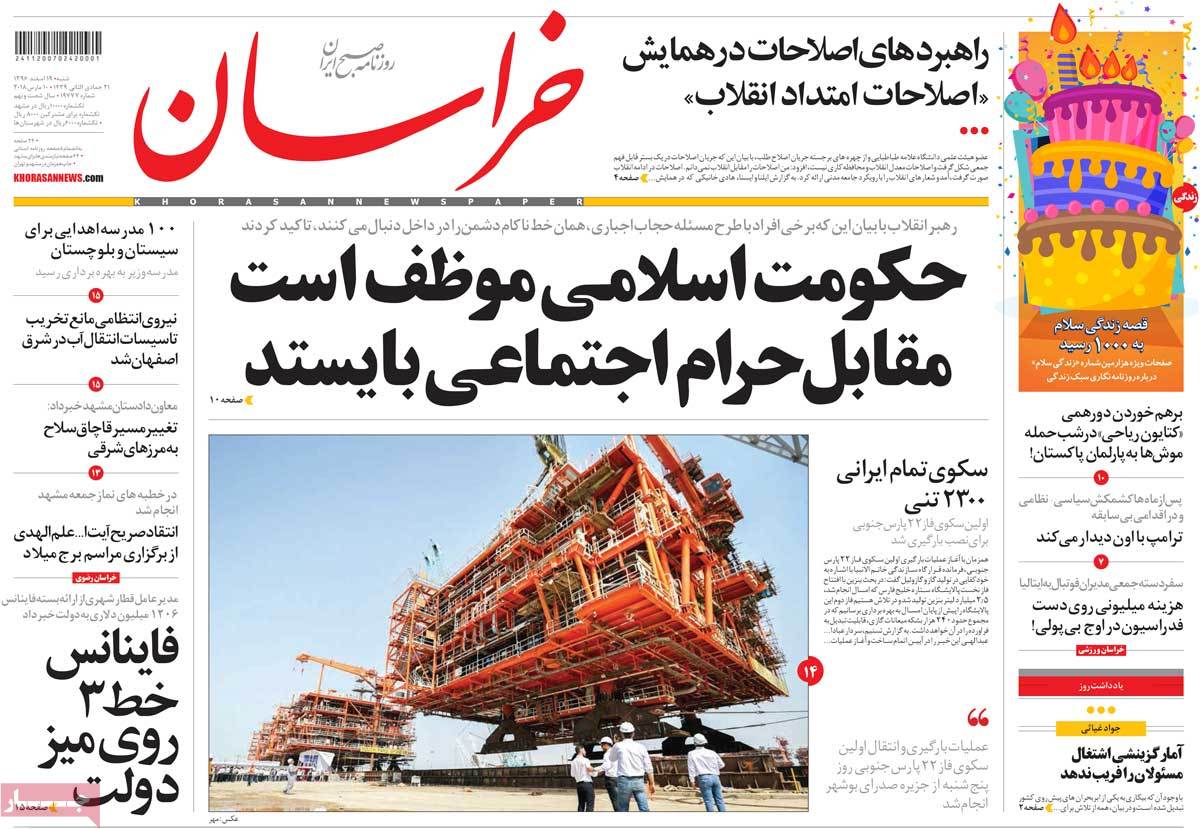
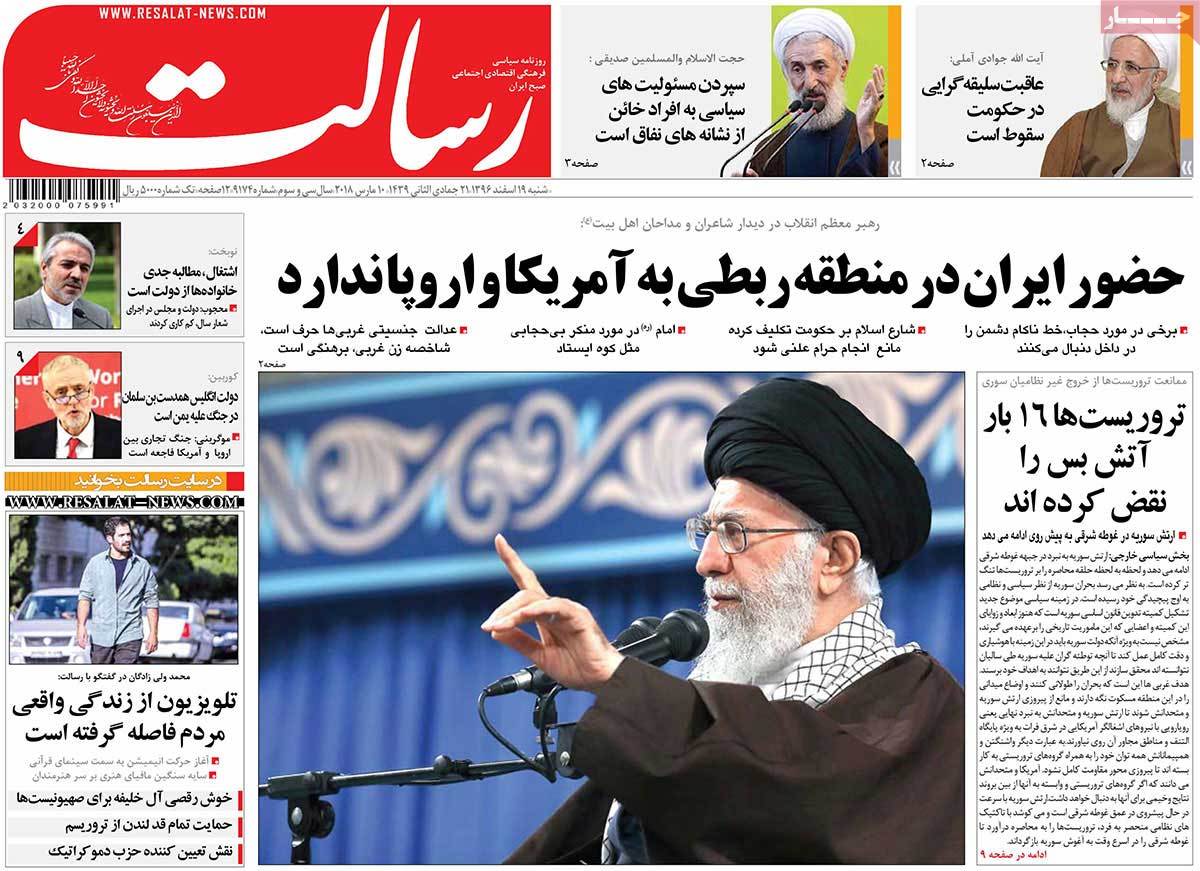
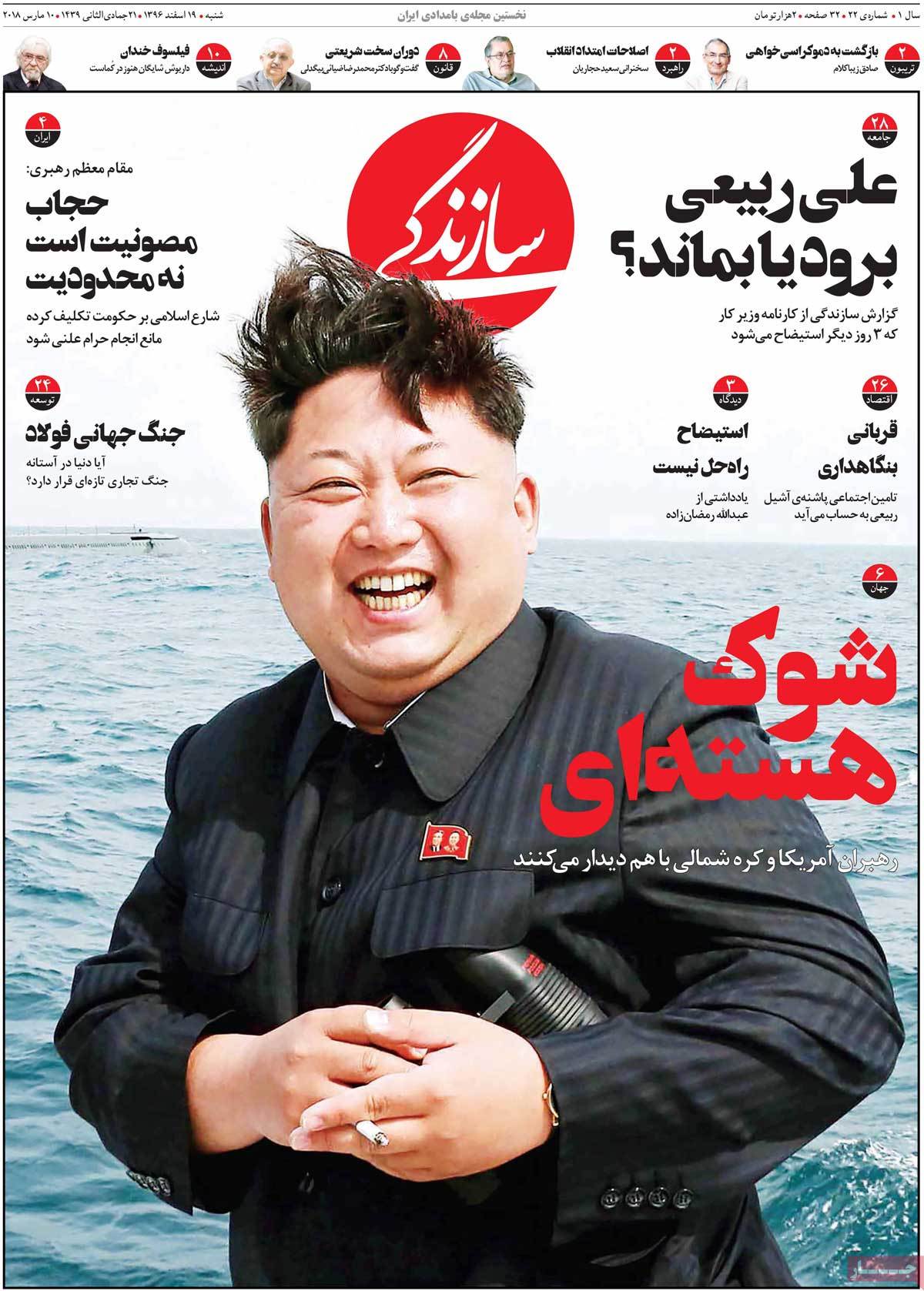
All newspapers today covered the remarks made by the Leader of Iran’s Islamic Revolution Ayatollah Seyyed Ali Khamenei about the issue of compulsory hijab in Iran as well as the possibility of Tehran’s negotiations with the West over its regional presence.

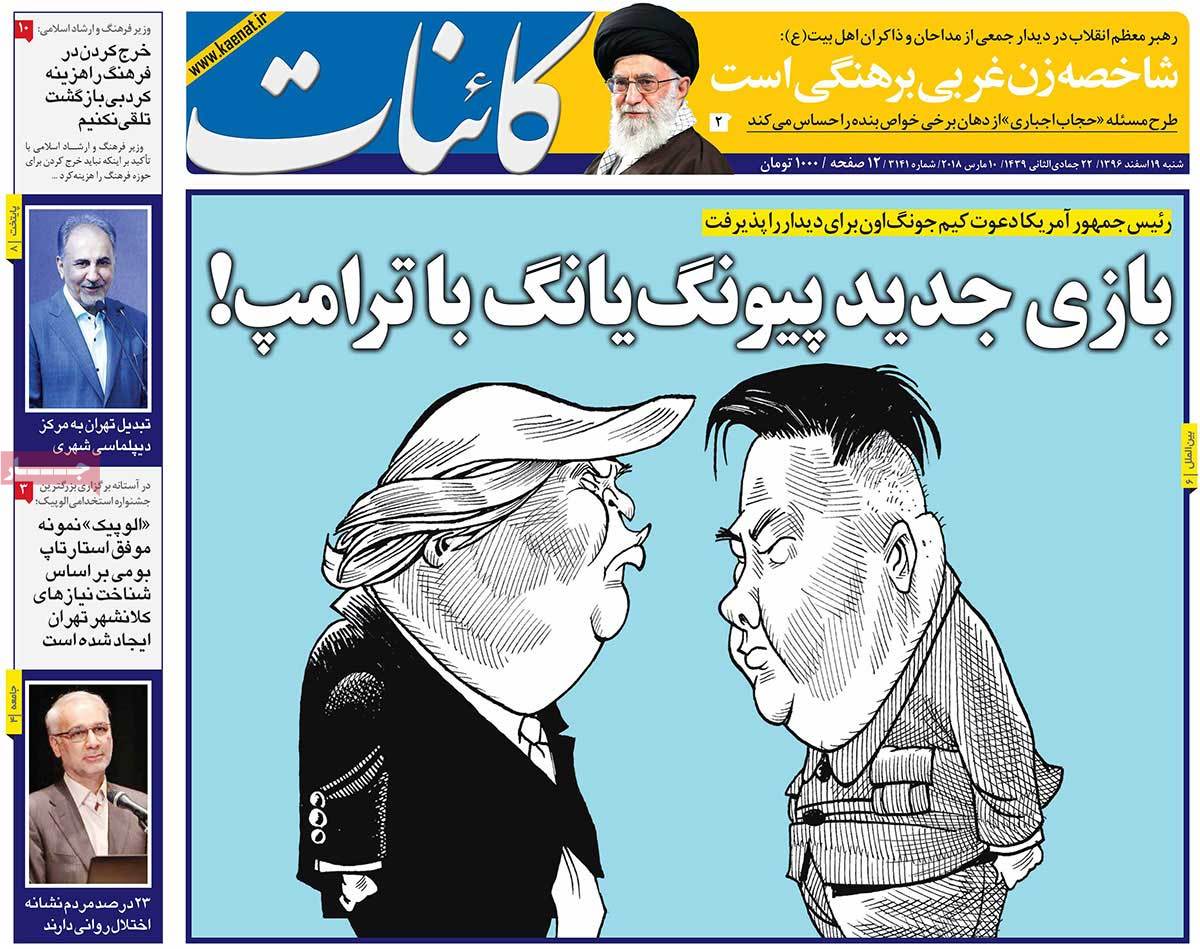
Another top story in several newspapers today was the surprising offer of North Korean Leader Kim Jong-un to US President Donald Trump for a bilateral meeting.

Iranian First Vice-President Es’haq Jahangiri’s visit to Iraq and his comments about Tehran-Baghdad relations also received great coverage.

The above issues, as well as many more, are highlighted in the following headlines and top stories:


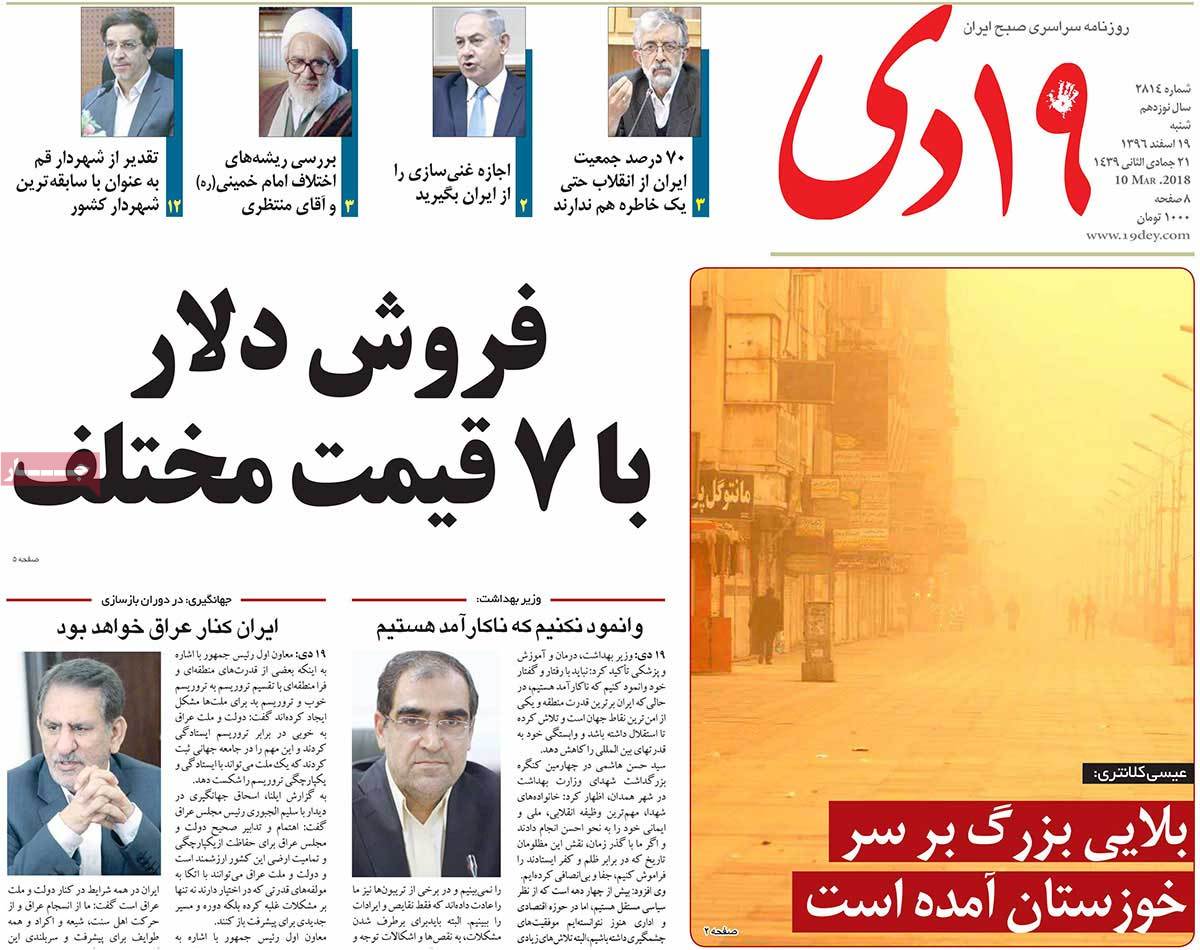
19 Dey:

  • Dollar Exchanged in Iran in 7 Different Rates

A Look at Iranian Newspaper Front Pages on March 10


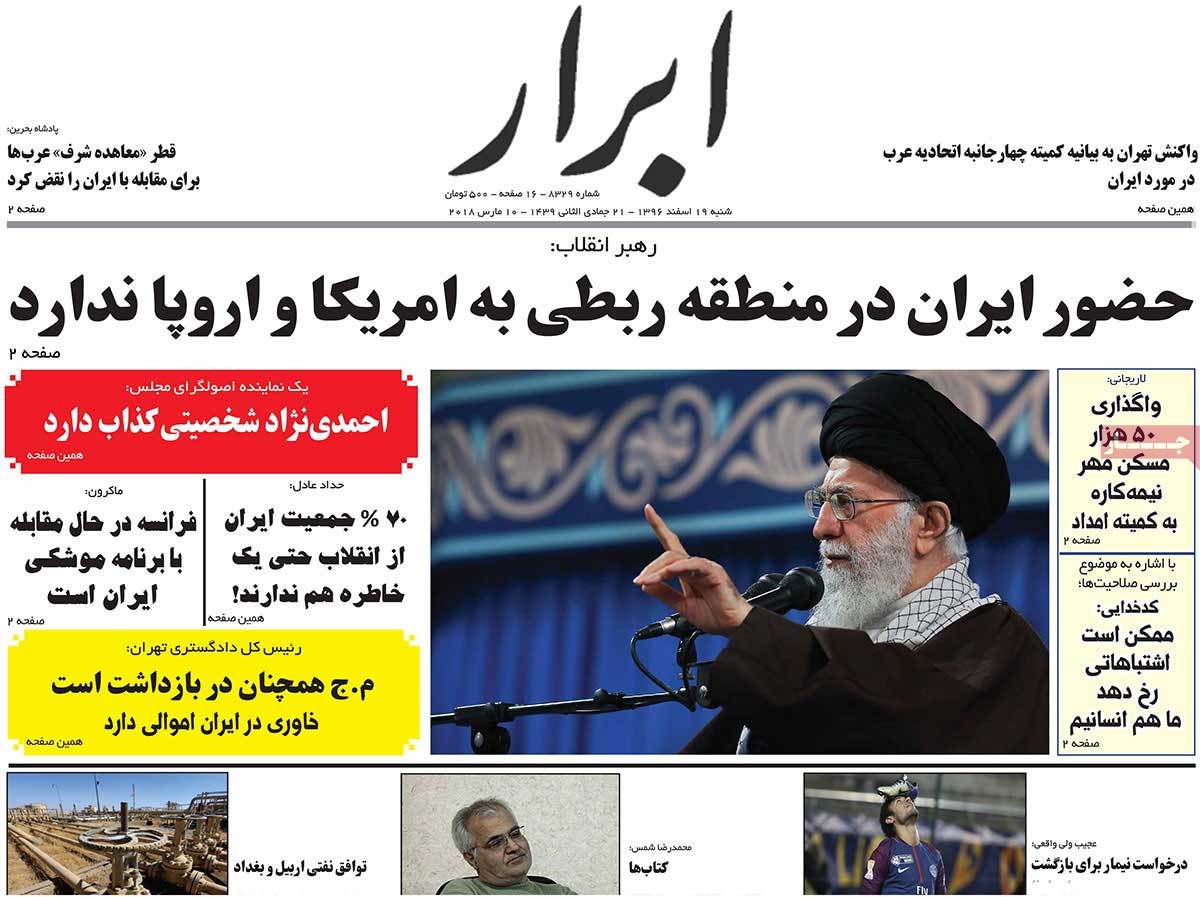
Abrar:

  • Bahrain King: Qatar Violated Arabs’ “Honour Agreement” to Confront Iran
  • Macron: France Countering Iran’s Missile Program

A Look at Iranian Newspaper Front Pages on March 10


Abrar-e Eqtesadi:

  • Russians Queue Up to Sign New Oil Deals with Iran

A Look at Iranian Newspaper Front Pages on March 10


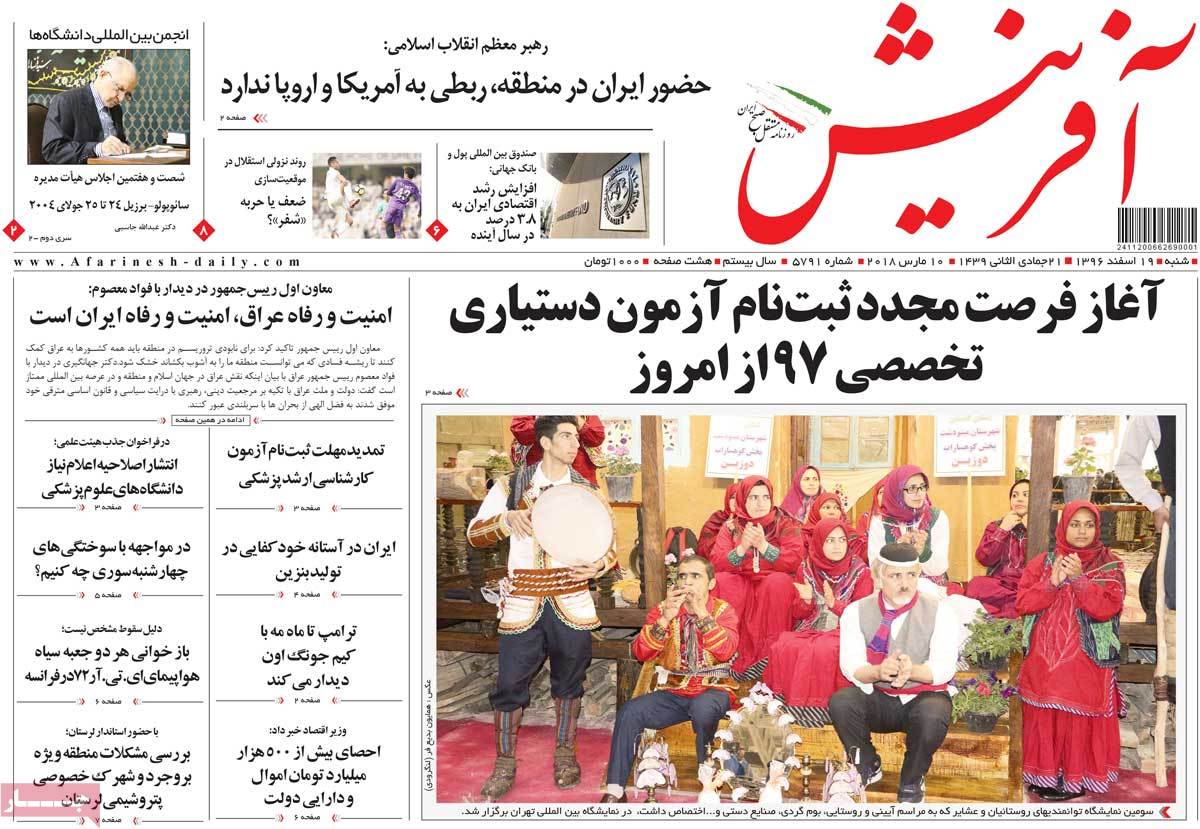
Afarinesh:

  • Iran First VP to Iraqi President: Iraq’s Security Same as Iran’s

A Look at Iranian Newspaper Front Pages on March 10


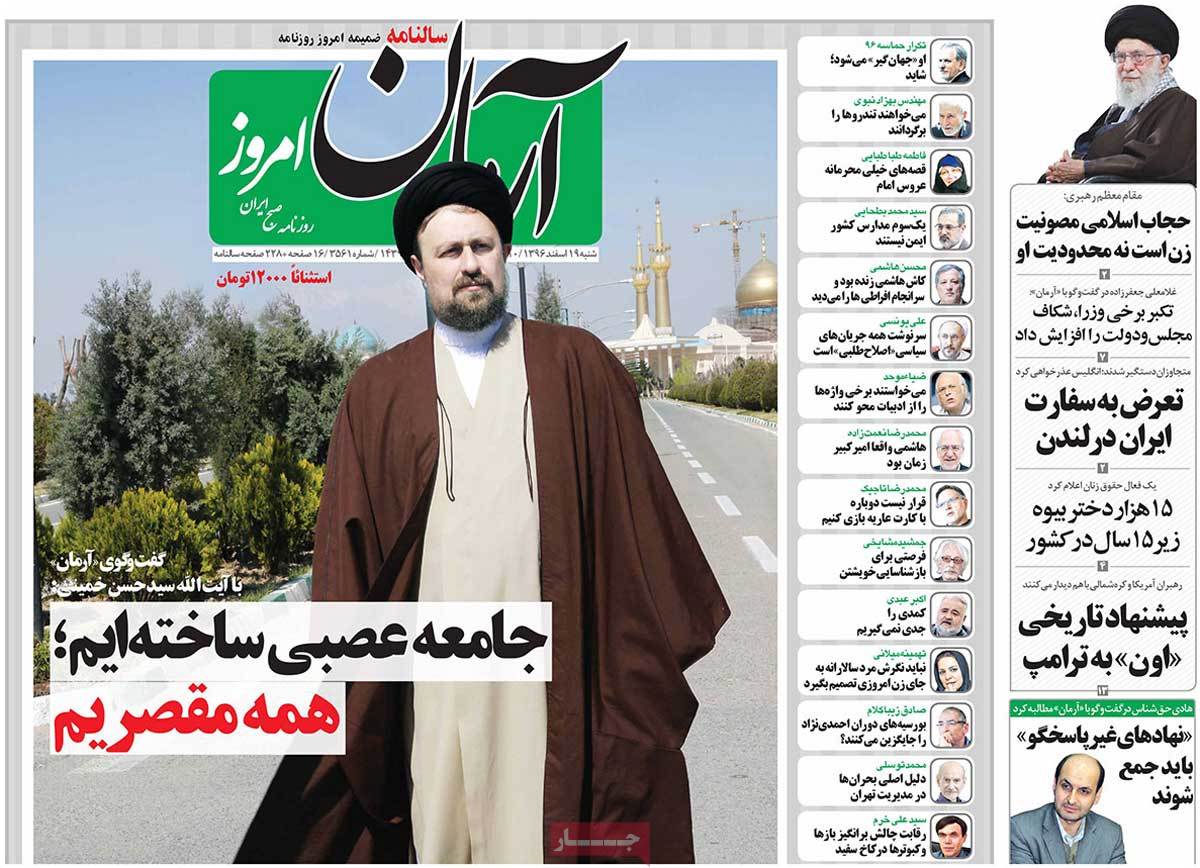
Arman-e Emrooz:

  • Iran Leader: Islamic Hijab Brings Immunity for Women, Not Limitation
  • Imam Khomeini’s Grandson: We’ve Created A Nervous Society; We’re All Guilty

A Look at Iranian Newspaper Front Pages on March 10


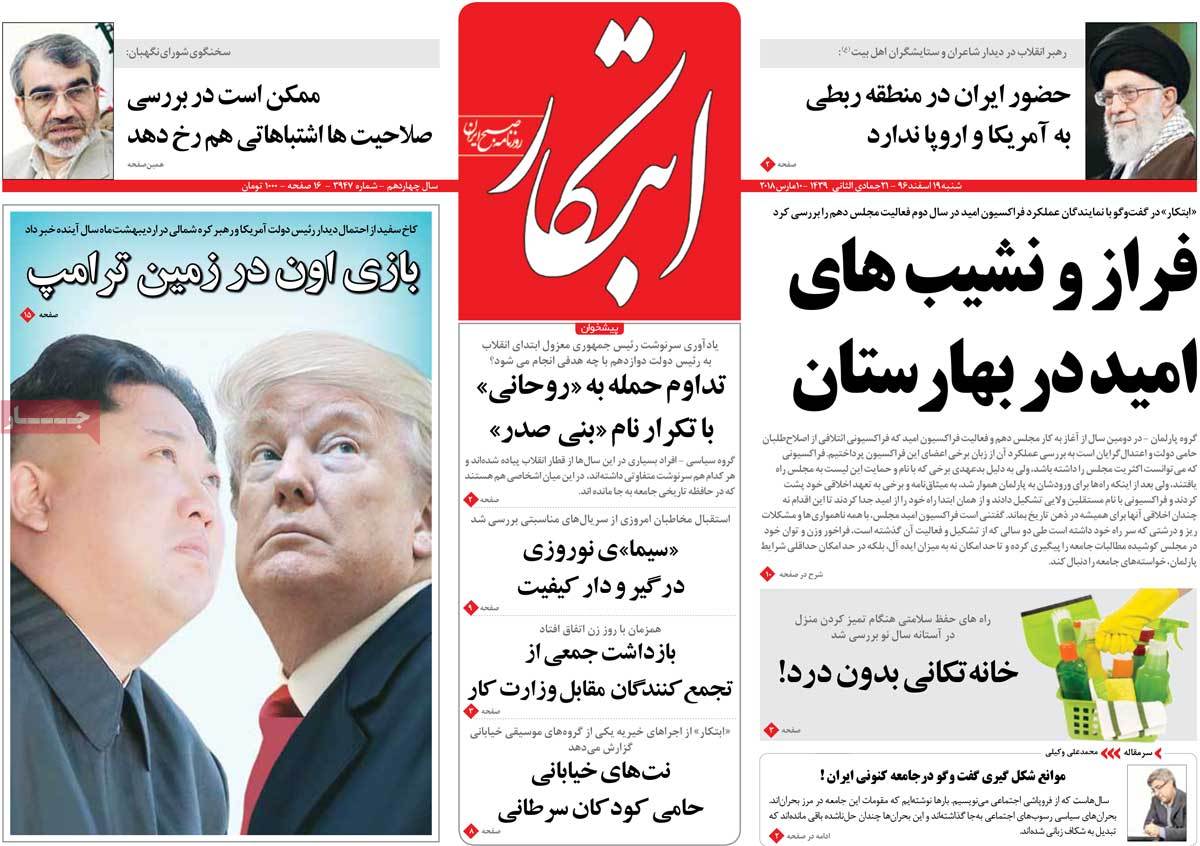
Ebtekar:

  • White House: US President, N. Korean Leader May Meet in Coming Months

A Look at Iranian Newspaper Front Pages on March 10


Etemad:

  • Iran Leader: Nudity Main Characteristic of Western Woman

A Look at Iranian Newspaper Front Pages on March 10


Ettela’at:

  • Iran Leader: No One Opposed to Women’s Presence in Social Fields, Positions
  • First VP: Iran-Iraq Ties Successful Model for Region
  • Iran FM: Era of Monopolies Over

A Look at Iranian Newspaper Front Pages on March 10


Iran:

  • World Shocked by N. Korean Leader’s Offer to Trump
  • Iran’s Tourism Chief: Tourism Industry to Be Developed with “Cheap Trip” Policy
  • Security, Welfare of Iran, Iraq Intertwined: First VP

A Look at Iranian Newspaper Front Pages on March 10


Javan:

  • Iran Leader: Certain Elites Just Following Enemy Plots on Hijab
  • Trump Signs Order to Begin Global Trade War

A Look at Iranian Newspaper Front Pages on March 10


Ka’enat:

  • Pyongyang’s New Game with Trump!

A Look at Iranian Newspaper Front Pages on March 10


Kayhan:

  • Iran Leader Responds to US Impudence
  • We’ll Hold Talks with You If We Want to Have Presence in America!
  • Sherman: We Had Written Text of Nuclear Deal before Start of Negotiations!
  • Qatar FM: Al Saud Vast Land with Feeble Minds

A Look at Iranian Newspaper Front Pages on March 10


Khorasan:

  • Iran Leader on Compulsory Hijab: Islamic Gov’t Obliged to Stand against Social Haram

A Look at Iranian Newspaper Front Pages on March 10


Resalat:

  • Terrorists Violate Ceasefire for 16 Times
  • Terrorists Prevents Evacuation of Syrian Civilians

A Look at Iranian Newspaper Front Pages on March 10


Sazandegi:

  • Nuclear Shock: US, N. Korean Leaders to Meet
  • Global War of Steel: Should the World Expect New War?

A Look at Iranian Newspaper Front Pages on March 10


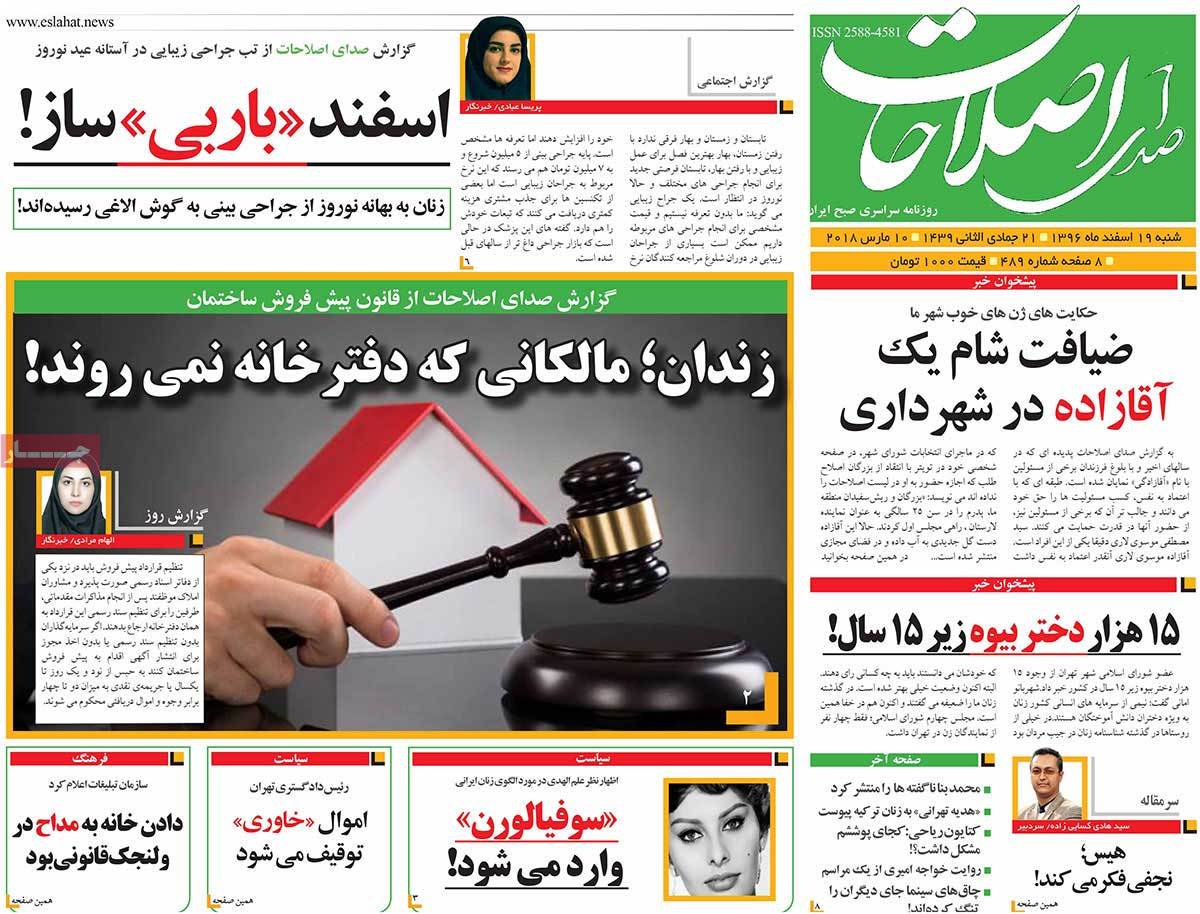
Seda-ye Eslahat:

  • Member of Tehran City Council: There Are 15,000 U-15 Widows in Iran

A Look at Iranian Newspaper Front Pages on March 10


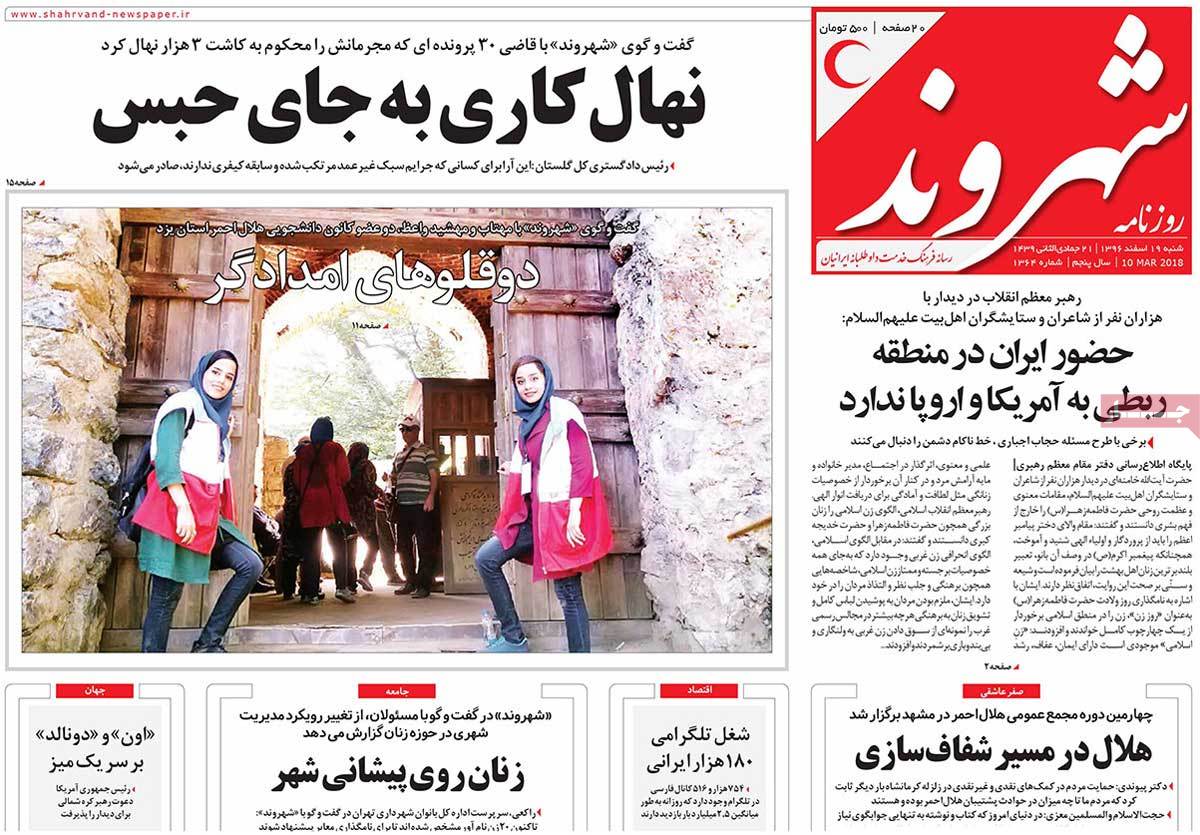
Shahrvand:

  • Planting Saplings Instead of Serving Prison Term
  • Court in Northern Iran Issuing Such Verdicts for Minor Offences
  • 180,000 Iranian People Earn Money Using Telegram Messaging App
  • There Are 765,516 Farsi Channels in Telegram with 2.5 Billion Visits per Day

A Look at Iranian Newspaper Front Pages on March 10


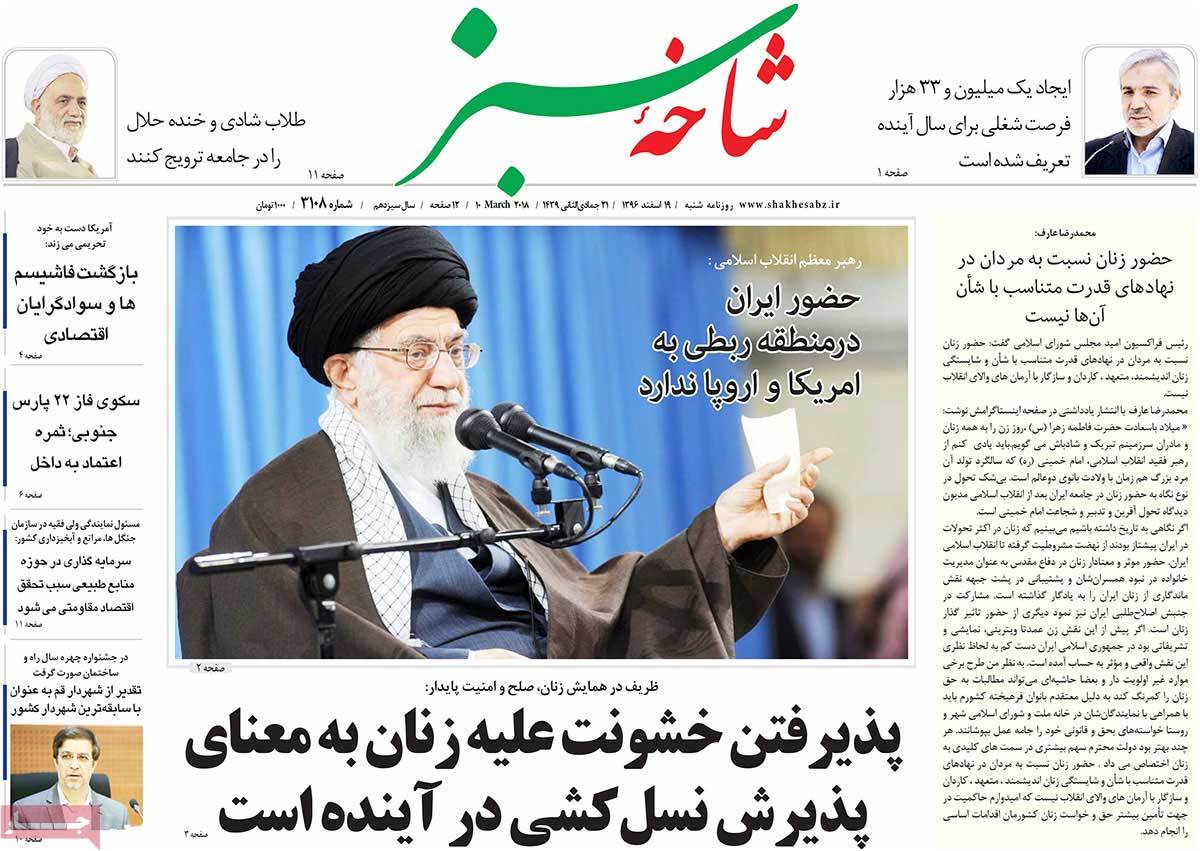
Shakhe-ye Sabz:

  • Zarif: Accepting Violence against Women Means Accepting Genocide in Future

A Look at Iranian Newspaper Front Pages on March 10


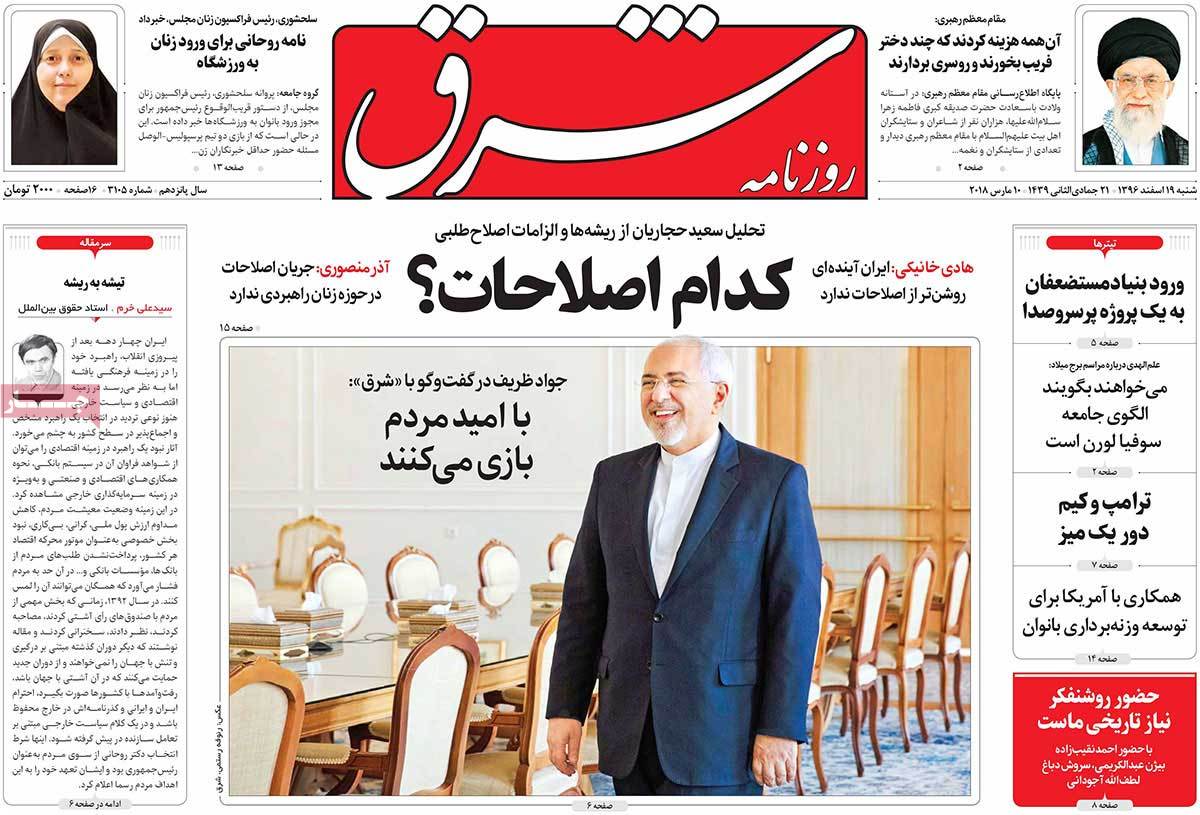
Shargh:

  • Zarif: They Are Playing with People’s Hope
  • Iran to Work with US to Develop Women’s Weightlifting
  • Rouhani in a Letter Has Allowed Women to Go to Stadiums: MP

A Look at Iranian Newspaper Front Pages on March 10


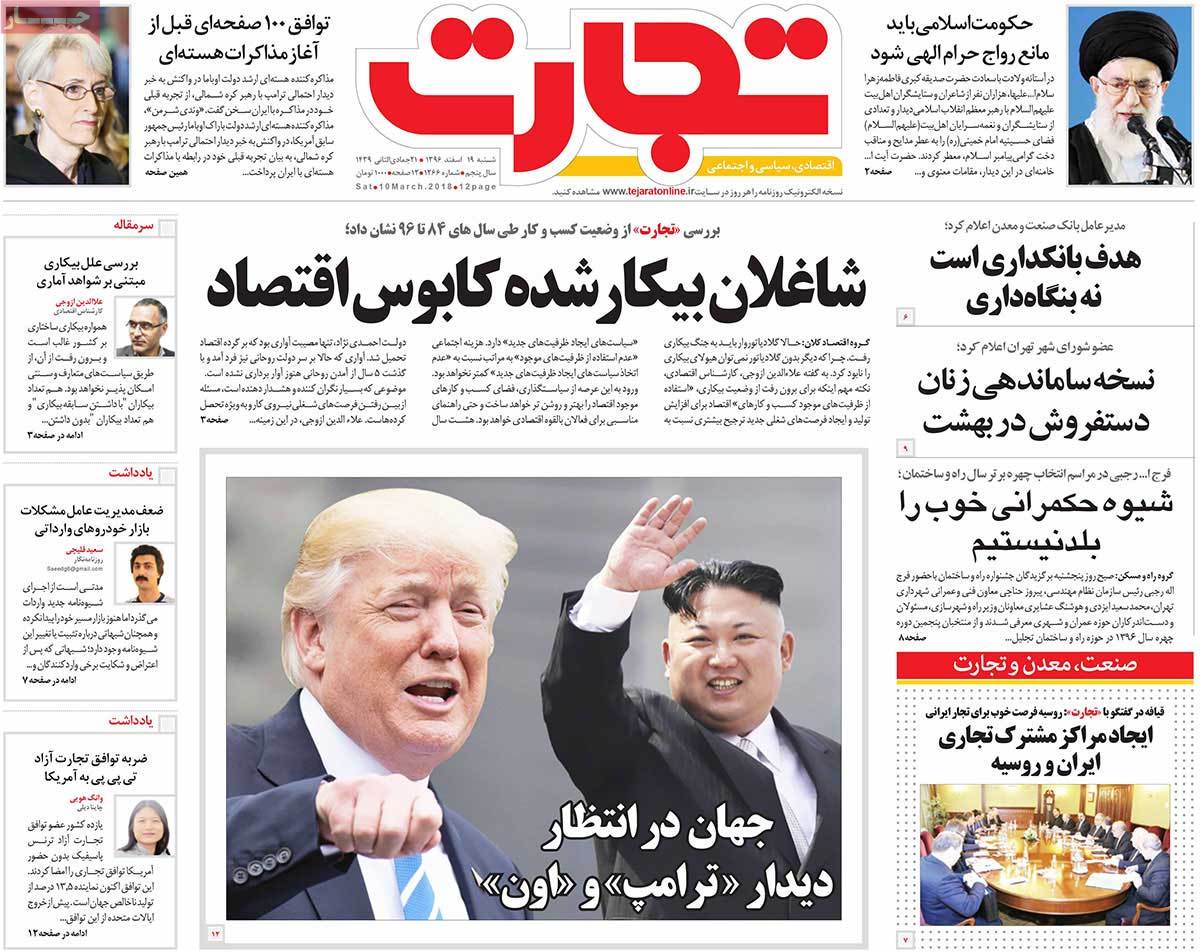
Tejarat:

  • Employees Who Became Unemployed, Nightmare of Iran’s Economy: Statistics

A Look at Iranian Newspaper Front Pages on March 10


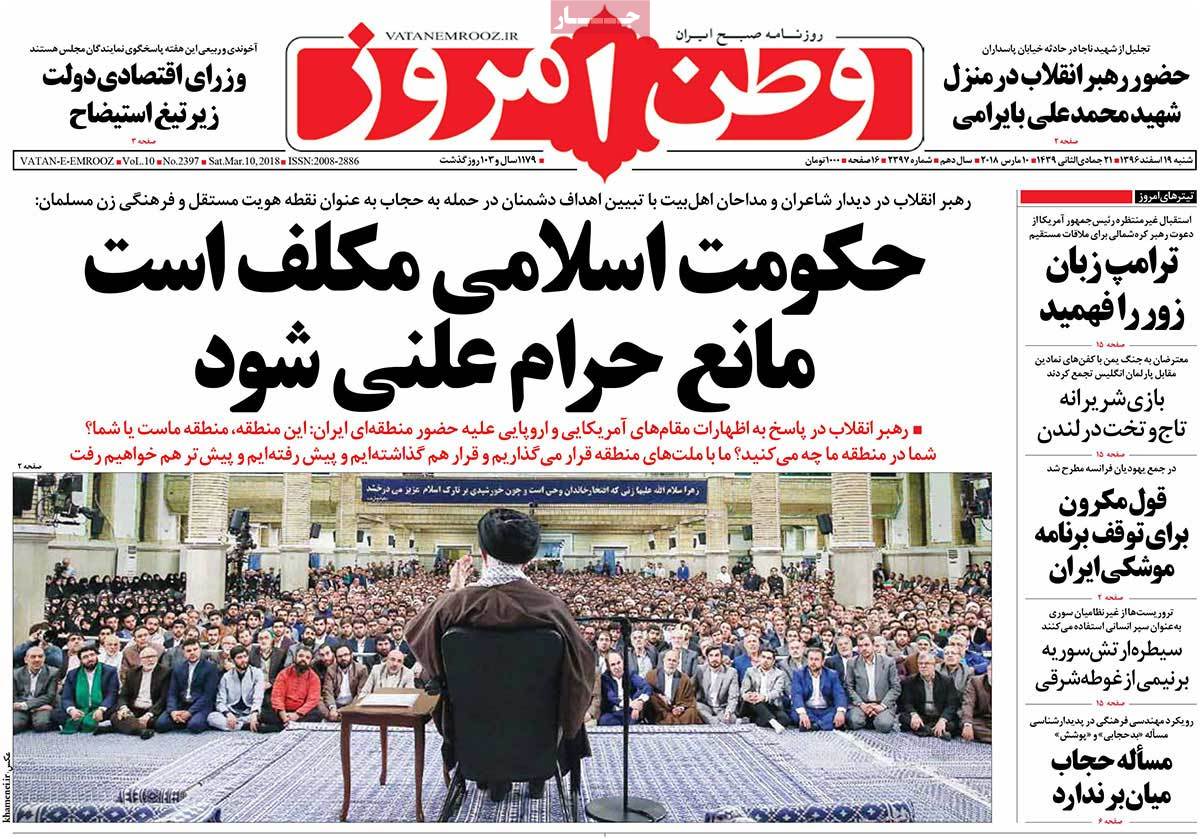
Vatan-e Emrooz:

  • Trump Understood Language of Force
  • US President’s Unexpected Reception of N. Korean Leader’s Invitation

A Look at Iranian Newspaper Front Pages on March 10

Iran FM to Start 3-Day Visit to Pakistan at Weekend

In a statement on Saturday, Qassemi said, “Dr. Zarif will start a three-day visit to Islamabad from Sunday at the head of a politico-economic delegation, upon the invitation of his Pakistani counterpart.”

Apart from meeting Pakistan’s Foreign Minister Hina Rabbani Khar, Qasemi said, Zarif will also hold talks with Prime Minister Shahid Khaqan Abbasi, Interior Minister Ahsan Iqba, Parliament Speaker Ayaz Sadiq, and the Pakistan’s Army chief General Qamar Javed Bajwa.

During the trip, the Iranian foreign minister will discuss ways of broadening Tehran-Islamabad relations in areas of mutual interest, Qassemi said.

The spokesman said the trip also aims to help prepare the ground for boosting economic cooperation between the two countries, particularly their private sector firms.

“A 30-member delegation comprising representatives from commercial and economic sectors will accompany the foreign minister in this trip,” he said.

“Two economic conferences will be held by officials and businesspeople in Islamabad and Karachi, which will be attended and addressed by Dr. Zarif,” he added.

“Iran Resists West’s Pressure to Install Nuclear Monitoring System”

Alireza Akbari says during talks on the Iran nuclear deal, the western sides always put pressure on Iran to guarantee the full implementation of the Comprehensive Nuclear-Test-Ban Treaty (CTBT) through installing the technical equipment to register and send nuclear data in Iran to Vienna.

“Although the major part of the CTBT is implemented by Iran in the post-JCPOA era, the country has not yet accepted to let the CTBT monitoring systems become active despite pressure by the West,” he was quoted as saying in a Farsi interview with Fars News Agency.

He said back in 1999, the then Iranian foreign ministry unilaterally made an agreement with the CTBT’s secretariat to install the monitoring systems but because of a lack of coordination among the relative organizations in Iran, the process was never accomplished.

Akbari said over the past 20 years, the CTBT secretariat has always exerted pressure on Iran to install the equipment.

“The Islamic Republic of Iran has certain mechanisms which ban an organization from unilaterally deciding about a national issue,” he noted.

According to Akbari, the equipment sends the nuclear data to Vienna through a server stationed in Israel.

Akbari then referred to some reports that an American company is to provide the CTBT’s monitoring systems for Iran and said such reports are part of the US psychological campaign to put pressure on Iran.

“The campaign is similar to the measures that the US government has already adopted to put pressure on Iran over its regional role, missile program and the JCPOA,” he said.

A report last week by Al-Monitor said US Deputy Secretary of State John Sullivan signed a waiver that allows a Maryland-based company to export broadband networks, satellite dishes and wireless equipment to Iran for stations that monitor nuclear explosions in real time.

According to Al-Monitor, the US Secretary of State has announced the decision to the Congress in a letter on January 5. Reports say the waiver was signed at the request of the CTBT secretariat which is in charge of monitoring and preventing from nuclear explosions in the signatory countries.

Iranian Foreign Ministry Spokesman Bahram Qassemi rejected the report immediately and said the Islamic Republic of Iran has not yet ratified the treaty.

He also added, so far no equipment has been stationed in Iran and the CTBT secretariat receives no report on Iran’s nuclear activities.

Akbari says Iran is among the first countries which signed the CTBT in 1996 but the Iranian parliament has not yet ratified the treaty.

So far 164 countries have ratified the CTBT. “To be fully implemented, the treaty should be ratified by at least eight other countries. The US, China, India, Israel, Pakistan and North Korea have not yet ratified the treaty,” Akbari said.

Iran Leader Agrees to New Conditions for Pardoning Prisoners

The Leader approved the conditions at the request of the country’s Judiciary Chief Ayatollah Sadeq Amoli Larijani on the occasions of the birthday anniversary of Fatimah Zahra (SA), the daughter of Prophet Muhammad (PBUH), and the Persian New Year (due to begin on March 21).

Under the new conditions, the Judiciary will reduce three-fourth of the jail terms of convicts sentenced up to a year, half of the jail terms of convicts sentenced between a year and 20 years, and the remaining of the jail terms of convicts sentenced to more than 20 years provided that they have served at least 10 years of their sentence.

Those serving terms in Iranian prisons due to financial problems and inability to pay their fines are also included in the new order.

Article 110 of the Constitution grants the Supreme Leader the right to pardon or reduce the sentences of convicts upon a recommendation from the head of the Judiciary.

The clemency, however, does not apply to all types of convicts, including those who have been sentenced for their role in armed struggle against the country, armed or organized drug trafficking, rape, armed robbery, arms smuggling, abduction, bribery and embezzlement.