Friday, December 26, 2025
Home Blog Page 269

Iranian president confirms assassination attempt by Zionist regime

President Pezeshkian was speaking during an interview with American journalist Tucker Carlson.

The president said the attack failed due to divine will. Pezeshkian added that he and his colleagues are not afraid of death, slamming efforts by the Zionist regime to destabilize the region through bloodshed and violence.

“There was indeed an attempt, and even action taken, but we believe that if God wills, a person survives, and if not, even a simple walk could be fatal”, Pezeshkian said.

“We are ready to defend our people, our independence, and the freedom of our land until our last breath” said Pezeshkian.

The Iranian president however noted that no formal evidence exists implicating the US in the assassination attempt against him.

“This was carried out by the Zionist regime, not the US”, he stressed.

“They bombed the area we were in, using intelligence from their spies during one of our internal meetings, but again, nothing happens unless God wills it.”

In other remarks, Pezeshkian also stressed Iran’s unity in the face of external threats and warned the US against being dragged into  Netanyahu’s “inhumane and genocidal war and devilish machinations.”

Referring to the US bombing of Iran’s nuclear facilities amid Tehran–Washington  negotiations, President Pezeshkian pointed out: “After such an attack during ongoing talks, how can we ever trust the United States again?”

Iran FM: BRICS role crucial in countering unilateral sanctions

Speaking at the 17th BRICS Summit in Rio de Janeiro, Brazil, Araqchi stated that the Islamic Republic of Iran, which has itself faced years of unjust sanctions, believes BRICS should take the lead in reforming global governance.

He emphasized the rejection of unilateral coercive measures and stressed the need to strengthen the central role of the United Nations, along with supporting structural reforms to better align with the realities of today’s world.

Araqchi highlighted the importance of enhancing South-South cooperation, empowering regional organizations, and promoting dialogue among countries to counter and balance domination-oriented narratives.

He also underscored the need to expand the role of the BRICS New Development Bank (NDB) in financing infrastructure, energy, and technology projects in member states and other Global South countries.

Araqchi added that the Islamic Republic of Iran, as a major energy producer and a strategic connectivity hub, possesses vast capacities to contribute to energy diversification and interconnection among BRICS members.

The Iranian foreign minister also proposed the establishment of a BRICS Center for Artificial Intelligence and Emerging Technologies.

In another part of his speech, referring to the recent aggression by the United States and the Israeli regime against Iran, Araqchi said: “The people of Iran are mourning their loved ones, including women and children, who were martyred as a result of the savage aggression by the Israeli regime — carried out with the support, cooperation, and ultimately direct participation of the United States. These military attacks were carried out solely because Iran seeks to acquire nuclear technology for peaceful purposes.”

Brazil, Russia, India, China, South Africa, Iran, Saudi Arabia, United Arab Emirates, Egypt, and Ethiopia are member states of BRICS.

BRICS member states cooperate in line with their interests: Kremlin

Dmitry Peskov

“It’s important to emphasize that BRICS is an association of countries united by shared approaches and a common vision of how to build cooperation rooted in their own interests,” Peskov said when asked about the Kremlin’s reaction to US President Donald Trump’s remarks on possibly imposing additional 10% tariffs on states supporting BRICS policies.

He added that this interaction has never been, and will never be, aimed against any third parties.

Earlier, in a post on Truth Social, Trump warned that additional 10% trade duties would be imposed on states supporting BRICS policies, without exceptions.

‘BRICS not aimed at any country’: China says after Trump’s tariff warning

This comes after Trump announced plans to impose a 10 per cent tariff on nations supporting what he called BRICS’ “anti-American policies”.

“BRICS is an important platform for cooperation among emerging markets and developing countries,” Chinese Foreign Ministry spokesperson Mao Ning said.

Mao emphasised that the BRICS group stands for openness and mutual benefit.

“It is not a bloc for confrontation nor does it target any country,” she added

Asked specifically about Trump’s threat of additional tariffs, Mao reiterated China’s position on trade.

“Trade and tariffs have no winners and protectionism leaves nowhere,” she continued.

Iranian military spokesman says any Israeli aggression to face more crushing response

Iran National Army Day

Brigadier General Abolfazl Shekarchi, regarding the possibility of a ceasefire violation by the Zionist enemy and Iran’s reaction, said: “We will deliver a crushing, serious, effective, and regret-inducing response to any potential attack by the occupying Zionist regime.”

Pointing to the recent aggression by the Israeli regime and the United States against Iran and the response by Iran’s Armed Forces, General Shekarchi added according to many experts and analysts around the world, Iran emerged victorious in this 12-day war and inflicted heavy blows on the Zionist regime.

He emphasized: “We forced this criminal regime to stop the war through our strikes.”

The senior spokesman for the Armed Forces of the Islamic Republic of Iran stressed: “The armed forces are at a high level of readiness, and if the Israeli regime takes any action, it will be met with a firm response.”

Aide to Iran Leader: Armed forces fully prepared for all enemy scenarios

Rahim Safavi

Speaking on recent regional developments, Rahim Safavi stressed that Zionist forces are well aware that parts of Iran’s military capabilities such as the Navy and the Quds Force have not yet been brought into action.

He criticized Israel’s strategic approach toward both the Palestinian people and the Islamic Republic of Iran, saying, “The Zionists’ strategies have so far proven to be misguided in their dealings with both Palestinians and Islamic Iran”.

Rahim Safavi further stressed that history shows no occupying regime has ever managed to permanently remain in occupied territories, underscoring as the eventual failure of such entities.

He then spoke about Iran’s defense readiness and revealed that the country has already produced thousands of missiles and drones.

Rahim Safavi added that the storage and deployment locations of the missiles are secure.

Crew abandons cargo ship in Red Sea after aerial strike

The attack, which took place some 94km (51 nautical miles) southwest of the Yemeni port of Hodeidah on Sunday, was the first such incident in the vital shipping corridor since April.

The United Kingdom Maritime Trade Operations (UKMTO) said the bulk carrier Magic Seas was first “engaged by multiple small vessels” that “opened fire with small arms and self-propelled grenades”.

The attack set the ship ablaze and caused it to take on water, it added.

All of the crew abandoned the ship and were rescued by a passing merchant vessel, UKMTO said, adding that “all crew are well and safe”.

No group has claimed responsibility for the attack yet.

Ambrey, a private British maritime security firm, said in a separate advisory that the ship was attacked by four unmanned surface vehicles [USVs].

“Two of the USVs impacted the port side of the vessel, damaging the vessel’s cargo,” Ambrey added.

While no one has claimed responsibility, Ambrey noted the attack matched the “established Houthi target profile“.

The Houthis, who control most of Yemen, began targeting vessels in the Red Sea shortly after Israel’s war on Gaza began in October 2023, in a campaign the rebel group stressed was in defence of the Palestinians living in the besieged enclave.

Between November 2023 and January 2025, the Houthis launched more than 100 attacks targeting commercial vessels, disrupting global shipping and forcing firms to reroute. During that period, the group also sunk two ships, seized another and killed at least four seafarers.

The Houthis paused the attacks in January, following the brief ceasefire between Israel and Hamas in Gaza, but hostilities escalated again in mid-March when the United States launched a broad assault against the group.

The two sides agreed on a ceasefire in May, and the Houthis have not attacked a vessel since then, though they have continued occasional missile attacks targeting Israel.

Shipping through the Red Sea, while still lower than normal, has meanwhile started to increase.

But the latest attack on Sunday could escalate tensions as it could again draw US and Western forces to the area. It also comes at a sensitive moment in the Middle East as a possible ceasefire in the war on Gaza hangs in the balance, and Iran weighs whether to restart negotiations over its nuclear programme following US air strikes targeting its most sensitive atomic sites.

US threatens additional tariffs on nations ‘aligning’ with ‘anti-American’ BRICS

“Any Country aligning themselves with the Anti-American policies of BRICS, will be charged an ADDITIONAL 10% Tariff. There will be no exceptions to this policy. Thank you for your attention to this matter!” Trump wrote in a Truth Social post Sunday evening.

The threat comes after members of the BRICS group issued a declaration on Sunday condemning the U.S. increase in tariffs, as well as the strikes on Iran — all without mentioning Trump by name.

The group’s statement raised “serious concerns” tariffs, saying they are “inconsistent with WTO (World Trade Organization) rules” and threaten to “reduce global trade, disrupt global supply chains, and introduce uncertainty.”

The group also criticized NATO’s decision to increase defense spending to 5 percent of GDP by 2035 — a decision prompted by Trump’s insistence that Europe shoulder more of the alliance’s defense burden.

BRICS was founded by Brazil, Russia, India, China and South Africa, but the group last year expanded to include Indonesia, Iran, Egypt, Ethiopia and the United Arab Emirates.

Brazil, which is hosting this year’s two-day summit, has sought to avoid more controversial issues to avoid becoming the target of higher taxes. Trump has threatened to impose 100 percent tariffs against the bloc if they take any moves to undermine the dollar.

Trump’s 90-day pause on his sweeping reciprocal tariffs is set to expire on July 9. Treasury Secretary Scott Bessent has said the higher tariff rates will be imposed on Aug. 1 if countries do not strike trade deals with U.S. sooner.

Iranian political activists: Internet filtering pure harm, security threat

Mobile Internet Iran

Abbas Abdi, Fayyaz Zahed, and Mohammad Mohajeri wrote in the article that since this is an economic crime — and even a threat to national security — its proponents don’t admit it and instead invoke imaginary espionage threats as a pretext.

The article stated that some official estimates indicate the annual turnover from VPN sales is around 20 trillion tomans (approximately $400 million). According to recent studies, unblocking WhatsApp led to an 8–12% drop in VPN use, which caused about 2 trillion tomans in losses for VPN sellers — who are now lobbying to have WhatsApp blocked again.

Responding to the claim by filtering advocates that social networks are espionage tools, the authors added: “Let’s assume that’s true. What exactly does filtering solve? A real spy will buy the best and most expensive VPN and continue their work regardless.”

The article went on to say that filtering has blocked Iranians’ access to many global websites and has essentially contaminated Iran’s internet. Worst of all, it argued, VPNs themselves can become channels for espionage, since many of the major VPNs are made by or under the influence of Israel and Western countries.

The three experts concluded their article by proposing that President Pezeshkian appoint an independent, trusted, and well-known panel of experts to study and report on filtering — and then fully implement their findings.

Iran FM: US, Europe support and impunity emboldening Israel

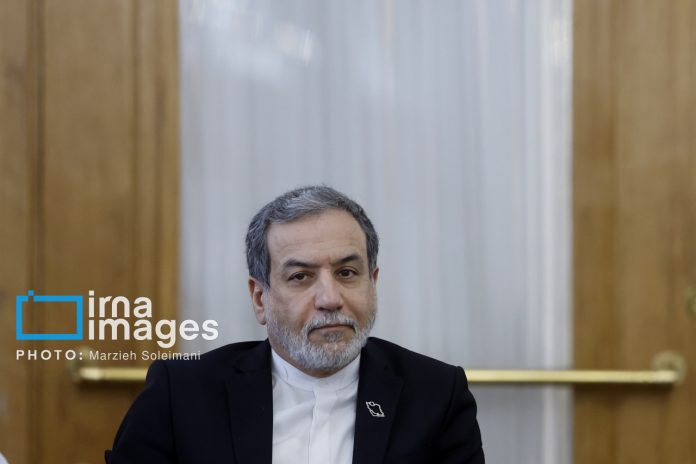
Abbas Araghchi

Seyed Abbas Araghchi made the remarks in a meeting with his Brazilian counterpart Mauro Vieira, on the sidelines of the 17th BRICS Summit in Rio de Janeiro, Brazil.

Araghchi underscored the legal and moral responsibility of all governments to halt the Zionist regime’s crimes against Palestinians and its aggression against the people of the region.

Referring to the military aggression of the Zionist regime and the US against Iran, Araghchi appreciated Brazil’s firm and principled stance on the issue and its condemnation of such acts of aggression.

He stressed that the unlawful attacks by the US and the Zionist regime constituted not only a blatant violation of the UN Charter but also an unprecedented assault on the NPT and the foundations of diplomacy which have serious implications for regional peace and security.

Araghchi also described the role of BRICS in strengthening multilateralism and the rule of law at the international level as highly significant.

The Brazilian foreign minister reaffirmed his country’s firm position on the need to condemn military aggression against the territorial integrity and sovereignty of Iran, particularly its peaceful nuclear facilities, and underlined the responsibility of the UN Security Council to uphold international peace and security.

The Iranian and Brazilian foreign ministers also agreed that the growing economic and trade ties between the two countries are satisfactory and also agreed on holding a joint economic commission in the near future.

Brazil, Russia, India, China, South Africa, Egypt, Ethiopia, Iran, Saudi Arabia and the United Arab Emirates (UAE) are BRICS member states